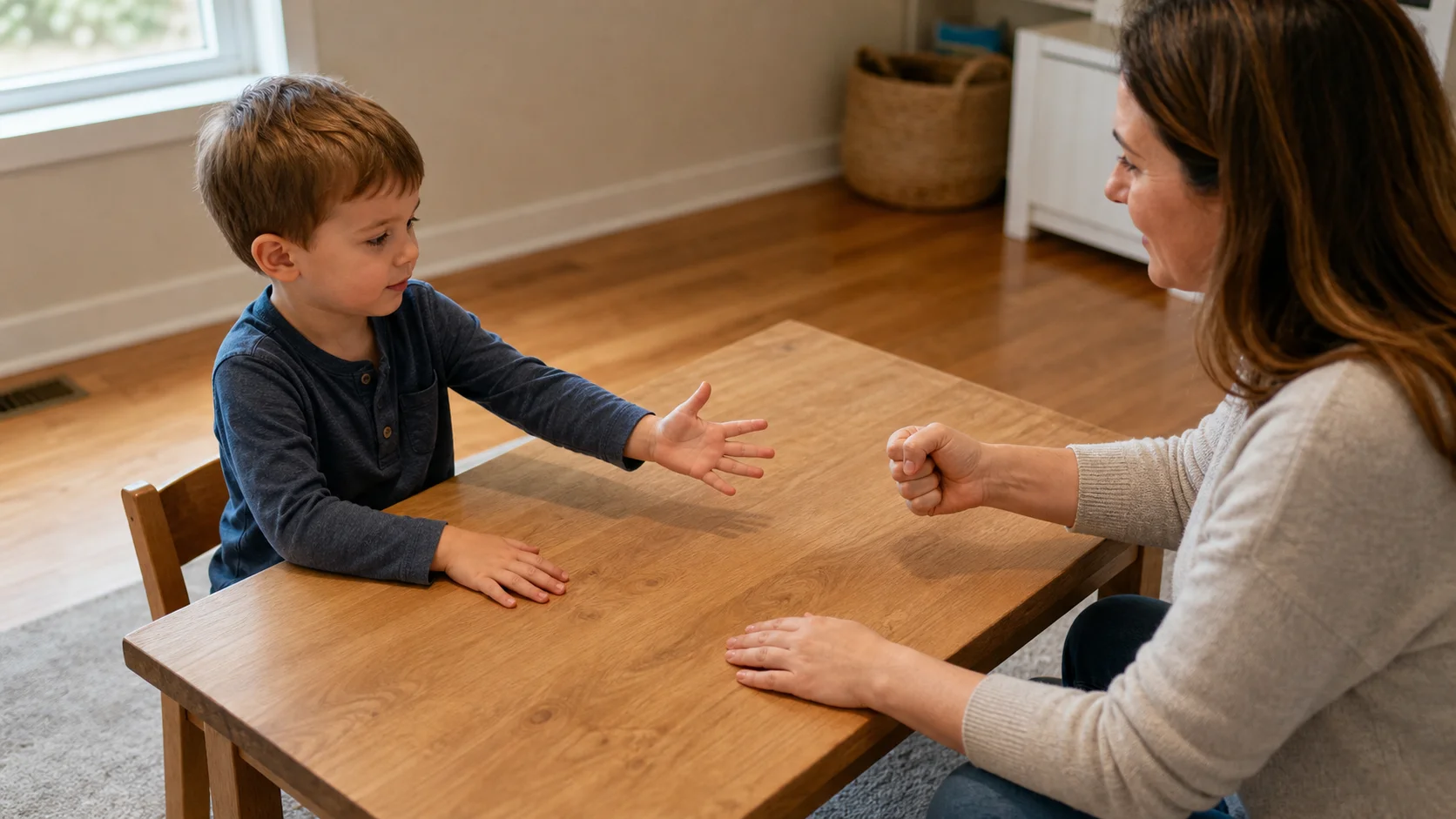

Rock Paper Reveal
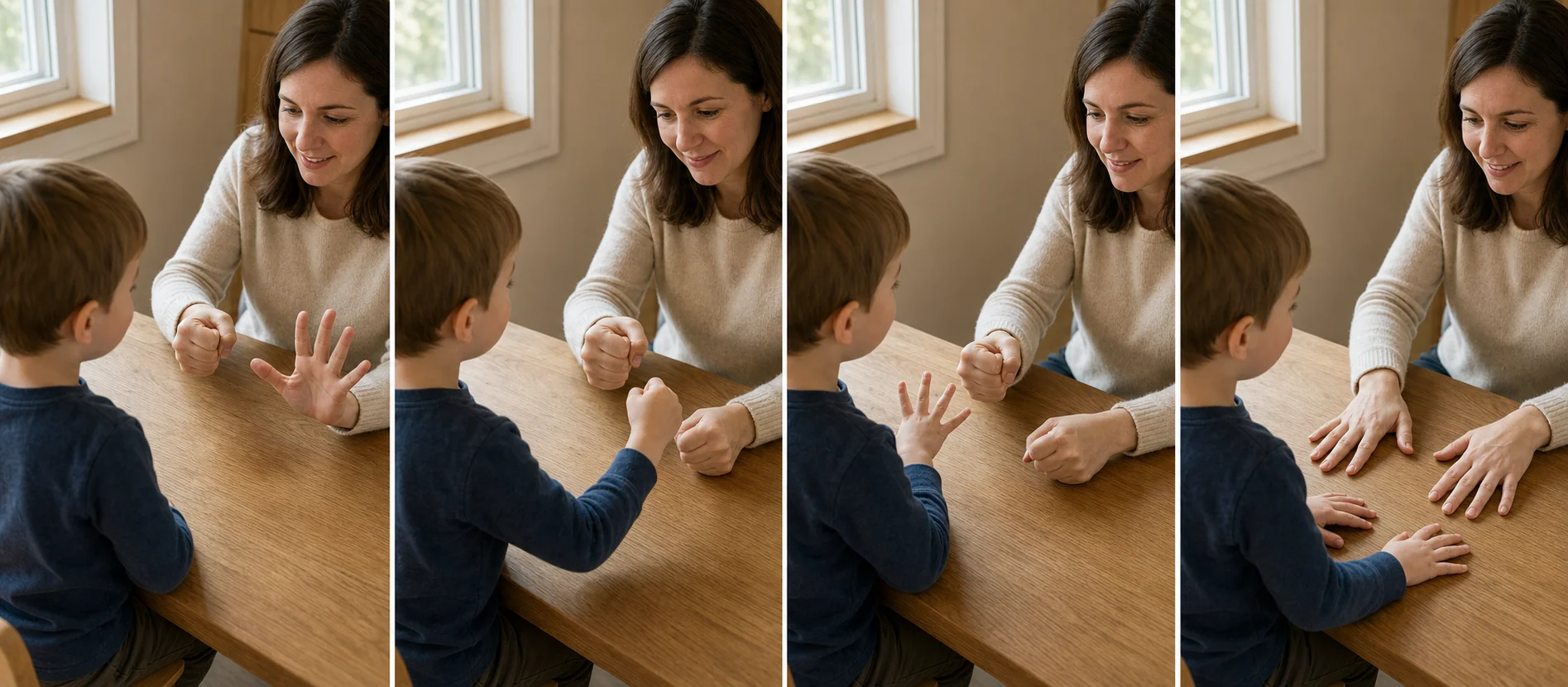
Rock Paper Reveal is a rock paper scissors game for preschoolers that helps children match what they see through a clear, repeatable play loop.
Play ideas with flexible sensory input, lower overwhelm, and easy ways to adjust texture, sound, movement, or mess. These activities are selected to help parents offer play without pushing a child into uncomfortable input.


Rock Paper Reveal is a rock paper scissors game for preschoolers that helps children match what they see through a clear, repeatable play loop.


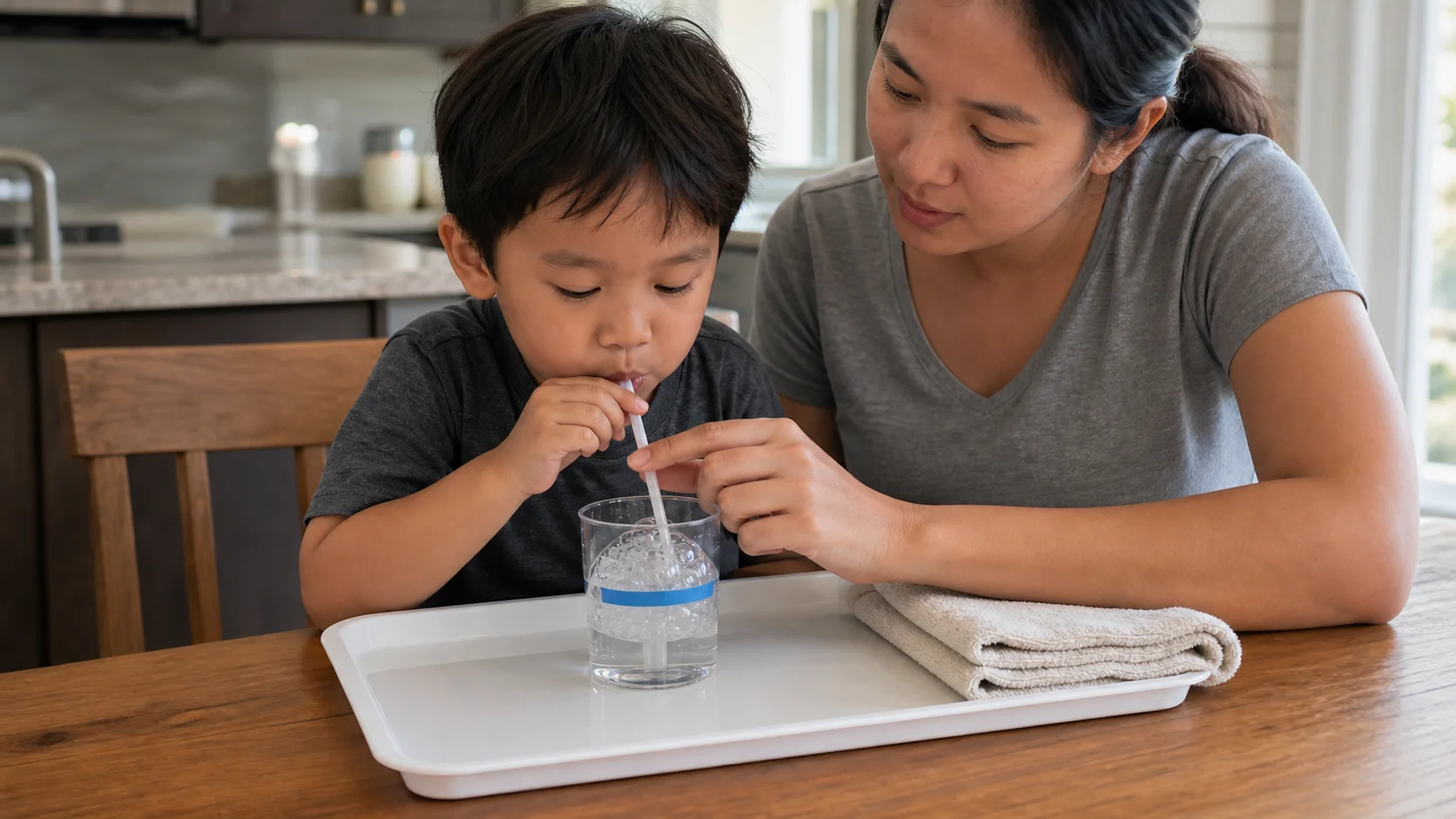
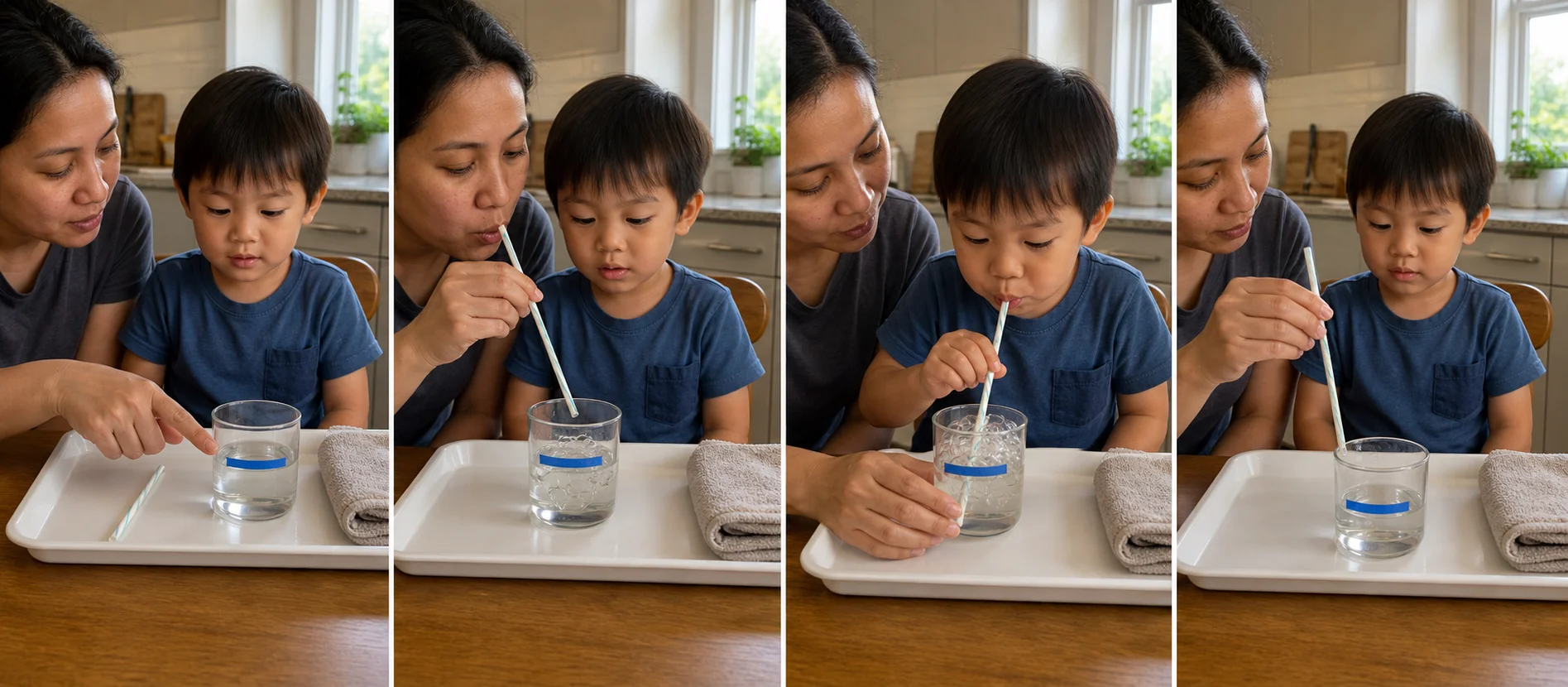
Blow through a straw into a shallow cup of water and watch bubbles appear and break at the surface. Each short puff creates an immediate cause-and-effect payoff and a simple start-and-stop rhythm.


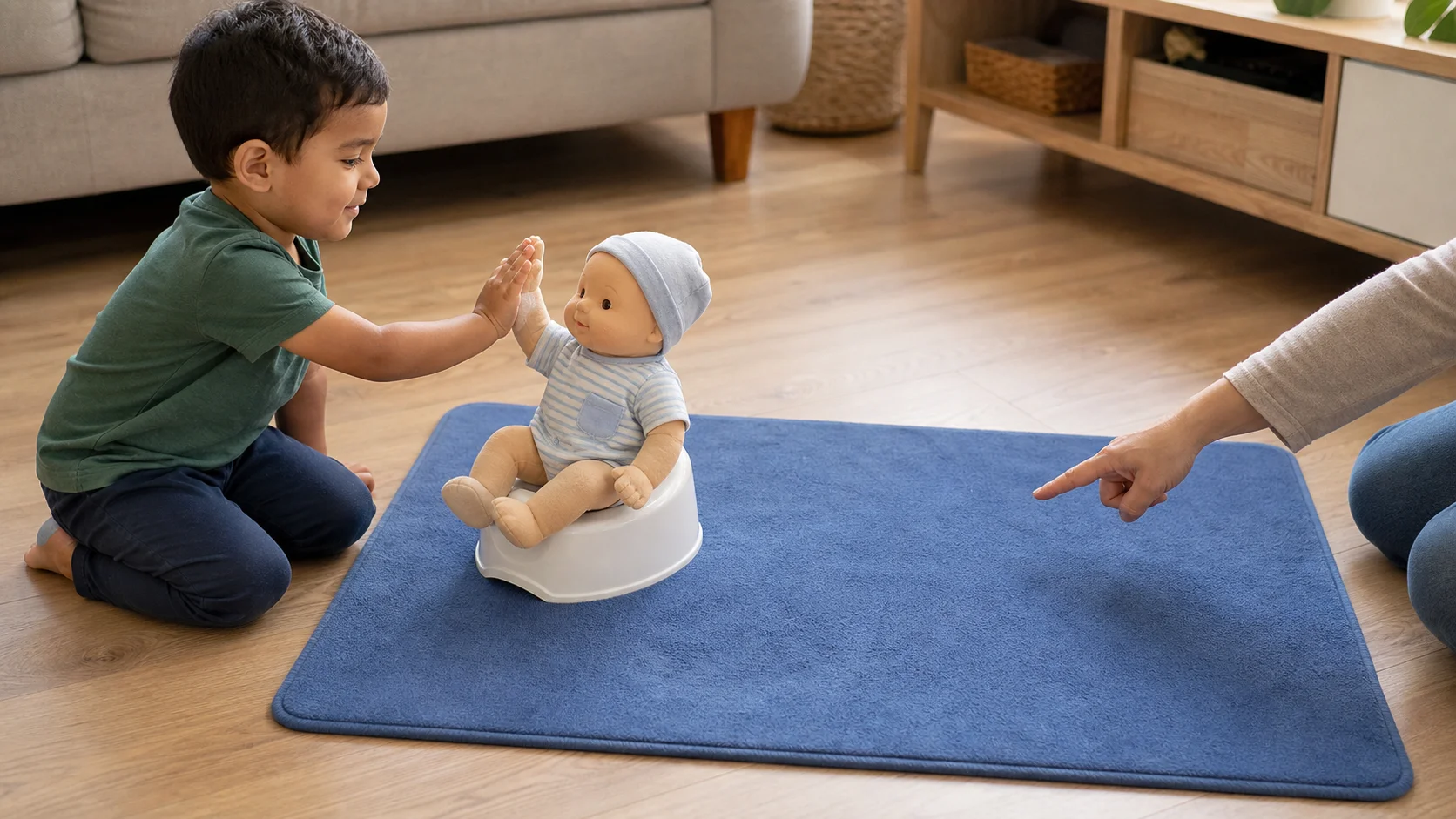
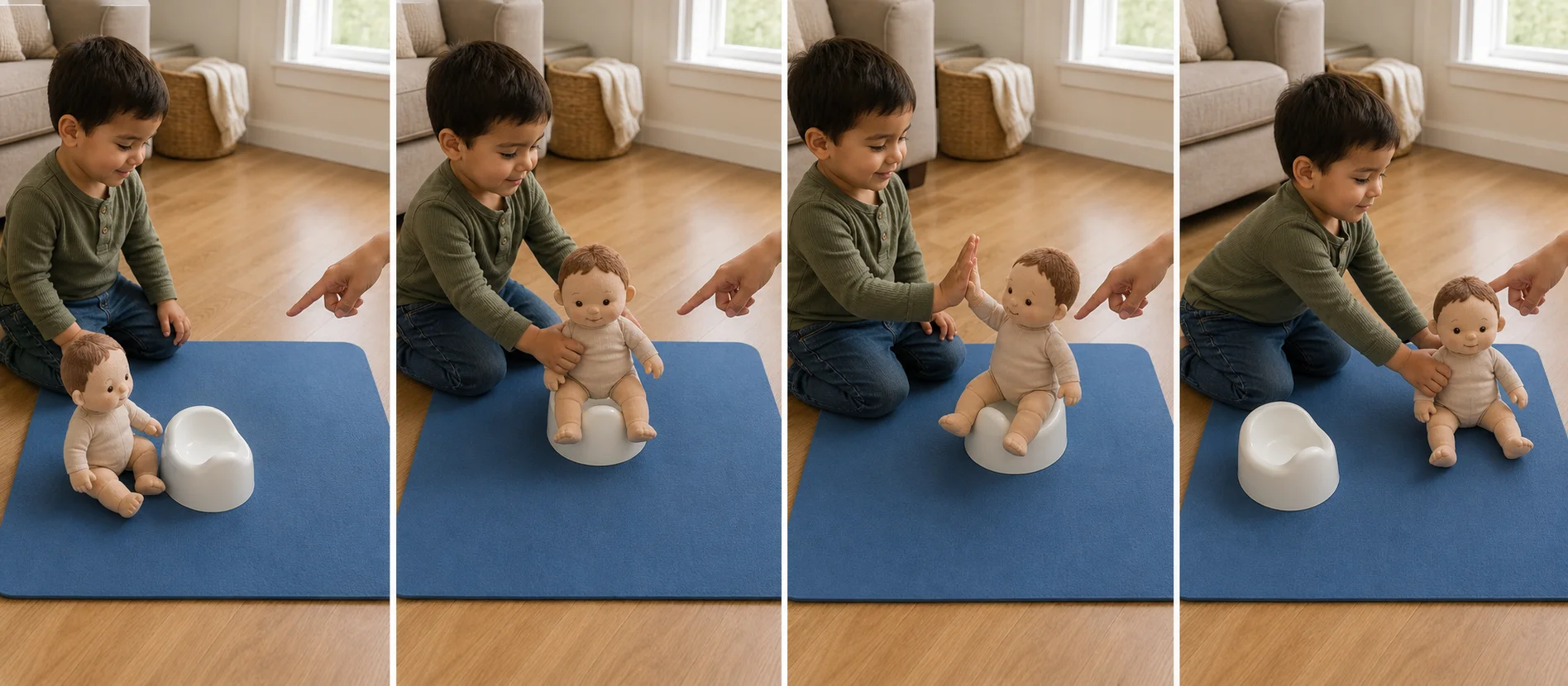
Give a potty routine a low-pressure pretend-play rehearsal. Your child seats a doll on a pretend potty, pauses, cheers for trying, and moves the doll to "all done" while practicing a calm, predictable care sequence.


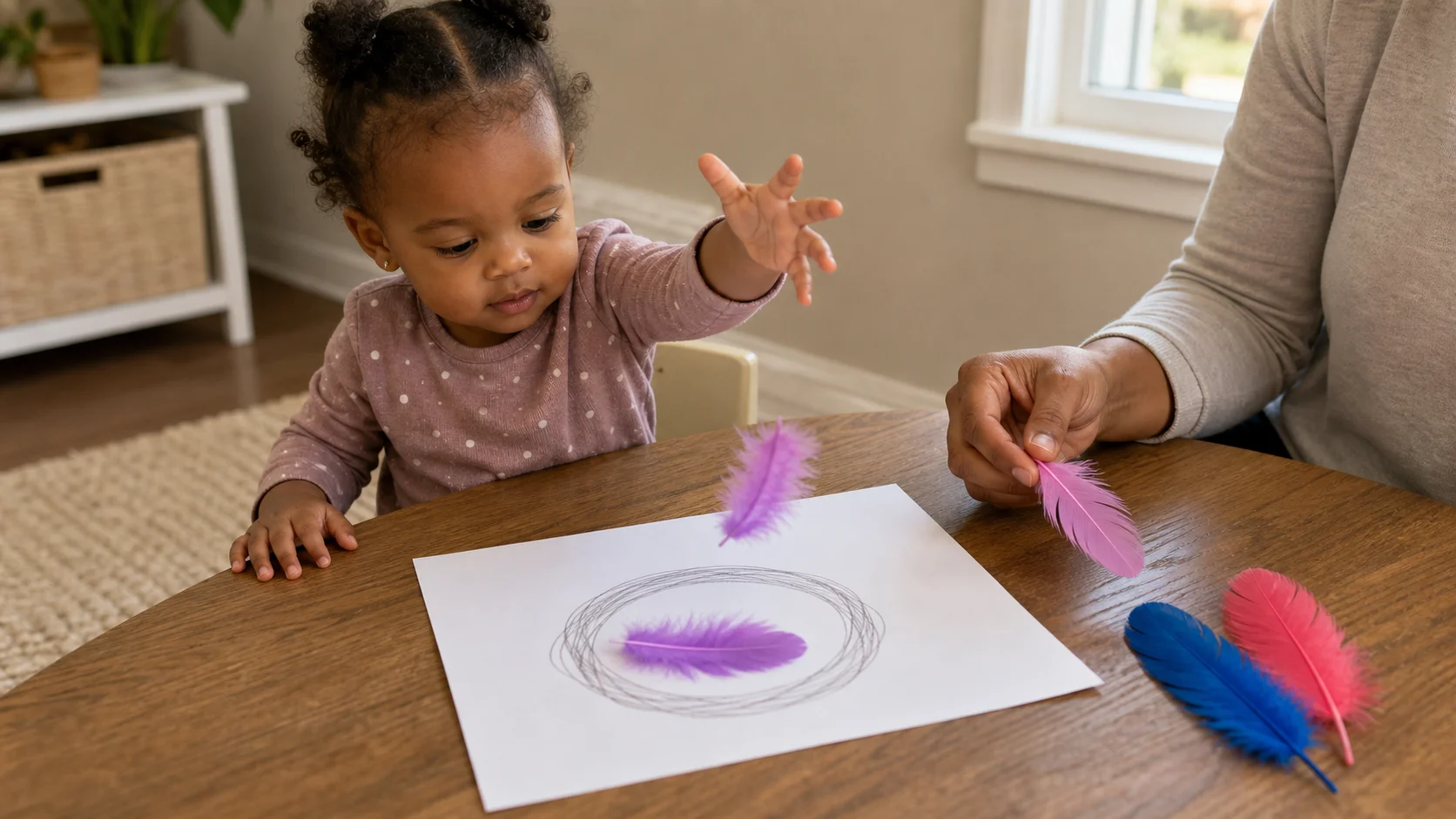
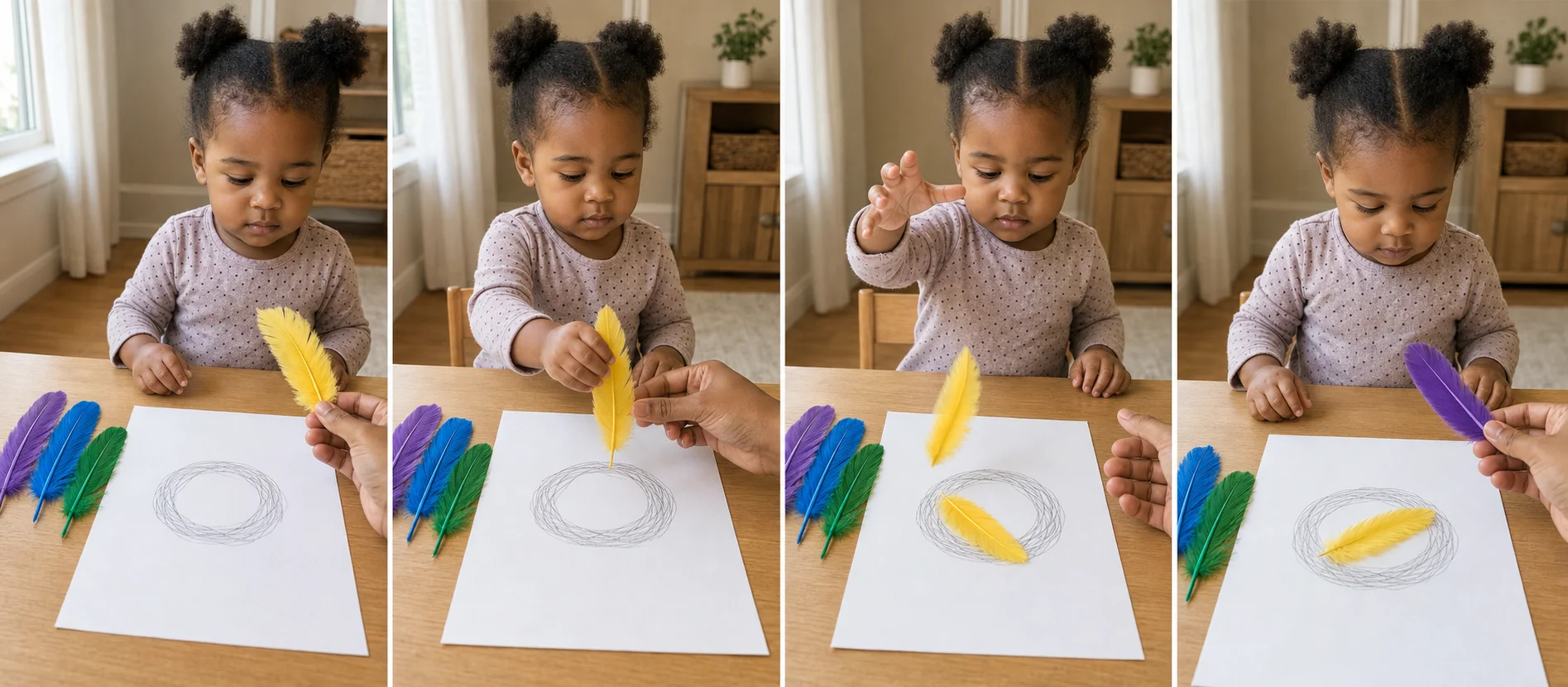
Can your child make a feather float into a paper nest? Draw a simple circle, then let them hold, release, and watch each feather drift down for gentle hand-control practice.


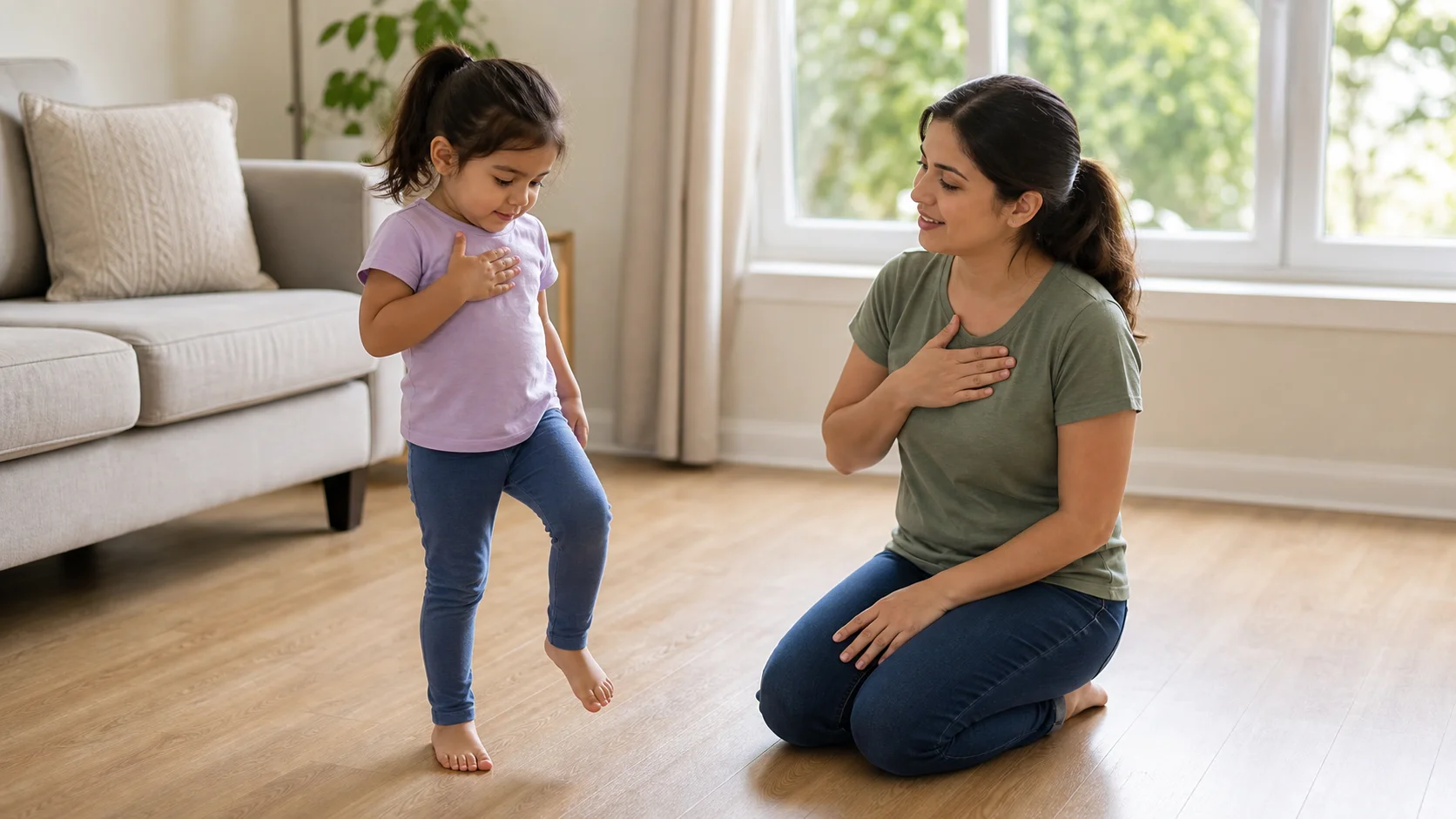
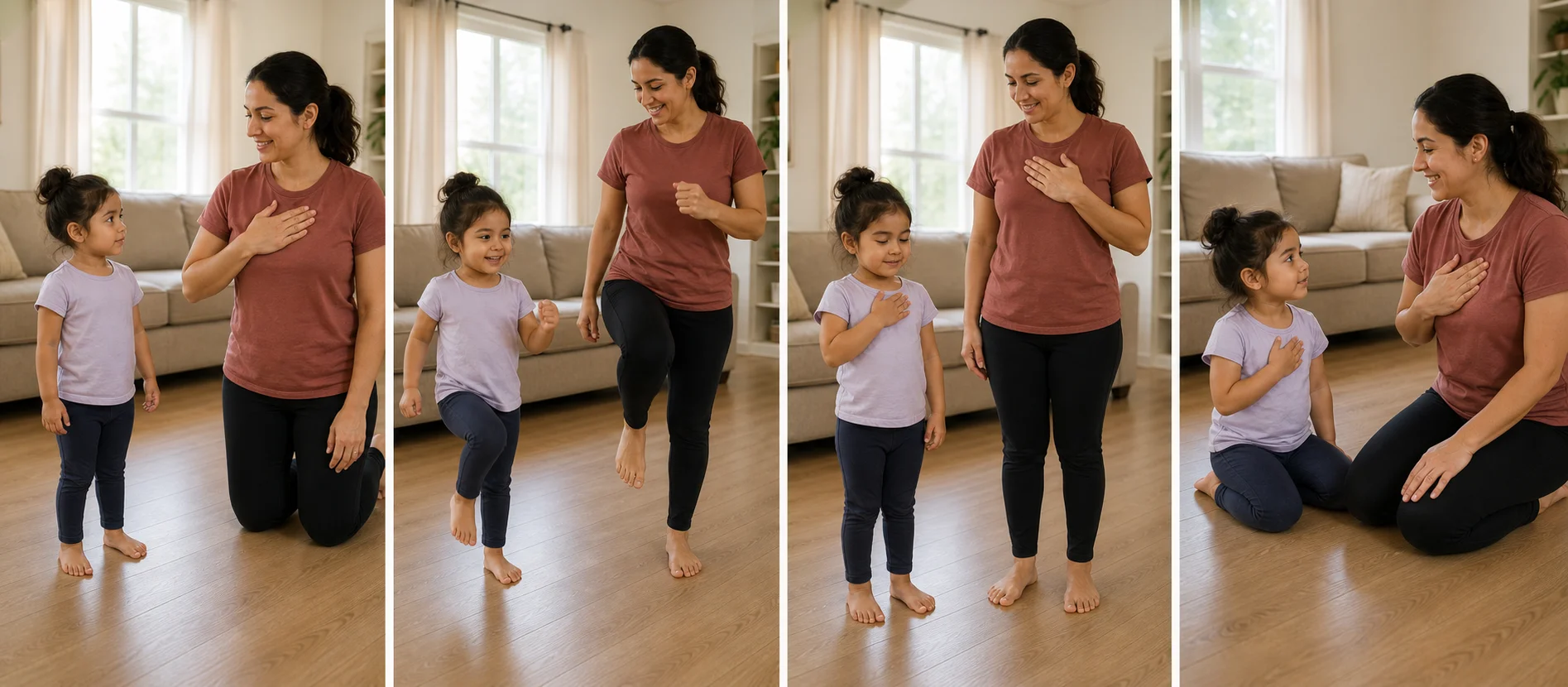
Can your child find the thump-thump after a quick burst of movement? They will march or jump, freeze, and decide whether their heartbeat feels rabbit fast or turtle slow, building awareness of how movement changes the body.


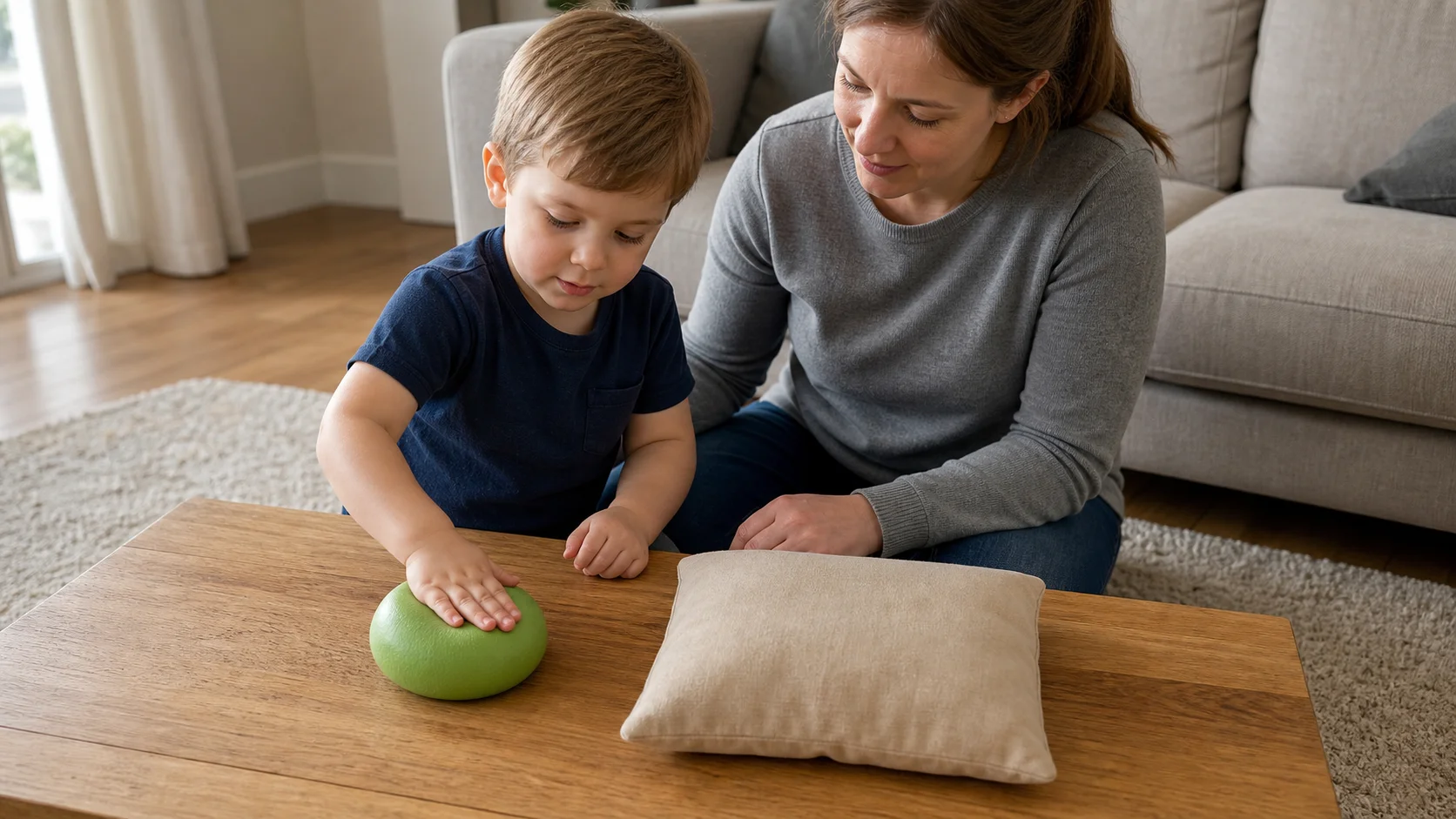
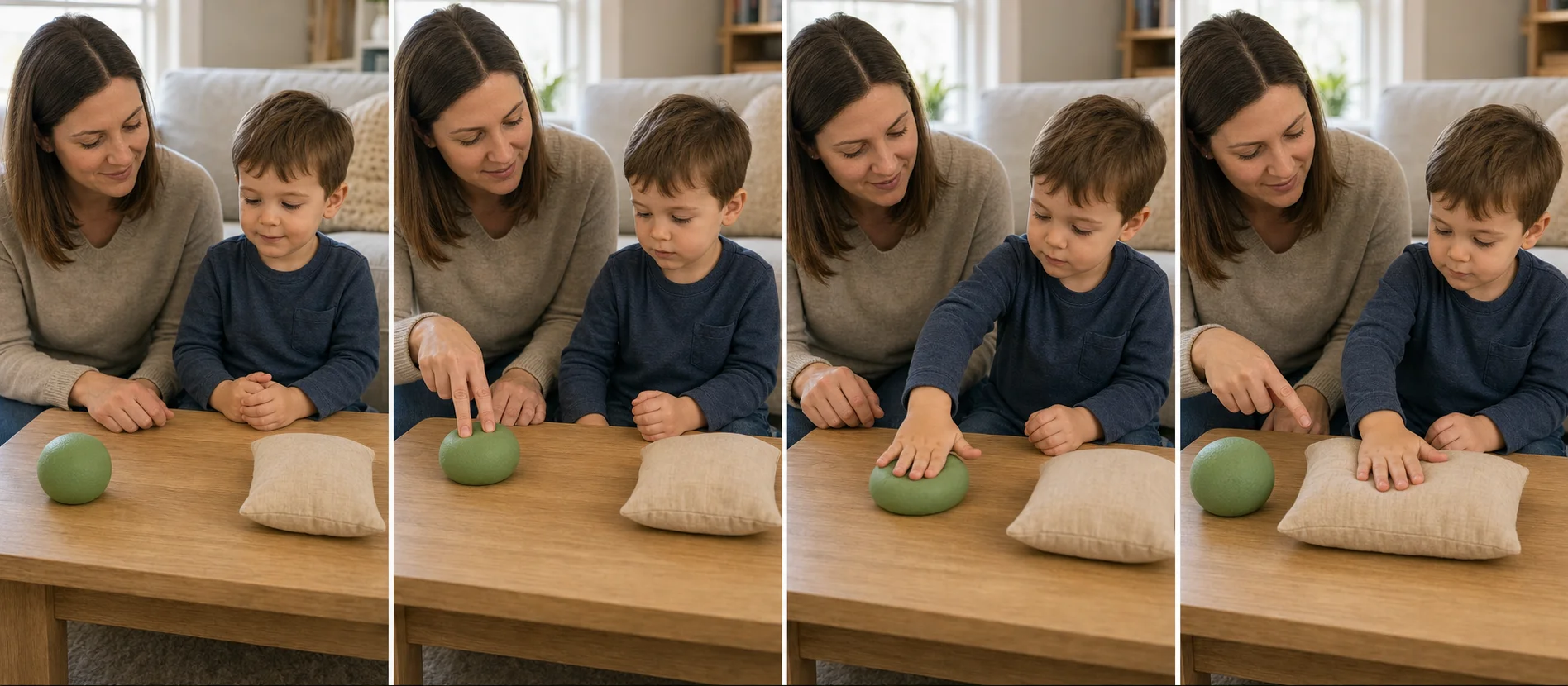
Can your child make a soft ball or pillow barely move, then squash it a little more? Comparing a light press with a firmer one helps them practice controlling how much force they use with their hands.


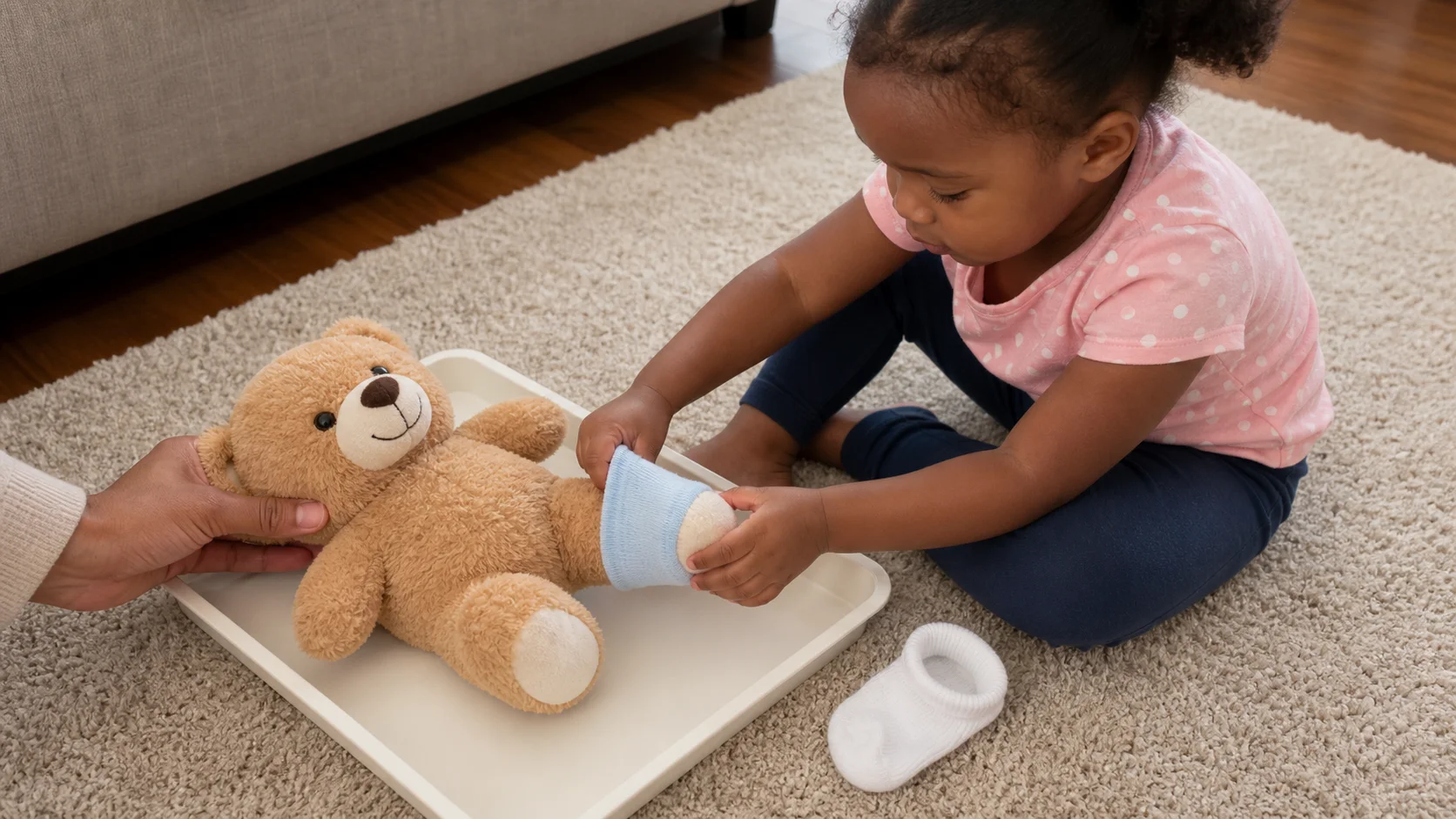
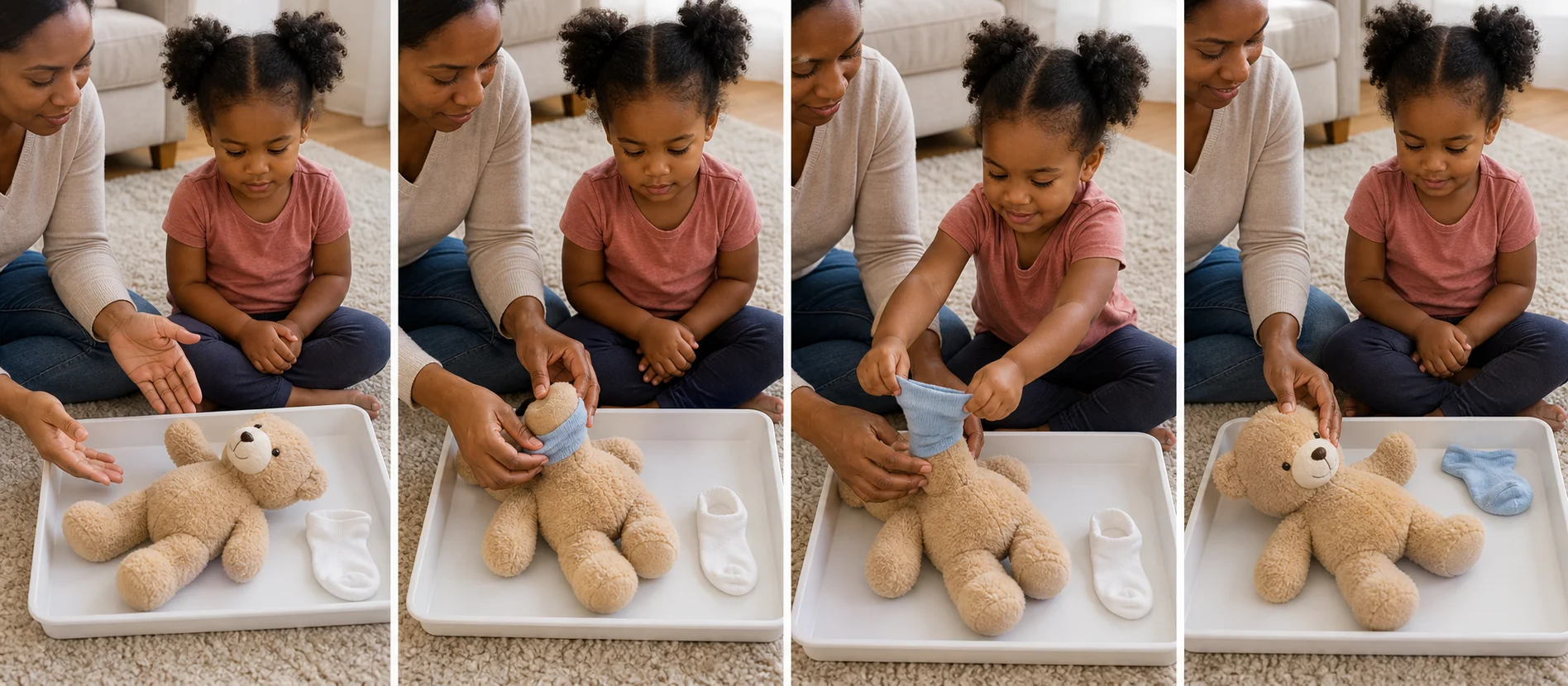
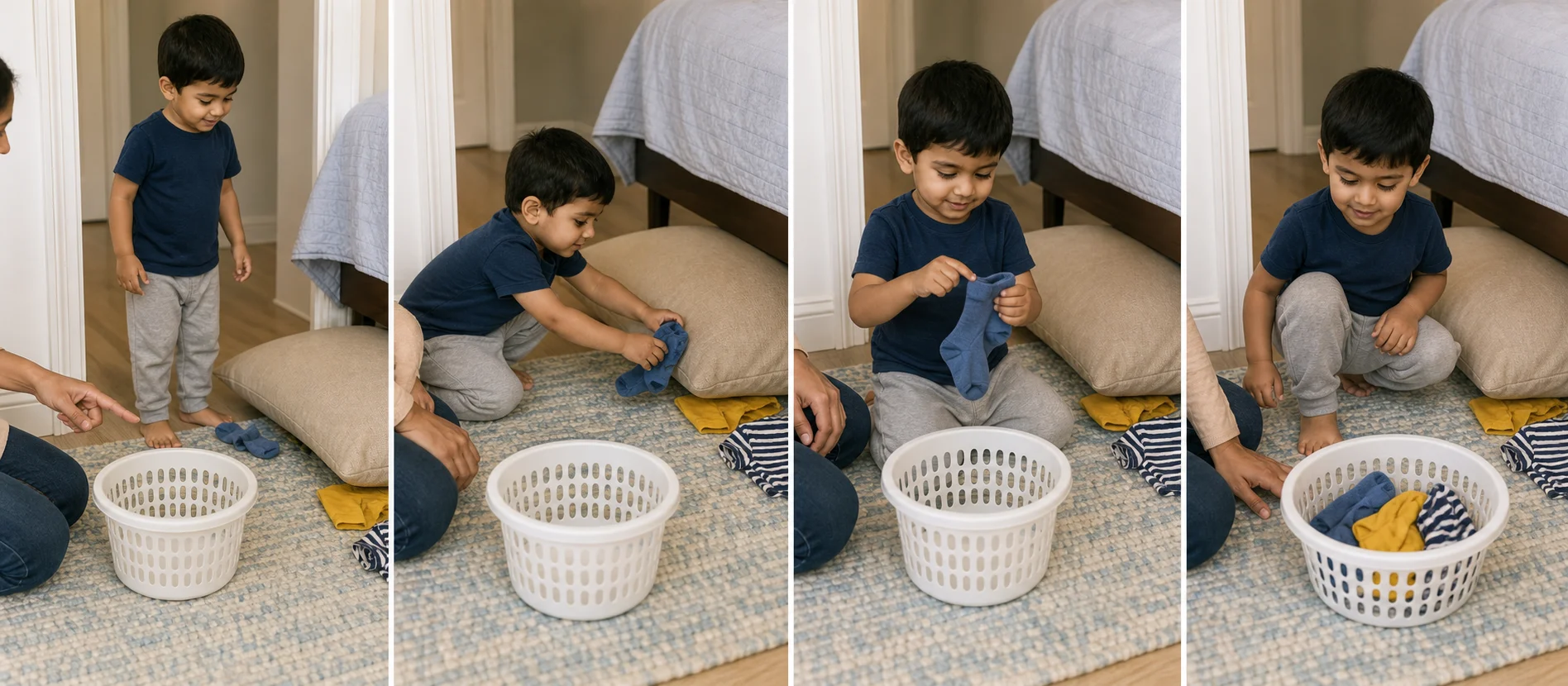
Inside-Out Sock Teddy is a sock practice activity for toddlers that helps children practice a pull-through dressing step through a clear, repeatable play loop.


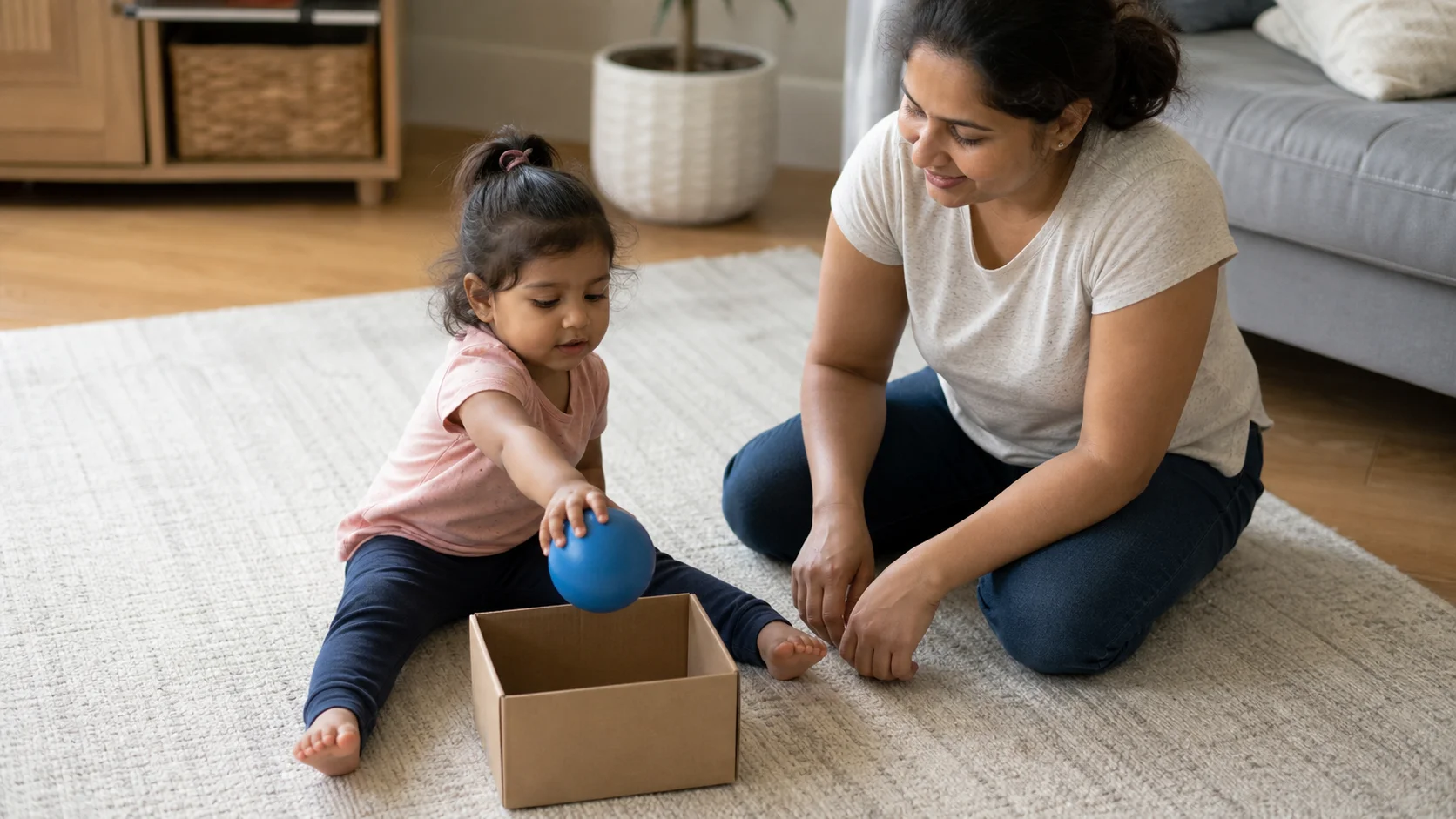
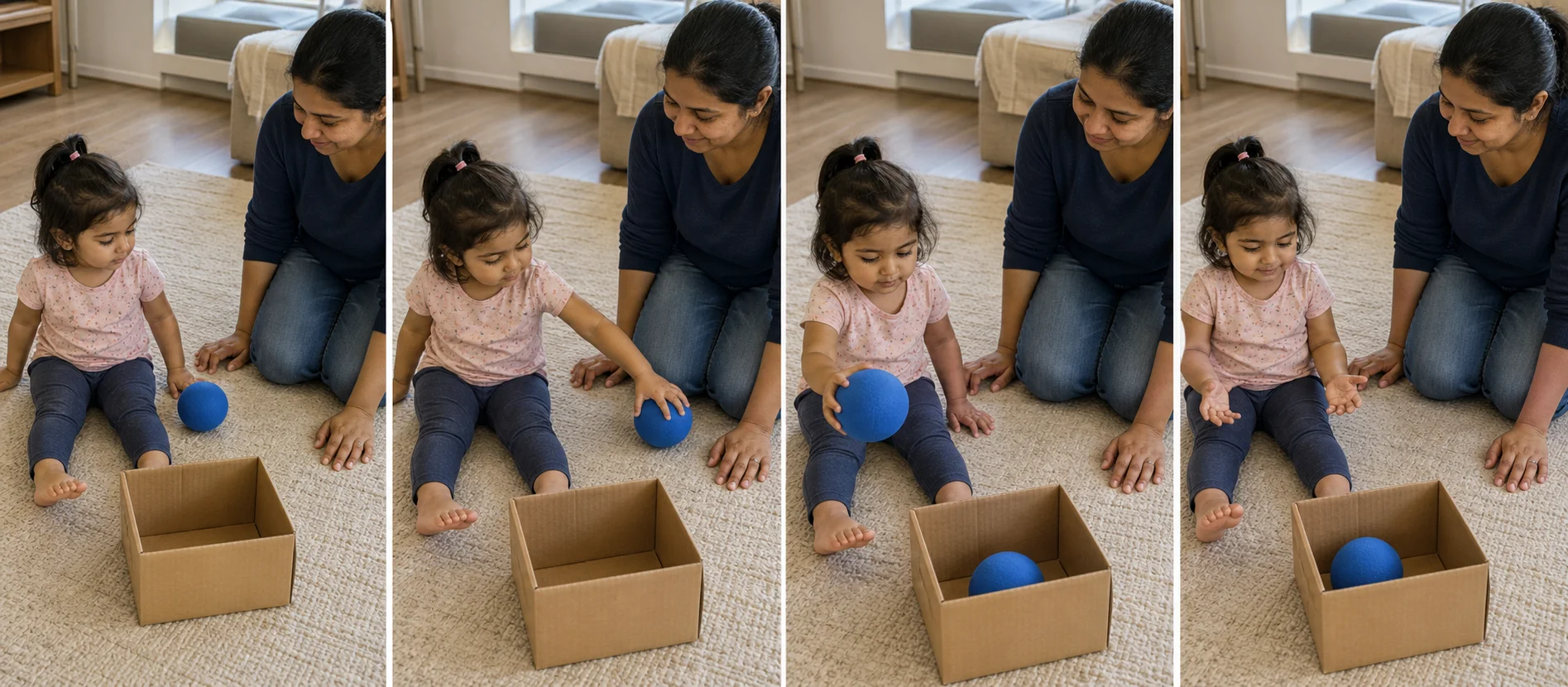
Can your child move a ball from beside their hip into a box at their feet? This seated reach-and-drop challenge builds balance, body control, and careful release through one simple, repeatable game.


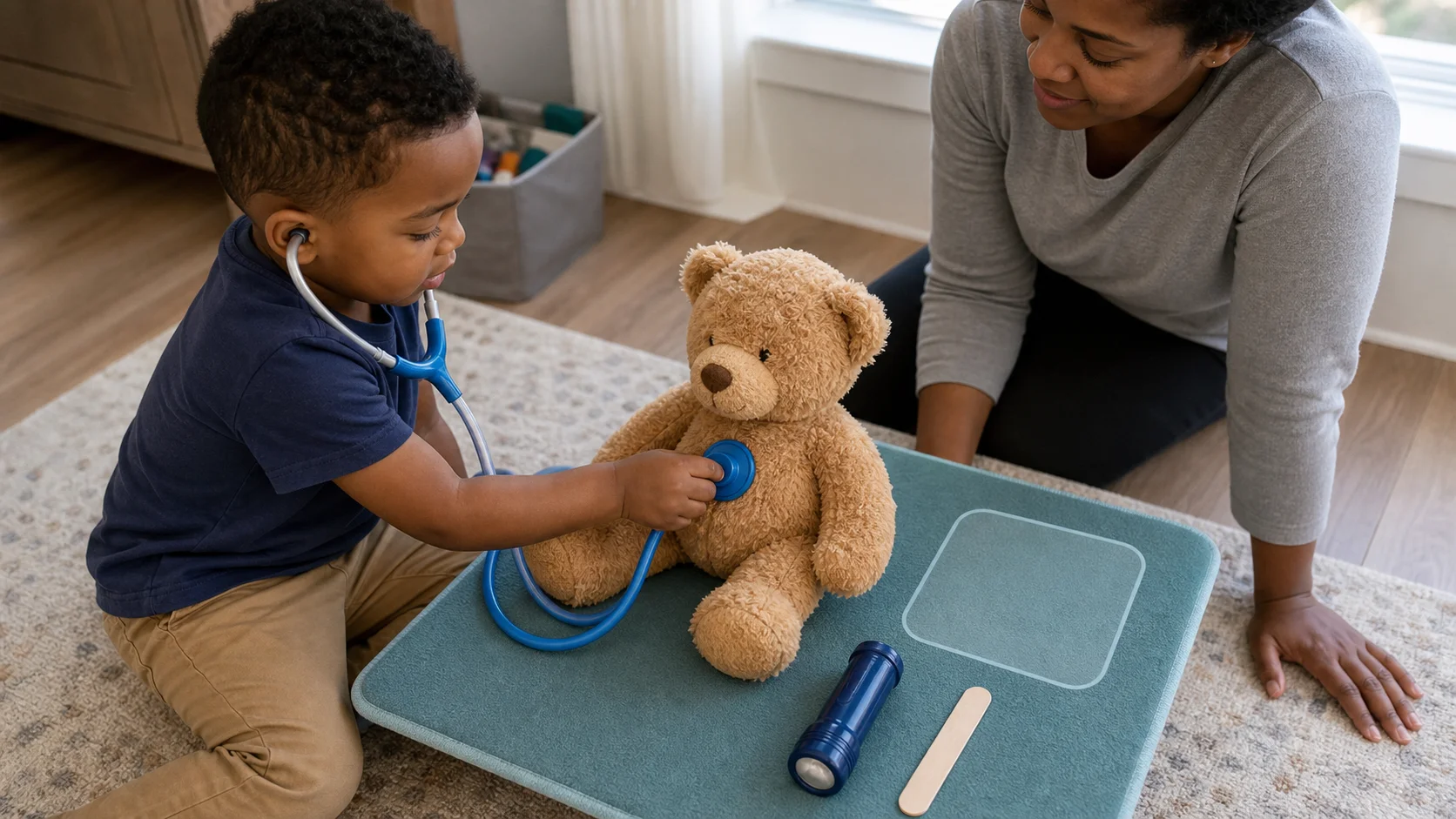
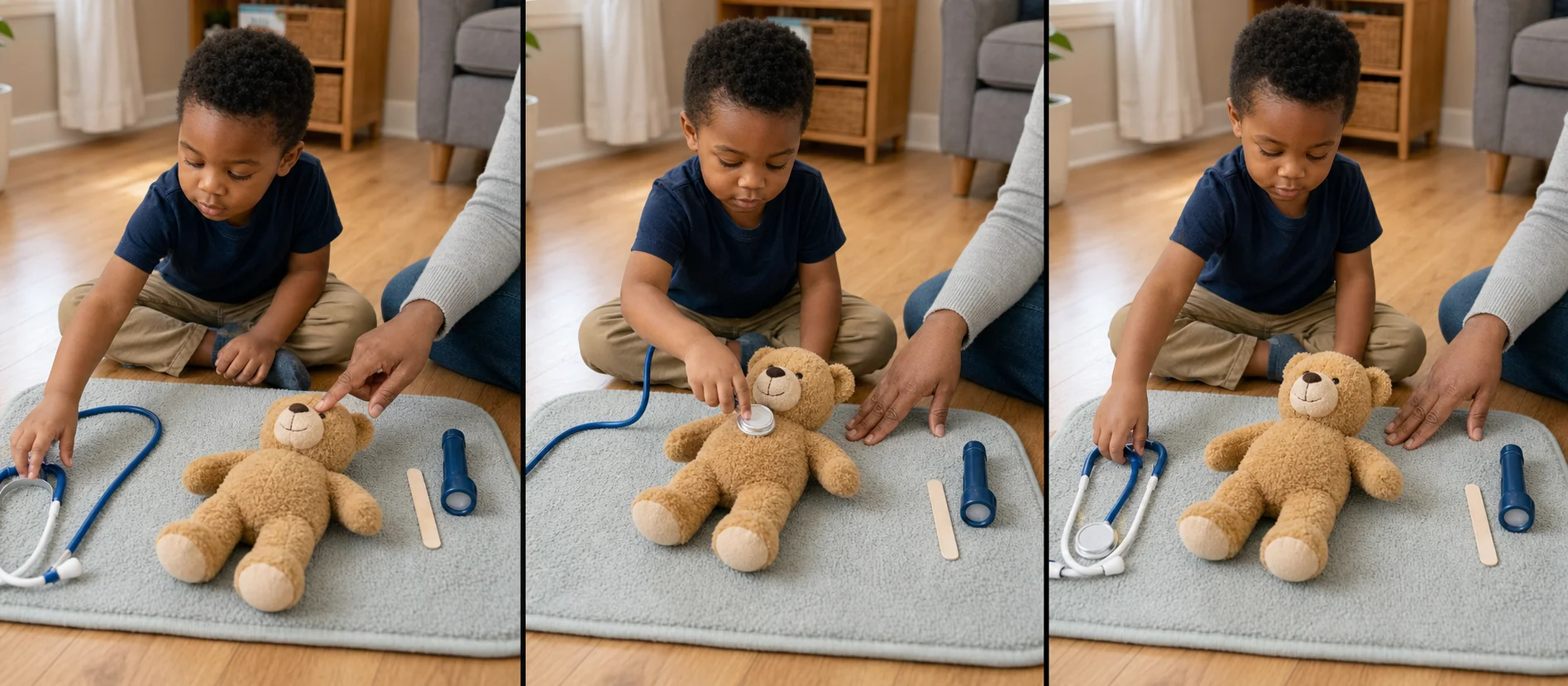
Make doctor tools feel more familiar by giving a stuffed animal a simple checkup. Your toddler chooses one tool, checks one toy body part, and marks the step done while practicing pretend play and a clear care routine.


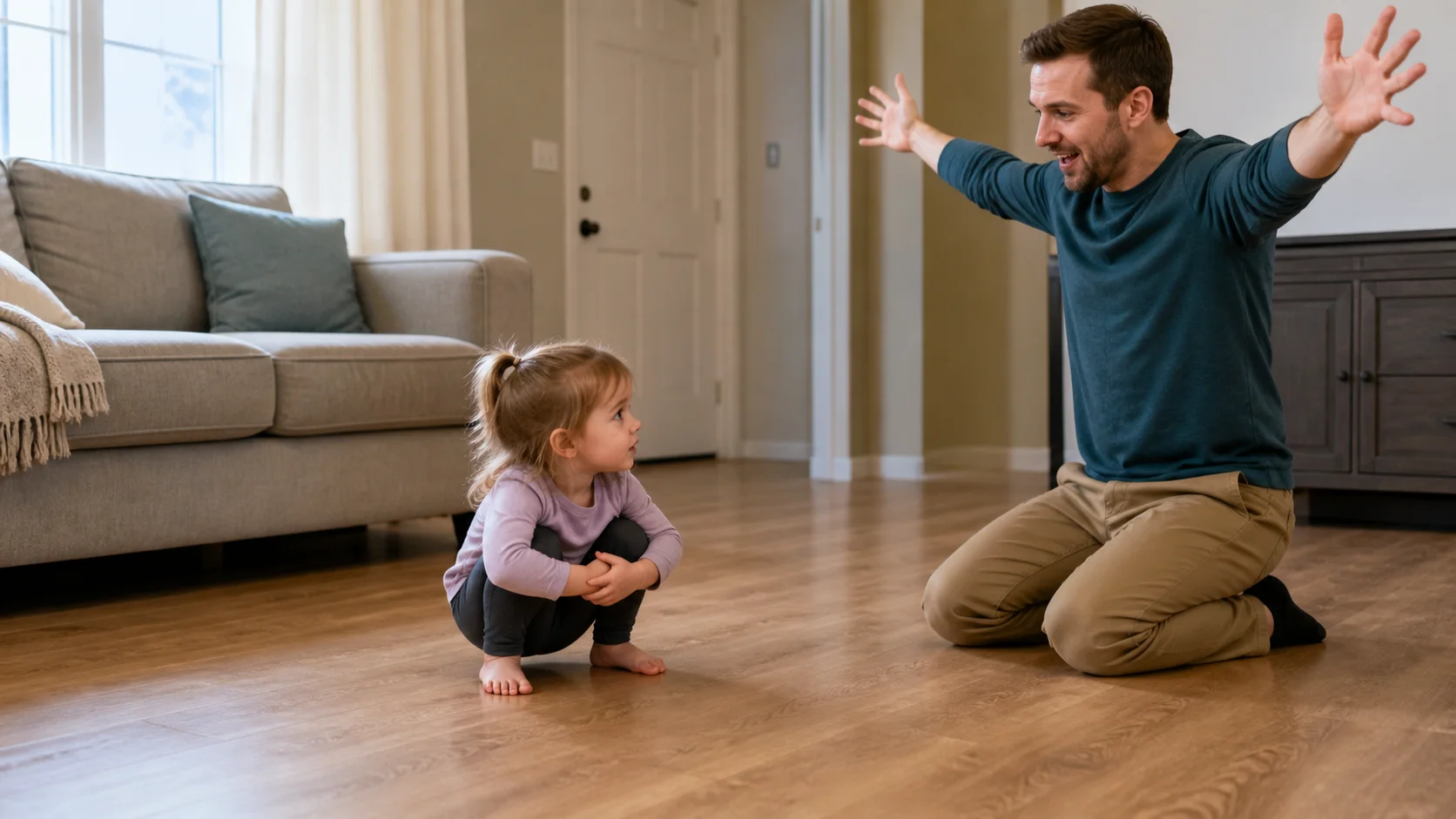
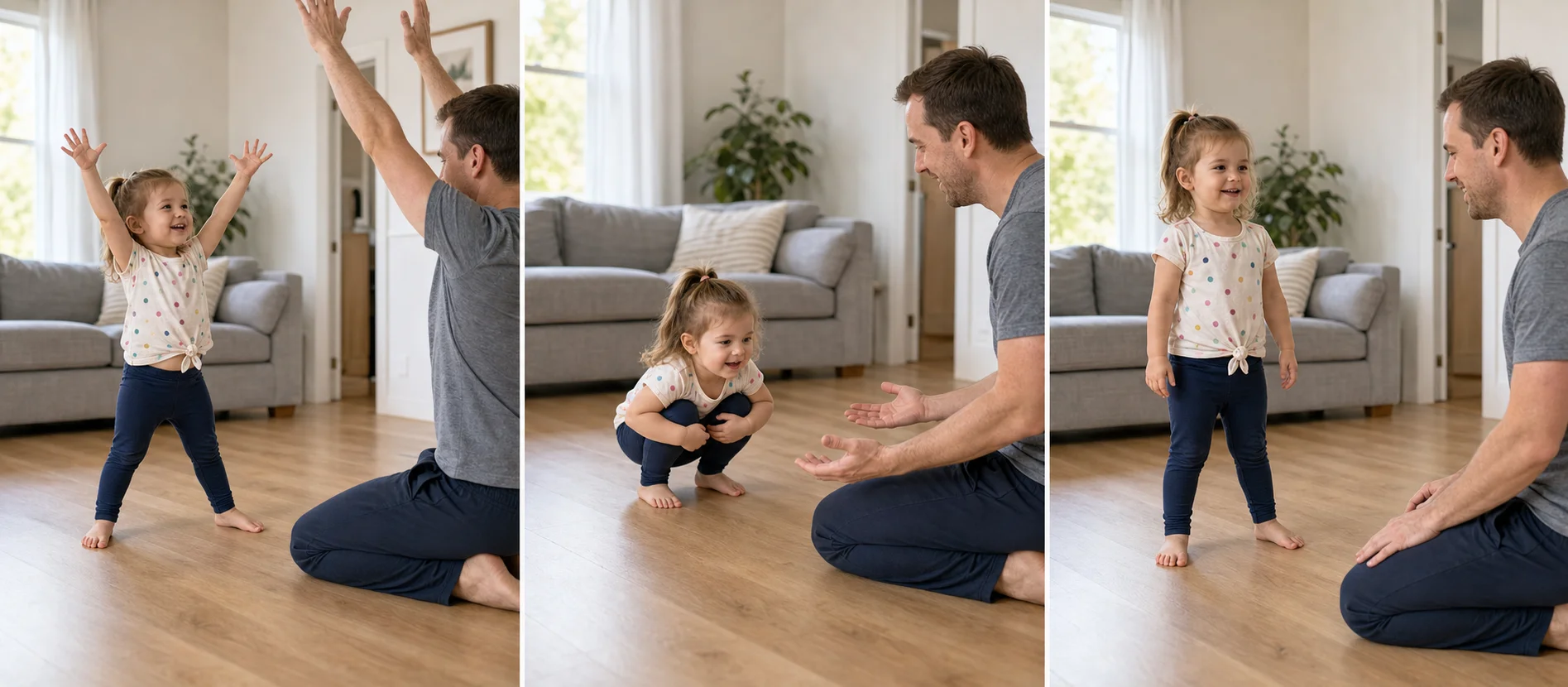
Give your child a calm whole-body challenge with one simple pattern: reach overhead into a tall star, crouch into a small ball, then stand and repeat. Each round practices changing body level with control.


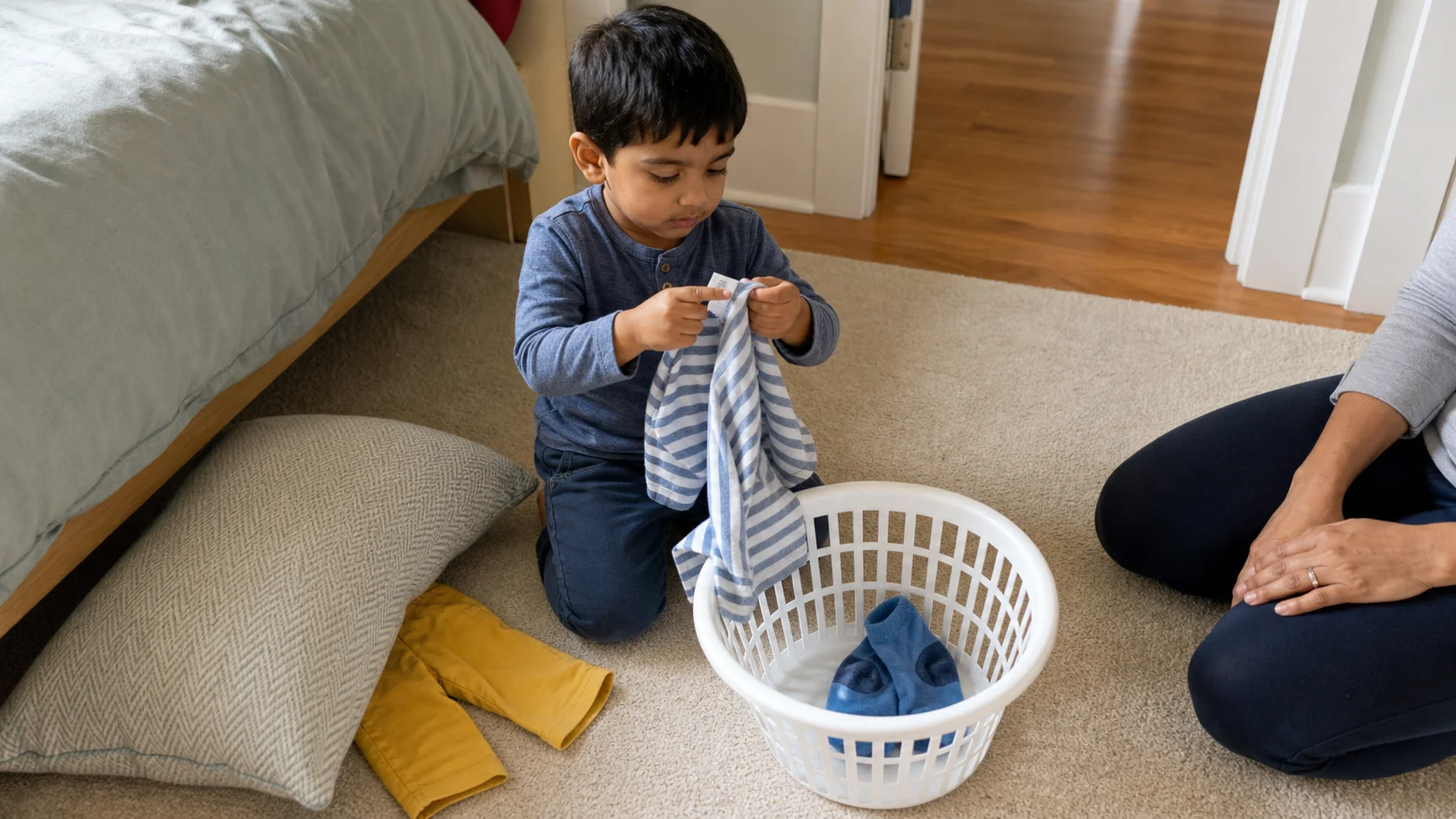
Turn getting familiar with clothing into a low-pressure hide-and-seek game. Your child searches for soft clothes, checks a tag, seam, or texture, and collects each find in a basket while practicing search, memory, and clothing exploration at their own pace.


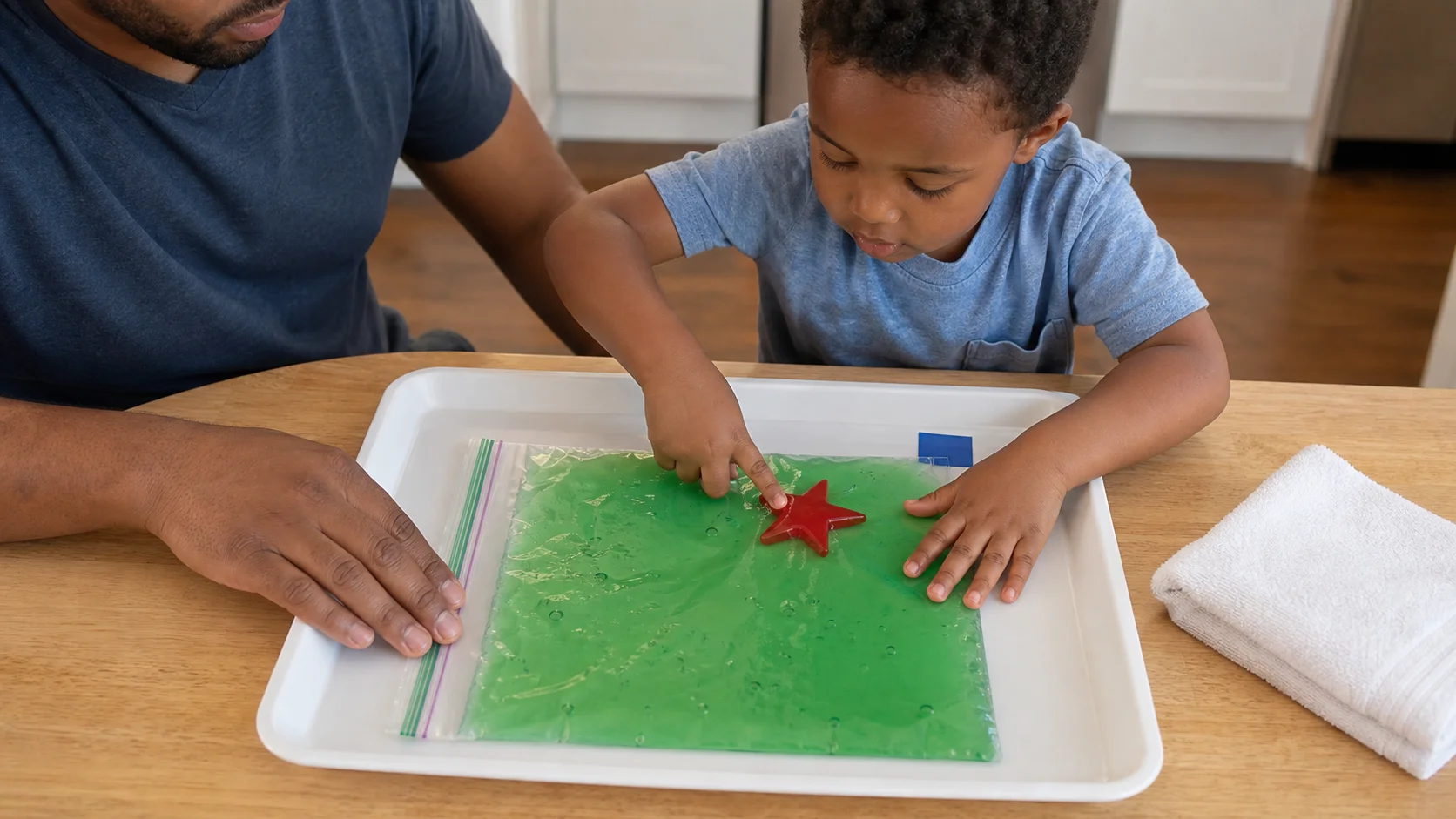
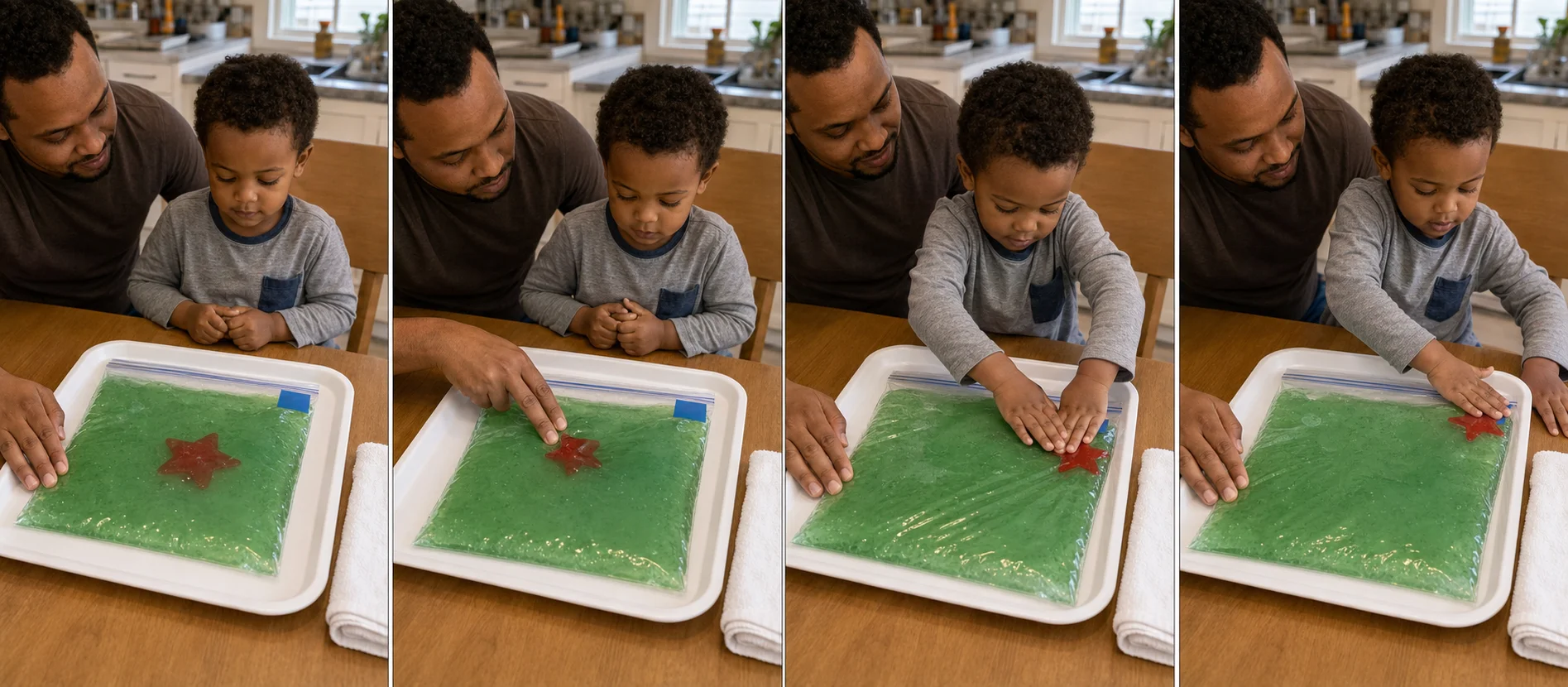
Jelly Bag Search is a contained sensory play for toddlers that helps children practice controlled pressing through a clear, repeatable play loop.


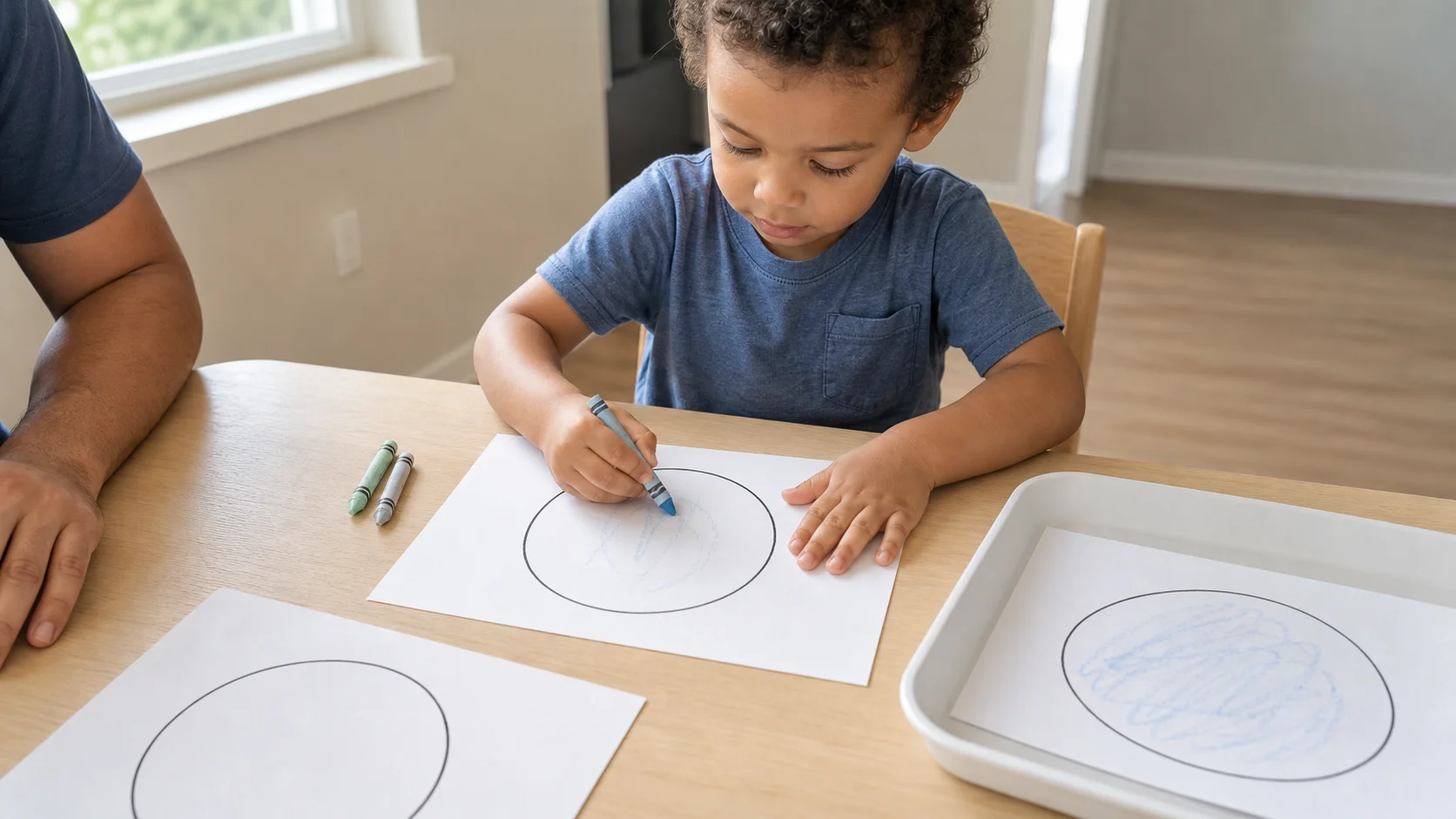
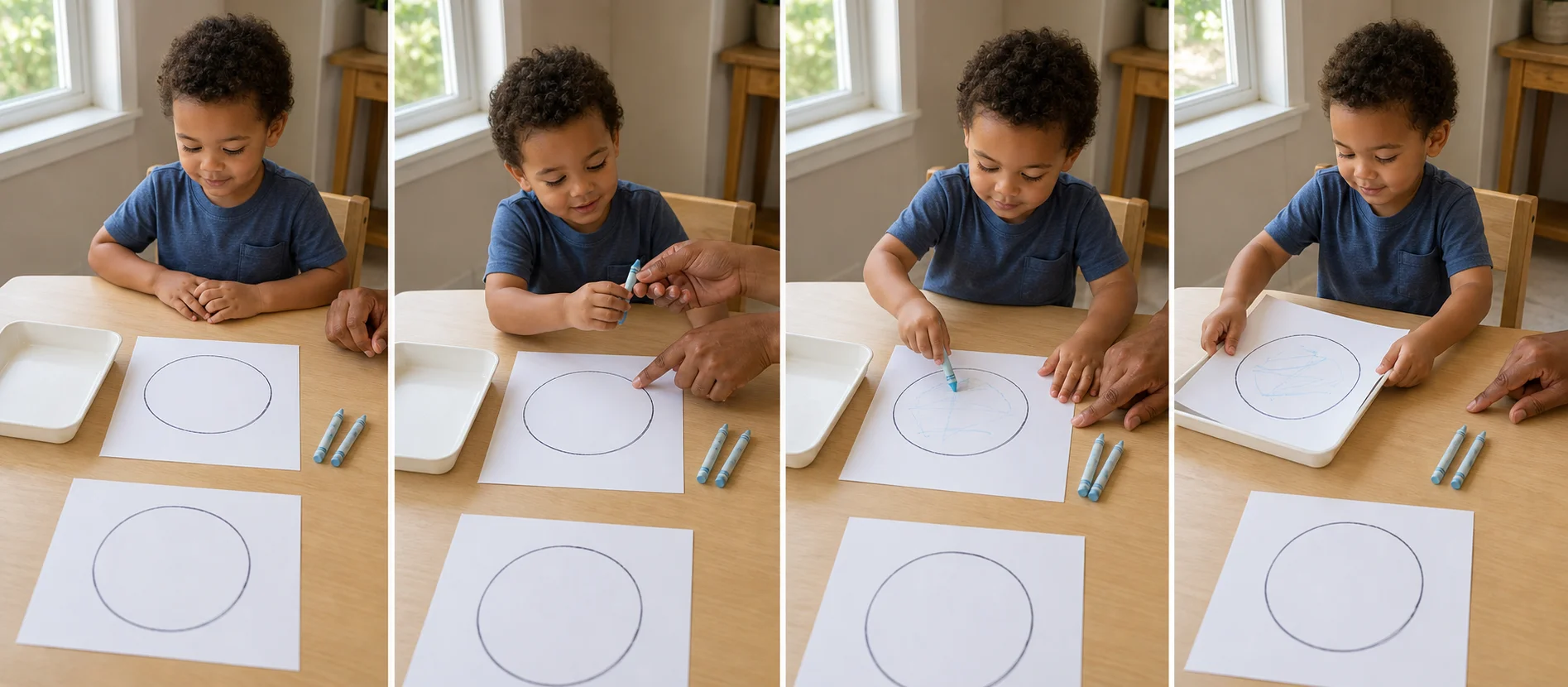
When bright, busy art feels like too much, one pale crayon and one simple shape create a calmer way to color. Your child makes marks, moves the page to a clear done spot, and practices finishing a short visual routine.


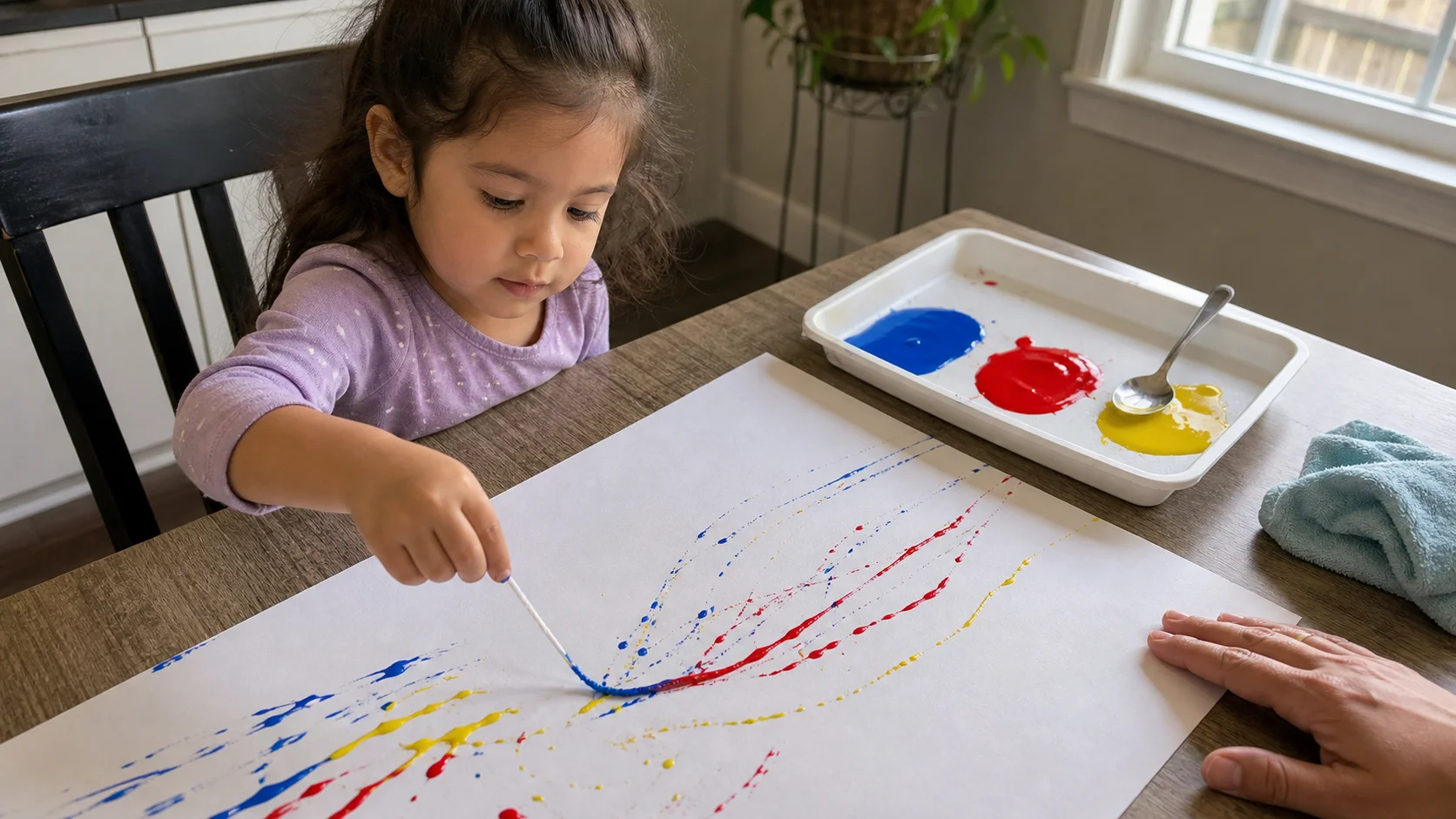
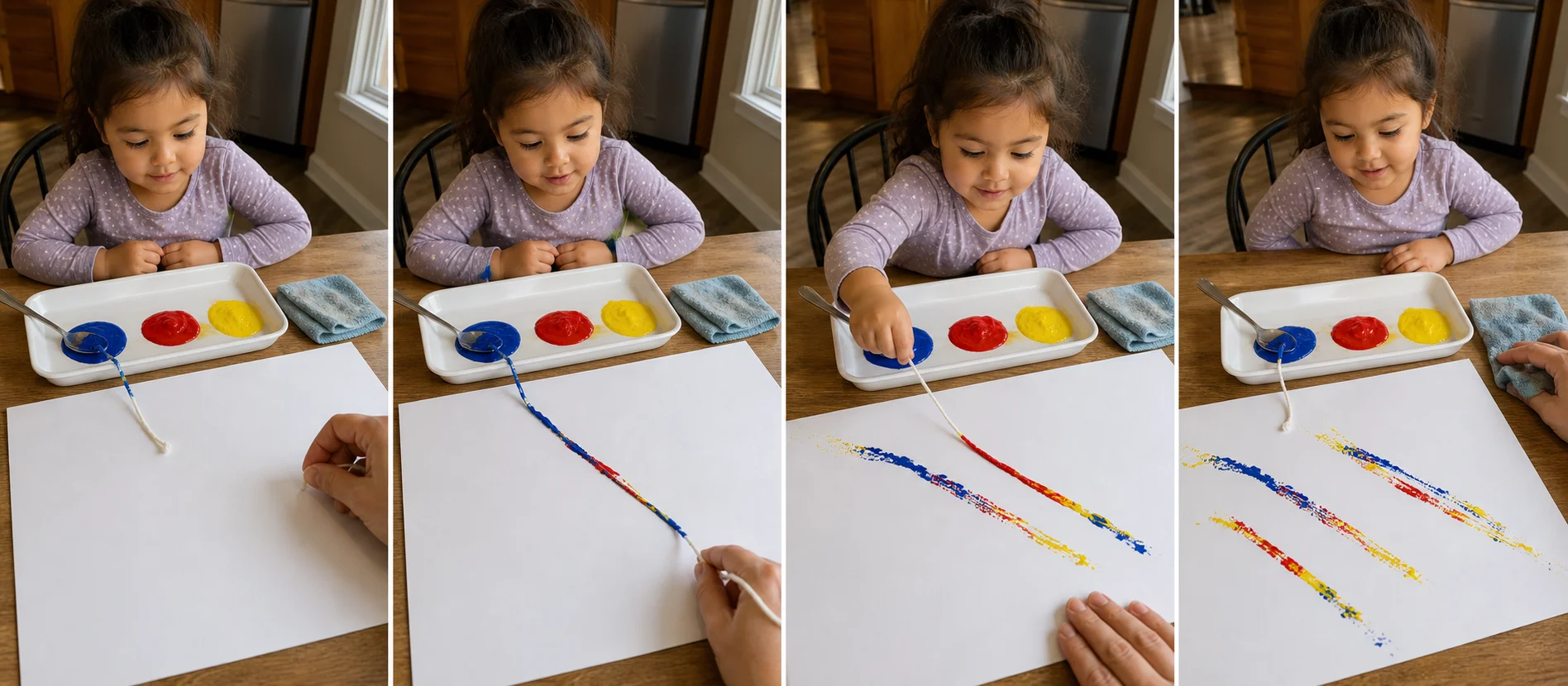
Turn a short piece of string and a few paint puddles into instant, surprising trails. Your child pinches the dry end, pulls the painted string across paper, and practices guiding a small tool as each new line appears.


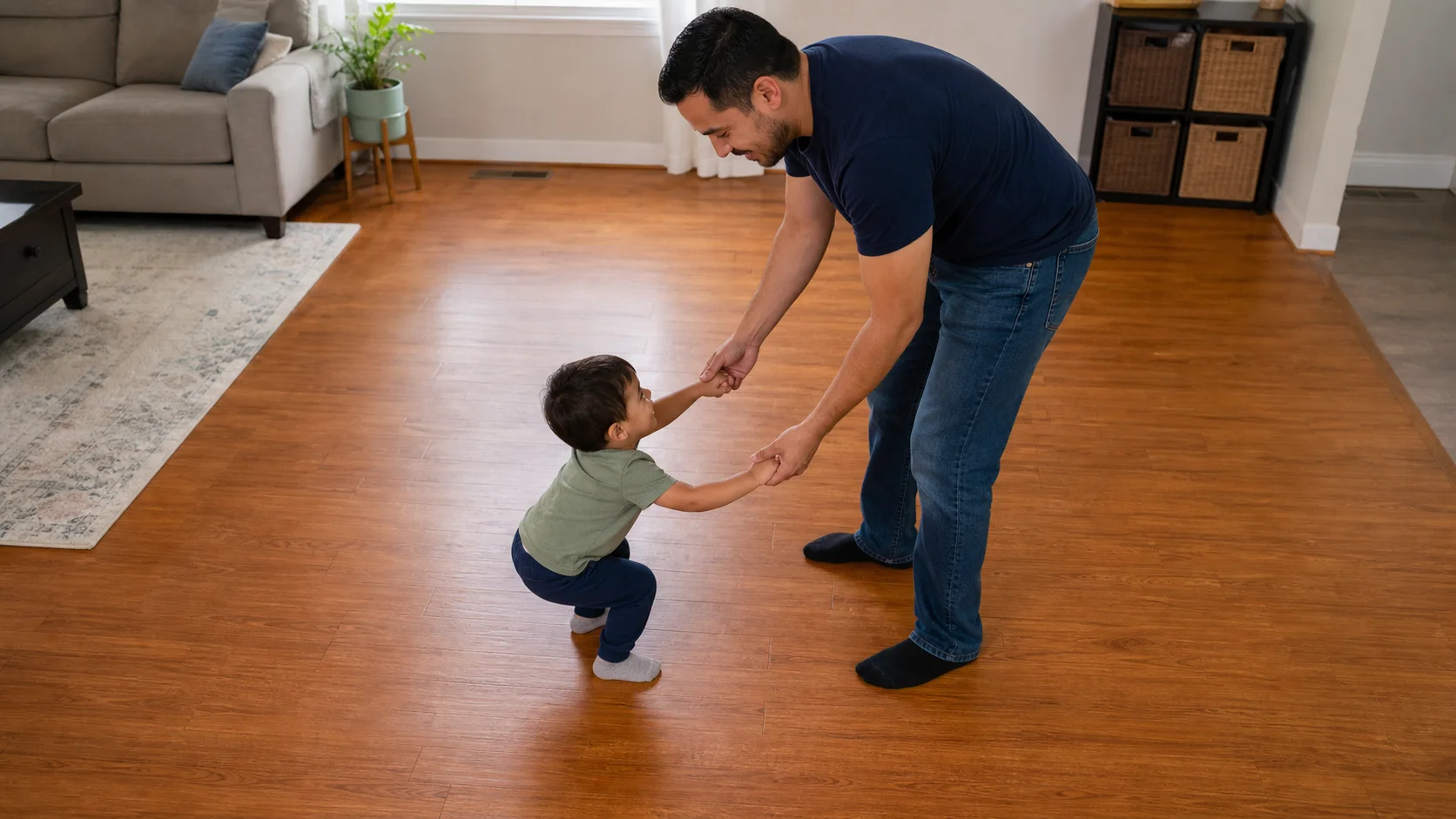
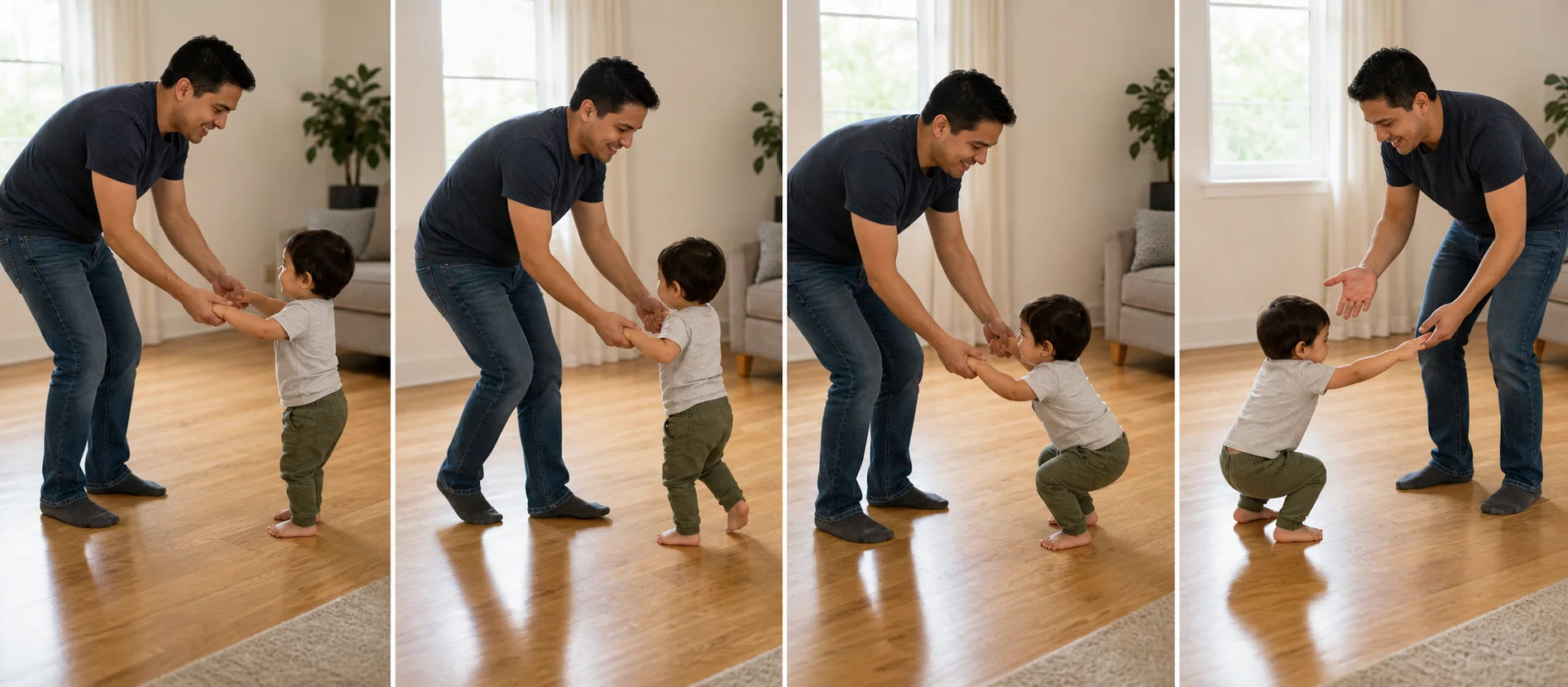
Ring-a-Roses Spin Drop is a movement game for toddlers that helps children change body levels safely through a clear, repeatable play loop.


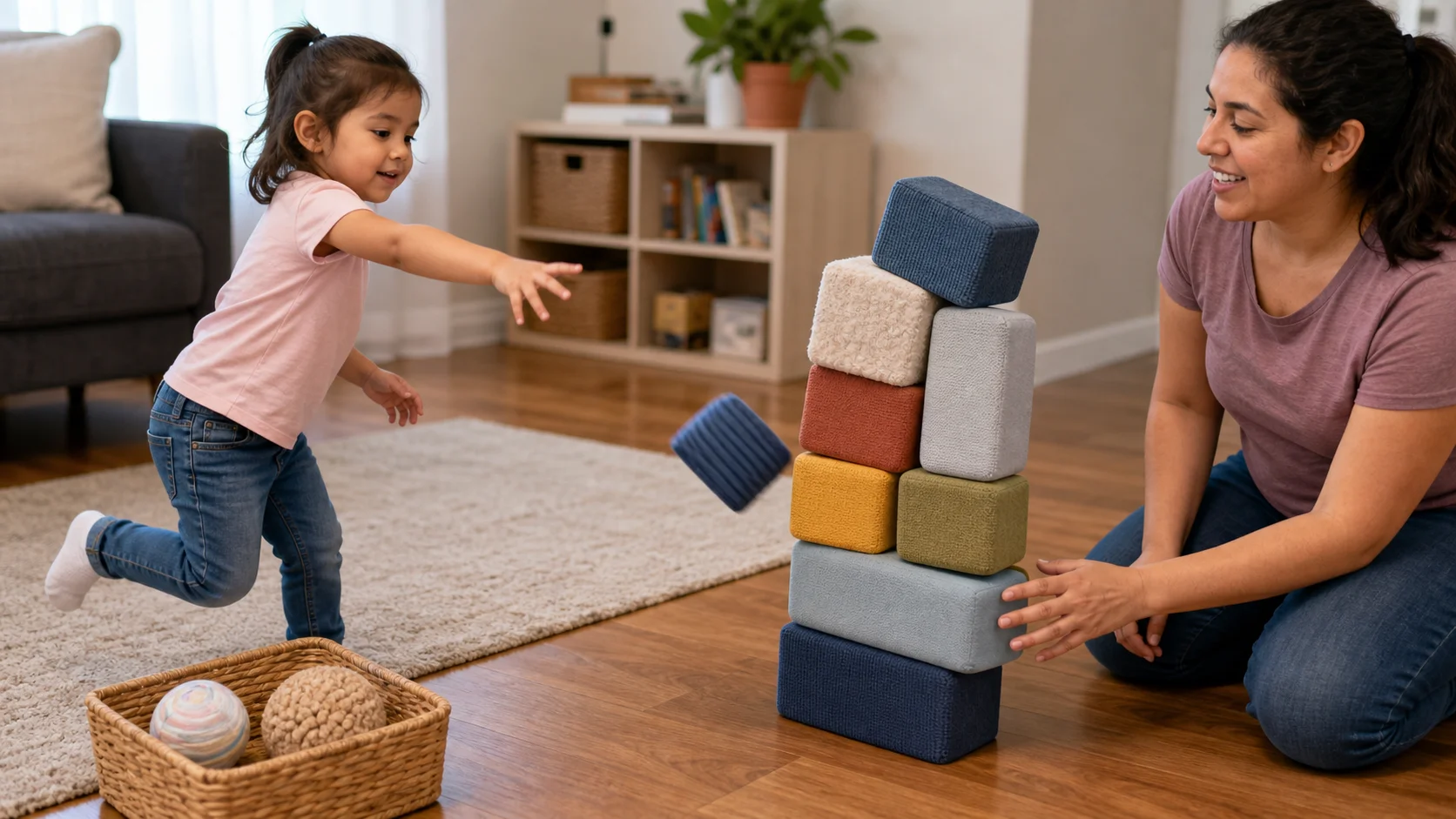
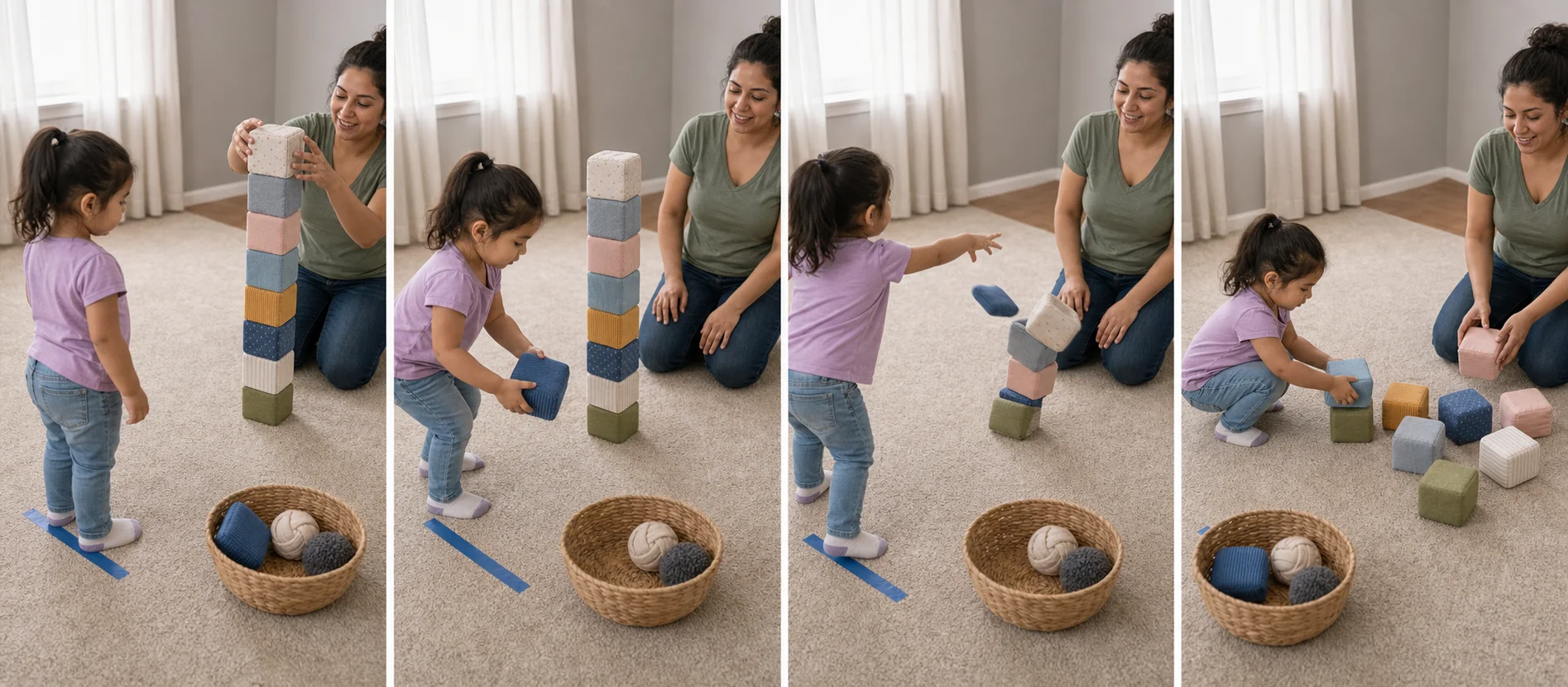
Give indoor tossing a target that is supposed to tumble. Your child chooses a soft textured object, aims for a lightweight block tower, and rebuilds after each crash to practice throwing toward a target while keeping texture exploration child-led.

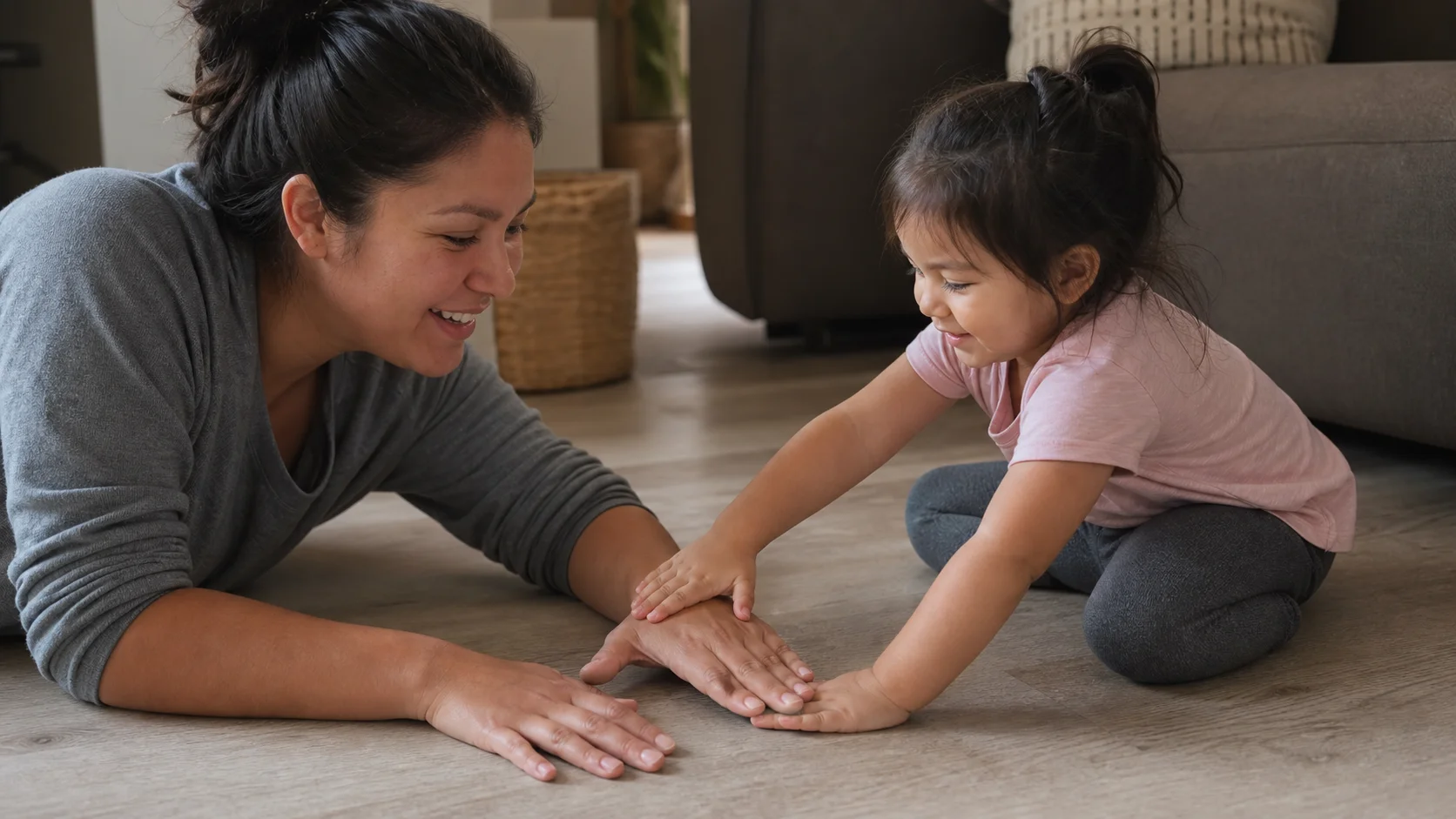
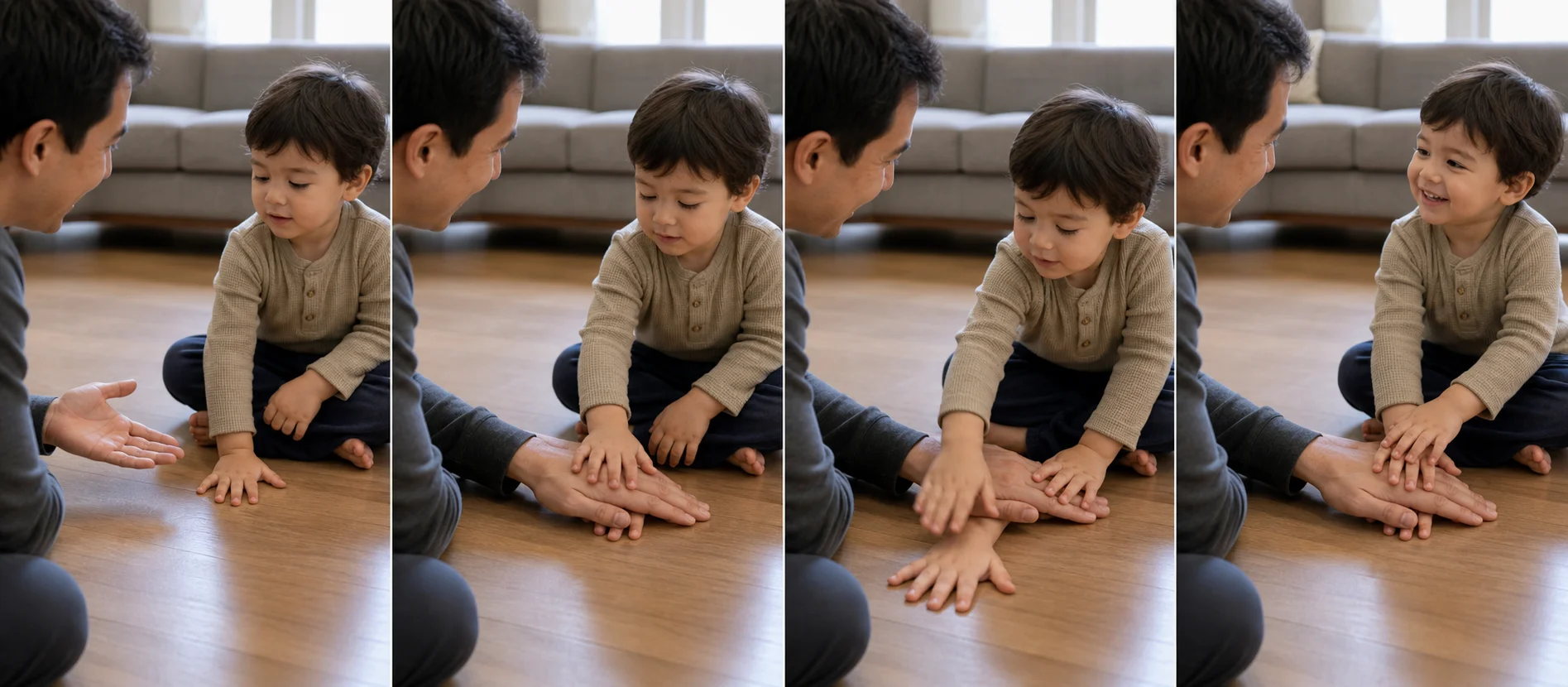
Turn three stacked hands into a quick pull-out challenge. Your child uses both hands to build the tower, then slides the bottom hand free before rebuilding it for another turn, practicing two-hand coordination and controlled movement.


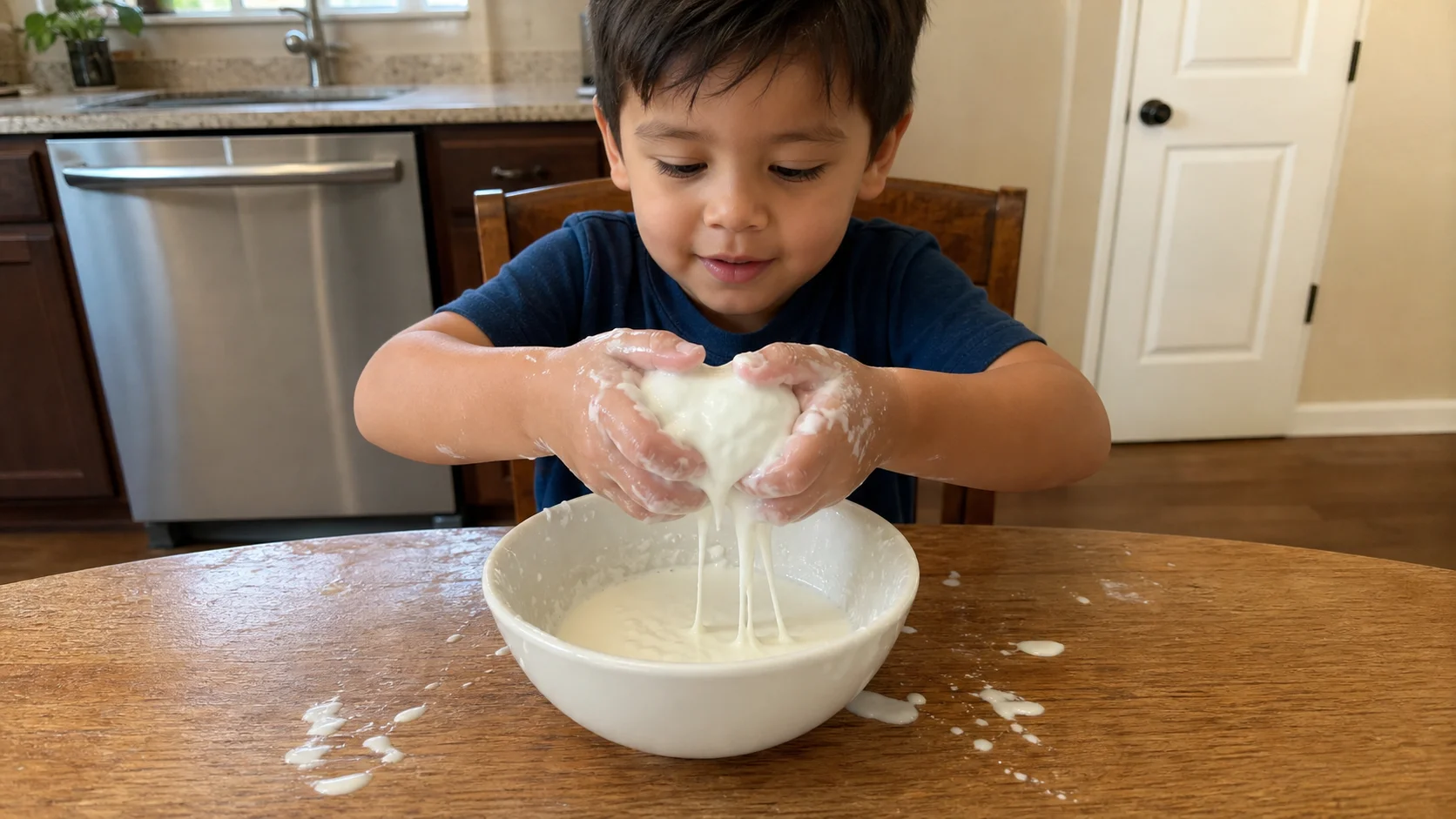
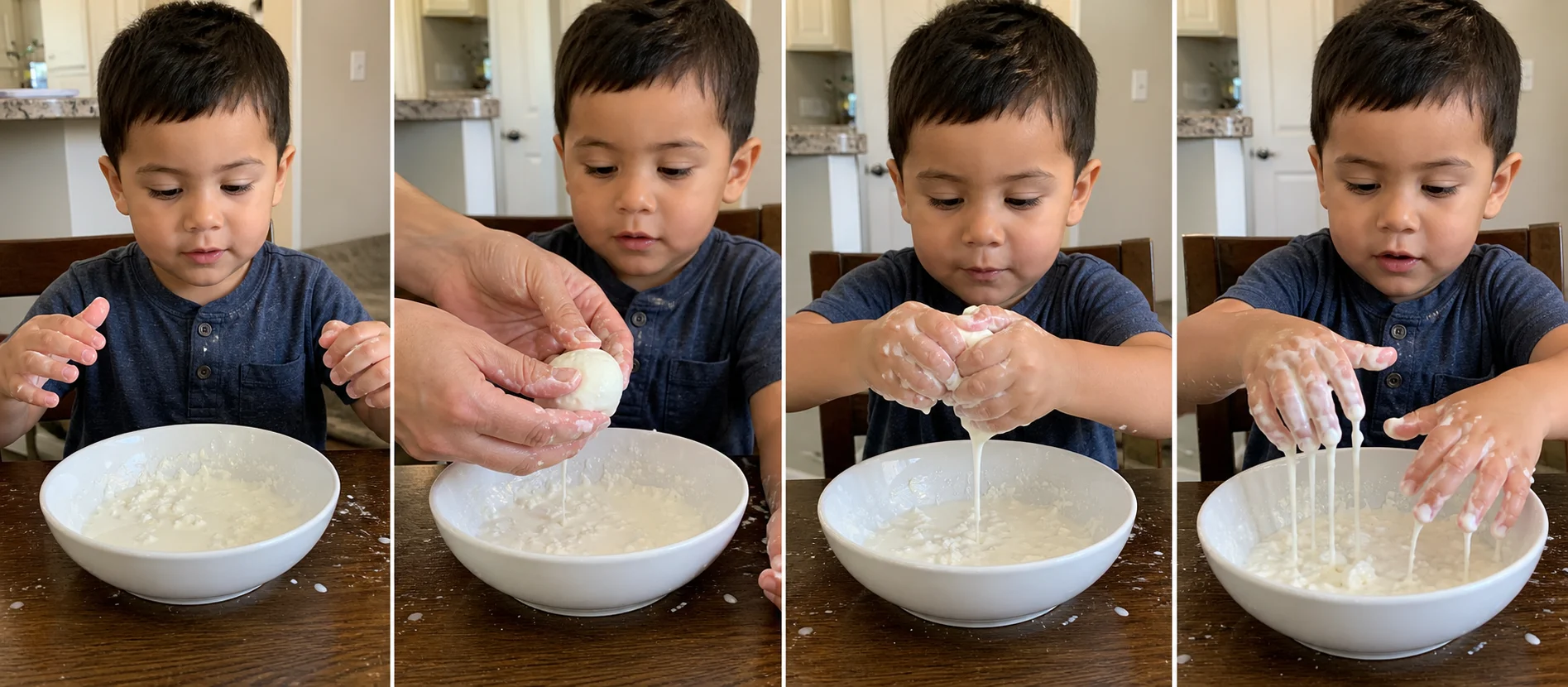
Give your child a weirdly satisfying hand challenge: squeeze cornstarch and water into a ball, then hold still and watch it melt through their fingers. Each quick round gives them practice with hand strength and release control.


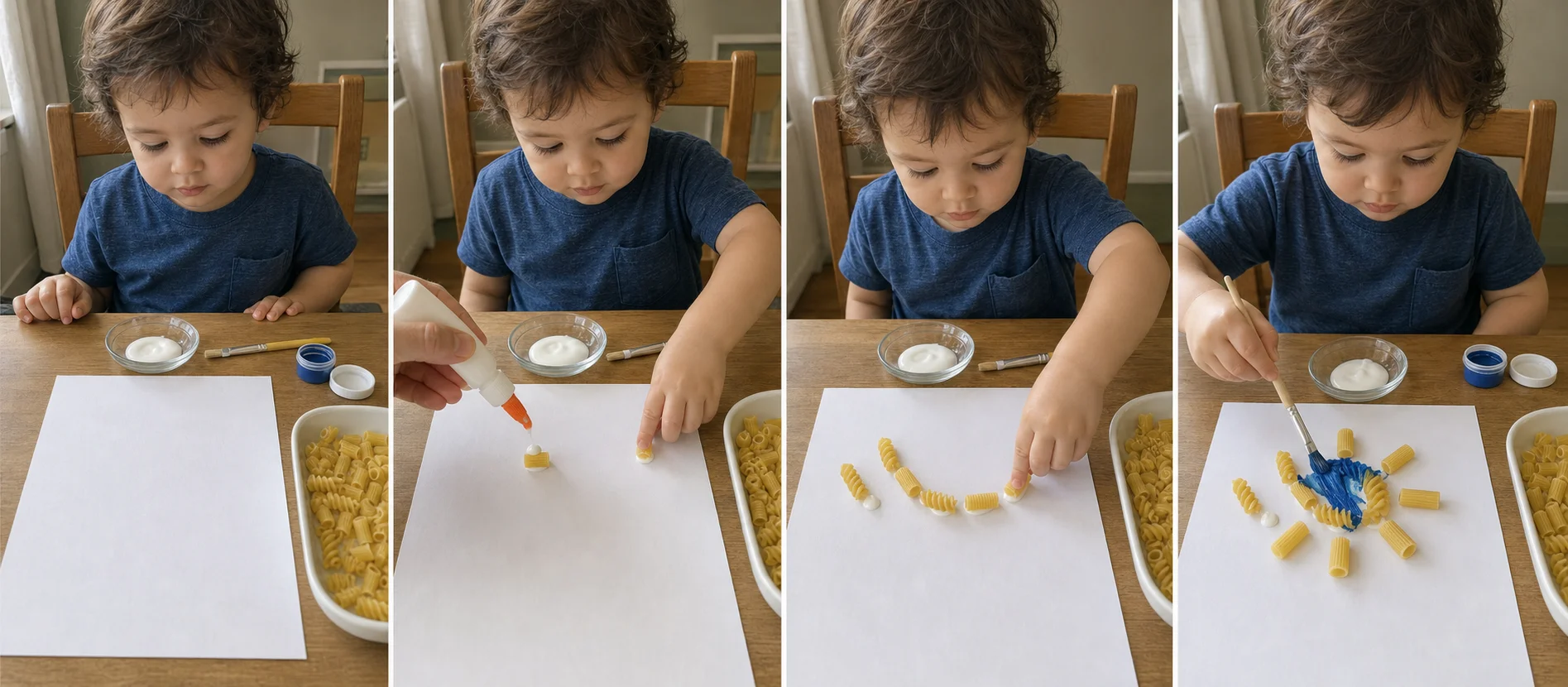
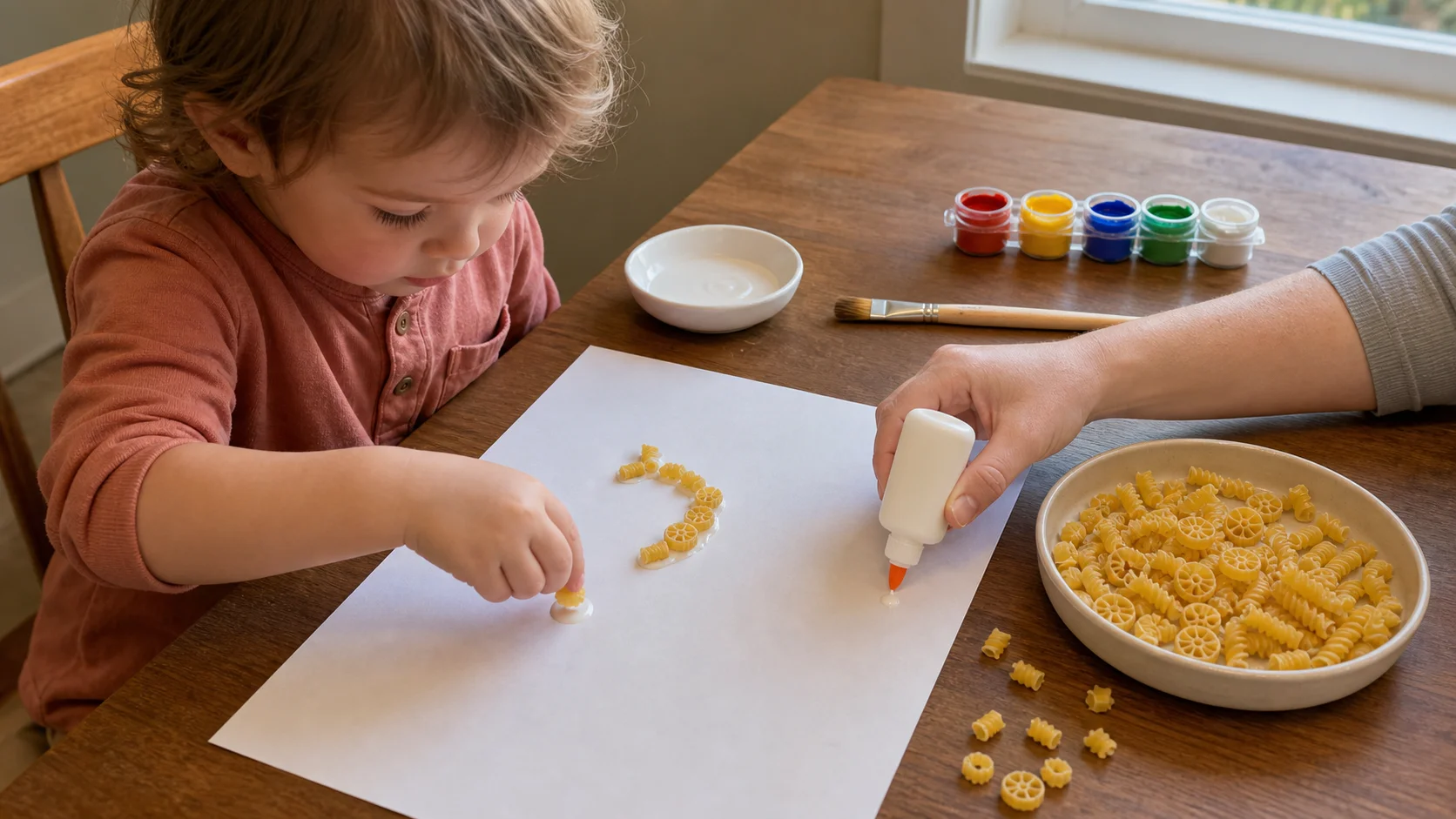
Turn dry pasta shapes into a textured picture your child can paint. Placing each piece builds finger control and lets your child ease from dry materials into messier art at their own pace.


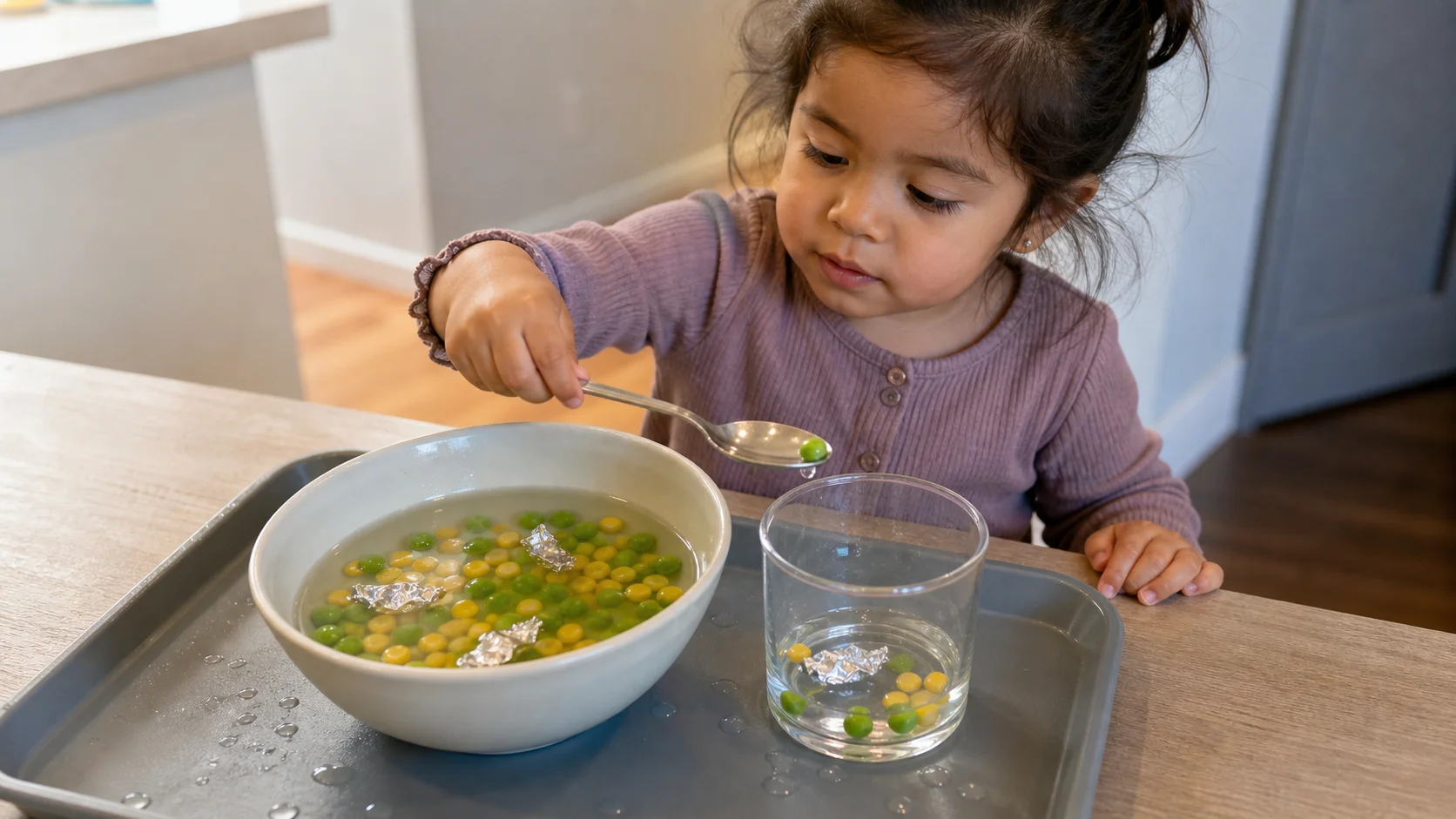
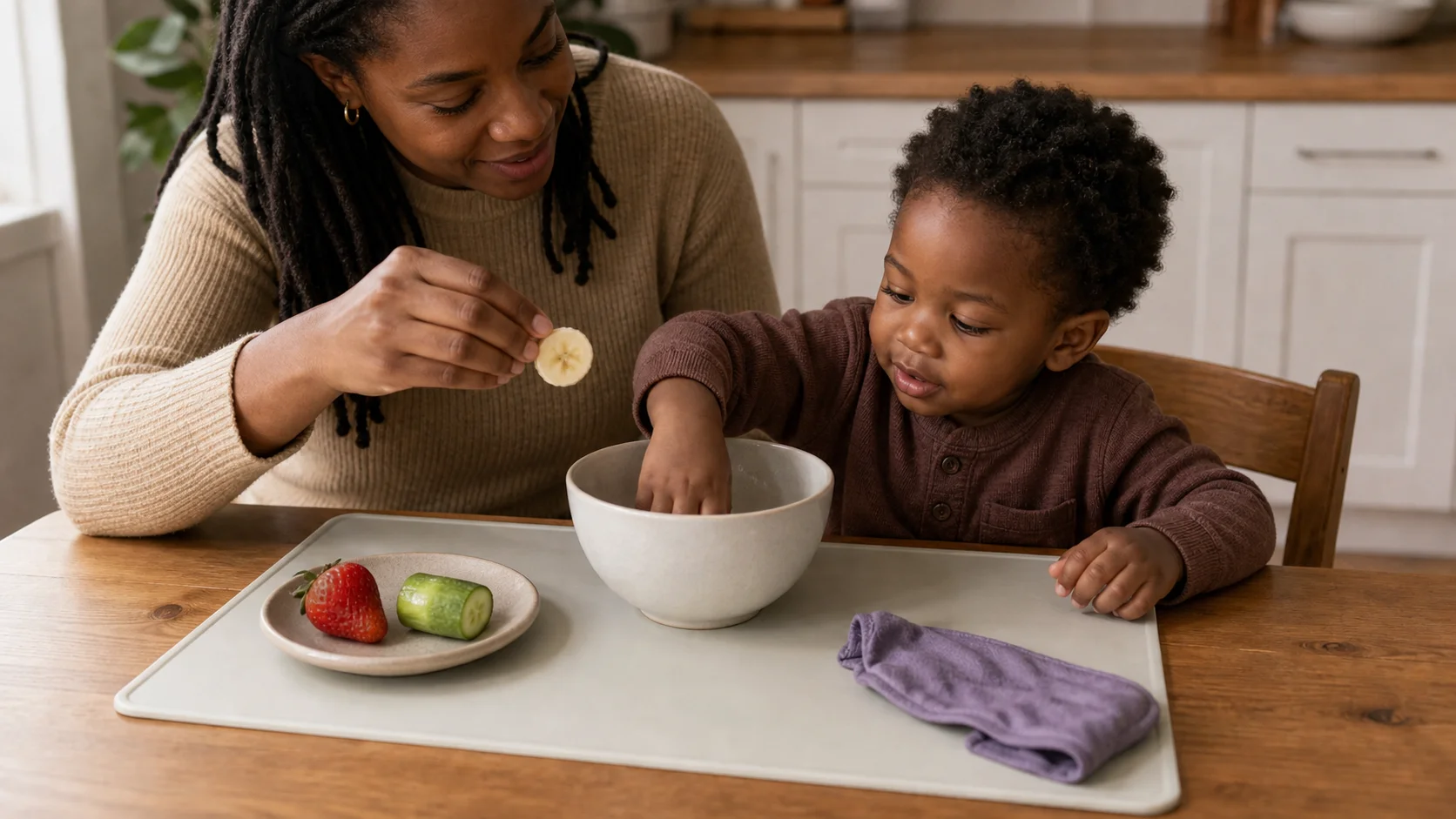
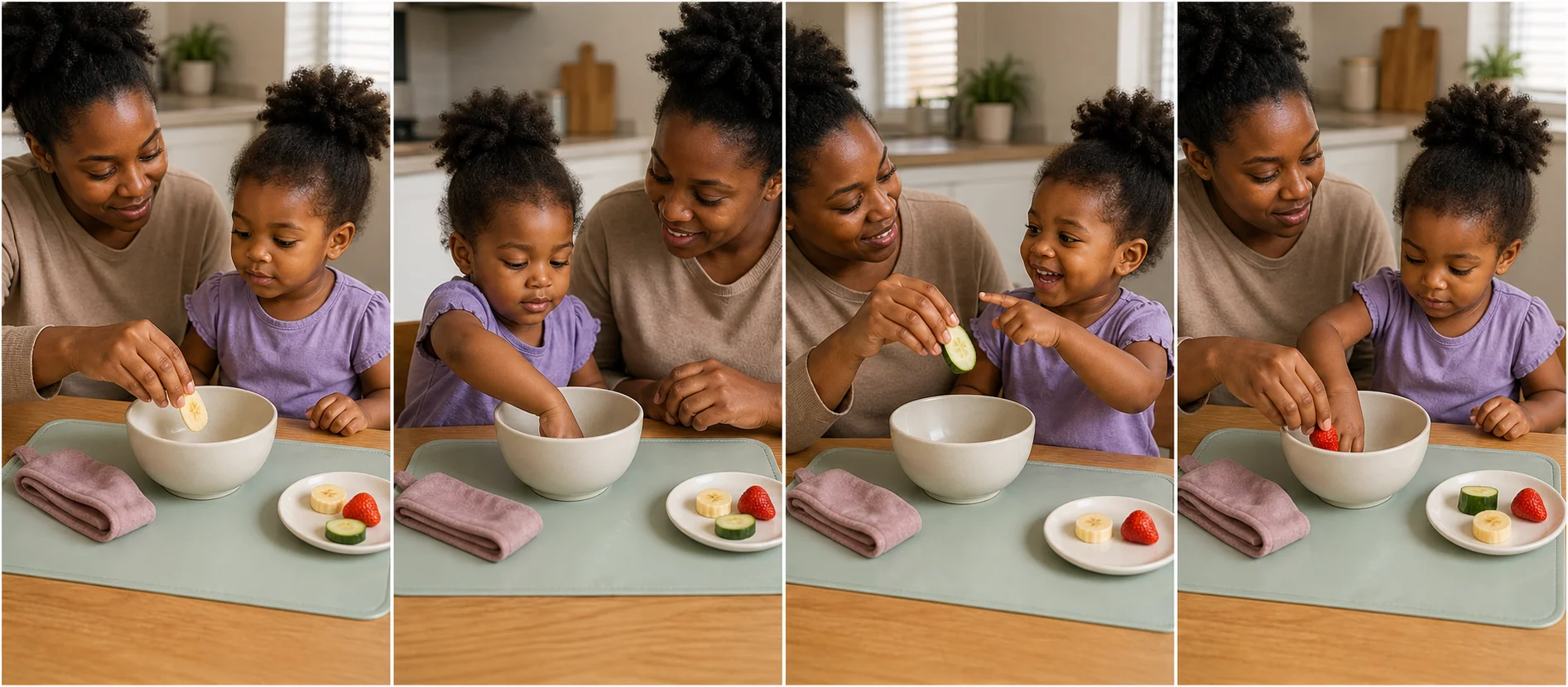
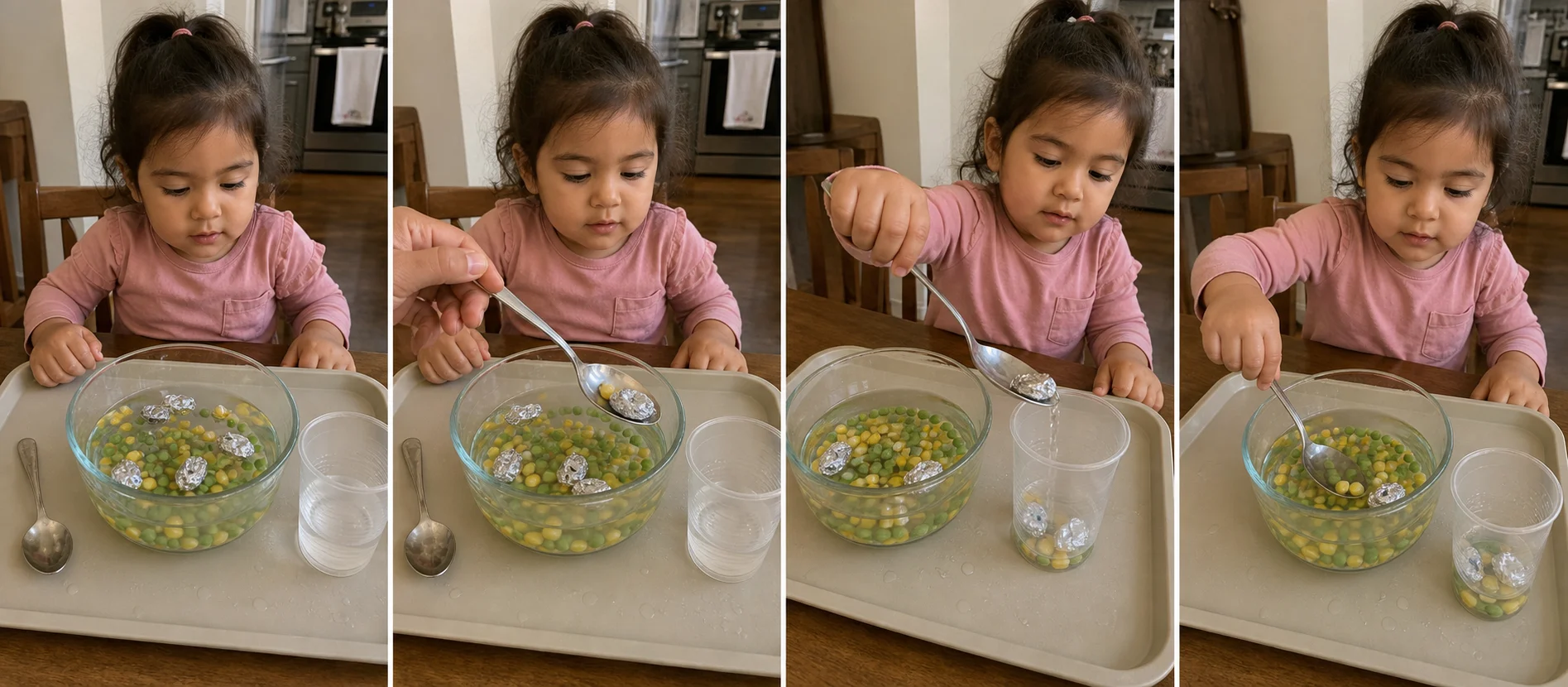
Give wet sensory play a clear, manageable job: your child rescues peas, sweetcorn, and fish shapes from a bowl of water and drops them into a clear cup. Each one-piece rescue practices controlled container-to-container transfers with a visible finish.


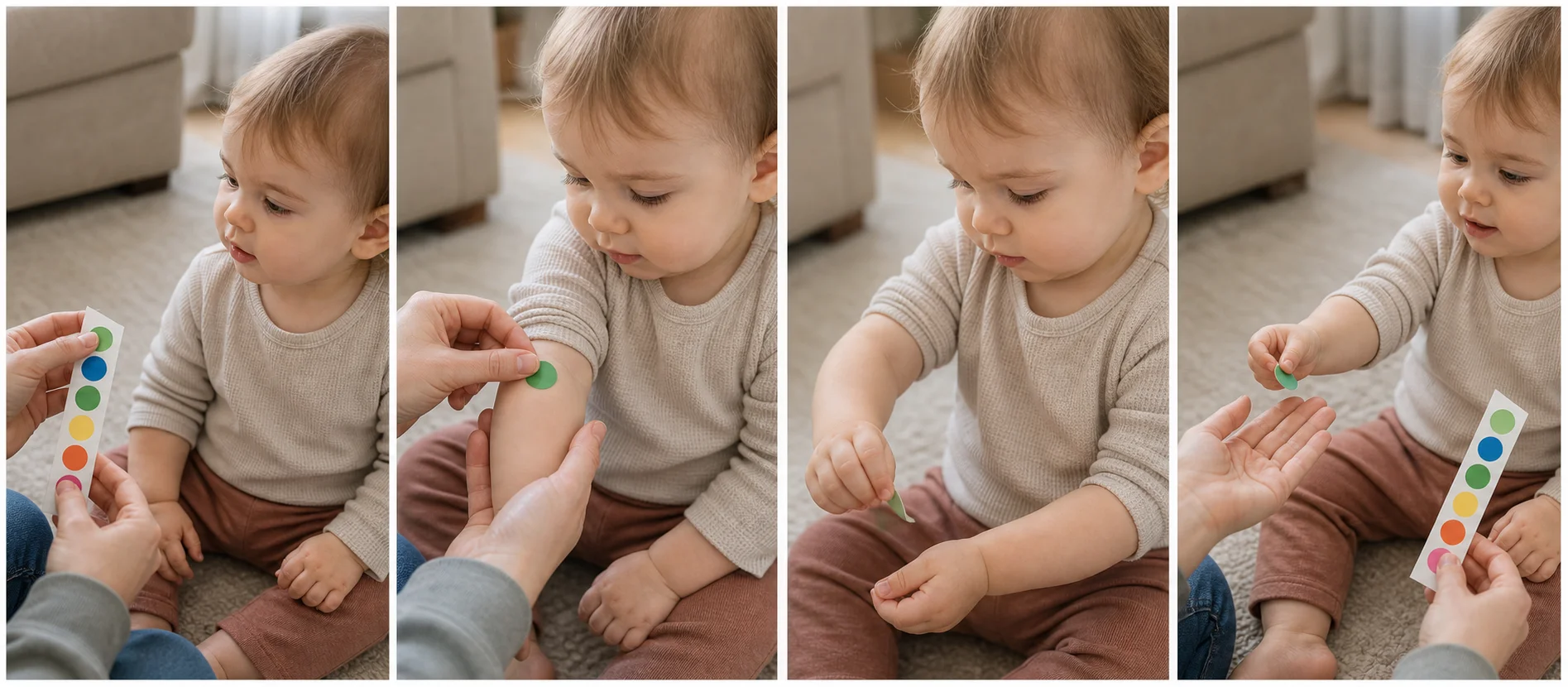
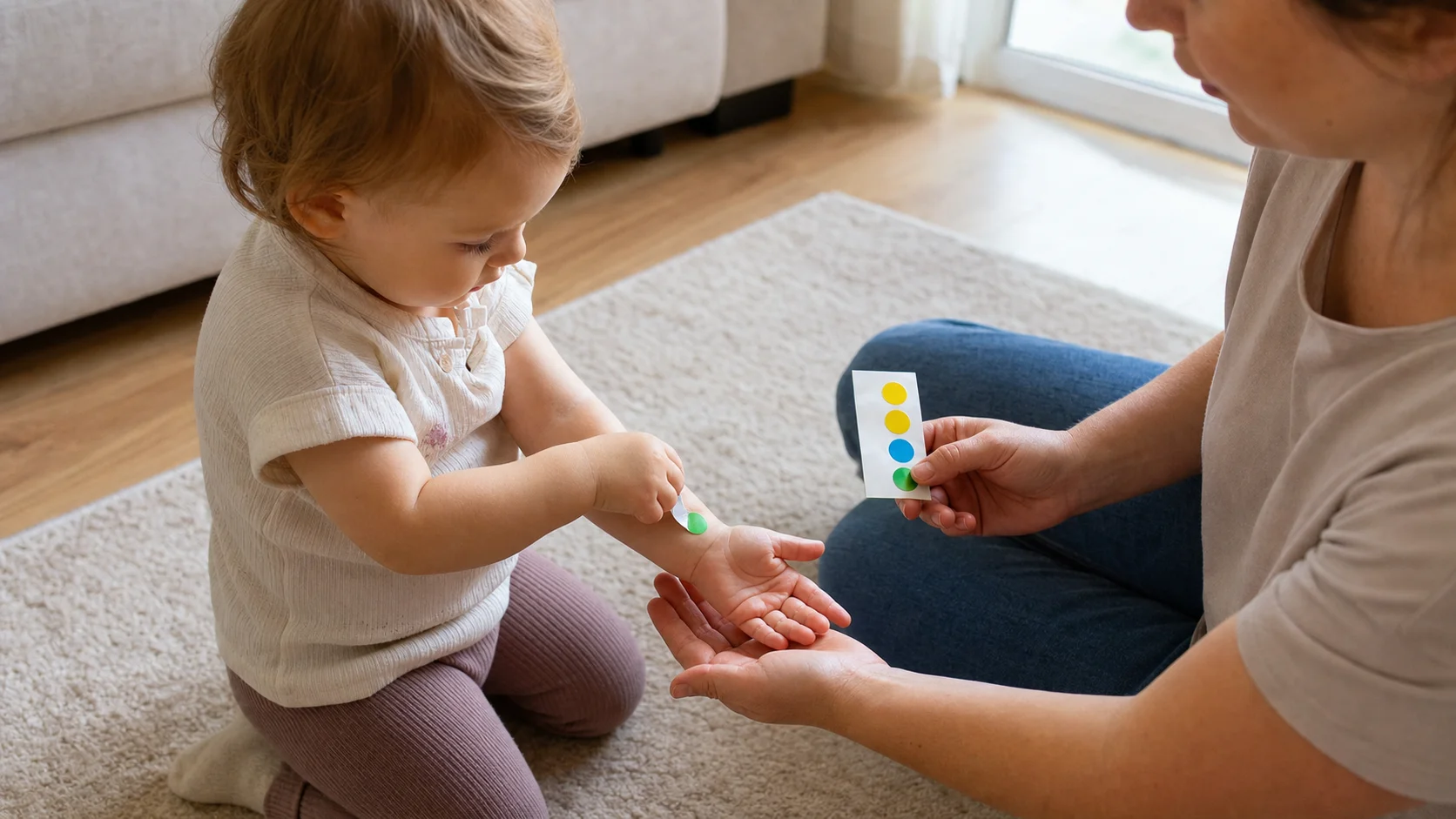
Turn one tiny sticker into a low-prep body-awareness search. Your toddler finds it on an arm or leg, peels it off, and practices noticing touch while building fingertip control.


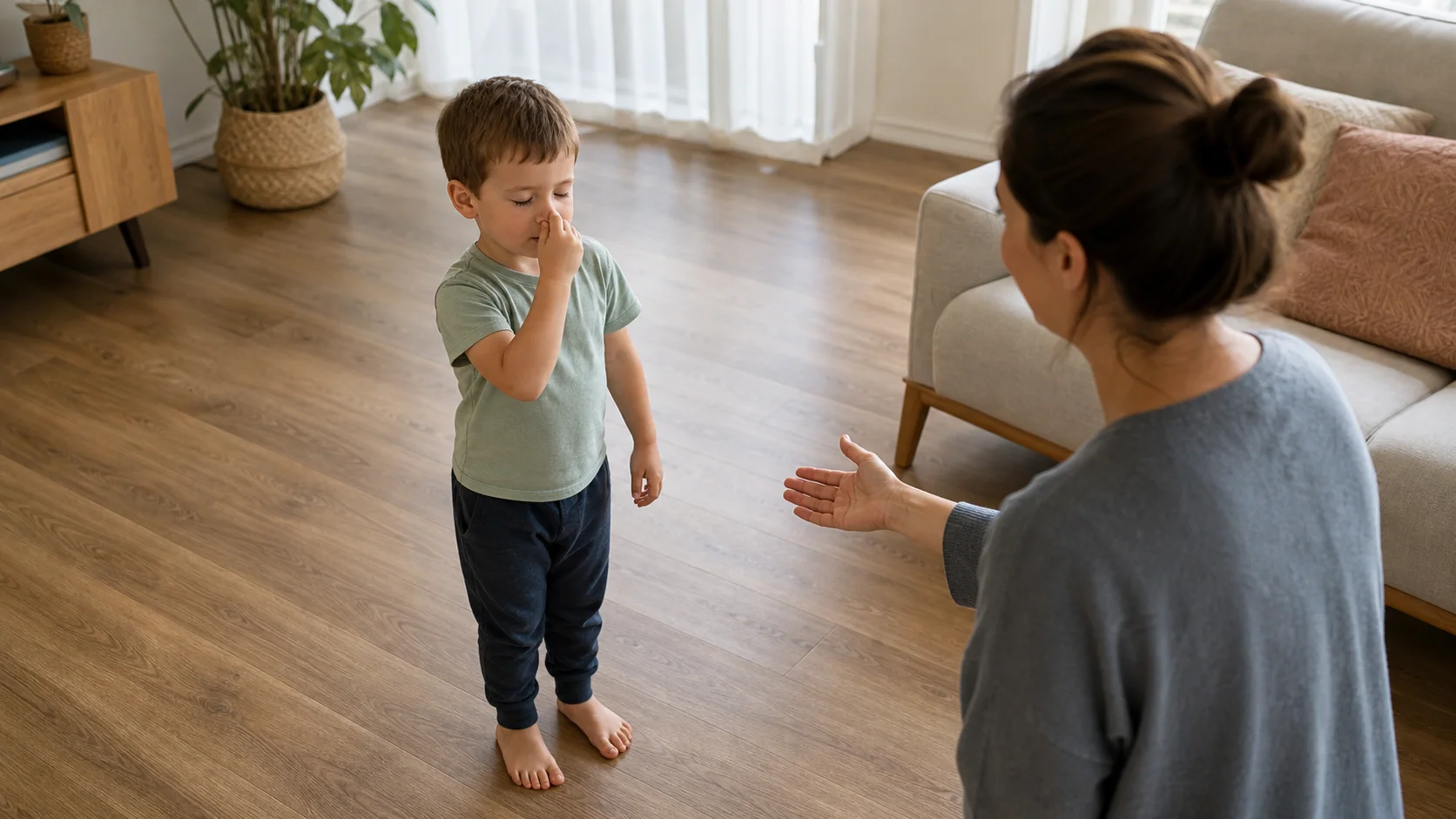
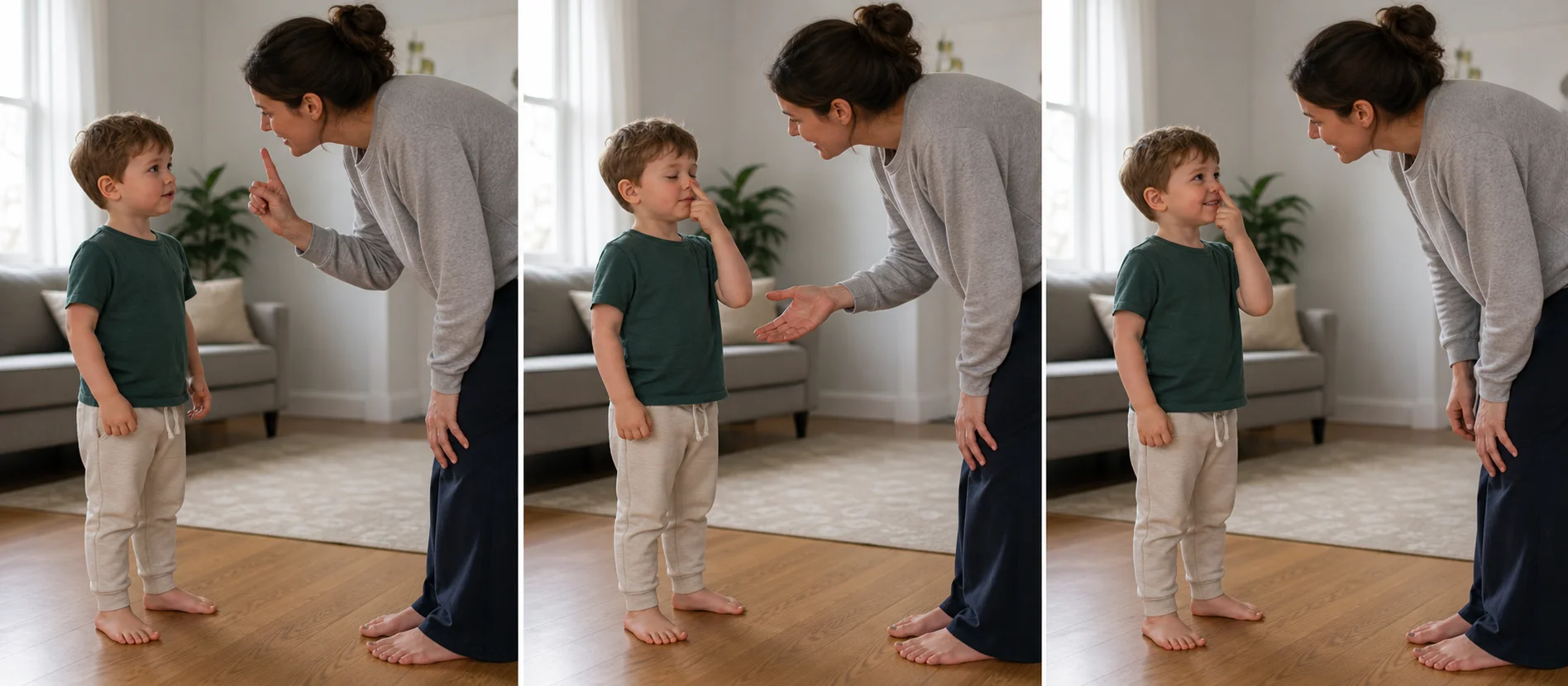
Take away the visual clues and see how well your child can follow one simple body cue. With eyes closed, they touch a body part or make a shape, then open their eyes to check it, building listening and body awareness with no materials.


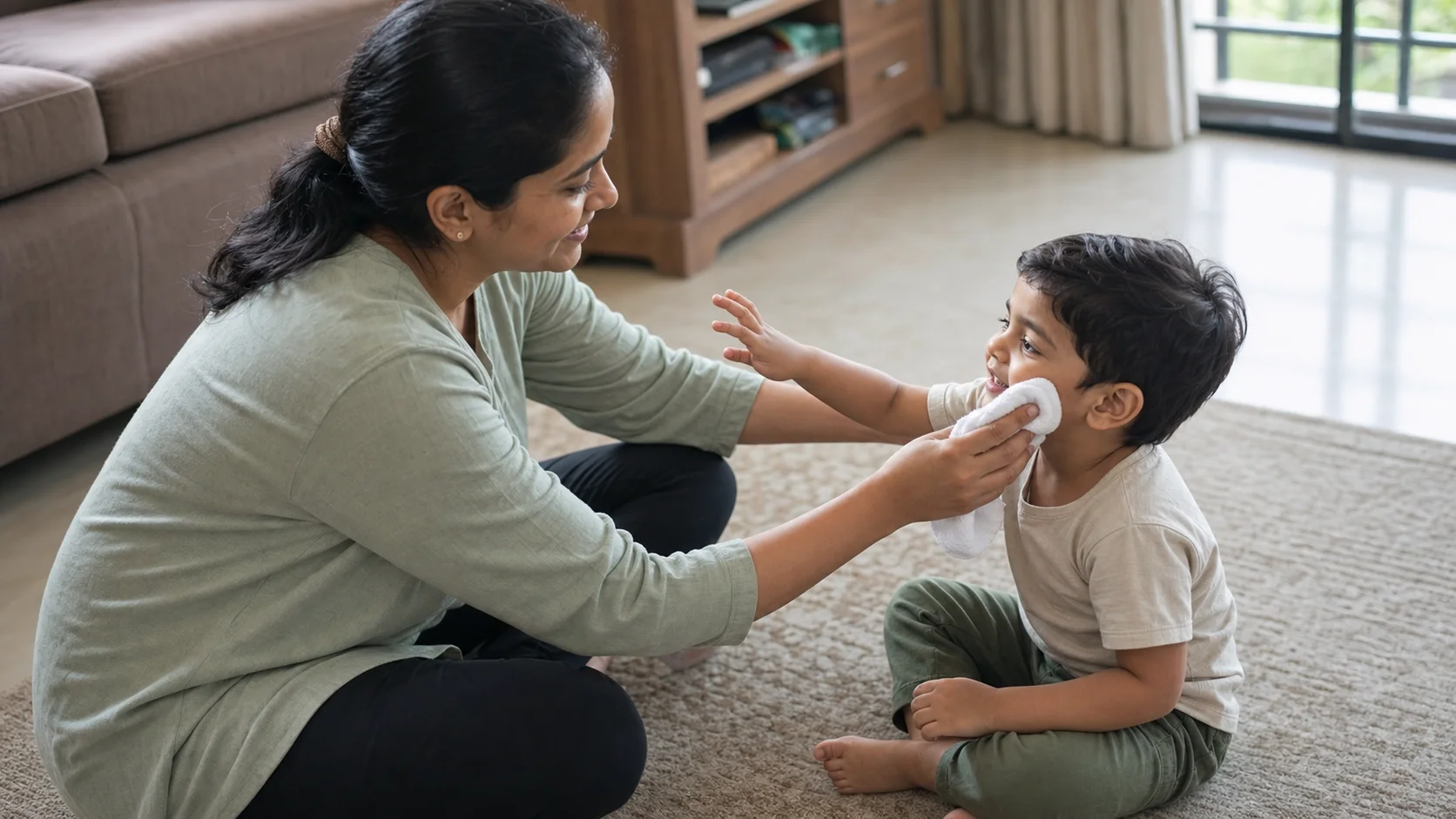
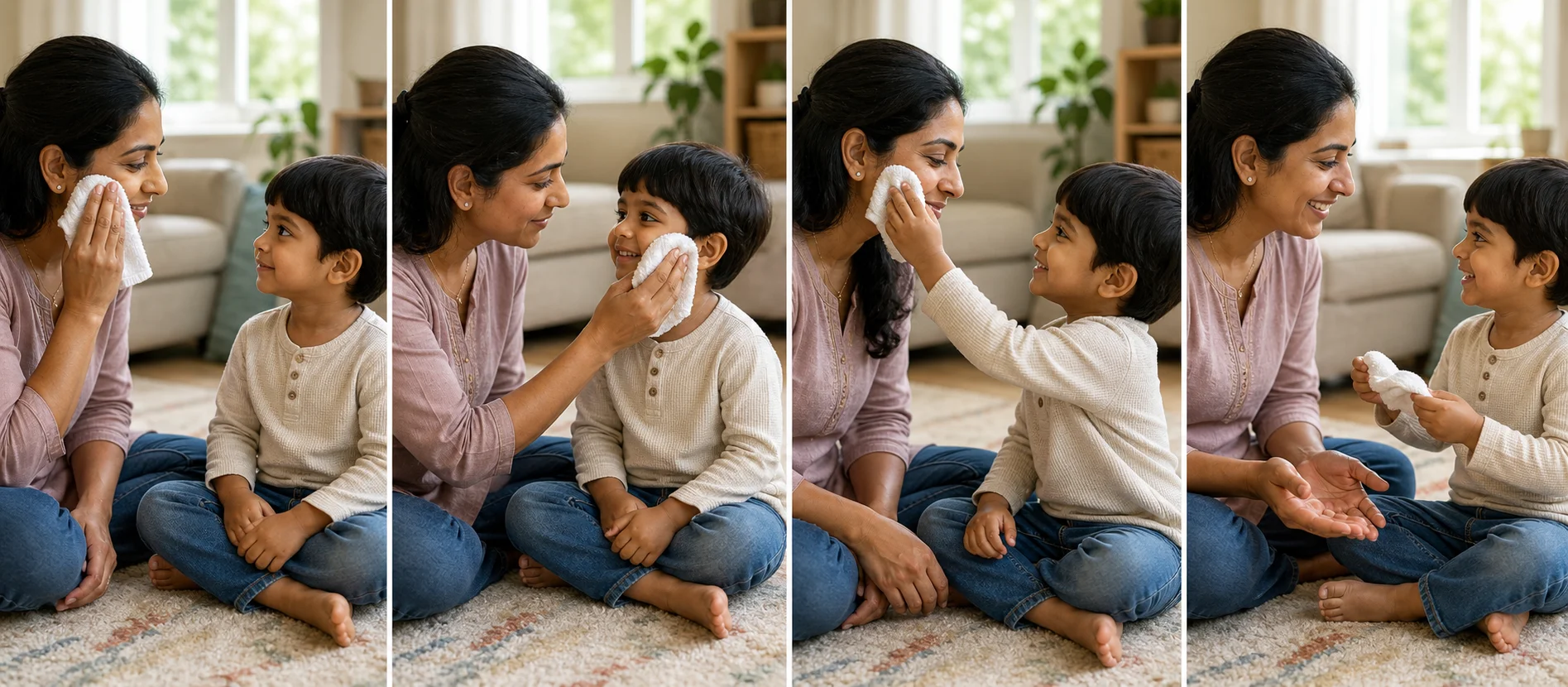
Turn gentle face touch into a predictable back-and-forth game. Tickle your child's outer cheek once with a familiar soft item, then hand it over so they can copy the touch on you, building comfort with touch around the face.


Can your child identify a familiar food using only their sense of touch? With a blindfold on, they feel one food in a bowl and guess before the reveal, building texture awareness and communication through a simple sensory challenge.