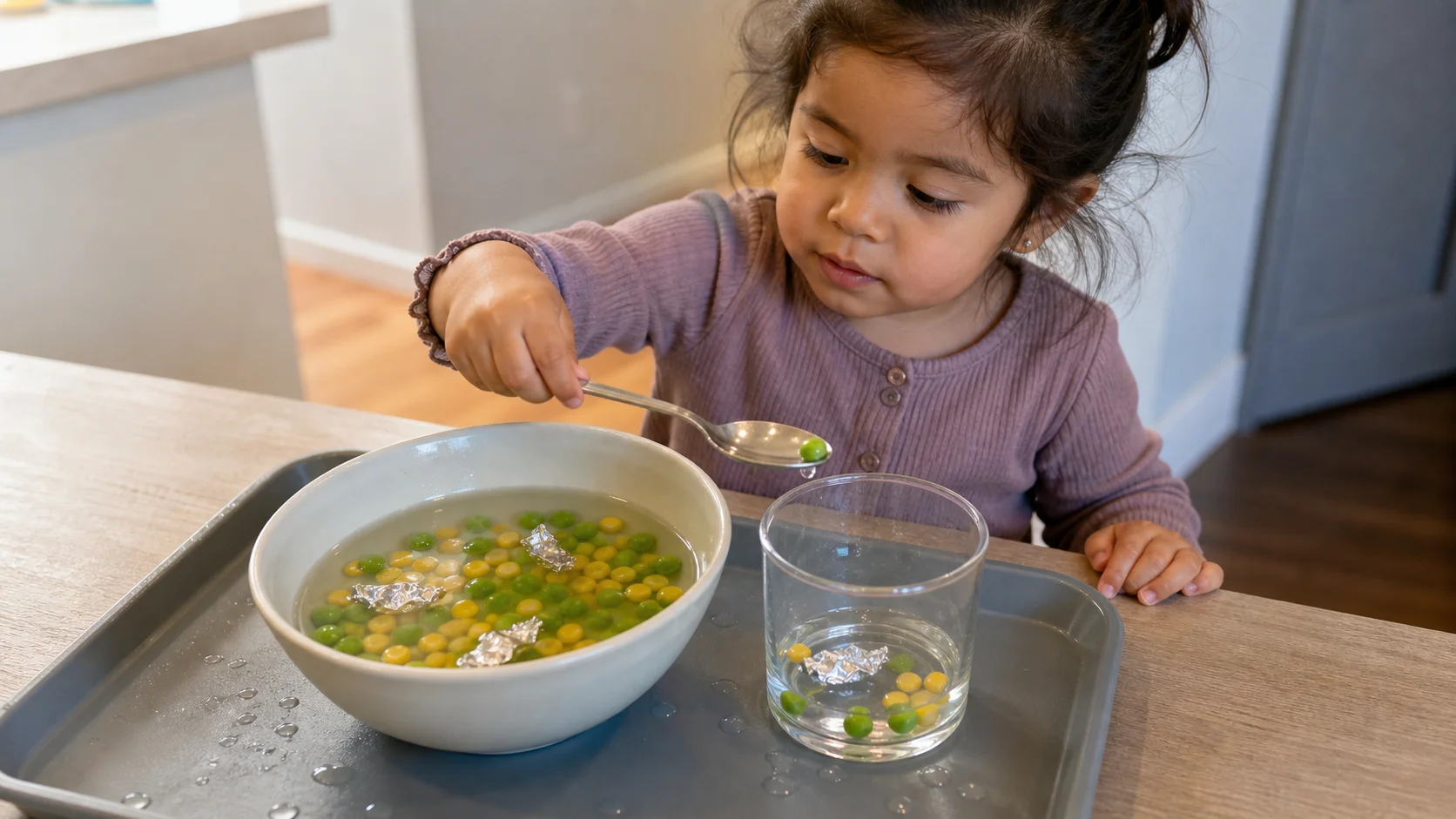
A toddler sits at a low table using a spoon to rescue small peas and foil fish from a bowl of water into a clear cup while a grown-up stays nearby.
Skill builderSensory-friendly supportFill And EmptyIndoor

Tadpole and Fish Rescue.

Give wet sensory play a clear, manageable job: your child rescues peas, sweetcorn, and fish shapes from a bowl of water and drops them into a clear cup. Each one-piece rescue practices controlled container-to-container transfers with a visible finish.

Play time
5-10+ min
Age
2-5 years
Energy
Low
Mess
Medium
Effort
Medium
Where
Indoor
Start here

The recipe.

Medium parent effort
7 things

What you need

  • 1 bowl
  • water
  • a small handful of peas and sweetcorn
  • a few small fish shapes made from foil or plastic
  • 1 clear cup
  • 1 spoon, optional
  • bubbles, optional
5 min minimum

Setup

Then start the loop
Step 01
Put a small handful of peas and sweetcorn and a few foil or plastic fish shapes in one bowl.
Step 02
Add enough water to cover the rescue pieces.
Step 03
Fill one clear cup with a little water and place it beside the bowl.
"Into the cup."
The loop

How play unfolds.

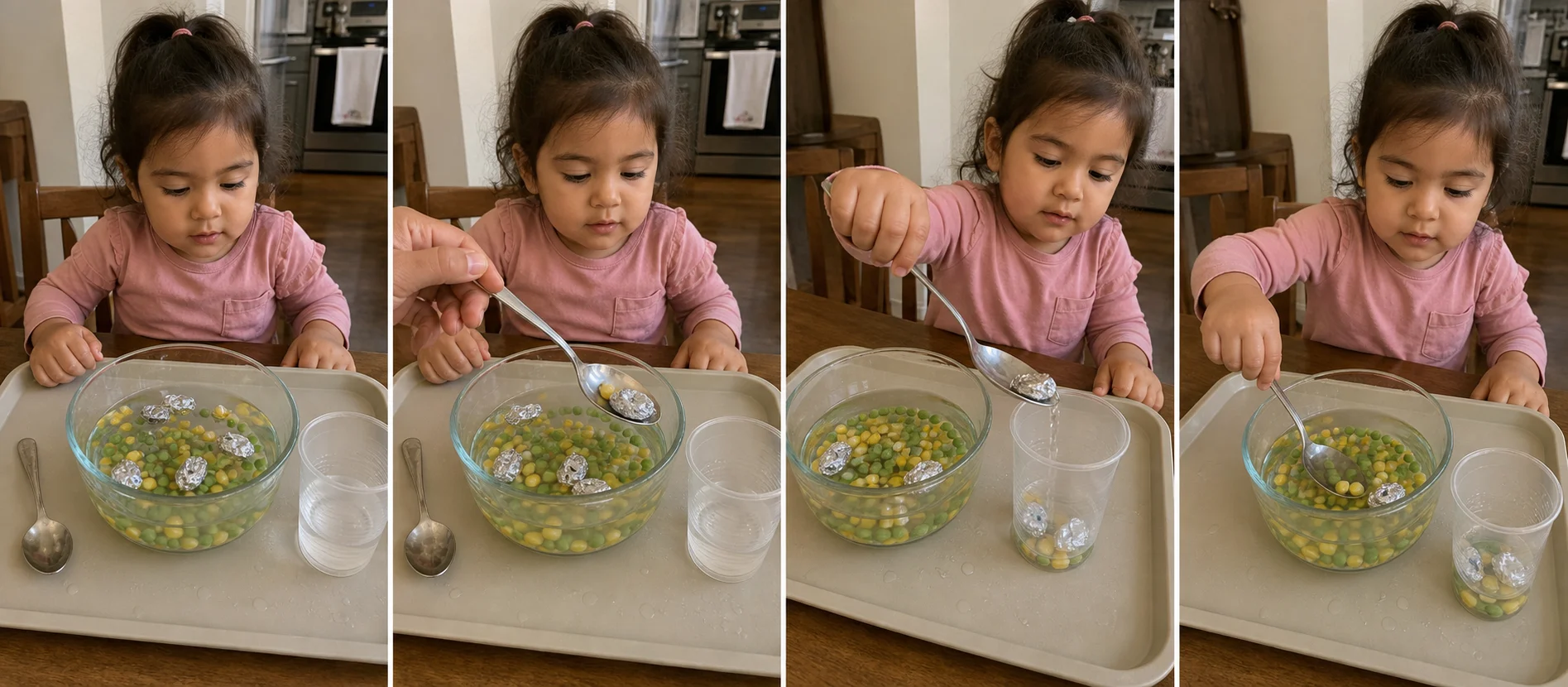
Four panels show a bowl with water and rescue pieces, a clear cup beside it, a grown-up modeling one rescue, and a toddler moving the next piece into the cup.
  1. 01
    Tell your child the pond friends need help, then lift one piece from the bowl and drop it into the clear cup to show the rescue.
  2. 02
    Let your child choose a pea, sweetcorn piece, or fish shape and move it into the cup with fingers or the spoon.
  3. 03
    Repeat until the rescue pieces have moved from the bowl to the cup.
  4. 04
    Pour the cup's water and rescued pieces back into the bowl to play again.

Safety Check

  • Stay with your child because the activity uses water and small food-sized pieces.
  • Use the spoon first if your child does not want wet hands.
  • Stop if your child starts mouthing the pieces, throwing the water, or getting upset by the texture.
Skill spotlight
Fill And Empty

moving small pieces from one container to another with control

This helps a child manage a simple two-container job, aim a small item toward a clear destination, and keep a short helping routine going from start to finish. Those same actions matter in snack prep, cleanup, and other everyday transfer tasks.

  • It gives your child a clear start and finish on every turn: find one, move one, rescue one.
  • It supports early container and transfer practice that shows up later in snack prep, cleanup, and simple helping jobs.
  • The rescue story keeps the task playful without adding pressure, which can matter when wet textures already feel like a big ask.
Real-world transfer
  • Moving food or small objects from 1 container to another
  • Completing simple helping jobs with a visible finish
  • Staying with a short sequence long enough to finish and reset
Supporting the play

What to say in the moment

Match what you say to what you see.

Prompt ladder
Level 1 (Start)
"Save one."
Level 2 (Keep going)
"Who is next?"
Level 3 (Stretch)
"Fish or tadpole?"
Level 4 (Extend)
"Can you rescue the last ones?"
If your child seems...
What you'd see
Focused
What to do
Say
"You saw one."
Add
Pause before pointing so your child can scan the bowl first.
Extend
Let your child choose whether to rescue a fish or a tadpole next.

Make it easier

Younger end
  • -Use fewer rescue pieces.
  • -Skip the bubbles.
  • -Keep the clear cup right beside the bowl.

Make it harder

Older end
  • +Add a few bubbles after the basic rescue loop is working.
  • +Move the clear cup a little farther so the lift-and-drop turn lasts longer.
  • +Ask your child to rescue all the fish before the tadpoles.

If it's not working

If you see
If child ignores it
Rescue 1 fish yourself, then hand over the spoon for the next turn.
If you see
If child misuses it
Use just a few rescue pieces and hold the bowl steady while your child does the drop.
If you see
If child gets frustrated
Move 1 easy piece near the edge, help with the first scoop, and count that single rescue as success.