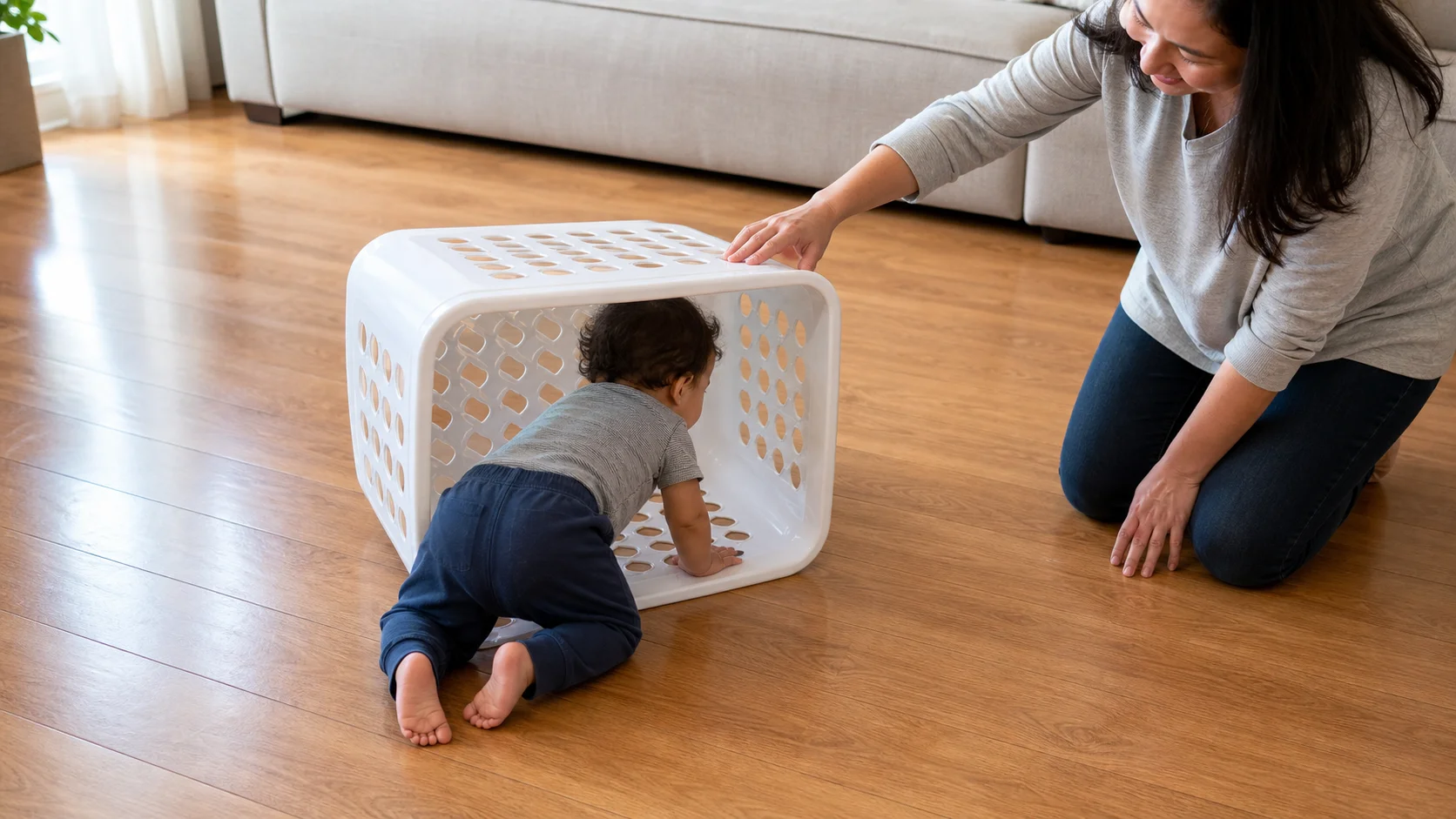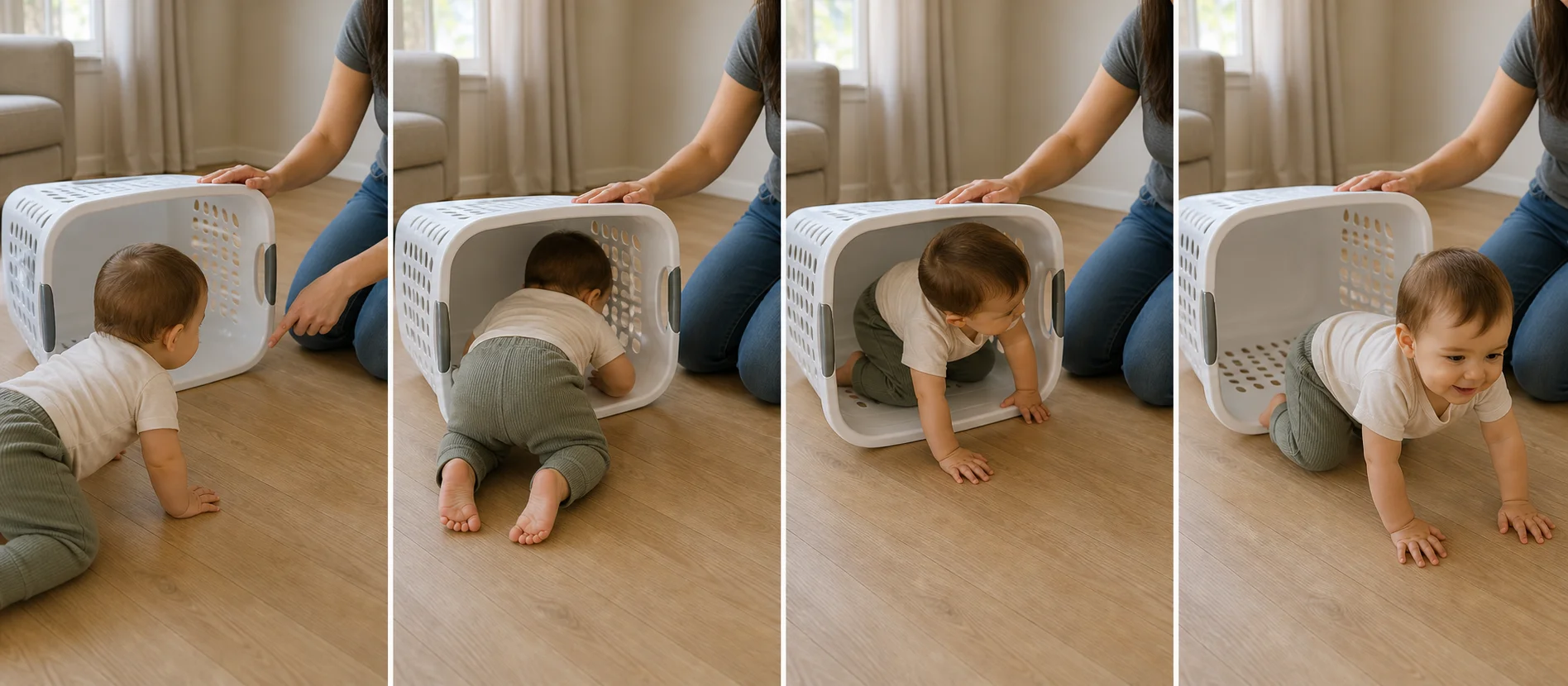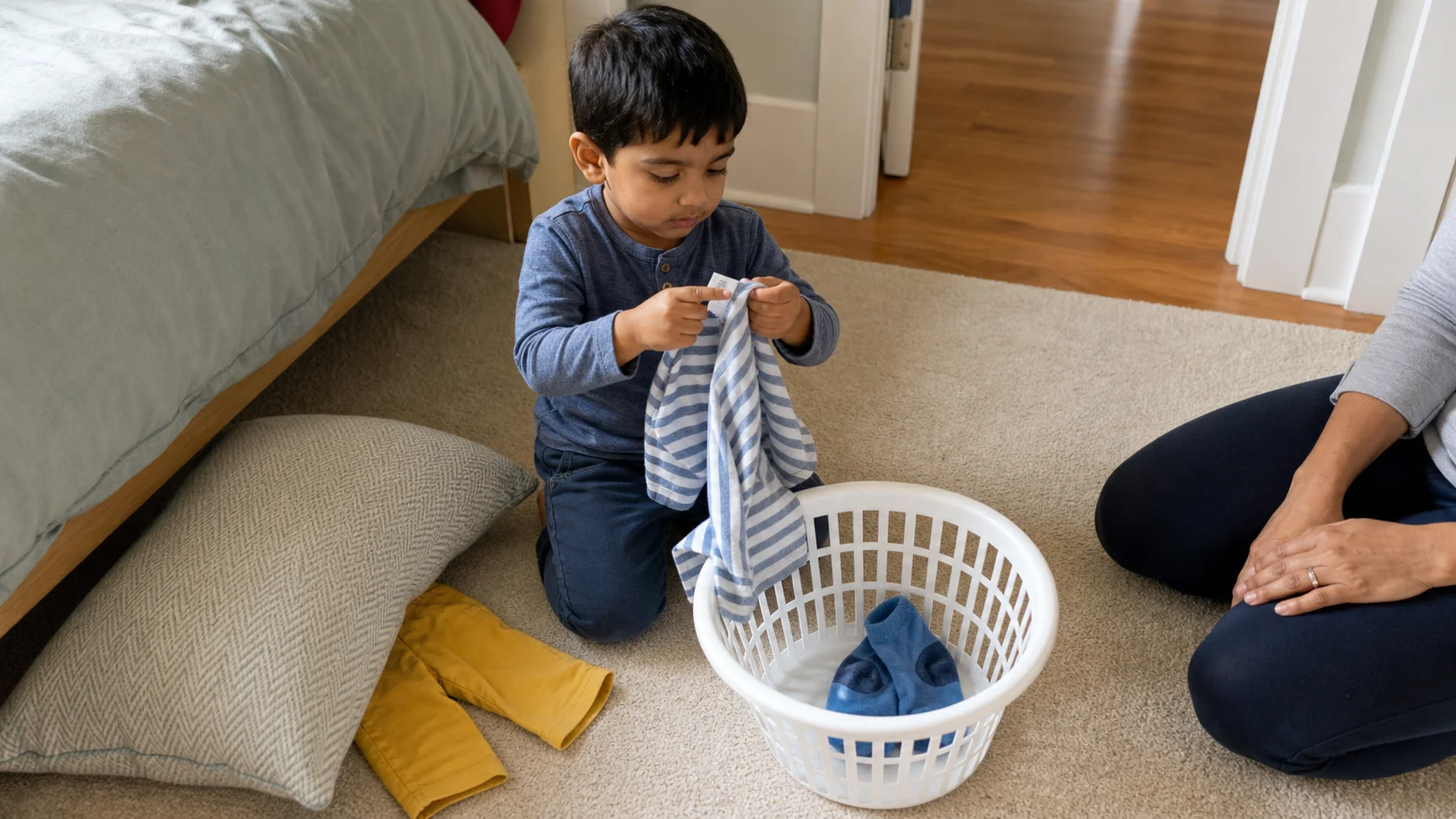
A child finding a soft shirt partly hidden near a bedroom basket while a grown-up waits nearby.
ThinkingSensory-friendly supportFind Hidden ObjectIndoor

Clothing Hide-and-Seek.

Hide a few soft clothing items, let your child find each one, check a tag or soft side, and drop it in the basket.

Play time
5-10+ min
Age
2-4 years
Energy
Medium
Mess
No
Effort
Low
Where
Indoor
Start here

The recipe.

Low parent effort
6 things

What you need

  • 3 soft clothing items, such as socks, leggings, shirts, or a jacket
  • 1 small basket or laundry bin
  • 1 start spot in the hallway or bedroom
  • 1 nearby room with safe hiding places
  • 1 adult
  • 1 child
5 min minimum

Setup

Then start the loop
Step 01
At the start spot, place the basket where your child can see it after each search.
Step 02
In one nearby room, partly hide 3 soft clothing items in low, reachable places.
Step 03
Keep each item visible enough that your child can find a corner without opening drawers, climbing, or moving heavy furniture.
Step 04
Stand with your child beside the basket and say, "Found clothes go in here."
"Find the sock."
The loop

How play unfolds.

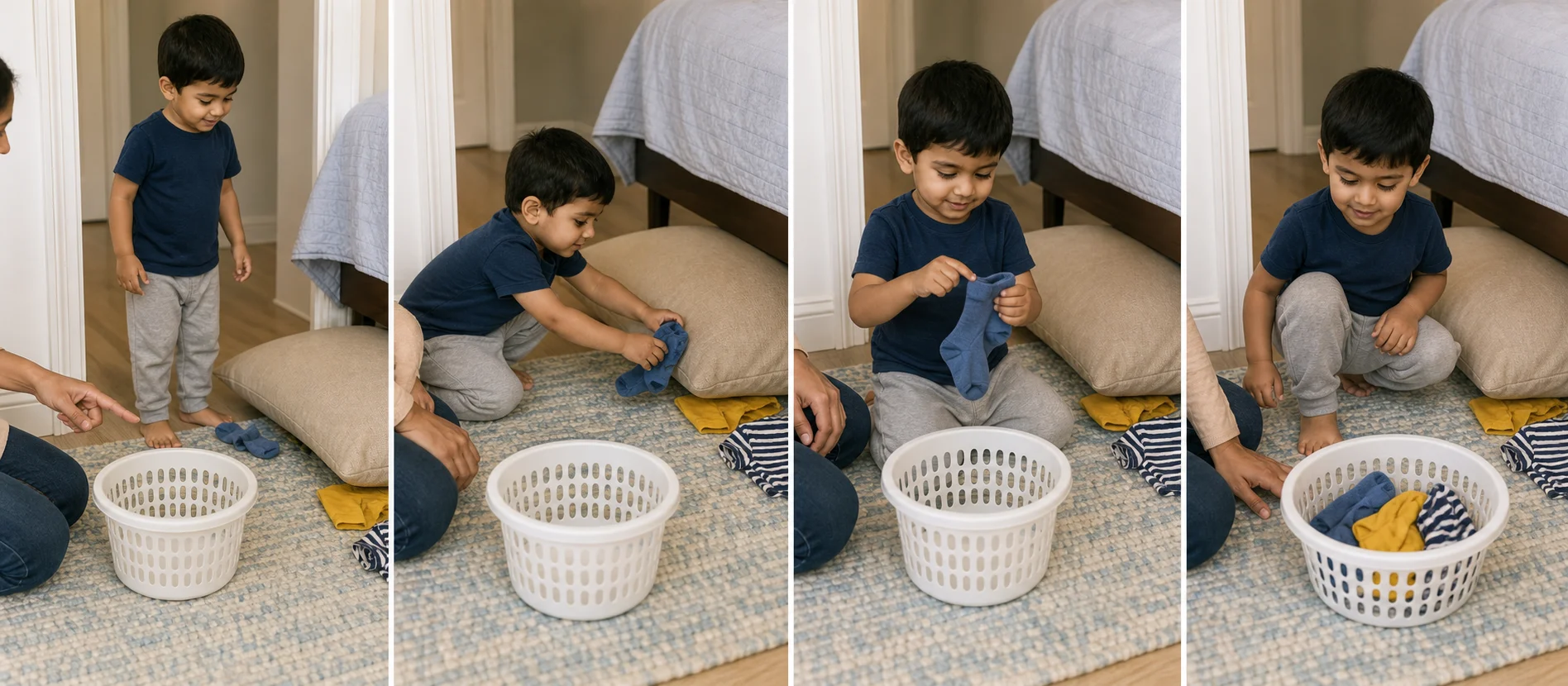
A multi-panel sequence showing clothing hidden low, the child finding an item, checking a soft spot, and placing it in a basket.
  1. 01
    Name or show one clothing item and say, "Find the sock. Bring it back to the basket."
  2. 02
    Let your child search the nearby room. If they stall, point near the item, walk closer together, or uncover one edge.
  3. 03
    At the basket, say, "Check it first: tag, seam, or soft side?"
  4. 04
    Let your child look, touch with one finger, squeeze the fabric, or skip the touch before dropping the item in.
  5. 05
    Repeat until all 3 clothing items are in the basket, then say, "All three are ready."

Safety Check

  • Keep hiding places low and reachable so your child does not climb.
  • Check clothing for loose cords, detachable small parts, sharp fasteners, or snagging risks before play.
  • If tags, seams, or textures feel too strong, let your child look, touch a softer side, or skip the touch.
Supporting the play

What to say in the moment

Match what you say to what you see.

Prompt ladder
Level 1 (Start)
Find the sock and bring it to the basket.
Level 2 (Keep going)
Check one soft spot, then drop it in.
Level 3 (Stretch)
Find the next clothing item from my clue.
Level 4 (Extend)
Hide one clothing item for me after all three are ready.
If your child seems...
What you'd see
Focused
What to do
Say
"Next clothing search."
Add
Name the target once, then wait while your child searches.
Extend
Let your child carry it back independently, then ask one soft-or-scratchy prompt.

Make it easier

Younger end
  • -Let your child find any hidden clothing item first, then name it at the basket.
  • -Choose clothing items that look clearly different from each other.
  • -Keep the return path very short by placing the basket just outside the hiding room.

Make it harder

Older end
  • +Say the target once before your child walks to the hiding room.
  • +Leave only a small corner of the clothing item visible.
  • +Ask your child to choose whether to check the tag side, soft side, or inside side before dropping it in.

If it's not working

If you see
If child ignores it
Start with one obvious item on the floor near the doorway. Celebrate the first basket drop before hiding more.
If you see
If child misuses it
If clothing gets thrown, move closer, hand them one item, and say, "Carry it to the basket." Restart with walking instead of tossing.
If you see
If child gets frustrated
Let the adult find one item badly on purpose, then let the child put it in the basket. Offer the softest item next.
Skill spotlight
Find Hidden Object

Finding hidden clothing and bringing it back

This makes clothing more predictable before dressing. The child practices noticing clothing details, moving through a short routine, and finishing one self-care-related job.

  • Finding one clothing item at a time gives your child a clear cue to remember while they move.
  • Checking a tag, seam, or soft side makes clothing details visible before dressing starts.
  • Dropping each item in the same basket gives the routine a predictable finish.
Real-world transfer
  • Finding clothes for a dressing routine
  • Noticing scratchy or comfortable clothing details
  • Carrying one item to a clear place
  • Finishing simple bedroom or laundry jobs

Parent questions