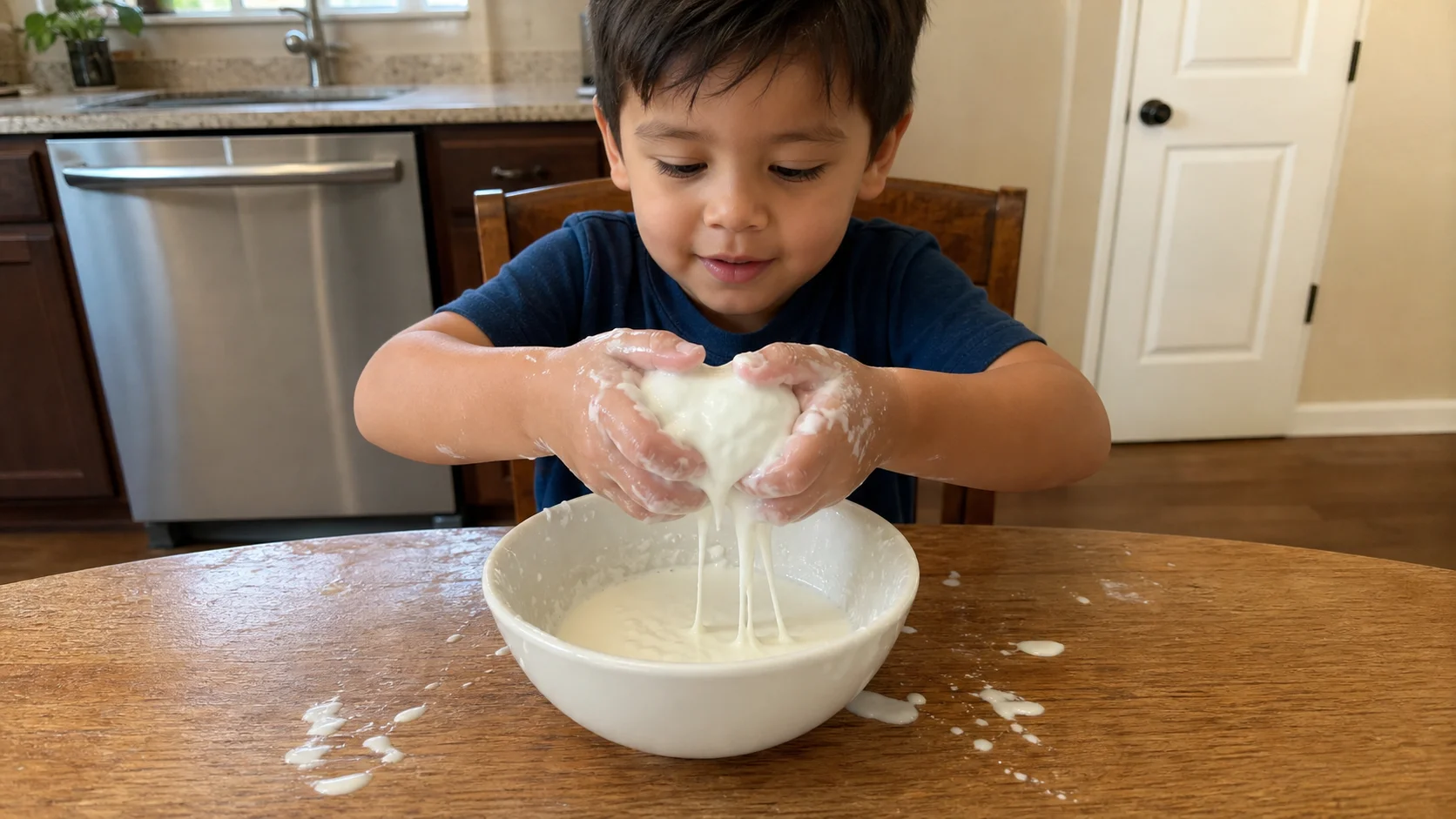
A toddler at a table squeezes a small handful of cornstarch mixture over a bowl while a grown-up watches nearby.
Fine motorSensory-friendly supportSqueeze And ReleaseIndoor

Magic Ball Squeeze.

Give your child a weirdly satisfying hand challenge: squeeze cornstarch and water into a ball, then hold still and watch it melt through their fingers. Each quick round gives them practice with hand strength and release control.

Play time
5-10+ min
Age
2-7 years
Energy
Low
Mess
High
Effort
Medium
Where
Indoor
Start here

The recipe.

Medium parent effort
3 things

What you need

  • 450 g or 16 oz cornflour or cornstarch
  • 475 ml or 16 fl oz water
  • 1 small bowl
5 min minimum

Setup

Then start the loop
Step 01
Mix 450 g or 16 oz cornstarch with 475 ml or 16 fl oz water in the bowl until it forms a ball under pressure and flows again when held still.
"Magic ball."
The loop

How play unfolds.

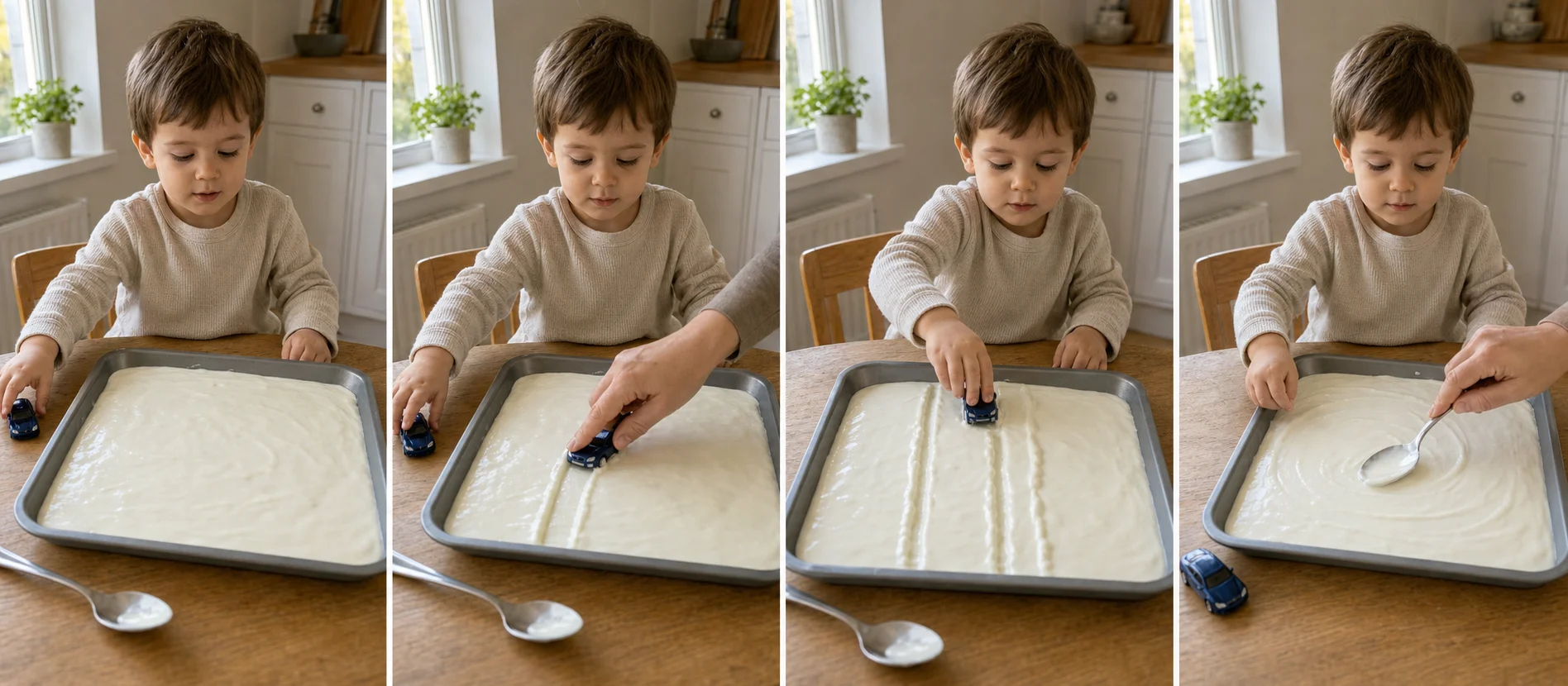
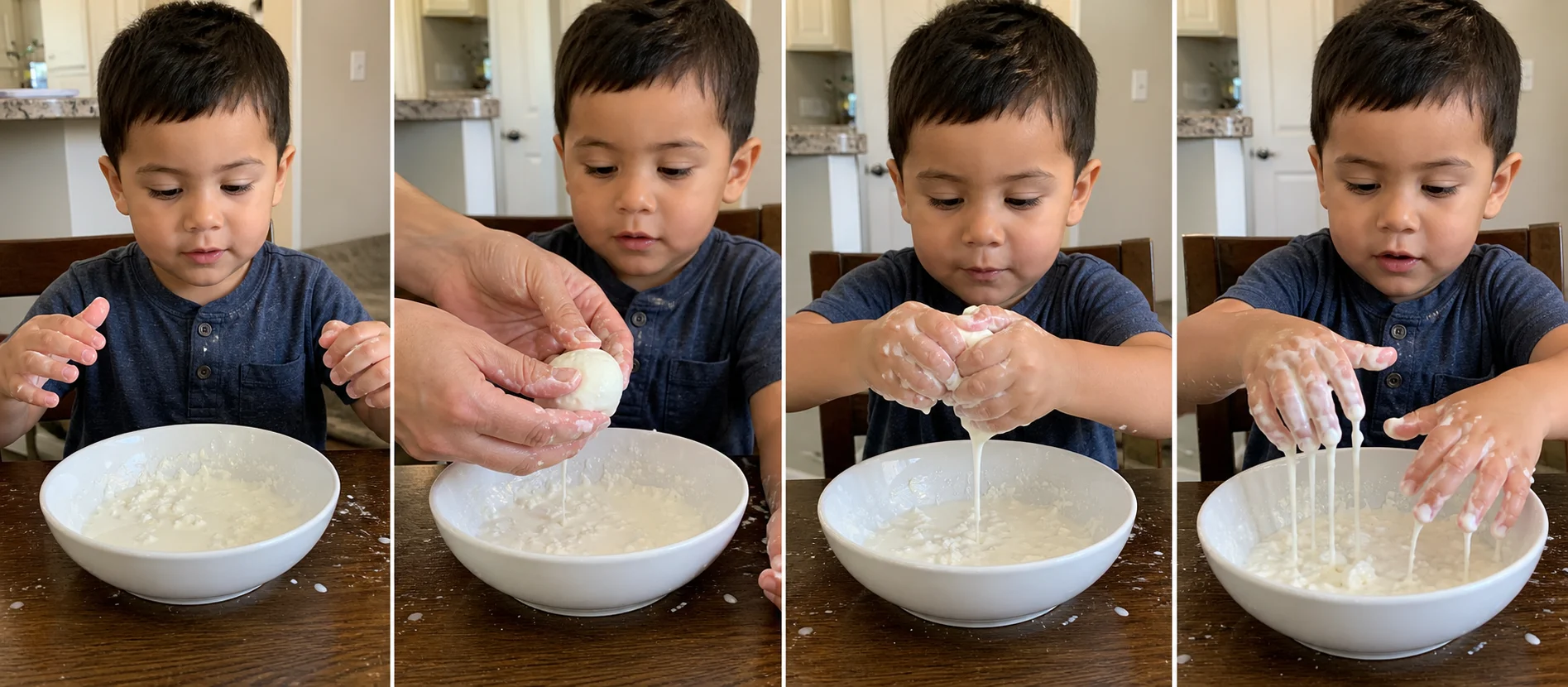
Four panels show the bowl of mixture, a grown-up rolling one quick ball, a toddler squeezing the mixture, and the ball melting back through the child's fingers over the bowl.
  1. 01
    Squeeze a small handful into a ball to show your child how it firms under pressure.
  2. 02
    Have your child scoop a small amount and squeeze it into a ball.
  3. 03
    Ask them to hold their hand still over the bowl and watch the mixture soften and flow through their fingers.
  4. 04
    Scoop another small amount and repeat.

Safety Check

  • Stay close because this is a wet loose mixture and some children may still mouth it.
  • Stop if the mixture starts getting flung, slapped, or spread far beyond the bowl.
  • End early if your child urgently wipes the hands, pulls away from the texture, or gets upset by the mess.
Skill spotlight
Hand Strength Control

squeezing and releasing a shifting material with control

This helps a child use hand strength, release control, and simple observation together, which matters for other squeeze, grasp, and tool jobs that need the hand to change pressure on purpose.

  • The result is immediate. One squeeze changes the mixture in a way your child can see right away.
  • The hand job is small and repeatable, which makes it easier to practice squeeze and release without a long setup.
  • The ball falling apart is part of the play, so the reset does not feel like failure.
Real-world transfer
  • Building the hand strength and release control used in many other fine motor tasks
  • Noticing that changing pressure changes what the hands can do
  • Staying with a short repeatable activity long enough to compare one turn with the next
Supporting the play

What to say in the moment

Match what you say to what you see.

Prompt ladder
Level 1 (Start)
"Squeeze it."
Level 2 (Keep going)
"Watch it melt."
Level 3 (Stretch)
"Can you make one more ball?"
Level 4 (Extend)
"Big one or tiny one?"
If your child seems...
What you'd see
Focused
What to do
Say
"You made it stay together."
Add
Name one action, such as squeeze or melt.
Extend
Pause before the next cue so your child can reach back into the bowl alone.

Make it easier

Younger end
  • -Use a smaller handful each turn.
  • -Count a brief squeeze as the whole turn.
  • -Let your child watch your hands first before joining.

Make it harder

Older end
  • +Ask your child to keep the ball together for one extra beat.
  • +Let your child choose between a tiny ball and a bigger one.
  • +Pause before helping so your child restarts the loop alone.

If it's not working

If you see
If child ignores it
Make one quick ball yourself and let it melt back right away so the payoff happens fast.
If you see
If child misuses it
Leave a smaller amount in reach and go back to one squeeze at a time.
If you see
If child gets frustrated
Count one brief squeeze as success and stop before asking for a longer hold.

Parent questions