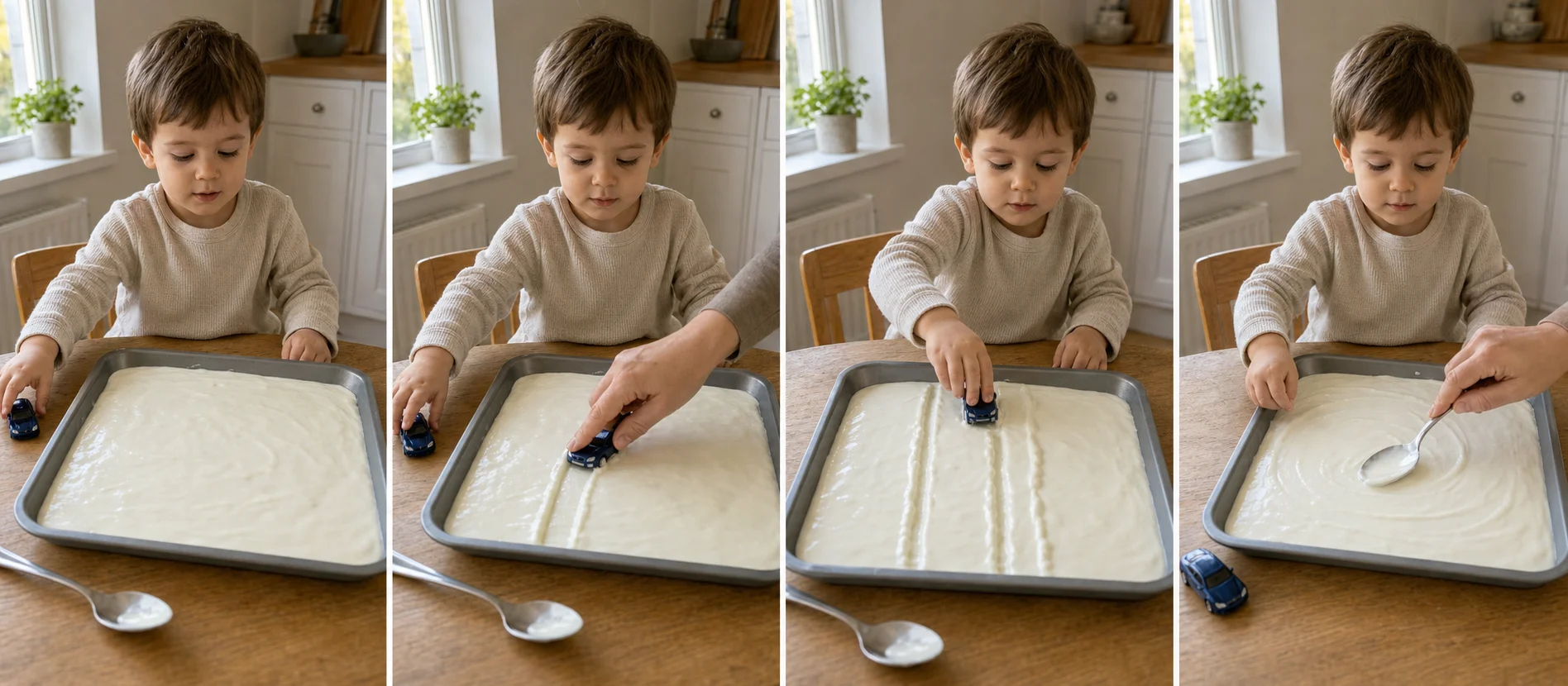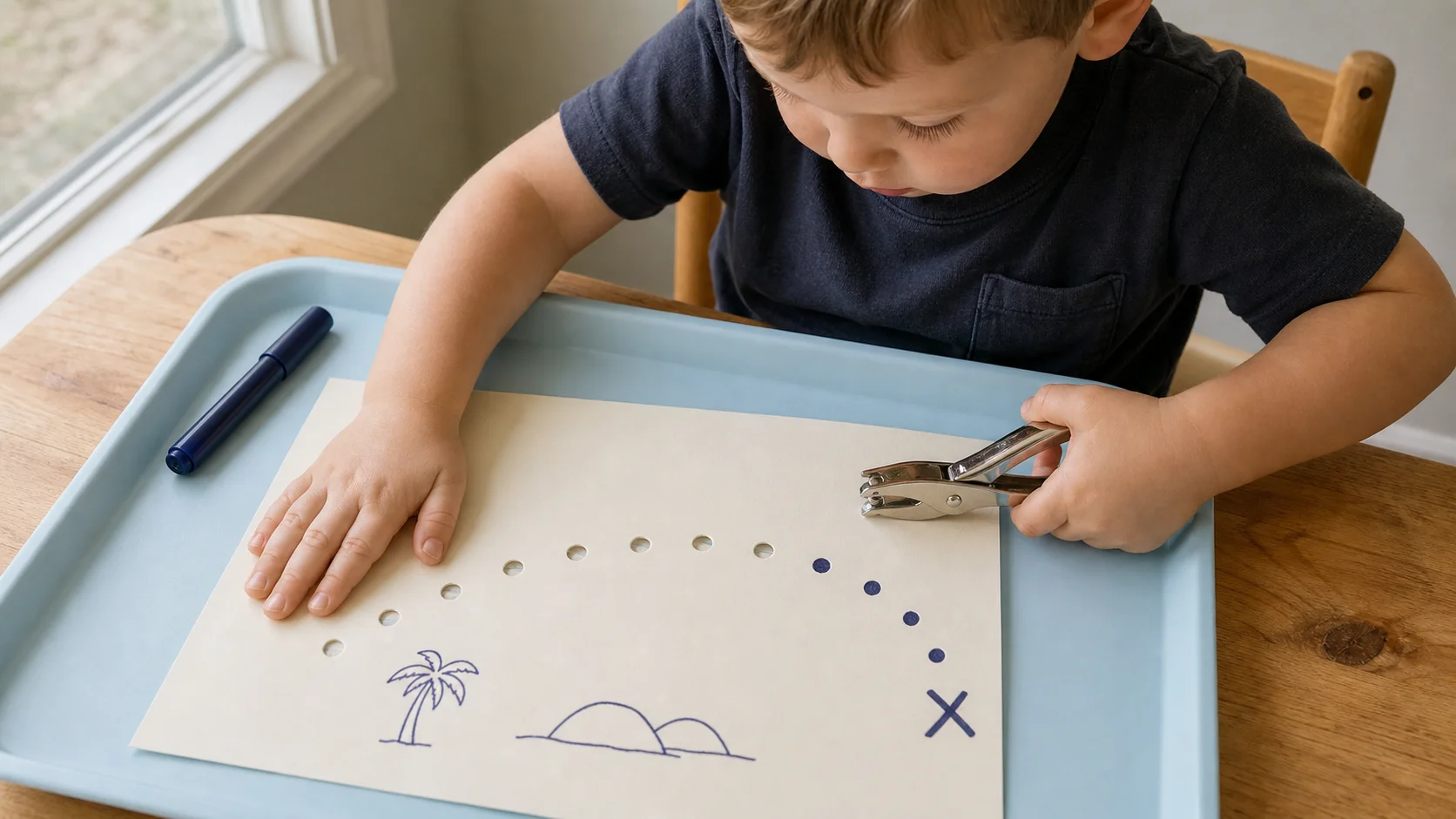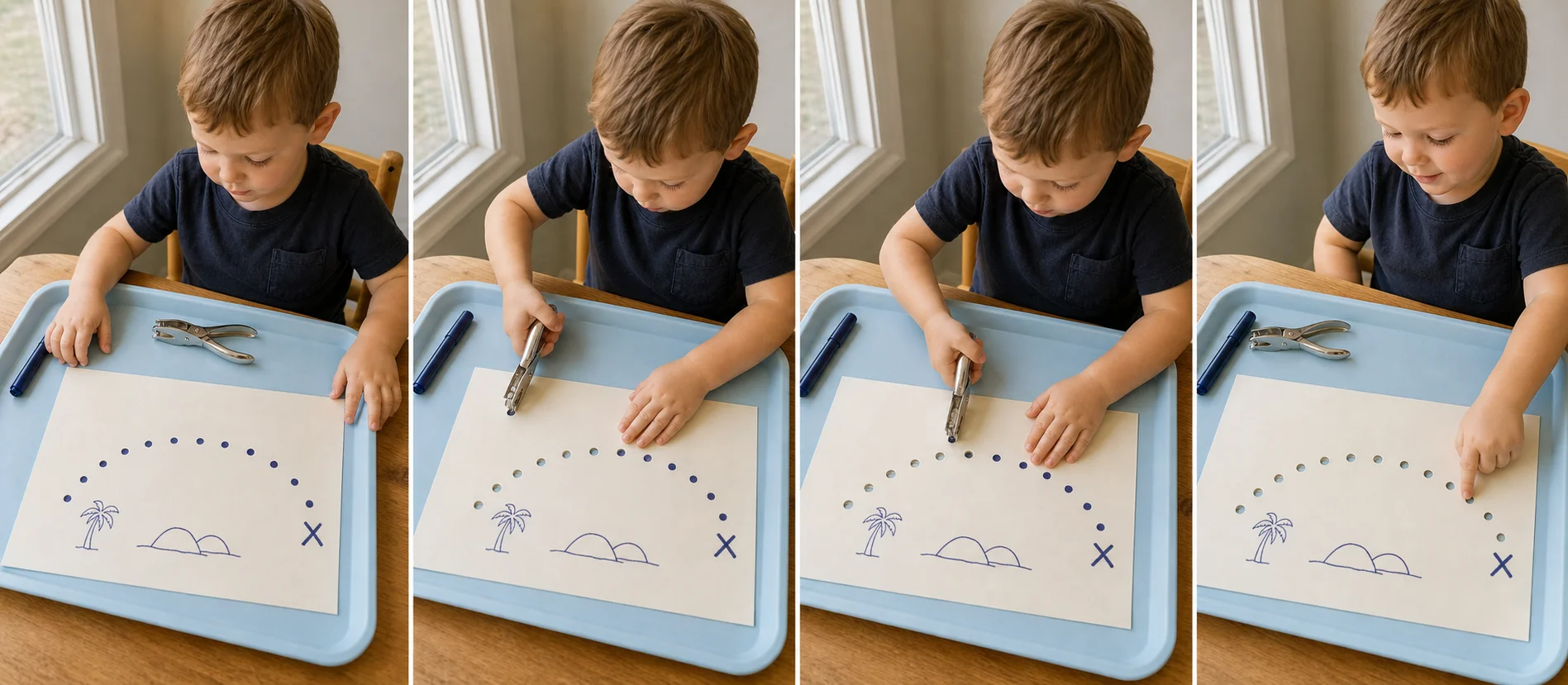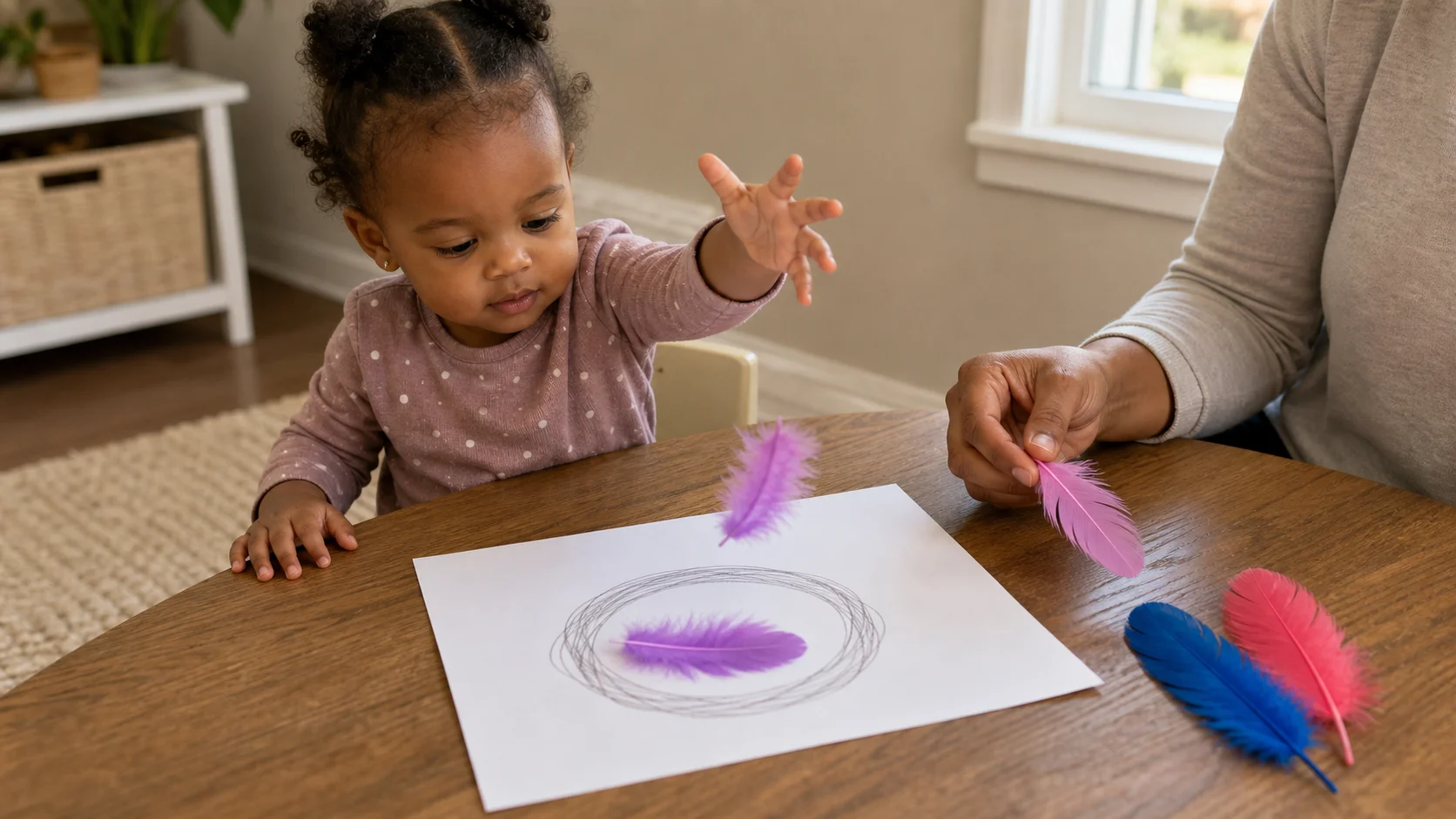
Toddler dropping a feather over a paper nest while an adult offers one piece at a time
Fine motorSensory-friendly supportRelease To Target`Indoor

Feather Drop Nest.

One feather, one paper nest, and one quiet drop turn letting go into a visible game.

Play time
3-5+ min
Age
1-3 years
Energy
Low
Mess
Low
Effort
Low
Where
Indoor
Start here

The recipe.

Low parent effort
5 things

What you need

  • 1 plain sheet of paper
  • 4 to 6 feathers
  • Optional: 4 to 6 light tissue squares if feathers are not available
  • 1 adult
  • 1 child
3 min minimum

Setup

Then start the loop
Step 01
Draw one simple nest circle in the center of the paper.
Step 02
Place the paper flat on the floor or a child-height table.
Step 03
Set a small pile of feathers or light tissue squares beside the paper.
Step 04
Keep the extra pieces in your hand if your child tends to grab the whole pile.
Step 05
Over the paper, model one drop and say, "Drop feather. Watch it float."
"Drop. Watch."
The loop

How play unfolds.

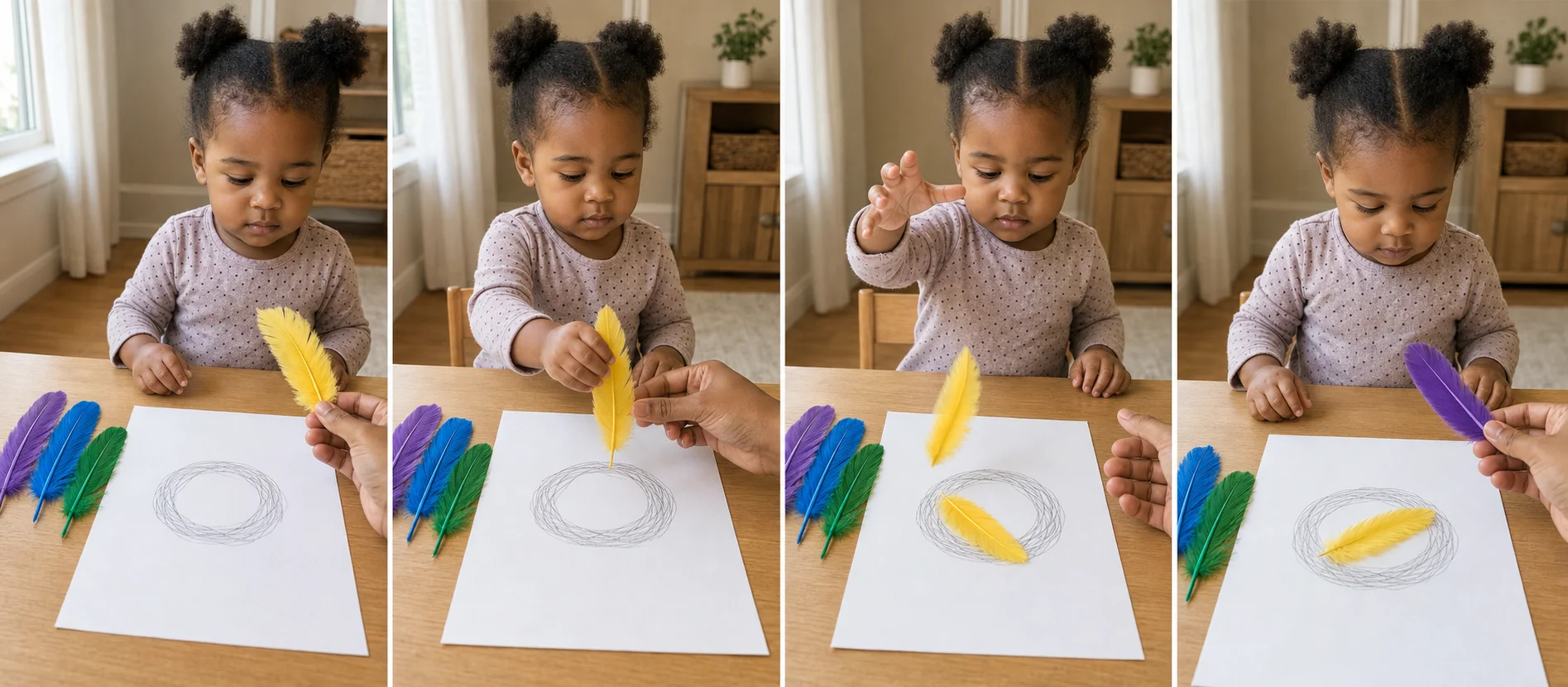
Sequence showing a paper nest setup, adult model drop, child releasing a feather, and piece landing near the nest
  1. 01
    Hand your child one light piece and say, "Over the nest."
  2. 02
    Let your child hold it over the paper, open their hand, and watch it fall.
  3. 03
    Count the turn if the piece leaves their hand and lands on or near the paper.
  4. 04
    Name where it landed: "It landed on the nest," or "It landed beside the nest."
  5. 05
    Reset the piece to the side, or offer another, until the pile is gone or your child is done.

Safety Check

  • Use only feathers or tissue squares that are too large to swallow.
  • Supervise closely because this activity uses loose light pieces.
  • If your child mouths a piece, remove it. Say, "Feathers stay out of mouths," then try once more with close supervision or end the activity.
Supporting the play

What to say in the moment

Match what you say to what you see.

Prompt ladder
Level 1 (Start)
Drop one light piece and watch where it lands.
Level 2 (Keep going)
Pick another piece and make it float again.
Level 3 (Stretch)
Try a higher drop after one easy drop works.
Level 4 (Extend)
Take turns making gentle drops until the pile is gone.
If your child seems...
What you'd see
Focused
What to do
Say
"Watch it float."
Add
Name where it lands after the piece stops moving.
Extend
Offer the next piece without changing the rhythm.

Make it easier

Younger end
  • -Start with the child's hand already over the paper so only opening the fingers is needed.
  • -Use the lightest, easiest-to-release piece from the pile first.
  • -Count a partial release as success if the piece leaves the child's fingers with help.

Make it harder

Older end
  • +Invite one low drop and one higher drop, then notice which one floats longer.
  • +Let the child reset the dropped piece back to the side before the next turn.
  • +Ask the child to choose left hand or right hand for the next drop.

If it's not working

If you see
If child ignores it
Do one slow drop yourself and stop talking after the first sentence. Hand them one piece and wait 5 seconds before helping.
If you see
If child misuses it
If they throw, scatter, or crumple pieces, switch to one-piece turns from your hand.
If you see
If child gets frustrated
Lower the piece closer to the paper, guide their fingers open once, and count the next drop as finished even if it lands beside the nest.
Skill spotlight
Release Control

Controlled hand release

This helps a child control when to let go, aim toward a visible spot, and stay with a short repeatable routine. Those skills show up in giving objects, putting toys down, turning pages, cleanup, and simple helping jobs.

  • Opening the hand on purpose gives your child a small, visible release job.
  • Watching the piece fall connects their action with a clear result.
  • One-piece turns keep the routine predictable without needing much language.
  • Resetting after each drop gives practice finishing one tiny turn before starting another.
Real-world transfer
  • Handing an object to someone without throwing it.
  • Putting a toy down gently.
  • Dropping clothes or blocks into a bin.
  • Turning one page or moving one small item at a time.

Parent questions