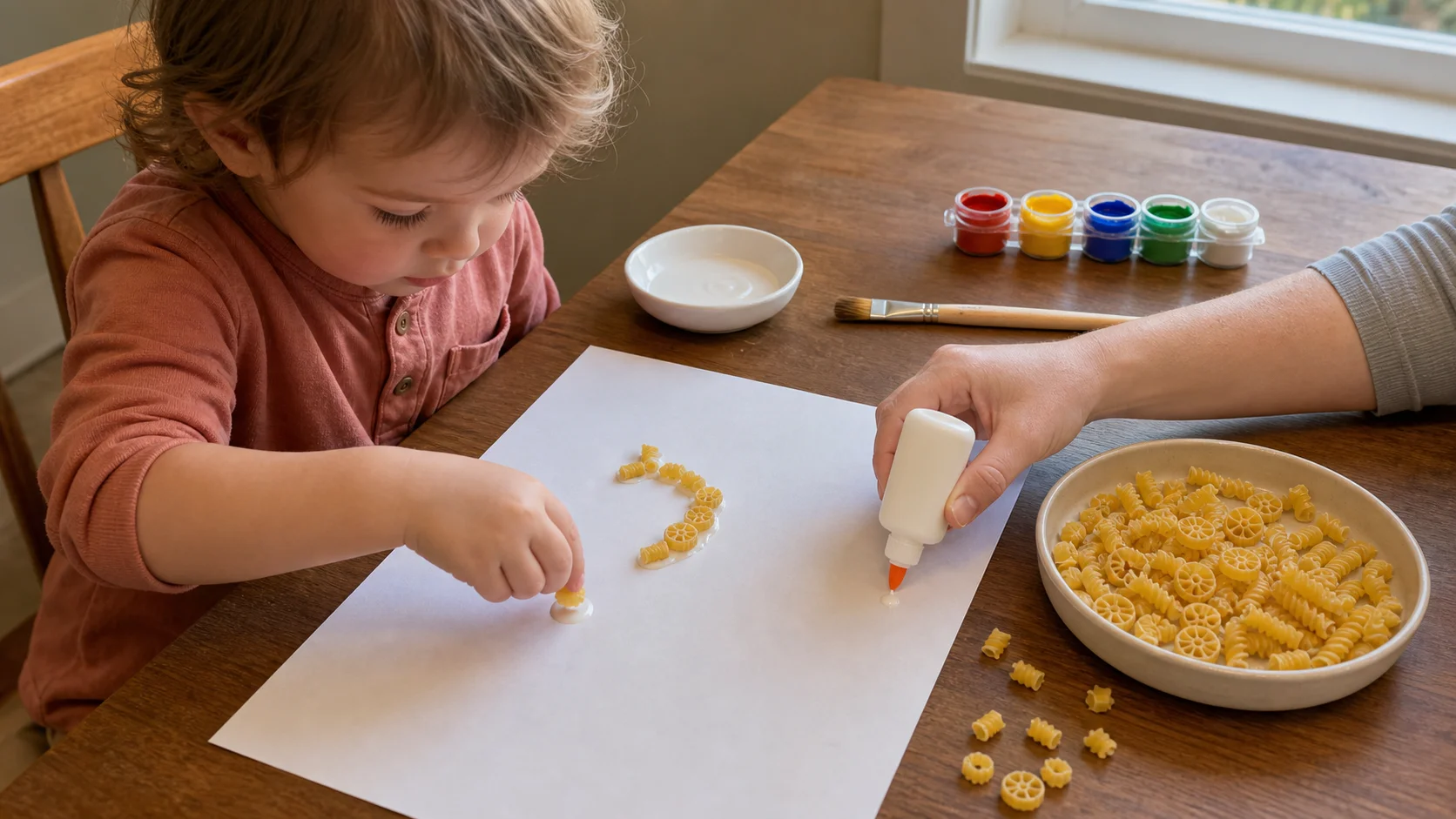
A toddler at a table placing one dry pasta shape onto a small glue spot on paper while a grown-up holds the bowl nearby.
Fine motorSensory-friendly supportPlace With ControlIndoor

Pasta Shape Picture.

Dry pasta, one glue spot at a time, and an easy stopping point make this craft feel more doable.

Play time
10-15+ min
Age
2-4 years
Energy
Low
Mess
Medium
Effort
Medium
Where
Indoor
Start here

The recipe.

Medium parent effort
6 things

What you need

  • 1 sheet of paper or card
  • dry pasta shapes
  • glue
  • 1 small bowl or tray
  • paint
  • 1 paintbrush
10 min minimum

Setup

Then start the loop
Step 01
Put one sheet of paper flat on the table in front of your child.
Step 02
Pour a small handful of dry pasta into a low bowl or tray beside the paper.
Step 03
Put a small blob of glue on one edge of the paper or on a small dish beside it.
Step 04
Set the paintbrush and a small amount of paint above the paper until the pasta picture is finished.
"One pasta piece."
The loop

How play unfolds.

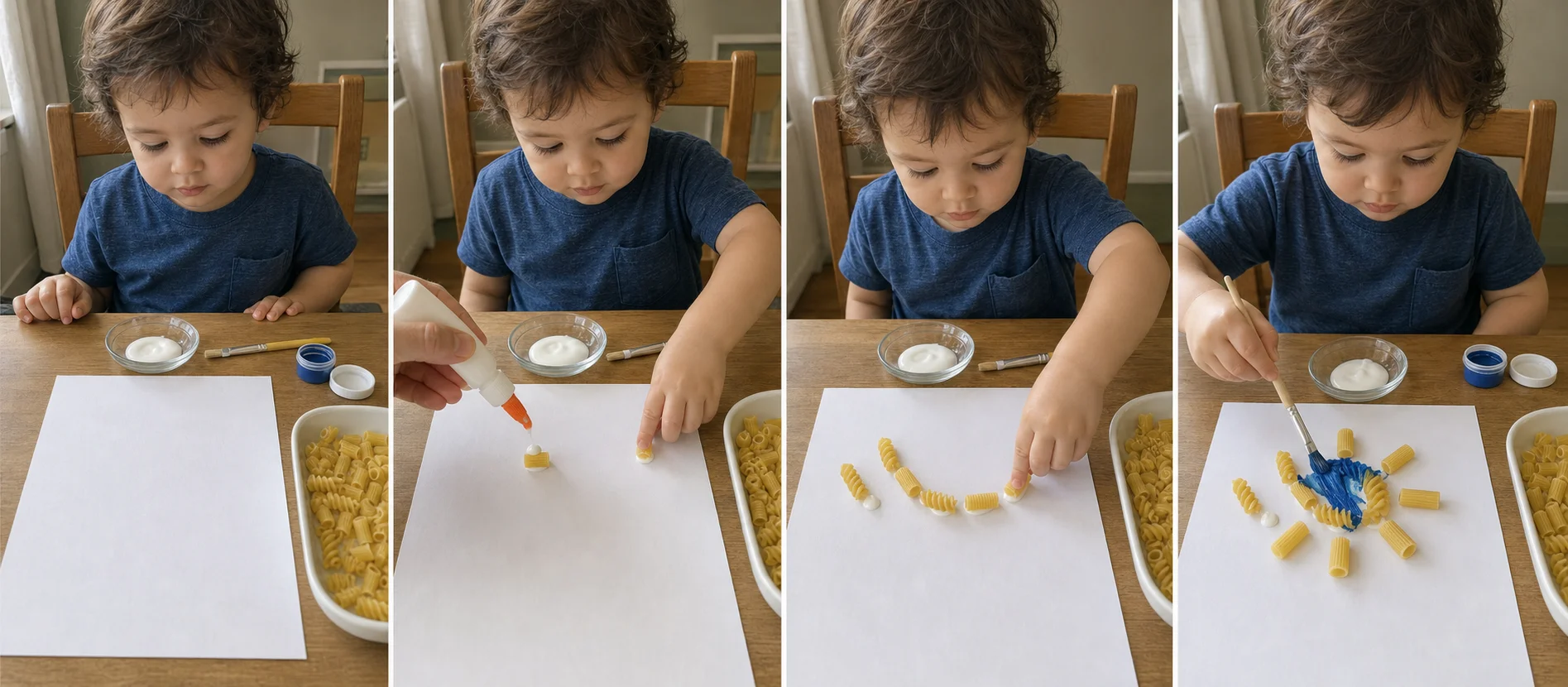
Four panels showing paper and dry pasta set out, a grown-up modeling one placement, a toddler adding more pasta pieces, and the finished picture being painted.
  1. 01
    Place one small glue spot on the paper and model adding one pasta piece.
  2. 02
    Let your child place one pasta piece onto the next glue spot.
  3. 03
    Keep adding one small glue spot at a time and repeat until the picture feels finished.
  4. 04
    Paint over the pasta picture, or stop after the dry design if that is enough for today.

Safety Check

  • Stay with your child the whole time because dry pasta is a small part.
  • Stop if the child starts mouthing glue, pasta, or paint.
  • Do not force touch. Let your child stay in control of how far they go with the glue or paint step.
Supporting the play

What to say in the moment

Match what you say to what you see.

Prompt ladder
Level 1 (Start)
"Pick one piece."
Level 2 (Keep going)
"Where should this one go?"
Level 3 (Stretch)
"What should we add next?"
Level 4 (Extend)
"Now paint your picture."
If your child seems...
What you'd see
Focused
What to do
Say
"You found a good spot."
Add
Pause before the next glue spot so your child can look over the picture first.
Extend
Let your child choose whether the next piece goes high, low, or in the middle.

Make it easier

Younger end
  • -Use larger pasta shapes from the bowl first.
  • -Keep the picture small, such as one line, one circle, or one simple body shape.
  • -Skip the paint step and stop after the pasta sticks.

Make it harder

Older end
  • +Let your child choose the next glue spot before you place it.
  • +Ask your child to fill one small part of the picture before moving to another area.
  • +Let your child paint only after checking whether the picture looks finished.

If it's not working

If you see
If child ignores it
Make a tiny line with two pieces yourself and hand over the next piece right away.
If you see
If child misuses it
Hold the pasta bowl and hand over one piece at a time while saying, "One on the paper."
If you see
If child gets frustrated
Keep the glue work with the grown-up, use one large easy spot, and count one or two placed pieces as a full success.
Skill spotlight
Placement Control

Placing small pieces onto a chosen spot with control

This helps a child control where a small object lands, which matters for later drawing, placing, matching, and other table tasks that need steadier hand use.

  • Placing one pasta piece at a time gives repeated fine motor practice without asking for fast or precise drawing.
  • The picture grows in a visible way, which helps some children stay with the task for one more turn.
  • Starting with dry materials can make glue-and-paint play feel more approachable.
Real-world transfer
  • Placing small items where they belong during early crafts and matching games
  • Using steadier hands for crayons, stickers, and simple tools
  • Staying with a short sit-down task that has a visible finish
Back to library
Keep playing

Related activities.