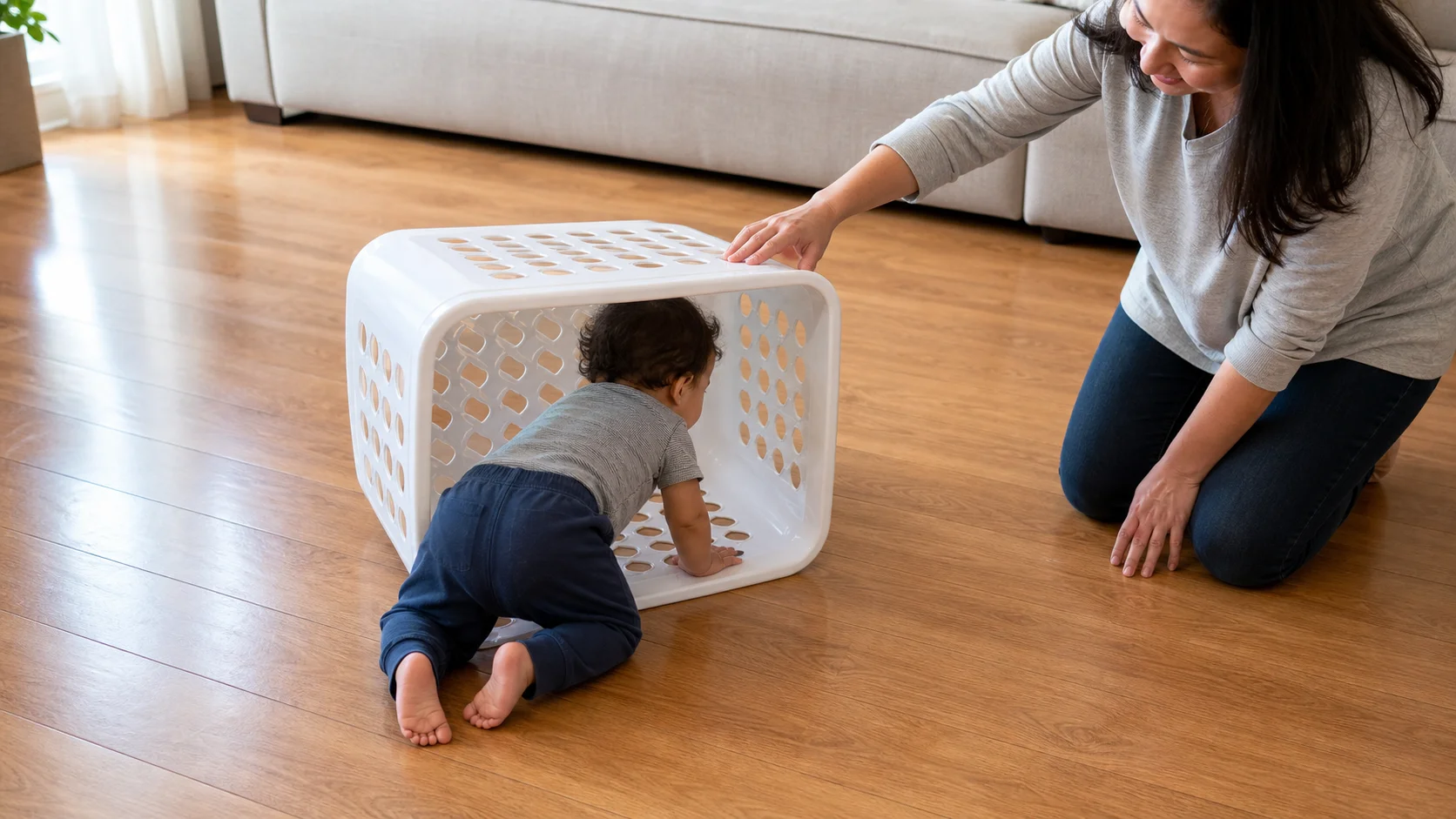
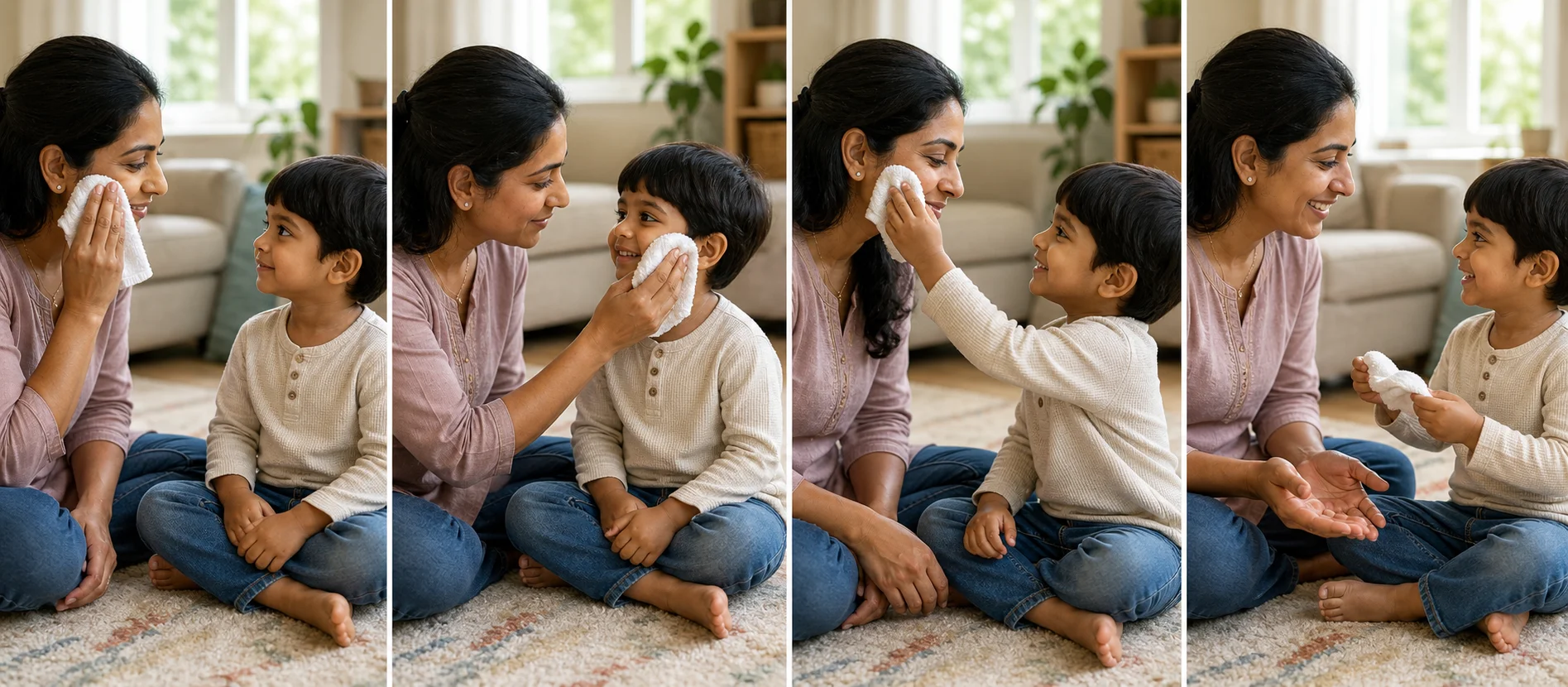
A grown-up and toddler sitting face to face while taking turns using a soft flannel for one gentle cheek tickle
Skill builderSensory-friendly supportCopy Then TryIndoor

Face Tickle Turns.

Turn gentle face touch into a predictable back-and-forth game. Tickle your child's outer cheek once with a familiar soft item, then hand it over so they can copy the touch on you, building comfort with touch around the face.

Play time
3-5+ min
Age
1-4 years
Energy
Low
Mess
No
Effort
Low
Where
Indoor
Start here

The recipe.

Low parent effort
1 things

What you need

  • 1 soft item such as a soft brush, flannel, towel corner, blanket corner, or soft toy
3 min minimum

Setup

Then start the loop
Step 01
Choose one clean, familiar soft item your child tolerates, such as a soft brush, flannel, towel corner, blanket corner, or soft toy.
"Soft touch."
The loop

How play unfolds.

Four panels showing a grown-up modeling a soft cheek touch, the toddler receiving one quick tickle, the toddler giving the same touch back, and the soft item being reset for another turn
  1. 01
    Gently tickle your child's outer cheek once with the soft item and say, "My turn."
  2. 02
    Hand the item to your child and say, "Your turn on my cheek."
  3. 03
    Let your child tickle your cheek once. Take the item back and repeat the two turns.

Safety Check

  • Keep all touch on the outside of the face and stop if your child pulls away or looks uncomfortable.
  • Use only soft clean items and skip anything rough, cold, or irritating.
  • Stay close and take the item back if it starts heading into the mouth or becomes a mouthing hazard.
Skill spotlight
Copy Then Try

copying one gentle action and returning it in a short social turn

This helps a child stay with one short shared routine, copy a simple action after watching it, and handle a predictable social exchange without needing lots of language.

  • The one-touch return loop gives your child a clear social job without needing lots of words.
  • The same soft item and same short pattern keep the sensory input easier to predict.
  • Getting to do the touch back can make the game feel more controlled and less one-sided.
Real-world transfer
  • Copying one simple action in songs, care routines, and social games
  • Staying with a short back-and-forth routine instead of leaving after the first turn
  • Accepting predictable face-touch care moments with more control
Supporting the play

What to say in the moment

Match what you say to what you see.

Prompt ladder
Level 1 (Start)
"Cheek turn."
Level 2 (Keep going)
"My turn, your turn."
Level 3 (Stretch)
"Other cheek now."
Level 4 (Extend)
"Can teddy get one too?"
If your child seems...
What you'd see
Focused
What to do
Say
"You gave me a soft one."
Add
Name one body word, like cheek, lips, or face.
Extend
Switch to the other cheek for the next matching turn.

Make it easier

Younger end
  • -Stay with one favorite soft item for the whole round.
  • -Use the same cheek each turn instead of switching sides.
  • -Count one adult turn and one child turn as a full round.

Make it harder

Older end
  • +Switch between your cheek and your outer lip line after a few easy turns.
  • +Let your child choose which cheek gets the next turn.
  • +Add one short pause before the child gives the return tickle.

If it's not working

If you see
If child ignores it
Do one playful cheek tickle on yourself and offer the item back without moving toward the child's face again right away.
If you see
If child misuses it
Keep the turn on your own cheek first and say, "Soft cheek tickle," before offering another try.
If you see
If child gets frustrated
Move the touch farther from the mouth, keep it to one outer cheek only, or stop after one adult turn and one child turn.