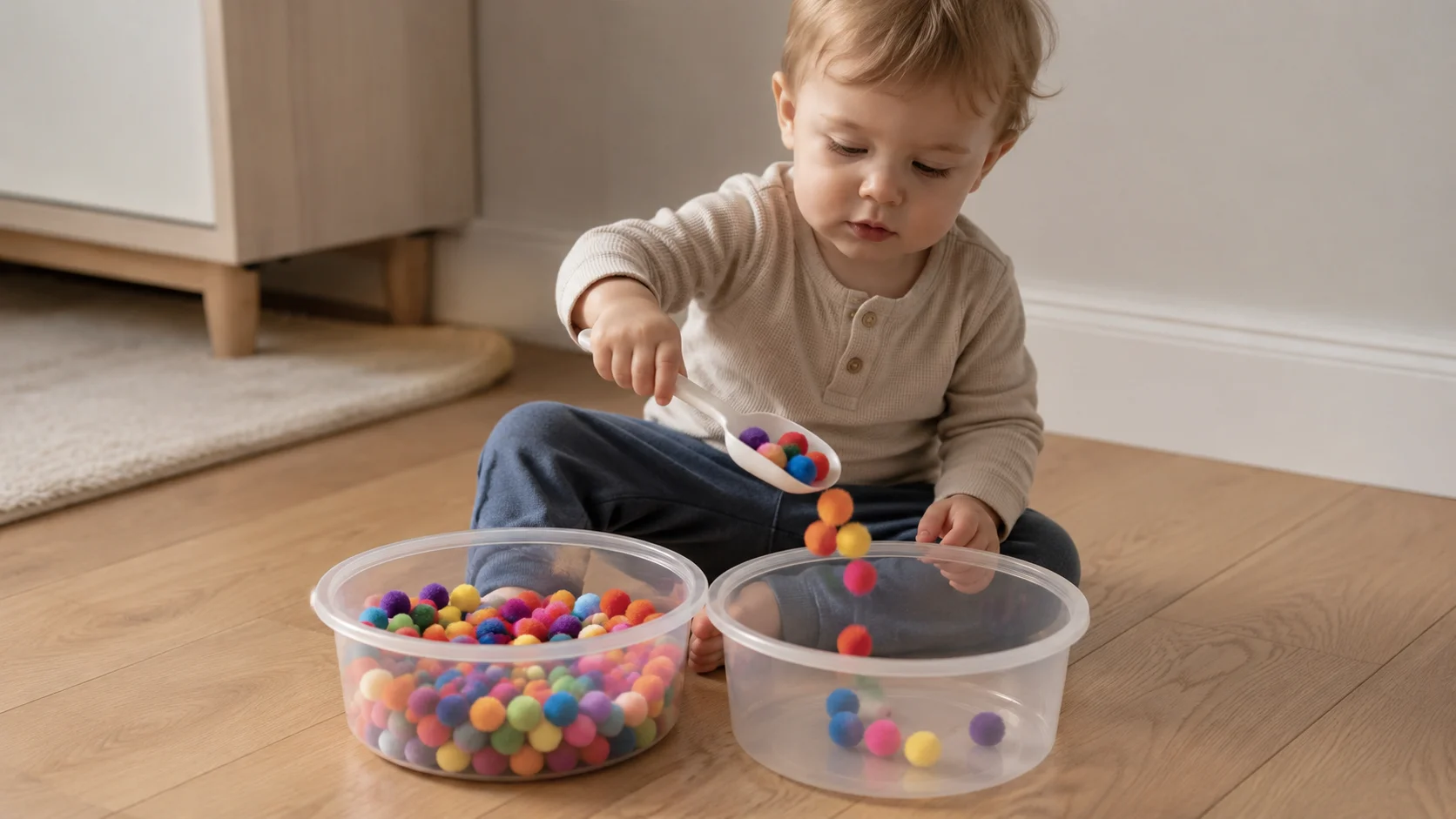
A toddler using a small scoop to move pom poms from one bowl into another bowl on the floor.
Skill builderAutism supportFill And EmptyIndoor

Pom Pom Sensory Scoop.

A scoop, two containers, and soft pom poms make a simple transfer activity with an easy reset.

Play time
5-15+ min
Age
1-3 years
Energy
Low
Mess
Low
Effort
Low
Where
Indoor
Start here

The recipe.

Low parent effort
3 things

What you need

  • Pom poms
  • 2 open containers
  • 1 small scoop, spoon, or jug
5 min minimum

Setup

Then start the loop
Step 01
Put 2 open containers in front of your child and keep them close enough that both are easy to reach.
Step 02
Place a small pile of pom poms in 1 container and leave the second container empty.
Step 03
Put 1 scoop, spoon, or small jug in or beside the pom pom container.
"Scoop and pour."
The loop

How play unfolds.

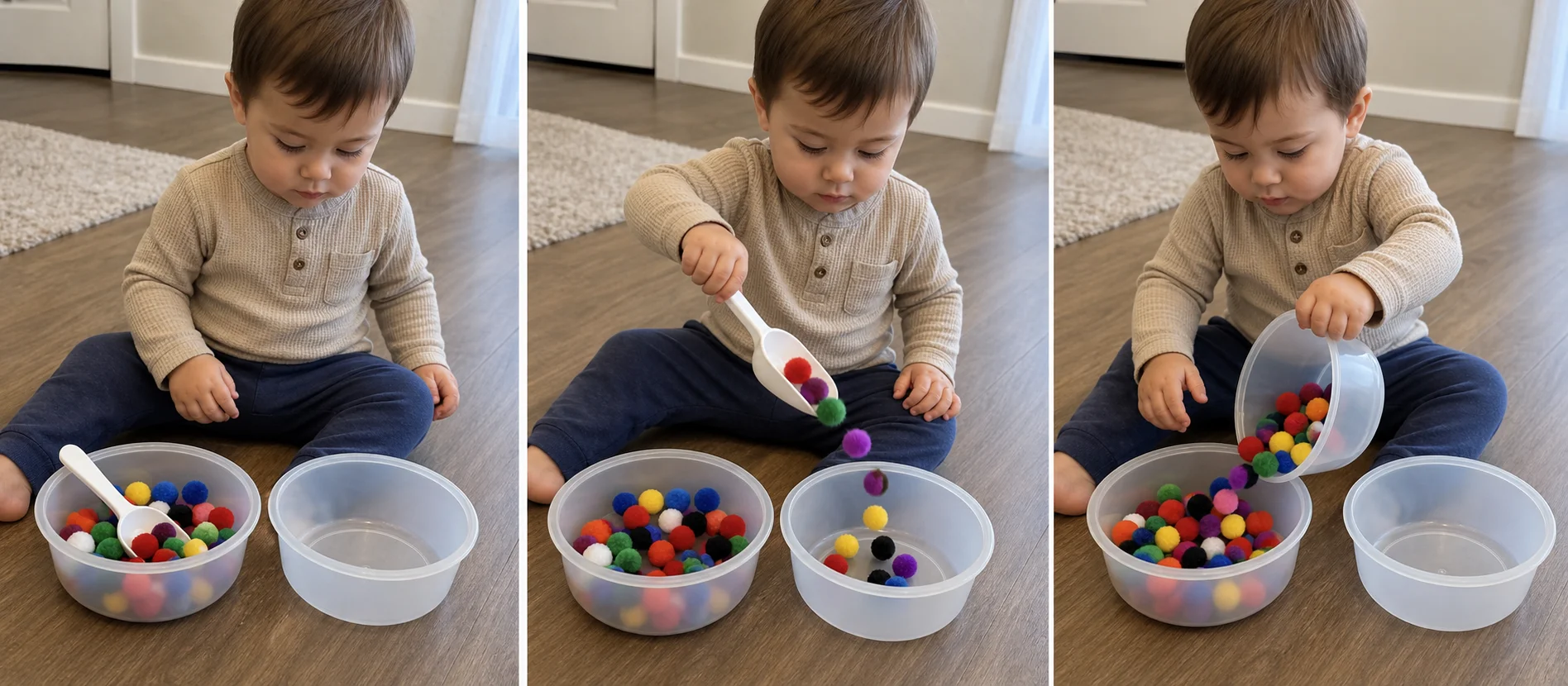
Four panels showing two bowls with pom poms, a grown-up modeling one scoop, a child pouring pom poms into the empty bowl, and the child dumping them back to start again.
  1. 01
    Show 1 slow scoop-and-pour turn and say, "Scoop and pour."
  2. 02
    Let your child move pom poms from the full container into the empty container with the tool or with hands.
  3. 03
    When the first container is empty or nearly empty, dump the pom poms back and start again.

Safety Check

  • Stay with your child the whole time because pom poms are small and can go into the mouth.
  • Stop the activity if your child starts mouthing pom poms or throwing them repeatedly.
  • Use simple toddler-safe containers and tools with no sharp edges or breakable parts.
Supporting the play

What to say in the moment

Match what you say to what you see.

Prompt ladder
Level 1 (Start)
Scoop some up.
Level 2 (Keep going)
Pour them in.
Level 3 (Stretch)
Try the big bowl now.
Level 4 (Extend)
Fill it, then dump it back.
If your child seems...
What you'd see
Focused
What to do
Say
"You filled it."
Add
Name 1 simple contrast already in play, like full/empty or in/out.
Extend
Pause and let the child start the next scoop.

Make it easier

Younger end
  • -Let the child move pom poms with hands instead of a scoop.
  • -Use 2 wide bowls with low sides.
  • -Start with a small amount of pom poms.

Make it harder

Older end
  • +Switch from a scoop to a spoon for a smaller target space.
  • +Add a second empty container so the child chooses where to pour.
  • +Pause before the reset and wait for the child to ask or gesture for more.

If it's not working

If you see
If child ignores it
Do 1 slow scoop-and-pour turn yourself, then leave the tool in the pom poms and pause.
If you see
If child misuses it
Block the next throw, say, "Pom poms stay in the bowls," and switch to hand-to-bowl transfers for the next turn.
If you see
If child gets frustrated
Move the containers closer, use a wider bowl, and let your child use hands instead of the tool.
Skill spotlight
Fill And Empty

adaptive.containers.fill_and_empty

Repeated filling and emptying helps a toddler practice hand control, simple tool use, and everyday container routines that show up in snack, bath, and cleanup moments.

  • This activity supports fine motor practice by giving your child a simple reason to lift, carry, and release soft loose items with control.
  • The same scoop-and-pour loop can also support early routine skills because the start, reset, and repeat pattern stay the same each round.
  • For some children, the soft texture and low-language setup make it easier to join the play without a lot of explanation.
Real-world transfer
  • Filling and emptying bowls, cups, and bins during everyday play and helping tasks
  • Using both hands and simple tools during snacks, sensory play, and cleanup
Back to library
Keep playing

Related activities.