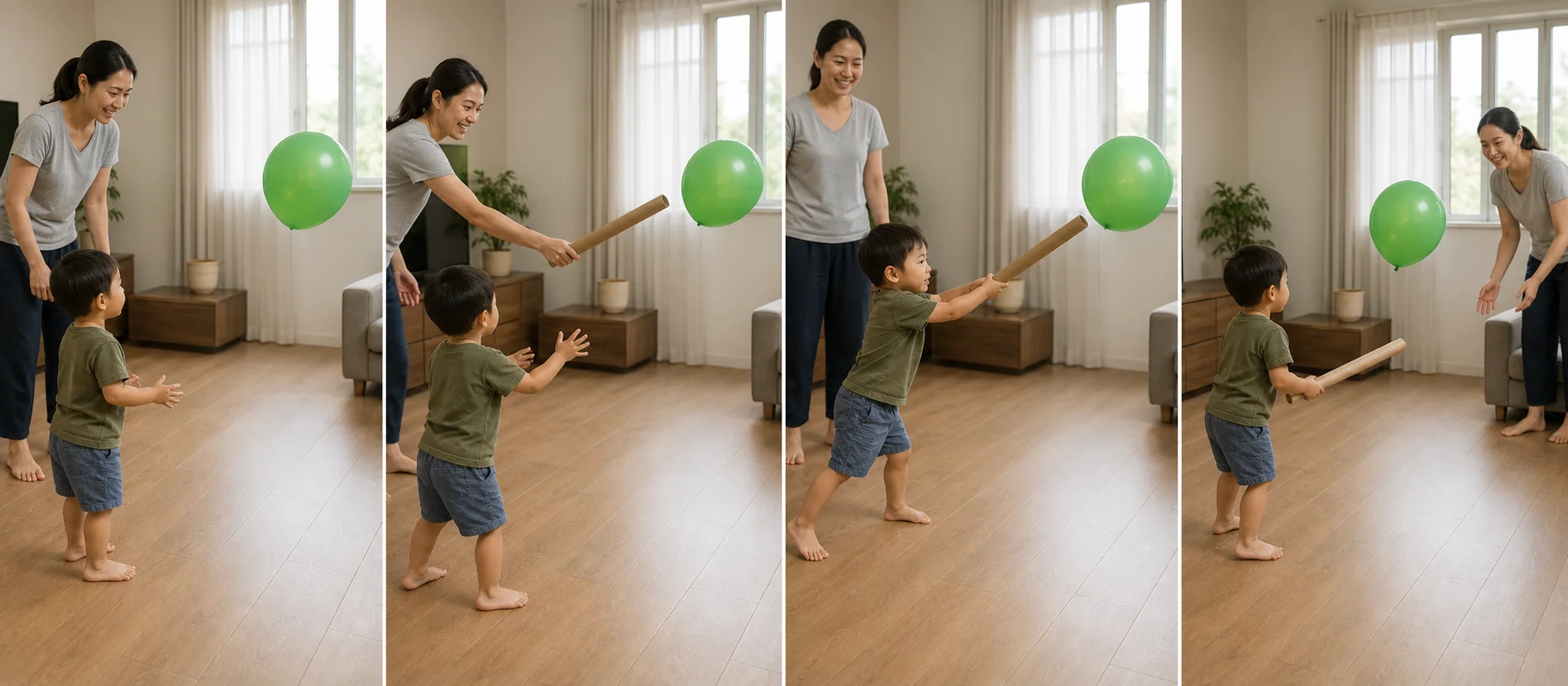

Balloon Batting
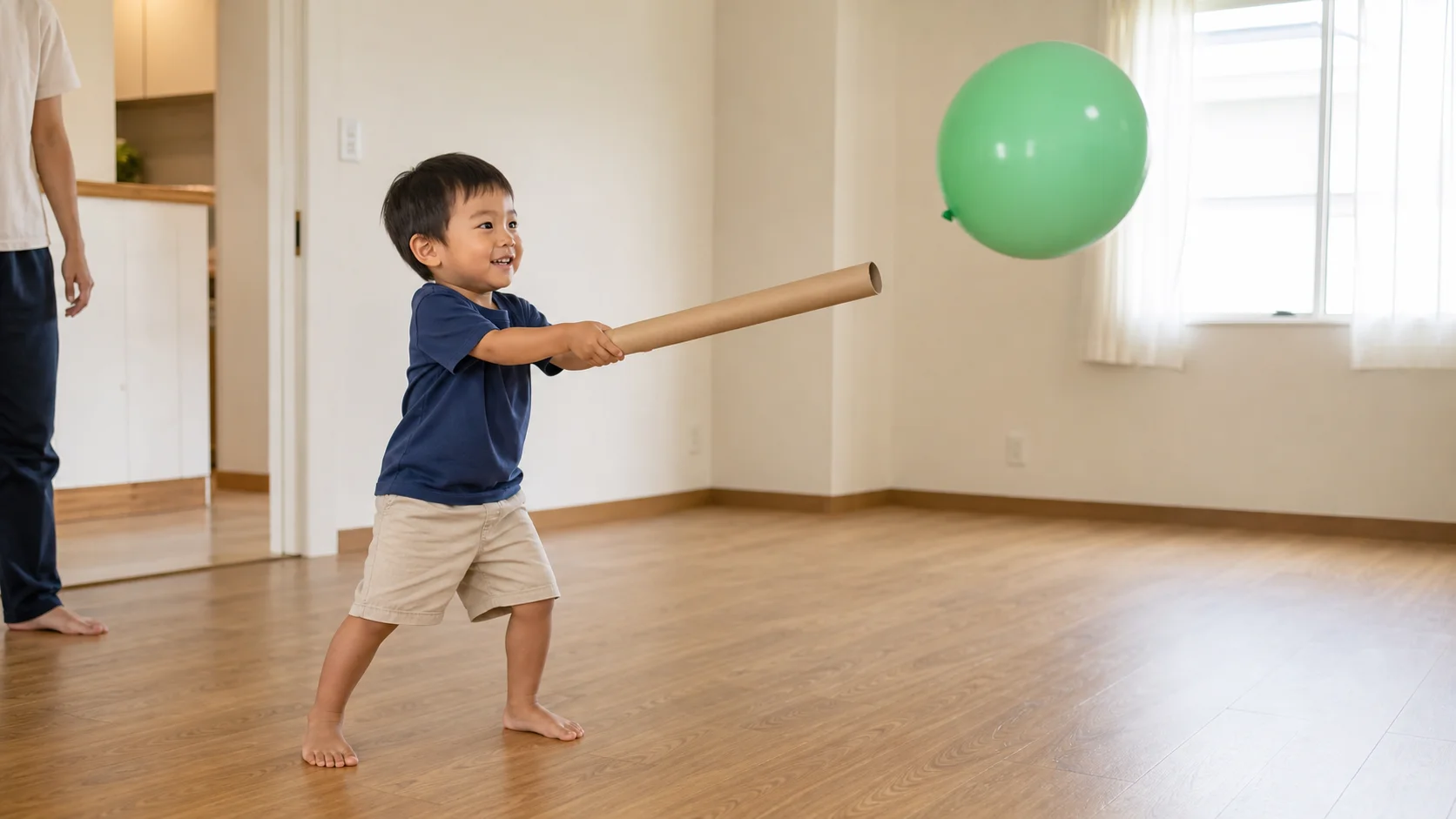
Give your child an indoor target that moves slowly enough to hit and chase. Batting a balloon with an empty cardboard tube turns every floating bounce into practice for hand-eye coordination and timing.
Find activities for 4-year-olds who are building longer attention, bigger pretend-play stories, early problem-solving, movement skills, and creative confidence. Browse flexible at-home and indoor ideas for learning, making, and active play.


Give your child an indoor target that moves slowly enough to hit and chase. Batting a balloon with an empty cardboard tube turns every floating bounce into practice for hand-eye coordination and timing.


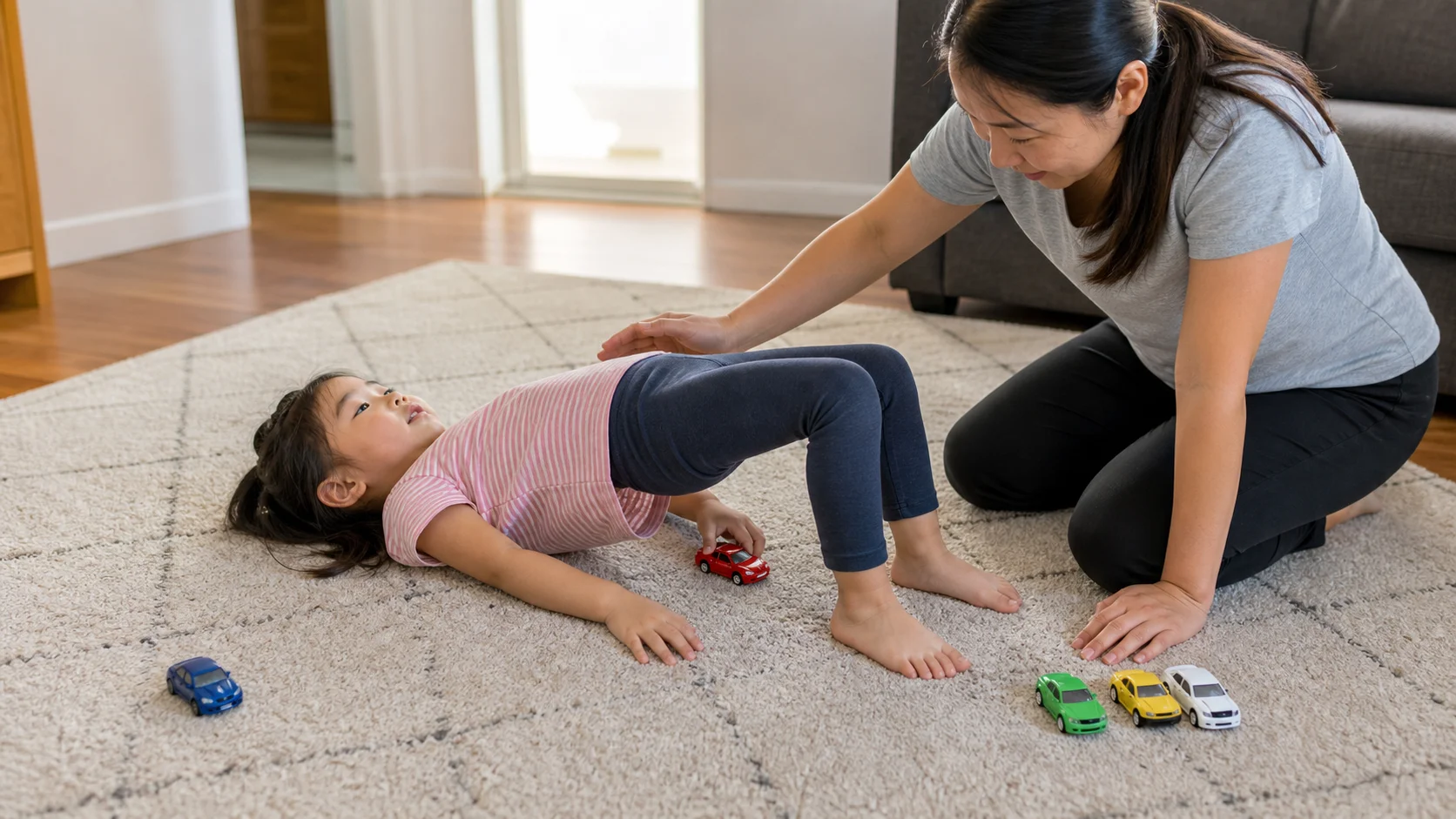
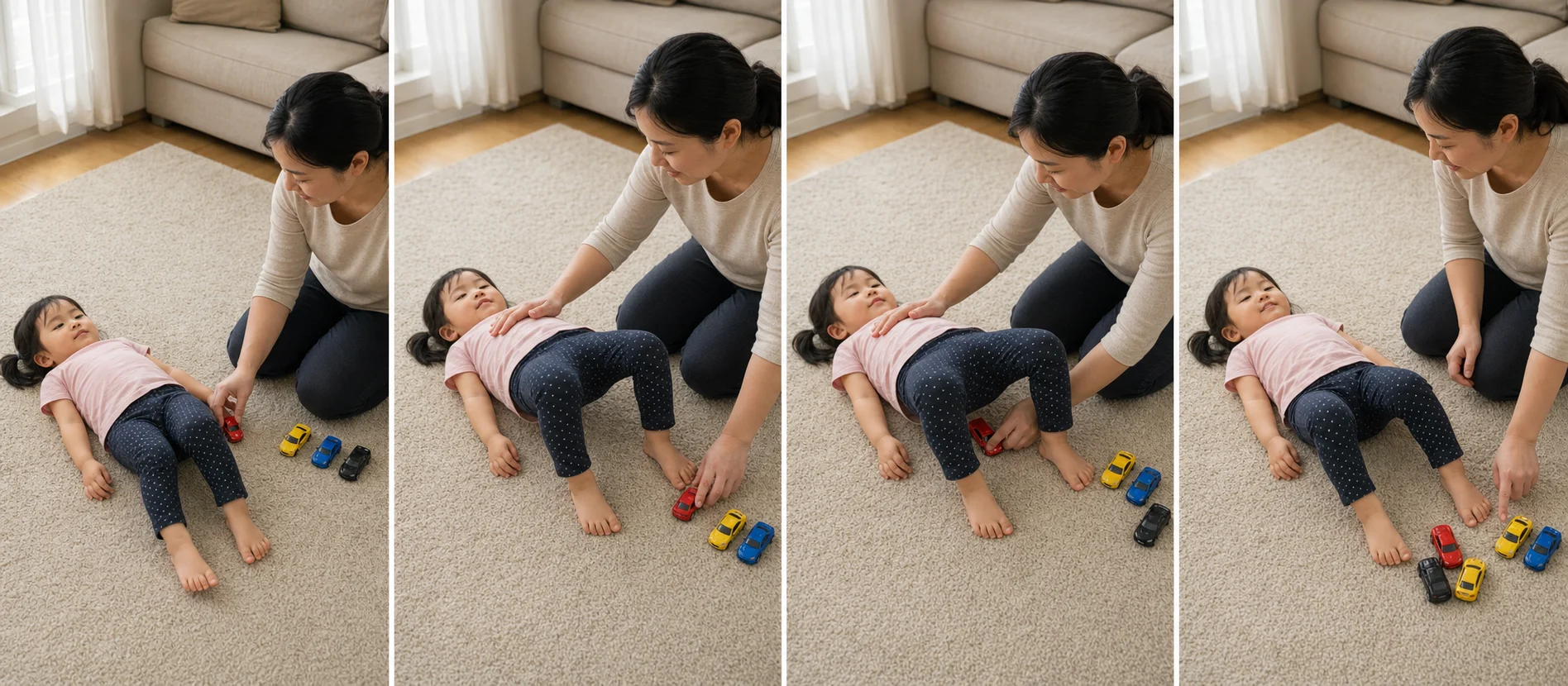
Turn a simple floor exercise into a tunnel game with a toy car or soft ball. Your child lifts their hips while a car is pushed or a ball rolls underneath, then lowers slowly to practice balance and core stability.


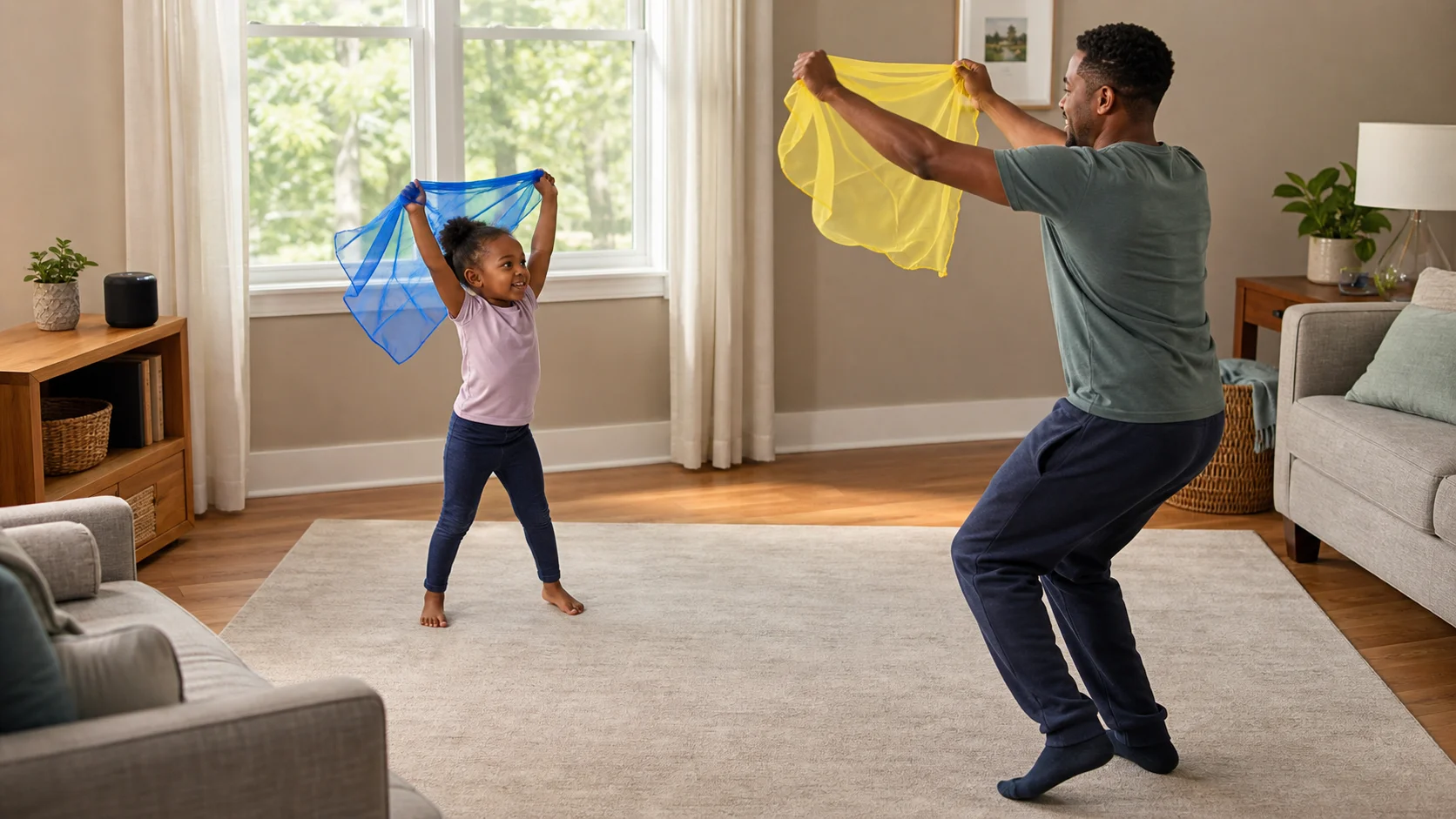
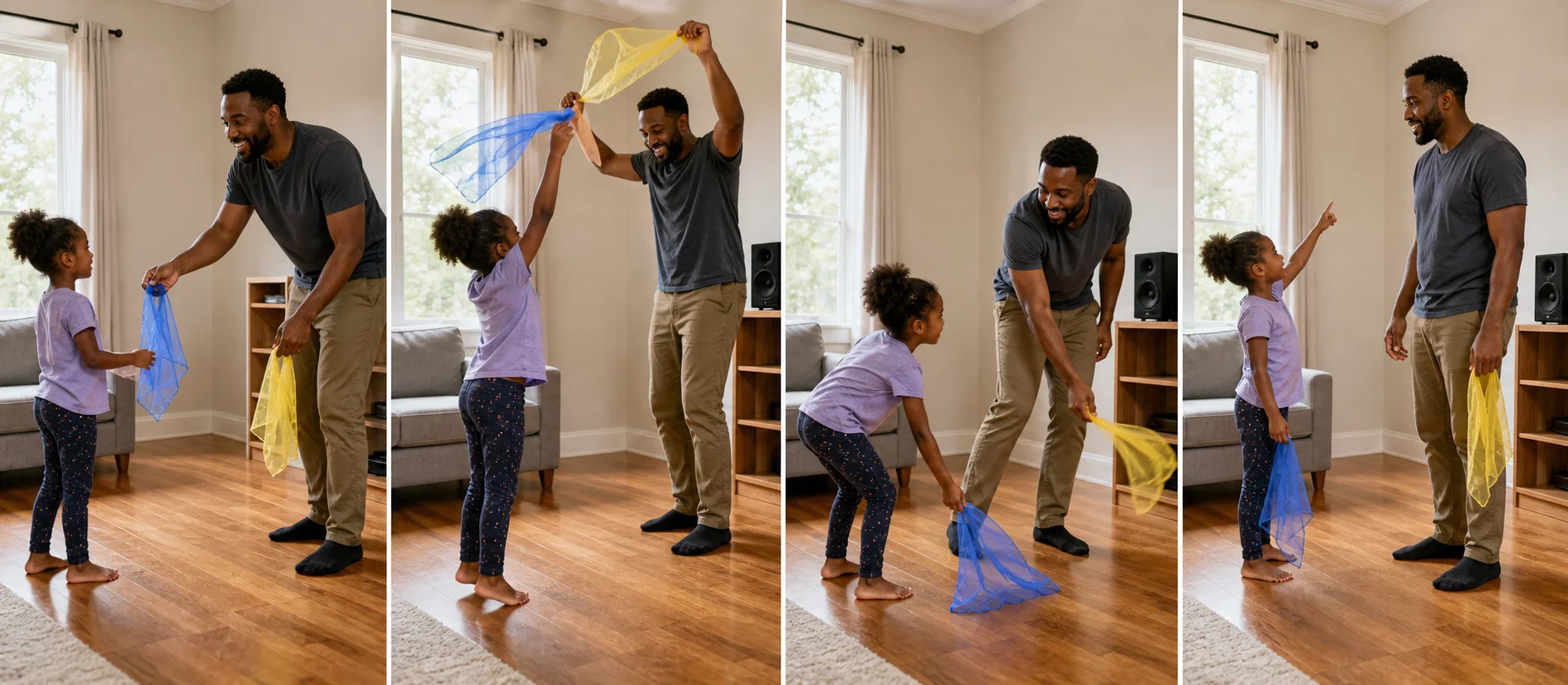
Turn a favorite song and a light scarf into a copy-the-dance game. Your child invents one scarf move for you to follow, then swaps roles and copies yours, building physical movement, listening, and following instructions.


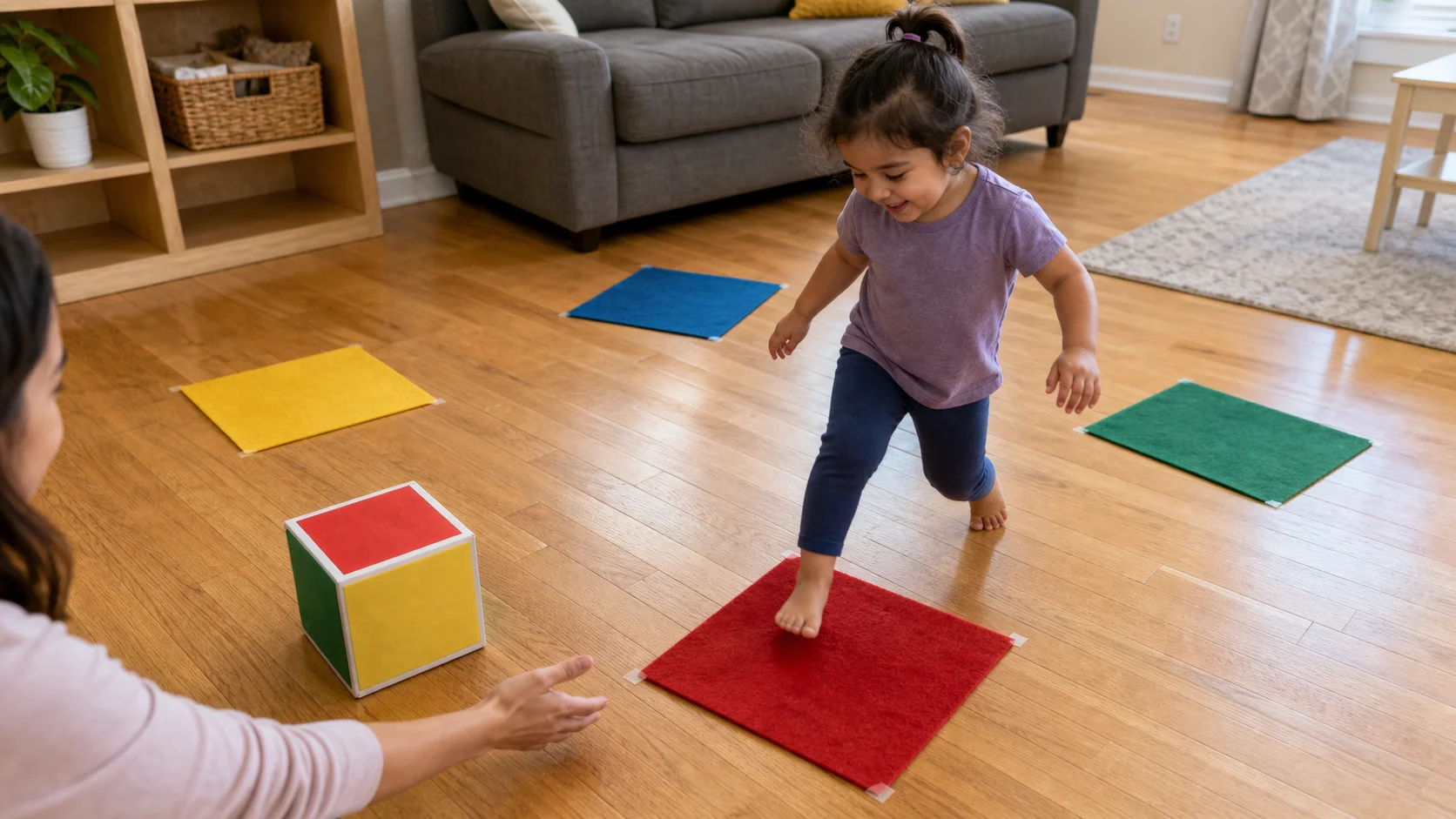
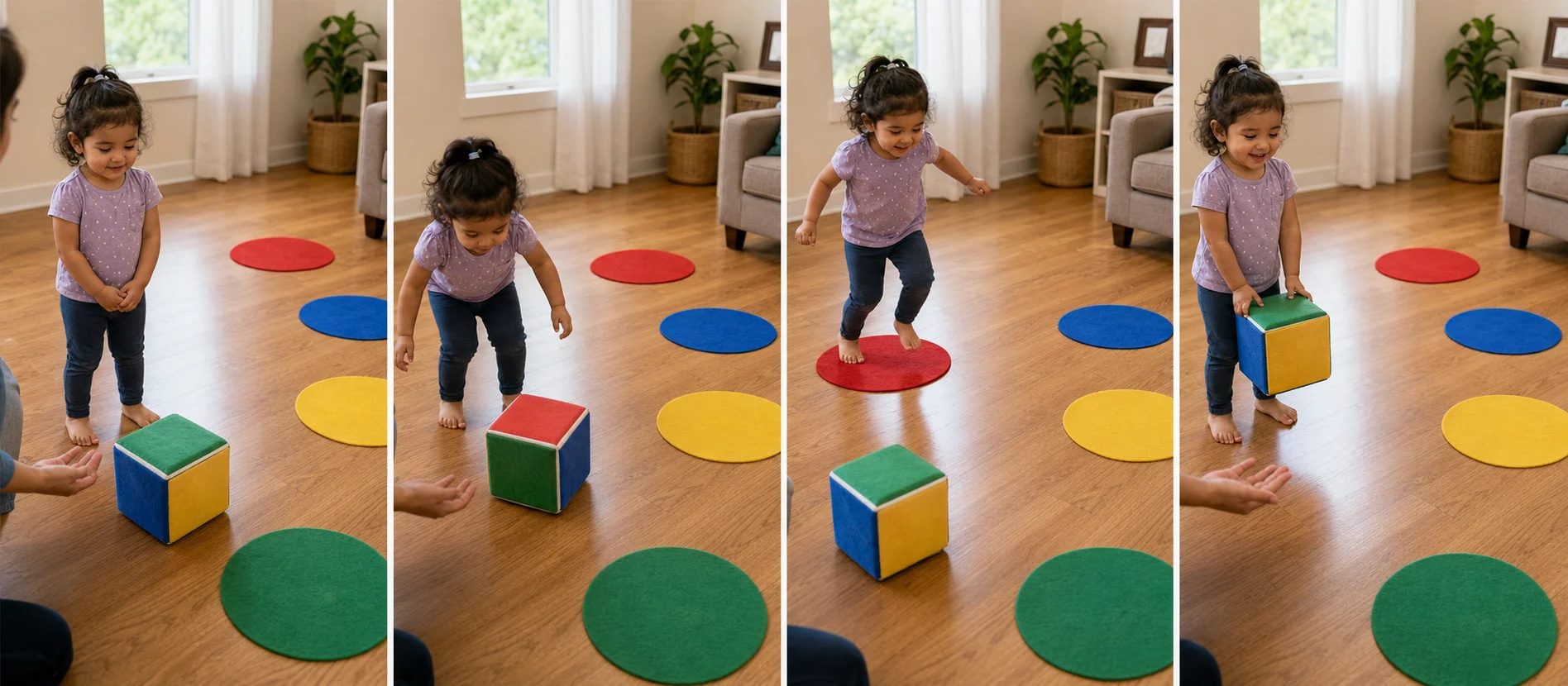
Turn color matching into a whole-body challenge. Your child rolls a homemade color dice, finds the matching floor base, and runs, hops, or crawls to it while practicing visual matching and gross motor control.


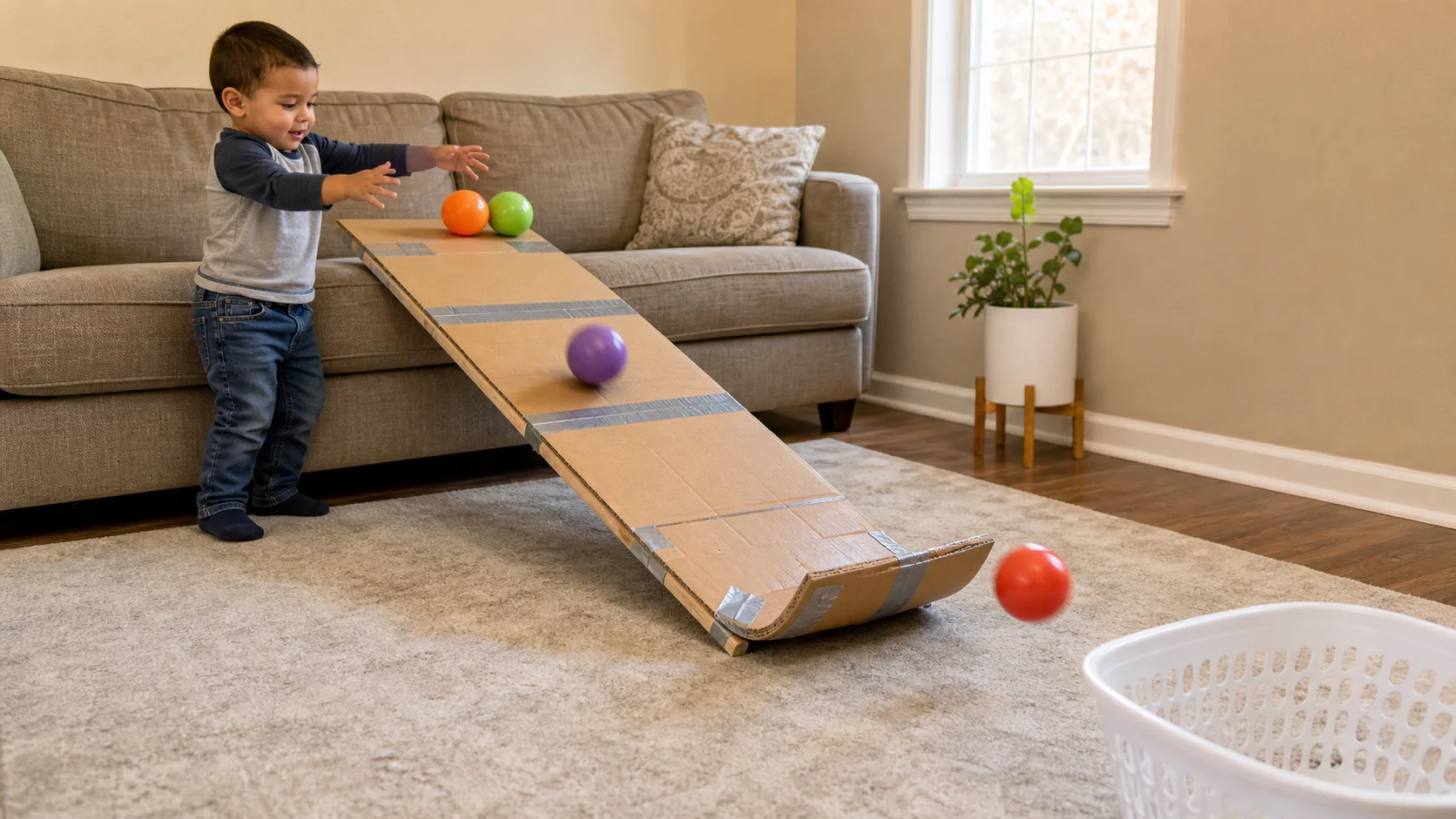
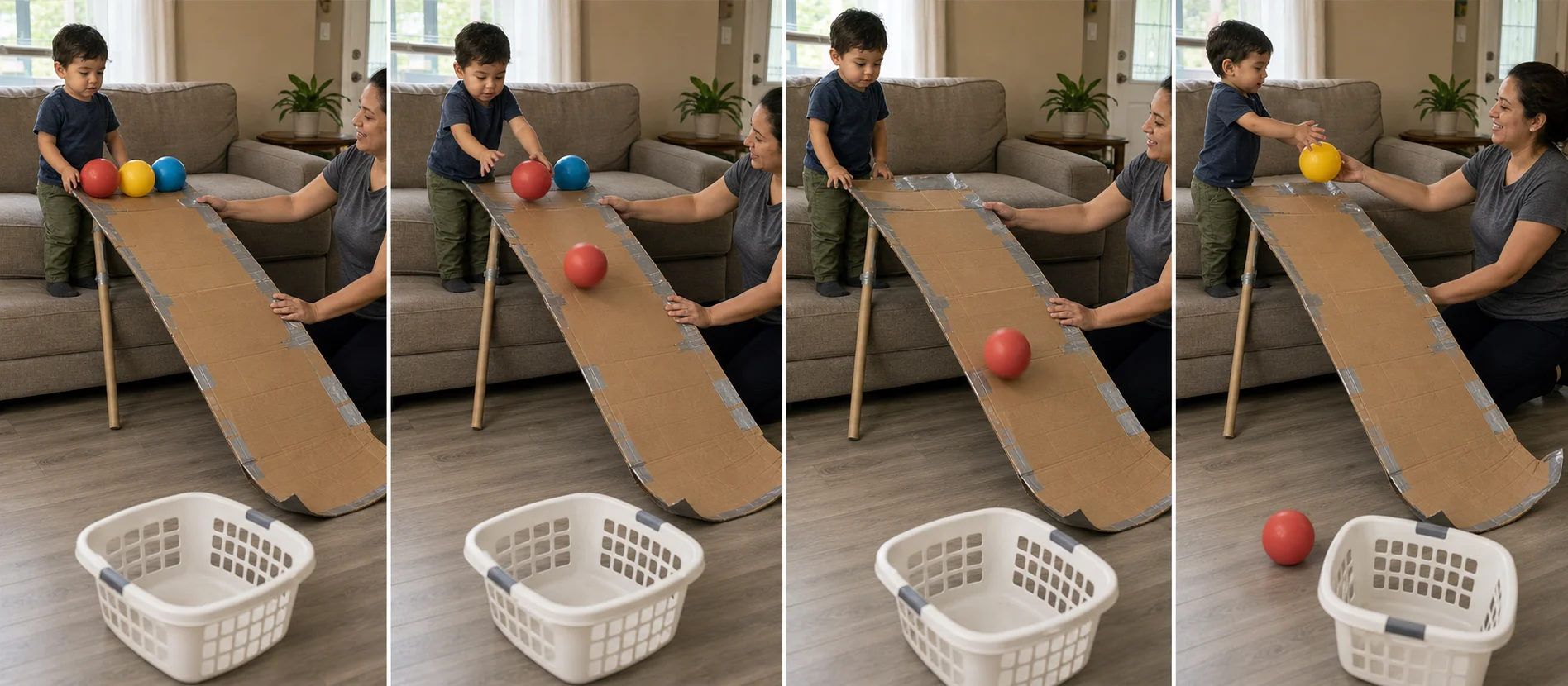
Can your child send a ball flying off a cardboard ramp and into a basket? Roll different balls from the top, watch where each one lands, and adjust the next try, building cause-and-effect thinking and persistence.

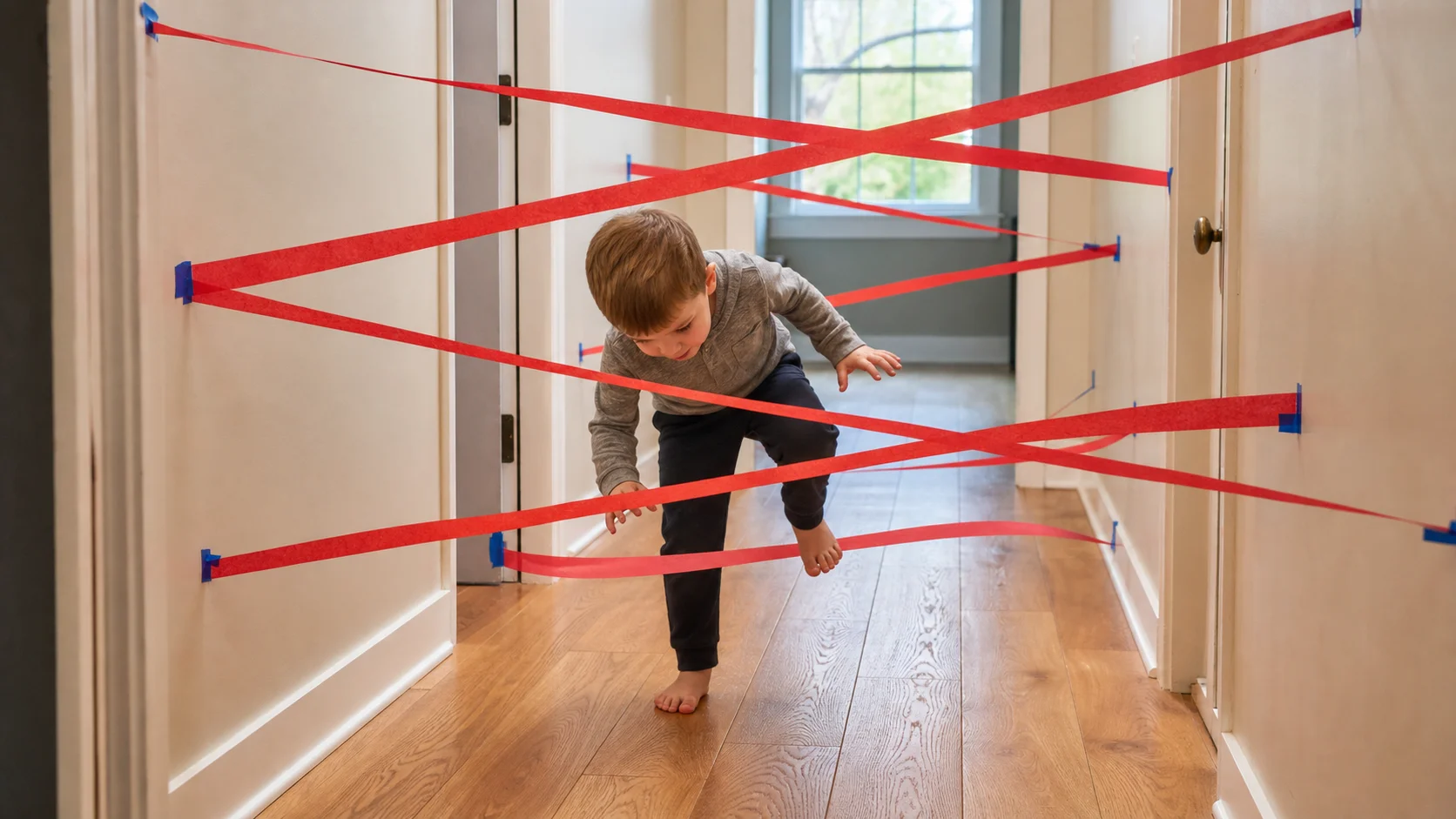
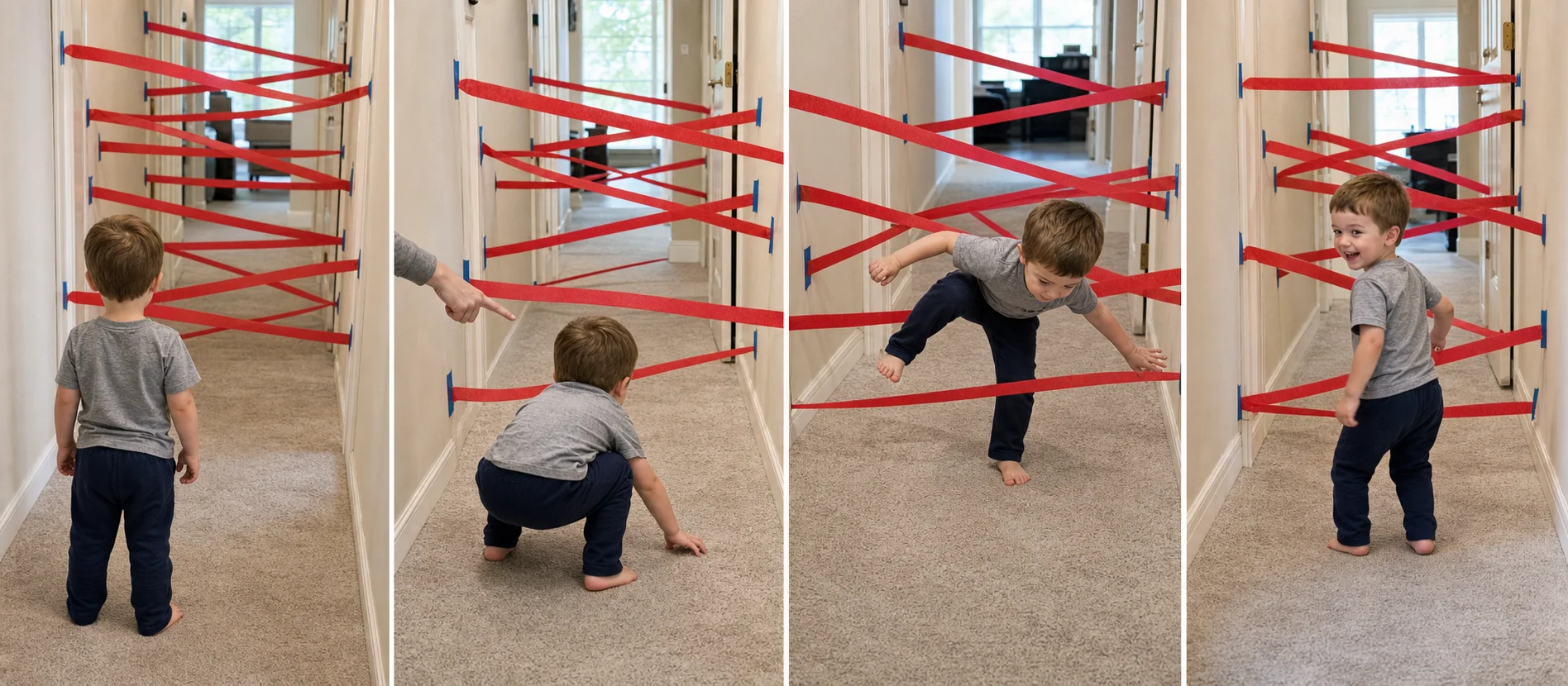
Can your child sneak through a hallway of pretend laser beams without touching them? Ducking, stepping, and turning through a few taped streamers builds body awareness and coordination with every pass.


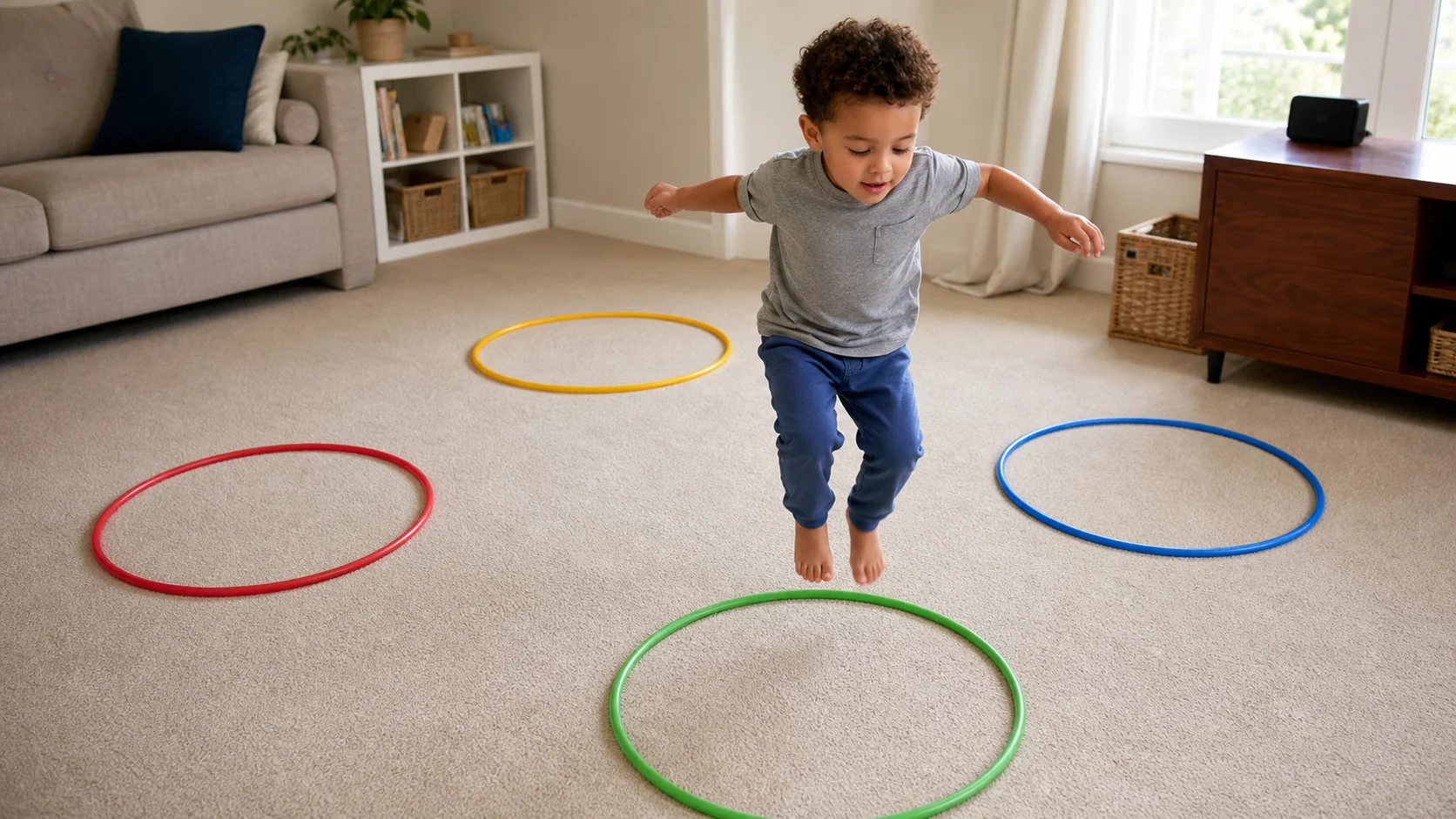
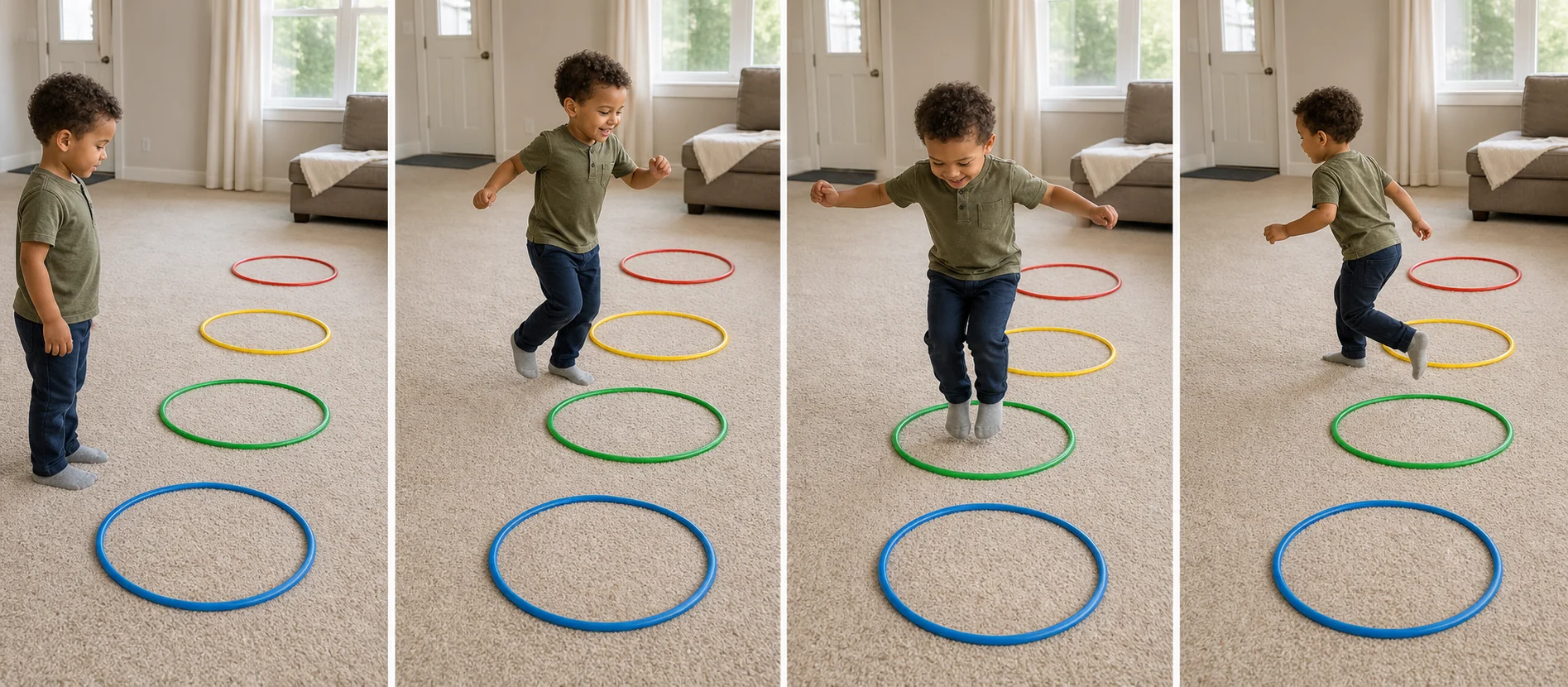
Turn hoops or small blankets into musical islands for an easy stop-and-go dance game. Your child dances between them, then hops onto one when the music stops, building balance, body coordination, and quick responses to a signal.


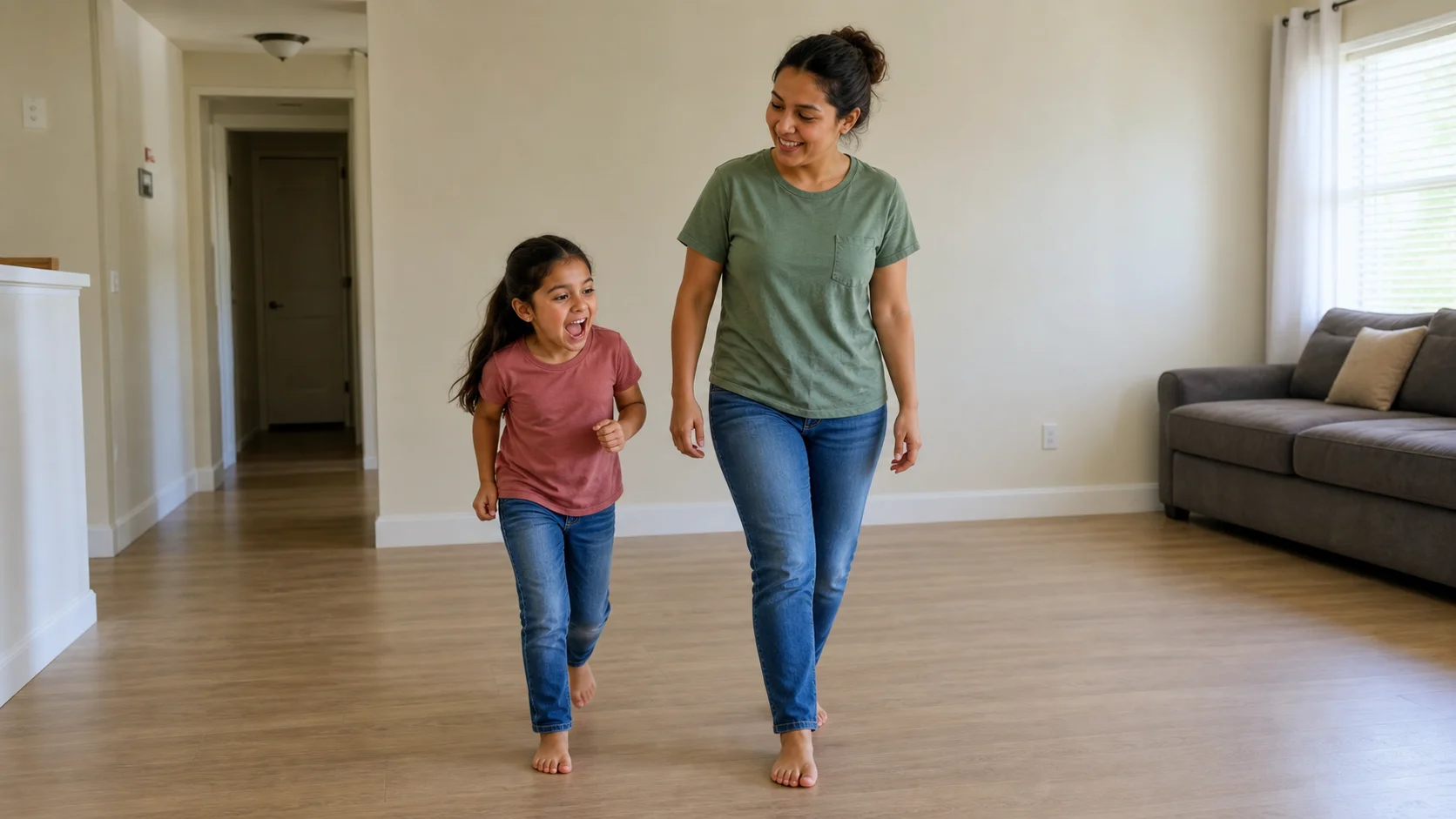
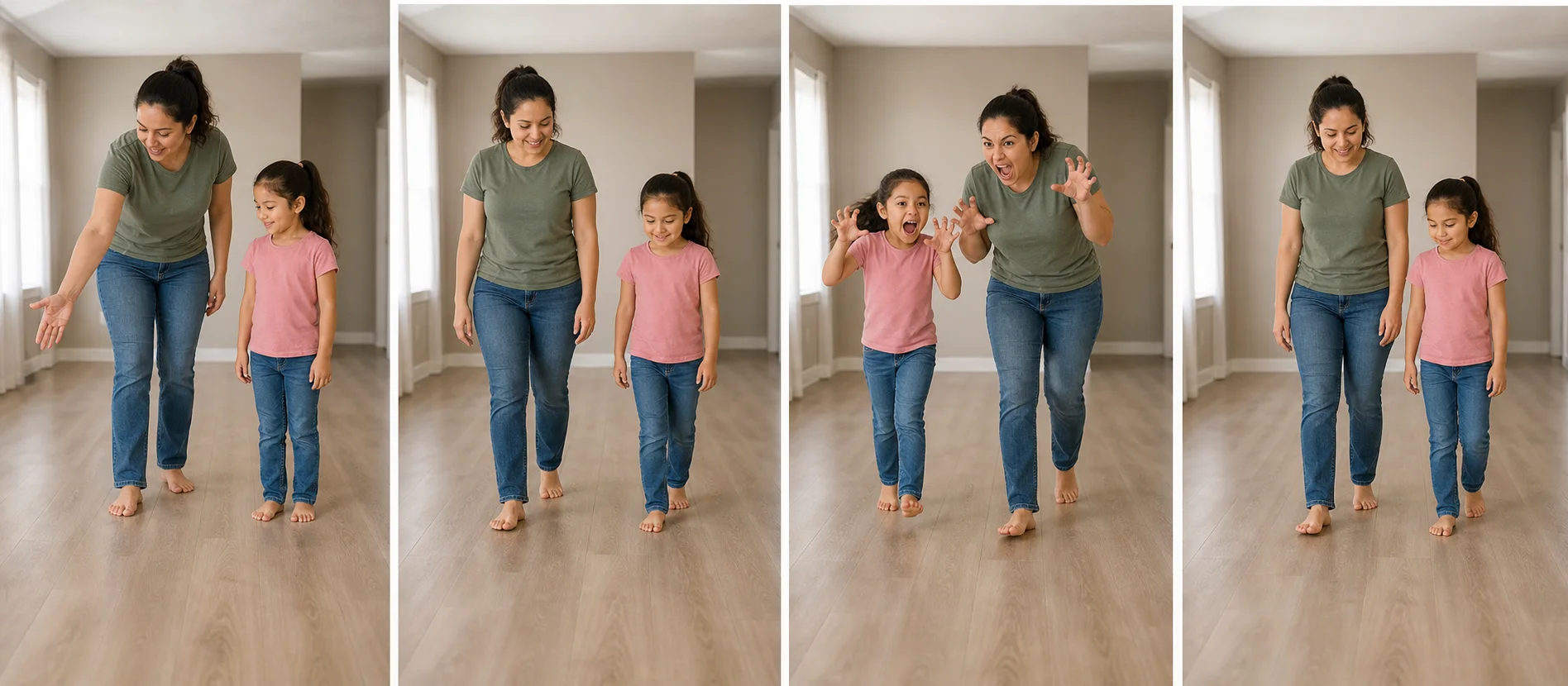
Let your child get loud on purpose, then practice bringing their body and voice back down. Moving from a quiet walk to faster, louder movement and back again builds body awareness and self-regulation.

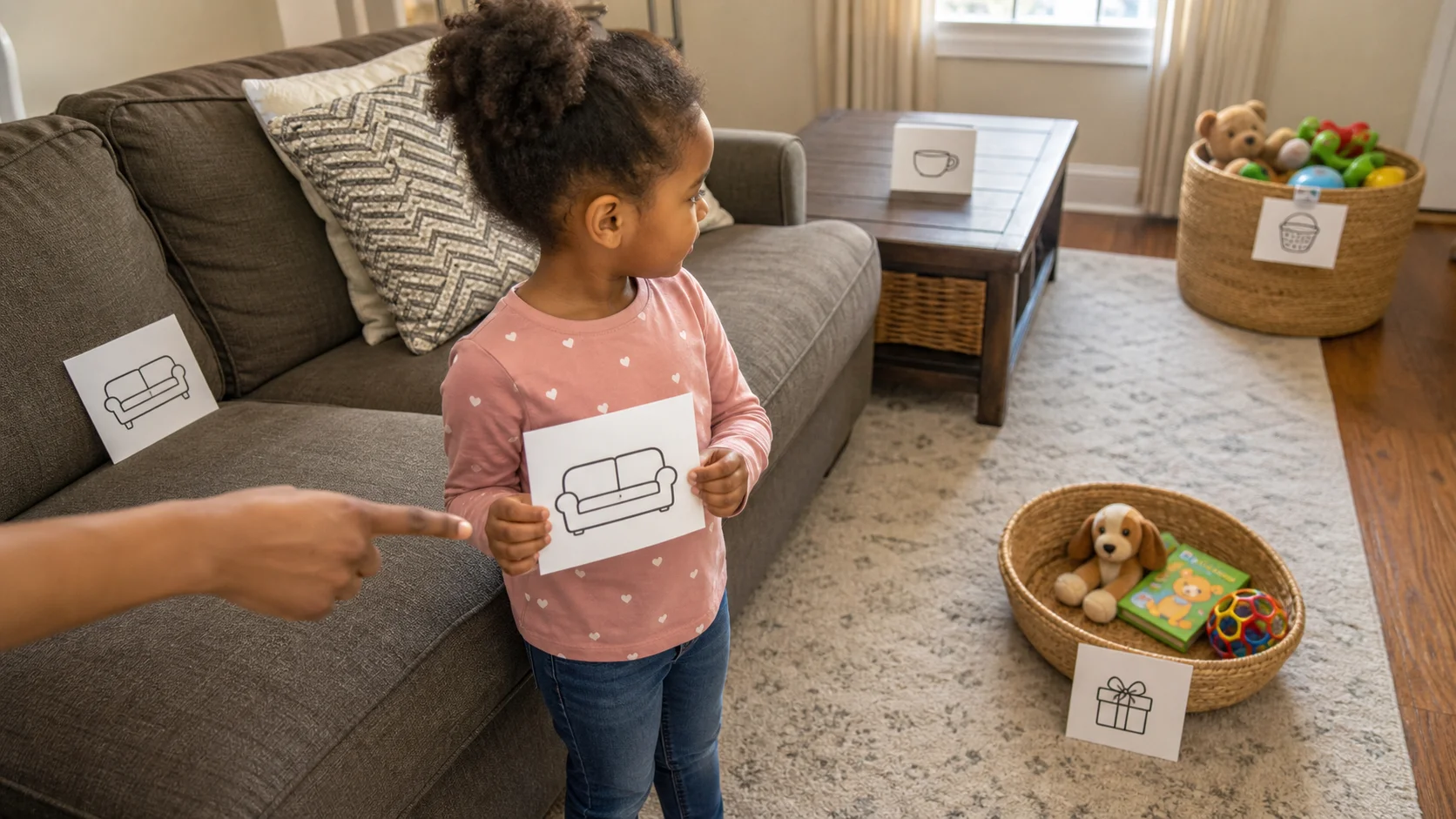
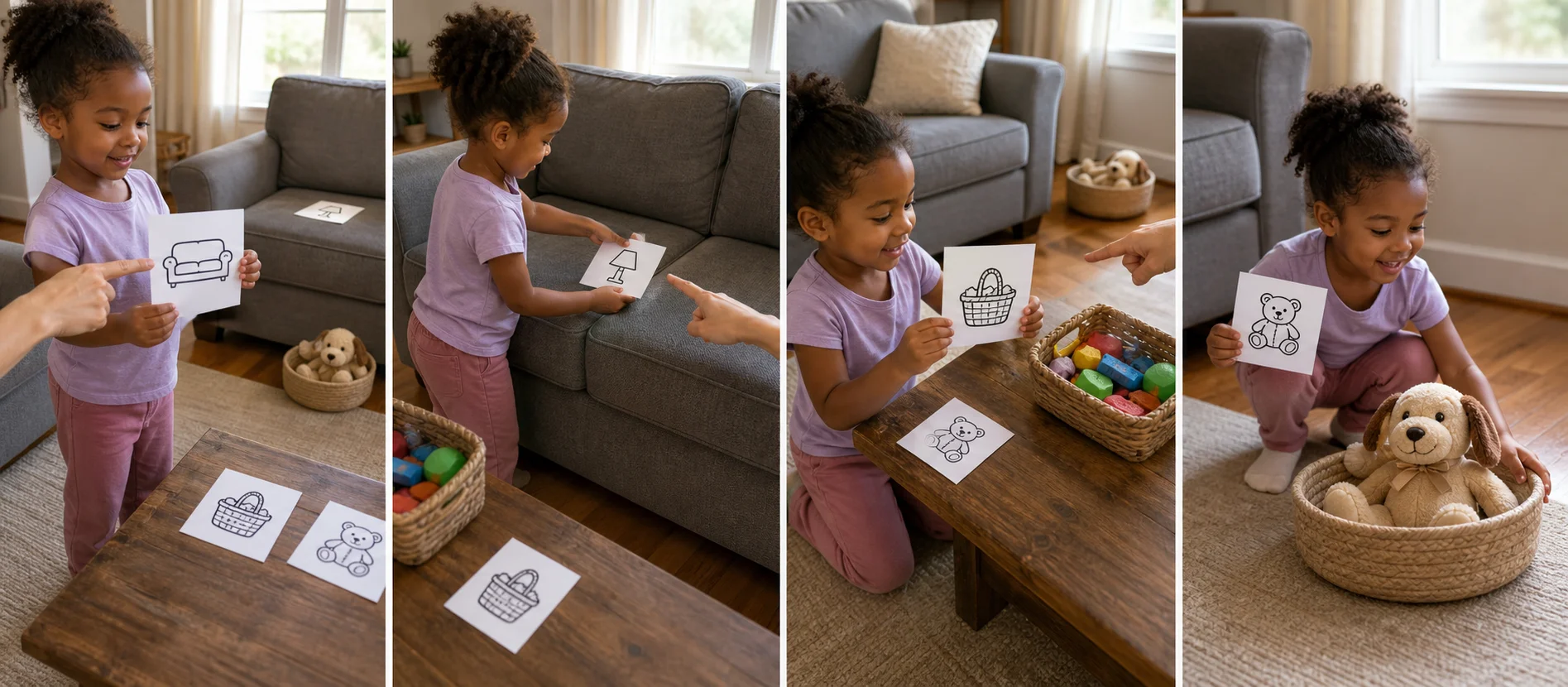
Turn four picture-and-word clues into a prize hunt through your home. Your child reads each picture, follows it to the next card, and discovers how print can carry a message and guide the way.


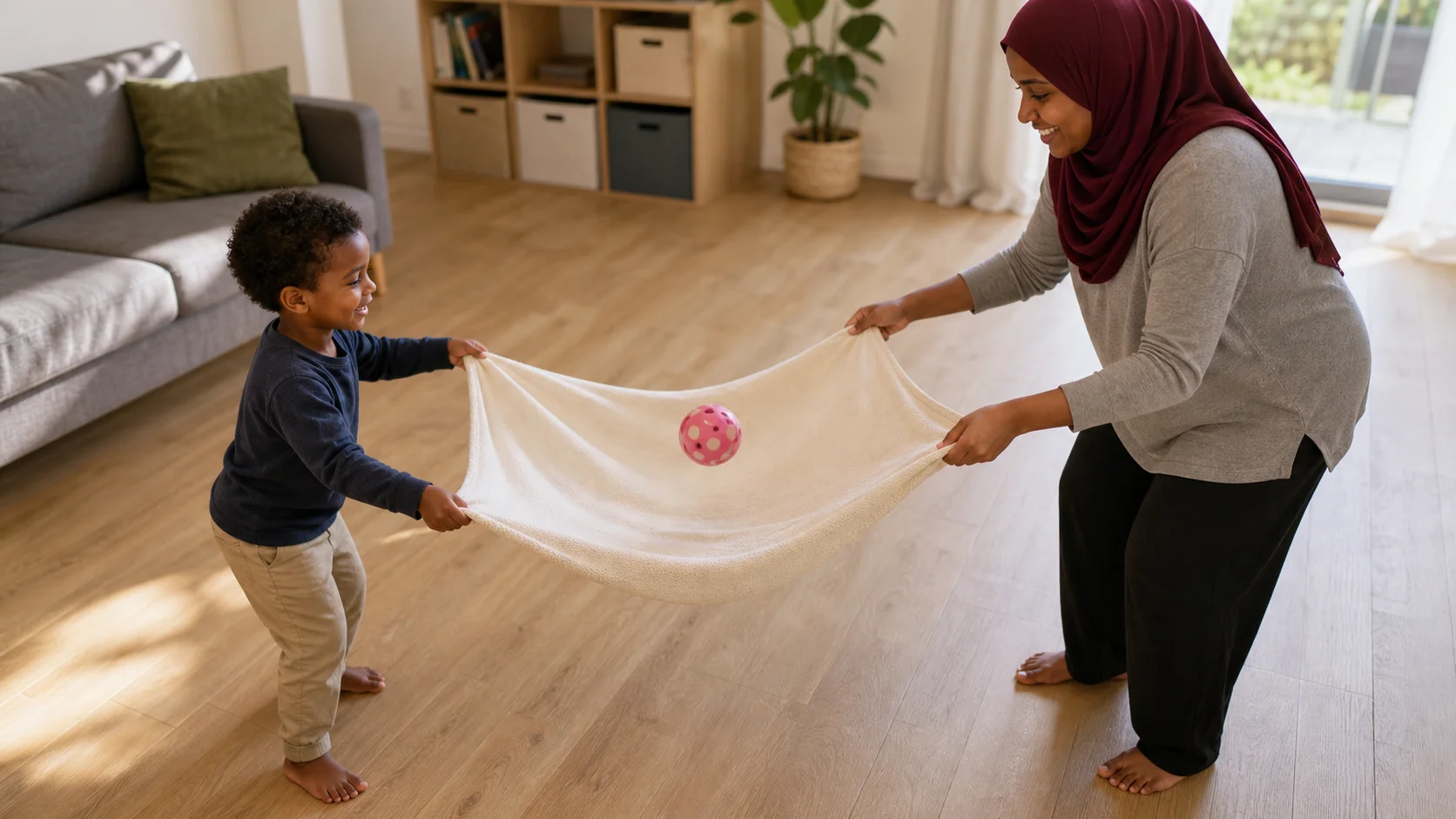
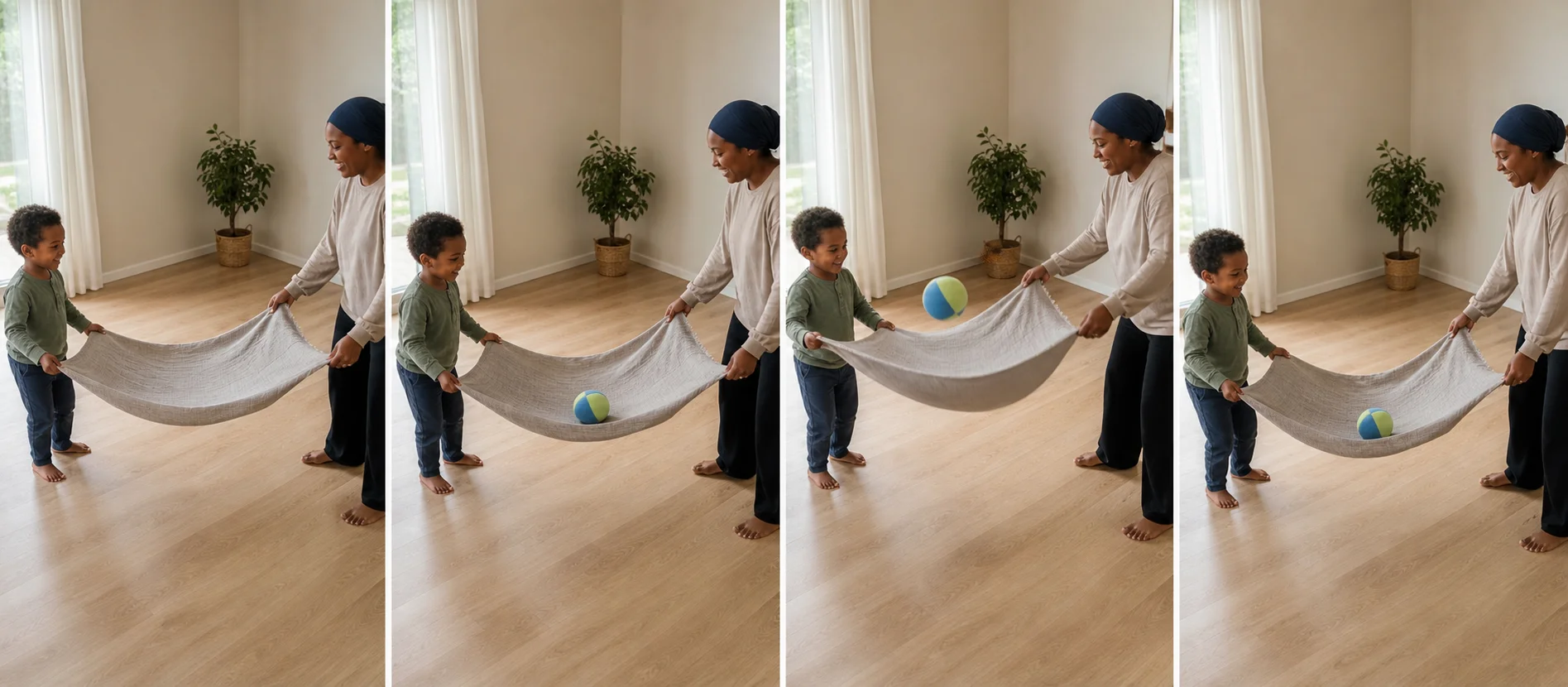
Can you and your child keep a lightweight ball bouncing on a sheet without letting it roll off? Lifting and lowering the sheet together builds cooperation, listening, and coordinated movement.


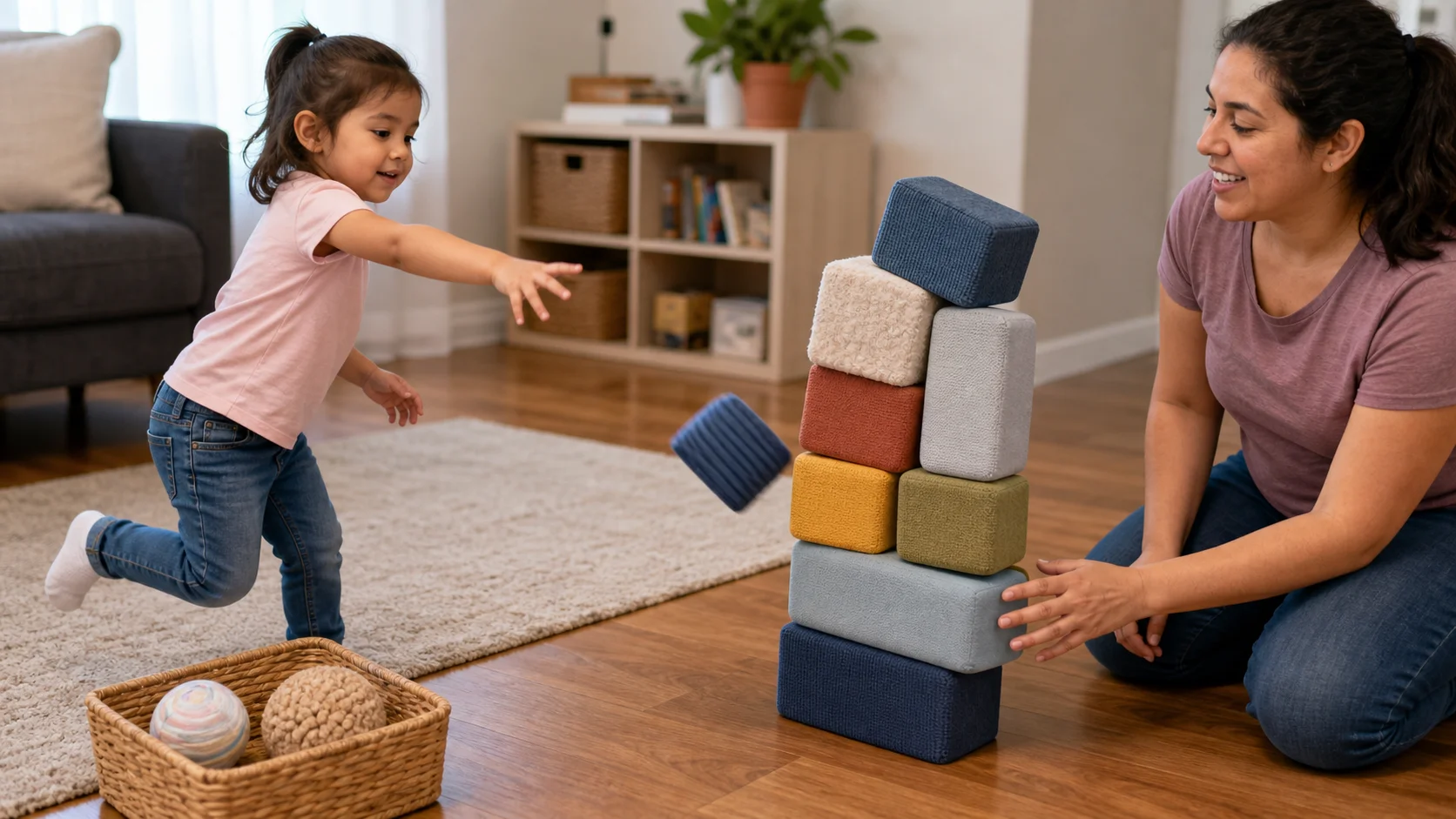
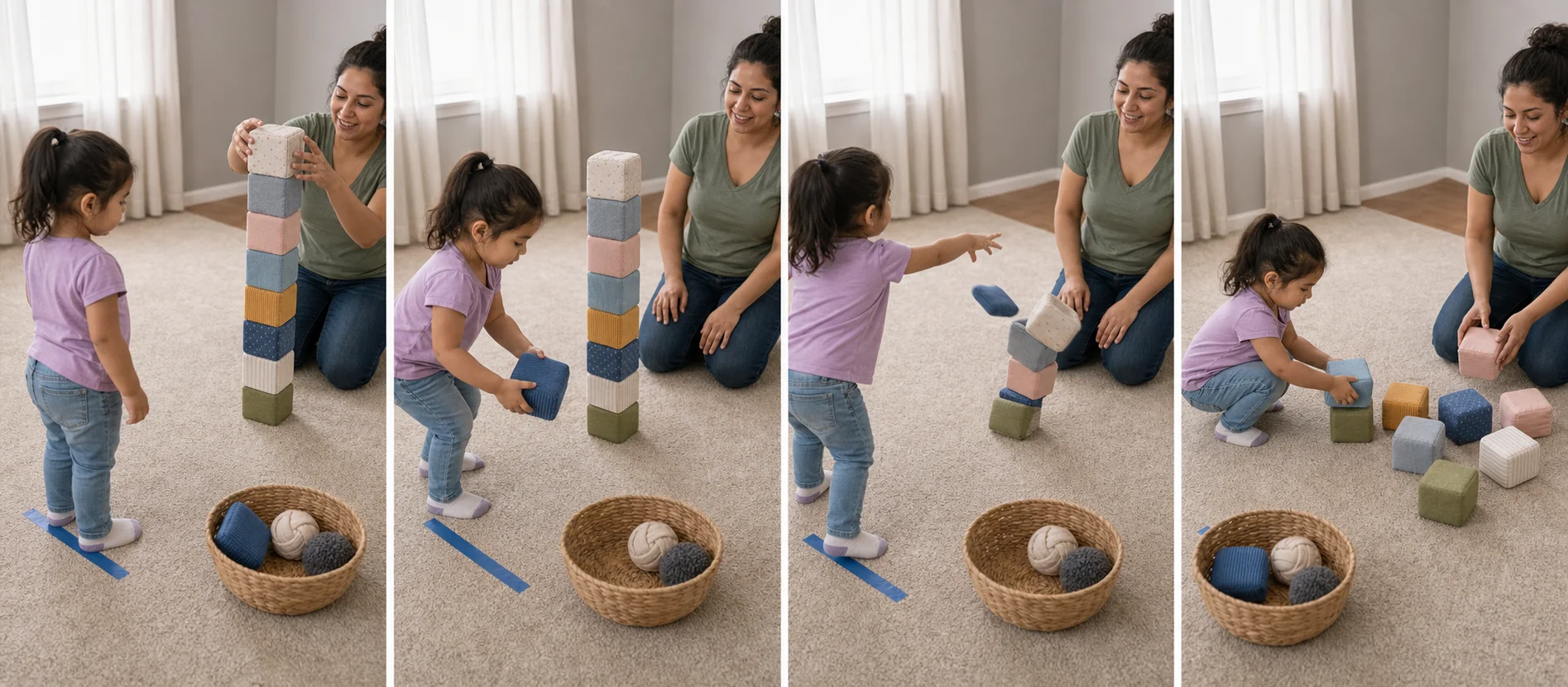
Give indoor tossing a target that is supposed to tumble. Your child chooses a soft textured object, aims for a lightweight block tower, and rebuilds after each crash to practice throwing toward a target while keeping texture exploration child-led.


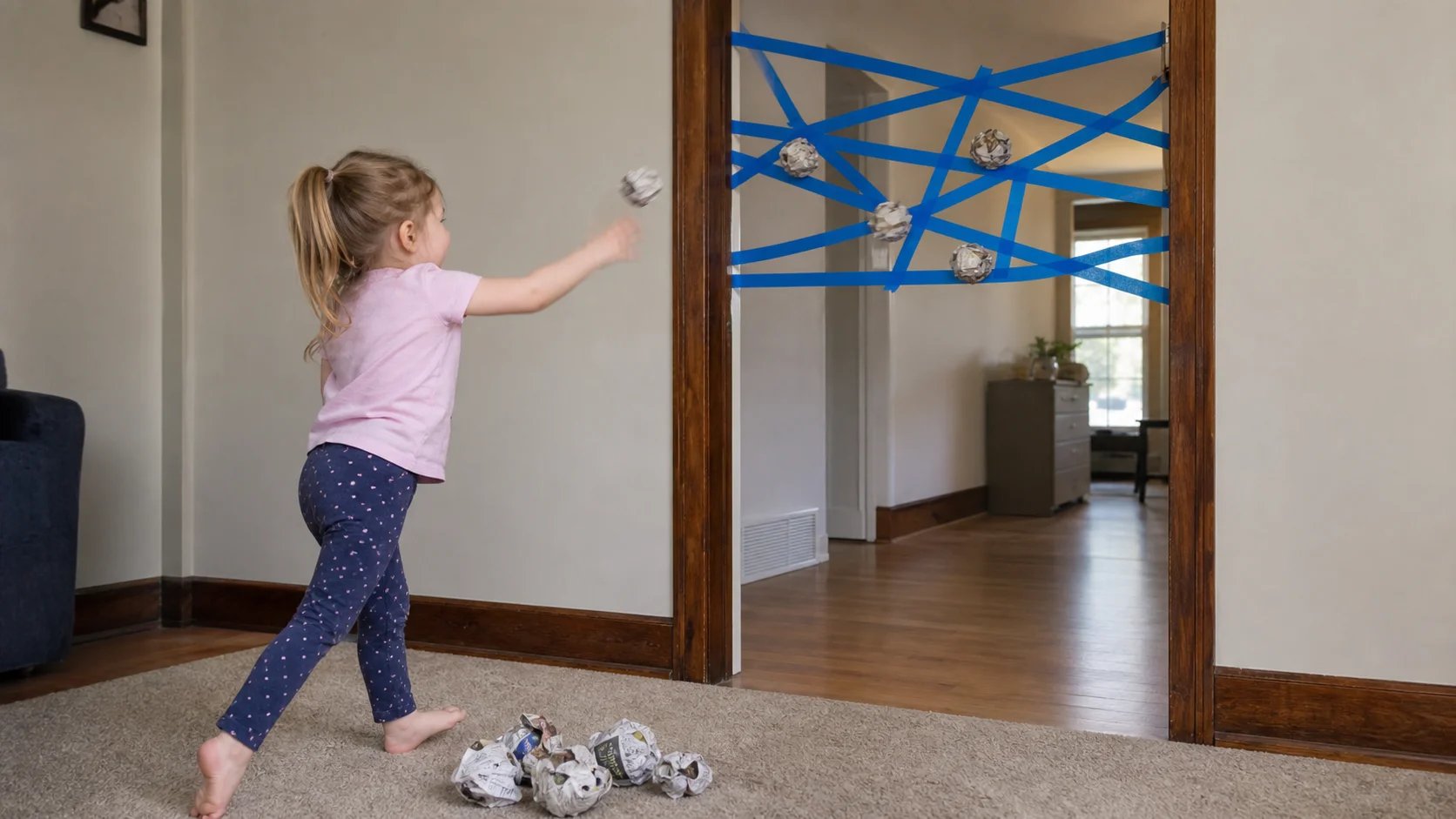
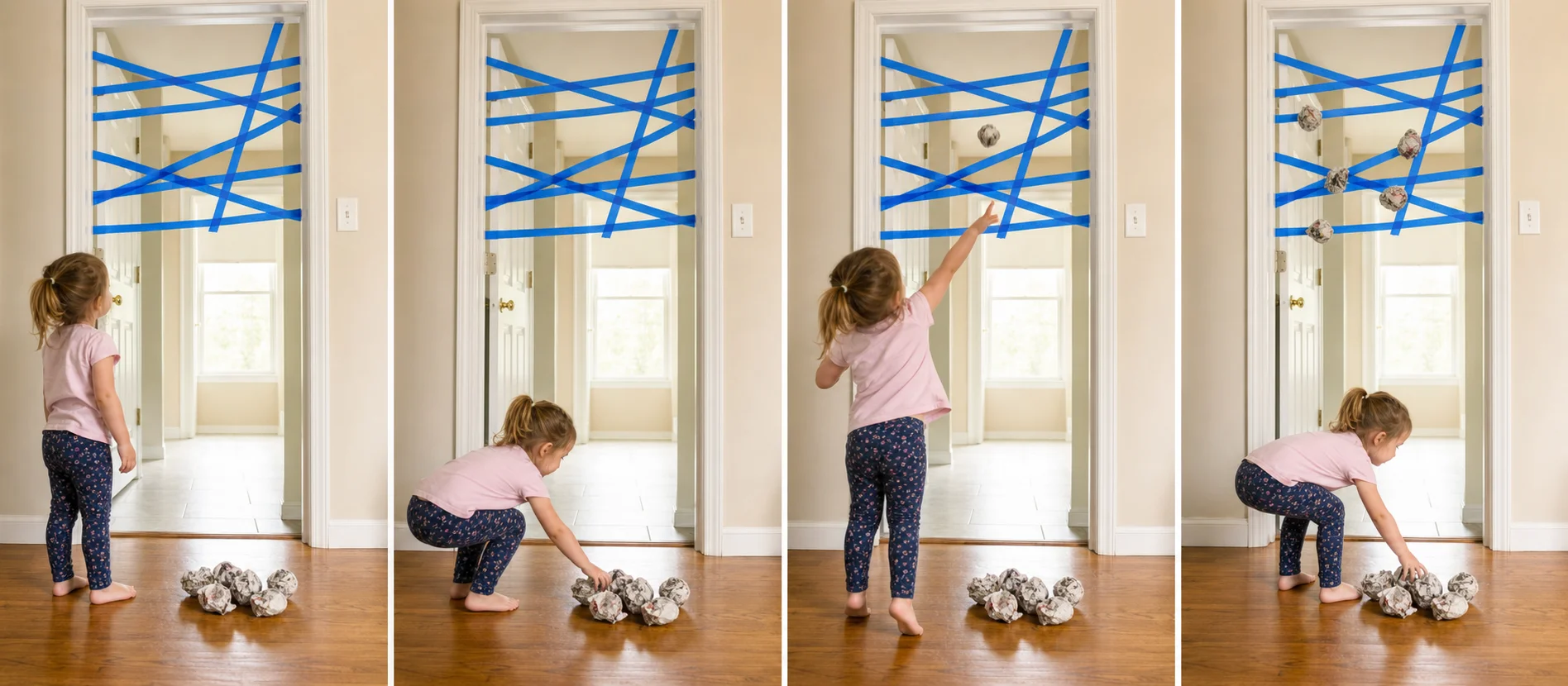
Turn a doorway into a giant sticky spider web that catches flying newspaper balls. Each throw gives your child a clear target and an instant stick-or-drop result while building aim and throwing control.


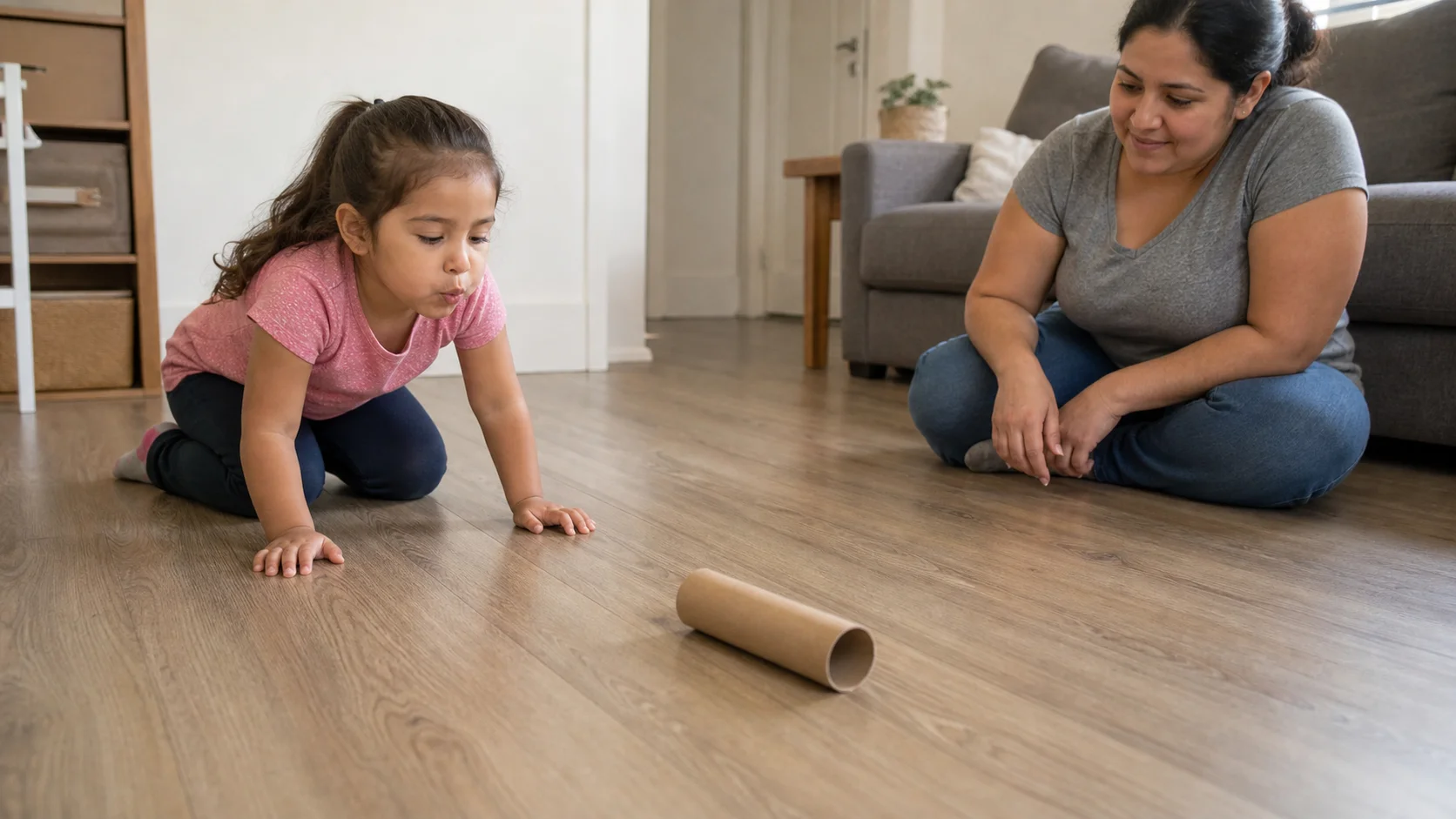
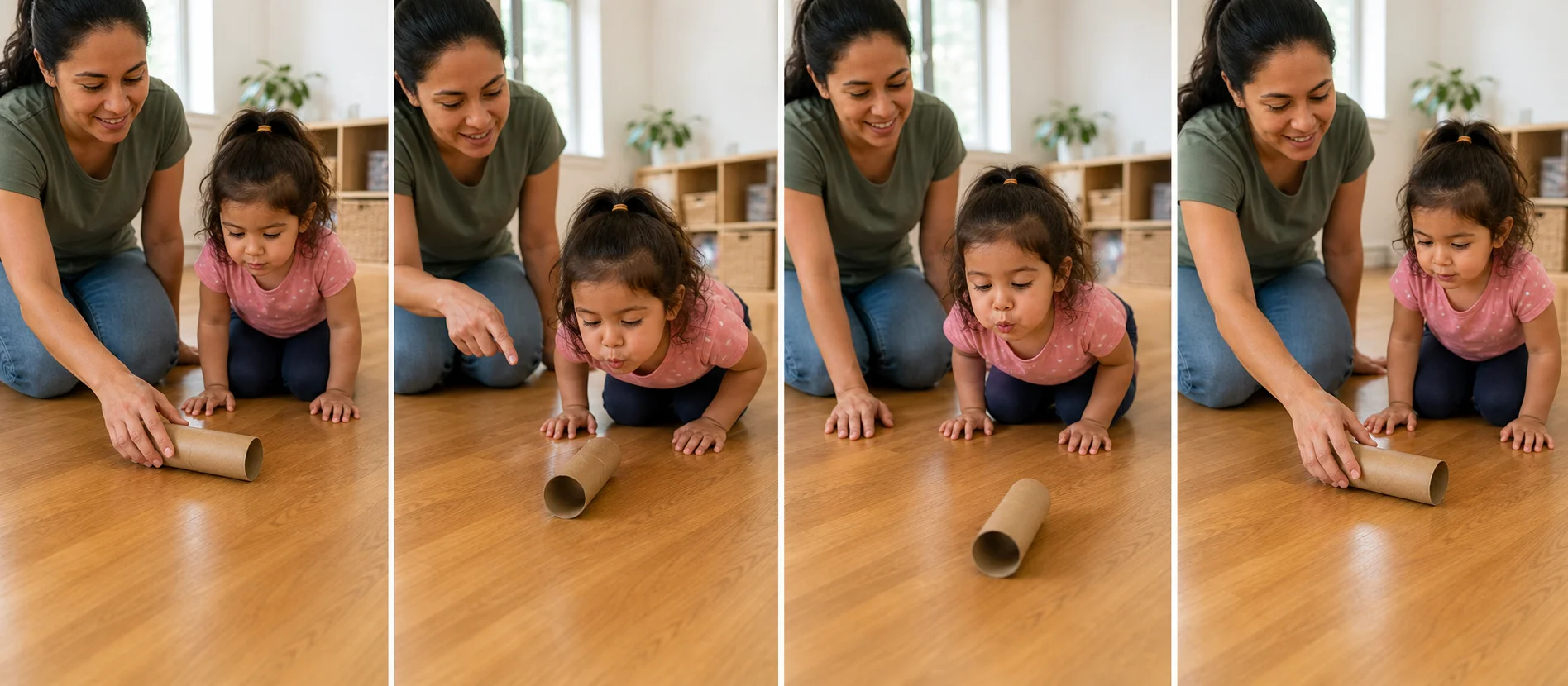
Can your child move a heavy cardboard tube using only their breath? Blow, watch it travel, and repeat for a simple cause-and-effect game that makes the power of each breath easy to see.


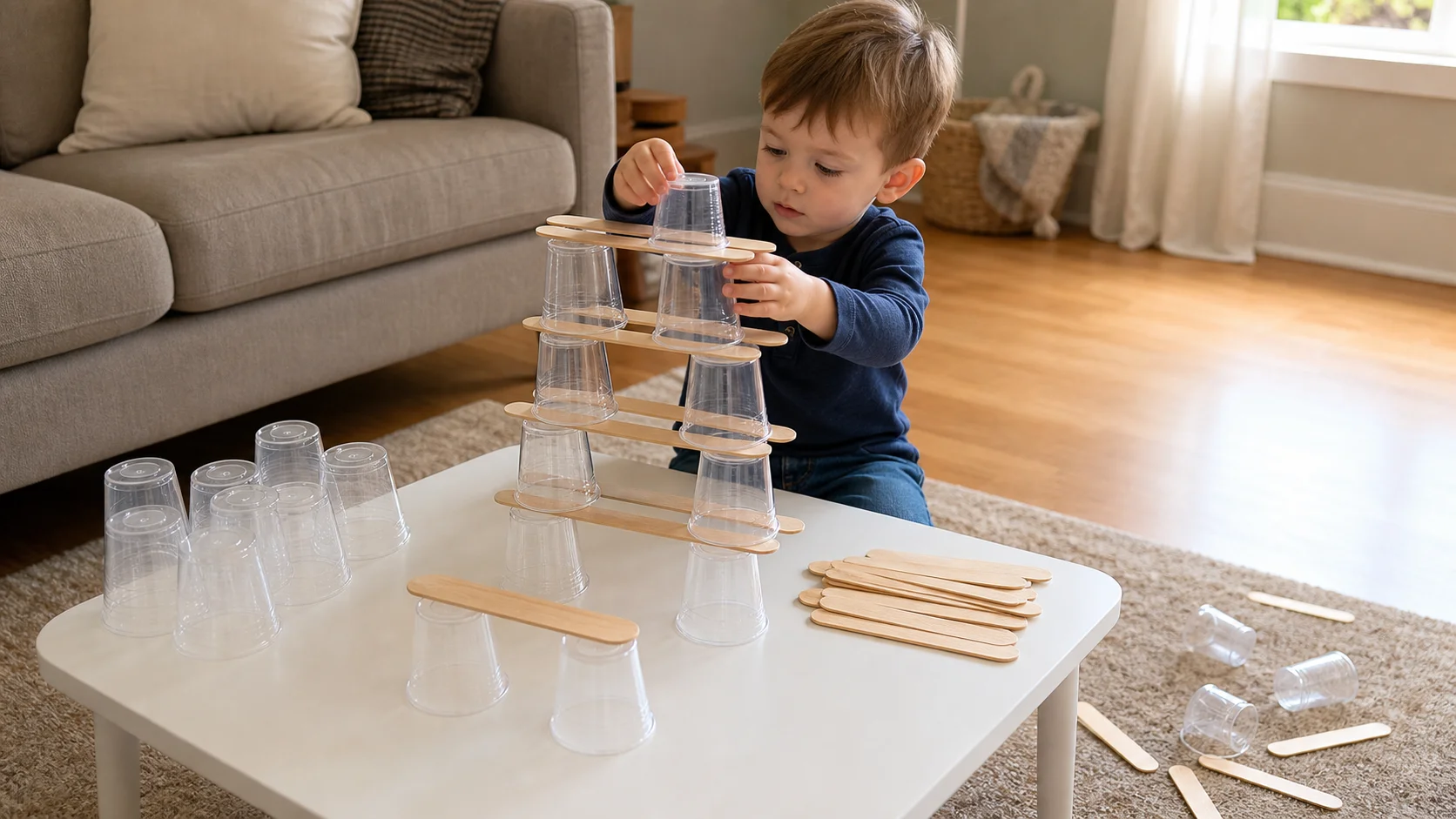
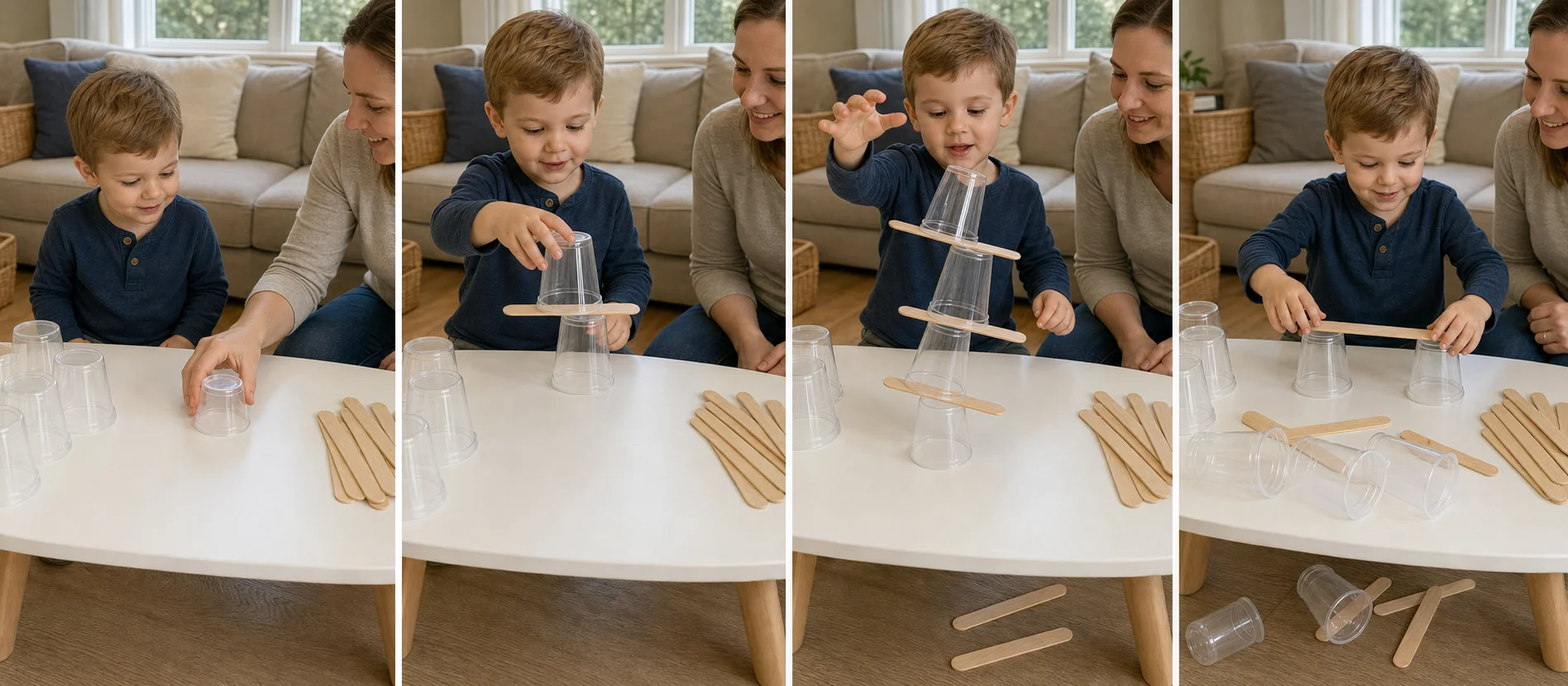
How tall can your child build before everything comes tumbling down? Alternating plastic cups and jumbo craft sticks turns careful stacking into a balance challenge that builds fine motor control and problem-solving.


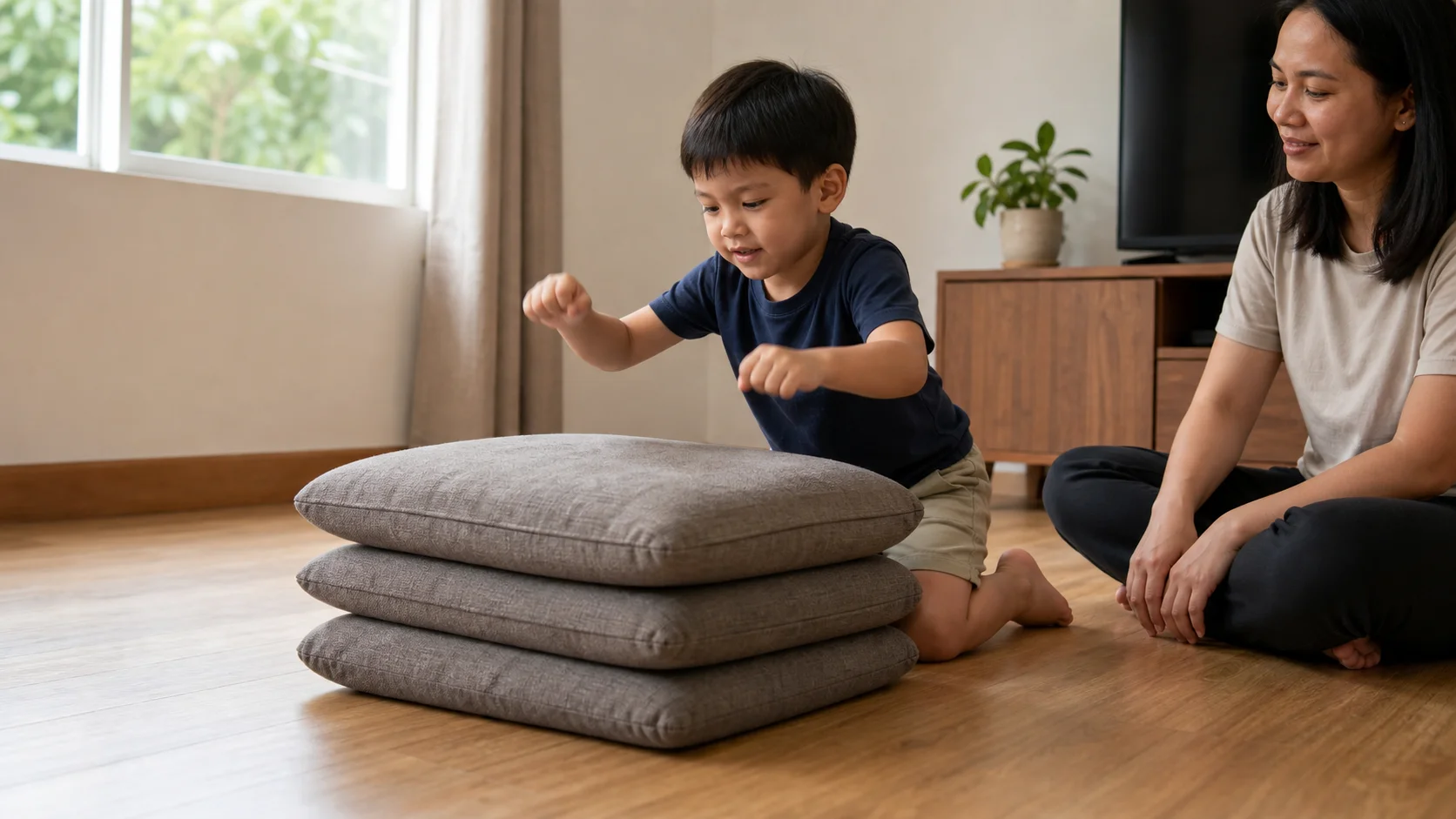
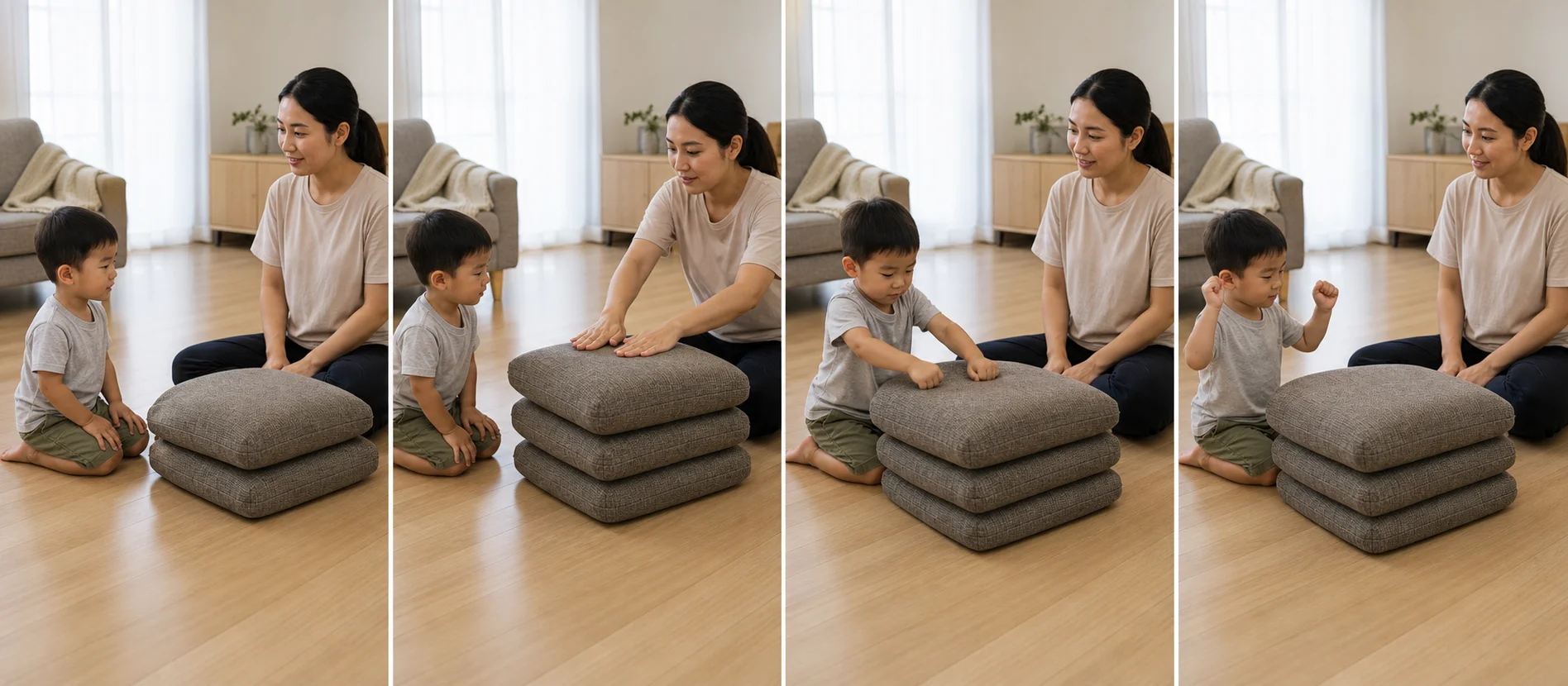
Turn a firm floor cushion into a soft drum and make short rhythmic beats with both fists. The beat, pause, and repeat pattern gives big energy a clear target while building rhythm and controlled force.


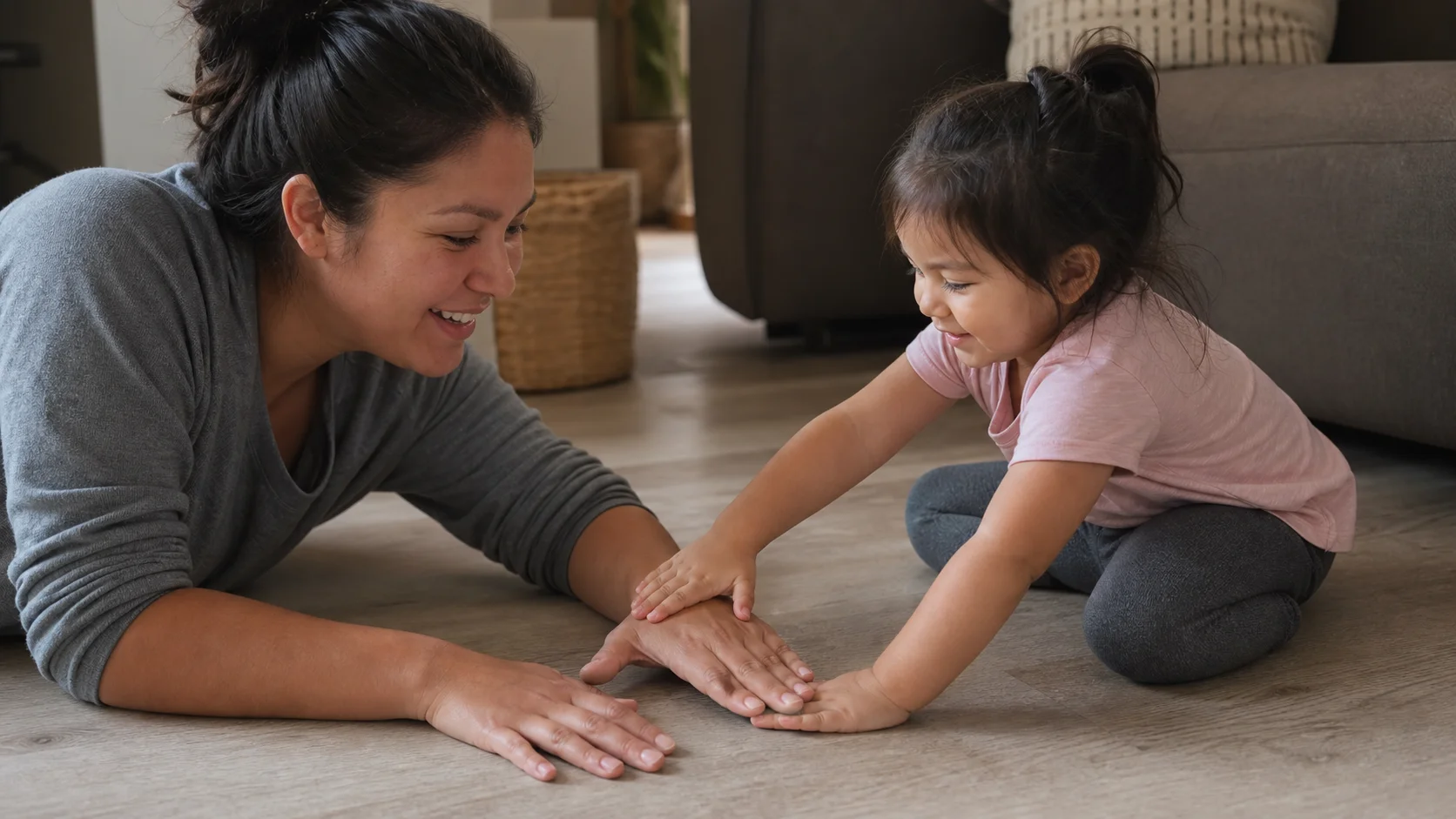
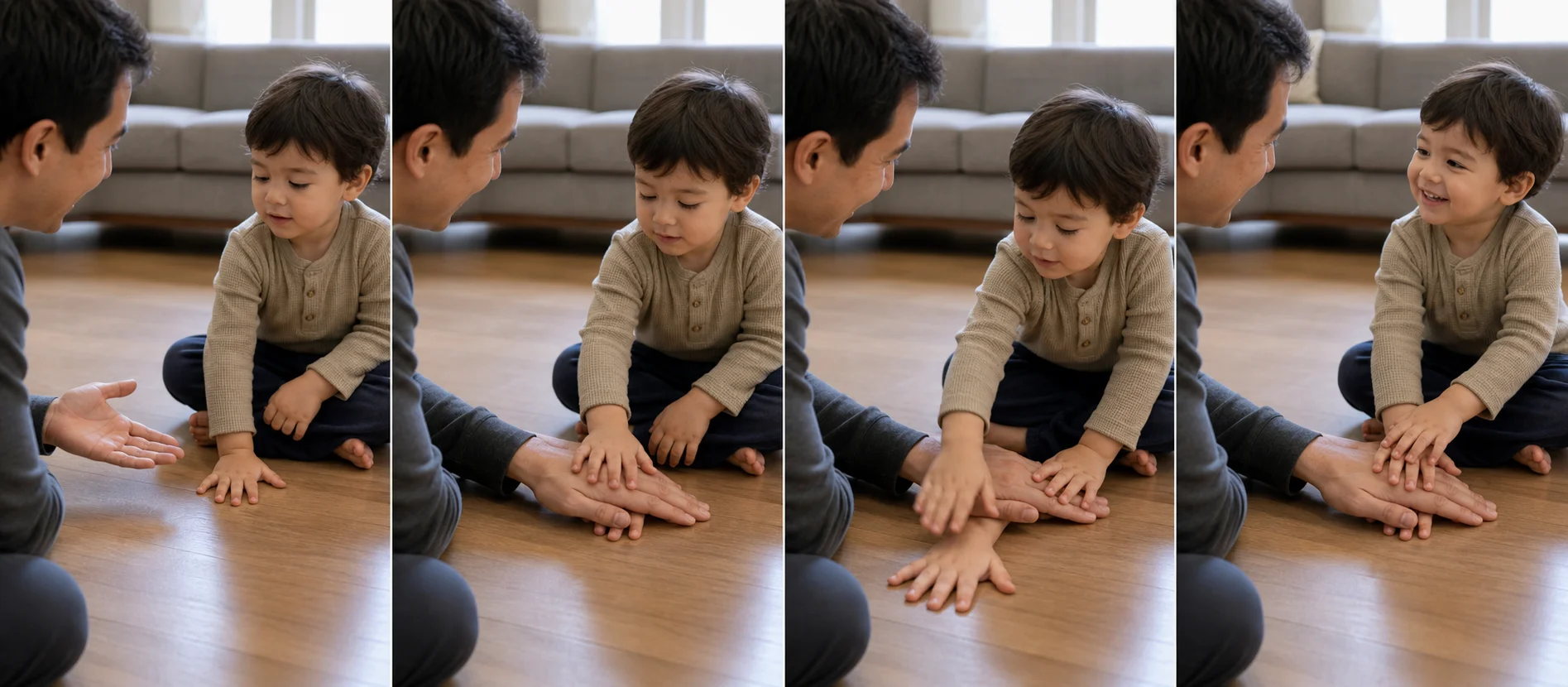
Turn three stacked hands into a quick pull-out challenge. Your child uses both hands to build the tower, then slides the bottom hand free before rebuilding it for another turn, practicing two-hand coordination and controlled movement.


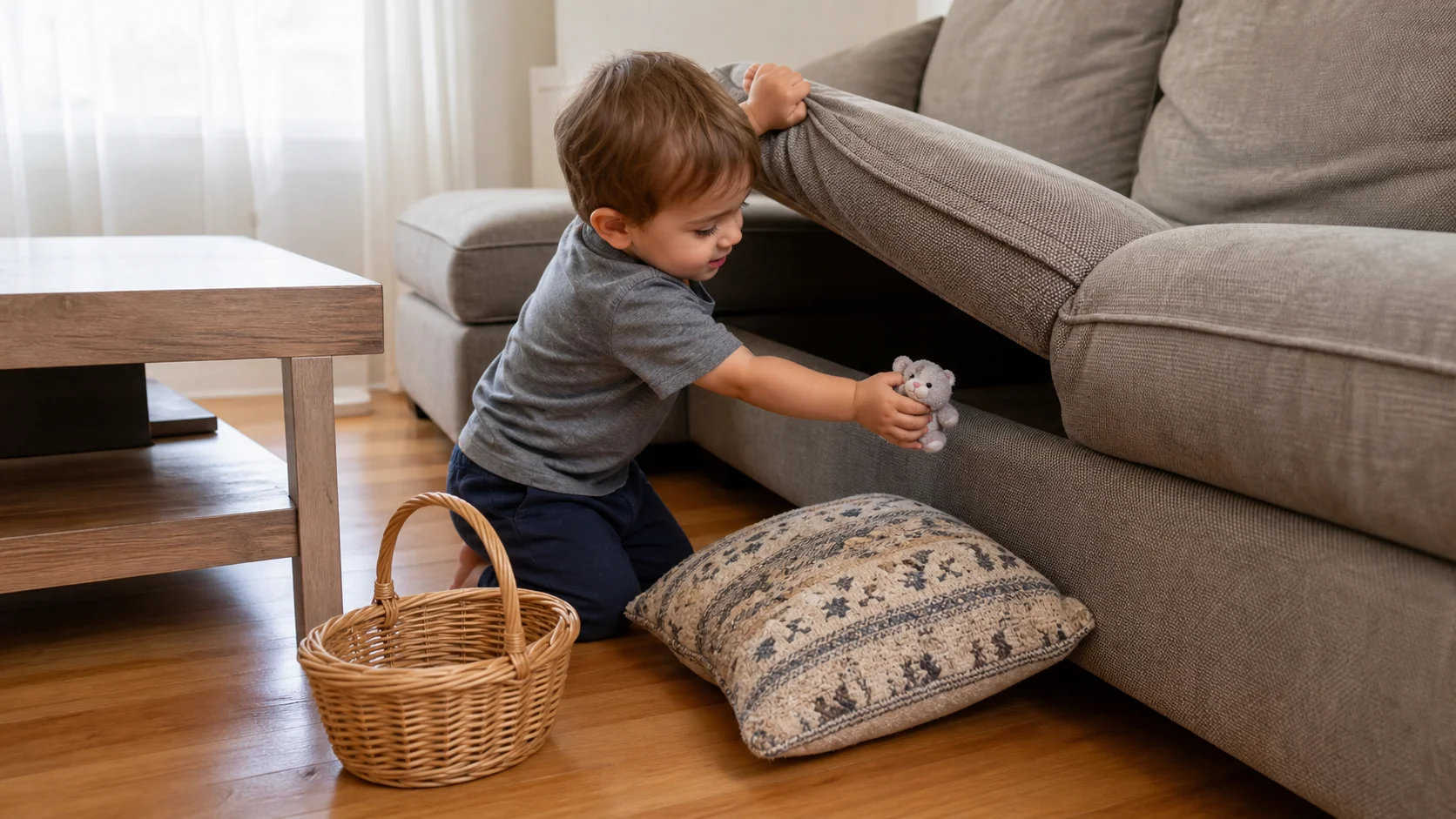
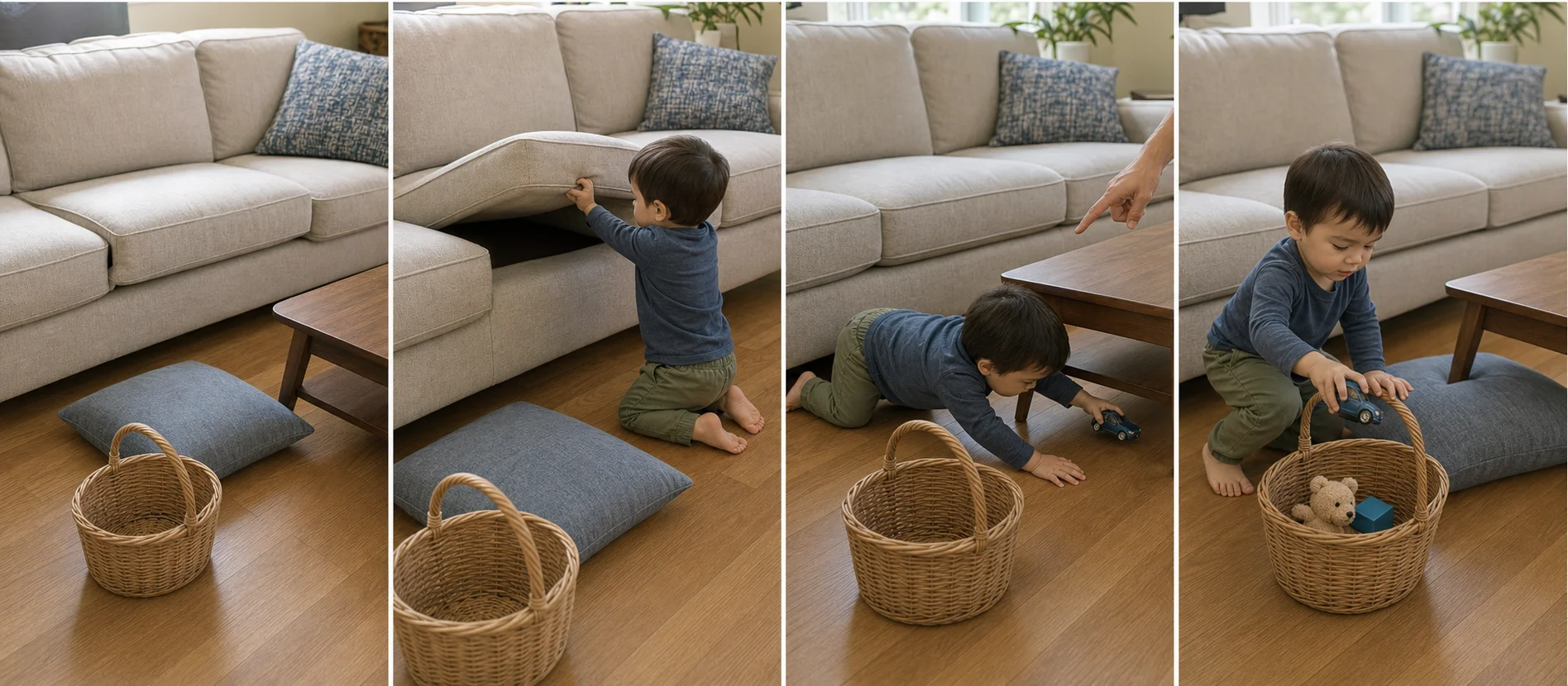
Turn a scavenger hunt into a full-body challenge. Your child lifts cushions or crawls under low furniture to find hidden toys, then carries each one back to a basket while practicing controlled body-level changes through lifting, crawling, and carrying.


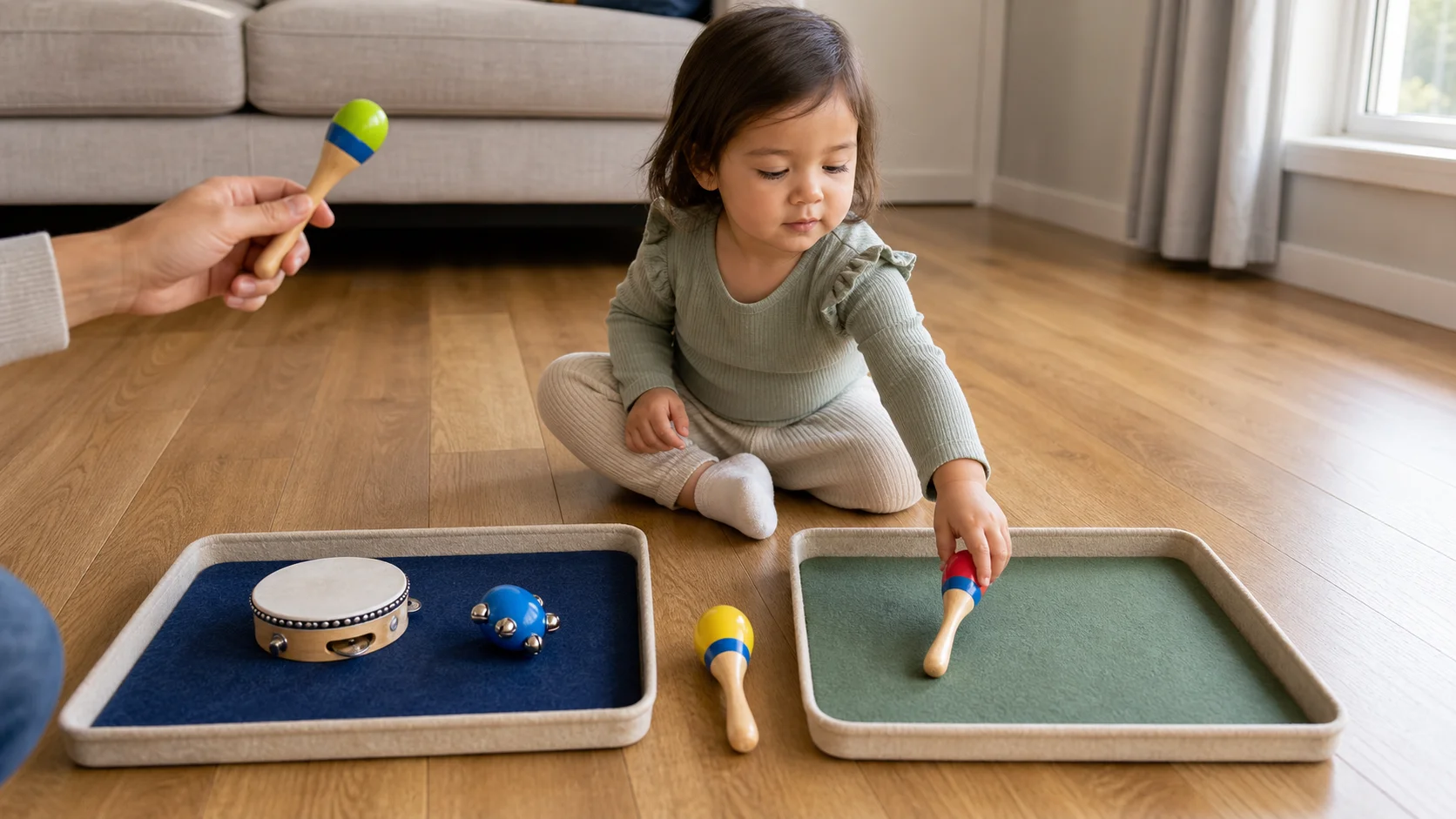
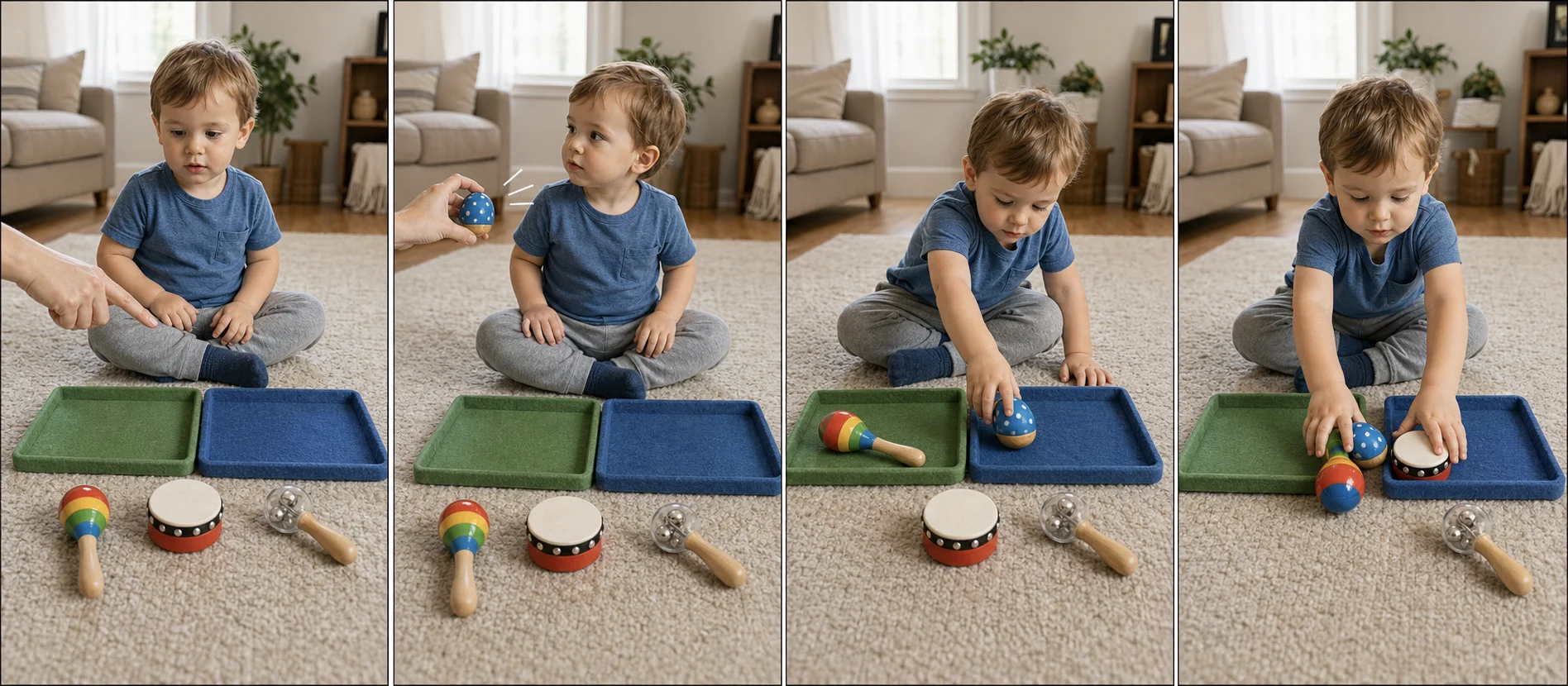
Play one instrument loudly or quietly, then let your child decide what they heard and place it in that group. Because volume changes by turn, the same instrument can land on either side in a later round.


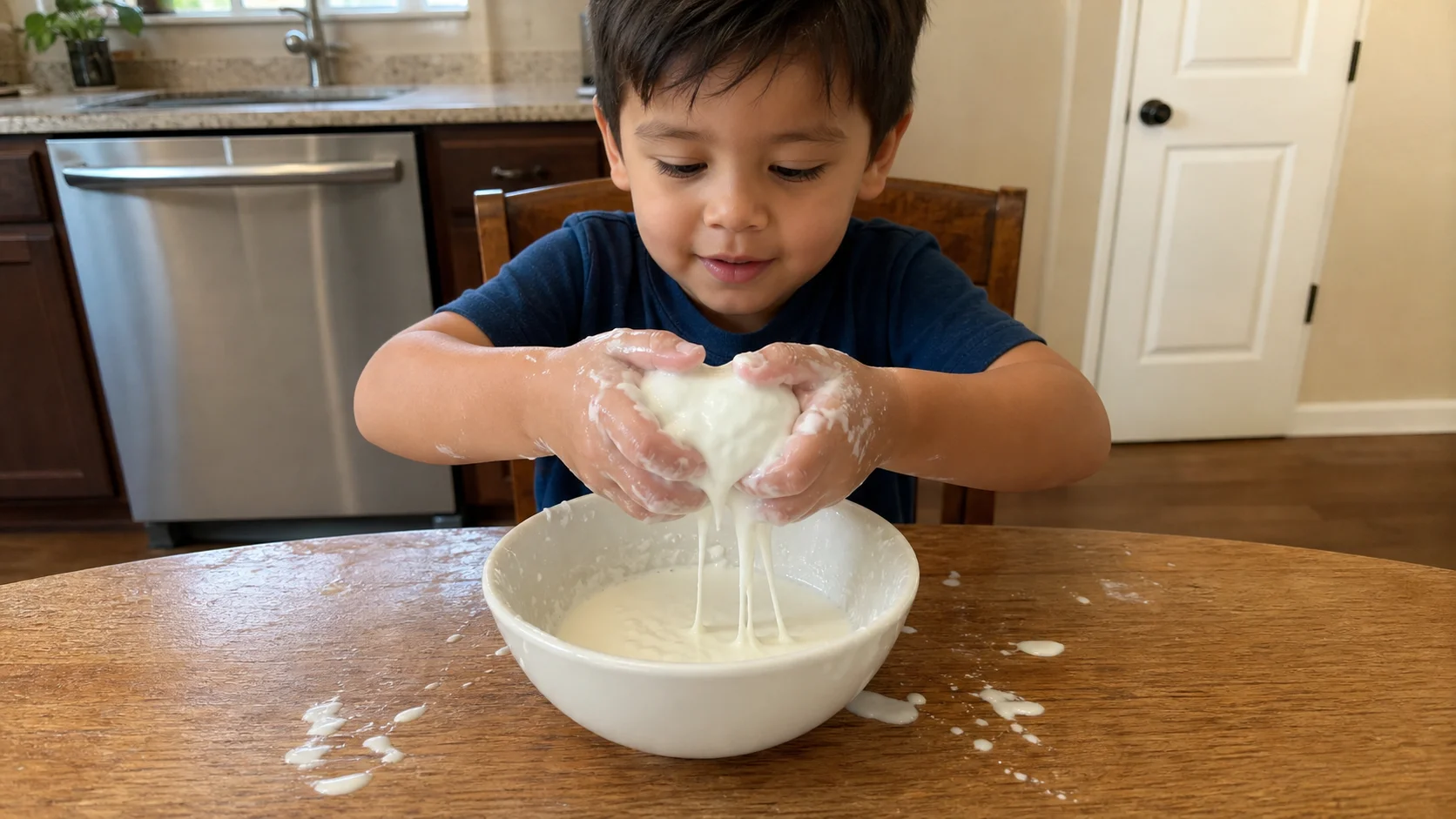
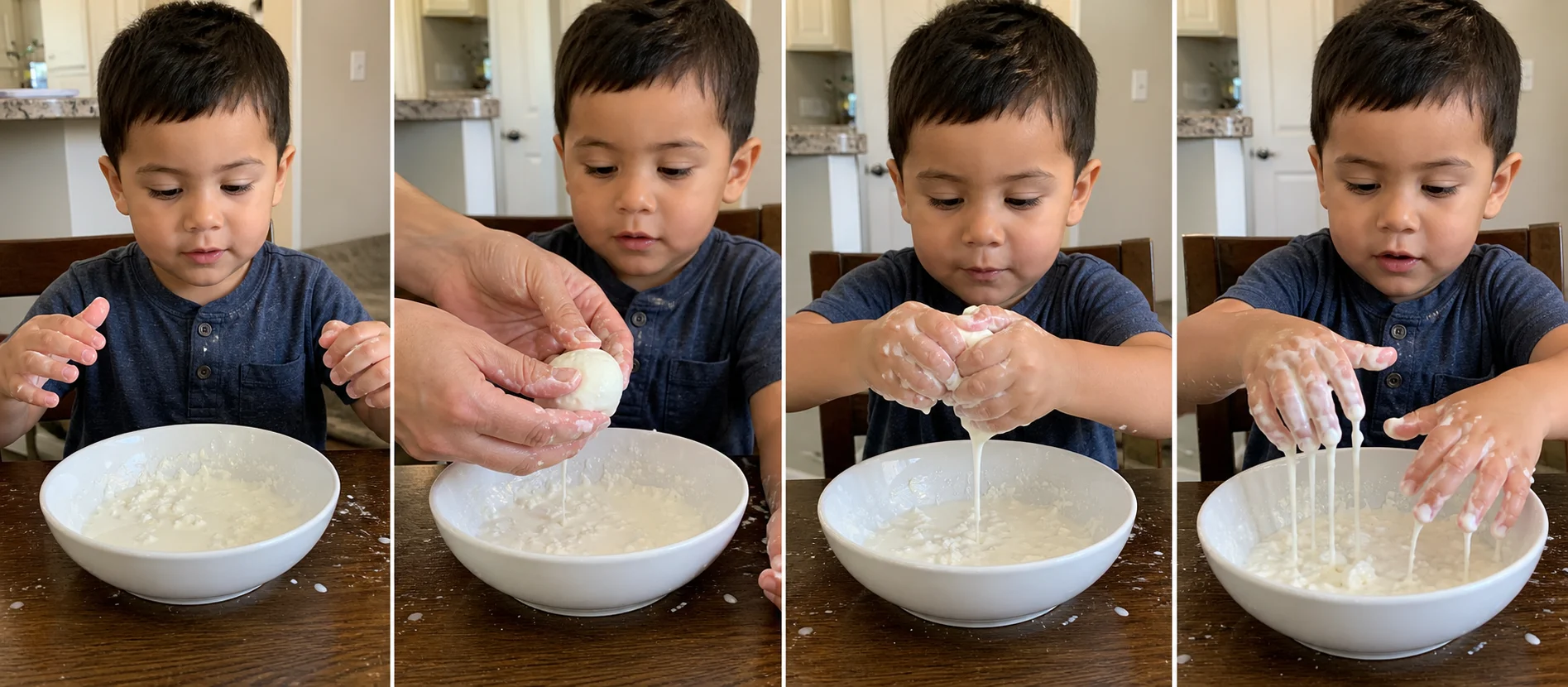
Give your child a weirdly satisfying hand challenge: squeeze cornstarch and water into a ball, then hold still and watch it melt through their fingers. Each quick round gives them practice with hand strength and release control.


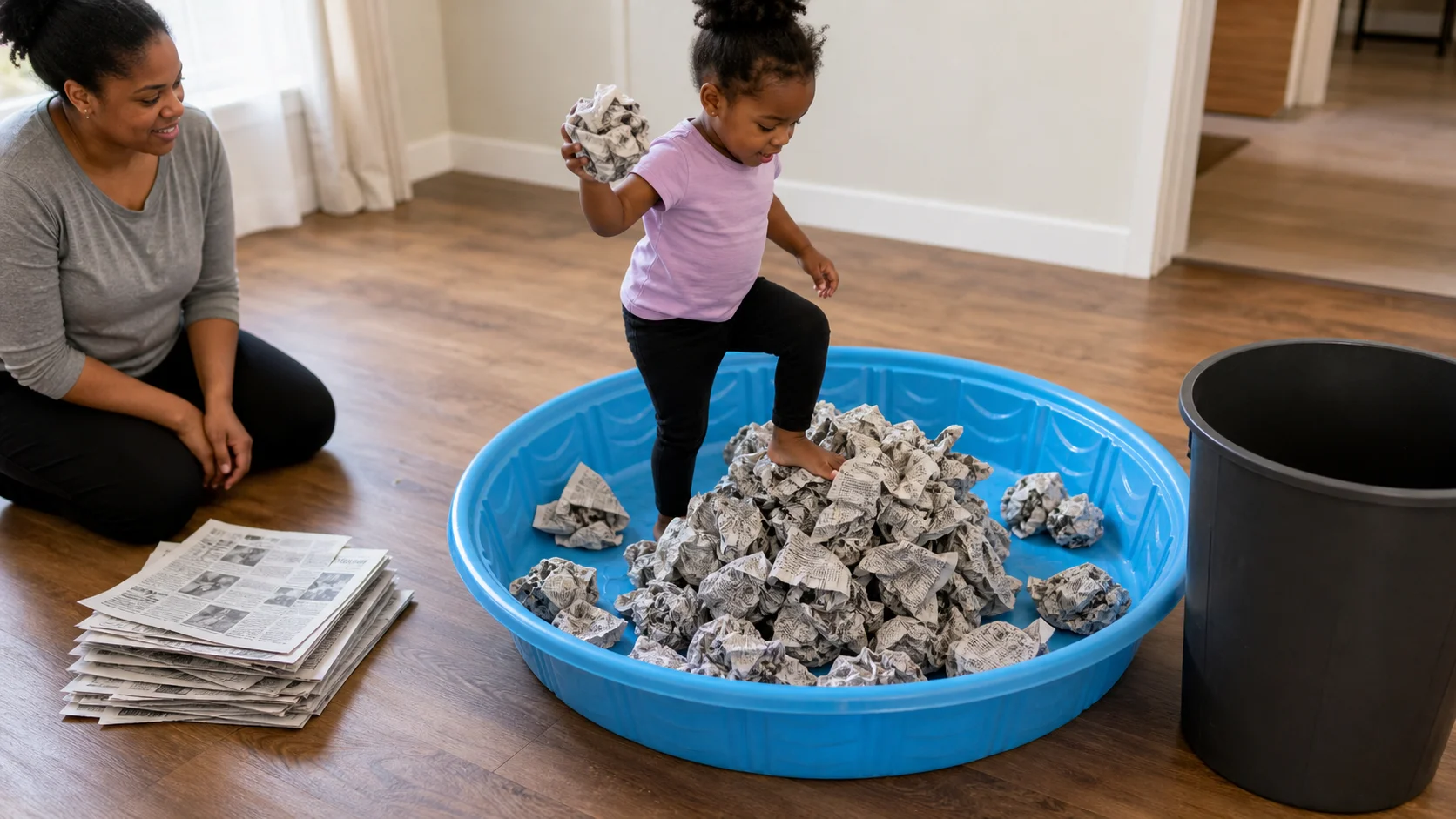
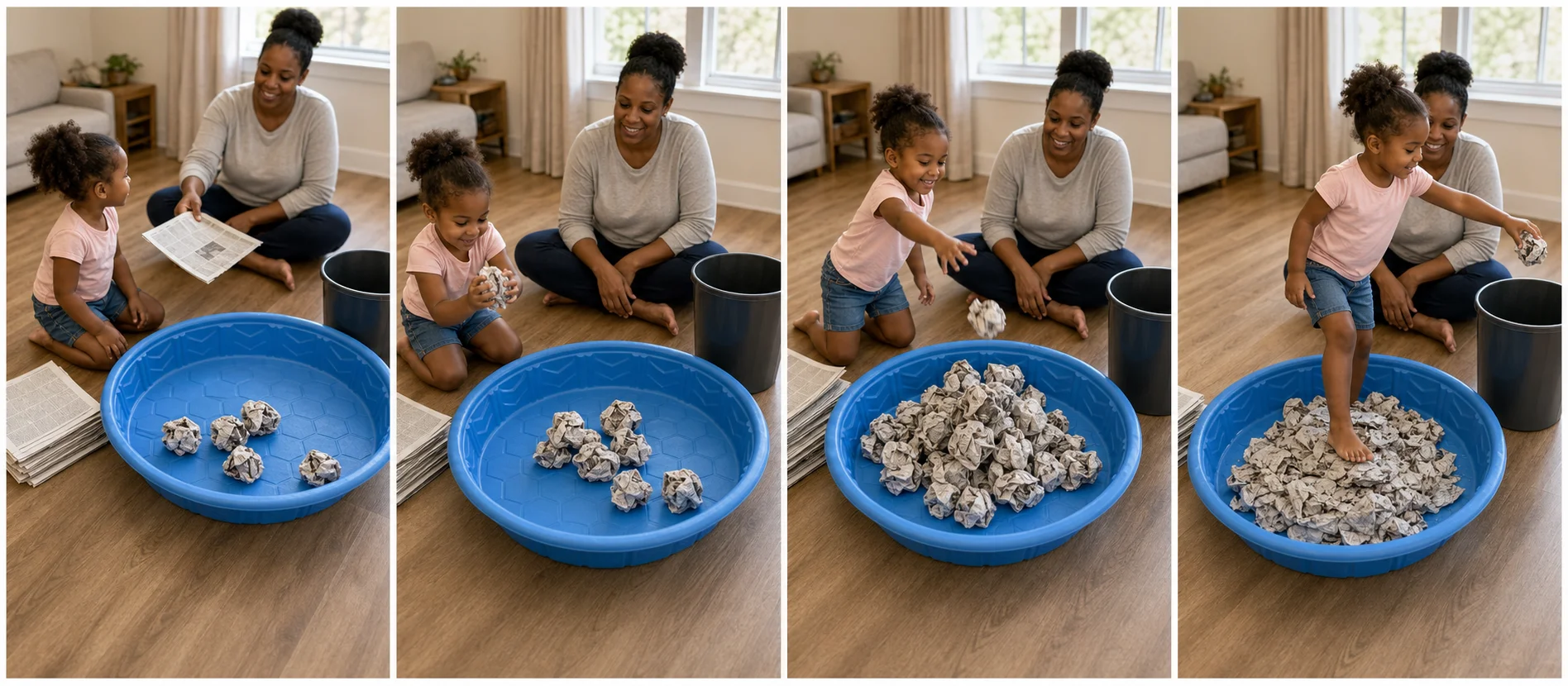
Turn a stack of newspaper into a mountain your child gets to build, climb, and crush. They crumple and toss each page into one zone, then step inside, climb over, and flatten the pile while practicing hand strength and whole-body movement.


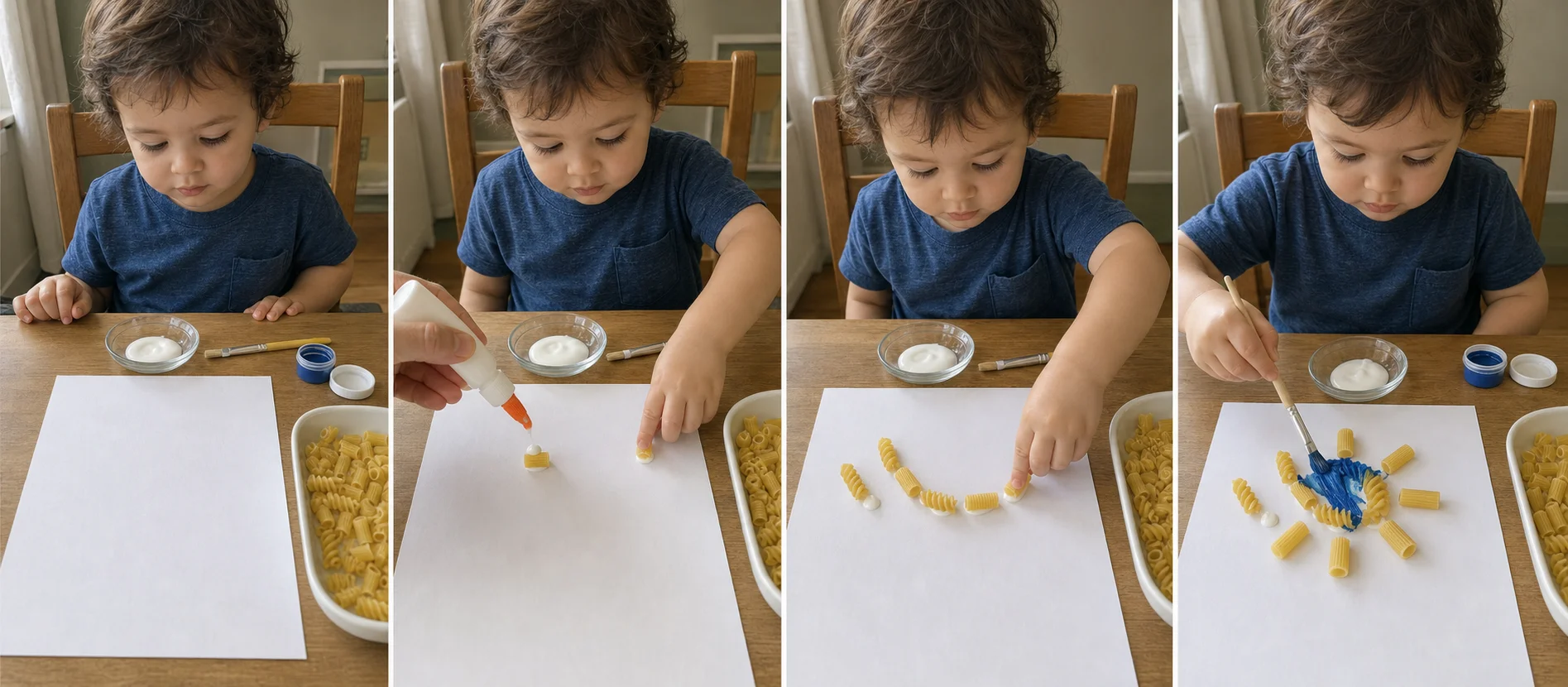
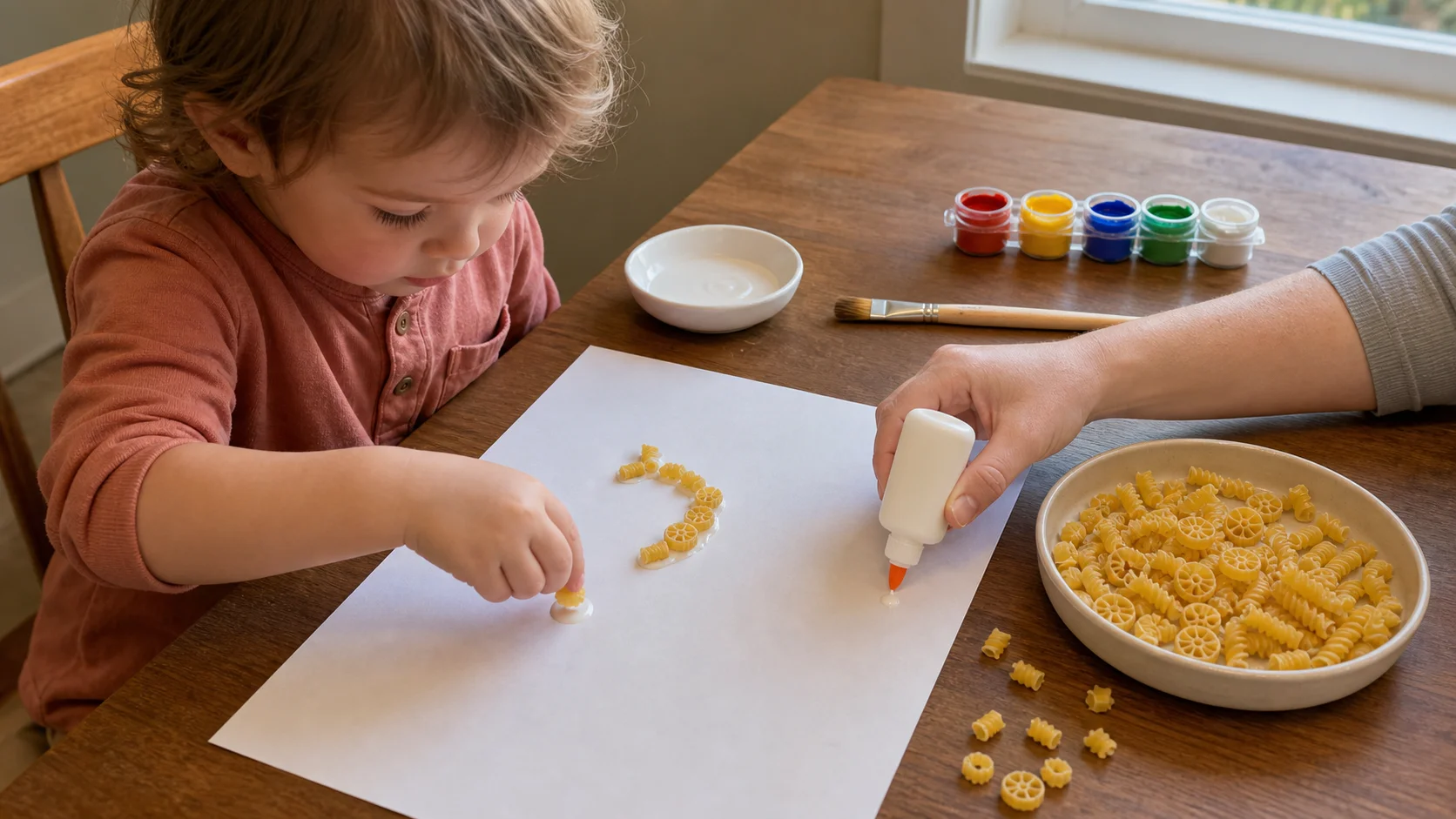
Turn dry pasta shapes into a textured picture your child can paint. Placing each piece builds finger control and lets your child ease from dry materials into messier art at their own pace.


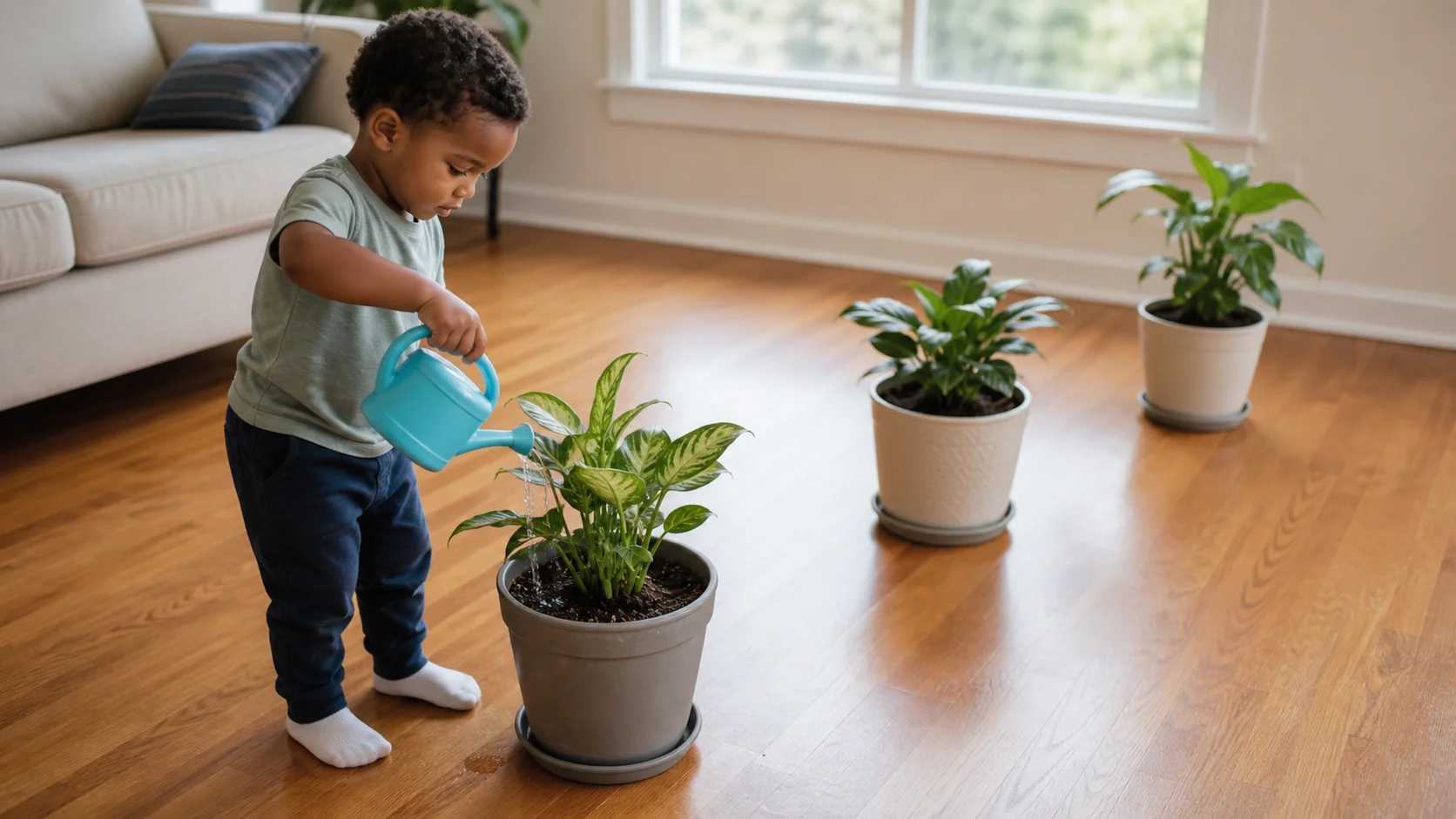
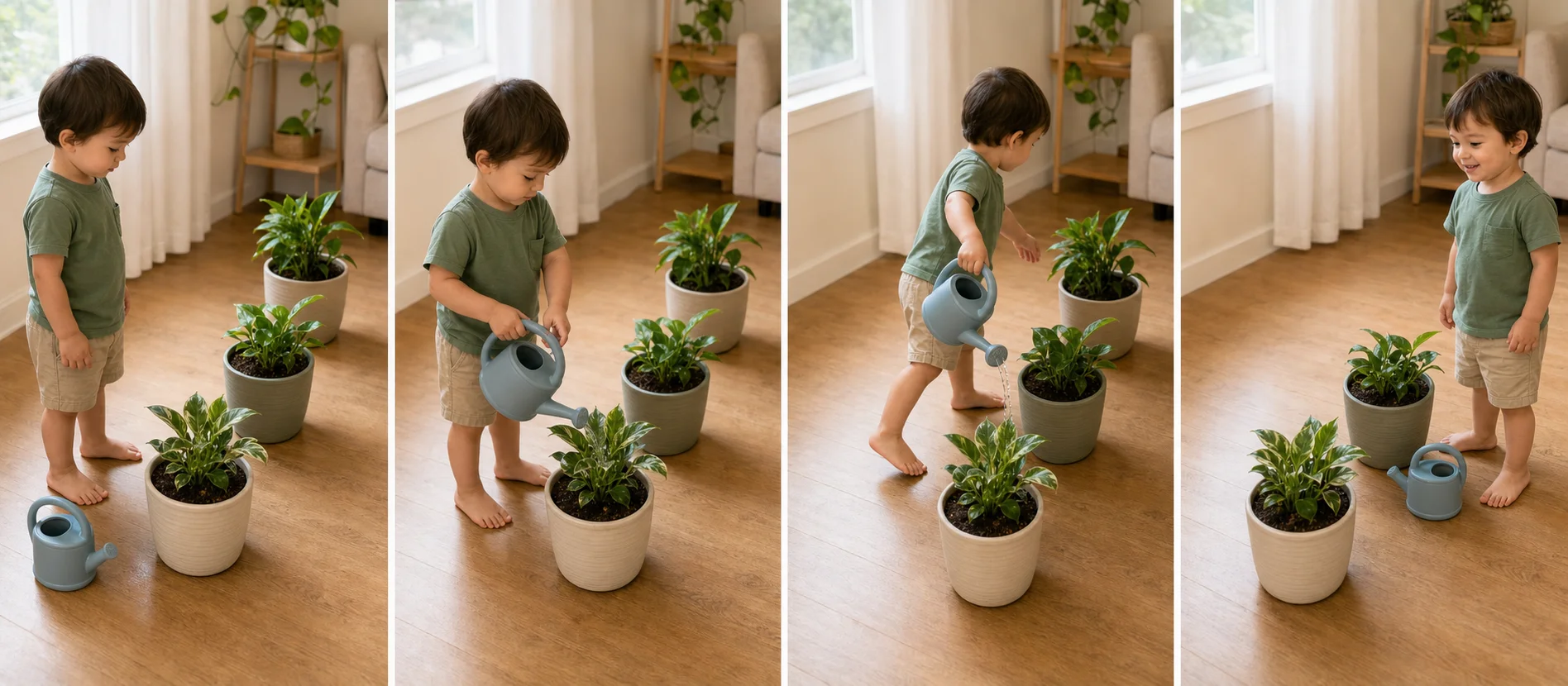
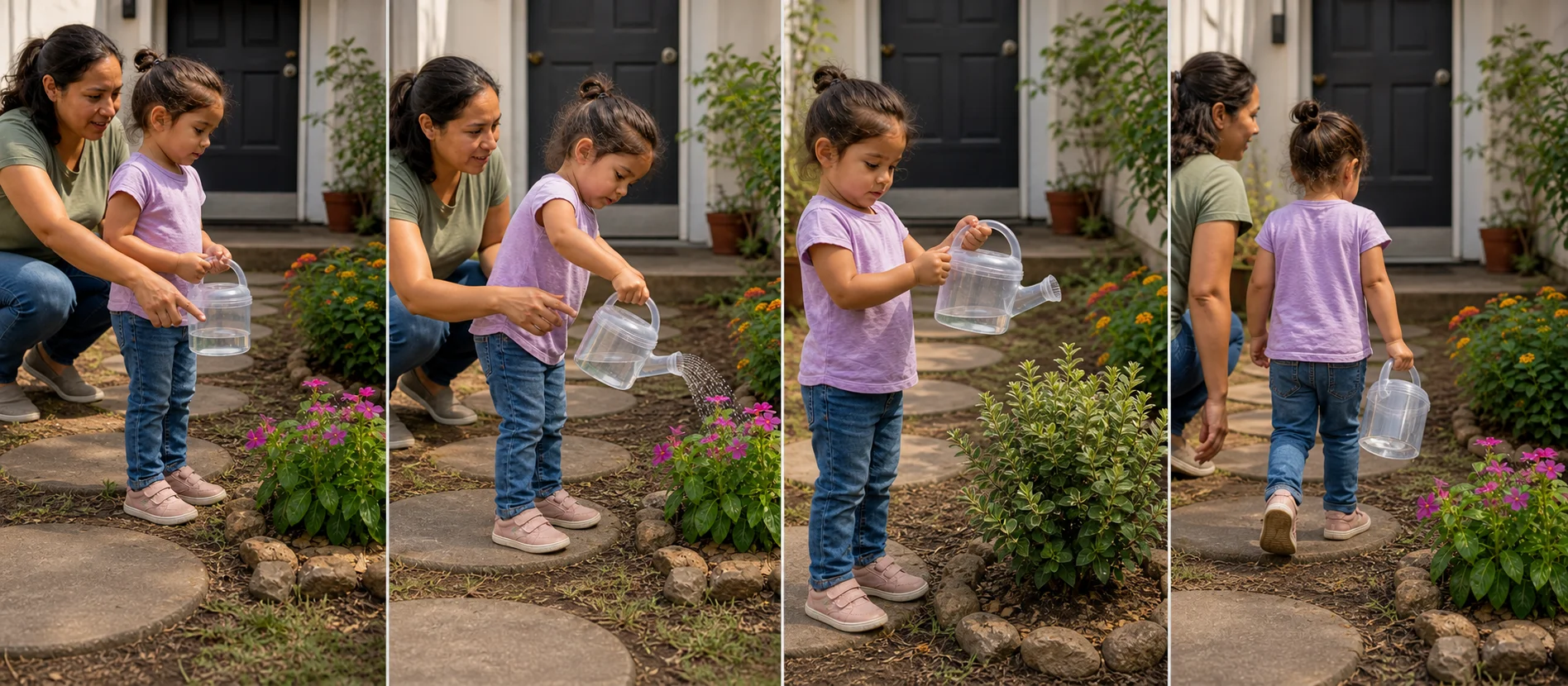
Plant Watering Route is a plant watering route activity for toddlers that helps children complete a helping job through a clear, repeatable play loop.


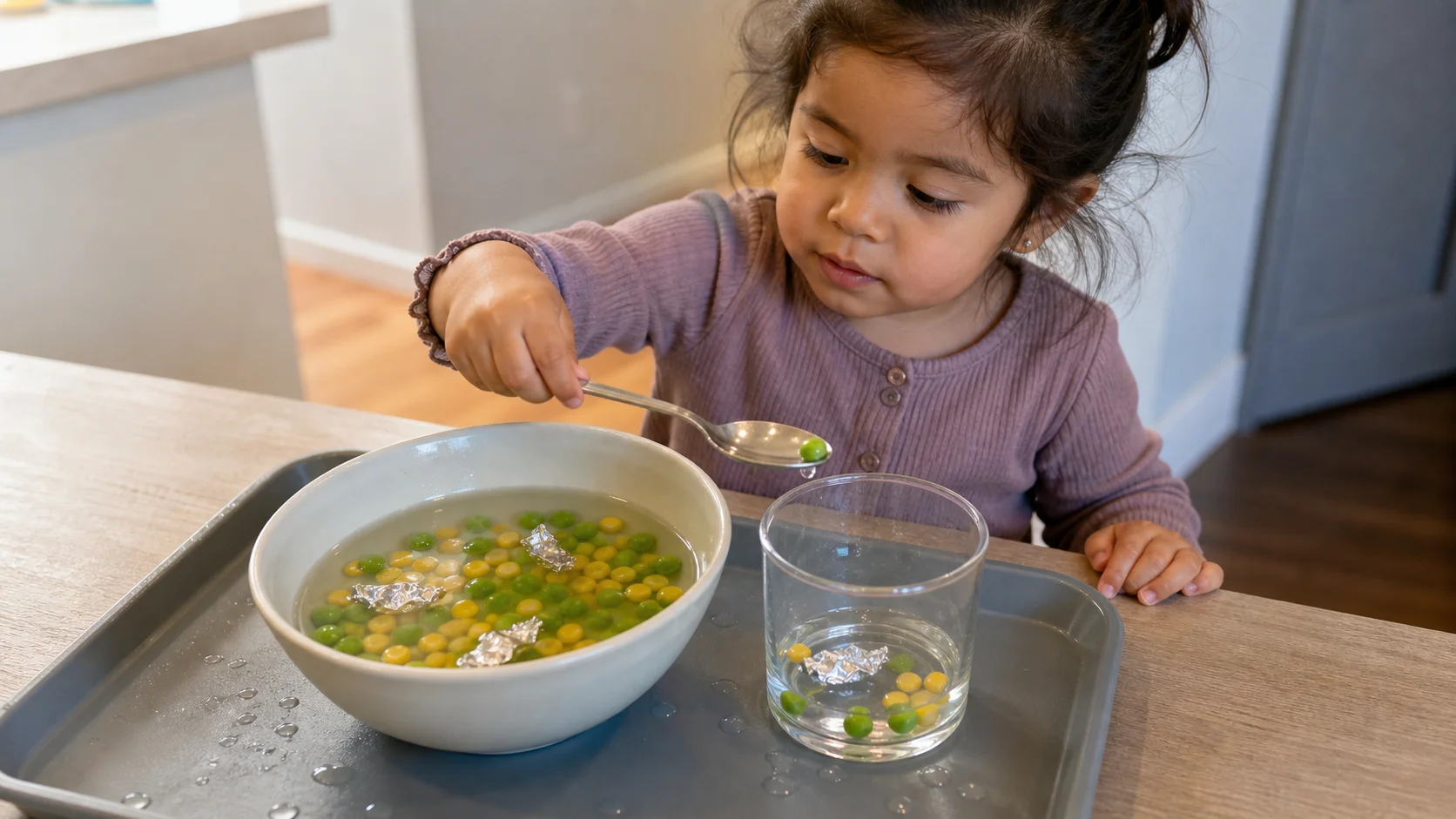
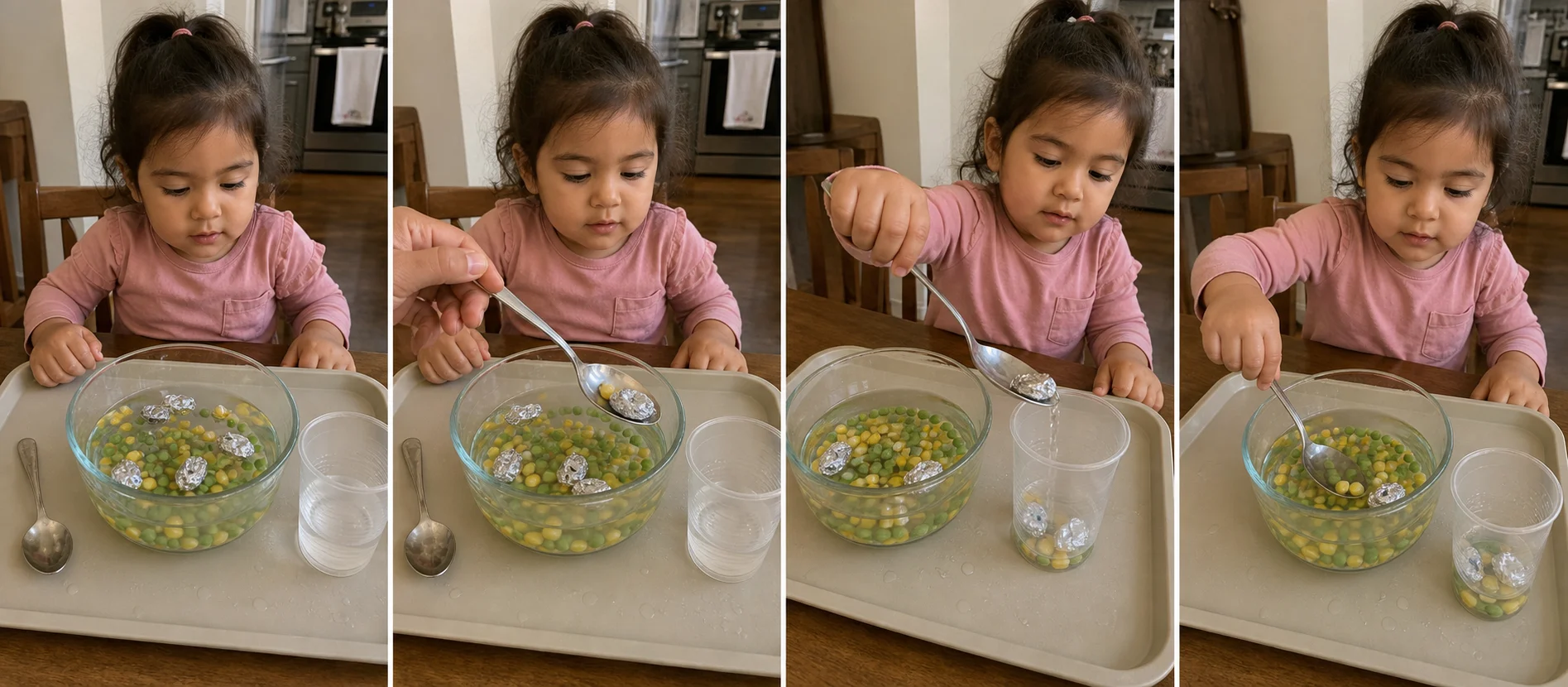
Give wet sensory play a clear, manageable job: your child rescues peas, sweetcorn, and fish shapes from a bowl of water and drops them into a clear cup. Each one-piece rescue practices controlled container-to-container transfers with a visible finish.


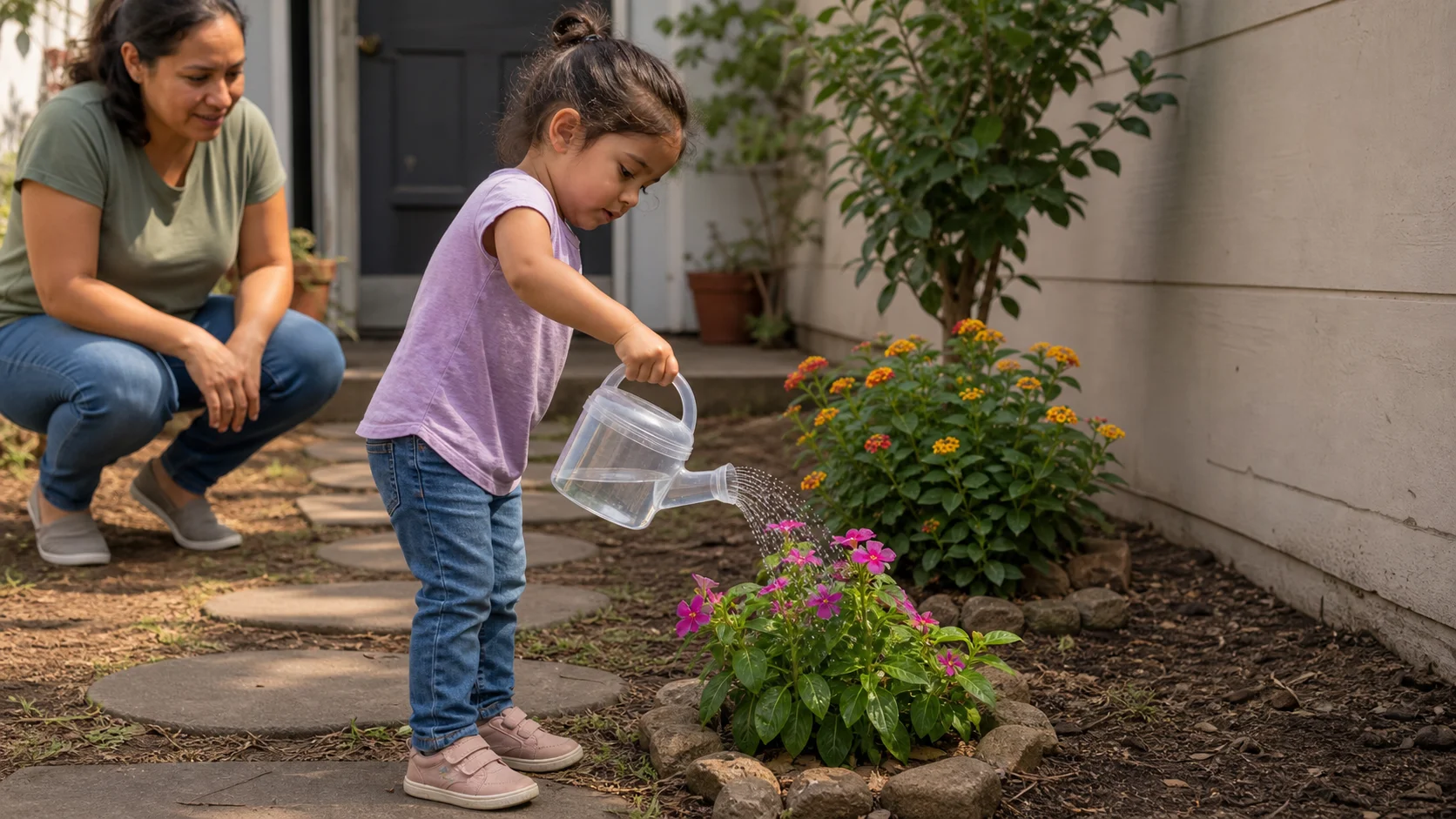
Give a short walk a clear finish line. Your child carries a little water, sprinkles safe plants along the route, then turns back when the container is empty.