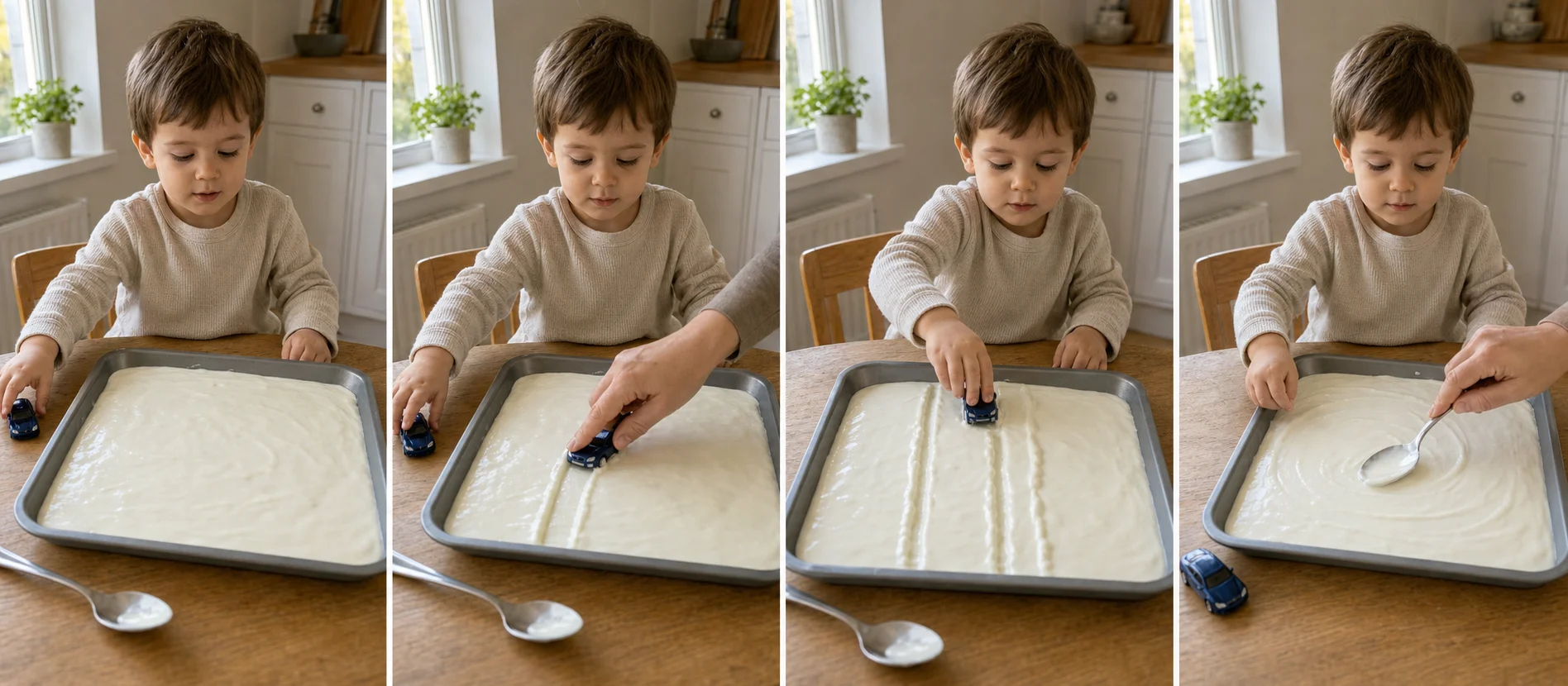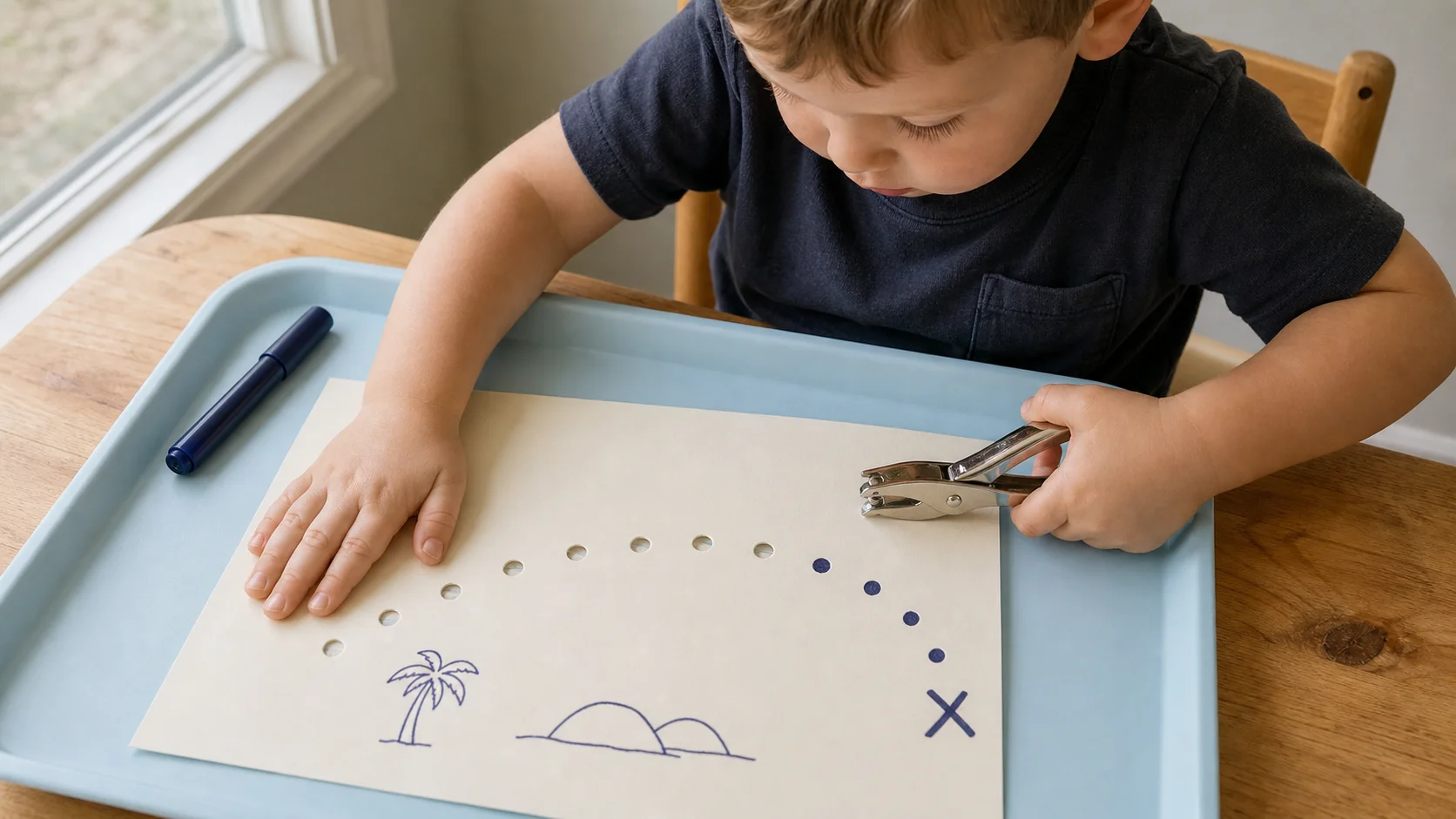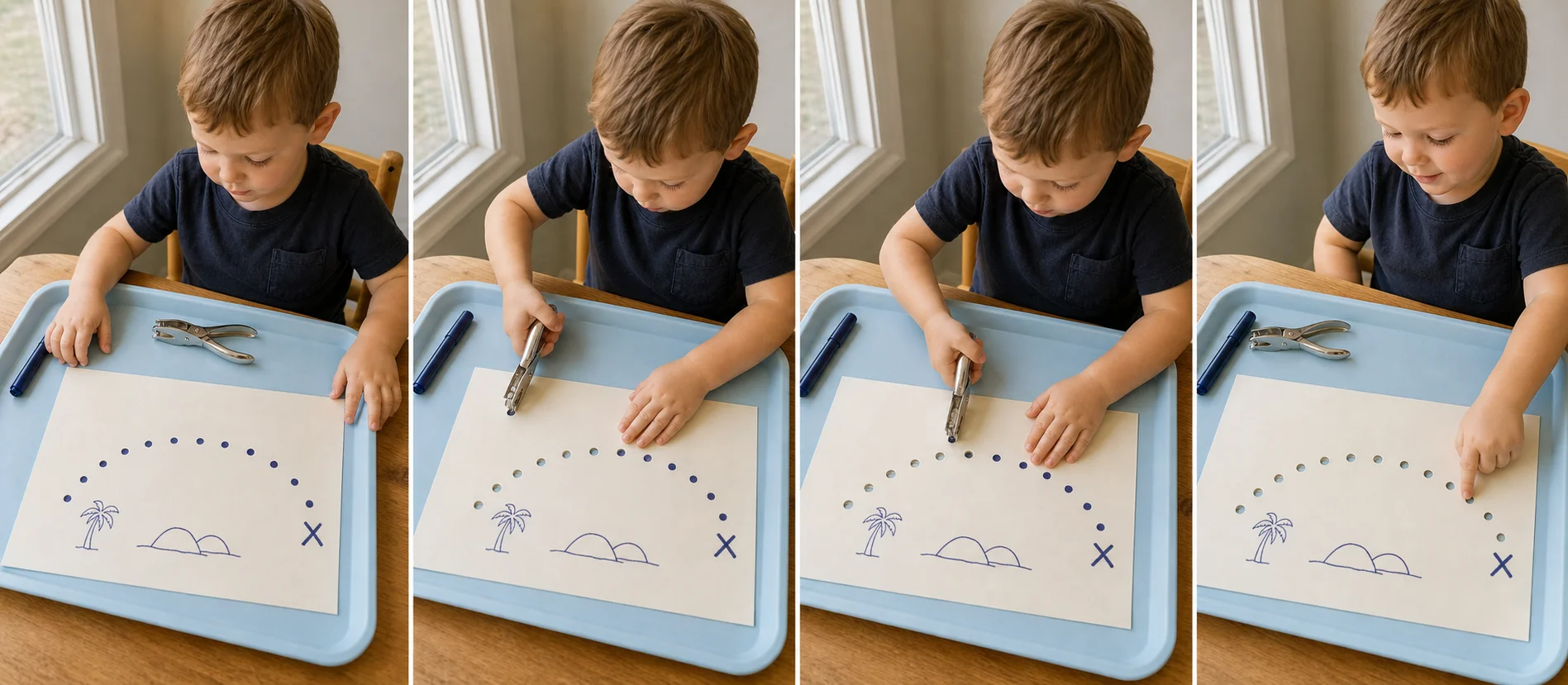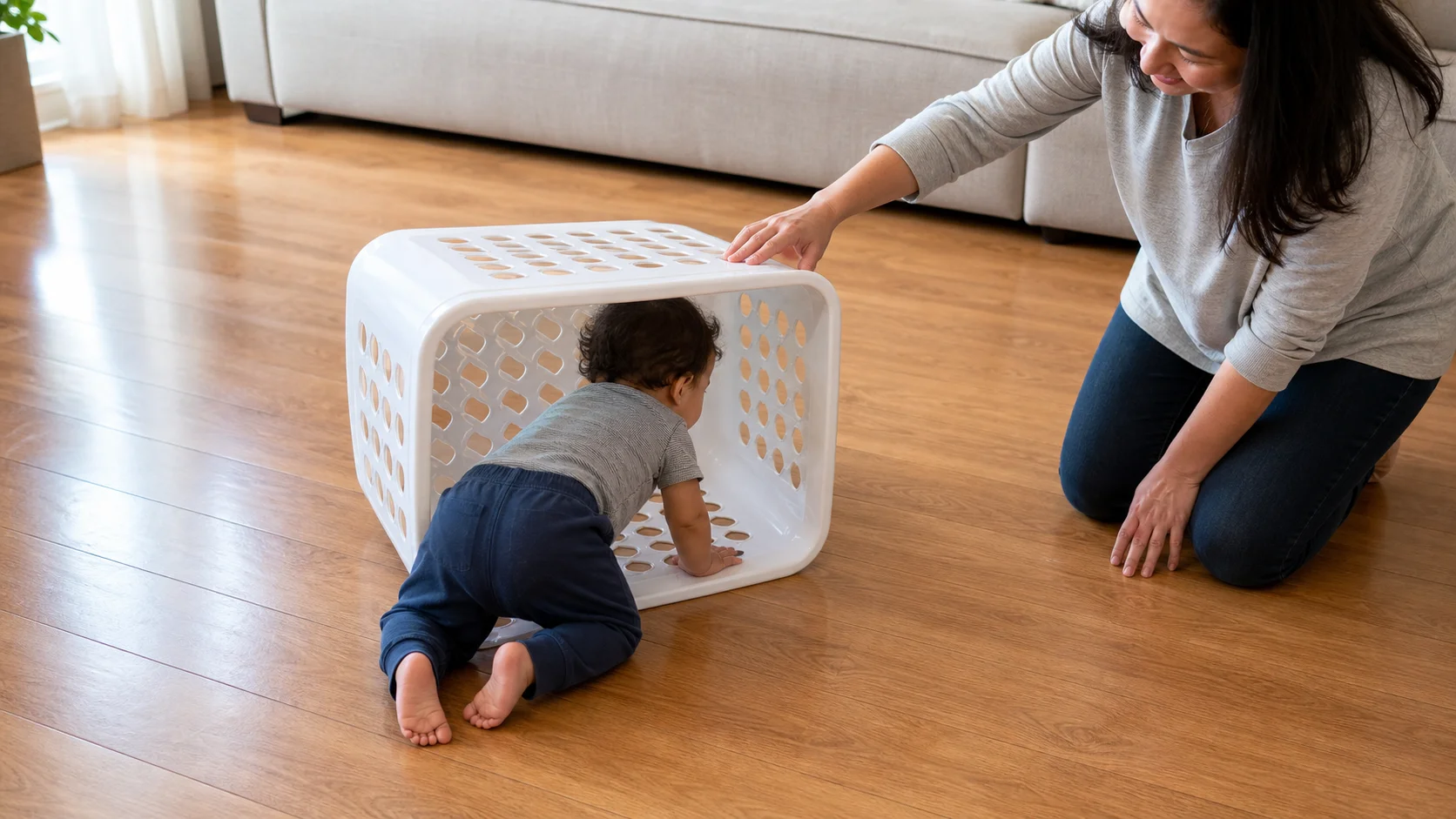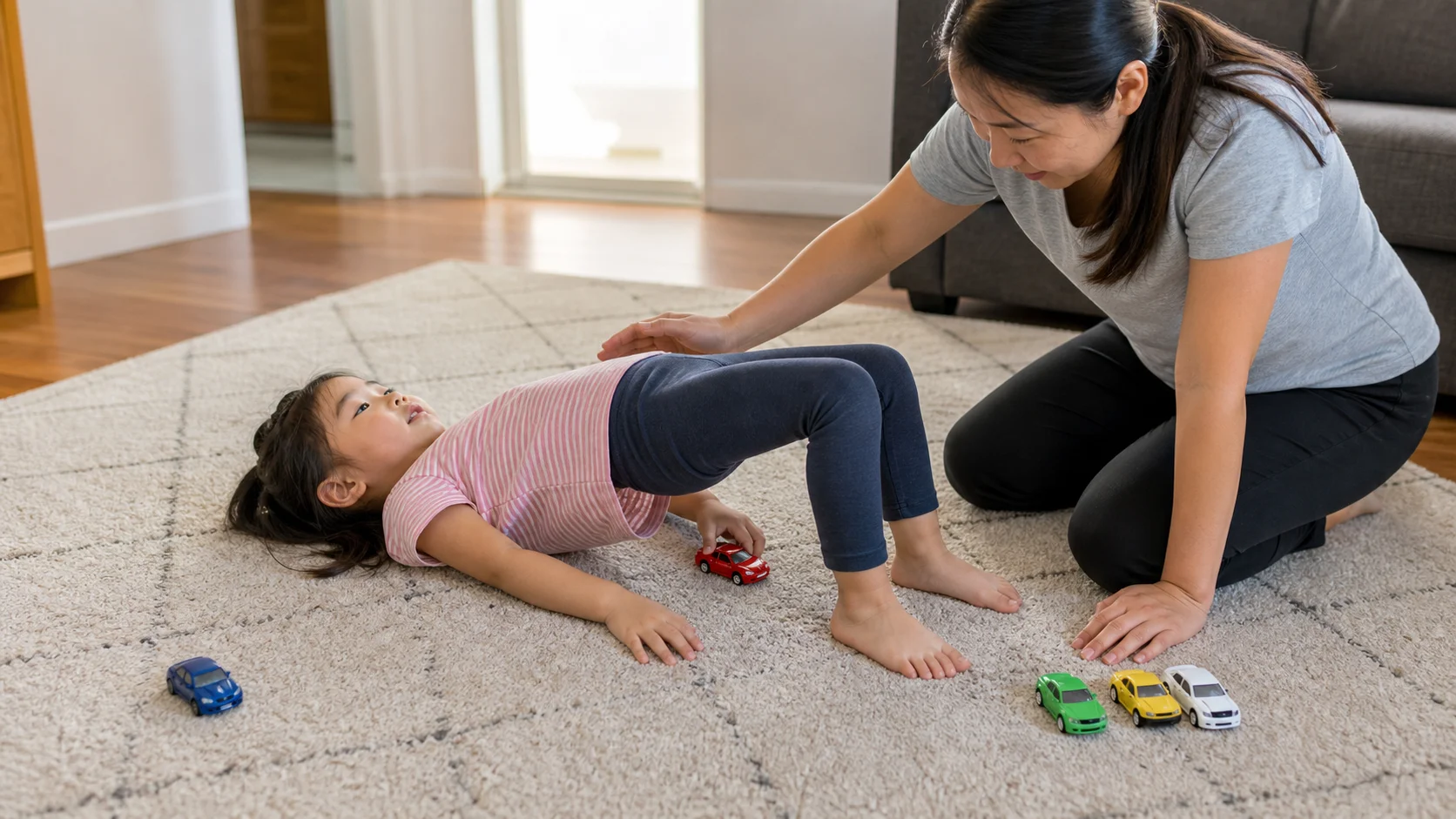
A child lying on a soft floor making a bridge while a toy car rolls under and a grown-up kneels nearby.
Fine motorOT-adjacent supportChange Body LevelIndoor

Bridge Car Tunnel.

Lift into a small bridge, send one car or soft ball through the tunnel, land gently, and repeat.

Play time
5+ min
Age
2-4 years
Energy
Medium
Mess
No
Effort
Low
Where
Indoor
Start here

The recipe.

Low parent effort
4 things

What you need

  • 1 child
  • 1 adult
  • 3 to 6 toy cars or 3 to 6 age-safe small soft balls
  • 1 clear floor space
5 min minimum

Setup

Then start the loop
Step 01
On the floor, clear a soft space about 5 feet by 5 feet.
Step 02
Beside your knee, place one object type for this round
toy cars your child can push or age-safe small soft balls you can roll.
Step 03
In the middle of the space, have your child lie on their back with knees bent, feet flat, and arms down by their sides.
Step 04
Sit or kneel beside your child's legs where you can cue the bridge and help pass one object underneath.
"Feet down, bridge up."
The loop

How play unfolds.

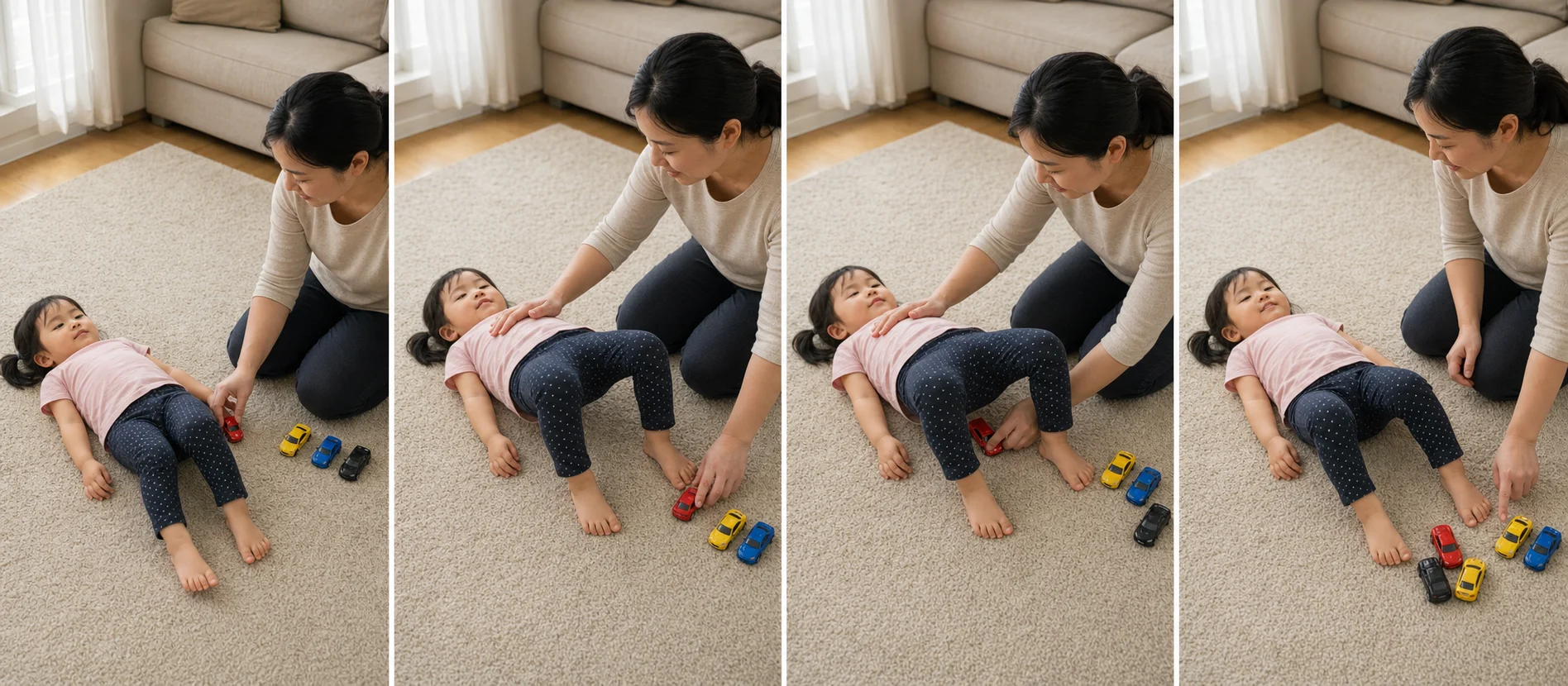
A multi-panel sequence showing a child planting feet, lifting into a bridge, sending one car or soft ball through, lowering gently, and resetting.
  1. 01
    Say, "Feet down, bridge up."
  2. 02
    Let your child lift their hips into a small bridge with both feet planted and knees apart.
  3. 03
    Count to 1, 2, or 3, then send one object through the tunnel: your child pushes one car, or you roll one soft ball.
  4. 04
    Say, "Slow landing," and let your child lower gently.
  5. 05
    Move the object to a done pile, reset feet if needed, and repeat with the next car or ball.

Safety Check

  • Keep hard toys, furniture edges, and loose objects out of the landing area.
  • Ask for a slow lift, knees apart, a fairly straight back, and a gentle lower.
  • Support lightly at the hips if your child wobbles or struggles to balance.
  • Use age-safe soft balls if your child is under 3 or still mouths objects.
  • Stop if your child lands hard, holds their breath, grimaces, says it hurts, or seems scared by the movement.
Supporting the play

What to say in the moment

Match what you say to what you see.

Prompt ladder
Level 1 (Start)
Bridge up for one car.
Level 2 (Keep going)
The next car needs a tunnel.
Level 3 (Stretch)
Hold the tunnel while it rolls through.
Level 4 (Extend)
Can the slow tunnel stay open for the last car?
If your child seems...
What you'd see
Focused
What to do
Say
"Your tunnel is steady."
Add
Count the finished objects in the done pile after the landing.
Extend
Let the child choose which object goes through next.

Make it easier

Younger end
  • -Use only 1 or 2 objects for the whole round.
  • -Let the child lift just high enough for the object to peek under the bridge.
  • -Roll the object beside the bridge first, then under it when the child is ready.

Make it harder

Older end
  • +Ask for a quiet landing after every object.
  • +Let the child send the car through while holding the bridge.
  • +Pause the object halfway under the bridge for one short beat before it exits.

If it's not working

If you see
If child ignores it
Make the first round a tiny car wash or ball tunnel under your own raised hand, then invite one try.
If you see
If child misuses it
Hold the object pile in your lap and release one object only when feet are planted.
If you see
If child gets frustrated
Count only to 1, use one object, support lightly at the hips, and treat a tiny bridge with a quiet landing as a full turn.
Skill spotlight
Body Position

Lifting and lowering the body with control

This helps the child feel where their body is in space and control a simple up-hold-down movement.

  • Planting feet, lifting hips, and lowering gently give your child a clear body-control job.
  • One car or soft ball passing under the bridge turns the hold into a visible start-finish turn.
  • The short count and done pile make the repeat predictable, which helps the round end before form falls apart.
  • A tiny bridge still counts, so the grown-up can lower the challenge without changing the game.
Real-world transfer
  • Getting up and down from the floor with more control.
  • Climbing onto low furniture or play equipment safely.
  • Holding body positions during dressing, cleanup, and active play.
  • Noticing when the body is steady, wobbly, tired, or ready to stop.

Parent questions