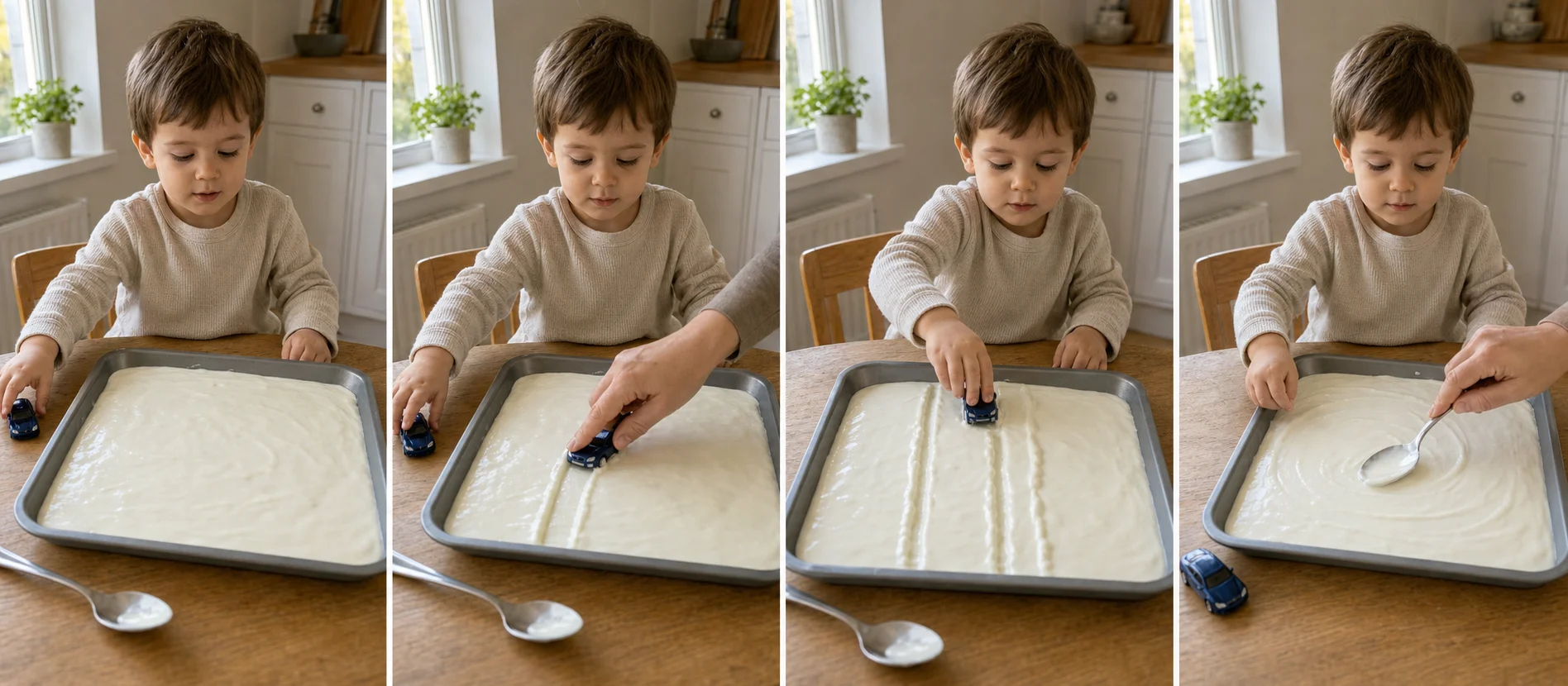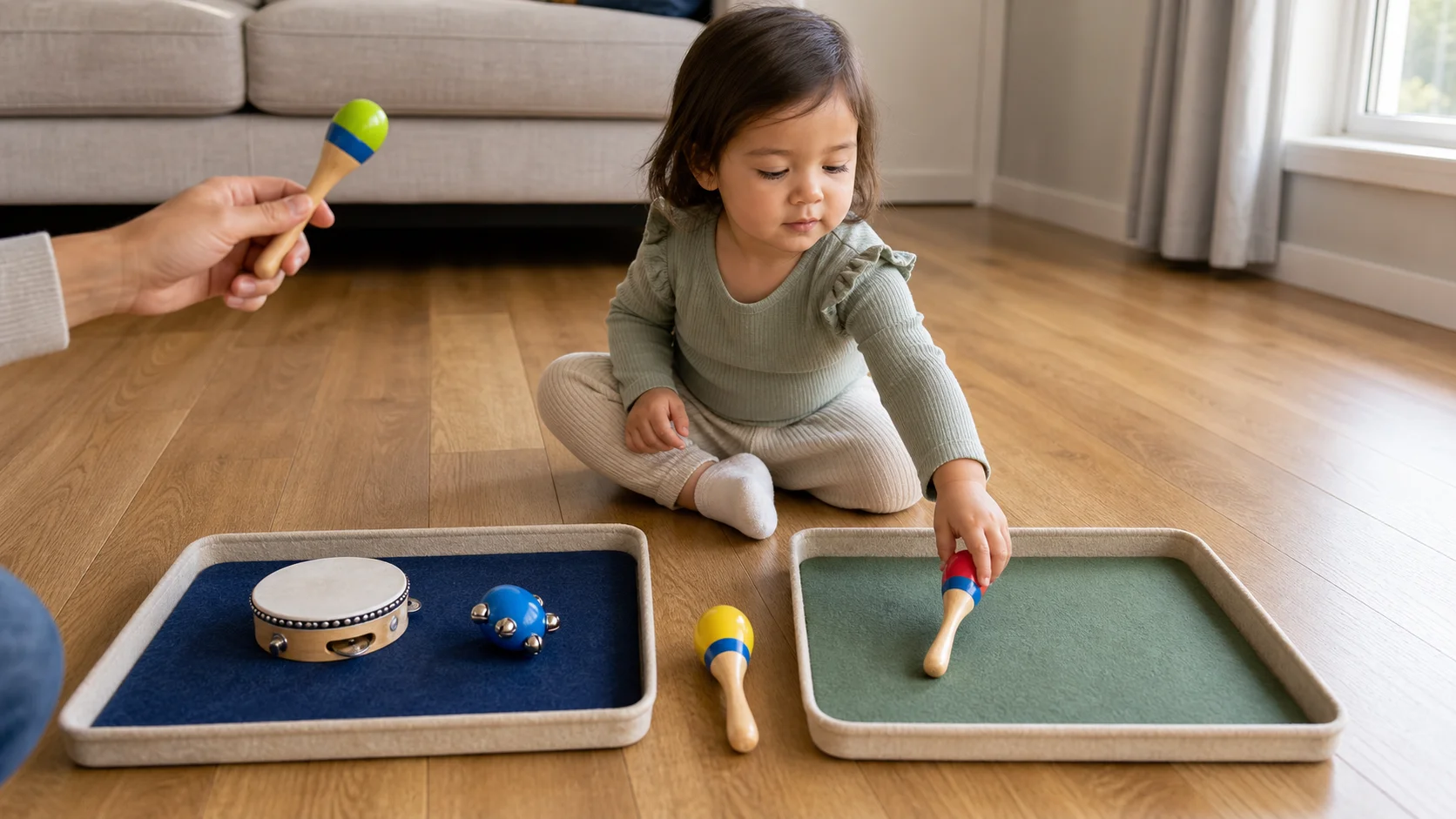
A toddler sitting with a few simple sound-makers and moving one instrument to a loud or quiet sorting spot after listening to it.
ThinkingSpeech delay supportBy Sound LevelIndoor

Loud-or-Quiet Sort.

Your child hears one short sound, decides loud or quiet, and sorts the sound-maker to the matching side.

Play time
5-10+ min
Age
2-5 years
Energy
Low
Mess
No
Effort
Low
Where
Indoor
Start here

The recipe.

Low parent effort
2 things

What you need

  • 4 easy-to-hold sound-makers with a clear loud-versus-quiet contrast
  • 2 clear sort spaces
5 min minimum

Setup

Then start the loop
Step 01
Pick 4 sound-makers that are safe to hold and easy to tell apart by volume.
Step 02
Put all 4 sound-makers in 1 small starting group in front of your child.
Step 03
Leave 1 empty spot for loud sounds on one side and 1 empty spot for quiet sounds on the other side.
Step 04
Test each sound once away from your child's ears so the contrast is clear before you start.
"Listen first."
The loop

How play unfolds.

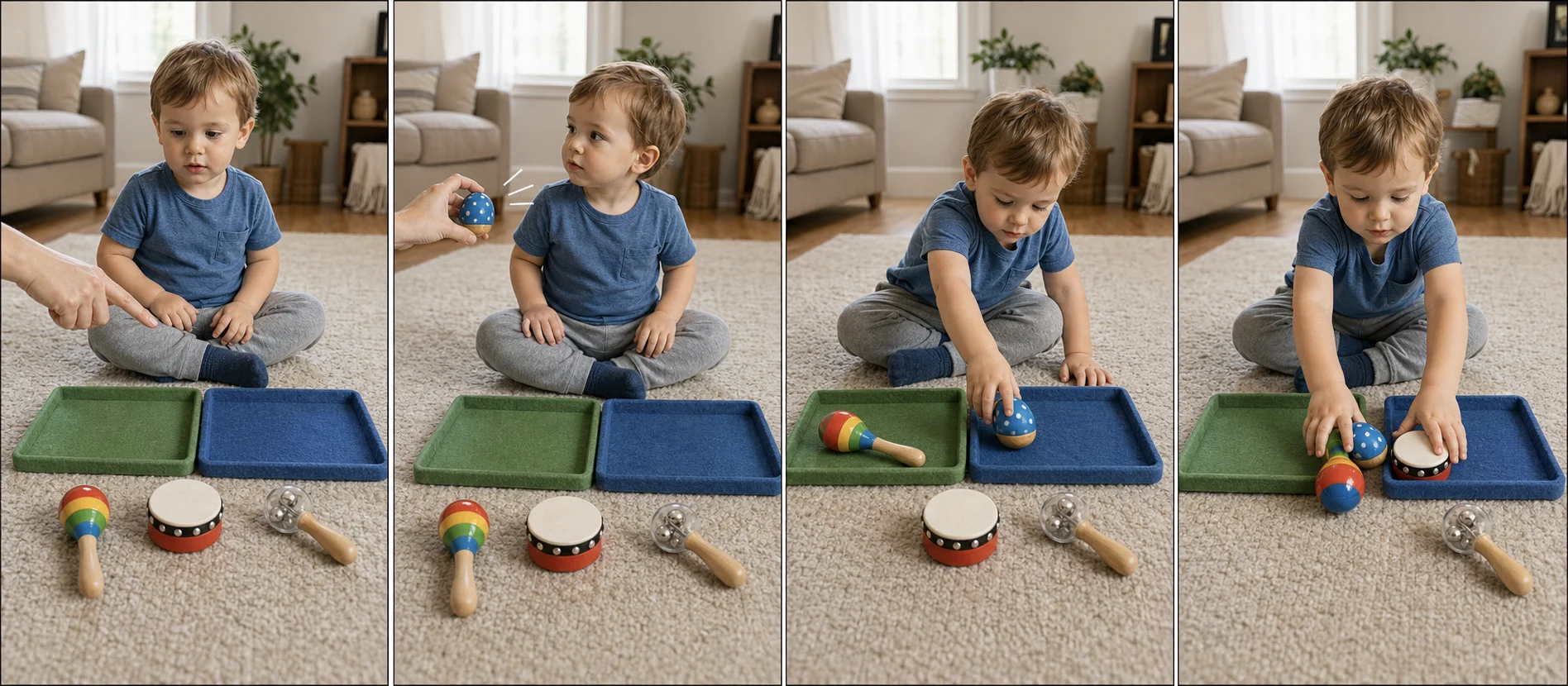
Four panels showing a grown-up making one short sound, a toddler listening, the child sorting the sound-maker to the loud or quiet side, and the pieces returning to the middle for another turn.
  1. 01
    Make 1 short sound and say, "Loud or quiet?"
  2. 02
    Let your child place that sound-maker into the matching sort space.
  3. 03
    Repeat with the other sound-makers until the starting group is gone.
  4. 04
    Slide the sound-makers back to the middle and start another round if your child wants more.

Safety Check

  • Keep louder sounds away from your child's ears.
  • Use sealed or sturdy sound-makers so loose fill materials cannot spill during play.
  • Stop if the game turns into hard banging near faces or bodies.
Supporting the play

What to say in the moment

Match what you say to what you see.

Prompt ladder
Level 1 (Start)
"Listen. Loud or quiet?"
Level 2 (Keep going)
"Sort this one."
Level 3 (Stretch)
"Can you tell before you move it?"
Level 4 (Extend)
"Your turn to make one."
If your child seems...
What you'd see
Focused
What to do
Say
"You knew where it goes."
Add
Let your child move the sound-maker without extra help after the sound.
Extend
Hand your child 1 sound-maker to play while you do the sorting choice together.

Make it easier

Younger end
  • -Use just 2 sound-makers.
  • -Keep the quiet and loud spaces close to the starting group.
  • -Accept pointing instead of moving the sound-maker.

Make it harder

Older end
  • +Let your child make the sound while you ask the loud-or-quiet question.
  • +Wait a beat before repeating the question to see if your child sorts on their own.
  • +Add 1 more soft sound-maker after the first easy round is working.

If it's not working

If you see
If child ignores it
Show 1 very quiet sound and 1 very loud sound yourself, then offer an easy choice with just those 2.
If you see
If child misuses it
Say, "Listen first, then sort," make 1 short sound again, and hand back the same sound-maker for the choice.
If you see
If child gets frustrated
Cut the set down to 2 obvious sound-makers and accept pointing instead of moving or naming.
Skill spotlight
Sound Sorting

sorting heard sounds into 2 simple groups

This helps a child notice meaningful differences between sounds and respond to what they heard with a simple action, which supports listening during songs, spoken games, and everyday back-and-forth routines.

  • Your child gets one clear listening job: hear the sound, decide loud or quiet, and sort it.
  • The game keeps language pressure low because pointing or moving the sound-maker still counts as a full turn.
  • Short repeated rounds help your child practice noticing sound contrast without a long or busy setup.
Real-world transfer
  • Noticing when sounds are softer or louder in everyday routines
  • Responding to a heard cue with a simple choice
Back to library
Keep playing

Related activities.