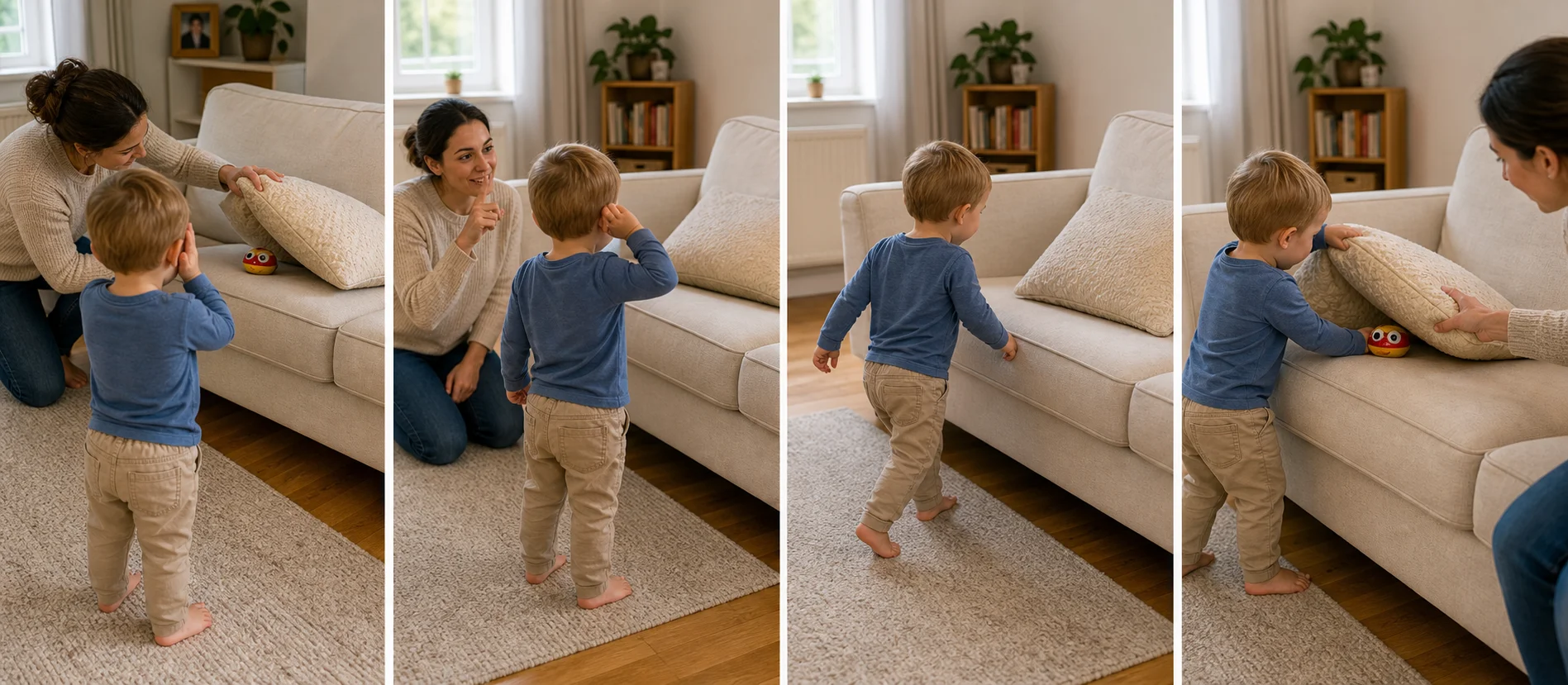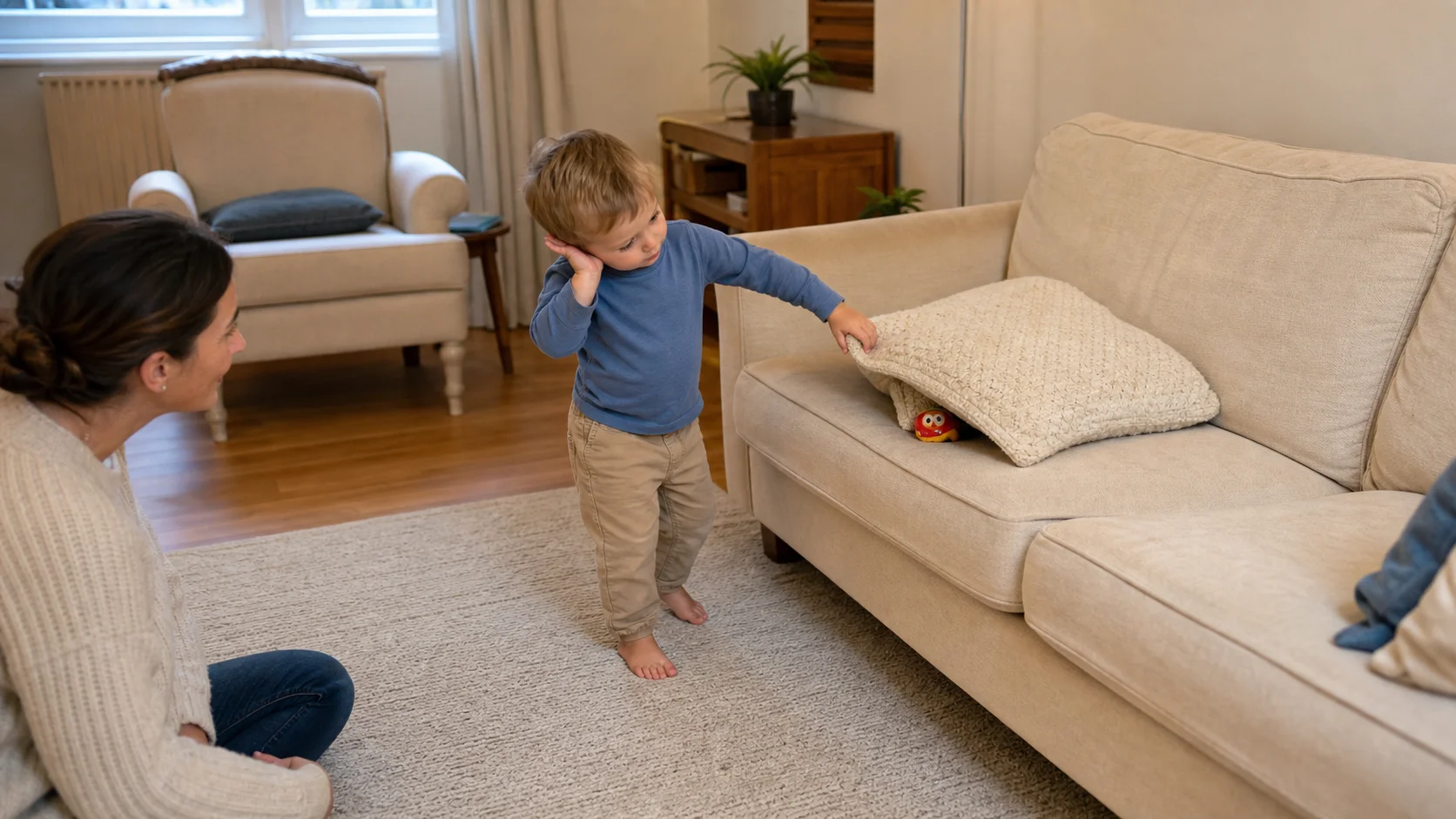

Finding Sounds
Where is that sound coming from? Hide a noisy toy or music player in the room and let your child listen, follow the sound, and track it down, building focused listening and sound-location skills.


Where is that sound coming from? Hide a noisy toy or music player in the room and let your child listen, follow the sound, and track it down, building focused listening and sound-location skills.


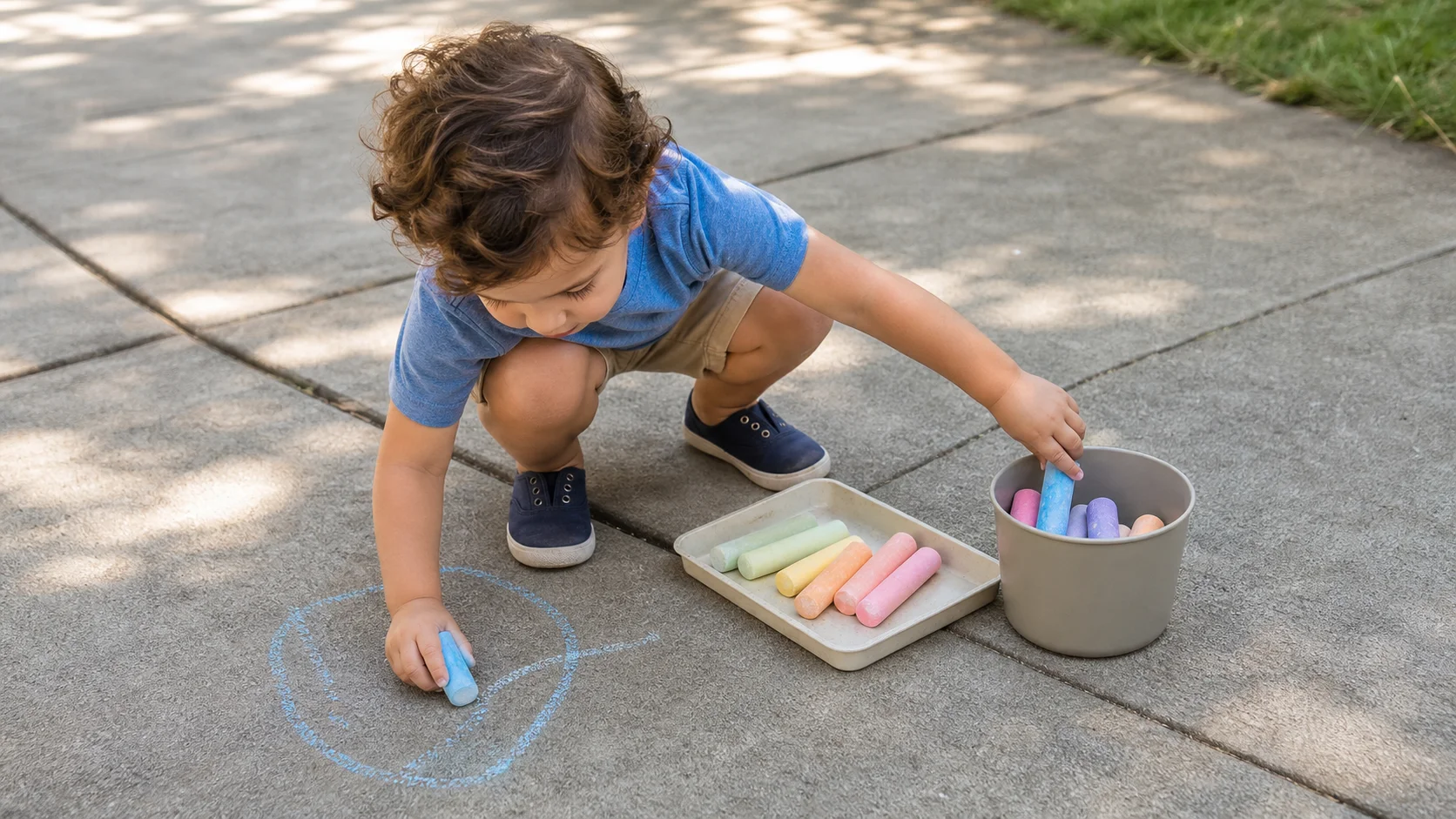
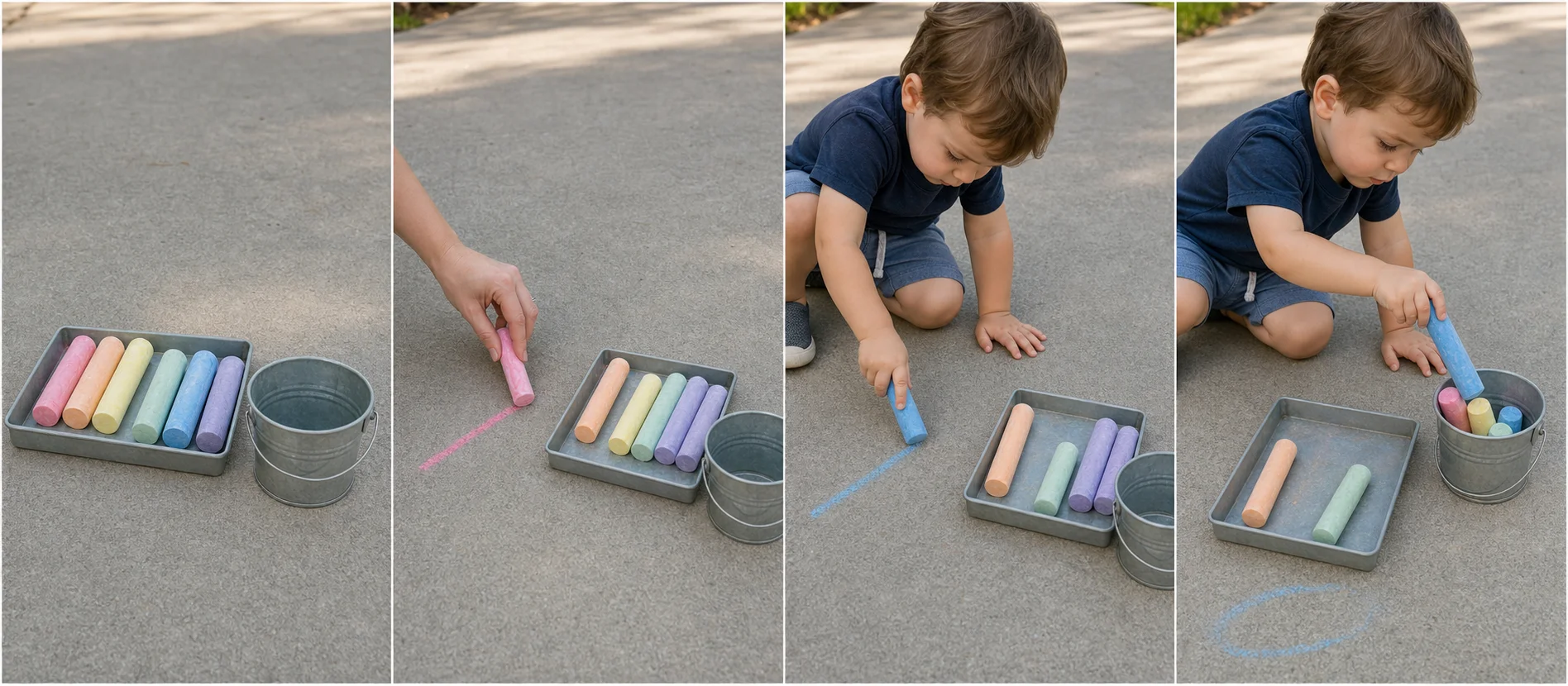
Give chalk time a finish your child can see. Set chalk on a tray, let your child draw with one color and drop it into a finished bucket, then repeat until the tray is empty, creating a simple, predictable transition from play to all done.


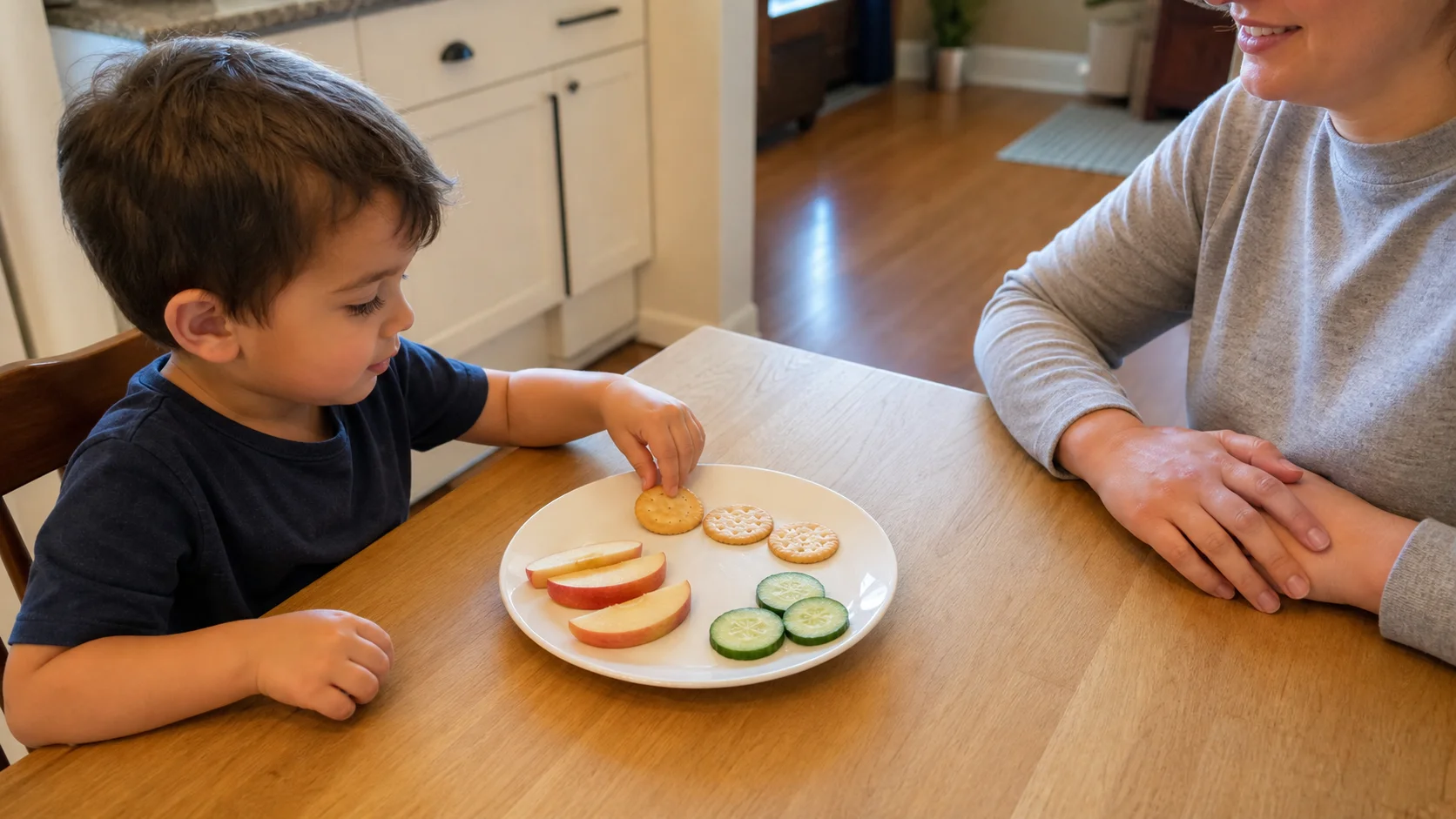
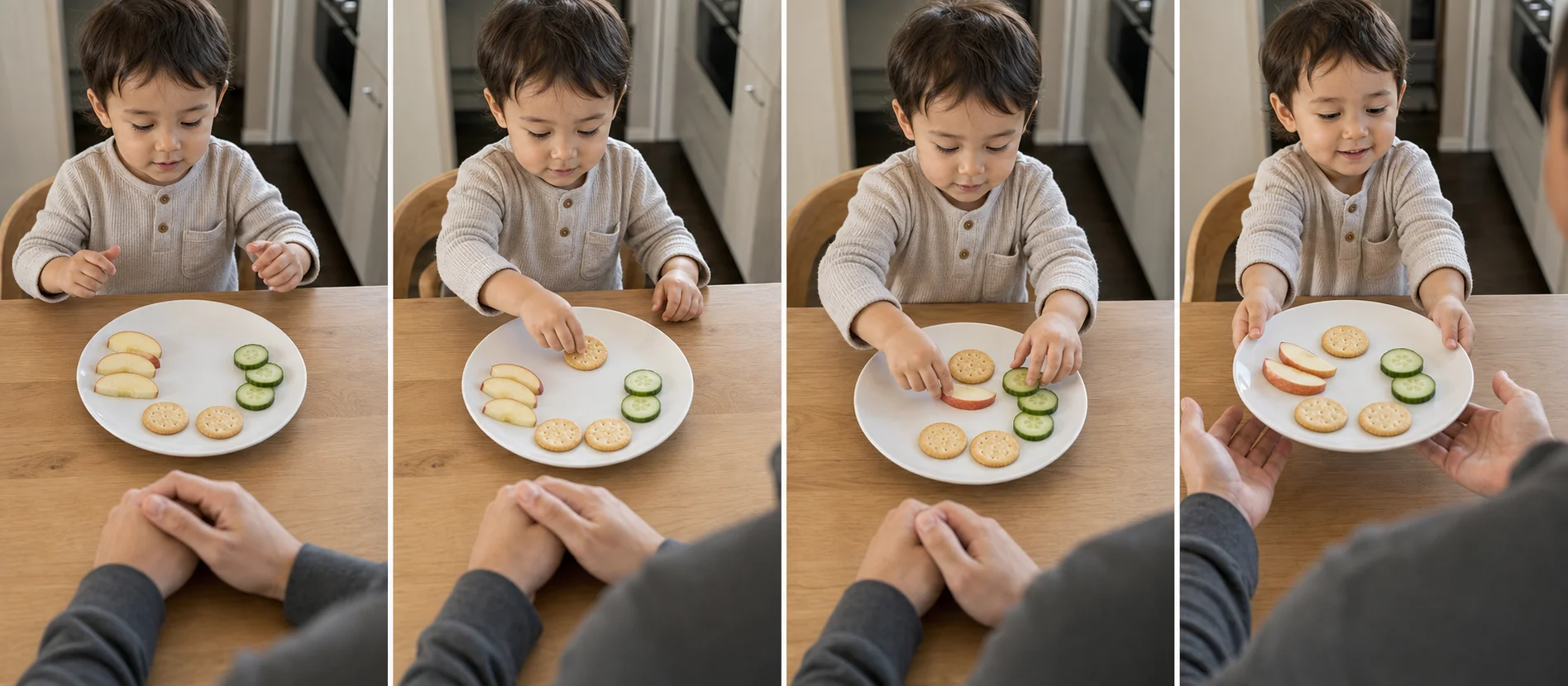
Turn a plate and a few familiar foods into a low-pressure pretend restaurant. Your child rearranges the foods, serves the finished plate to a waiting customer, and practices purposeful placing through a short helping routine.


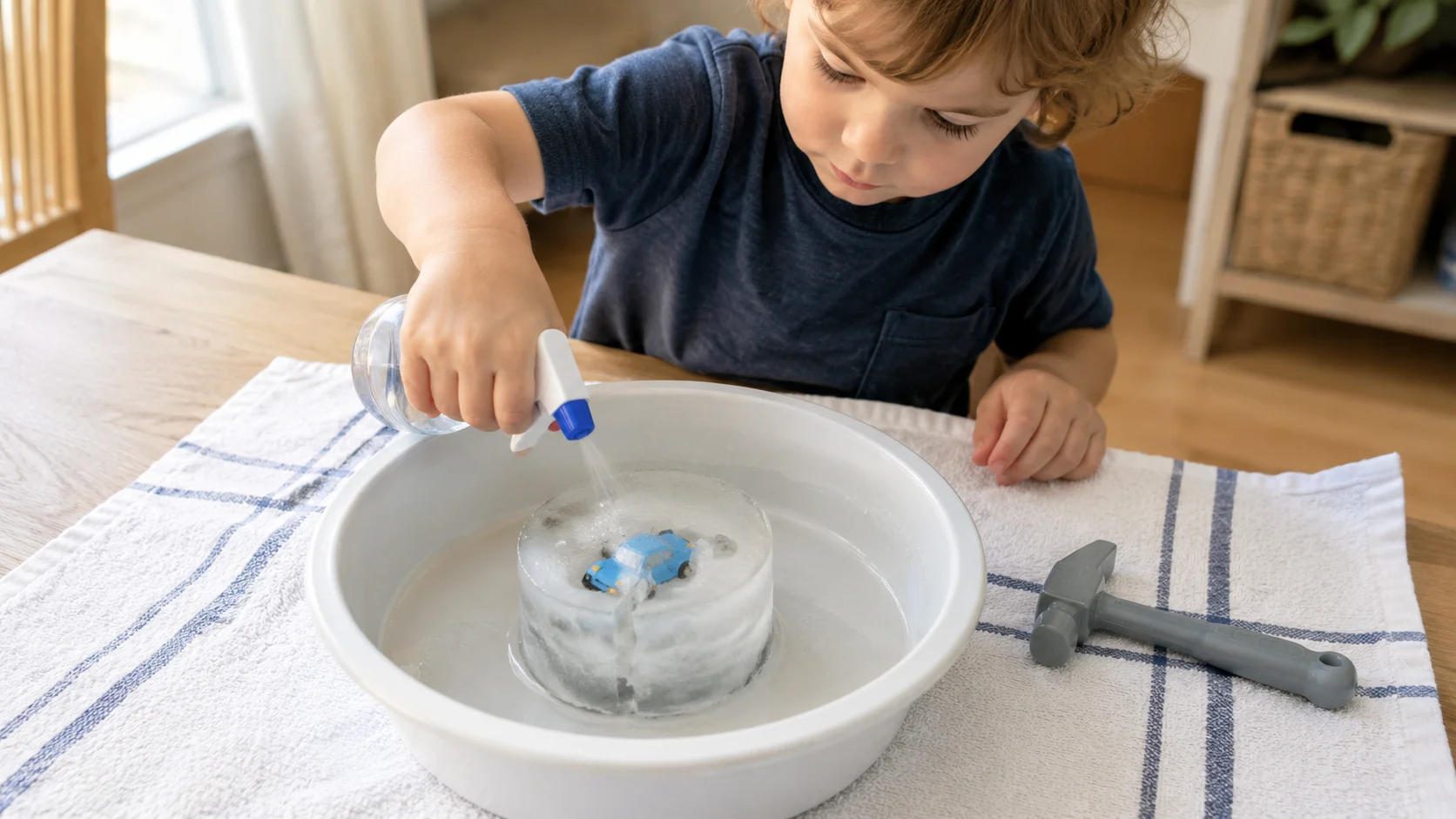
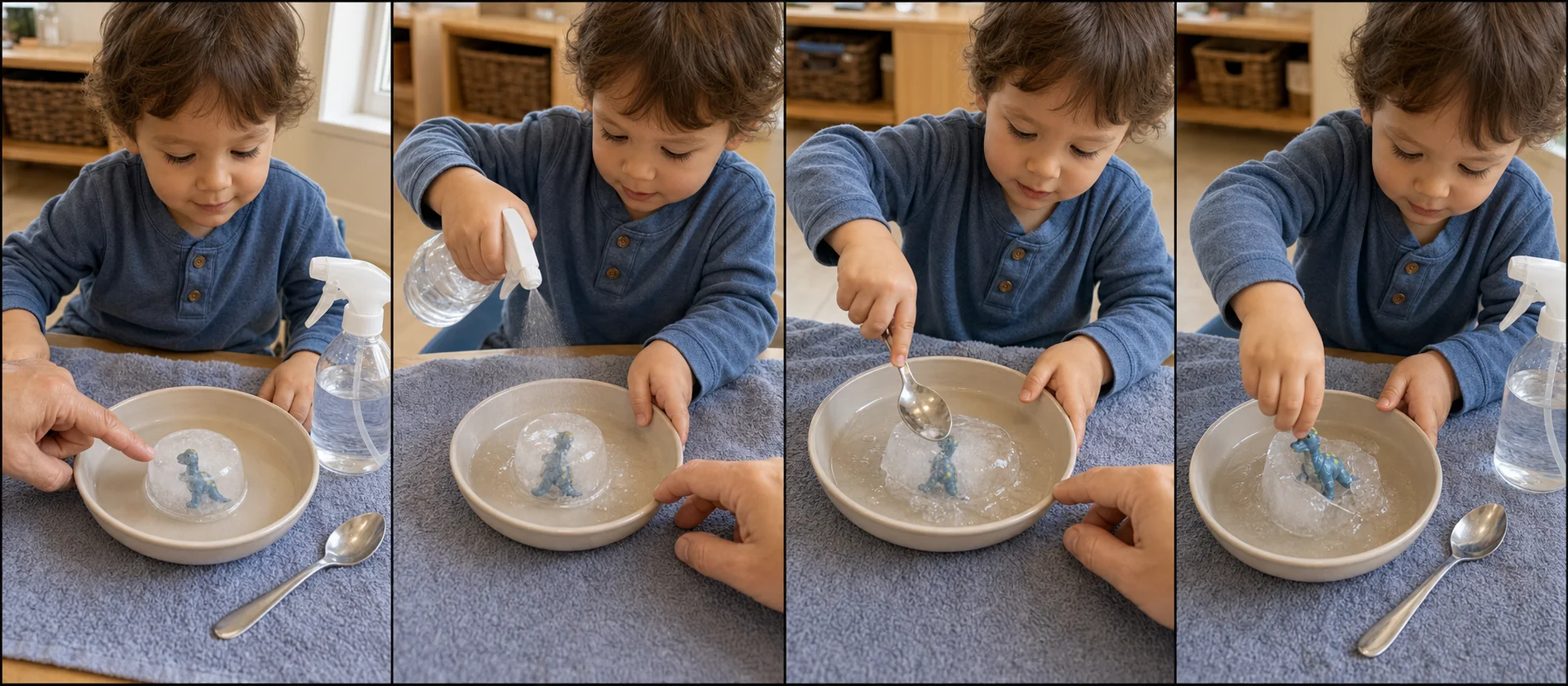
Rescue small toys trapped inside a block of ice using warm water and a simple tool. Each spray or tap creates a visible change, giving your child a clear cause-and-effect challenge with several satisfying rescues.


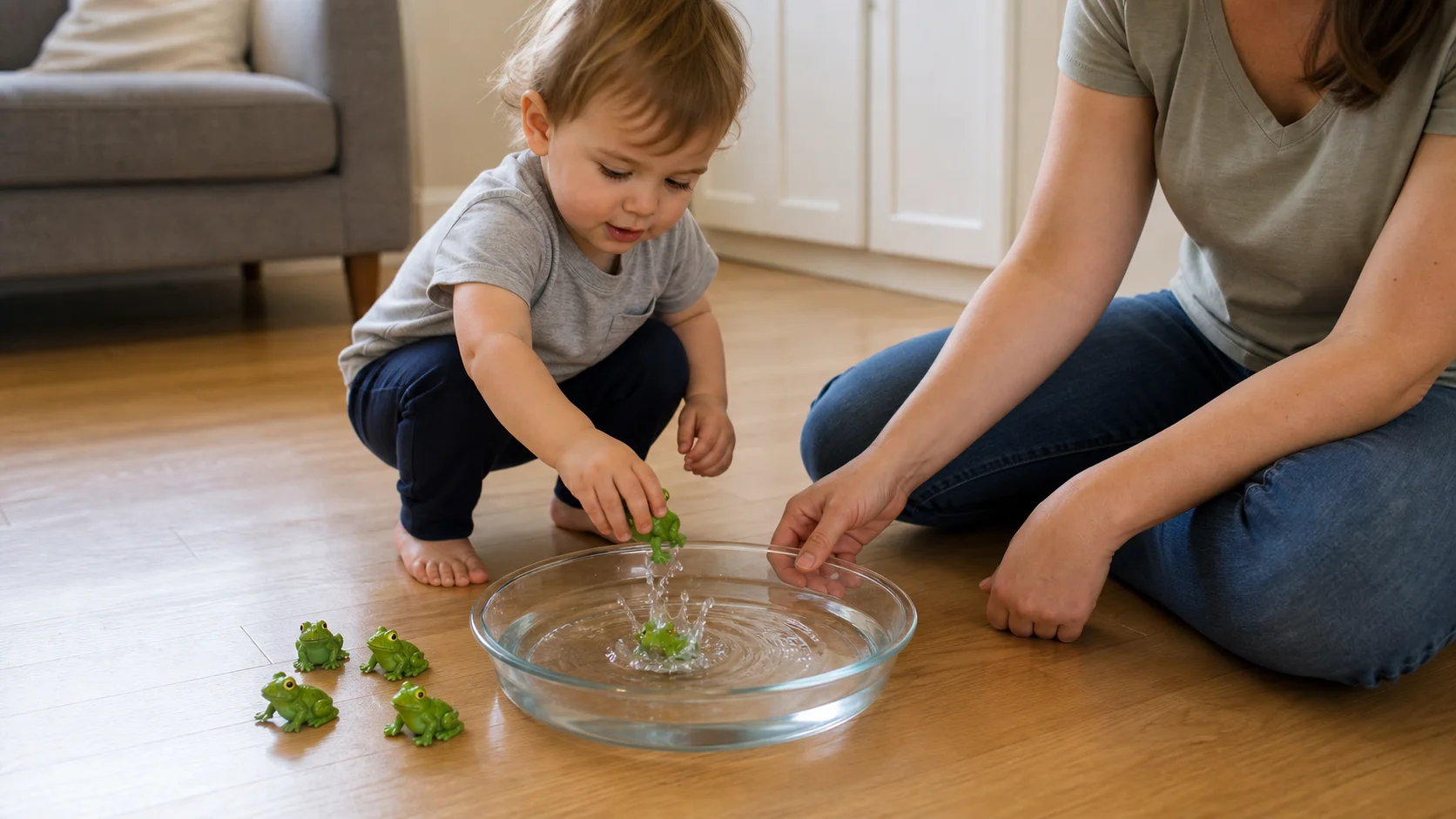
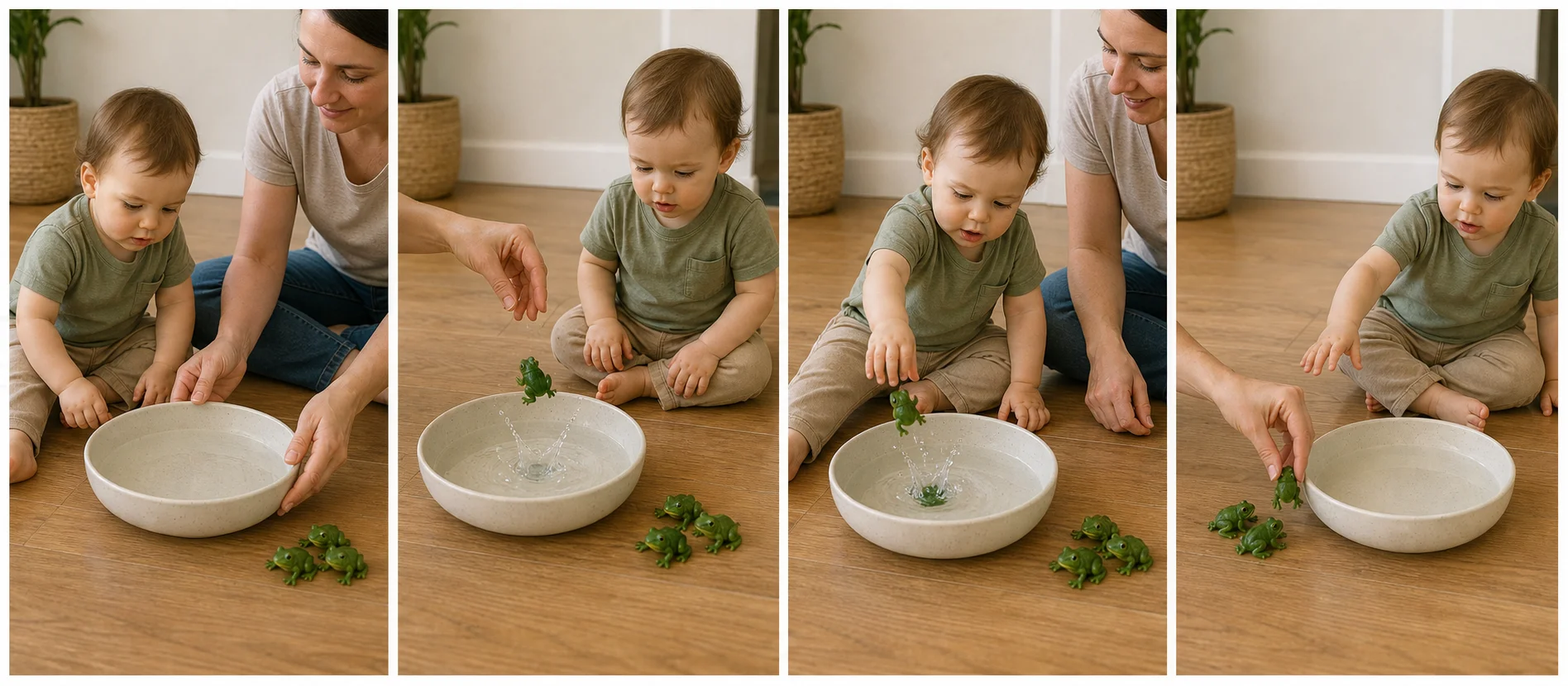
Turn a shallow bowl and a few toy frogs into a satisfying splash routine. Your toddler drops each frog into the water, watches and hears the splash, then repeats, practicing cause and effect while staying with a simple shared play sequence.


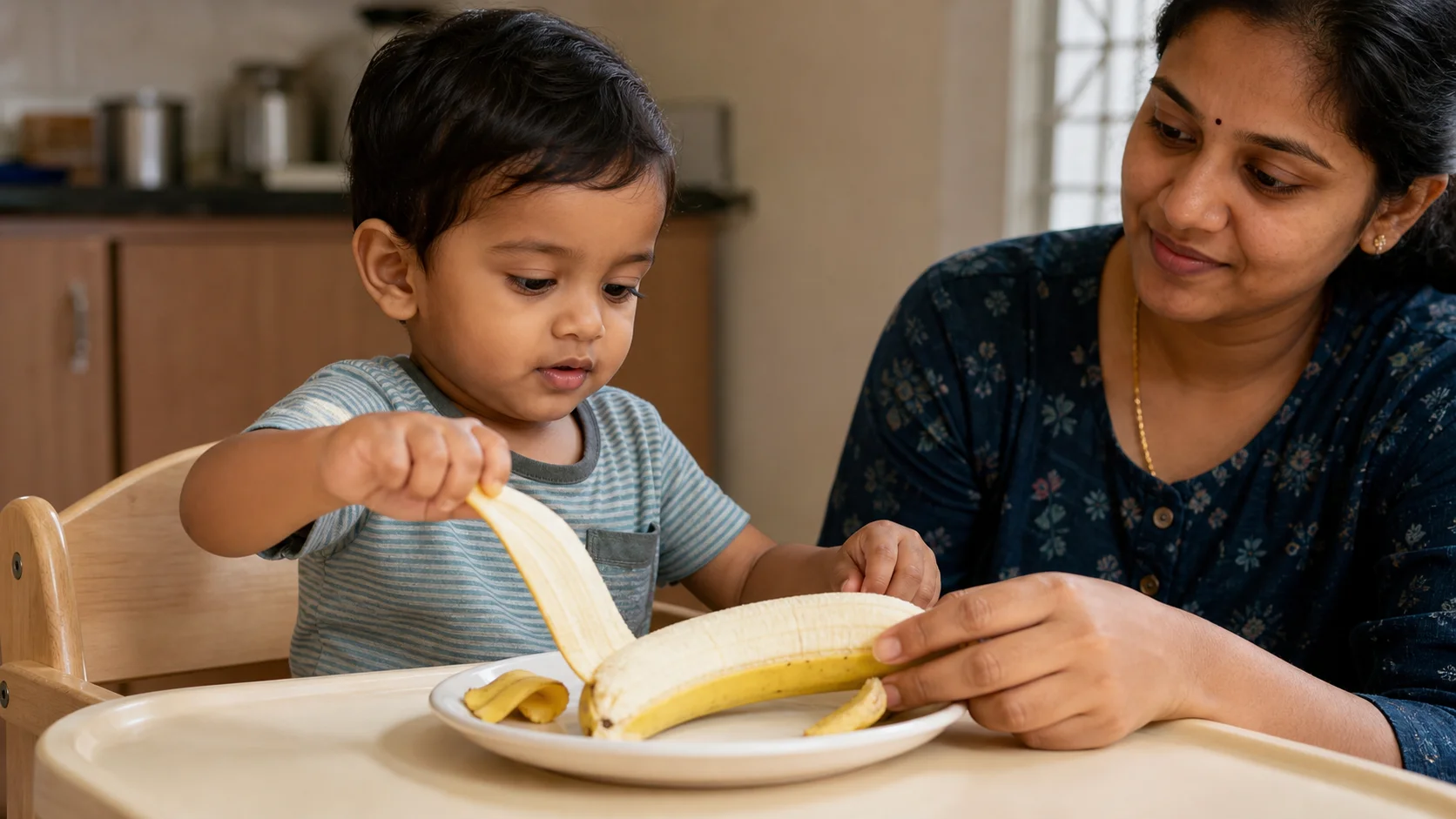
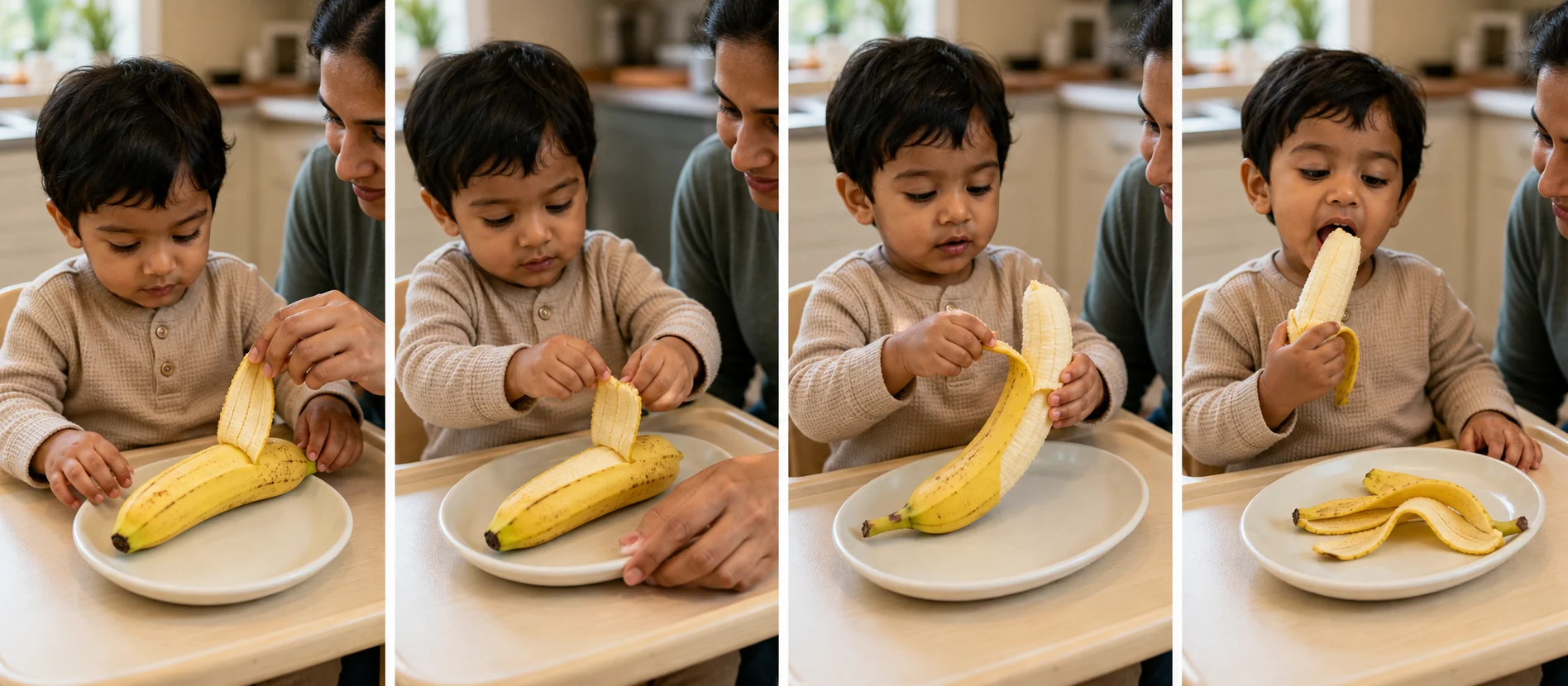
Turn snack prep into a real helping job. Your toddler pinches a started banana or clementine peel, pulls each section away, and practices finger strength and two-hand coordination while getting the fruit ready to eat.


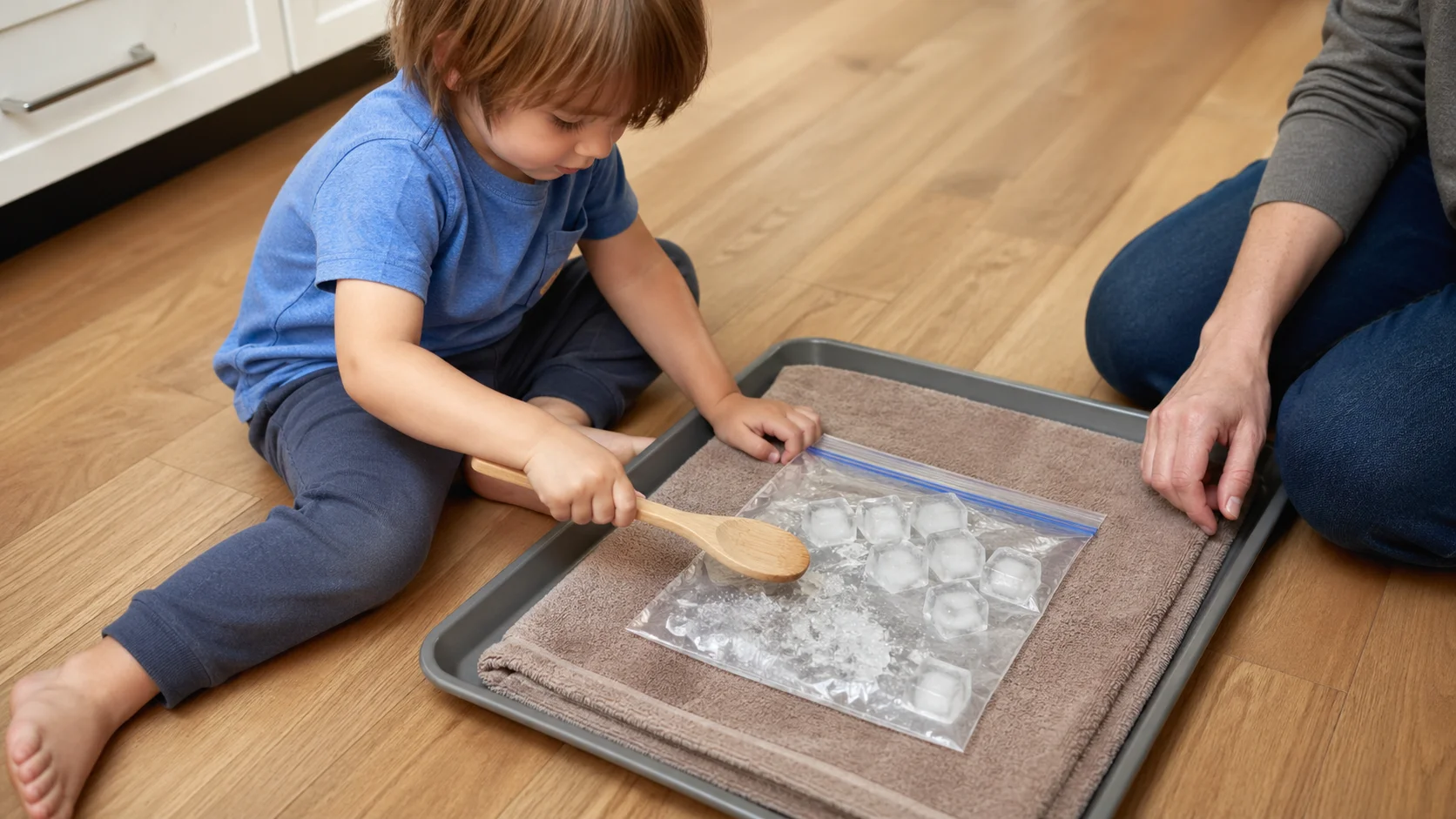
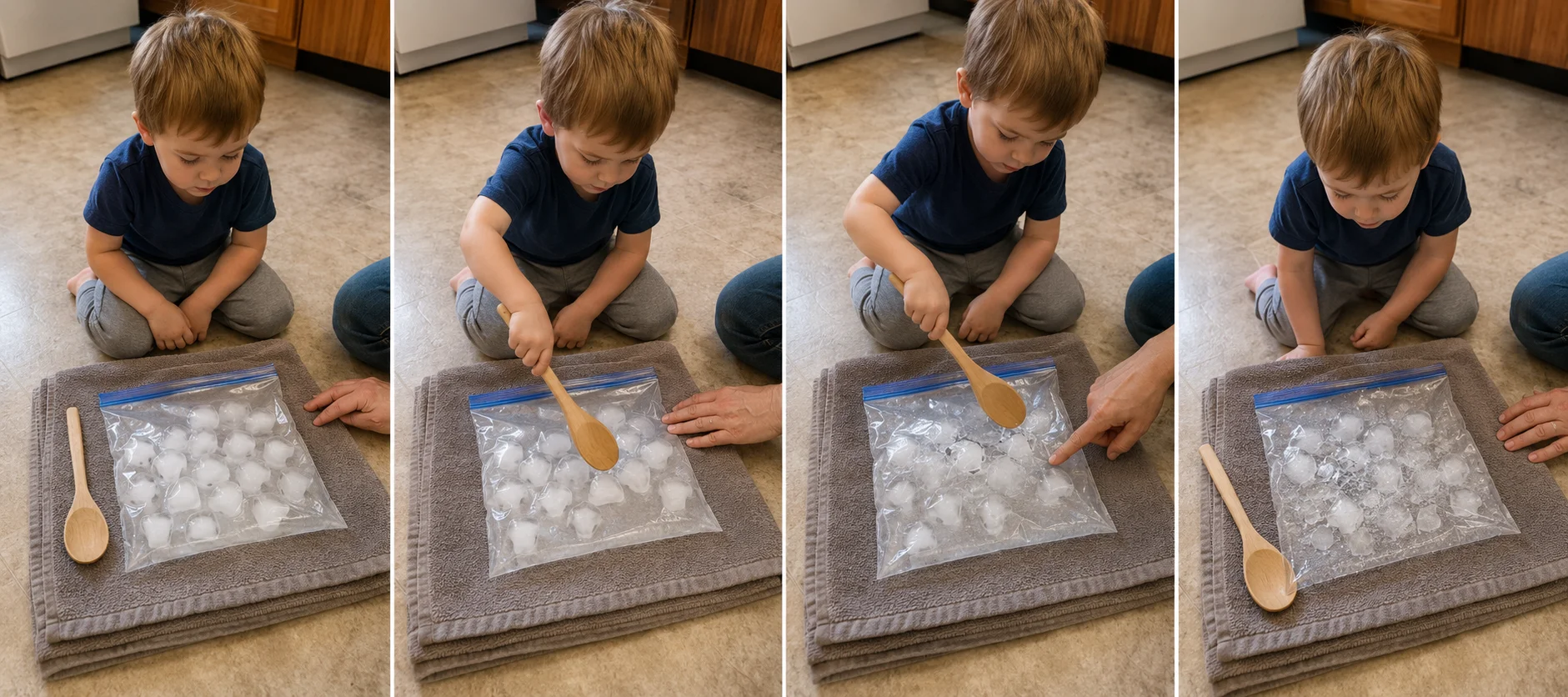
Crack ice cubes inside a sealed bag with wooden-spoon smashes. Your child aims for one cube at a time, then pauses to see and hear the change, building controlled force and cause-and-effect understanding.


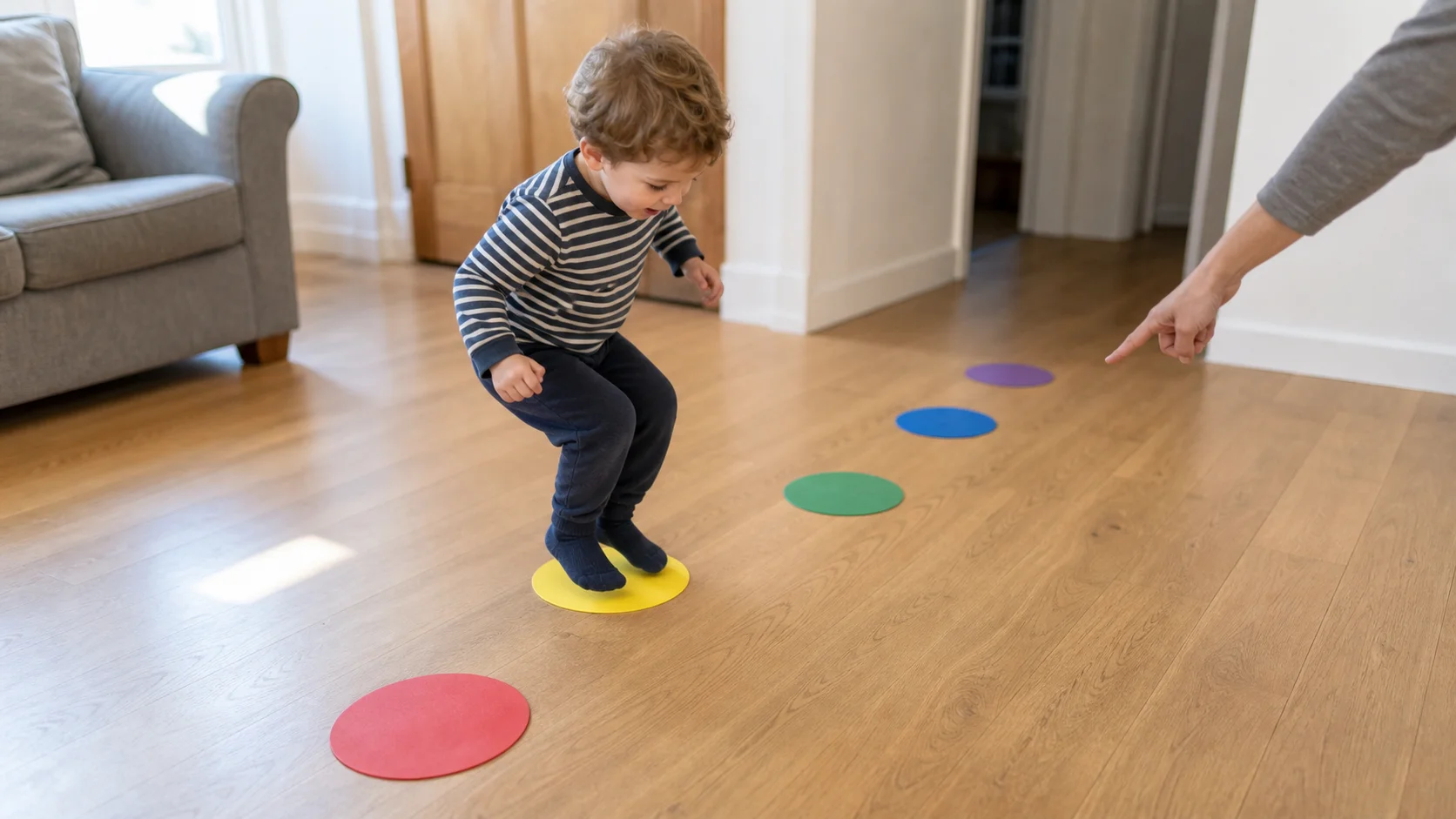
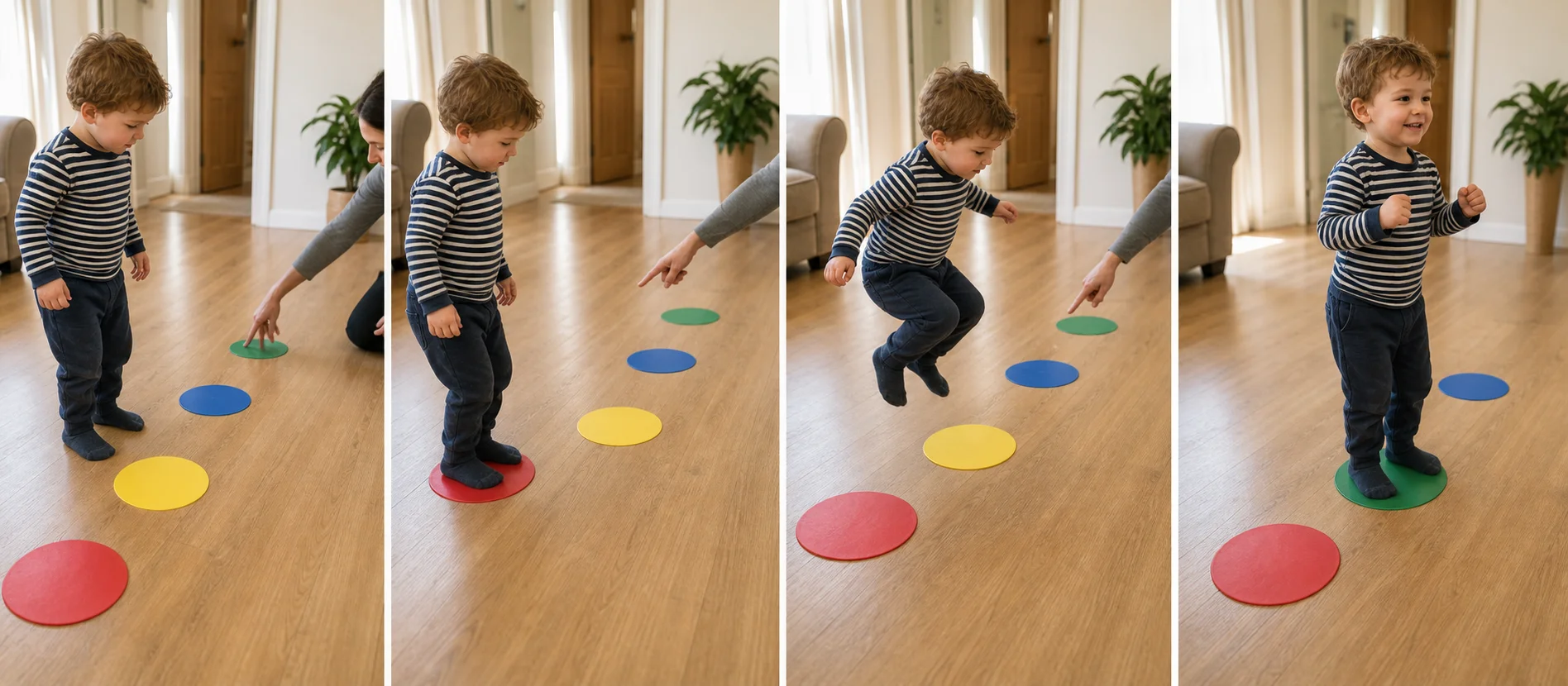
Jump Spots is a jump spots activity for toddlers that helps children stop and start on cue through a clear, repeatable play loop.


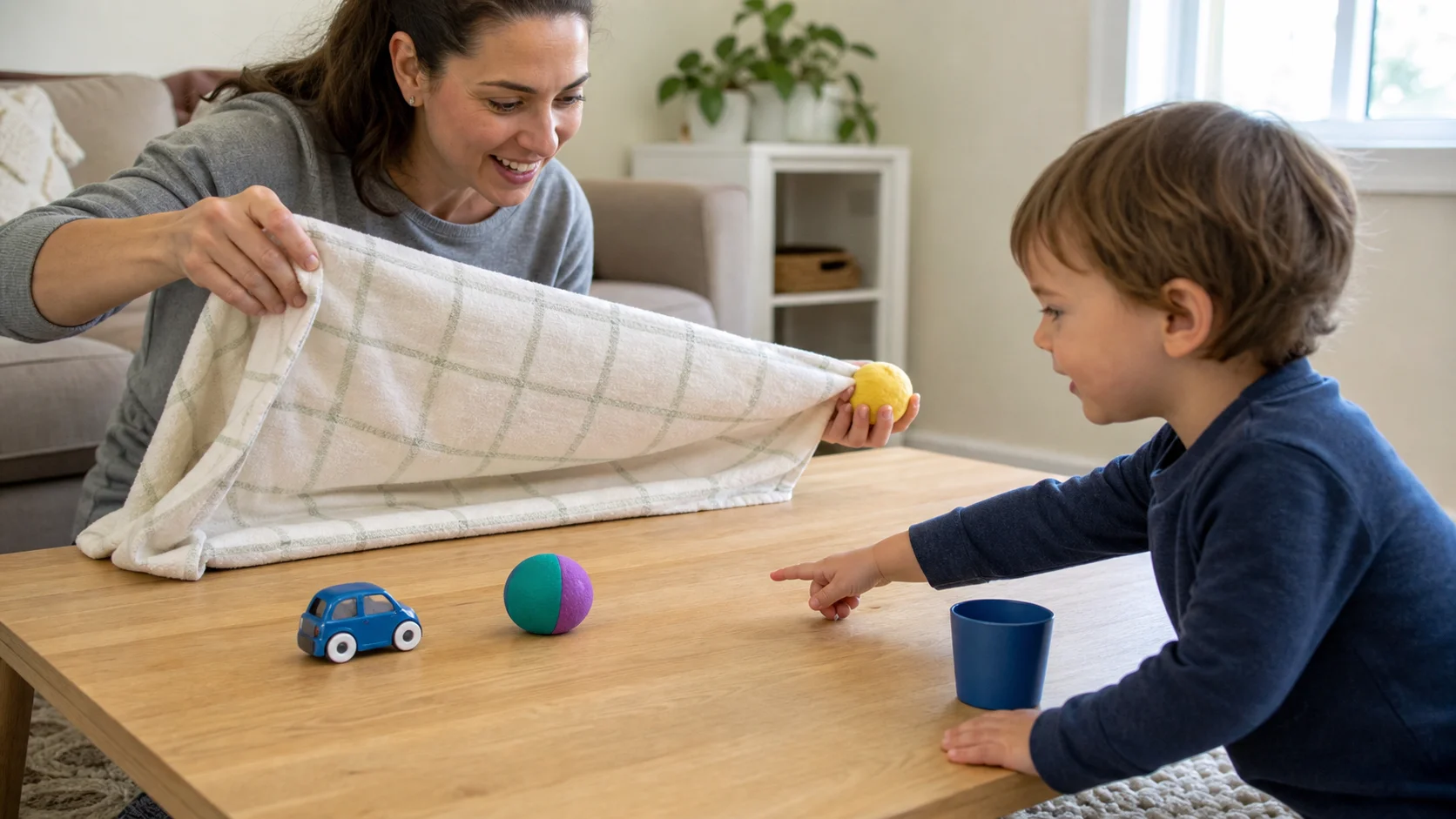
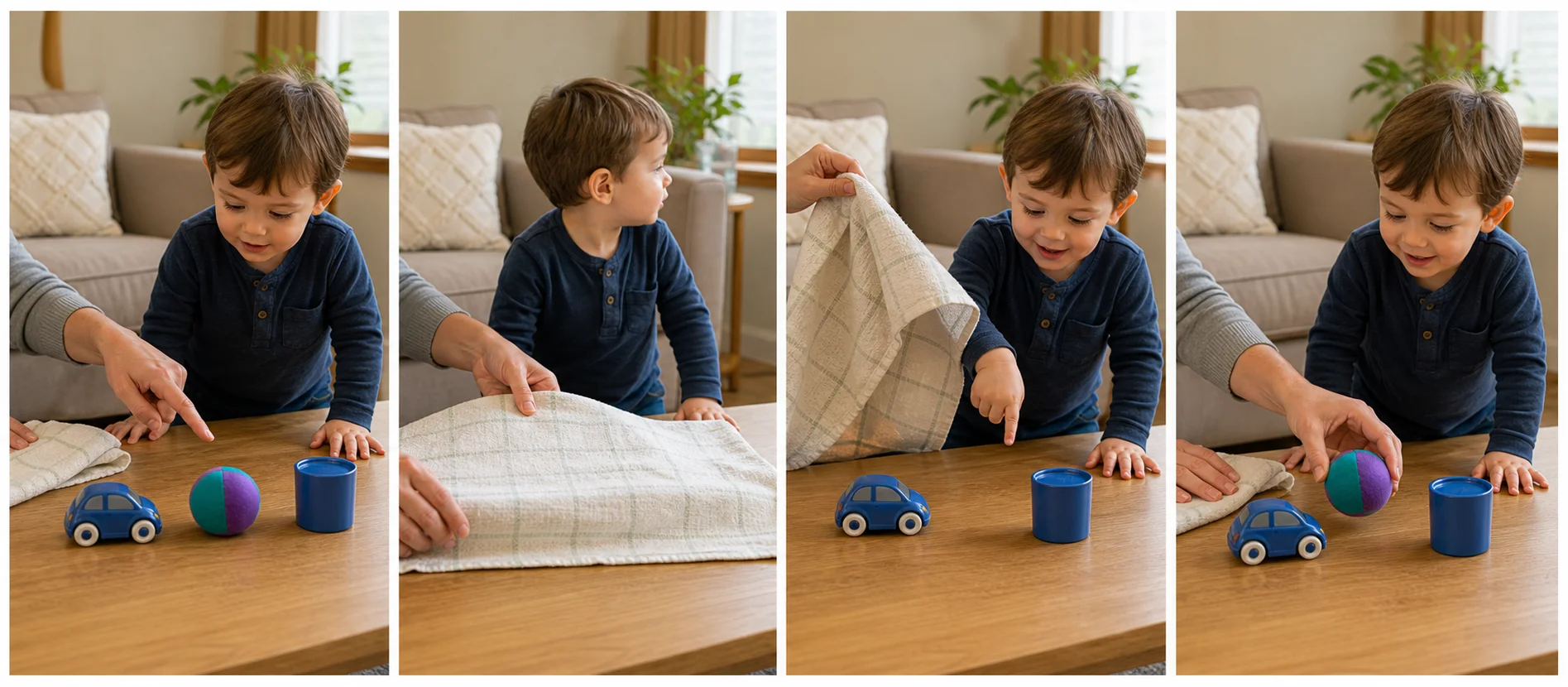
Turn a few familiar objects into a quick memory mystery. After you cover the group and remove one item, your child spots what disappeared and practices remembering a small visual set.


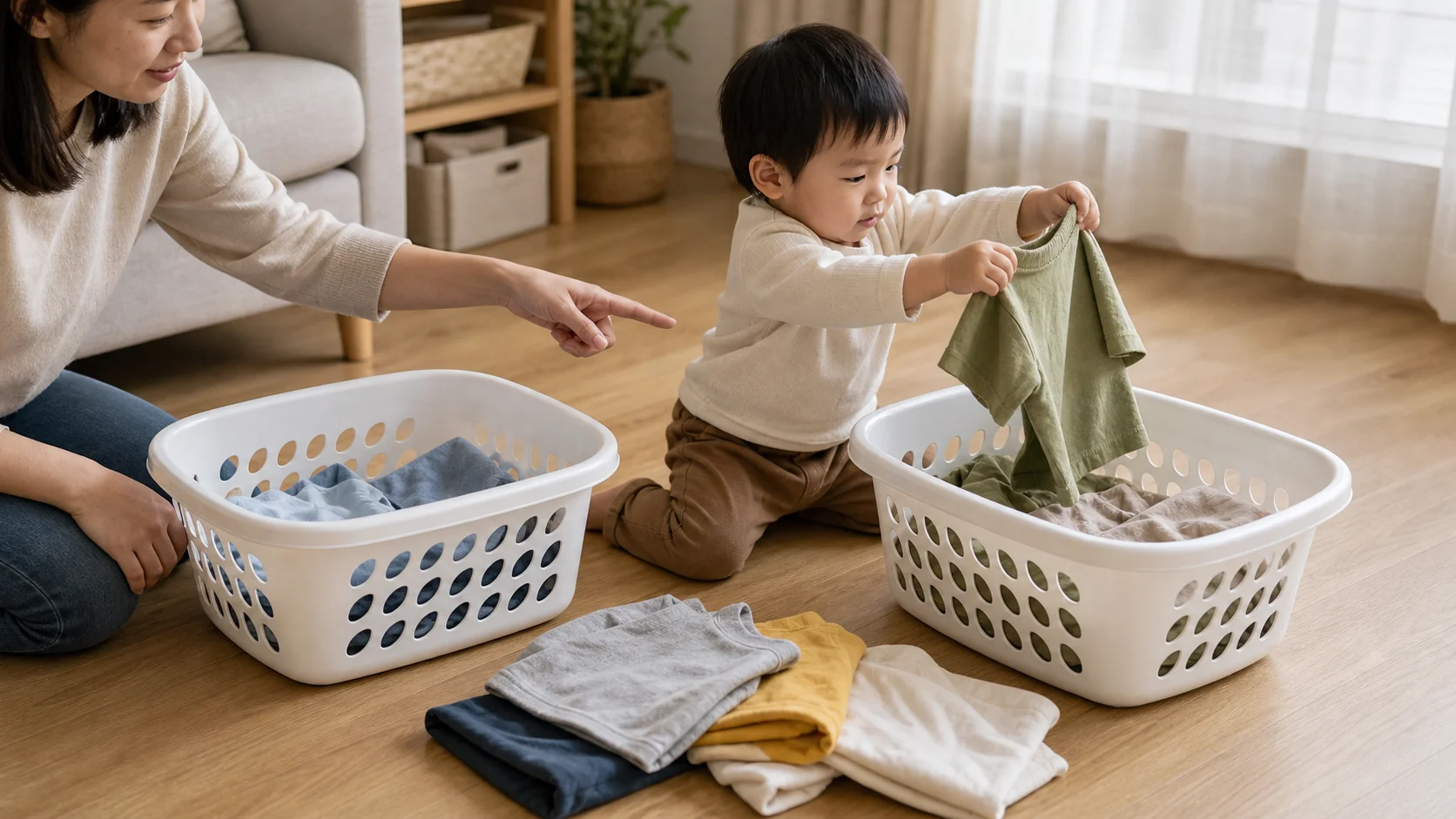
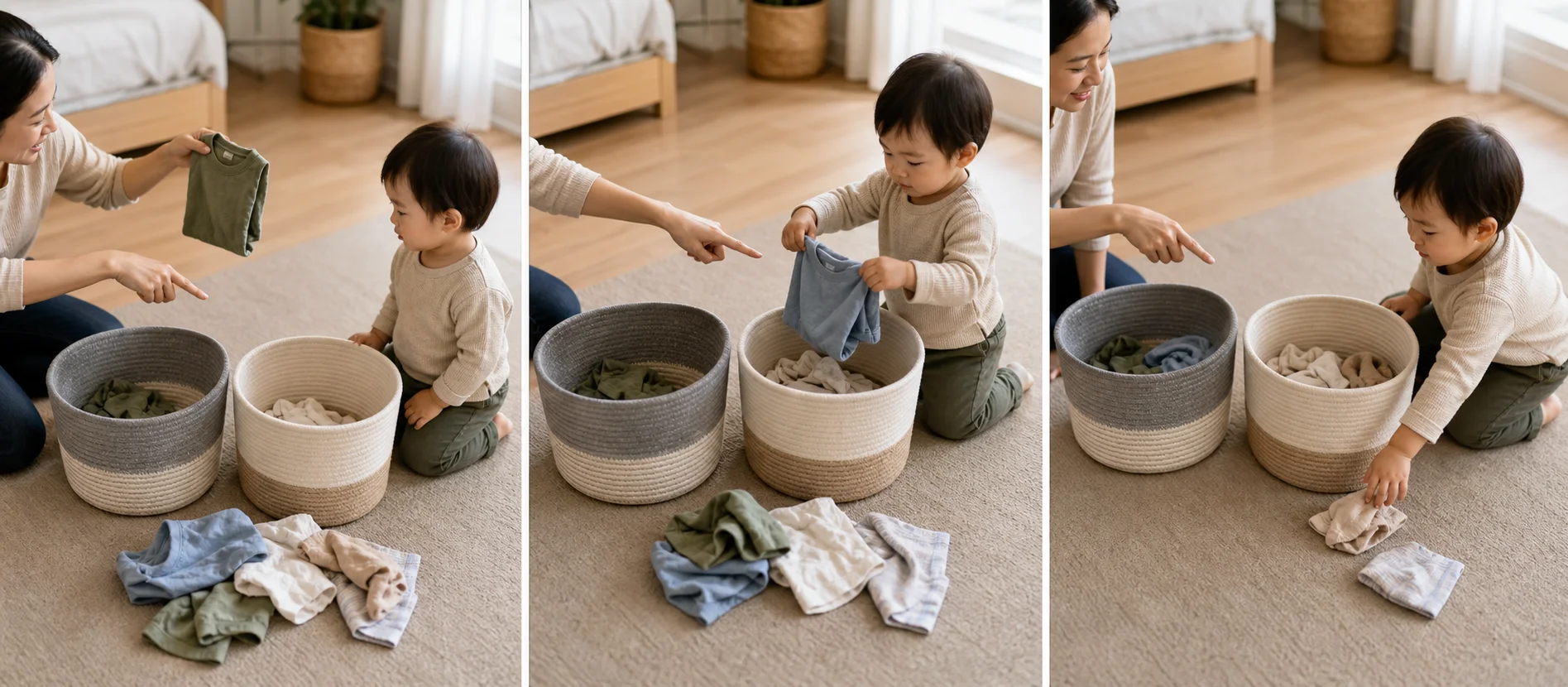
Give your toddler a real laundry job with two baskets and a few clean clothes. They match each item to its owner's basket, carry it over, and drop it in, practicing sorting by one clear rule.


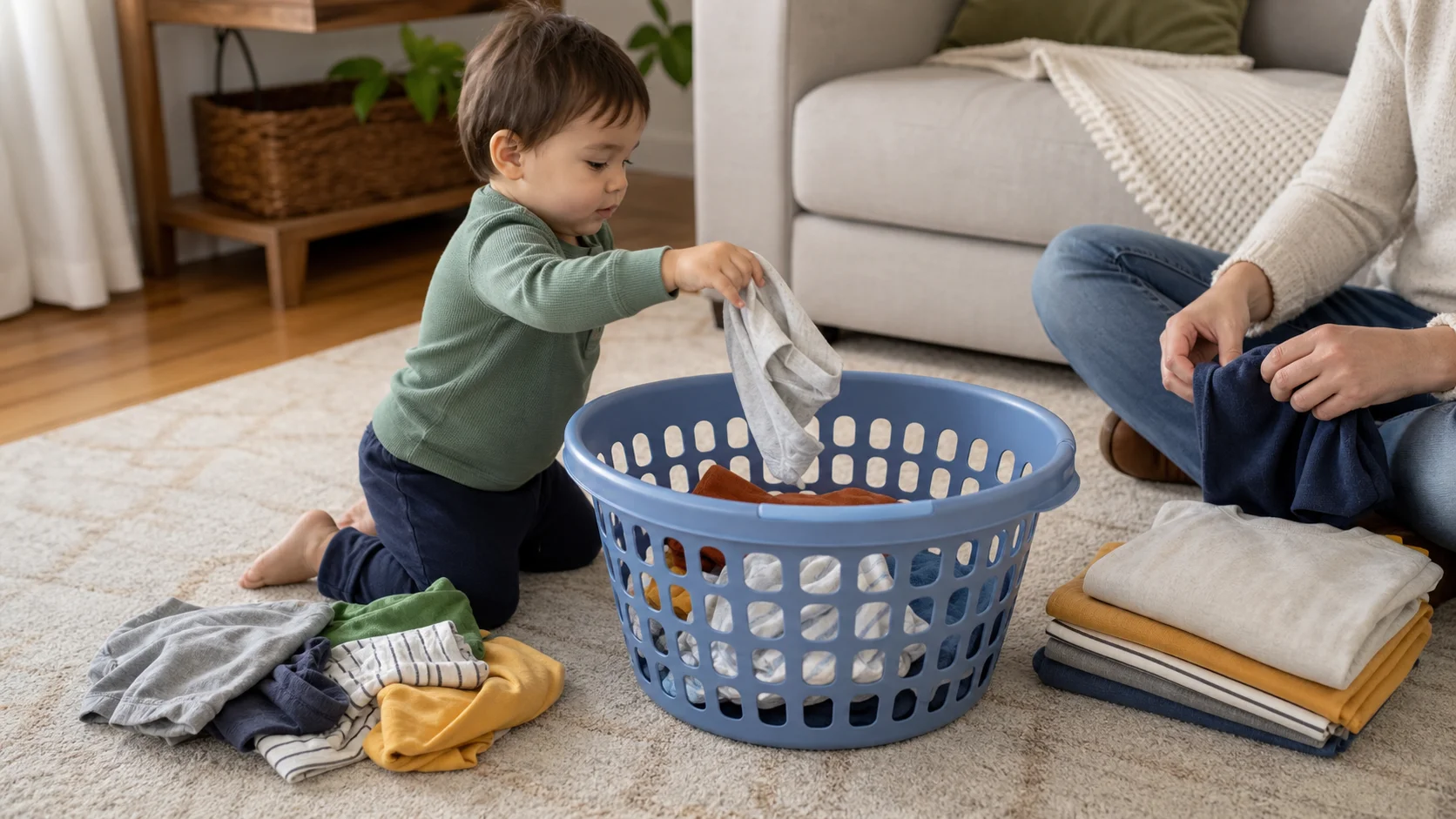
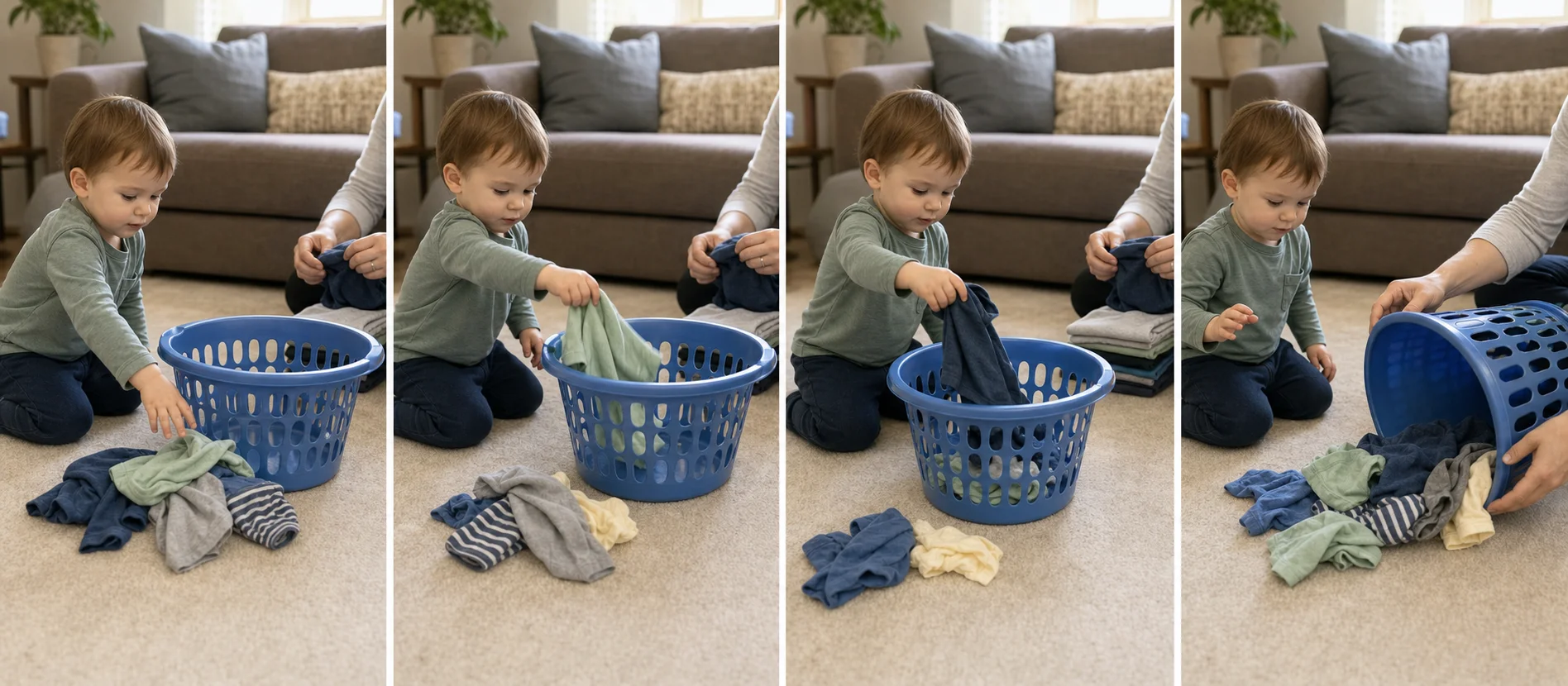
Laundry Basket Fill-and-Empty is a laundry basket activity for toddlers that helps children fill, empty, and reset through a clear, repeatable play loop.


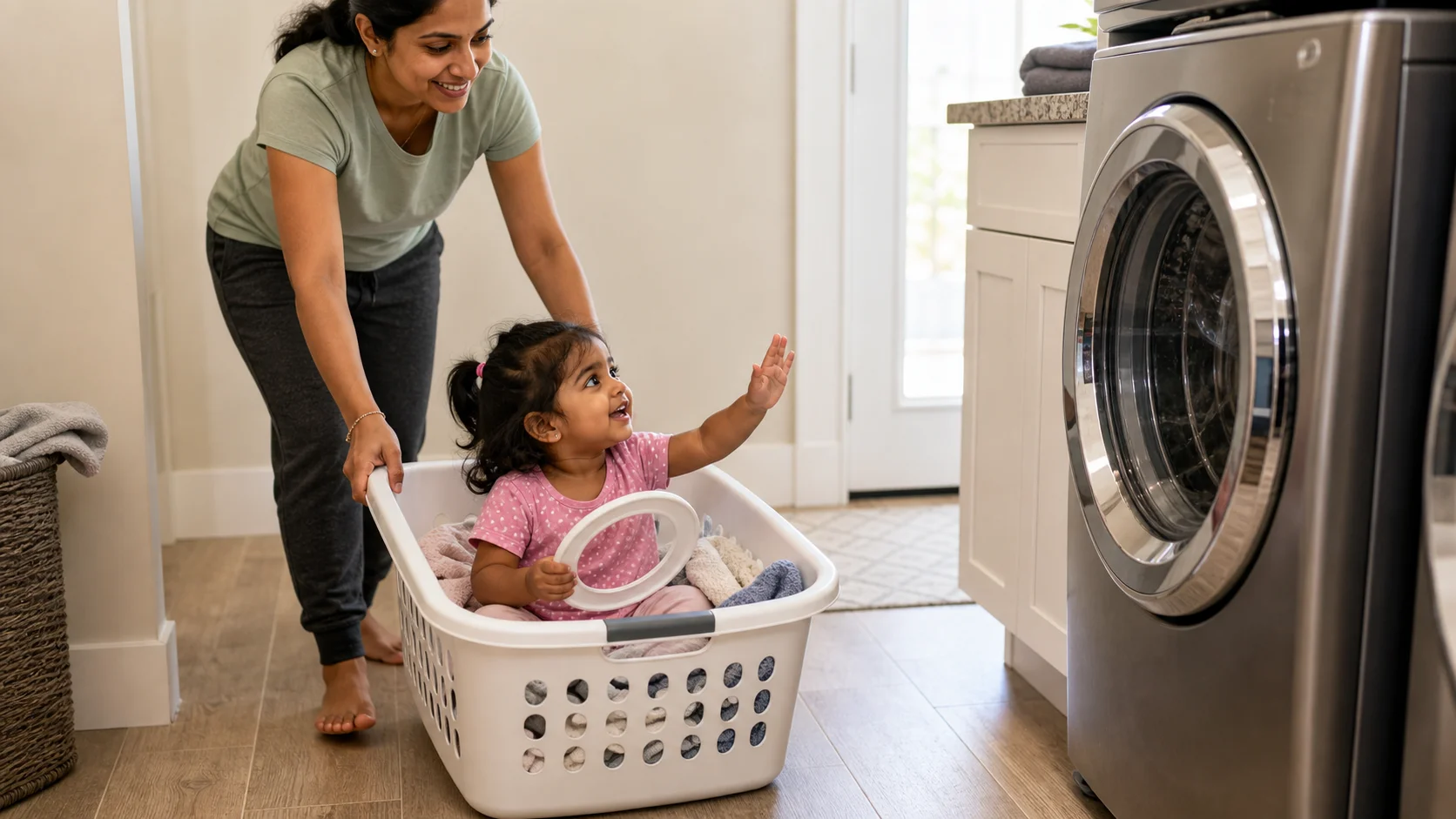
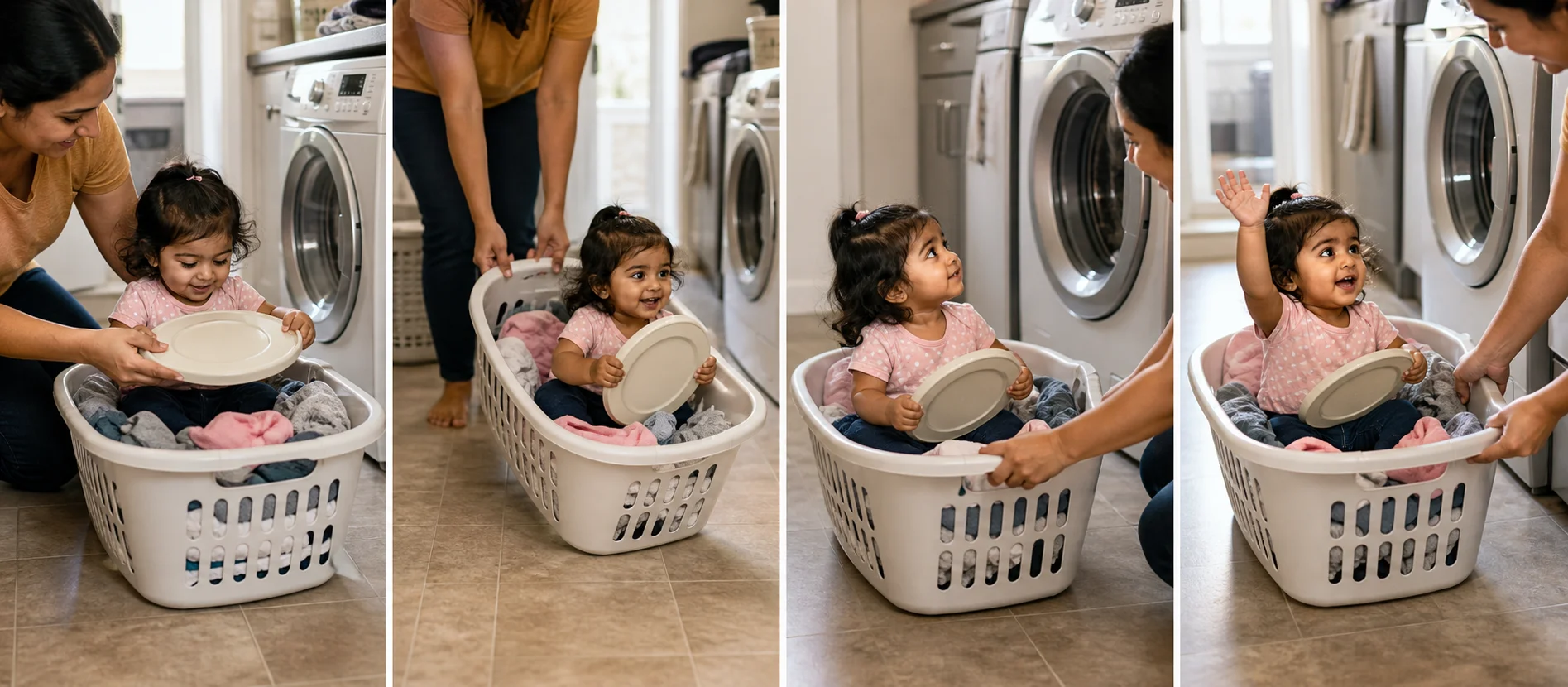
Turn the trip to and from the washer into a communication game. You move and stop the basket; your child signals go, more, fast, or slow before the ride resumes.


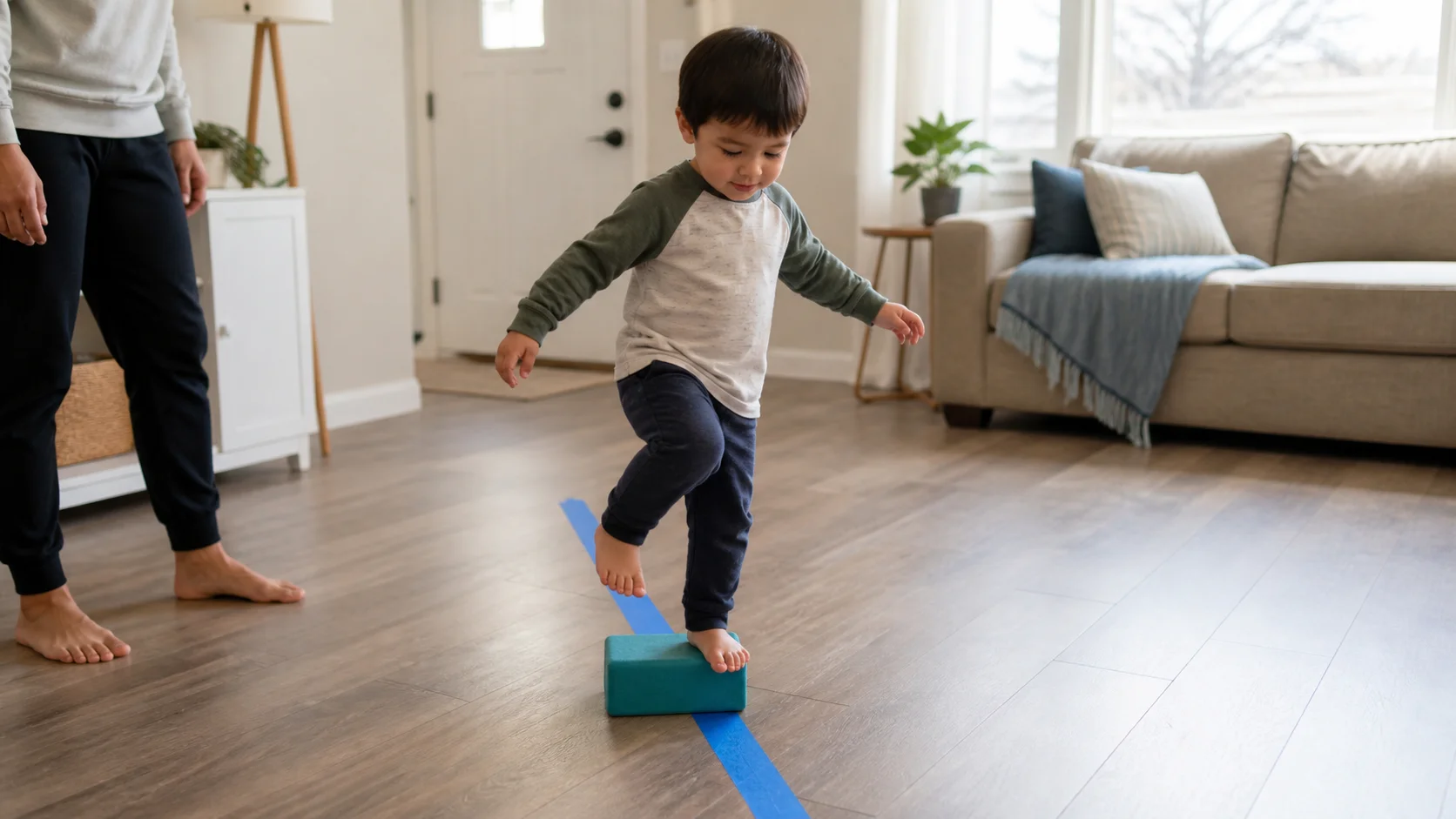
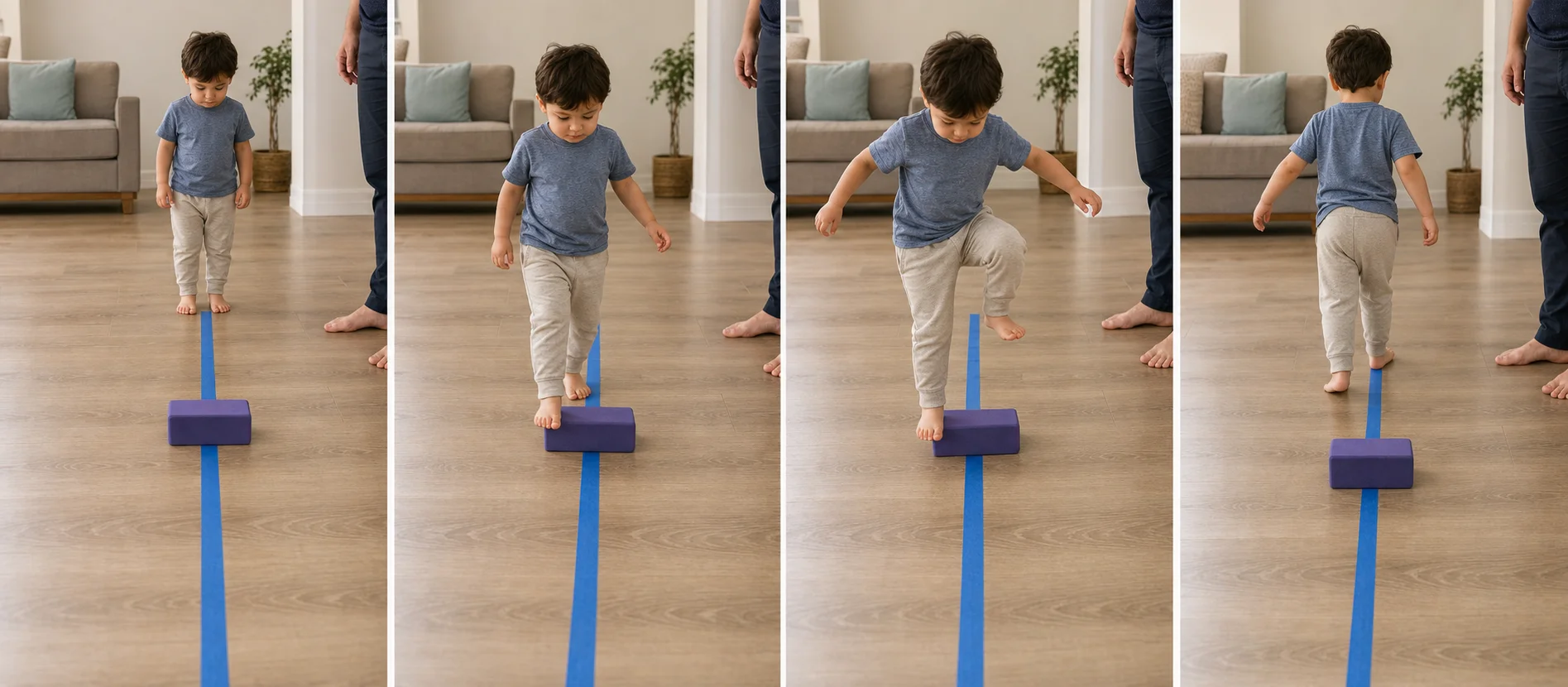
Make one taped floor line into a simple balance route. Your child walks the line, steps over one low soft obstacle, turns, and comes back while you reset the obstacle if it shifts.

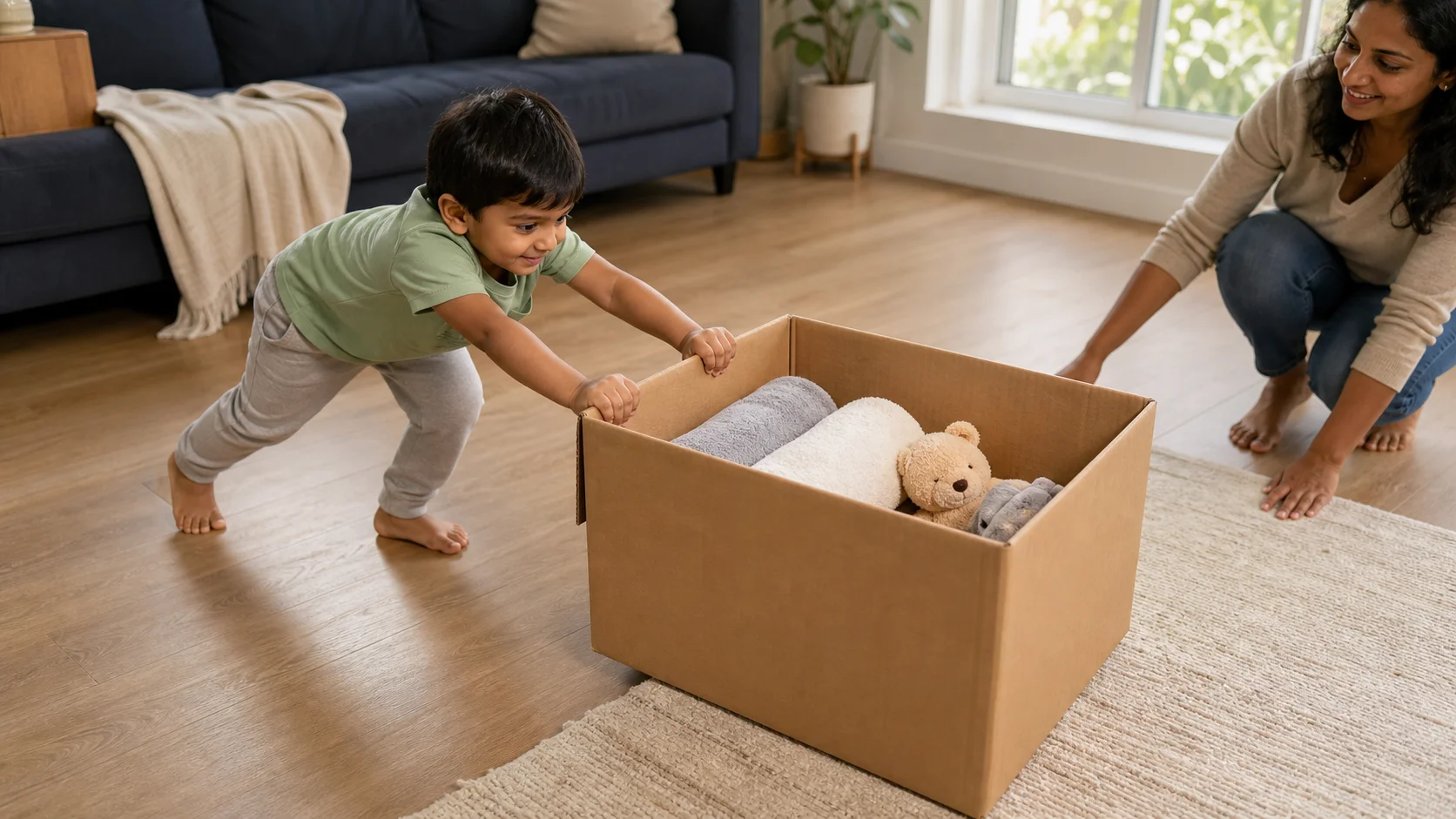
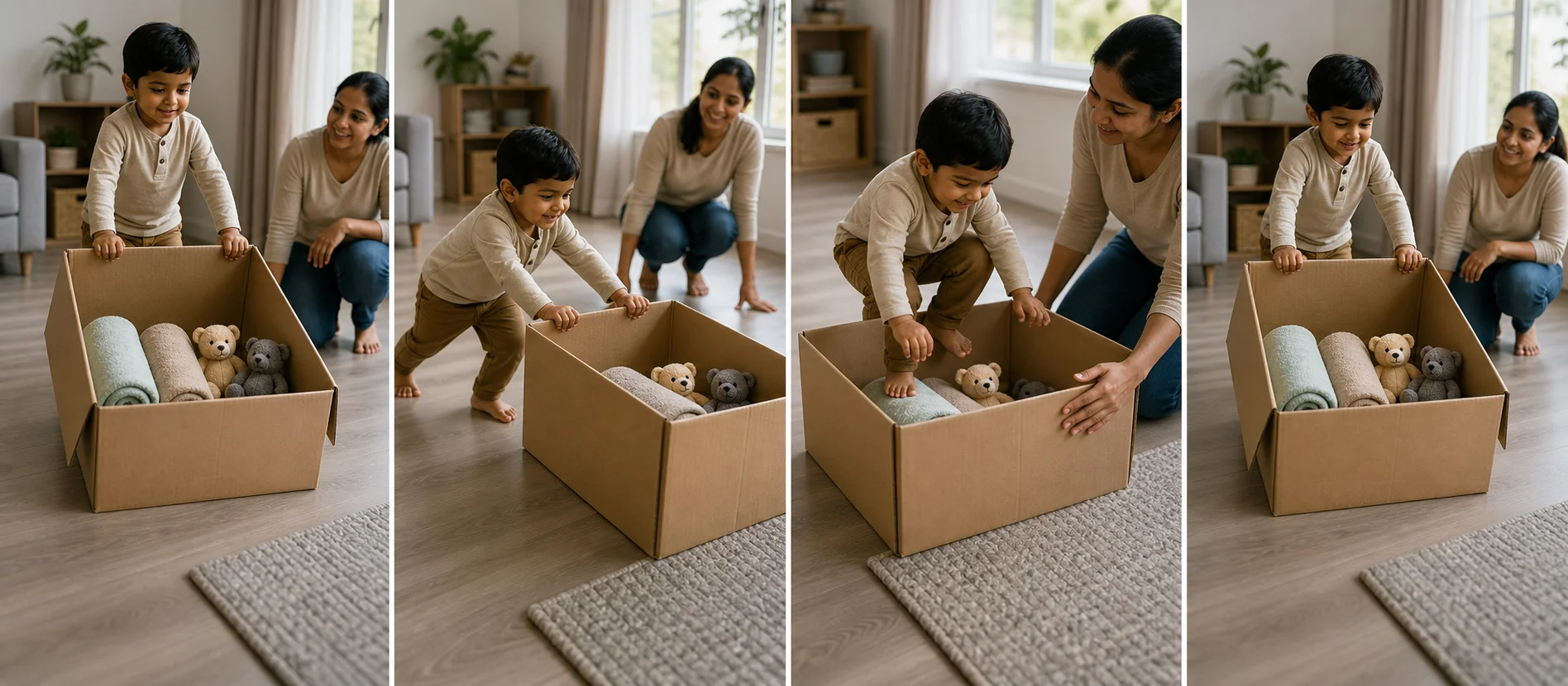
Push a loaded cardboard box across the floor to a clear finish spot, then return it to the start and go again. The resistance gives your child a whole-body strength challenge while they practice controlled pushing and stopping.

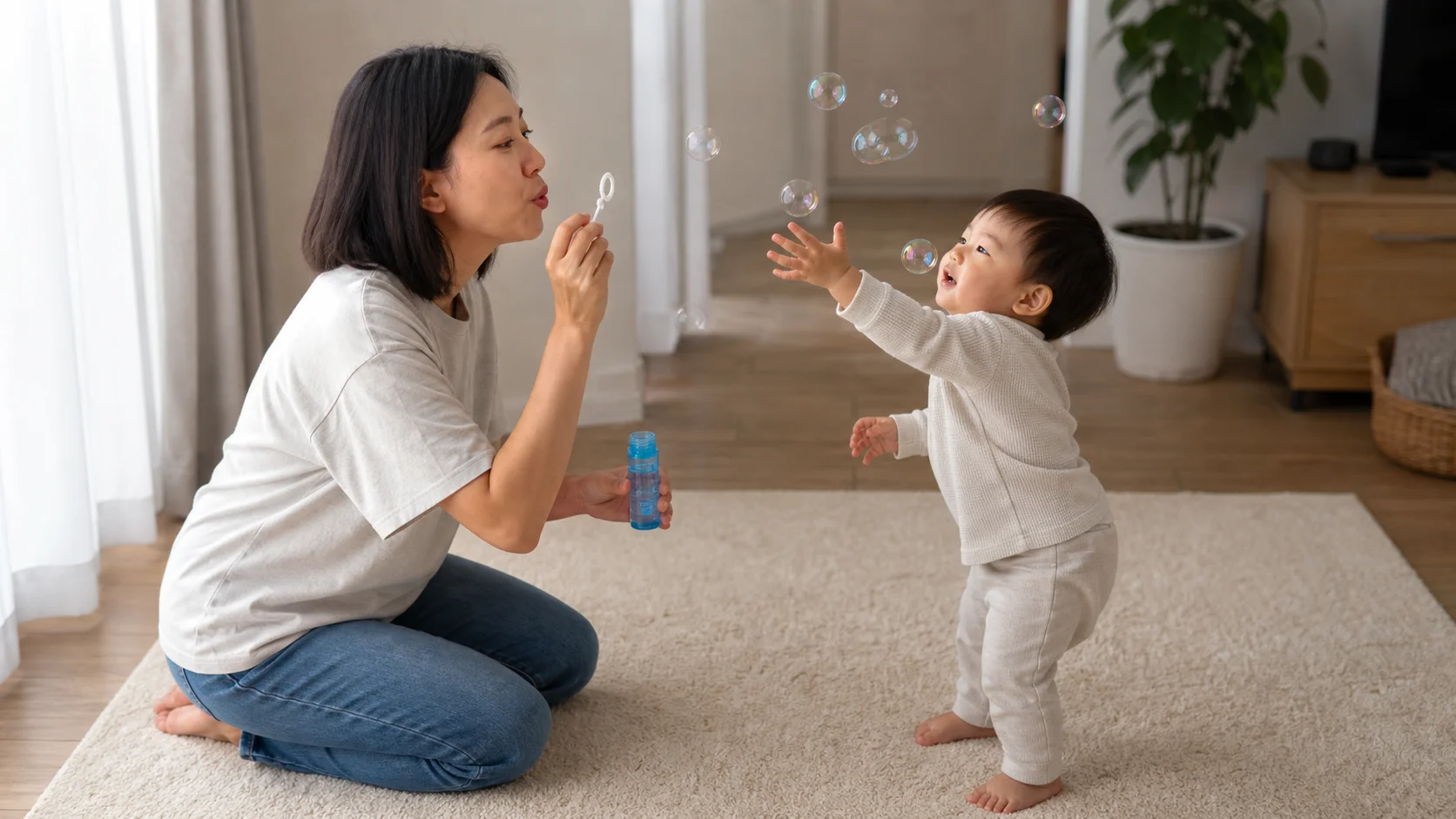
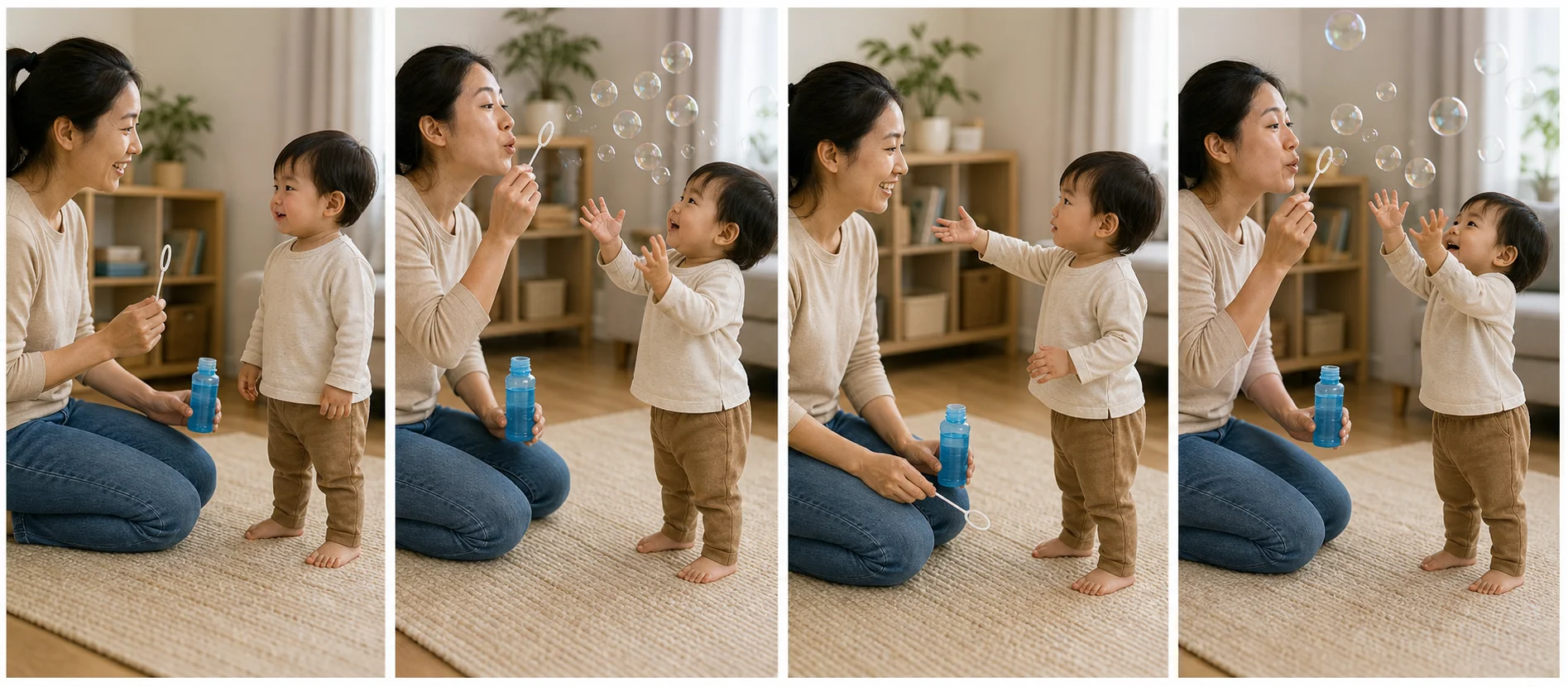
Turn each bubble pause into an easy reason for your child to communicate. After a look, reach, sound, sign, or word, say "More" and blow the next round so your child can connect their signal with another burst of bubbles.


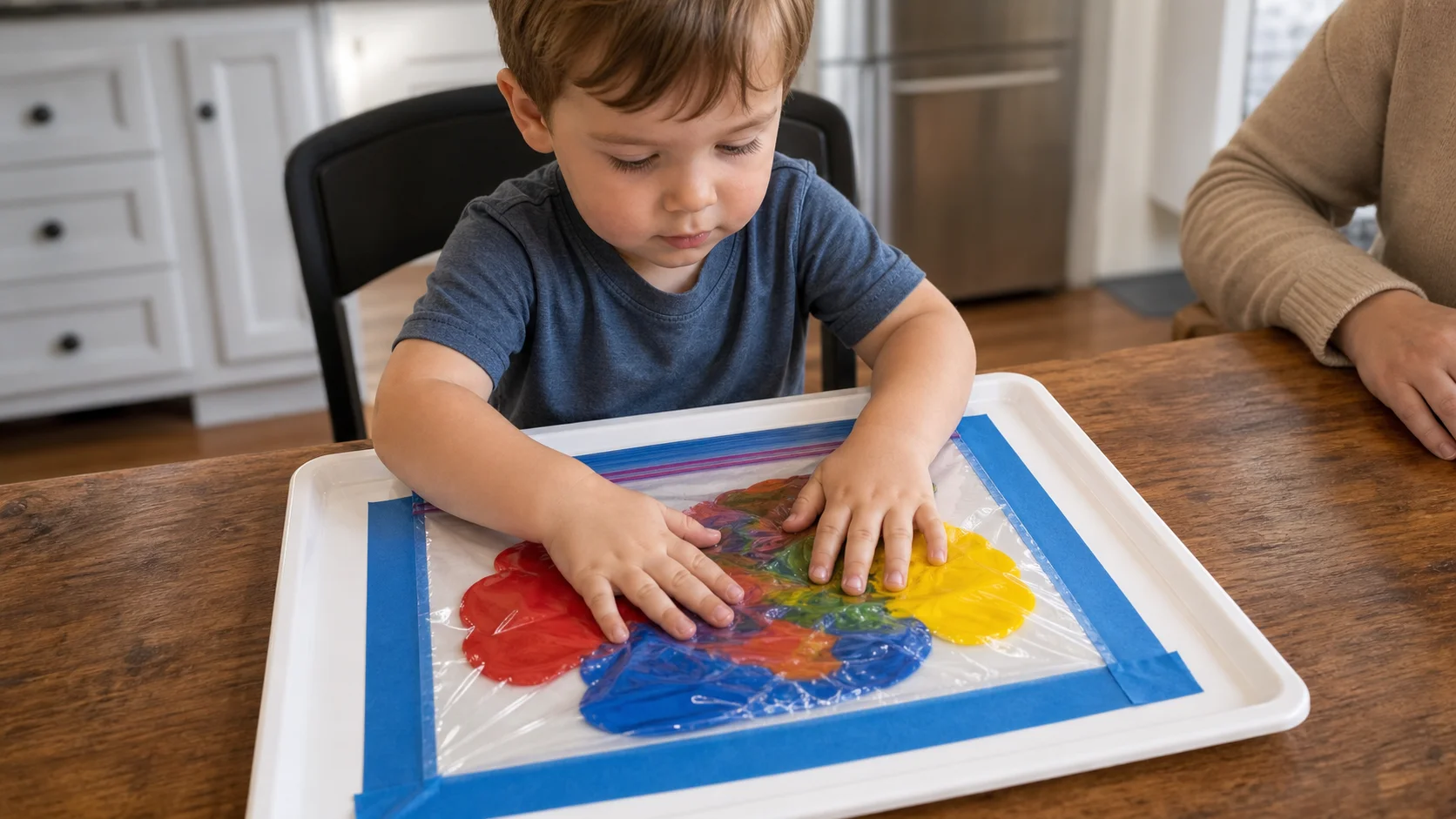
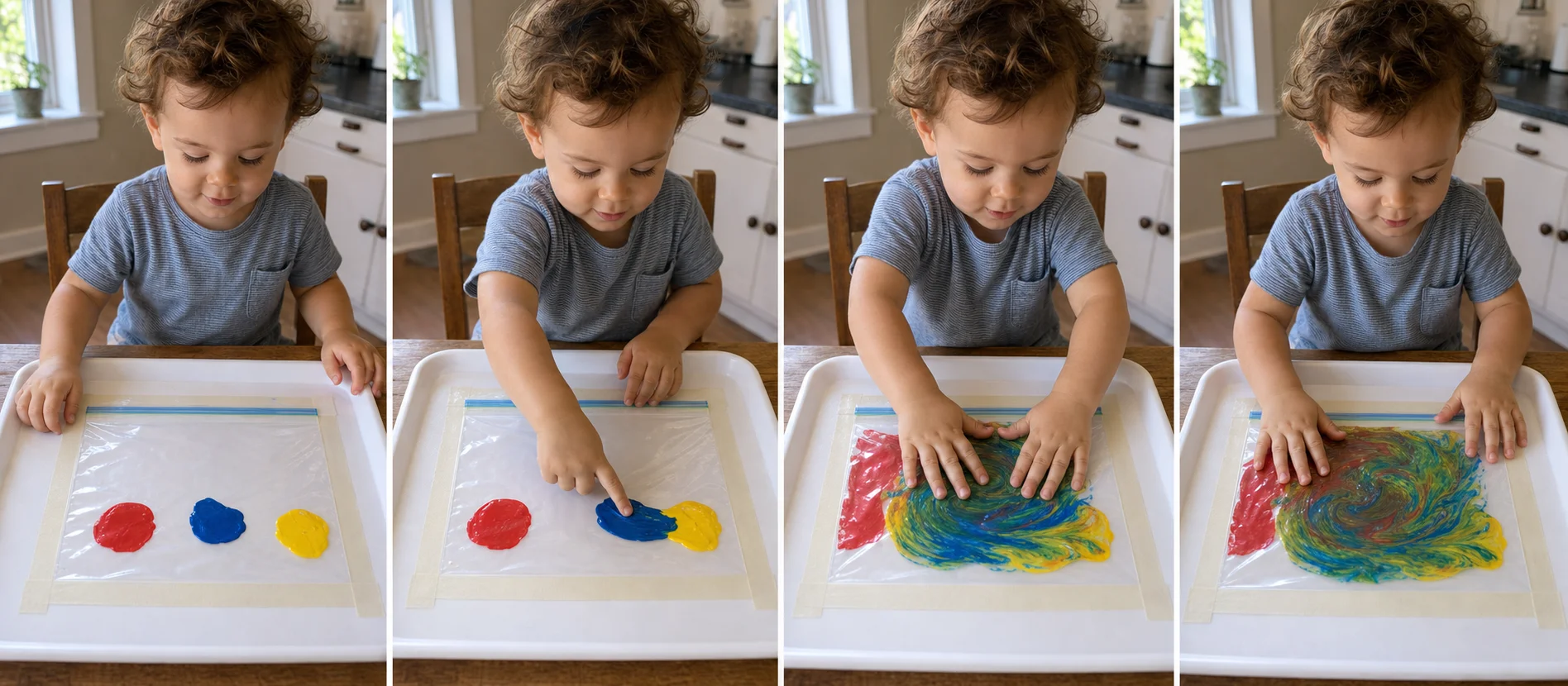
Let your toddler make colors change with their own hands while the paint stays contained. They press and swirl two or three colors through a sealed freezer bag, watching the colors meet and blend while practicing hand coordination and cause and effect.


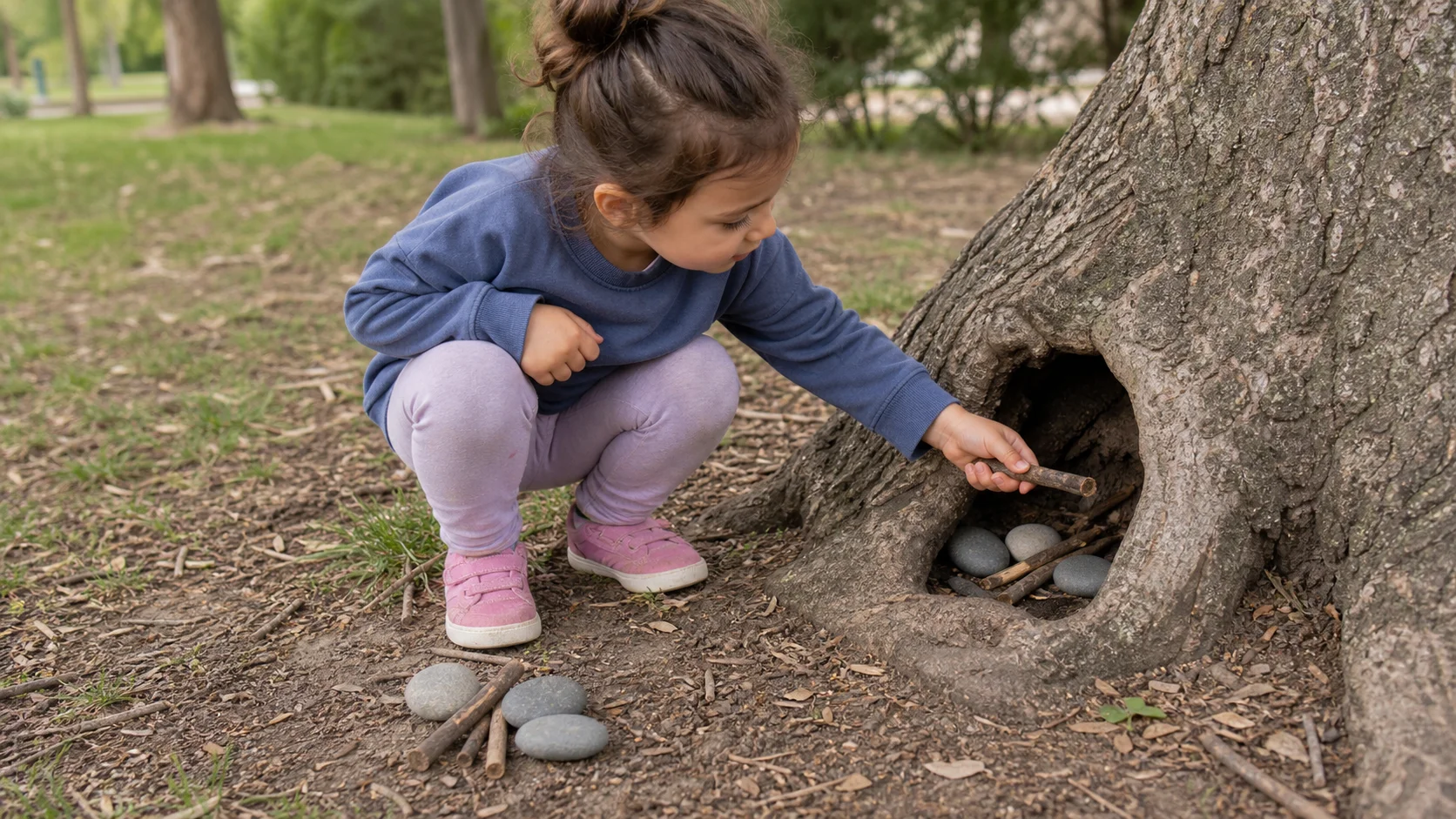
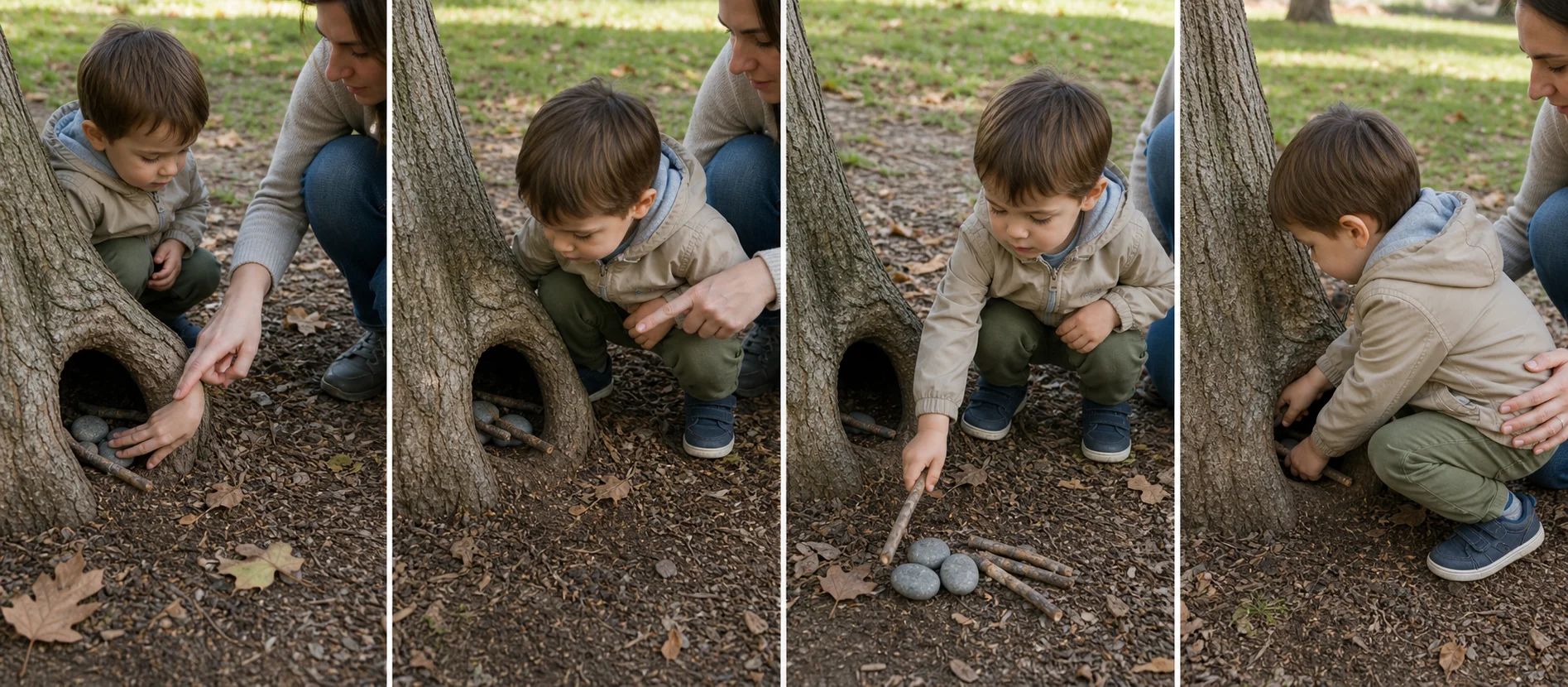
Let your child choose one safe low hiding spot and place a leaf, stone, stick, or small toy there. You find it, hand it back, and follow their lead on another turn or all done.


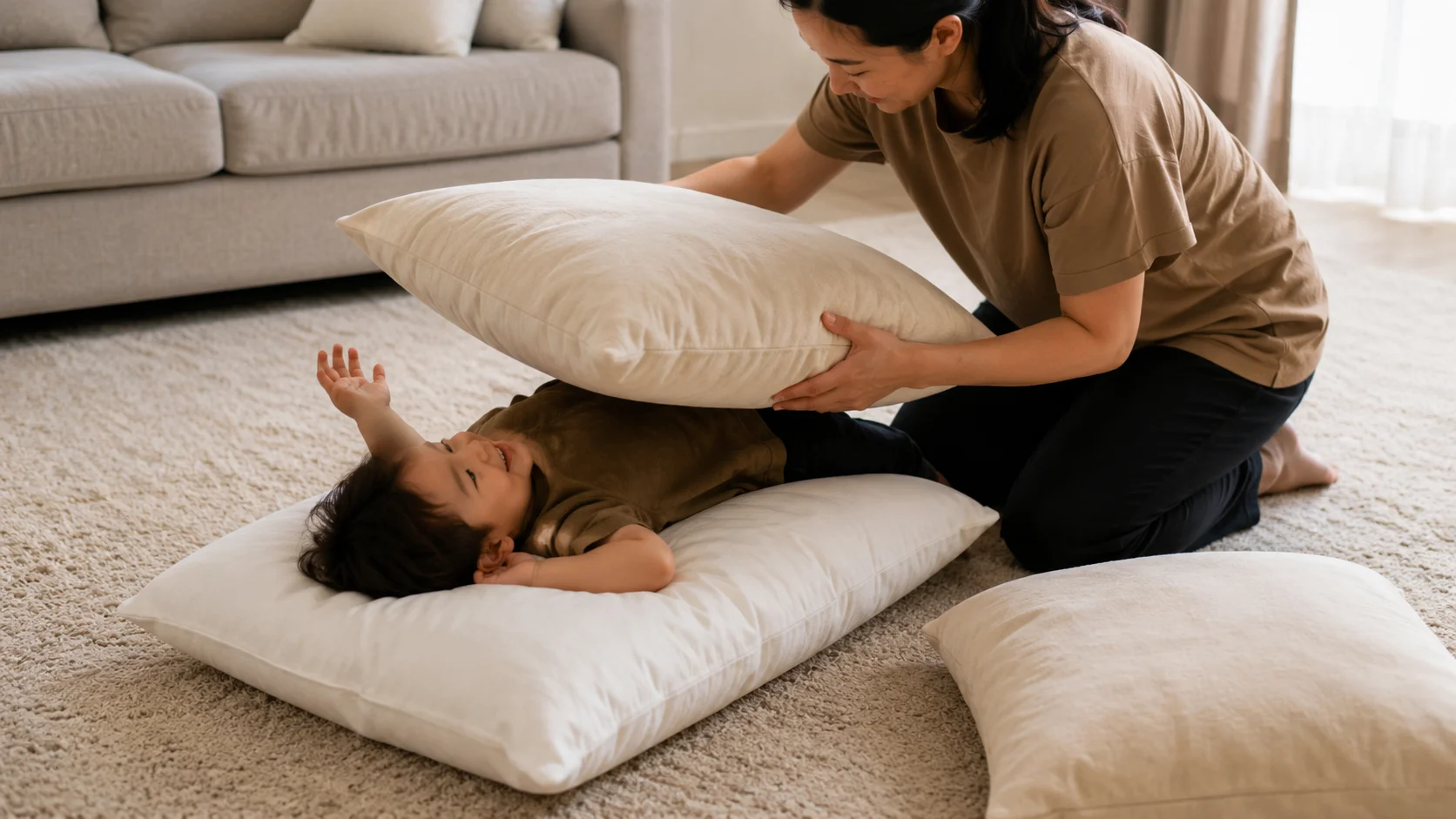
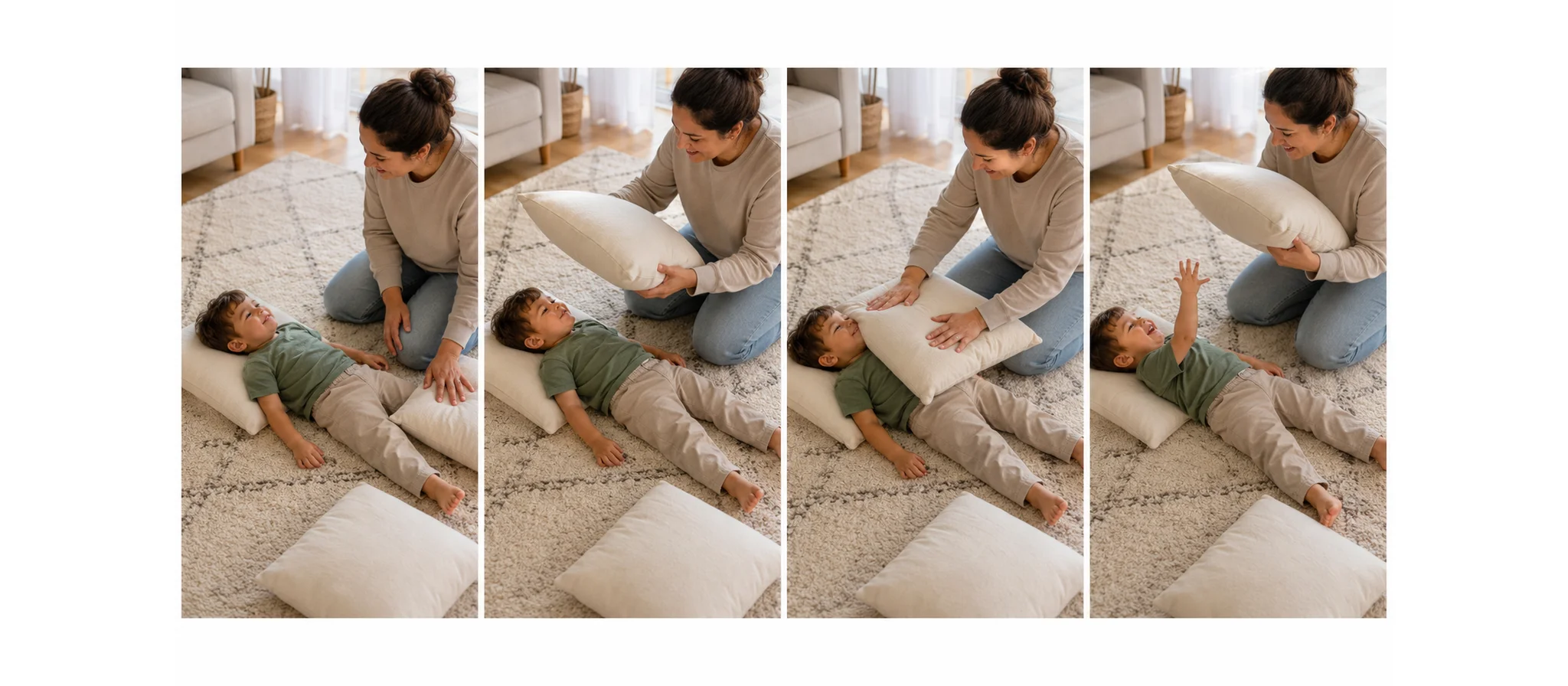
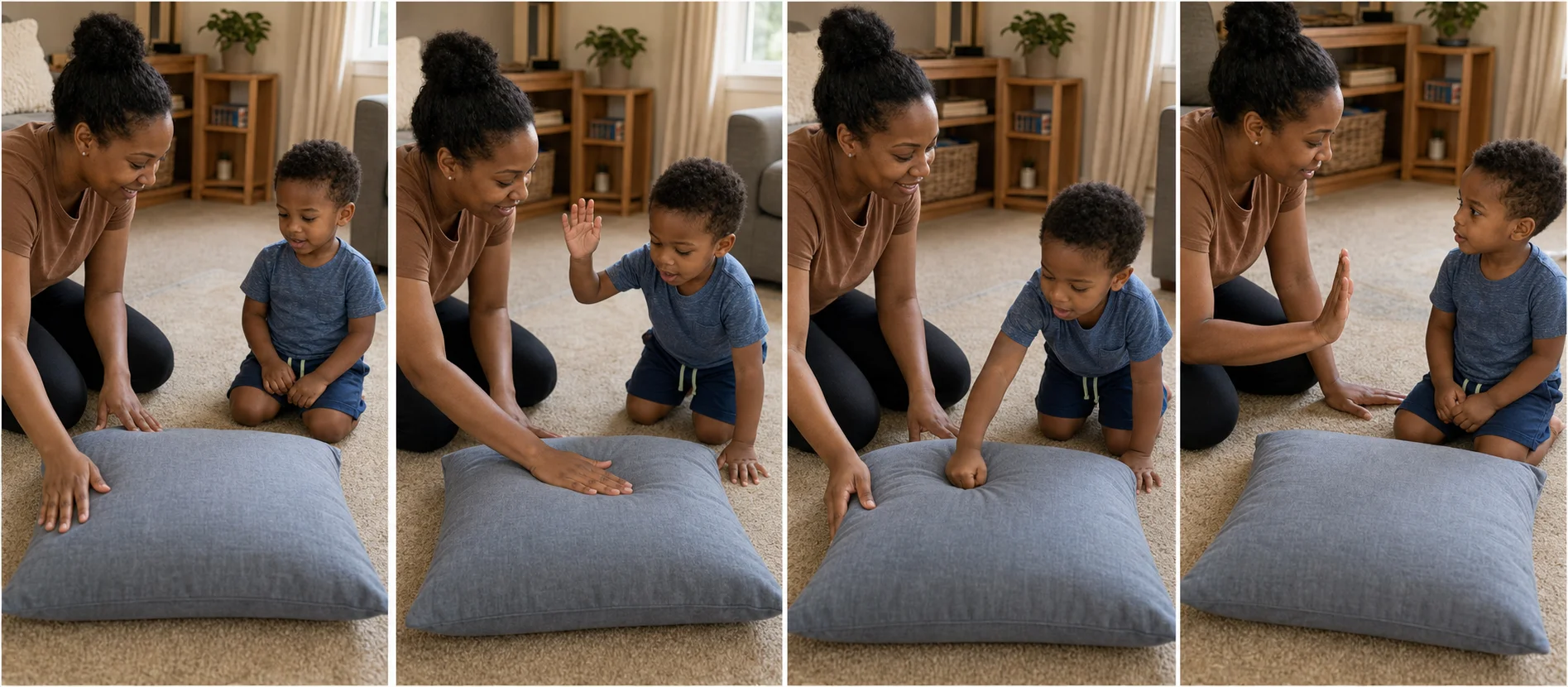
Can your child guide a pretend pillow sandwich? Give one gentle pillow squeeze over their arms or legs, then let them choose another spot or switch roles, building body awareness through playful pressure and release.


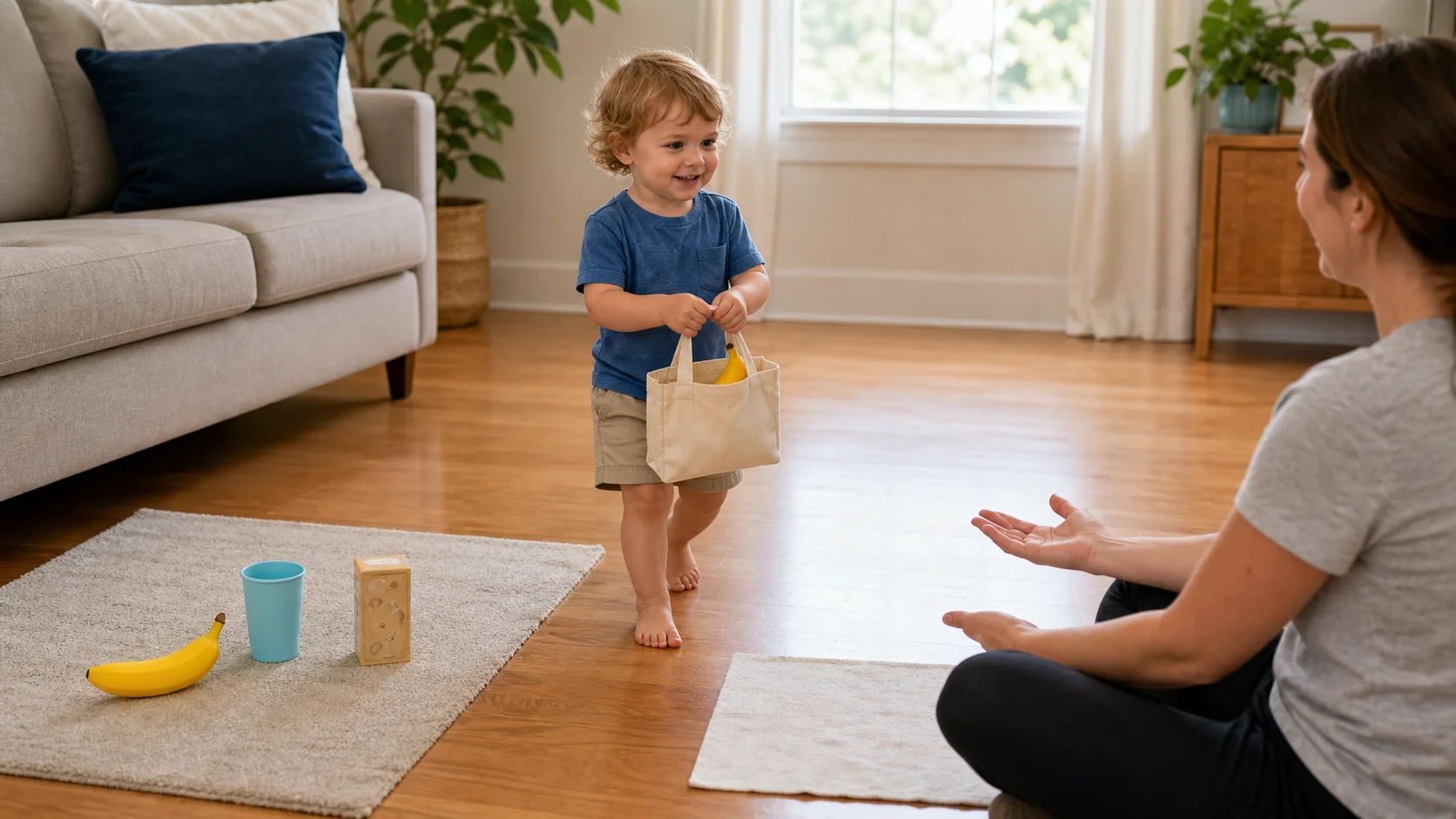
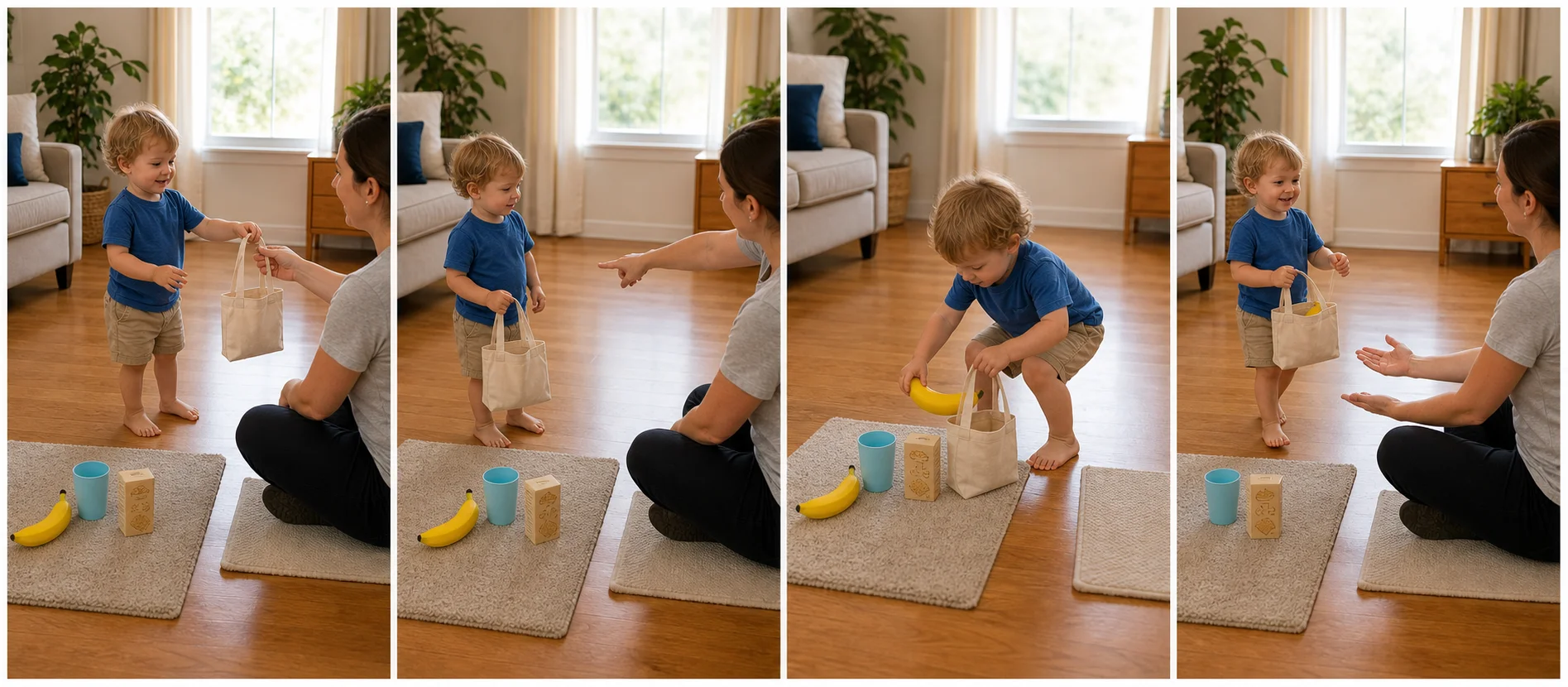
Turn a few toy foods and a shopping bag into a listening game with a clear mission. Your toddler hears one item request, finds the matching object in the pretend shop, and carries it back, practicing understanding and following a short spoken cue.


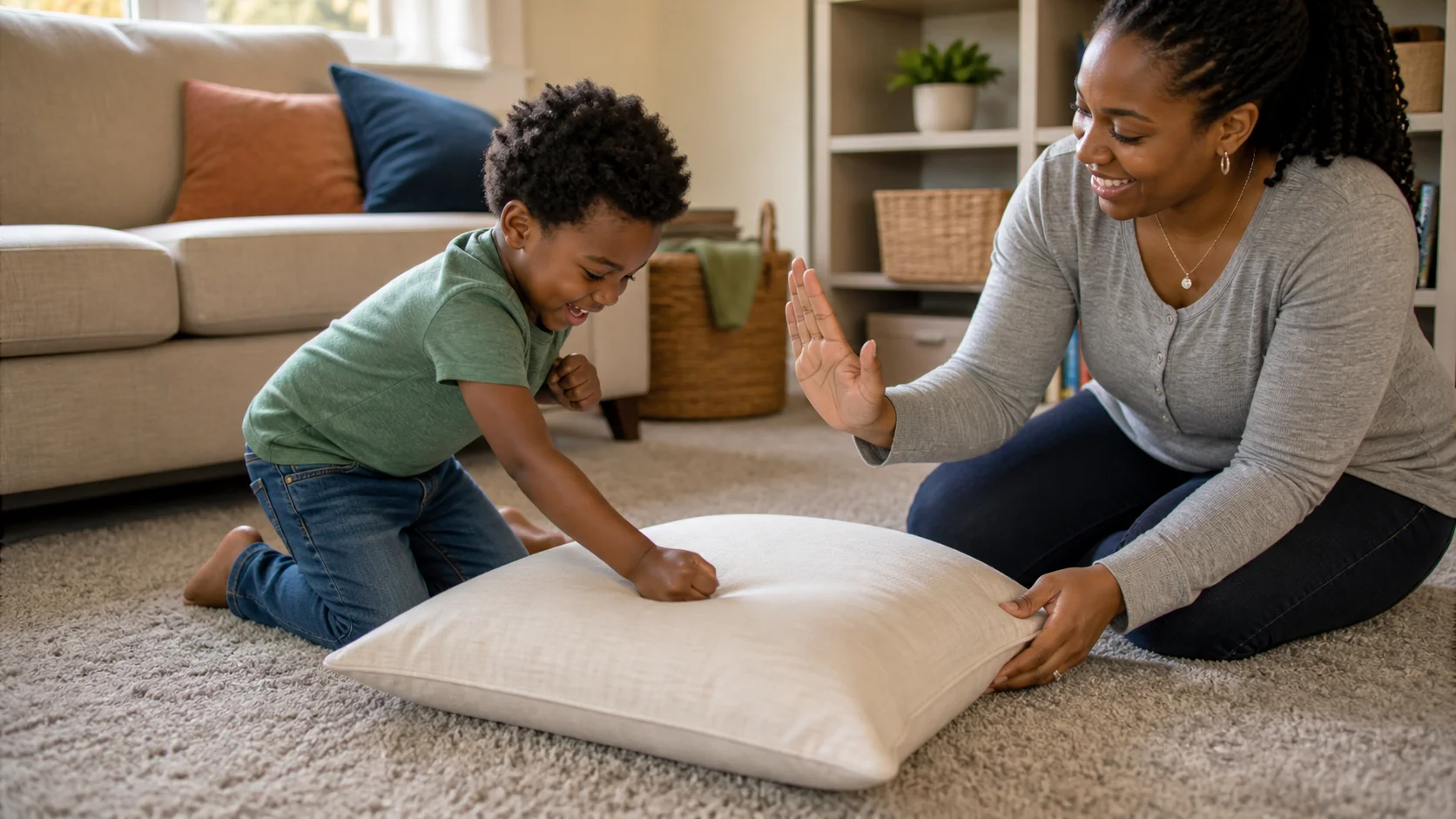
Can your child land a few punches on a soft pillow, then freeze when you say stop? Short punch-and-pause rounds give big arm movements one clear target while practicing start-and-stop control.


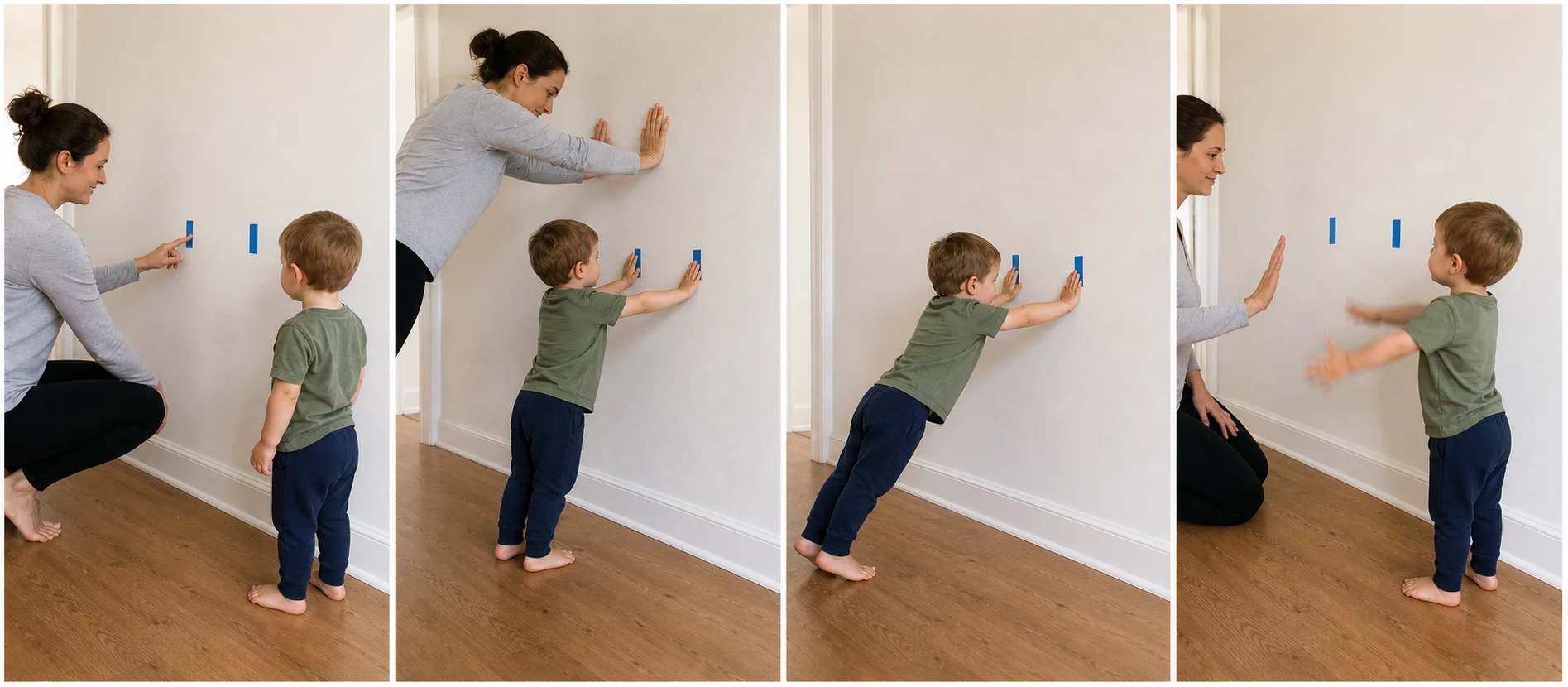
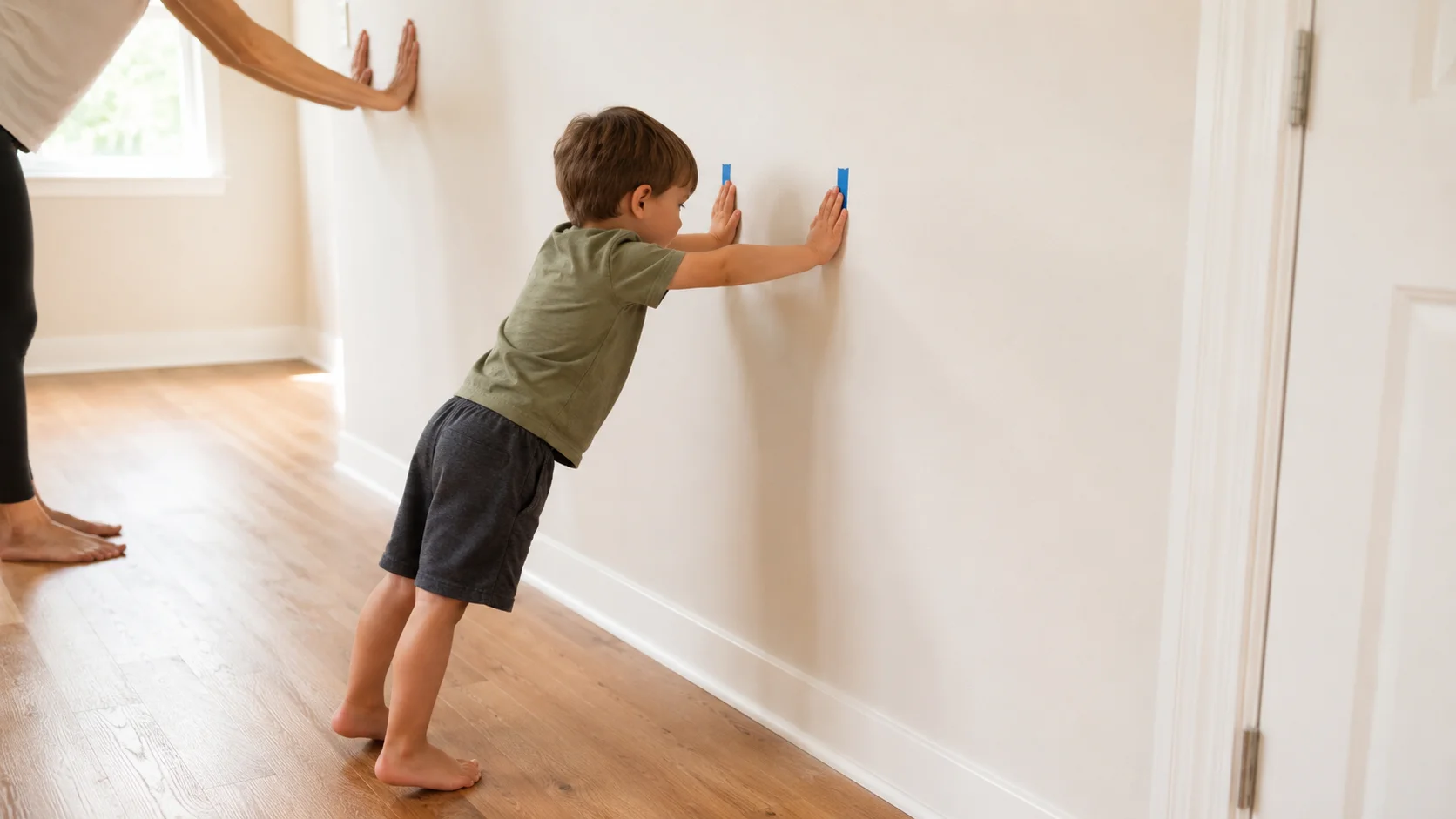
Give your toddler a no-supplies heavy-work challenge against a wall that will not budge. They plant both hands, push into the steady resistance, then stop and reset while practicing body awareness and deliberate force.


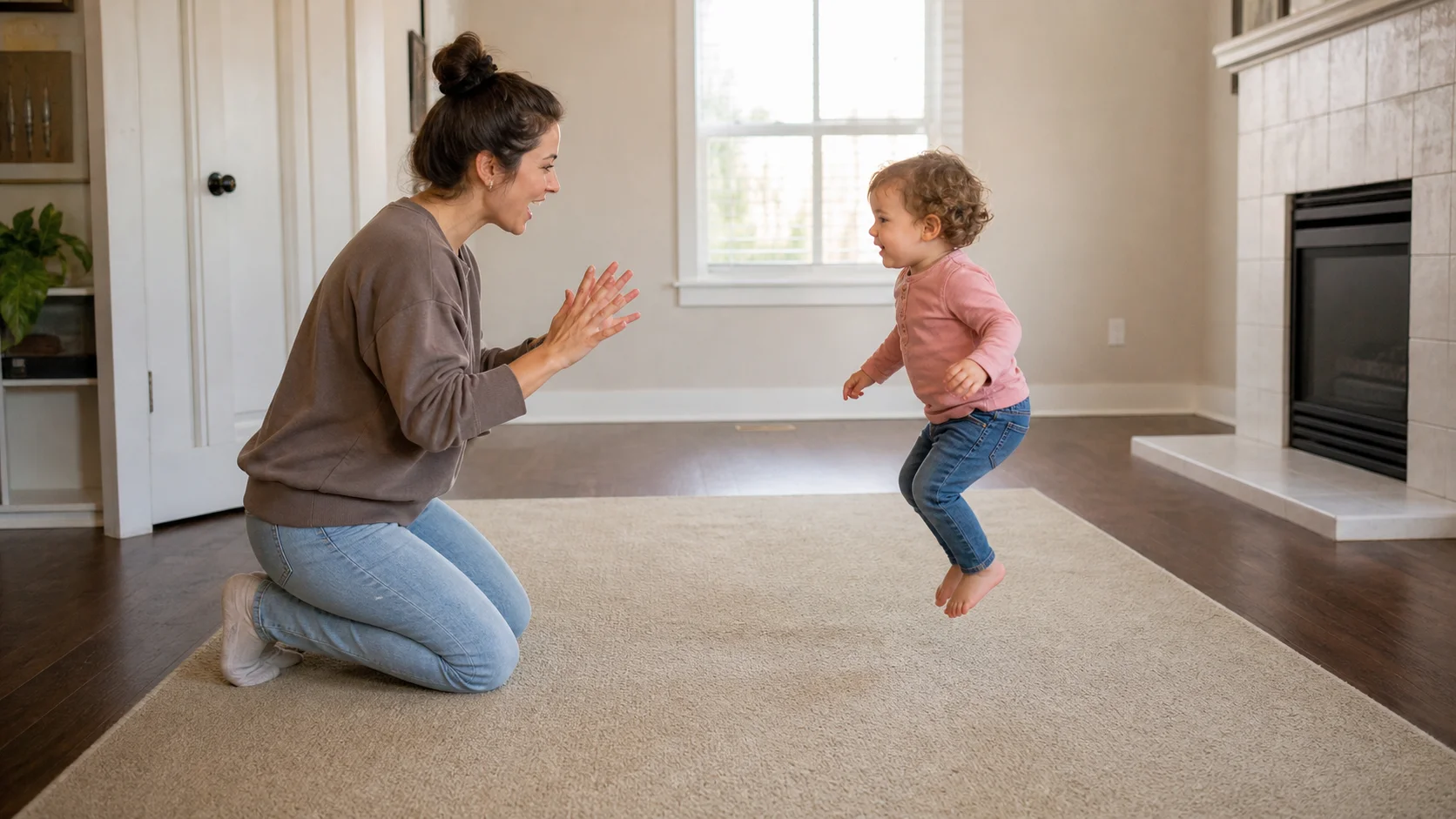
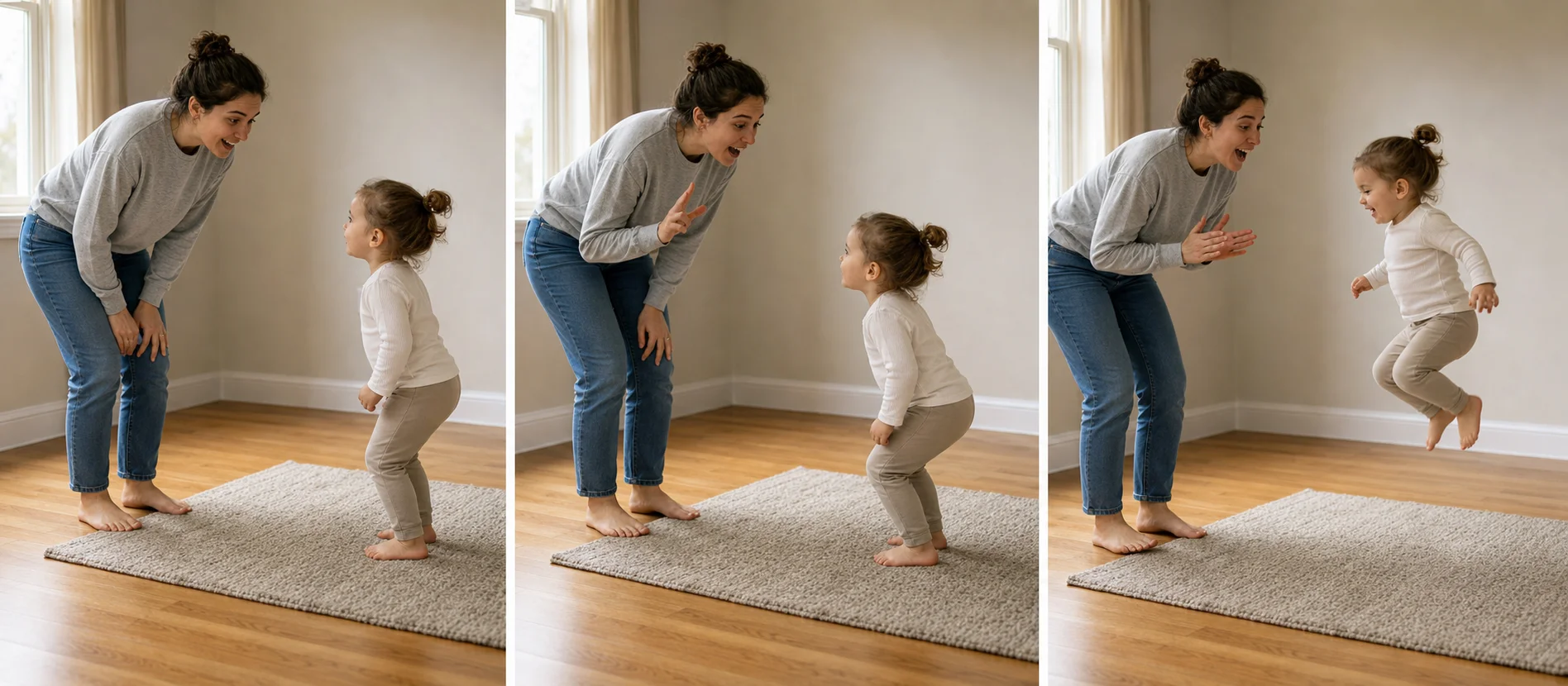
Give your toddler a quick whole-body listening game with no materials to gather. They wait through “ready... steady...,” jump on “go,” and practice linking a spoken cue to an action.


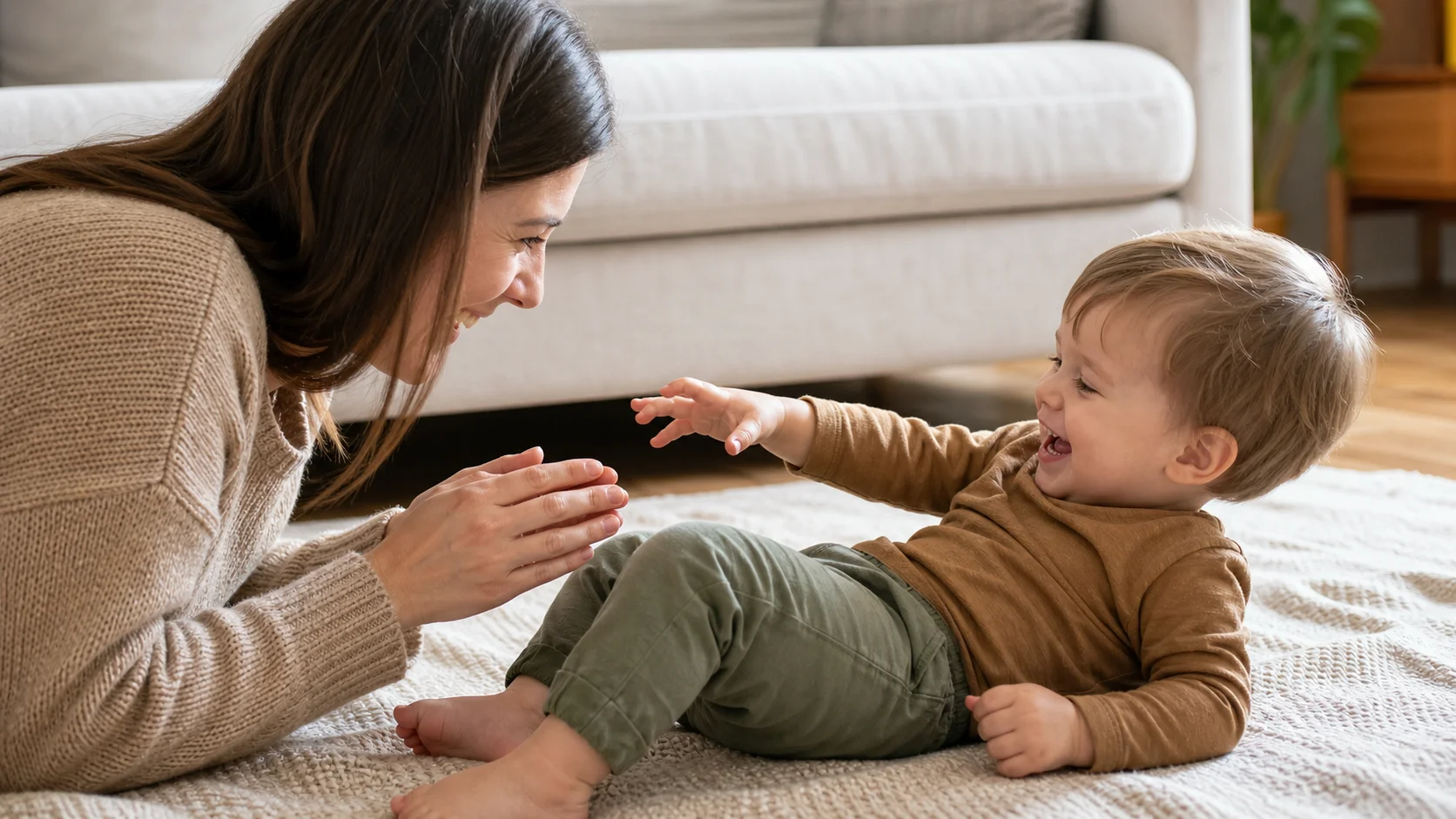
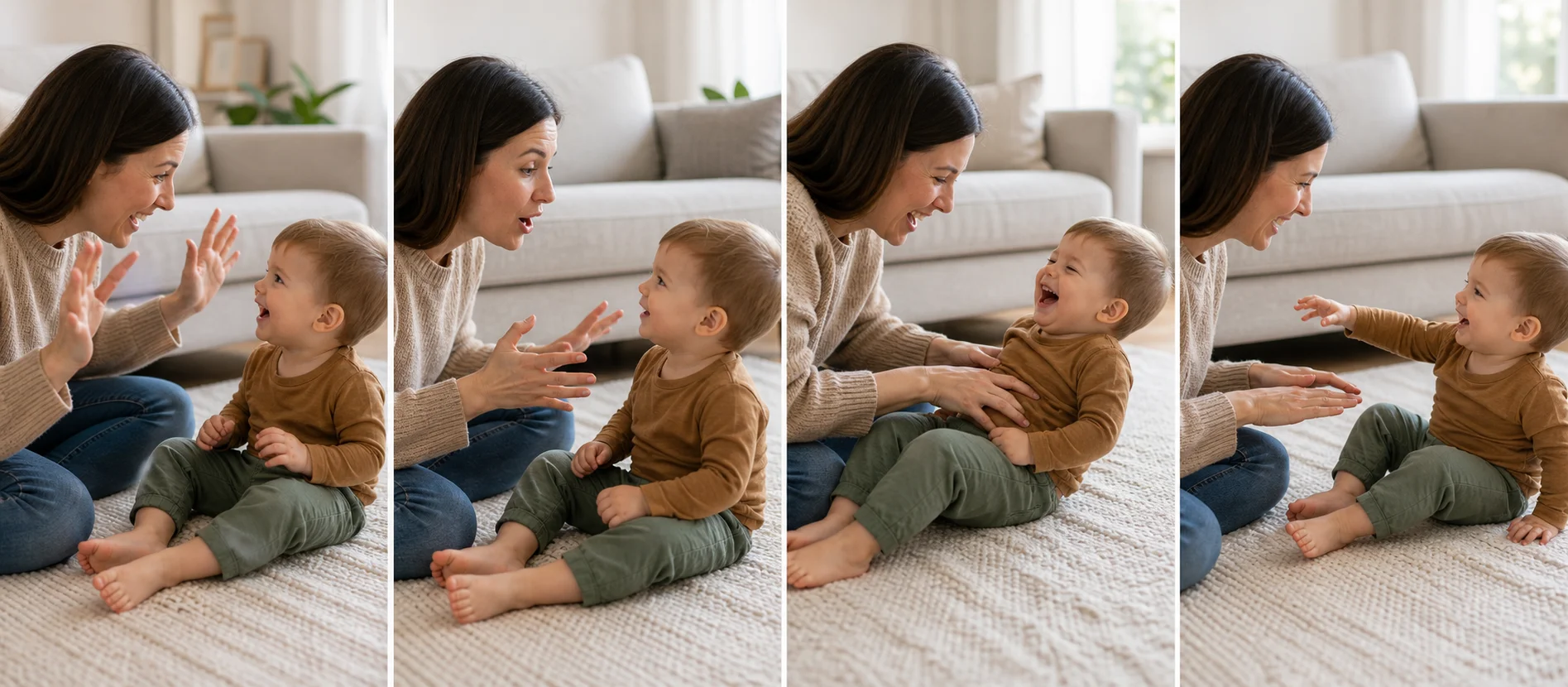
Turn one tiny tickle into a predictable back-and-forth game. Say “Ready... steady... tickle,” give one brief gentle tickle, then pause so your toddler can learn the pattern and ask for another turn with a look, sound, gesture, or movement.


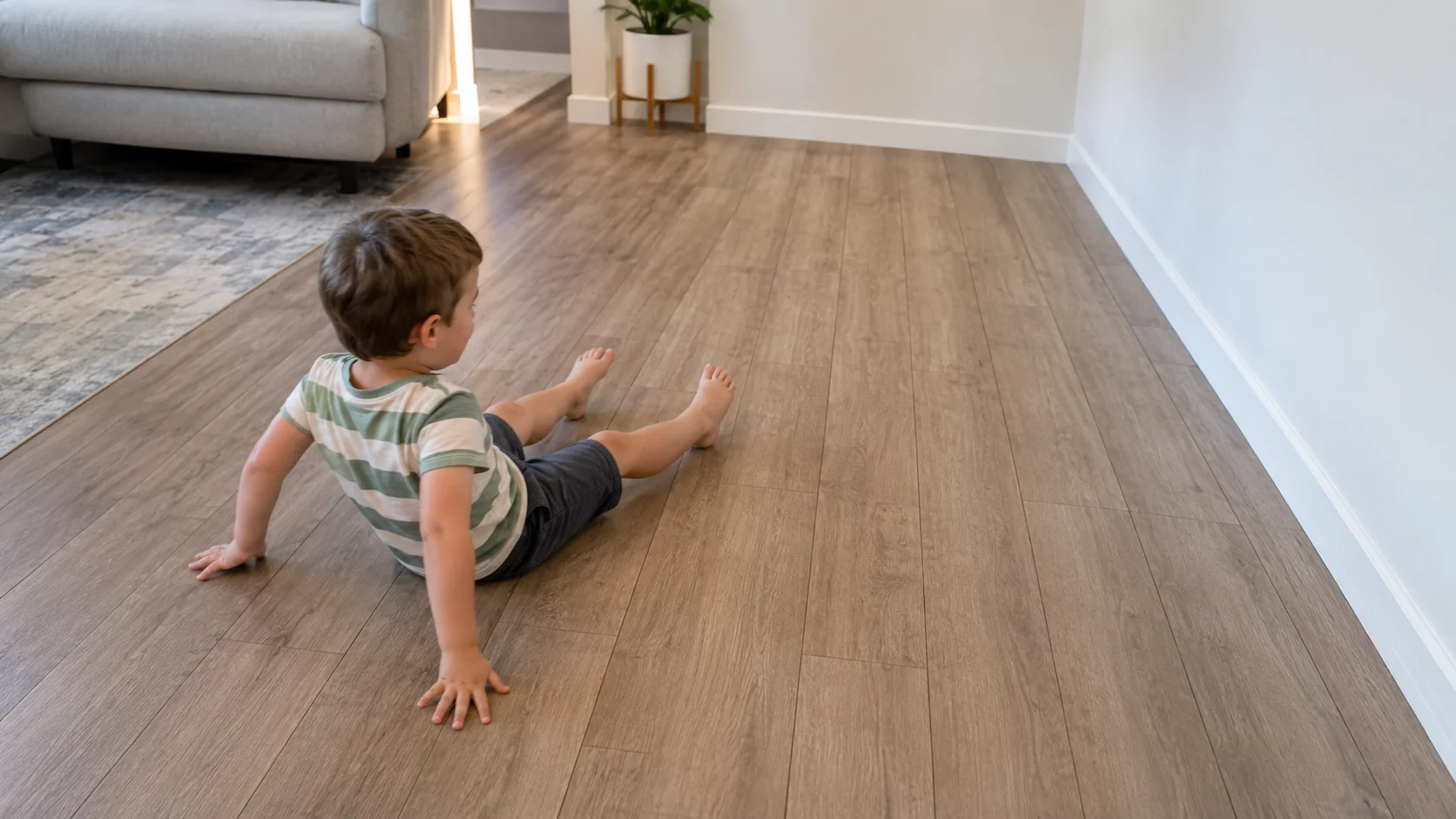
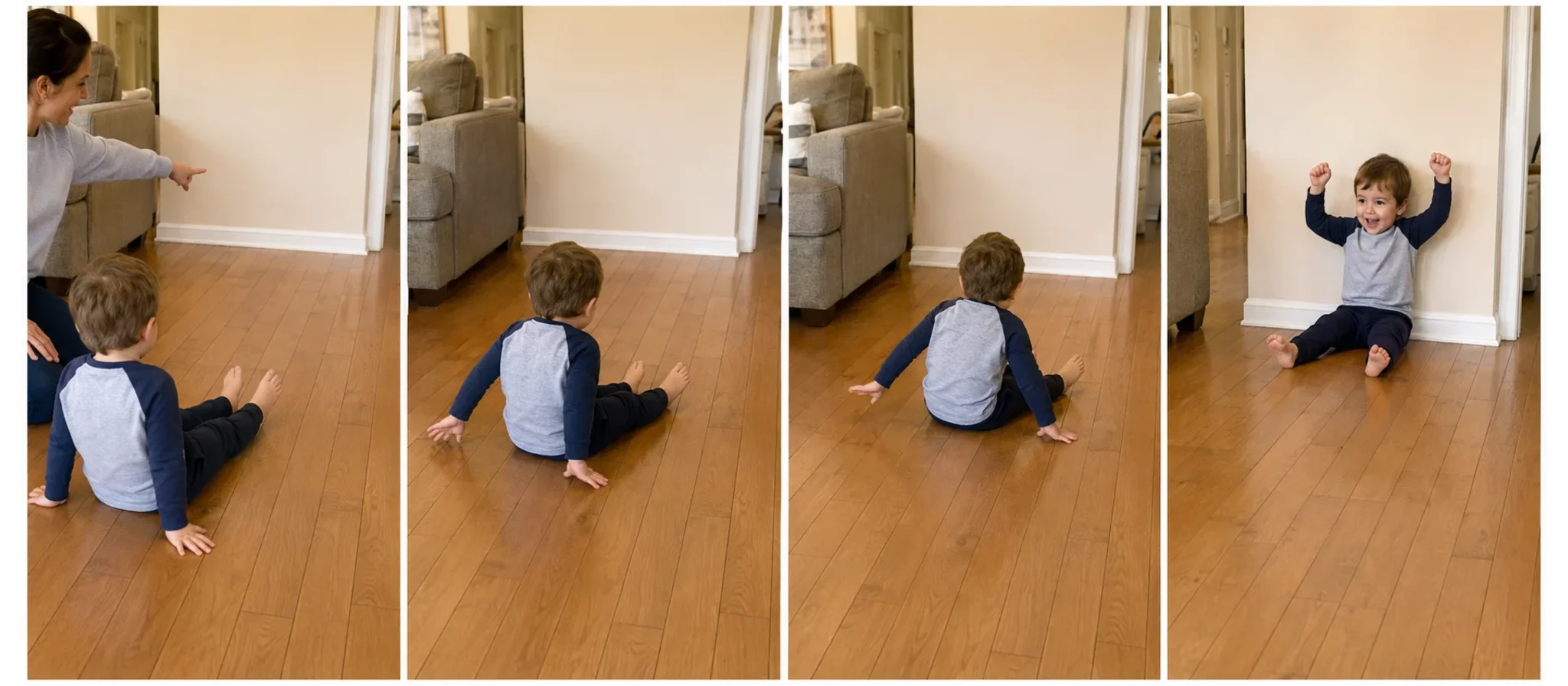
Turn a short patch of floor into a no-equipment scooting challenge. Your child sits with legs forward, shifts side to side to push across the lane, and reaches a clear finish while practicing whole-body coordination and controlled force.