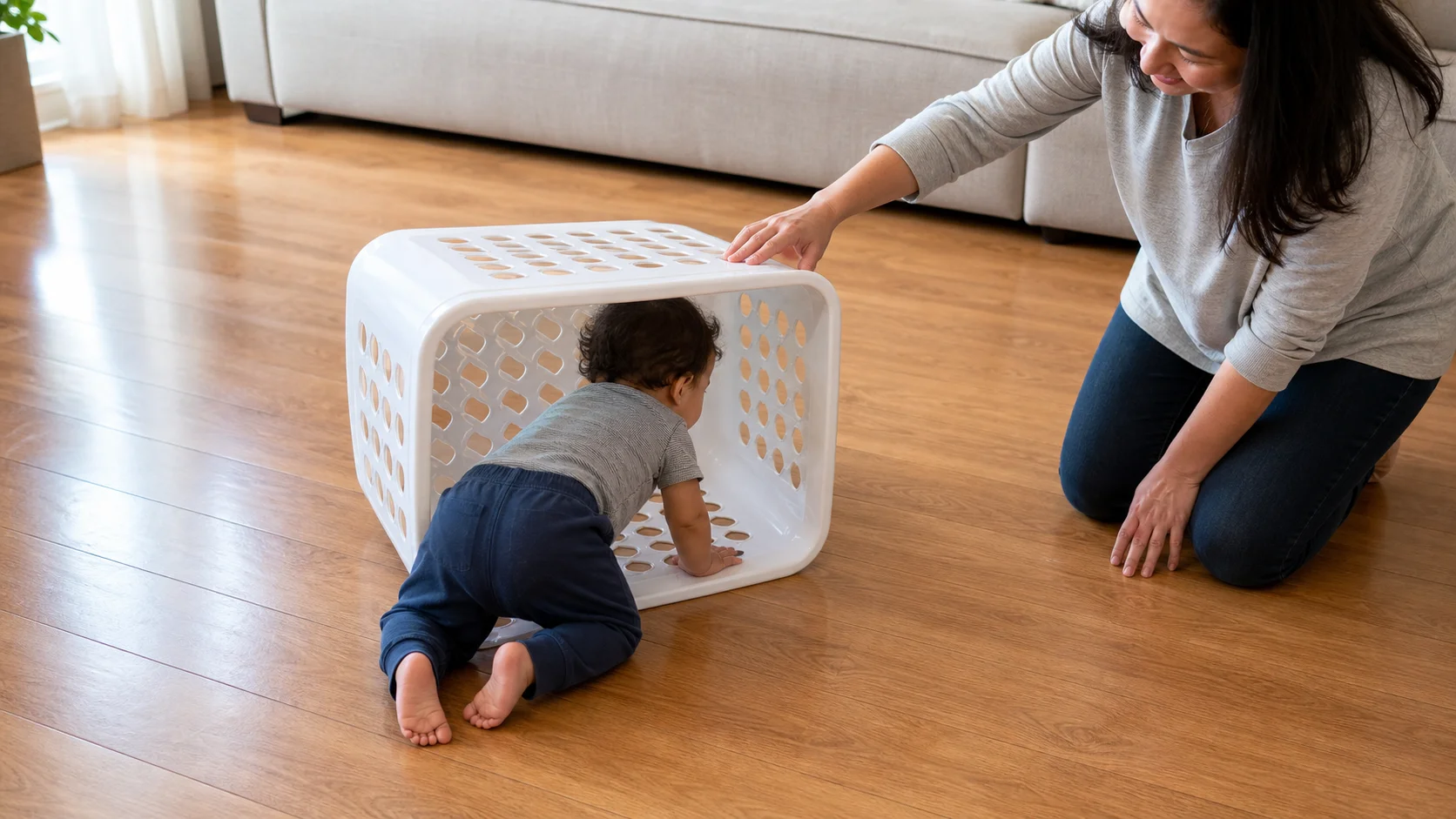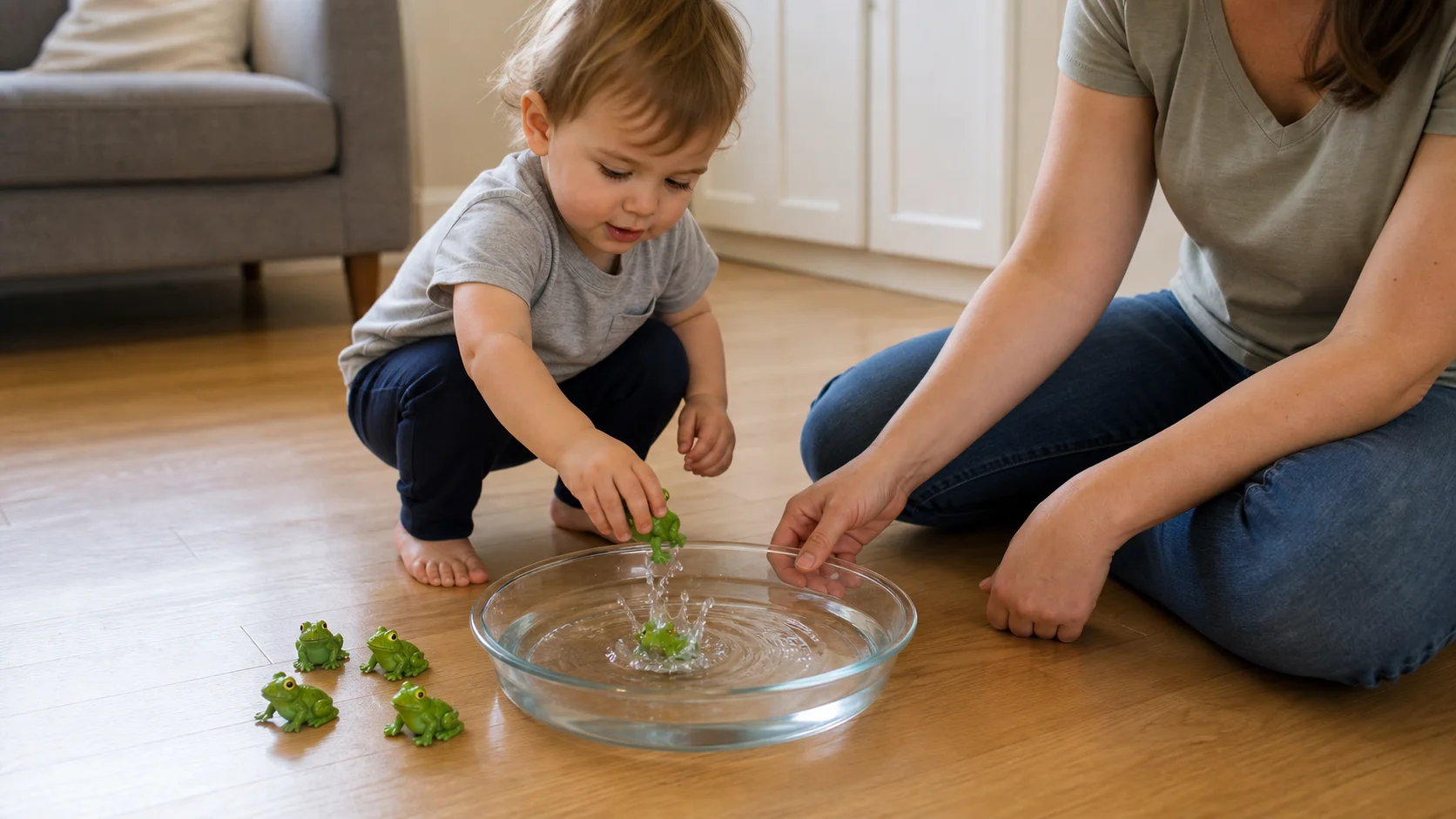
A toddler dropping a toy frog into a shallow bowl of water while a grown-up sits close beside the activity.
Skill builderAutism supportRepeat LoopIndoor

Frog Splash Bowl.

Turn a shallow bowl and a few toy frogs into a satisfying splash routine. Your toddler drops each frog into the water, watches and hears the splash, then repeats, practicing cause and effect while staying with a simple shared play sequence.

Play time
5-10+ min
Age
1-3 years
Energy
Low
Mess
Low
Effort
Low
Where
Indoor
Start here

The recipe.

Low parent effort
3 things

What you need

  • 1 shallow bowl
  • Water
  • 3 to 5 toy frogs
5 min minimum

Setup

Then start the loop
Step 01
Pour enough water into a shallow bowl to cover the bottom and make a small splash.
Step 02
Place a few toy frogs beside the bowl.
"Hop in."
The loop

How play unfolds.

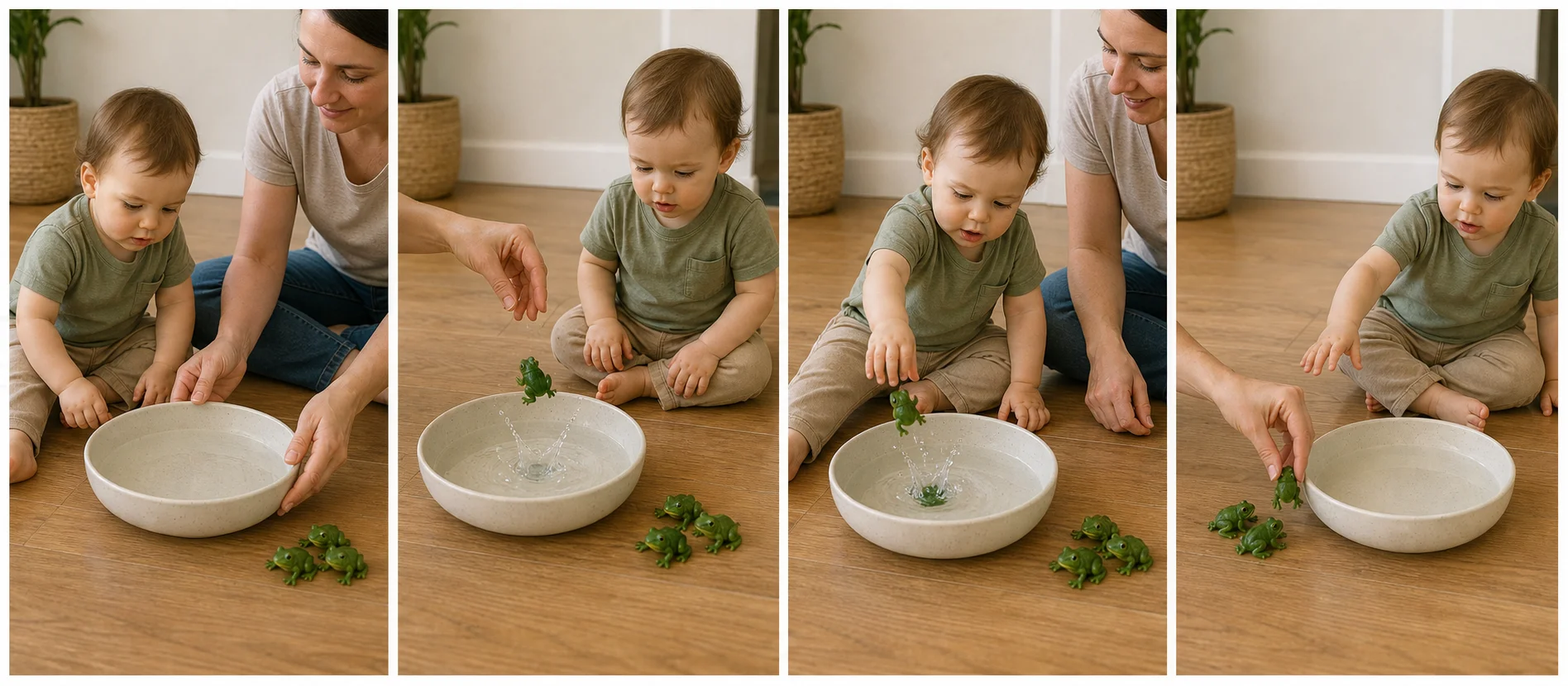
Four panels showing a grown-up setting out a shallow water bowl and toy frogs, modeling one splash, a toddler dropping a frog in, and the frog returning for the next turn.
  1. 01
    Drop one frog into the water and say, "Hop, hop, splash."
  2. 02
    Have your child pick up another frog, drop it into the bowl, and notice the splash.
  3. 03
    Repeat one frog at a time until all the frogs are in the bowl.
  4. 04
    Take the frogs out, place them beside the bowl, and repeat.

Safety Check

  • Stay within arm's reach because this activity uses water and small toys.
  • Use toy frogs that are too large to mouth, or choose another activity if your child still mouths small objects.
  • Keep the water shallow and stop if splashing turns into bowl dumping or if the splash sound becomes upsetting.
Skill spotlight
Repeat Loop

Repeating a simple play routine, Noticing that one action creates one clear result

This helps a child stay with one short shared play idea long enough to understand what comes next and to join the same routine again.

  • The splash gives your child an immediate result, which makes the next turn easy to understand.
  • The same short routine can support early shared play without requiring many words.
  • One frog at a time keeps the activity contained and easier to repeat.
Real-world transfer
  • Staying with one short play routine
  • Expecting what comes next in a simple sequence
  • Repeating an action on purpose to get the same result again
  • Joining easy back-and-forth play with a grown-up
Supporting the play

What to say in the moment

Match what you say to what you see.

Prompt ladder
Level 1 (Start)
"Frog goes in."
Level 2 (Keep going)
"Another splash."
Level 3 (Stretch)
"Big splash or little splash?"
Level 4 (Extend)
"Your frog. My frog."
If your child seems...
What you'd see
Focused
What to do
Say
"You made that frog splash."
Add
Name one simple contrast such as big or little.
Extend
Take one turn after your child, then hand the next frog back.

Make it easier

Younger end
  • -Use one frog at a time instead of a whole pile.
  • -Keep the bowl very close so the drop is easy to complete.
  • -Accept any release into the bowl without asking for words.

Make it harder

Older end
  • +Let your child choose between a big splash drop and a little splash drop.
  • +Take turns with one frog so your child waits for the next drop.
  • +Place the frog pile a little farther from the bowl so each turn includes one extra reach.

If it's not working

If you see
If child ignores it
Do the first splash yourself and make the water result easy to see and hear.
If you see
If child misuses it
Hold the bowl steady, give out one frog at a time, and use one short cue such as "Frog in."
If you see
If child gets frustrated
Use one frog, move the bowl closer, and help your child complete one easy drop with you.