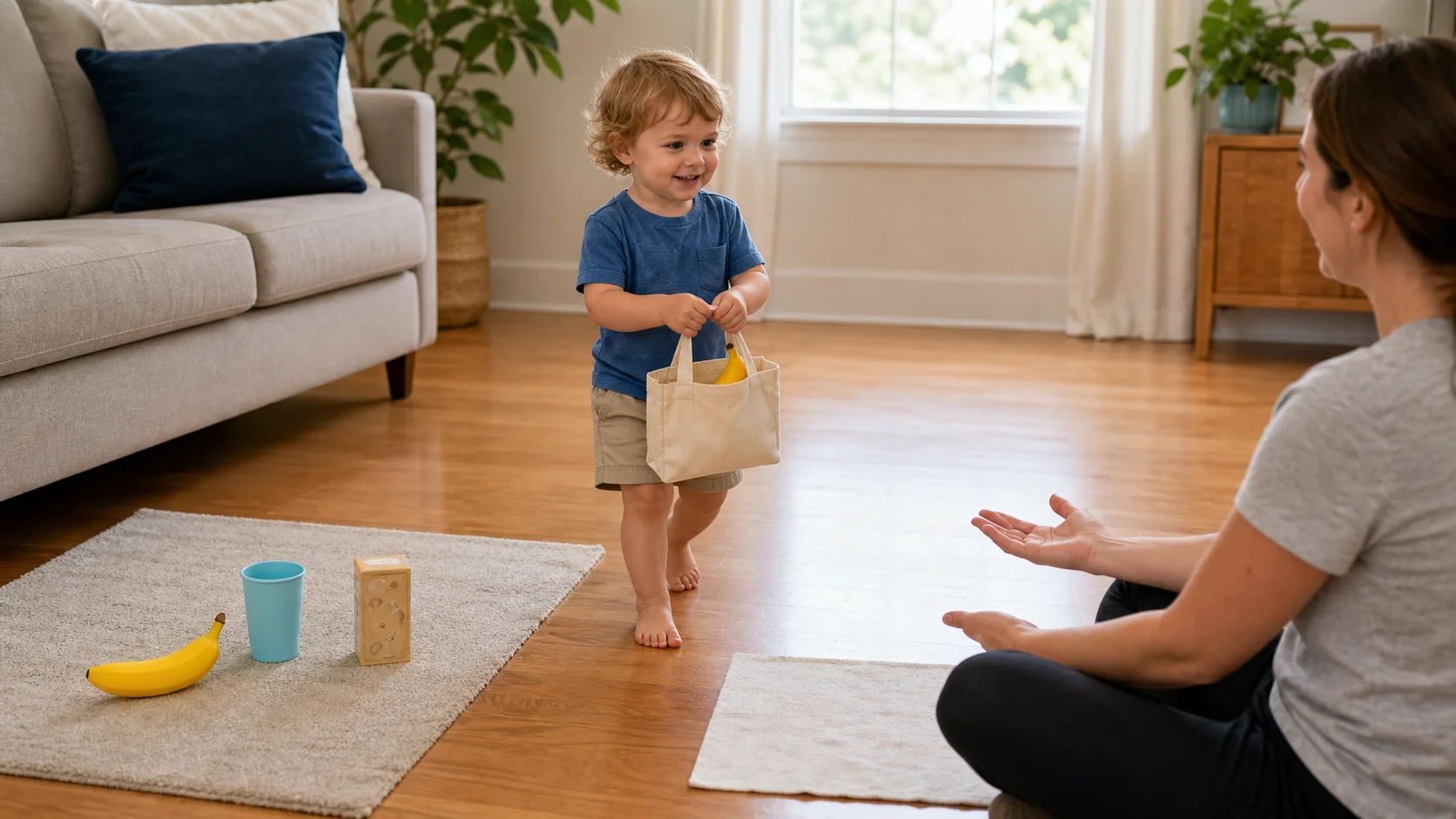
A toddler carrying a small shopping bag from a pretend shop area back to a grown-up after finding one requested toy food item.
LiteracySpeech delay supportFollow One StepIndoor

Pretend Shop Fetch.

Turn a few toy foods and a shopping bag into a listening game with a clear mission. Your toddler hears one item request, finds the matching object in the pretend shop, and carries it back, practicing understanding and following a short spoken cue.

Play time
5-10+ min
Age
2-4 years
Energy
Medium
Mess
No
Effort
Low
Where
Indoor
Start here

The recipe.

Low parent effort
2 things

What you need

  • 3 to 4 pretend food items or easy-to-recognize toys
  • 1 shopping bag
5 min minimum

Setup

Then start the loop
Step 01
Group 3 or 4 familiar toy foods or toys in a small pretend shop at one end of the room.
Step 02
Name each item, then give your child the empty shopping bag.
"Shop is open."
The loop

How play unfolds.

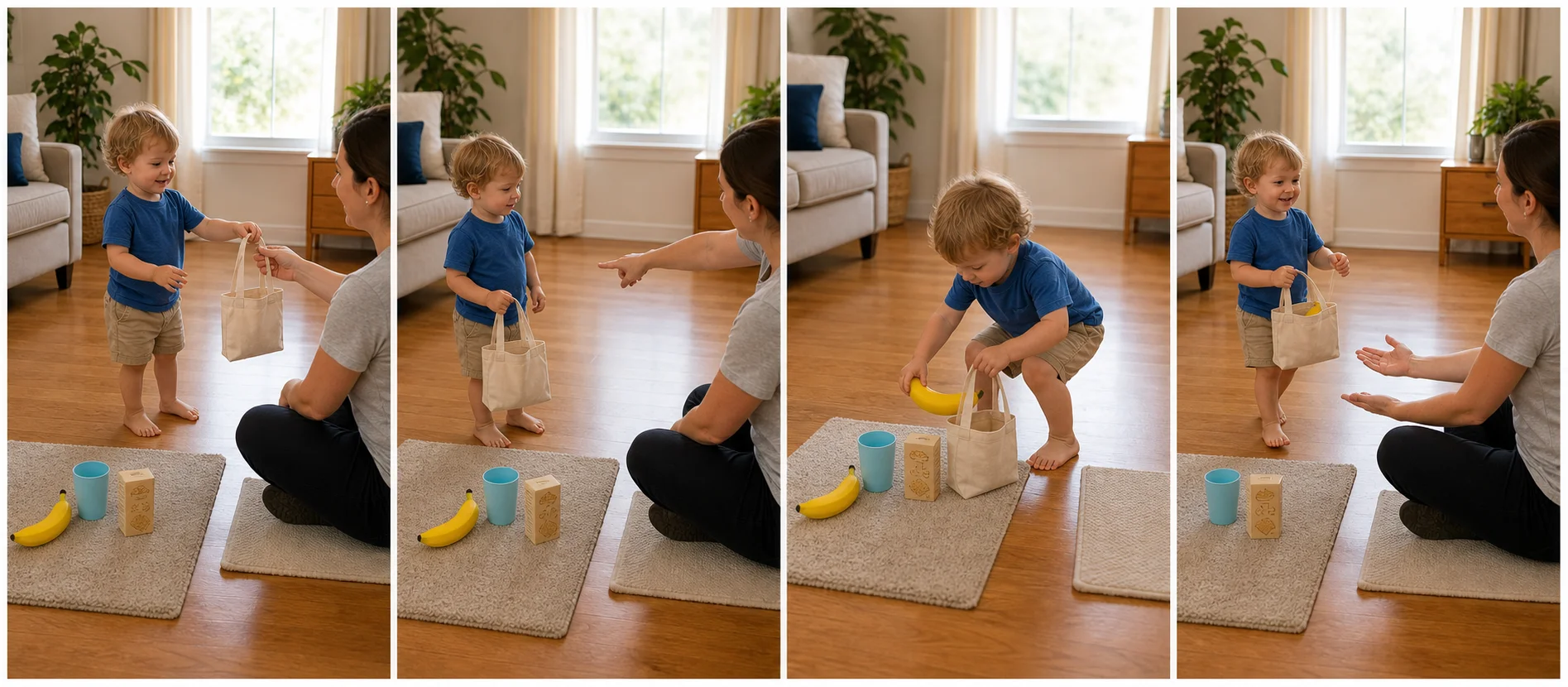
A multi-panel sequence showing a small pretend shop setup, a grown-up asking for one item, a toddler picking the matching object, and the bag coming back to the return spot.
  1. 01
    Ask for one named item, such as “Buy me the banana.”
  2. 02
    Your child walks to the shop, chooses the matching item, puts it in the bag, and brings it back to you.
  3. 03
    Return the item to the shop, give back the empty bag, and ask for another item.

Safety Check

  • Keep the walking path clear so your child is not stepping over clutter while carrying the bag.
  • Use shop items that fit your child's mouthing and throwing safety needs.
  • Go back to 1 item at a time if the bag starts turning into stuffing, throwing, or running play.
Skill spotlight
Follow One-Step Cues

Following a short spoken item request

This helps a child hold onto a short spoken cue long enough to act on it, which matters in everyday moments like bringing a diaper, getting shoes, or following a simple helper request.

  • One short request at a time keeps the listening load small.
  • The visible shop gives the words somewhere concrete to land.
  • The same shopping trip repeats, so a miss can turn into an easy retry instead of a full reset.
  • Carrying the item back gives the child a clear finish to each turn.
Real-world transfer
  • Following short everyday directions
  • Finding a named object from a small choice set
  • Carrying out a simple helper task from start to finish
Supporting the play

What to say in the moment

Match what you say to what you see.

Prompt ladder
Level 1 (Start)
"Buy me the banana."
Level 2 (Keep going)
"Now get the crisps."
Level 3 (Stretch)
"Can you get the banana and the cup?"
Level 4 (Extend)
"You choose what the shop sells next."
If your child seems...
What you'd see
Focused
What to do
Say
"You brought the right one."
Add
Name the next item only after the bag comes back.
Extend
Try 1 short two-item turn after several easy wins.

Make it easier

Younger end
  • -Keep only 2 shop items out at a time.
  • -Ask for the same item twice before switching.
  • -Accept bringing the item back by hand if the bag adds too much fuss.

Make it harder

Older end
  • +Ask for 2 named items in 1 short request.
  • +Spread the shop items slightly farther apart inside the shop.
  • +Let your child restock the shop before the next request.

If it's not working

If you see
If child ignores it
Walk 1 shopping trip together, then hand the bag back and repeat the same request.
If you see
If child misuses it
Cut the shop down to 2 items, keep the bag empty between turns, and ask for 1 item only.
If you see
If child gets frustrated
Point once to the named item, accept carrying it back by hand, and stop after that success if needed.