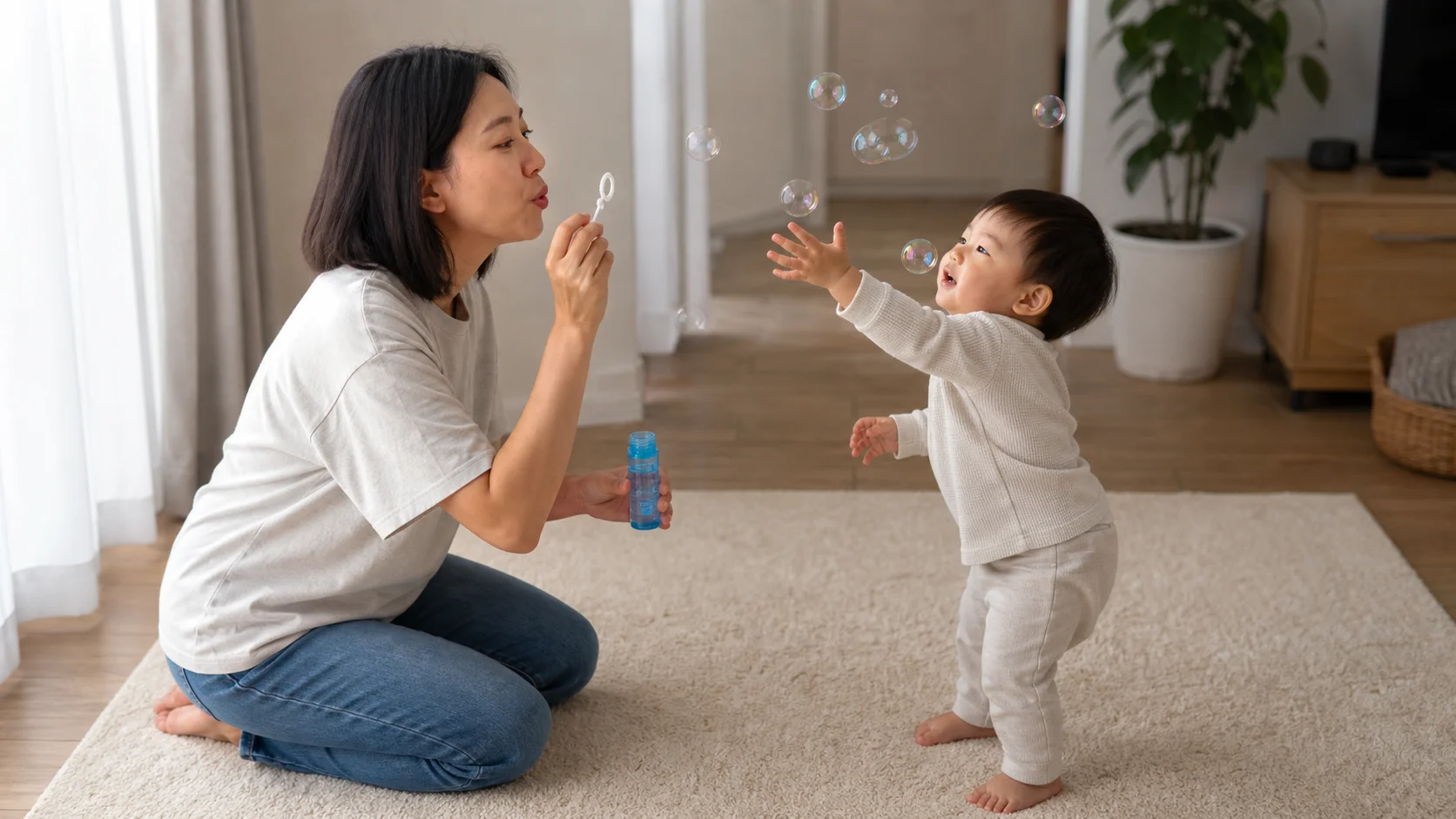
A grown-up kneeling with a bubble wand while a toddler reaches toward floating bubbles.
Skill builderSpeech delay supportRepeat LoopIndoor Or Outdoor

More Bubbles.

Turn each bubble pause into an easy reason for your child to communicate. After a look, reach, sound, sign, or word, say "More" and blow the next round so your child can connect their signal with another burst of bubbles.

Play time
1-5+ min
Age
1-3 years
Energy
Low
Mess
Low
Effort
Medium
Where
Indoor Or Outdoor
Start here

The recipe.

Medium parent effort
4 things

What you need

  • 1 bottle of bubble solution
  • 1 bubble wand
  • 1 grown-up to blow bubbles, wait, and model "More"
  • 1 clear play spot where bubbles can float and pop safely
1 min minimum

Setup

Then start the loop
Step 01
Open the bubble bottle, remove the wand, and keep both in your hands where your child can see them.
"Bubbles up."
The loop

How play unfolds.

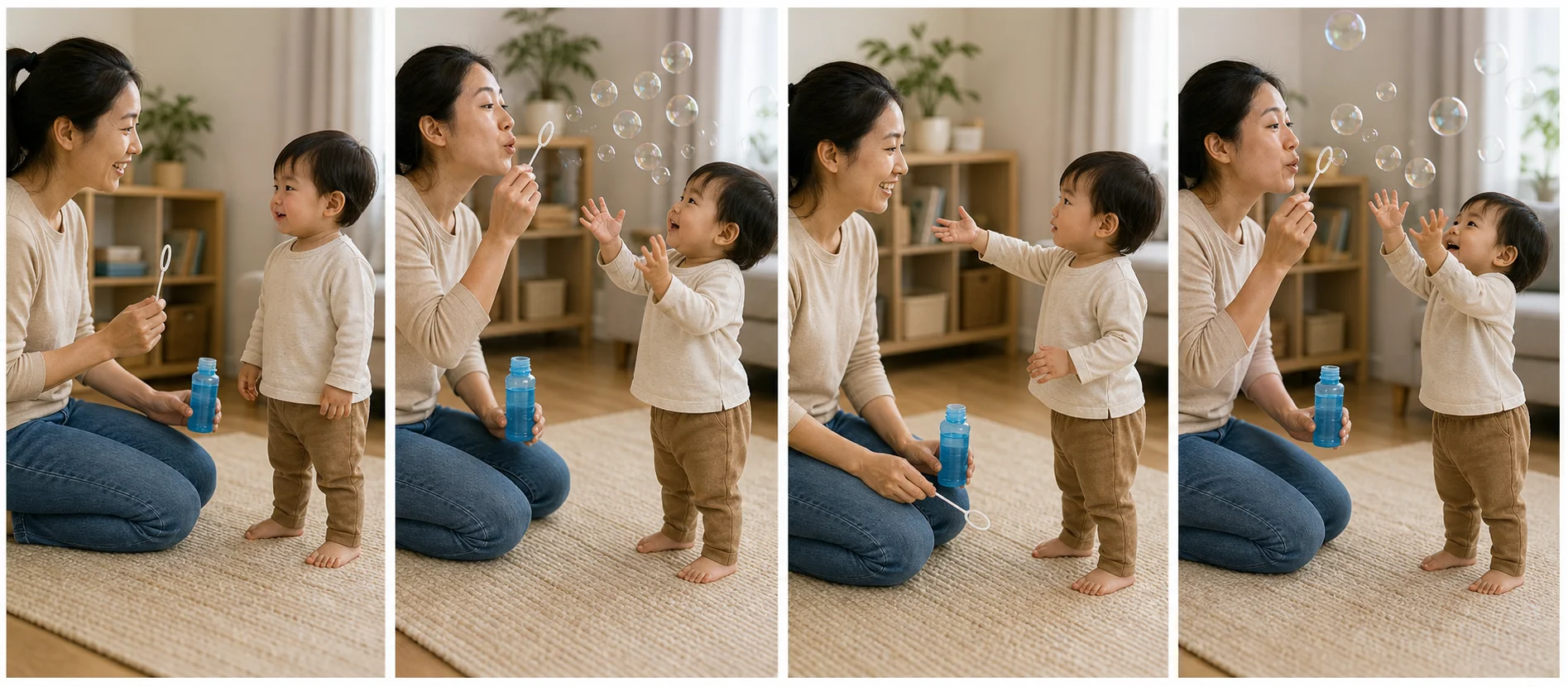
Four panels showing a grown-up blowing bubbles, pausing with the bottle visible, a child signaling for more, and another bubble round starting.
  1. 01
    Blow a short round of bubbles and let your child watch or pop them.
  2. 02
    After the bubbles pop, pause with the bottle visible and wait silently for a look, reach, sound, gesture, sign, or word.
  3. 03
    When your child signals, say "More" and blow the next short round.
  4. 04
    Repeat the bubble, pause, signal, and bubble cycle.

Safety Check

  • Keep bubble solution out of your child's mouth and eyes.
  • Keep control of the bottle and wand if grabbing, spilling, or mouthing would take over the activity.
  • Wipe spills right away. Bubble solution can make hard floors slippery.
  • Move or stop if your child runs toward stairs, a street, furniture edges, or another unsafe space.
Skill spotlight
Repeat Loop

Requesting more with a signal, Repeating a simple social play loop

This helps a child learn that a look, reach, sound, sign, or word can make something happen with another person.

  • The pause gives your child a real reason to communicate again.
  • Accepting a look, reach, sound, sign, or word keeps the activity open to different communication levels.
  • The same short loop helps your child connect a signal with what happens next.
Real-world transfer
  • Asking for more snack, music, tickles, or a favorite toy.
  • Using a gesture, sound, sign, or word to keep a routine going.
  • Understanding that communication changes what happens next.
Supporting the play

What to say in the moment

Match what you say to what you see.

Prompt ladder
Level 1 (Start)
"Bubbles. Pop, pop."
Level 2 (Keep going)
"I see you looking. More bubbles."
Level 3 (Stretch)
"Reach for more."
Level 4 (Extend)
"Big bubble or tiny bubble?"
If your child seems...
What you'd see
Focused
What to do
Say
"You looked. That tells me more."
Add
Name the signal your child just used.
Extend
Offer one simple choice, such as big bubble or tiny bubble.

If it's not working

If you see
If child ignores it
Blow one tiny bubble close enough to see, then pause with the bottle visible.
If you see
If child misuses it
Close the bottle and say, "Bottle stays with me. Bubbles go up." Restart with one small round.
If you see
If child gets frustrated
Shorten the wait. Accept the smallest signal, say "More," and blow again right away.

Parent questions