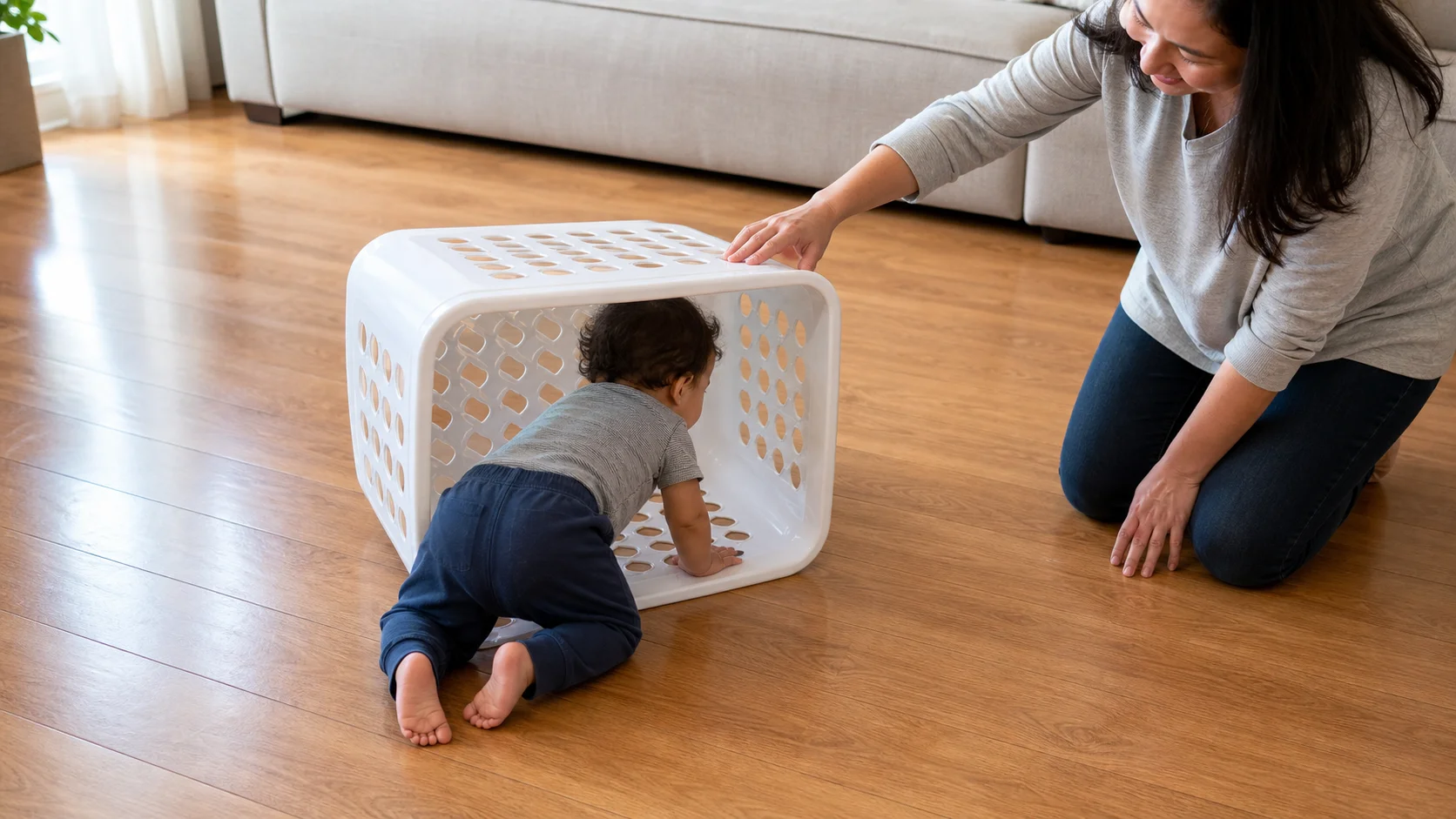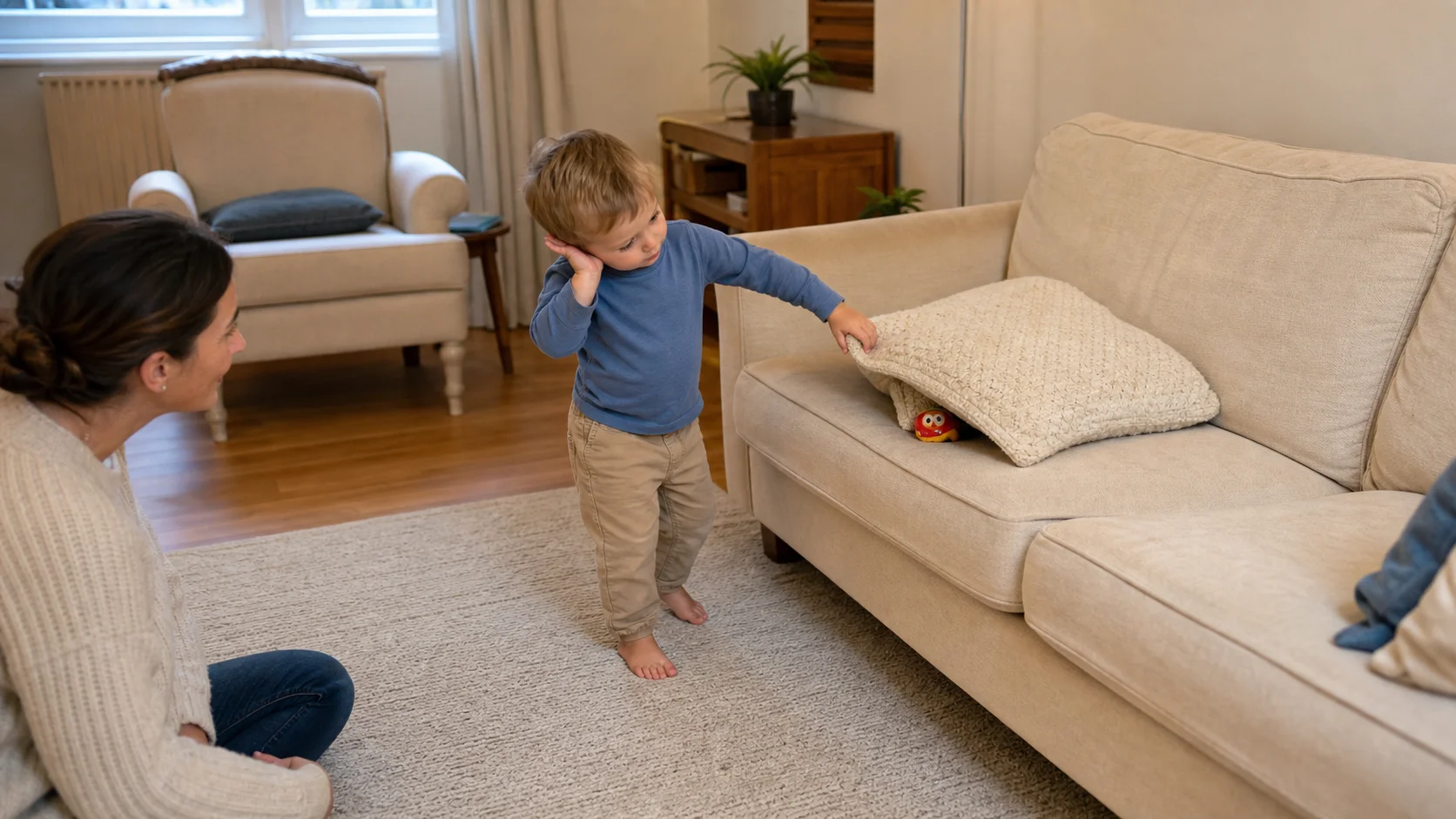
A young child listening in a living room while a grown-up hides a noisy toy behind a cushion for a simple sound-finding game.
LiteracySpeech delay supportRespond To SoundIndoor

Finding Sounds.

Your child listens for one hidden sound, moves toward it, finds it, and repeats the same short search again.

Play time
5+ min
Age
2-4 years
Energy
Low To Medium
Mess
No
Effort
Low
Where
Indoor
Start here

The recipe.

Low parent effort
3 things

What you need

  • 1 noisy toy or 1 music player
  • 1 quiet indoor room
  • 1 adult
5 min minimum

Setup

Then start the loop
Step 01
In one indoor room, turn on a noisy toy or start a music player so it makes a steady easy-to-hear sound.
Step 02
In the same room, hide the sound source behind a cushion, under a light blanket, or beside furniture where your child cannot see it from the start spot.
Step 03
At one clear start spot a few steps away, stand or sit with your child and make sure you can both still hear the sound.
"Listen."
The loop

How play unfolds.

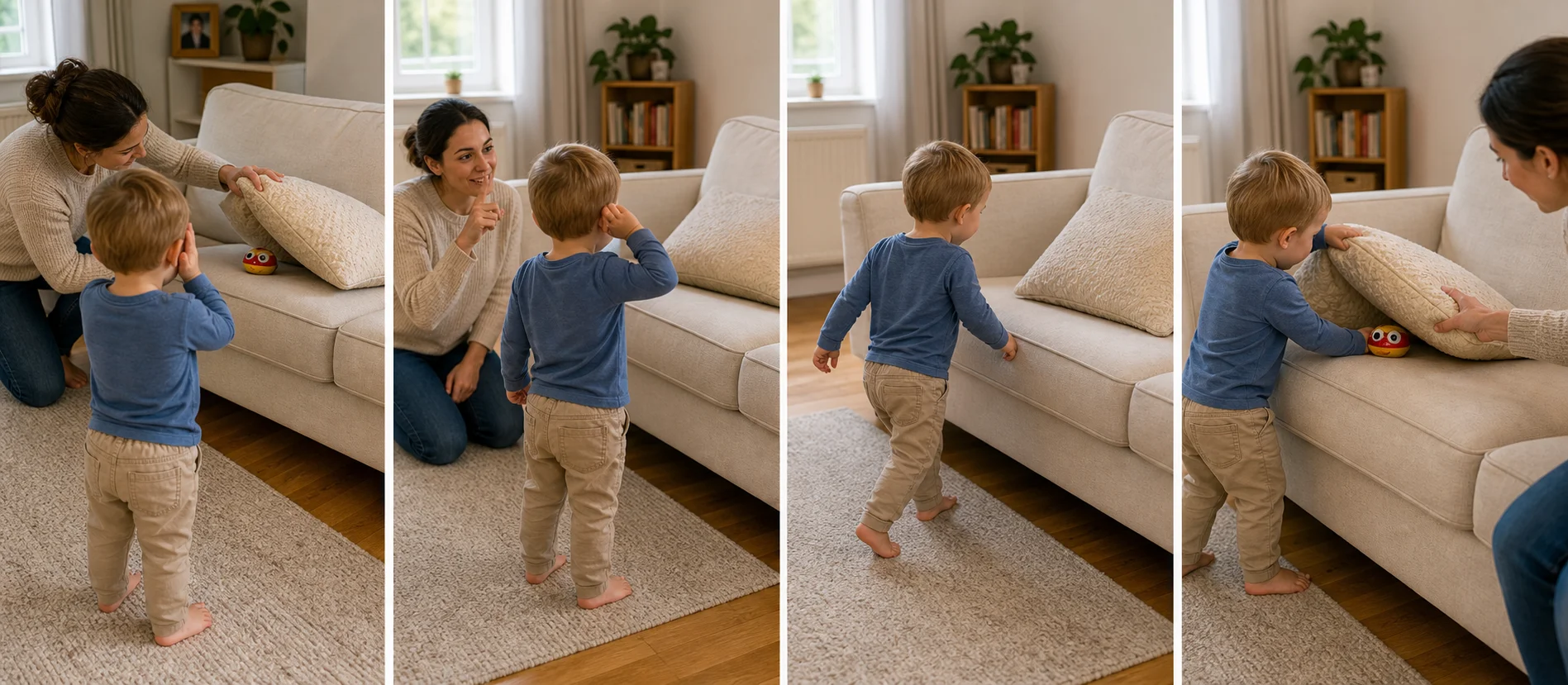
A multi-panel sequence showing a grown-up hiding a noisy toy, a child pausing to listen, the child moving toward the sound, and the child finding the hidden toy.
  1. 01
    Bring your child to the start spot and say, "Listen. Where is it?"
  2. 02
    Let your child move toward the sound and find the hidden toy or player.
  3. 03
    Celebrate the find, take the sound source back, hide it again, and start another turn.

Safety Check

  • Keep the search path clear before each round so your child is not stepping over clutter while listening.
  • Use a comfortable sound level, not a loud or startling one.
  • Stay close if the toy or player has cords, battery access, or small removable parts.
Supporting the play

What to say in the moment

Match what you say to what you see.

Prompt ladder
Level 1 (Start)
"Listen. Where is it?"
Level 2 (Keep going)
"I hear it. Go find it."
Level 3 (Stretch)
"Is it over here or over there?"
Level 4 (Extend)
"You hide it. I will listen."
If your child seems...
What you'd see
Focused
What to do
Say
"You heard it fast."
Add
Pause one beat before you point or help.
Extend
Let your child do one turn hiding the sound source for you.

Make it easier

Younger end
  • -Keep the sound source close to the start spot.
  • -Use the same hiding area for a few turns in a row.
  • -Let part of the toy or player stay visible.

Make it harder

Older end
  • +Hide the sound source farther across the room.
  • +Use a quieter hiding spot once your child is succeeding easily.
  • +Let your child wait one extra beat before starting the search.

If it's not working

If you see
If child ignores it
Restart or shake the sound once from the hiding spot, then make the next hiding place closer.
If you see
If child misuses it
Keep the sound source in your hand after the find, then reset the next turn yourself instead of letting it turn into separate toy play.
If you see
If child gets frustrated
Use one easy partly visible hiding spot, count that quick find as success, and stop after the win.
Skill spotlight
Respond To Sound

Listening for a sound and moving toward where it came from

This helps a child notice an important sound, hold attention long enough to track it, and move with purpose toward what they heard in play and everyday routines.

  • The game gives your child one clear job: hear the sound and go find it.
  • The short repeatable search builds listening and shared attention without needing much language.
  • A quick reset makes it easy to keep the game going or stop after one strong success.
Real-world transfer
  • Noticing where a voice or important sound is coming from
  • Moving toward a heard target instead of waiting for a visual cue
  • Staying with a short search when something is just out of sight
Back to library
Keep playing

Related activities.