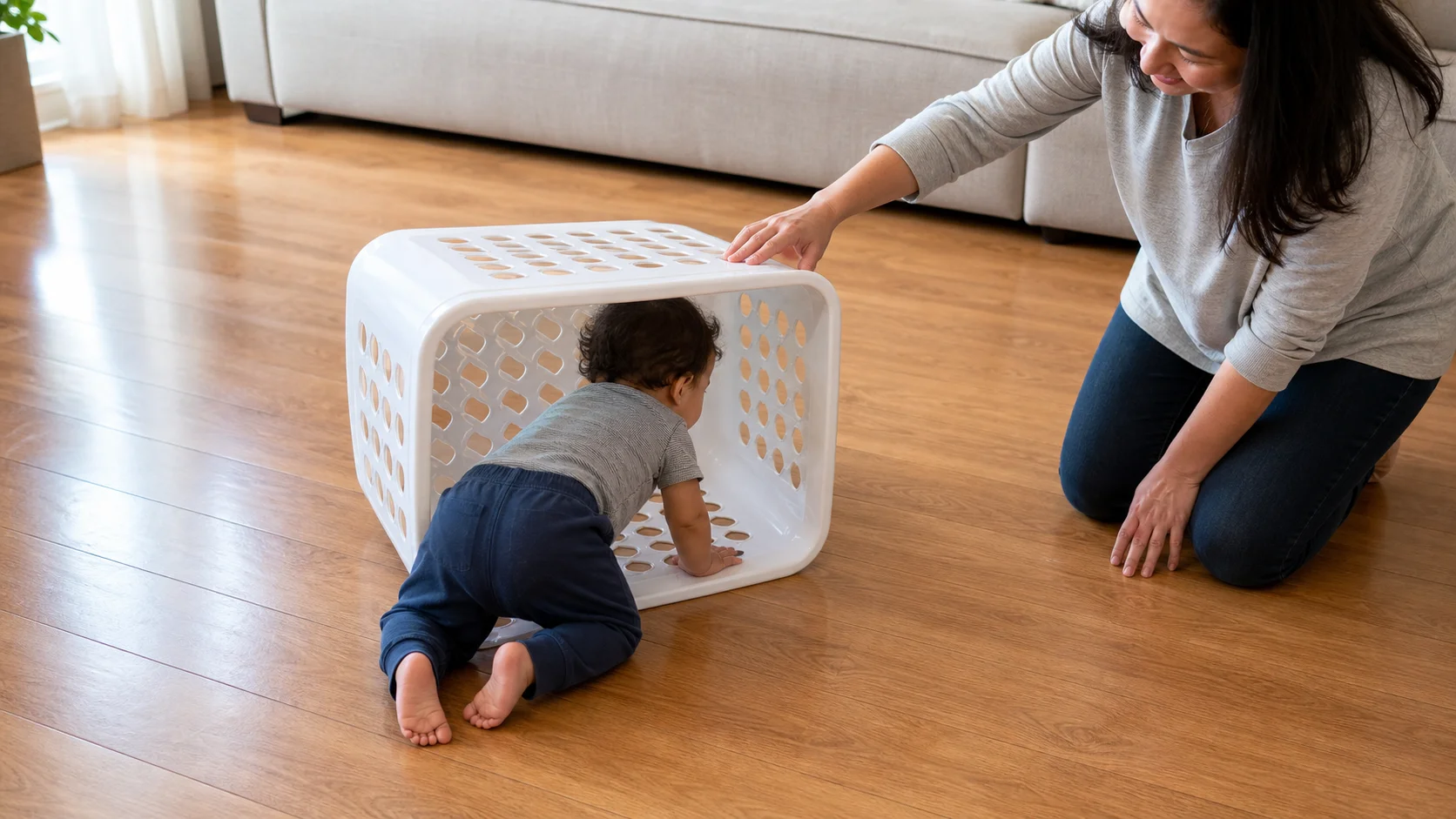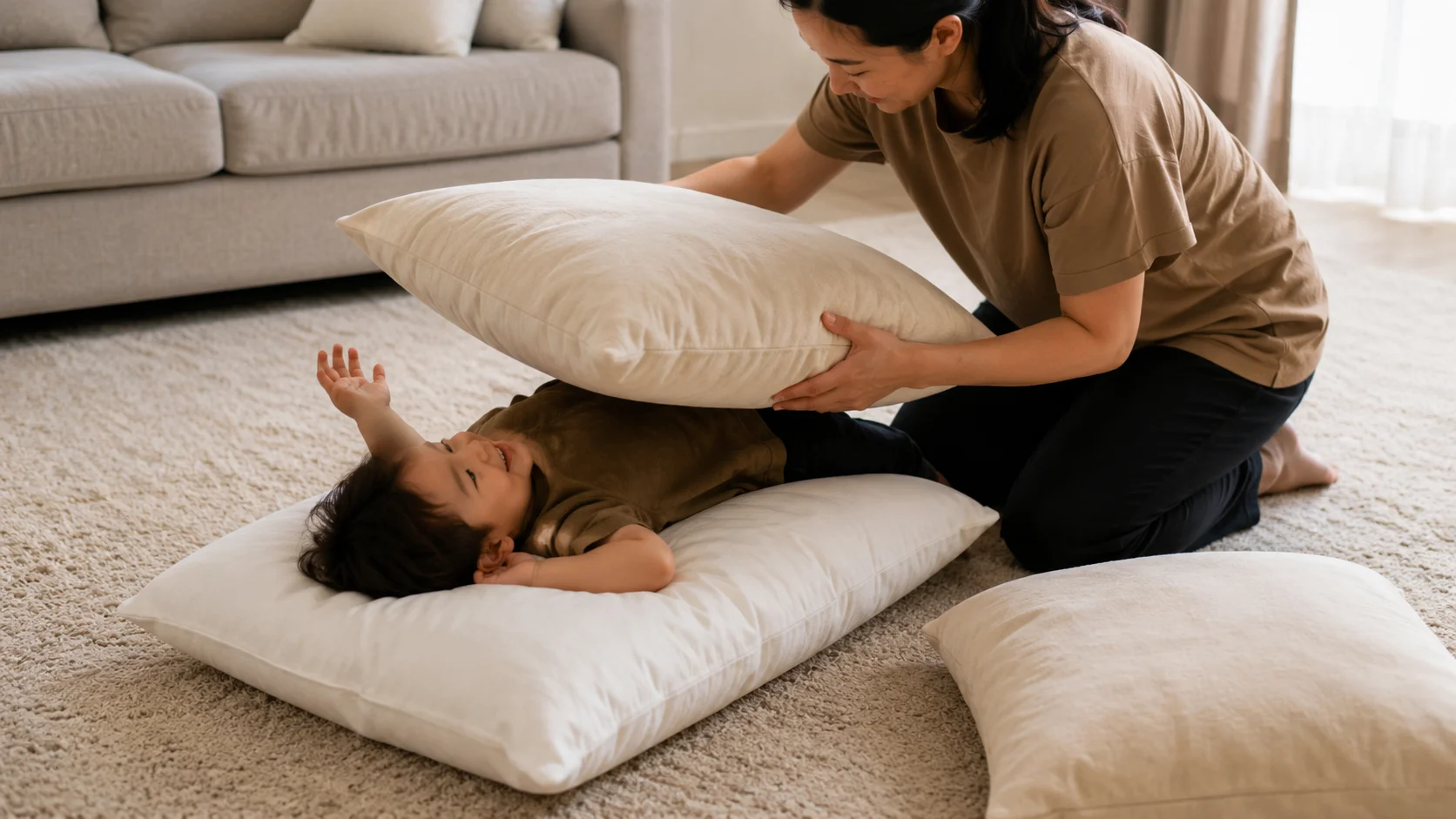
A child lying on a soft indoor surface while a grown-up places one light pillow on the child's legs for a gentle pretend sandwich topping.
Skill builderOT-adjacent supportRepeat LoopIndoor

Pillow Sandwich.

A soft pillow game where your child gets one gentle topping, a full release, and a simple more-or-done choice.

Play time
5-10+ min
Age
2-5 years
Energy
Low
Mess
No
Effort
Medium
Where
Indoor
Start here

The recipe.

Medium parent effort
2 things

What you need

  • 2 or more soft pillows
  • A carpeted floor, bed, couch, or other soft indoor surface with room for your child to lie down
5 min minimum

Setup

Then start the loop
Step 01
On the carpet, bed, or couch, choose a spot where your child can lie comfortably with their face uncovered.
Step 02
On that spot, place 1 soft pillow under or beside your child's body if you want a "bread" layer.
Step 03
Beside your own knee, put 1 or 2 light topping pillows within easy reach.
Step 04
Around your child's head and neck, keep open space with no pillow covering the face, mouth, or breathing space.
"Sandwich time."
The loop

How play unfolds.

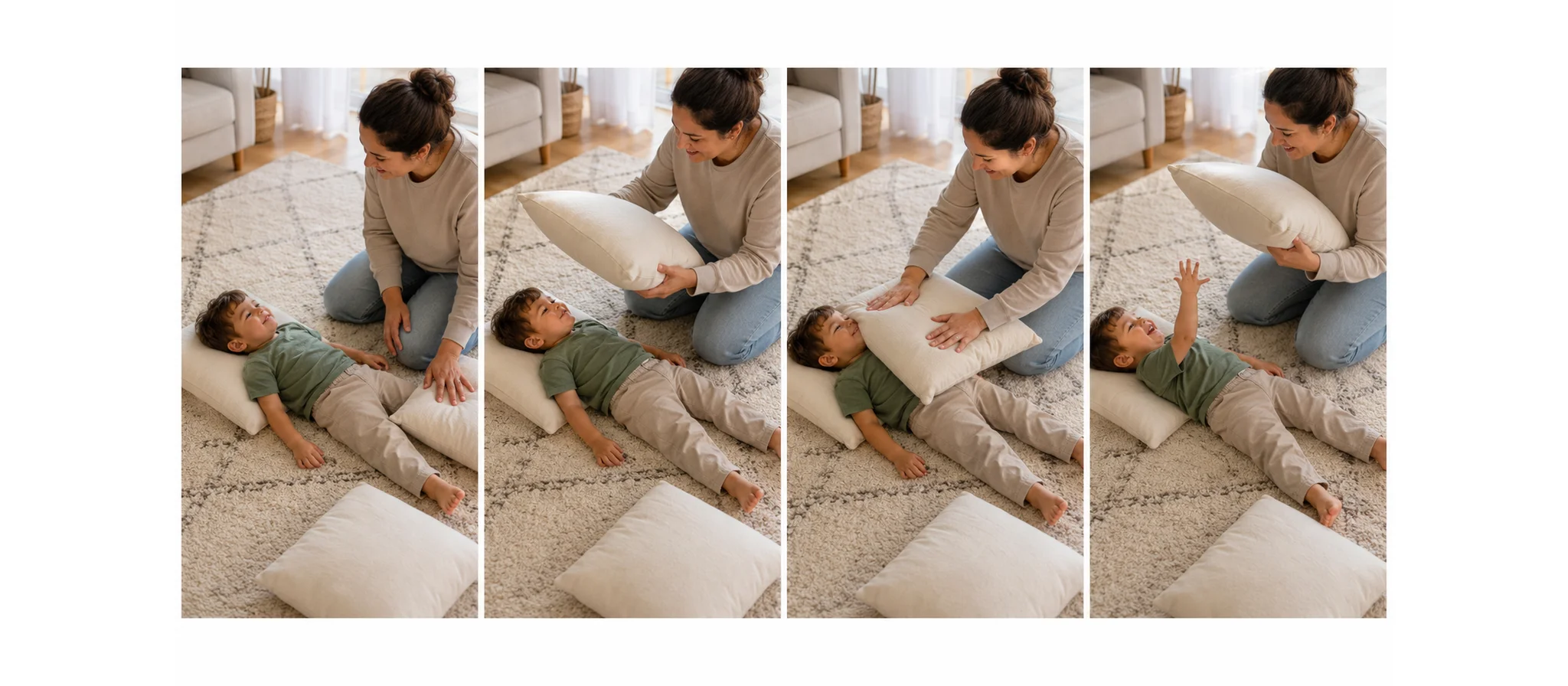
Four panels showing a grown-up setting out soft pillows, a child lying on a safe spot, one brief pillow squish with the face clear, and the child signaling more or all done.
  1. 01
    Hold 1 soft pillow over your child's belly, legs, or back and say, "Here comes one soft topping."
  2. 02
    Place the pillow gently, press for 1 or 2 seconds, then lift it all the way off.
  3. 03
    Ask, "More or all done?" and wait for your child's signal.
  4. 04
    Repeat only if your child wants another topping, or switch roles and let your child give you one gentle turn.

Safety Check

  • Stay with your child the whole time.
  • Keep the child's face, neck, and breathing space clear.
  • Use only light, soft pillows, not heavy or weighted items.
  • Lift the pillow immediately if your child resists, freezes, cries, turns away, says no, or signals done.
  • Do not pin the child down or press harder because they laughed once.
Supporting the play

What to say in the moment

Match what you say to what you see.

Prompt ladder
Level 1 (Start)
"One soft topping."
Level 2 (Keep going)
"More topping or all done?"
Level 3 (Stretch)
"Tell me soft or softer."
Level 4 (Extend)
"Now your turn to squish me."
If your child seems...
What you'd see
Focused
What to do
Say
"You noticed that squish."
Add
Name one body part that is already getting pressure.
Extend
Let your child choose soft, softer, or switch turns.

Make it easier

Younger end
  • -Use only one topping before asking "more or done?"
  • -Let your child stay sitting instead of lying down.
  • -Let your child press the pillow onto their own lap.

Make it harder

Older end
  • +Let your child choose where the next safe topping goes.
  • +Let your child request soft, softer, or stop before each round.
  • +Switch roles and let your child give you one gentle topping.

If it's not working

If you see
If child ignores it
Put the pillow on your own lap and say, "Squish me first," then model one quick topping.
If you see
If child misuses it
Pause and say, "Pillows press softly. Faces stay clear." Restart with one short squish.
If you see
If child gets frustrated
Stop the pressure, sit beside the child, and offer a no-pressure role like choosing the next pretend topping.
Skill spotlight
Repeat Loop

Noticing body pressure and asking for more, stop, or a turn, Repeating a safe play routine

This helps the child notice body input, practice a predictable start-and-stop routine, and use a simple signal to keep play comfortable.

  • The short press-and-release loop helps your child notice when body input feels good and when it is enough.
  • The more-or-done pause gives your child an easy way to practice telling a grown-up yes, no, or not yet.
  • Switching roles keeps the same predictable routine going without adding new materials or a harder setup.
Real-world transfer
  • Telling a grown-up when touch feels good or needs to stop.
  • Staying with a simple start-stop routine.
  • Waiting for release before asking for more.
  • Taking turns in close physical play.

Parent questions

Back to library
Keep playing

Related activities.