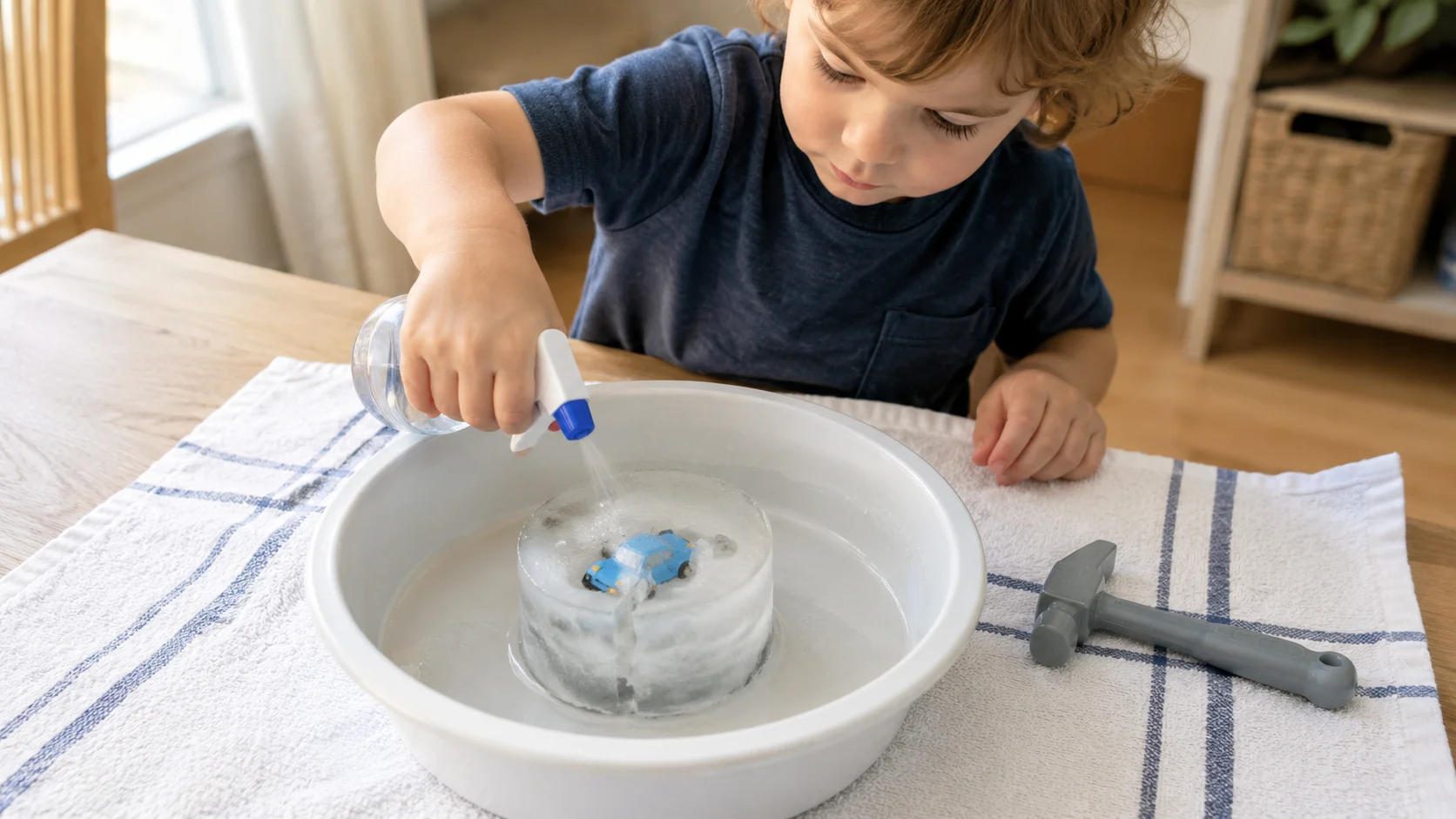
A young child sprays warm water onto a small toy frozen in ice inside a shallow bowl while a grown-up watches nearby.
ThinkingAutism supportTest And CompareIndoor

Freeze Toys.

One trapped toy turns ice play into a simple rescue game with visible changes and easy retries.

Play time
5-15+ min
Age
2-5 years
Energy
Low To Medium
Mess
Low To Medium
Effort
Low
Where
Indoor
Start here

The recipe.

Low parent effort
6 things

What you need

  • 1 small plastic container, ice tray slot, sandwich container, or yogurt pot
  • 1 small toy that fits fully inside the container
  • Water
  • 1 spray bottle with warm water
  • 1 simple rescue tool, such as a spoon or toy hammer
  • 1 shallow bowl, tray, or towel to catch melting water
5 min minimum

Setup

Then start the loop
Step 01
Freeze one small toy under water in a small container overnight.
Step 02
At play time, put the frozen toy block in a shallow bowl or tray on a towel or wipeable surface.
Step 03
Place the spray bottle with warm water and one simple rescue tool beside the bowl.
Step 04
Keep the trapped toy visible enough that your child can see what they are trying to free.
"Let's rescue it."
The loop

How play unfolds.

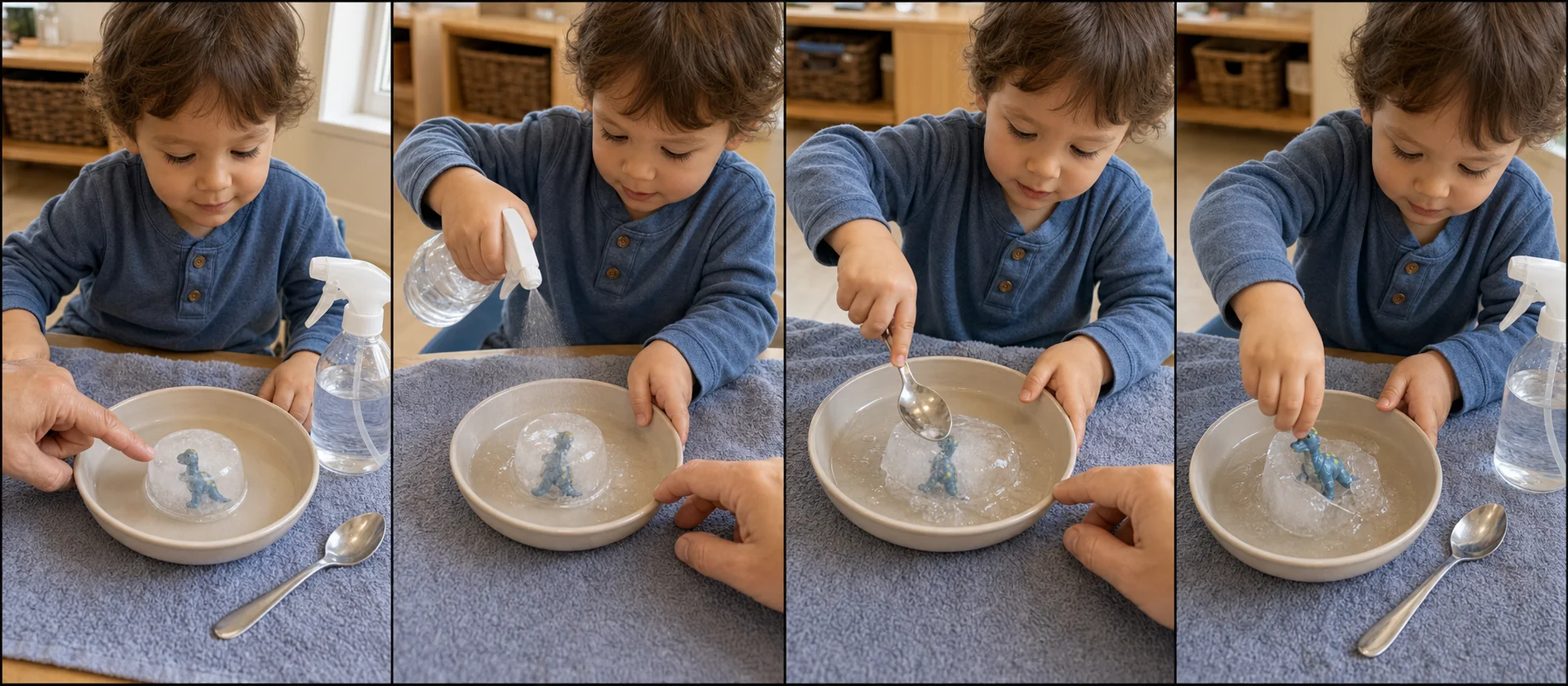
Four panels showing a toy frozen in a small container, the frozen block placed in a bowl, a child spraying and tapping the ice, and the freed toy being pulled out.
  1. 01
    Point to the trapped toy and say, "Let's get it out."
  2. 02
    Let your child spray warm water on one spot or tap one edge of the ice.
  3. 03
    Pause to look for a crack, wet patch, or loose edge around the toy.
  4. 04
    Keep rescuing the same toy until it comes free, using the same tool again or switching tools if needed.

Safety Check

  • Stay with your child the whole time.
  • Use warm water, not hot water.
  • Stop if your child mouths the toy, swings the tool, or gets upset by the cold.
  • Keep the melting water contained so the floor does not get slippery.
  • Choose a toy that matches your child's mouthing safety needs.
Supporting the play

What to say in the moment

Match what you say to what you see.

Prompt ladder
Level 1 (Start)
"Toy rescue."
Level 2 (Keep going)
"Try this spot."
Level 3 (Stretch)
"What changed?"
Level 4 (Extend)
"Water or tap?"
If your child seems...
What you'd see
Focused
What to do
Say
"You found a loose spot."
Add
Point to one crack or wet patch your child can work on next.
Extend
Let your child choose spray or tap for the next turn.

Make it easier

Younger end
  • -Use a smaller frozen block.
  • -Keep only one tool out at a time.
  • -Start with the spray bottle before offering tapping tools.

Make it harder

Older end
  • +Let your child decide which edge to work on next.
  • +Offer both the spray bottle and the spoon and let your child compare them.
  • +Freeze a toy that sits a little deeper in the ice once easy rescues feel familiar.

If it's not working

If you see
If child ignores it
Spray one patch yourself and show the toy underneath changing.
If you see
If child misuses it
Keep one tool out, say, "Tools stay in the bowl," and restart with one calm turn.
If you see
If child gets frustrated
Hold the ice steady, use more warm water, and help your child pull at one loose edge.
Skill spotlight
Test And Compare

Testing what changes the ice and frees the toy

This helps a child notice that different actions create different results and stick with a short retry loop when the first try does not work yet.

  • The rescue goal is easy to understand because your child can see the toy inside the ice.
  • The same short loop repeats over and over, which can lower language load and make the play easier to enter.
  • Small visible changes, such as cracks, drips, and loose edges, give your child a reason to keep trying.
Real-world transfer
  • Noticing that one action changes what happens next.
  • Trying a second approach when the first one is slow.
  • Staying with a simple hands-on problem until it opens up.

Parent questions

Back to library
Keep playing

Related activities.