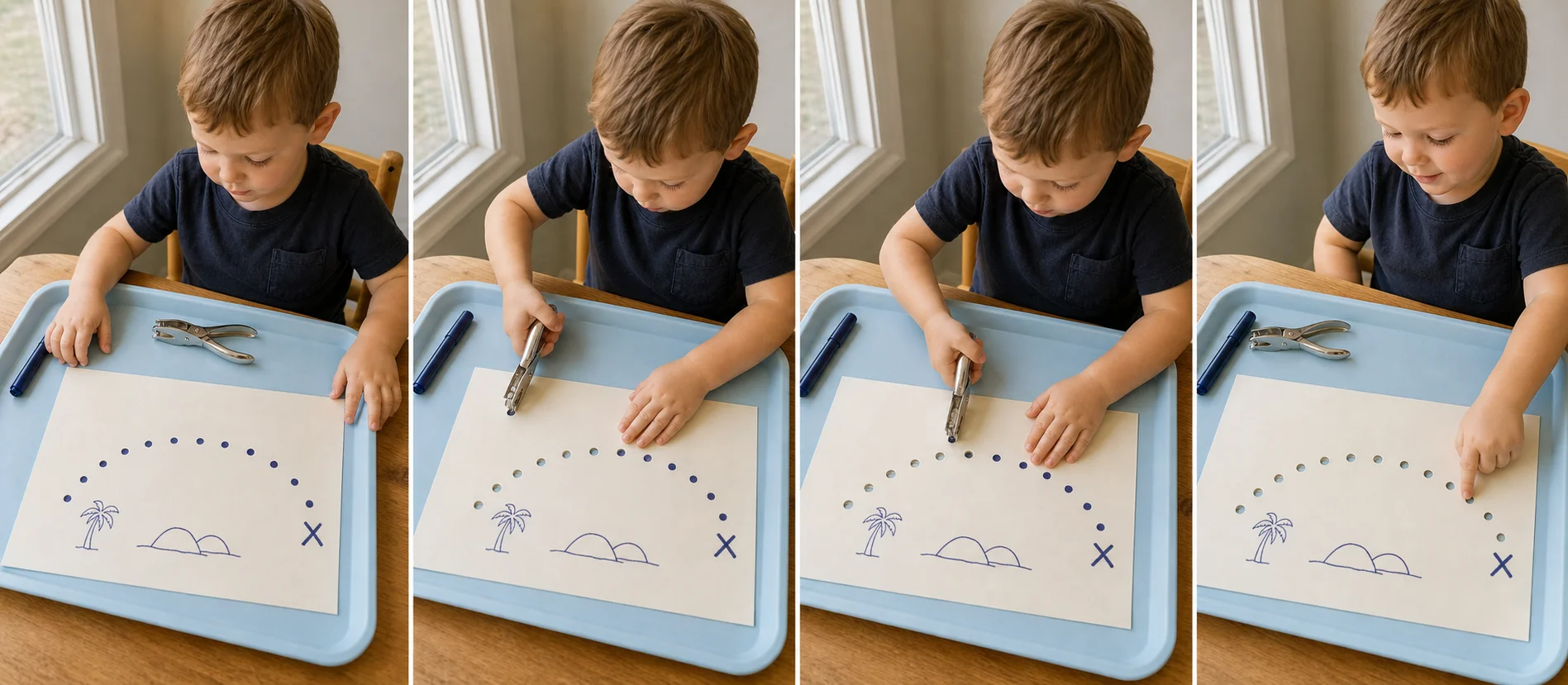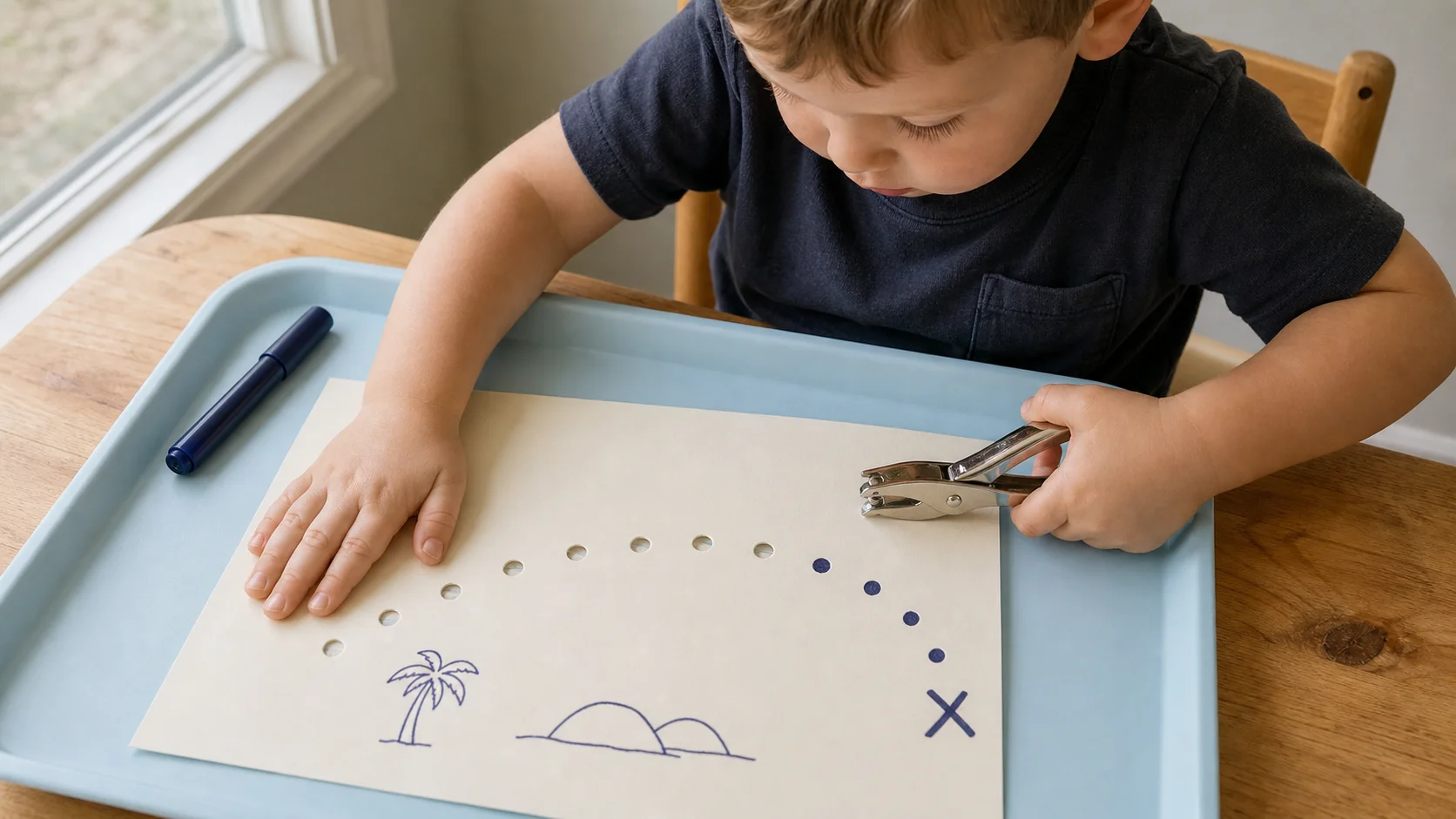

Punch a Path to Treasure
Can your child punch a dotted path to buried treasure? Line up each dot along the edge of a paper map, squeeze one hole at a time, and follow the trail to the X, building hand strength, precision, and controlled tool use.


Can your child punch a dotted path to buried treasure? Line up each dot along the edge of a paper map, squeeze one hole at a time, and follow the trail to the X, building hand strength, precision, and controlled tool use.


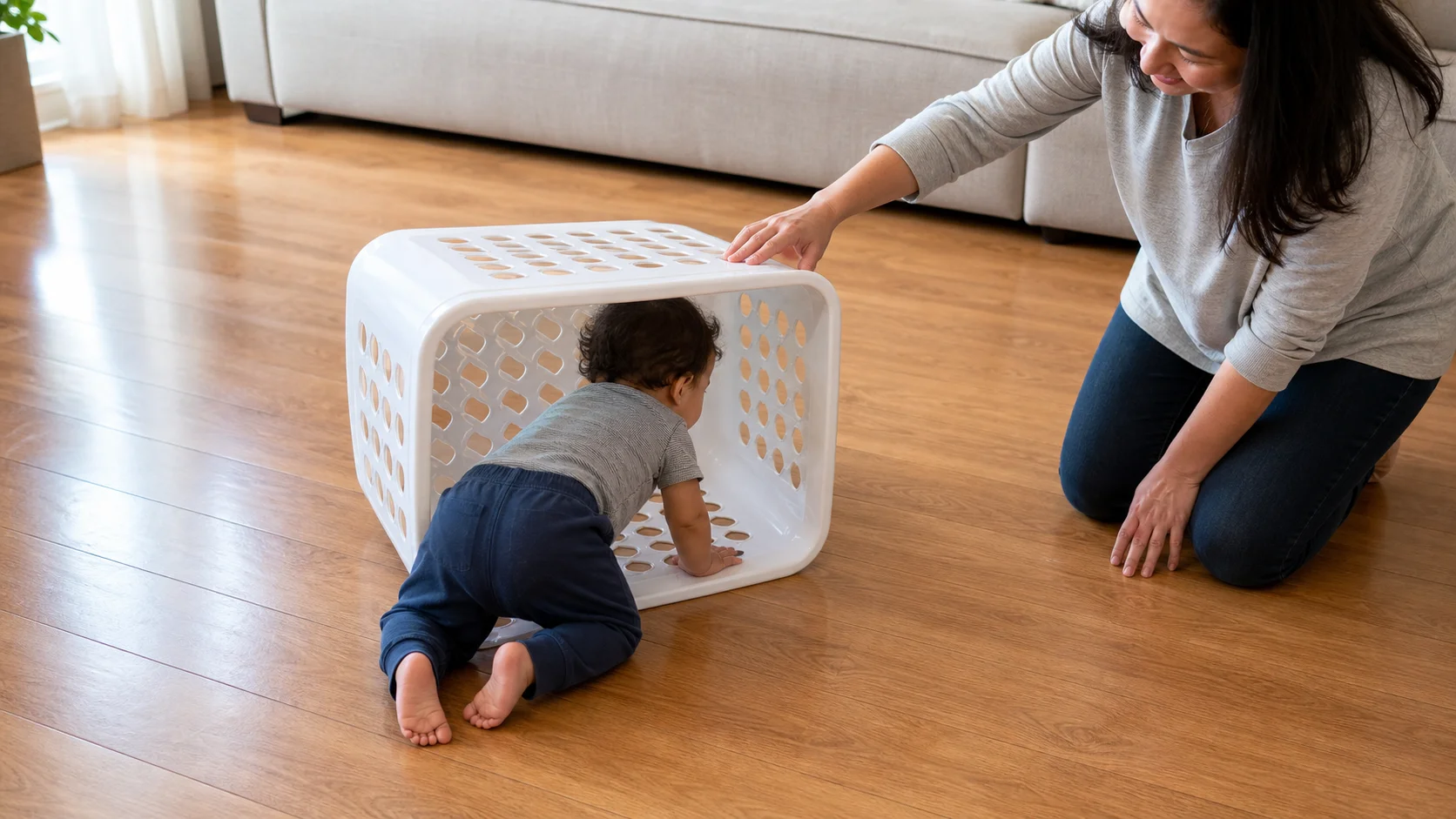
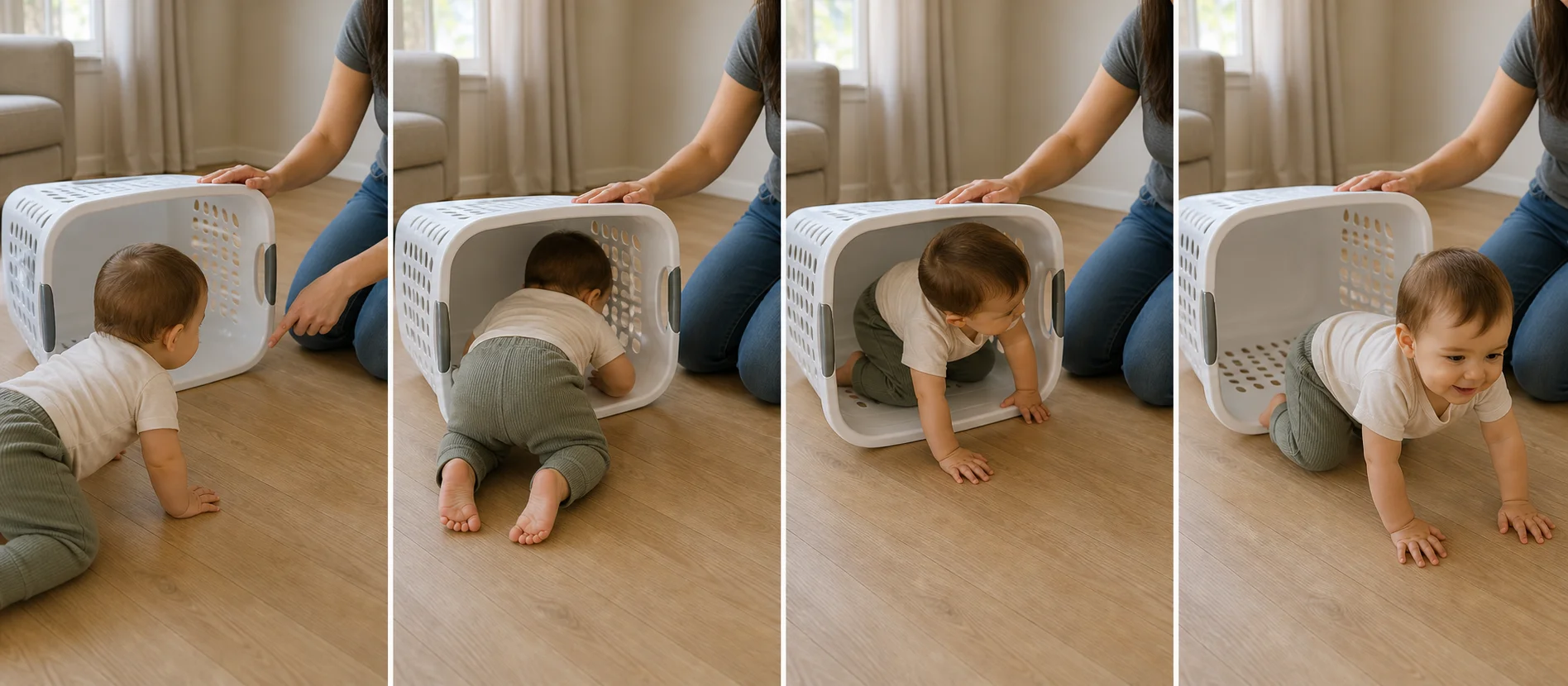
Laundry Basket Crawl is a laundry basket activity for toddlers that helps children explore what fits where through a clear, repeatable play loop.


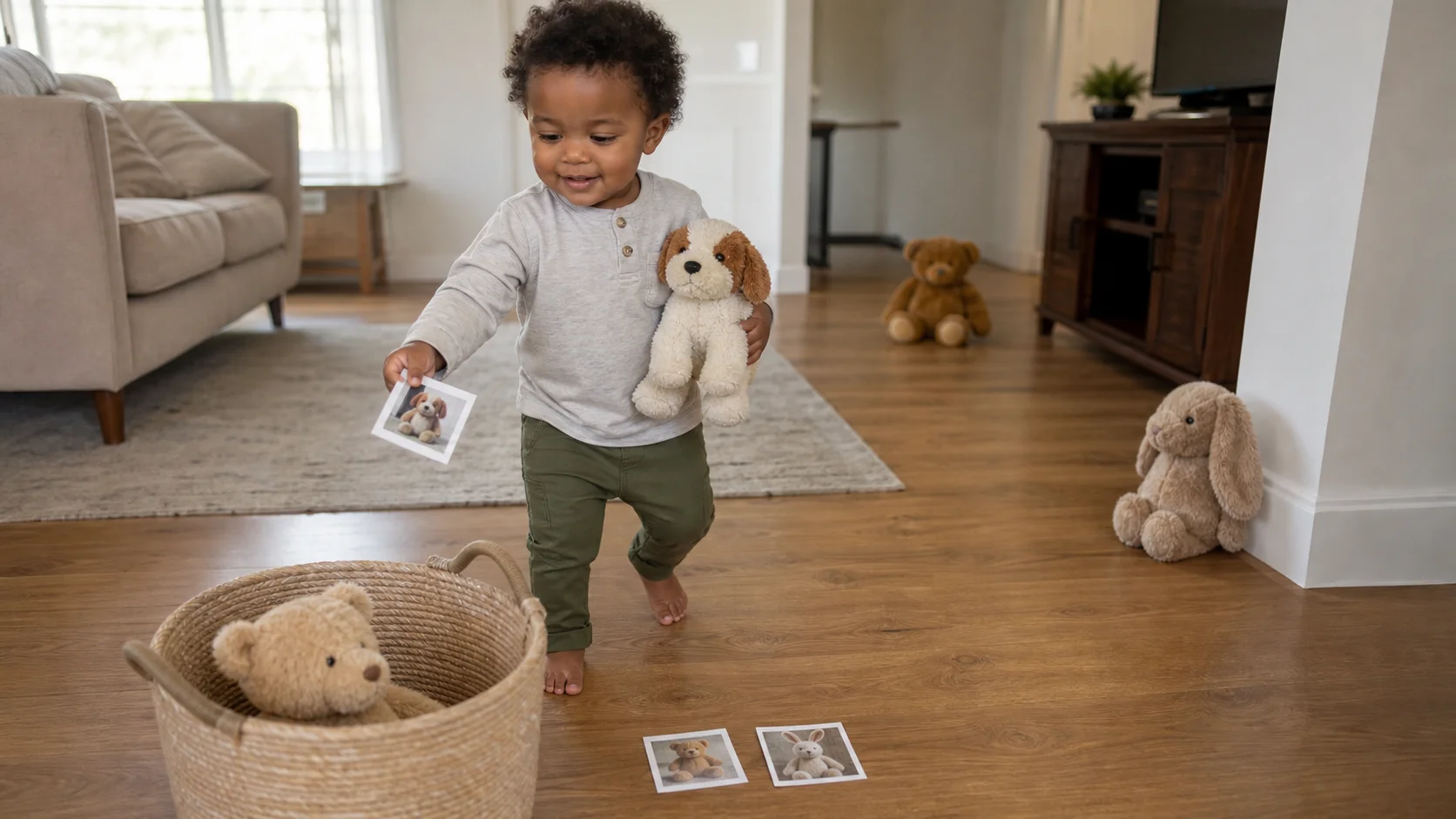
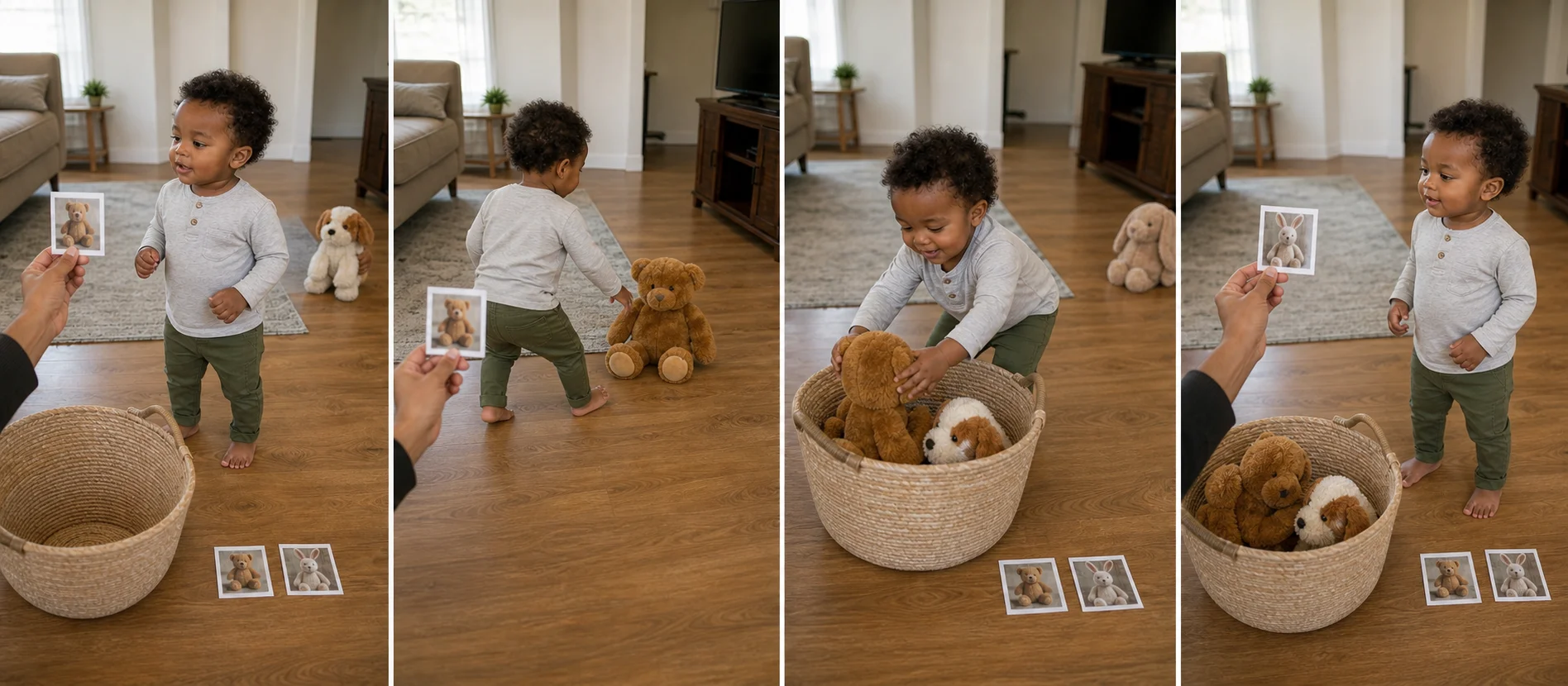
Photo Stuffed Animal Hunt is a photo stuffed animal hunt activity for toddlers that helps children match objects to targets through a clear, repeatable play loop.


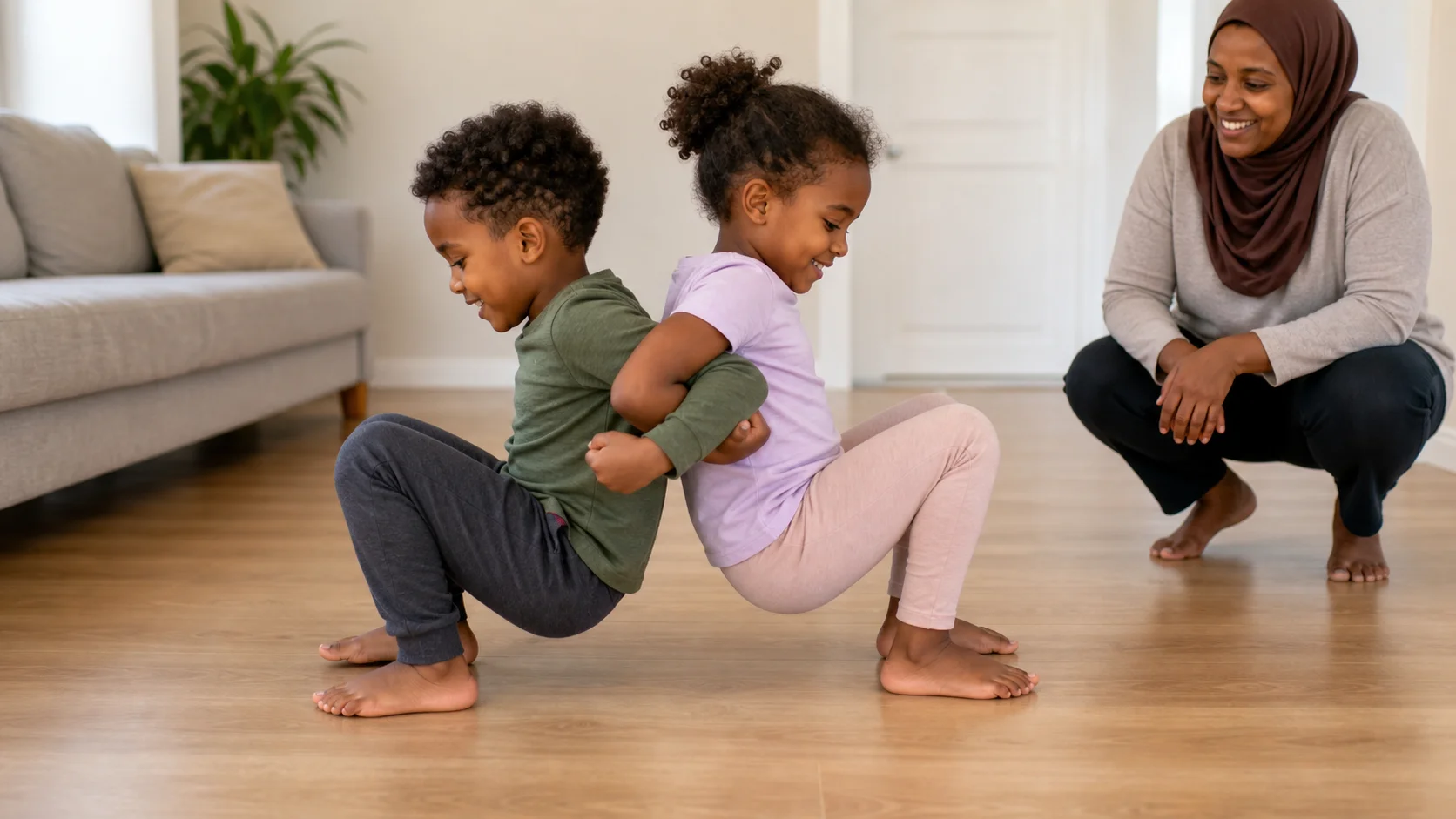
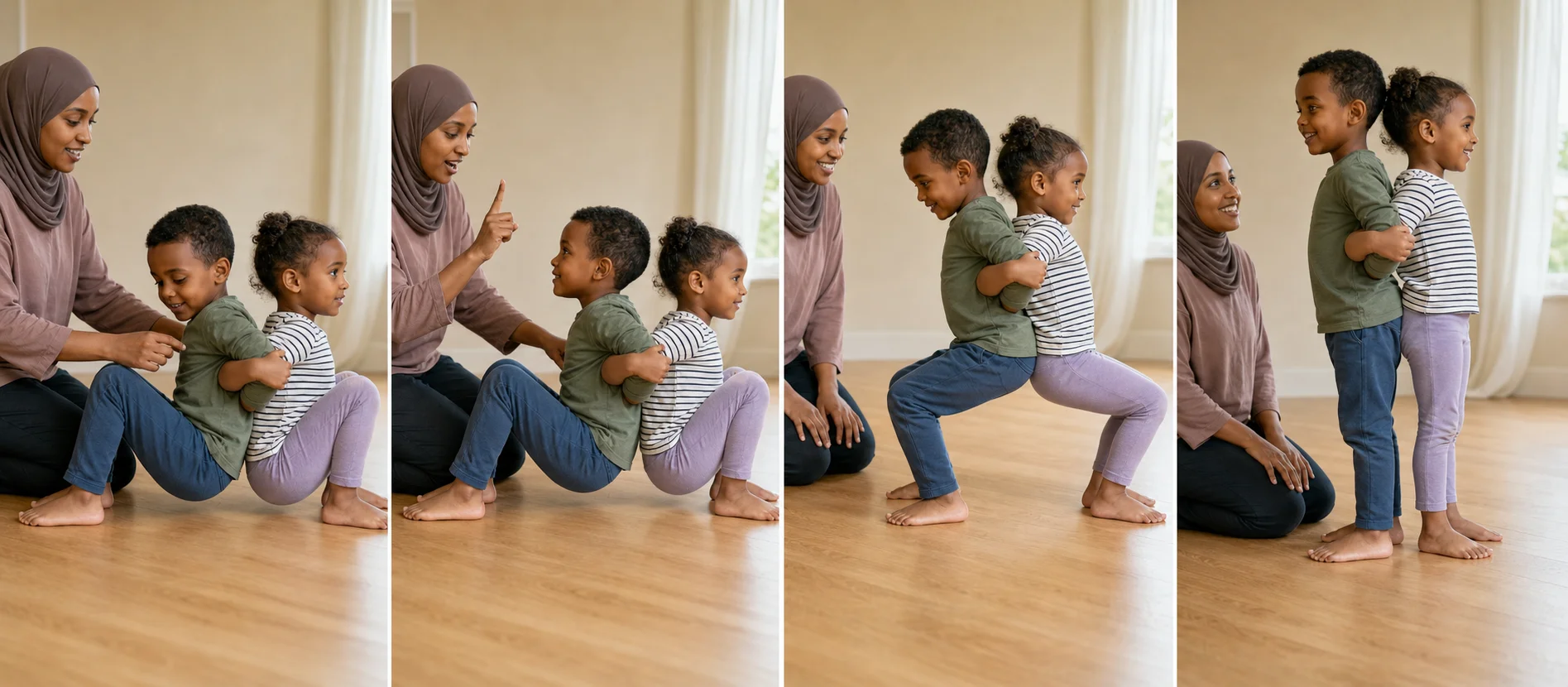
For a quick, no-material balance and teamwork challenge, have two children sit back to back, link arms, and try to stand up together.


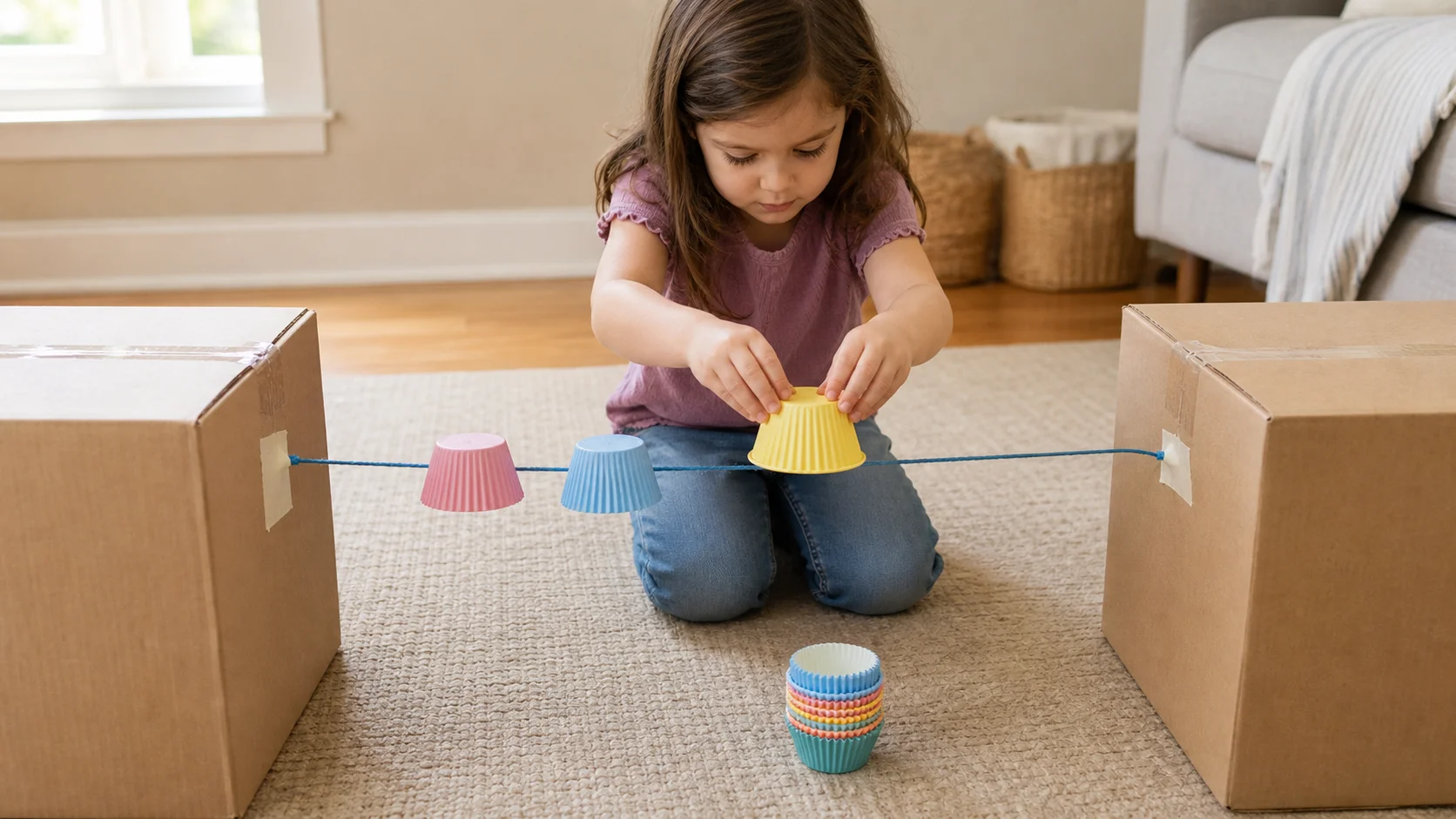
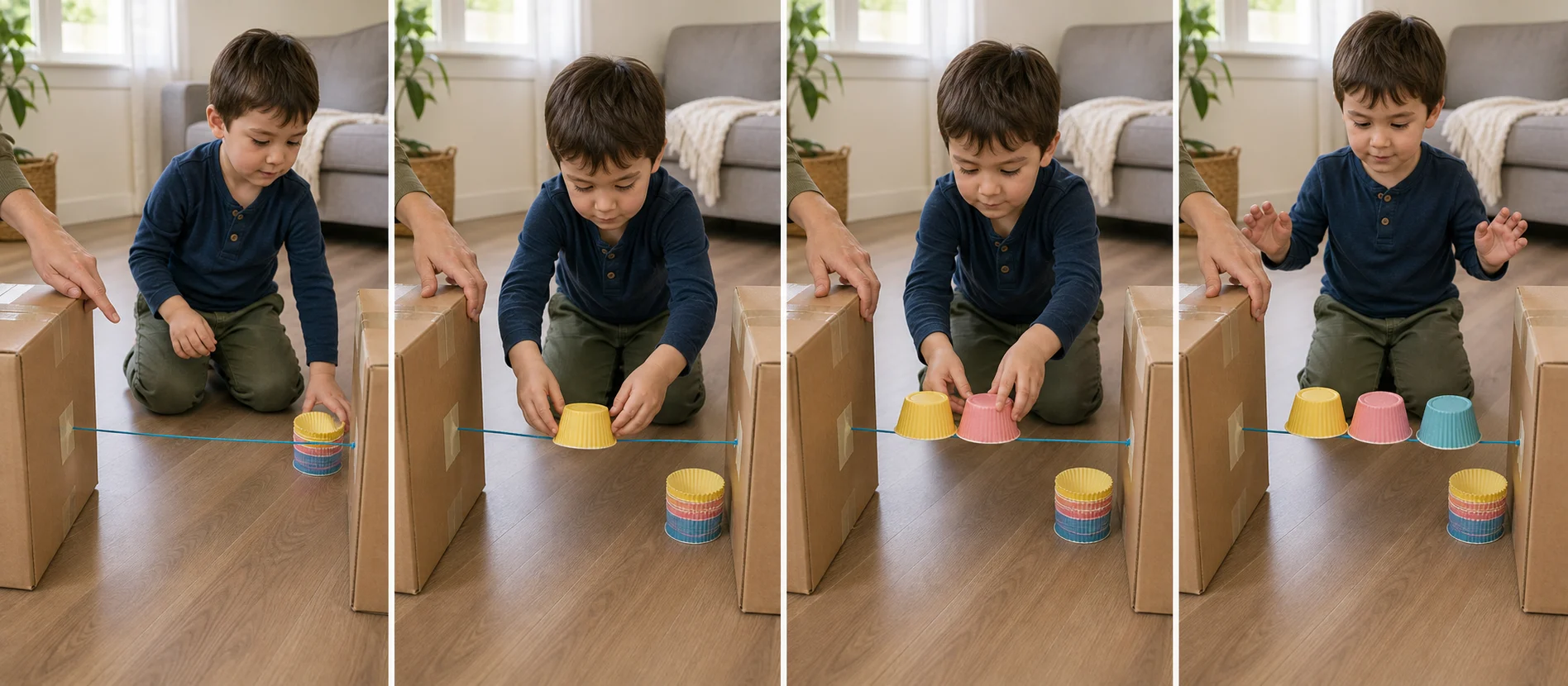
Turn two boxes, yarn, and paper baking cups into a careful hands balance challenge.


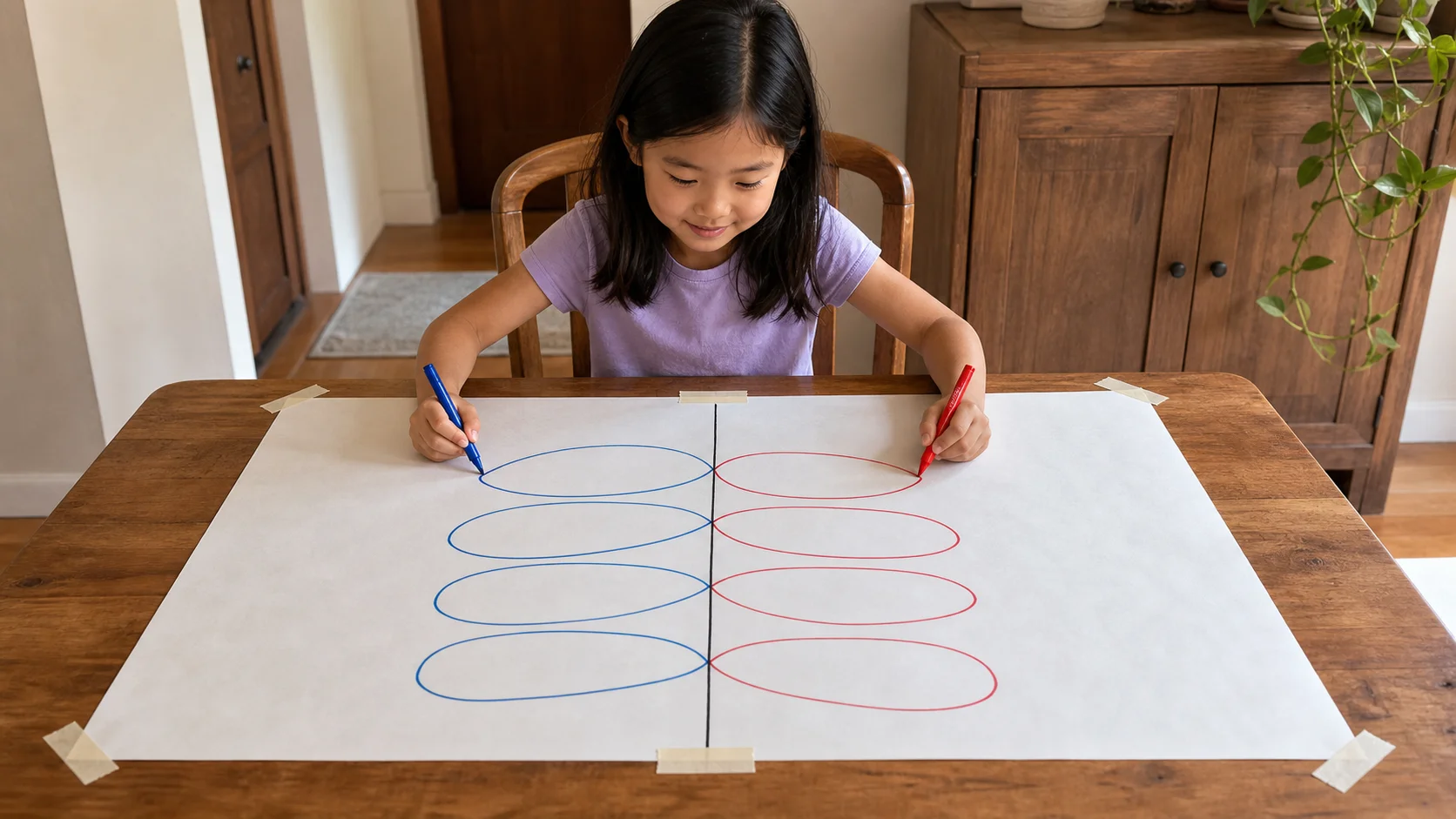
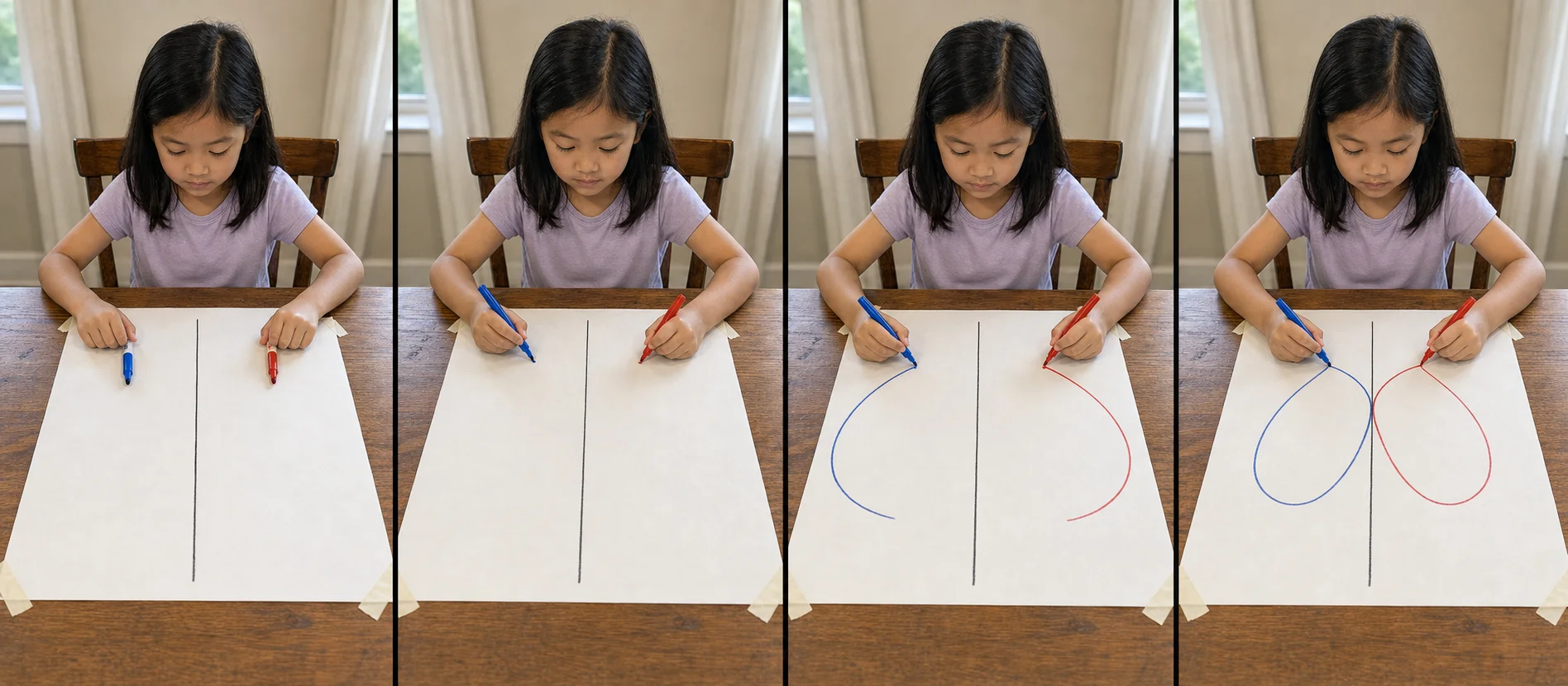
Tape down a large sheet, draw a center line, and let your child make matching loops with two markers.


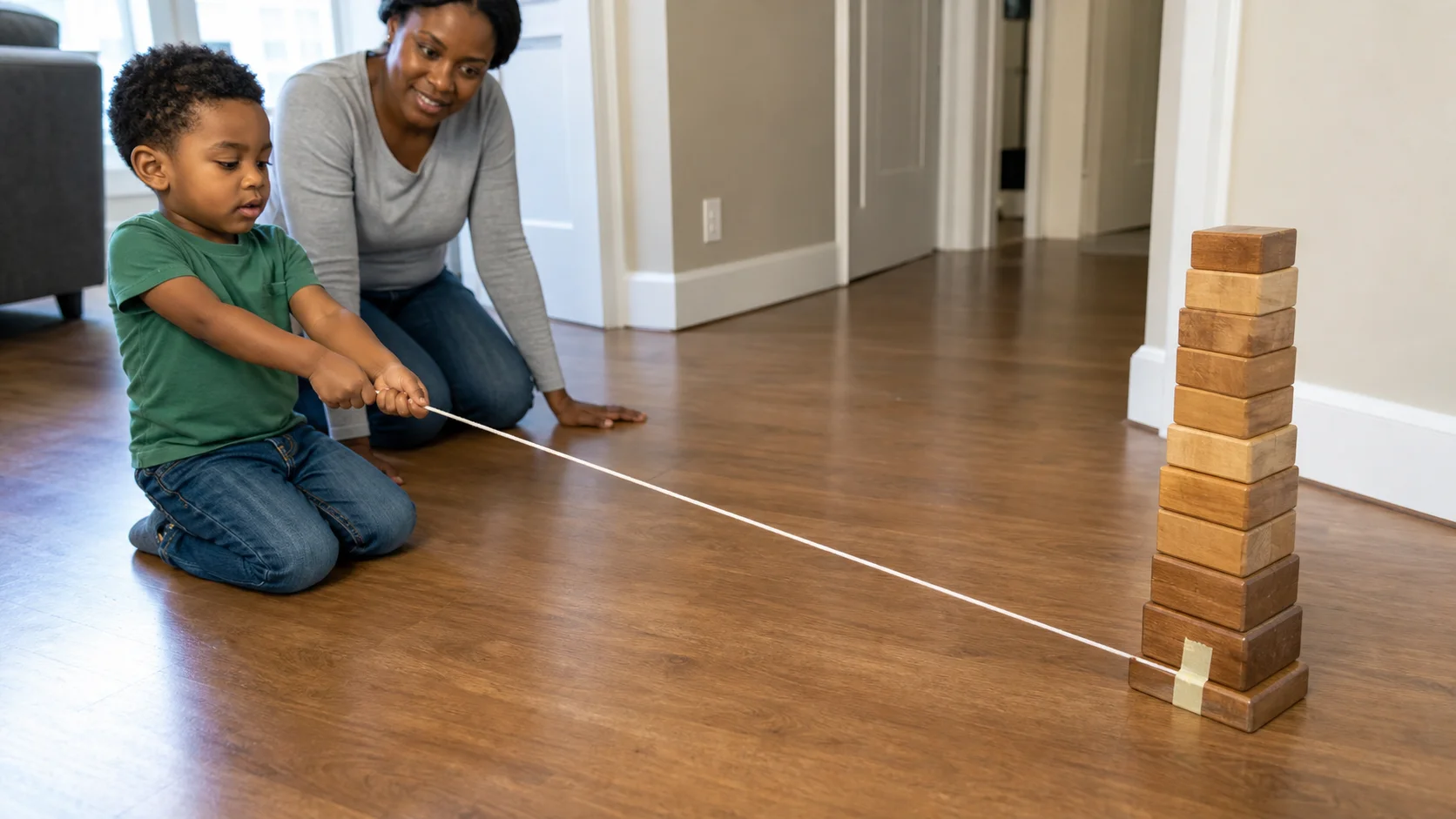
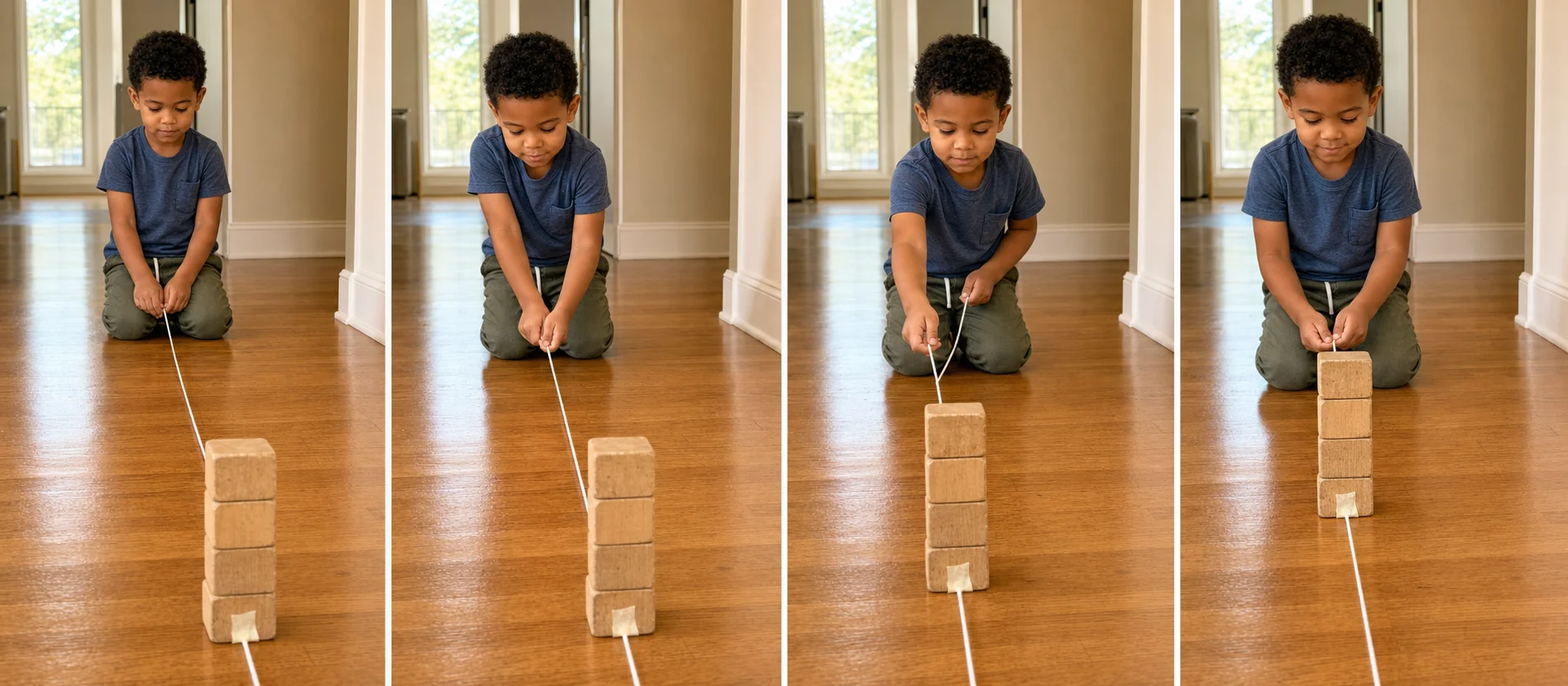
Can your child use a string to pull a block tower across the floor without toppling it? This rescue challenge gives hand strength, two-hand coordination, and body control a playful workout. Slow and steady wins this race!

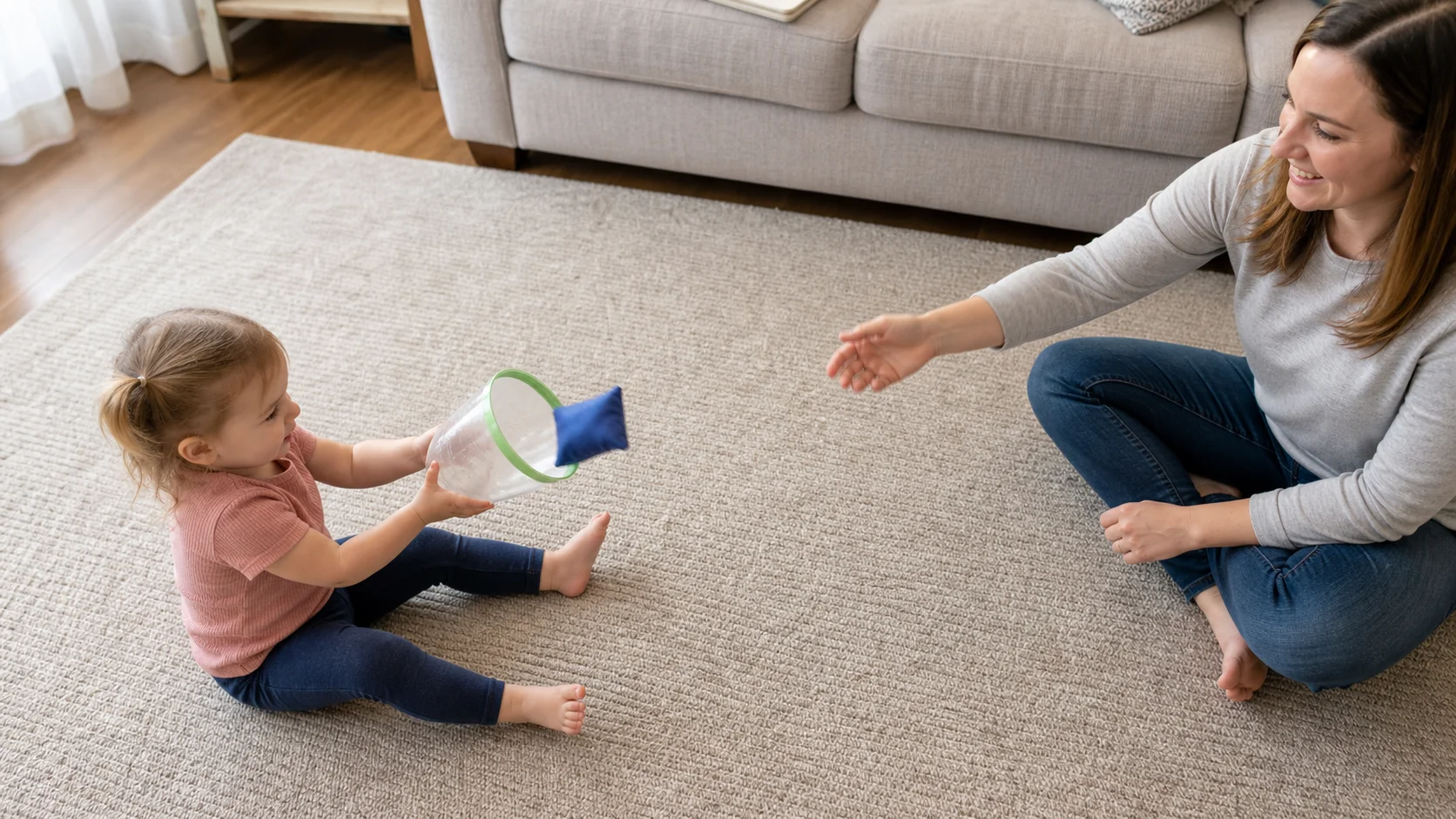
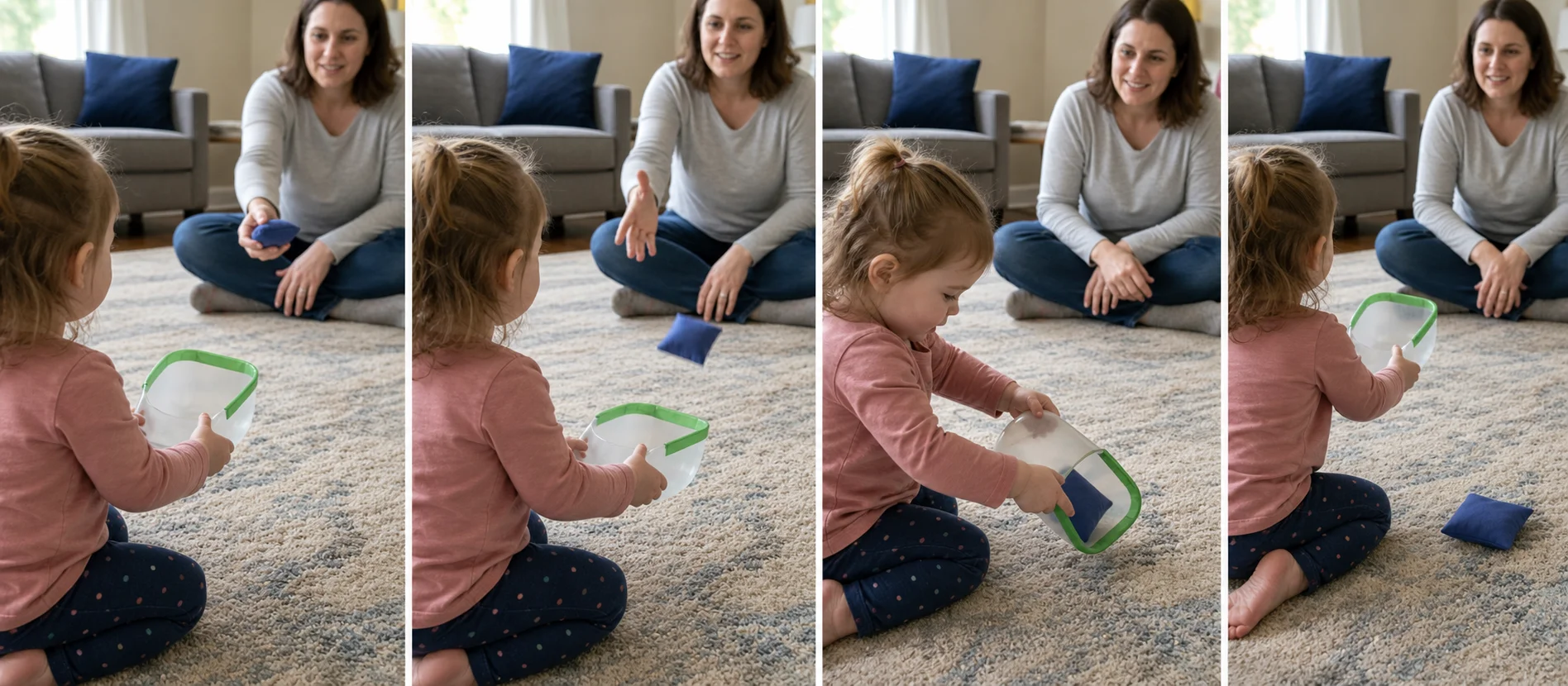
Turn a simple plastic container into a two-handed catching challenge! Sit close, gently toss a soft ball or beanbag, and watch your child track it and trap it, giving visual tracking and two-hand coordination a playful workout.

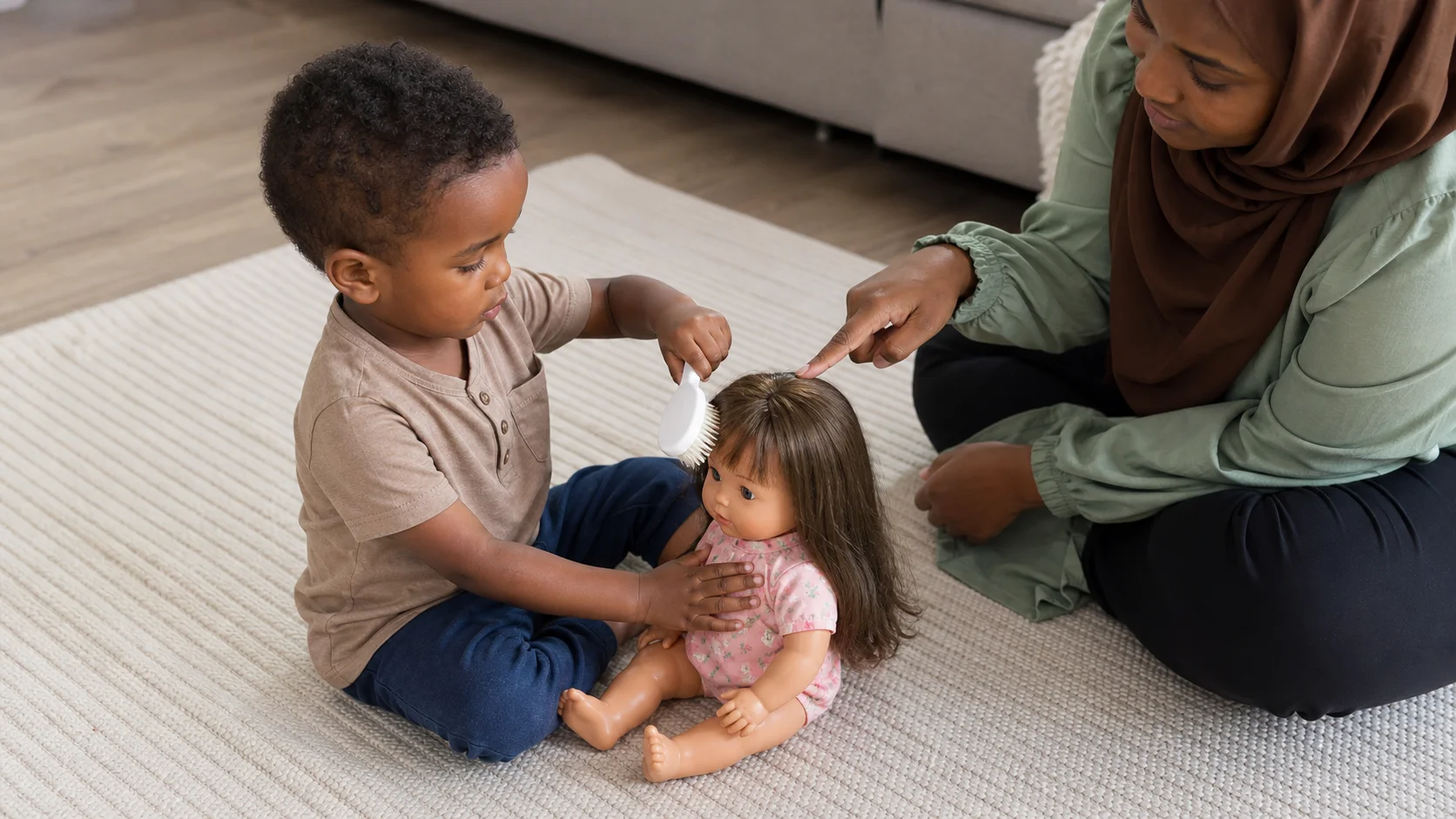
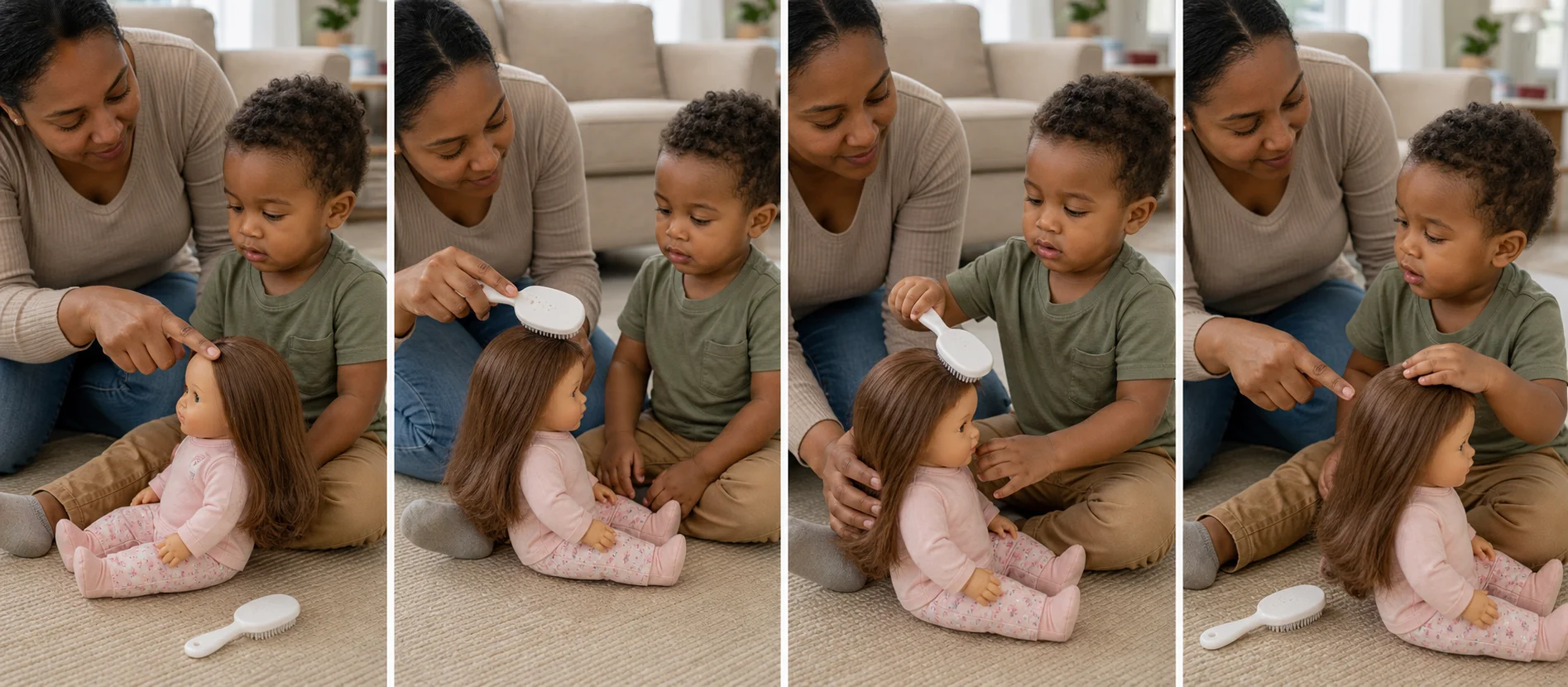
Put your child in charge of the baby's hair! With a doll and a soft brush, they can copy gentle strokes from one spot to the next while practicing imitation, hand control, and a familiar care routine.


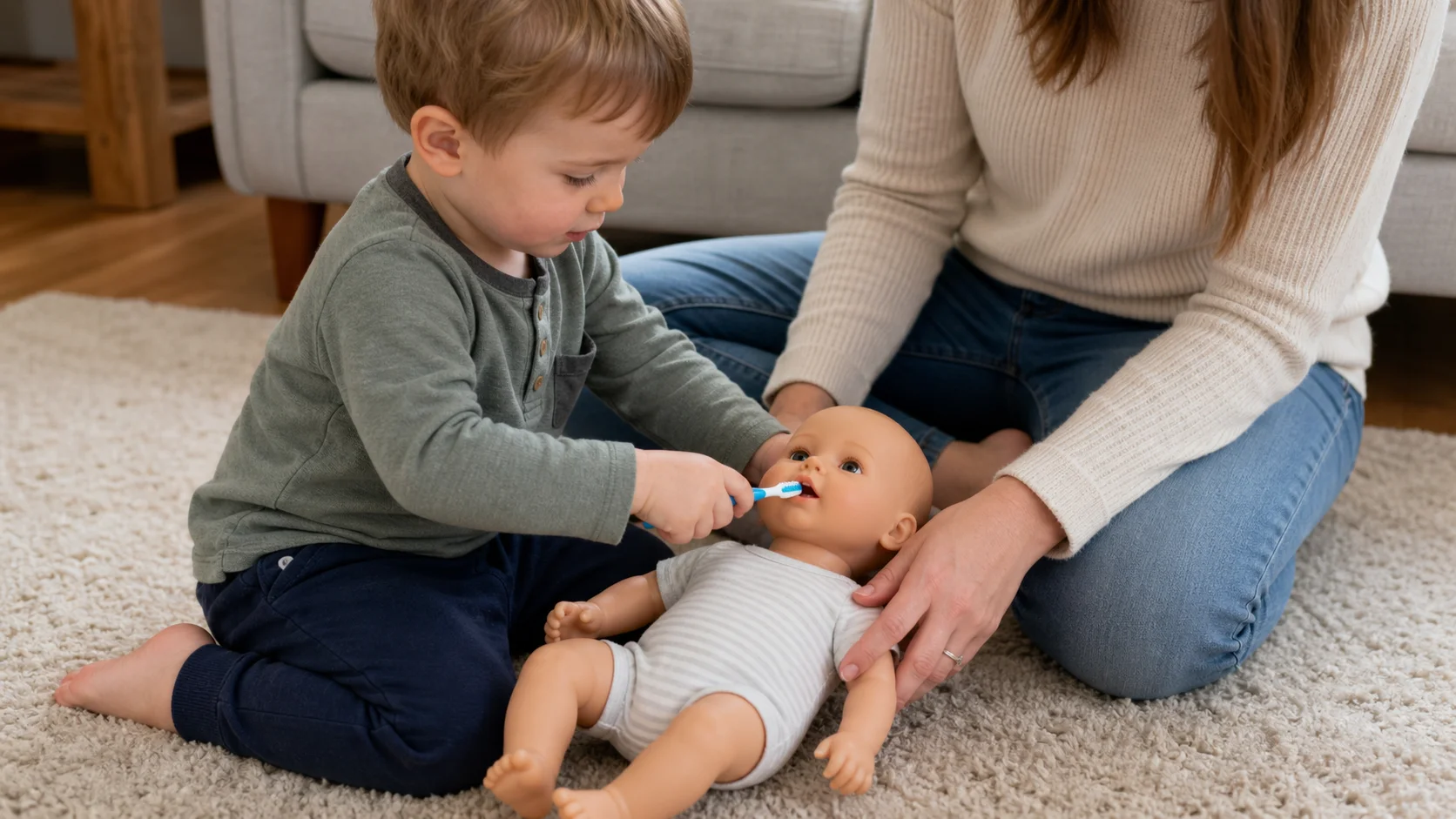
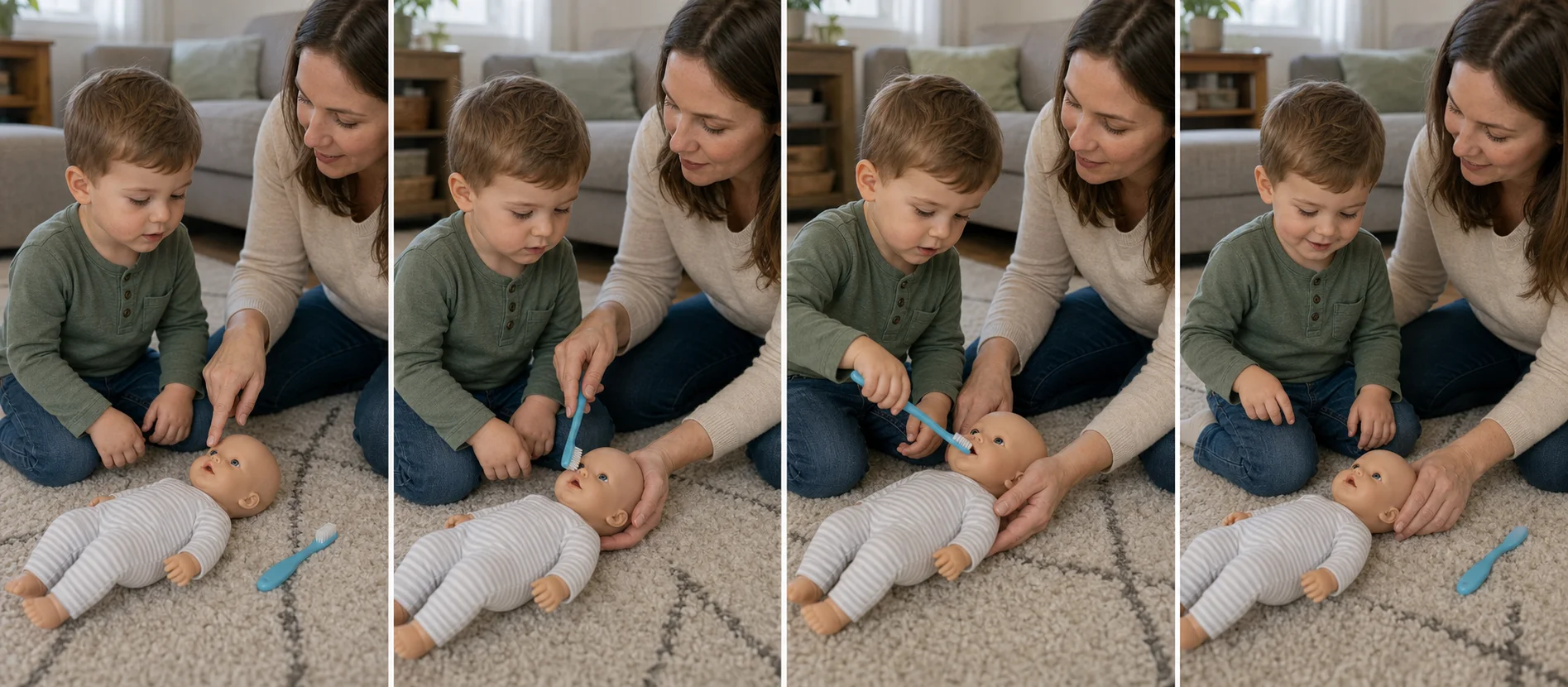
A baby doll and clean toothbrush turn toothbrushing practice into calm pretend caregiving play.


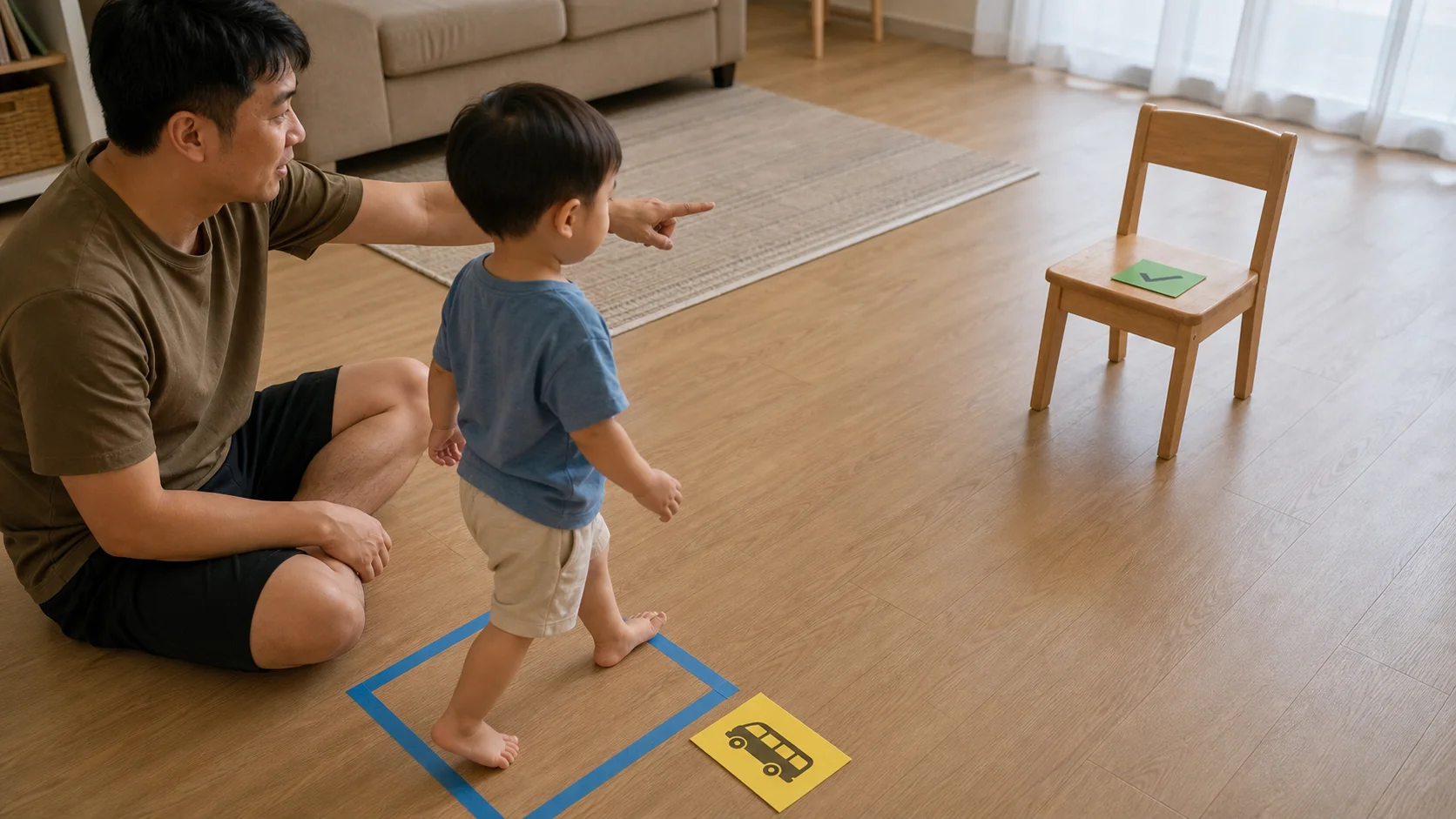
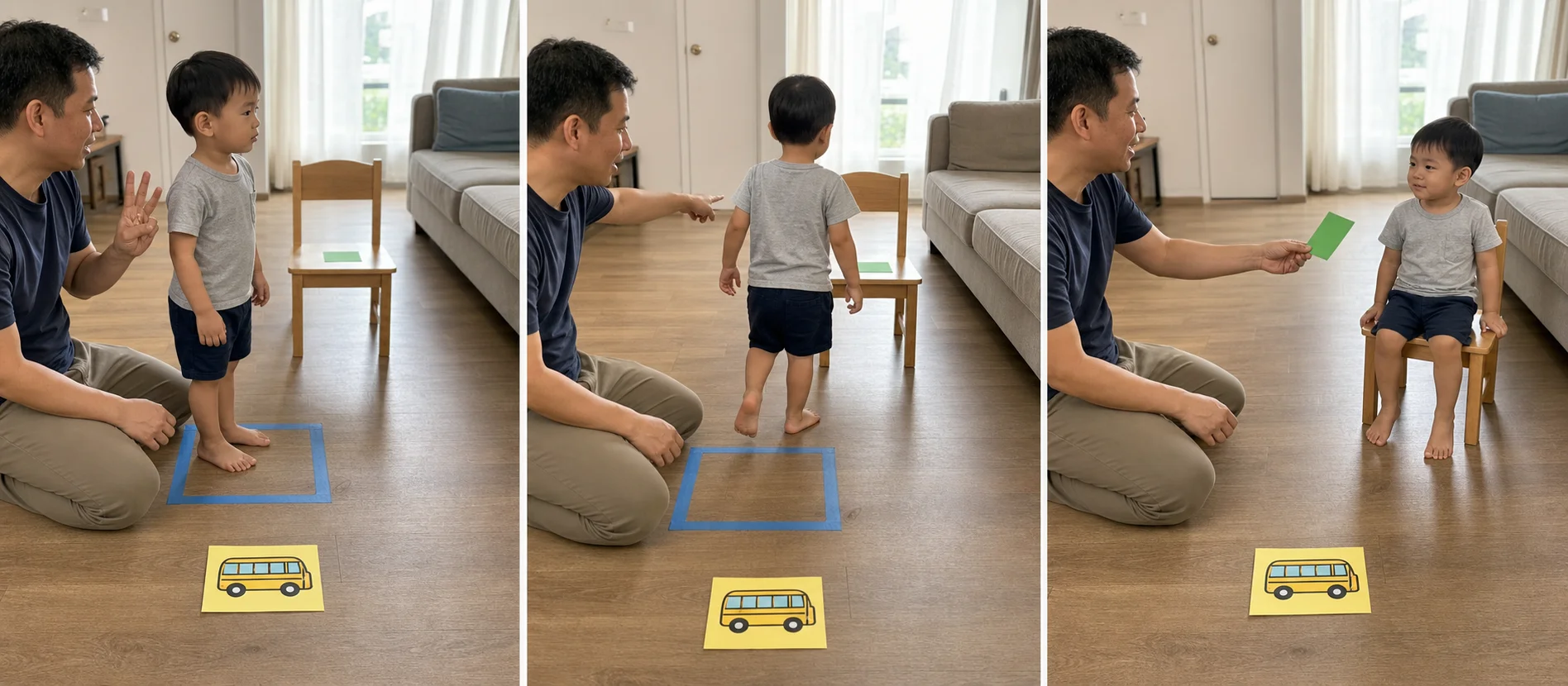
All aboard for a pretend bus ride! Your child waits at the stop, listens for the cue, and finds their seat, turning bus practice into a simple, repeatable game.


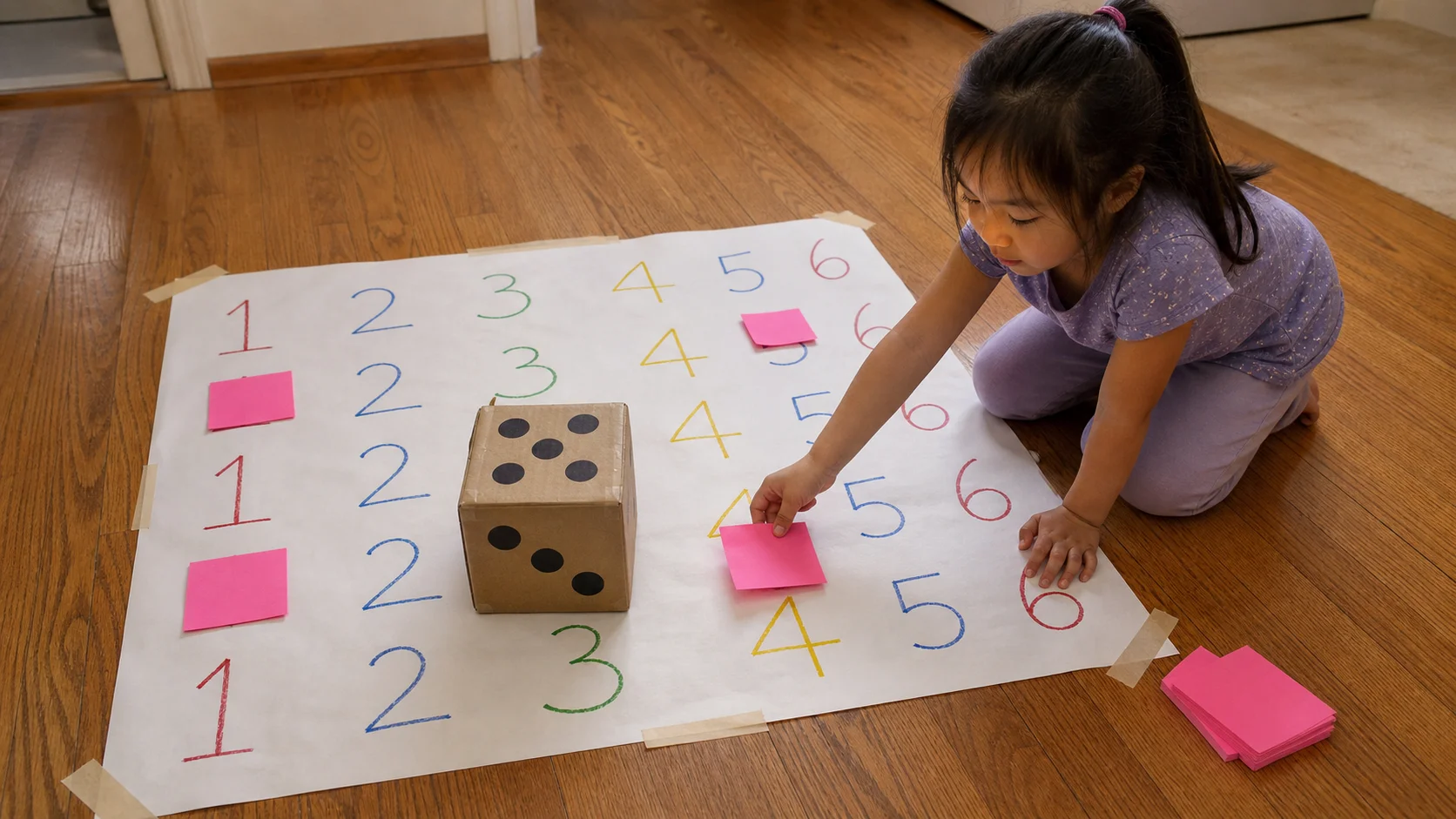
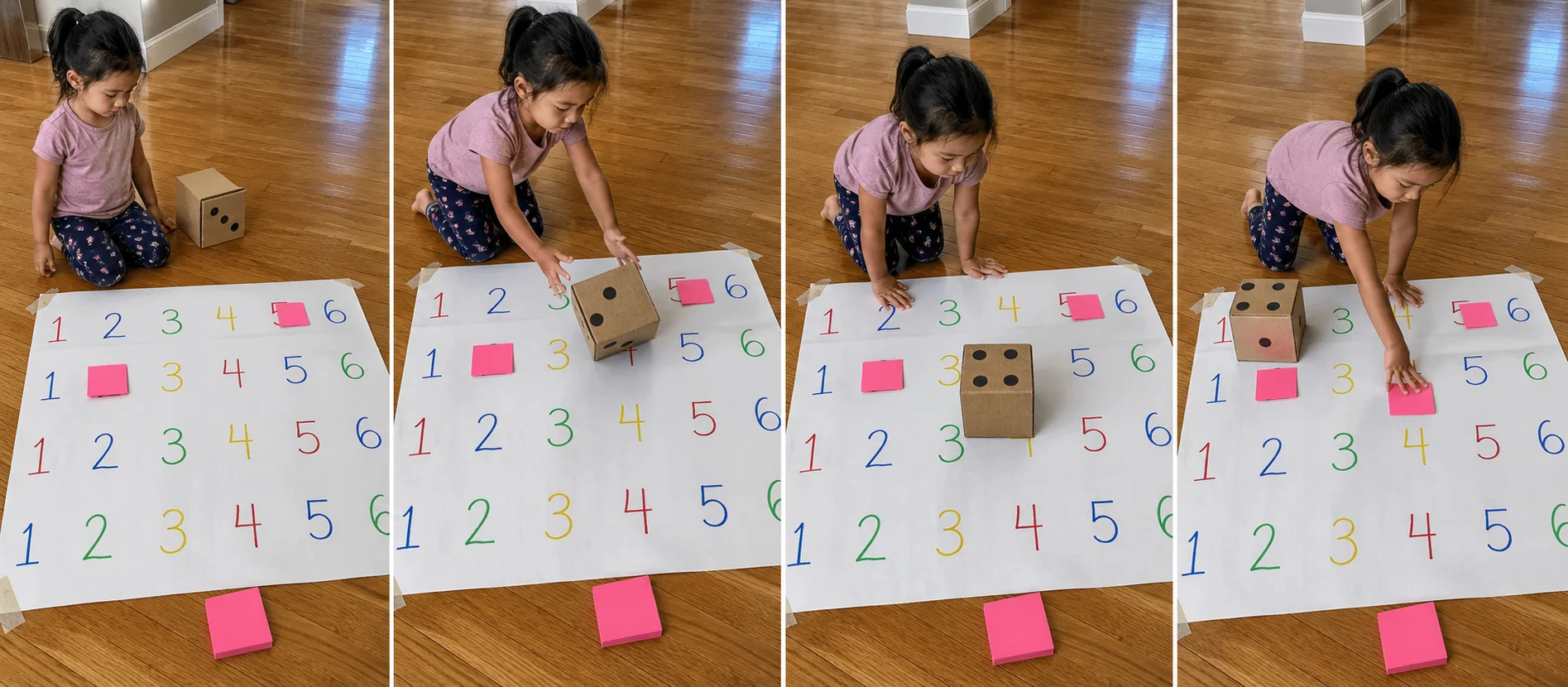
Turn a cardboard box into a giant rolling die! Your child rolls, counts the dots, finds the matching number, and covers it with a sticky note, turning early math into an active floor game.


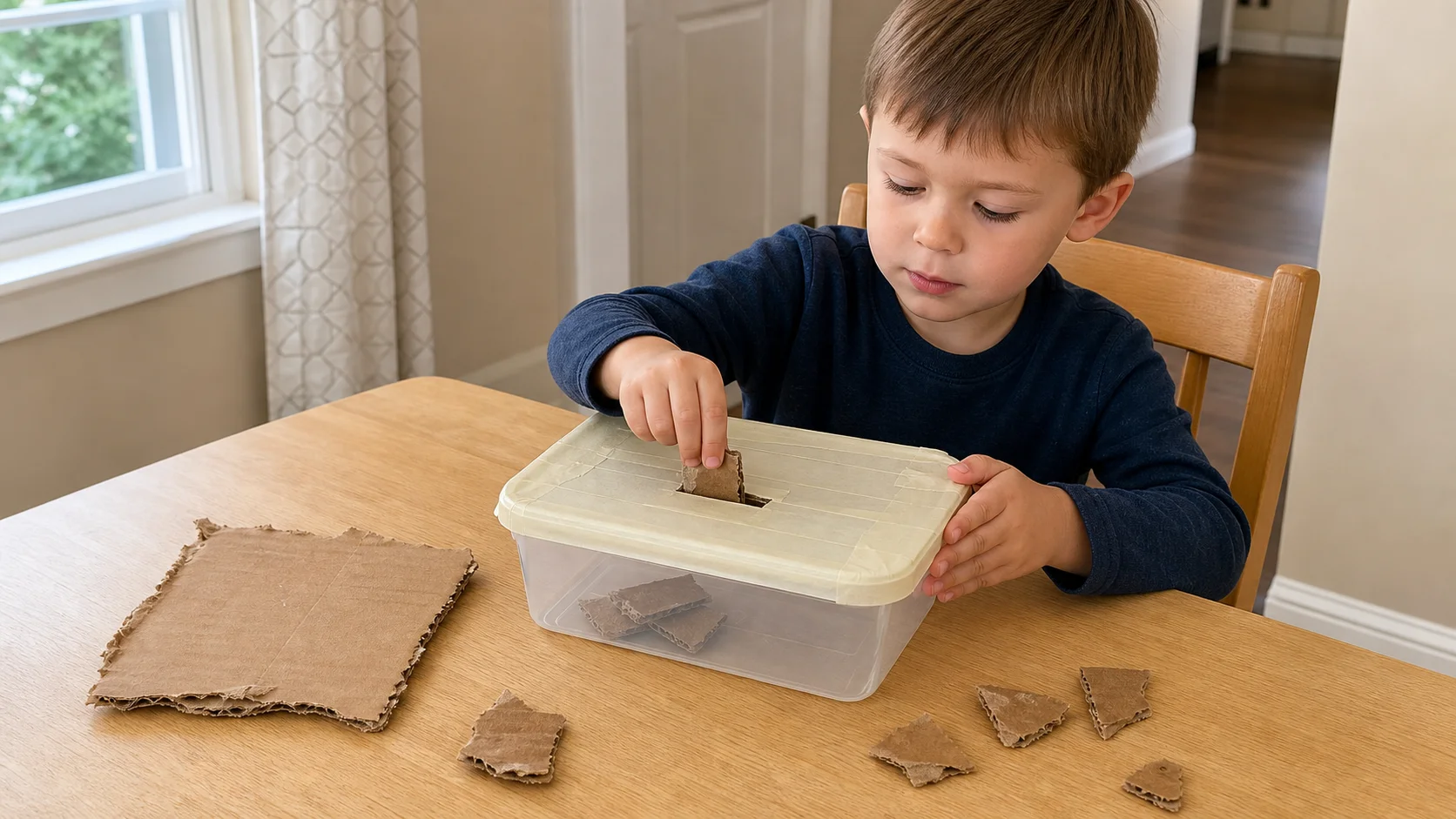
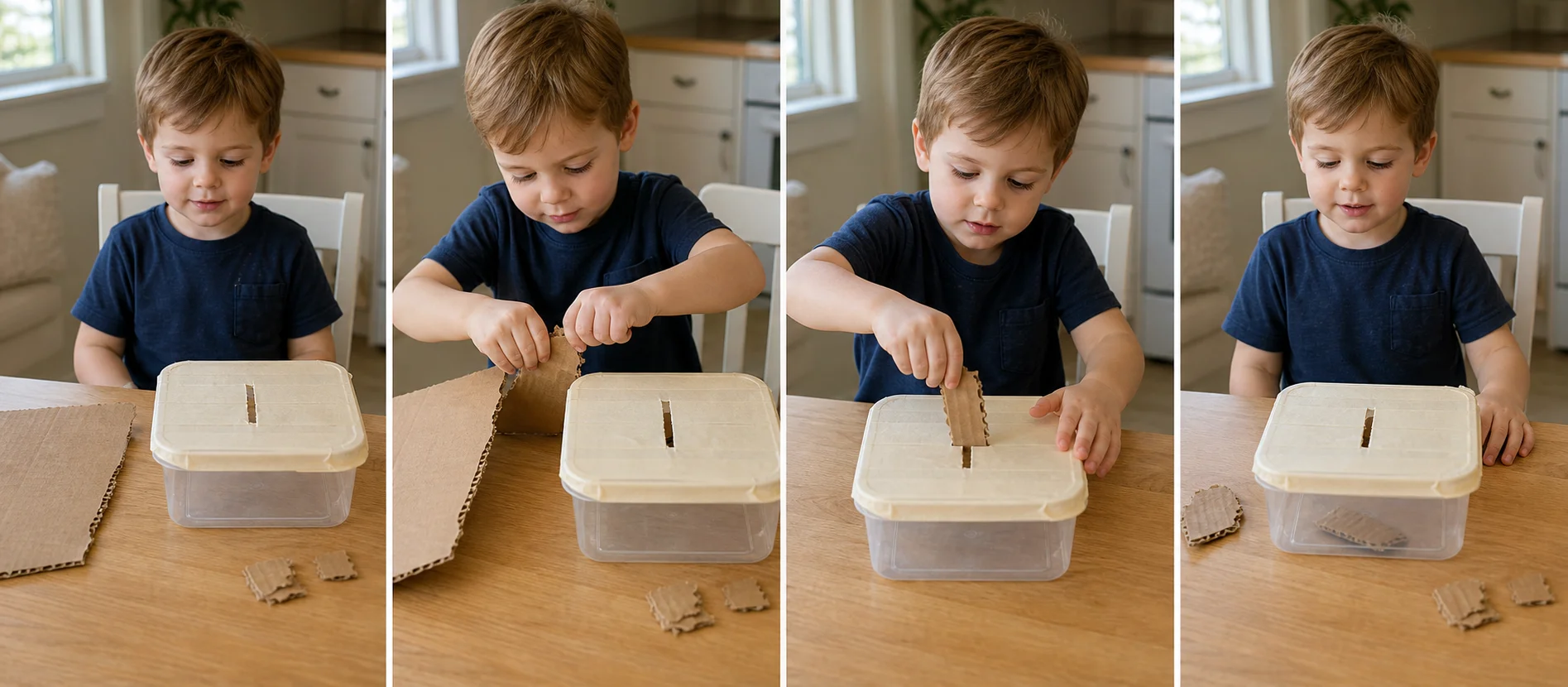
Rip, turn, push! Your child tears cardboard, finds the edge that fits, and presses each piece through a narrow slot for a satisfying test of finger strength and two-hand control.


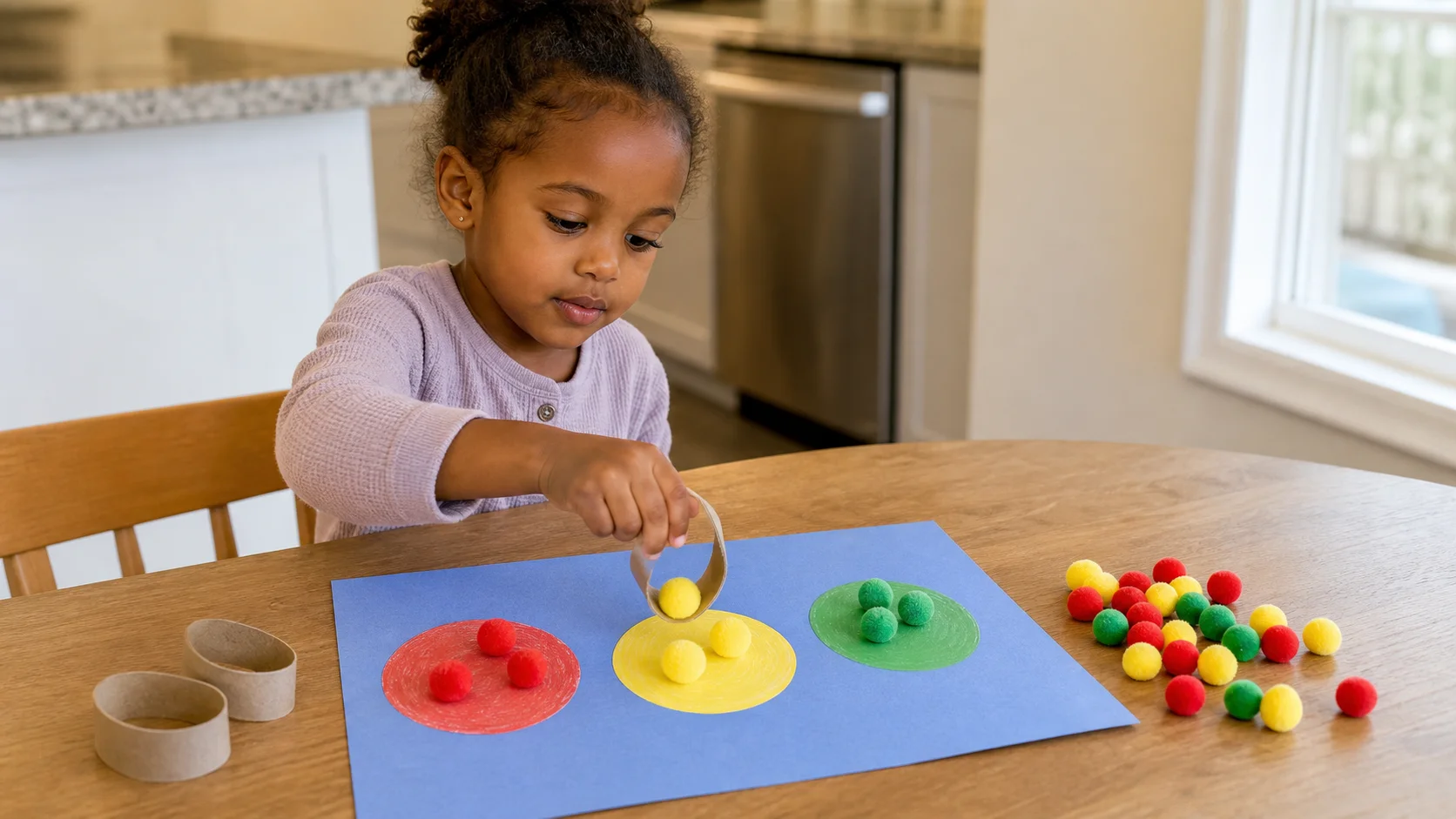
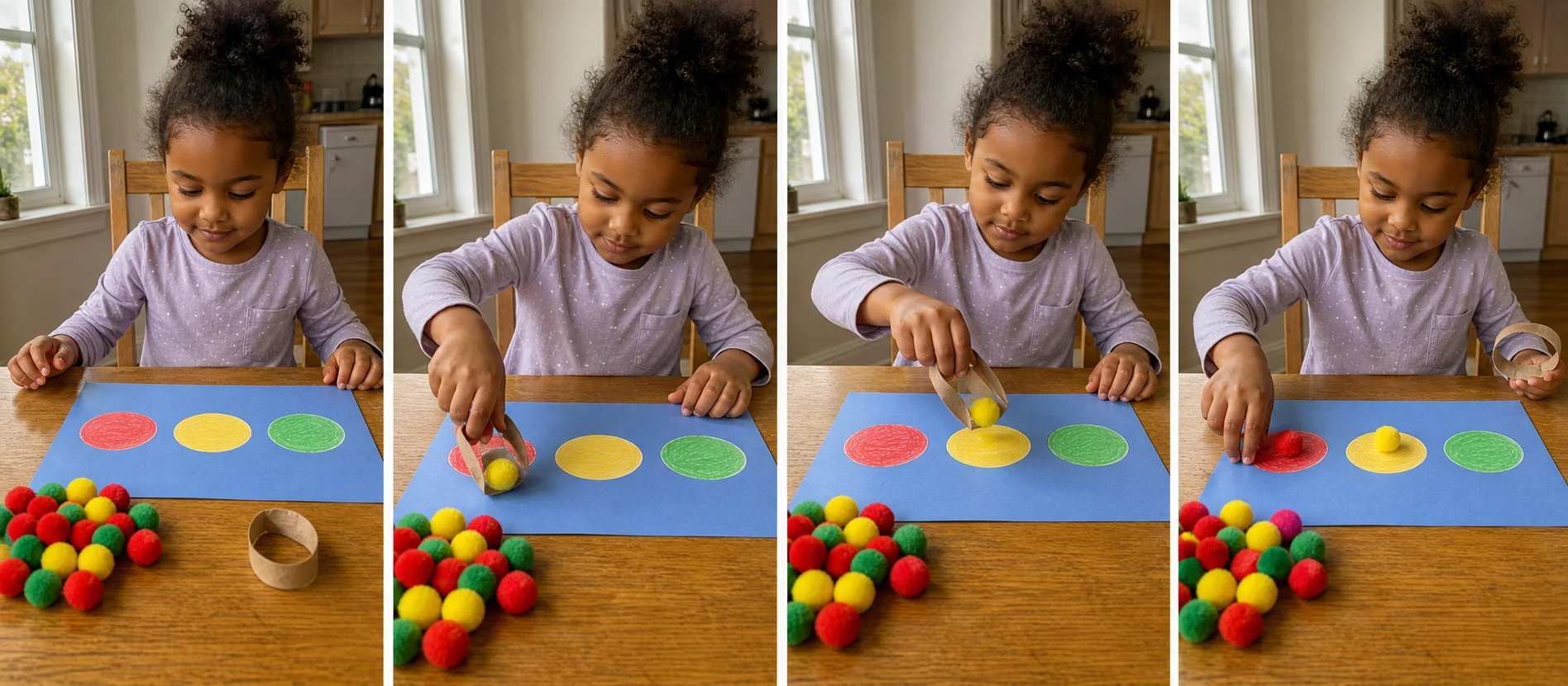
Can a cardboard ring work like tweezers? Your child squeezes it around a pom-pom, carries it to the matching circle, and drops it, turning color sorting into a satisfying finger-strength challenge.


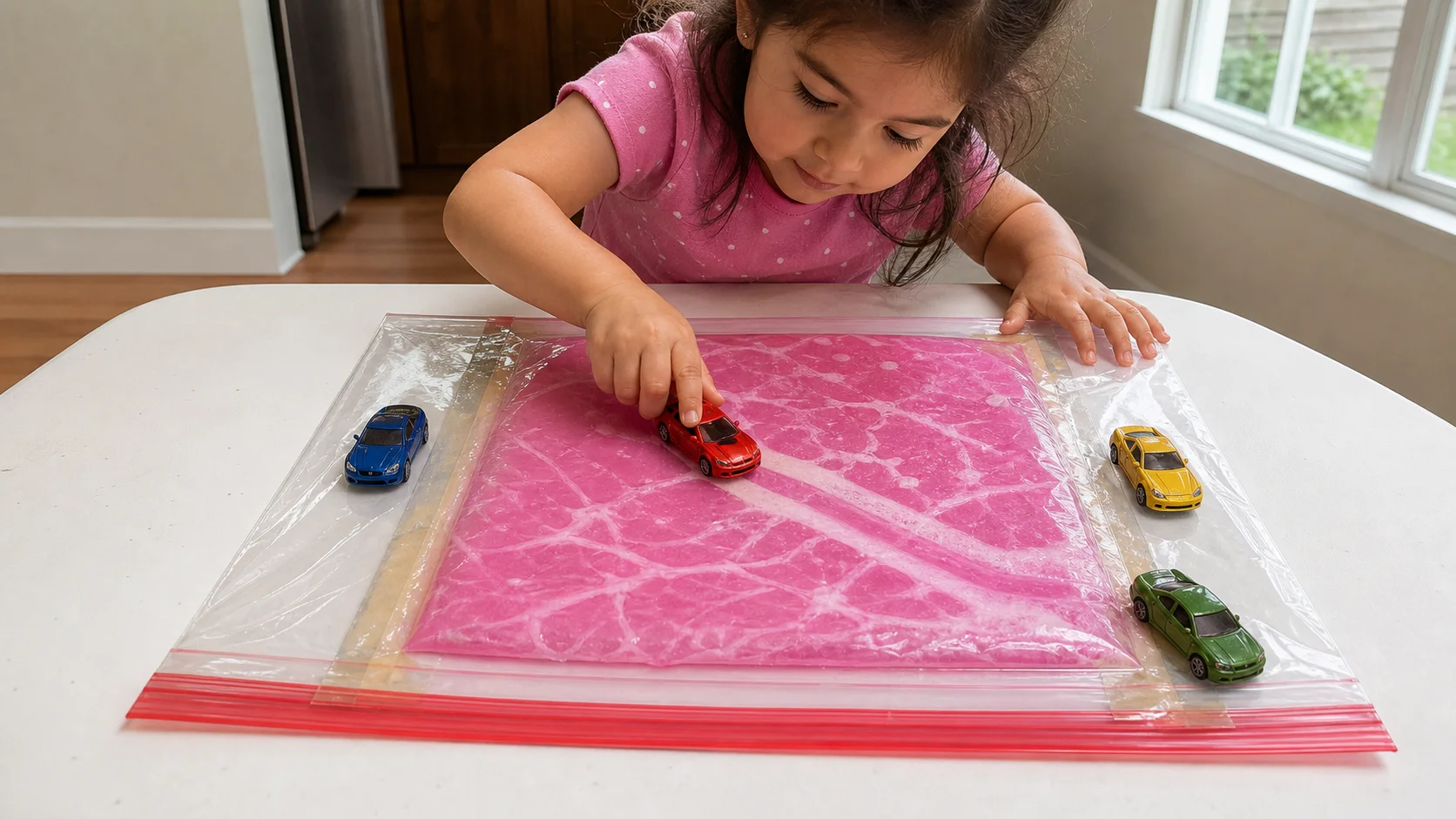
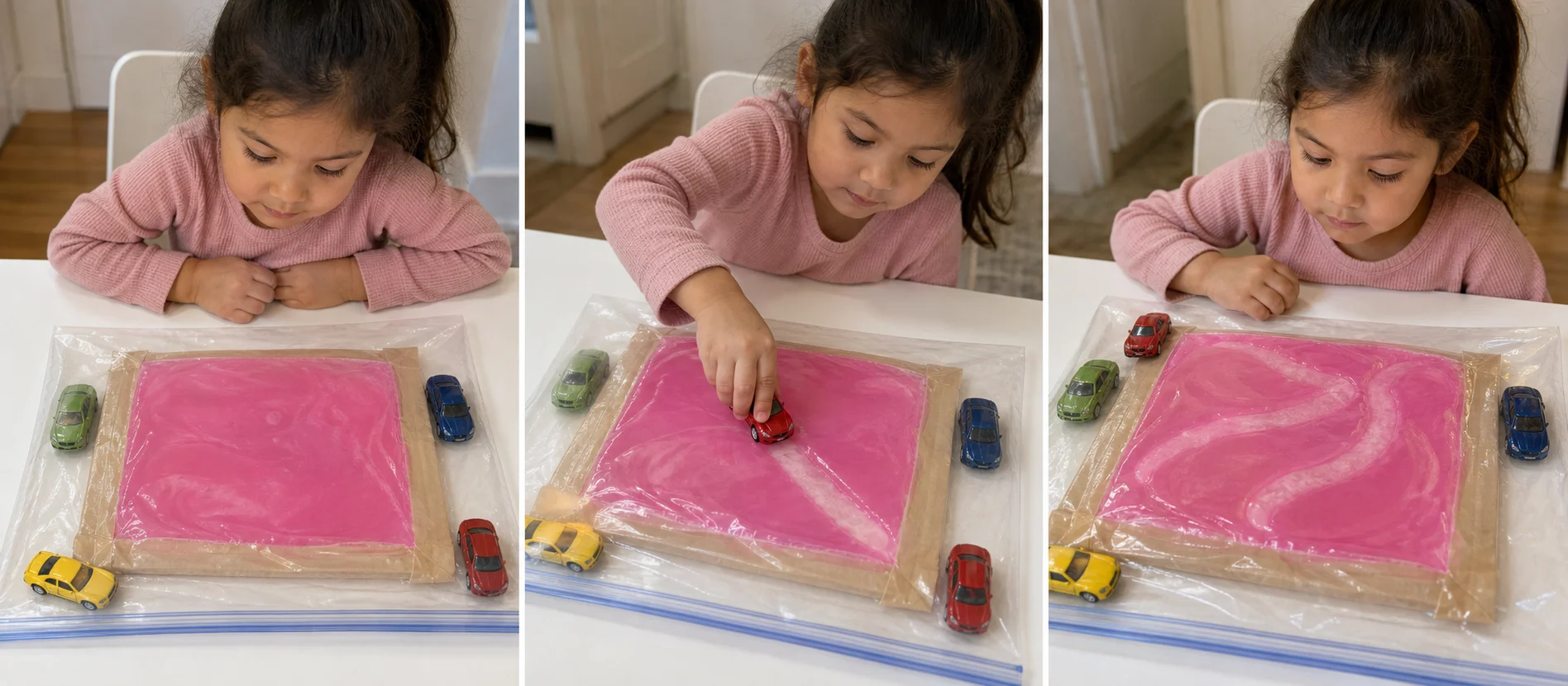
Toy cars glide over a sealed soap bag, leaving visible roads your child can park, trace, and make again.


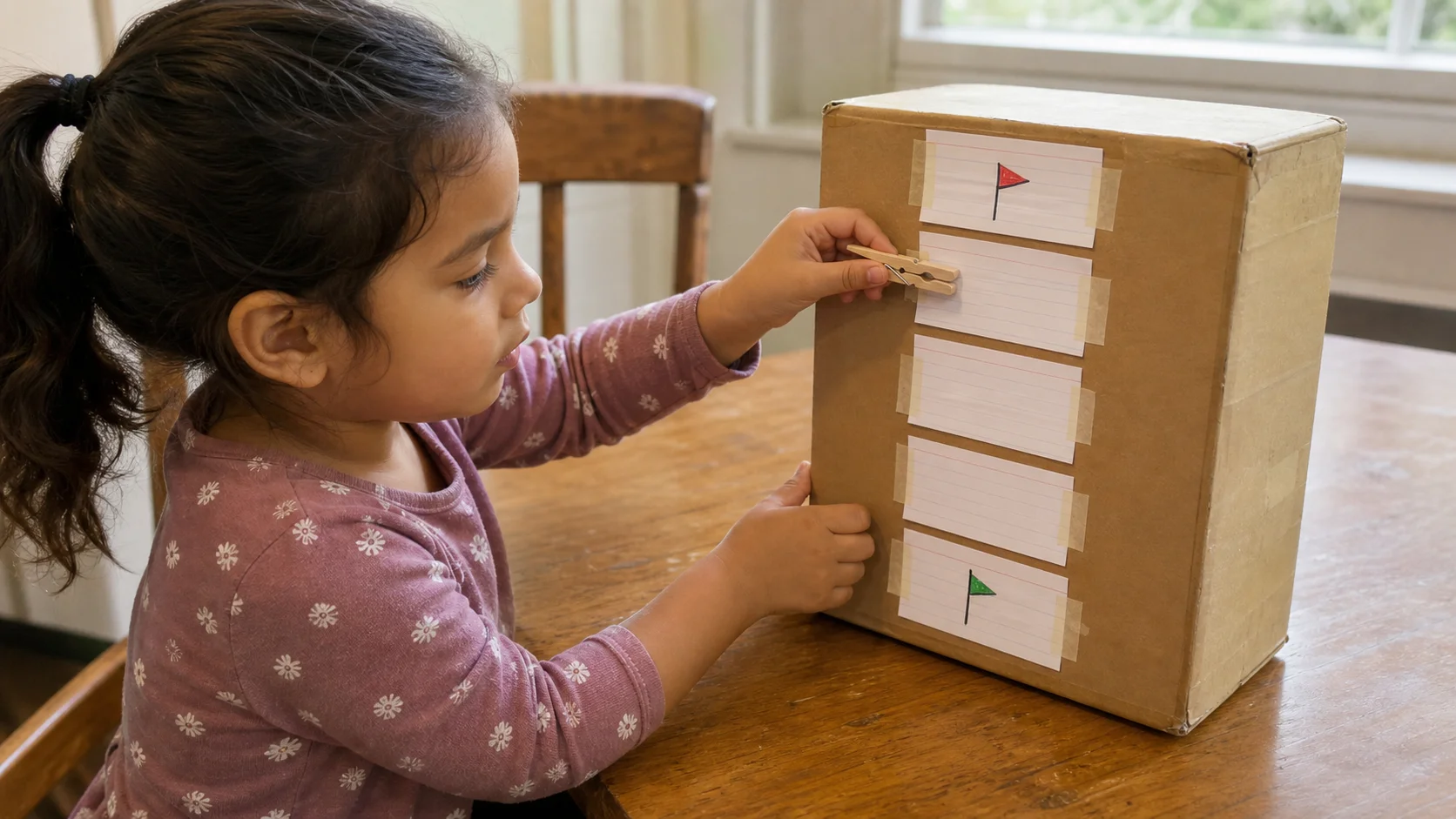
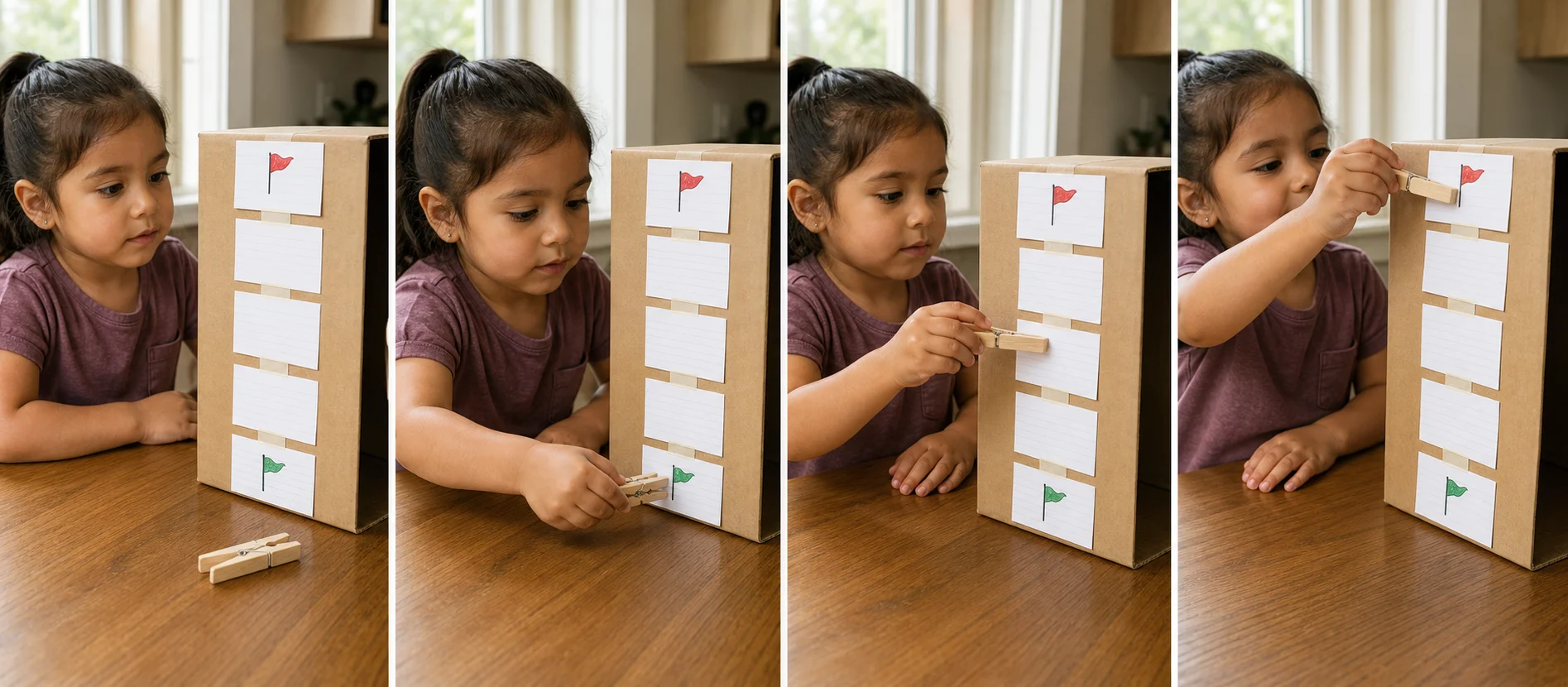
Build a tiny card ladder on a shoe box and let one clothespin climb from start flag to finish flag.


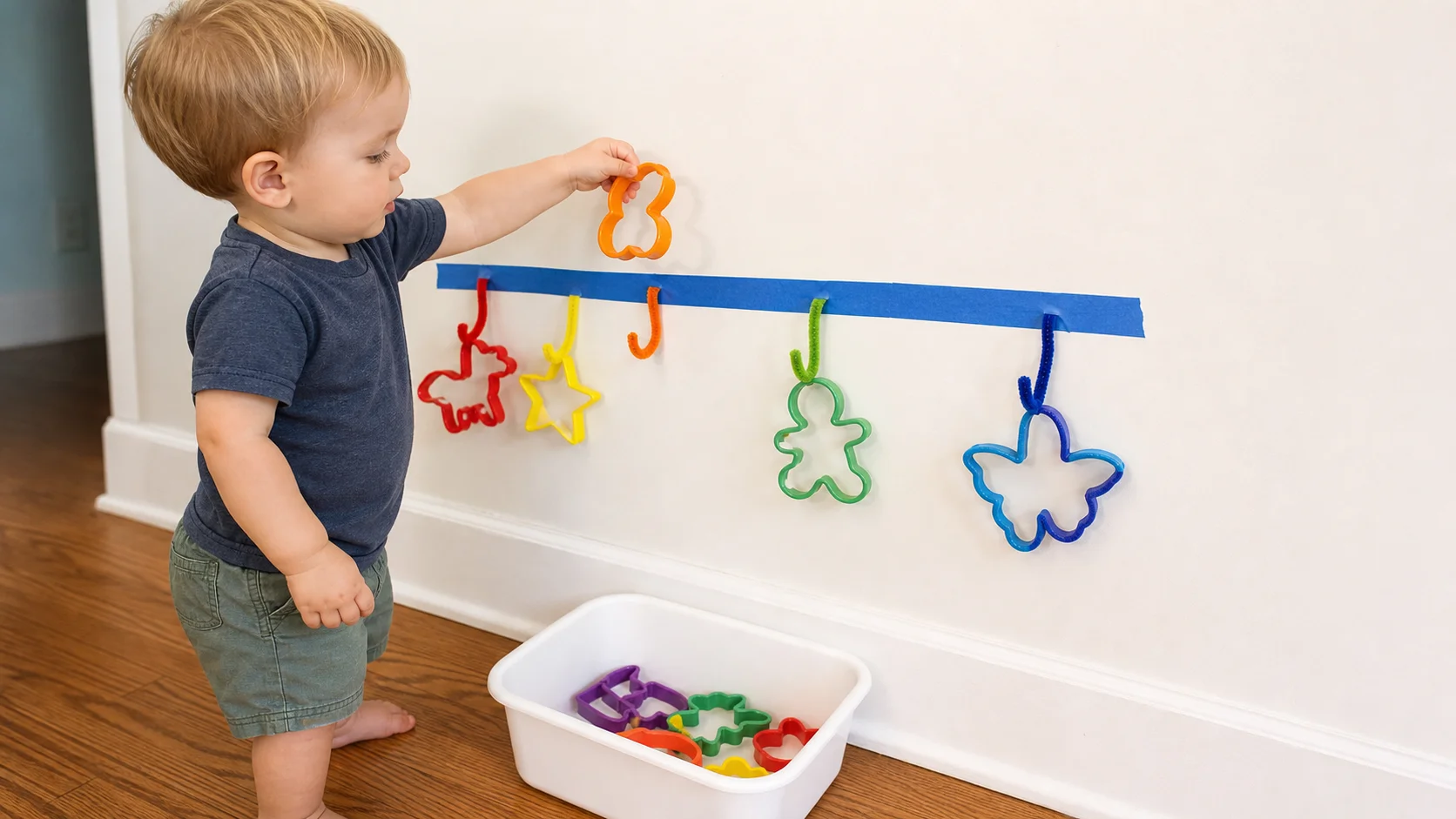
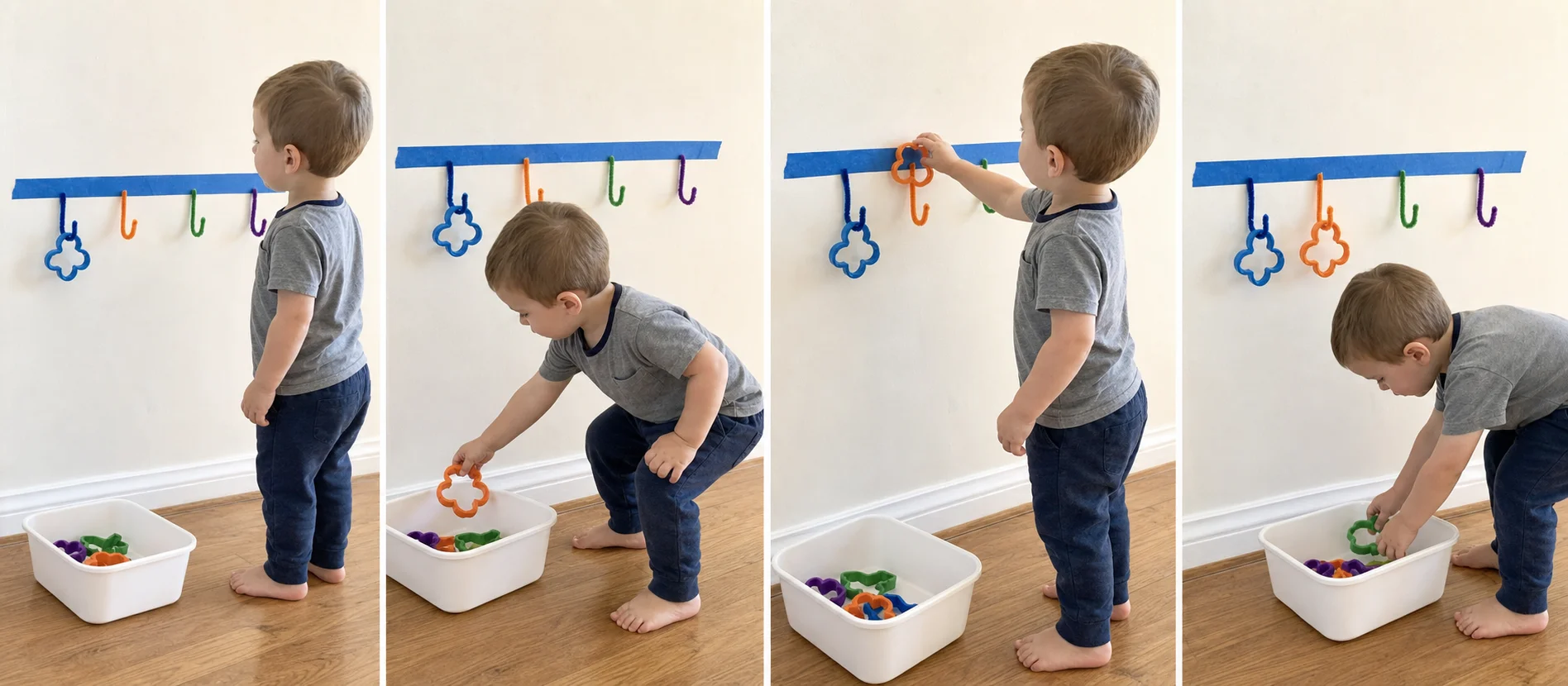
Cookie cutters are not just for the kitchen! Your toddler matches each colorful cutter to a pipe-cleaner hook, hangs it up, and takes it down, building color matching and careful hand control with every turn.


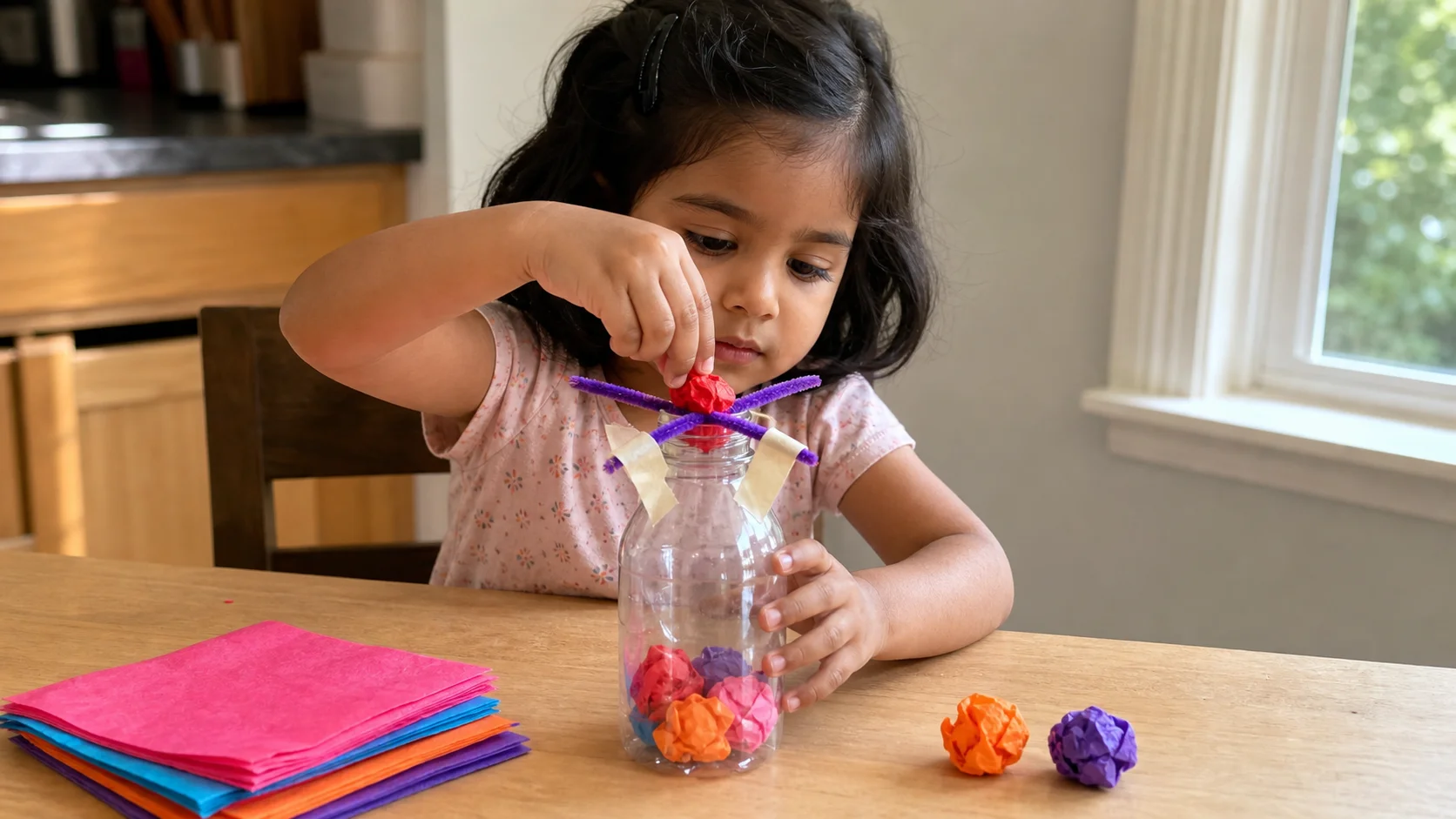
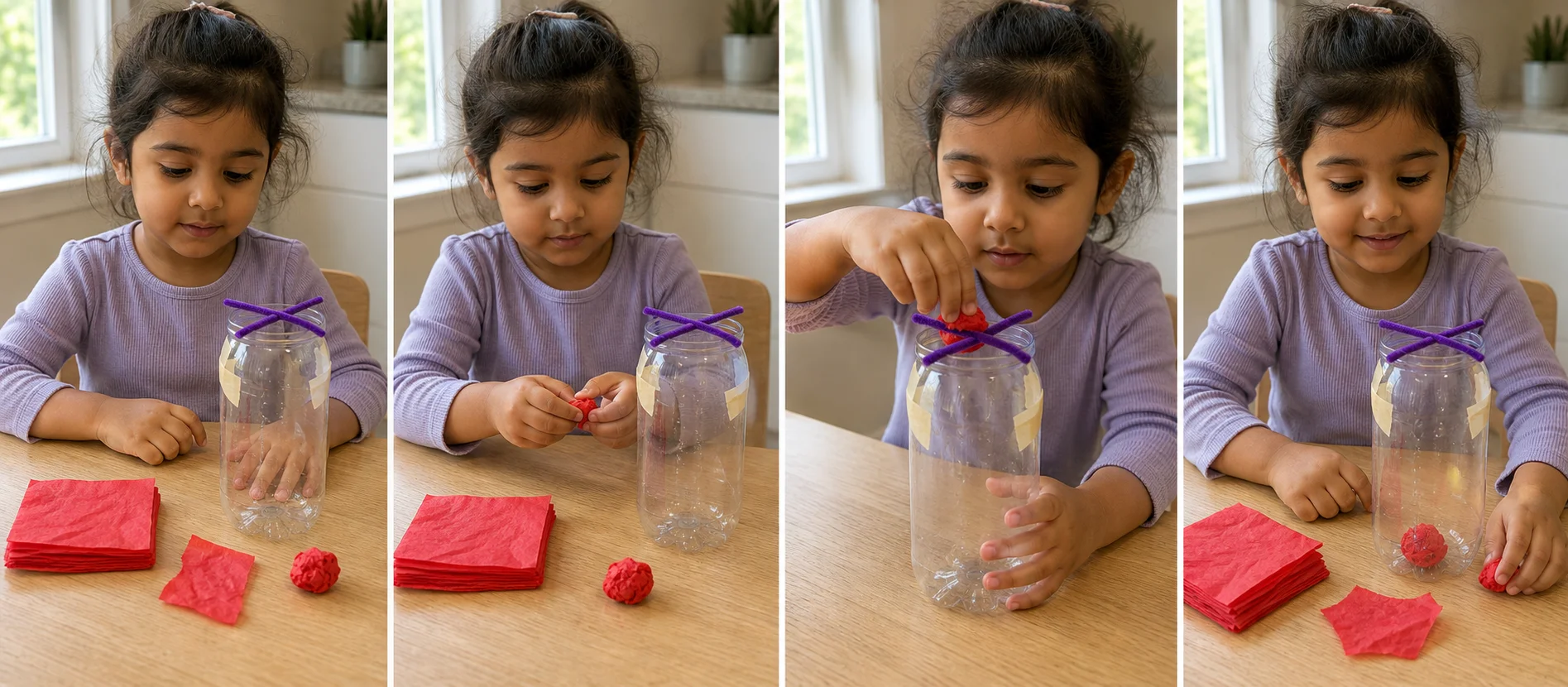
Tissue paper, pipe cleaners, and a bottle make a quiet posting game for finger strength.


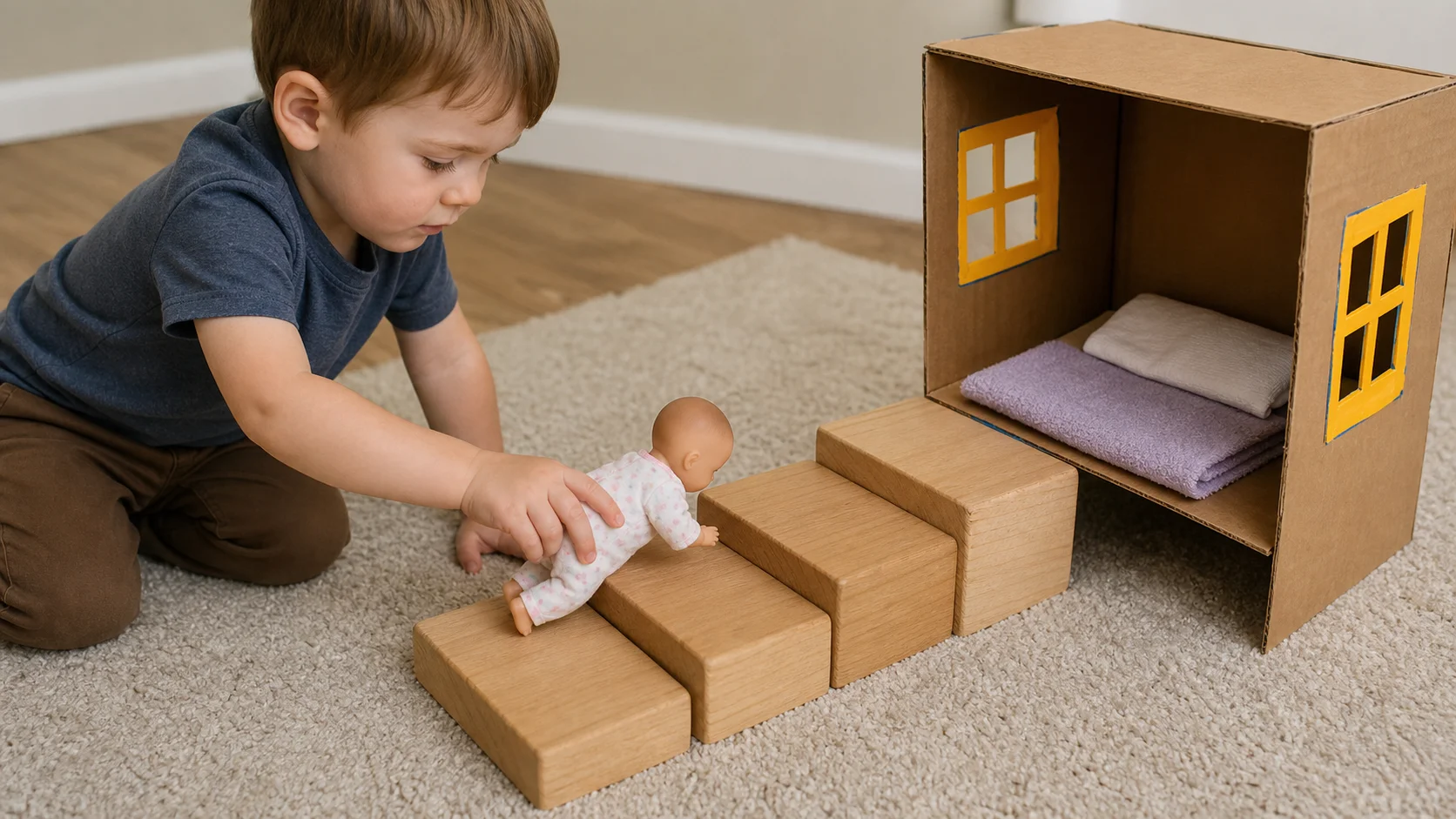
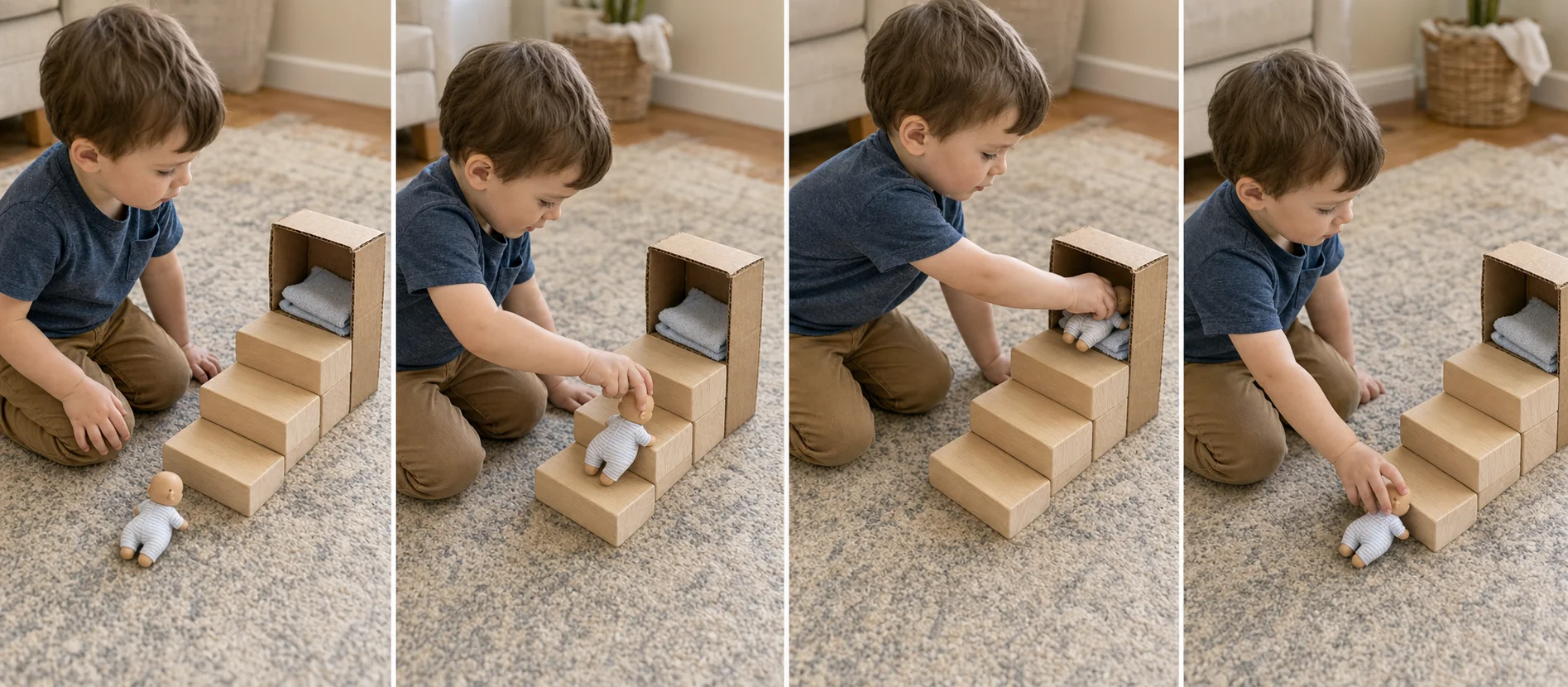
A sleepy doll needs help getting upstairs to bed! Build a tiny staircase from blocks, then let your child walk the doll up one step at a time, practicing pretend play and simple sequencing along the way.


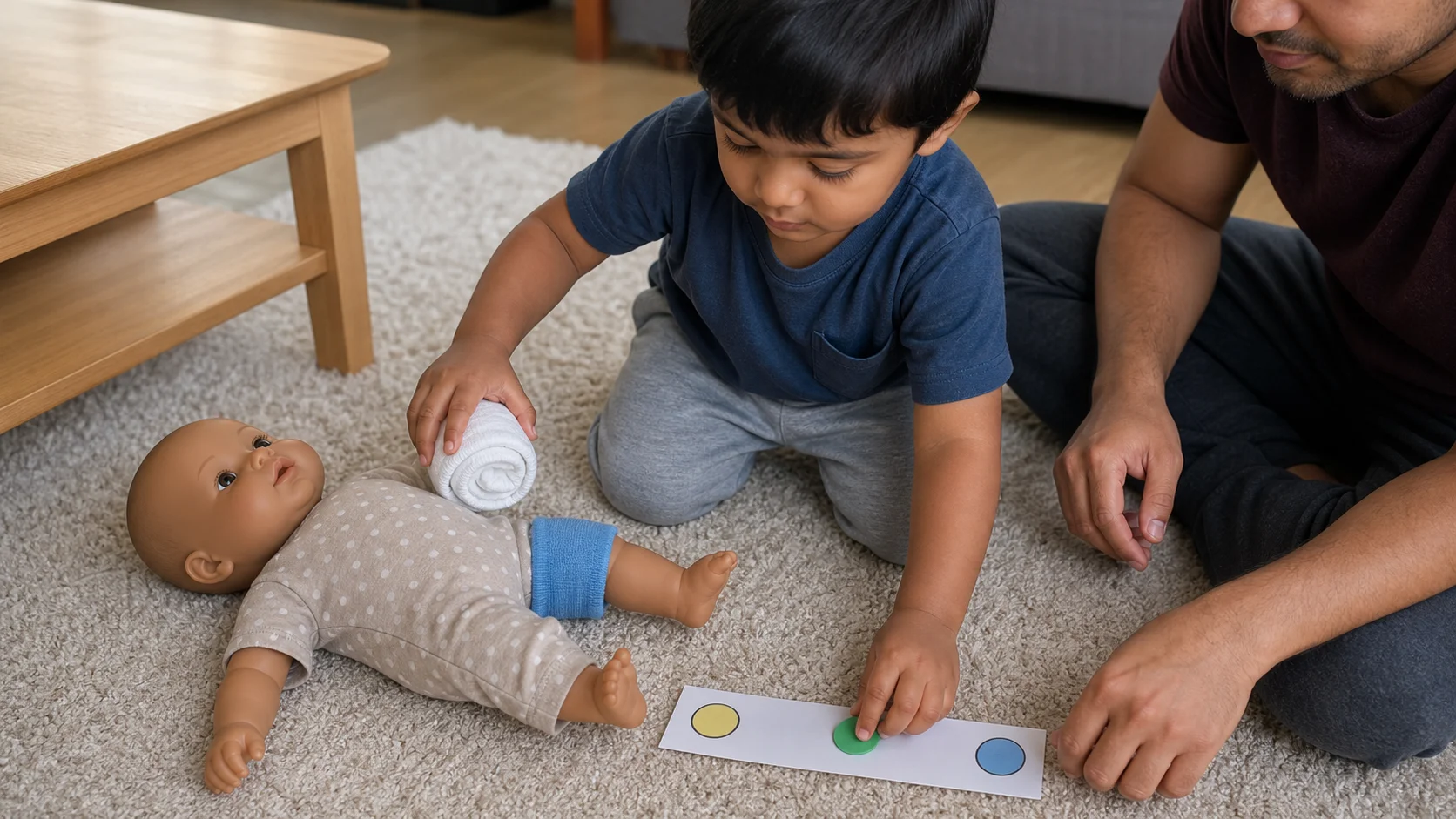
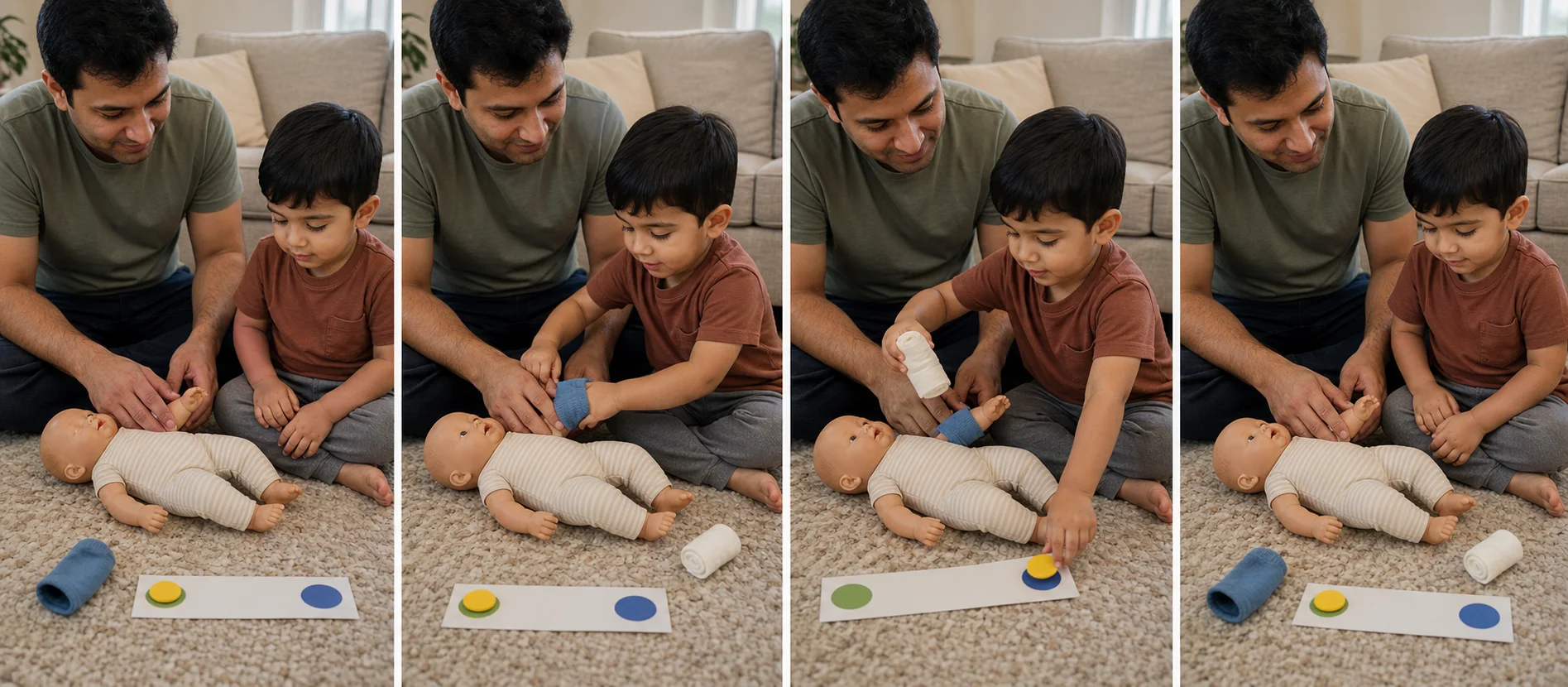
Let the doll go first in a short pretend blood pressure check. Your child puts the cuff on the doll, squeezes the pretend pump, moves the marker from start to done, and removes the cuff, helping the equipment and sequence feel more familiar.


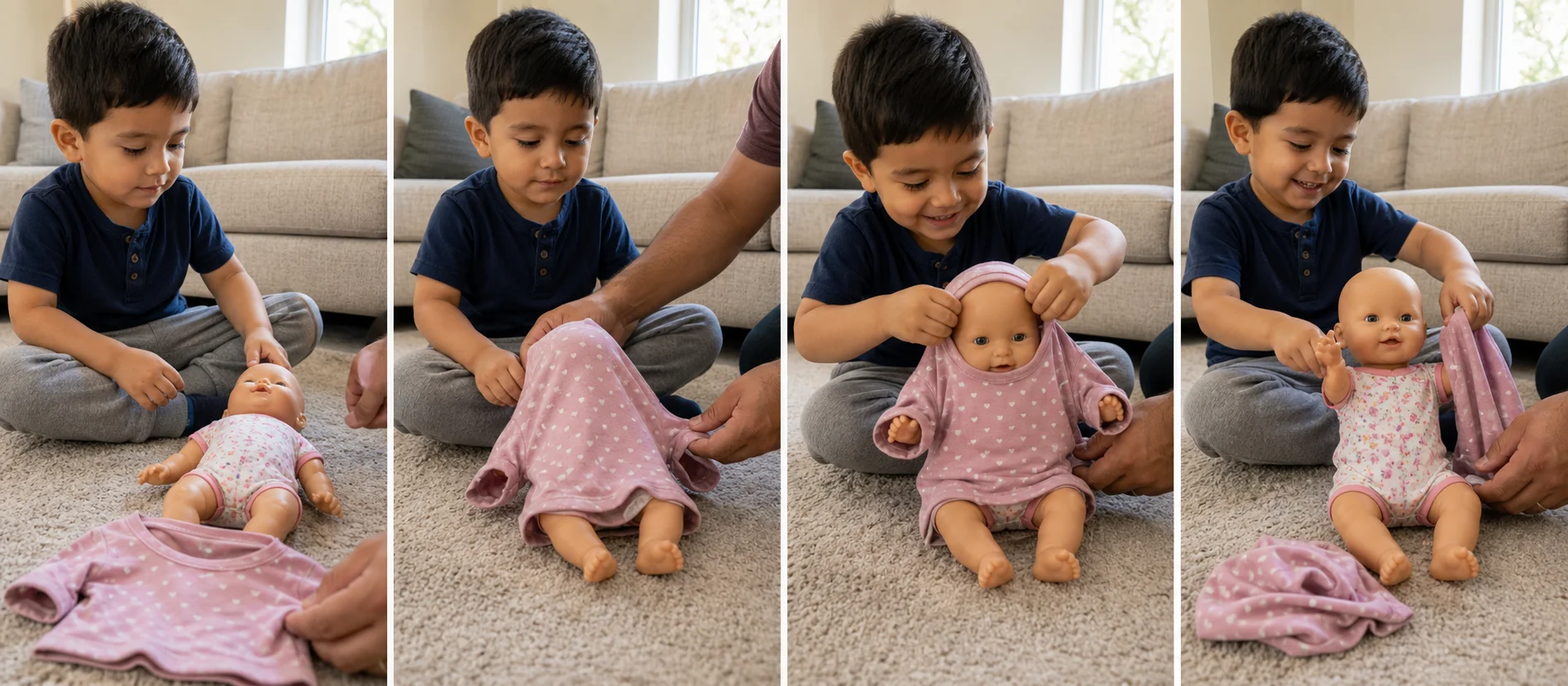
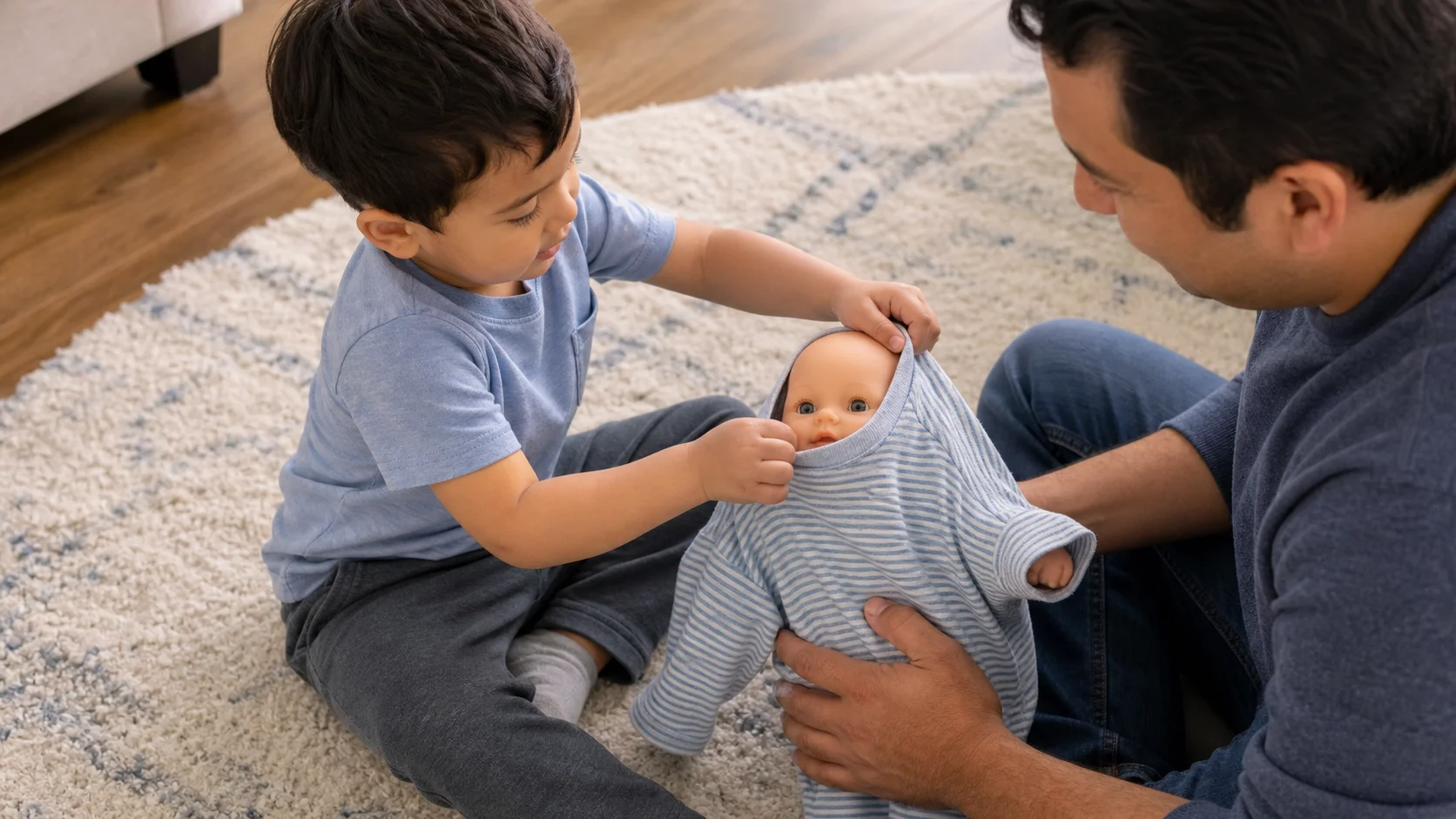
Where did baby go? Hide a doll inside a loose pajama top, then let your child find the face and pull each arm through for a playful introduction to body parts and getting dressed.


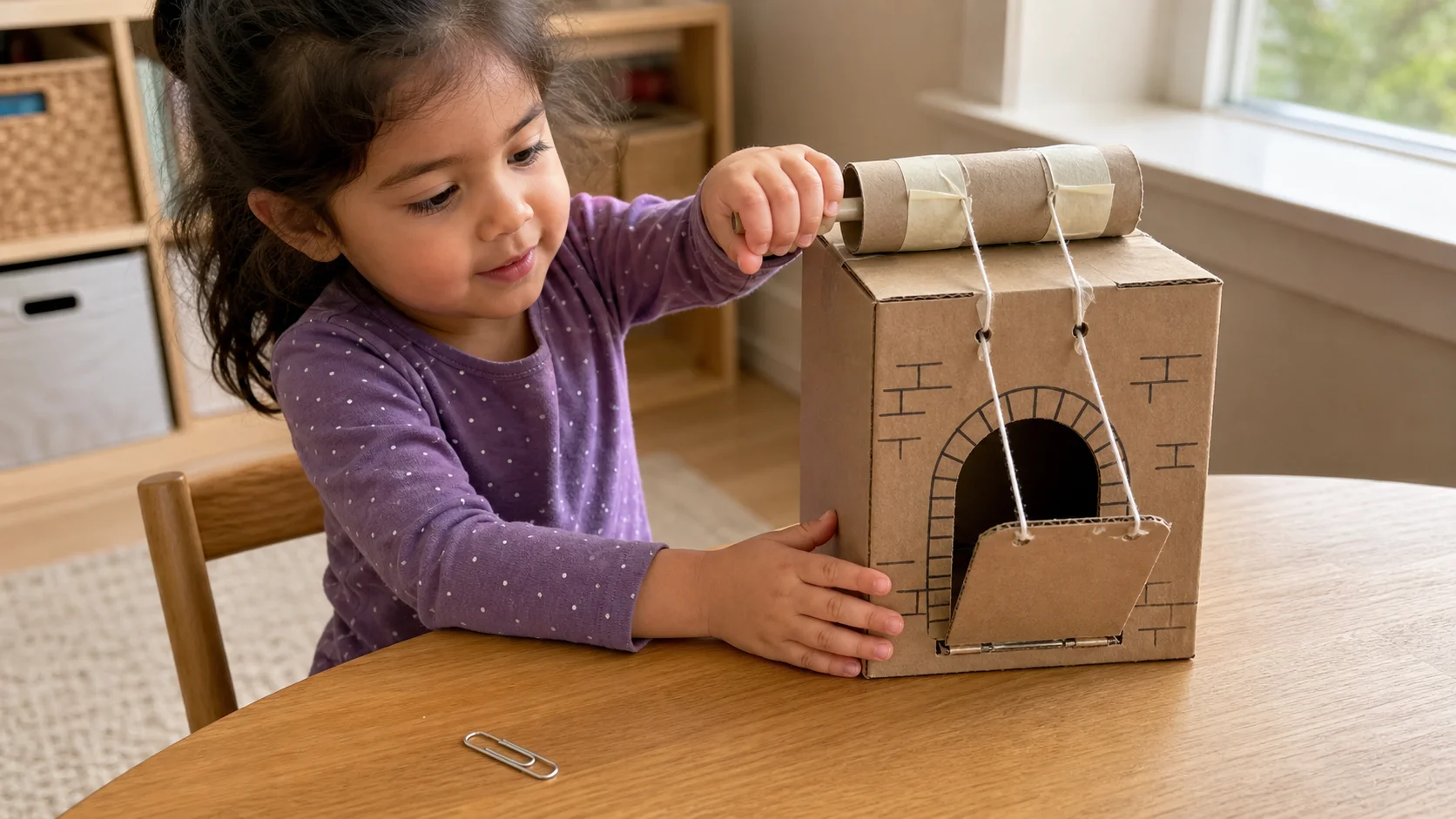
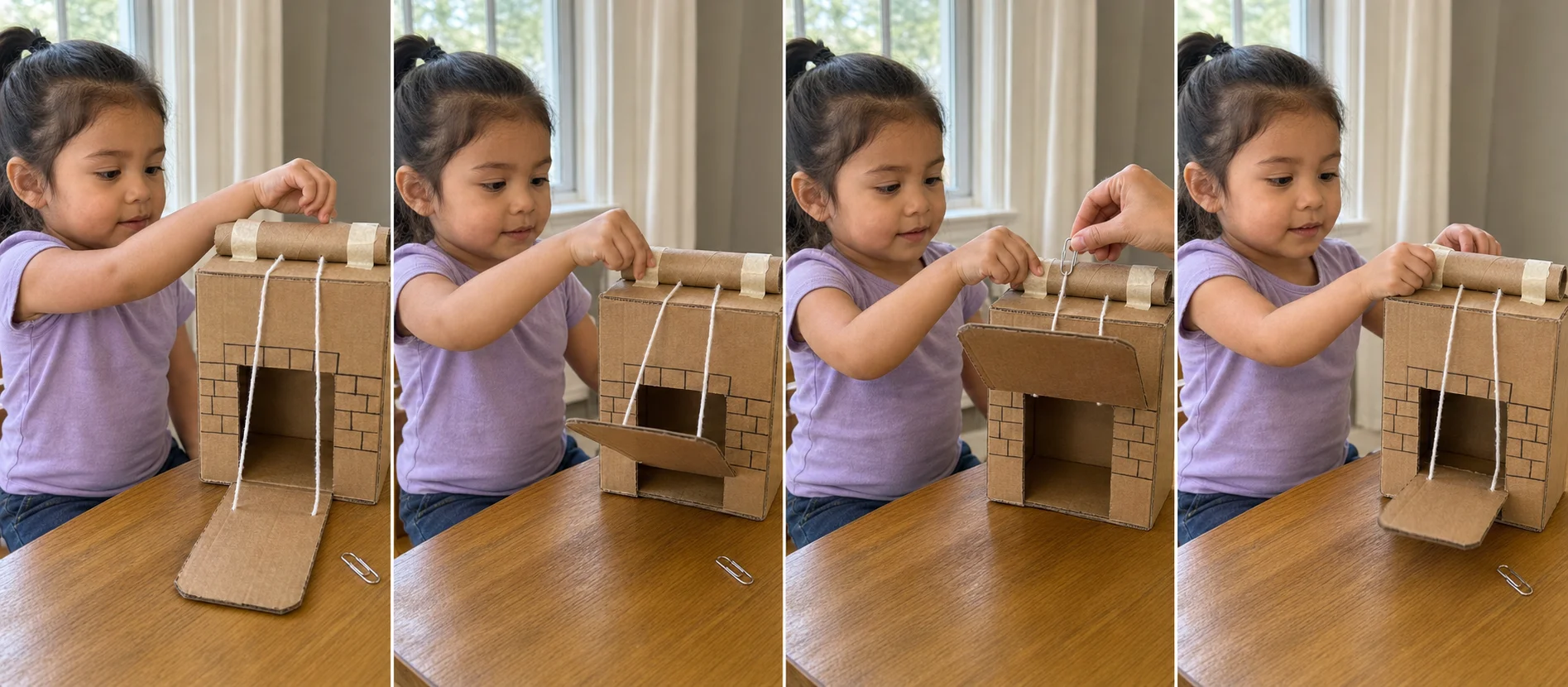
Turn a small cardboard box into a drawbridge your child can lift, clip, lower, and try again.


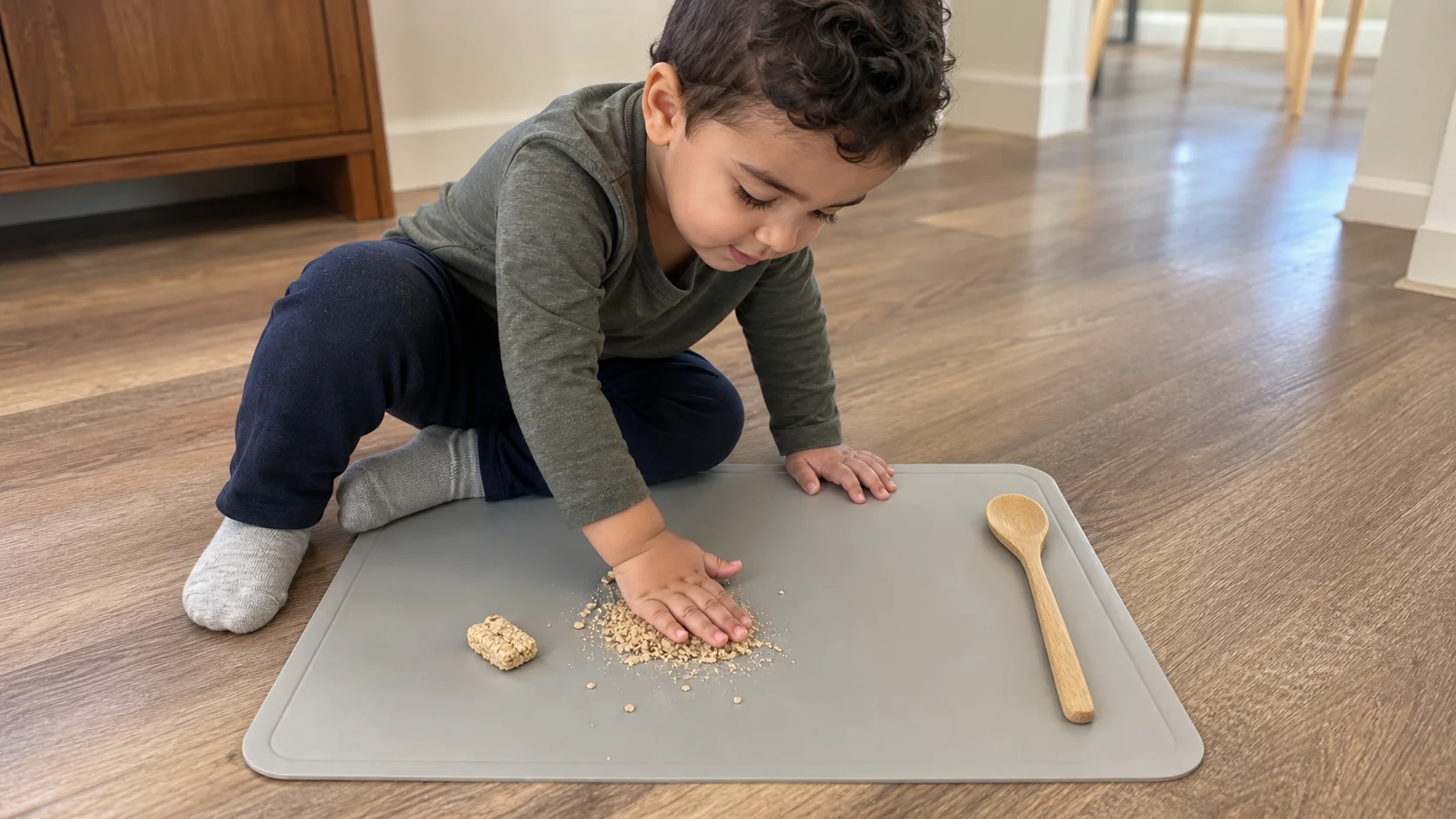
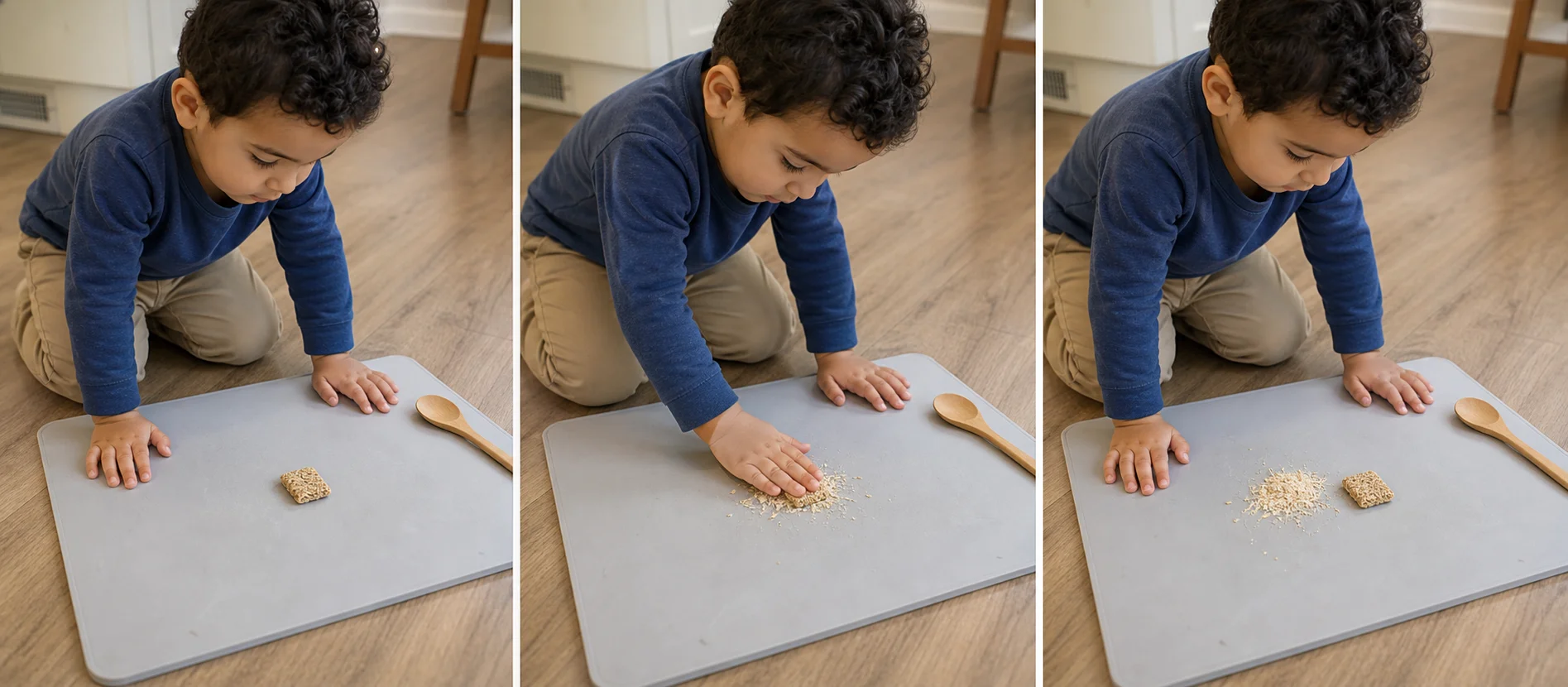
Ready for messy play without the wet, sticky mess? Let your child press, pinch, and crush dry cereal into crumbs for a satisfying sensory game that builds steady hand pressure and comfort with dry textures.


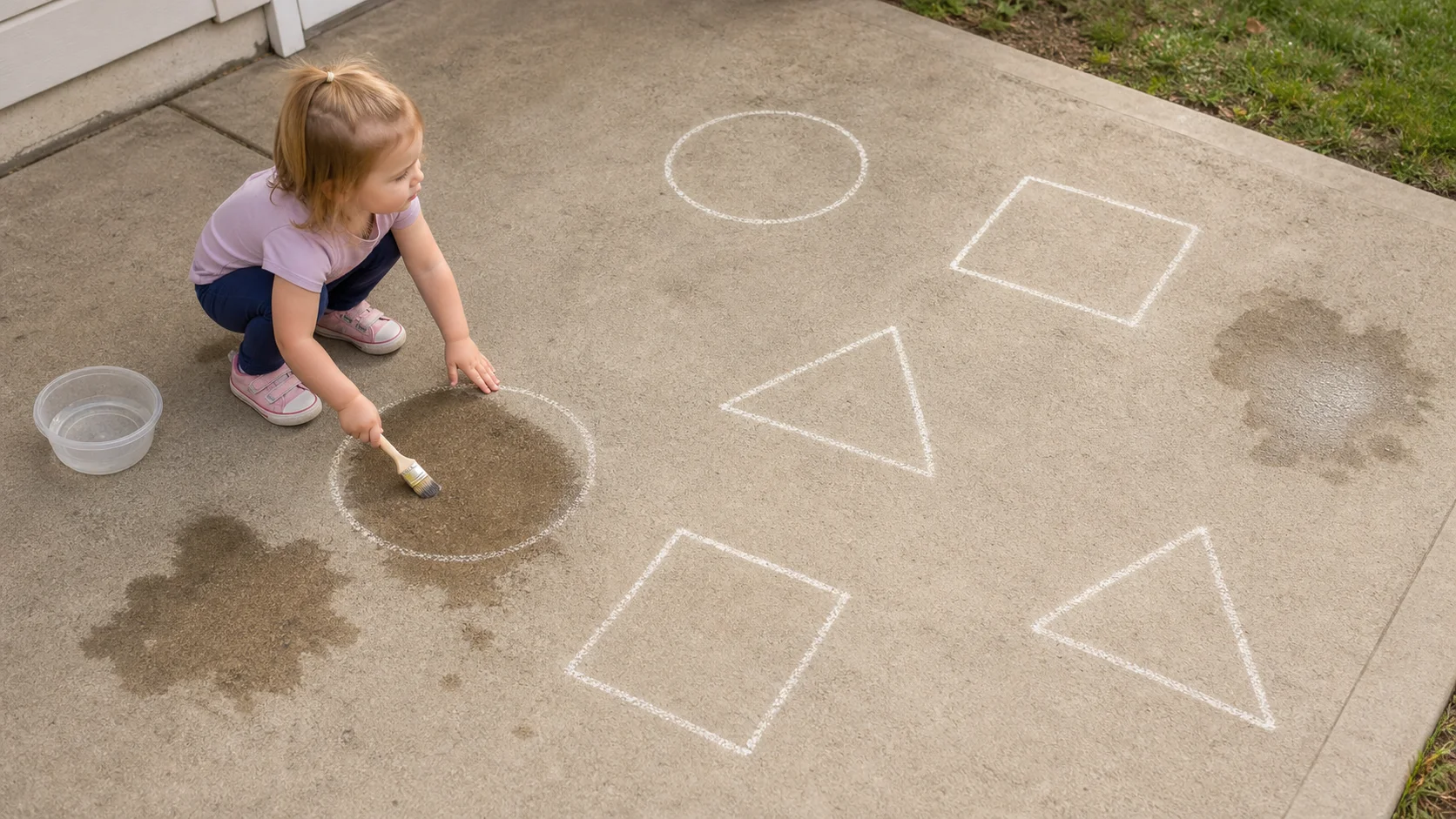
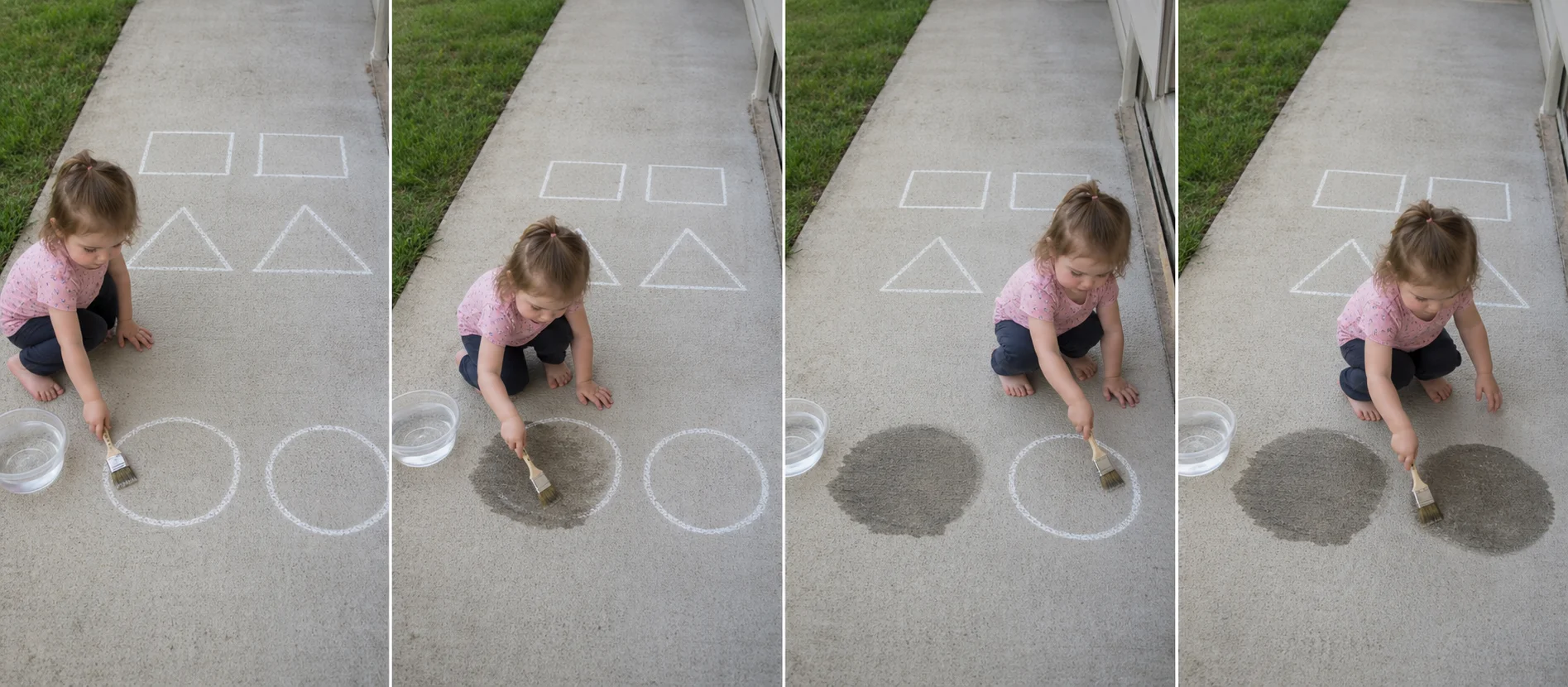
Can your child make every matching pair disappear? Draw pairs of chalk shapes outside, then let your child erase one with a wet paintbrush, hunt for its match, and erase that one too, building shape recognition and visual attention.