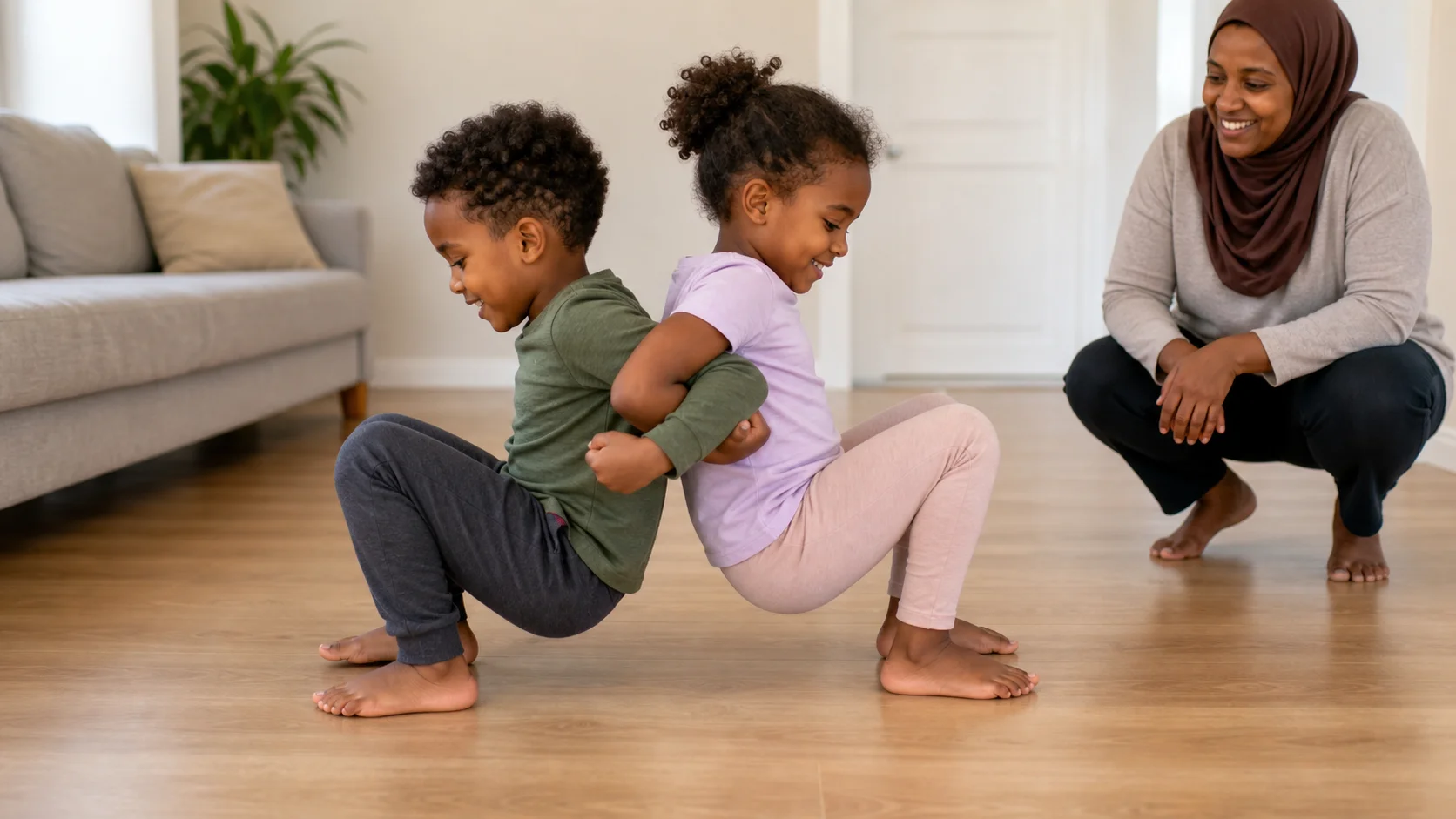
Two preschool children sitting back to back on a clear floor, feet planted and arms linked gently before standing.
Gross motorOT-adjacent supportPush Against ResistanceIndoor Open Floor Space

Back-to-Back Stand-Up.

A back-to-back stand-up challenge gives preschoolers a quick balance and teamwork game with no materials.

Play time
5+ min
Age
3-5 years
Energy
Medium
Mess
No
Effort
Low
Where
Indoor Open Floor Space
Start here

The recipe.

Low parent effort
3 things

What you need

  • 1 clear indoor floor space
  • 2 children who can safely sit back to back
  • 1 adult for direct supervision
5 min minimum

Setup

Then start the loop
Step 01
On the floor, clear one open patch with enough room for both children to sit, lean, and stand without bumping furniture or toys.
Step 02
On the floor, seat the children back to back with both knees bent.
Step 03
Help both children plant their feet flat so they can push into the floor.
Step 04
Help them hook arms gently and lean their backs together.
Step 05
Beside the pair, pause until both children look steady before the first try.
"Backs together."
The loop

How play unfolds.

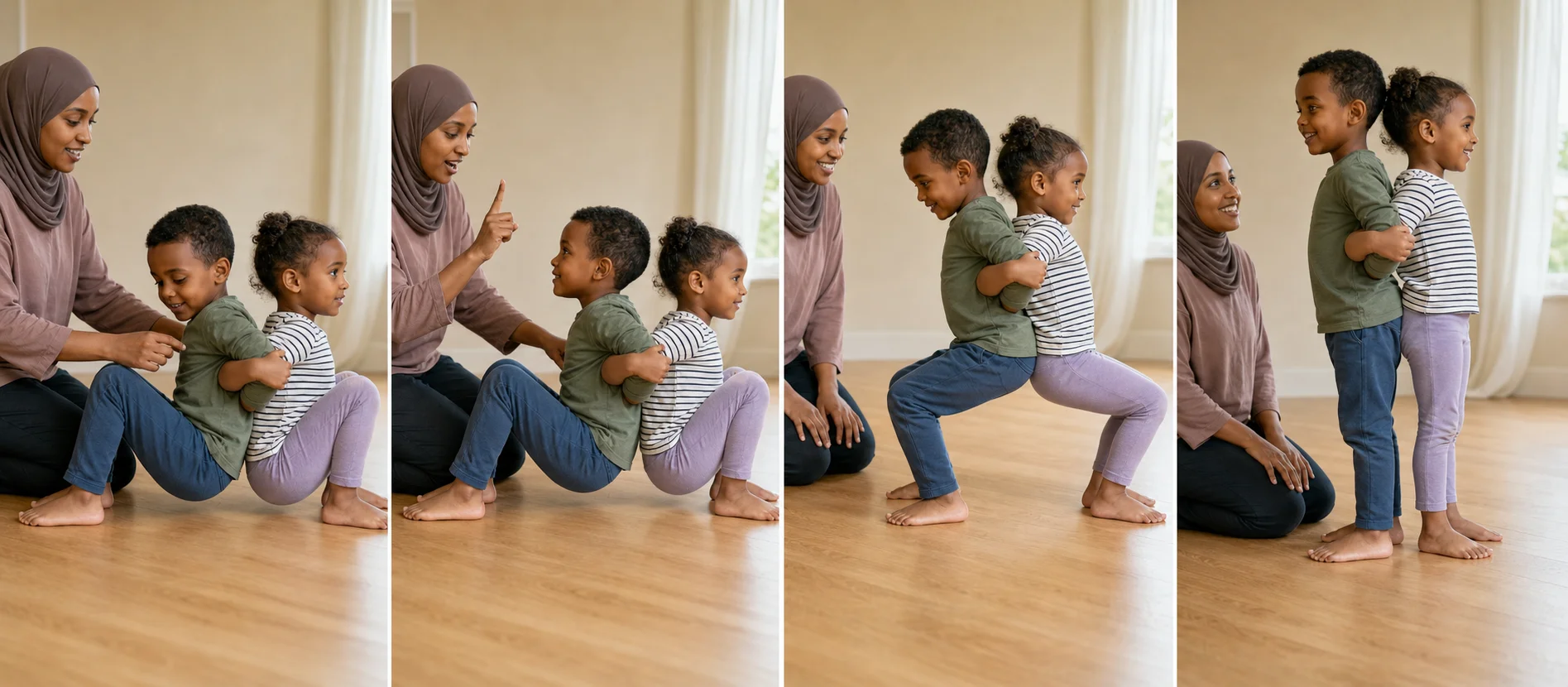
Step-by-step panels showing children sit back to back, count together, press through their feet, stand, and reset.
  1. 01
    Stand beside the pair and say, "Ready, feet down, backs together."
  2. 02
    Count one shared start: "Ready, set, push."
  3. 03
    Let both children press through their feet and legs together while backs stay touching and arms stay linked gently.
  4. 04
    Count the turn when both children rise together and stay standing for a moment.
  5. 05
    Help them sit back down into the same back-to-back shape, relink arms if needed, and try another shared stand.

Safety Check

  • Use direct adult supervision and a clear floor.
  • Avoid large size or strength mismatches between partners.
  • Stop immediately if the children pull on arms instead of pushing through their feet.
  • Stop if either child loses balance, resists close body contact, or turns the linked arms into rough pulling.
  • Choose a different activity if close contact, linked arms, or falling risk is a poor fit that day.
Supporting the play

What to say in the moment

Match what you say to what you see.

Prompt ladder
Level 1 (Start)
Sit back to back, plant feet, and try one stand together.
Level 2 (Keep going)
Reset the sit and try to match the same-time push again.
Level 3 (Stretch)
Stand on the same count without one child leading.
Level 4 (Extend)
Try one slow-motion stand and one regular stand while backs stay touching.
If your child seems...
What you'd see
Focused
What to do
Say
"Ready, set, push."
Add
Count one shared beat before each stand.
Extend
Ask for one slow stand, then one regular stand.

Make it easier

Younger end
  • -Start with the children closer together so they do not need as much force to rise.
  • -Count aloud and have them push only on the final number.
  • -Accept a halfway rise as the win for that round.

Make it harder

Older end
  • +Ask them to stand without talking after the countdown.
  • +Try a slower rise while keeping backs touching.
  • +Add one balanced pause at the top before sitting again.

If it's not working

If you see
If child ignores it
Keep it to one quick challenge, help the pair sit in place, and use a simple countdown so the start feels like a game.
If you see
If child misuses it
Stop, reseat both children back to back, relink arms gently, and repeat that feet push first while backs stay touching.
If you see
If child gets frustrated
Shrink the goal to one tiny lift or halfway rise, then stop after that success.
Skill spotlight
Push Against Resistance

Pushing with steady body force

This helps a child feel where the body is while using force, which matters for climbing, getting up from the floor, carrying, and rough-and-tumble play without crashing into others.

  • The shared countdown gives both children a clear moment to pause, wait, and push together.
  • The back-to-back shape turns leg strength, balance, and timing into one simple challenge.
  • Each reset gives the pair another try without adding materials, extra rules, or a long setup.
Real-world transfer
  • Getting up from the floor with control.
  • Using strength without crashing into people.
  • Joining partner movement games safely.