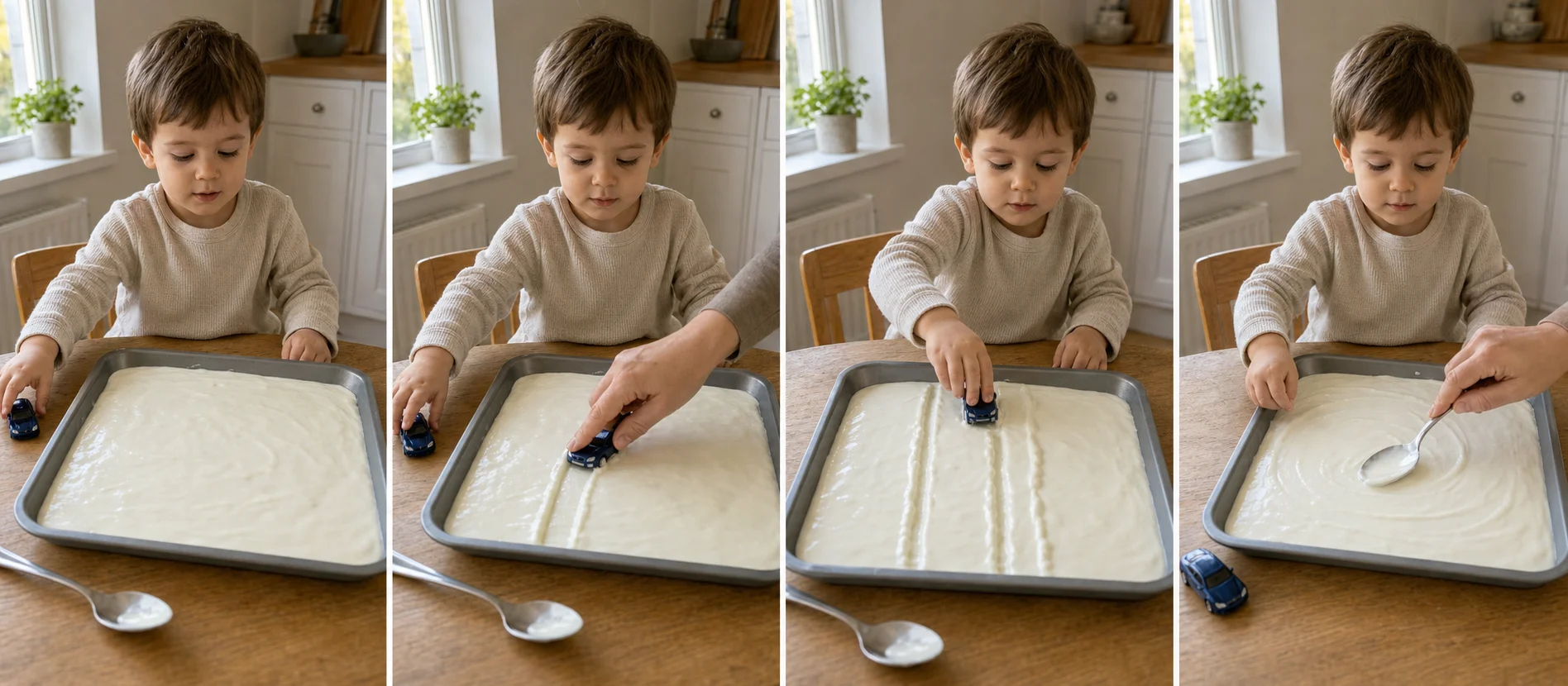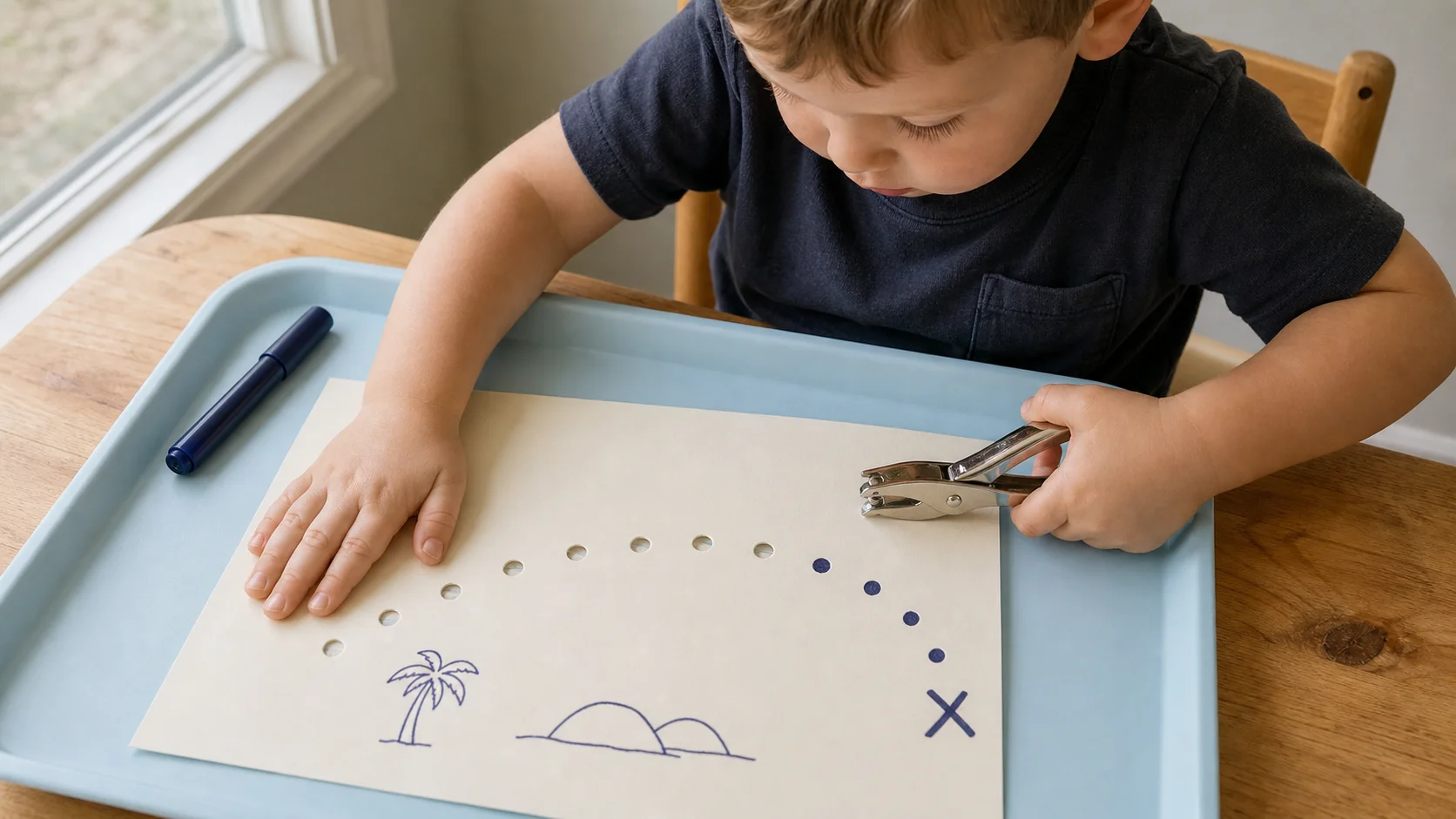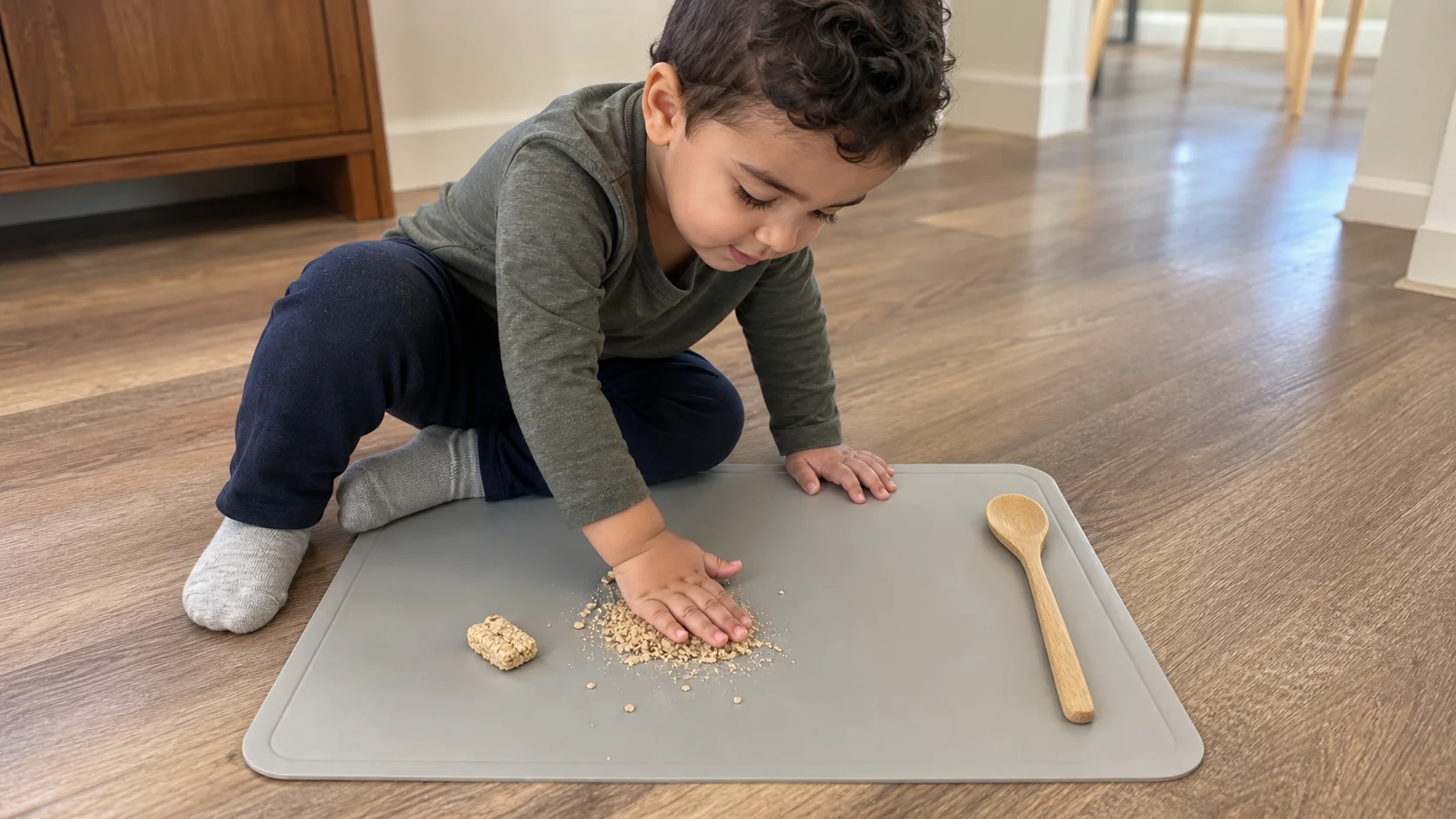
Toddler hands pressing dry cereal pieces into crumbs on an easy-clean mat.
Fine motorSensory-friendly supportPush Through Resistance`Indoor

Dry Cereal Crush Tray.

Crush a tiny pile of dry cereal into crumbs for a quick, low-mess texture and pressure game.

Play time
1-5+ min
Age
2-4 years
Energy
Low
Mess
Low
Effort
Low
Where
Indoor
Start here

The recipe.

Low parent effort
4 things

What you need

  • Dry wheat biscuit pieces or hoop cereal
  • 1 easy-clean messy-play surface or mat
  • Optional: wooden spoon, pastry brush, or fork for indirect touch
  • 1 adult for close supervision
1 min minimum

Setup

Then start the loop
Step 01
In a calm indoor spot where dry crumbs are okay, lay down the easy-clean surface or mat.
Step 02
In the middle of the mat, place 1 small dry wheat biscuit piece or 1 small pile of hoop cereal.
Step 03
Beside the mat, keep the spoon, pastry brush, or fork nearby only if direct touch often feels hard at first.
Step 04
At the edge of the mat, seat or stand your child so the cereal is easy to reach with both hands.
"Make it crumbly."
The loop

How play unfolds.

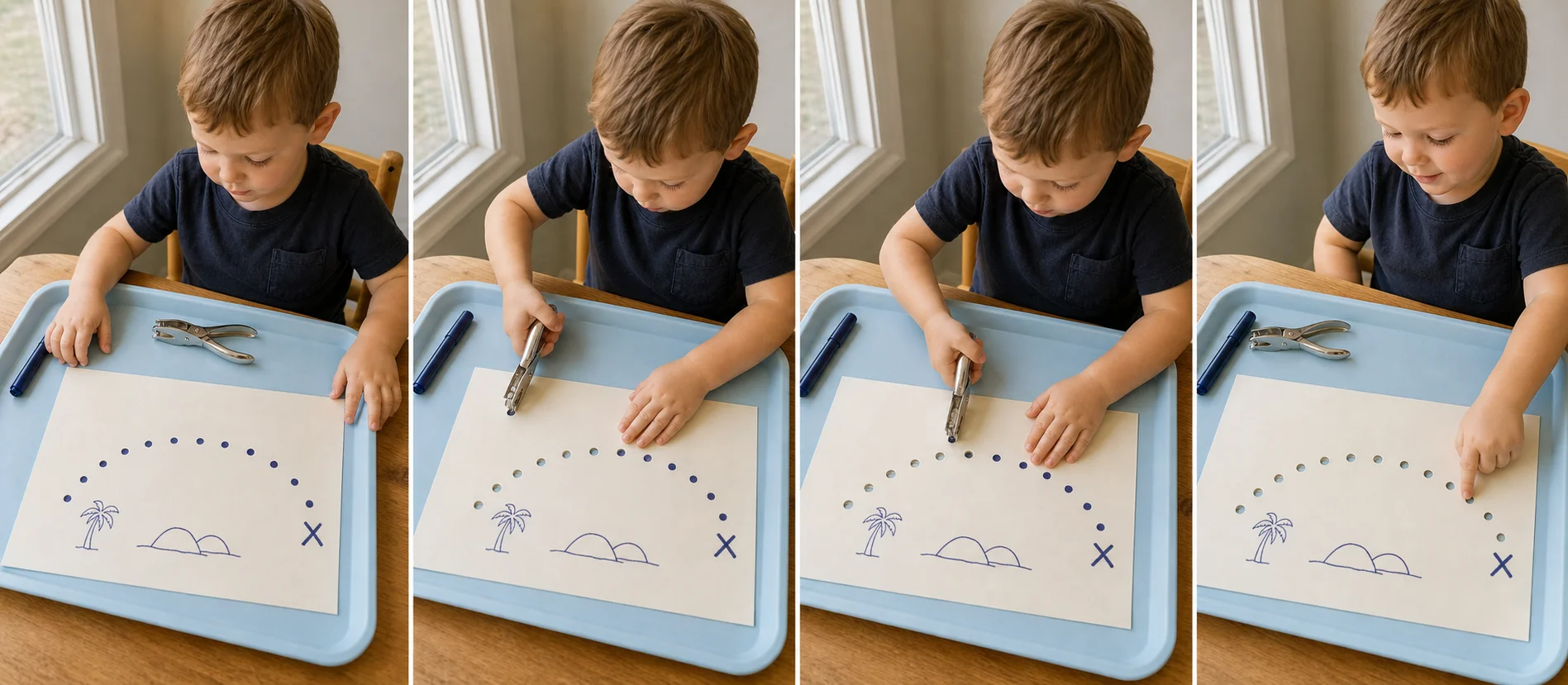
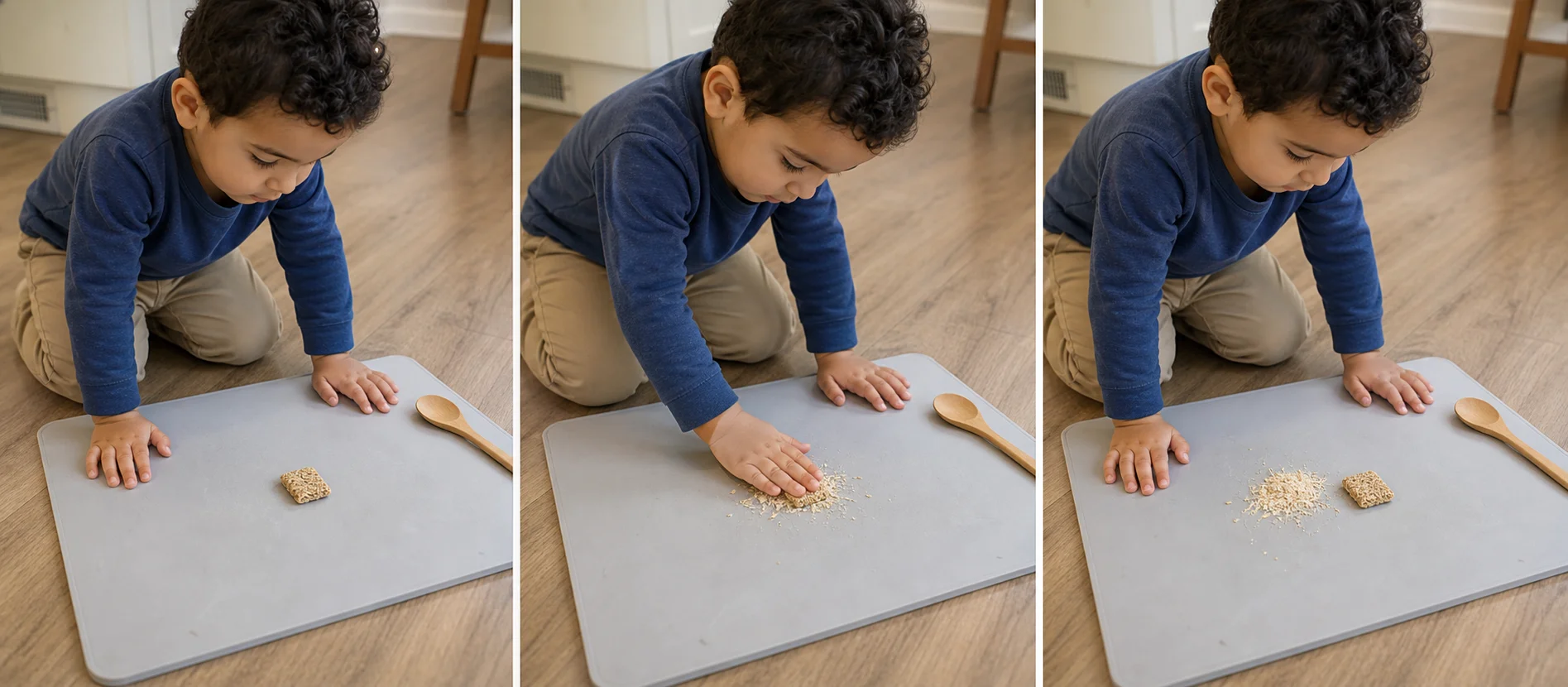
Three-step sequence showing a grown-up modeling one cereal crush, a toddler pressing cereal, and the child looking at the crumbs.
  1. 01
    Press one piece with your fingers and say, "Make it crumbly."
  2. 02
    Let your child press, pinch, or crush the dry cereal.
  3. 03
    Pause so your child can look at or feel the crumbs.
  4. 04
    Slide one larger piece back to the middle, or offer a fresh small piece if your child wants another turn.
  5. 05
    Repeat the crush-and-look loop until your child pulls away or seems done.

Safety Check

  • Stay close because this activity uses small dry food pieces.
  • Choose another activity if mouthing, food-allergy risk, or crumb scattering makes the setup hard to supervise.
  • Keep the play dry and brief; do not move into wet or sticky textures during this activity.
Supporting the play

What to say in the moment

Match what you say to what you see.

Prompt ladder
Level 1 (Start)
Press 1 piece with your fingers and invite your child to make 1 crumbly piece.
Level 2 (Keep going)
Slide 1 bigger piece back to the middle for another squeeze.
Level 3 (Stretch)
Ask your child to choose a big piece to crush next.
Level 4 (Extend)
Make a tiny crumb pile, then start again with 1 fresh piece.
If your child seems...
What you'd see
Focused
What to do
Say
"You found a crunchy one."
Add
Point to 1 larger piece in the middle.
Extend
Let your child crush that piece before offering more words.

Make it easier

Younger end
  • -Start with a piece that is already partly cracked.
  • -Let your child tap or press with 1 finger before using the whole hand.
  • -End after 1 successful squeeze if the dry texture is enough for today.

Make it harder

Older end
  • +Ask your child to find the largest leftover piece before the next crush.
  • +Have your child press with both hands together for 1 slow squeeze.
  • +Pause before resetting so your child can notice which pieces are still big.

If it's not working

If you see
If child ignores it
Crush 1 piece yourself so your child can hear and see the change, then offer 1 fresh piece for a copy turn.
If you see
If child misuses it
Guide the crumbs back to the middle and return to 1 small piece or pile at a time.
If you see
If child gets frustrated
Offer the spoon, pastry brush, or fork for indirect touch, or end after 1 successful press.
Skill spotlight
Push Through Resistance`

Pressing and crushing with the hands.

This helps a child use steady hand pressure and stay with a dry texture long enough to act on it during play and daily routines.

  • Pressing the cereal gives your child a clear action and result: push, crumble, notice.
  • The dry texture keeps sensory play small and contained before wet or sticky play.
  • Choosing a larger leftover piece gives your child a simple way to repeat the hand-pressure practice.
  • The short loop works with modeling, pointing, and one phrase instead of lots of instructions.
Real-world transfer
  • Pressing, squeezing, and handling dry materials during play
  • Staying calm with a dry texture long enough to use the hands
  • Noticing that hand pressure can change an object

Parent questions