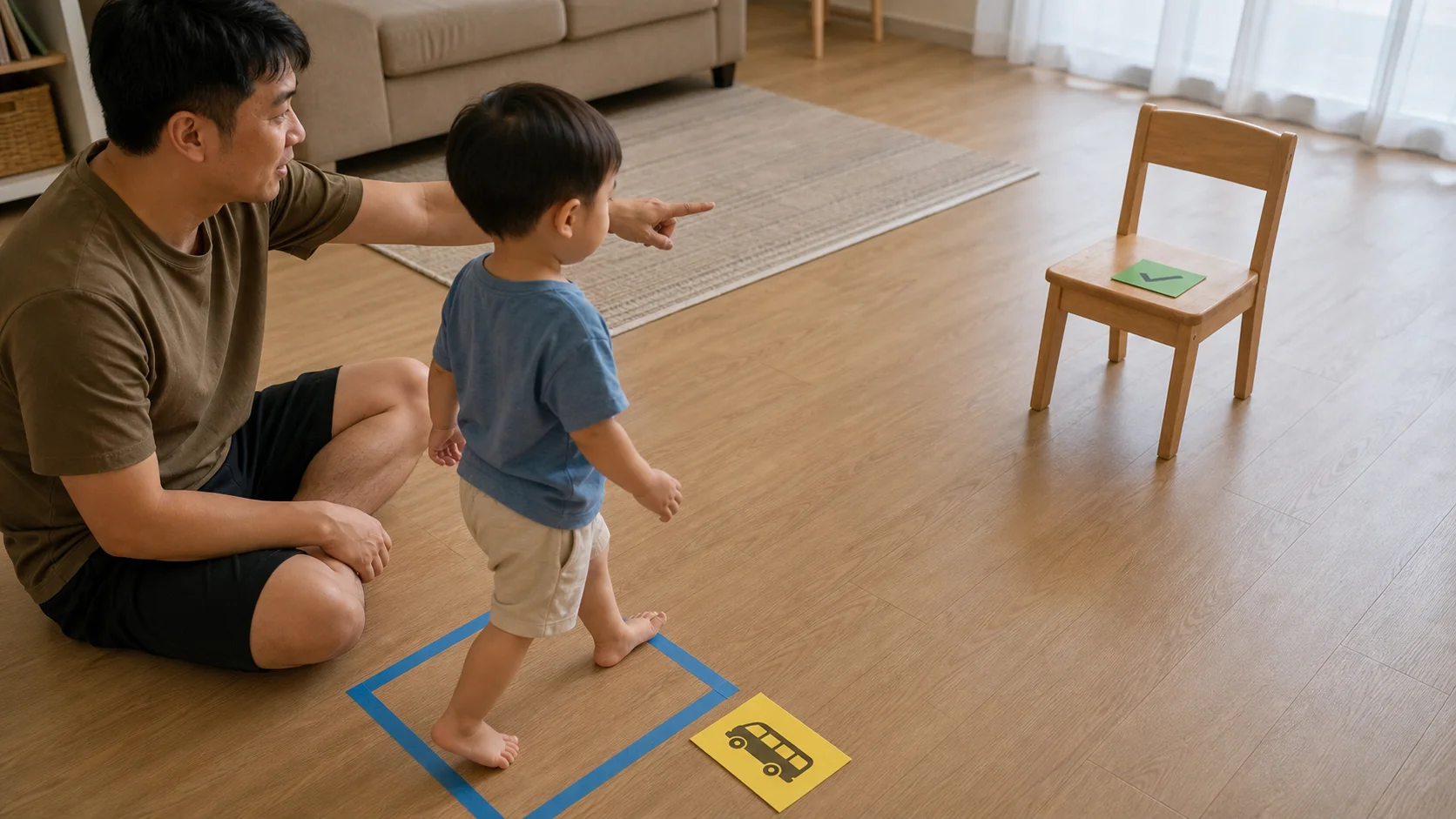
Toddler standing on a floor spot beside a bus picture card while a grown-up points toward a nearby chair.
Skill builderAutism supportPause Before ActionIndoor

Bus Stop Seat.

A quiet pretend bus routine where your child waits on a floor spot, moves to a chair on cue, and resets for another turn.

Play time
5+ min
Age
2-3 years
Energy
Low
Mess
Low
Effort
Low
Where
Indoor
Start here

The recipe.

Low parent effort
4 things

What you need

  • 1 paper, foam, or tape floor spot
  • 1 child-sized chair or steady household chair
  • 1 simple bus picture card or bus icon
  • 1 simple done card or done side on the same card
5 min minimum

Setup

Then start the loop
Step 01
On the floor in a calm room, place 1 bus-stop spot with enough clear space for both of your child's feet.
Step 02
On the floor a few calm walking steps from the spot, place 1 steady chair facing the stop. Put the bus picture card on or beside the stop and the done card on or beside the chair.
Step 03
Beside the stop, stand or kneel where you can point to the spot, show the short countdown, and walk with your child to the chair if needed.
"Feet on the stop."
The loop

How play unfolds.

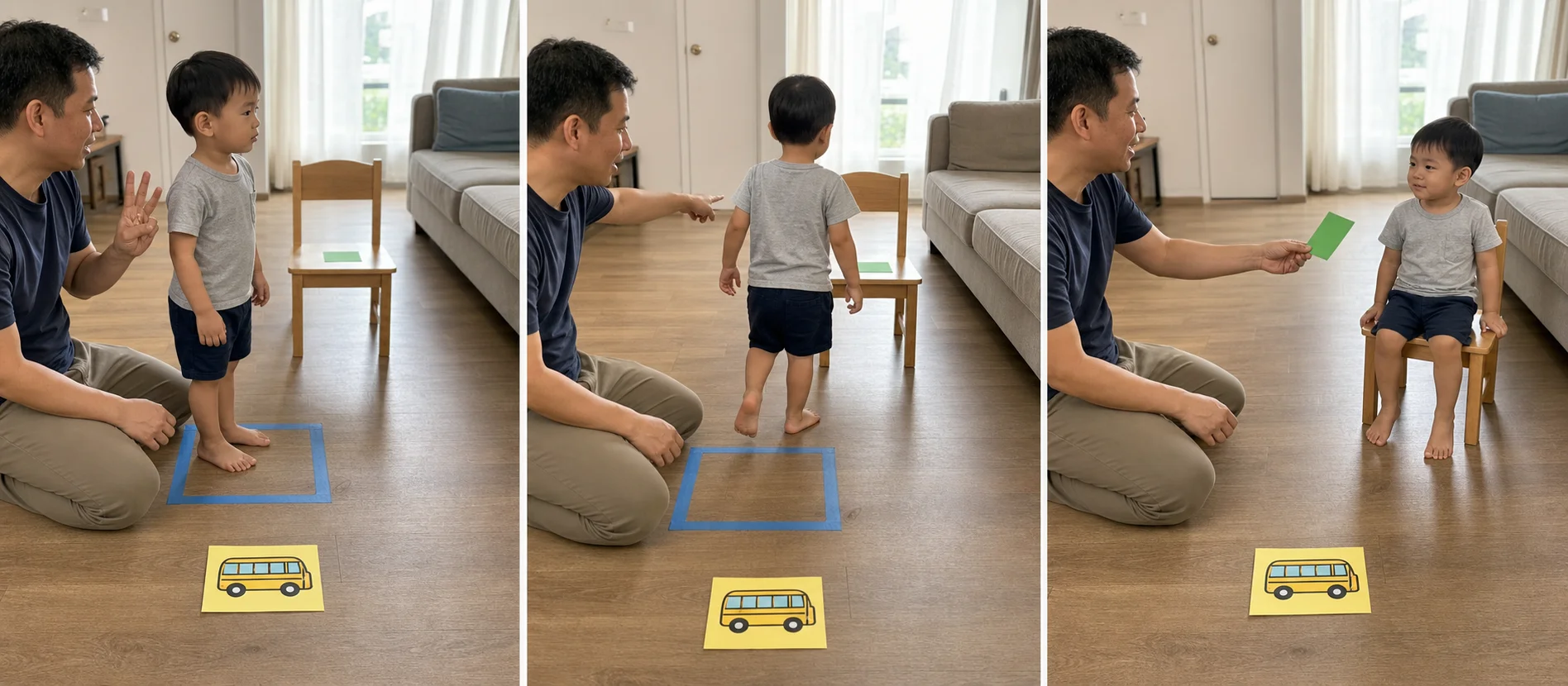
Three-panel sequence showing a toddler waiting at a pretend bus stop, walking to the chair on cue, and returning to reset.
  1. 01
    Start with your child on the bus-stop spot and the bus picture card visible. Say "wait" and show a short finger countdown.
  2. 02
    Say "bus is here," then let your child walk to the chair and sit.
  3. 03
    Show the done card, then help your child return to the stop.
  4. 04
    Repeat for up to 3 calm wait-and-sit turns, or stop after 1 clean sit if that is the better finish.

Safety Check

  • Use a stable chair and keep the walking lane clear every round.
  • Stop if the chair slides, tips, or turns into climbing.
  • Choose another activity if the pretend bus theme, short wait, or seat transition keeps triggering bolting or strong distress.
Supporting the play

What to say in the moment

Match what you say to what you see.

Prompt ladder
Level 1 (Start)
"Wait at the stop."
Level 2 (Keep going)
"Bus is here. Find your seat."
Level 3 (Stretch)
"Show me calm feet while you wait."
Level 4 (Extend)
"Last bus ride, then all done."
If your child seems...
What you'd see
Focused
What to do
Say
"You know it. Wait, then seat."
Add
After the child sits, ask, "Where is your seat?"
Extend
Fade 1 gesture and let your child walk back to the stop with less help.

Make it easier

Younger end
  • -Hold the bus picture card at the wait spot so the child only has to watch, wait, and walk.
  • -Turn the chair slightly toward the spot so the seat is easier to line up with.
  • -Let the child keep 1 hand on the chair back before sitting if turning into the seat is the hard part.

Make it harder

Older end
  • +Fade the finger countdown and use only the spoken cue once the routine looks smooth.
  • +Pause for 1 quiet beat after "1" before saying "bus is here."
  • +Let the child return to the stop and reset the cards with only a point from you.

If it's not working

If you see
If child ignores it
Stand on the spot with your child, do 1 very short wait-and-sit round together, and praise the seated finish.
If you see
If child misuses it
If your child rushes early or climbs into the chair before the cue, guide them back to the spot, shorten the countdown to 1, and restart the same simple routine.
If you see
If child gets frustrated
Let your child hold a familiar comfort item or skip the picture cards for 1 round, get 1 quick wait-and-sit success, and stop there.
Skill spotlight
Wait For The Go Cue

Waiting for the bus cue before sitting

This helps a child hold back 1 body action until a go cue and move through a short everyday transition with less rushing.

  • The floor spot gives waiting a visible job: stay here until the cue.
  • The same short route repeats every turn, so the next step stays easy to predict.
  • The chair gives the child a clear finish point before the reset back to the stop.
Real-world transfer
  • Waiting for a simple go cue before moving into line, the car, or another seat
  • Handling short daily transitions with less rushing
  • Taking a designated seat after 1 familiar direction

Parent questions