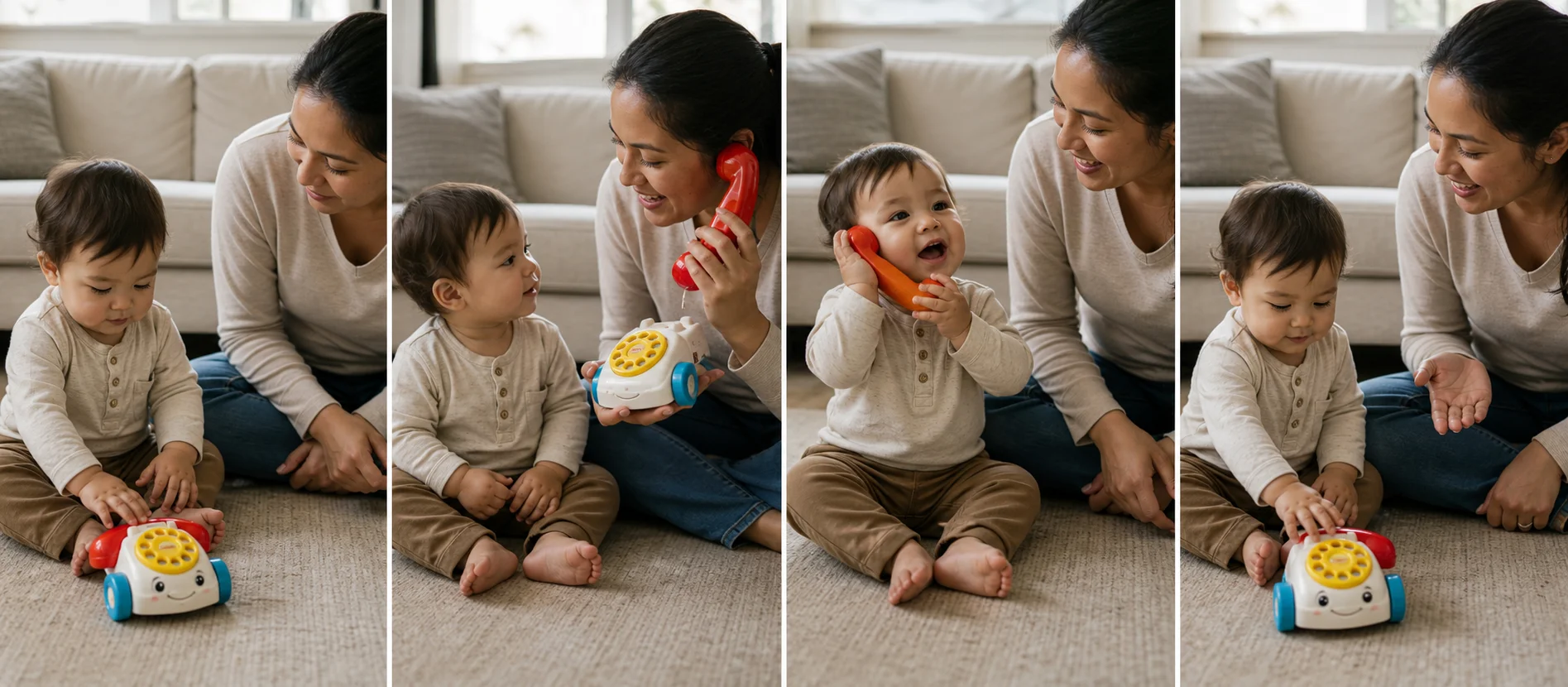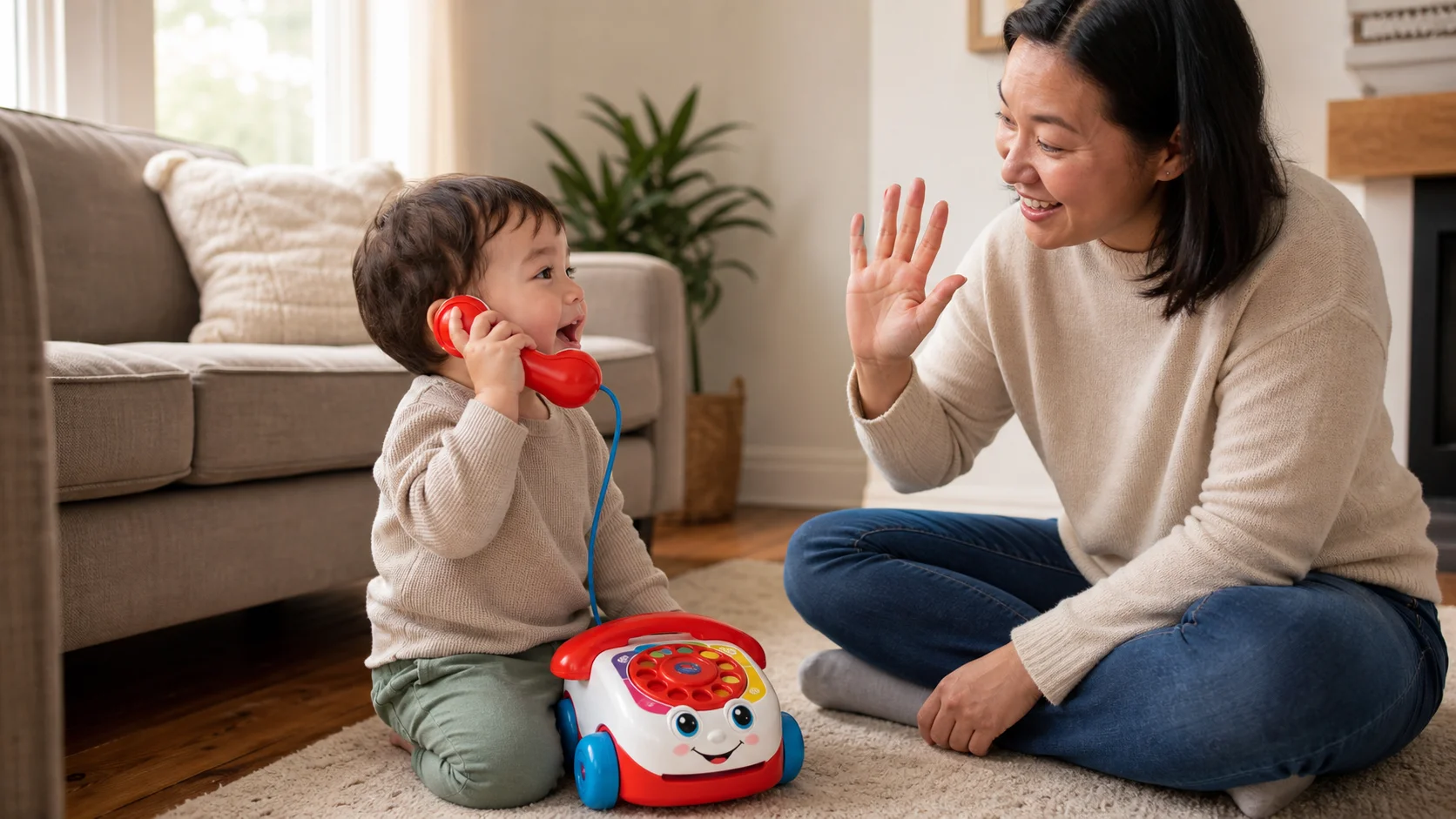

Toy Phone Hello
Turn one toy phone and one familiar word into an easy first pretend-play routine. Your child watches you say hello into the phone, then copies the call to practice imitation, early communication, and turn taking.


Turn one toy phone and one familiar word into an easy first pretend-play routine. Your child watches you say hello into the phone, then copies the call to practice imitation, early communication, and turn taking.


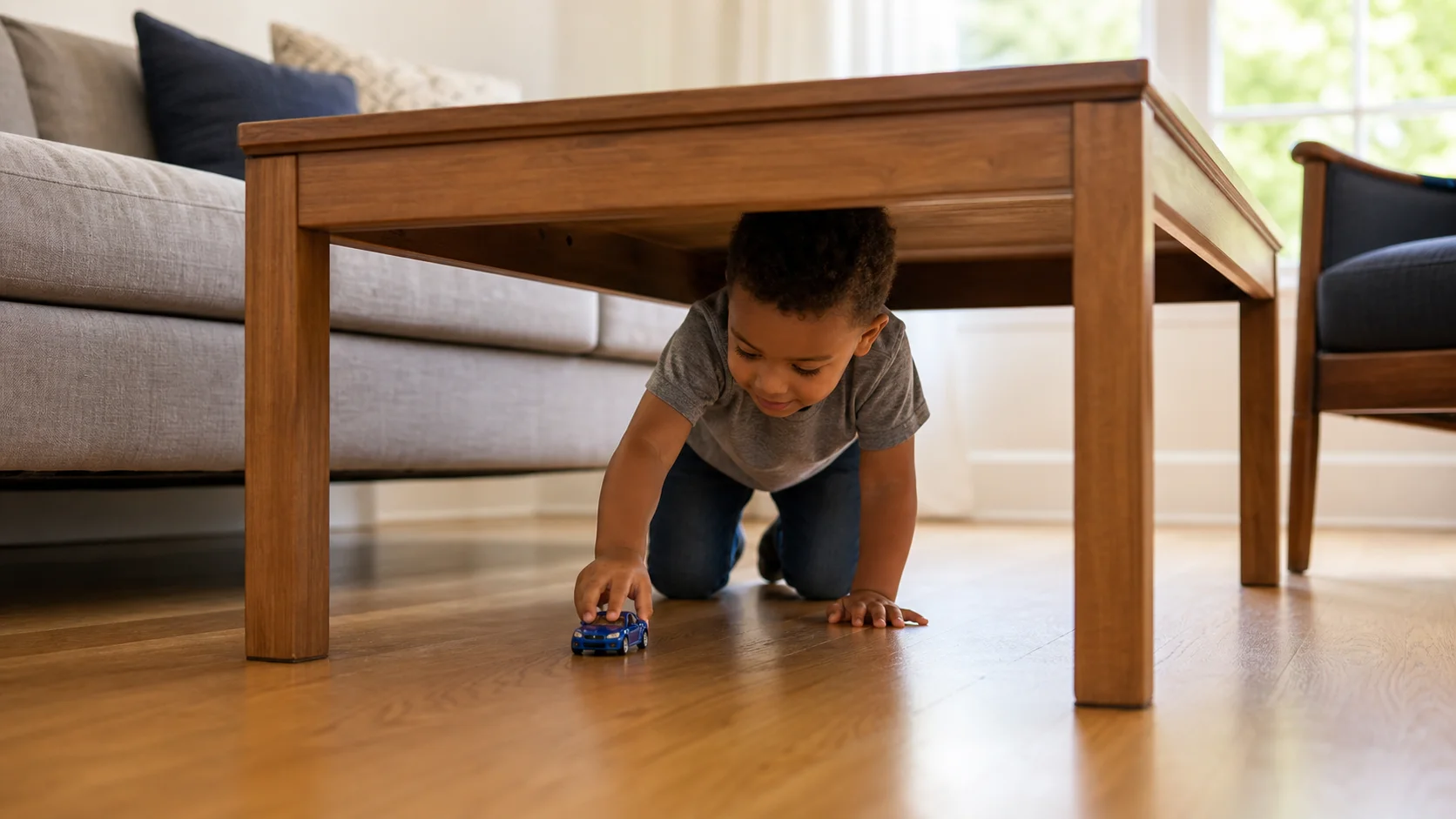
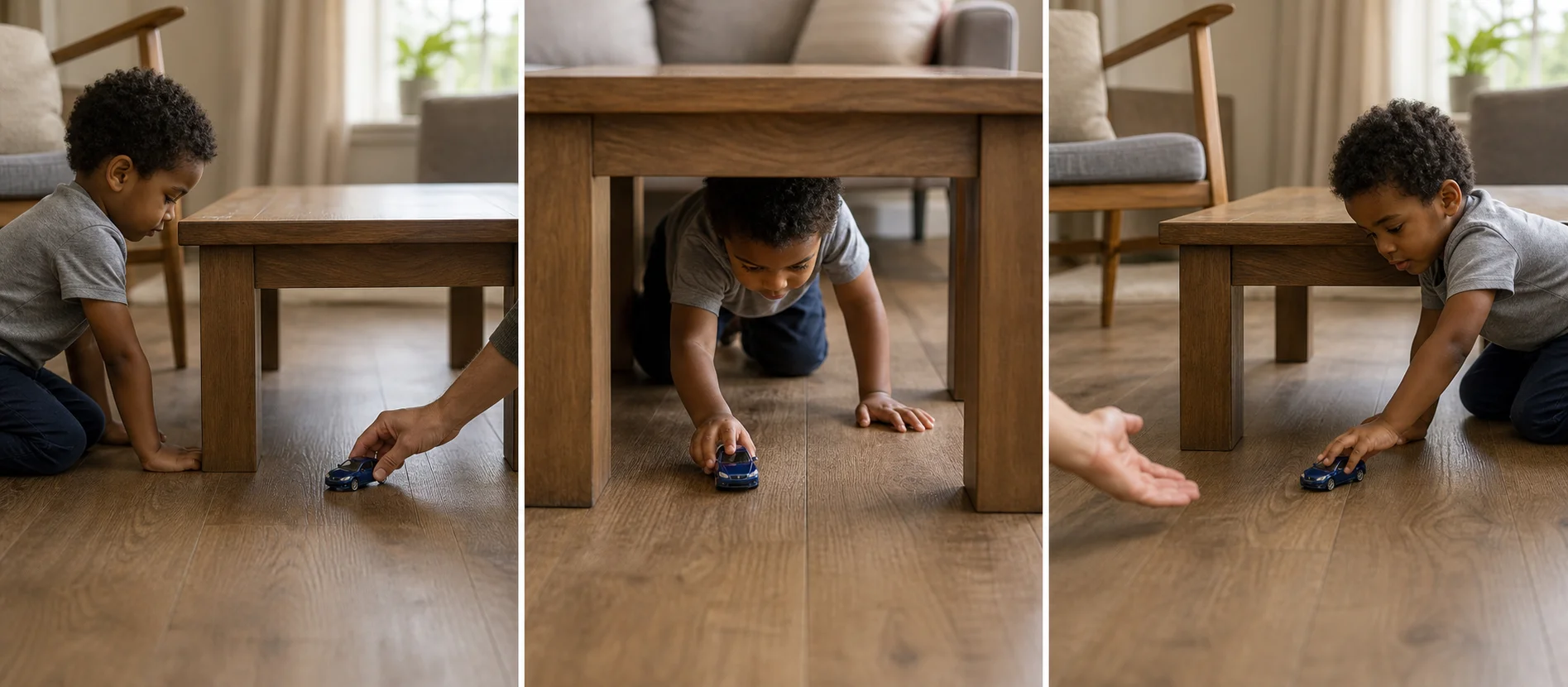
Turn the space beneath a sturdy table into a tiny driving tunnel. Your child crawls through while pushing a toy car with one hand, practicing body awareness and controlled weight shifting with every trip.


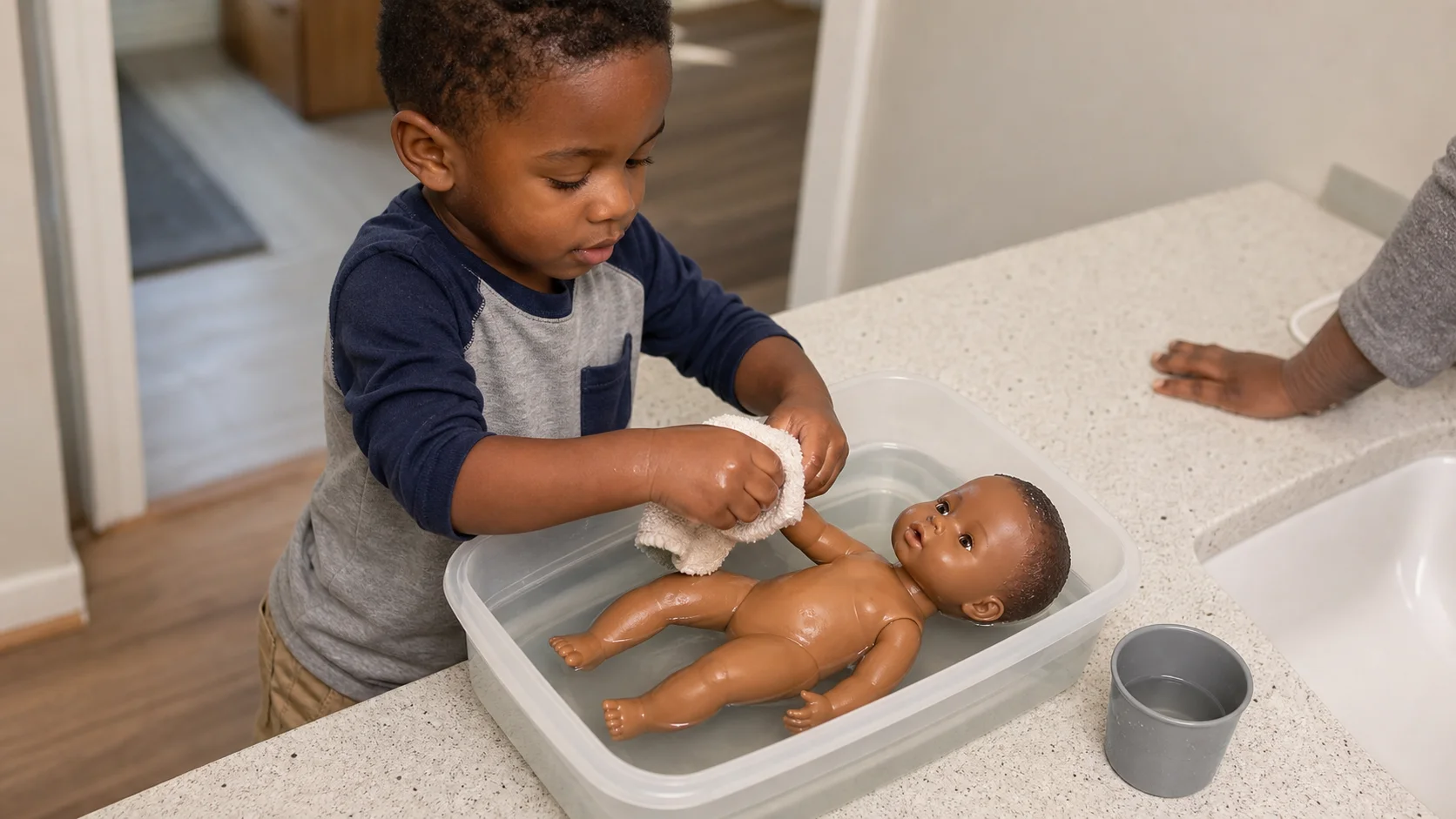
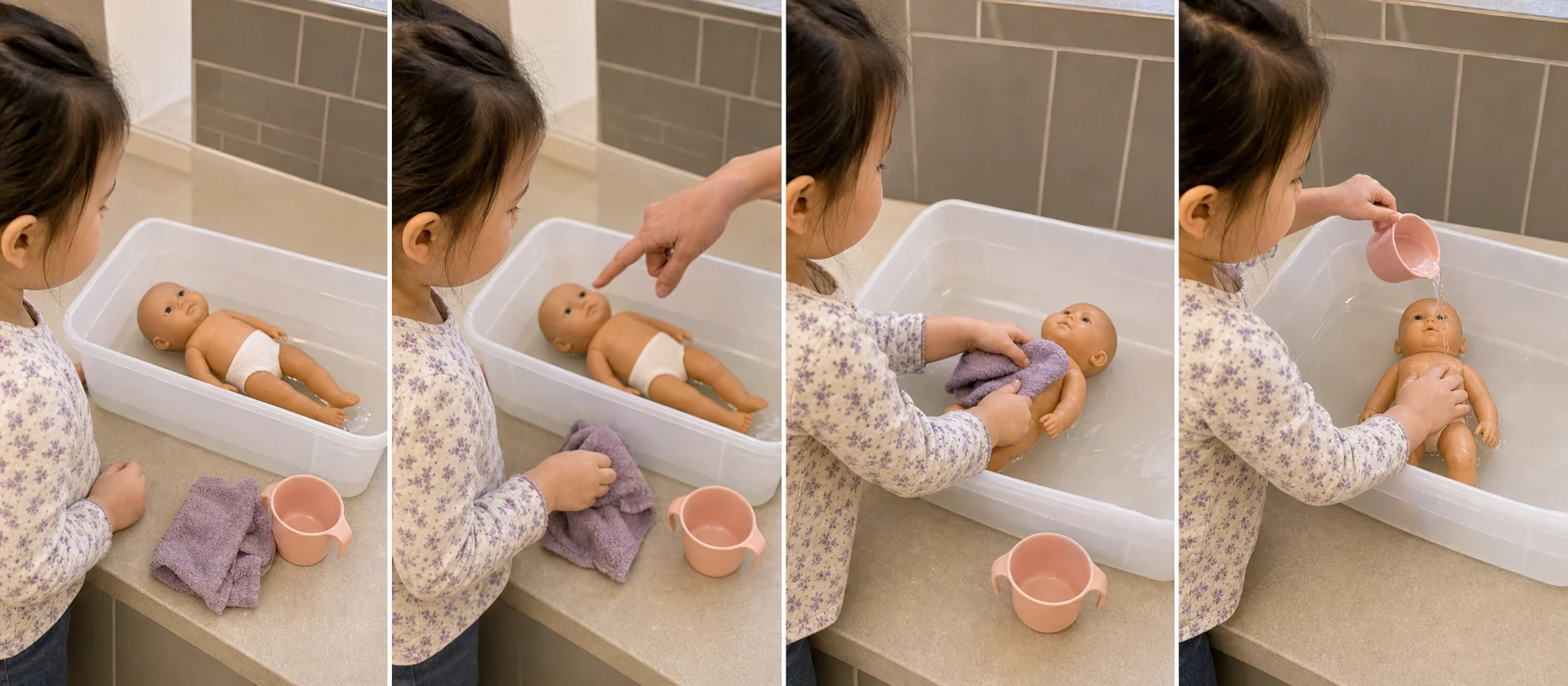
Turn a waterproof doll's bath into simple body-care practice your child can see and copy. Your child wipes and rinses one doll body part at a time, practicing a familiar care routine while learning what gets washed.


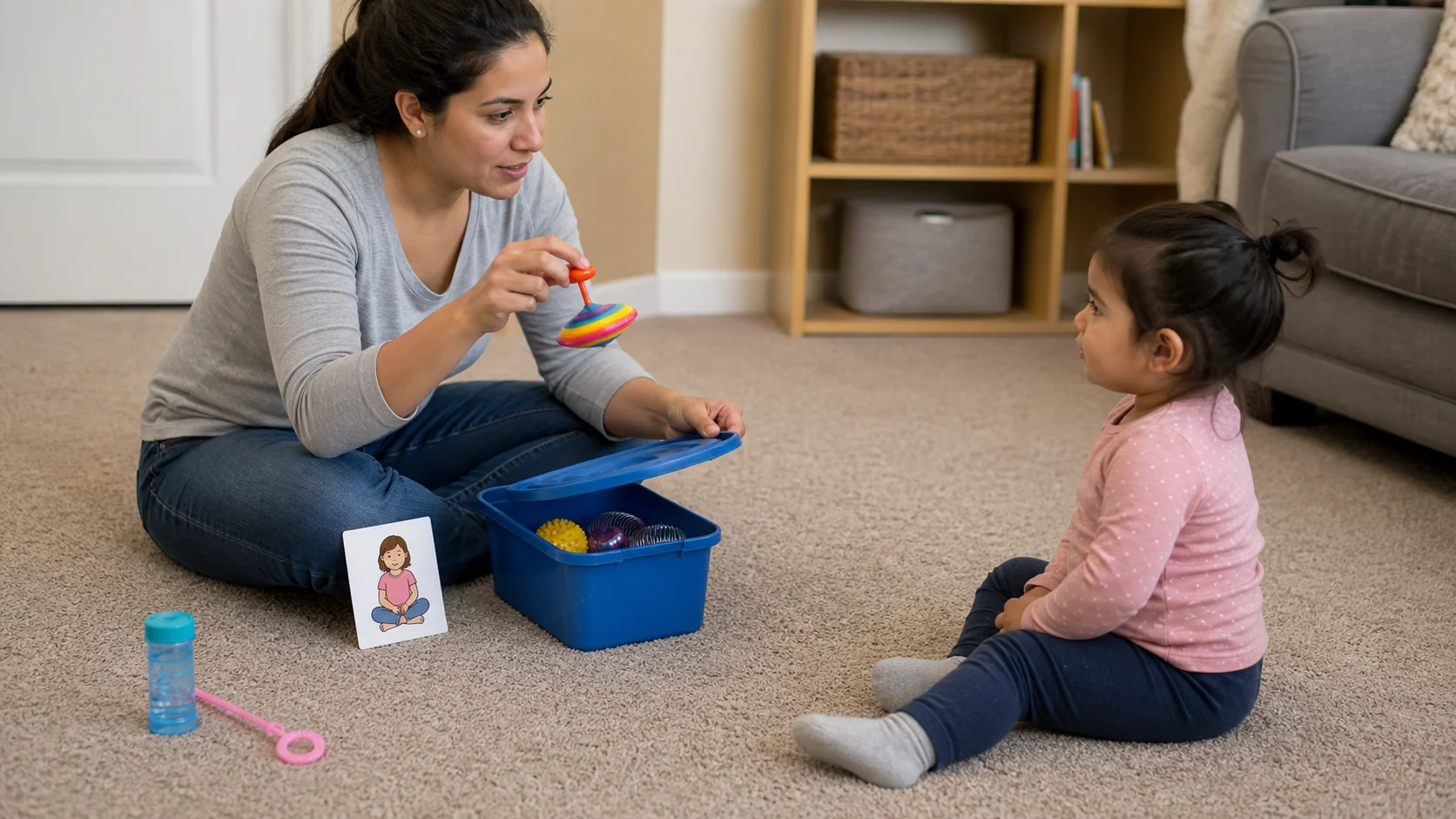
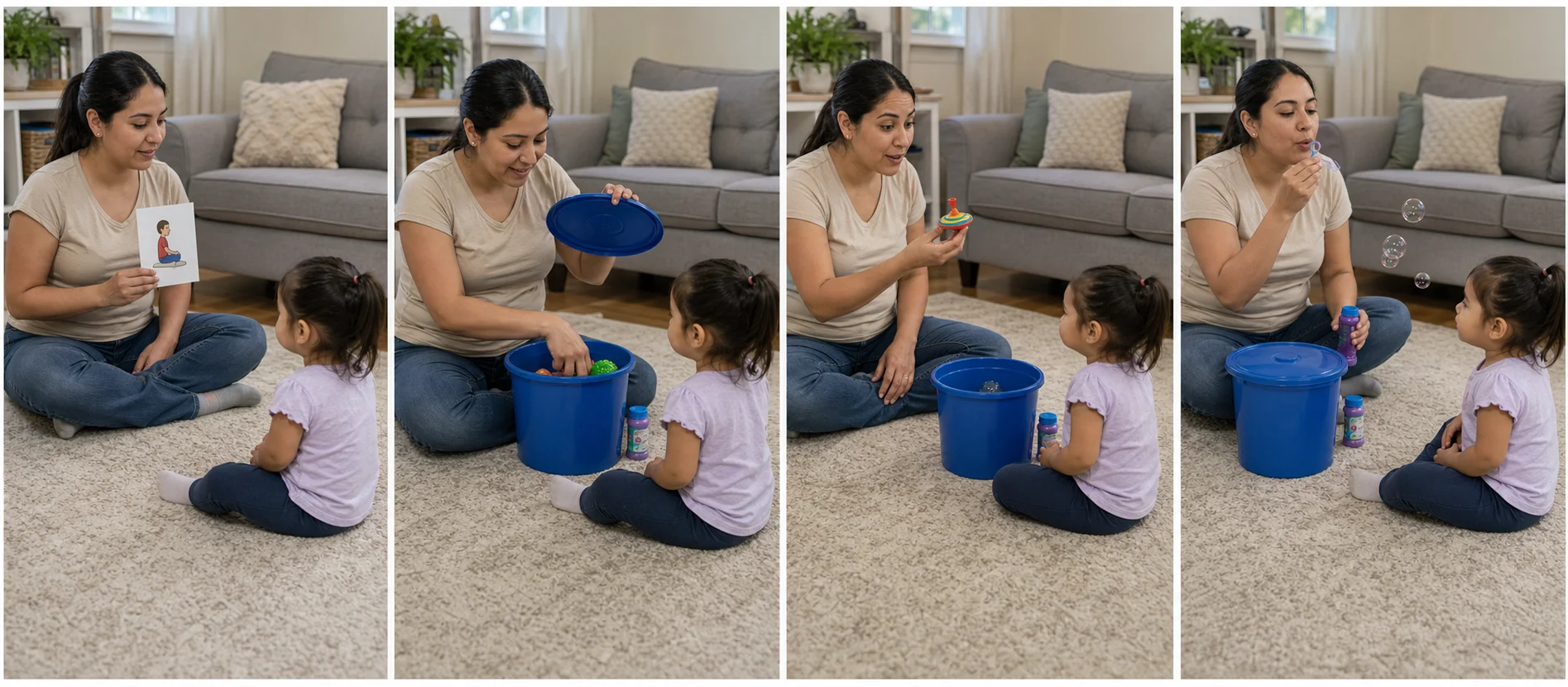
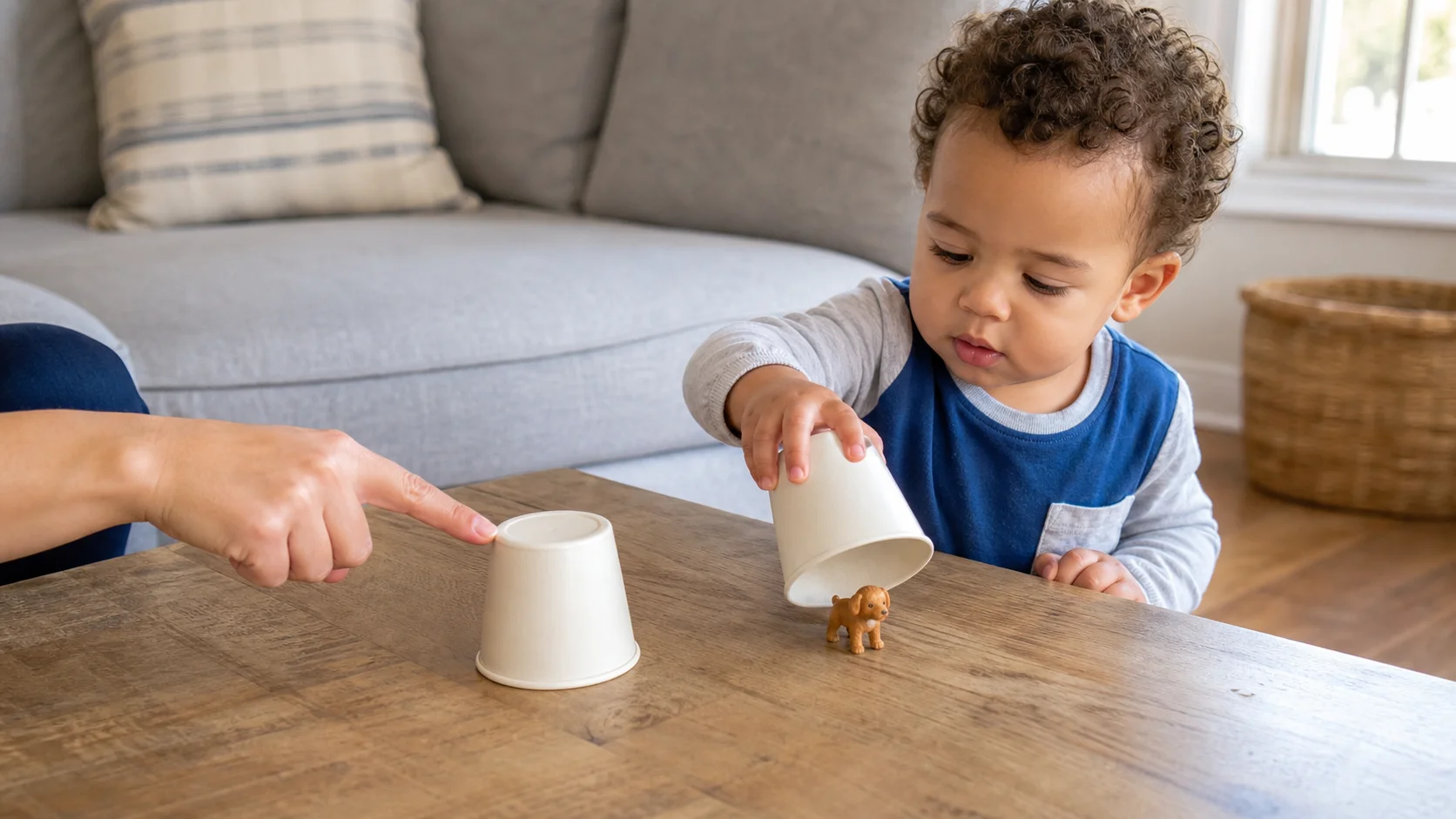
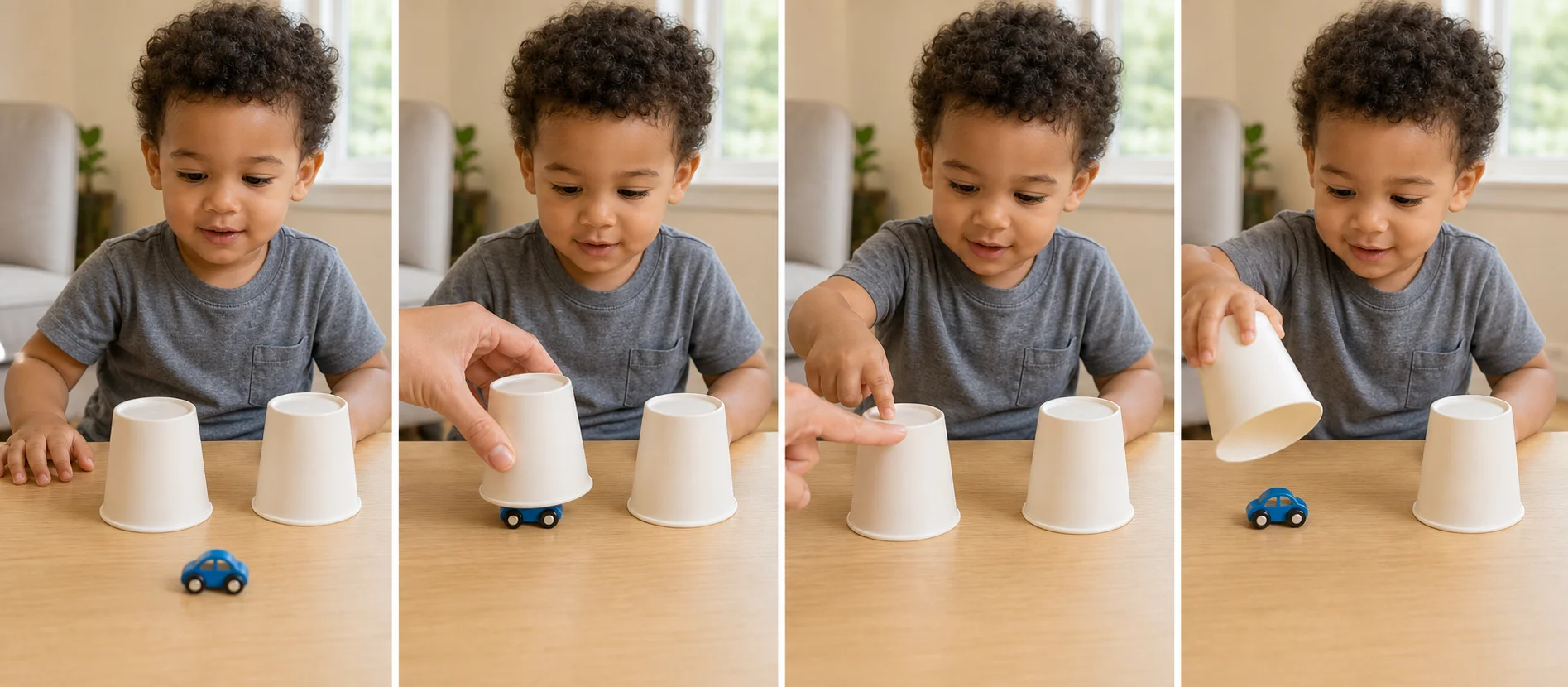
Turn a lidded container and a few interesting objects into a short reveal game. Your child watches one item at a time, then waits for the next to support attention and practice pausing before reaching.


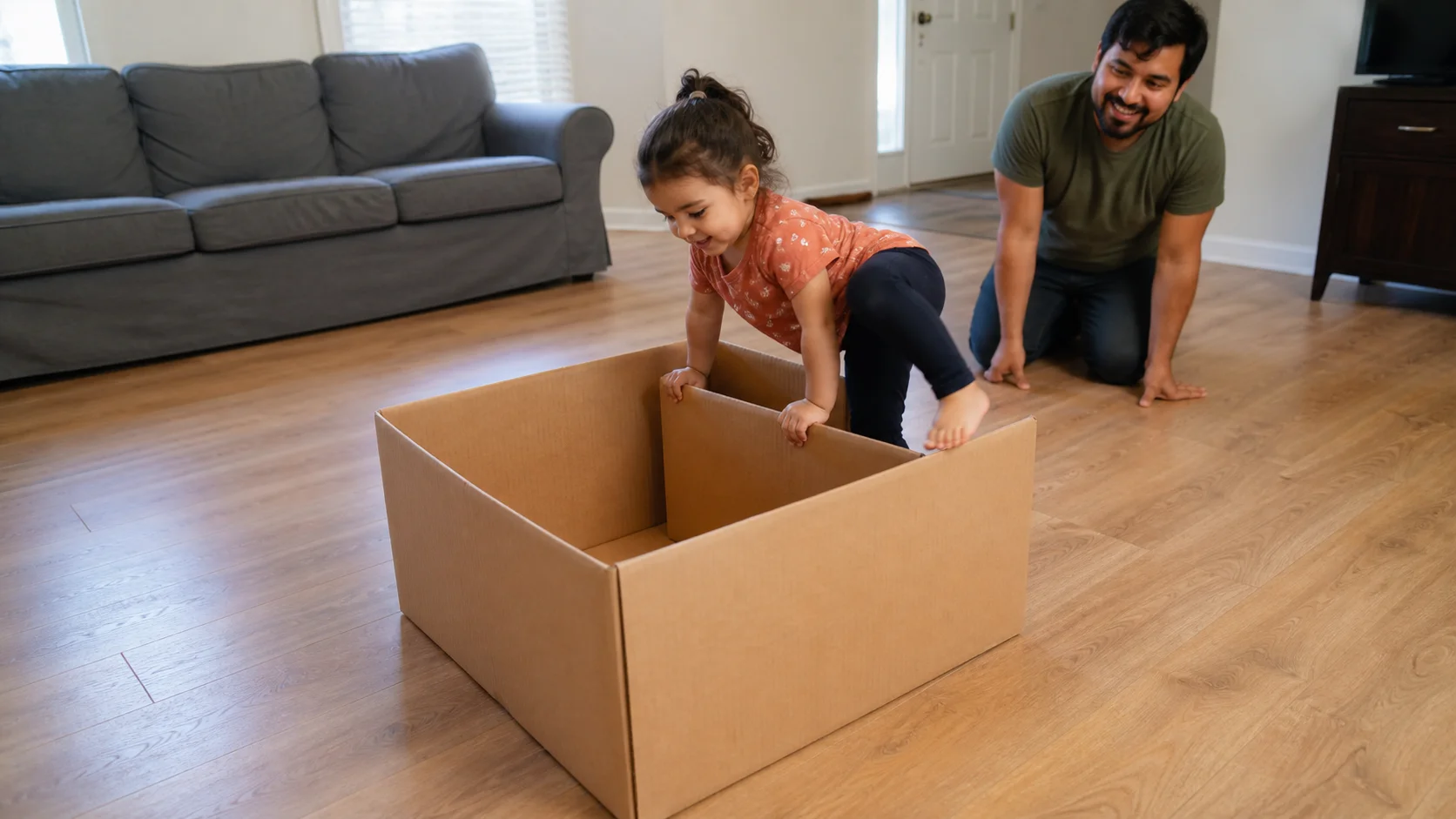
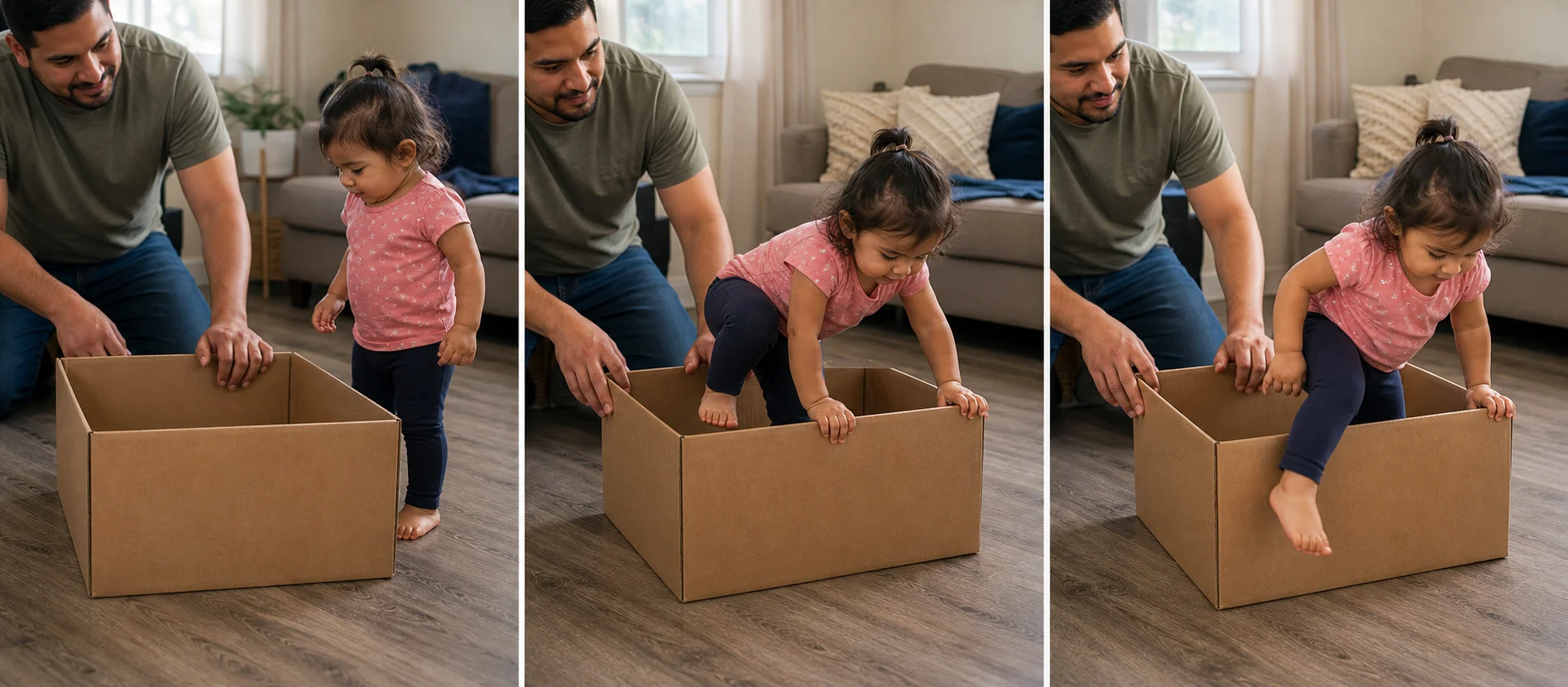
A big cardboard box gives your toddler a clear in-and-out climbing challenge. They step over the side, turn around, and climb back out to practice body control and changing levels.


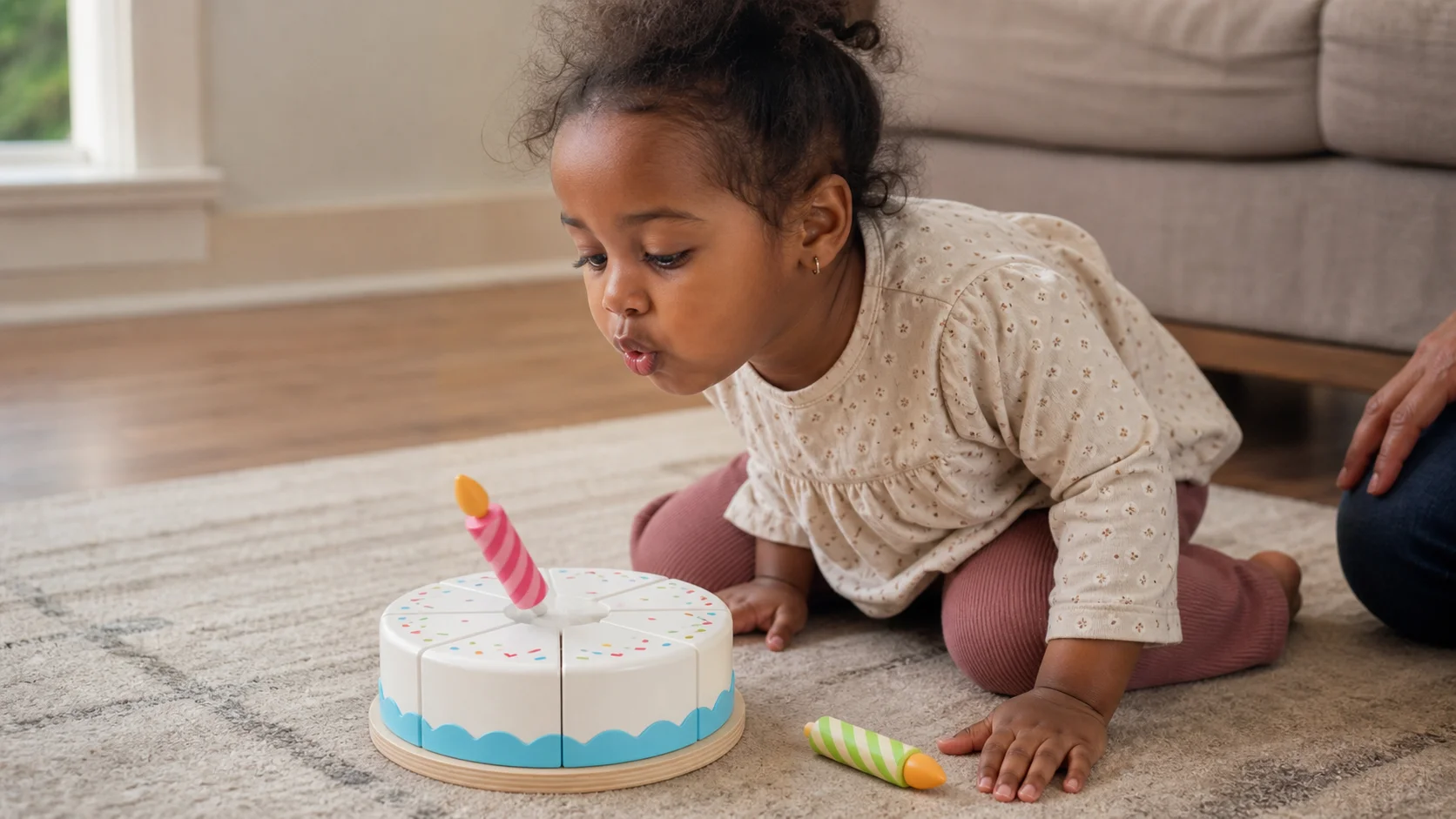
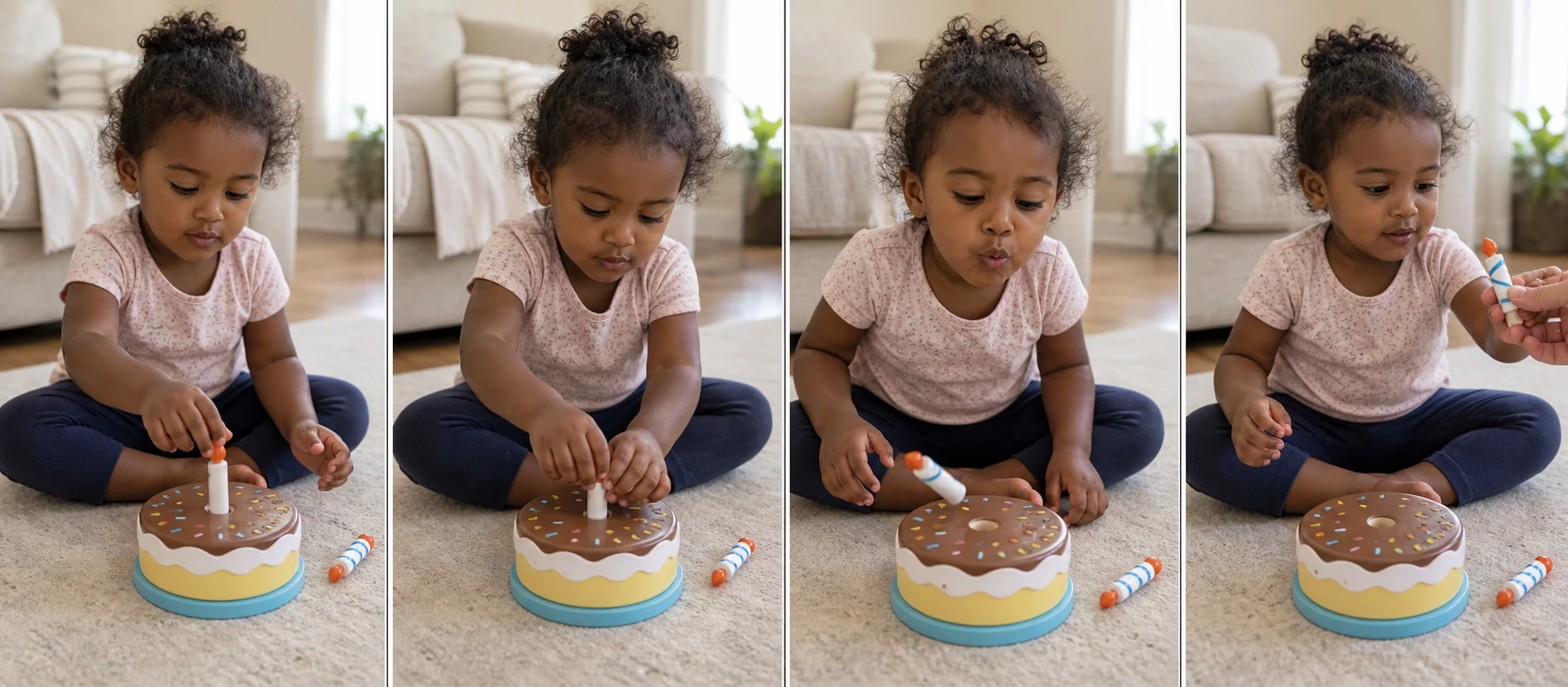
Bring the birthday-cake moment to playtime with one toy candle and one big pretend blow. Your child presses the candle onto the cake, then pretends to blow it out while you tip it off for careful placement and simple sequencing practice.


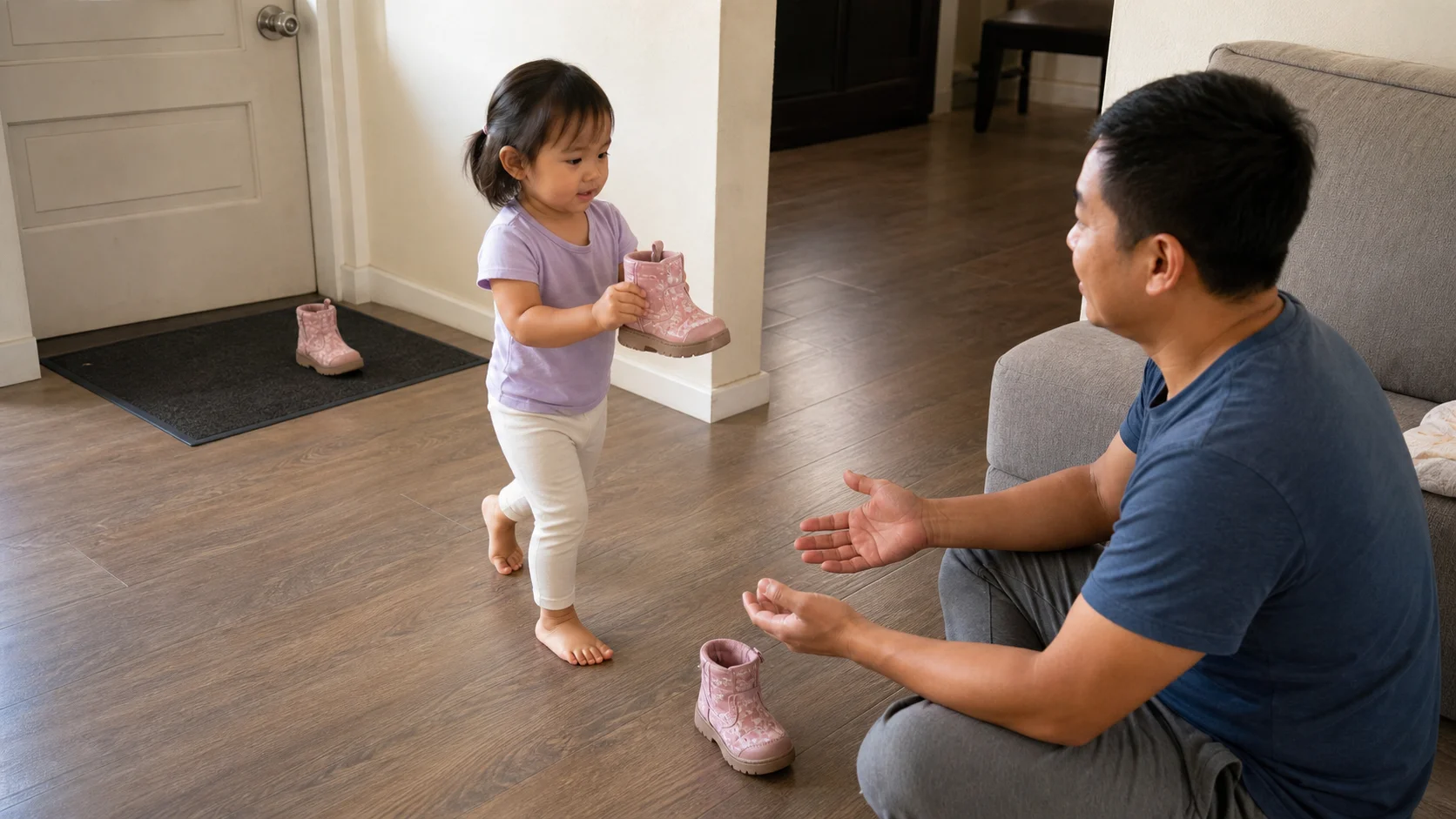
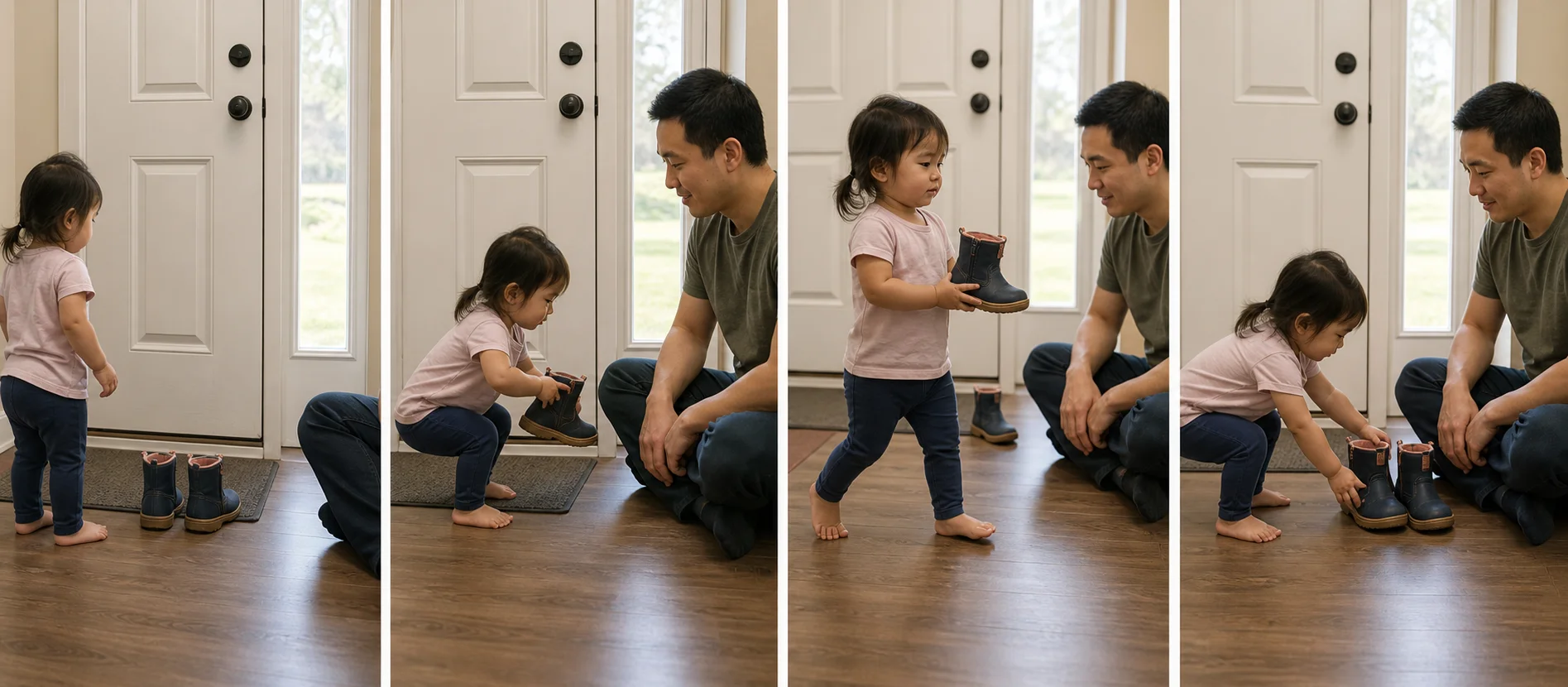
Turn the pre-shoe scramble into one simple helper job. Your child finds a pair of boots or shoes by the door and delivers them one at a time, practicing a simple direction while joining the dressing routine.


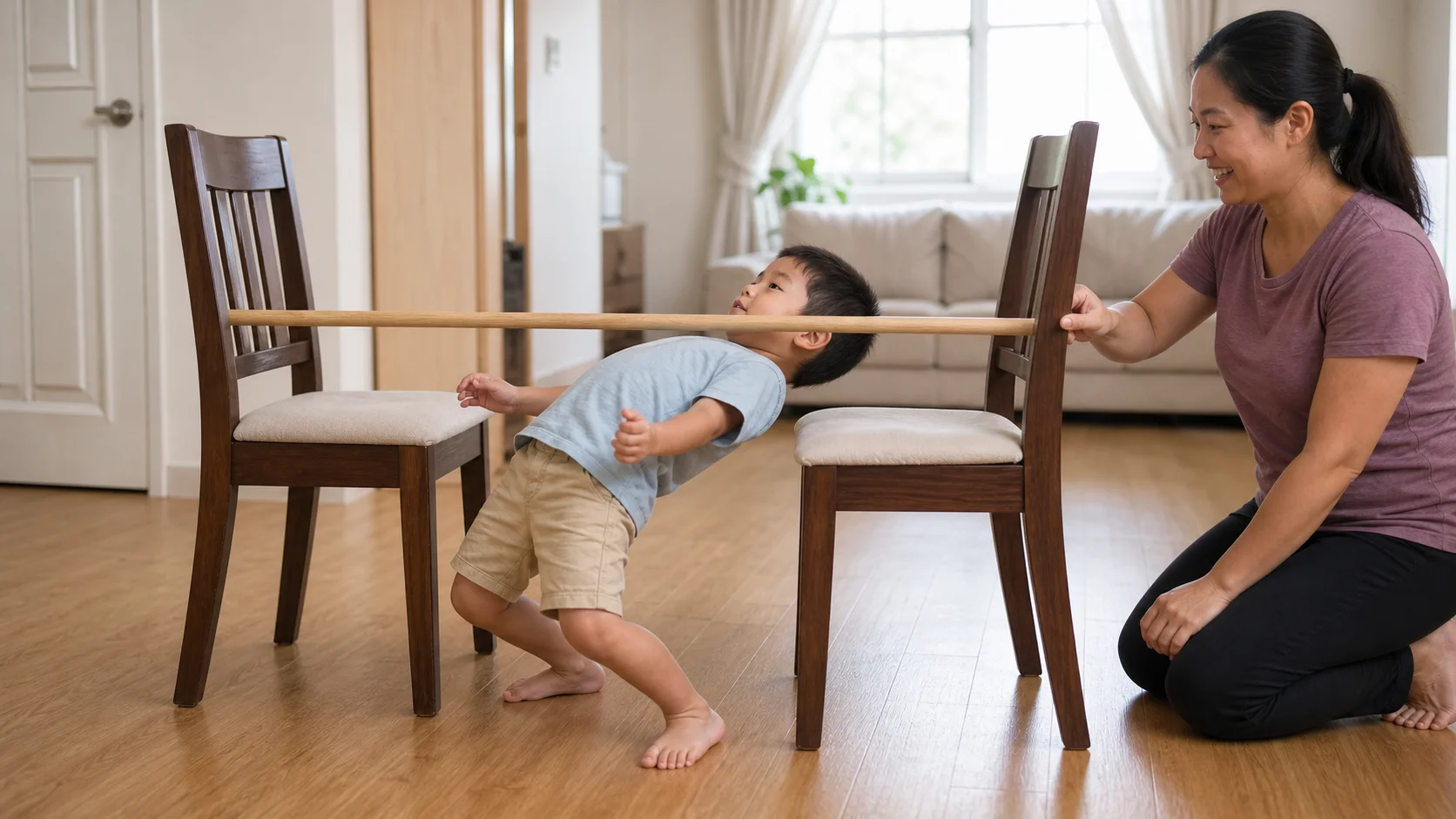
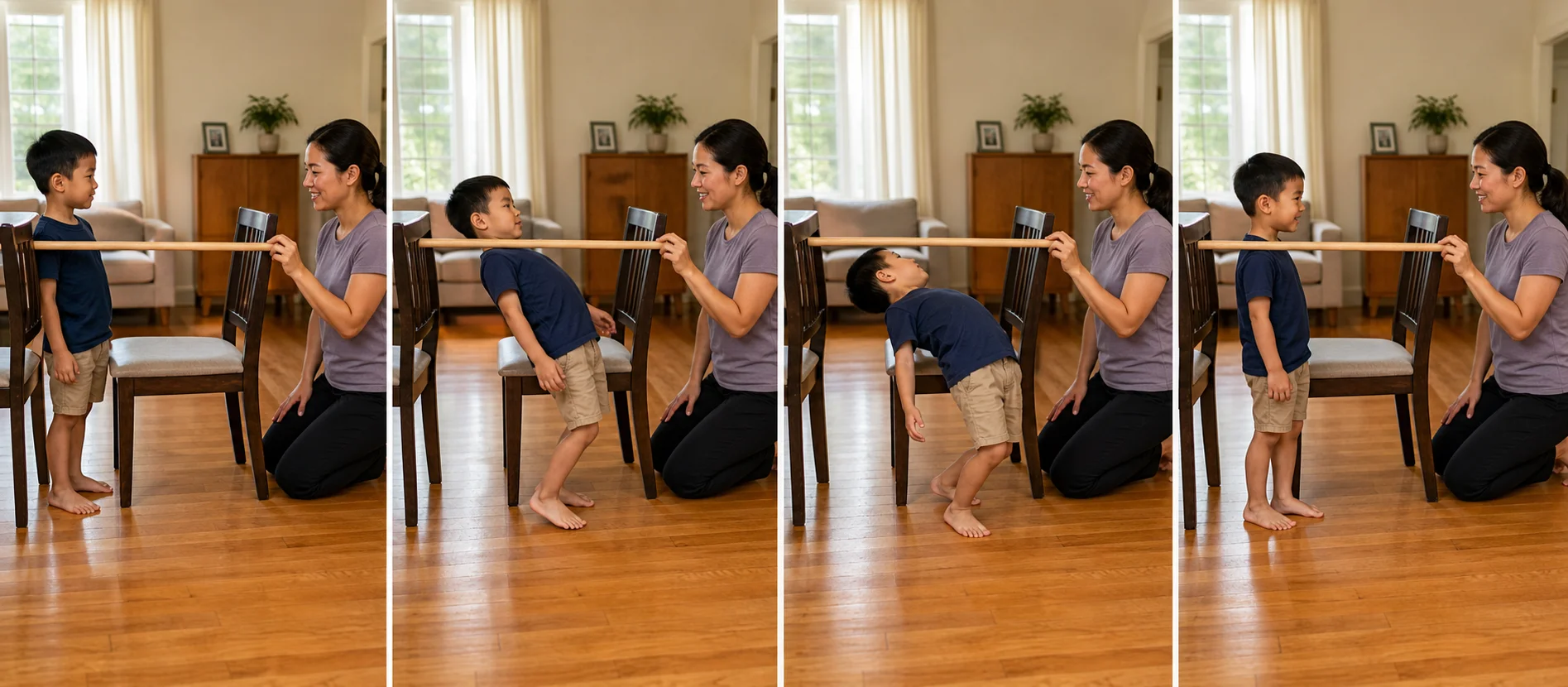
Broom Limbo Pass is an indoor limbo activity for preschoolers that helps children change body levels safely through a clear, repeatable play loop.

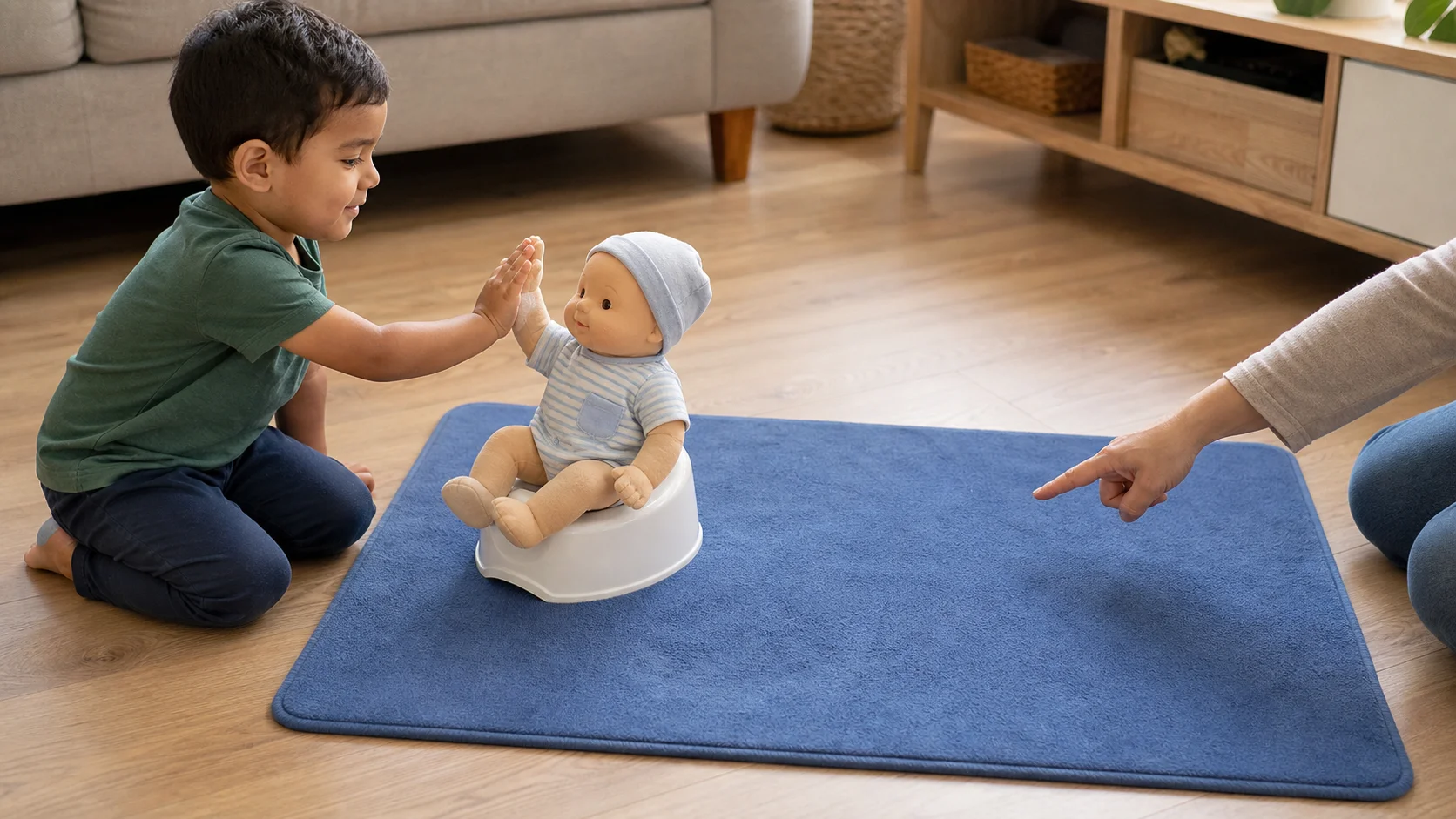
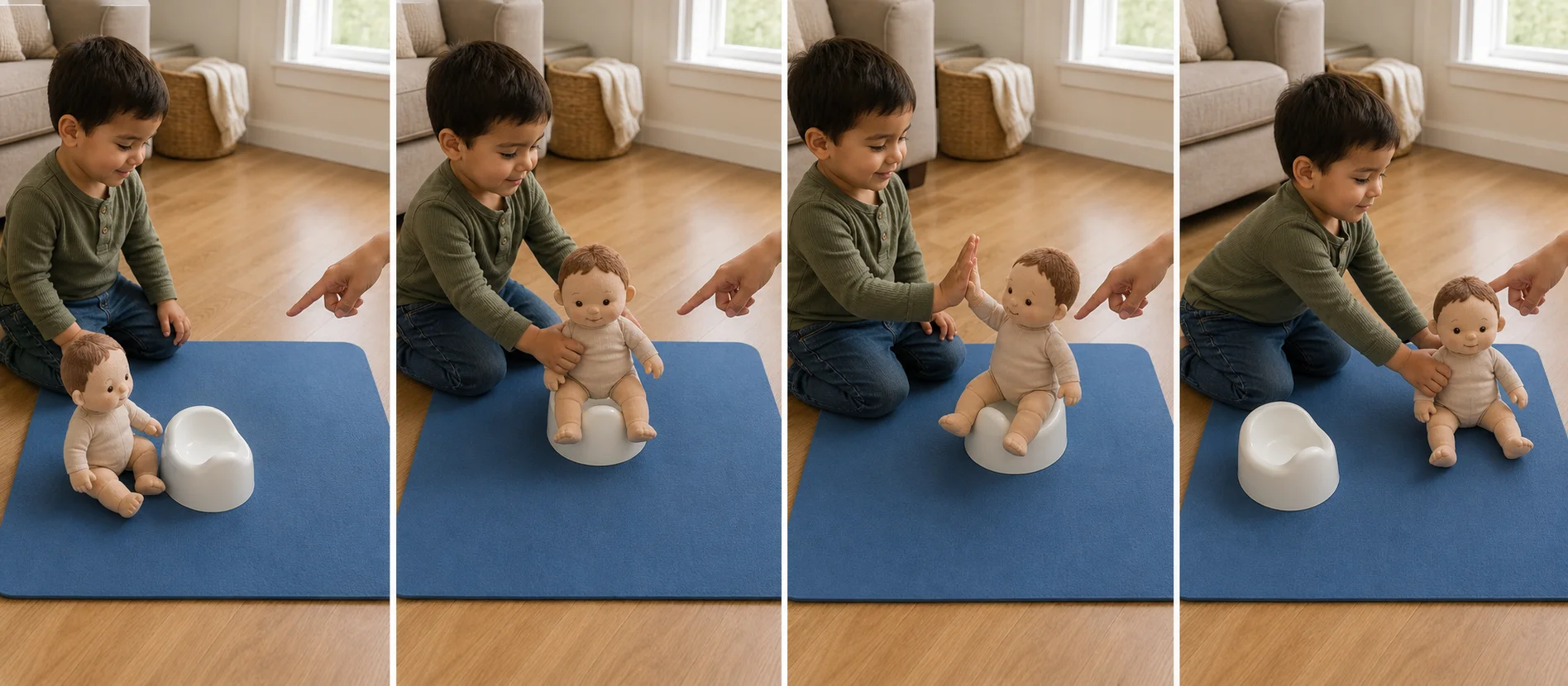
Give a potty routine a low-pressure pretend-play rehearsal. Your child seats a doll on a pretend potty, pauses, cheers for trying, and moves the doll to "all done" while practicing a calm, predictable care sequence.

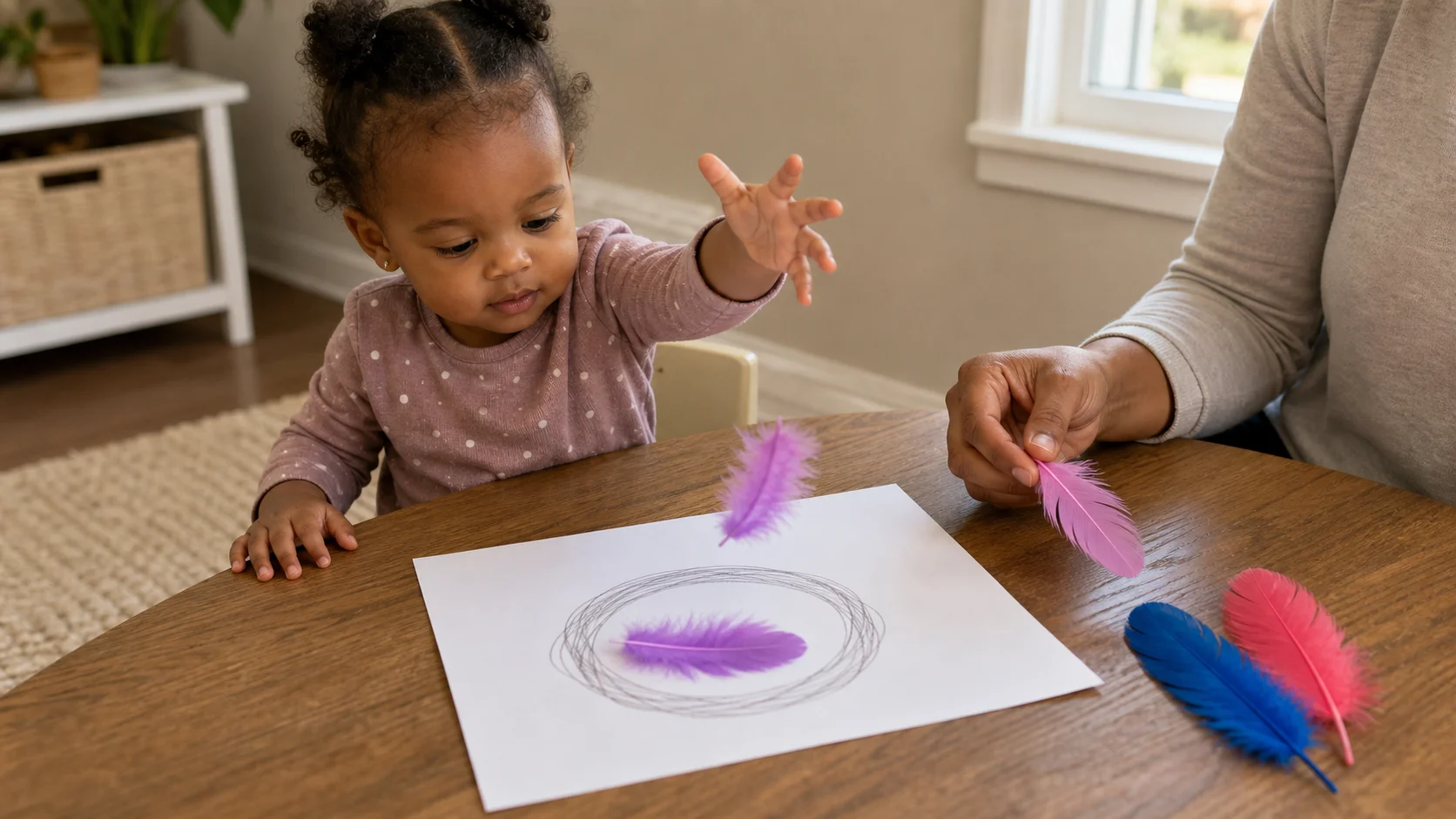
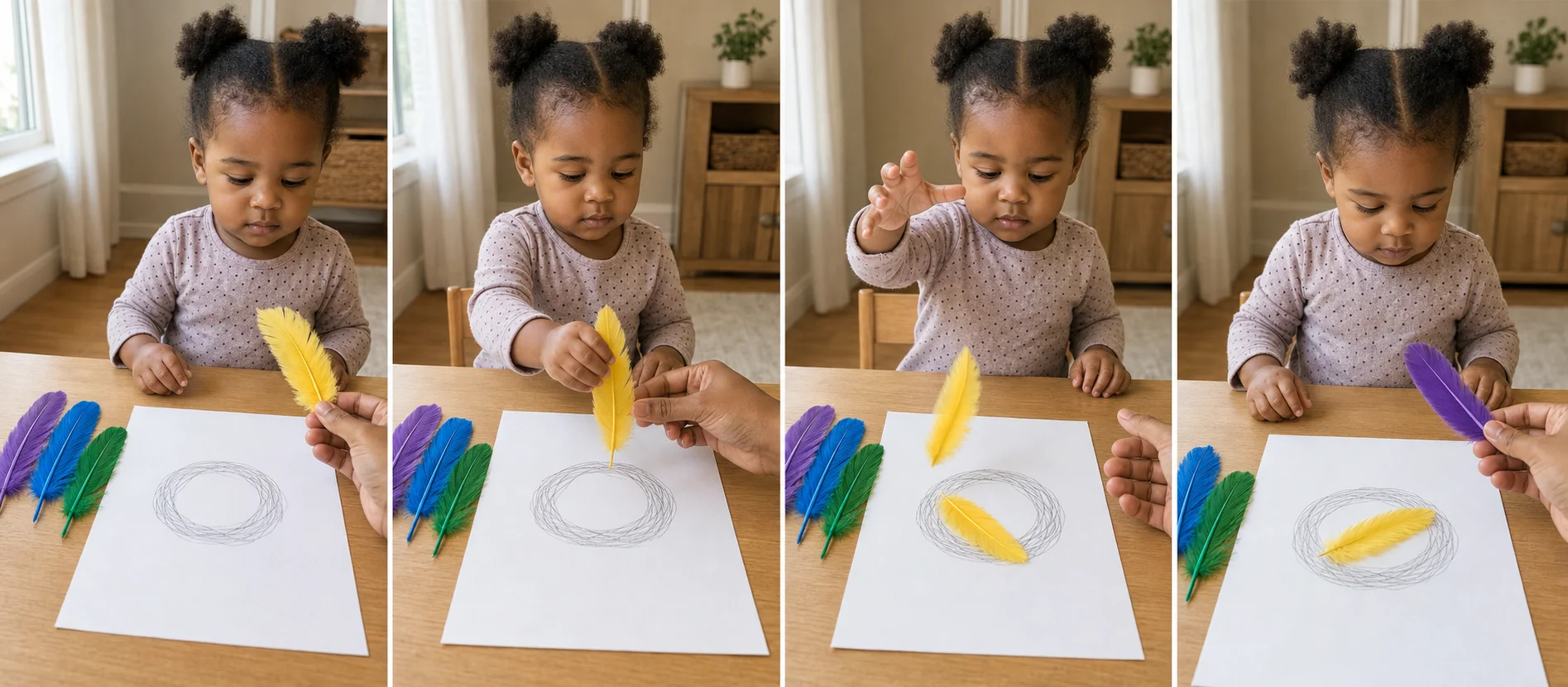
Can your child make a feather float into a paper nest? Draw a simple circle, then let them hold, release, and watch each feather drift down for gentle hand-control practice.


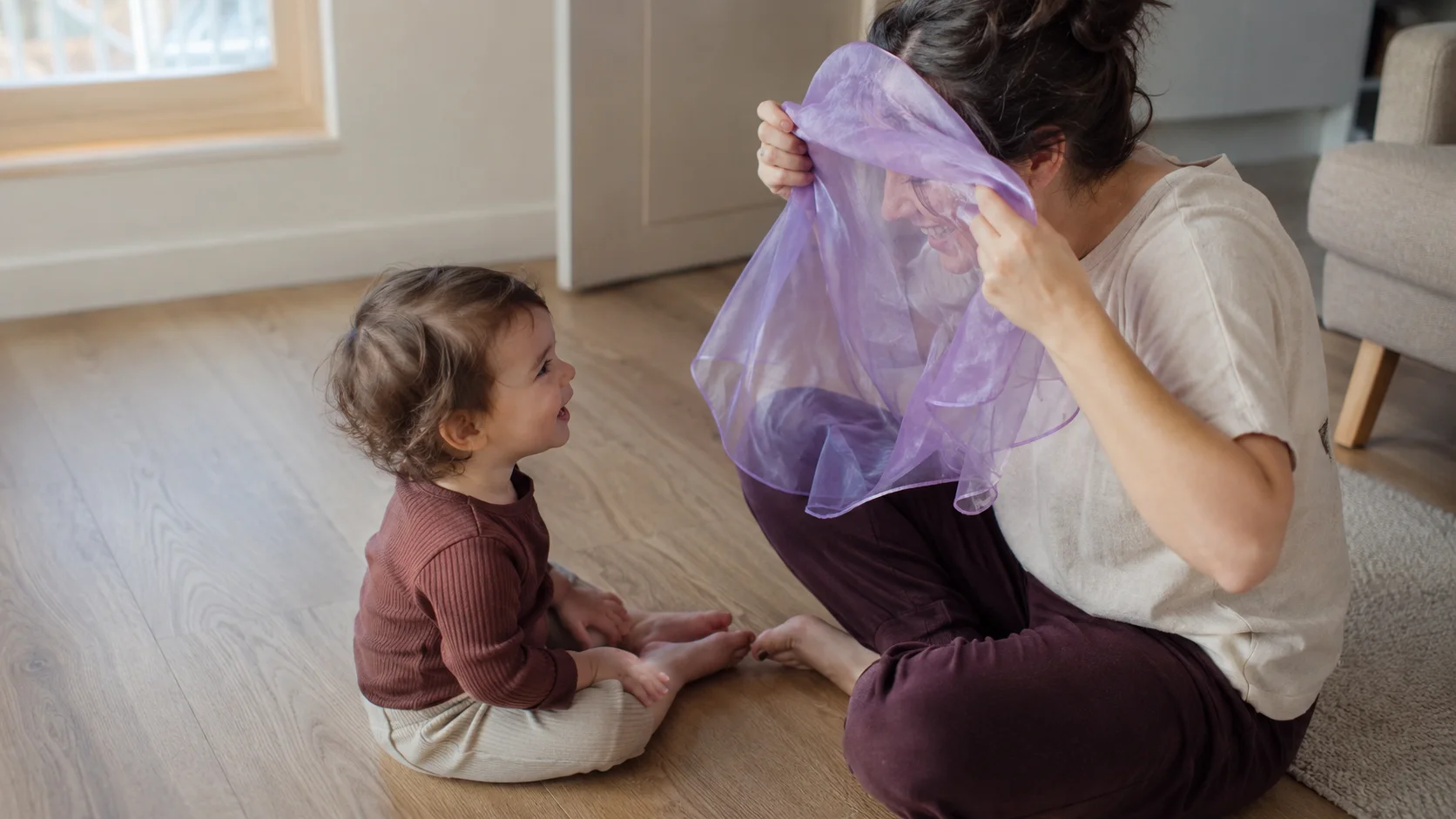
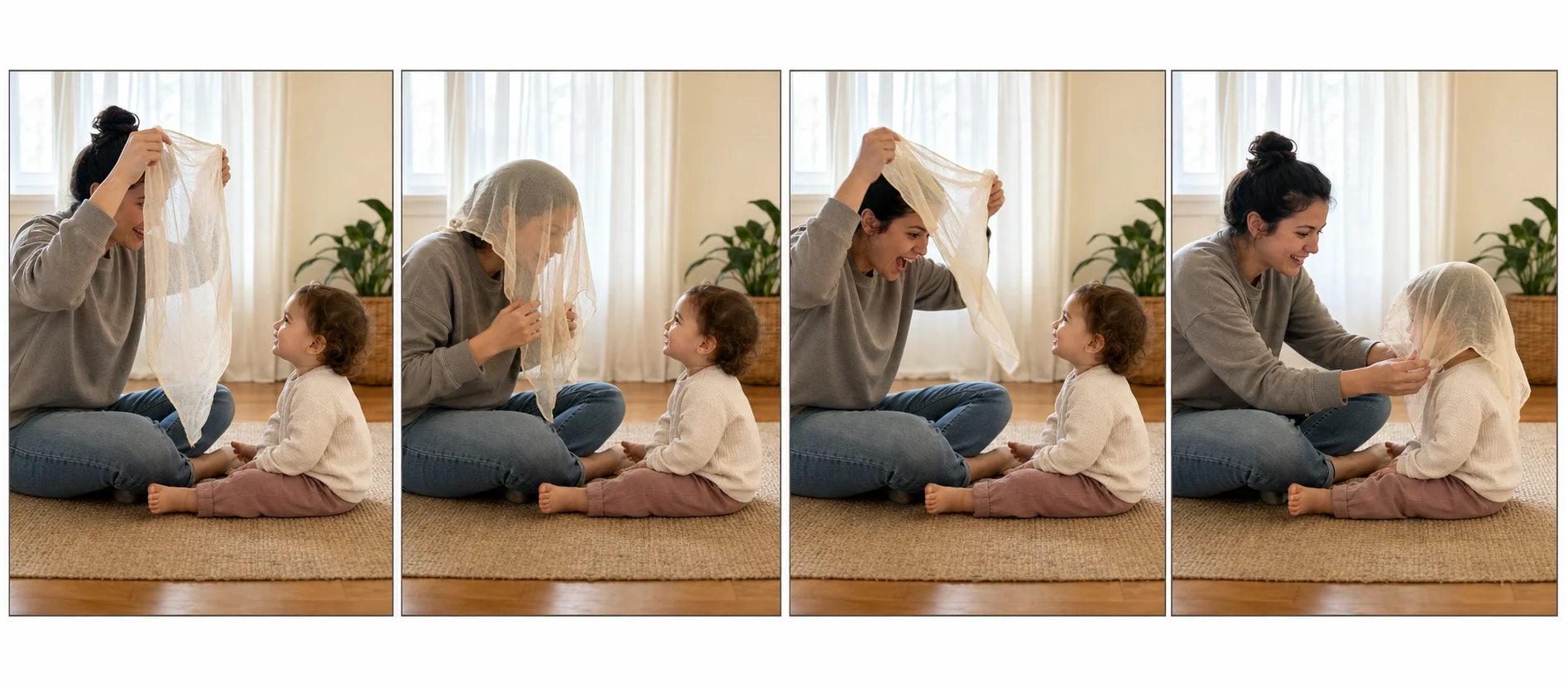
Turn one light scarf into a slow-motion peekaboo game. Let it float over your face and pull it away, then repeat with your child for an easy shared game filled with opportunities to connect and communicate.


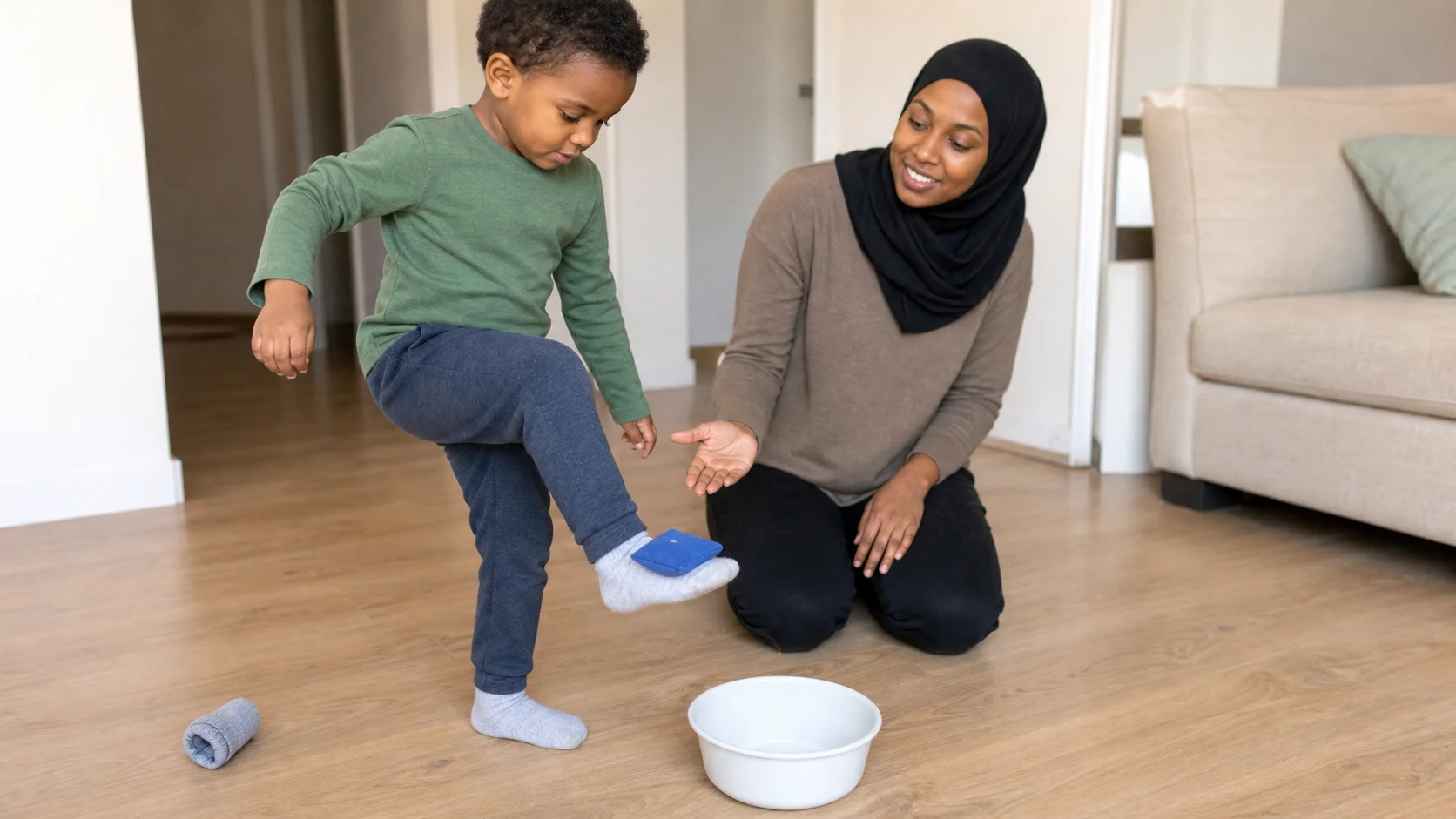
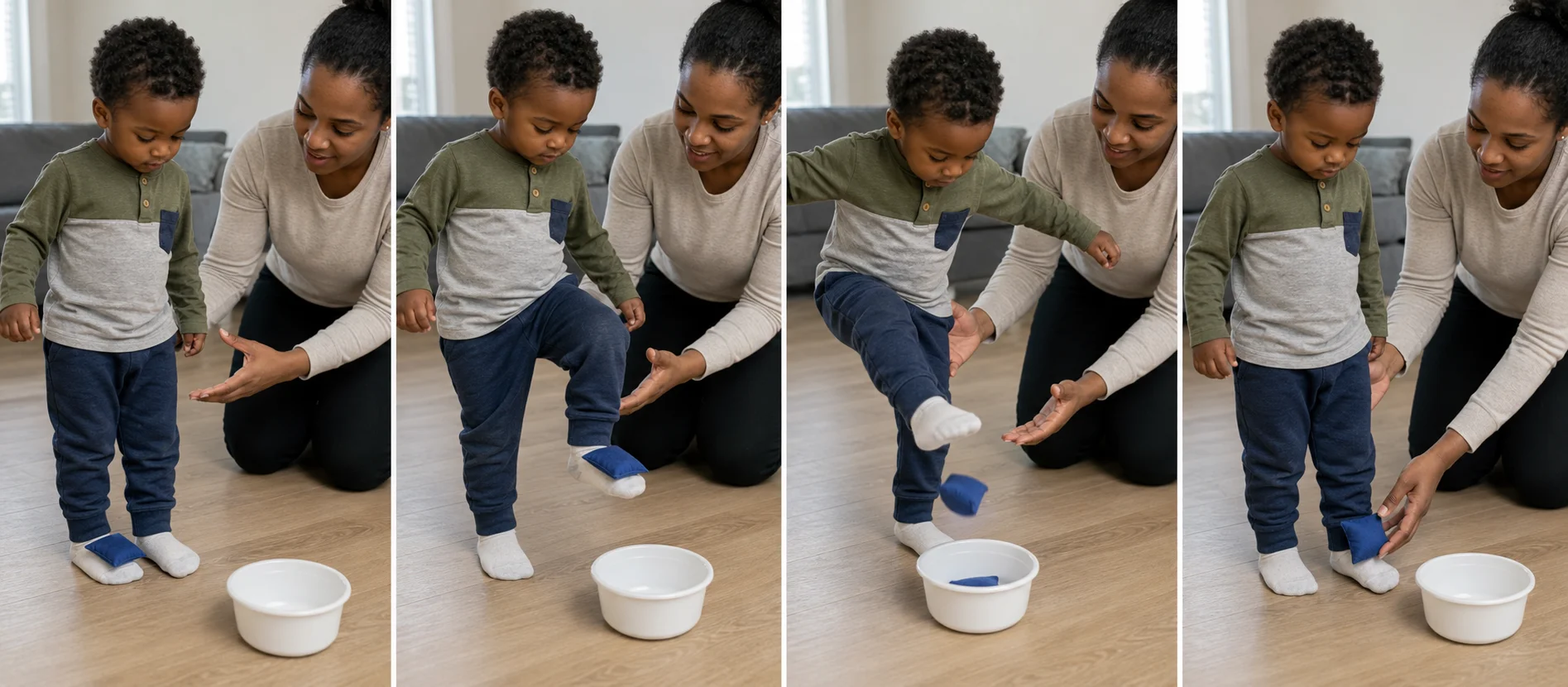
Can your child deliver a beanbag using only one foot? Balance it on top, lift slowly, and tip it into a low container or an adult's open hand for a playful balance and body-control challenge.


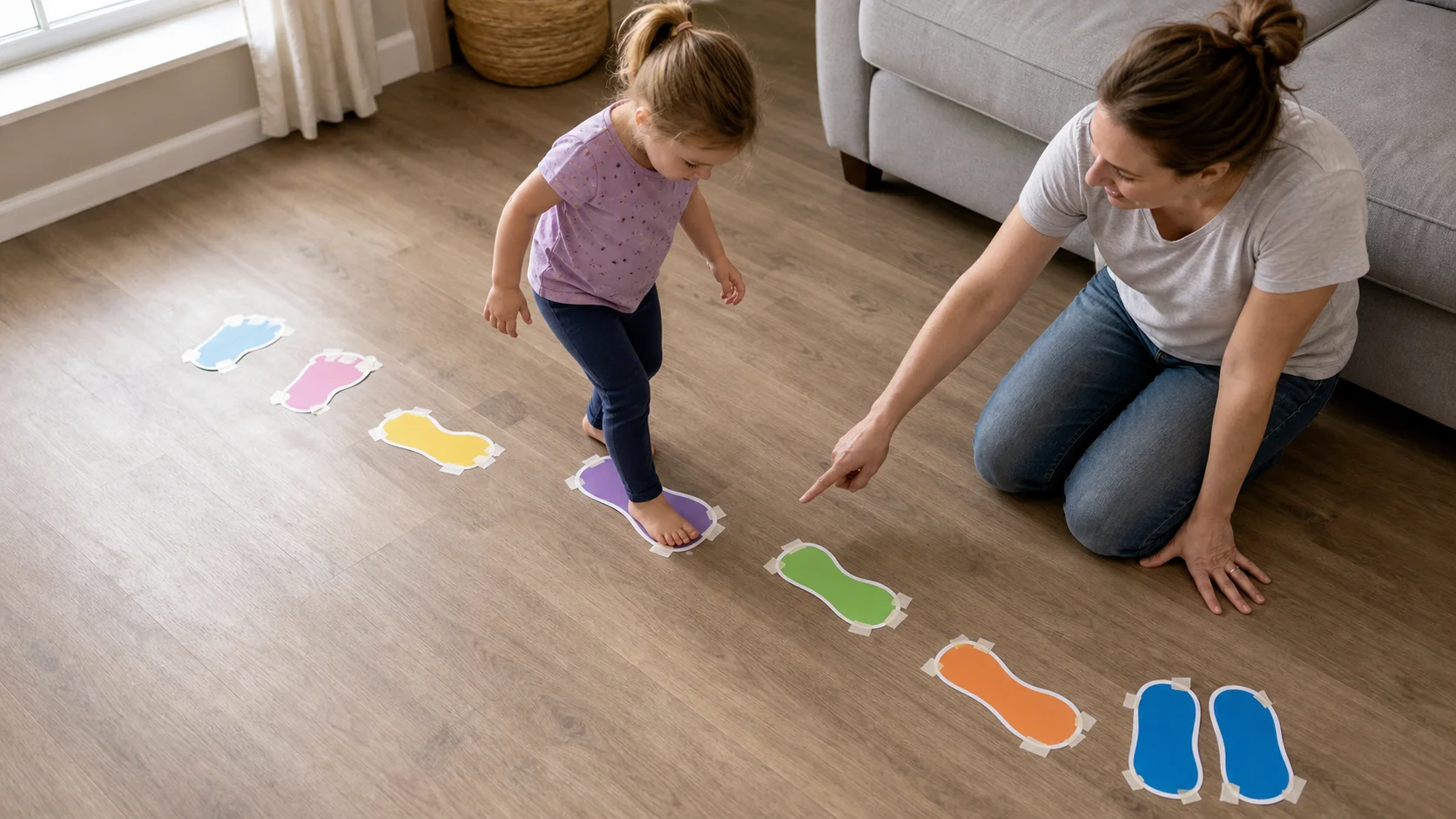
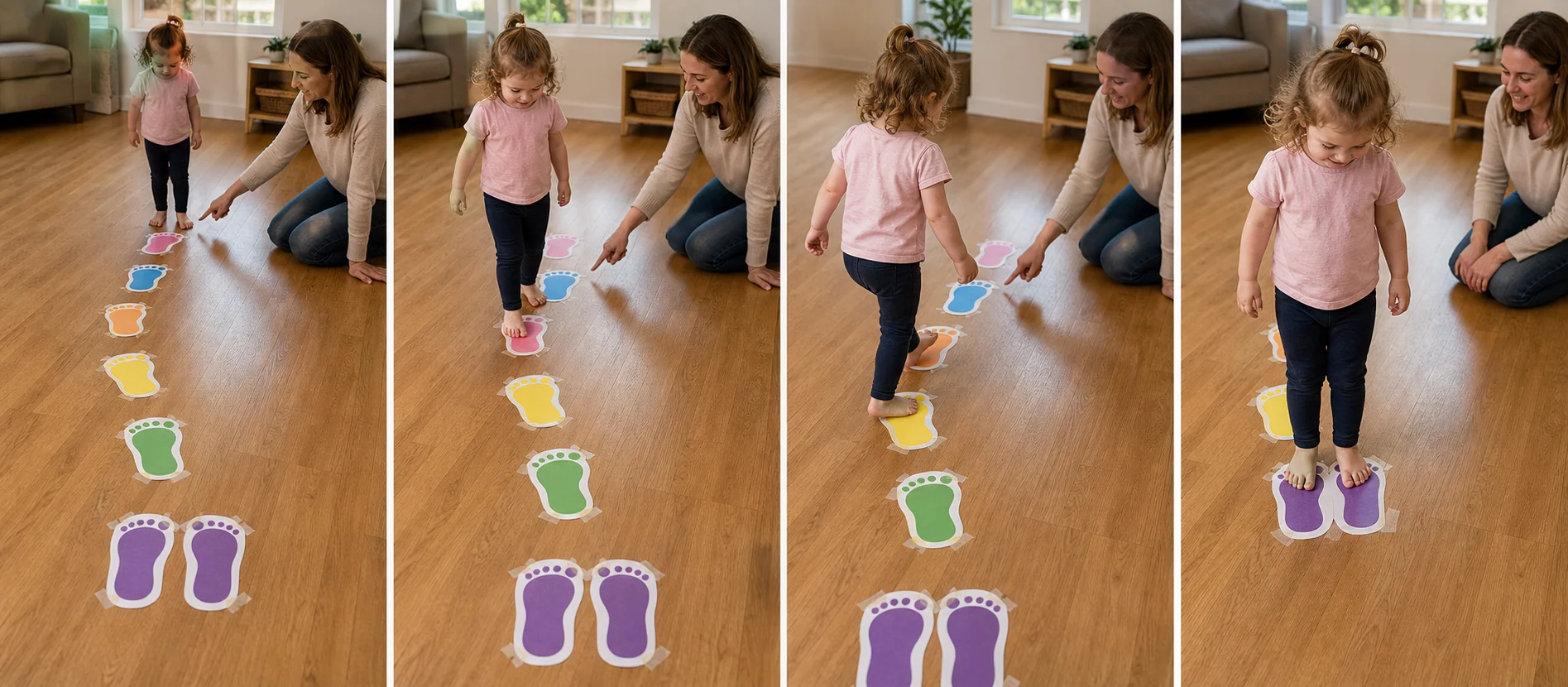
Footprint Step Path is a footprint path activity for toddlers that helps children move through a clear path through a clear, repeatable play loop.


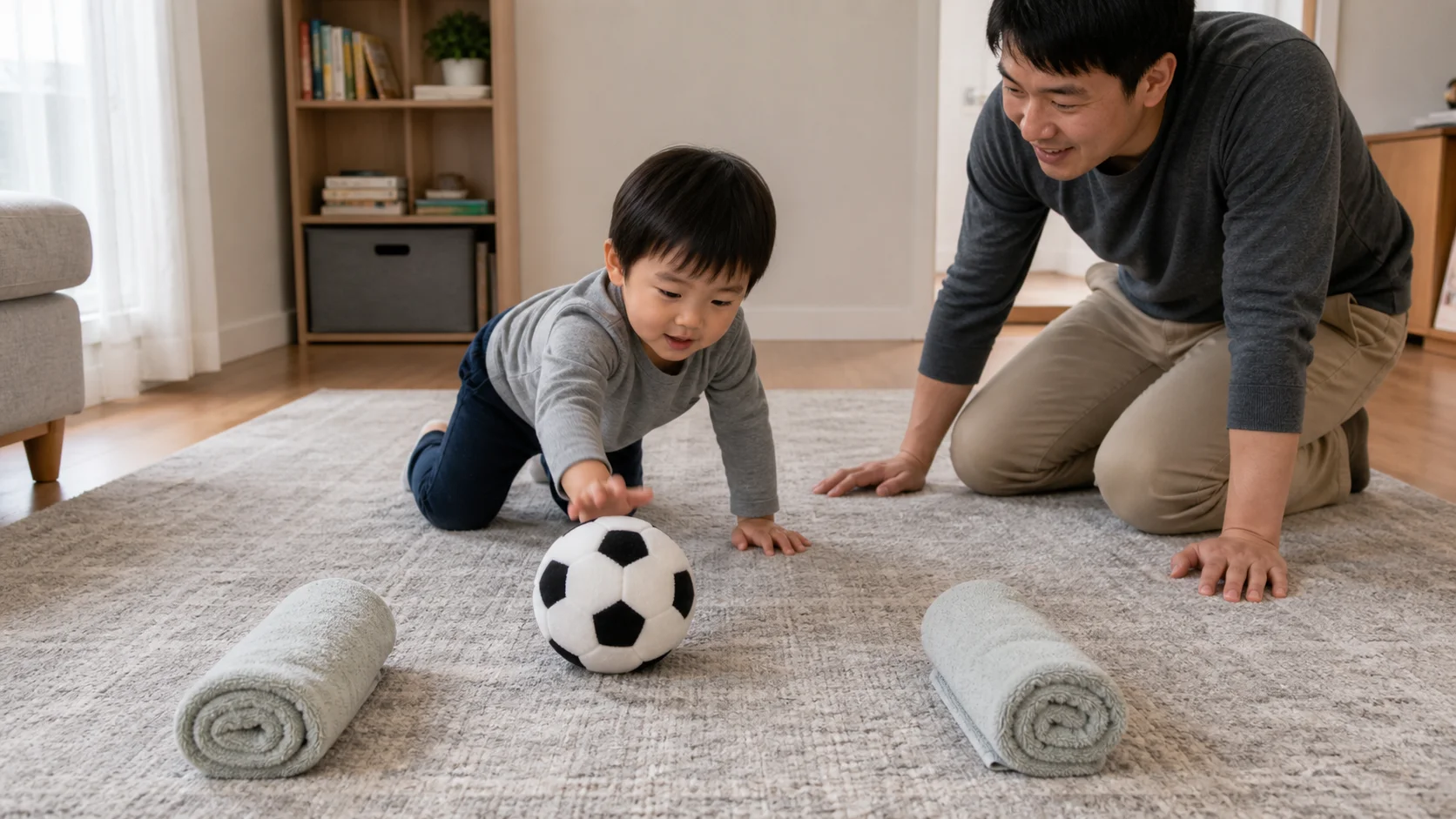
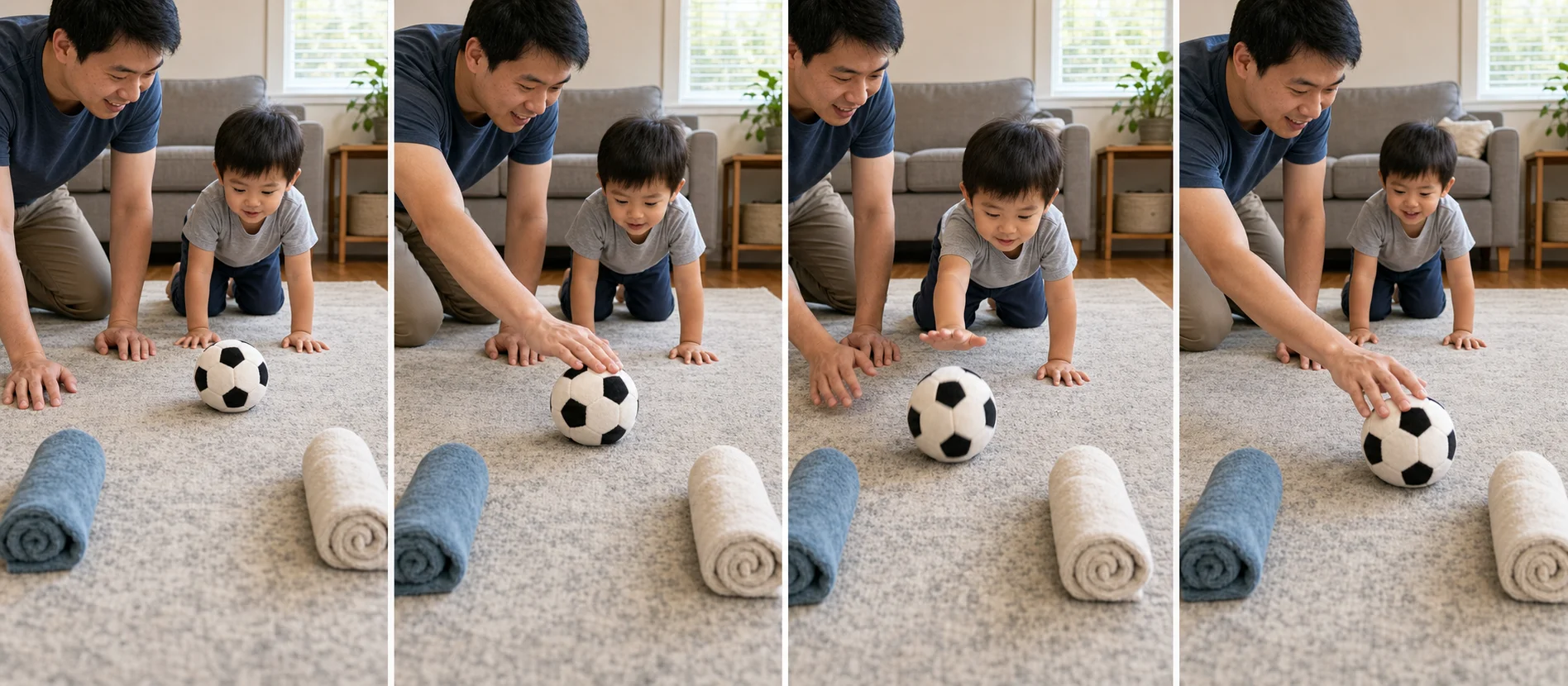
Hand Soccer Goal is a crawling ball activity for toddlers that helps children move through a clear path through a clear, repeatable play loop.


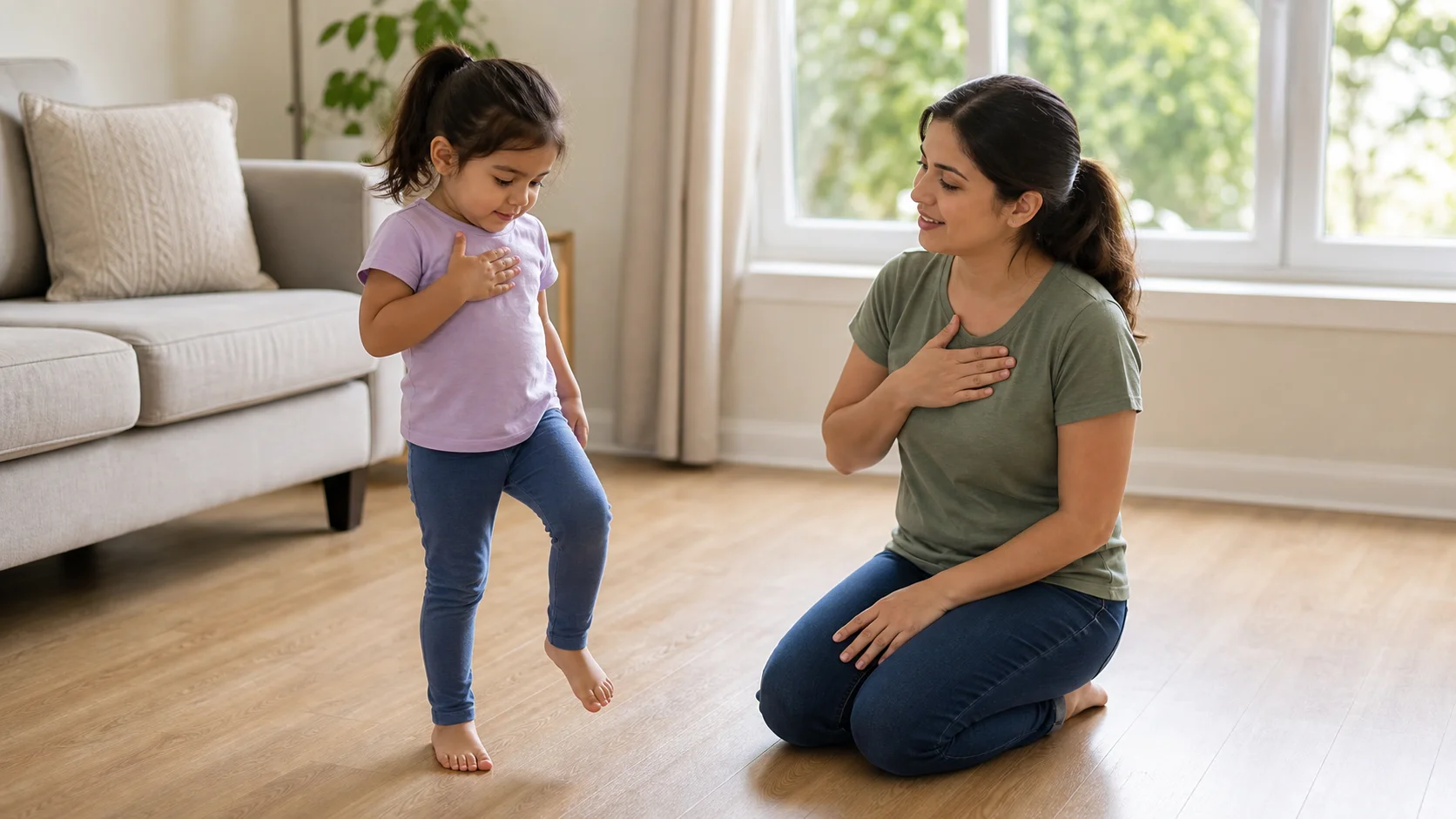
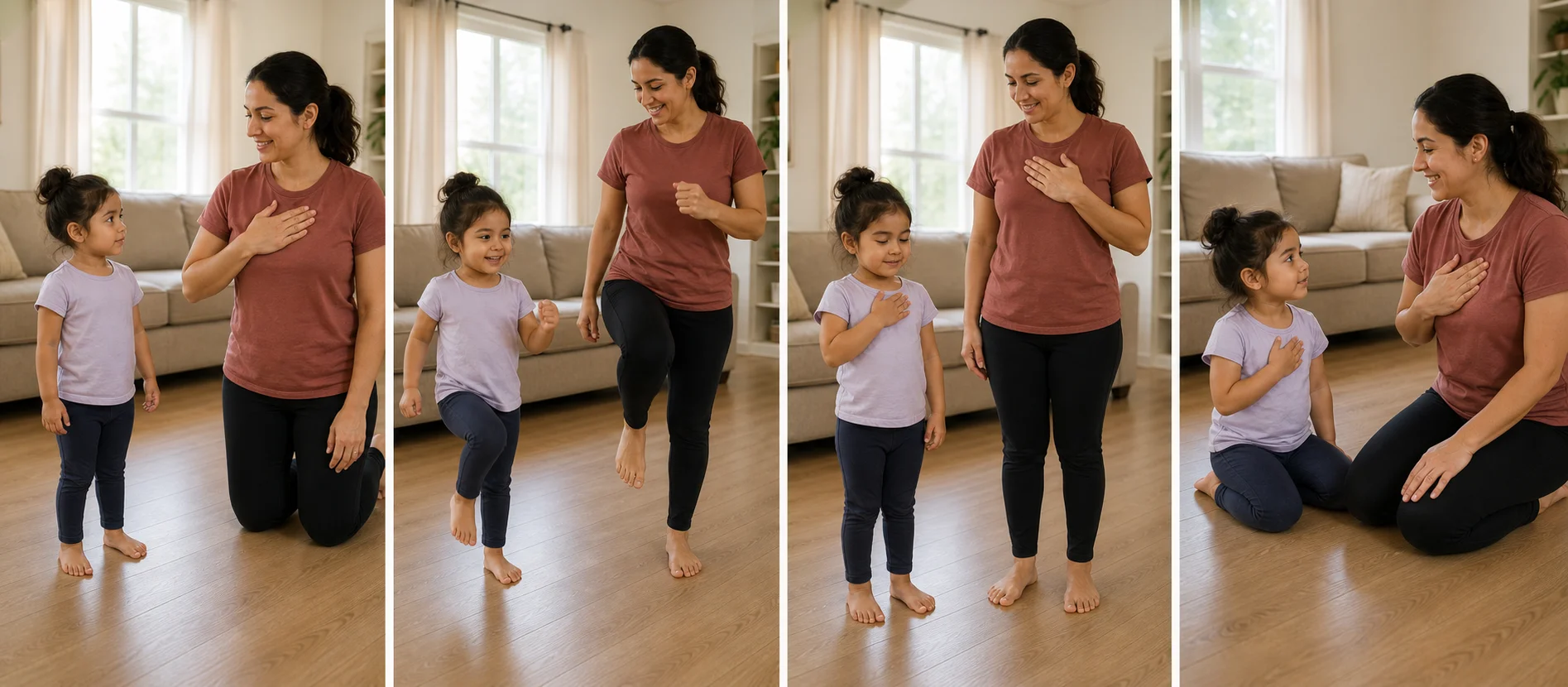
Can your child find the thump-thump after a quick burst of movement? They will march or jump, freeze, and decide whether their heartbeat feels rabbit fast or turtle slow, building awareness of how movement changes the body.


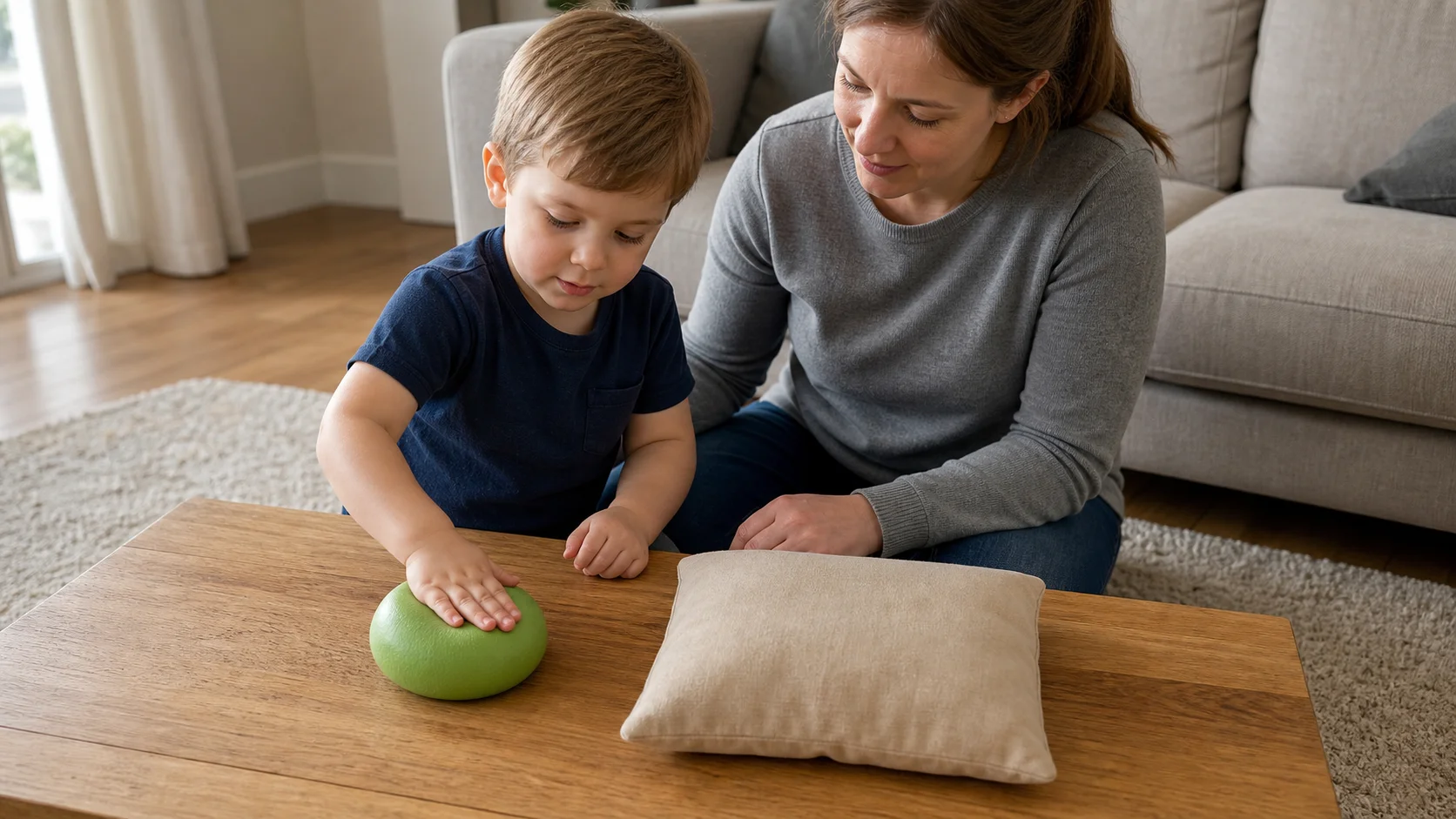
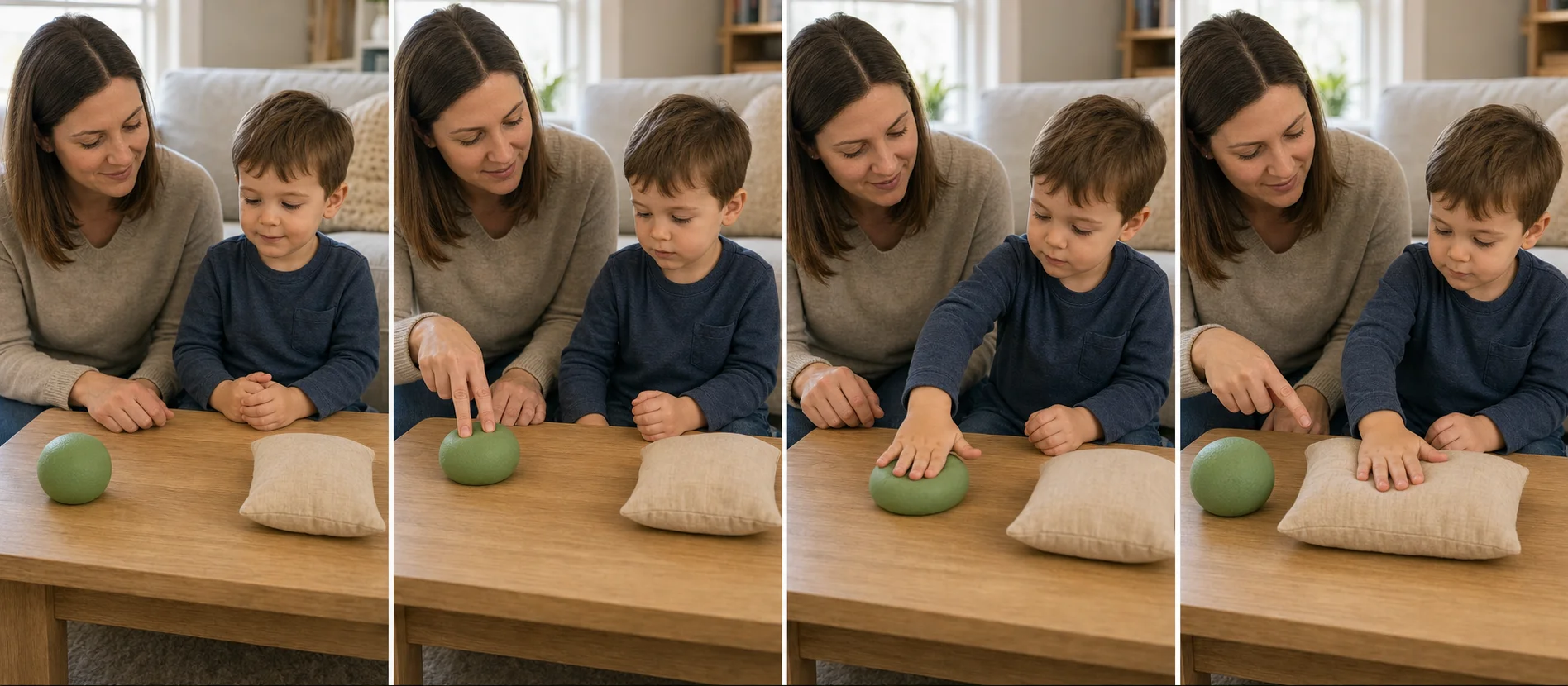
Can your child make a soft ball or pillow barely move, then squash it a little more? Comparing a light press with a firmer one helps them practice controlling how much force they use with their hands.


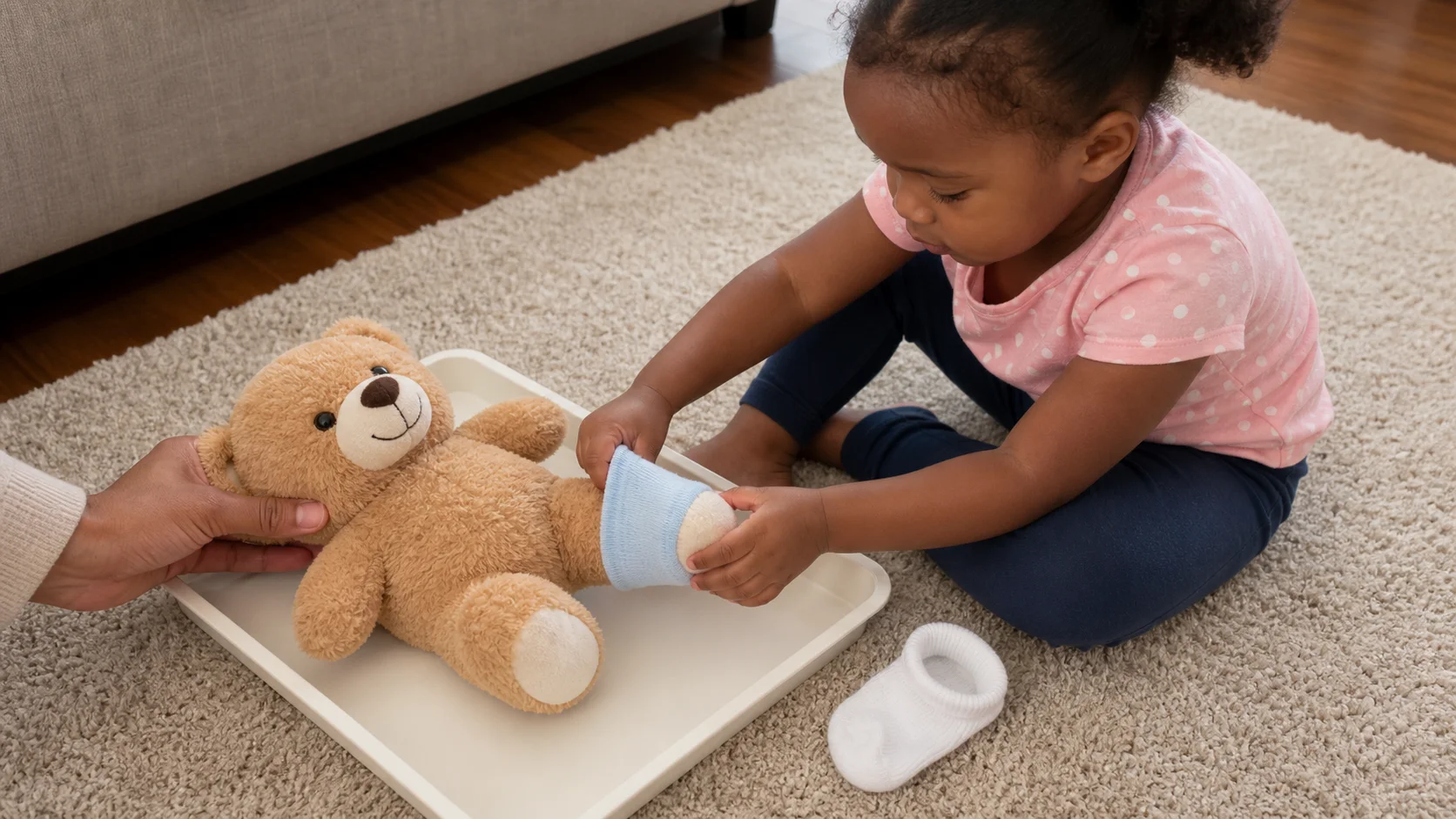
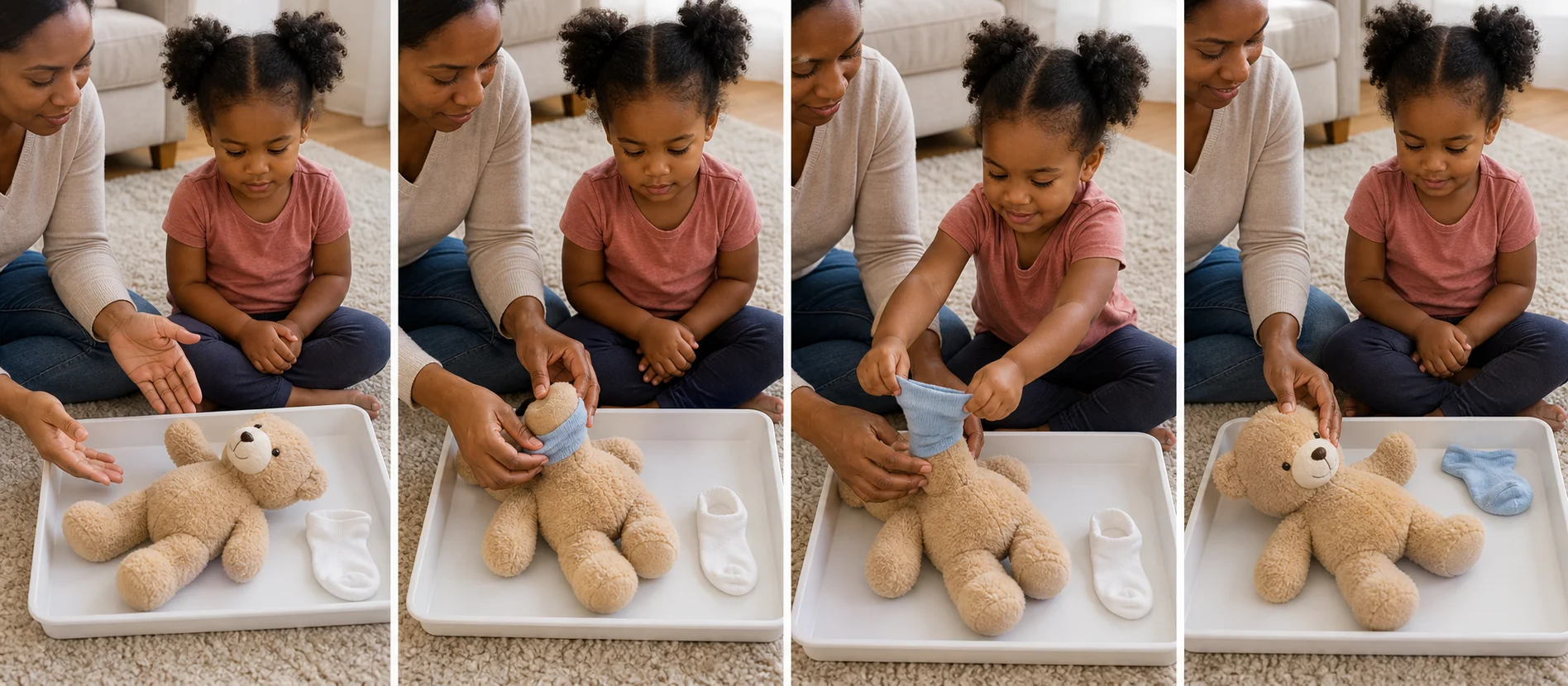
Inside-Out Sock Teddy is a sock practice activity for toddlers that helps children practice a pull-through dressing step through a clear, repeatable play loop.


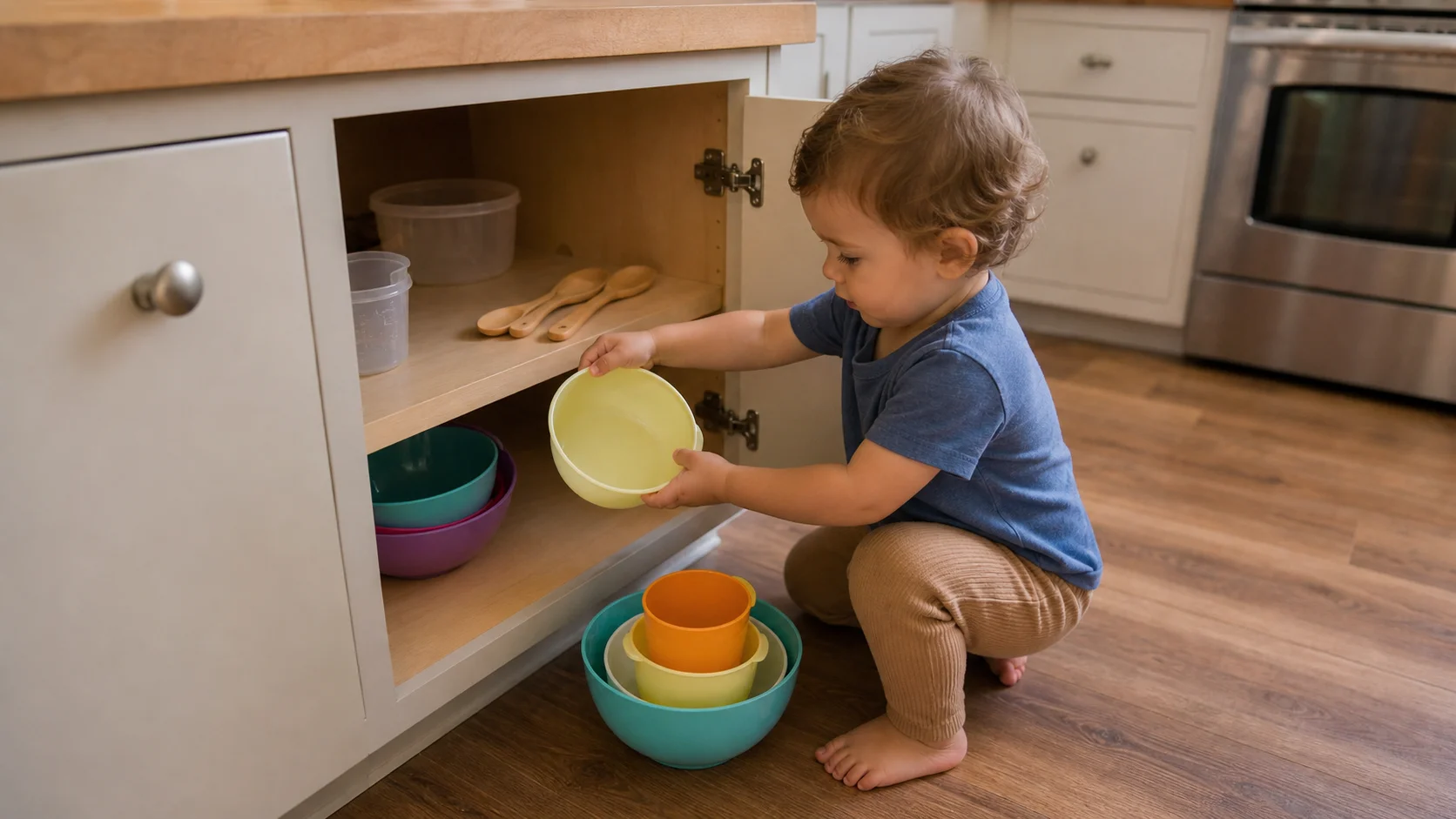
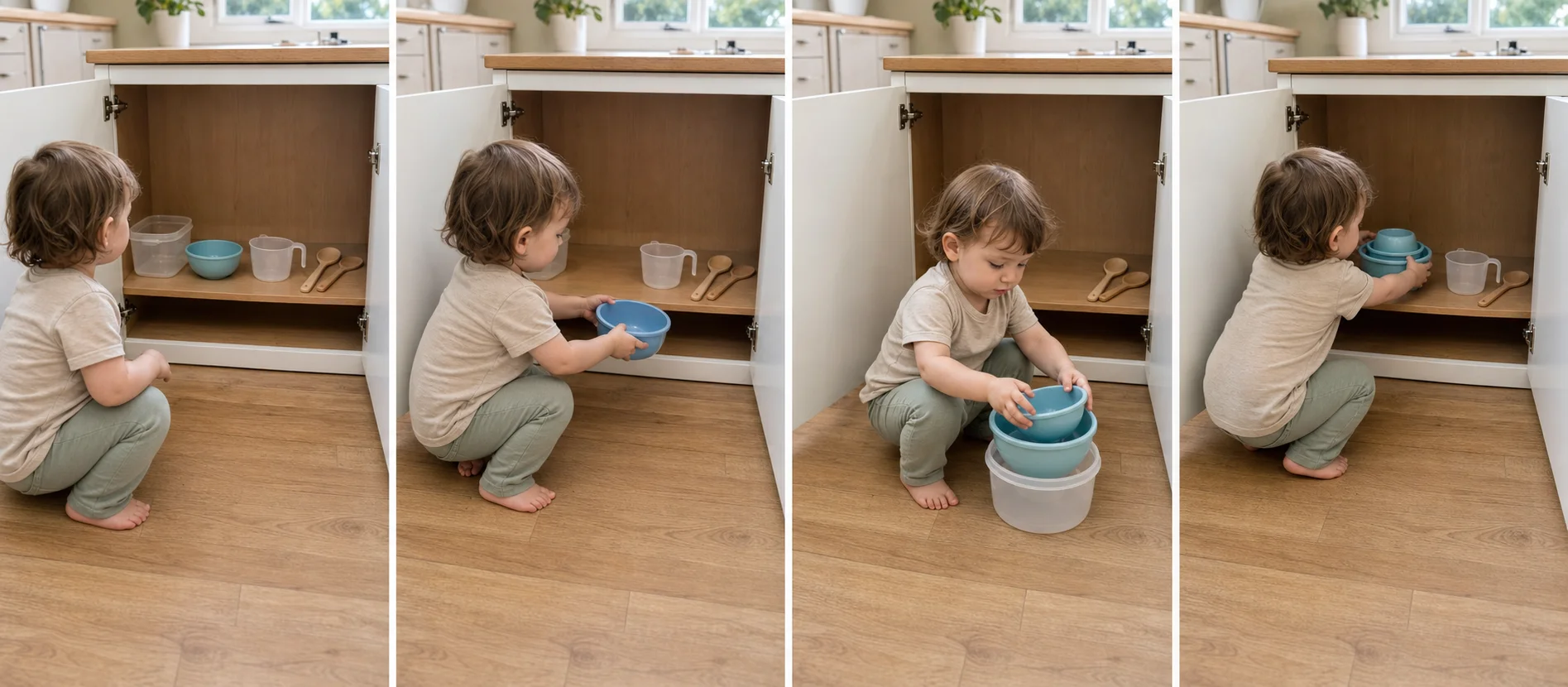
Turn one low kitchen shelf into a simple empty-and-stack game. Your toddler pulls out lightweight kitchen pieces, then piles, stacks, or nests them while practicing grasping and controlled placement.


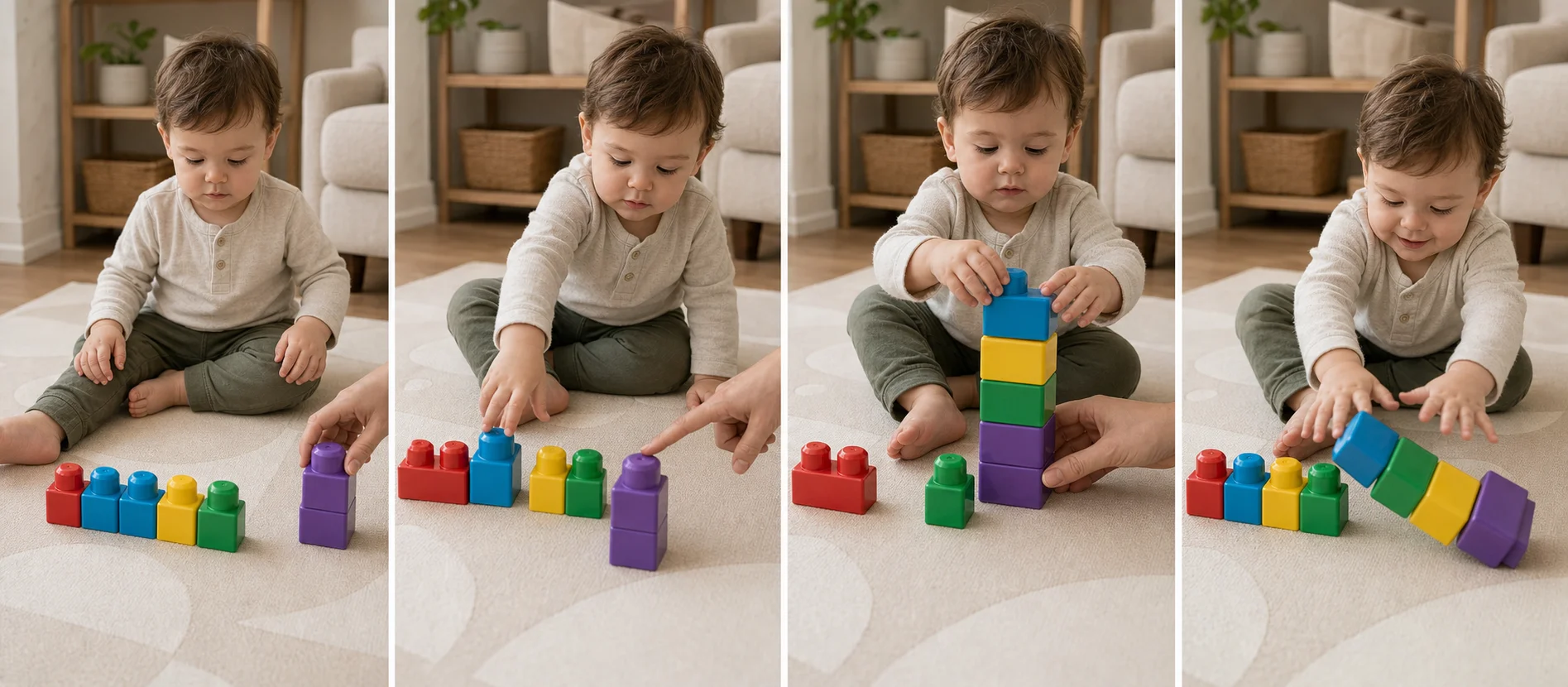
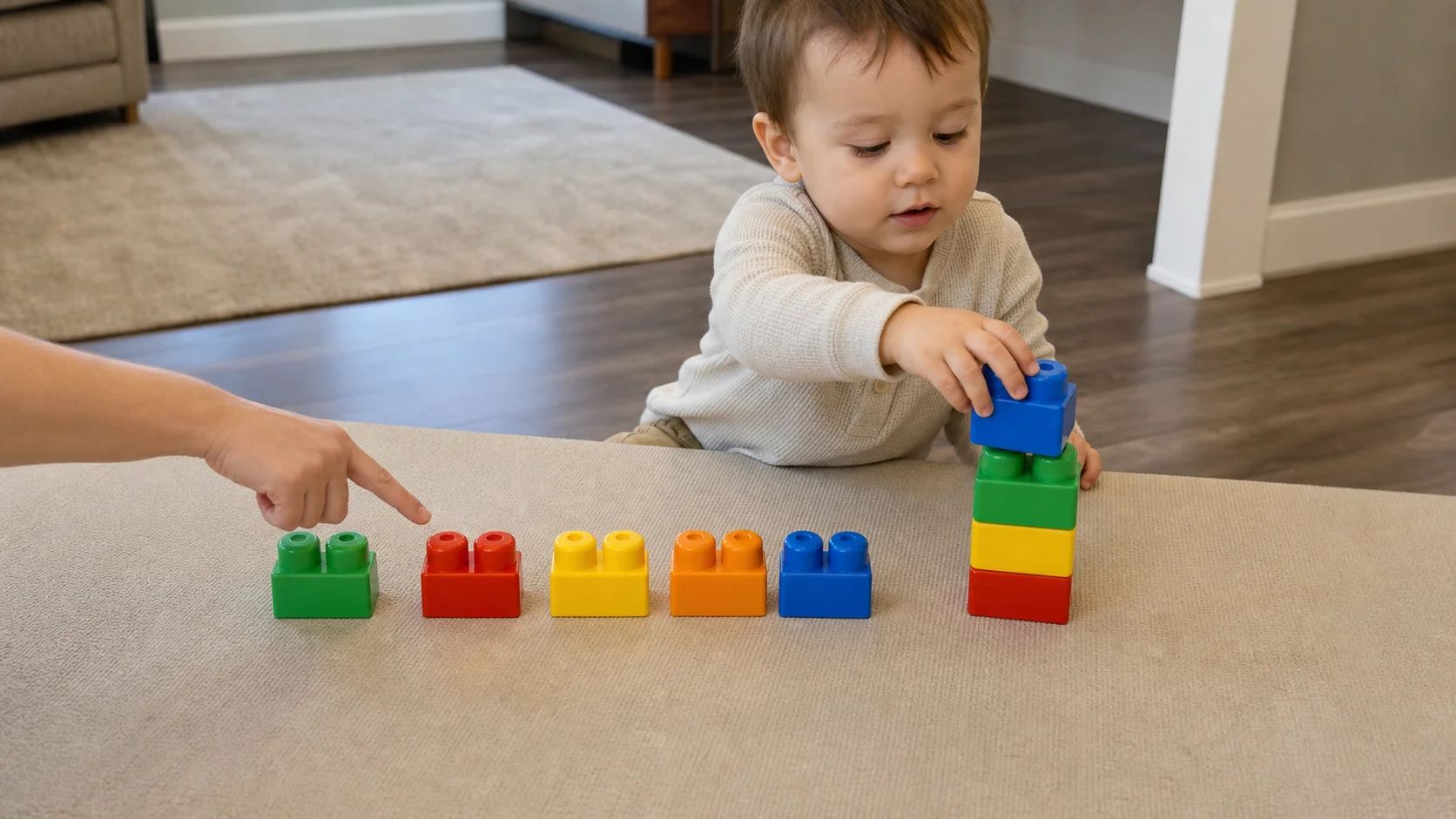
A short row makes every stacking turn easy to see. Your child works from left to right, adding each Mega Block to one tower while practicing careful placement and a simple start-to-finish sequence.


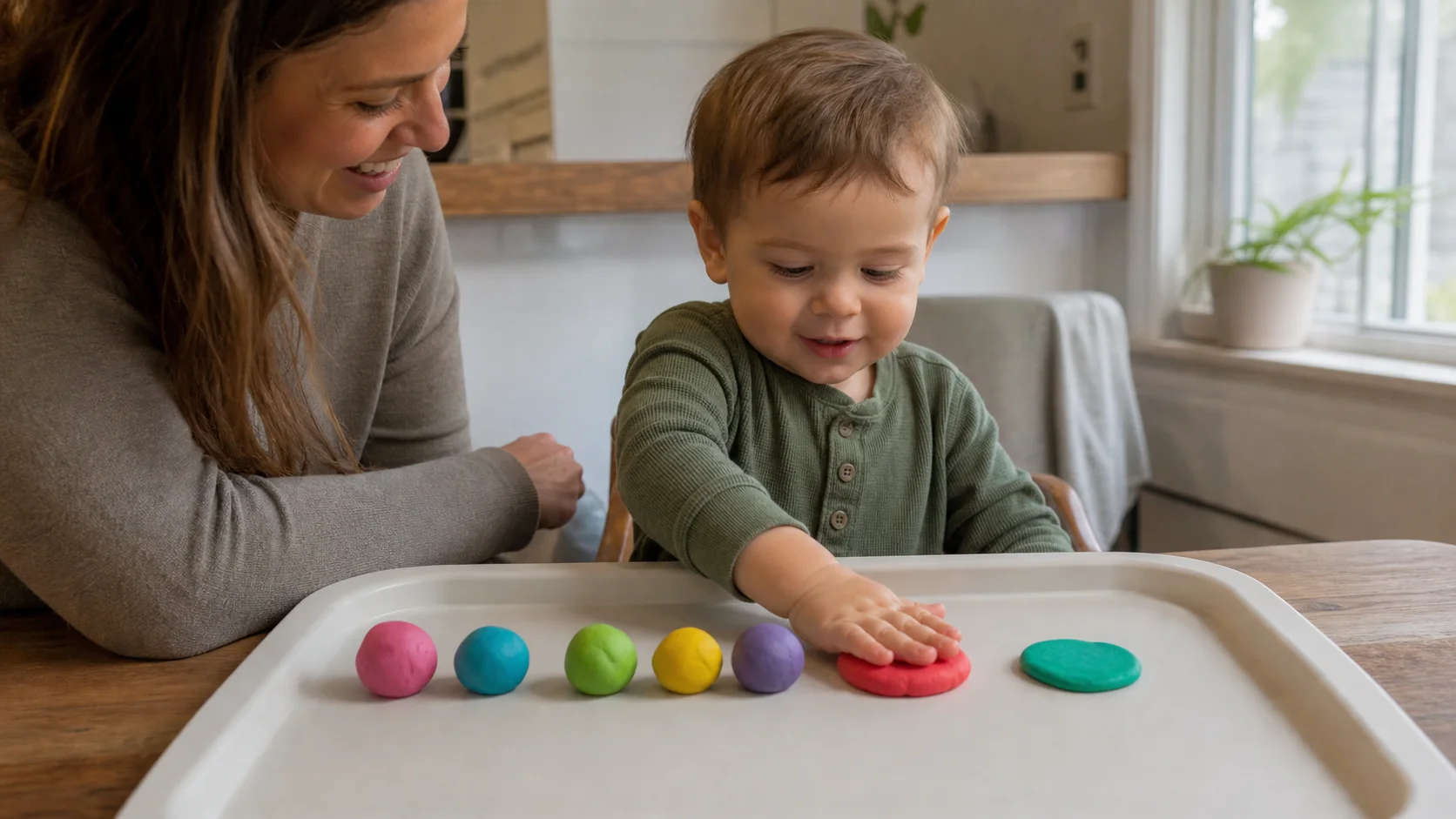
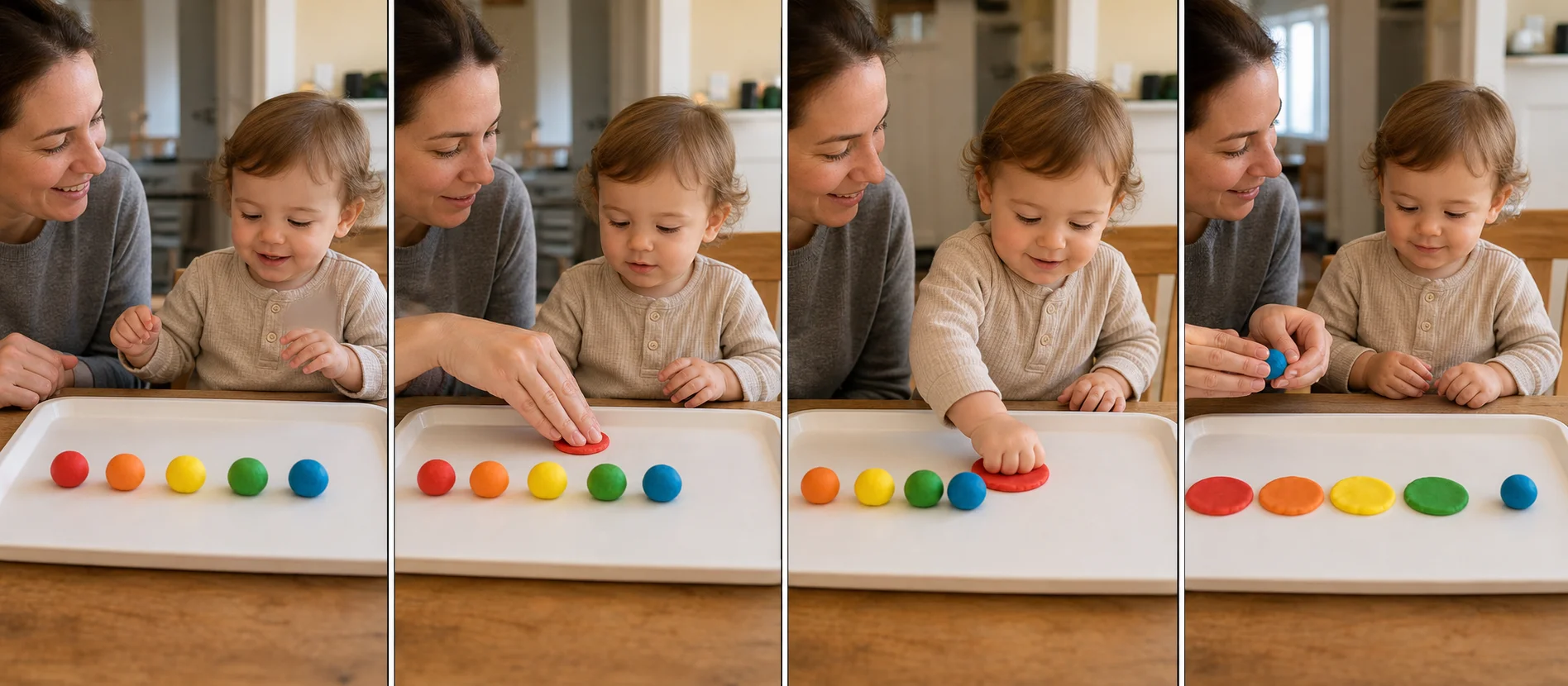
Turn a few Play-Doh balls into smash cakes with one satisfying press. Your child flattens each ball with their palm or fist, pairing the action with a funny sound while practicing hand pressure and simple sound imitation.


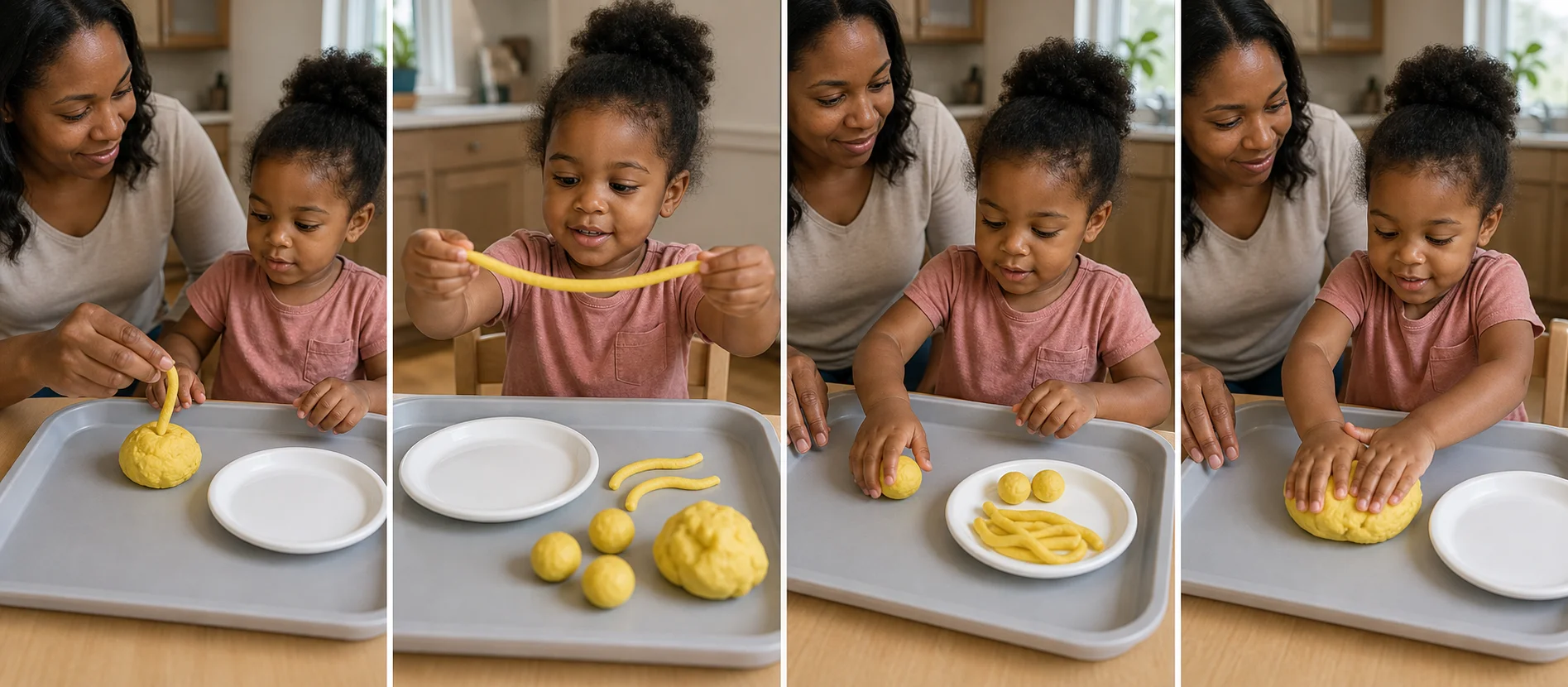
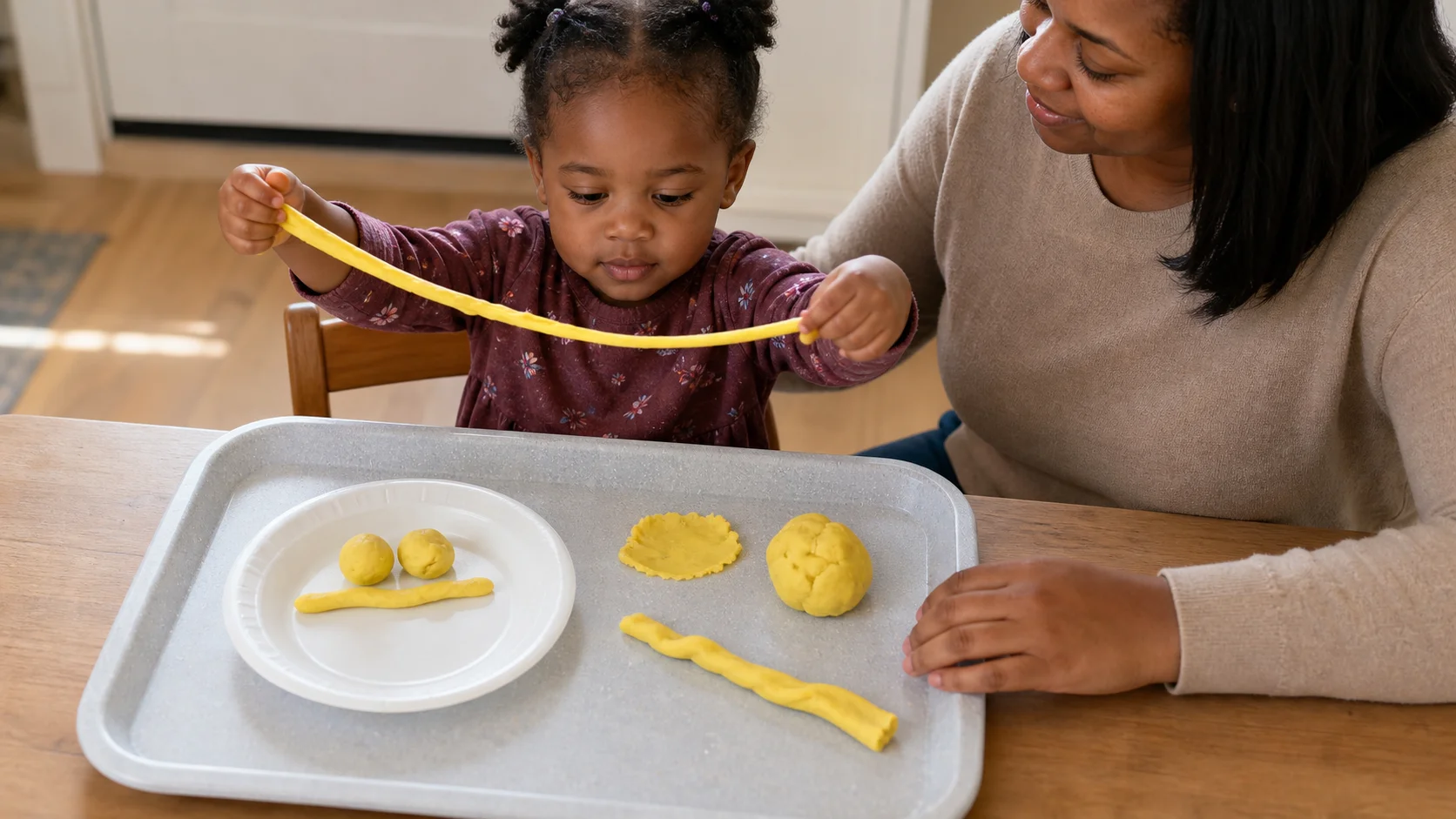
Turn one ball of playdough into pretend dinner, then squash it and start again. Your child pulls spaghetti strips, rolls meatballs, and plates them, practicing two-hand coordination while building hand and finger strength.


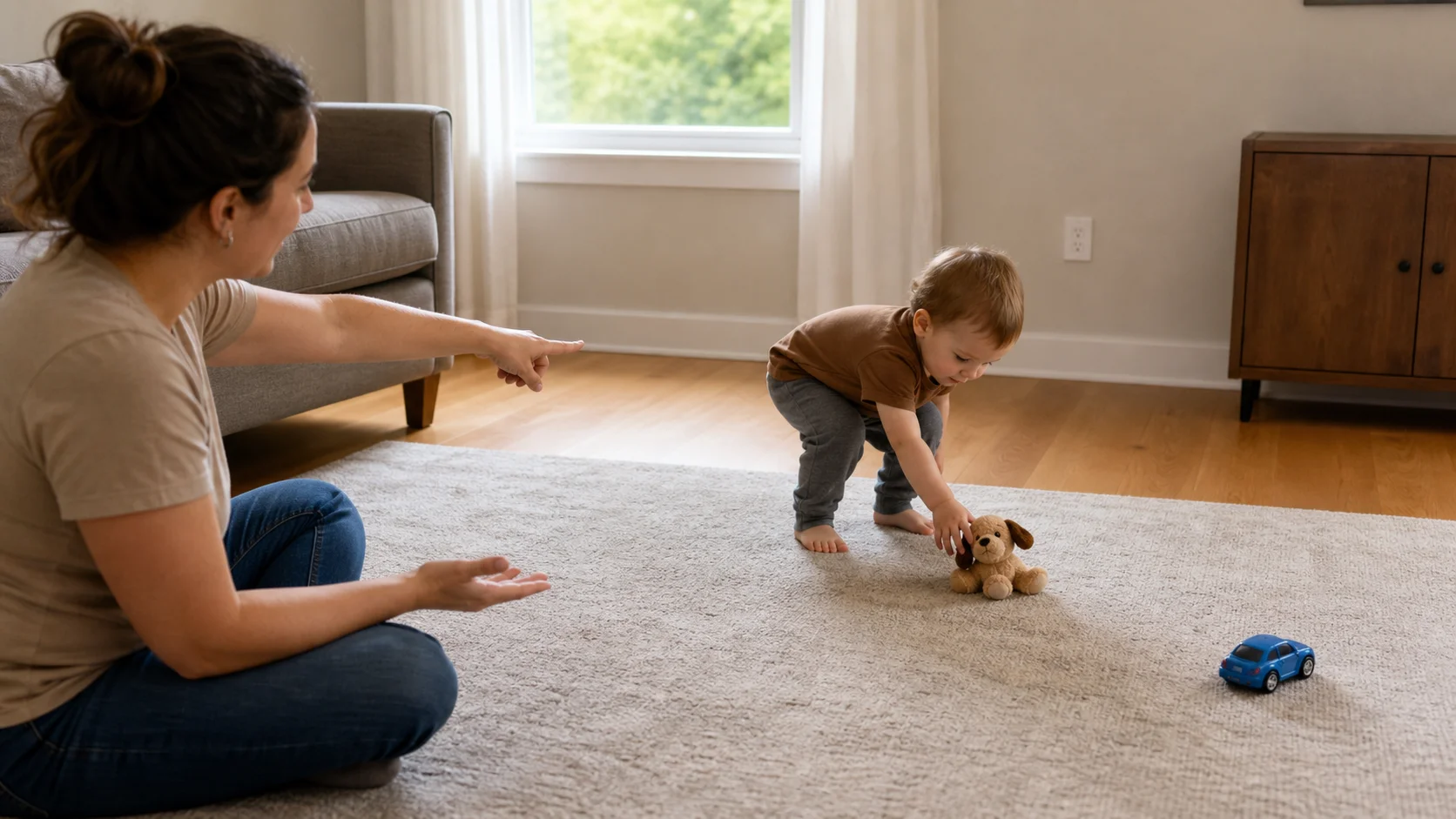
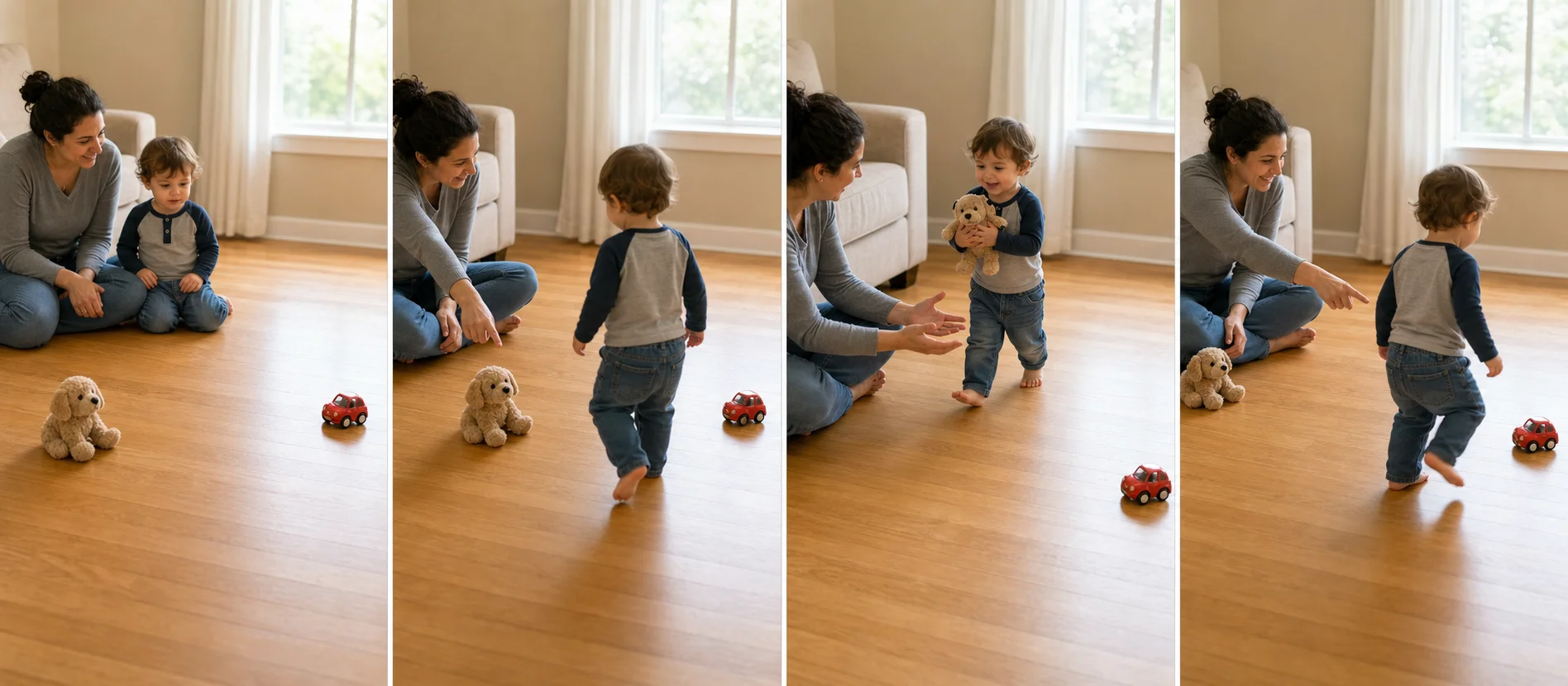
Turn two or three favorite toys into a simple point-and-fetch game. Your toddler follows your point, gets the right toy, and brings it back while practicing one-step directions and shared attention.


Pointed Prize Cup is a follow a point activity for toddlers that helps children follow one-step directions through a clear, repeatable play loop.


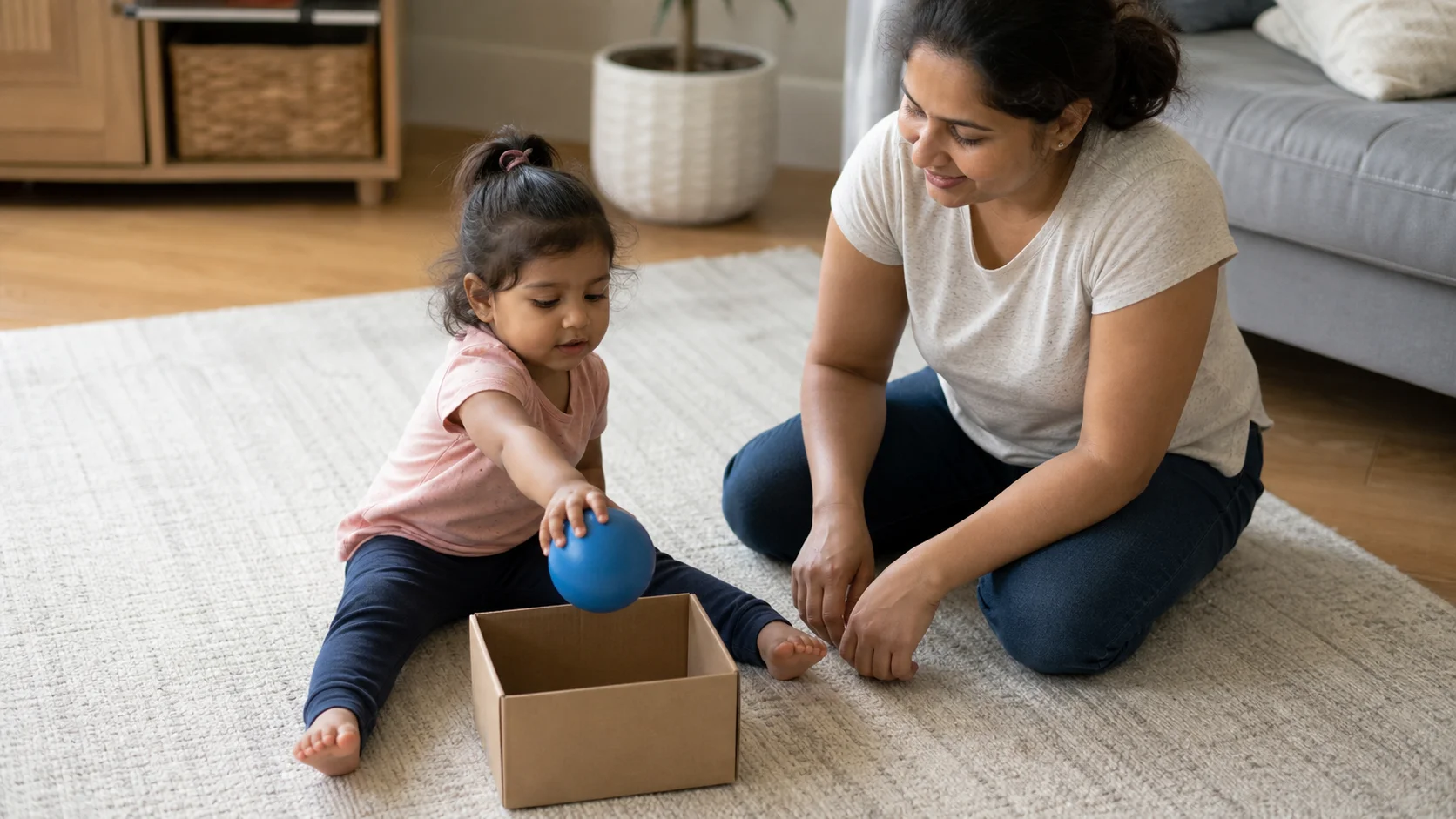
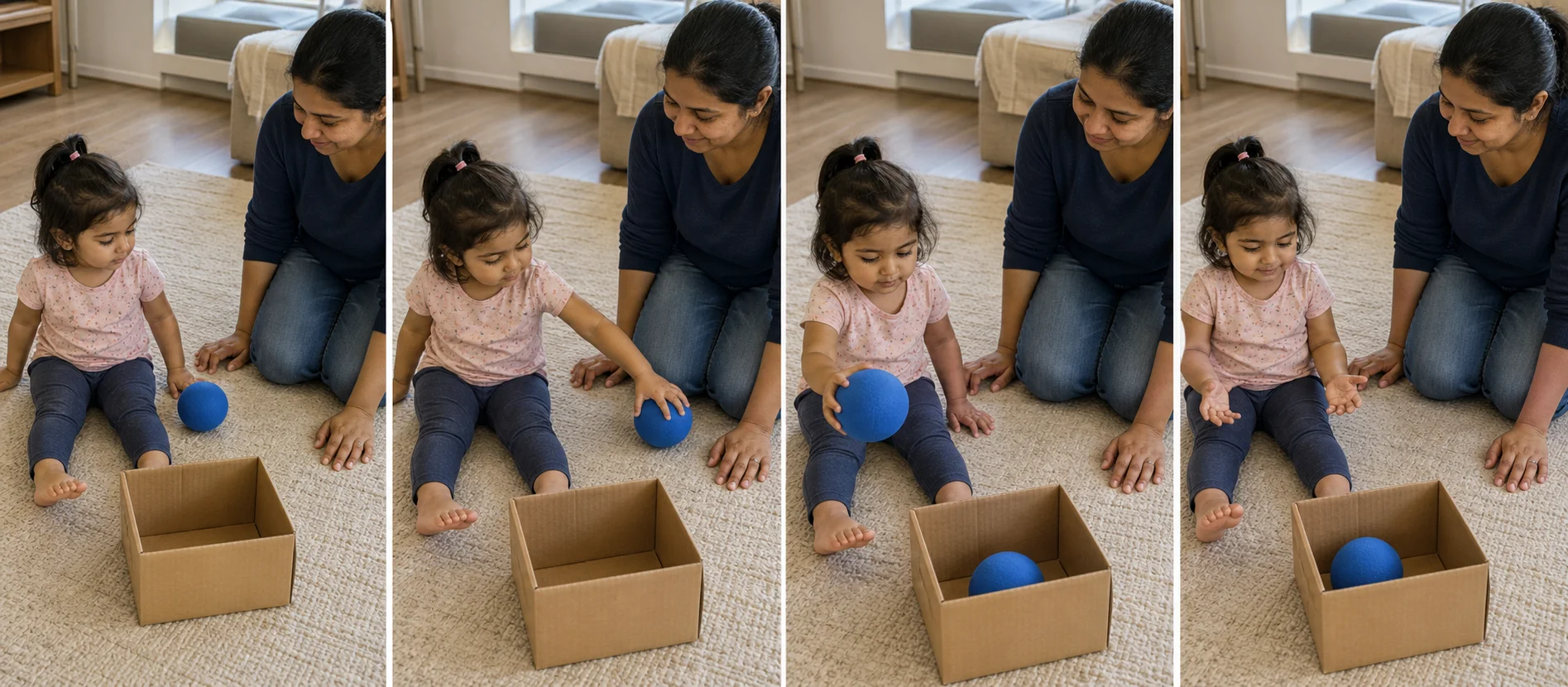
Can your child move a ball from beside their hip into a box at their feet? This seated reach-and-drop challenge builds balance, body control, and careful release through one simple, repeatable game.