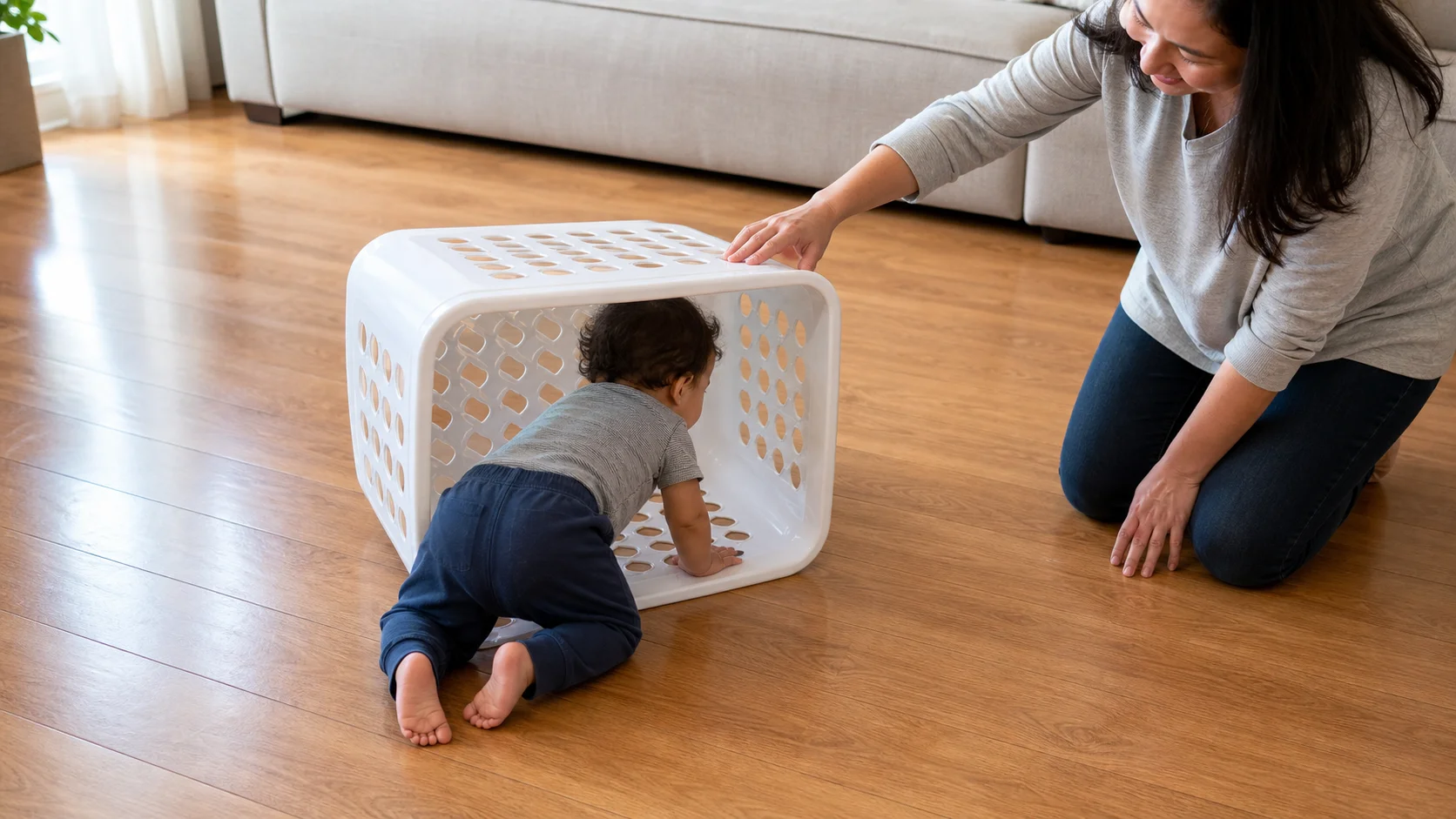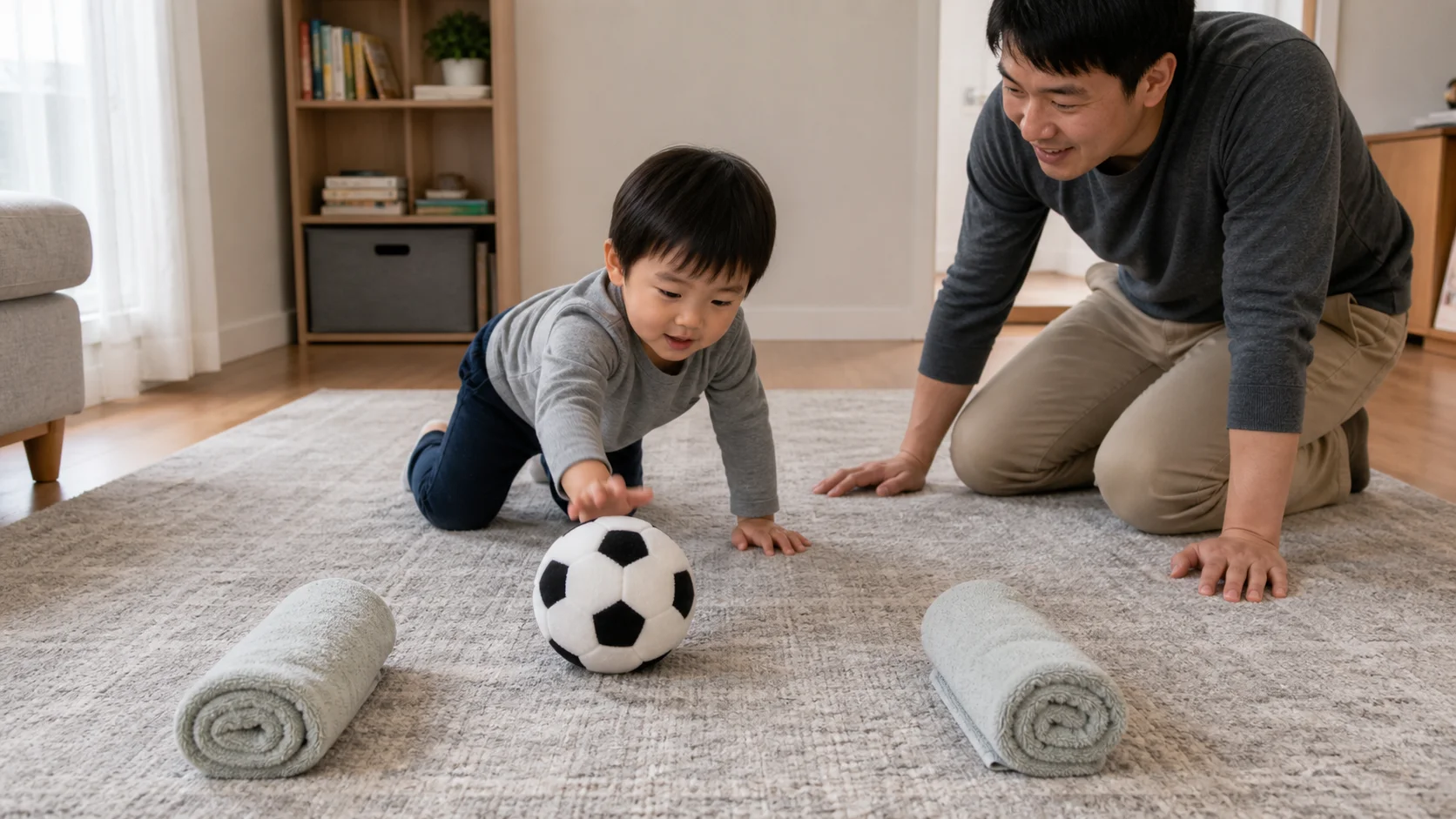
Child on hands and knees palm-tapping a soft ball toward two pillow goal markers while a grown-up stays close
Gross motorOT-adjacent supportNavigate PathIndoor

Hand Soccer Goal.

A soft ball, two soft markers, and a clear floor lane turn crawling into a palm-tap goal game.

Play time
3-5+ min
Age
2-4 years
Energy
Medium
Mess
No
Effort
Low
Where
Indoor
Start here

The recipe.

Low parent effort
5 things

What you need

  • 1 soft indoor ball
  • 2 soft goal markers, such as rolled towels, pillows, or foam blocks
  • 1 clear floor path
  • 1 adult
  • 1 child
3 min minimum

Setup

Then start the loop
Step 01
Clear a short floor lane where your child can crawl without reaching furniture edges, stairs, cords, or loose rugs.
Step 02
At the far end of the lane, place two soft markers about 18 to 24 inches apart as the goal.
Step 03
Place the soft ball a few crawling steps in front of the goal and help your child start behind it on hands and knees.
Step 04
Beside the lane, kneel or sit close enough to reset the ball and stop a sideways roll before it reaches furniture.
"Hands down."
The loop

How play unfolds.

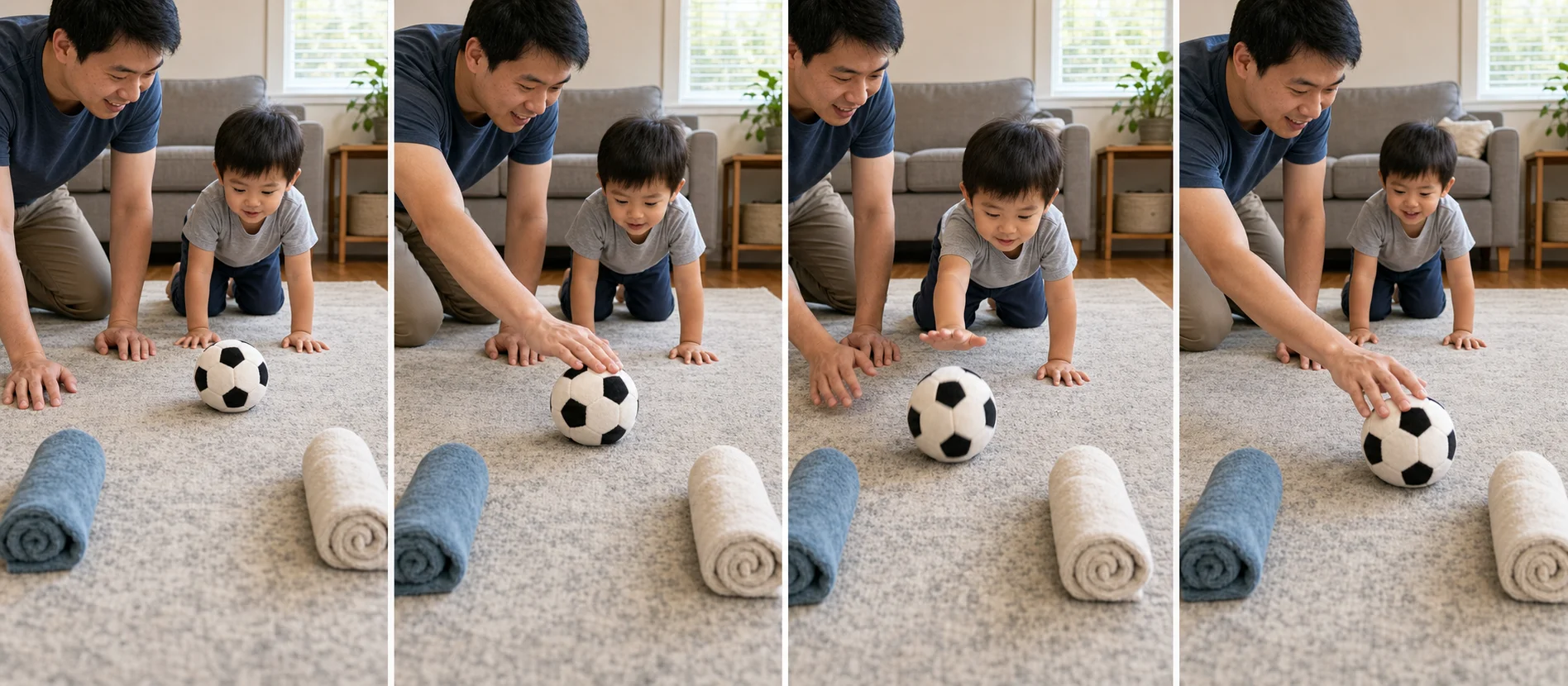
Sequence showing a grown-up model a palm tap, child crawling after the soft ball, ball rolling through two soft goal markers, and reset for another turn
  1. 01
    Model one open-palm tap and say, "Palm tap. Crawl after it. Score in the goal."
  2. 02
    Let your child tap the ball, crawl after it, and tap again toward the goal.
  3. 03
    When the ball rolls between the markers, say, "Goal," then roll it back to the start.
  4. 04
    If the ball misses, nudge it into the lane and say, "Almost. Back to the middle."

Safety Check

  • Supervise the whole activity.
  • Use only a soft ball and soft goal markers.
  • Keep the floor lane away from stairs, furniture edges, cords, and loose rugs.
  • Stop or switch activities if hands-and-knees play causes wrist, shoulder, or knee discomfort.
  • Pause if the play turns into kicking, throwing, or diving onto the ball.
Supporting the play

What to say in the moment

Match what you say to what you see.

Prompt ladder
Level 1 (Start)
"Palm on the ball."
Level 2 (Keep going)
"Tap, crawl, tap."
Level 3 (Stretch)
"Can you steer it through the goal?"
Level 4 (Extend)
"Try one more score from farther back."
If your child seems...
What you'd see
Focused
What to do
Say
"You are moving it with your palm."
Add
Ask for one named target only, such as "middle" or "goal."
Extend
Move the ball back one crawling step after a score.

Make it easier

Younger end
  • -Start with the ball almost touching the goal so the first tap can score.
  • -Let the child pause on hands and knees between taps before crawling again.
  • -Count any controlled palm tap that moves the ball forward as a finished round.

Make it harder

Older end
  • +Ask for two taps in a row before you reset the ball.
  • +Slide the soft markers slightly closer together after an easy score.
  • +Start the ball a little off-center so the child has to steer it back toward the goal.

If it's not working

If you see
If child ignores it
Make one slow goal yourself, then put the ball beside your child's palm and say, "Can your palm make it move?"
If you see
If child misuses it
Hold the ball still and say, "Hands down. Palm tap." Restart only when hands and knees are back on the floor.
If you see
If child gets frustrated
Move the goal closer, widen the markers, or count one forward palm tap as the whole score.
Skill spotlight
Path Navigation

Hands-and-knees ball control

This helps a child hold body weight through the arms, steer a hand action while crawling, and keep moving toward a visible target. Those skills show up in climbing play, floor play, dressing balance, table tasks, and early tool use.

  • The hands-and-knees position gives your child steady weight-bearing practice through the arms and shoulders.
  • The palm tap gives one hand a clear job while the rest of the body stays organized.
  • The soft goal gives crawling a visible finish, so a miss can reset quickly instead of ending the game.
Real-world transfer
  • Crawling, climbing, and getting up from the floor with stronger arms.
  • Holding the body steady during dressing and floor play.
  • Using the hands with control for crayons, utensils, and simple table jobs.
  • Following a short movement job from start to finish.

Parent questions