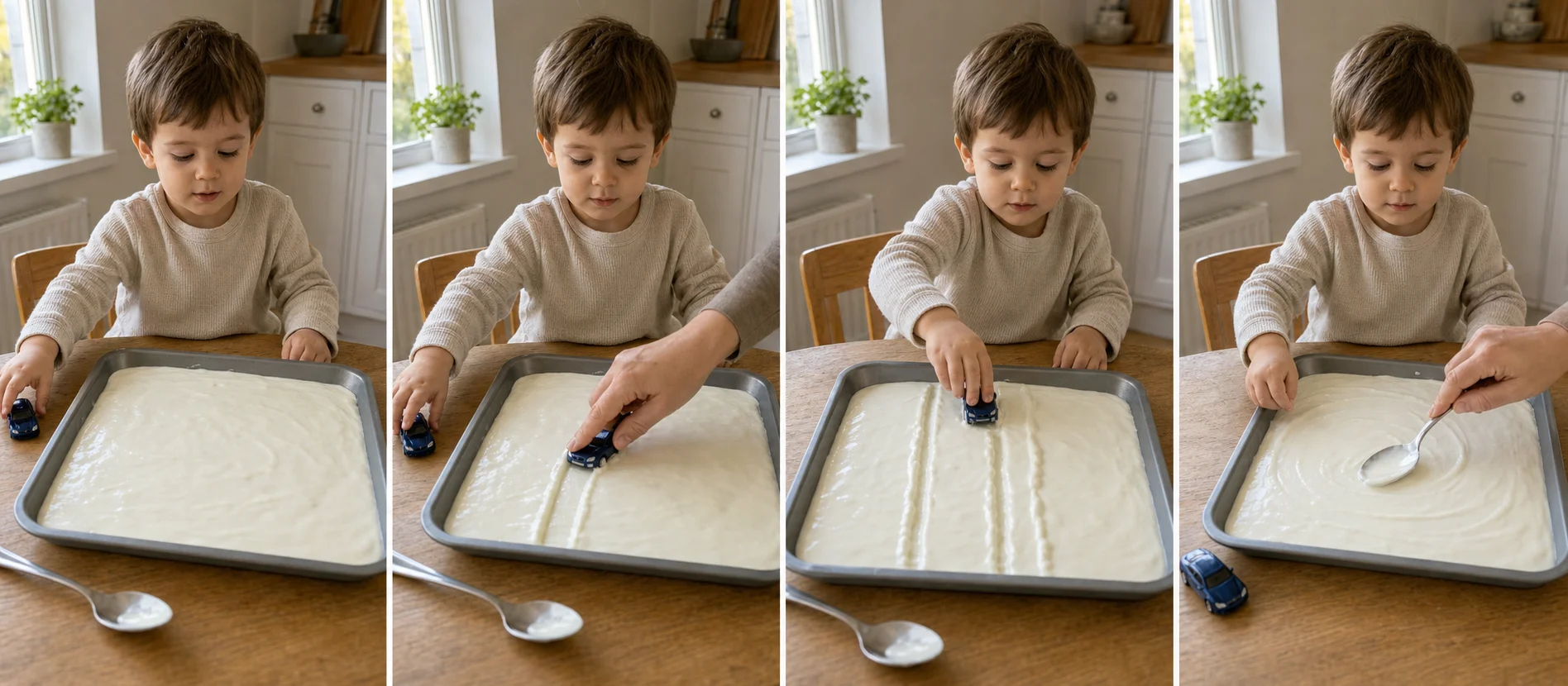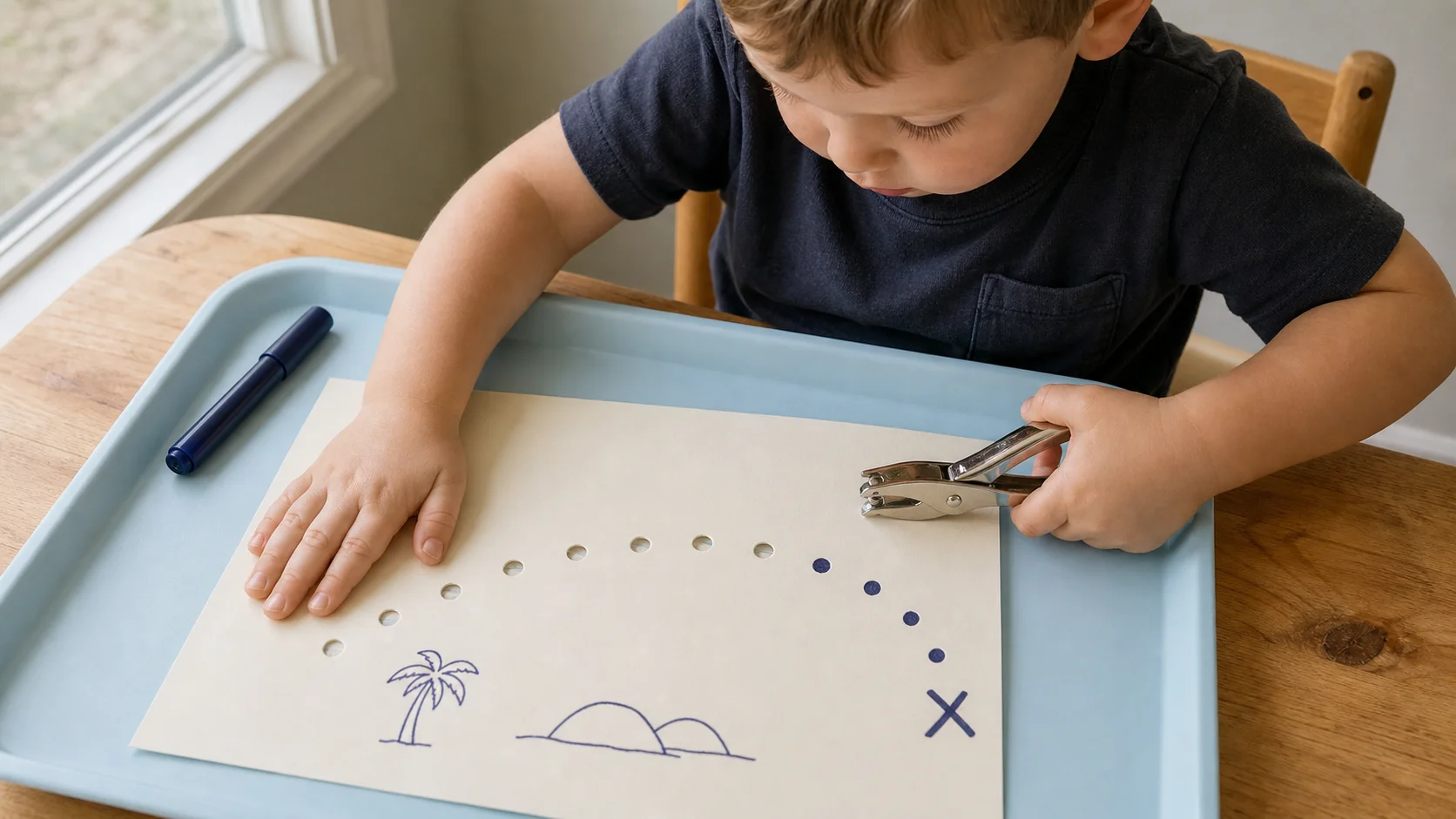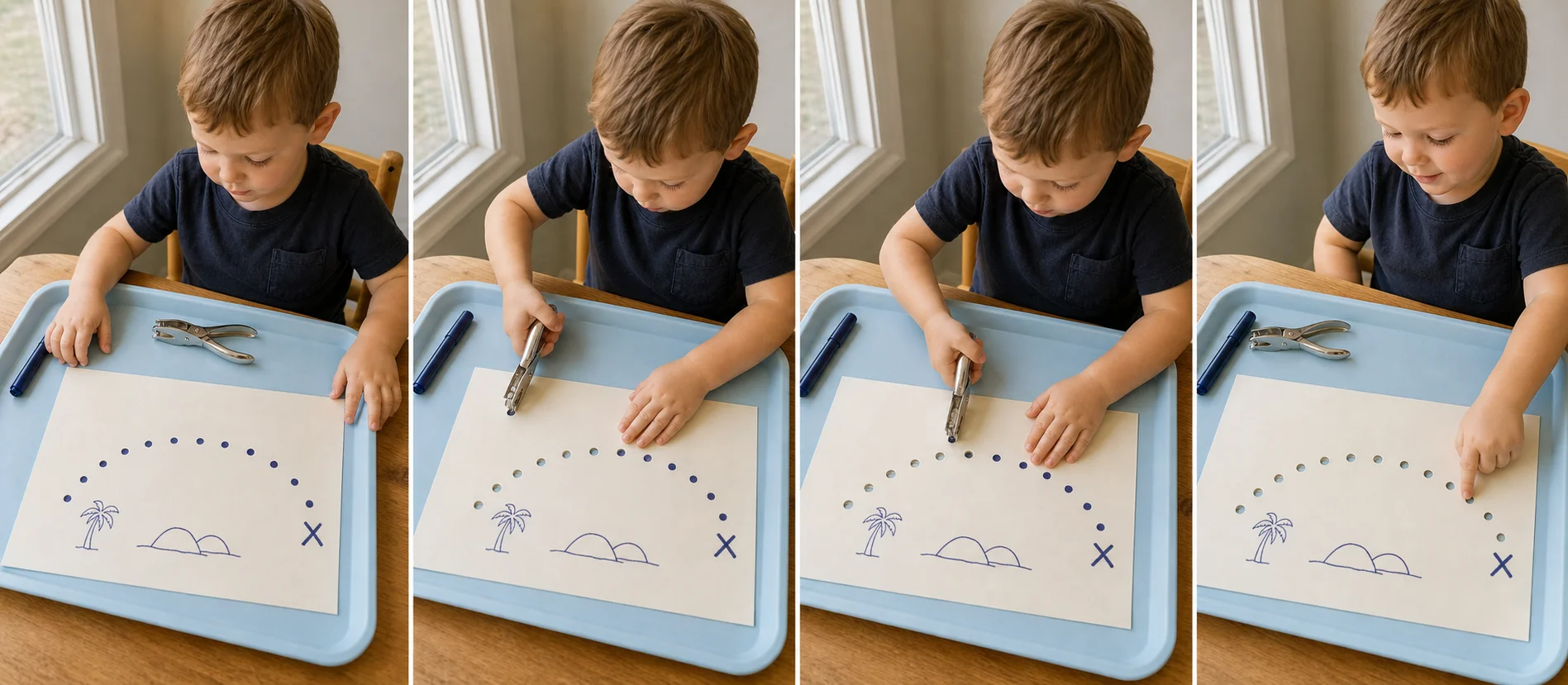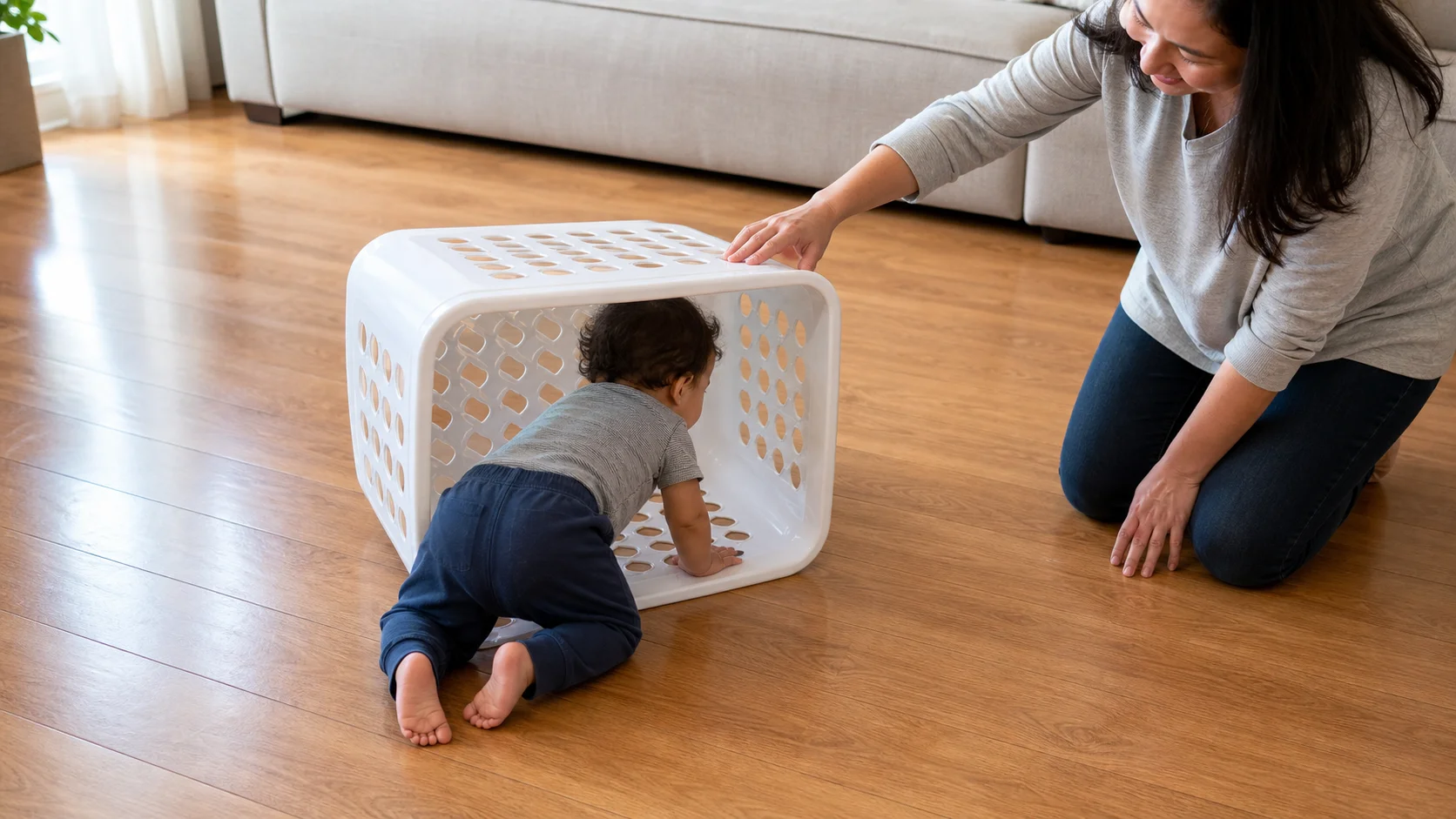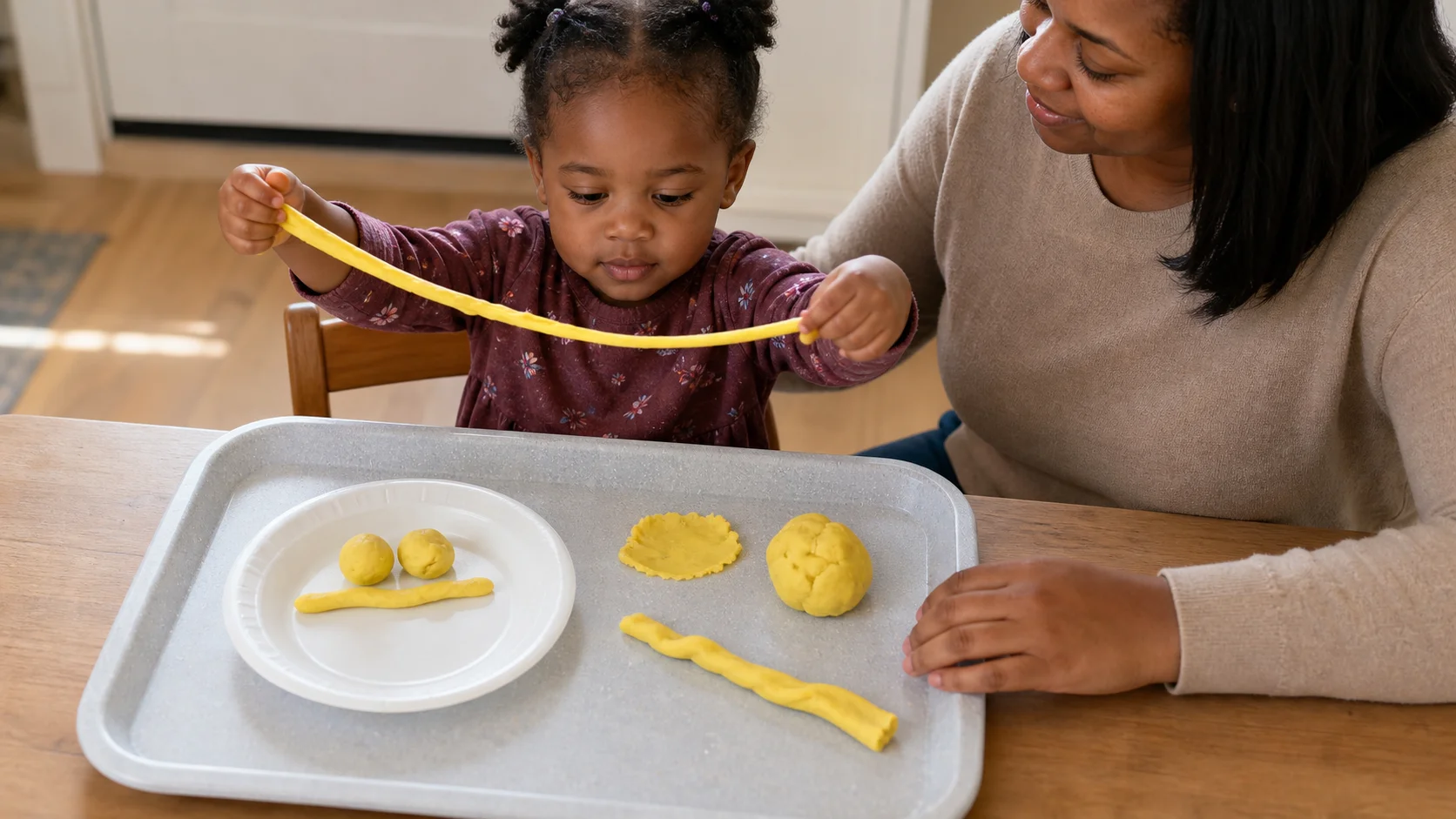
A child pulling playdough noodles and rolling meatballs on a child-safe plate.
Fine motorTwo Hand CoordinationIndoor

Playdough Spaghetti Plate.

Turn one dough ball into noodles, meatballs, and a squashable pretend dinner.

Play time
5-10+ min
Age
2-3 years
Energy
Low
Mess
Low
Effort
Low
Where
Indoor
Start here

The recipe.

Low parent effort
5 things

What you need

  • 1 palm-size ball of playdough or homemade dough
  • 1 child-safe plate
  • 1 tray, placemat, or wipeable table space
  • 1 adult
  • 1 child
5 min minimum

Setup

Then start the loop
Step 01
On a tray, placemat, or wipeable table space, make one cleanable work area directly in front of your child.
Step 02
In the middle of the work area, put one soft dough ball that can stretch or tear when pulled.
Step 03
Beside the dough, place the child-safe plate close enough that your child can put pieces on it without leaning.
Step 04
Beside your child, sit close enough to model pulling, rolling, and gathering the dough.
Step 05
Before the first turn, squeeze the dough for a few seconds if it feels stiff. Use a smaller piece if it sticks heavily or crumbles.
"Chef hands ready."
The loop

How play unfolds.

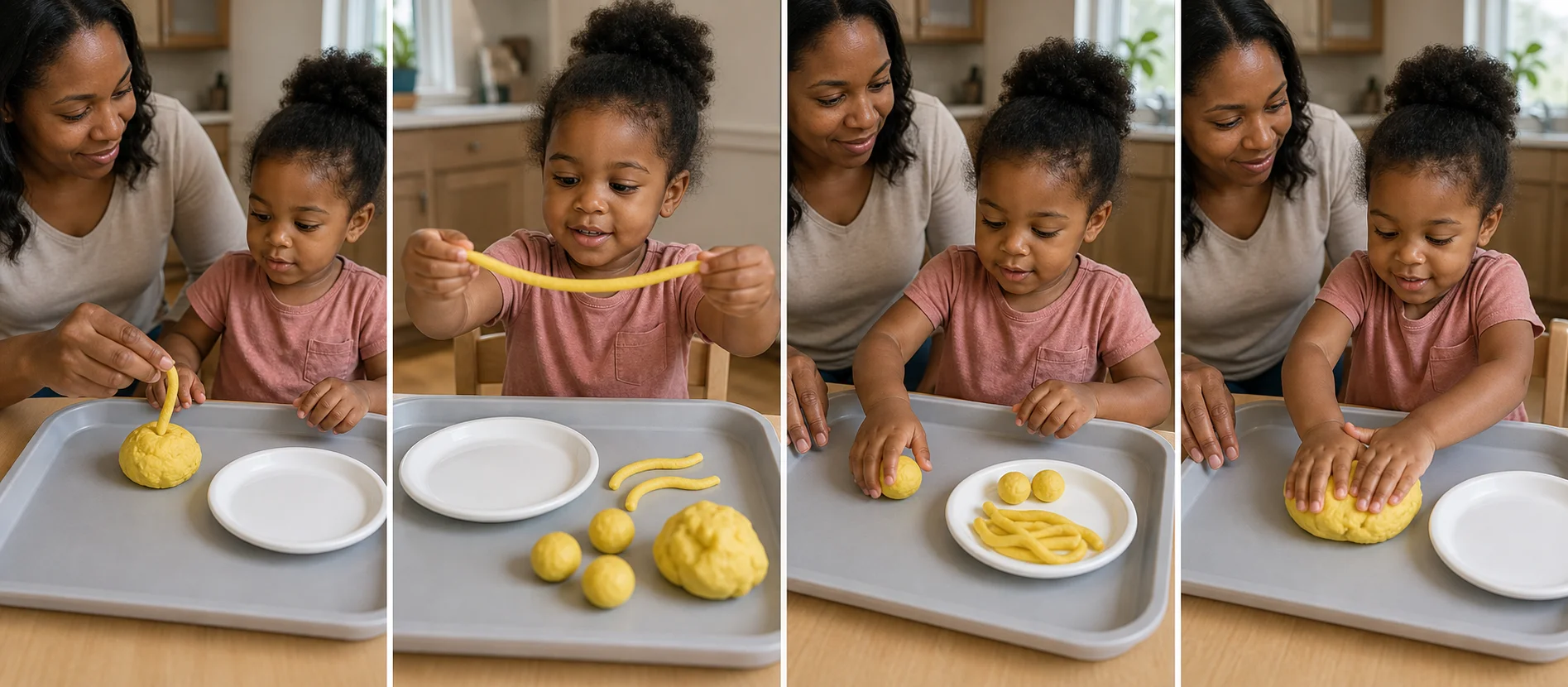
A sequence showing dough pulled into noodles, rolled into meatballs, plated, squashed, and reset.
  1. 01
    Model one small plate: pull a strip, roll a meatball, put both on the plate, and say, "Pull spaghetti. Roll meatball. Plate it."
  2. 02
    Let your child pull a noodle, roll a meatball, or try both. Hands over yours still count.
  3. 03
    Offer the other hand for the next roll if your child is still engaged.
  4. 04
    Put each strip or meatball on the plate. One visible plated piece counts as a round.
  5. 05
    Squash the plated dough back into one ball and say, "Make another plate." Repeat while your child is interested.

Safety Check

  • Supervise closely, especially if you use homemade dough.
  • Use a child-safe, unbreakable plate.
  • Pause right away if your child mouths the dough, throws it, smears it off the work area, becomes upset, or seems unwell.
  • Keep the dough on the tray, placemat, or wipeable surface so cleanup stays manageable.
Supporting the play

What to say in the moment

Match what you say to what you see.

Prompt ladder
Level 1 (Start)
Pull one noodle and drop it on the plate.
Level 2 (Keep going)
Roll one meatball with this hand.
Level 3 (Stretch)
Try the other hand for the next meatball.
Level 4 (Extend)
Squash dinner and make a new plate.
If your child seems...
What you'd see
Focused
What to do
Say
"You are pulling and rolling."
Add
Name one action: pull, roll, or plate.
Extend
Offer a second round with, "More dinner?"

Make it easier

Younger end
  • -Make one short noodle instead of trying for long spaghetti.
  • -Ask for either spaghetti or meatball in a round, not both.
  • -Make the meatballs larger so rolling takes fewer turns.

Make it harder

Older end
  • +Make two noodles before the first meatball.
  • +Roll one meatball with each hand before plating.
  • +Ask your child to rebuild dinner after you squash it flat.

If it's not working

If you see
If child ignores it
Make one exaggerated spaghetti pull, drop it on the plate, and offer the dough back with, "Your turn: pull one."
If you see
If child misuses it
Pause and say, "Dough stays on the tray." Restart with one small piece only if the dough can stay in the work area.
If you see
If child gets frustrated
Give your child the easiest job first. You hold the dough steady while they pull, or you make the spaghetti and let them put it on the plate.
If you see
If the dough is too sticky
Use a smaller piece, press it into one ball, and keep the round short. If hands stay uncomfortable, stop and wash hands.
Skill spotlight
Two-Hand Coordination

Two-hand dough control

This helps both hands work together for small daily jobs like eating with tools, starting clothing fasteners, drawing, cutting, and helping at the table.

  • Pulling dough with two hands gives your child a clear helper-hand and working-hand job.
  • Rolling meatballs lets each hand practice small squeeze-and-release movements.
  • Placing each piece on the plate builds control after the dough work, not just during it.
  • Squashing the plate back into one ball gives the activity a natural reset for another round.
Real-world transfer
  • Using a fork or spoon with steadier hands
  • Pulling clothing or loose fasteners
  • Holding paper while drawing or cutting
  • Helping make or serve simple food

Parent questions