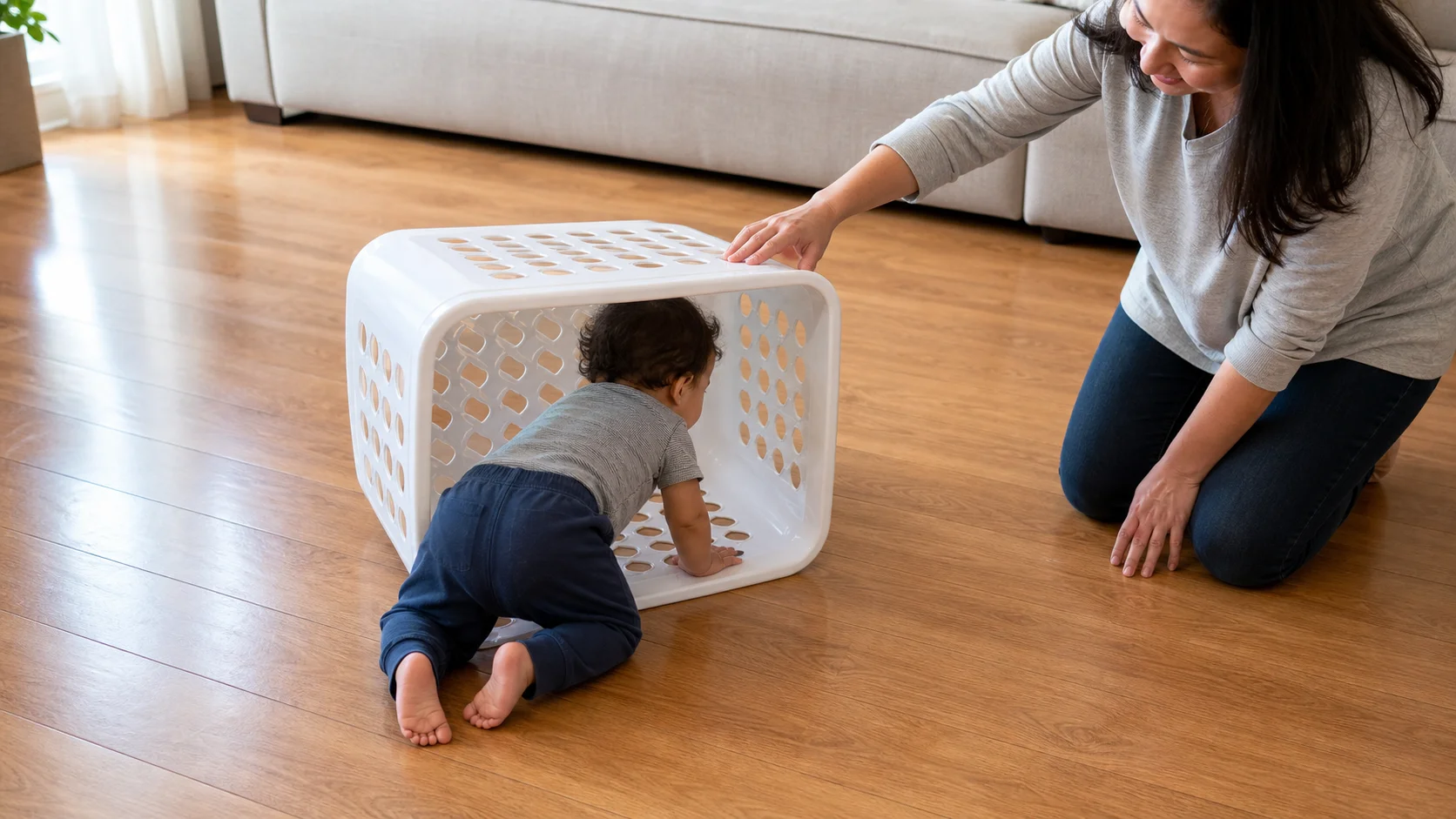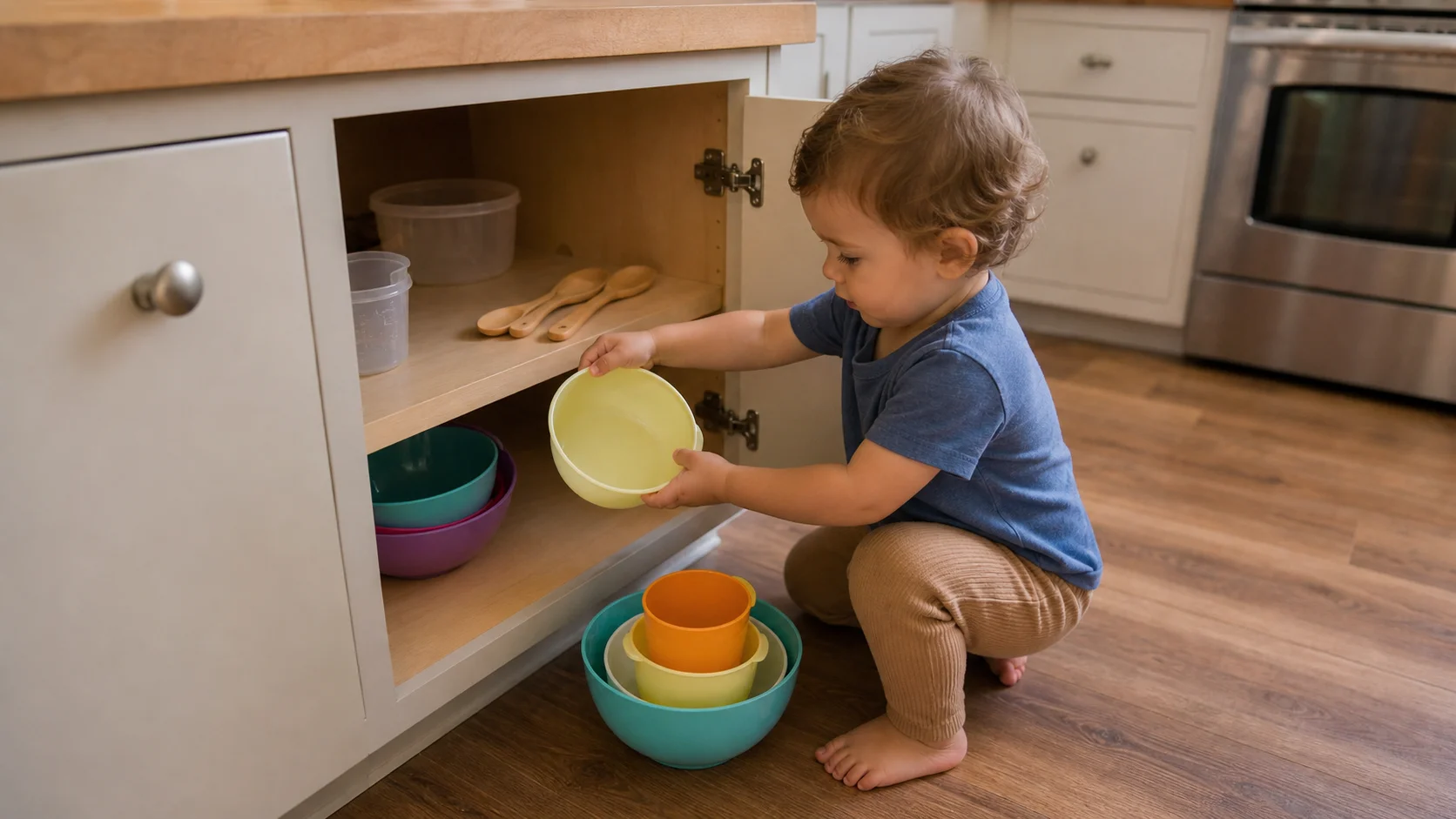
A toddler sitting by a low kitchen cupboard, pulling out plastic bowls and measuring cups to stack on the floor.
Skill builderDevelopmental supportFill And EmptyIndoor

Kitchen Cupboard Empty-and-Stack.

Turn one low kitchen shelf into a simple empty-and-stack game. Your toddler pulls out lightweight kitchen pieces, then piles, stacks, or nests them while practicing grasping and controlled placement.

Play time
5-10+ min
Age
1-3 years
Energy
Low To Medium
Mess
Low
Effort
Low
Where
Indoor
Start here

The recipe.

Low parent effort
5 things

What you need

  • Plastic bowls
  • Measuring cups
  • Wooden spoons
  • Plastic containers
  • Optional whisk
5 min minimum

Setup

Then start the loop
Step 01
Place a few lightweight kitchen items, such as plastic bowls, measuring cups, or containers, loosely on one low shelf.
"Kitchen shelf."
The loop

How play unfolds.

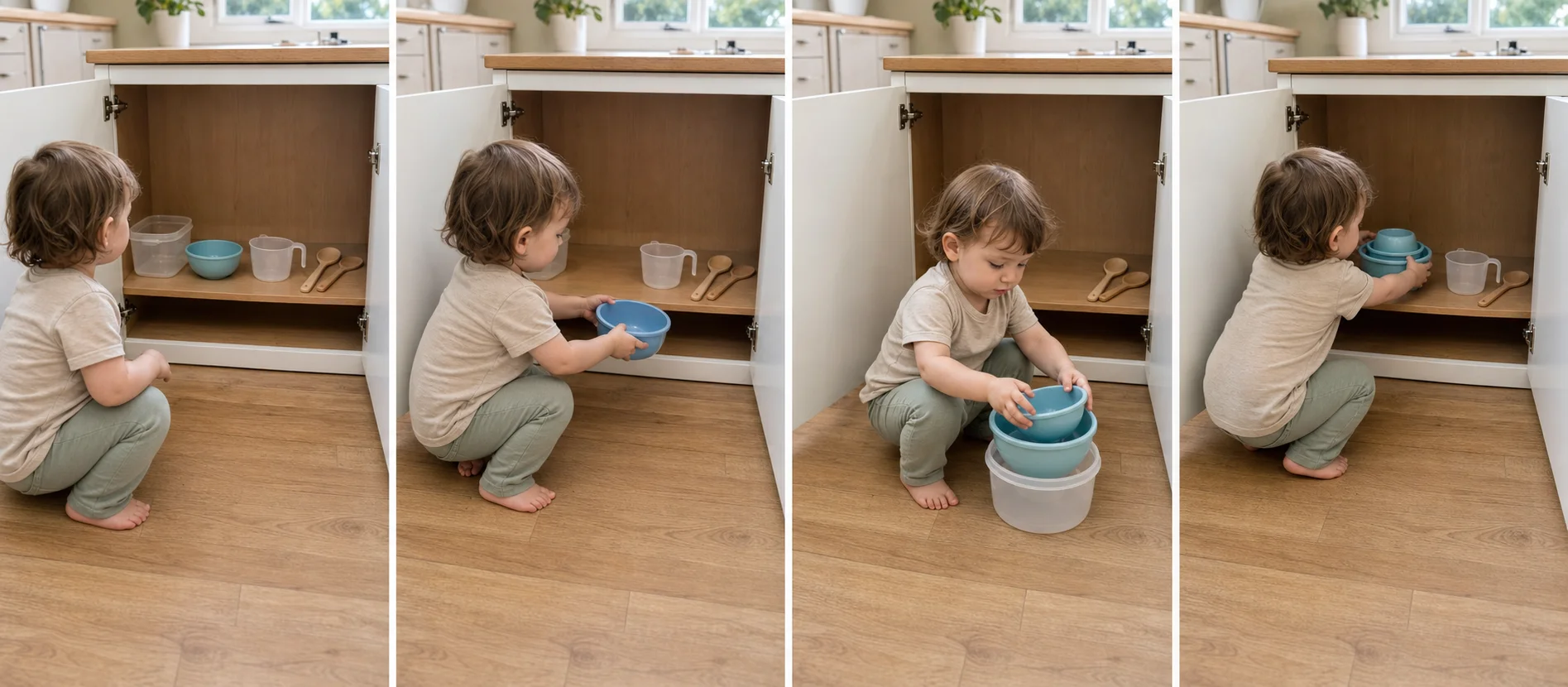
Four panels showing a low shelf with bowls and cups, a toddler pulling one item out, stacking or nesting pieces on the floor, and dumping them back for another round.
  1. 01
    Invite your child to pull one item from the shelf.
  2. 02
    Have them place each piece in a floor pile, stack bowls or cups, or fit smaller pieces inside larger containers until the shelf is empty.
  3. 03
    Put the pieces back on the shelf and repeat.

Safety Check

  • Use only lightweight kitchen items with no sharp edges, glass, or breakable parts.
  • Keep the setup close enough that you can stop mouthing or throwing right away.
  • Pause if the items are getting flung or the noise level starts winding your child up.
Skill spotlight
Fill And Empty

filling and emptying everyday containers

This helps a child practice handling everyday objects, placing them with more control, and joining simple kitchen routines that use containers and repeated put-in or take-out actions.

  • It gives your child repeated practice taking objects out, putting them in, and trying again with real household pieces.
  • The shelf and floor target keep the game easy to understand even with very little talking.
  • The reset is built in, so cleanup can become part of the play instead of a hard stop.
Real-world transfer
  • Unpacking, loading, and emptying simple containers during daily routines
  • Joining kitchen cleanup or helper jobs with real objects
Supporting the play

What to say in the moment

Match what you say to what you see.

Prompt ladder
Level 1 (Start)
"Take one out."
Level 2 (Keep going)
"Put it on the pile."
Level 3 (Stretch)
"Can it fit in this one?"
Level 4 (Extend)
"Empty it and start again."
If your child seems...
What you'd see
Focused
What to do
Say
"You got another one."
Add
Name one object like bowl, spoon, or cup after your child places it.
Extend
Ask your child to drop the next item into one chosen container.

Make it easier

Younger end
  • -Use only two or three pieces.
  • -Start with bowls and cups that fit easily.
  • -Keep all the play right in front of the cupboard.

Make it harder

Older end
  • +Ask your child to put the smaller cup into the bigger bowl.
  • +Let your child fill one container before emptying it.
  • +Pause before the reset and let your child notice what still fits together.

If it's not working

If you see
If child ignores it
Pull out one bowl yourself, tap the floor spot, and invite one quick turn.
If you see
If child misuses it
Remove the heaviest or easiest-to-throw pieces and restart with two or three lightweight items.
If you see
If child gets frustrated
Drop back to simple pull-out-and-drop play and stop after one easy success.