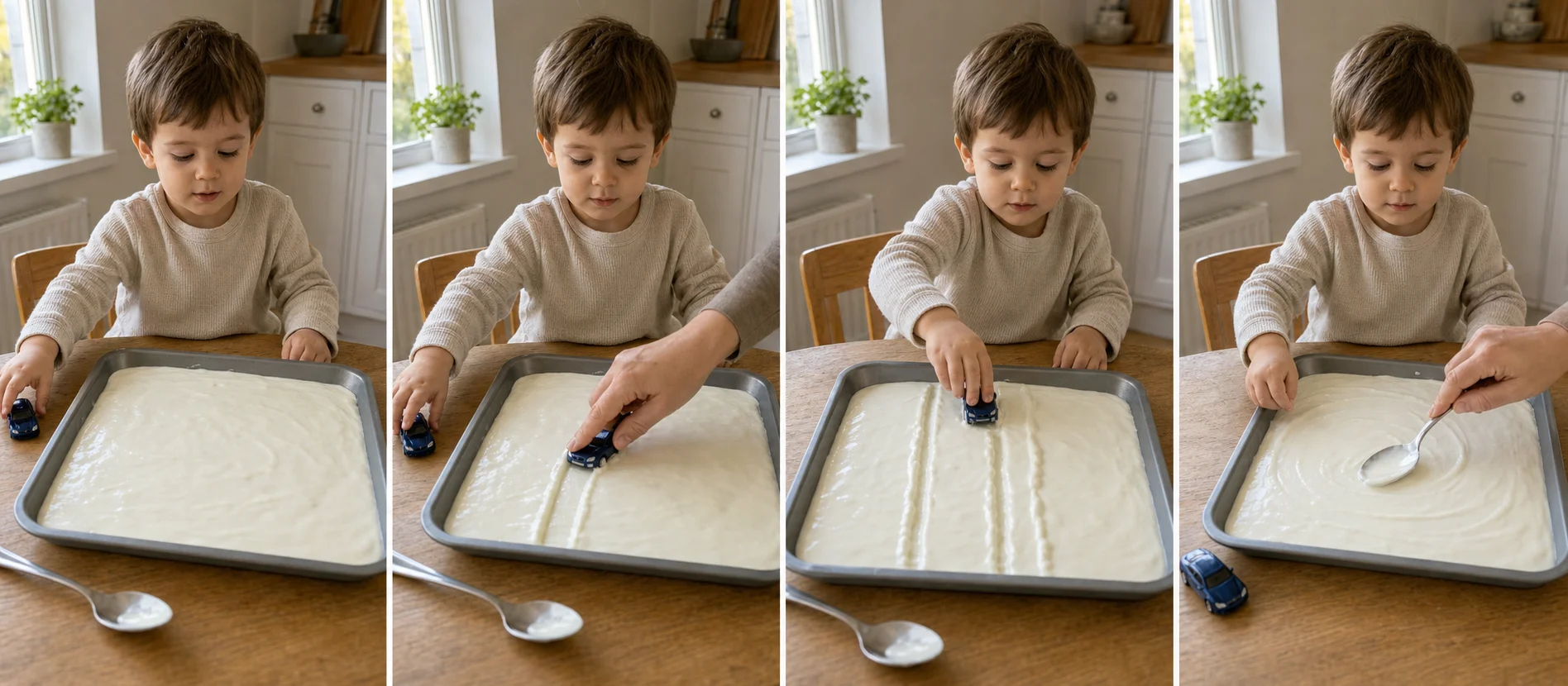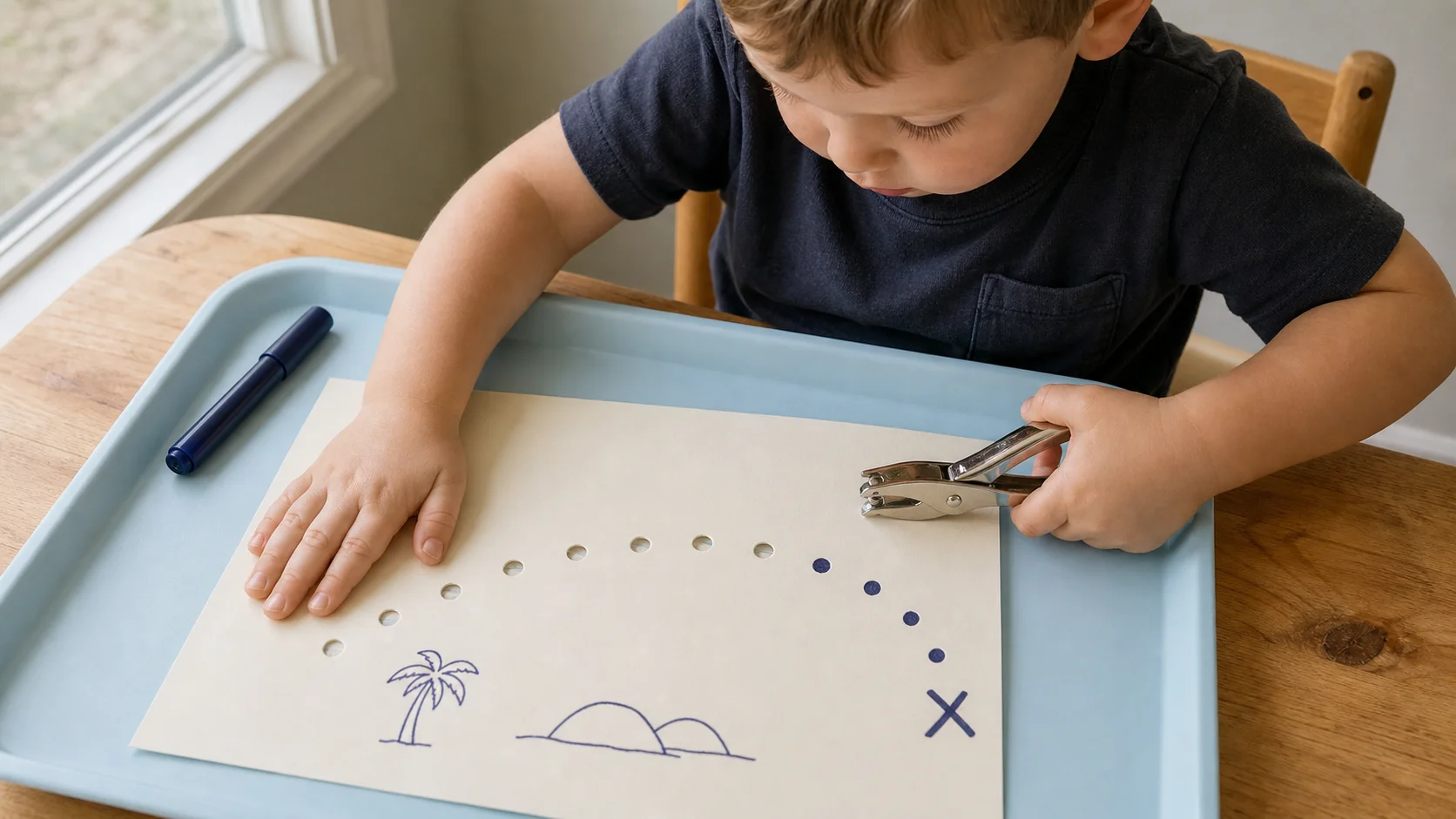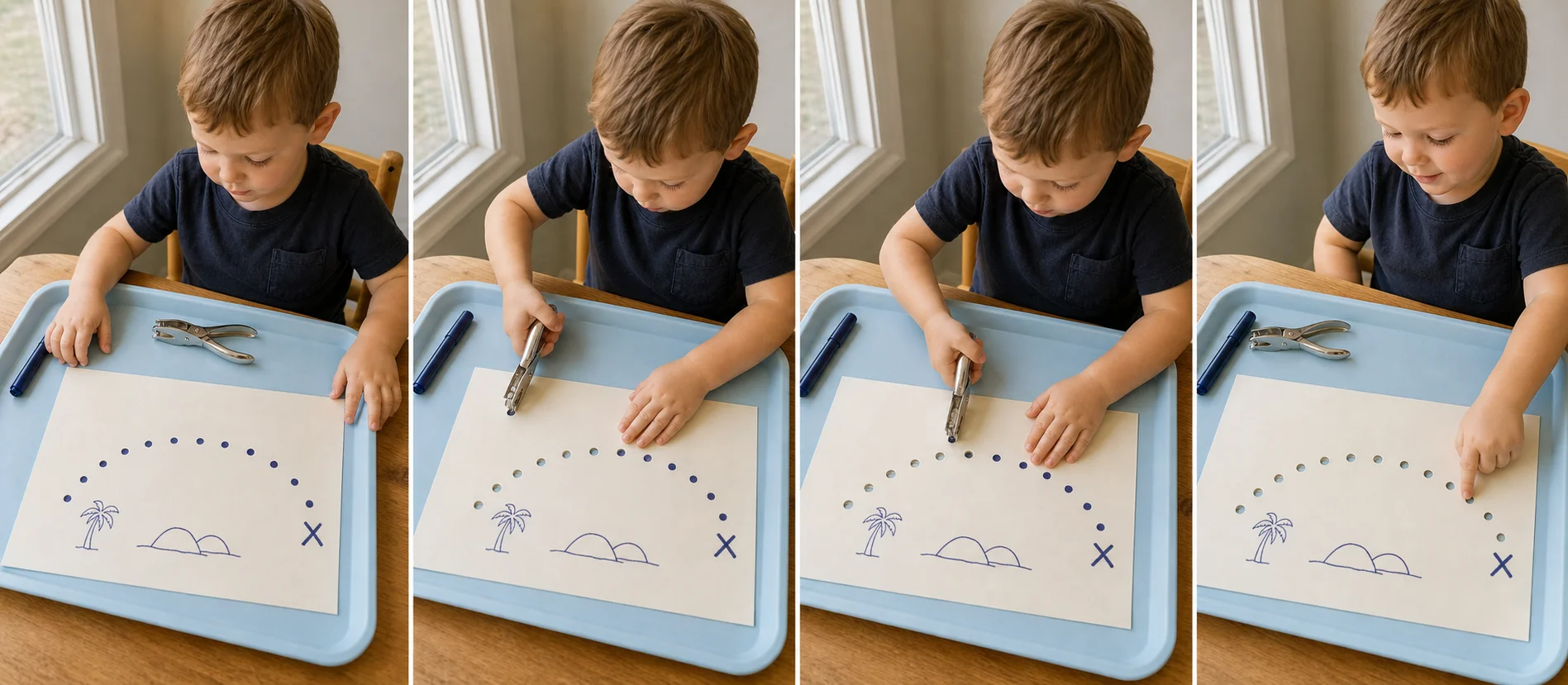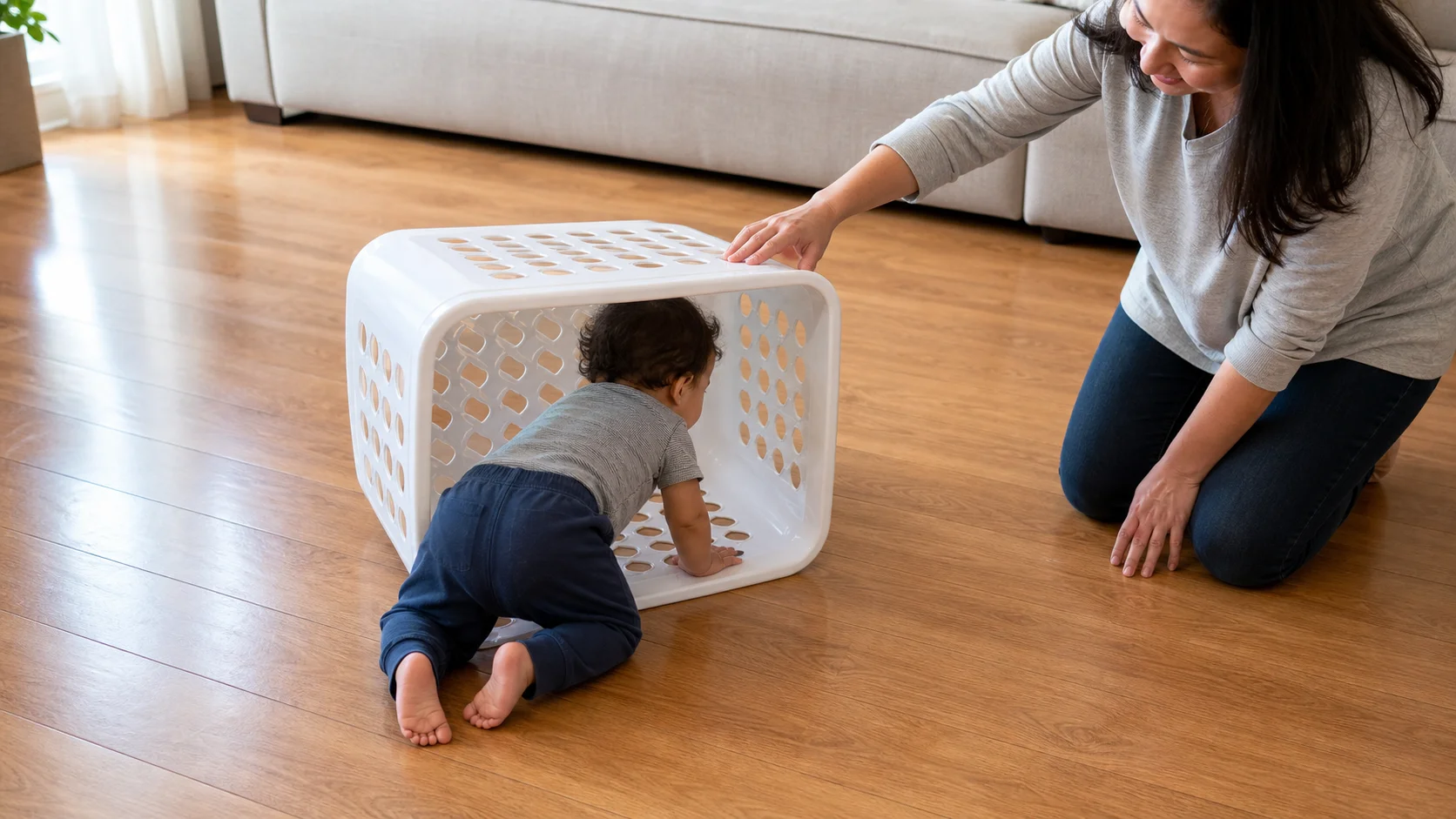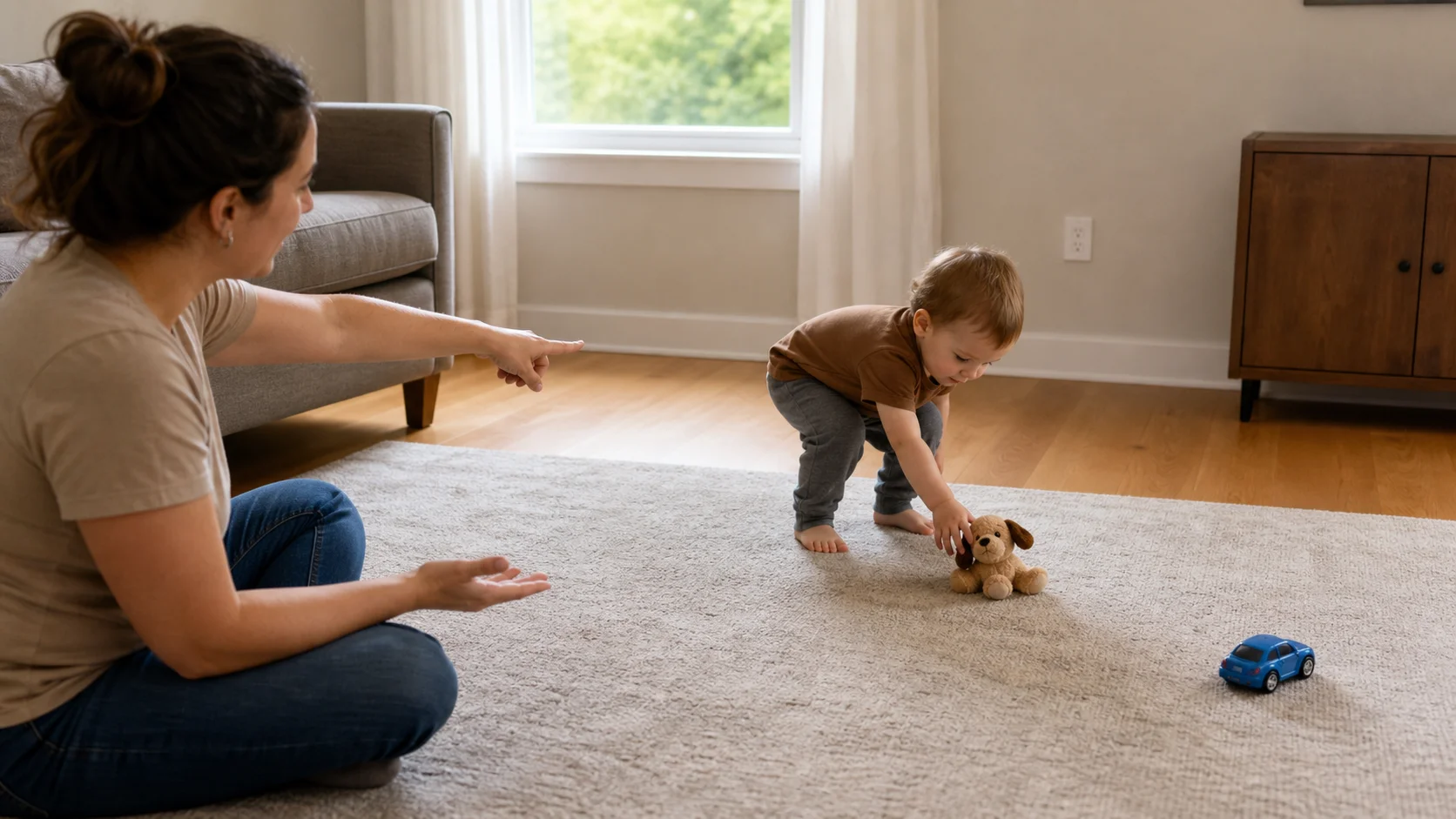
A toddler walking across a simple room toward a favorite toy while a grown-up points to it from nearby.
LiteracyAutism supportDevelopmental supportFollow One StepIndoor

Point-and-Collect Toys.

Put out a few favorite toys, point to one, and let your child get it and bring it back in a short shared-attention loop.

Play time
5-10+ min
Age
1-3 years
Energy
Low To Medium
Mess
No
Effort
Low
Where
Indoor
Start here

The recipe.

Low parent effort
1 things

What you need

  • 2 to 3 favorite small toys or treats
5 min minimum

Setup

Then start the loop
Step 01
Put 2 or 3 favorite toys or treats in clear view around one small room.
Step 02
Leave enough space between the targets that your child can tell which one you mean when you point.
Step 03
Stand or sit where you can point to each target clearly and your child can walk to it without weaving through clutter.
"That one."
The loop

How play unfolds.

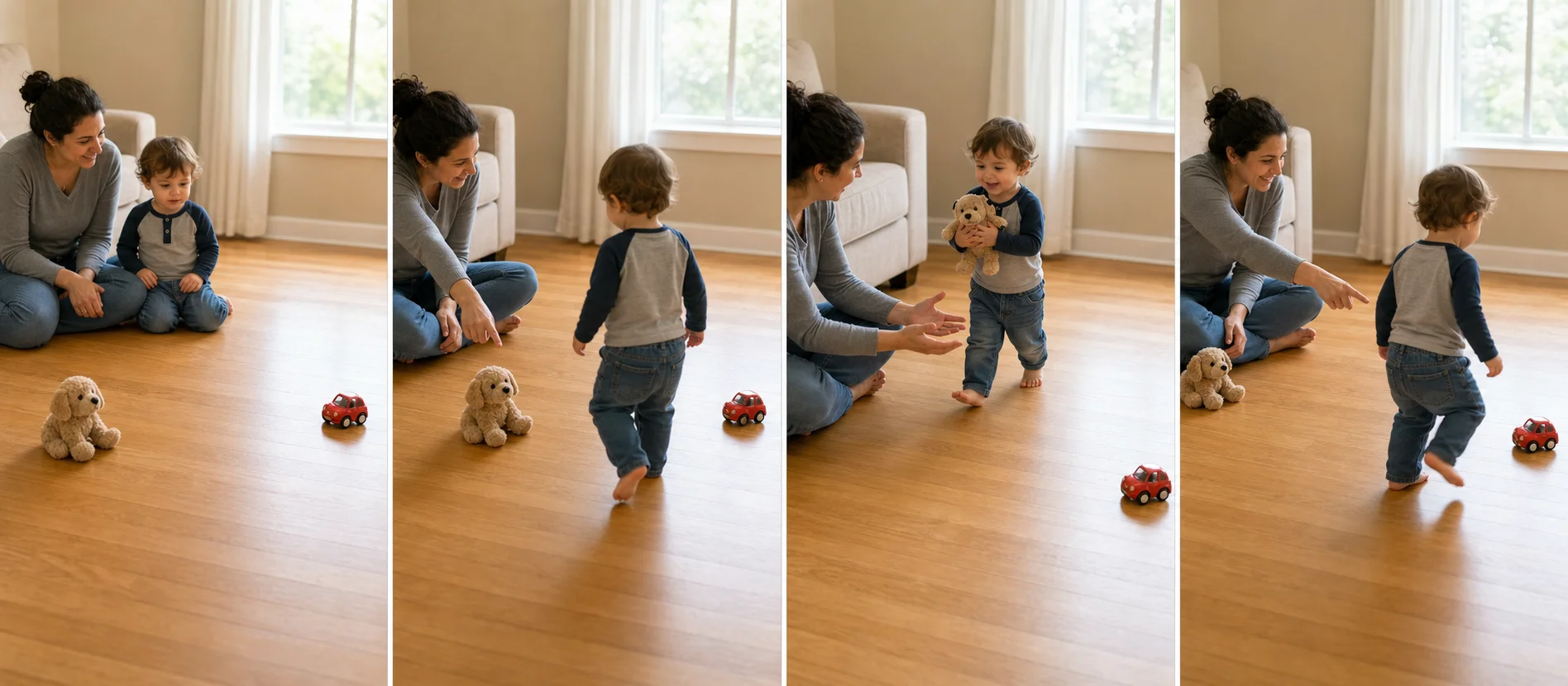
Four panels showing two toys placed around a room, a grown-up pointing to one, a toddler carrying the chosen toy back, and the next pointing turn beginning.
  1. 01
    Point to 1 target and say, "Get that one."
  2. 02
    Let your child go to the target, pick it up, and bring it back.
  3. 03
    Point to the next target and repeat until all the targets are collected.

Safety Check

  • Stay close if treats are part of the round.
  • Skip tiny, breakable, sharp, or rolling objects.
  • Keep the floor path clear so the return trip stays easy.
Supporting the play

What to say in the moment

Match what you say to what you see.

Prompt ladder
Level 1 (Start)
"Get it."
Level 2 (Keep going)
"This one."
Level 3 (Stretch)
"Bring it back."
Level 4 (Extend)
"Your turn to point."
If your child seems...
What you'd see
Focused
What to do
Say
"You got the right one."
Add
Pause before the next point so your child has a second to look around first.
Extend
Let your child drop the found object into a simple return spot before the next point.

Make it easier

Younger end
  • -Start with 1 target only.
  • -Keep the target close to the child.
  • -Use a very favorite object that is easy to spot.

Make it harder

Older end
  • +Put out 3 targets instead of 2.
  • +Point from a little farther away after a few easy wins.
  • +Wait a second longer before repeating the cue.

If it's not working

If you see
If child ignores it
Walk closer, point from a shorter distance, or put your finger right beside the target for one easy win.
If you see
If child misuses it
Put away the extra targets and use 1 item only until the get-and-bring-back loop is clear again.
If you see
If child gets frustrated
Point to a very near target, walk with your child to it, and help carry it back together.
Skill spotlight
Follow One Step

following a grown-up's point to find and collect one object

This helps a child use another person's gesture as a meaningful cue, act on a short shared goal, and join simple back-and-forth routines that matter in everyday communication.

  • The point gives your child one clear cue to act on instead of asking them to guess what matters in the room.
  • The get-it-and-bring-it-back loop stays short, which makes it easier to repeat without a lot of language.
  • You can simplify the game fast by dropping to one target and pointing from close range.
Real-world transfer
  • Following a grown-up's gesture during daily routines
  • Finding the right object when someone shows where to look
  • Joining shared-attention moments that support early communication