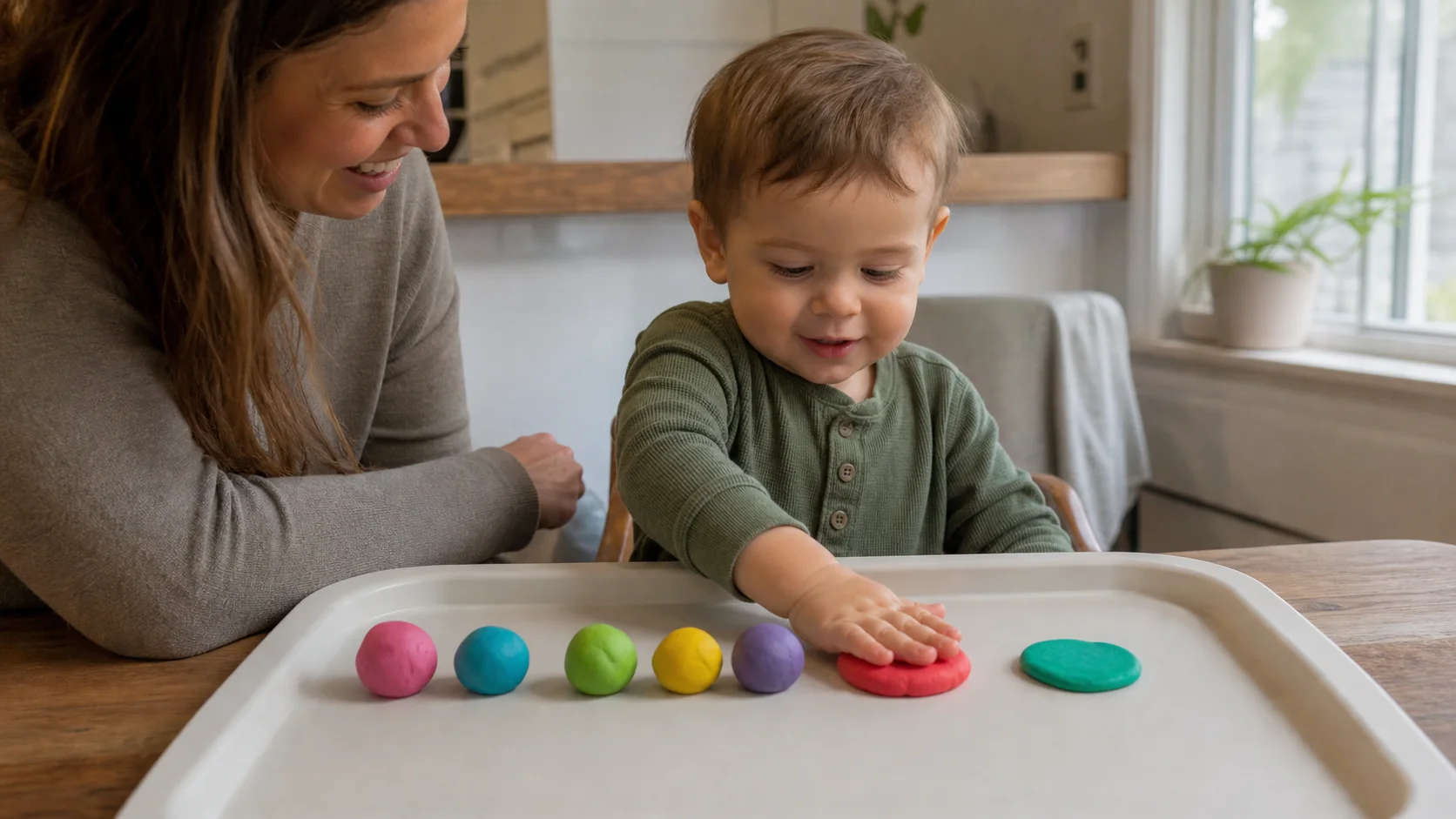
A toddler at a tray pressing a small Play-Doh ball flat with their palm while a grown-up beside them says a playful boom.
Fine motorSpeech delay supportDevelopmental supportPush Through ResistanceIndoor

Play-Doh Smash Cakes.

A few Play-Doh balls and a funny boom turn this into a clear, repeatable toddler play routine.

Play time
5-10+ min
Age
1-3 years
Energy
Low
Mess
Low
Effort
Low
Where
Indoor
Start here

The recipe.

Low parent effort
2 things

What you need

  • 1 portion of Play-Doh
  • 1 flat table, tray, or other wipeable work surface
5 min minimum

Setup

Then start the loop
Step 01
Pinch off a few small pieces of Play-Doh and roll them into 4 or 5 balls.
Step 02
Put the balls in a short row or loose cluster on a tray or table right in front of your child.
Step 03
Leave a little open space beside the balls so each one can flatten without sticking to the next.
Step 04
Sit beside your child and keep one clear smash spot easy to see.
"Boom cake."
The loop

How play unfolds.

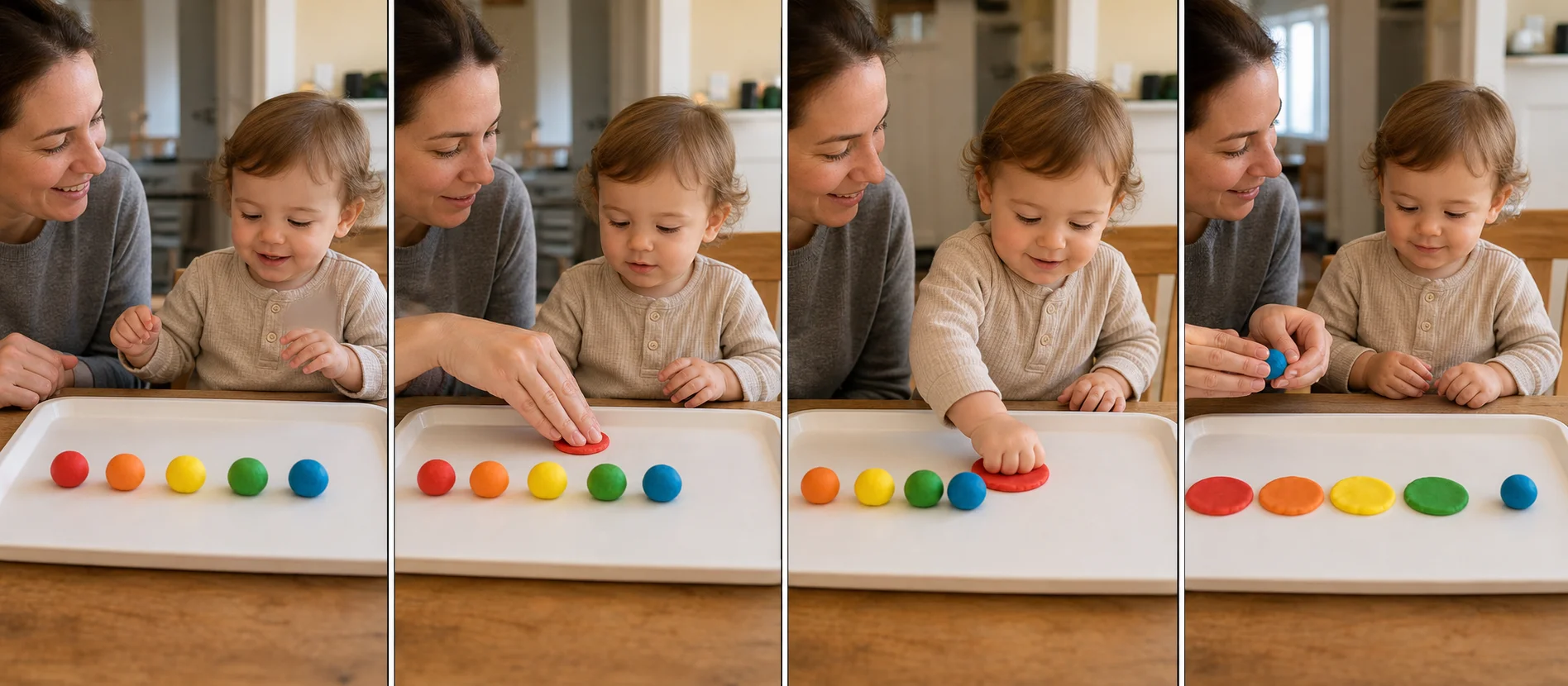
Four panels showing a few Play-Doh balls on a tray, a grown-up modeling one smash, a toddler flattening a ball, and the dough being rolled into another round.
  1. 01
    Show one smash and say, "Boom. Smash cake."
  2. 02
    Let your child press one ball flat with a palm or fist and add one funny sound as it squashes.
  3. 03
    Move to the next ball and repeat.
  4. 04
    Roll a few more balls only if your child wants another round.

Safety Check

  • Stay close if your child still mouths Play-Doh.
  • Keep the dough on the tray or table and stop if the smashing turns into throwing or hitting toward people.
  • Use a wipeable surface so sticky scraps stay contained.
Supporting the play

What to say in the moment

Match what you say to what you see.

Prompt ladder
Level 1 (Start)
"Smash it."
Level 2 (Keep going)
"Next cake."
Level 3 (Stretch)
"Big boom."
Level 4 (Extend)
"My turn, your turn."
If your child seems...
What you'd see
Focused
What to do
Say
"You made it flat."
Add
Name one sound such as boom or pop after the smash.
Extend
Take one quick turn, then hand the next ball back right away.

Make it easier

Younger end
  • -Use fewer balls in each round.
  • -Put each new ball into the same easy smash spot.
  • -Accept touching or patting the ball if a full fist smash feels like too much.

Make it harder

Older end
  • +Wait after your model and let your child decide which sound to use.
  • +Take turns smashing one ball each.
  • +Make one ball slightly firmer so your child has to press a little longer.

If it's not working

If you see
If child ignores it
Do one bigger smash sound, then slide the next dough ball right under your child's hand.
If you see
If child misuses it
Say, "Dough stays on the tray," gather the balls back into one group, and restart with one easy smash.
If you see
If child gets frustrated
Count one smash as enough, help press the next ball together, or let your child just touch the dough while you make the sound.
Skill spotlight
Hand Pressure Control

pressing through soft resistance with the hand

This helps a child build the hand pressure and control used for later tool use, self-feeding, and other small hand jobs that need a firm but guided push.

  • The smash gives your child a clear hand job with an immediate visible result.
  • The boom, pop, or bam adds an easy sound cue without turning the activity into a language drill.
  • Short one-ball turns make it easier to stop early, reset fast, or try again after a miss.
Real-world transfer
  • Pressing and releasing tools with more control
  • Using enough hand strength for daily play and self-help tasks