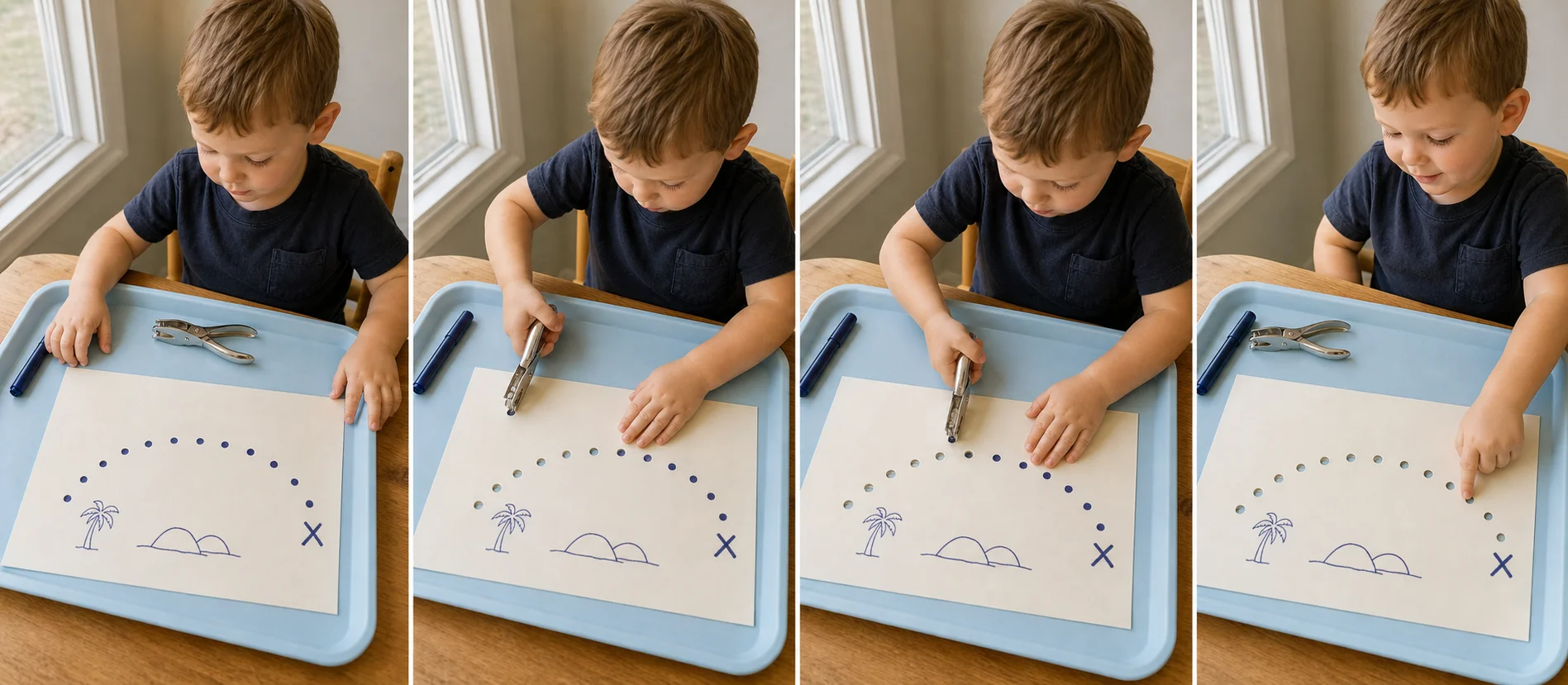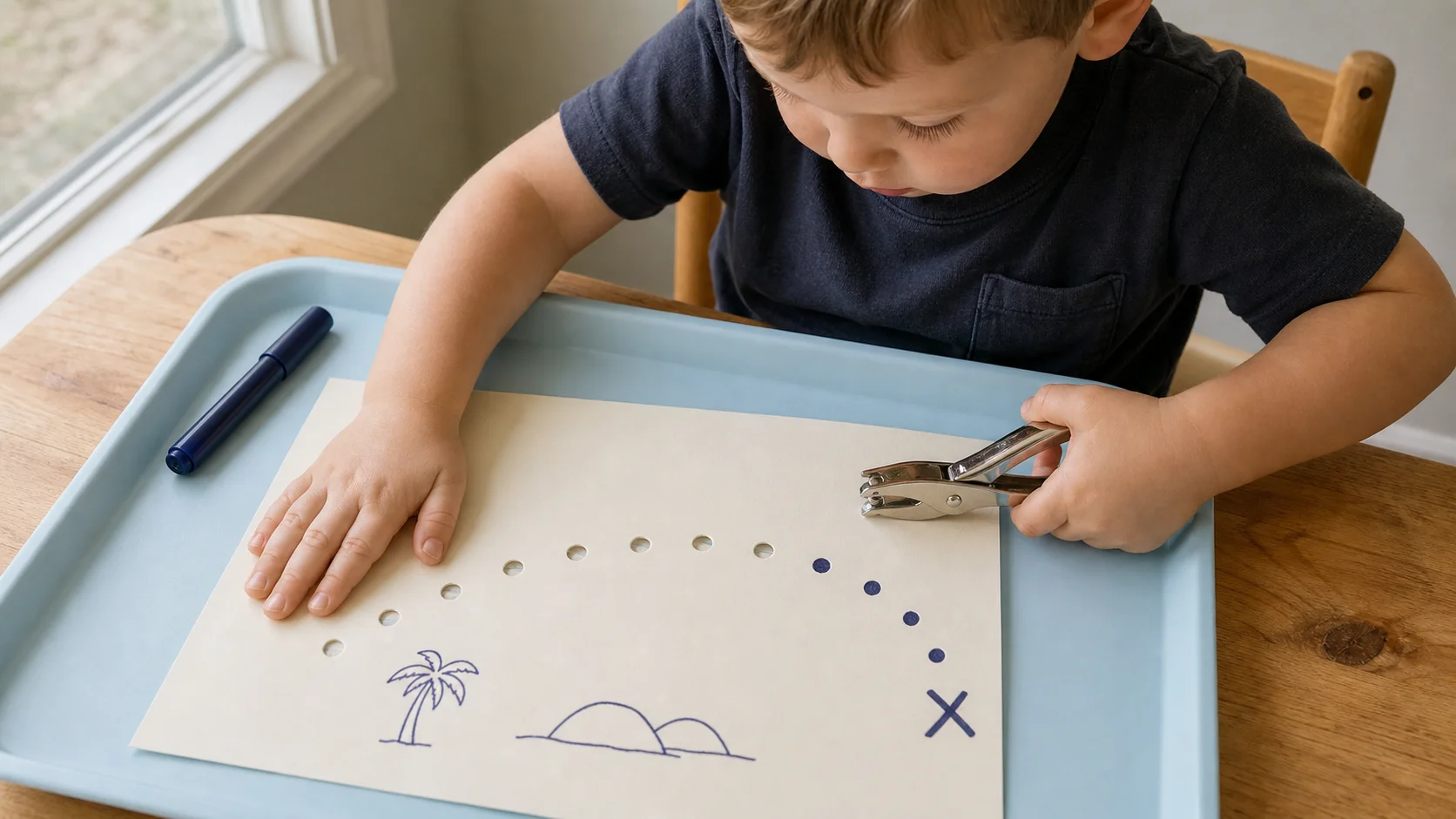

Punch a Path to Treasure
Can your child punch a dotted path to buried treasure? Line up each dot along the edge of a paper map, squeeze one hole at a time, and follow the trail to the X, building hand strength, precision, and controlled tool use.
These activities for fine motor skills support hand strength, coordination, grasp, and everyday play. Each idea is built around small hand movements like pinching, peeling, threading, squeezing, posting, twisting, and careful placing with everyday materials.


Can your child punch a dotted path to buried treasure? Line up each dot along the edge of a paper map, squeeze one hole at a time, and follow the trail to the X, building hand strength, precision, and controlled tool use.


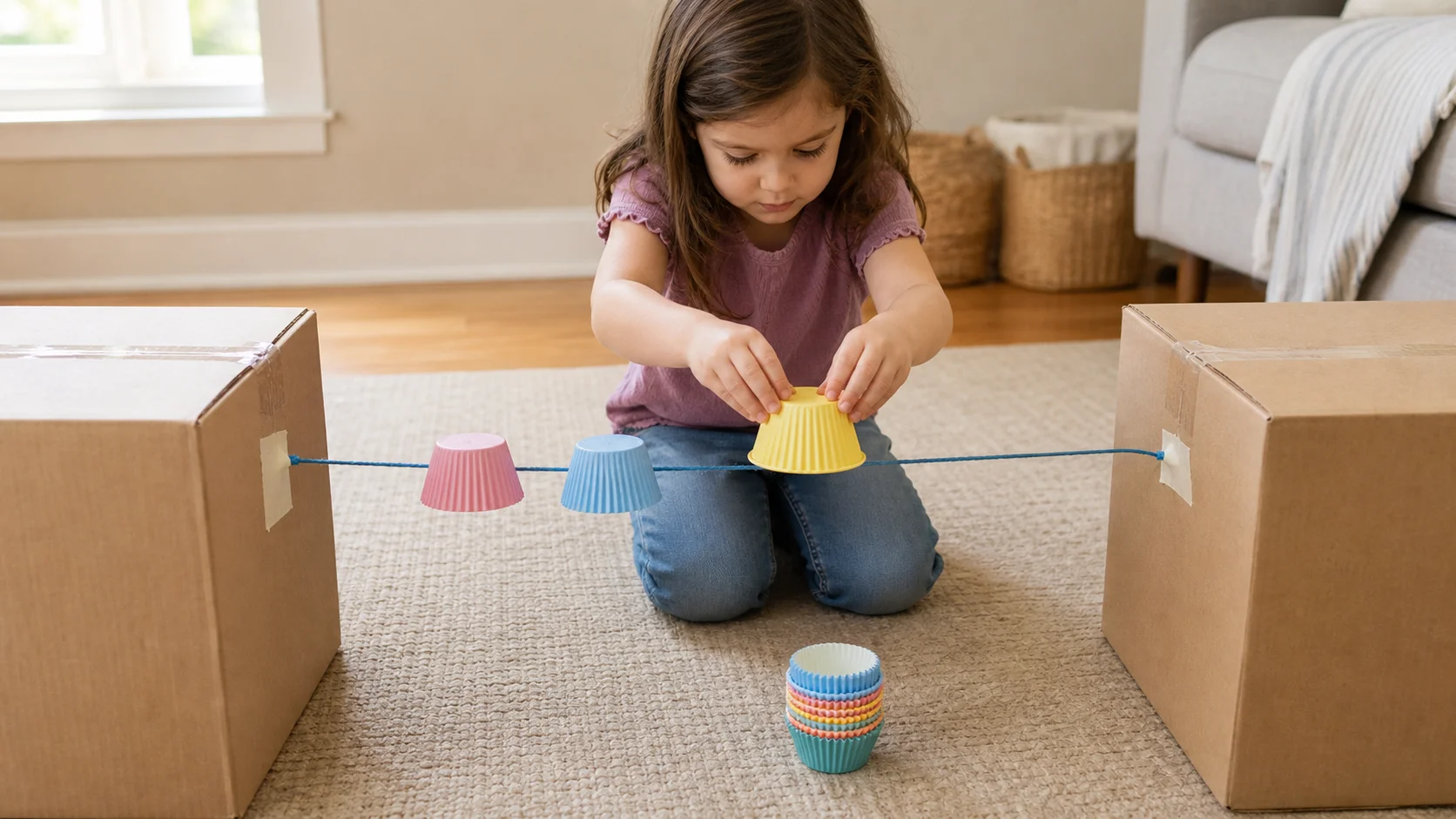
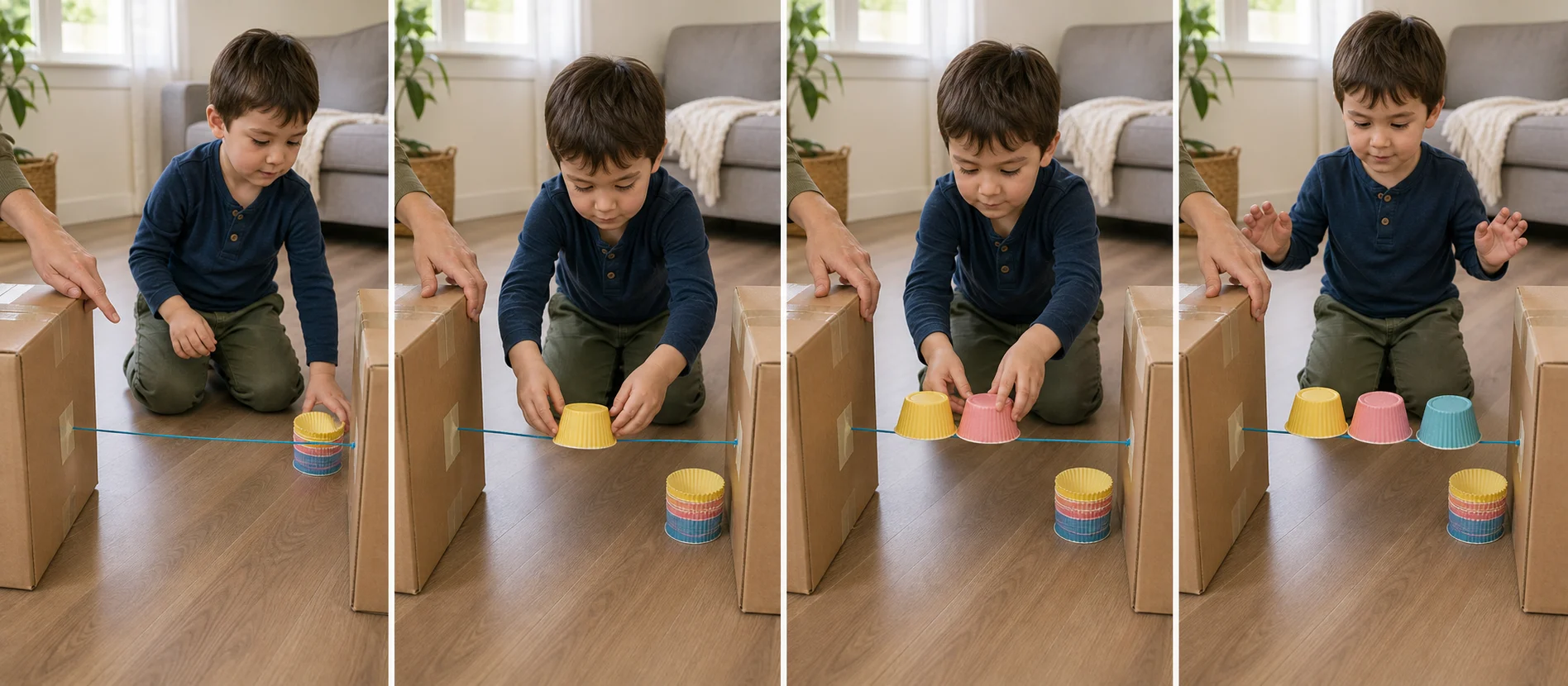
Turn two boxes, yarn, and paper baking cups into a careful hands balance challenge.


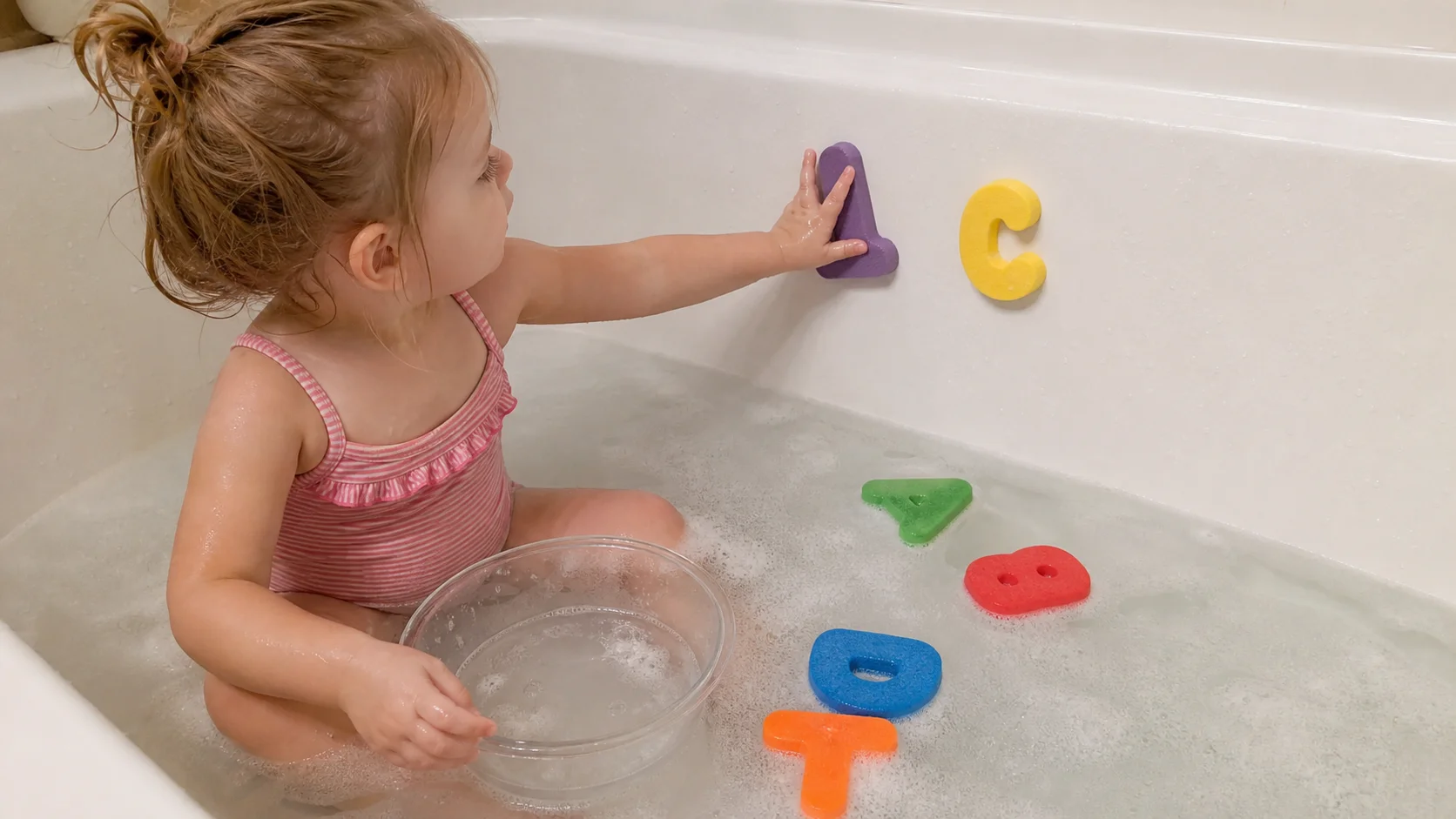
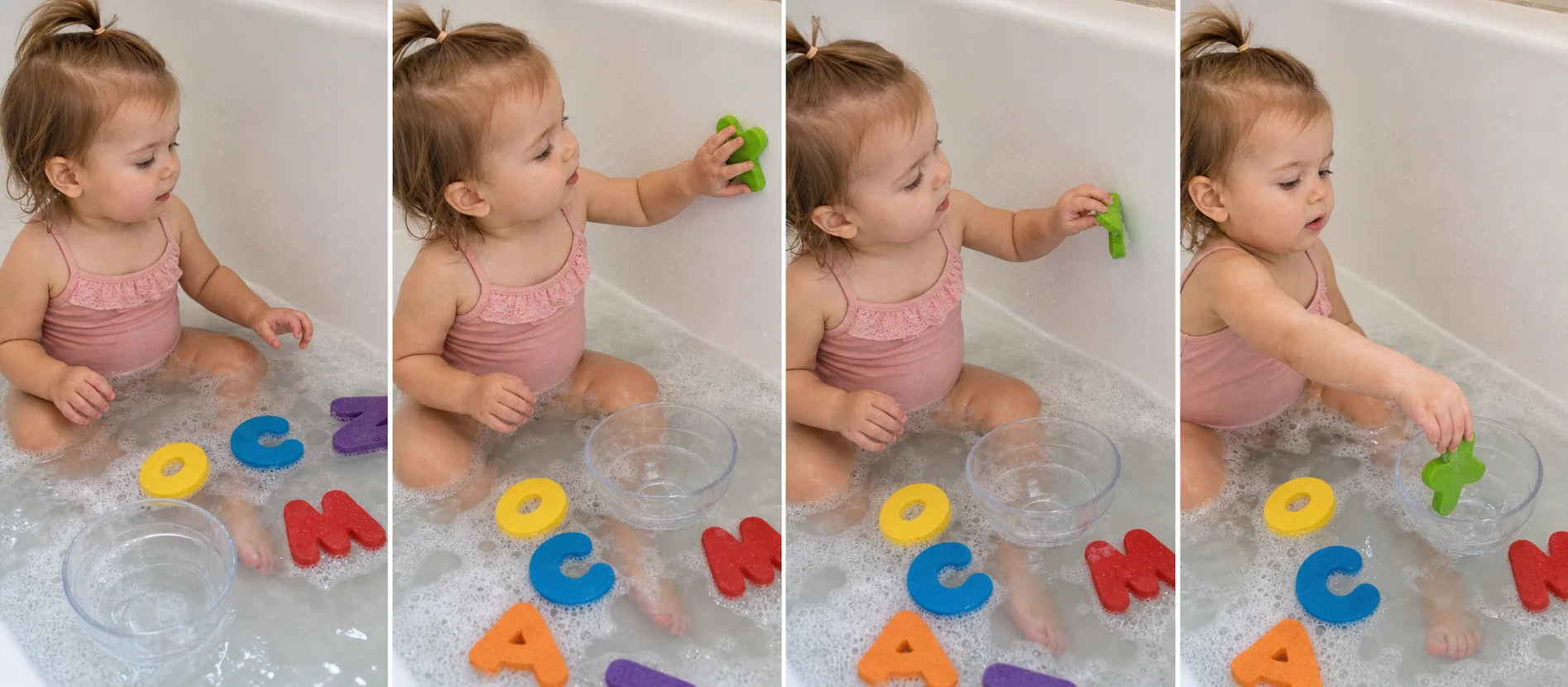
Sneak a little letter learning into tonight's bath. Let your child fish out a foam letter, stick it to the tub wall, peel it off, and splash it back into the water while you name the letter or make its sound.


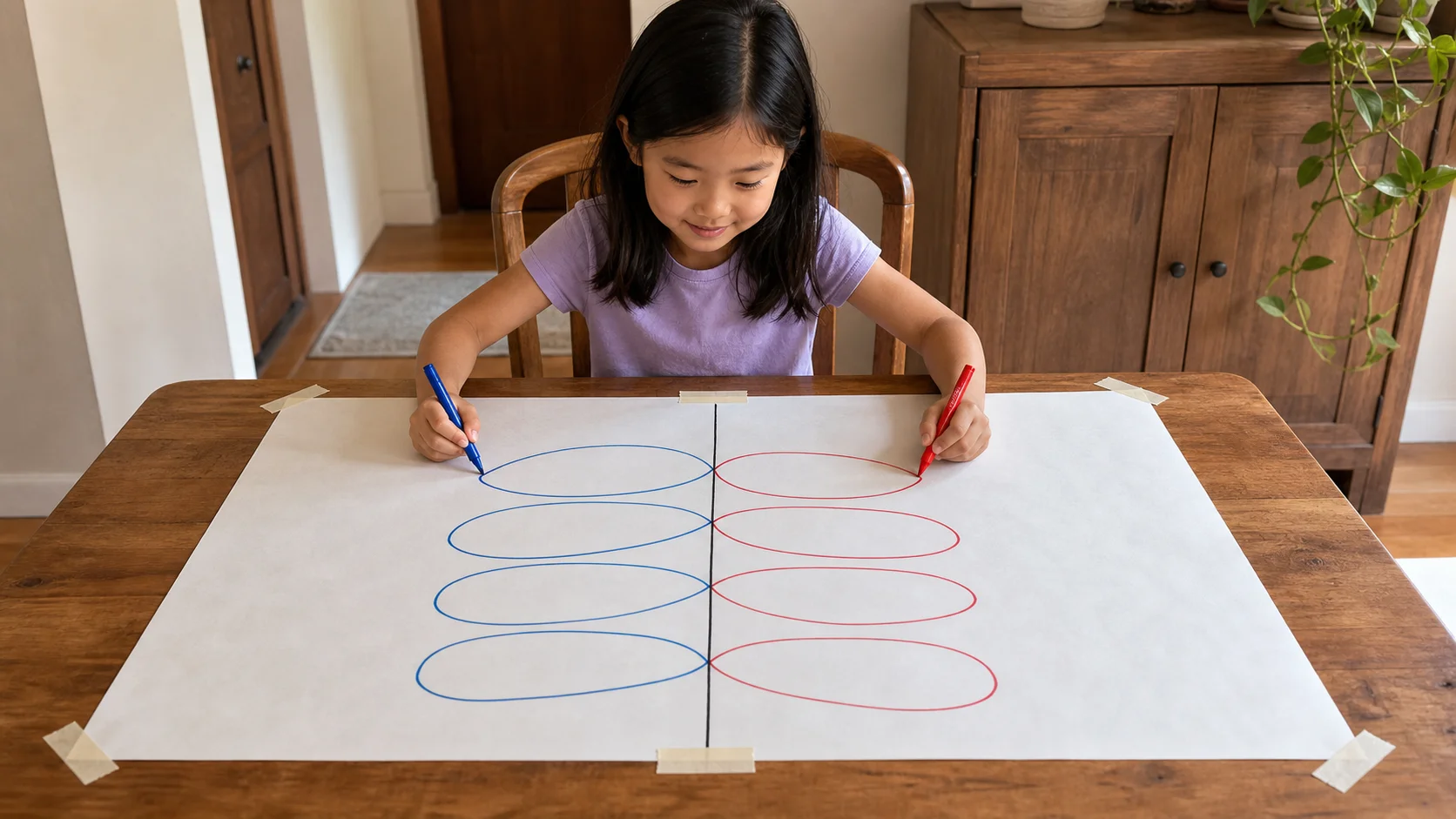
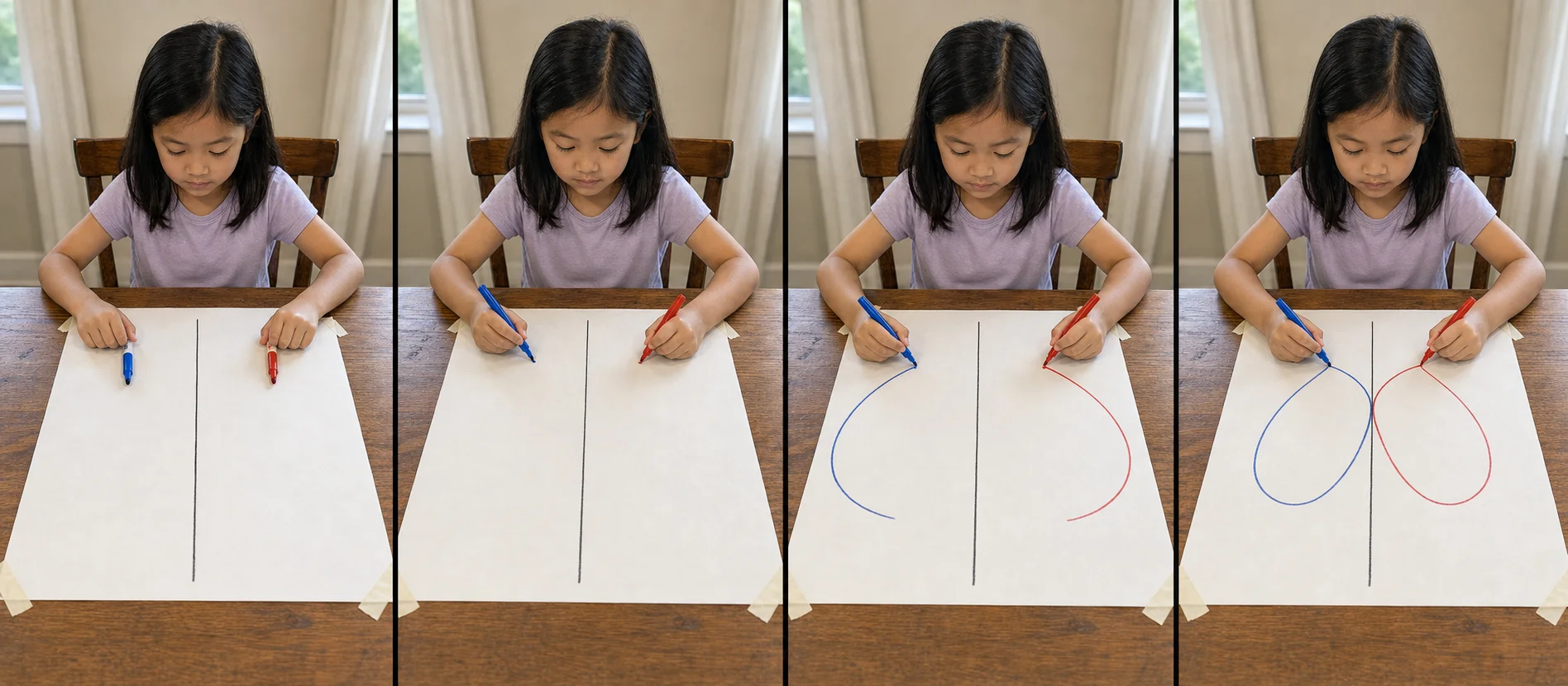
Tape down a large sheet, draw a center line, and let your child make matching loops with two markers.


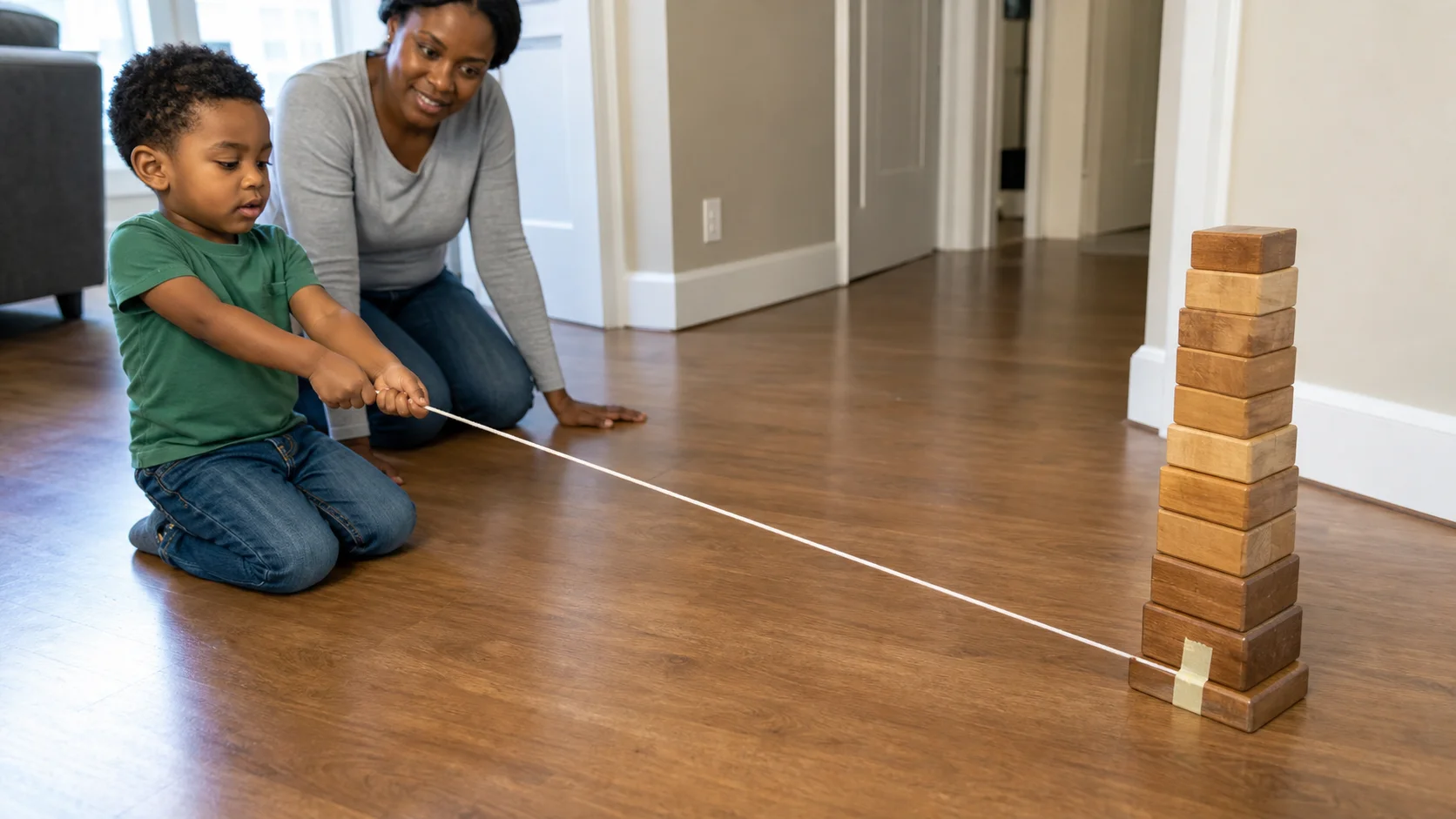
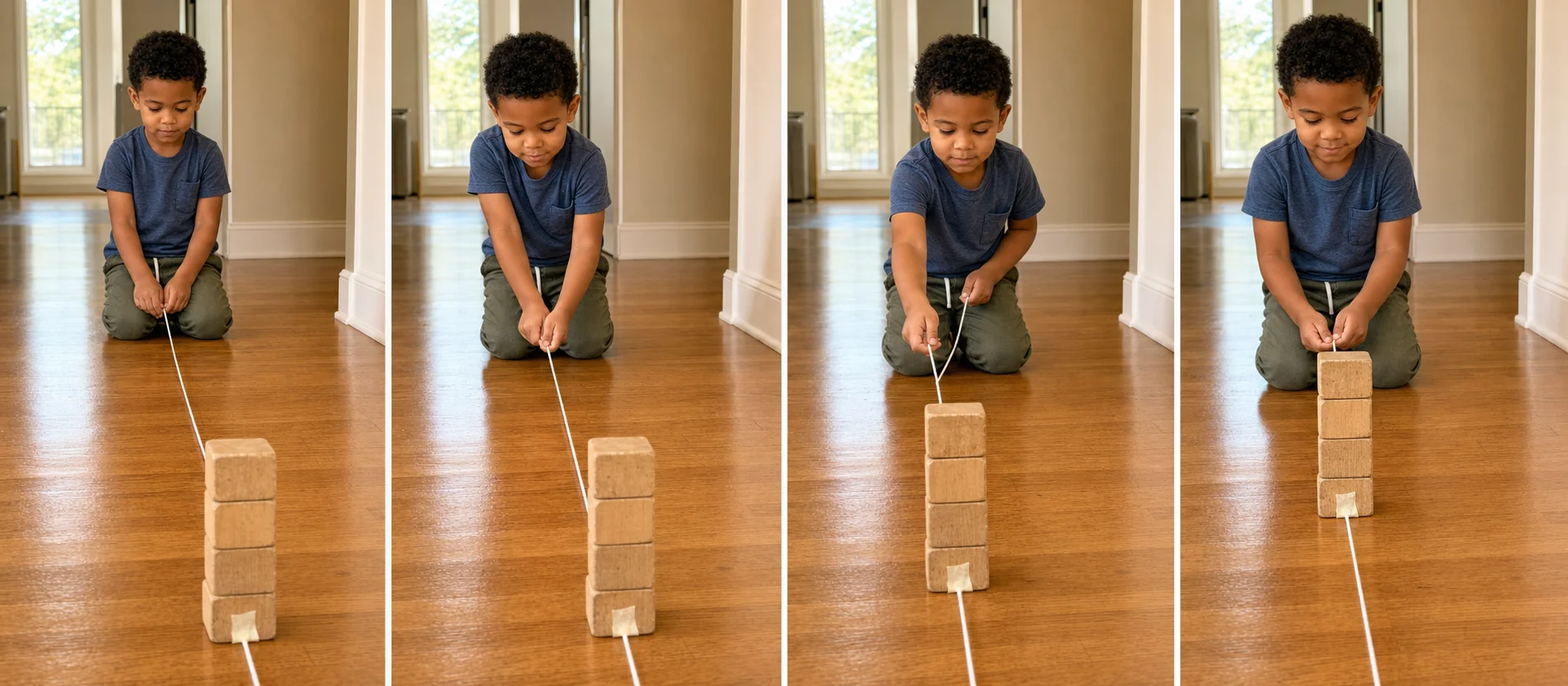
Can your child use a string to pull a block tower across the floor without toppling it? This rescue challenge gives hand strength, two-hand coordination, and body control a playful workout. Slow and steady wins this race!

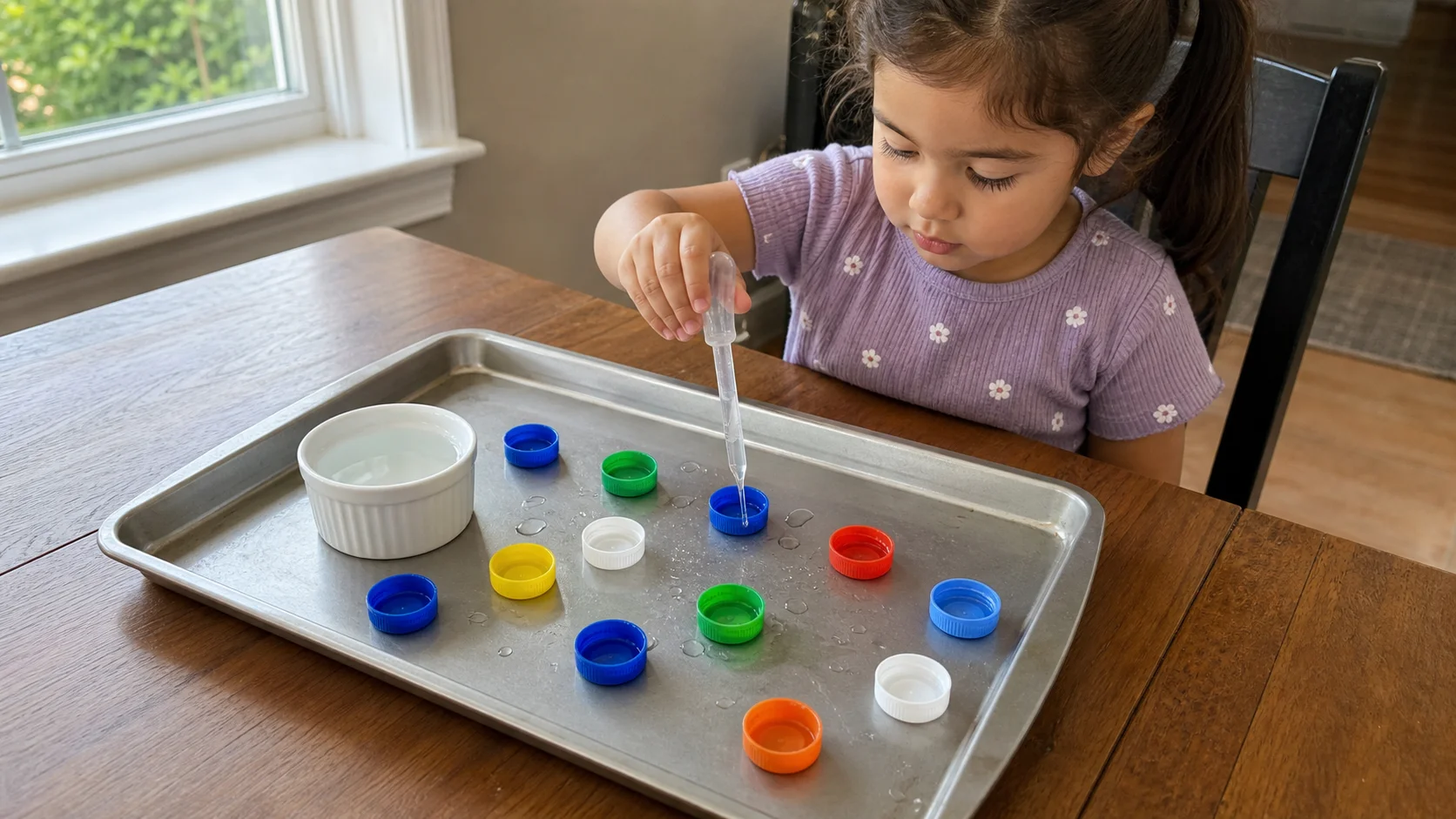
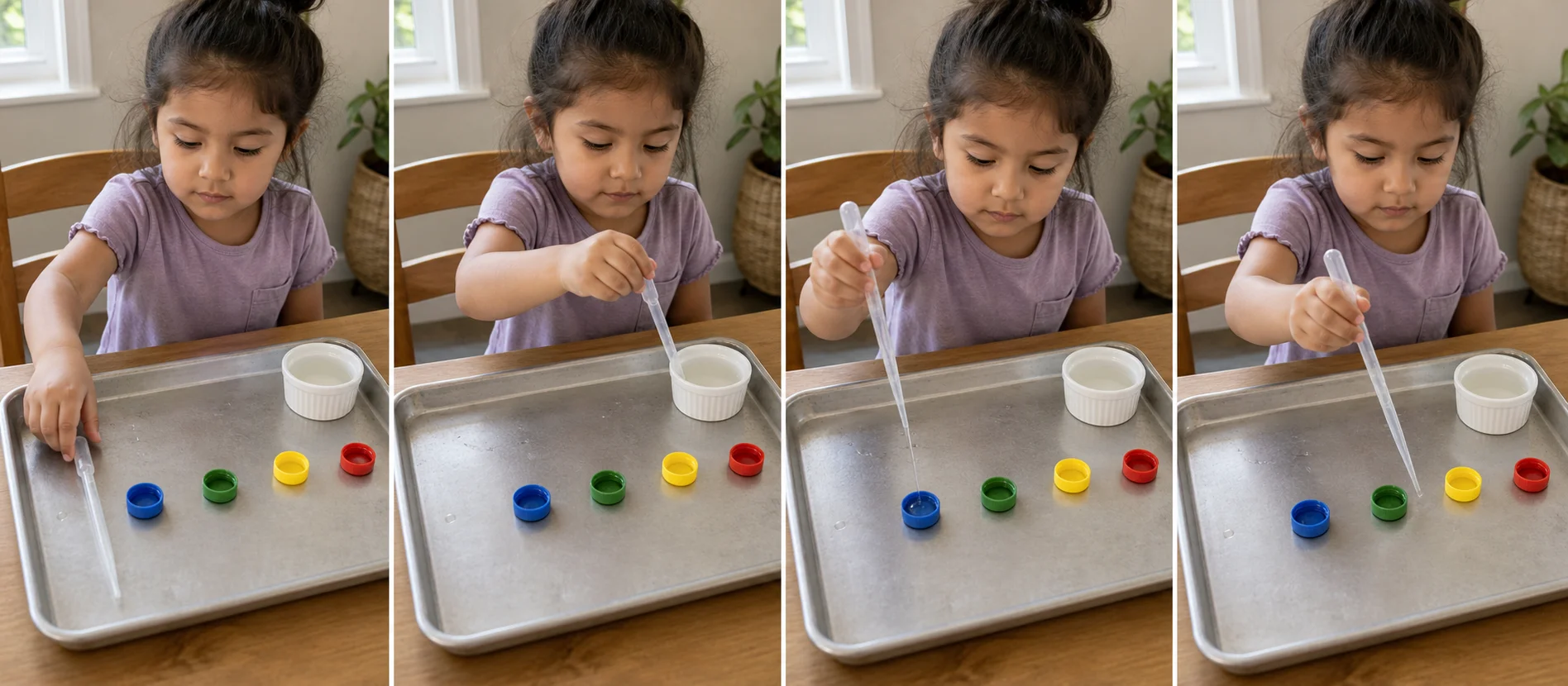
Make every drop count with a tray of tiny bottle cap targets. Your child loads a pipette, aims, and squeezes to fill each one, giving hand strength and hand-eye coordination a playful workout.


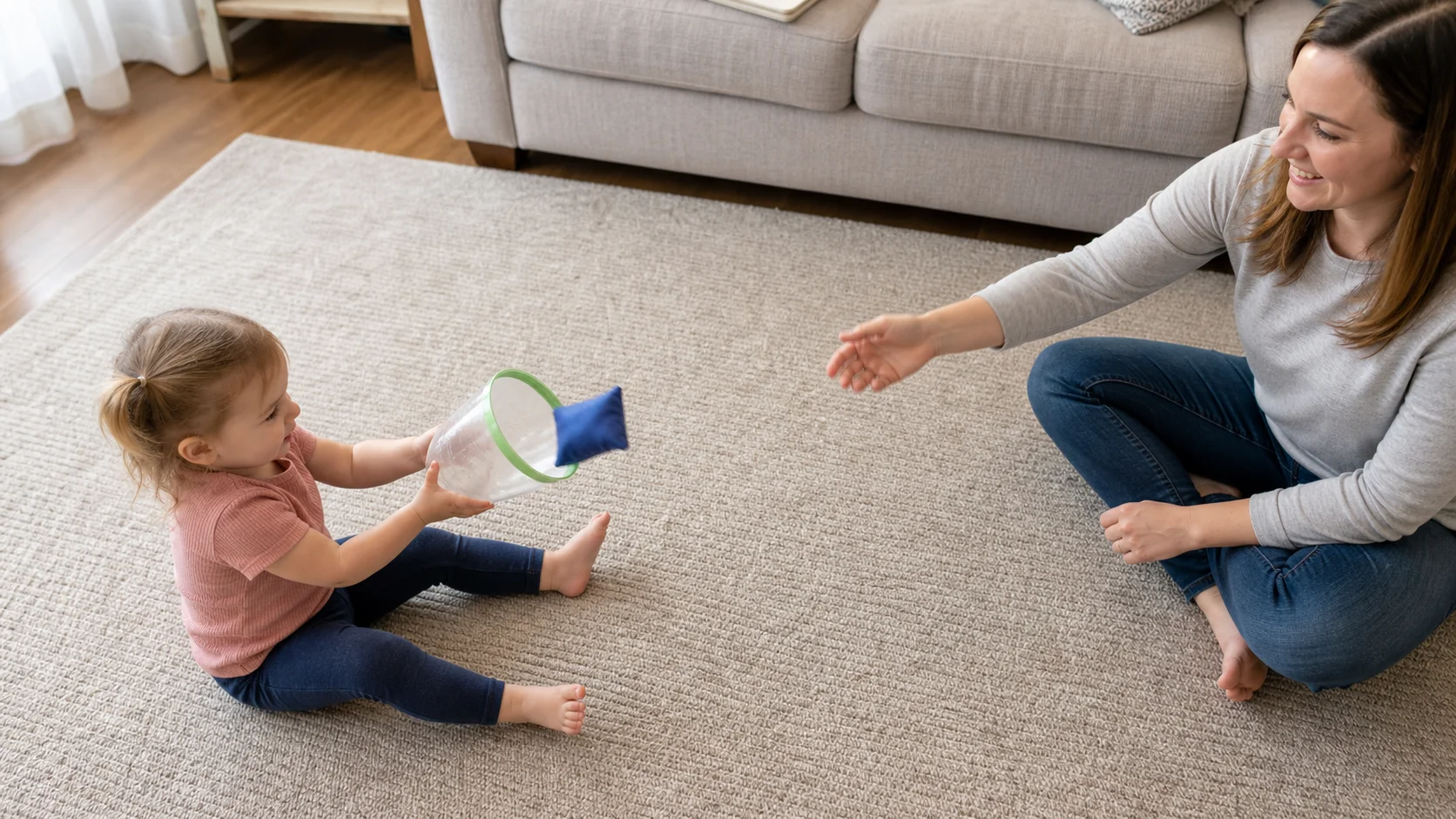
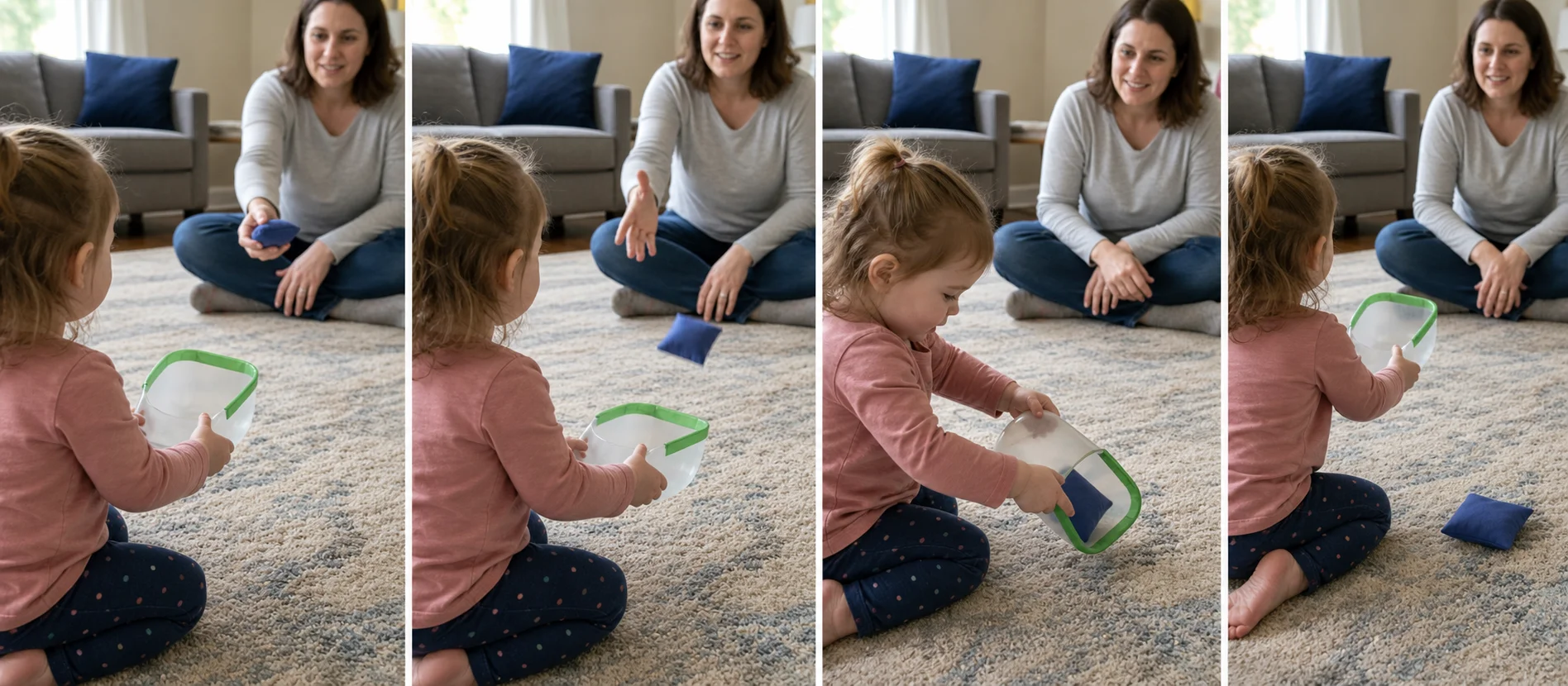
Turn a simple plastic container into a two-handed catching challenge! Sit close, gently toss a soft ball or beanbag, and watch your child track it and trap it, giving visual tracking and two-hand coordination a playful workout.

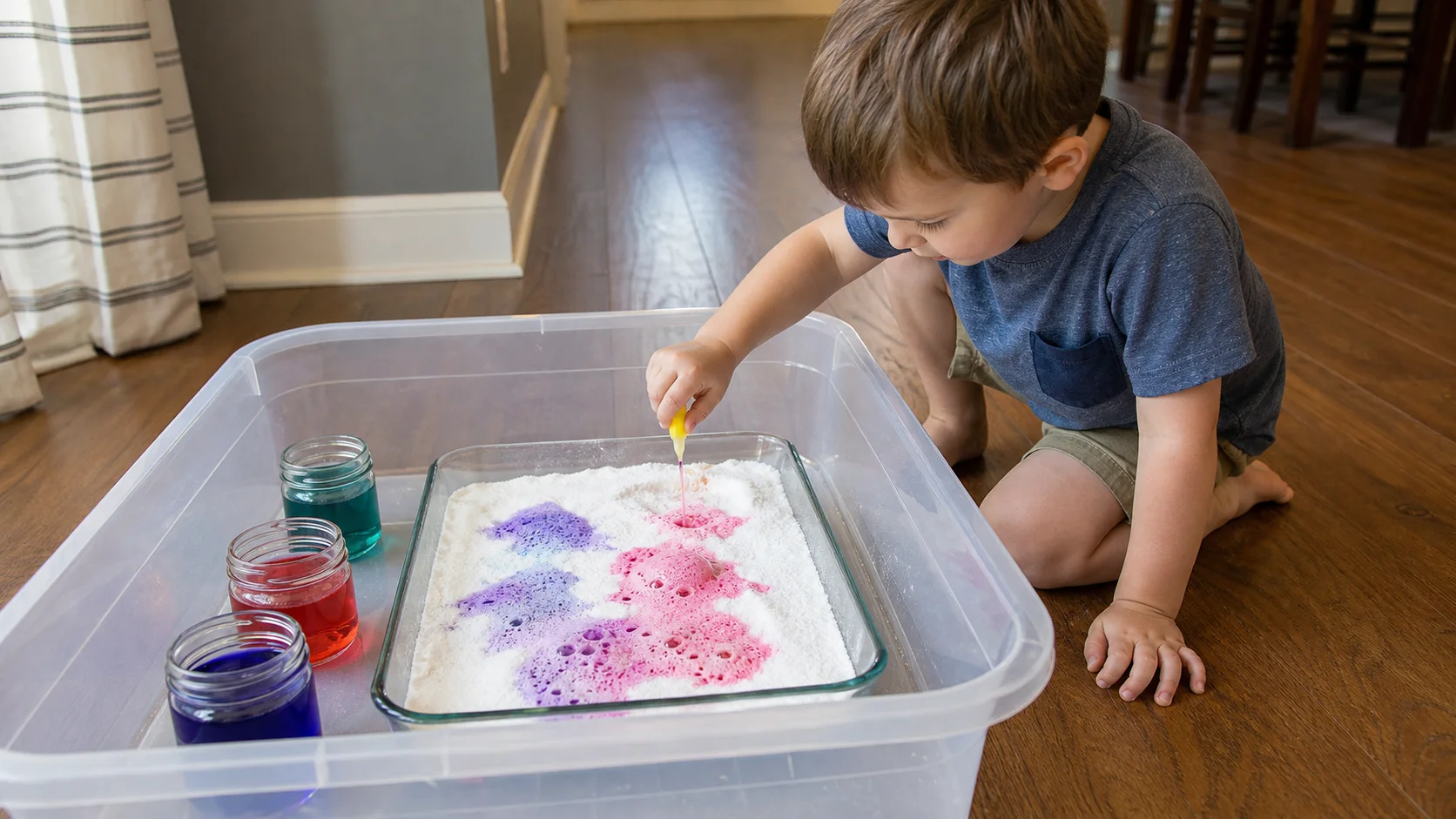
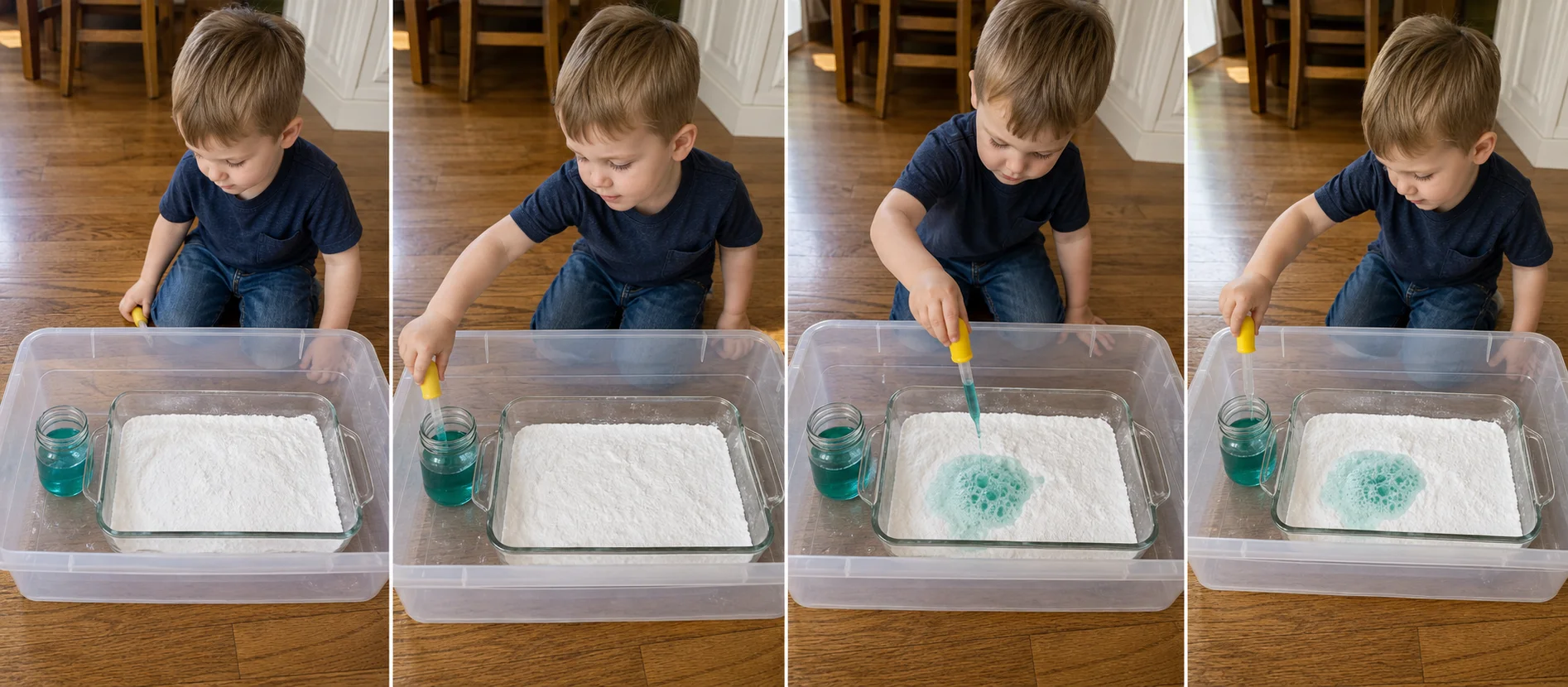
Turn every squeeze into a bubbling surprise! Your child fills a dropper with vinegar, aims at baking soda, and makes tiny fizzing eruptions while practicing hand control and cause and effect.


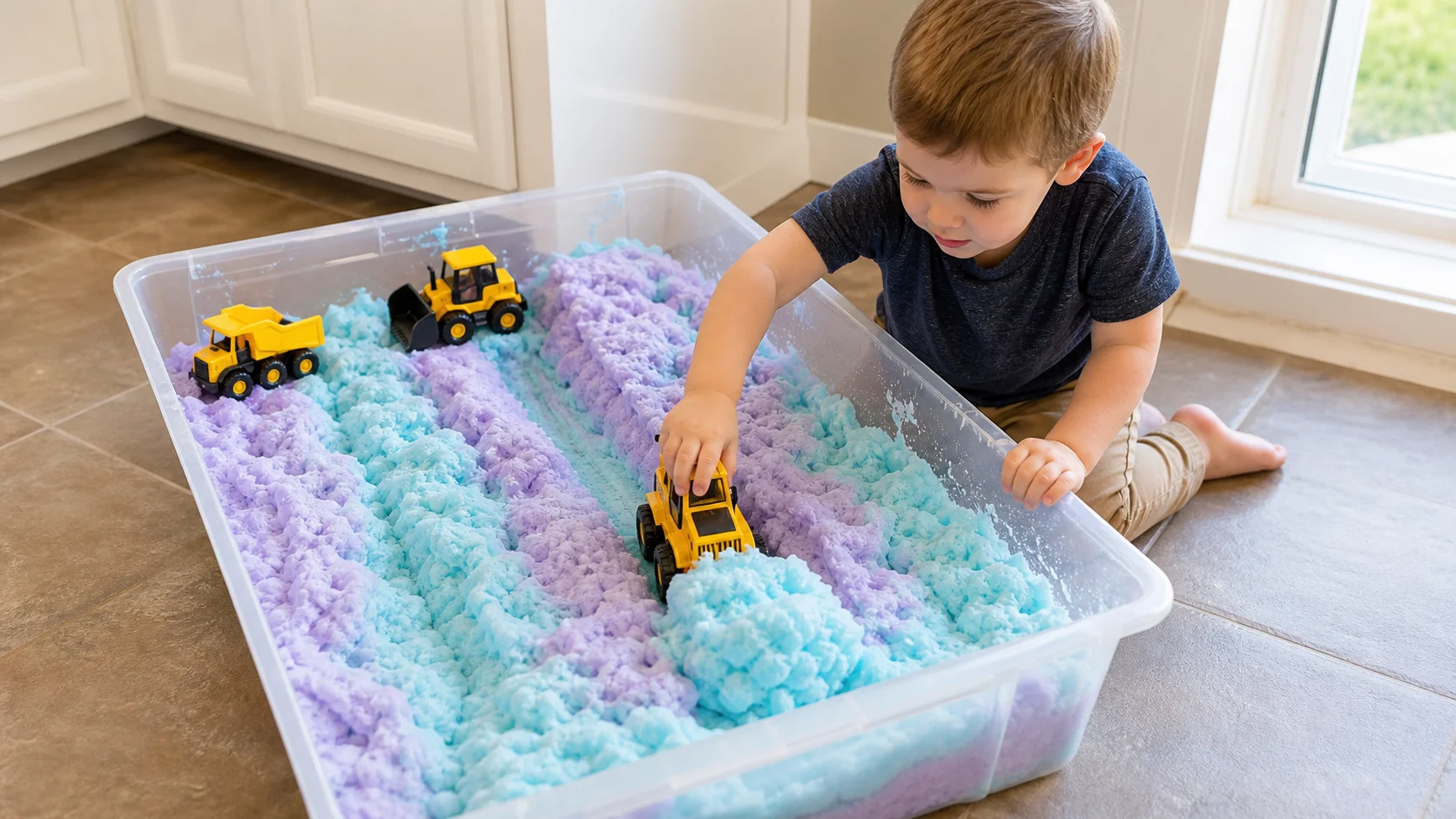
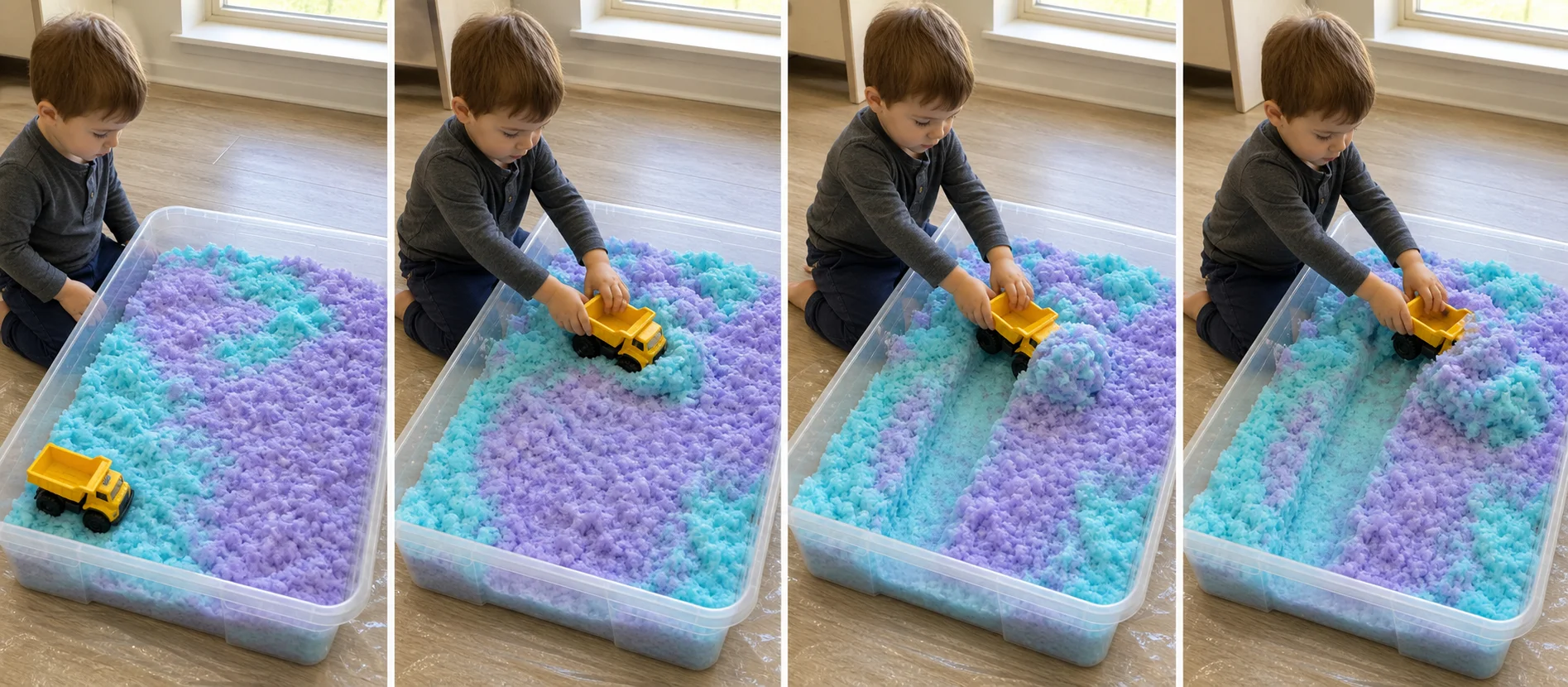
Turn soap and water into a foamy construction site! Your child drives toy trucks through fluffy bubbles, builds mounds, and makes new roads while exploring texture, controlling hand pressure, and planning where to drive next.


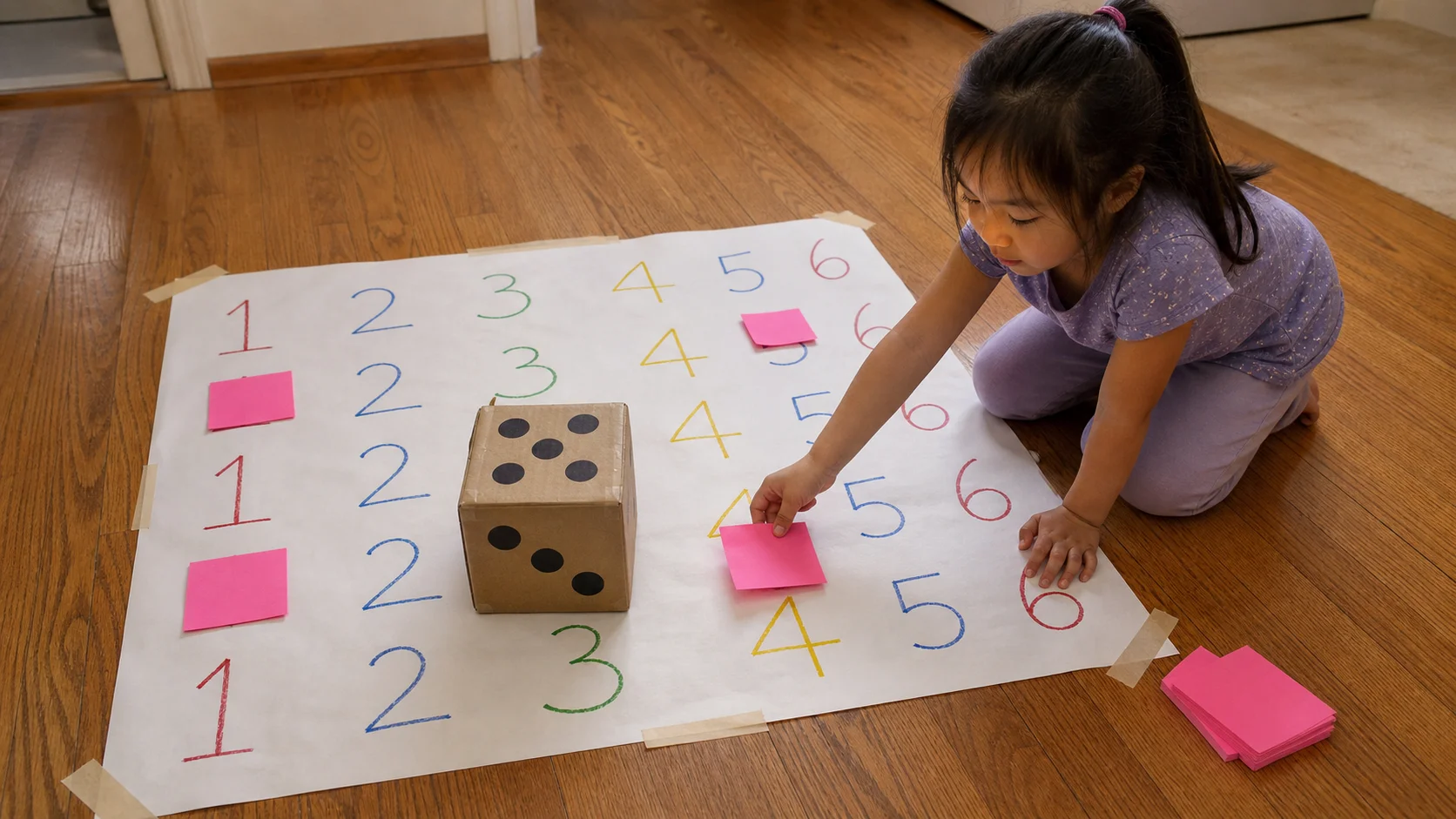
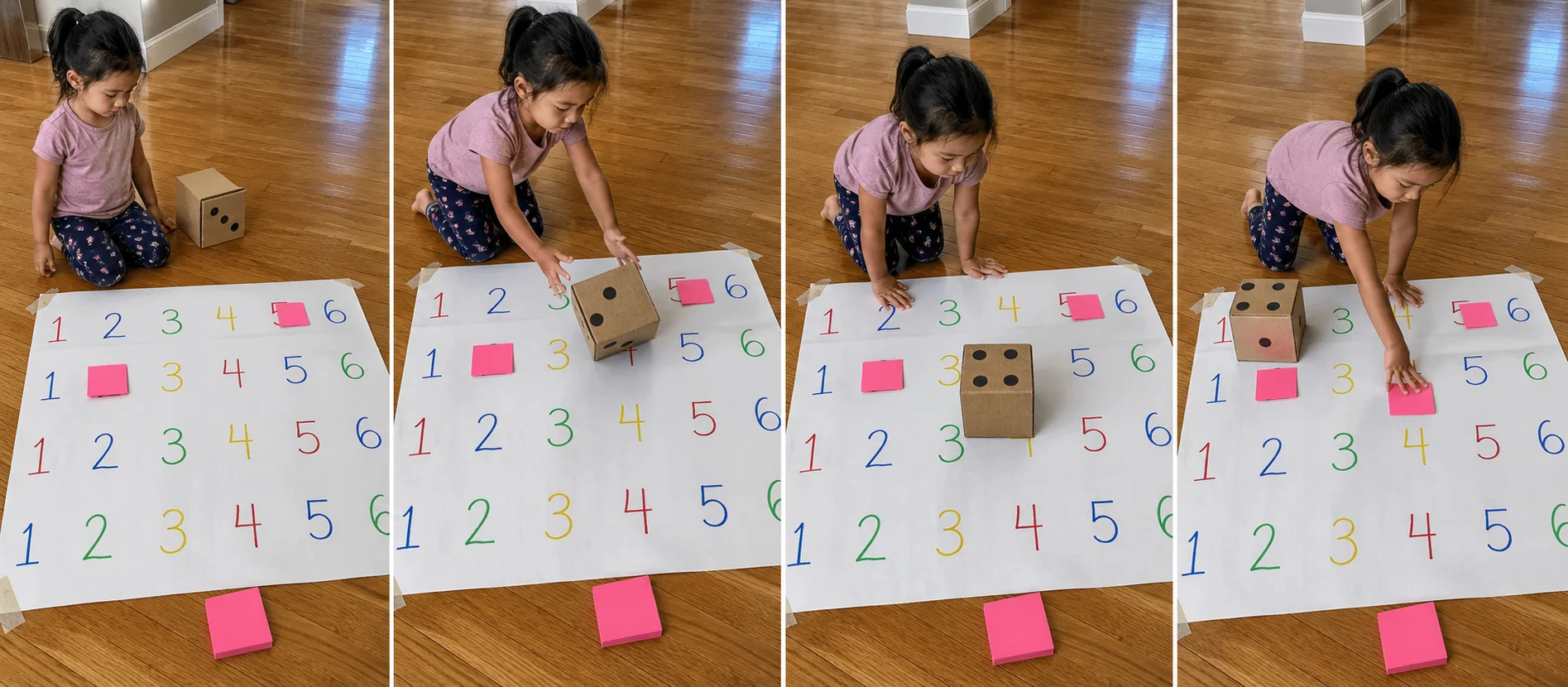
Turn a cardboard box into a giant rolling die! Your child rolls, counts the dots, finds the matching number, and covers it with a sticky note, turning early math into an active floor game.


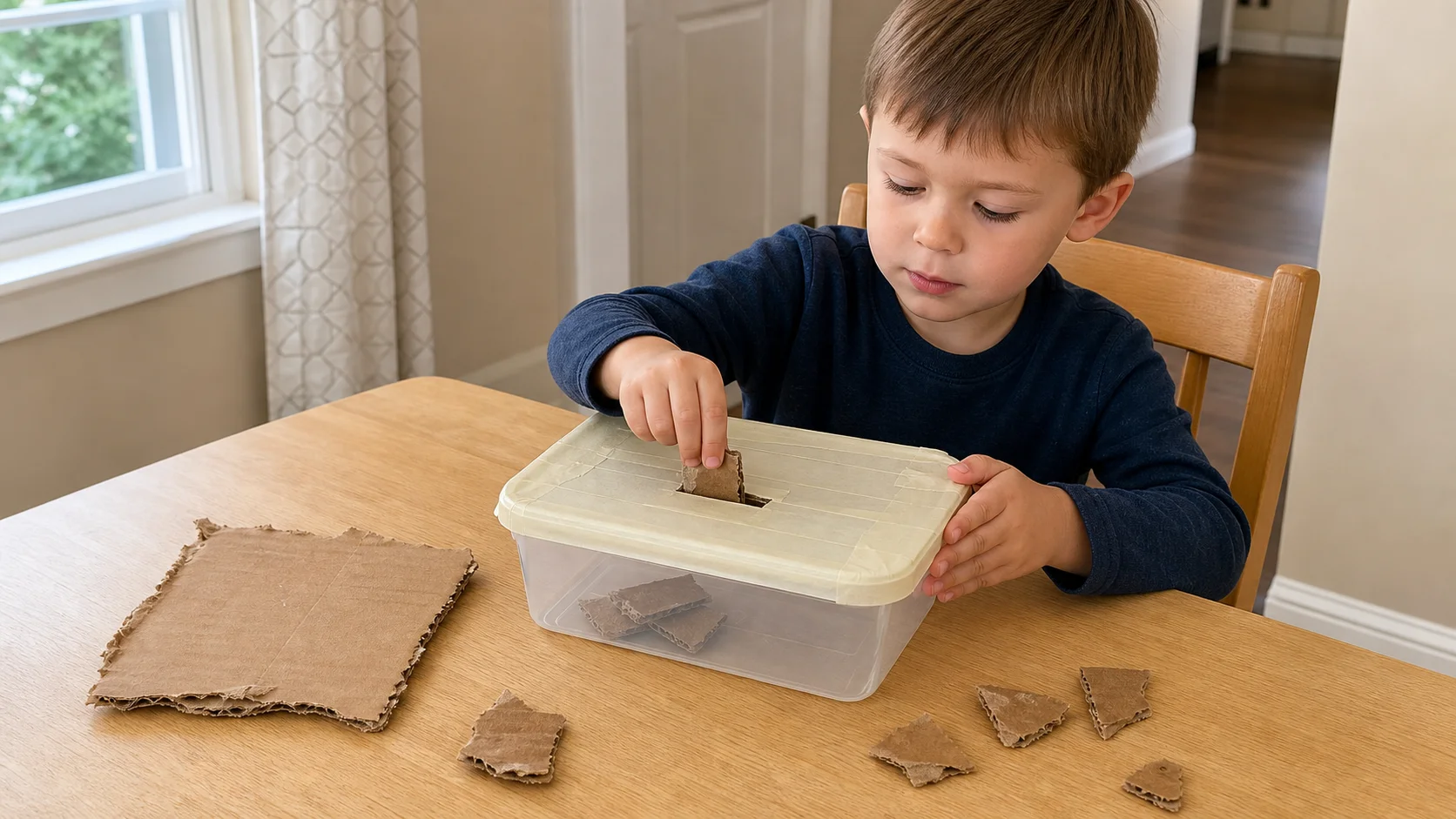
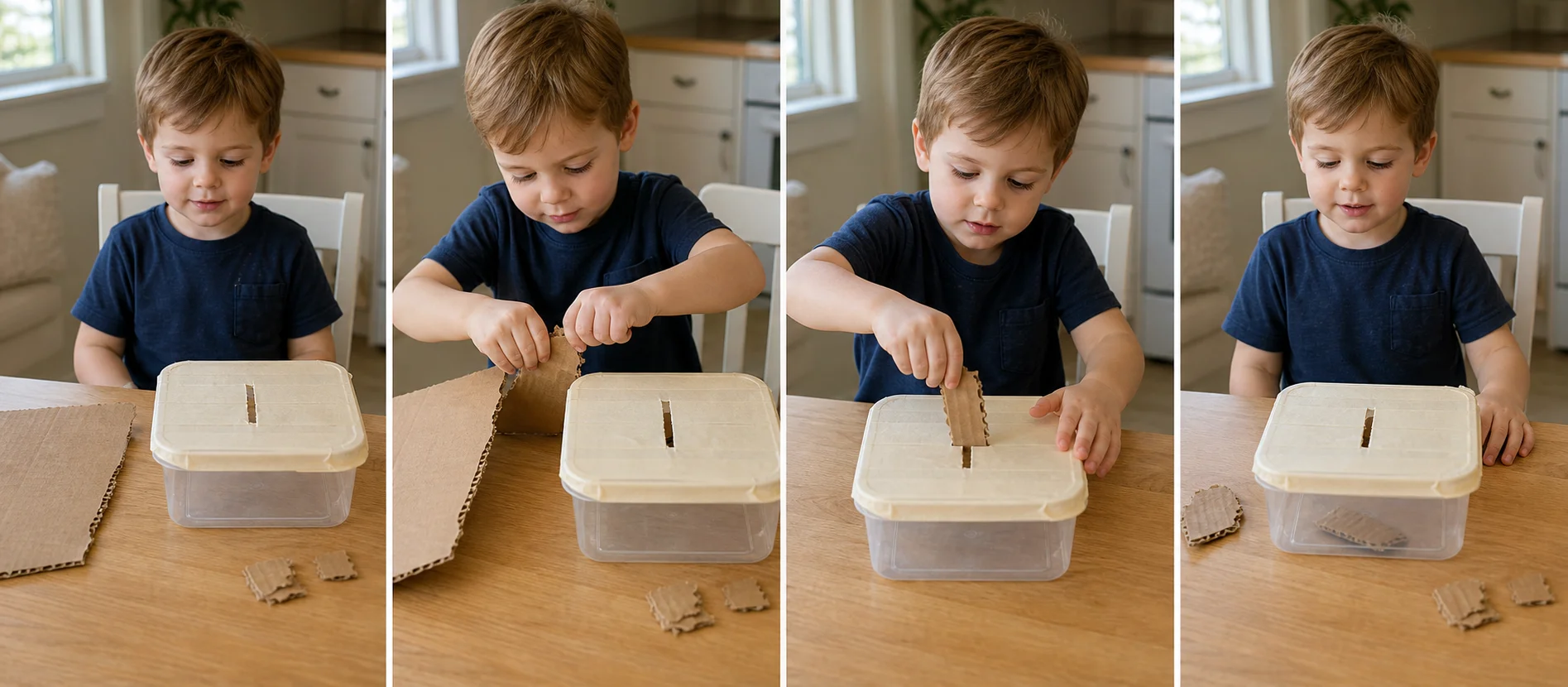
Rip, turn, push! Your child tears cardboard, finds the edge that fits, and presses each piece through a narrow slot for a satisfying test of finger strength and two-hand control.


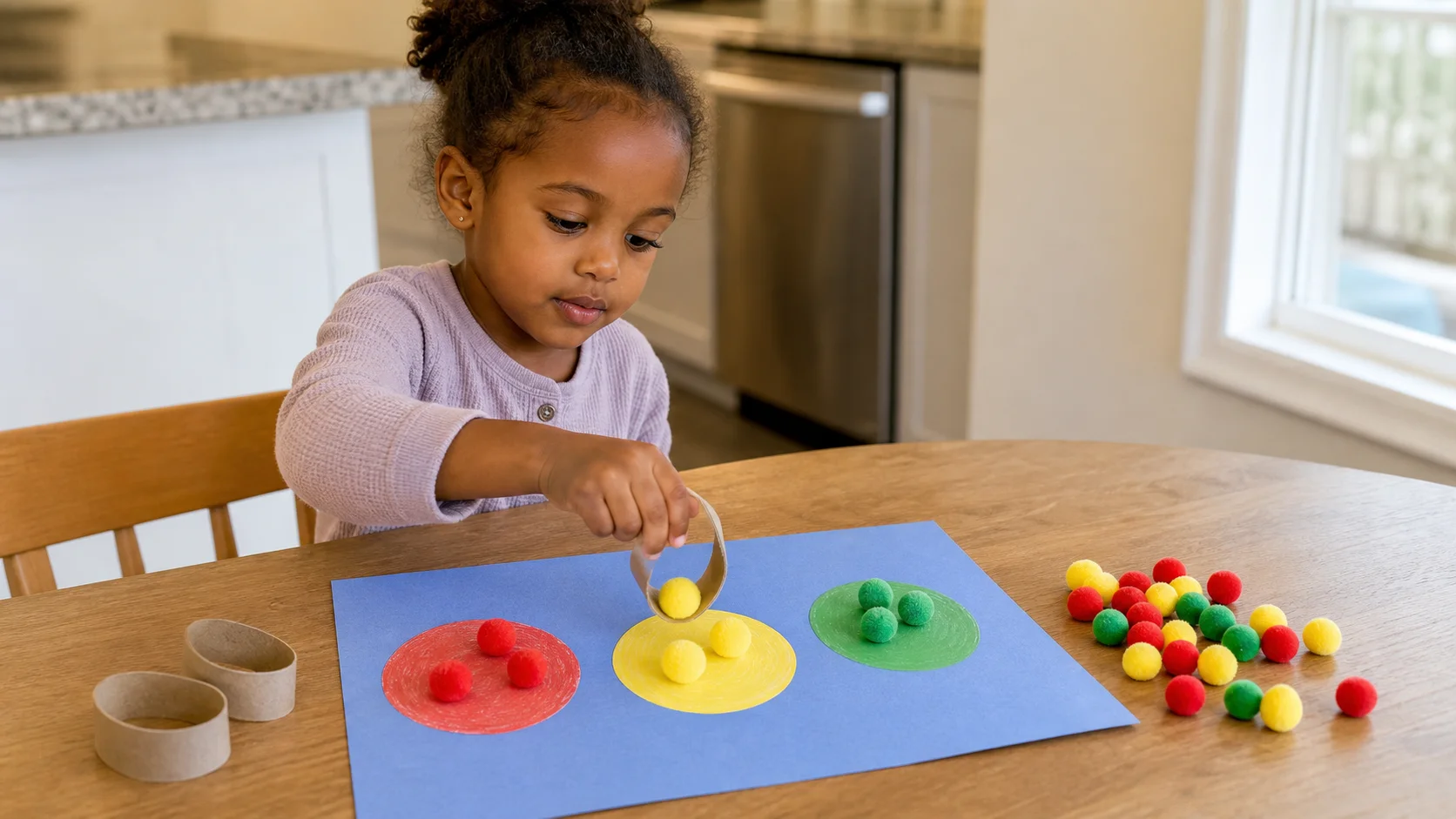
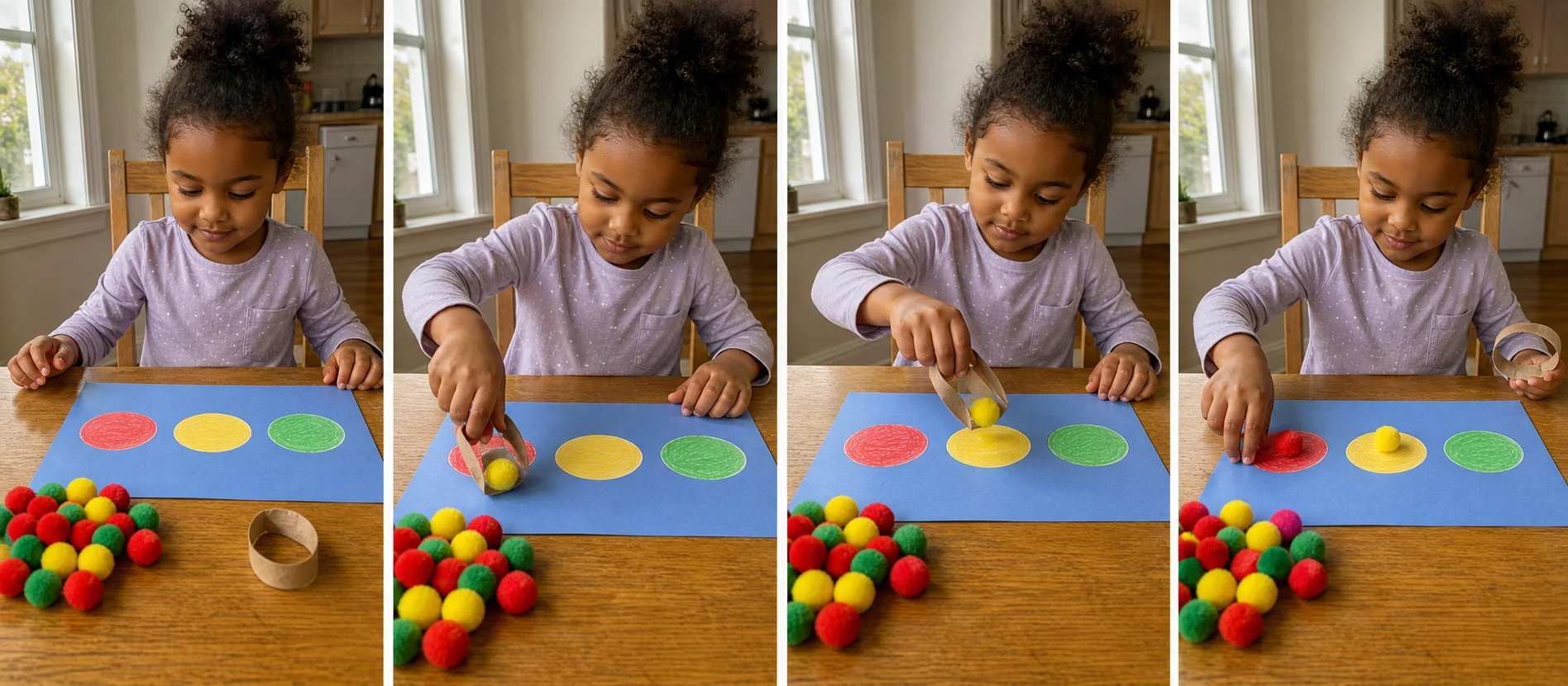
Can a cardboard ring work like tweezers? Your child squeezes it around a pom-pom, carries it to the matching circle, and drops it, turning color sorting into a satisfying finger-strength challenge.


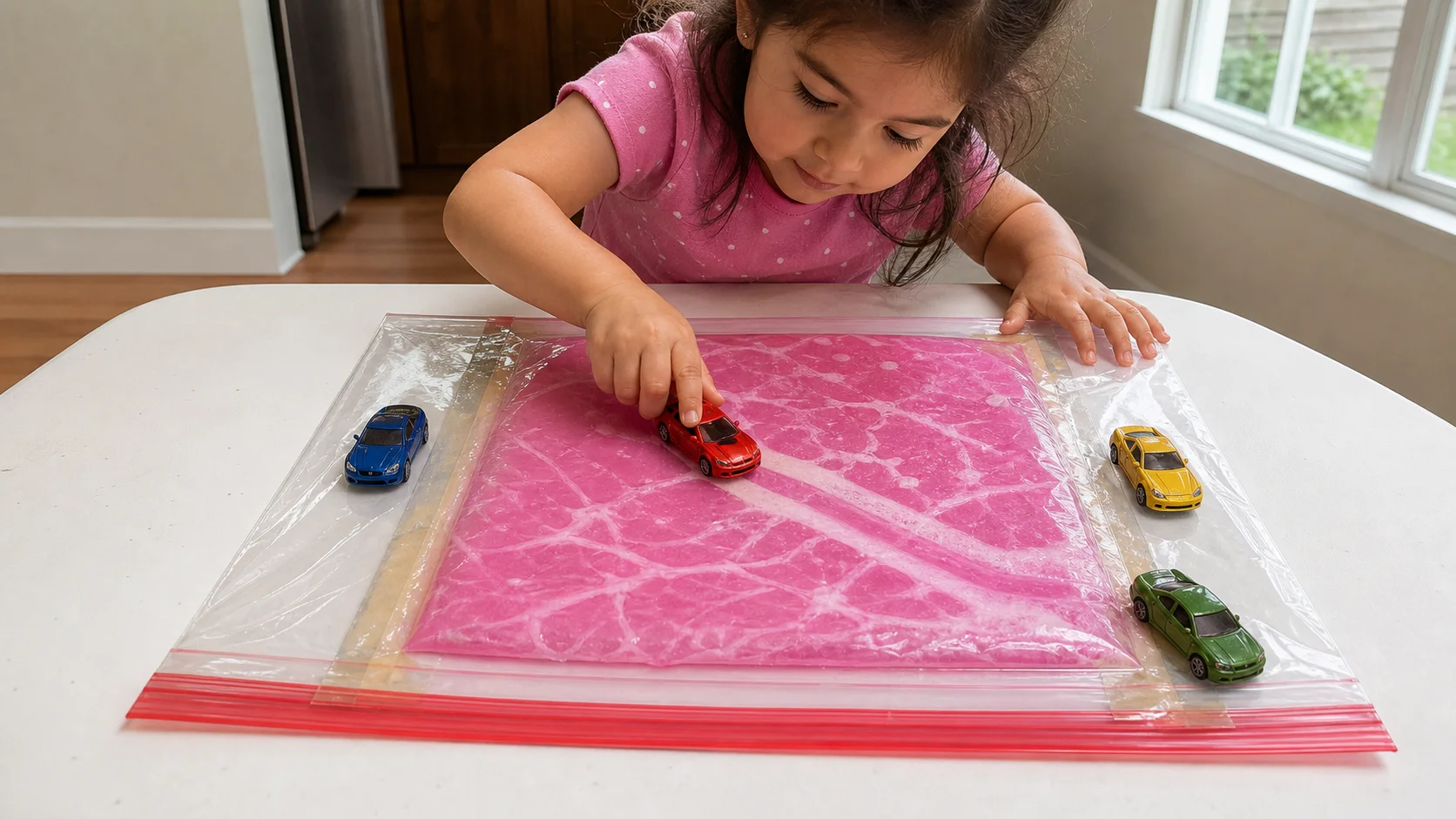
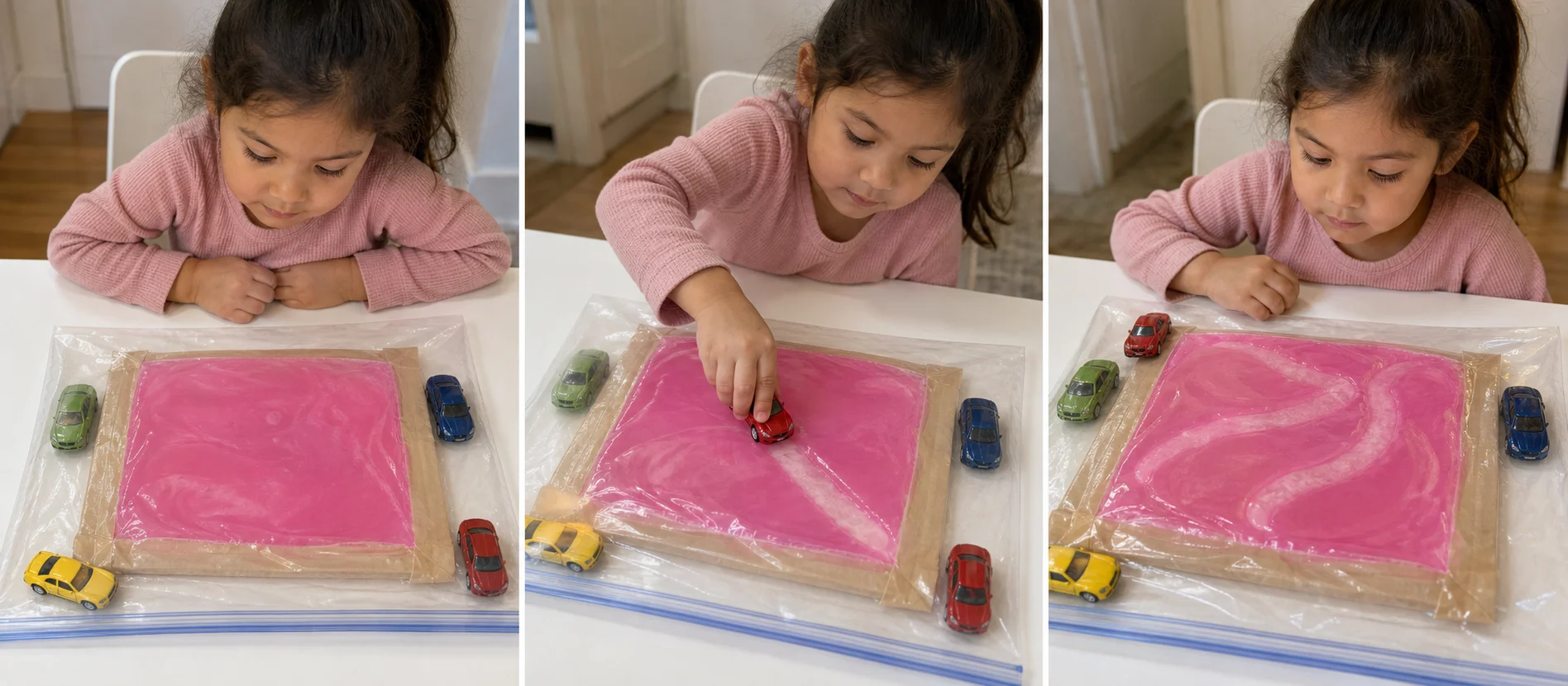
Toy cars glide over a sealed soap bag, leaving visible roads your child can park, trace, and make again.


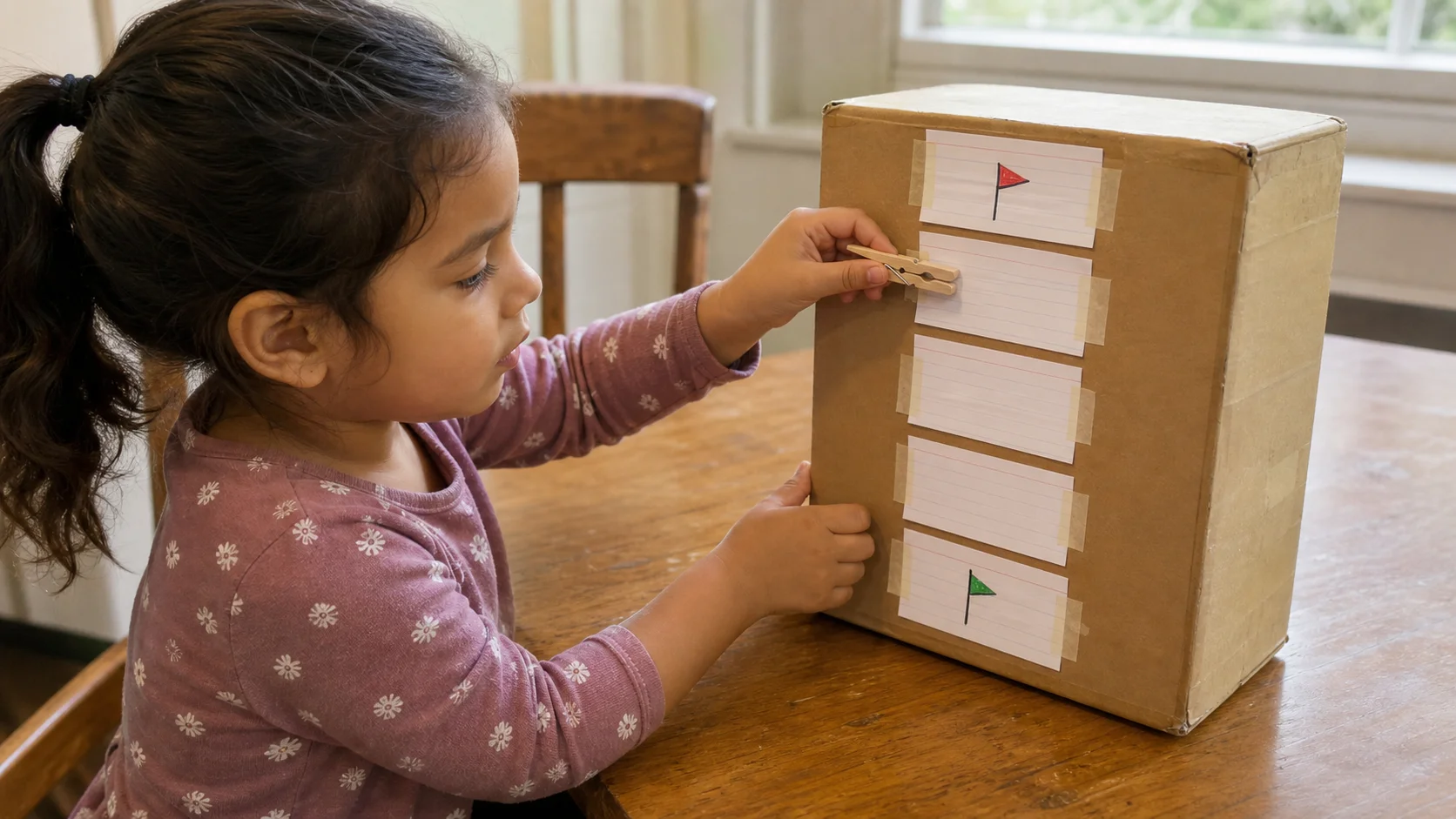
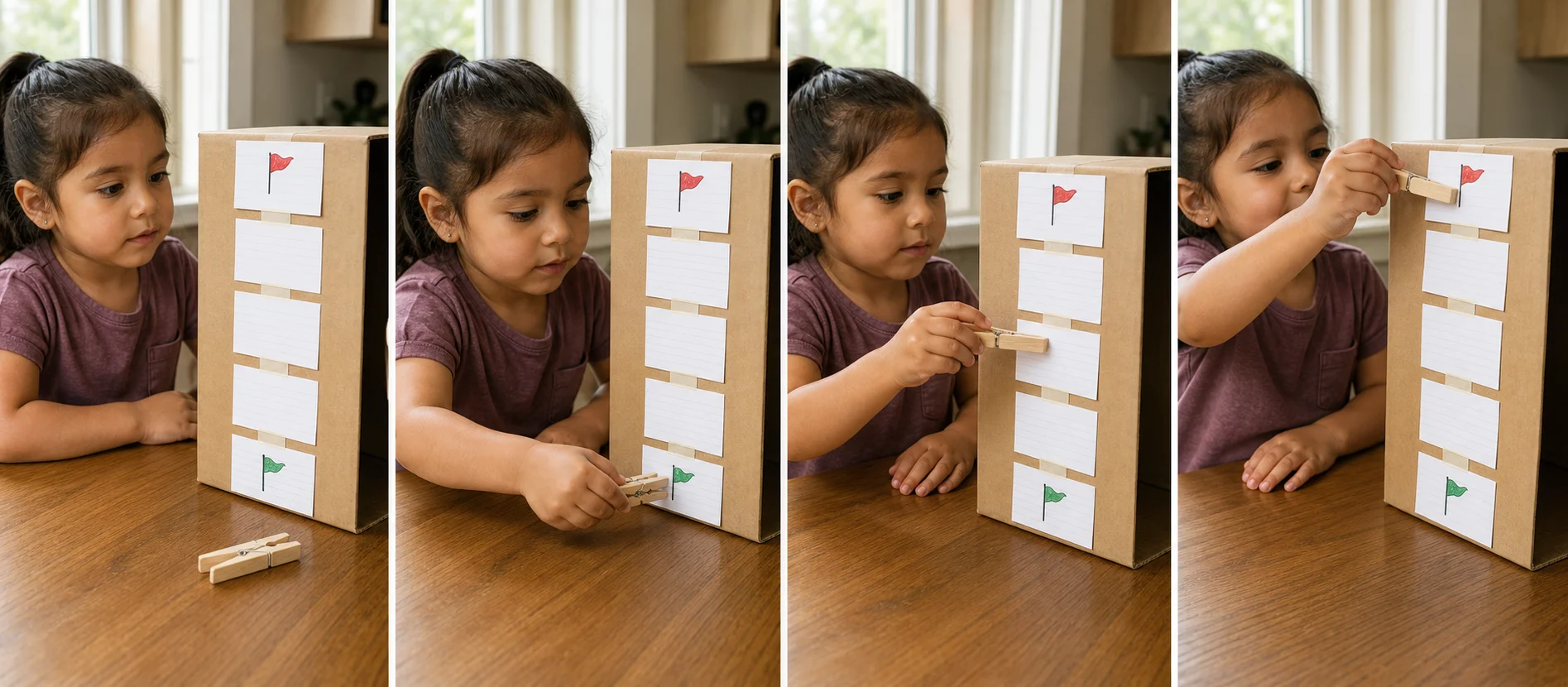
Build a tiny card ladder on a shoe box and let one clothespin climb from start flag to finish flag.


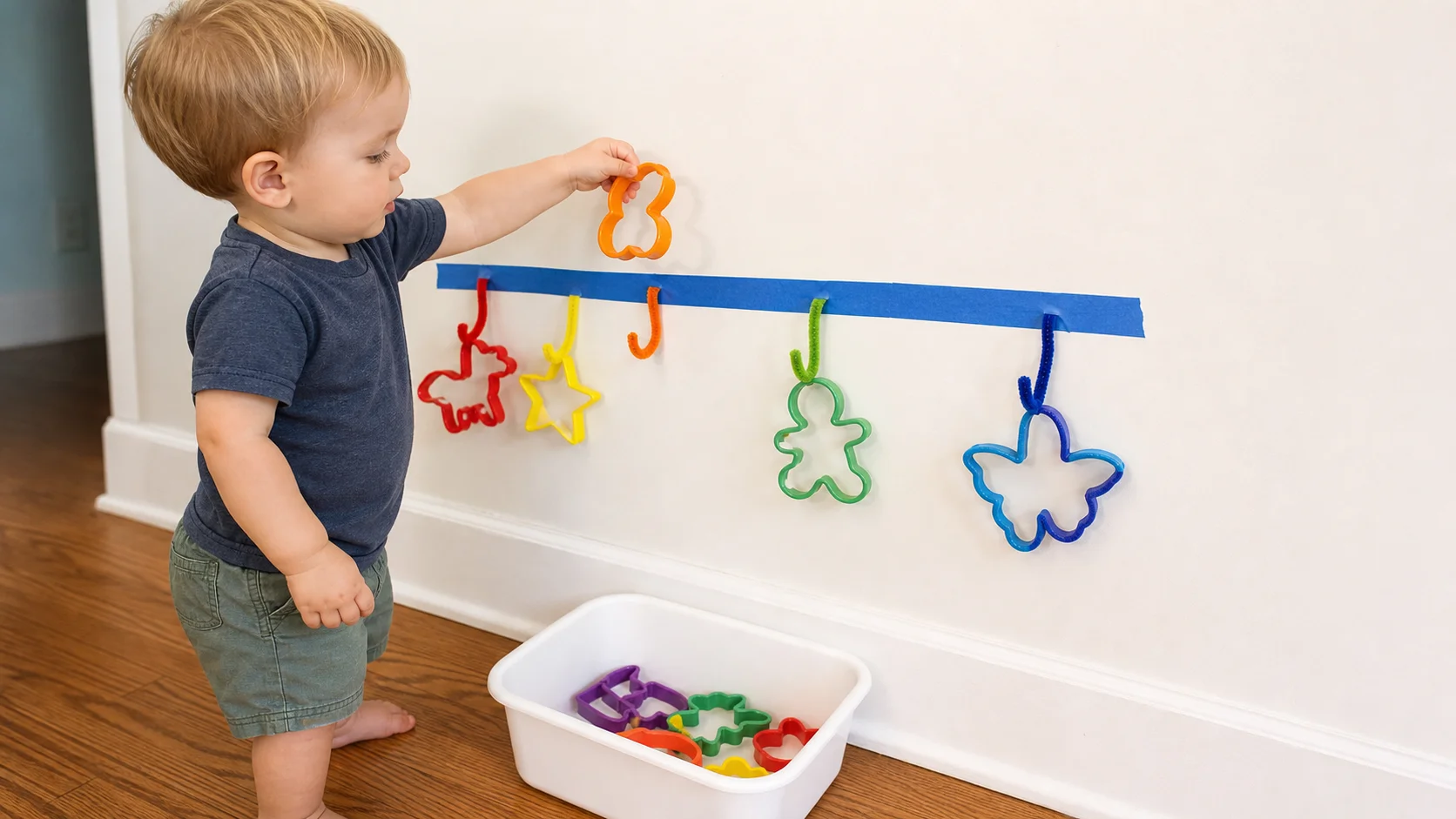
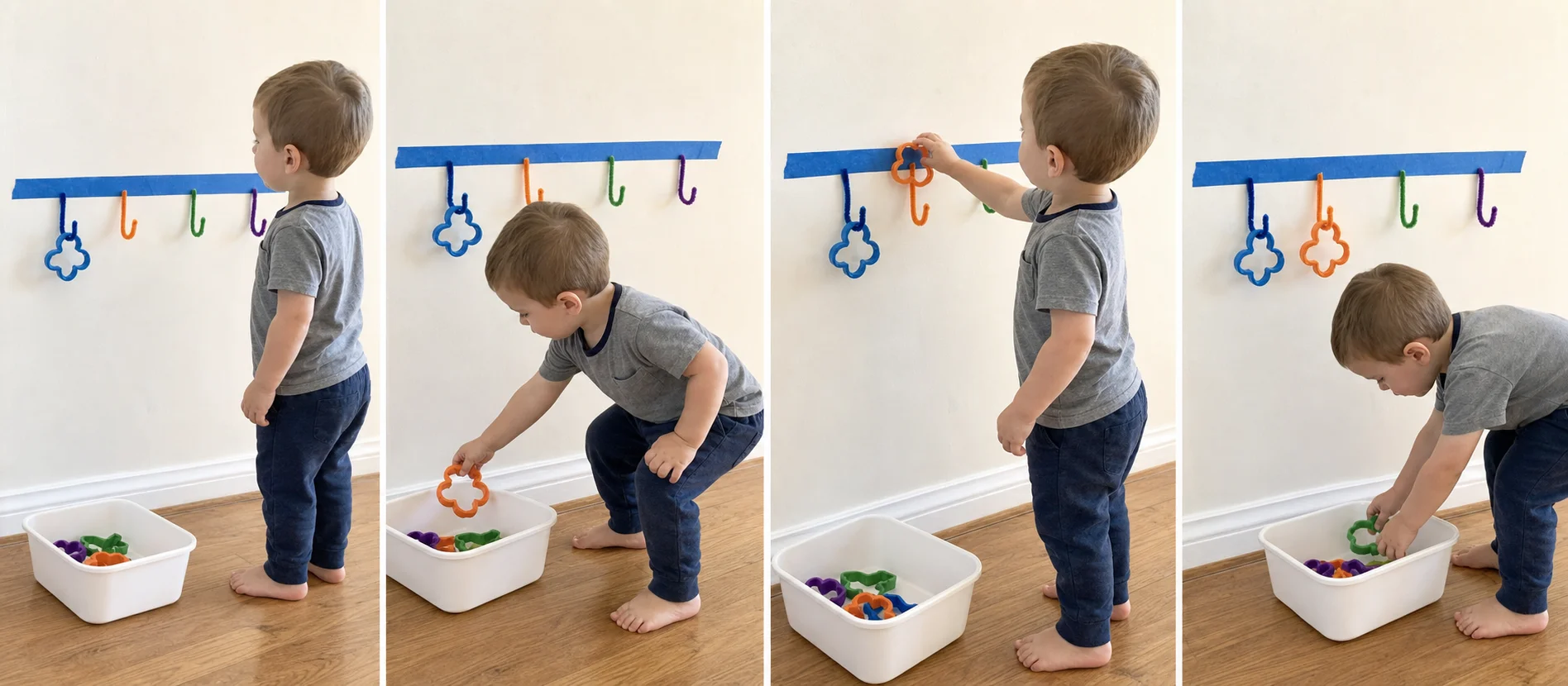
Cookie cutters are not just for the kitchen! Your toddler matches each colorful cutter to a pipe-cleaner hook, hangs it up, and takes it down, building color matching and careful hand control with every turn.


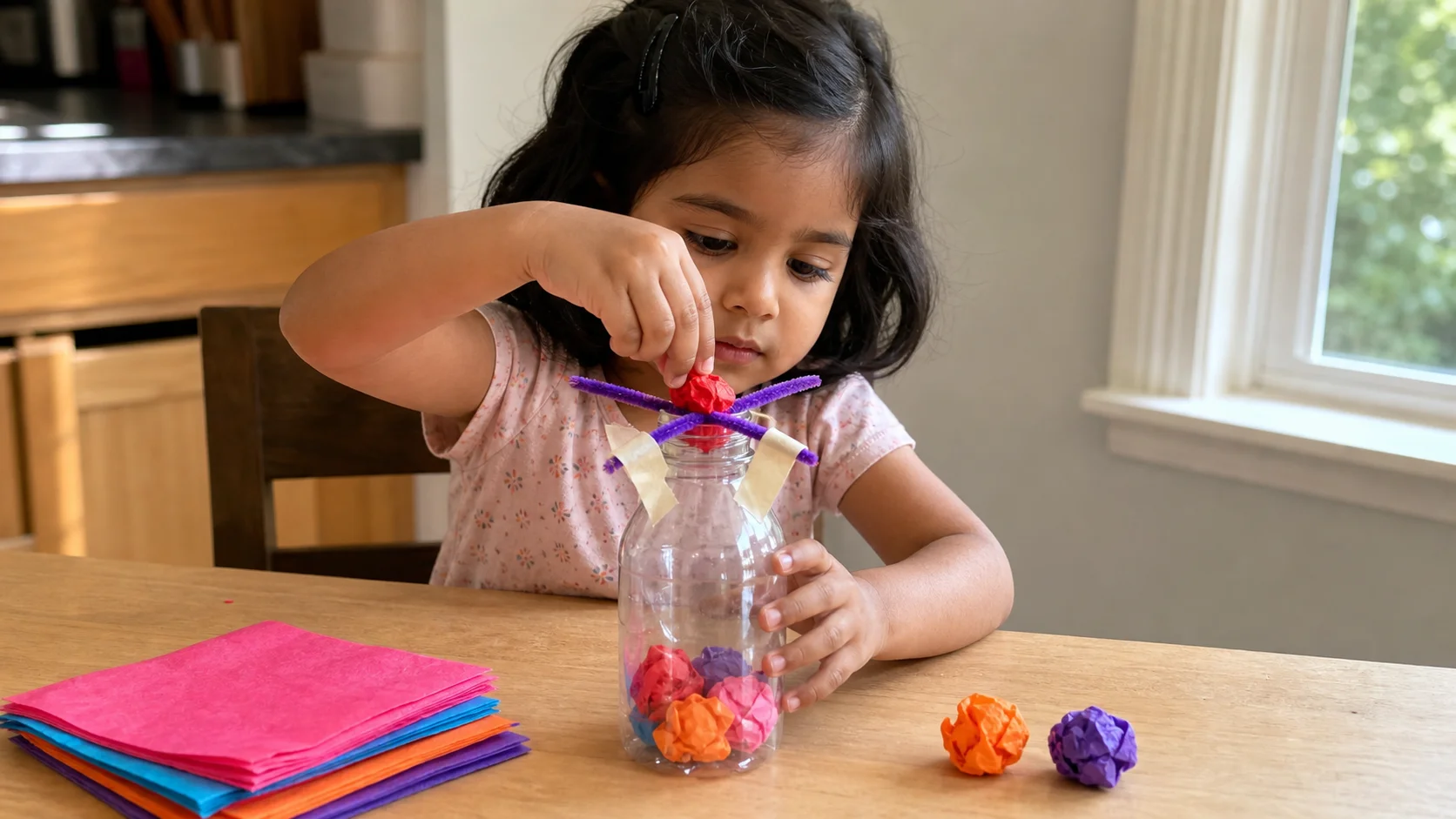
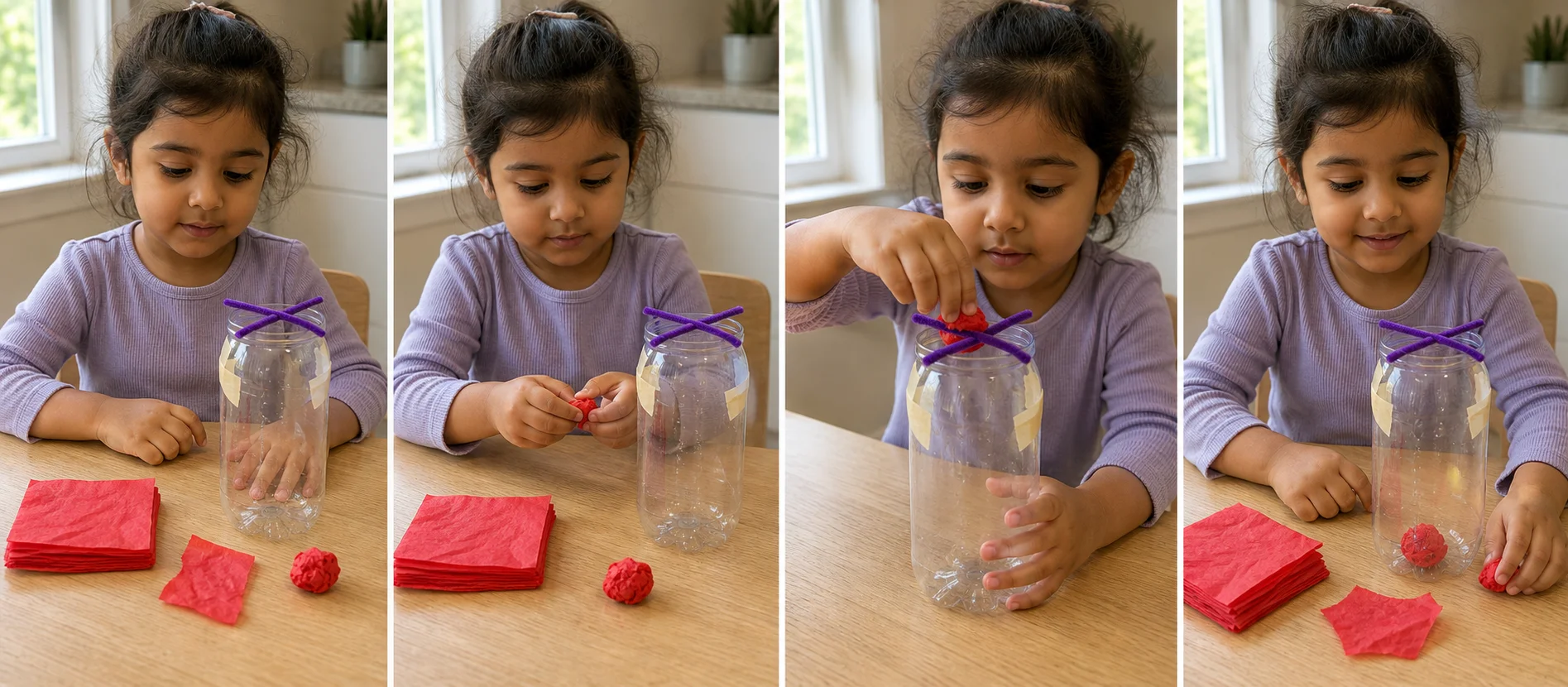
Tissue paper, pipe cleaners, and a bottle make a quiet posting game for finger strength.


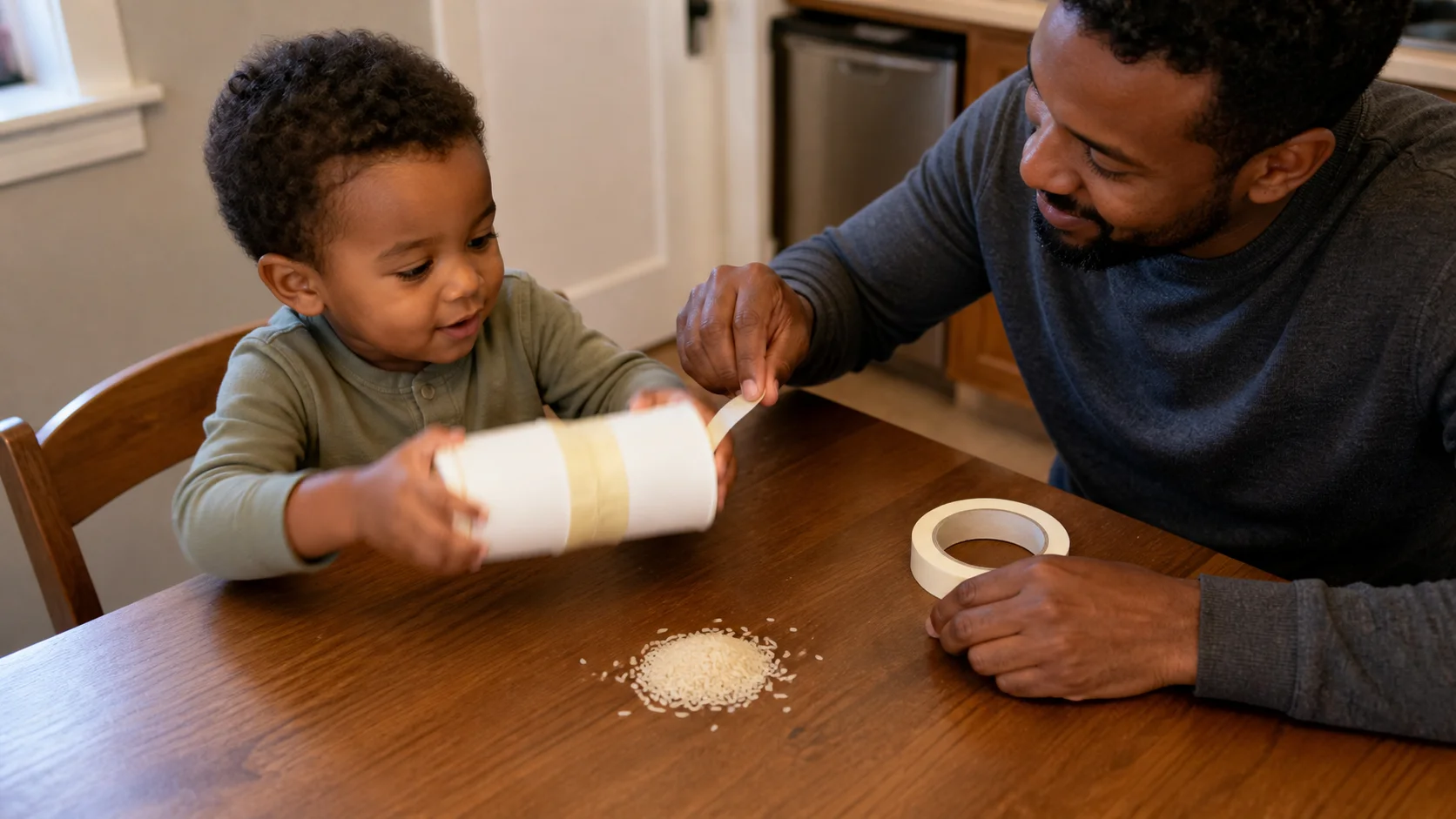
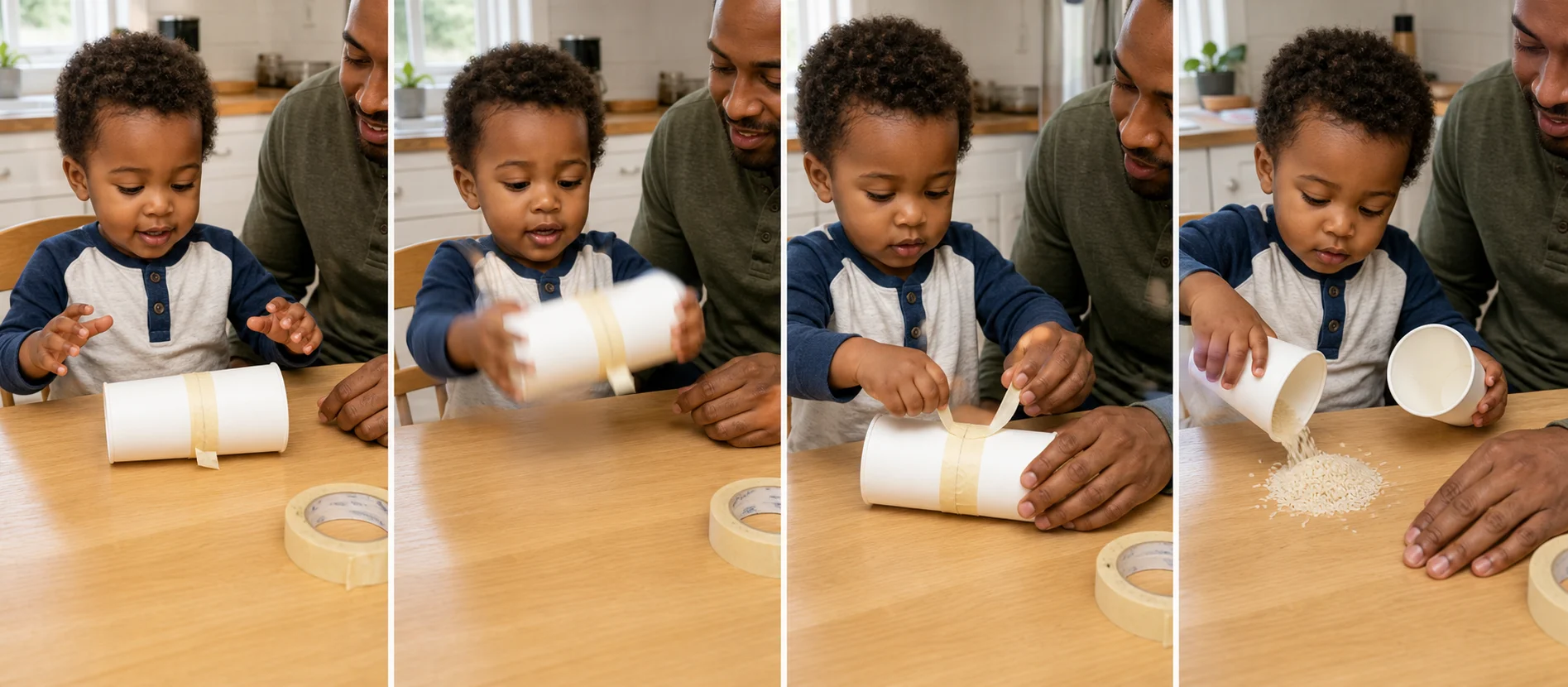
What's making all that noise inside the cup? Let your child shake a homemade cup rattle, peel off the tape, and dump out the beans or rice for a satisfying cause-and-effect game that builds two-hand coordination.


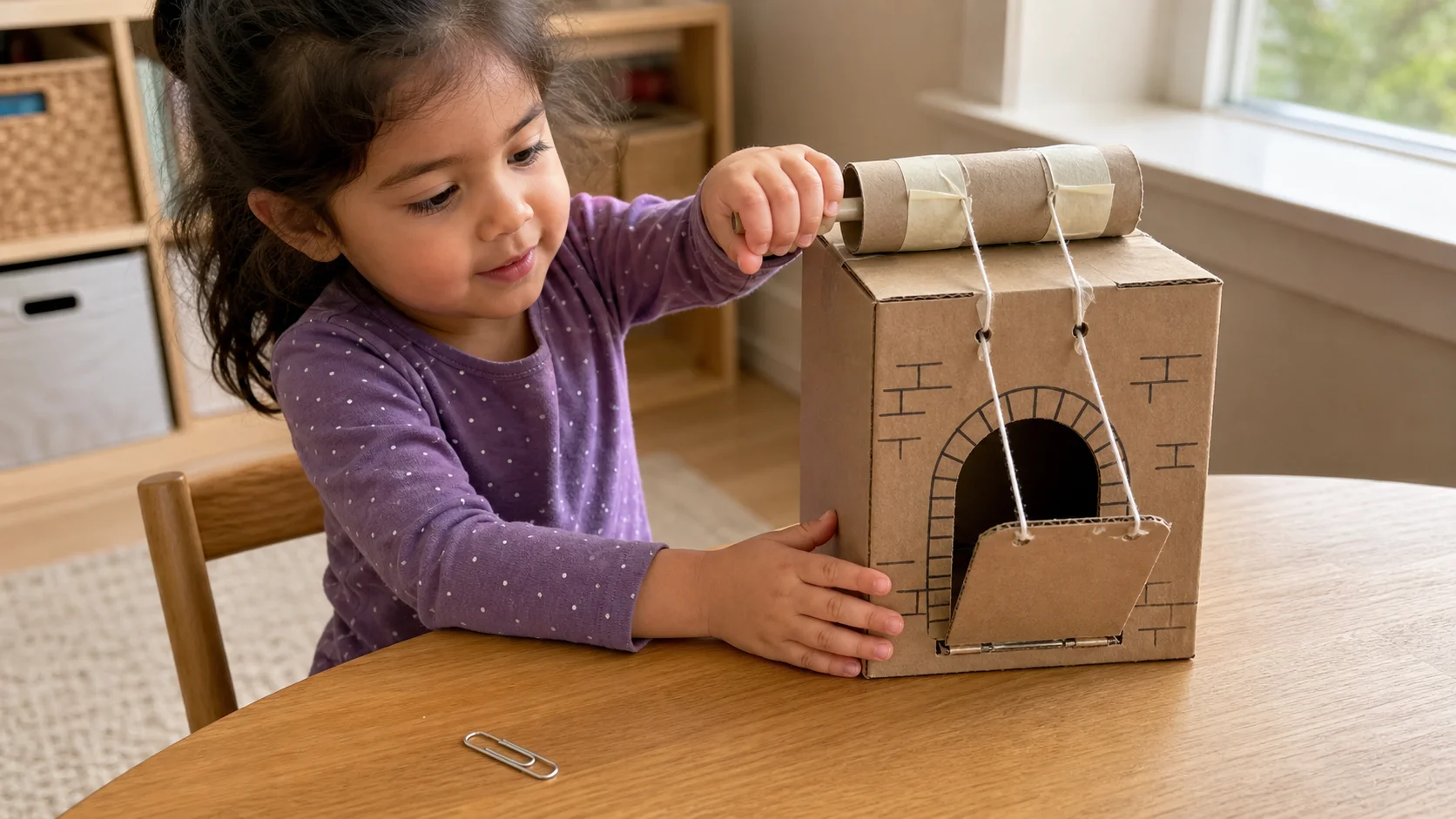
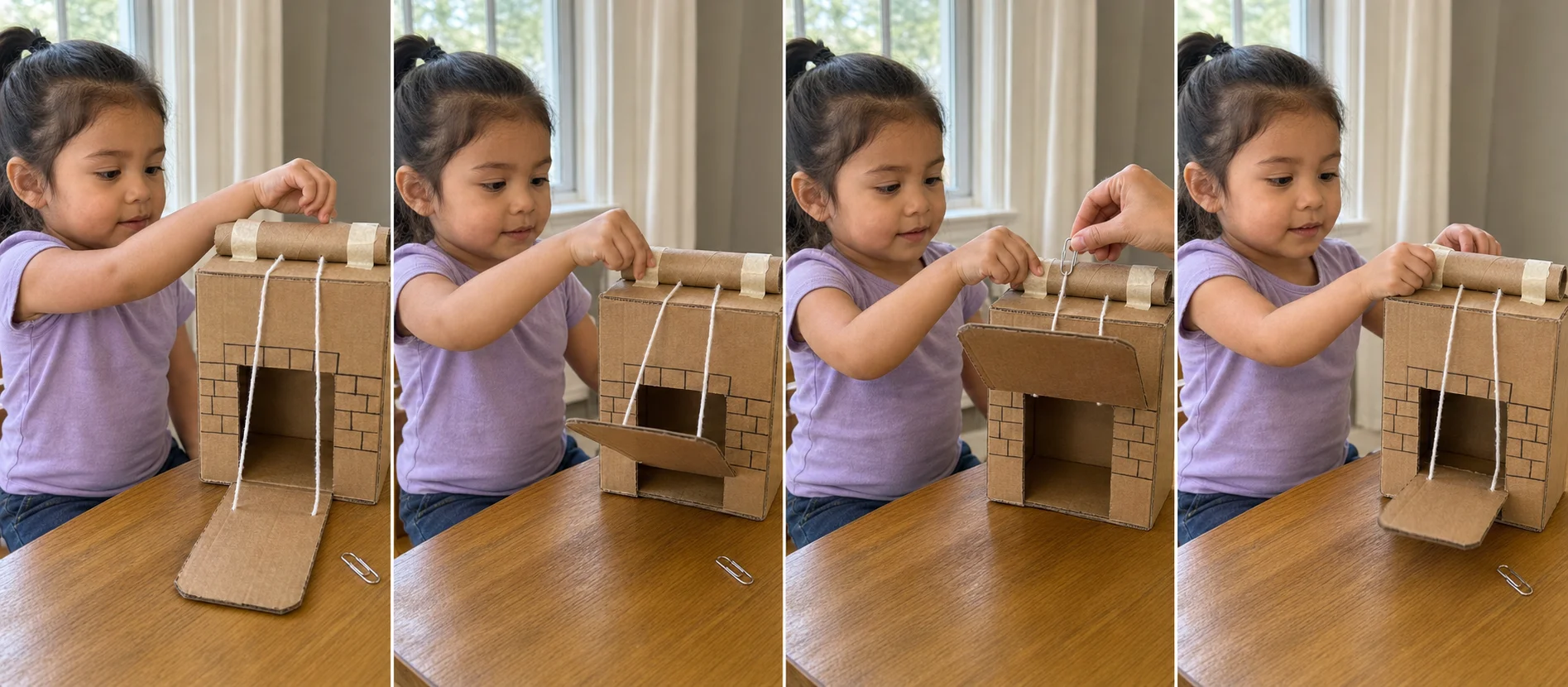
Turn a small cardboard box into a drawbridge your child can lift, clip, lower, and try again.


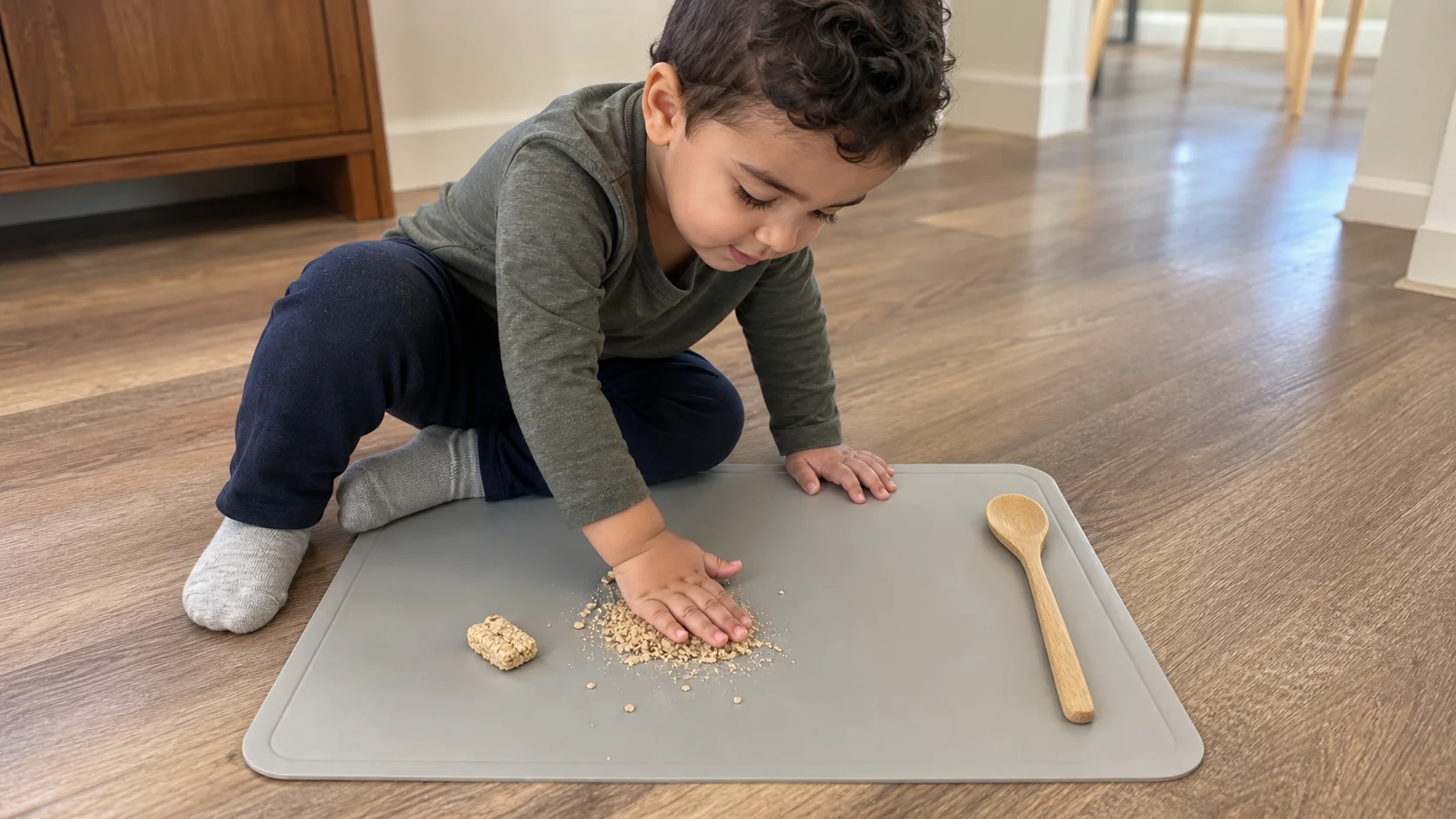
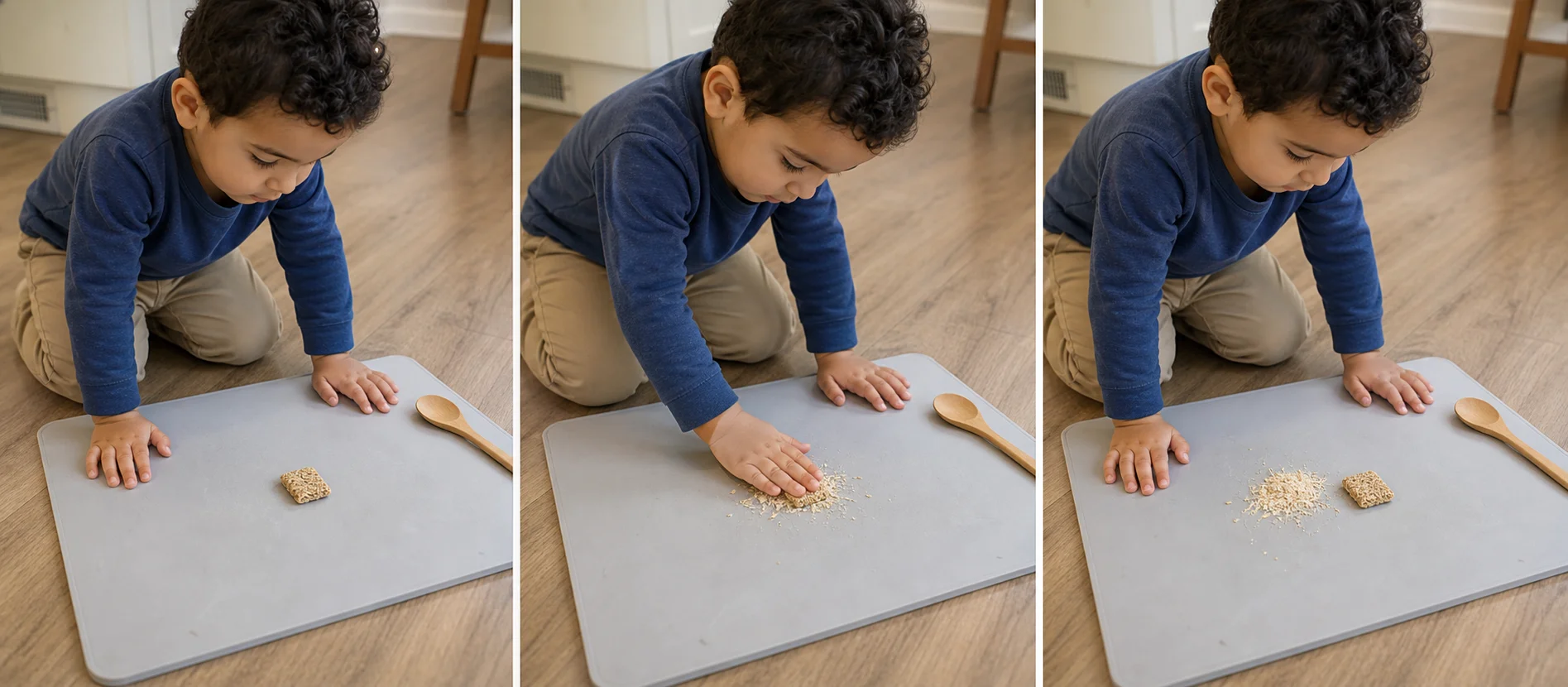
Ready for messy play without the wet, sticky mess? Let your child press, pinch, and crush dry cereal into crumbs for a satisfying sensory game that builds steady hand pressure and comfort with dry textures.


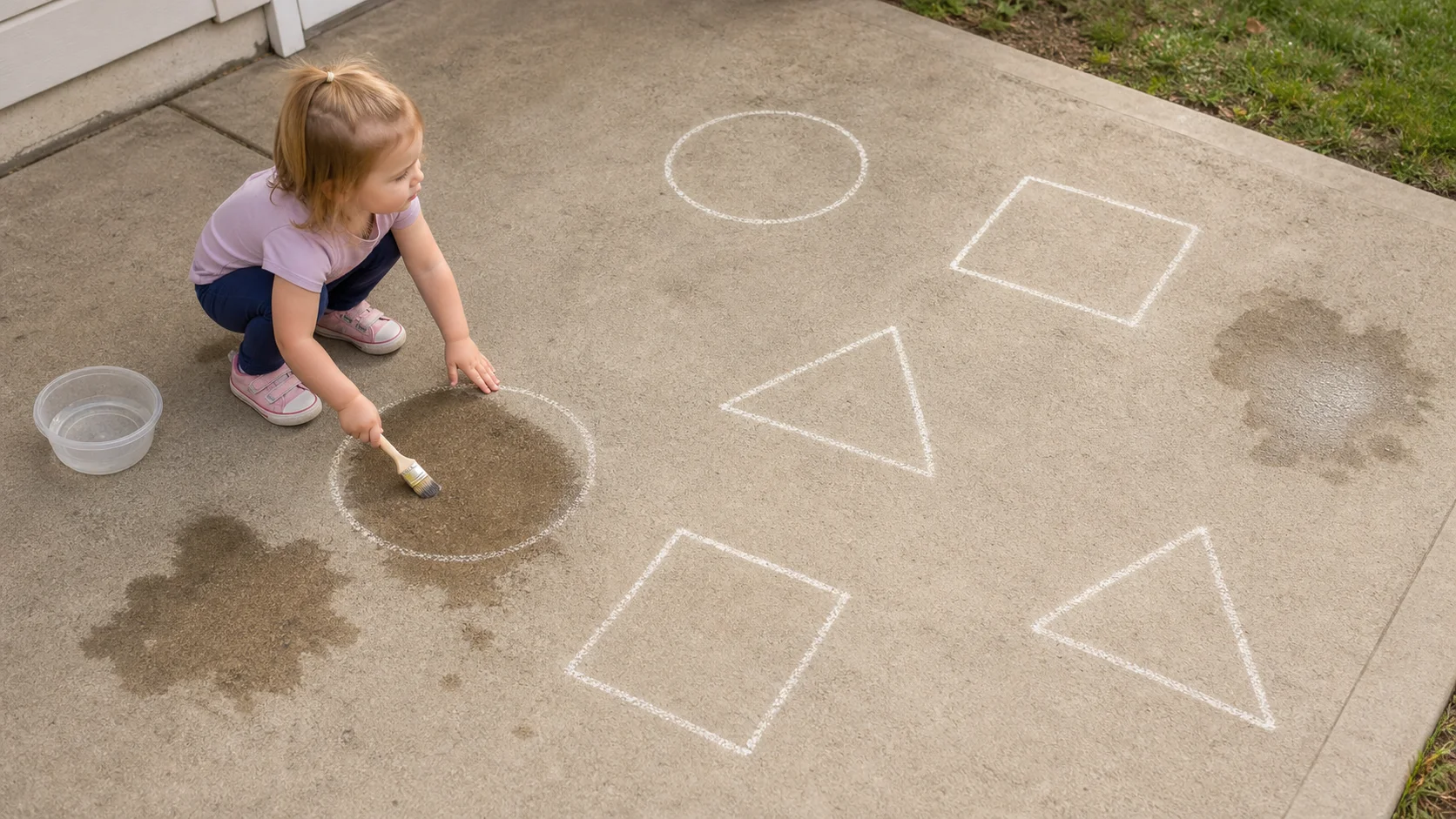
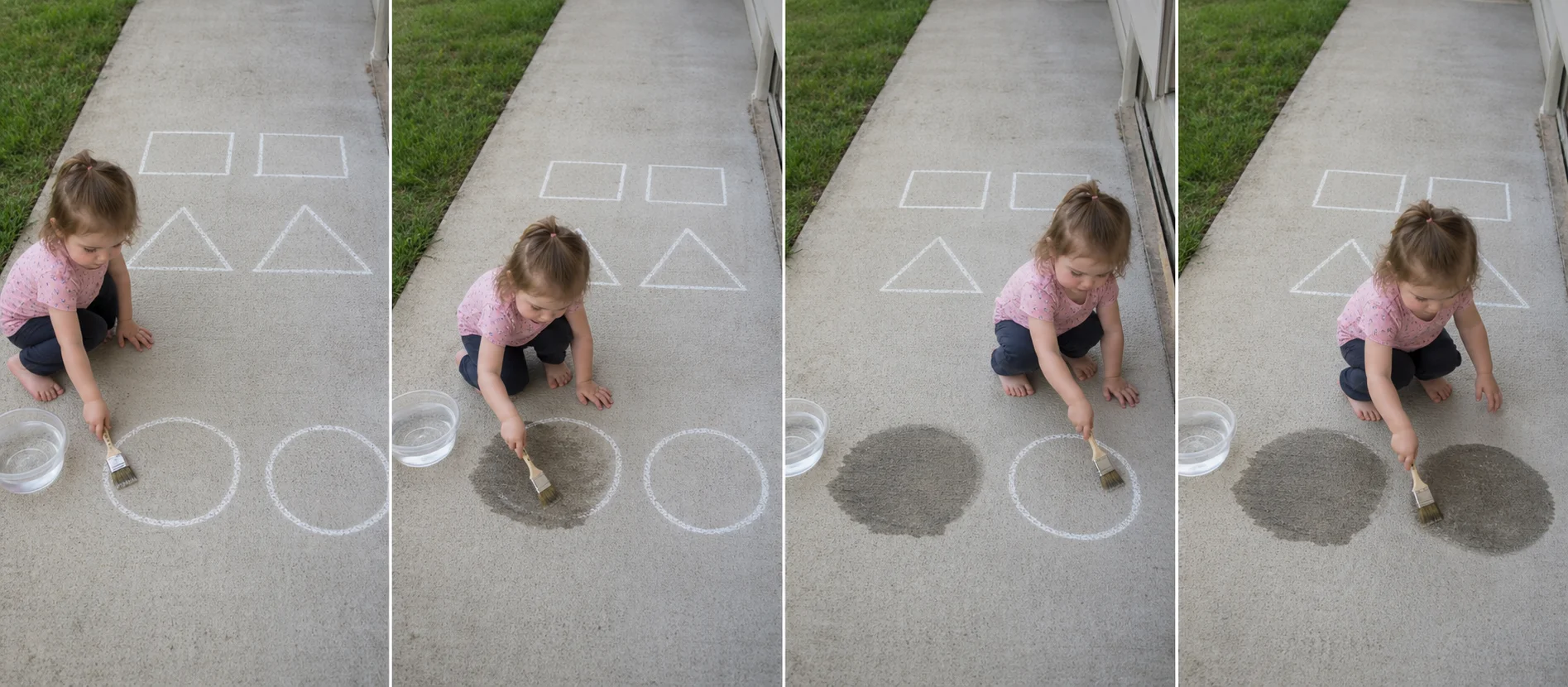
Can your child make every matching pair disappear? Draw pairs of chalk shapes outside, then let your child erase one with a wet paintbrush, hunt for its match, and erase that one too, building shape recognition and visual attention.


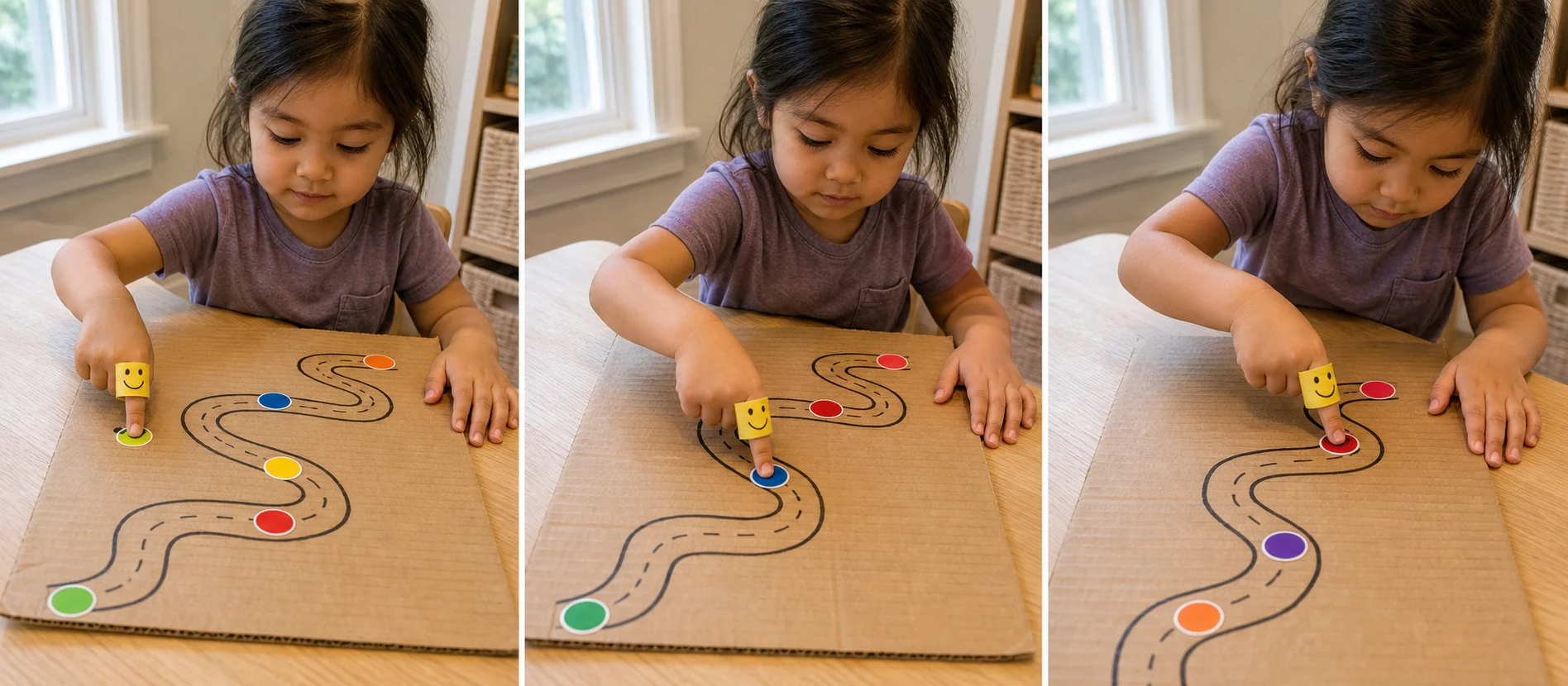
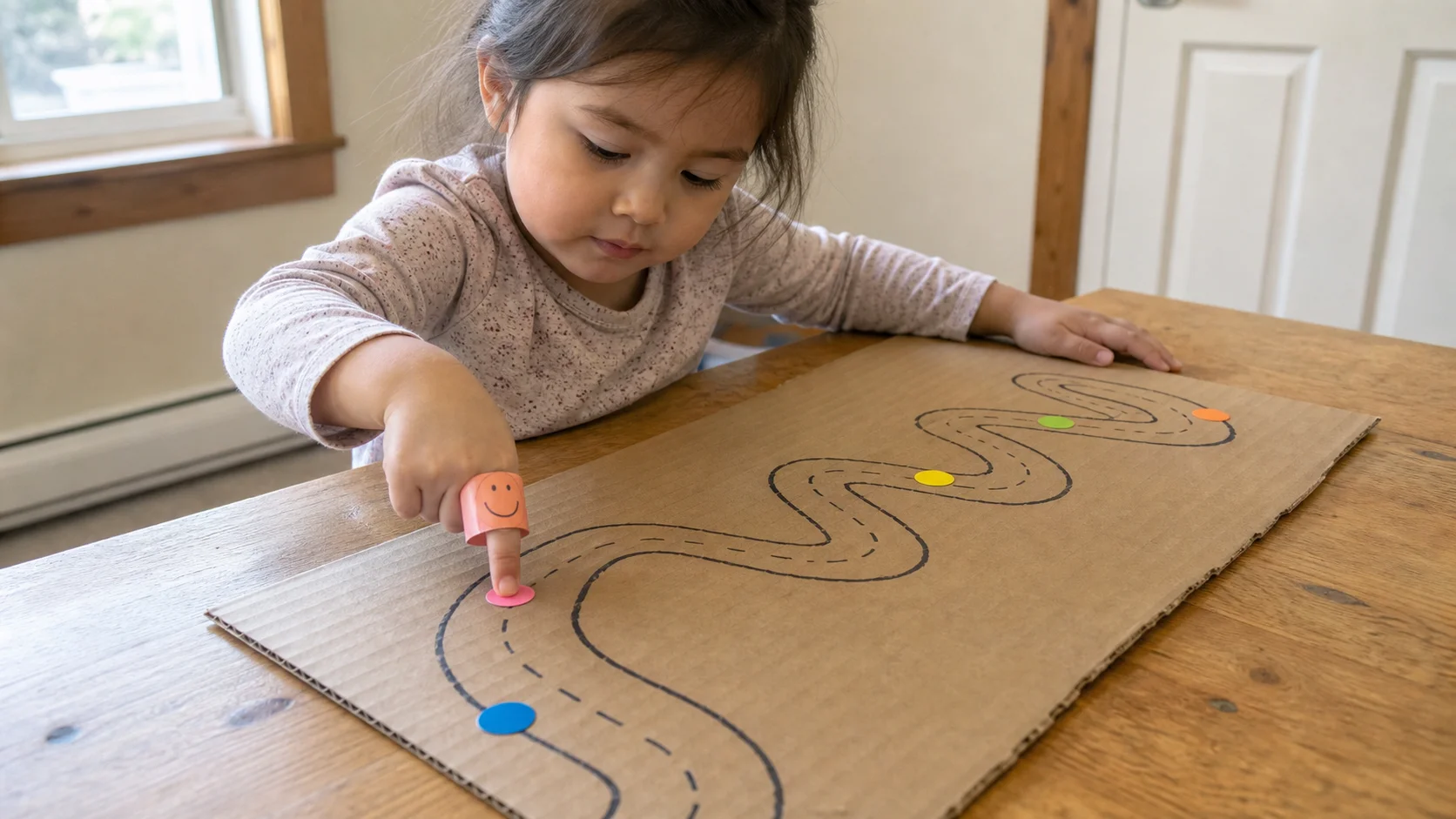
Slide on a paper finger puppet, follow a cardboard road, and press each sticker stop along the way.


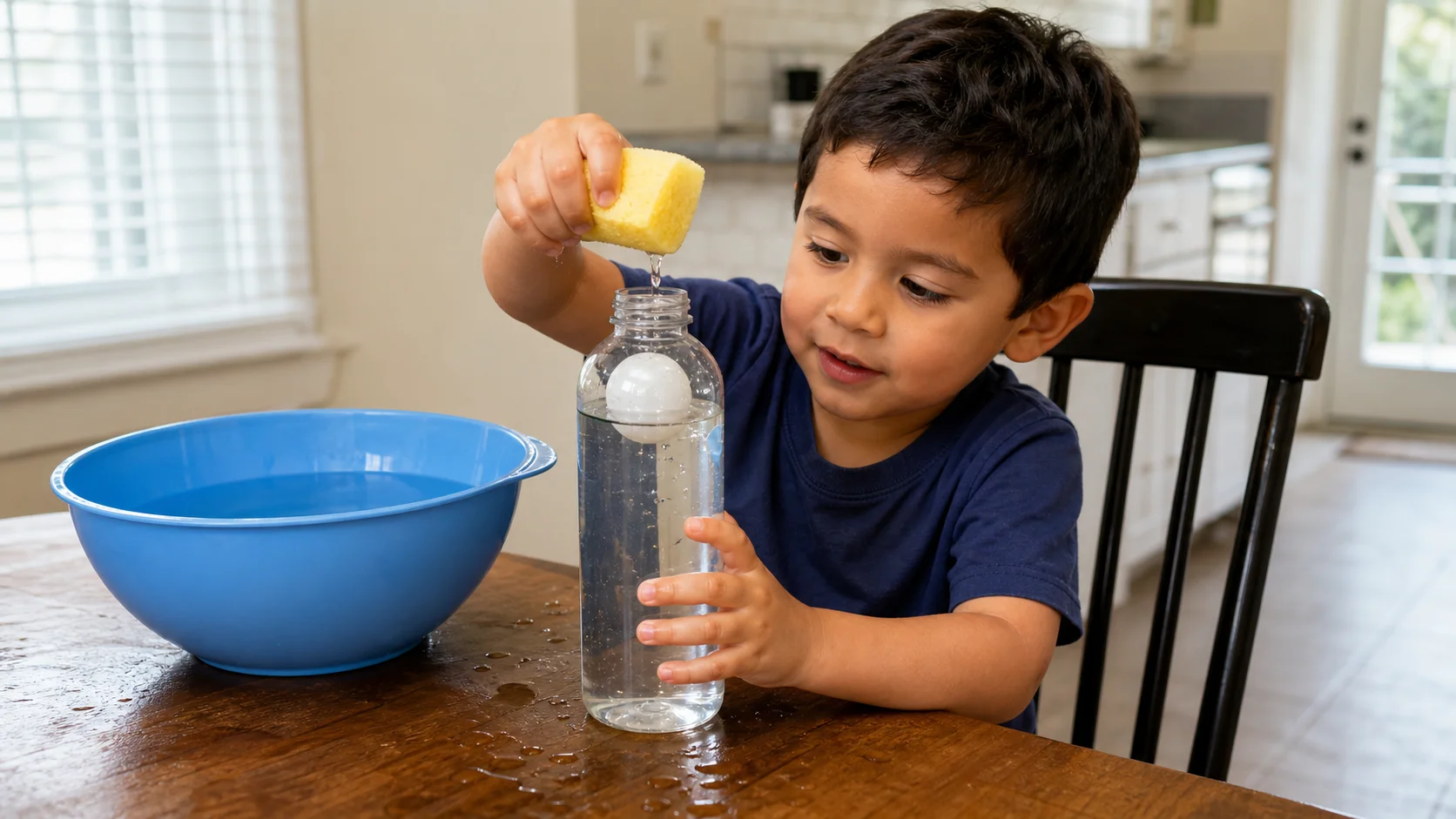
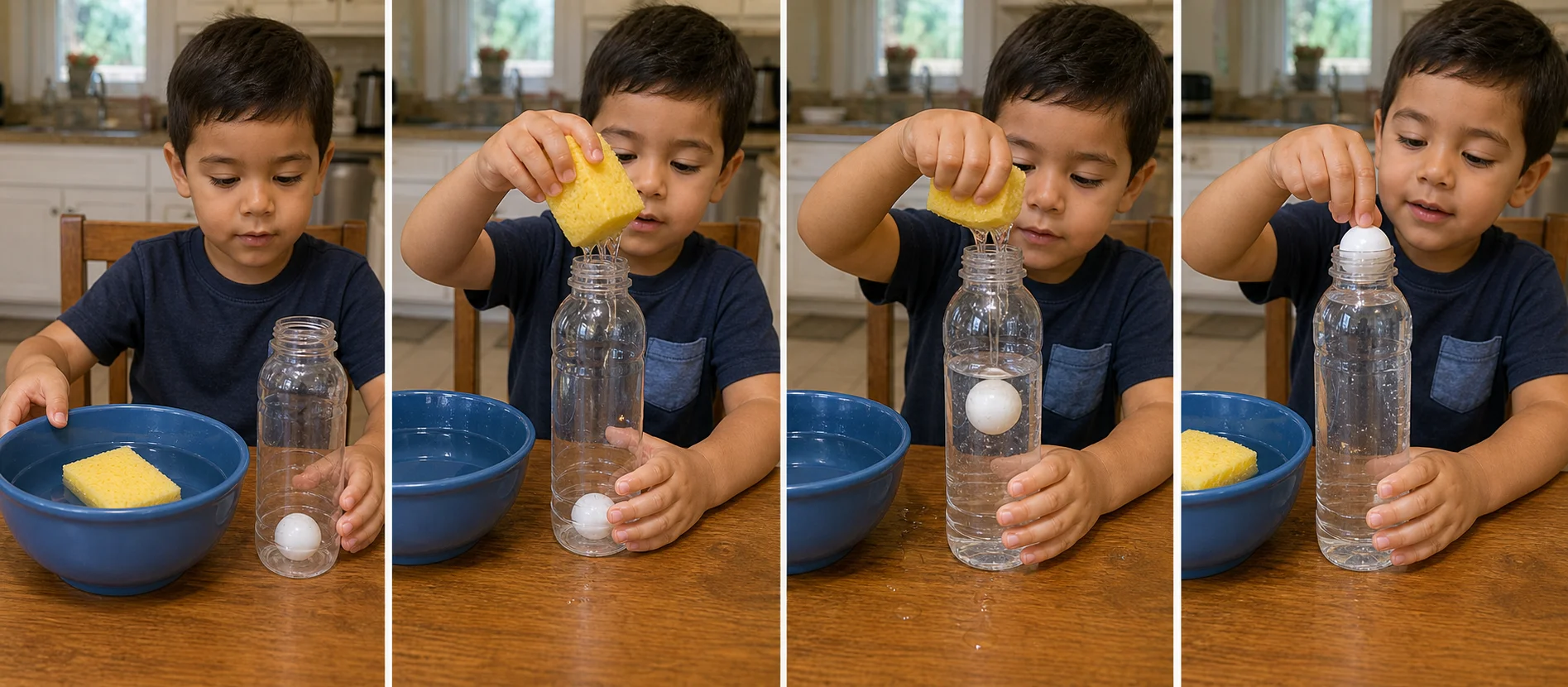
Sponge squeezes raise a floating ball until preschoolers can pinch it out and reset.


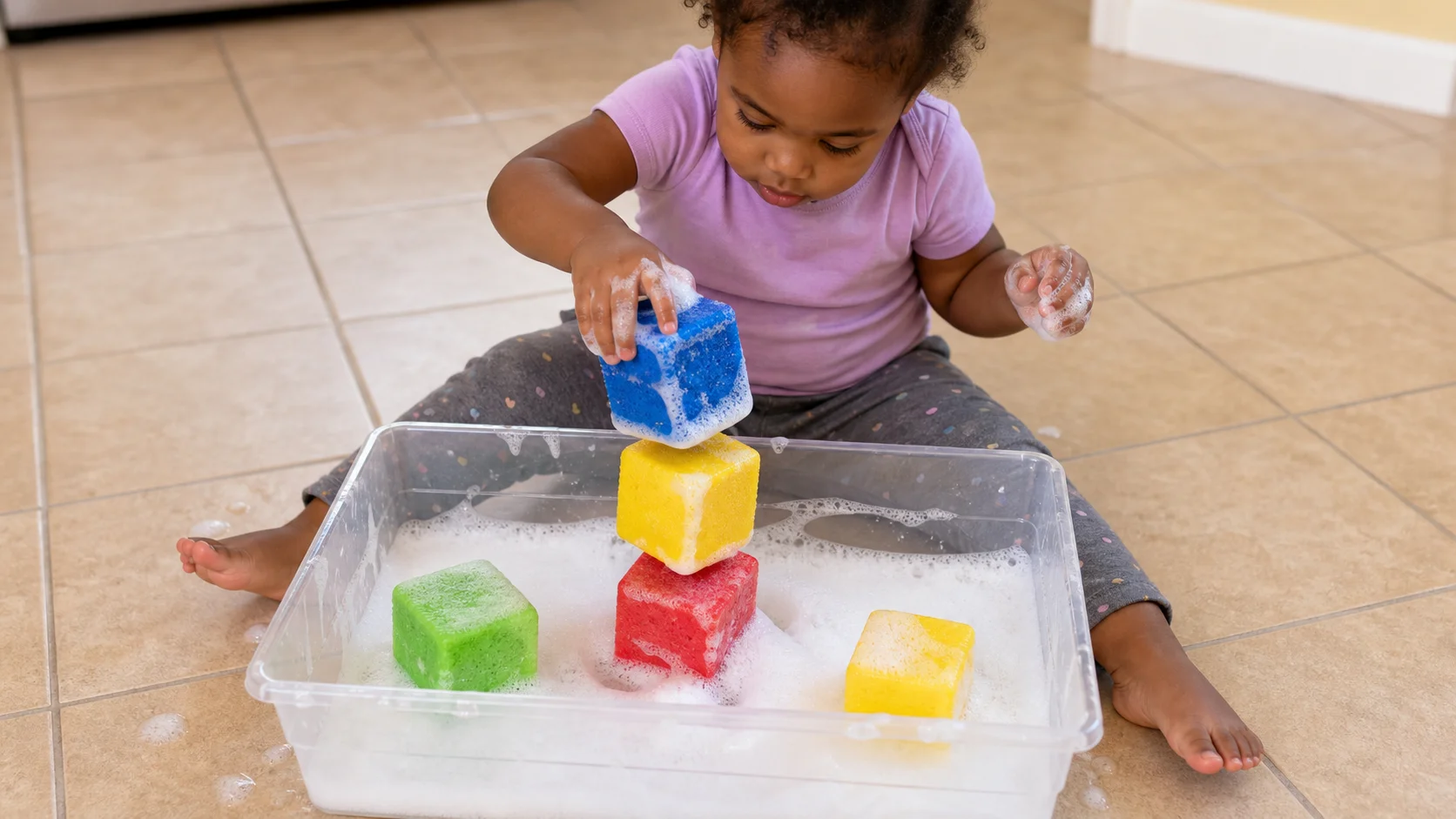
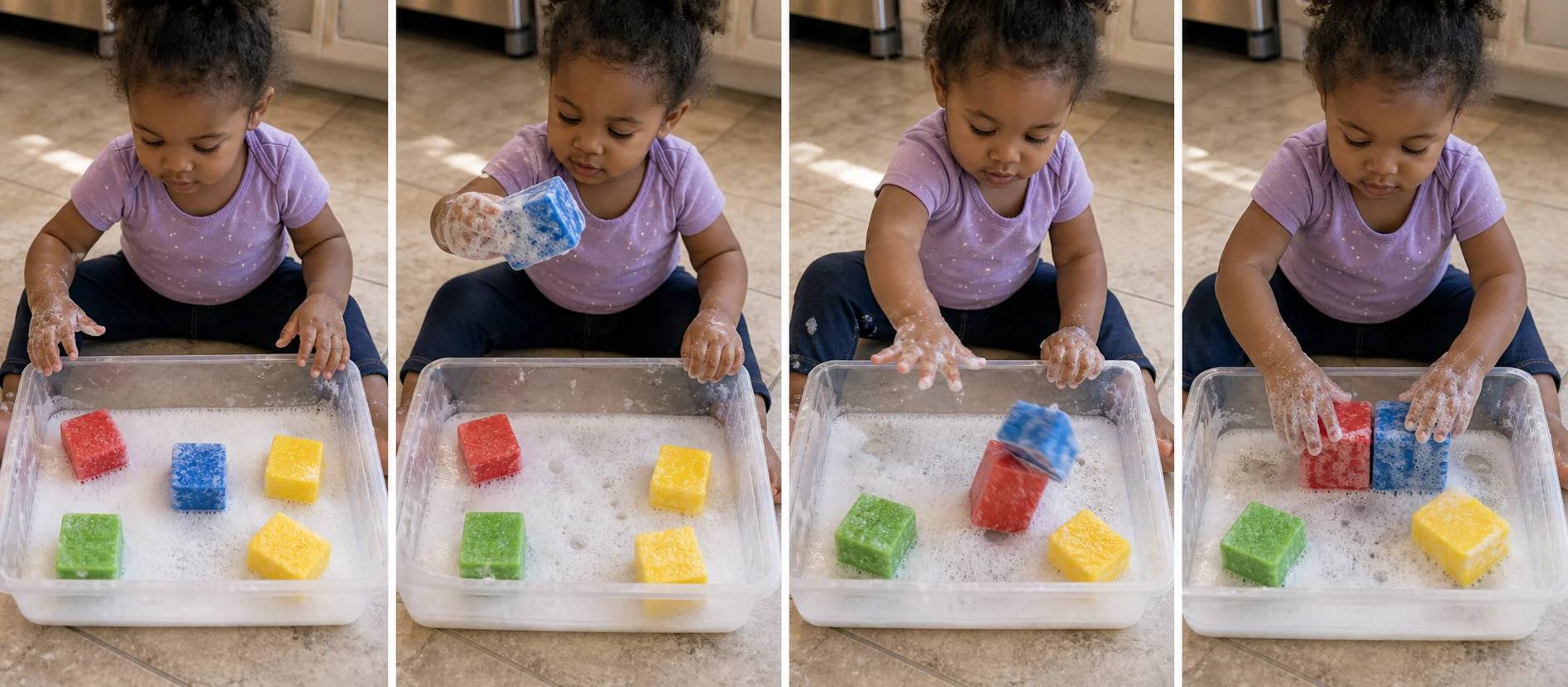
Blocks get delightfully slippery in this quick soap-foam sensory bin. Let your child reach through the bubbles, pull out blocks, then stack and crash a tiny tower for hands-on texture exploration and early building practice.


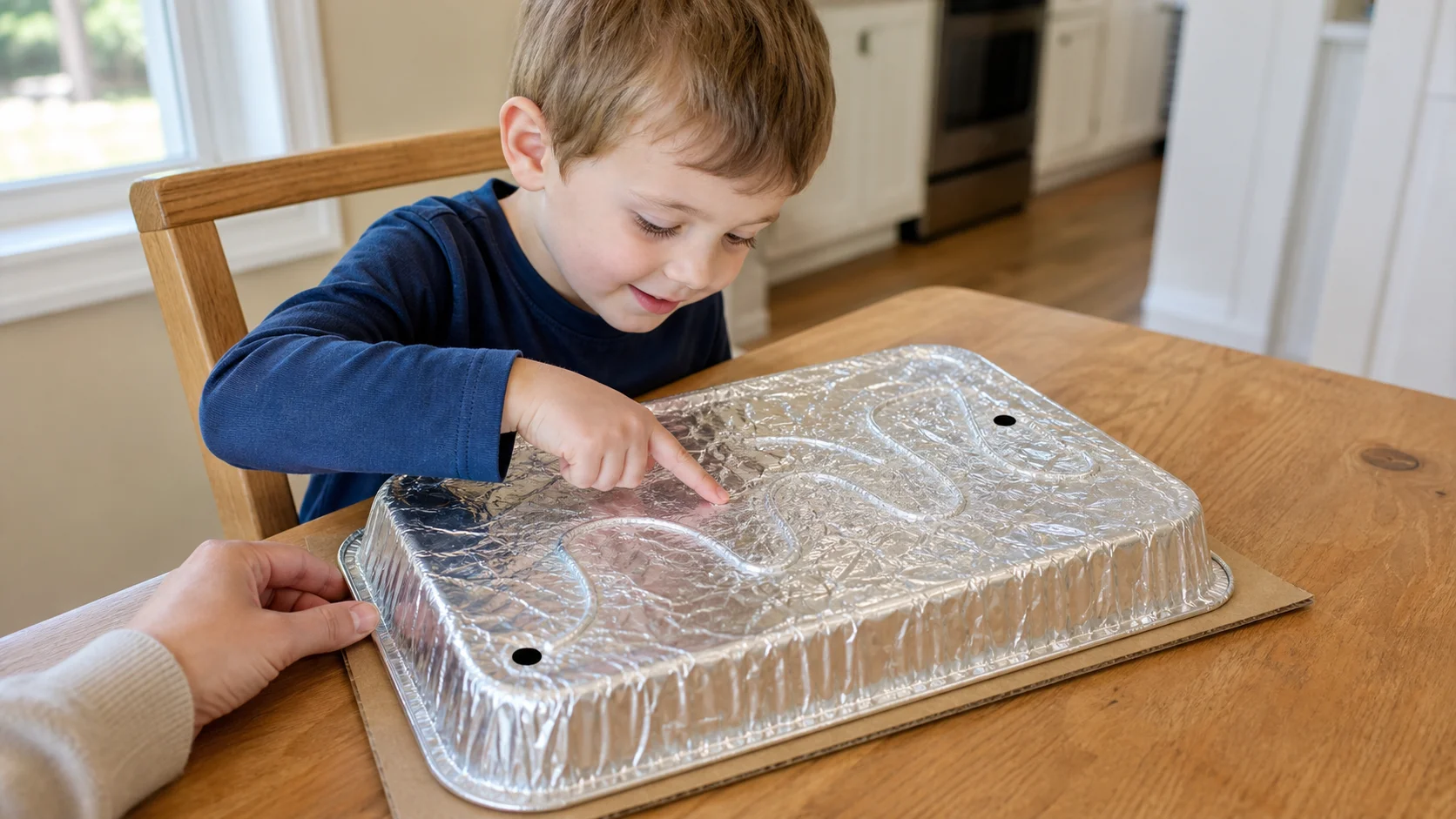
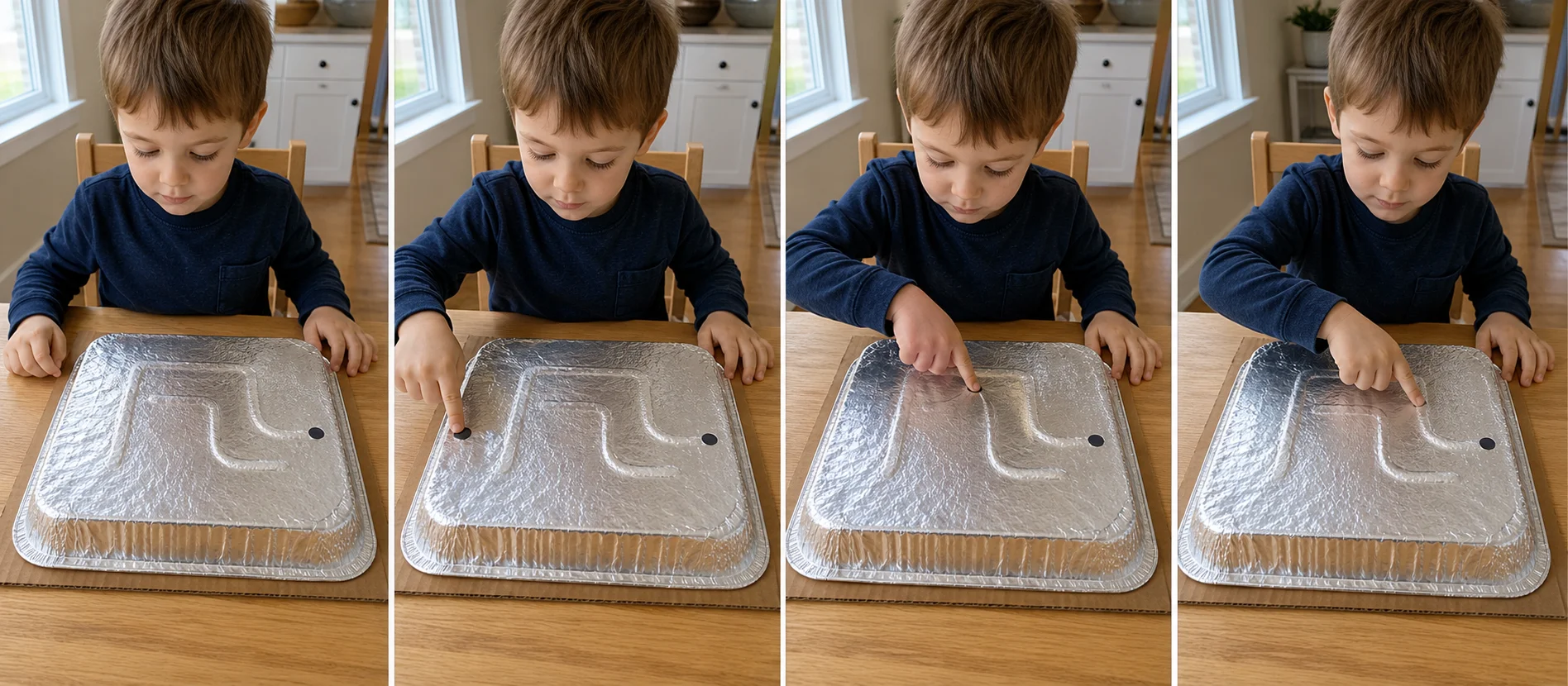
Hide a yarn path under foil and let your child trace the raised road with one careful pointer finger.