
Teddy Cast Wrap
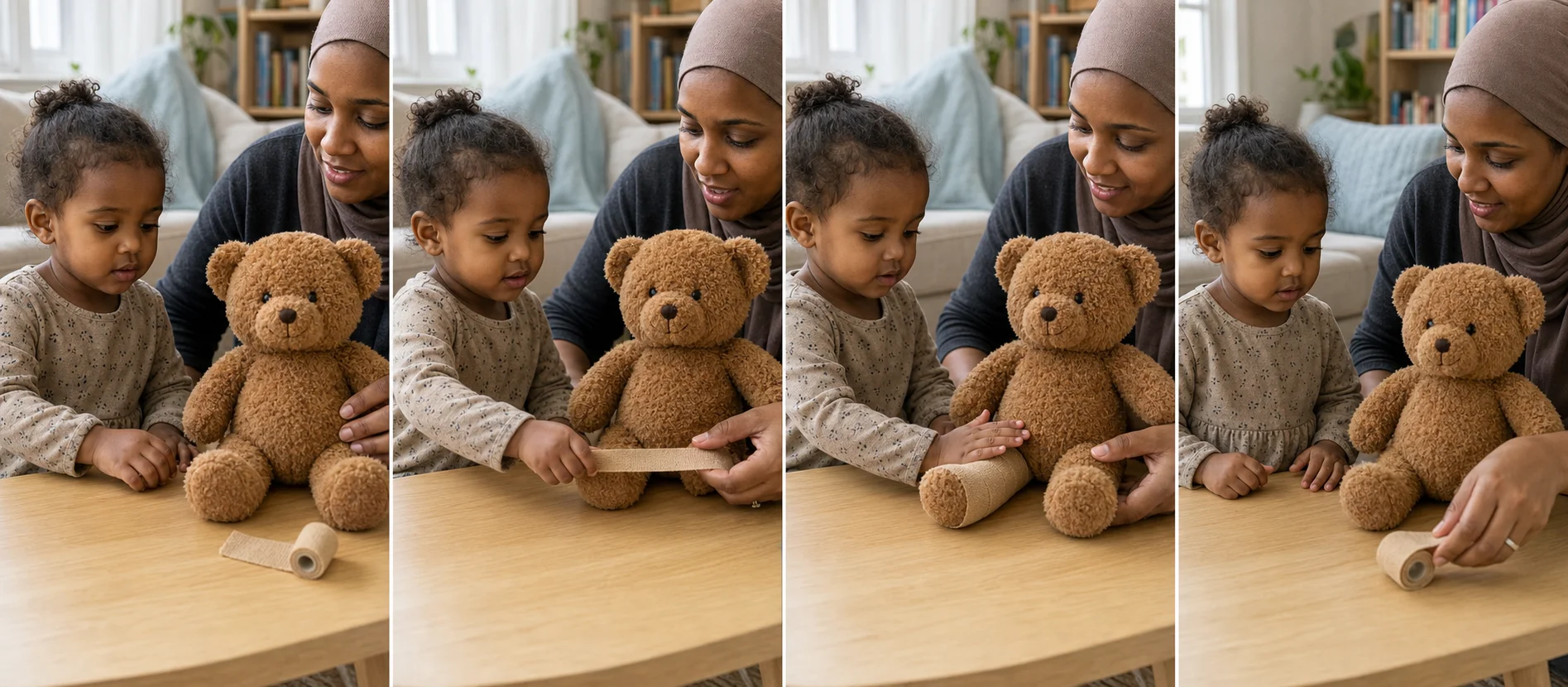
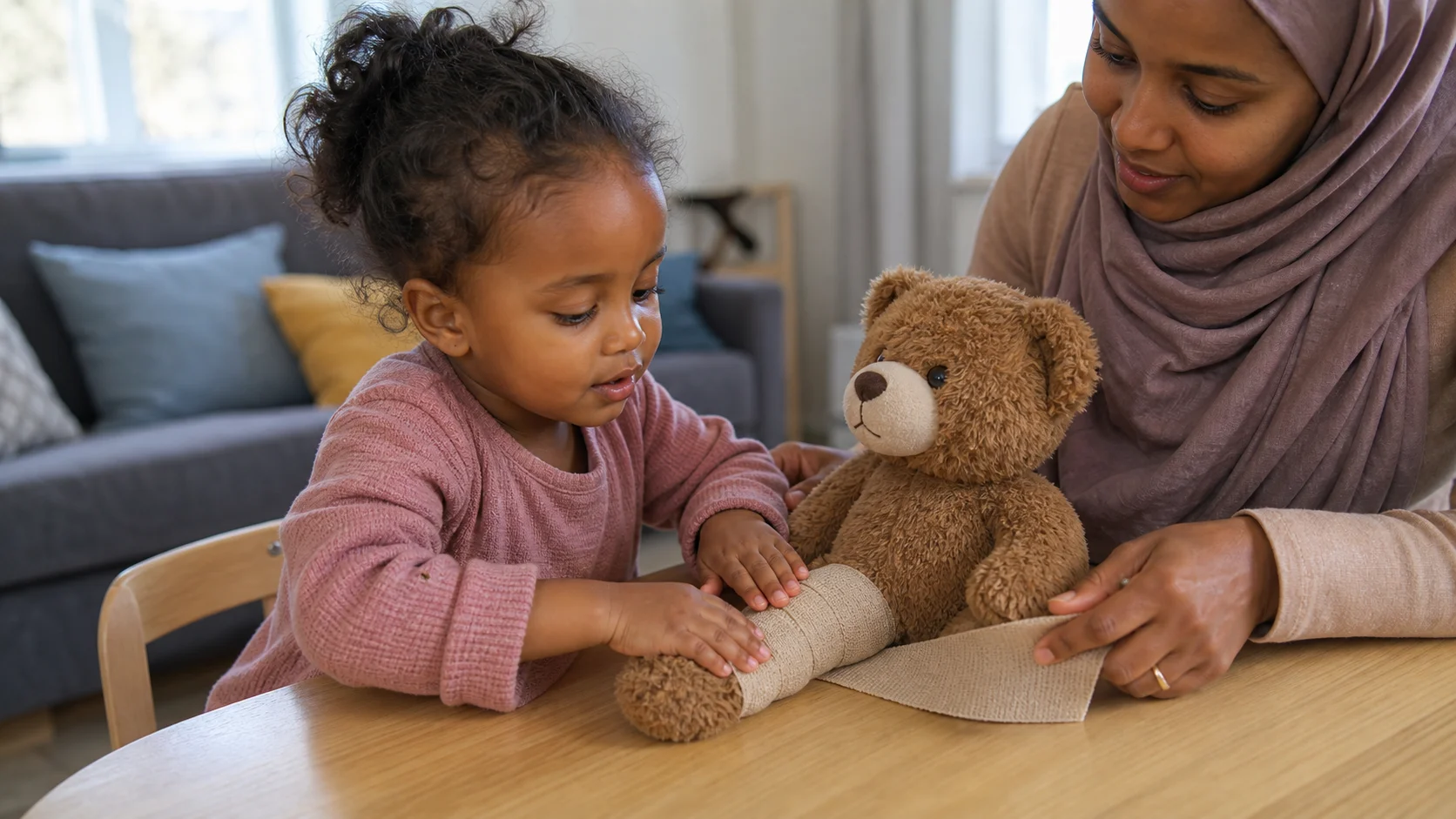
Can your child help give teddy a pretend cast? Wrap one leg together in overlapping layers, tuck the end in place, then unwrap and repeat, turning an unfamiliar care step into simple pretend play.


Can your child help give teddy a pretend cast? Wrap one leg together in overlapping layers, tuck the end in place, then unwrap and repeat, turning an unfamiliar care step into simple pretend play.


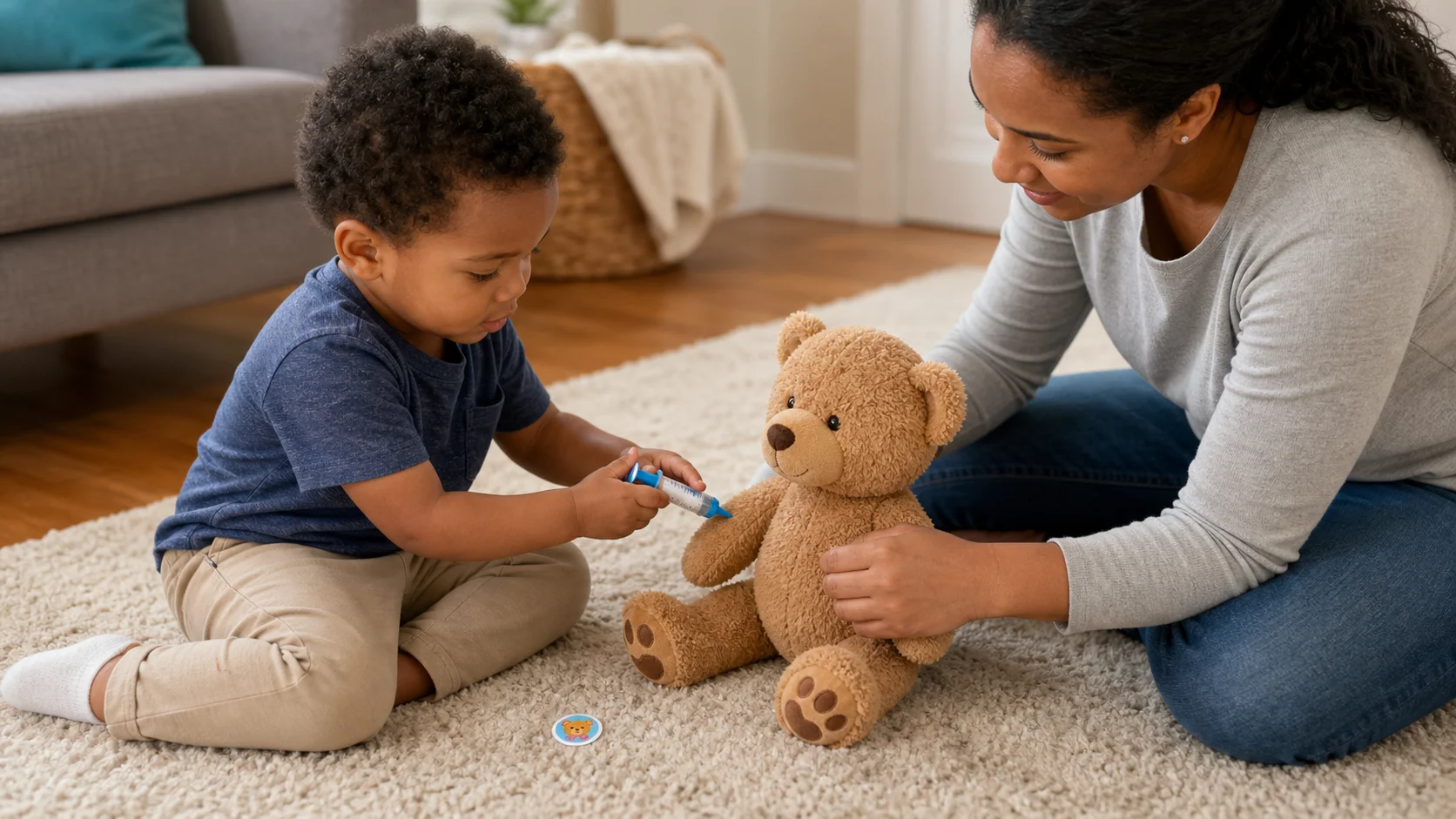
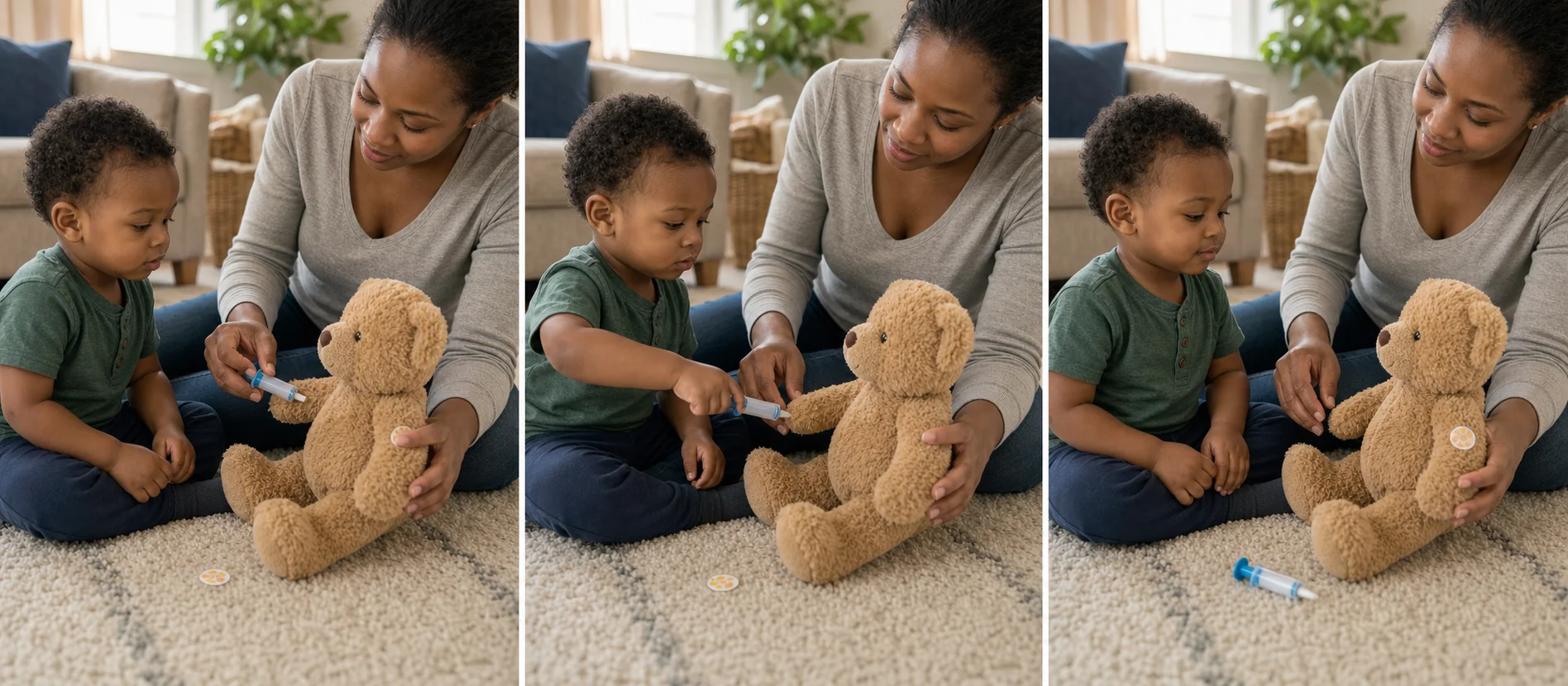
Turn vaccine preparation into one short Teddy-doctor rehearsal. Your child copies a pretend shot, adds a sticker, and practices holding still through one brief count.


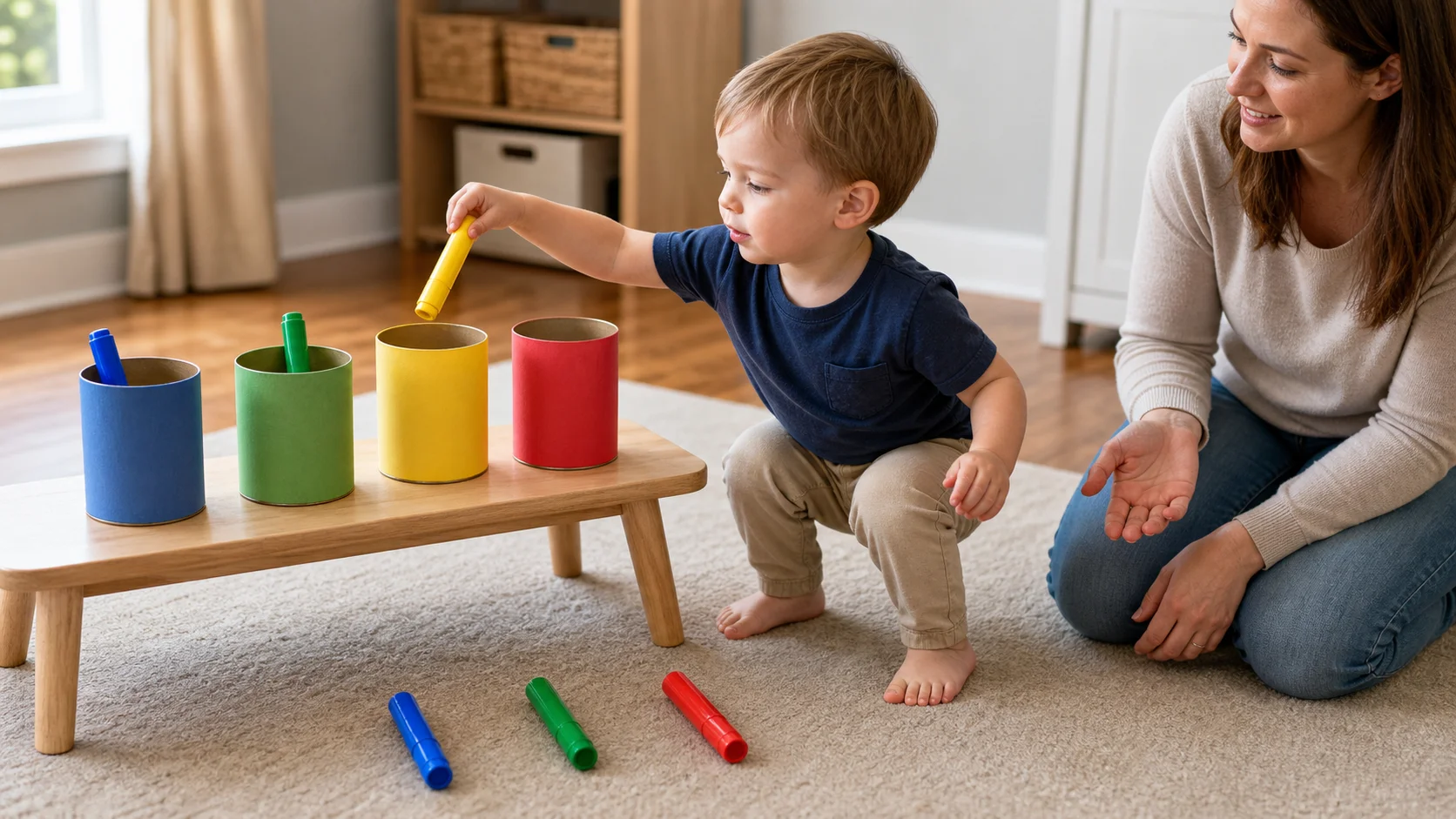
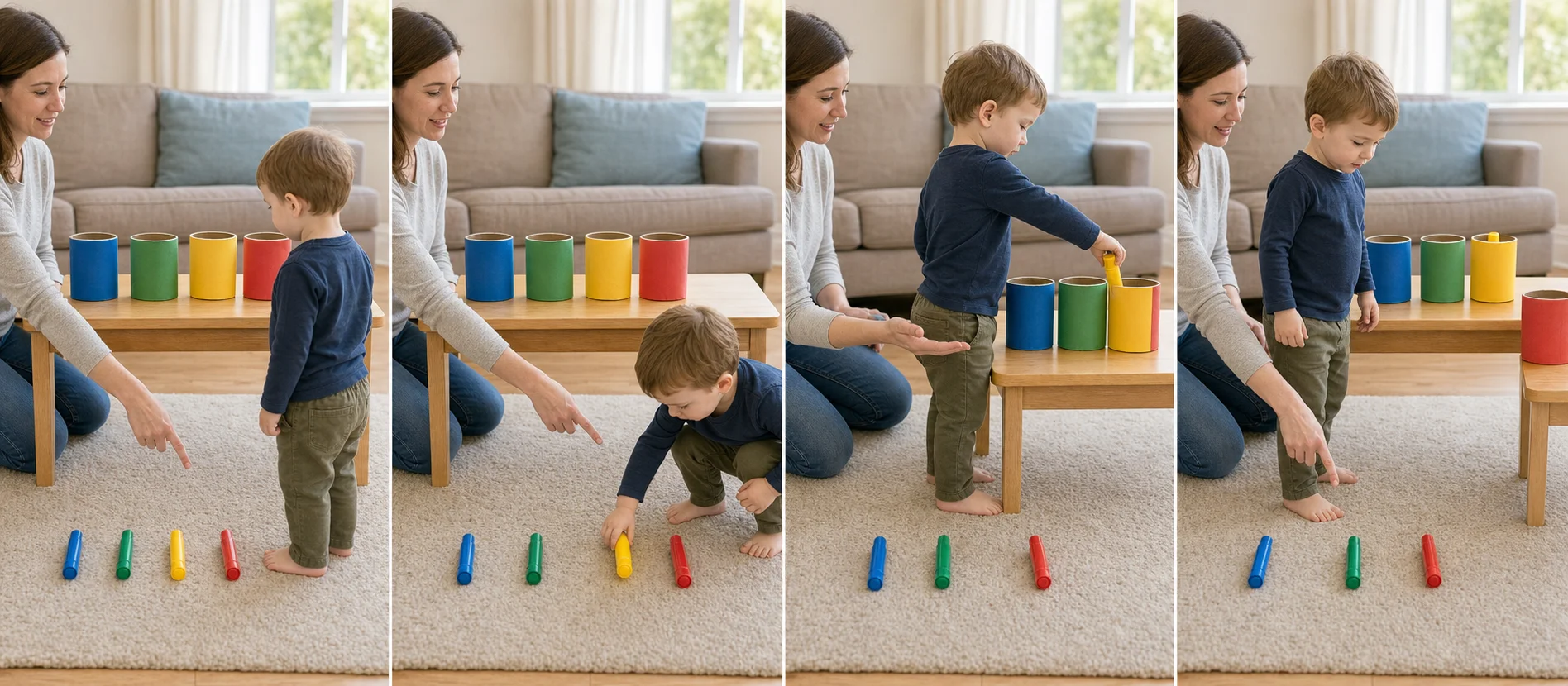
Turn color matching into a whole-body game. Your child squats to pick up a colored marker, stands, and drops it into the matching can for balance, body control, and color practice.


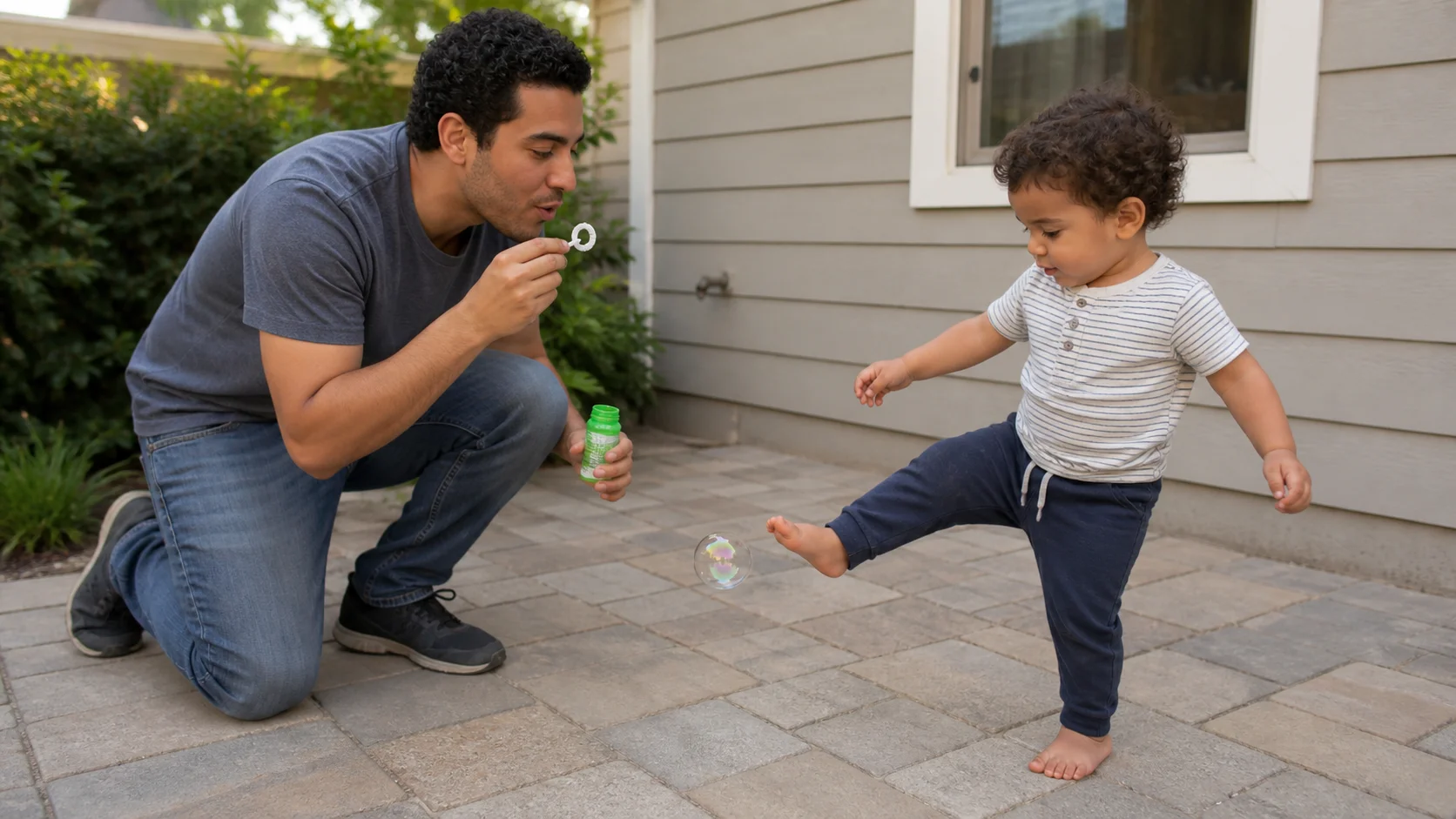
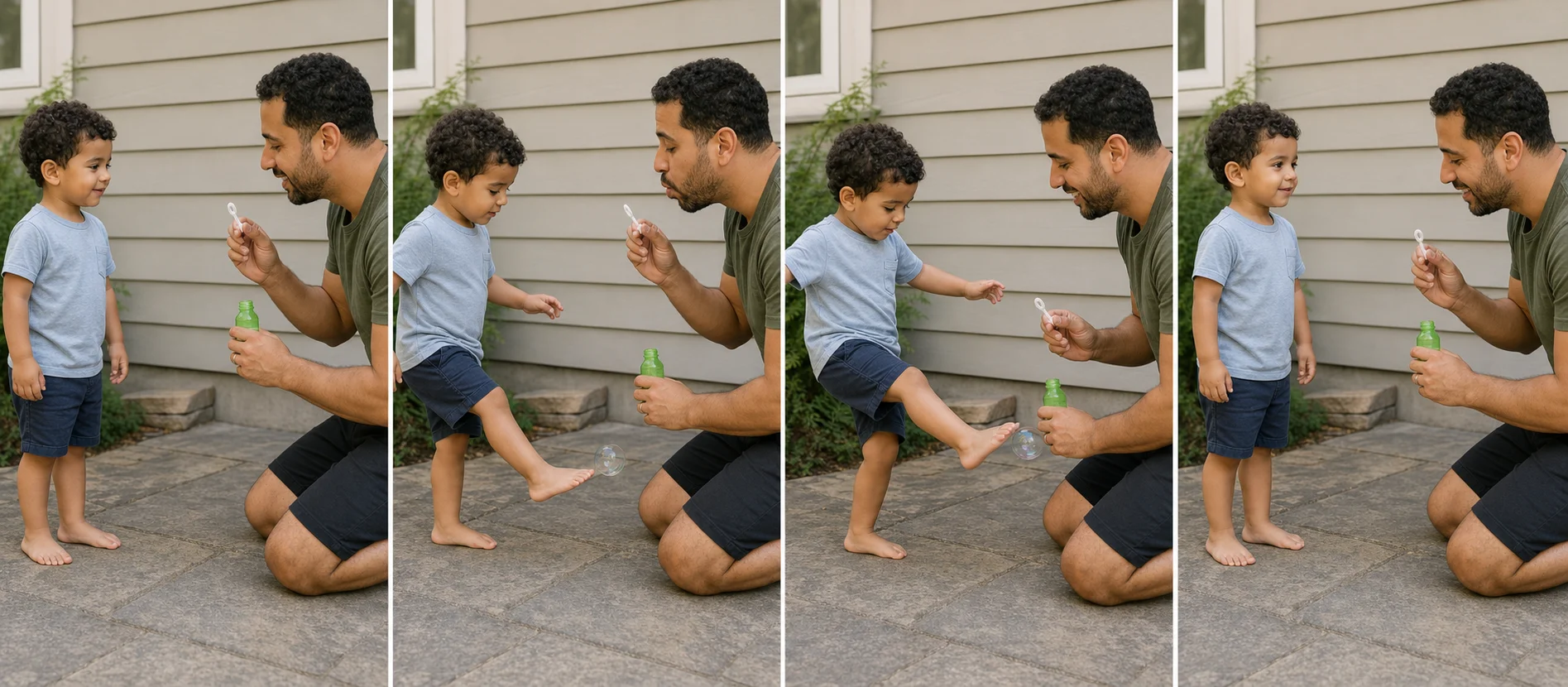
Can your child pop a bubble using only their toes? Blow bubbles low and watch them lift one foot, aim, and pop for a quick balance and body-control challenge.


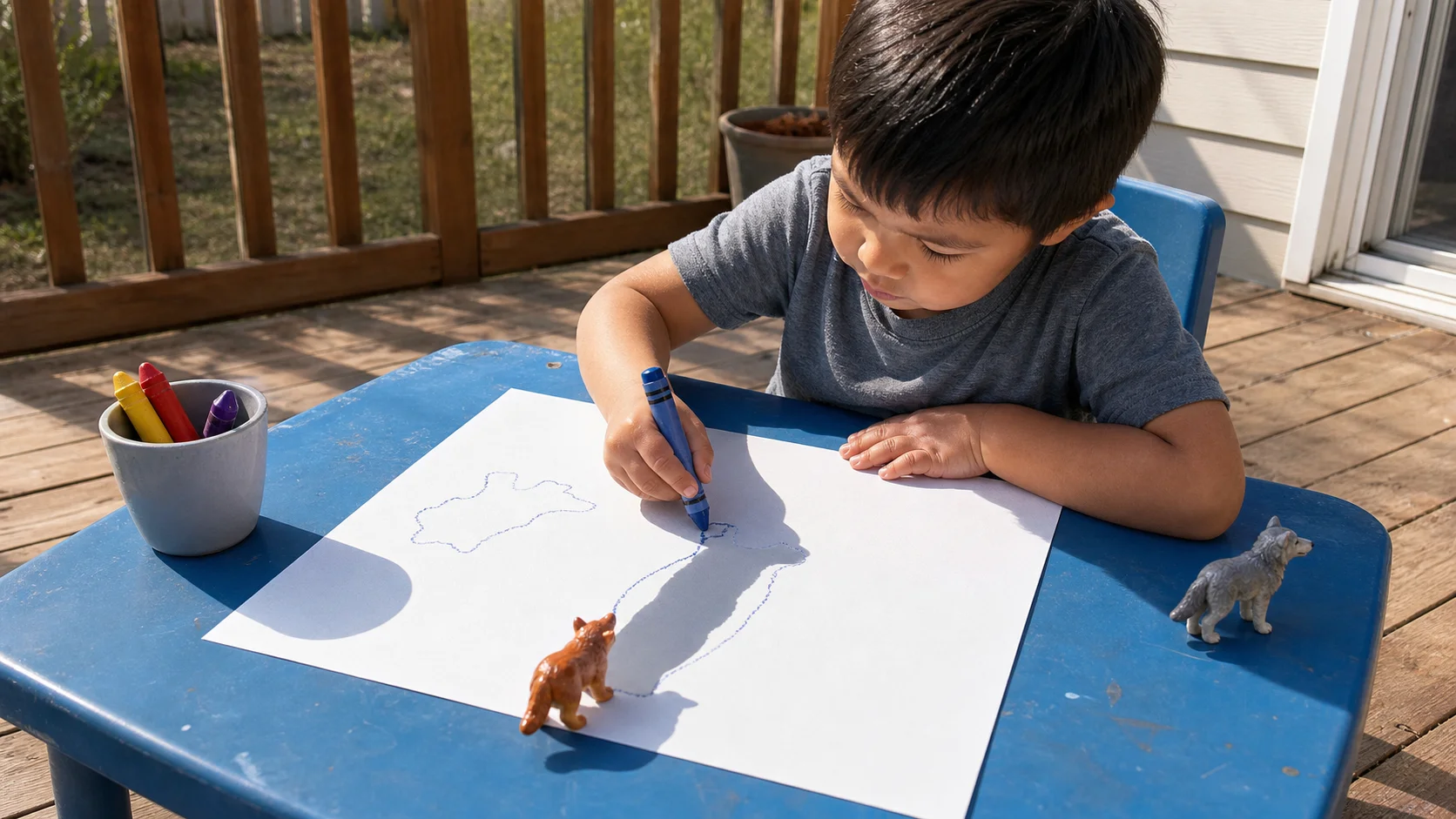
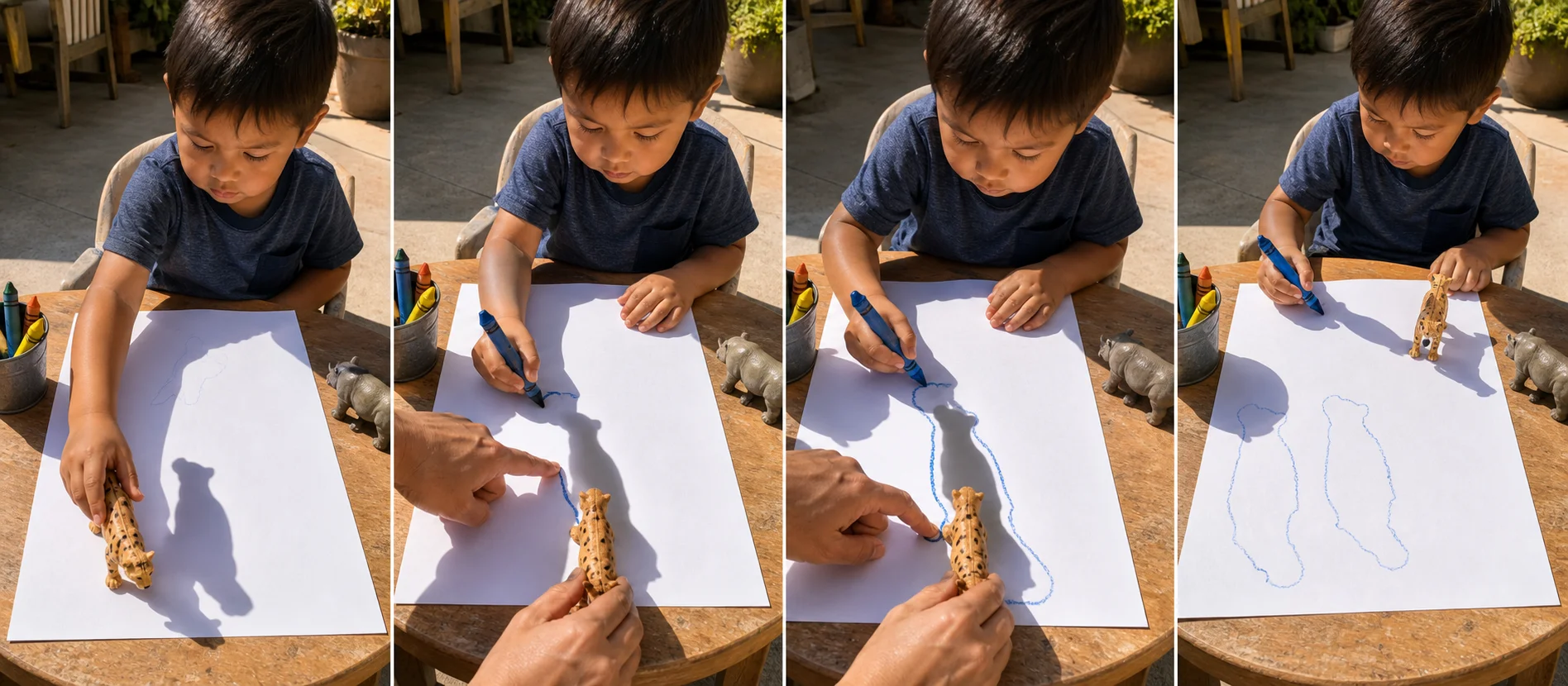
Catch a toy's shadow on paper and turn it into a drawing. Your child traces the outline, then moves or swaps the toy to explore new shapes while building pencil control and visual coordination.


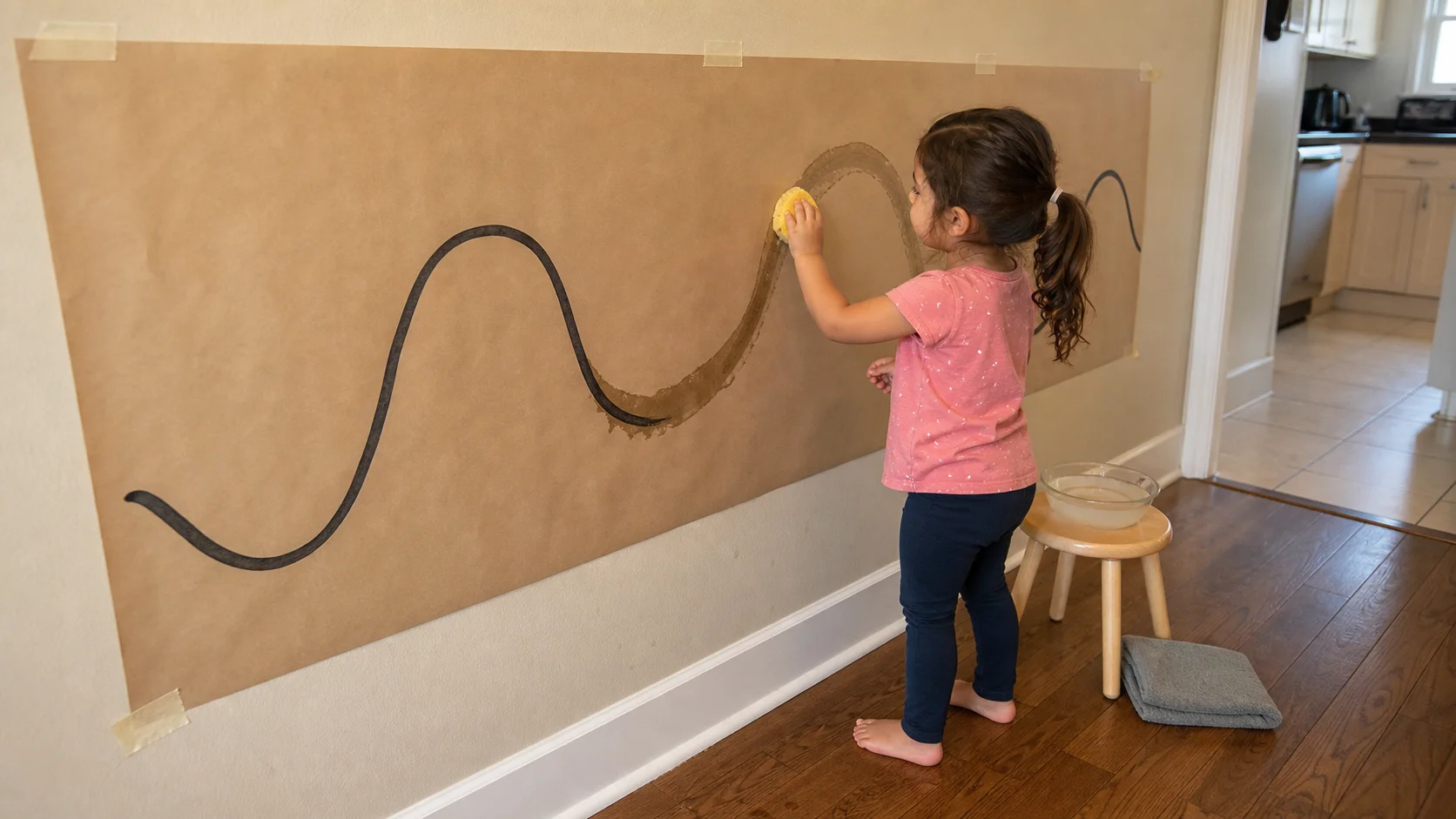
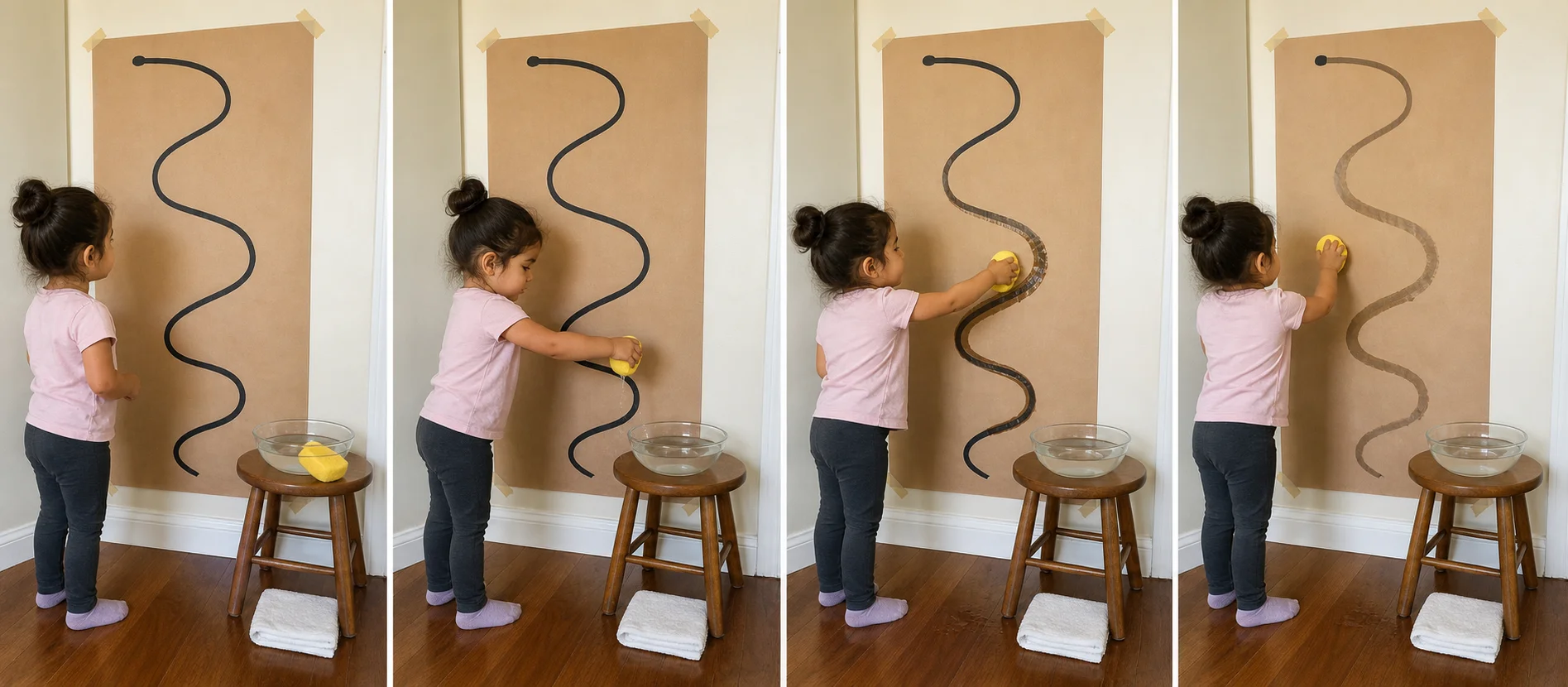
A winding line and damp sponge turn tracing into a satisfying standing challenge. Your child follows the path as a wet trail appears, building hand control, visual-motor coordination, and shoulder strength.


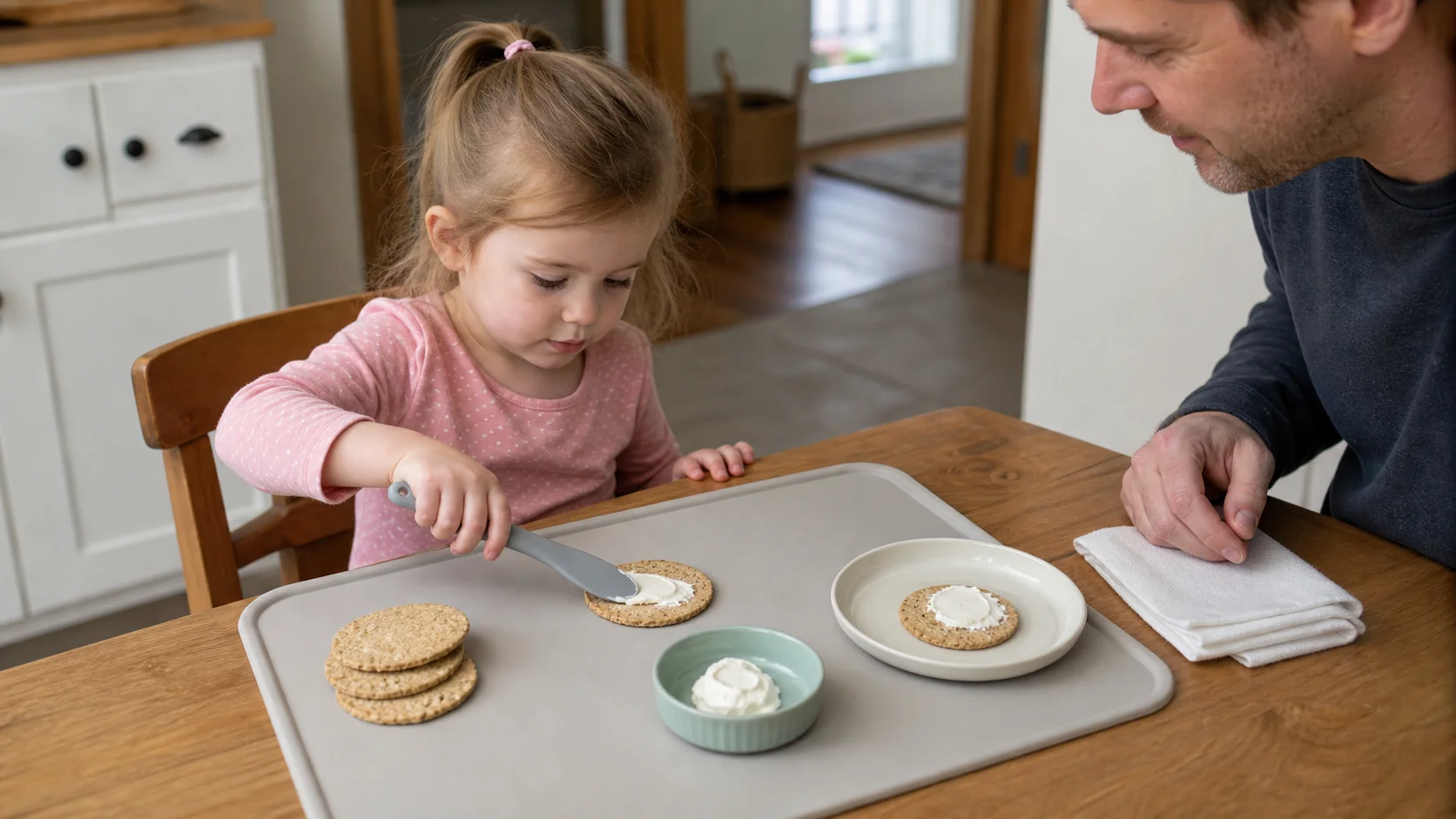
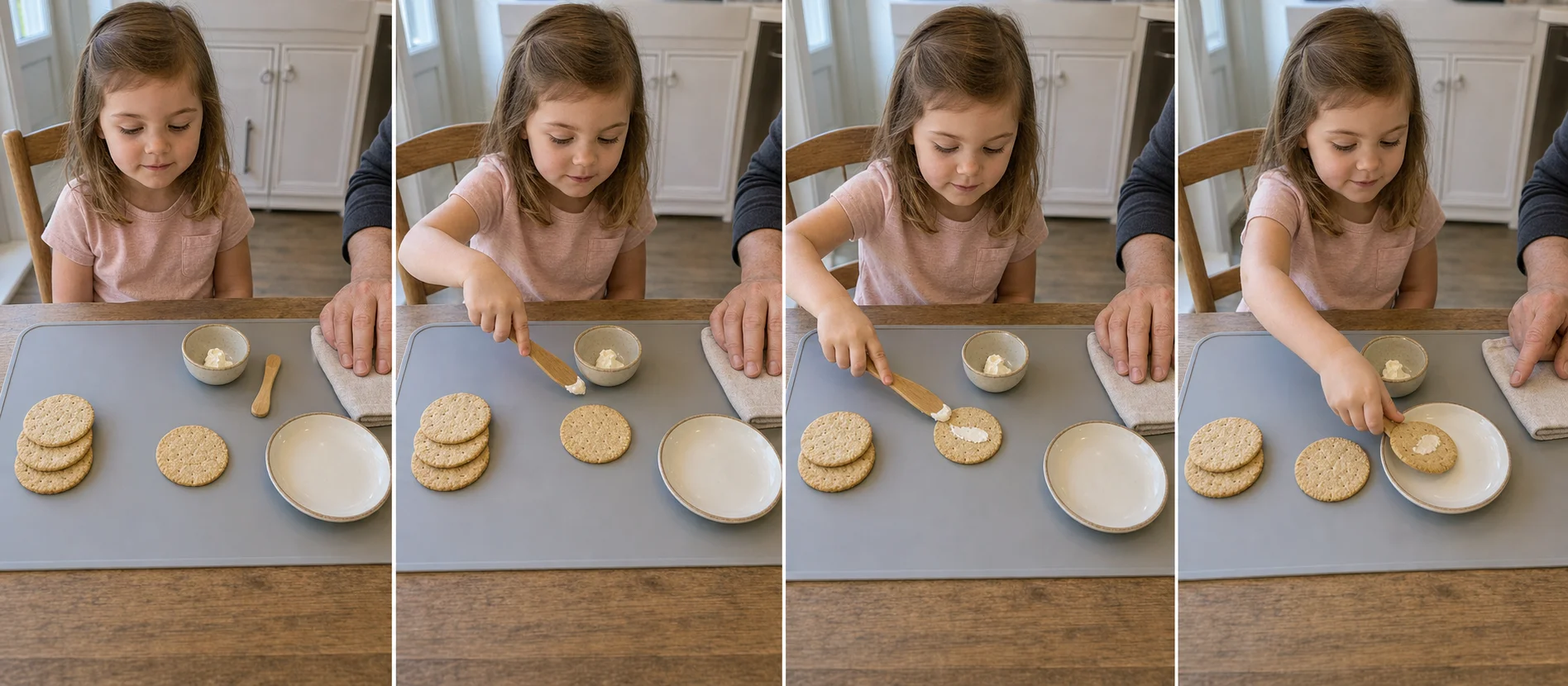
Take the pressure out of sticky food play with one cracker and one small swipe. Your child uses a spoon or child-safe spreading tool to move cream cheese across the cracker, practicing hand control while exploring the texture at their own pace.


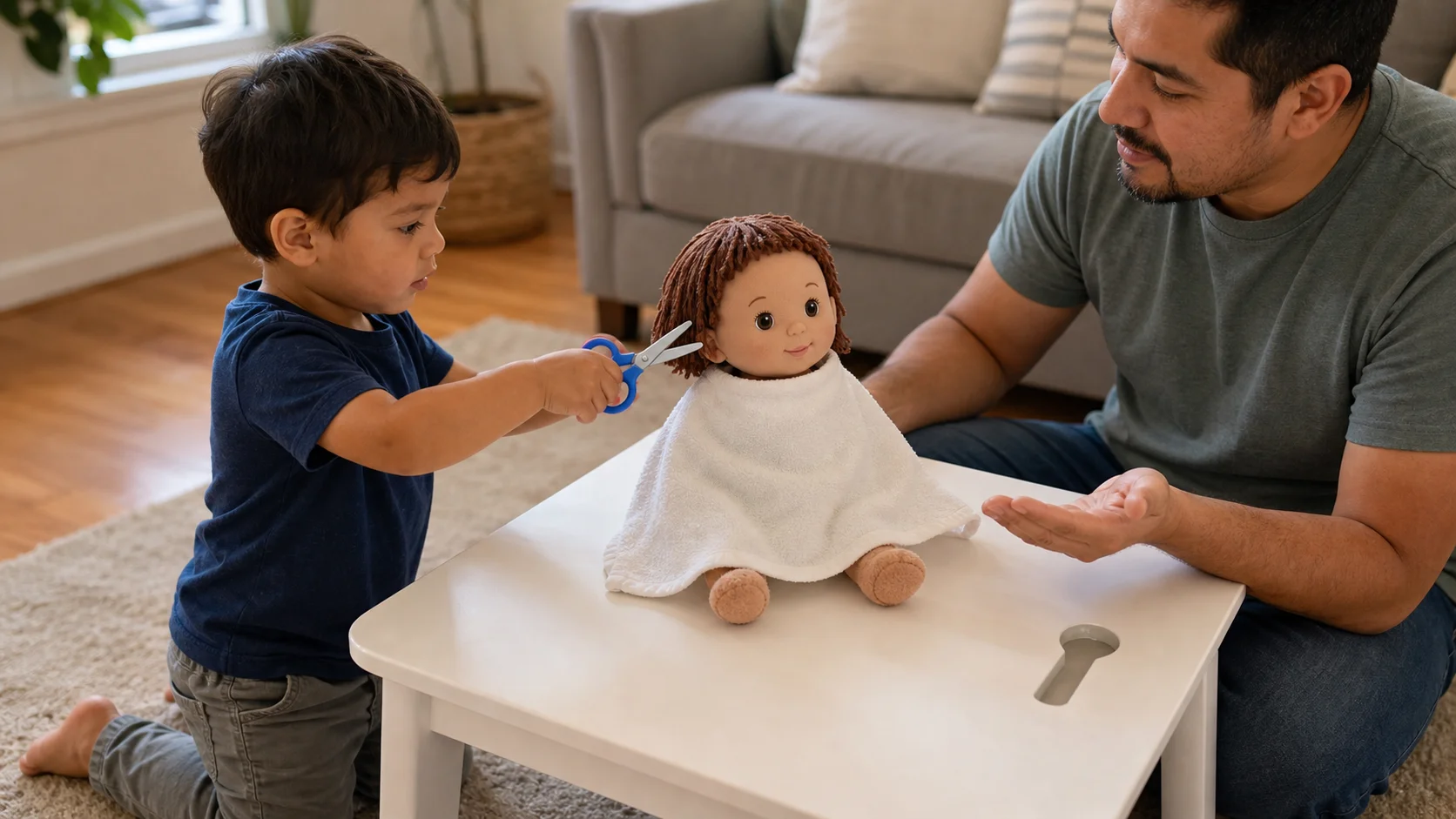
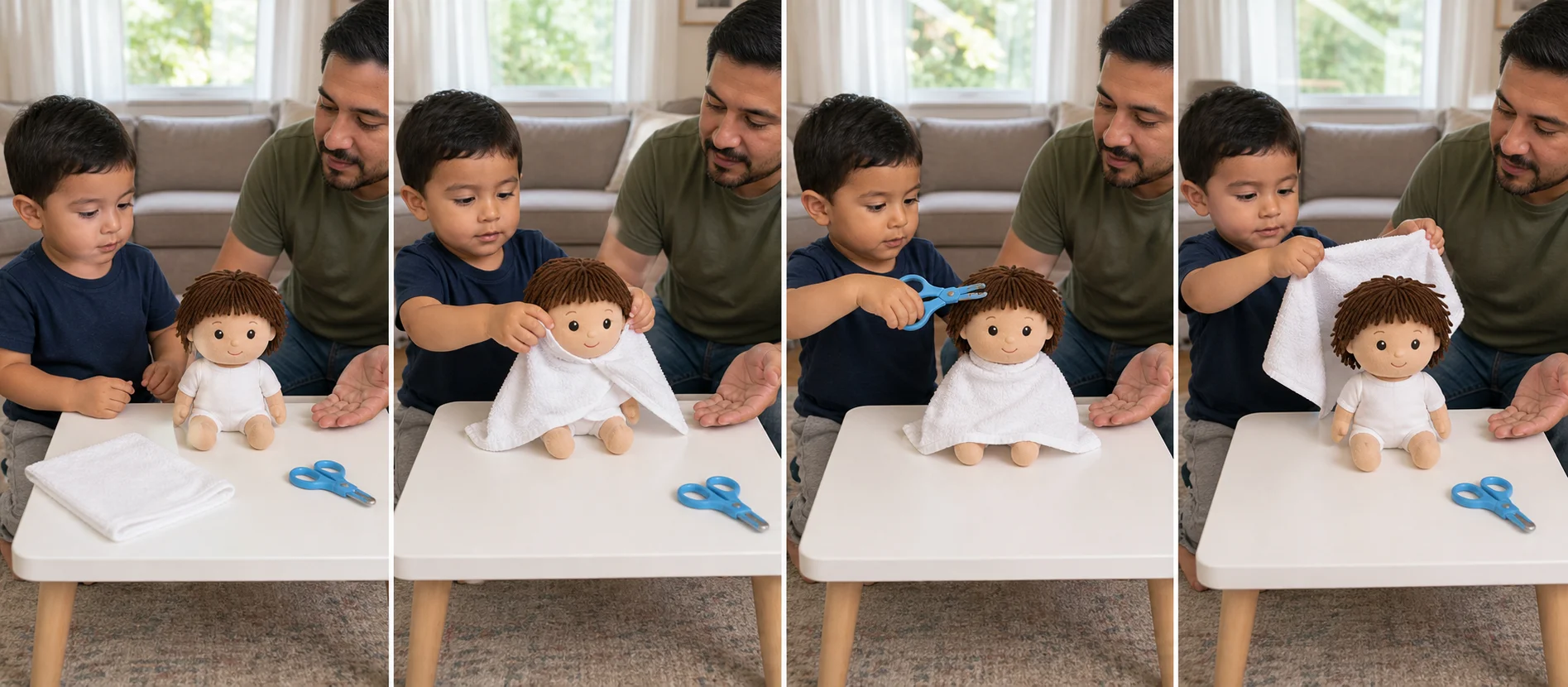
Make haircut steps feel more familiar with a quick doll-first rehearsal. Your child puts a washcloth cape on a doll, makes one pretend snip beside its head, and removes the cape to practice a clear start-to-finish routine.


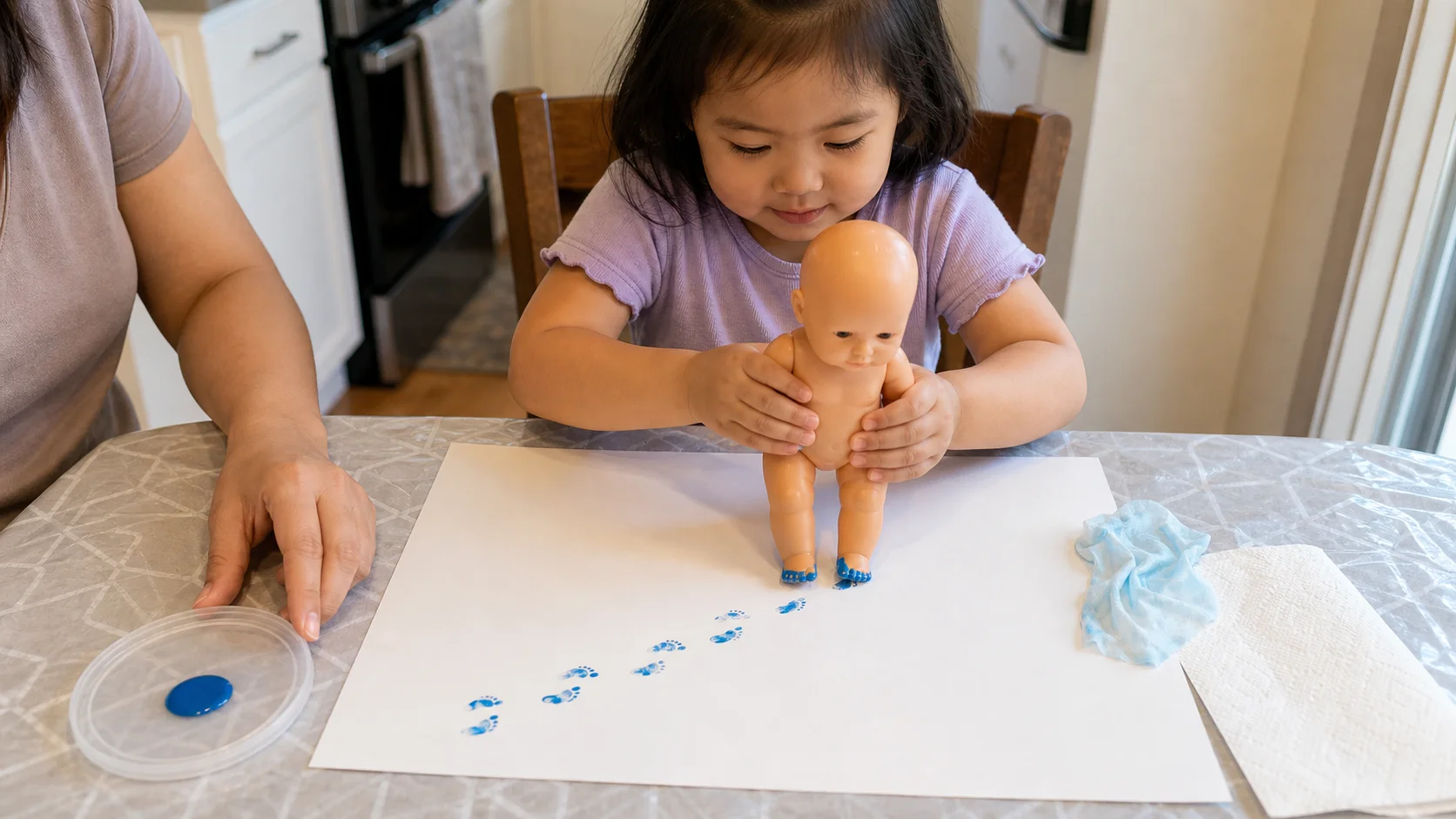
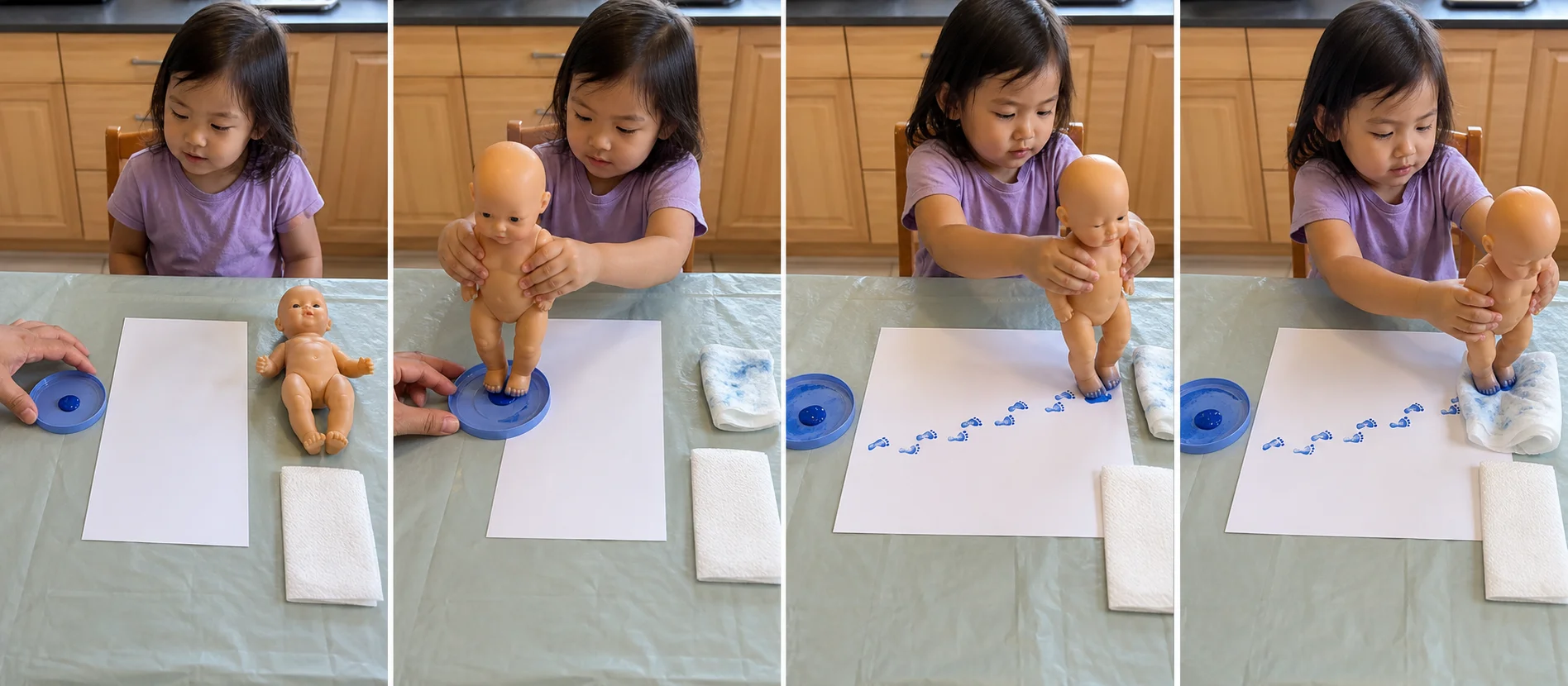
Let a doll do the messy part. Your child dips its feet in washable paint, walks it across paper, and wipes it clean, creating a tiny footprint trail while exploring paint through a familiar toy.


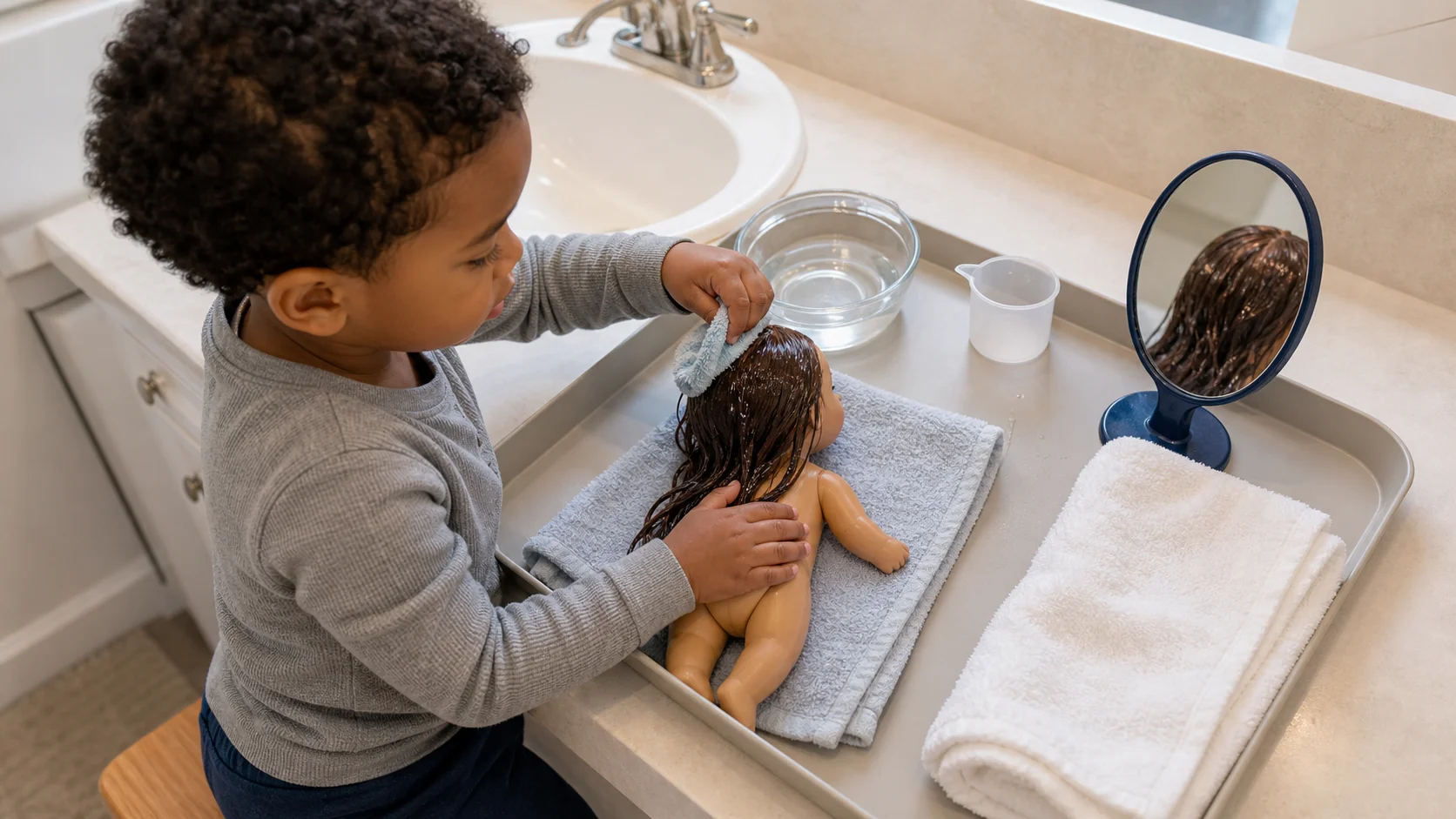
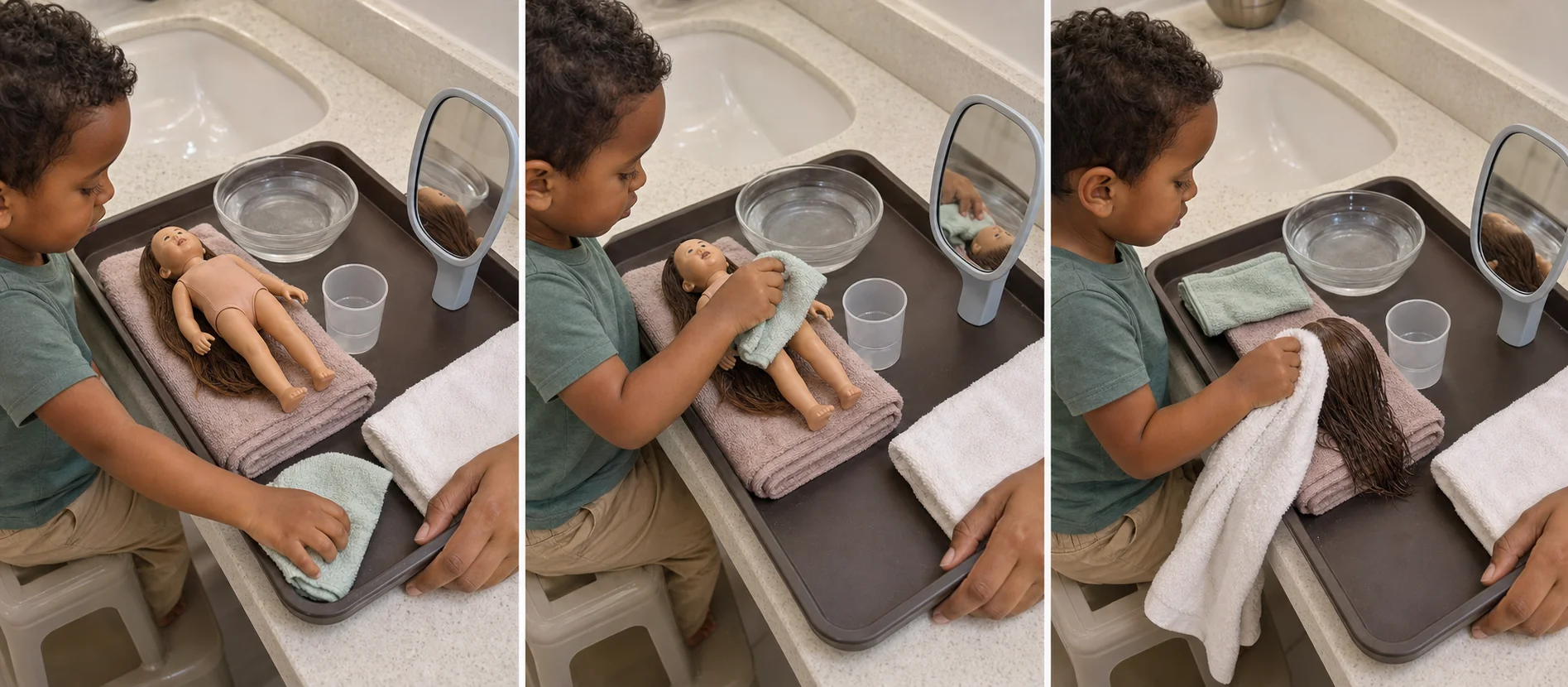
Make hair-wash practice feel more predictable by letting the doll go first. Your child chooses a cup or washcloth, gives the doll's hair one small rinse, checks it in the mirror, and pats it dry to practice a clear care routine with more control.


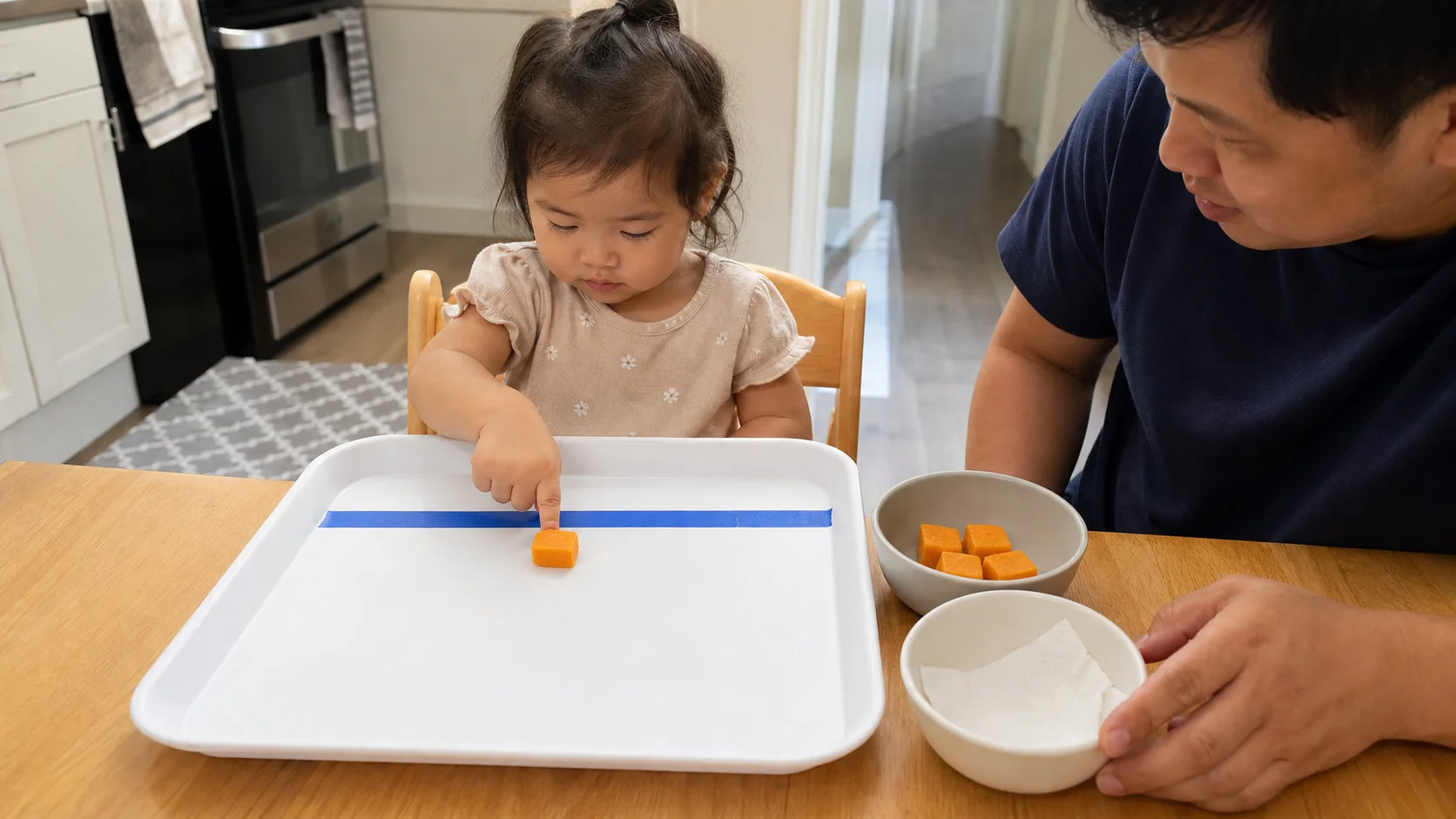
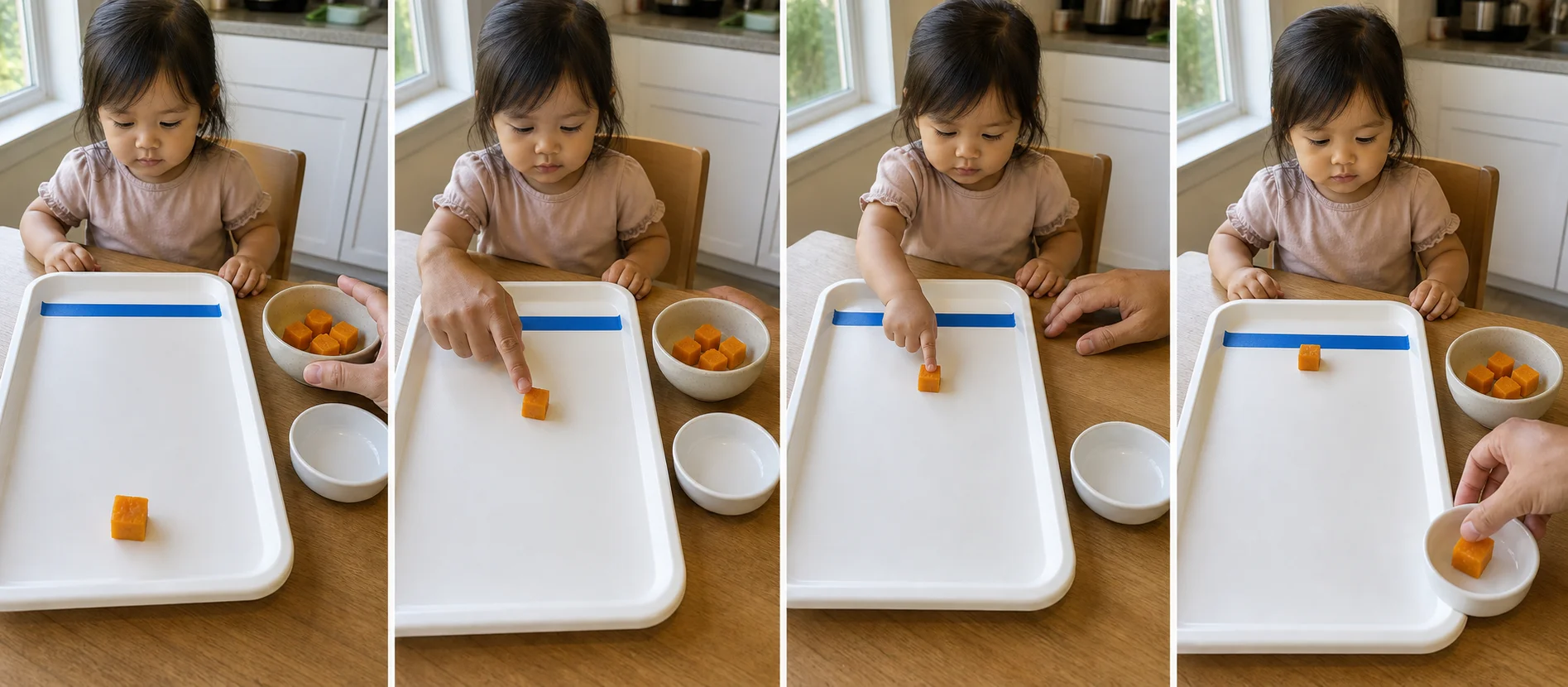
Turn familiar food pieces into a tabletop hockey challenge. Your child pushes, rolls, or flicks one piece toward a tape goal, building finger control and aim with every shot.


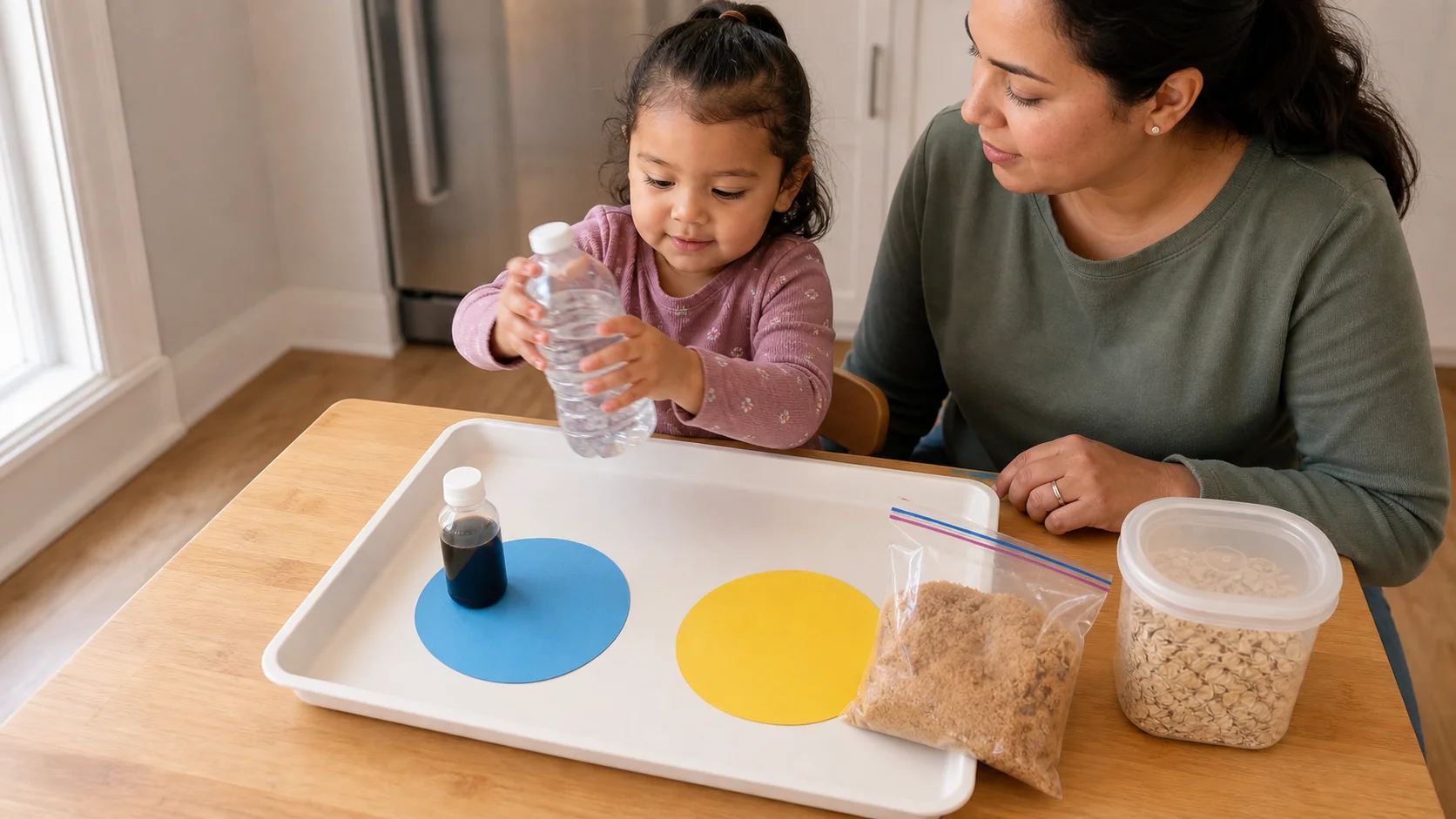
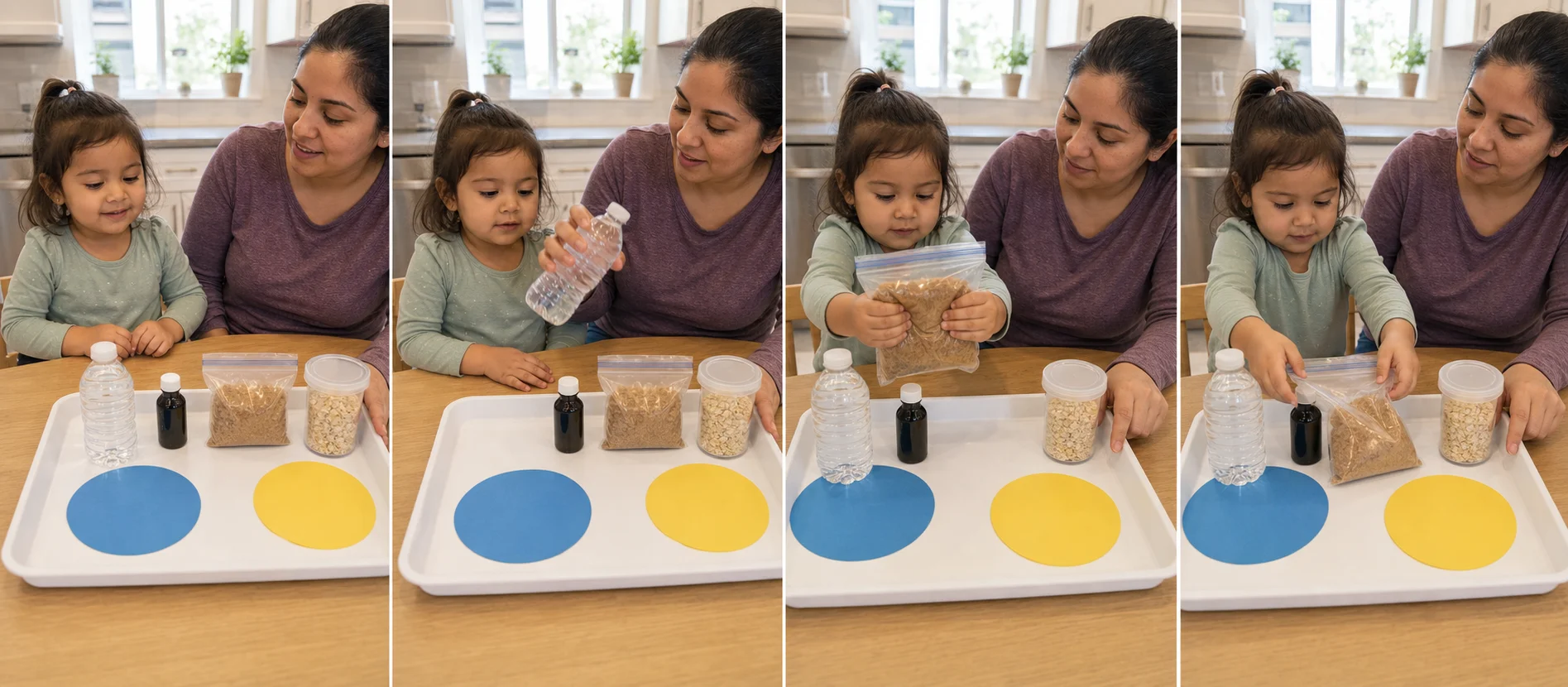
Can your child tell which sealed kitchen ingredients shake and which ones squish? Testing and sorting each container turns everyday pantry items into a low-mess sensory game that builds observation and early sorting skills.


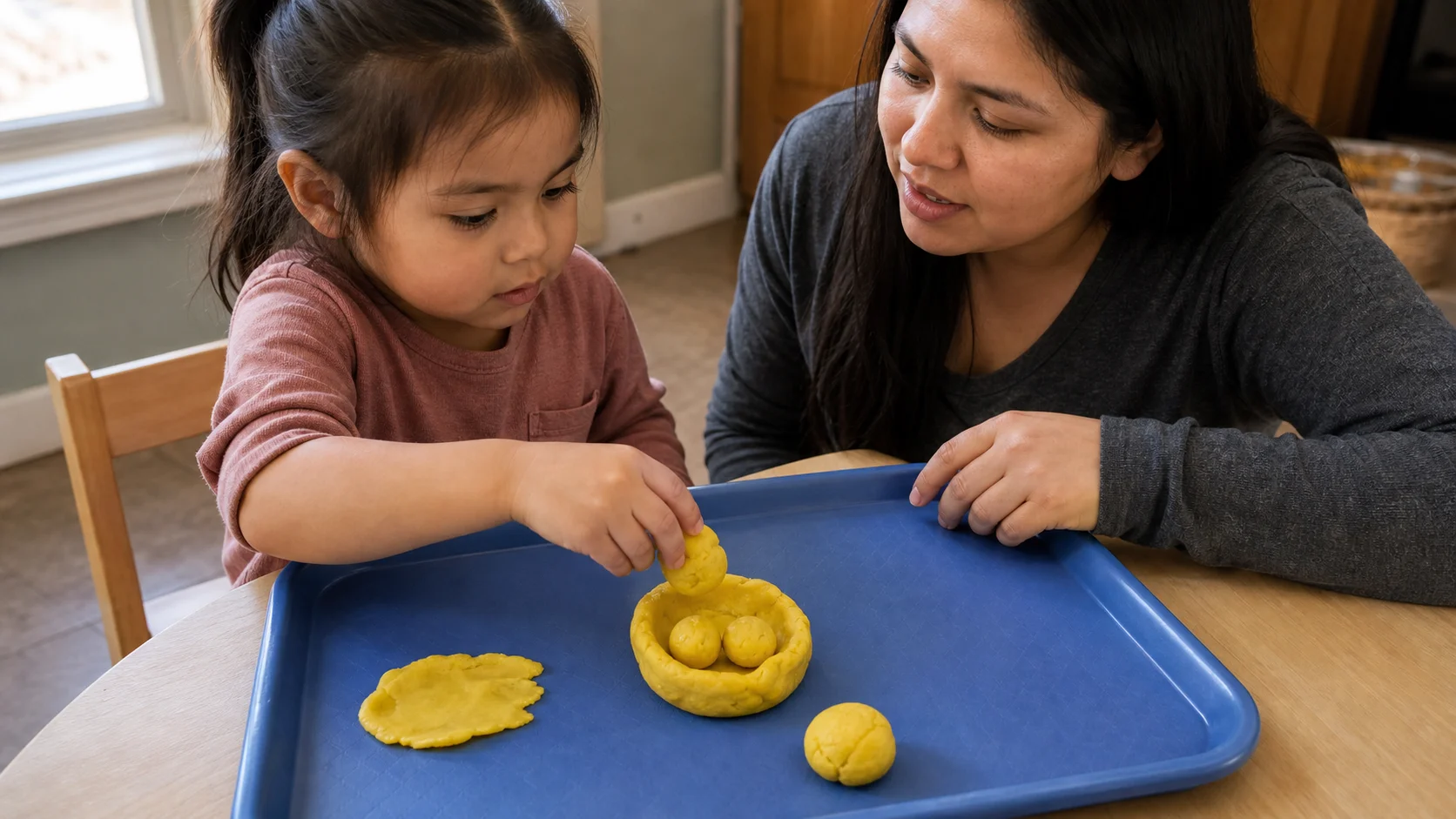
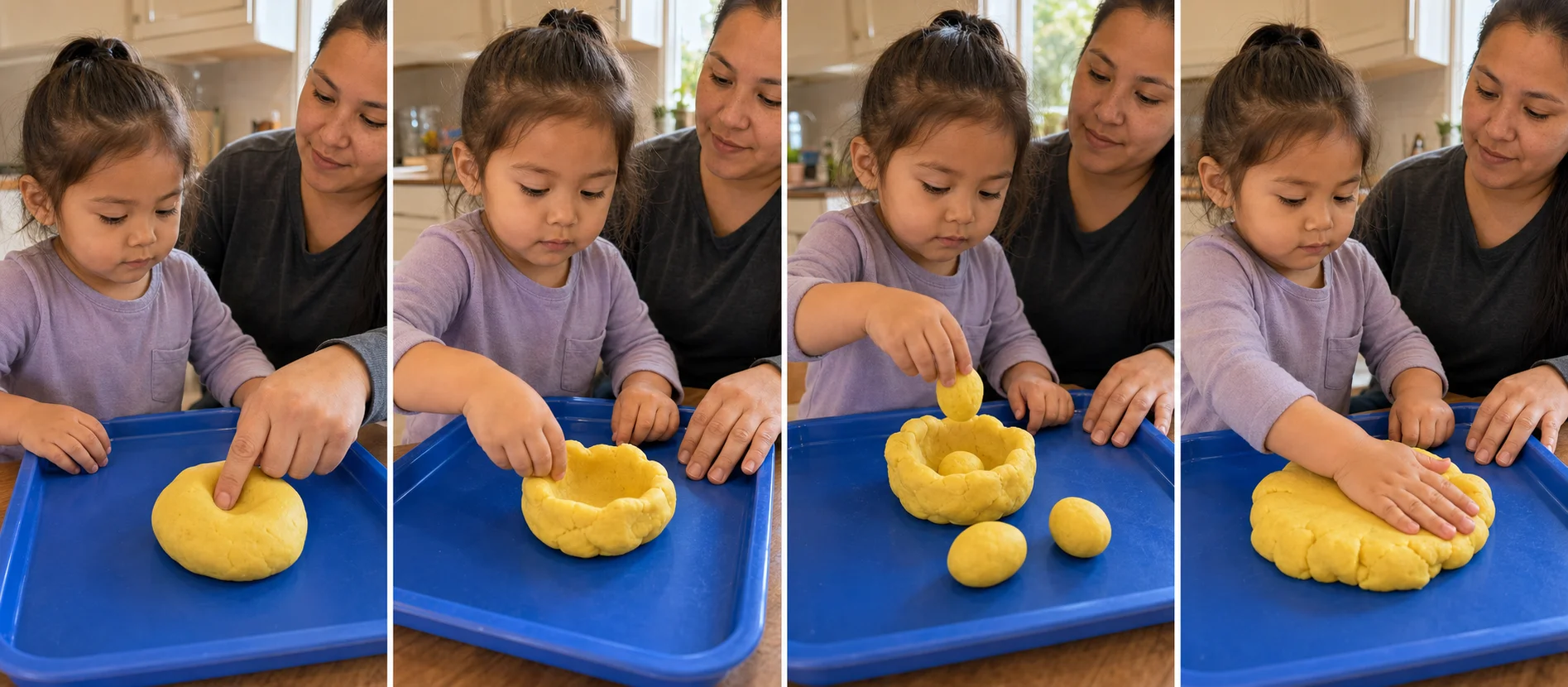
Make a tiny playdough basket, then fill it with eggs rolled between little fingers. Pressing, pinching, rolling, and dropping give hands a playful workout.


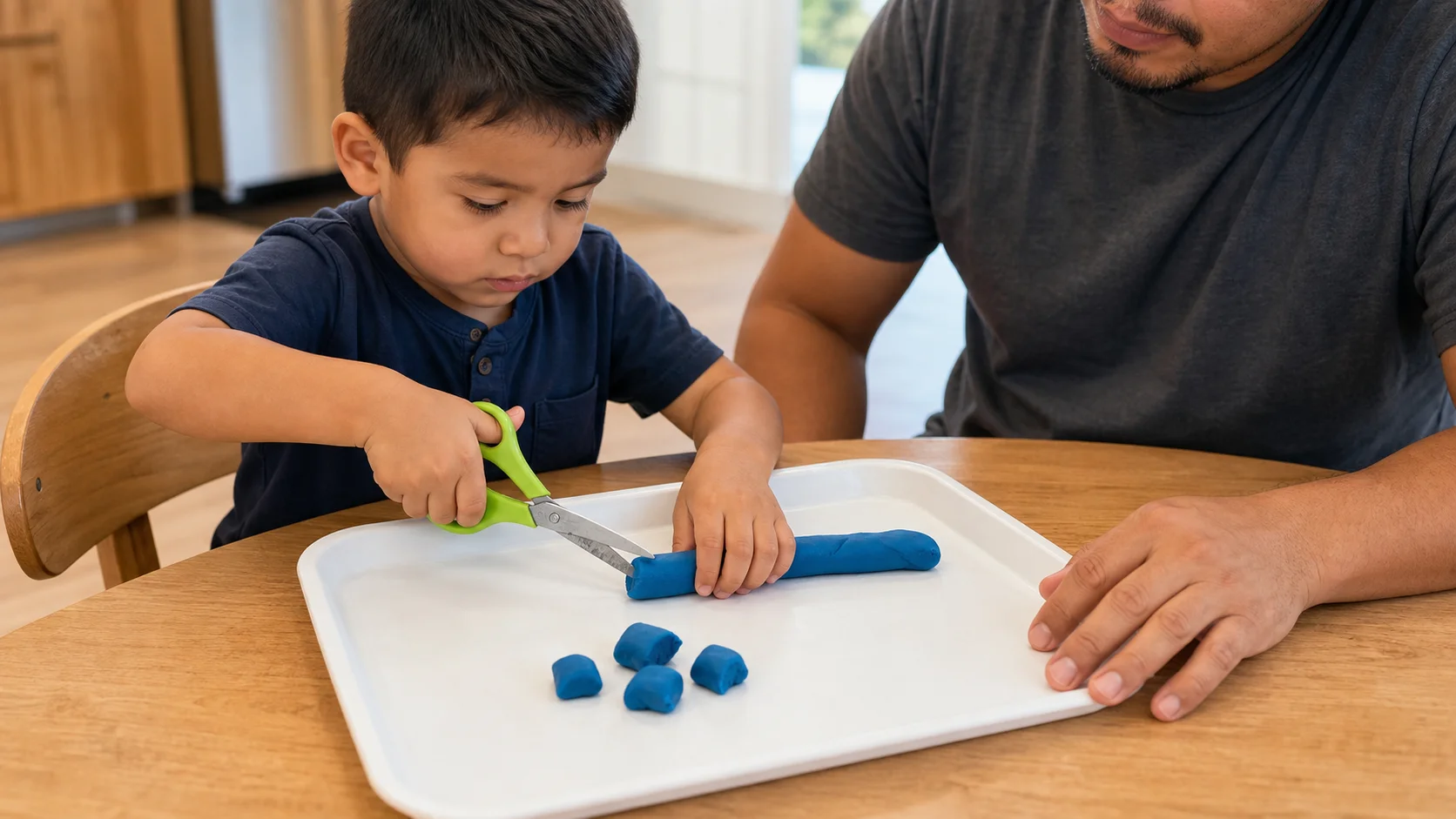
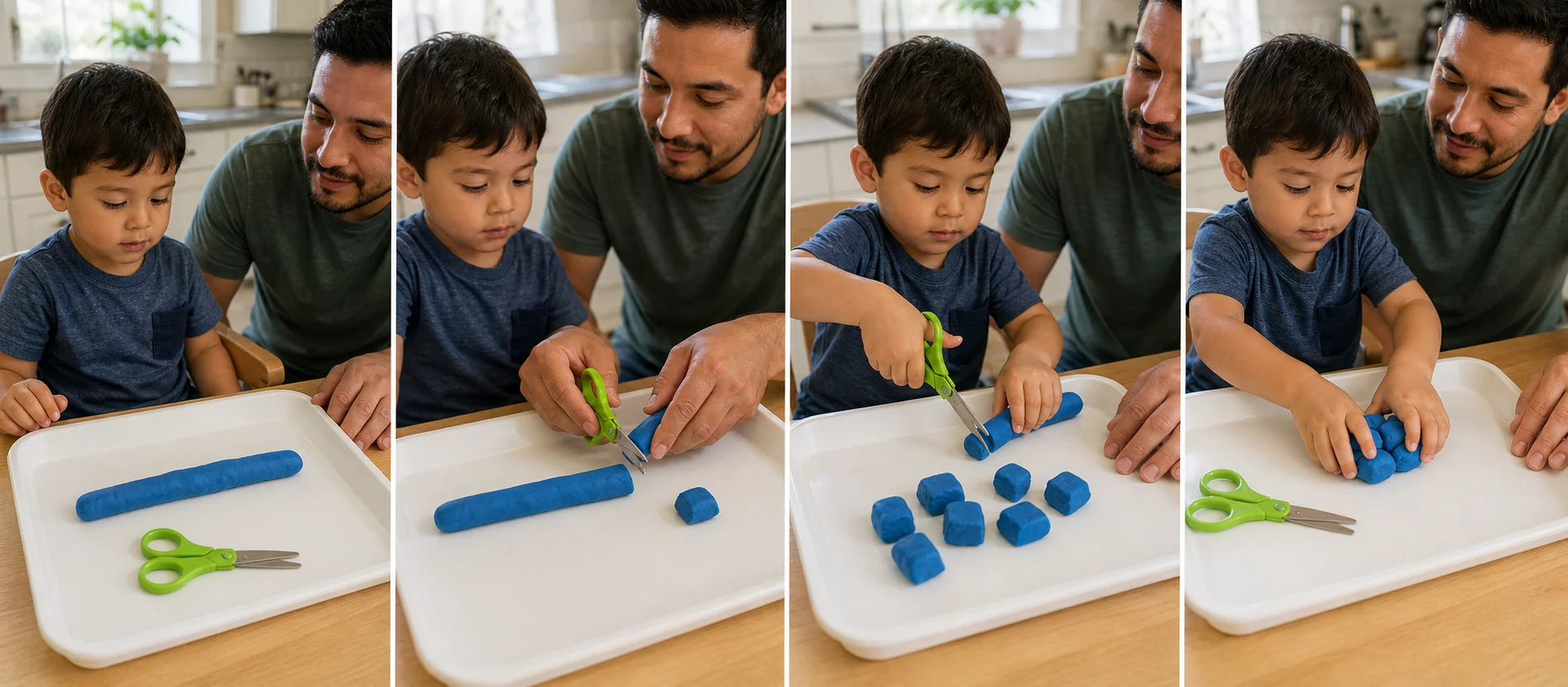
Skip the paper scraps and turn one playdough snake into satisfying scissor practice. Your child holds the dough steady, snips off small pieces, then squashes and rerolls it for repeatable two-hand coordination practice.


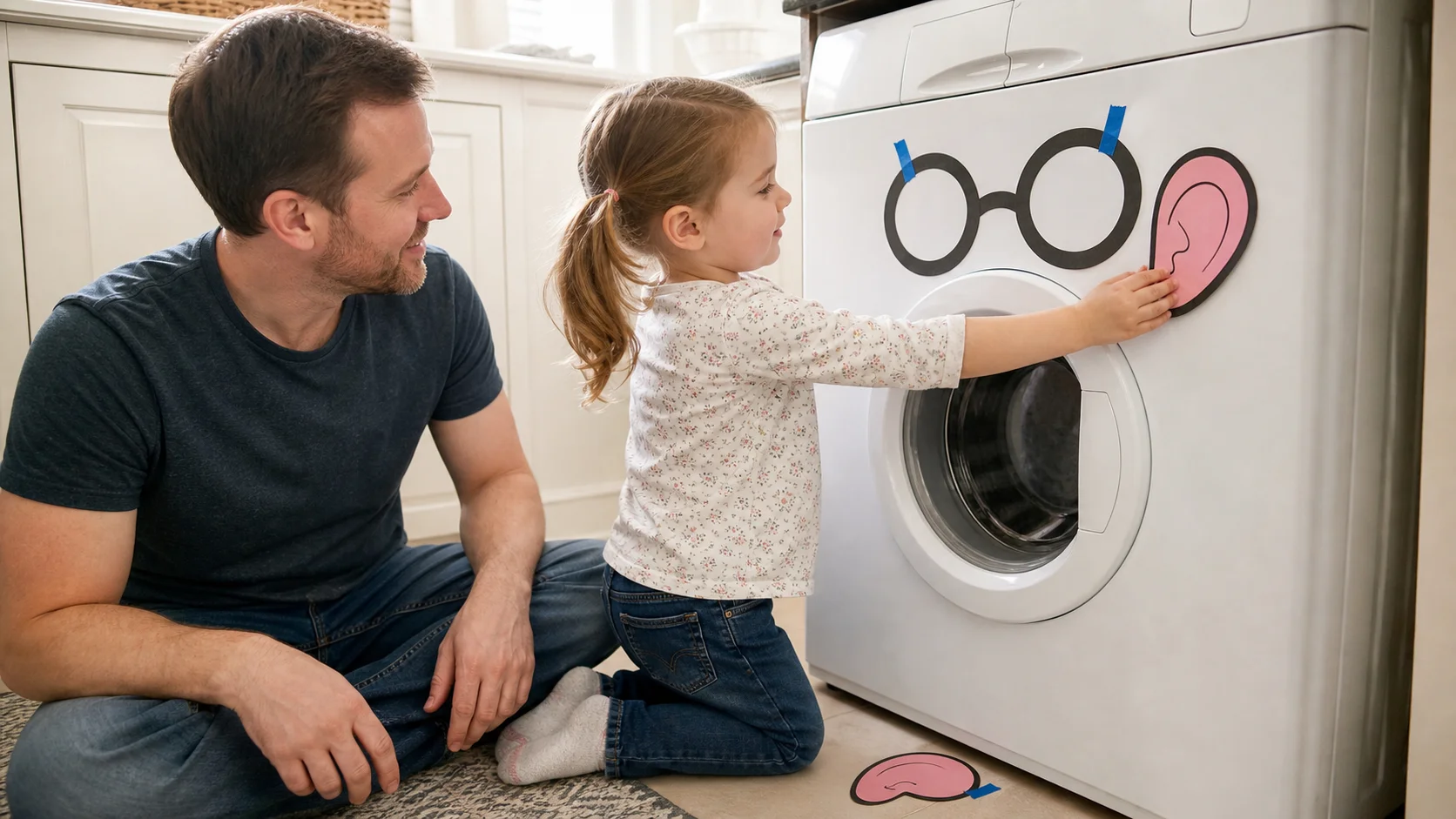
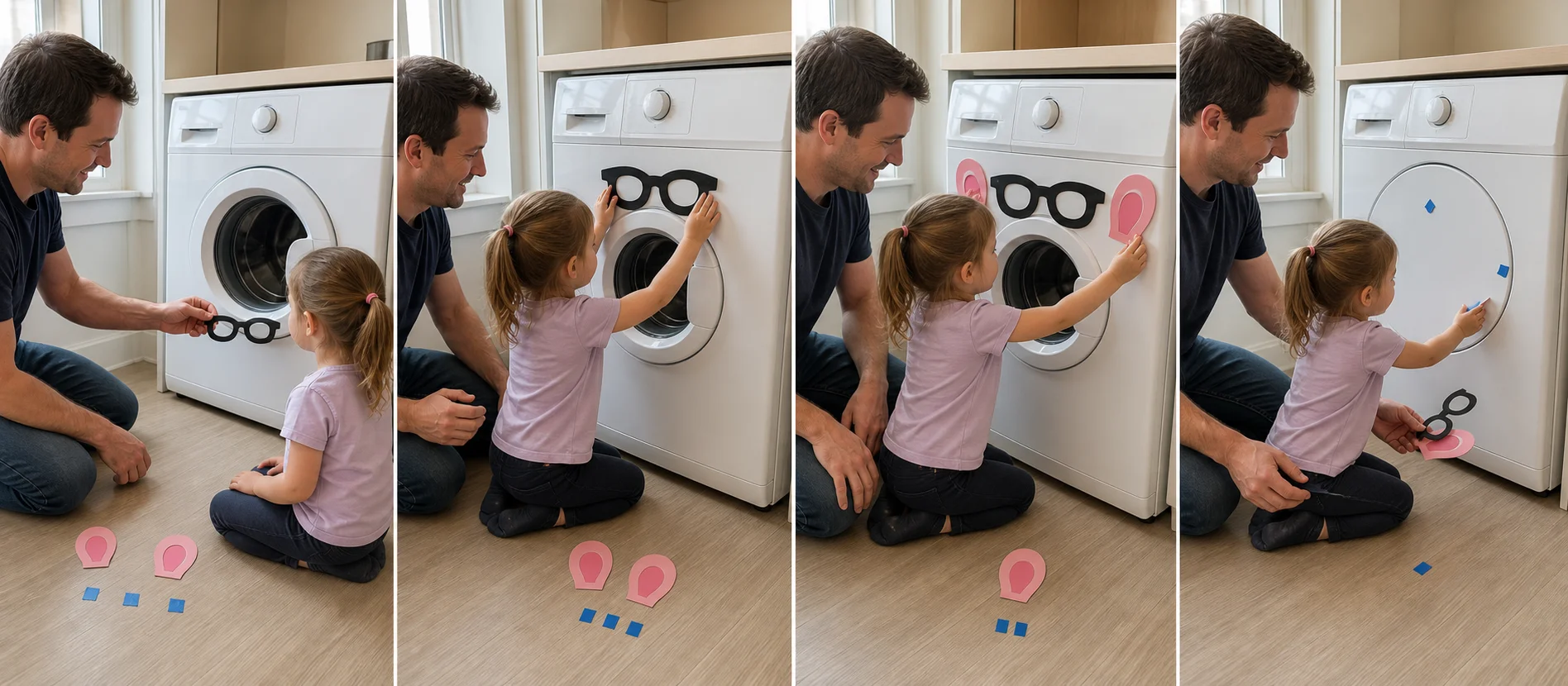
Turn an intimidating appliance into a silly face while it stays safely off. Your child sticks paper glasses and ears onto a washing machine or unplugged hair dryer, then peels them off for a quiet, low-pressure way to make the machine feel more familiar.


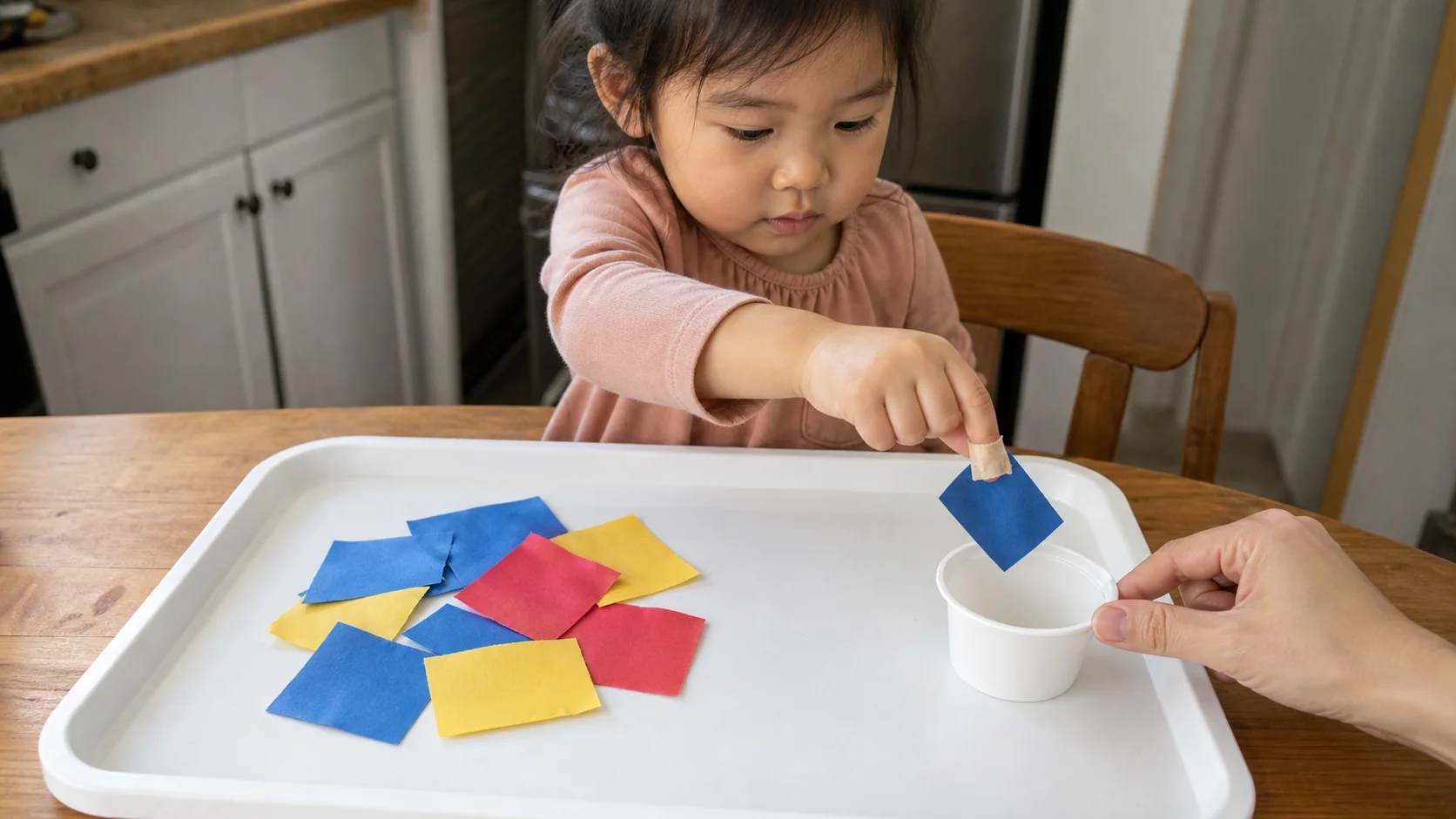
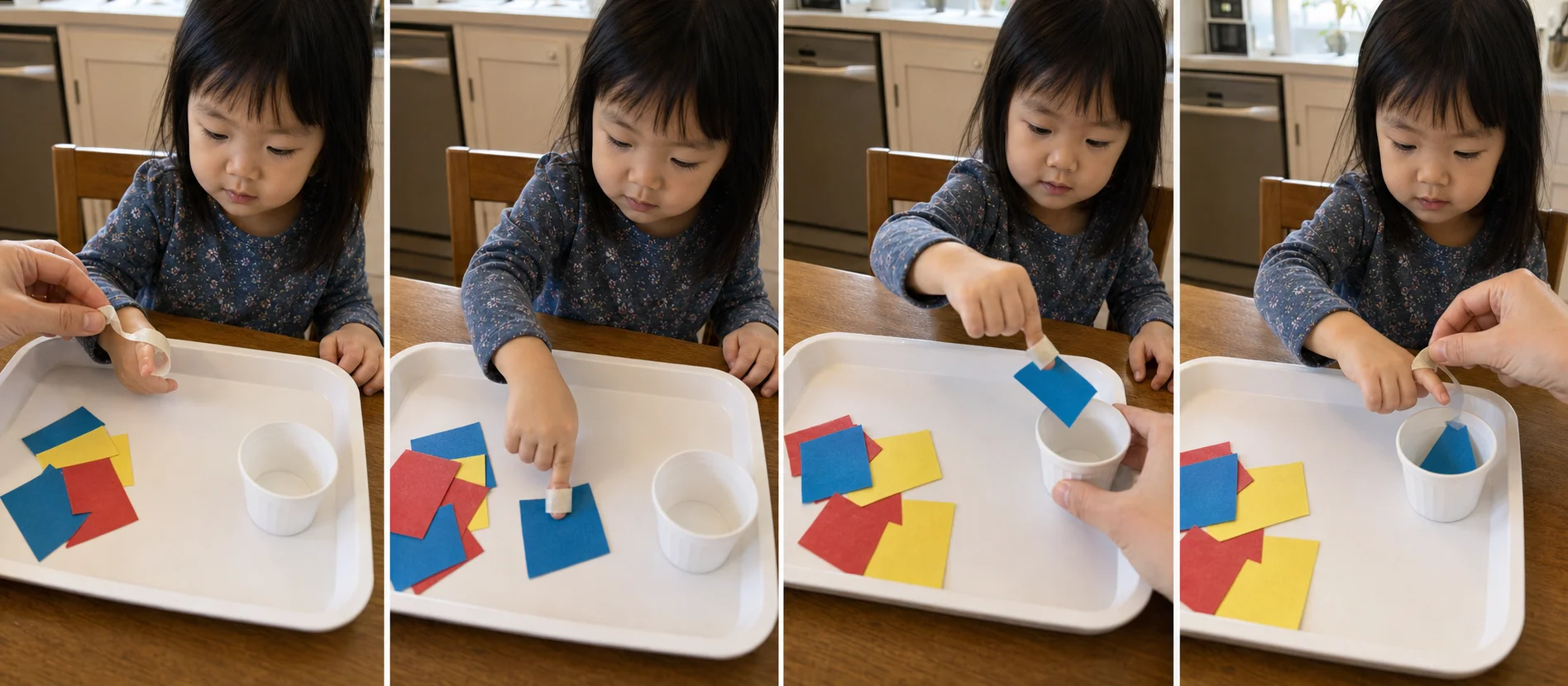
Turn a loop of tape and a few paper scraps into a sticky fingertip challenge. Your child taps, carries, and works each scrap loose over a cup for focused finger isolation and hand-eye coordination practice.


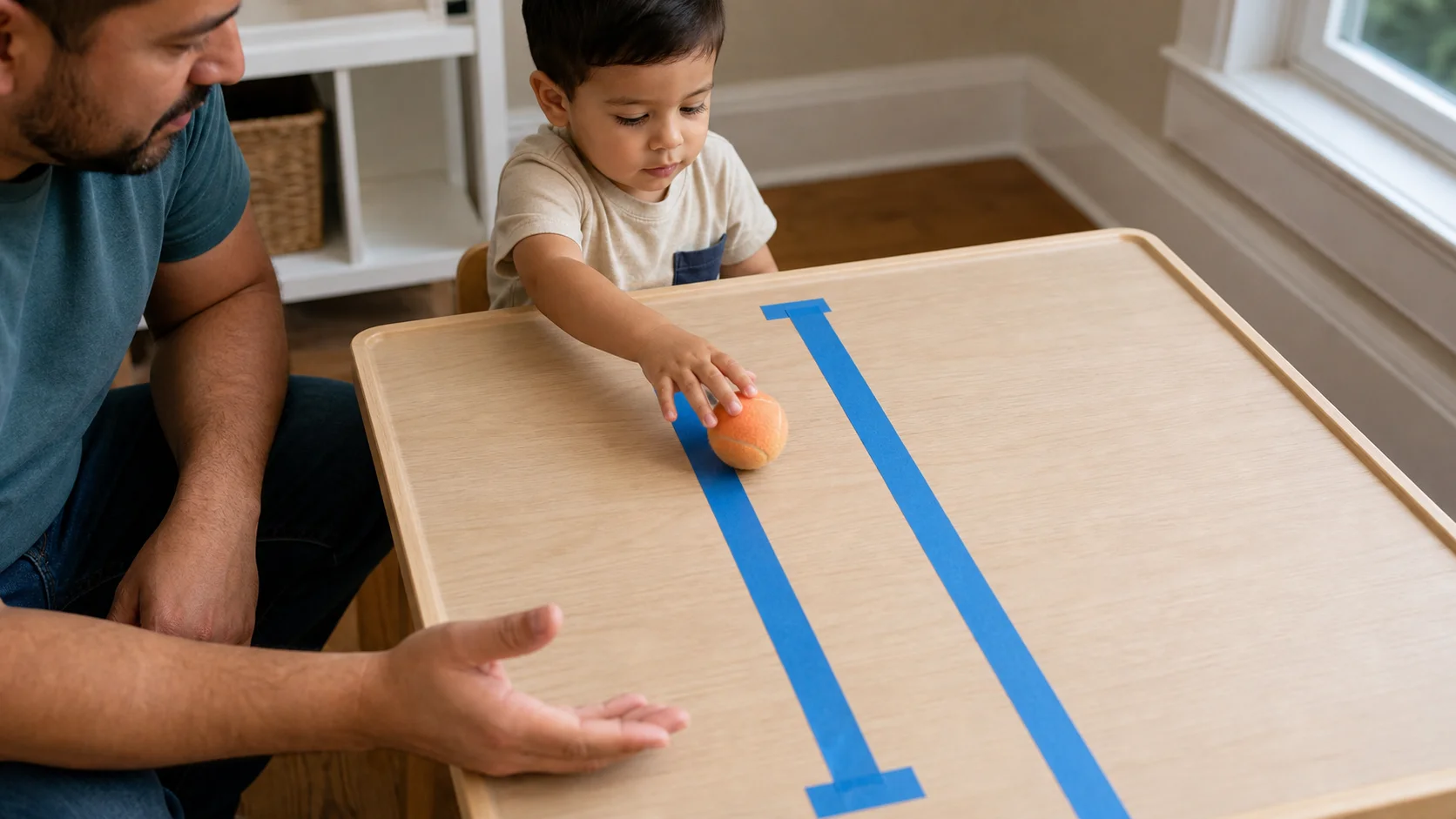
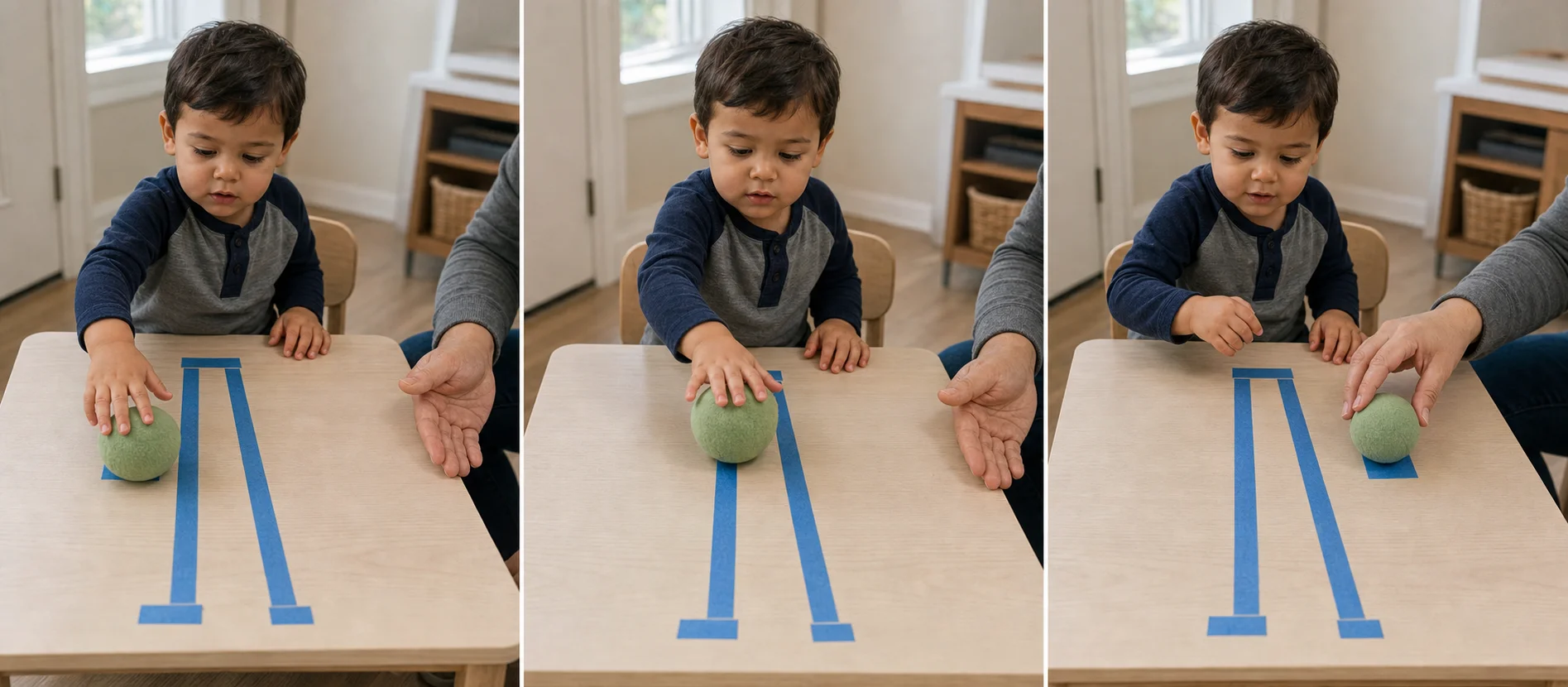
Can your child keep a ball on the road all the way to the finish? Make a tiny tabletop track with painter's tape, then have your child roll a soft ball from start to finish for focused hand and wrist control practice.


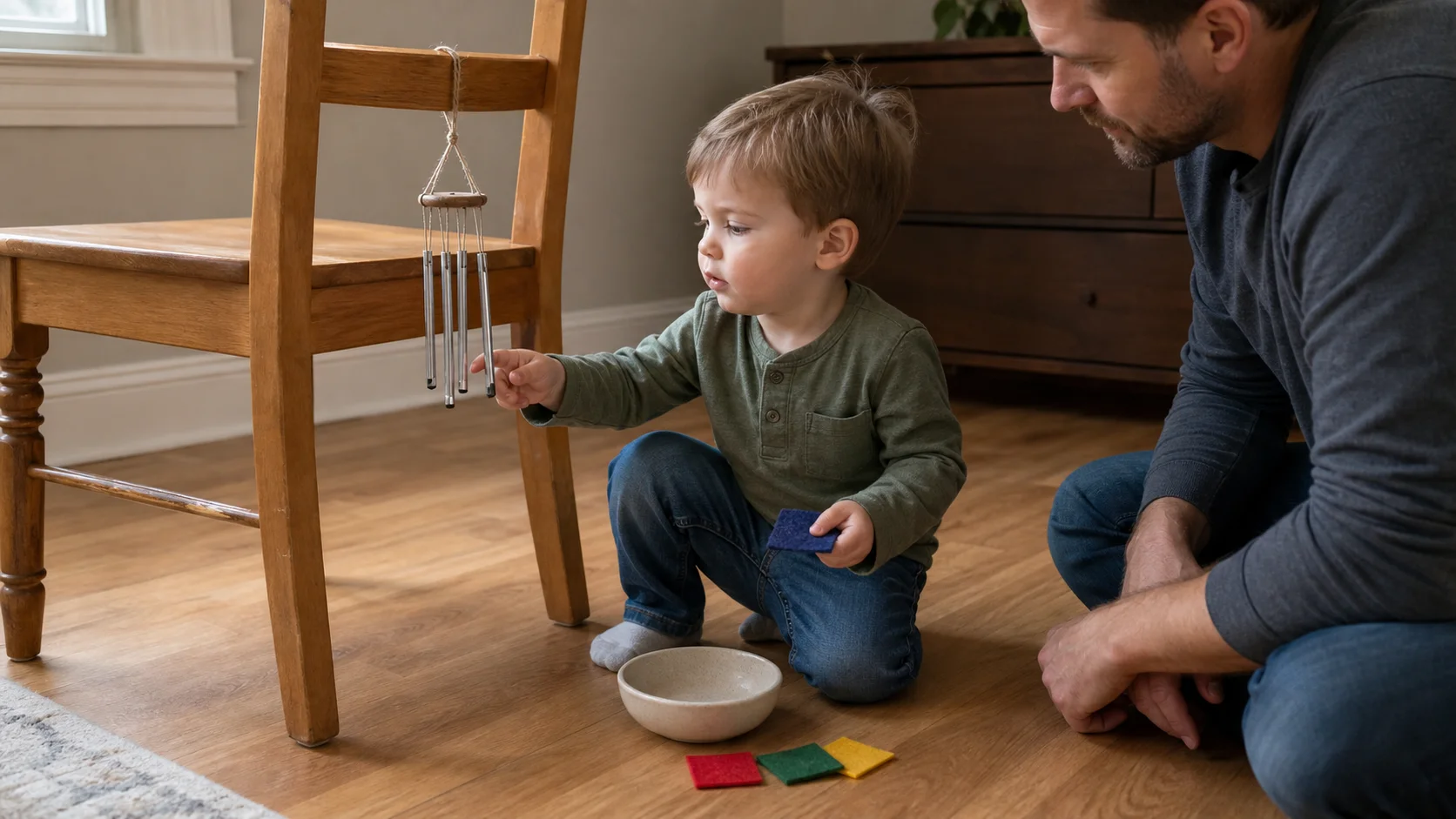
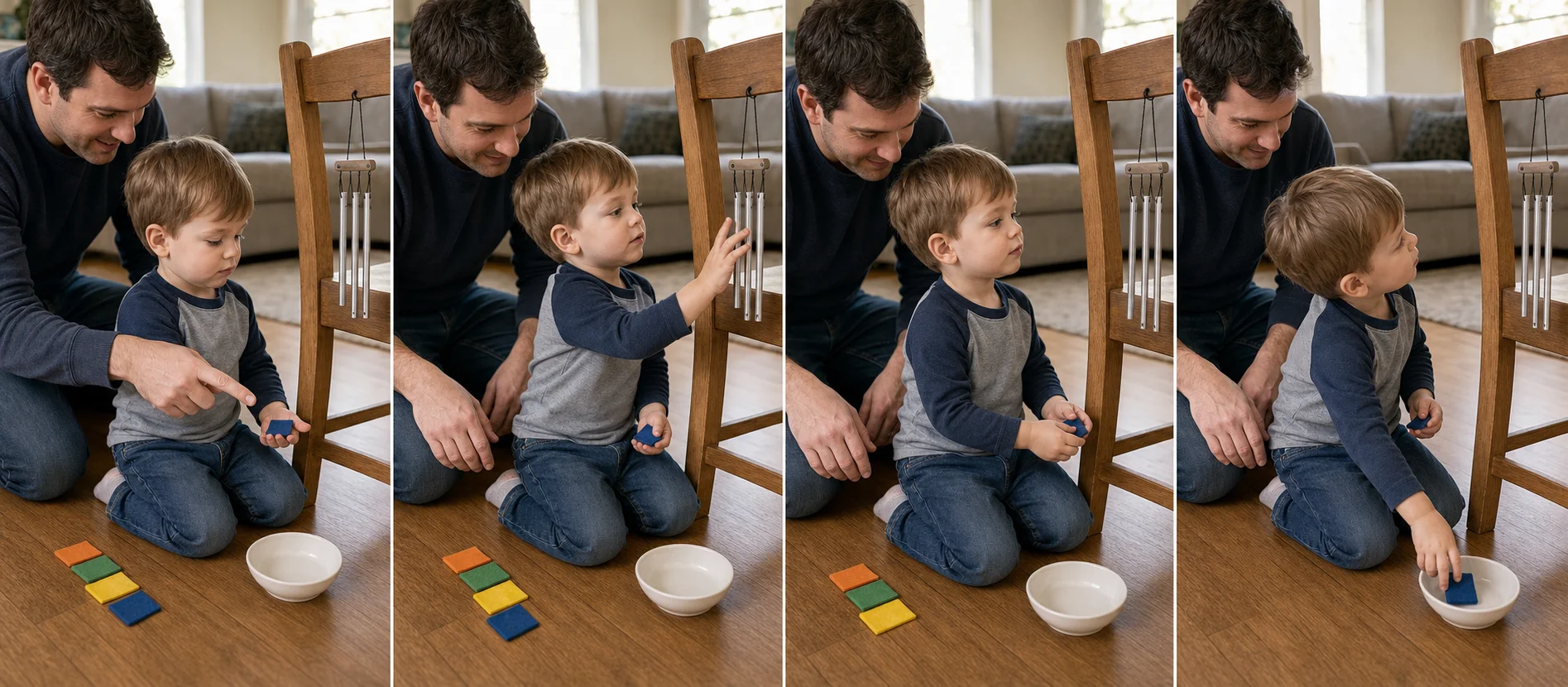
Can your child wait until a chime goes completely quiet? They brush it once, listen as the ringing fades, then drop a token when silence returns for focused listening and sound-response practice.


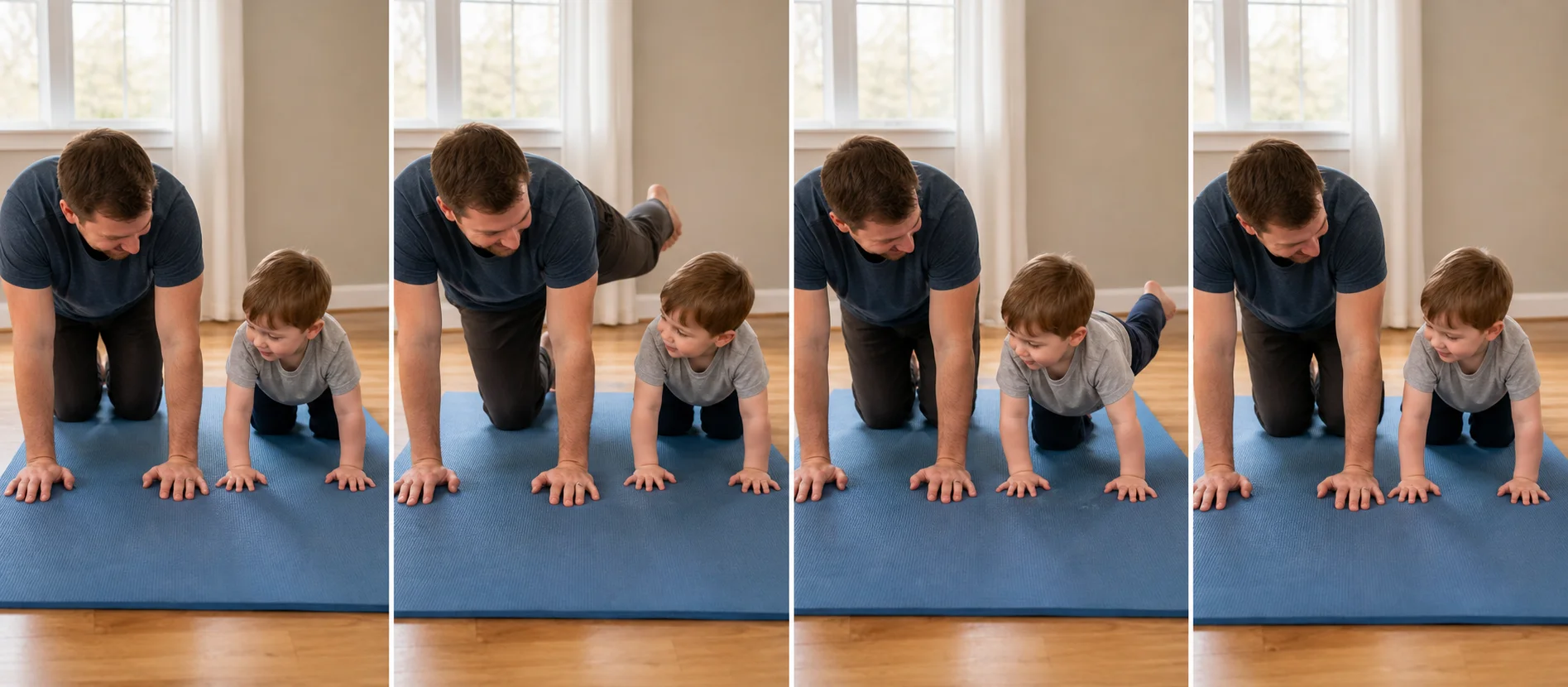
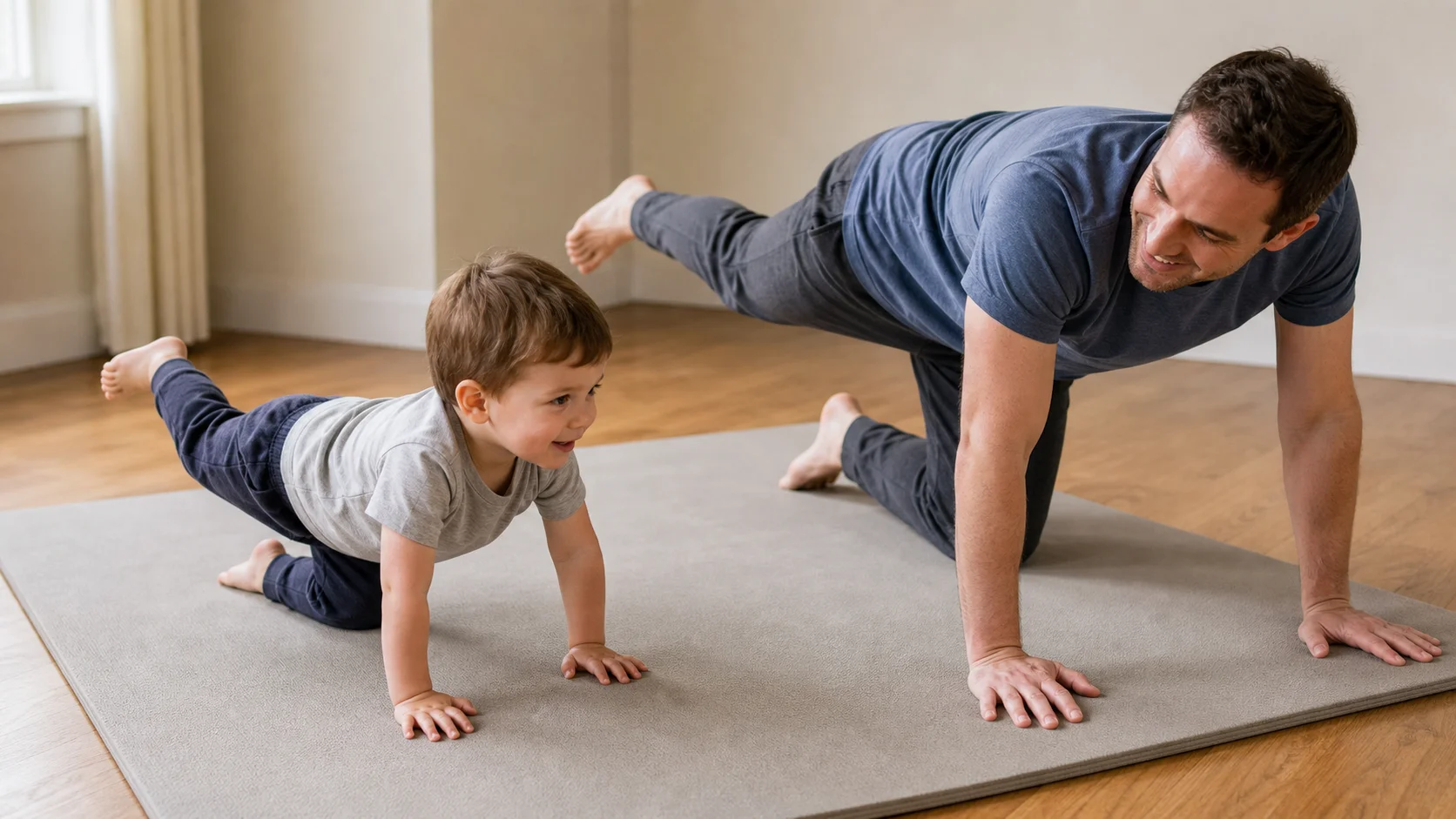
Turn one silly dog pose into a quick balance challenge. Your child gets on hands and knees, copies a one-leg lift, and resets to practice shifting weight and staying steady.


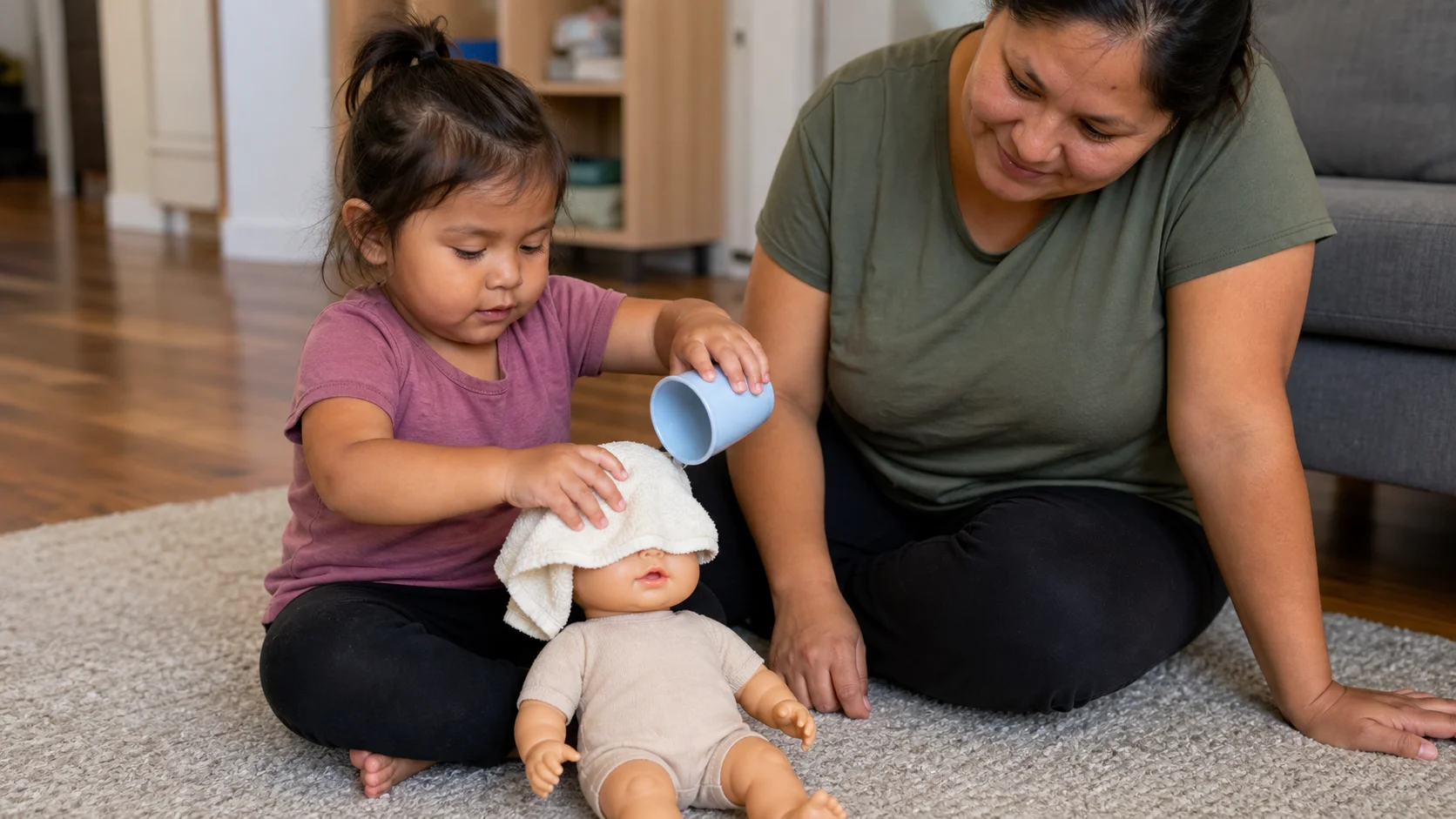
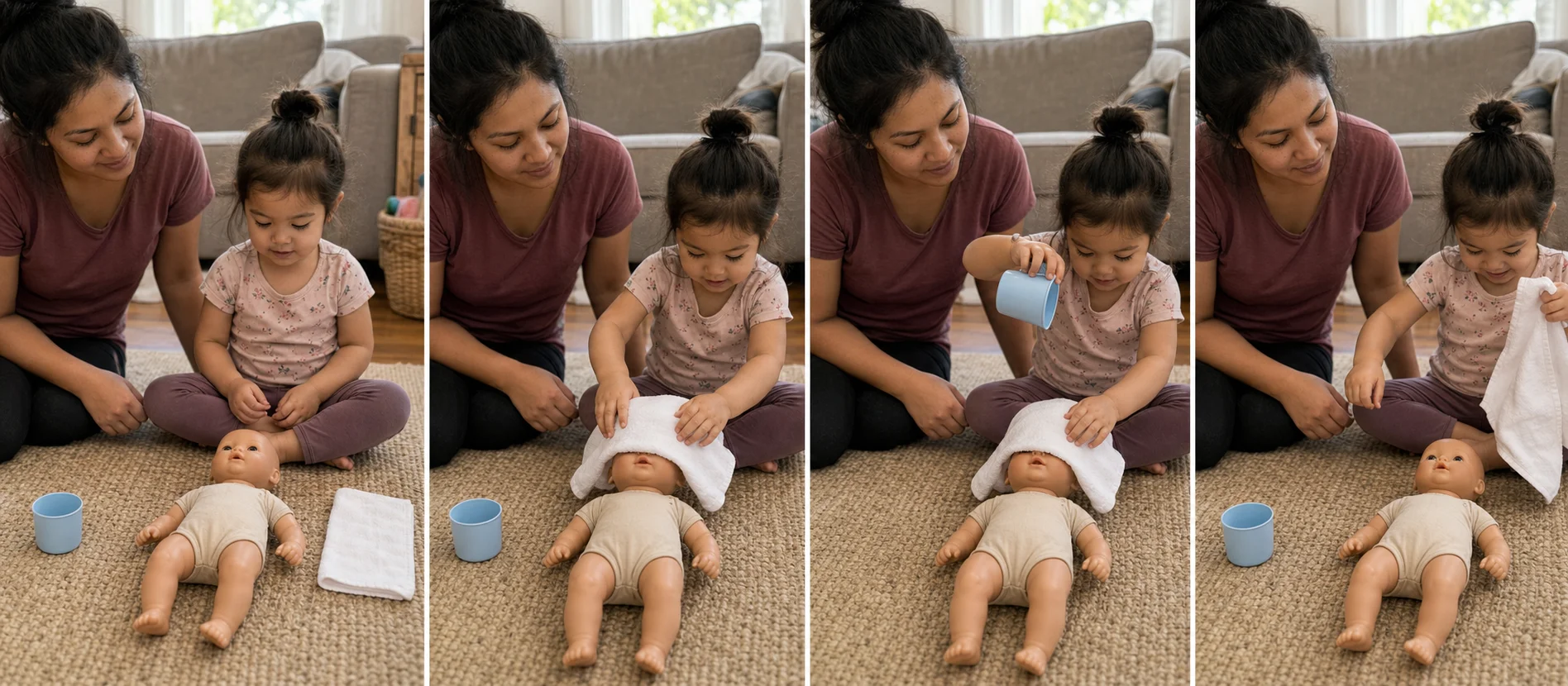
Make hair-rinse practice feel more predictable with a doll, dry washcloth, and empty cup. Your child covers the doll's face, pretends to rinse its hair, then lifts the cloth to finish the familiar three-step routine.


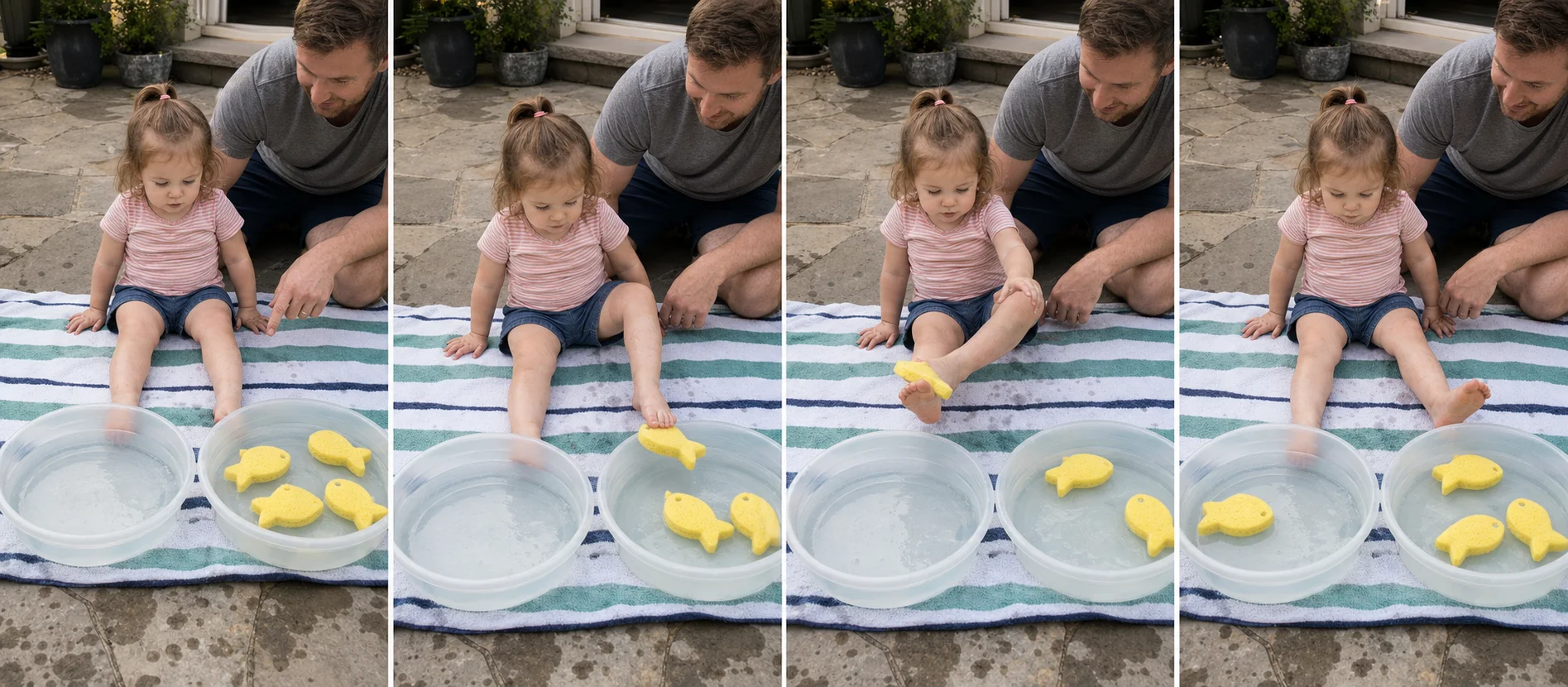
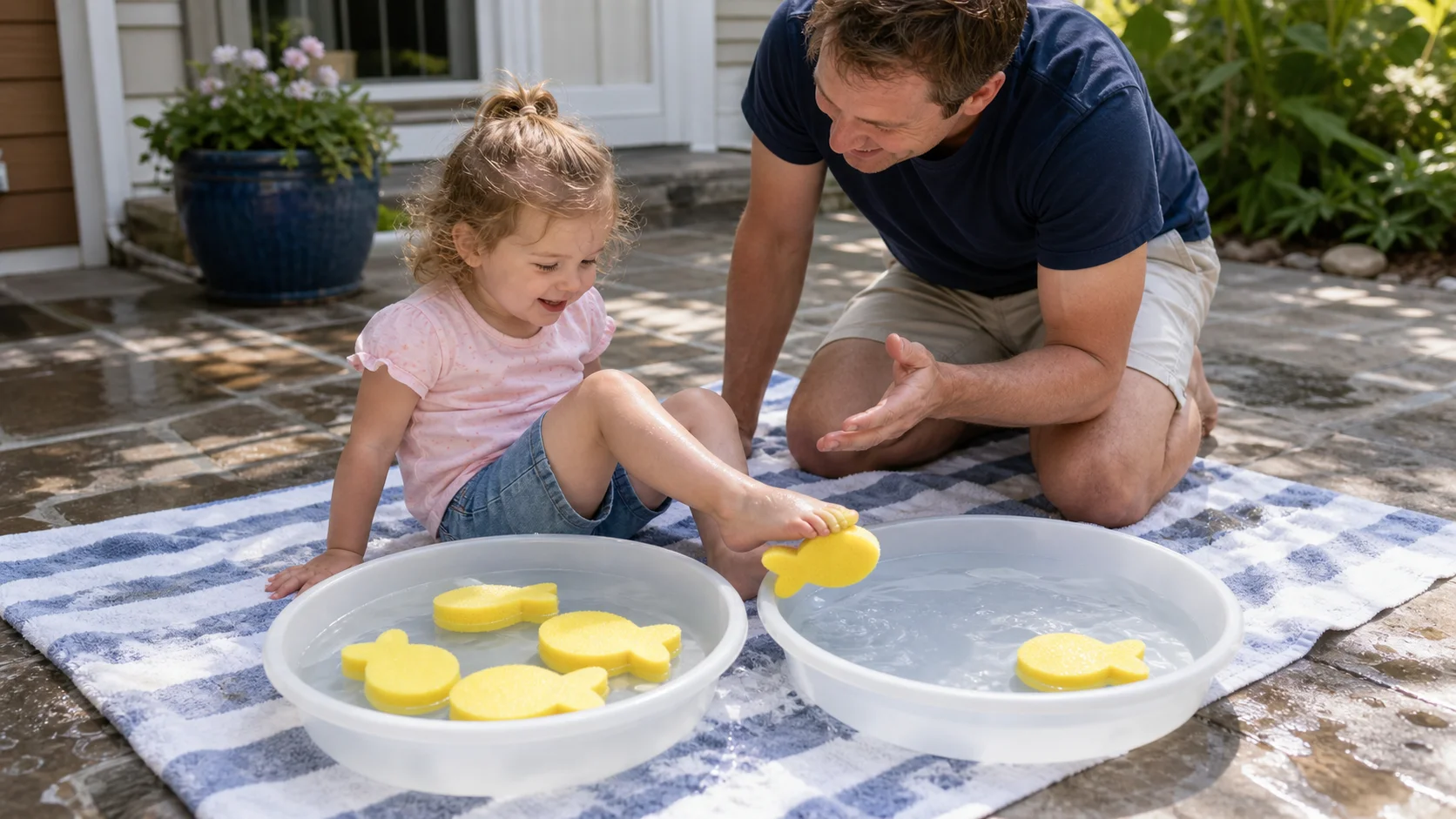
Can your child catch a floating toy with one foot and move it to the next bowl? This splashy fishing challenge turns two shallow water bins into gross-motor coordination and sensory play.


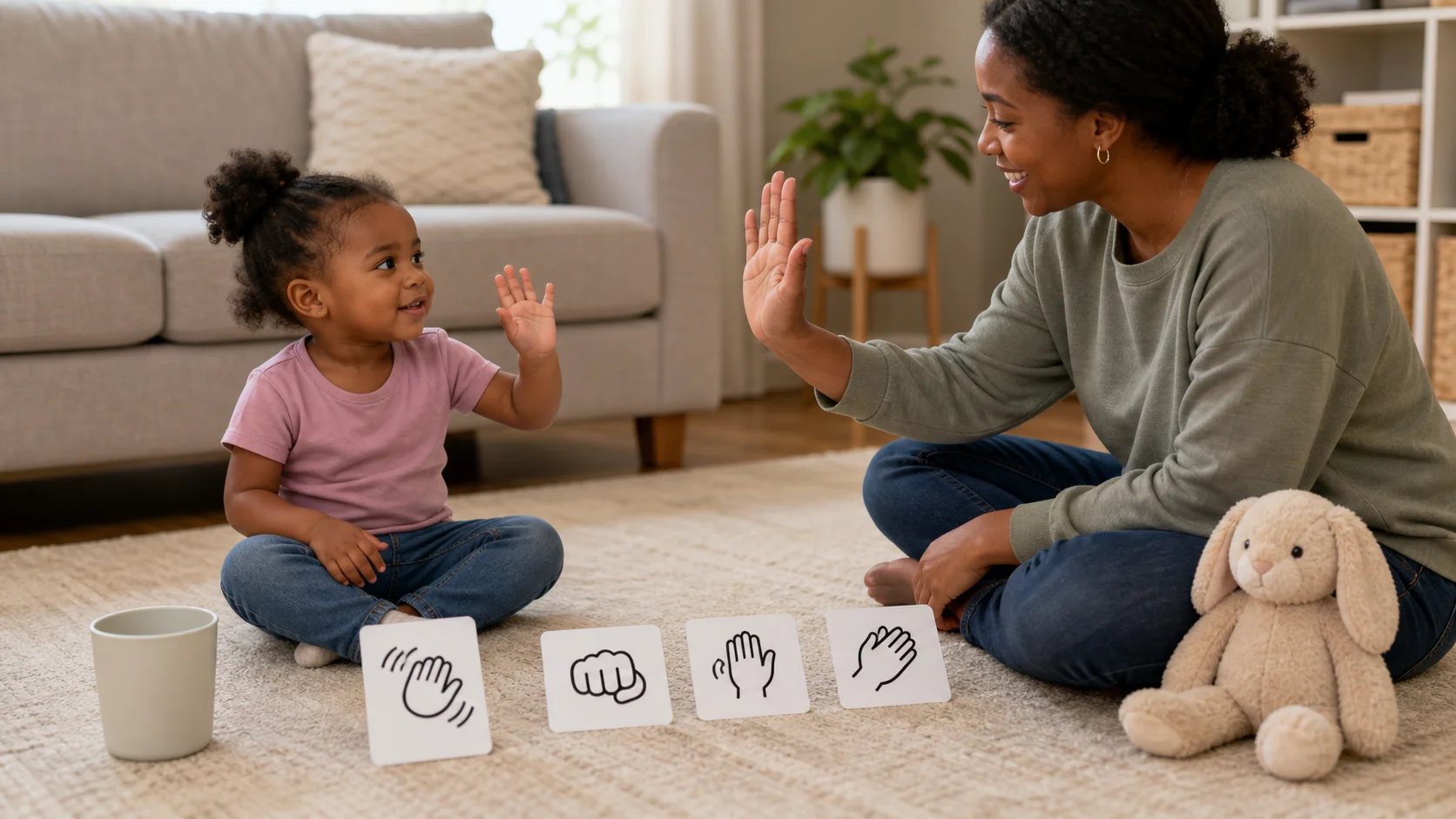
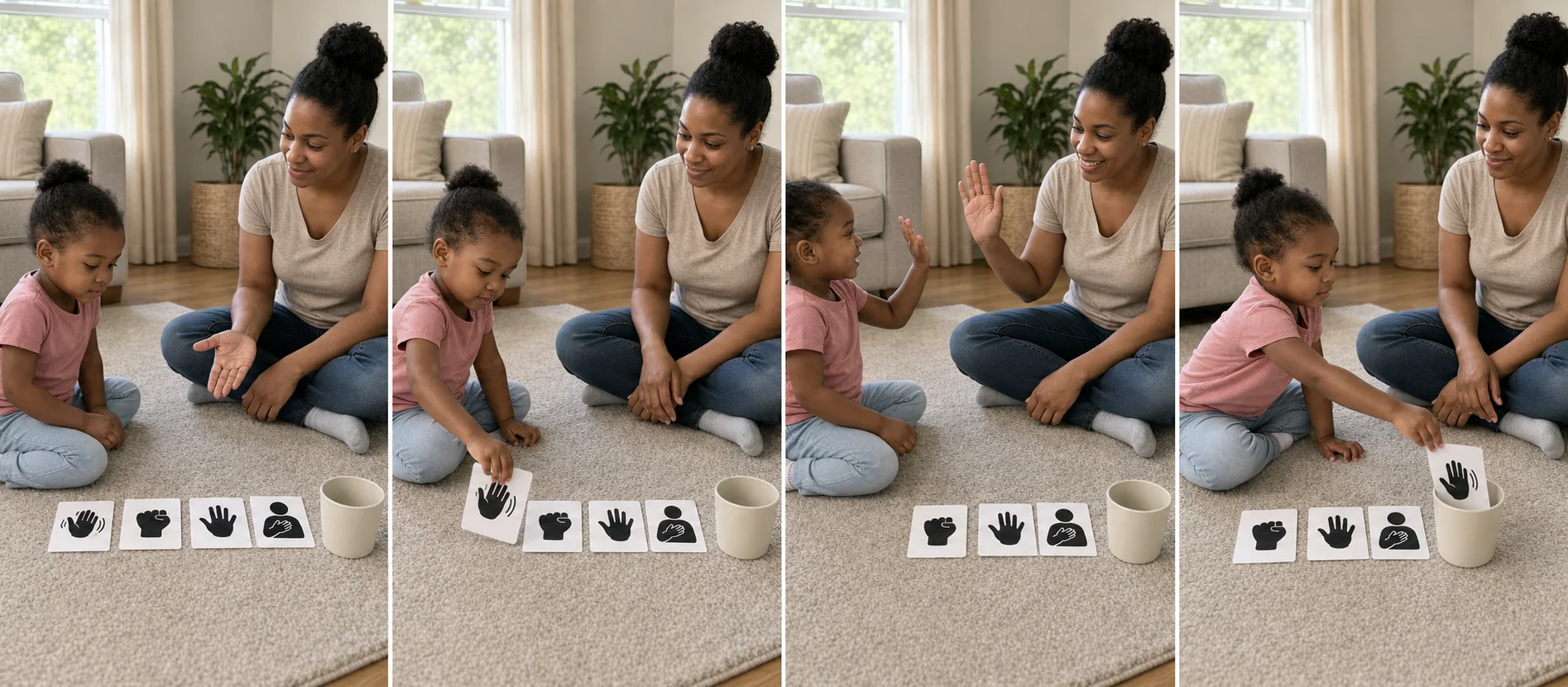
Give your child an easy way to choose how they say hello. They pick a greeting card, try that hello, then drop the card in the done cup.


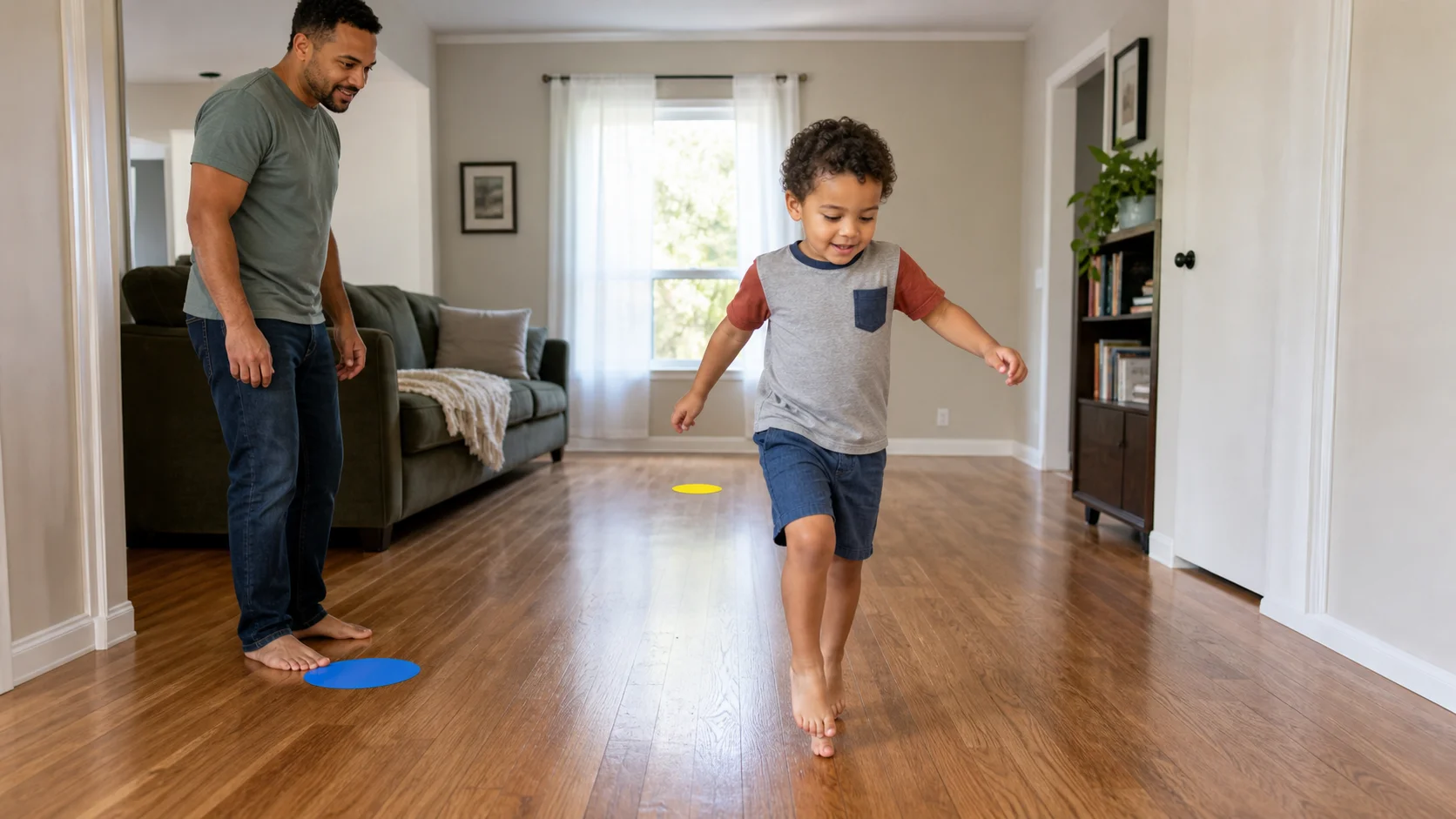
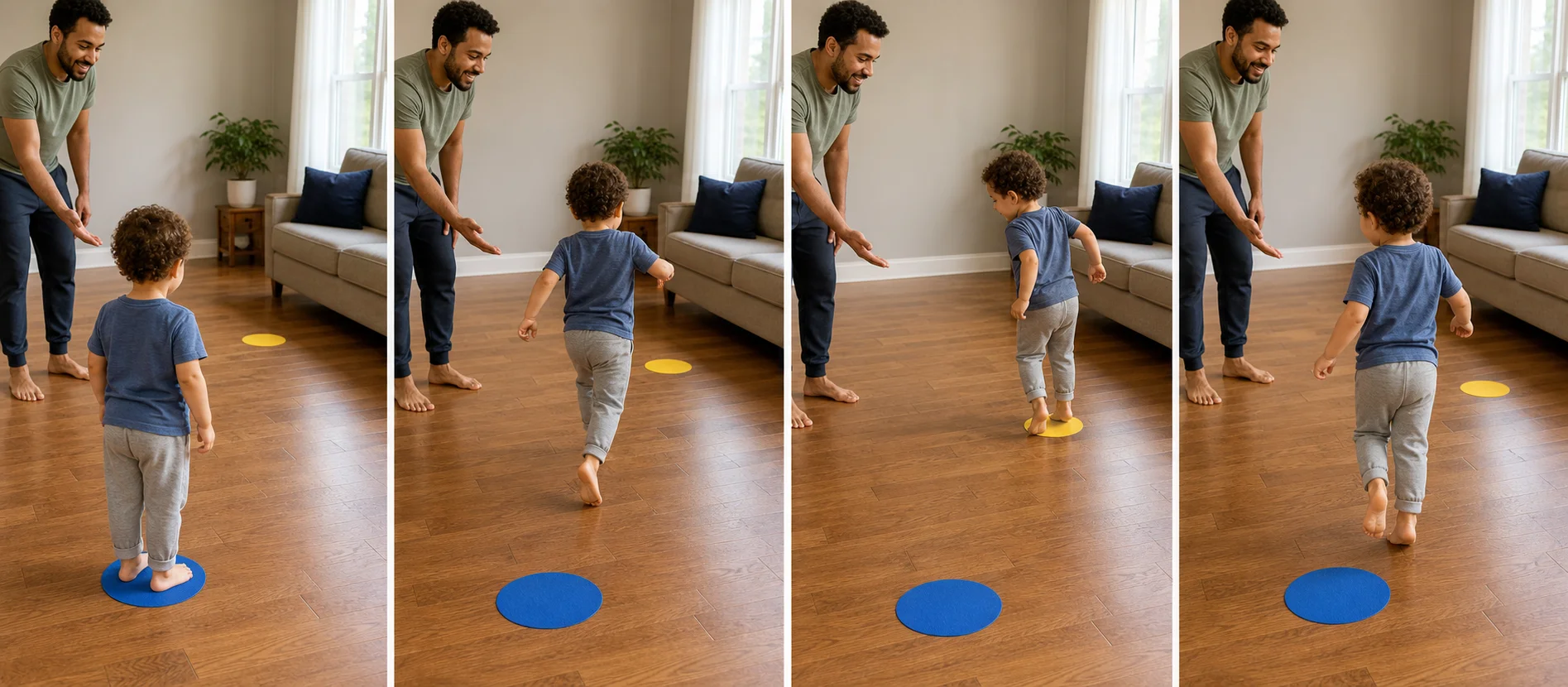
Turn a burst of indoor energy into a quick movement-switching challenge. Your child stomps across the room with heavy feet, then runs back quietly on their toes to practice balance, coordination, and body control.

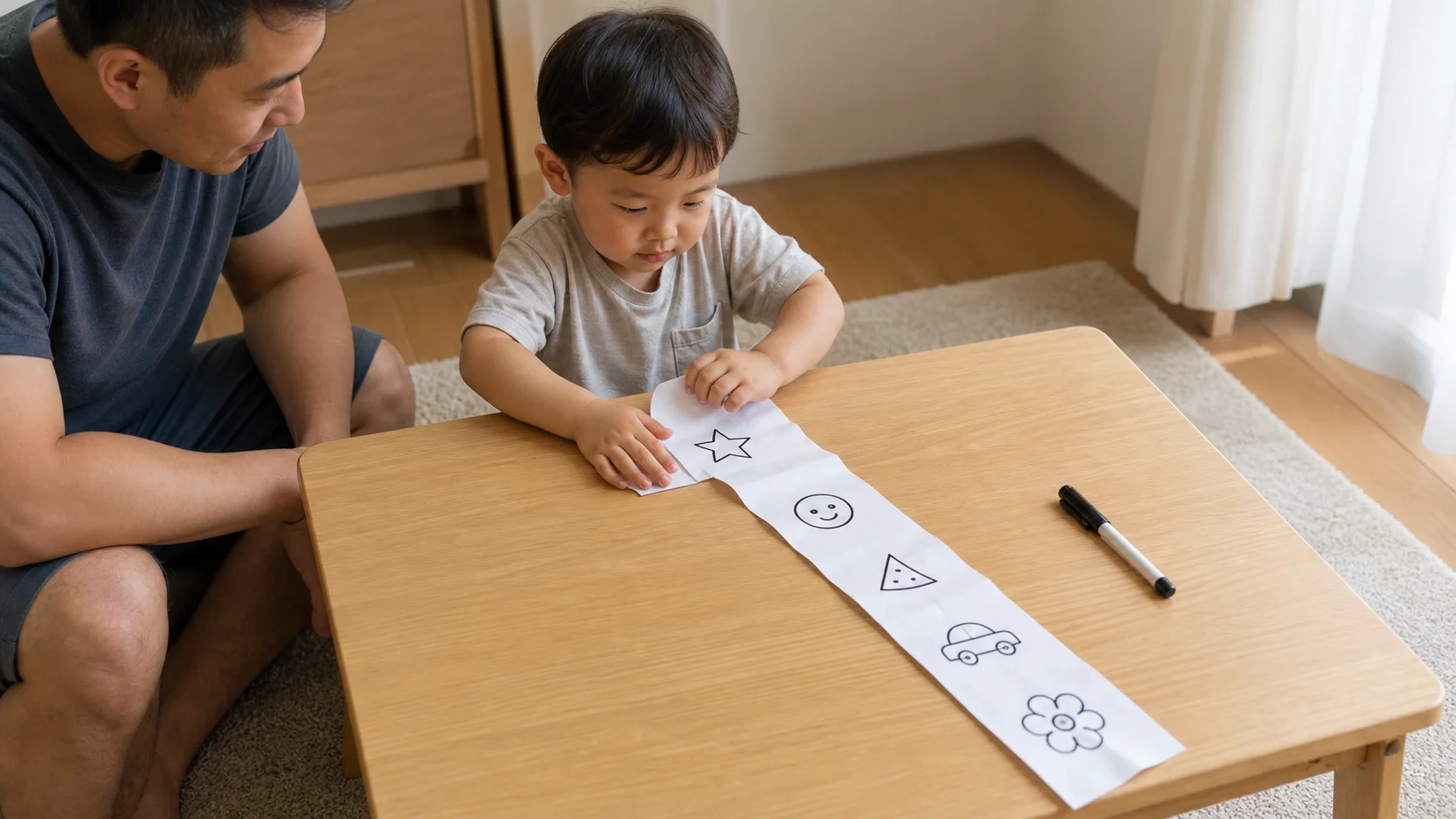
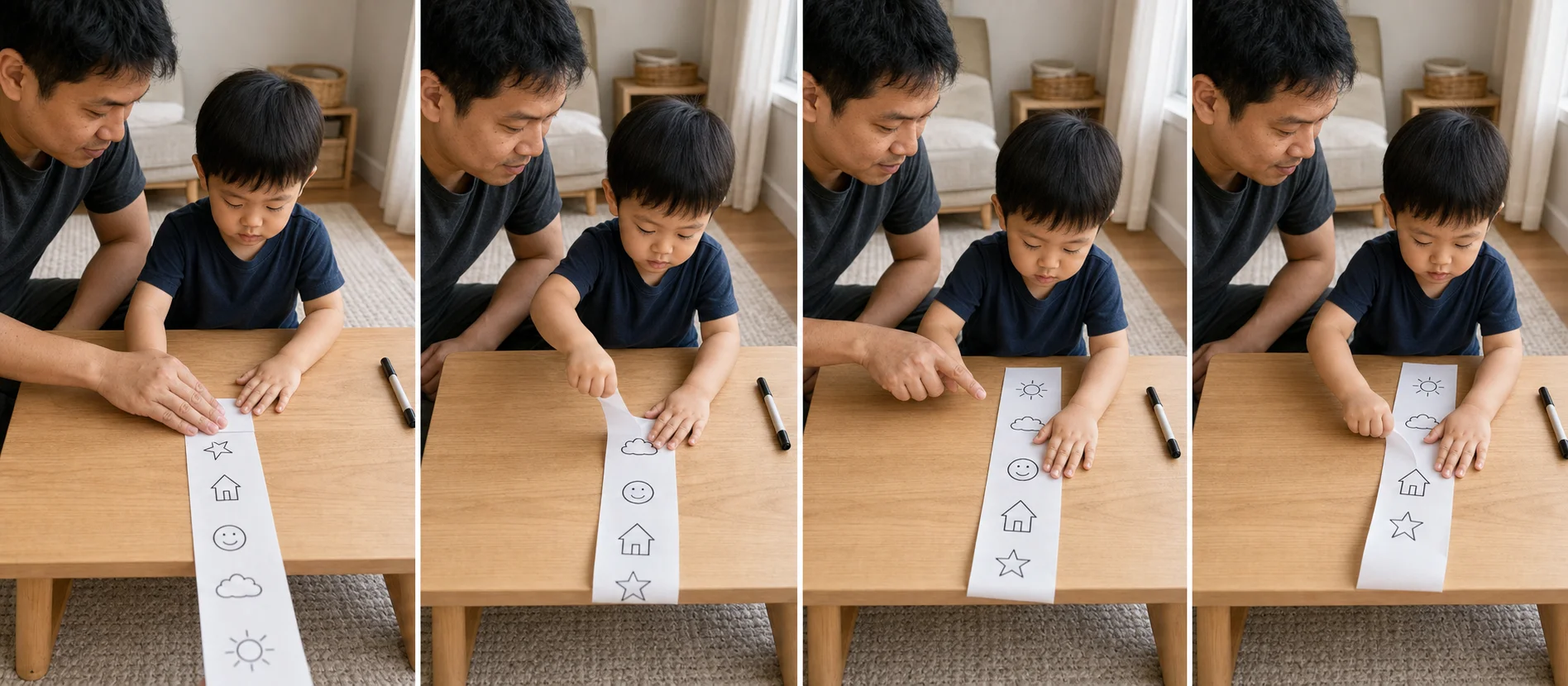
Turn a strip of paper into a picture-by-picture finger challenge. Your child traps one end under their wrist, gathers the strip into their hand, and watches each drawing slide closer while practicing small, controlled hand movements.