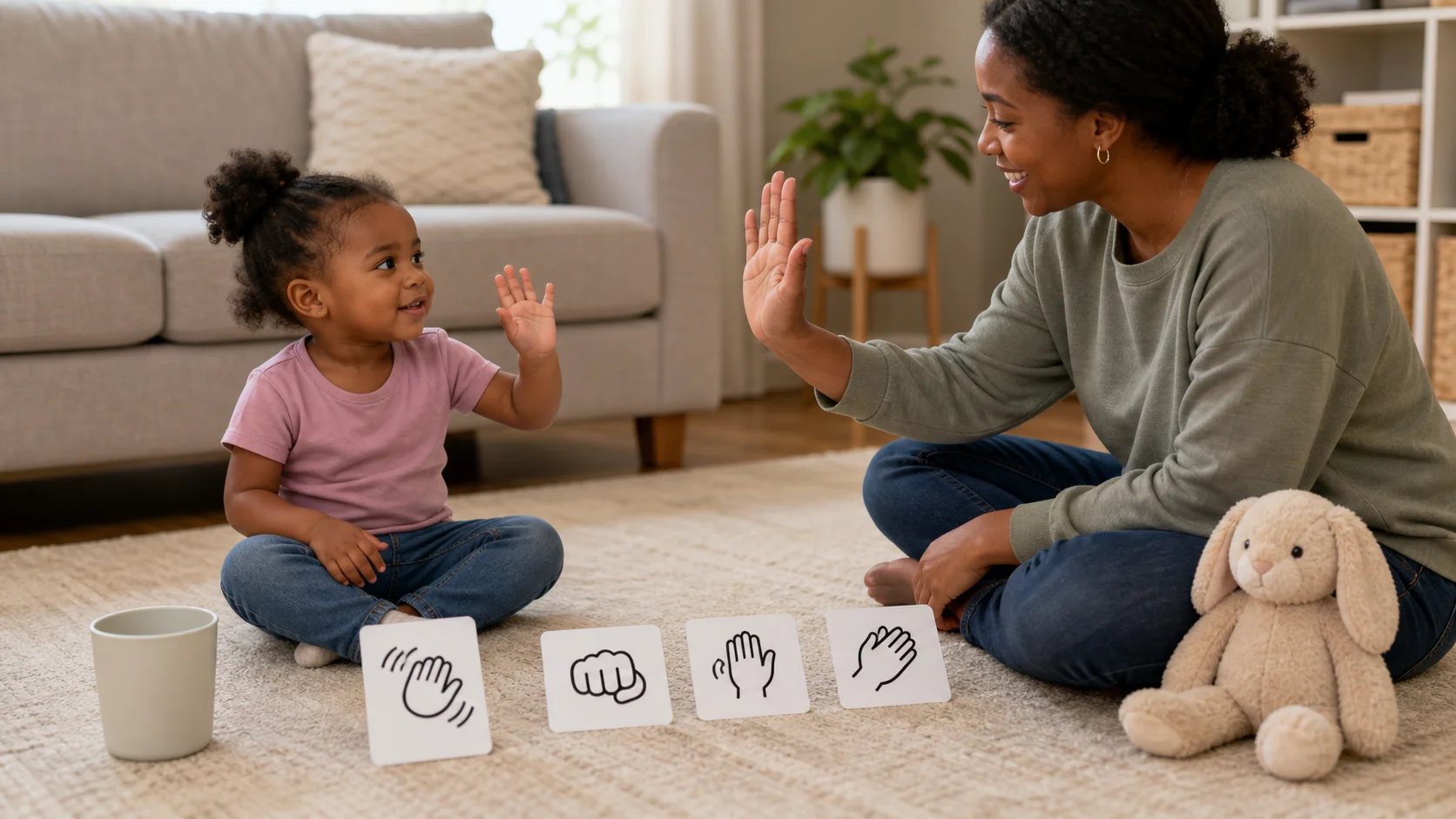
A toddler choosing a hello card from a short row while a grown-up and a stuffed animal sit nearby with a done cup beside the cards.
Skill builderAutism supportRepeat LoopIndoor

Greeting Choice Cards.

A few simple hello cards give your child a clear way to choose a greeting, try it once, and reset without surprise touch.

Play time
1-5+ min
Age
2-3 years
Energy
Low
Mess
Low
Effort
Low
Where
Indoor
Start here

The recipe.

Low parent effort
5 things

What you need

  • 4 greeting cards with simple pictures or words for wave, fist bump, high-five, and no-touch hello
  • 1 stuffed animal, optional
  • 1 small cup or bowl for done cards
  • 1 adult
  • 1 child
1 min minimum

Setup

Then start the loop
Step 01
In one calm indoor spot, place the 4 greeting cards face up in a short row so your child can see every option at once.
Step 02
Put the done cup or bowl beside the row so each used card has one obvious place to go.
Step 03
Sit facing your child within easy wave or gentle high-five distance, and place the stuffed animal beside you if you want to practice on the toy first.
"Choose hello."
The loop

How play unfolds.

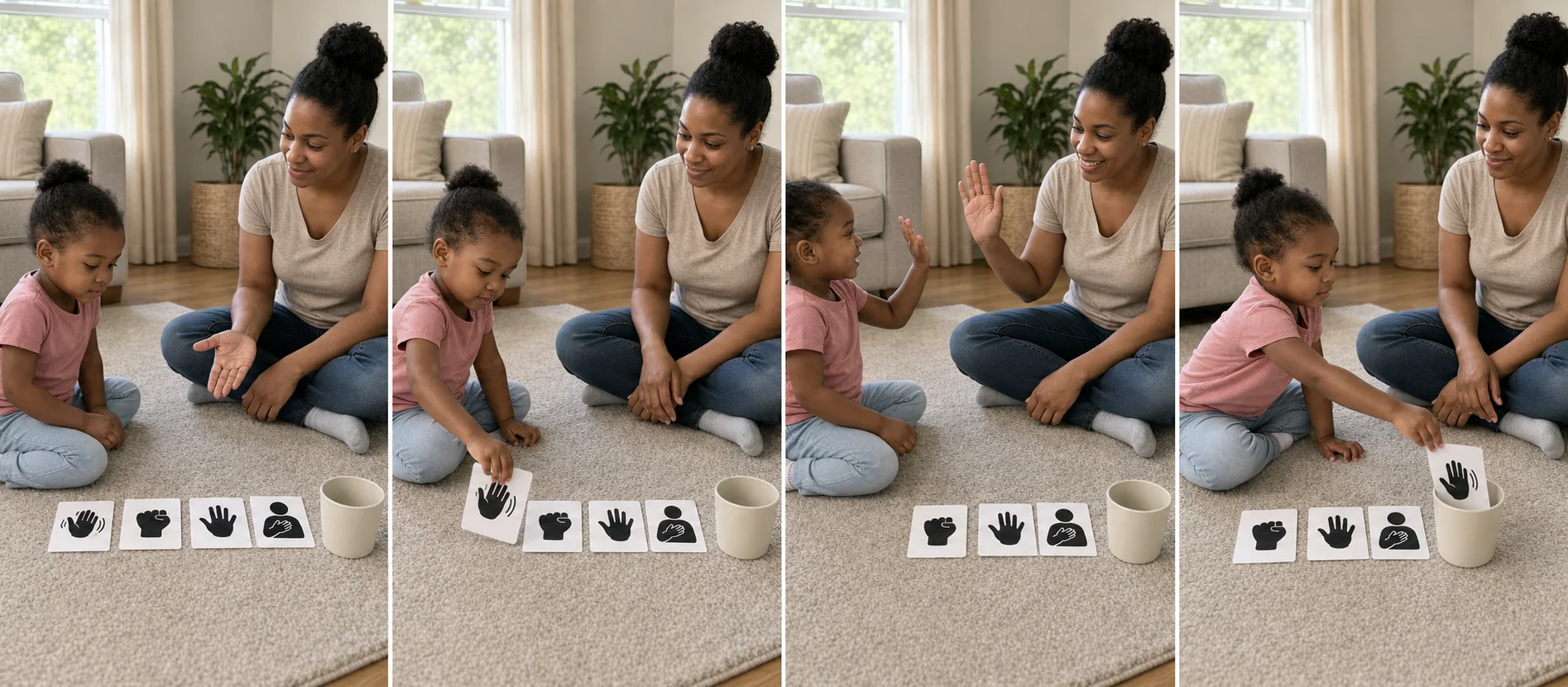
Four panels show a child picking a hello card, greeting a grown-up with a wave, dropping the card in a cup, and choosing another hello.
  1. 01
    Say, "Pick your hello," and let your child choose one card.
  2. 02
    Name the greeting if needed, then let your child do it with you or the stuffed animal.
  3. 03
    Have your child drop the used card into the done cup and choose again.
  4. 04
    Repeat until the cards are used or your child is done.

Safety Check

  • Keep touch optional from the first turn. Waving or a spoken hello count just as much as high-fives or fist bumps.
  • Do not force any greeting choice. The goal is helping your child choose a hello that feels safe.
  • Stop if your child freezes, shuts down, or starts getting overwhelmed. Move to a quieter space and lower sensory input before trying again another time.
Supporting the play

What to say in the moment

Match what you say to what you see.

Prompt ladder
Level 1 (Start)
"Pick your hello."
Level 2 (Keep going)
"Show that hello."
Level 3 (Stretch)
"Try a new one."
Level 4 (Extend)
"You lead this round."
If your child seems...
What you'd see
Focused
What to do
Say
"You picked one. Show it."
Add
After one greeting, use one quick prompt like "Wave or bump?"
Extend
Let your child choose whether the stuffed animal or the adult gets the next greeting.

Make it easier

Younger end
  • -Keep the same practice partner for the whole round so only the card choice changes.
  • -Let your child use the same greeting for 2 turns in a row before offering a different card.
  • -Slide the done cup right next to the chosen card so the finish move is immediate.

Make it harder

Older end
  • +Wait a moment after the card is chosen and see if your child starts the greeting without your model.
  • +Let your child choose both the greeting card and the greeting partner for that turn.
  • +Ask your child to say or sign the greeting word before doing the gesture when that already fits how they communicate.

If it's not working

If you see
If child ignores it
Reduce the set to 2 cards, start with wave and no-touch hello, and let the stuffed animal greet first so your child can watch before joining.
If you see
If child misuses it
Hold up 1 card at a time and let your child point instead of handling the whole row if the cards get thrown, bent, or mouthed.
If you see
If child gets frustrated
Stop the practice, move to a quieter space, lower sensory input, and say, "That was too much. We can be done." Try again later without pushing a touch greeting.
Skill spotlight
Greeting Choice Routine

Choosing one hello and finishing one short greeting loop

This helps with real hellos because the child practices choosing 1 social move, sticking with it for 1 short turn, and ending the interaction without guessing what comes next.

  • This gives your child a visible way to choose a greeting instead of reacting to surprise touch.
  • The same pick, greet, drop, and reset loop keeps social practice short enough to repeat without a big buildup.
  • No-touch options let parents and caregivers rehearse real hello moments while still respecting the child's boundary.
Real-world transfer
  • Saying hello at the door, daycare drop-off, or a family visit without being pushed into a hug
  • Showing adults a no-touch option before the greeting becomes overwhelming