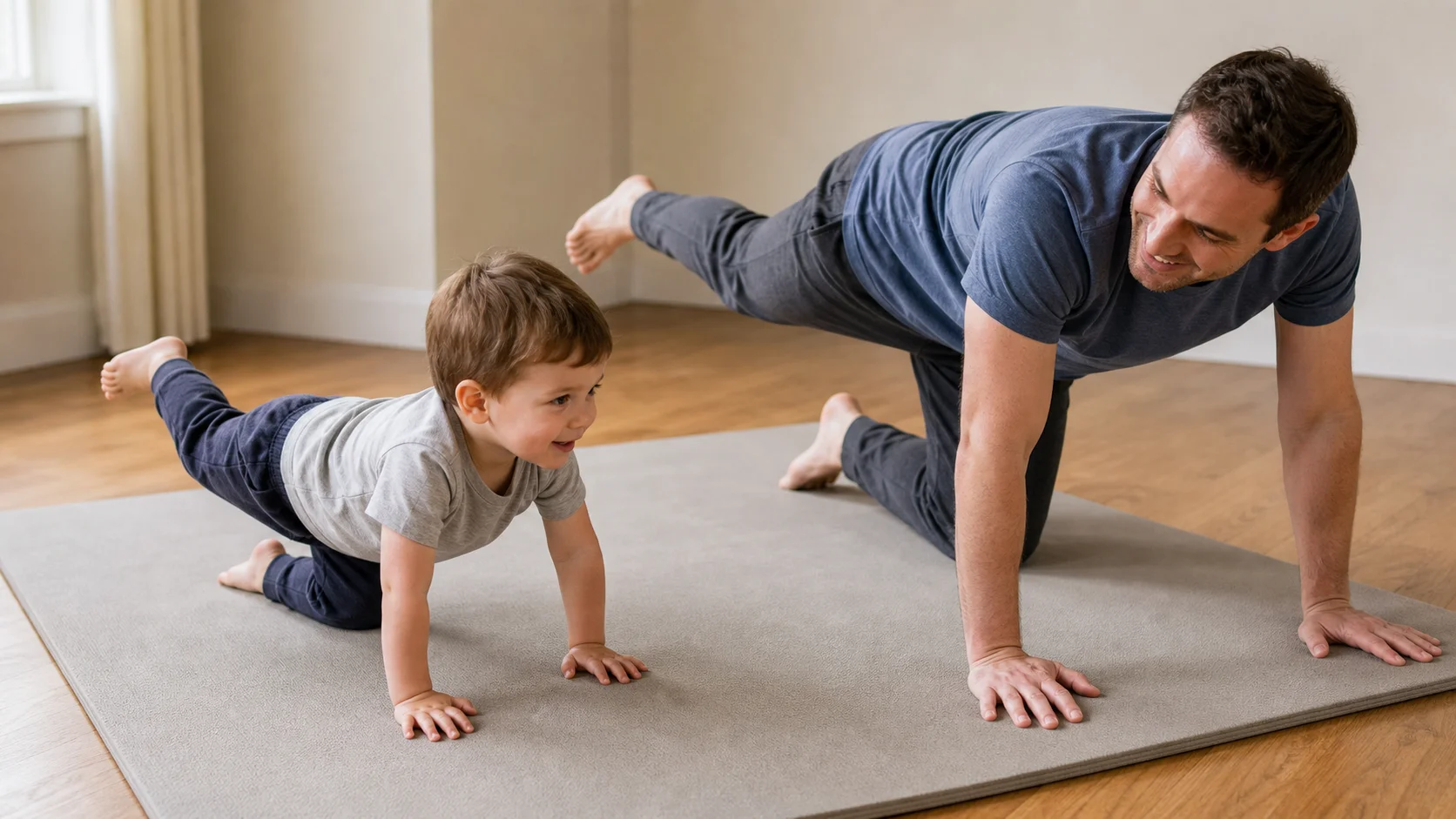
A grown-up and toddler on a soft mat on hands and knees, with the toddler lifting one leg in a dog-copy pose.
Fine motorDevelopmental supportShift WeightIndoor Open Floor Space

Dog Leg Copy.

One dog pose, one tiny leg lift, and one soft mat make this a quick copy game for balance and body control.

Play time
1-5+ min
Age
2-3 years
Energy
Medium
Mess
Low
Effort
Low
Where
Indoor Open Floor Space
Start here

The recipe.

Low parent effort
3 things

What you need

  • 1 soft floor mat, rug, or carpet patch
  • 1 adult
  • 1 child
1 min minimum

Setup

Then start the loop
Step 01
Place the soft mat, rug, or carpet patch in an open indoor floor spot with clear space on both sides.
Step 02
Kneel beside or a little in front of your child so your whole dog pose is easy to see.
Step 03
Help your child get both hands and both knees down, then wait until they look steady before you ask for a leg lift.
"Dog body."
The loop

How play unfolds.

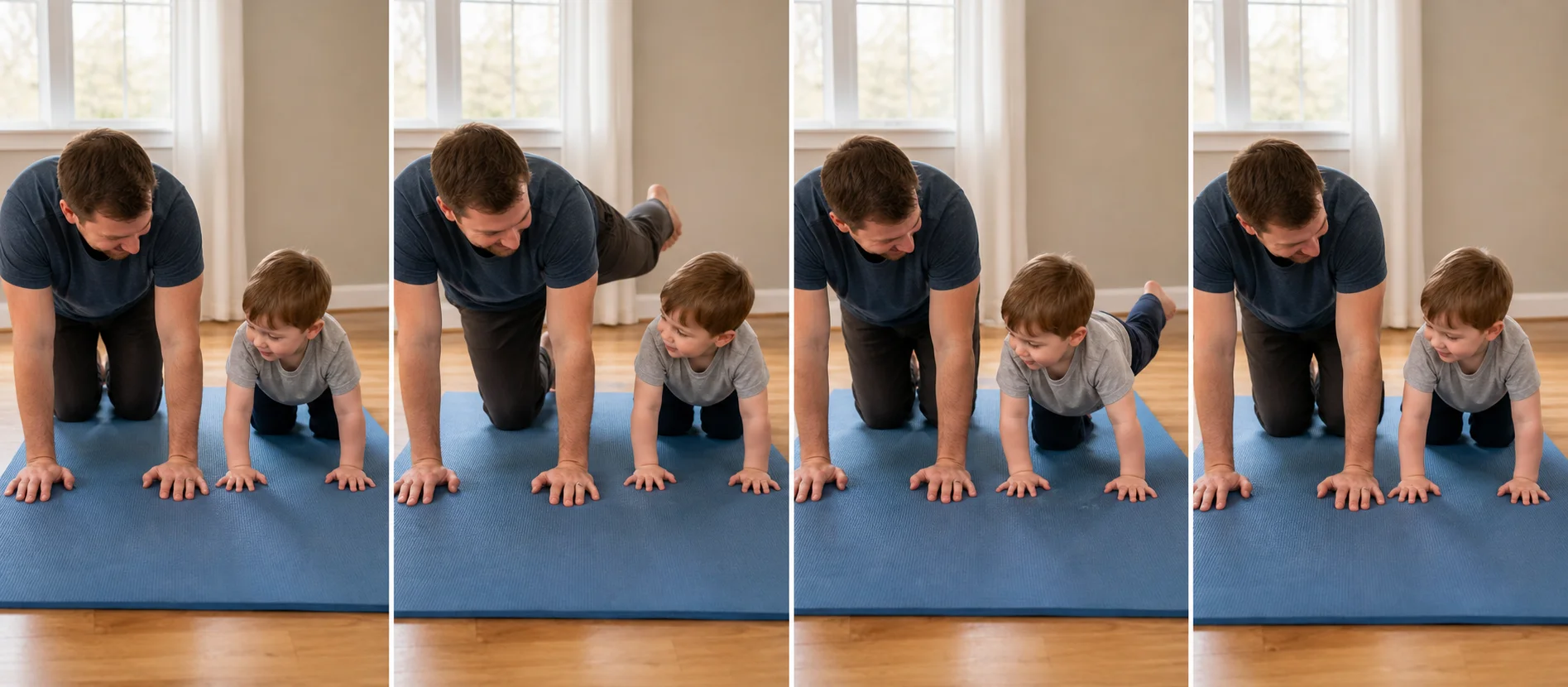
Four panels show a grown-up modeling a dog pose, a toddler getting onto hands and knees, lifting one leg briefly, and resetting for another turn.
  1. 01
    Get on hands and knees, say "bow wow" or "dog," and show one brief leg lift.
  2. 02
    Help your child copy the pose and lift one leg, even a little, then set it back down.
  3. 03
    Repeat on the same side once more or switch sides for the next turn.
  4. 04
    Stop after a few calm copy turns, or after one successful lift if balance starts to fade.

Safety Check

  • Use a soft stable non-slip surface and keep furniture edges out of the lift zone.
  • Stay close because one leg leaves the floor during the pose and a child may tip sideways or forward.
  • Stop if your child shows wrist, knee, or hip discomfort instead of pushing through the movement.
Supporting the play

What to say in the moment

Match what you say to what you see.

Prompt ladder
Level 1 (Start)
"Be a dog."
Level 2 (Keep going)
"Lift one leg."
Level 3 (Stretch)
"Now the other leg."
Level 4 (Extend)
"Show me your dog turn."
If your child seems...
What you'd see
Focused
What to do
Say
"You did it. One more dog turn."
Add
After the leg comes down, ask one quick prompt like "Which leg was up?"
Extend
Let your child choose whether the next turn uses the same leg or the other leg.

Make it easier

Younger end
  • -Start with your child's stronger or steadier side for every turn in the first round instead of switching legs.
  • -Keep your body shoulder-to-shoulder with your child so they can copy without twisting to look at you.
  • -Use a very small lift target where the toes only need to leave the floor for a moment.

Make it harder

Older end
  • +Let your child hold the lifted leg for a one-count before putting it down.
  • +Ask your child to copy the leg you lift without pointing to it first.
  • +Have your child do one right-leg turn and one left-leg turn back to back before the pause.

If it's not working

If you see
If child ignores it
Do one playful dog turn right beside your child and invite only "hands down like dog" before asking for the leg lift again.
If you see
If child misuses it
Reset to still hands and knees and ask for just one leg while you point to the leg you mean.
If you see
If child gets frustrated
Count a tiny foot float or knee hover as success, give light trunk support if needed, and stop after that one good turn.
Skill spotlight
Shift Weight

Shifting weight to lift one leg

This helps your child stay steady while weight moves from one side of the body to the other and one leg leaves the floor for a moment during crawling, climbing, and getting up from the floor.

  • One clear dog-copy move gives your child a visible way to practice shifting weight without a long routine.
  • Because the lift is brief and repeatable, small attempts can still count as real success.
  • Resetting to hands and knees after each turn helps your child feel the start and finish of one balance move.
Real-world transfer
  • Staying steady when weight moves from one knee or leg to the other
  • Adjusting balance during crawling, climbing, and getting up from the floor
  • Copying one short movement routine after a simple cue

Parent questions