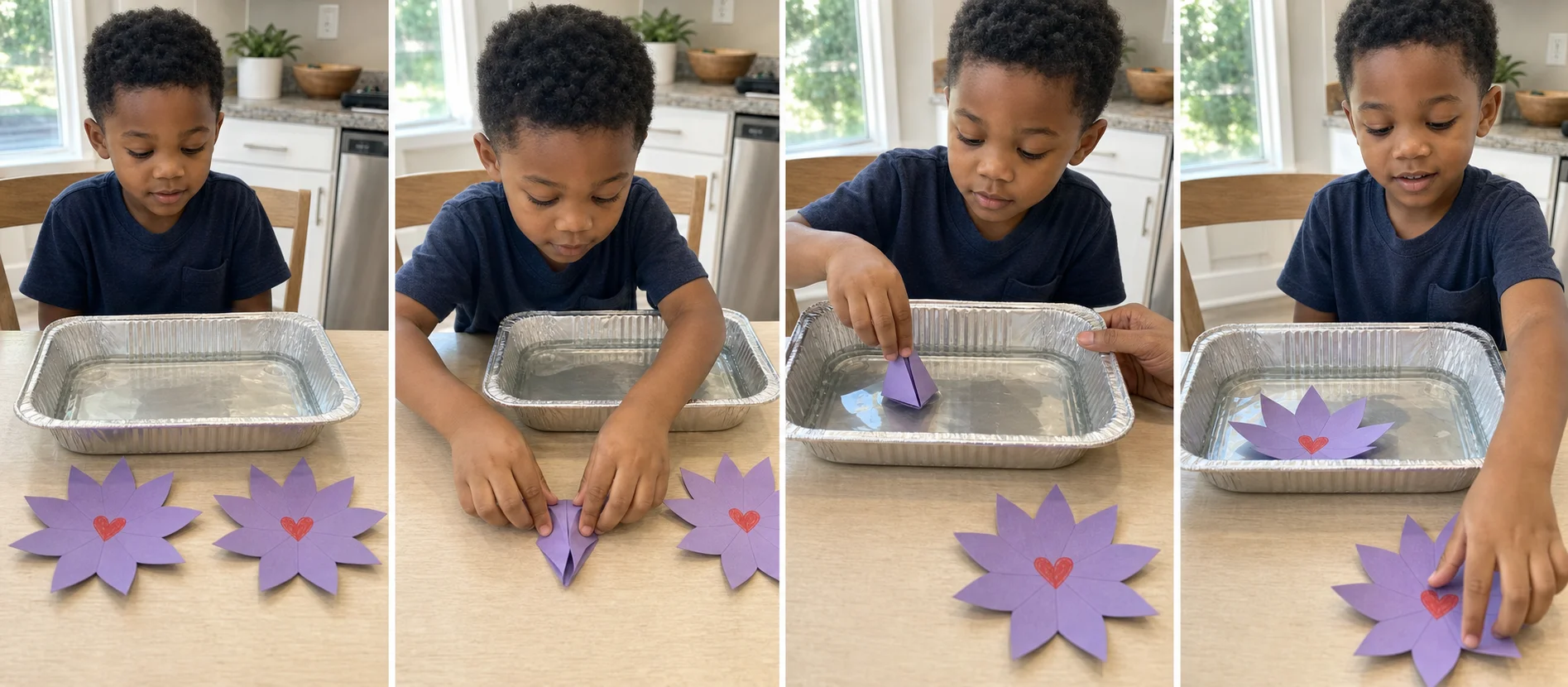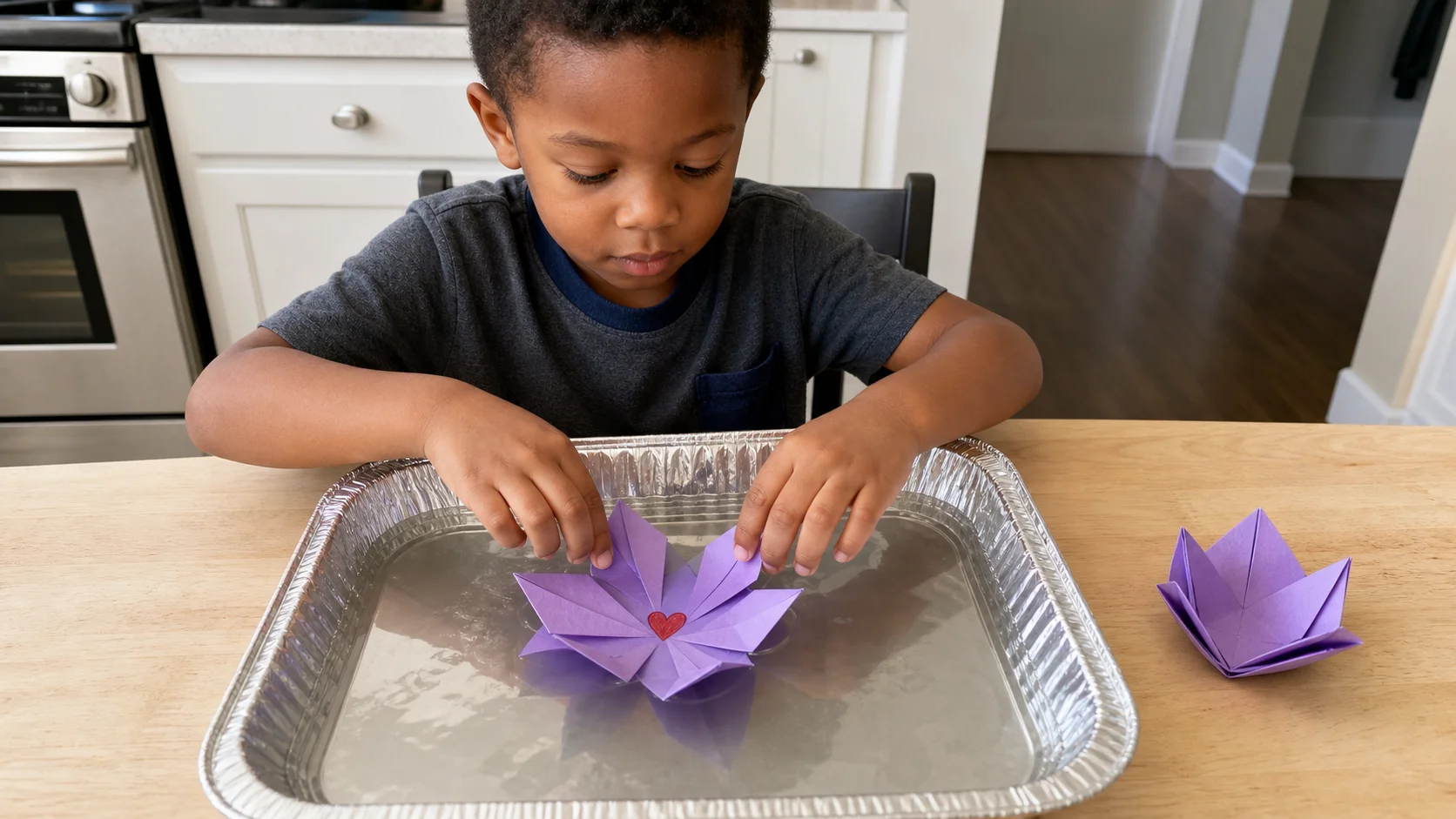

Paper Water Lily Bloom
Make a paper flower bloom right before your child's eyes. They fold the petals over a hidden heart, float the flower on water, and watch it open for a satisfying fine-motor and careful-hand-control reveal.

Make a paper flower bloom right before your child's eyes. They fold the petals over a hidden heart, float the flower on water, and watch it open for a satisfying fine-motor and careful-hand-control reveal.


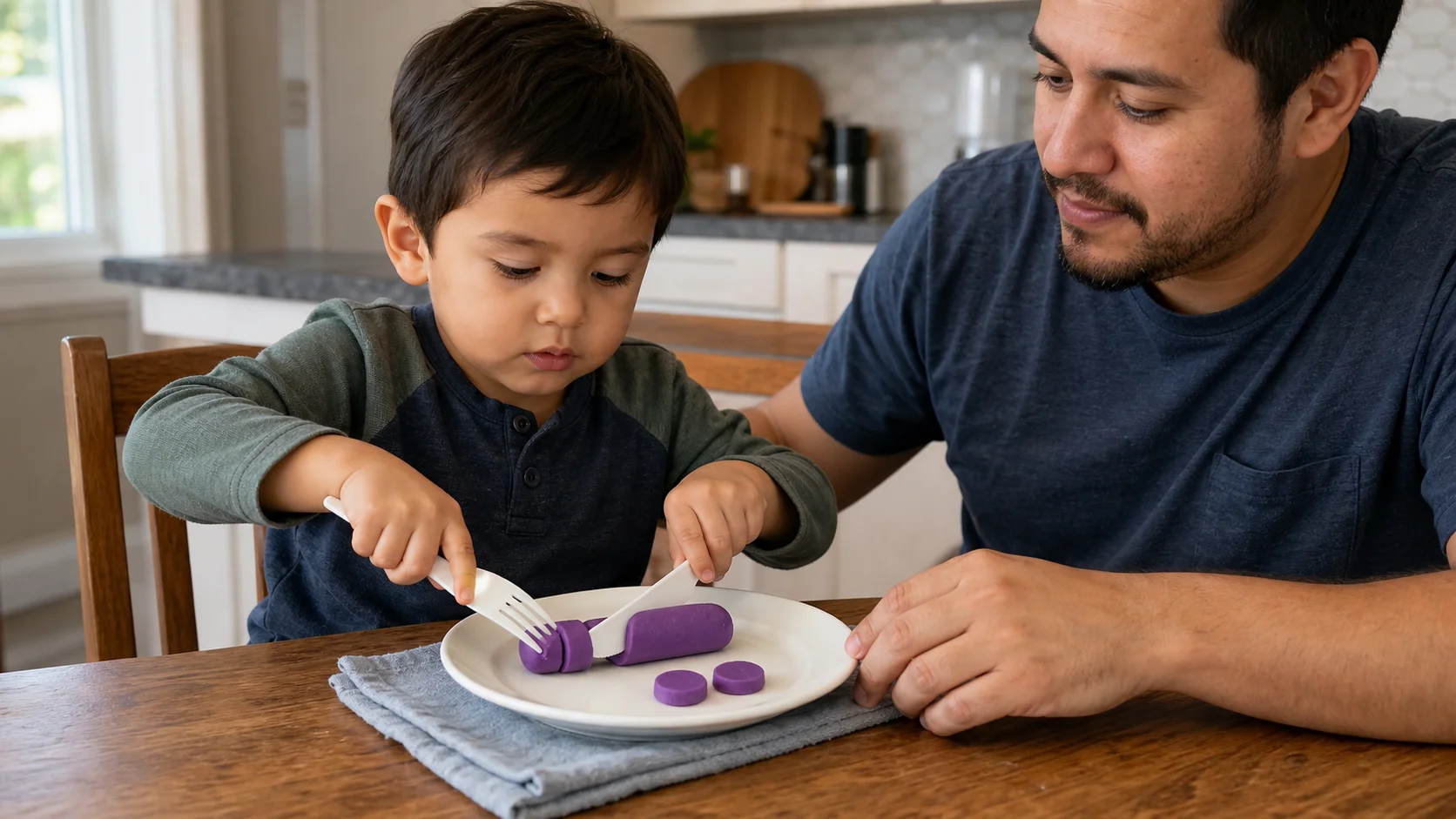
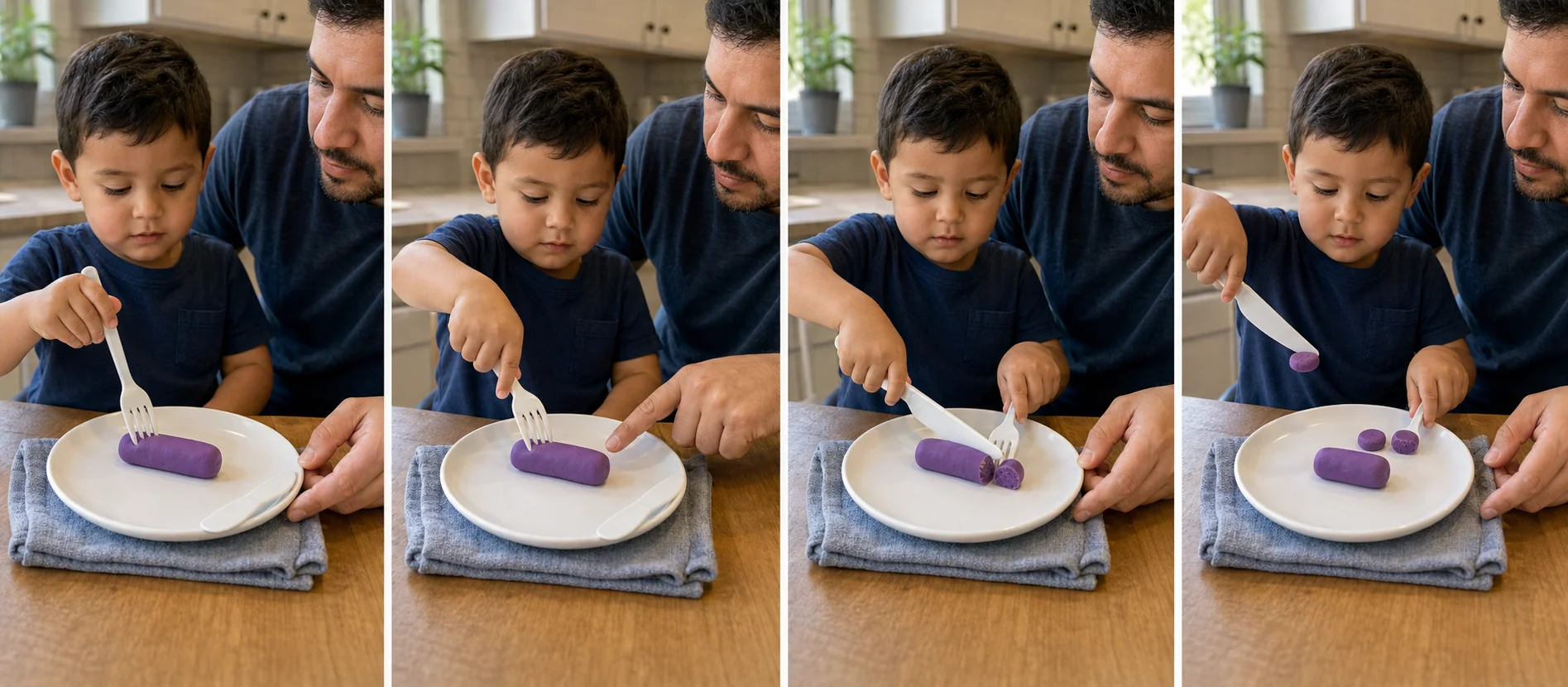
Turn pretend cooking into real cutlery practice. Your child holds a playdough sausage with a fork and saws off slices with a child-safe knife, building two-hand coordination and hand strength.


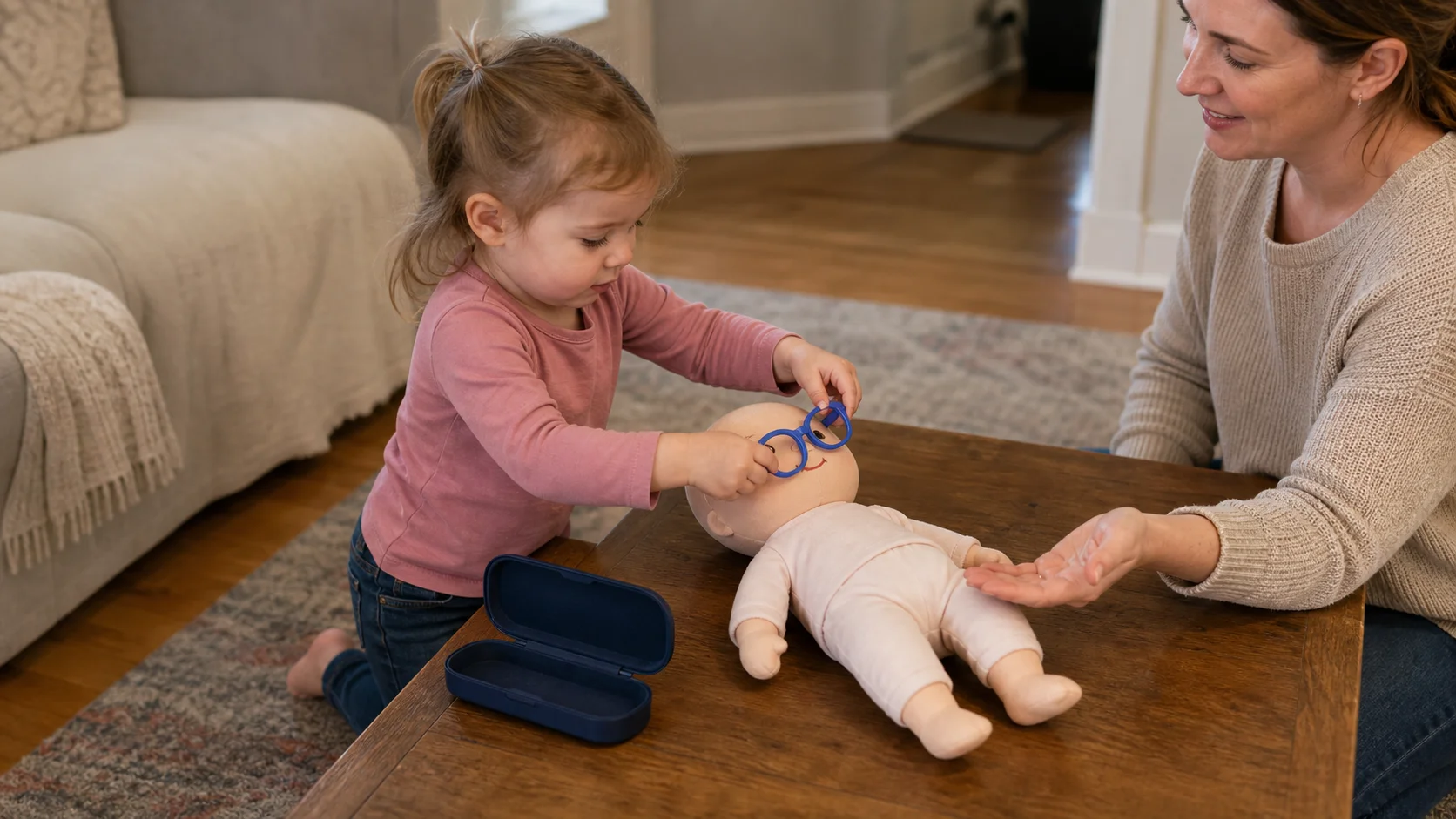
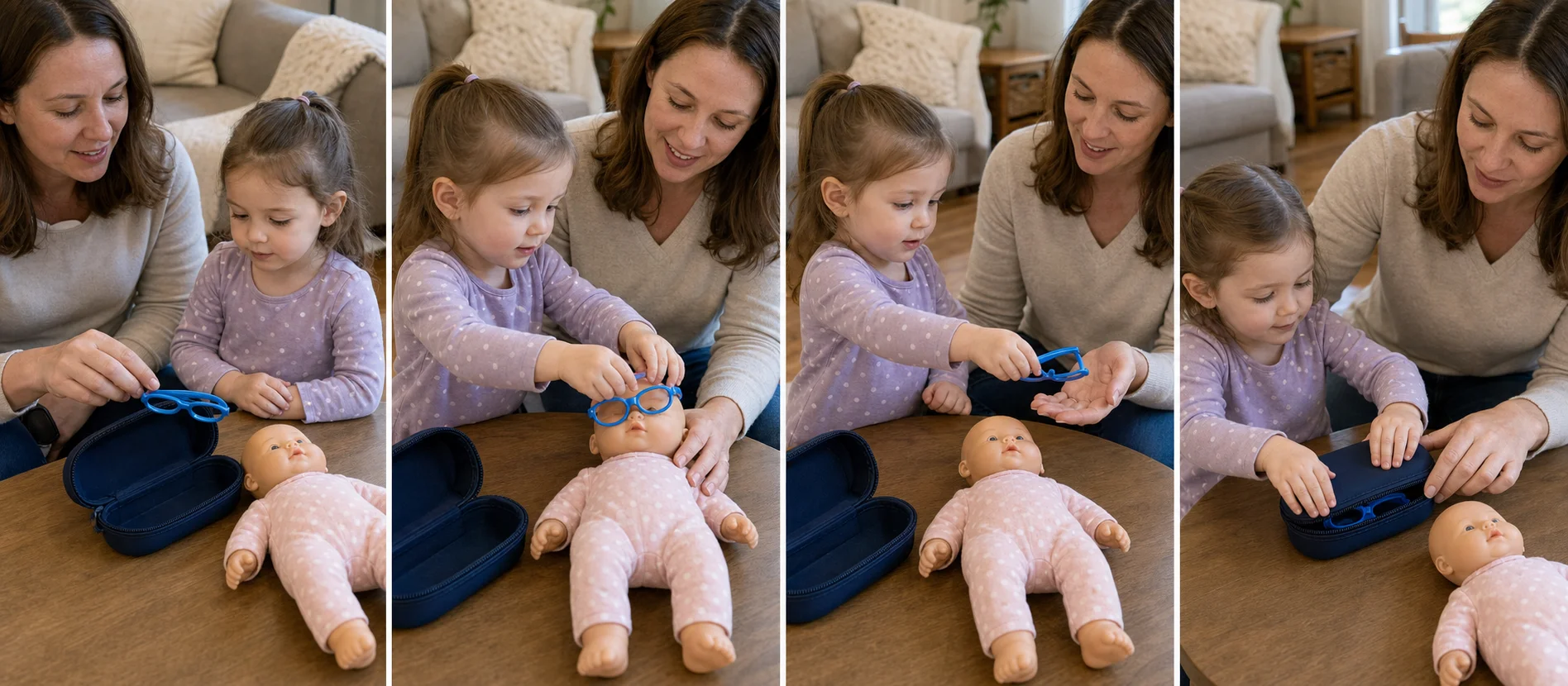
Make glasses practice short and predictable. Your child wears a comfortable noncorrective pair during one favorite book, removes them after two minutes, and hands them safely to you.


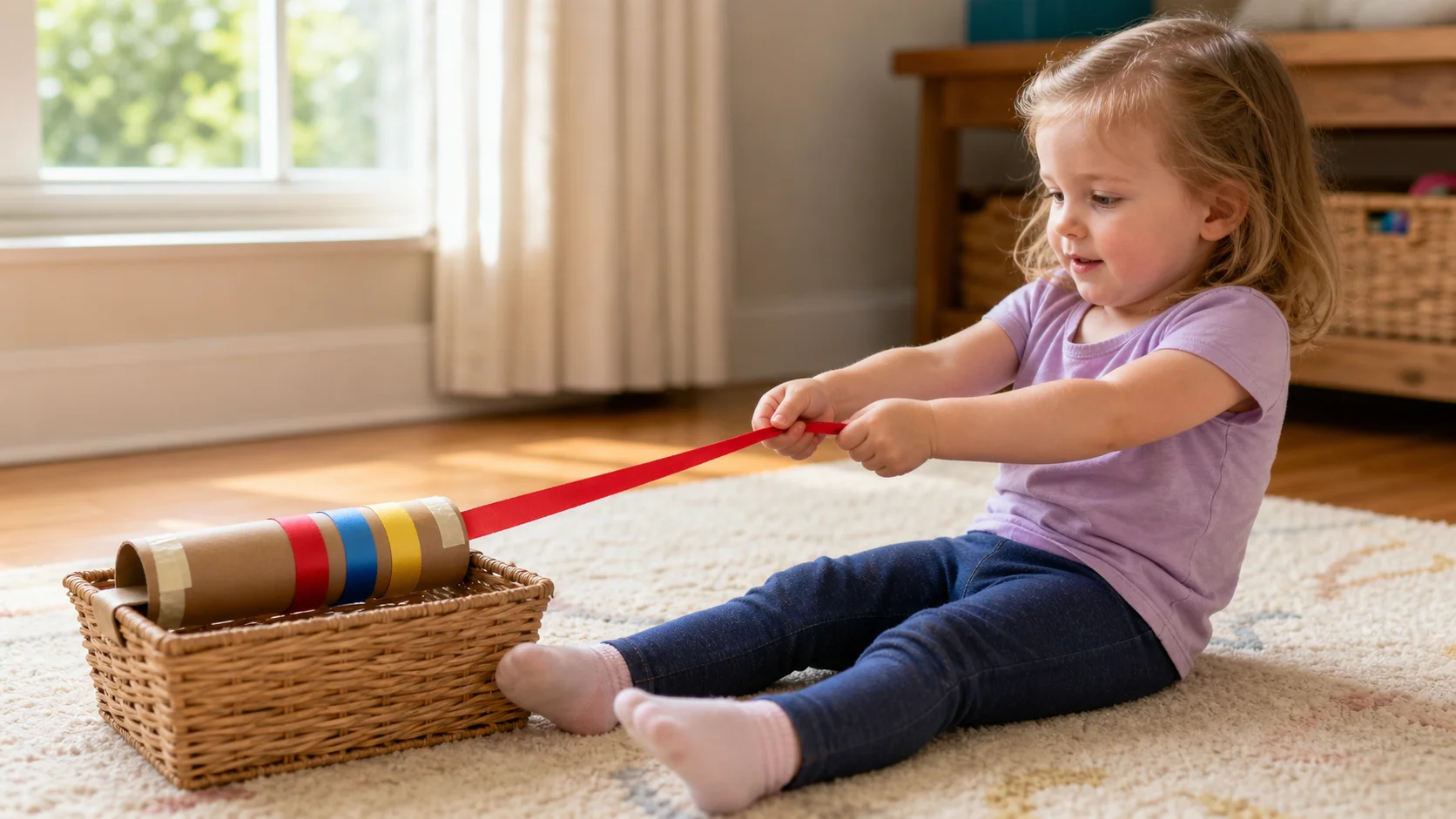
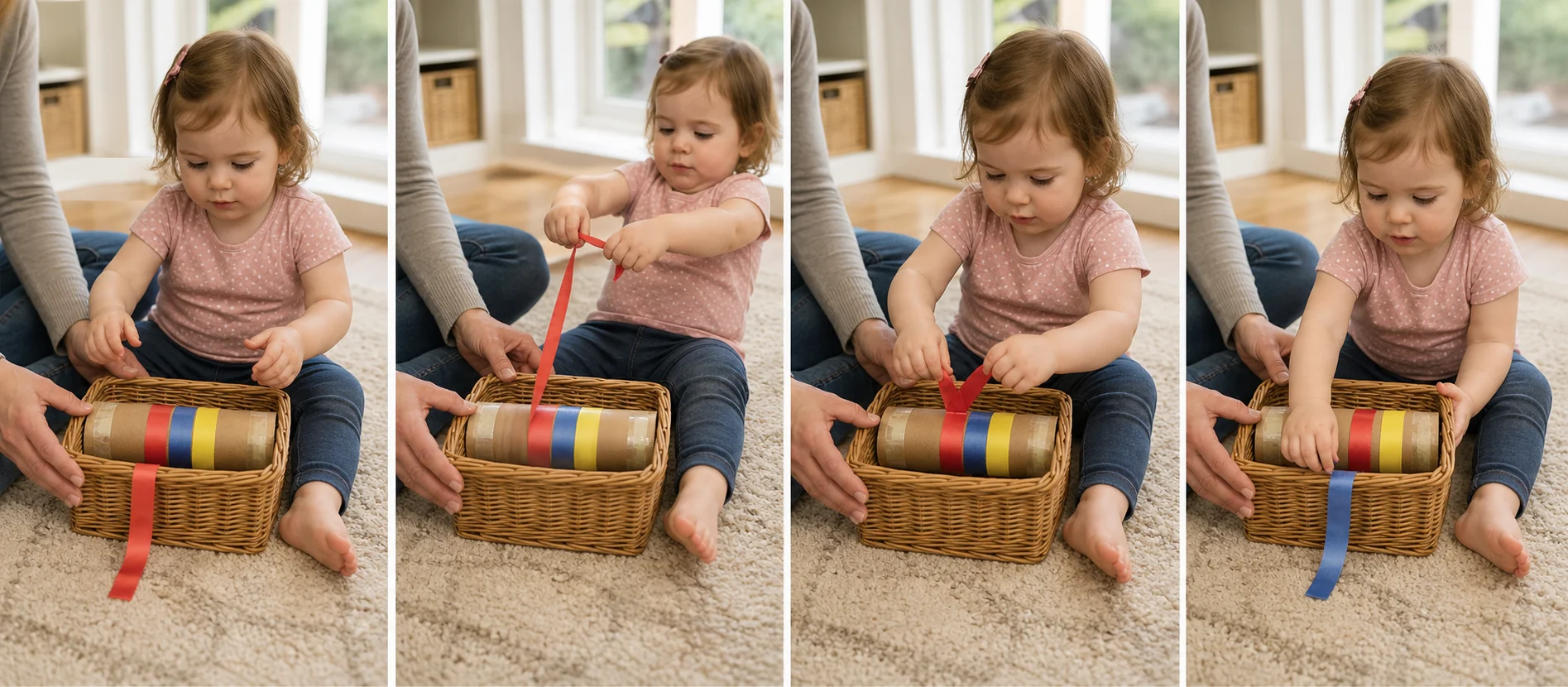
Bright ribbons on a spinning basket spool turn one pull-and-rewind loop into easy fine motor play.


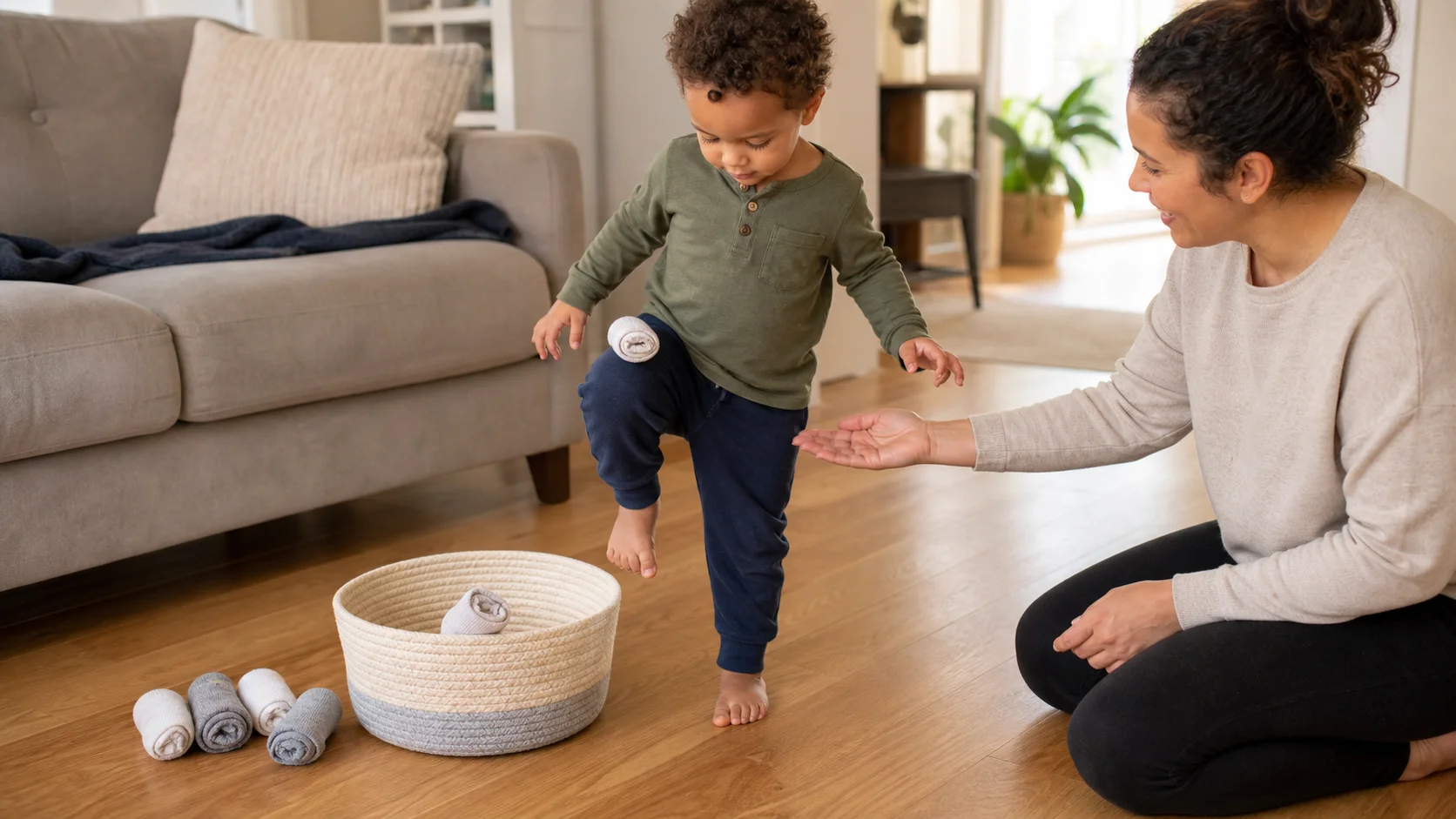
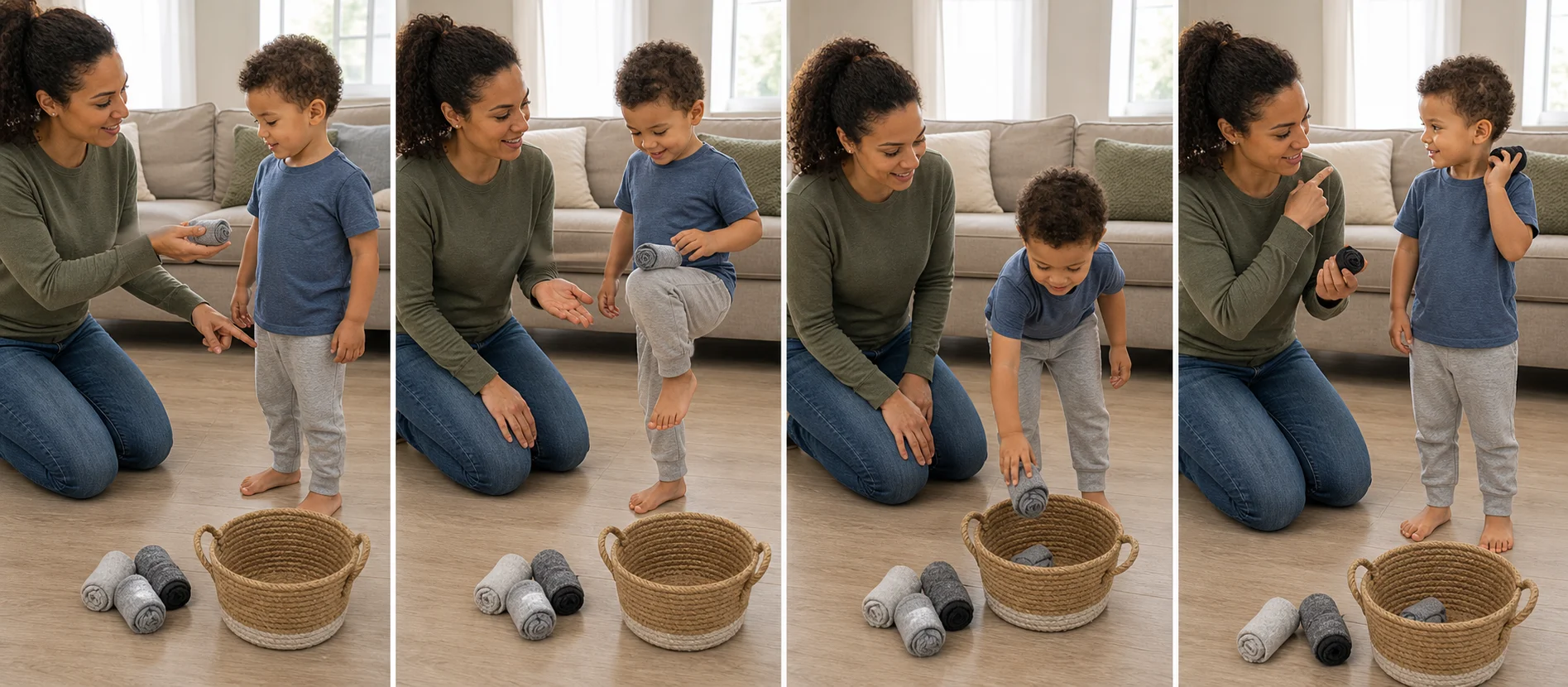
Turn a few rolled socks into a quick body-awareness game. Your child balances each sock on a named body spot, then drops it in the basket.


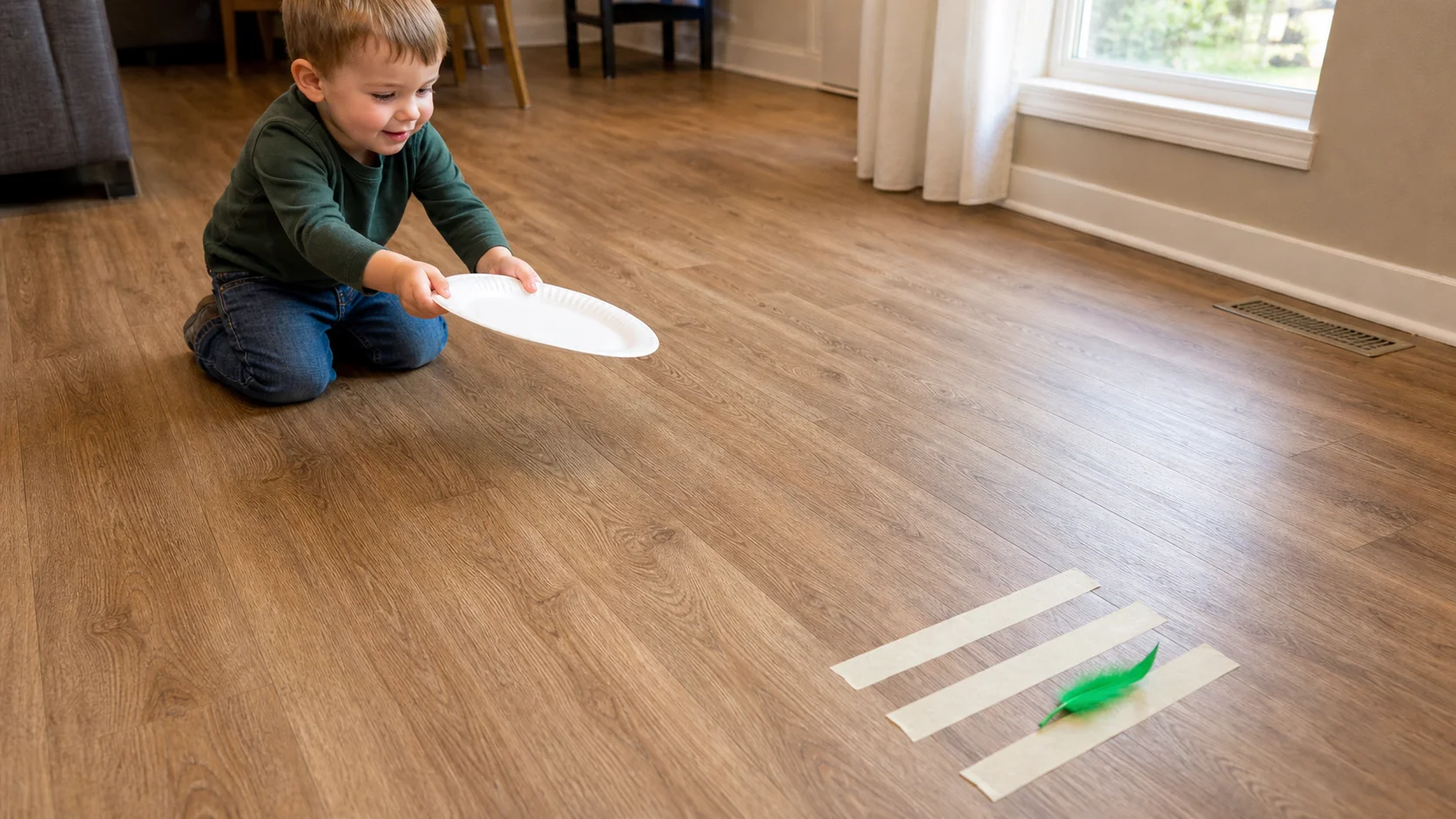
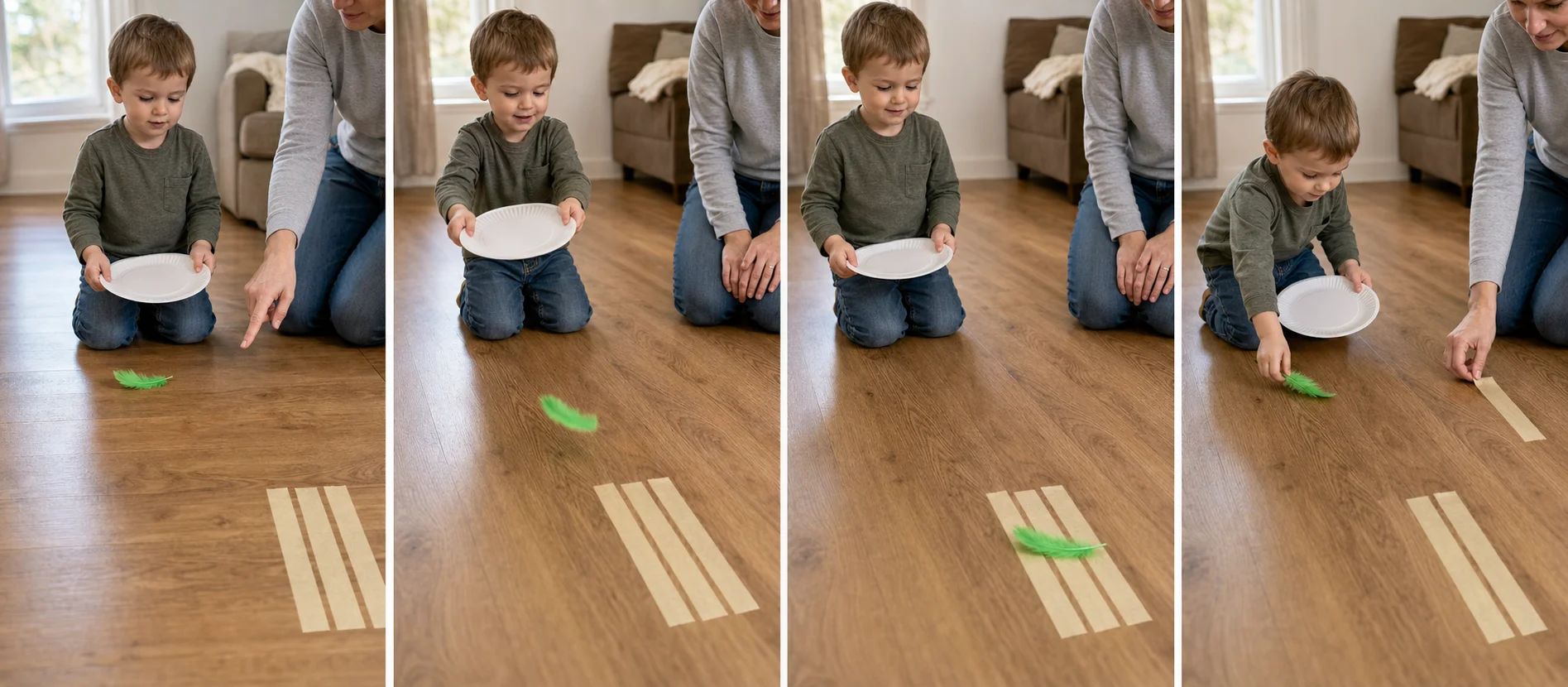
Can your child fan a feather onto a sticky landing pad? Hold a paper plate with both hands, wave it to send the feather drifting toward the tape, then peel and reset, building two-hand coordination and force control.


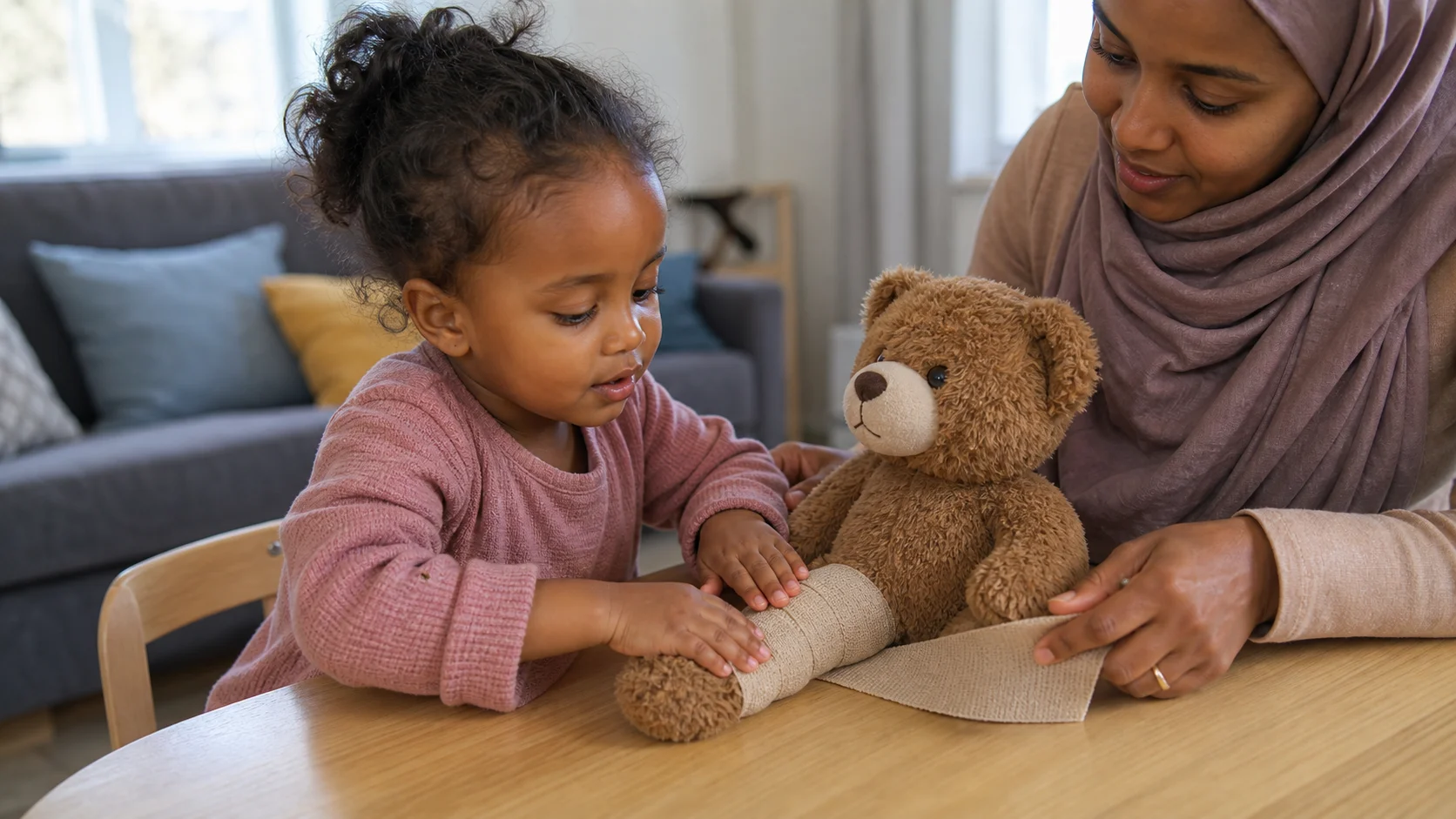
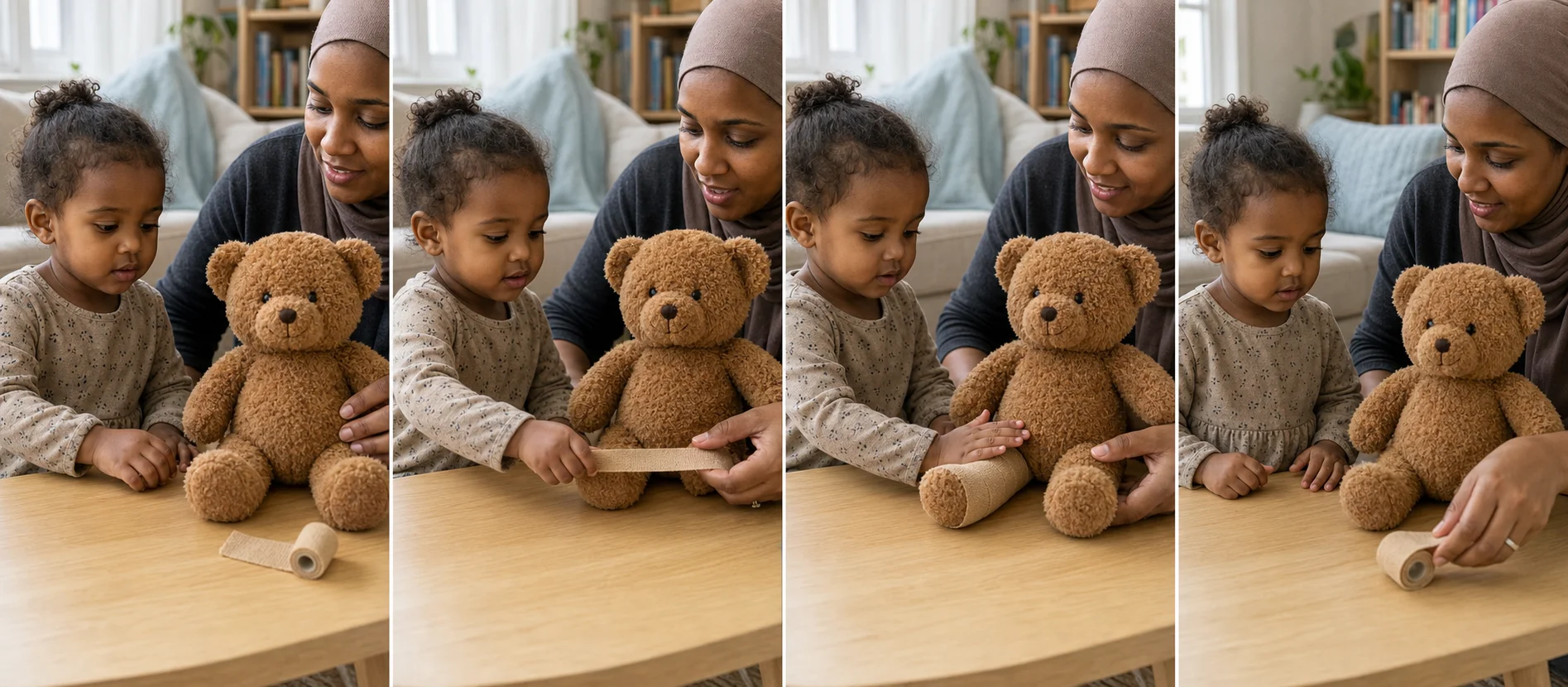
Can your child help give teddy a pretend cast? Wrap one leg together in overlapping layers, tuck the end in place, then unwrap and repeat, turning an unfamiliar care step into simple pretend play.


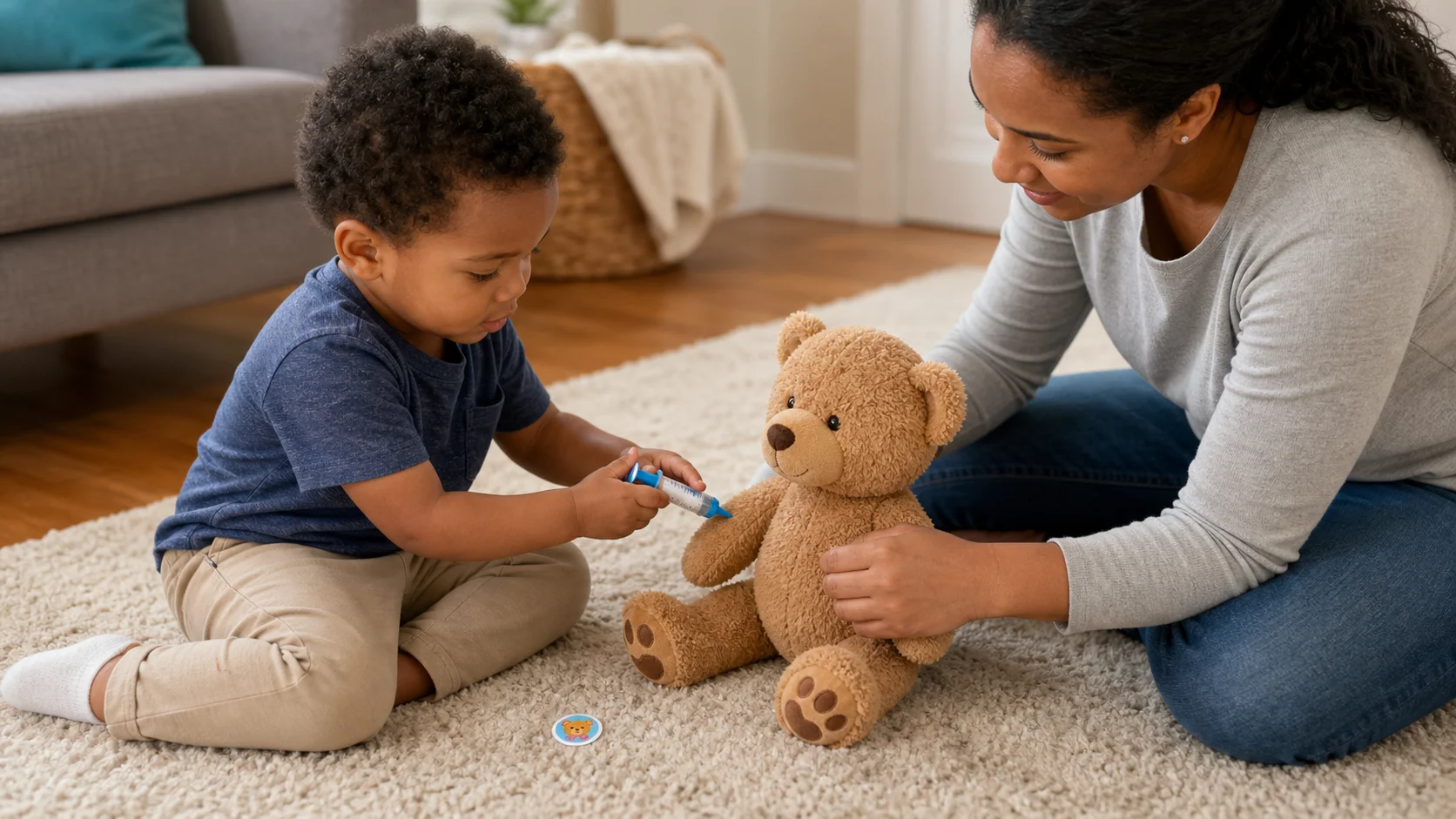
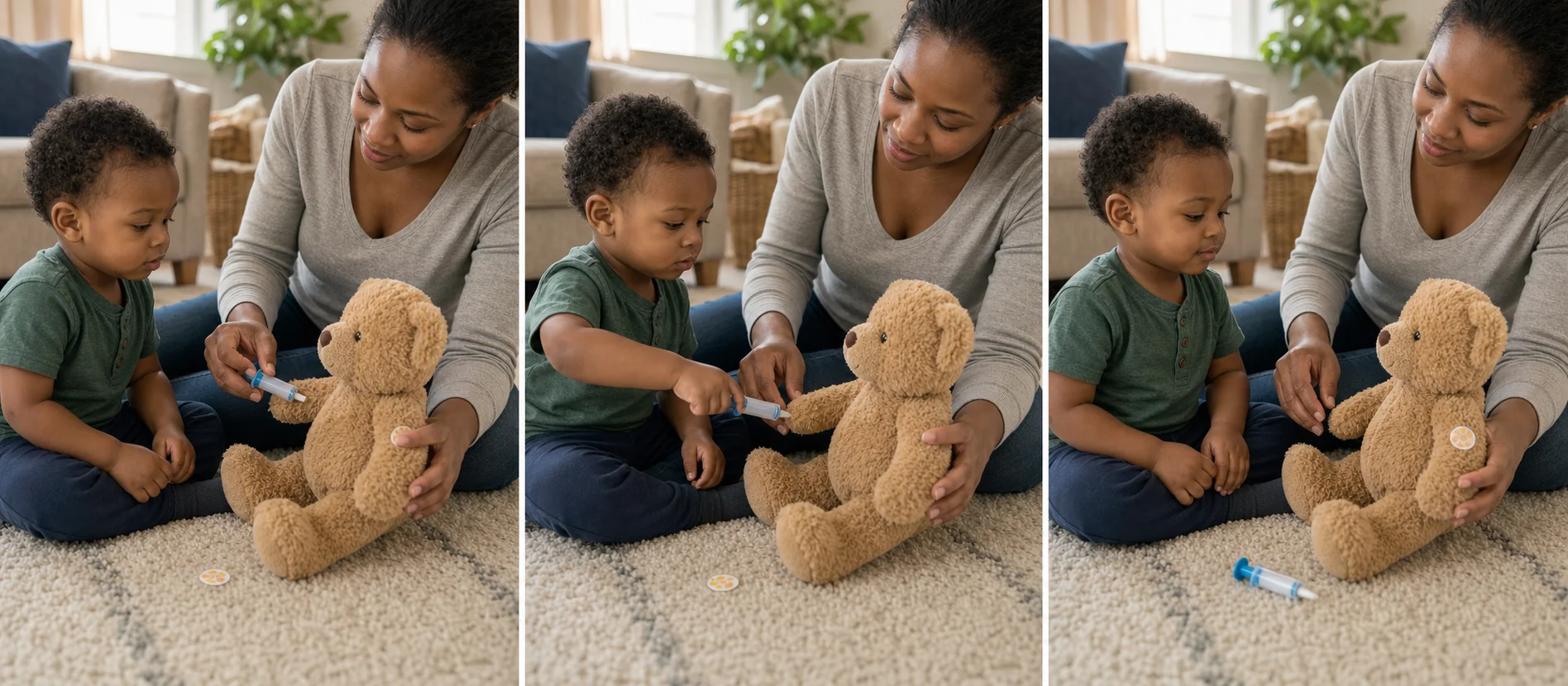
Turn vaccine preparation into one short Teddy-doctor rehearsal. Your child copies a pretend shot, adds a sticker, and practices holding still through one brief count.


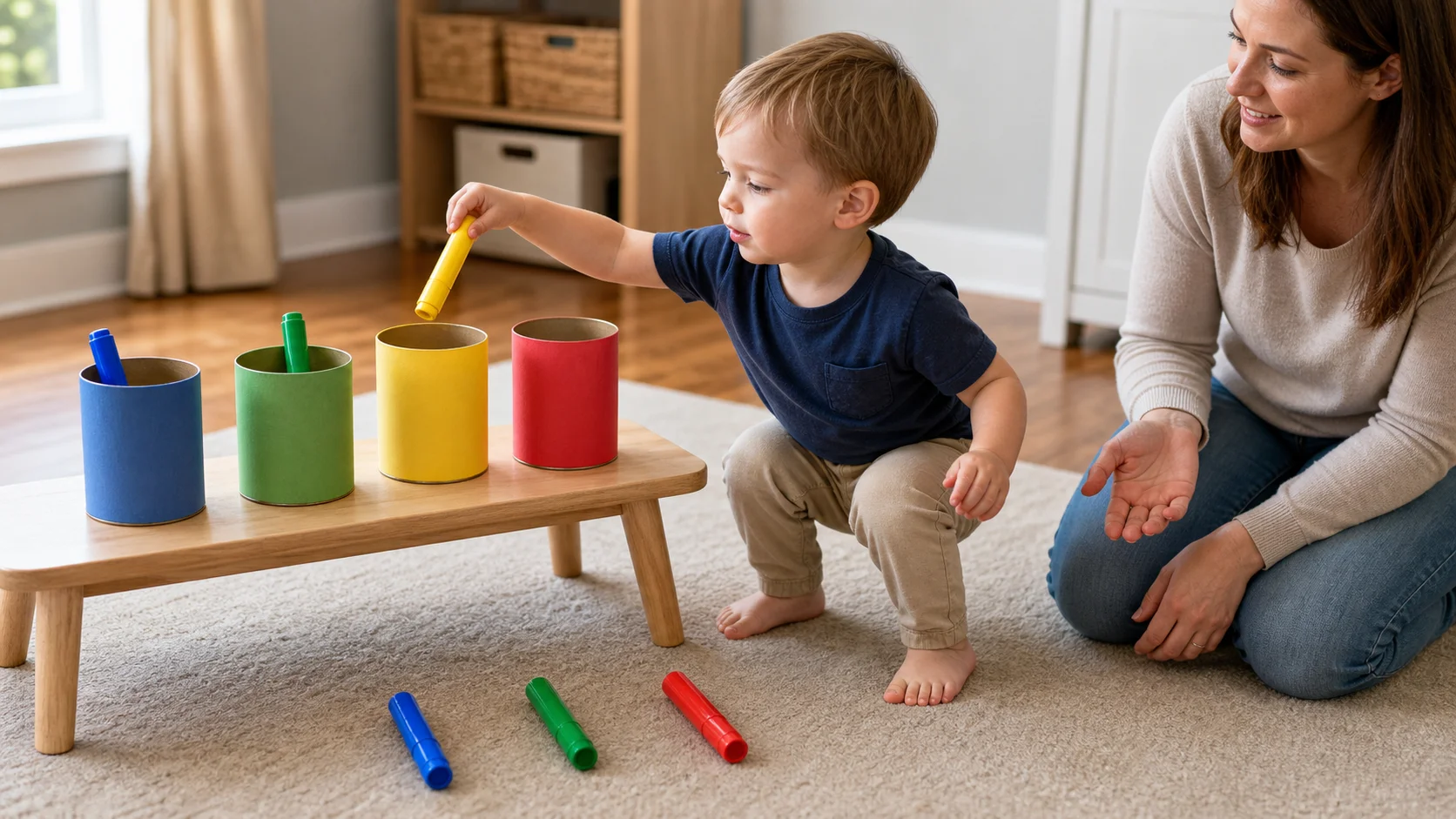
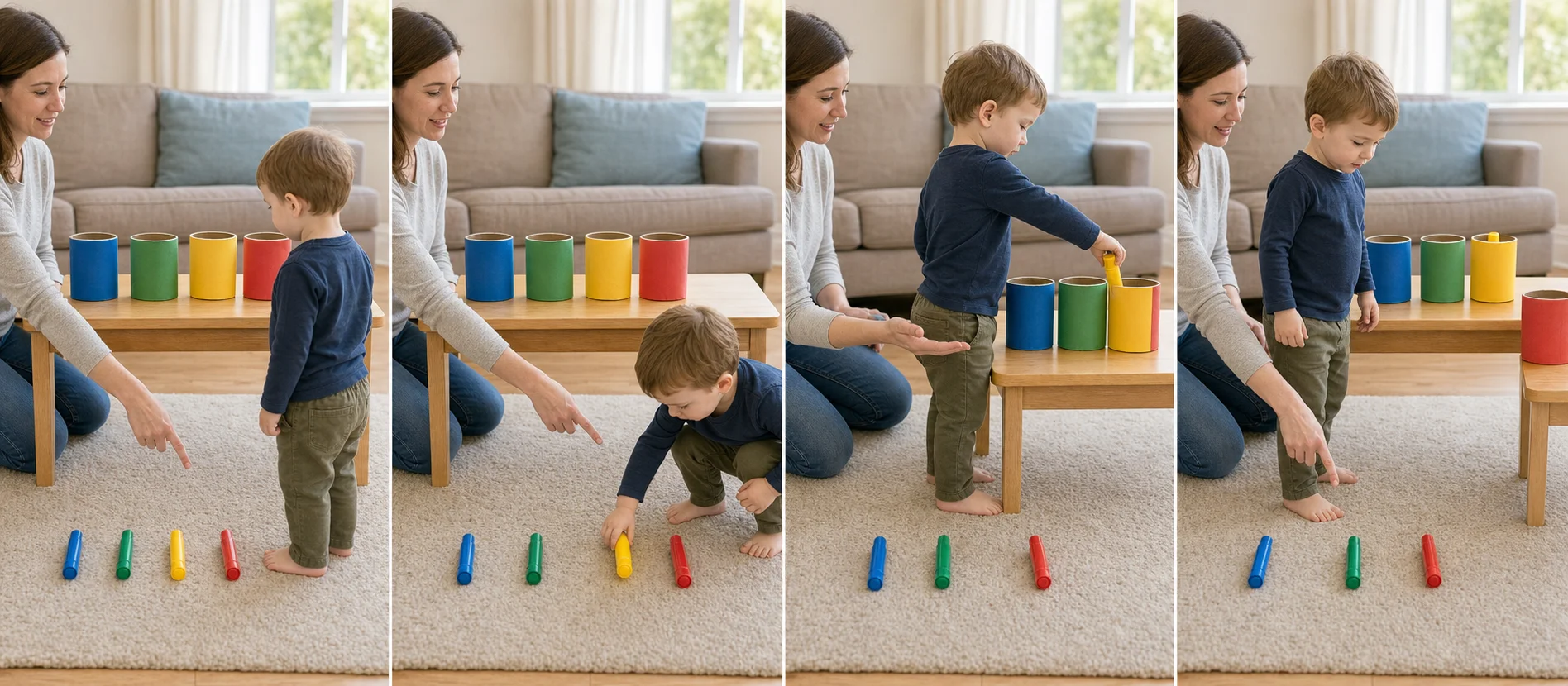
Turn color matching into a whole-body game. Your child squats to pick up a colored marker, stands, and drops it into the matching can for balance, body control, and color practice.


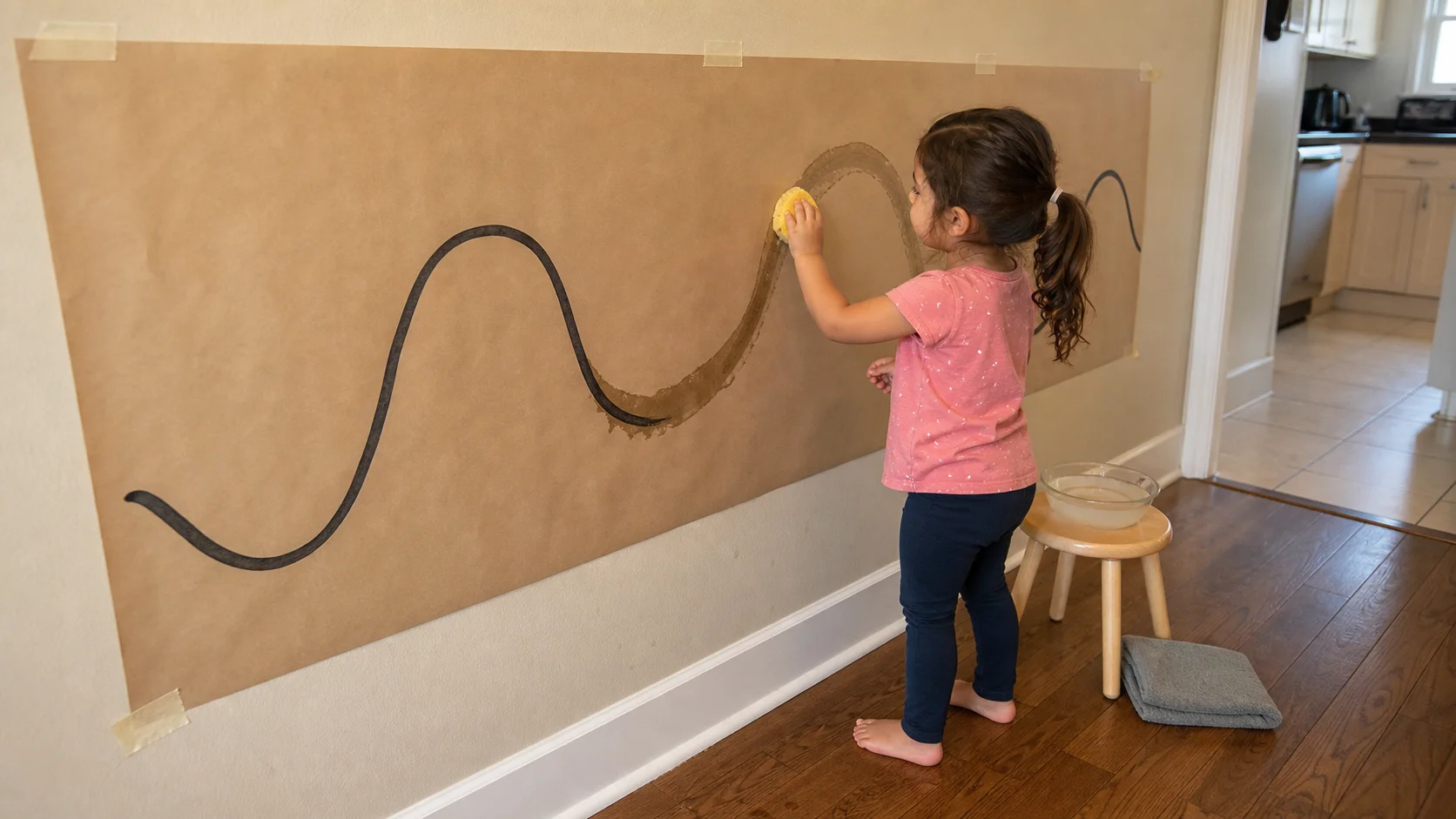
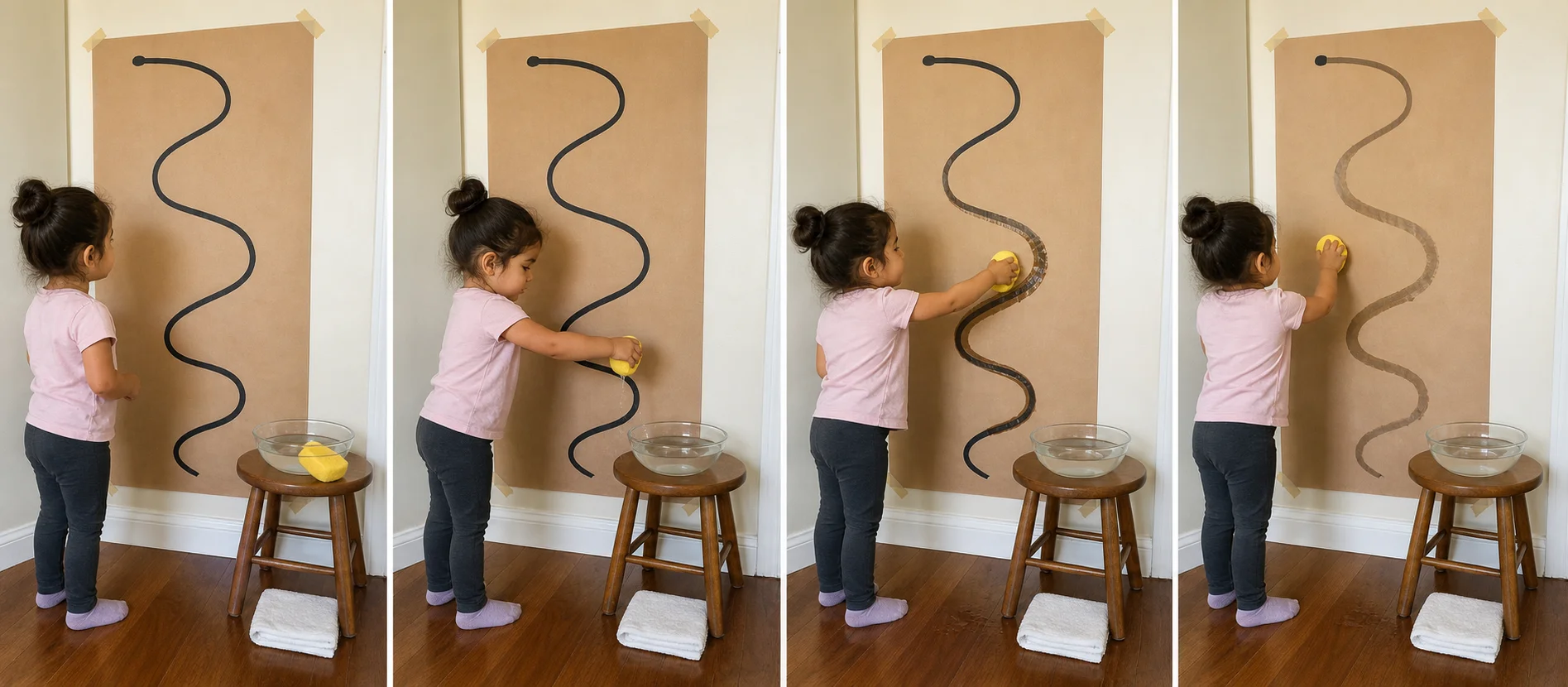
A winding line and damp sponge turn tracing into a satisfying standing challenge. Your child follows the path as a wet trail appears, building hand control, visual-motor coordination, and shoulder strength.


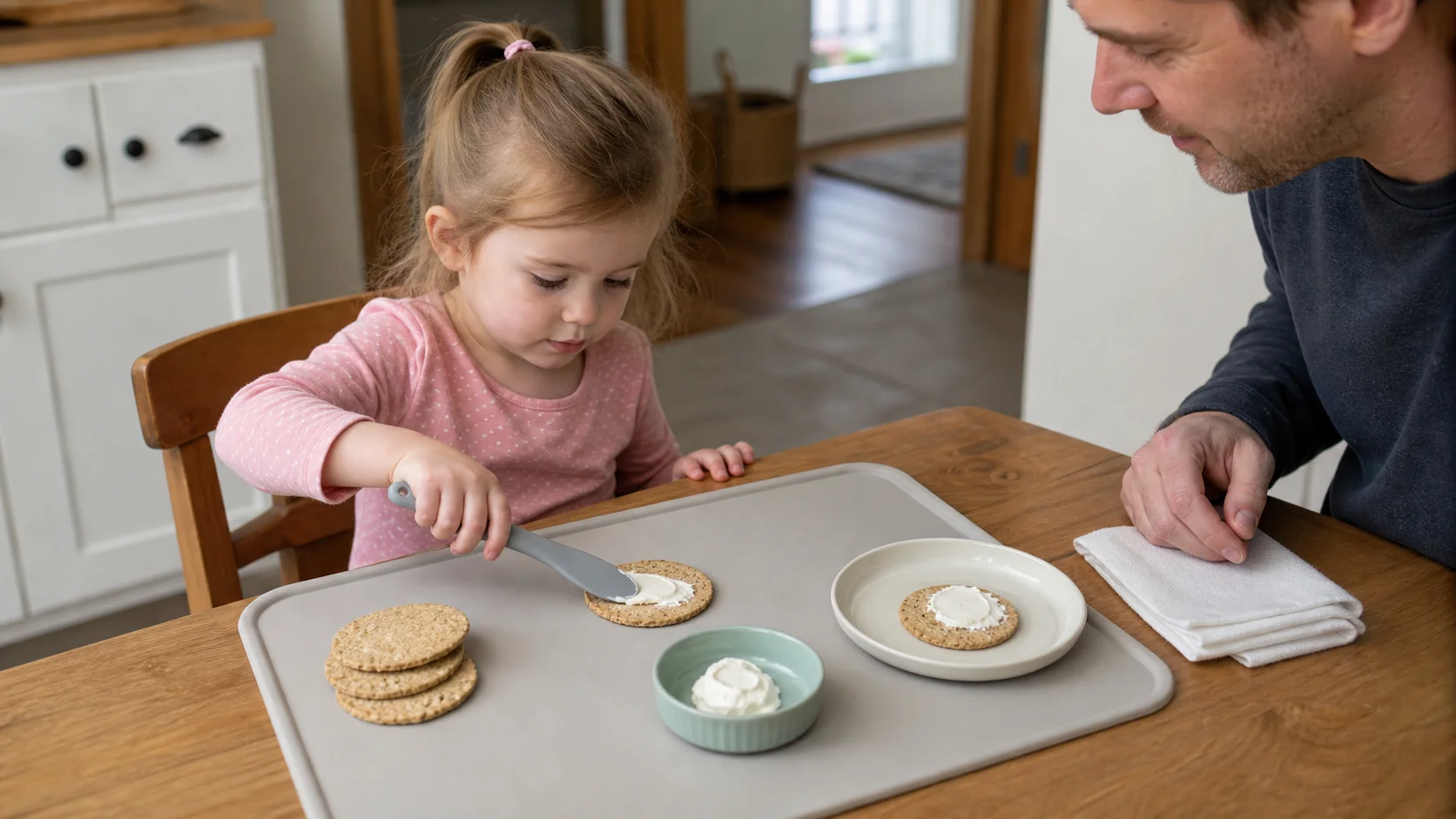
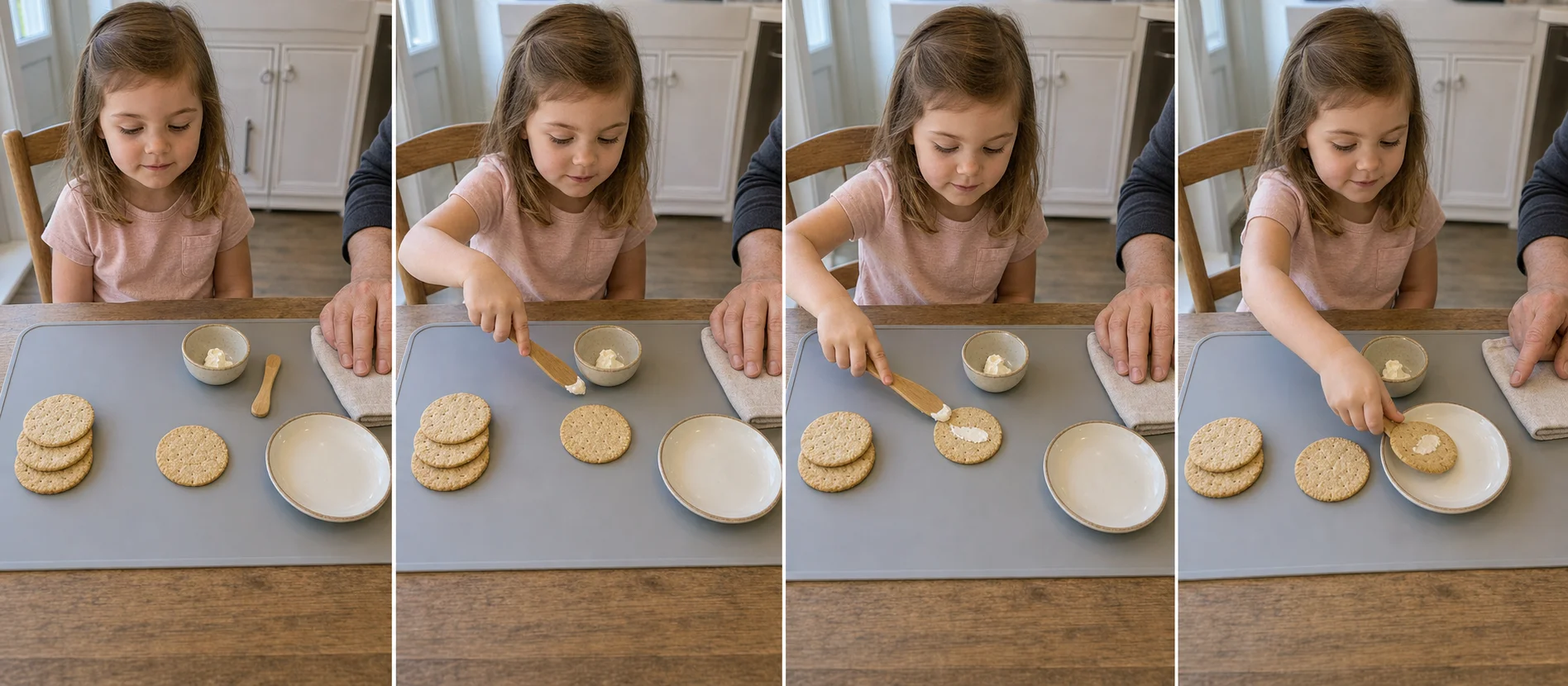
Take the pressure out of sticky food play with one cracker and one small swipe. Your child uses a spoon or child-safe spreading tool to move cream cheese across the cracker, practicing hand control while exploring the texture at their own pace.


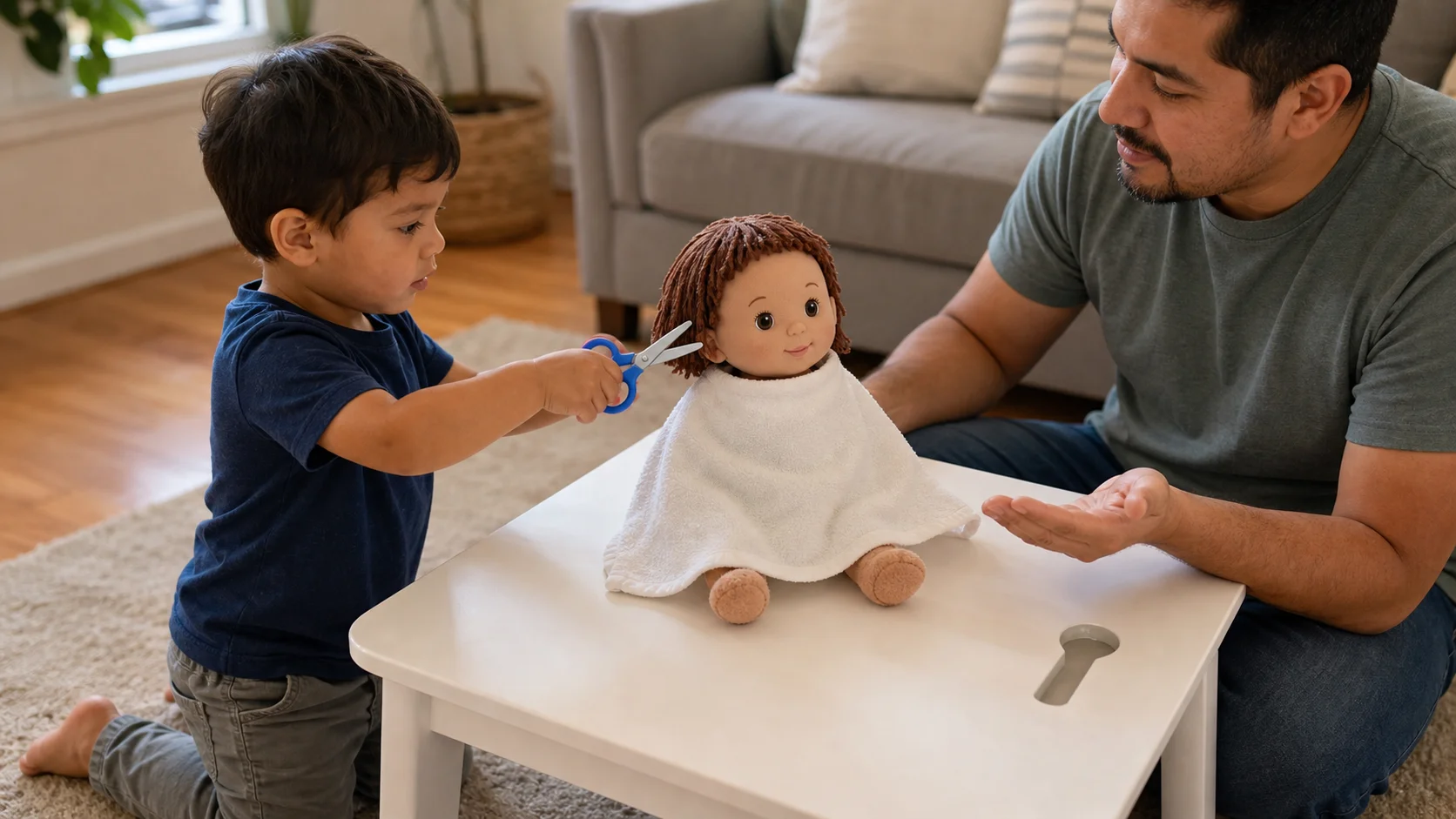
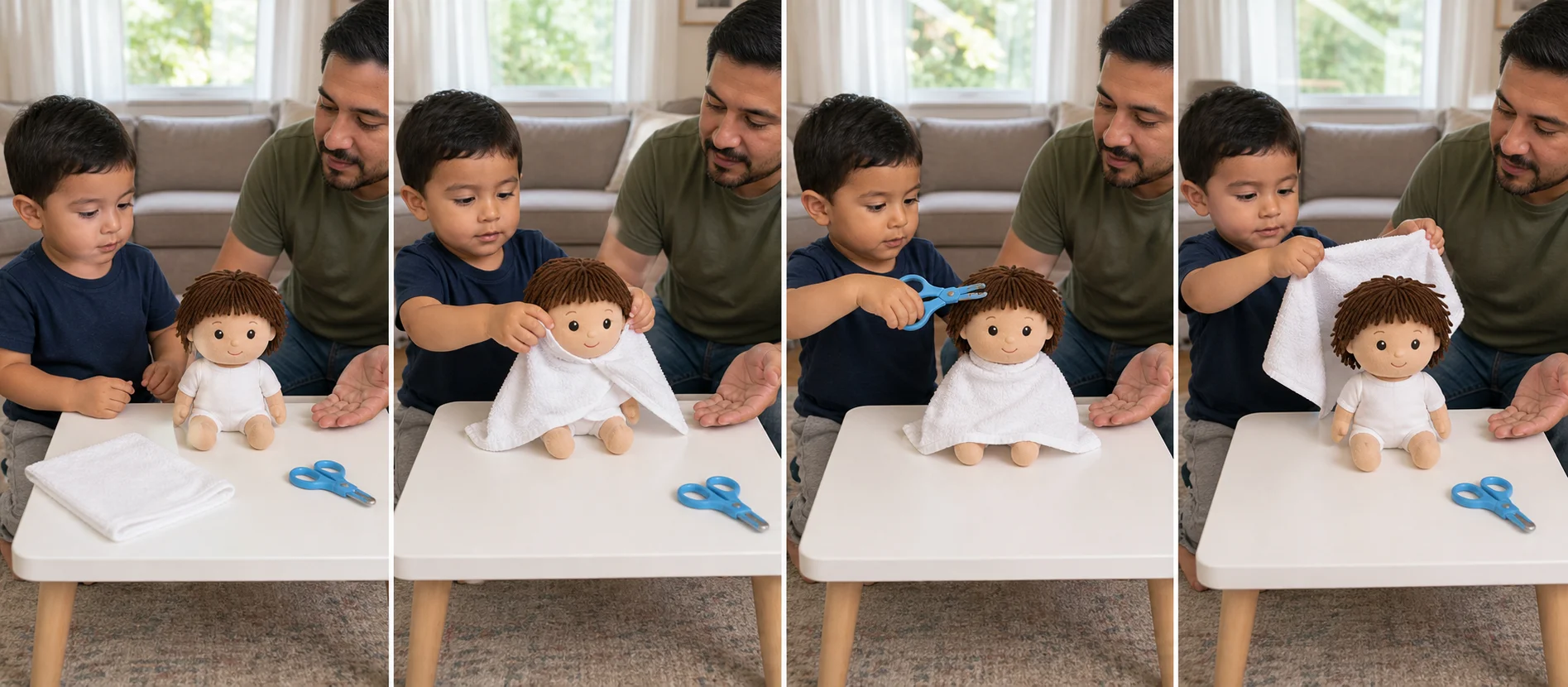
Make haircut steps feel more familiar with a quick doll-first rehearsal. Your child puts a washcloth cape on a doll, makes one pretend snip beside its head, and removes the cape to practice a clear start-to-finish routine.


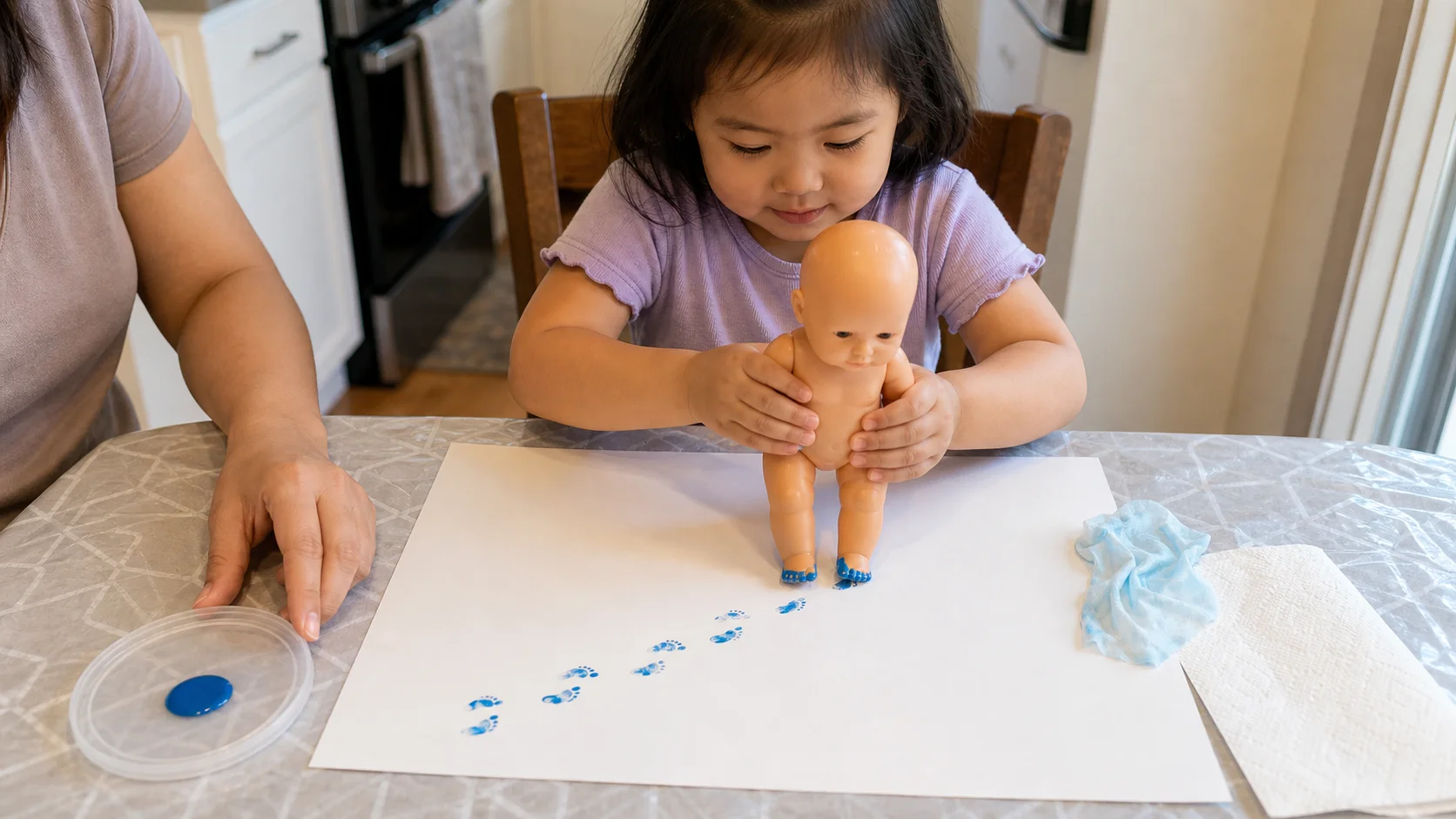
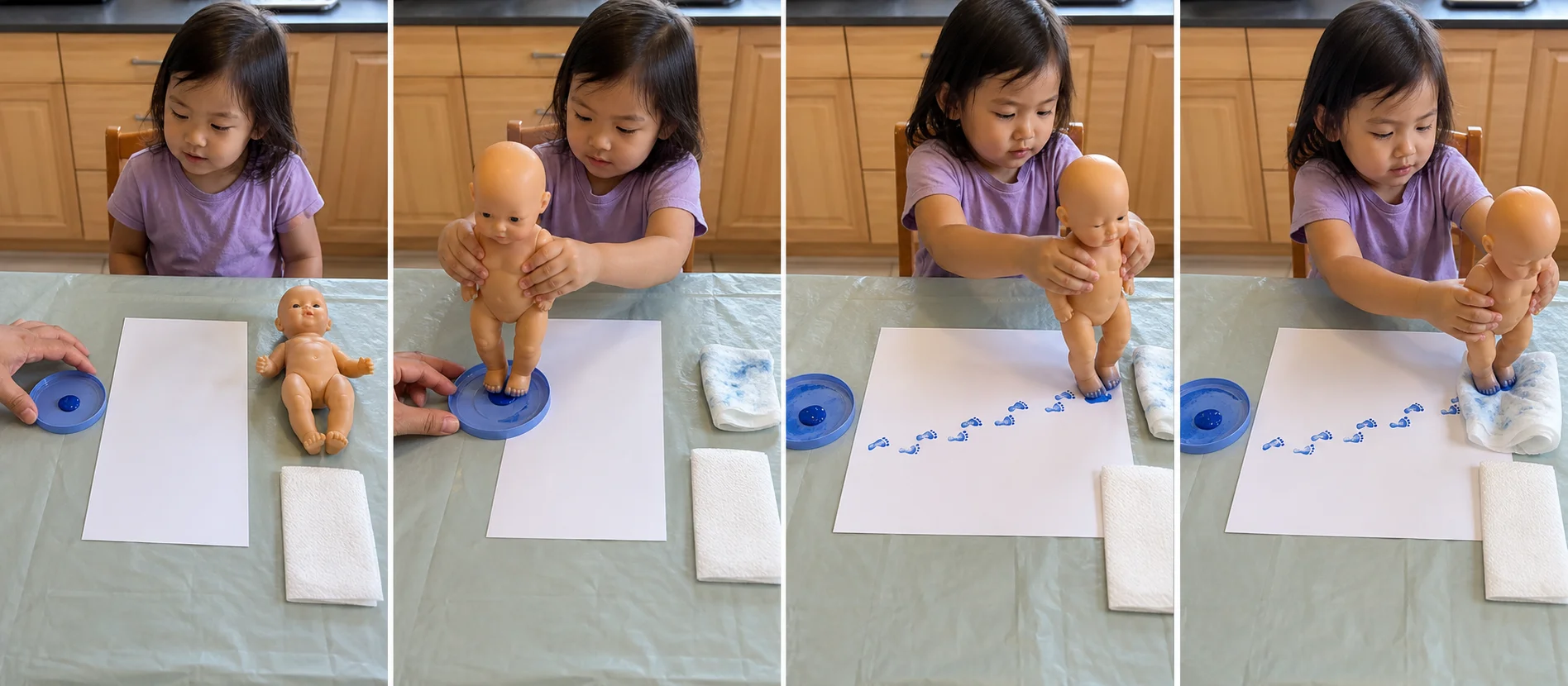
Let a doll do the messy part. Your child dips its feet in washable paint, walks it across paper, and wipes it clean, creating a tiny footprint trail while exploring paint through a familiar toy.


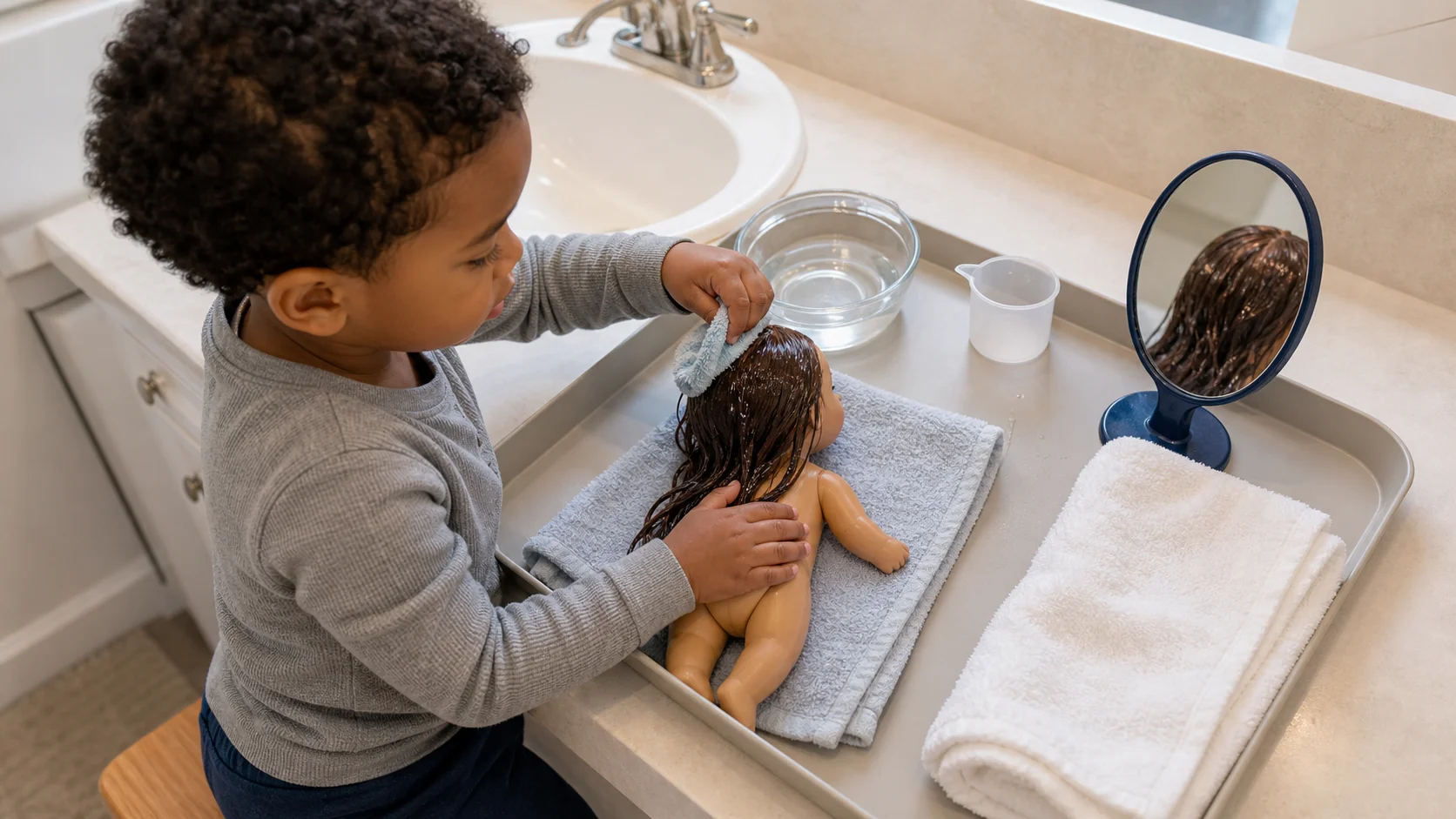
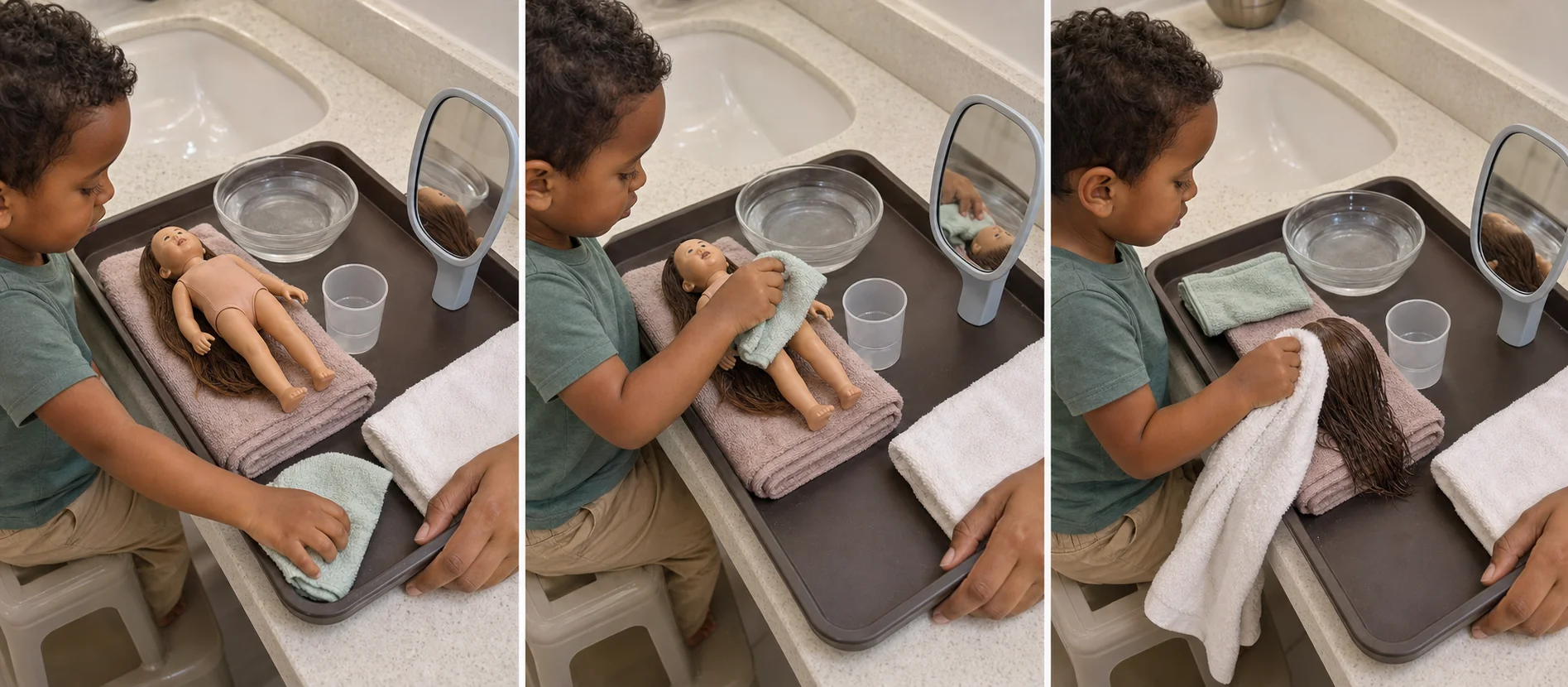
Make hair-wash practice feel more predictable by letting the doll go first. Your child chooses a cup or washcloth, gives the doll's hair one small rinse, checks it in the mirror, and pats it dry to practice a clear care routine with more control.


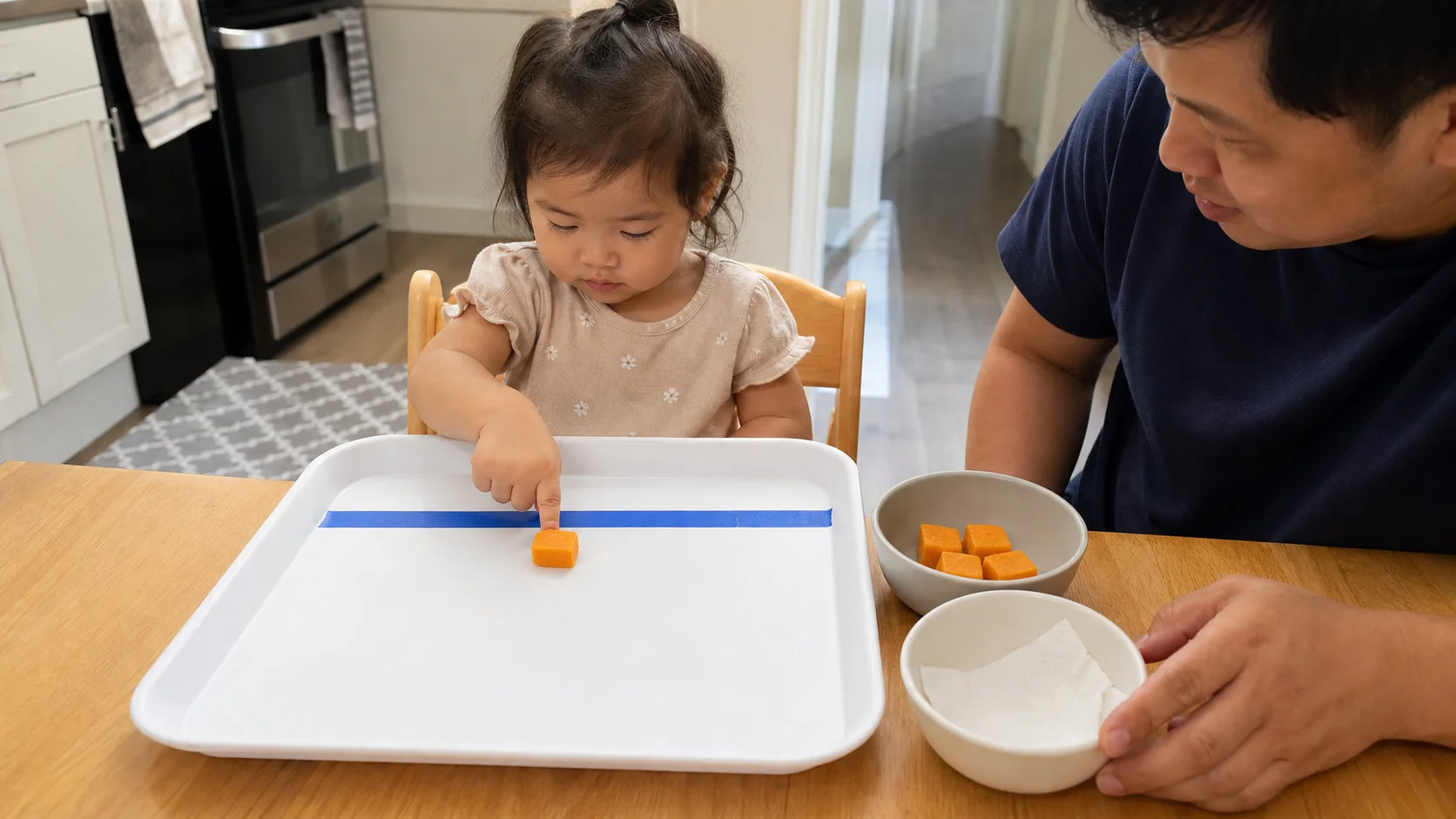
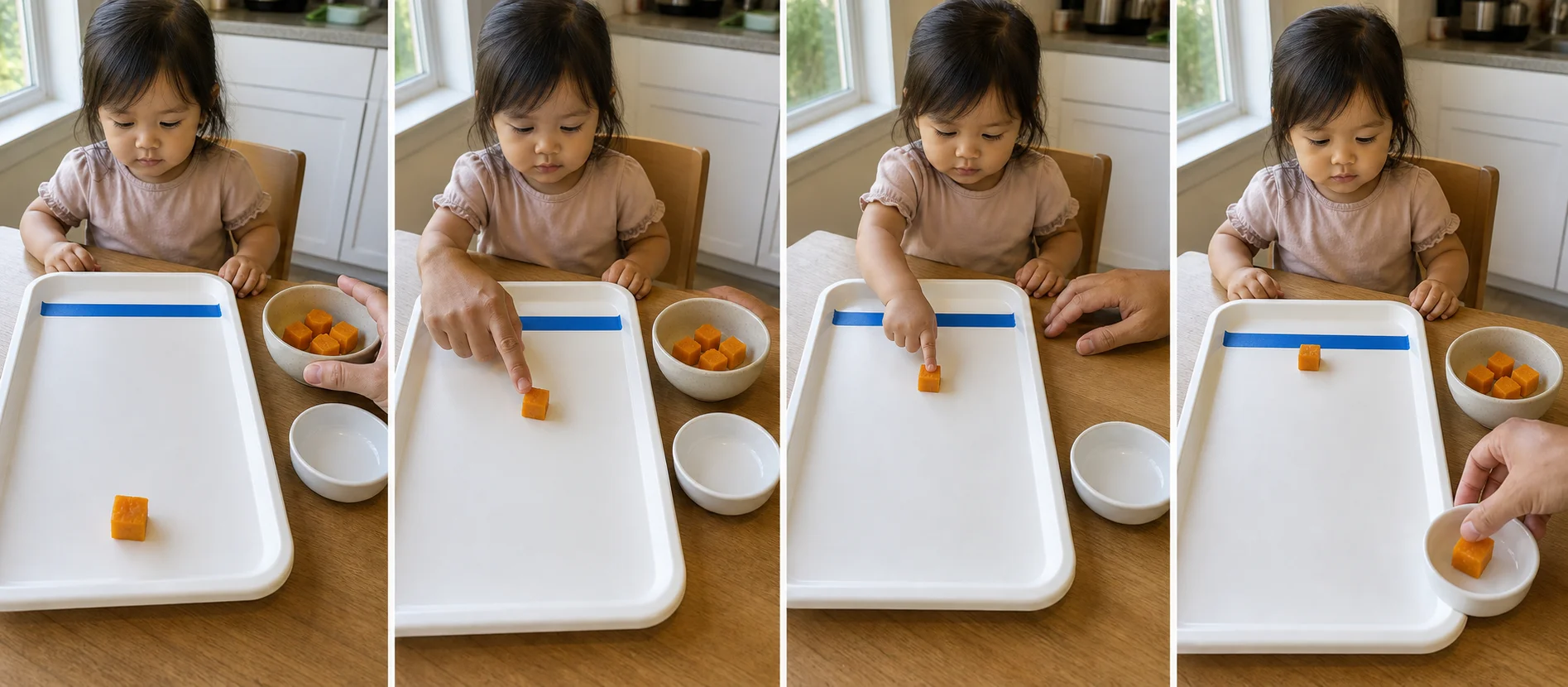
Turn familiar food pieces into a tabletop hockey challenge. Your child pushes, rolls, or flicks one piece toward a tape goal, building finger control and aim with every shot.


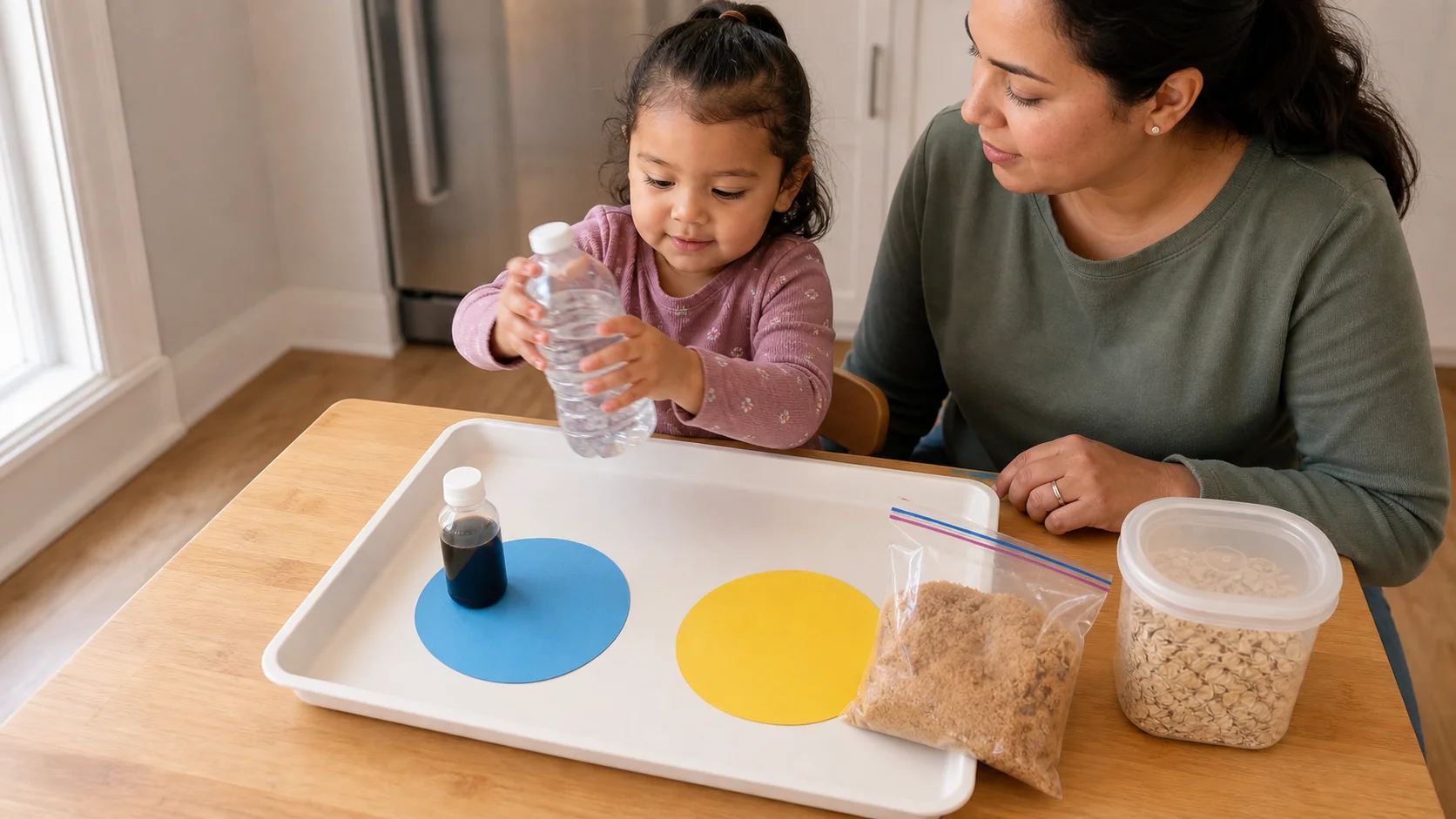
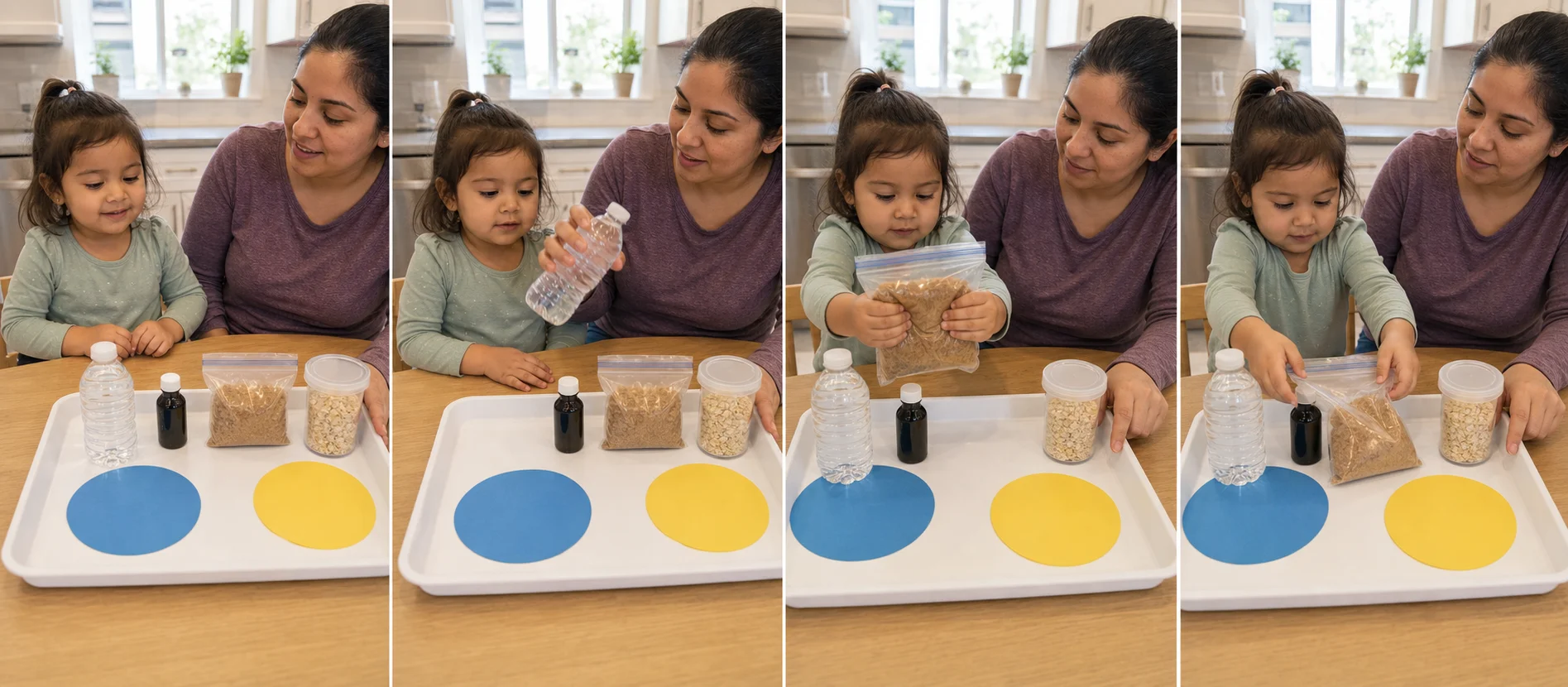
Can your child tell which sealed kitchen ingredients shake and which ones squish? Testing and sorting each container turns everyday pantry items into a low-mess sensory game that builds observation and early sorting skills.


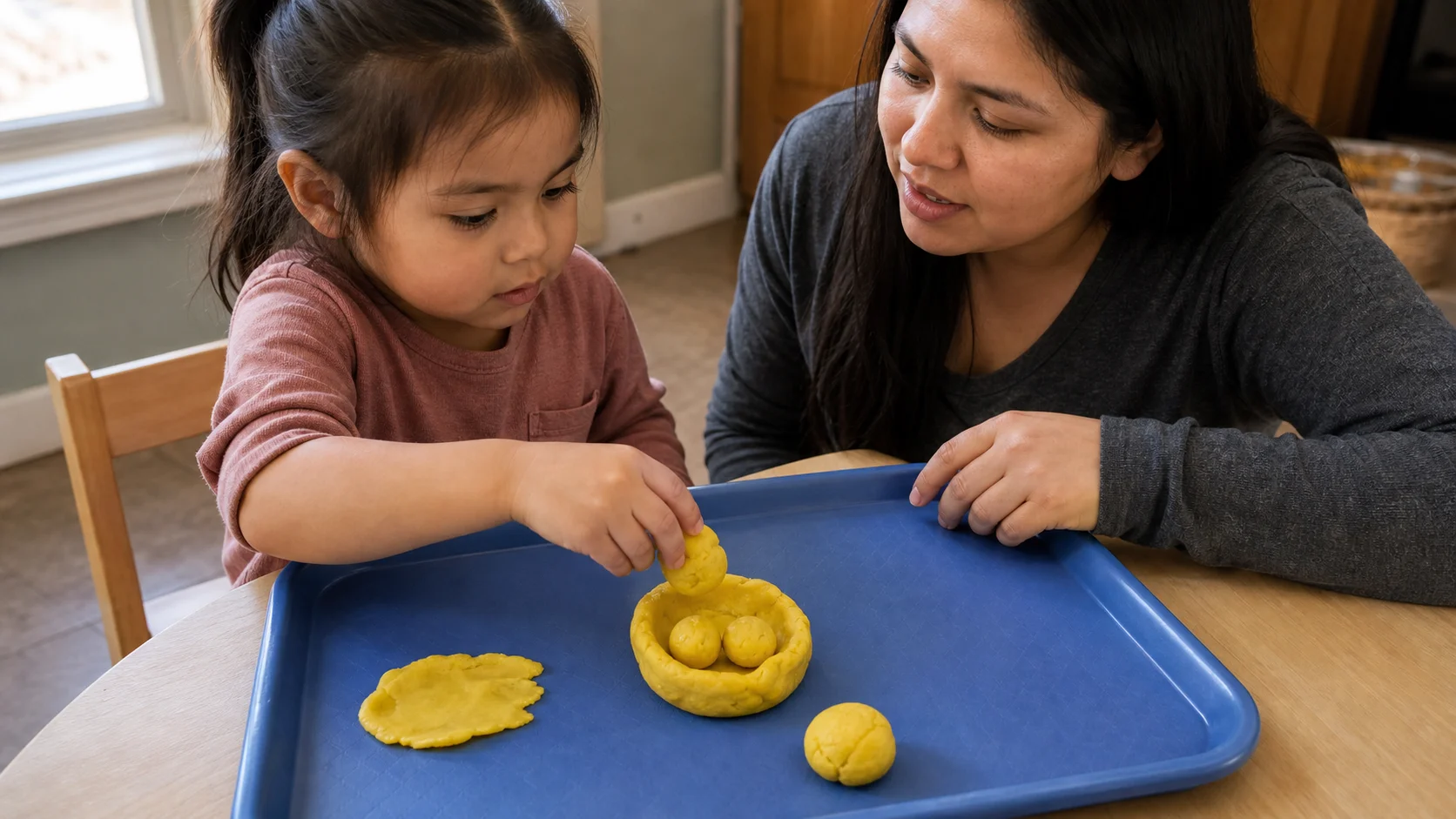
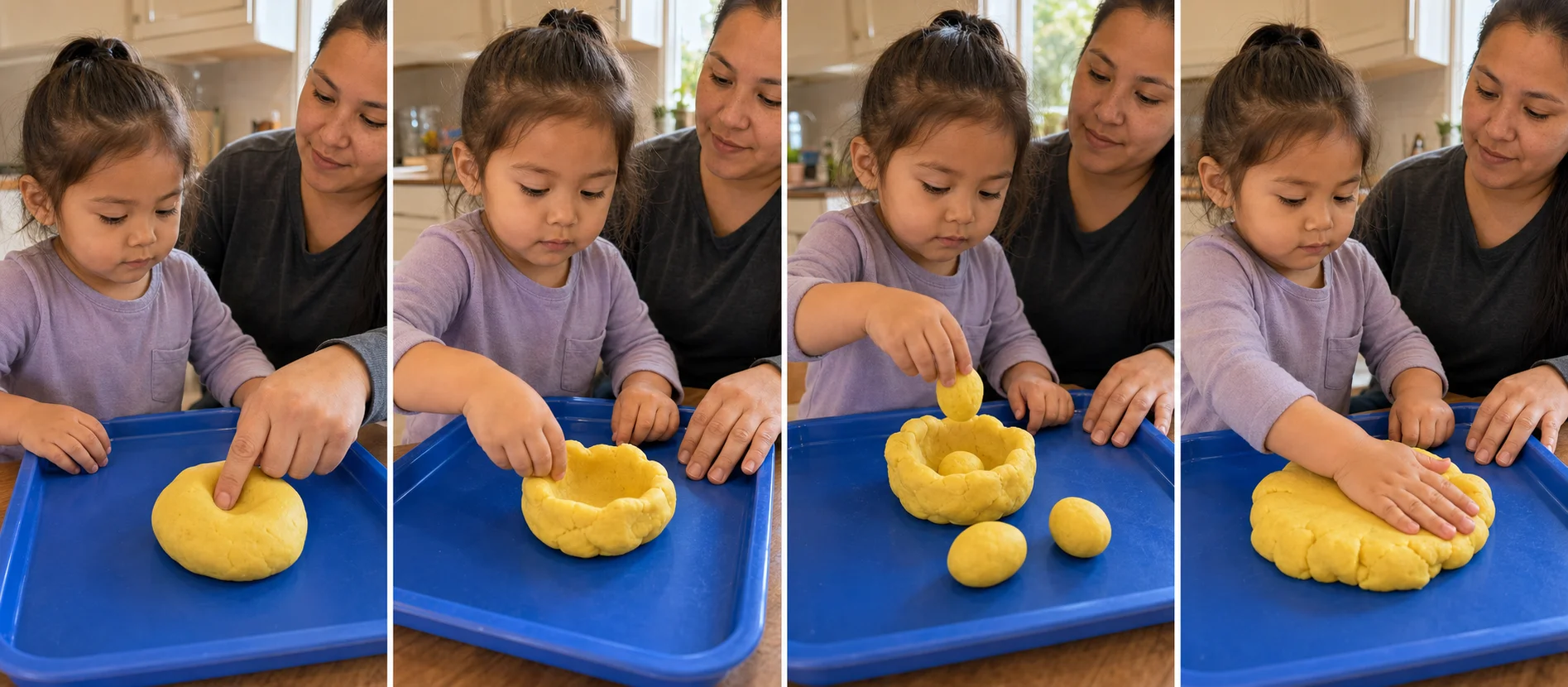
Make a tiny playdough basket, then fill it with eggs rolled between little fingers. Pressing, pinching, rolling, and dropping give hands a playful workout.


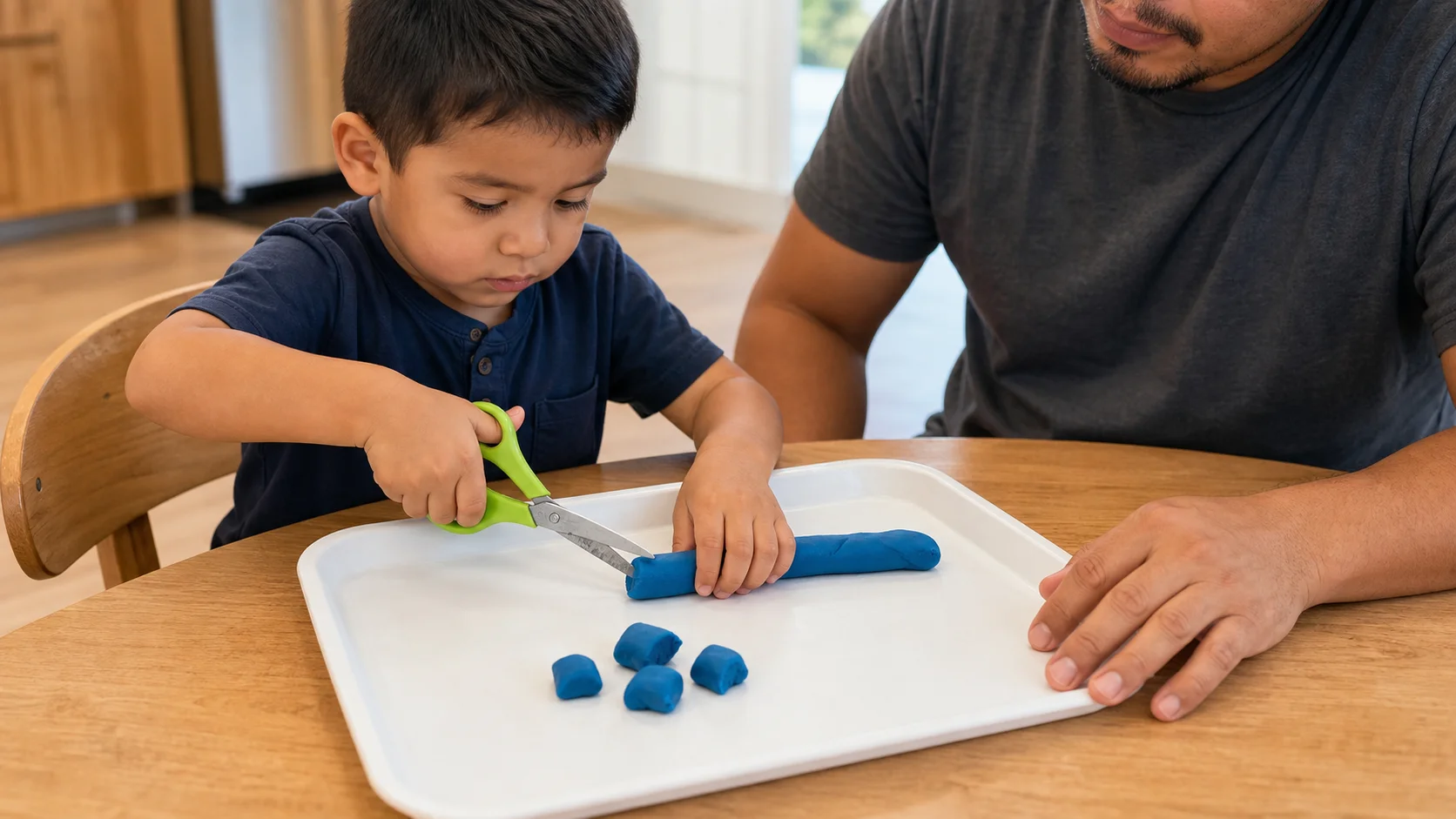
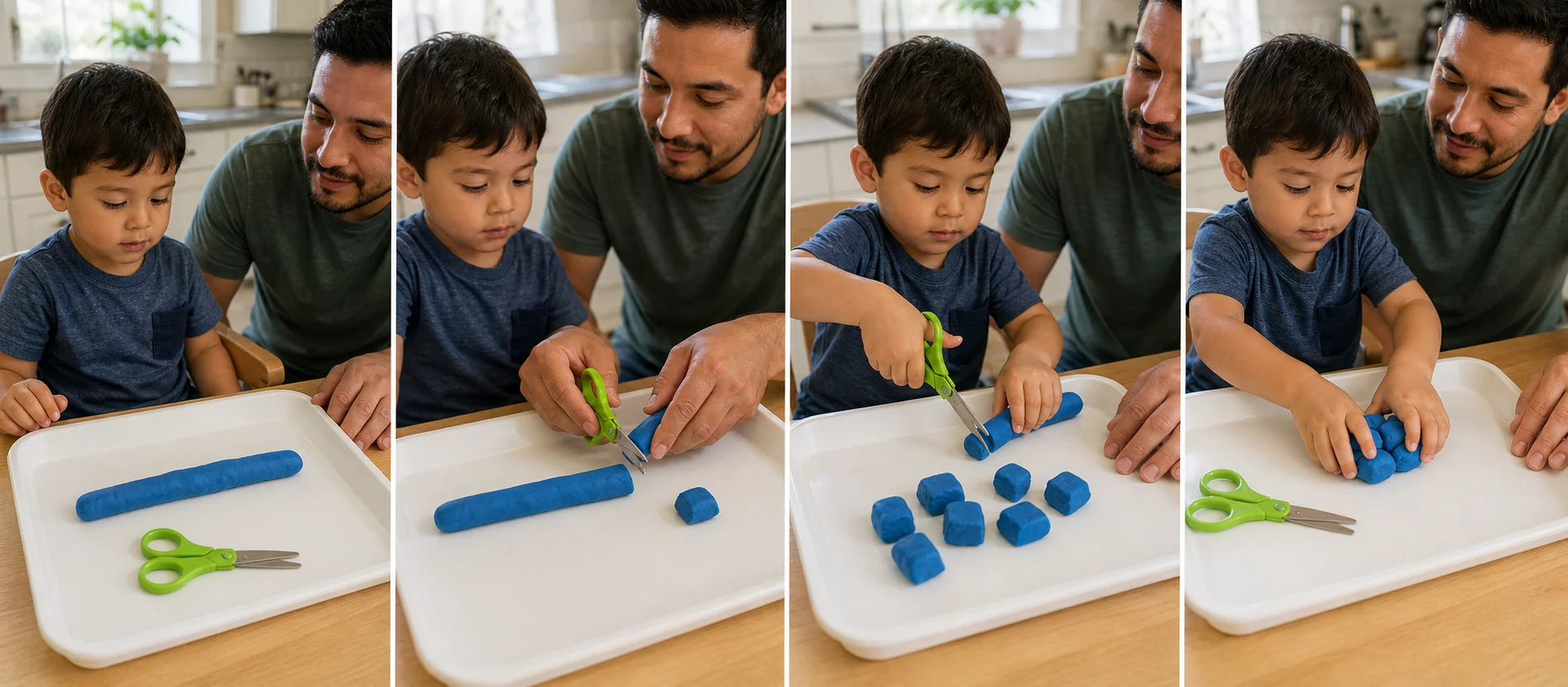
Skip the paper scraps and turn one playdough snake into satisfying scissor practice. Your child holds the dough steady, snips off small pieces, then squashes and rerolls it for repeatable two-hand coordination practice.


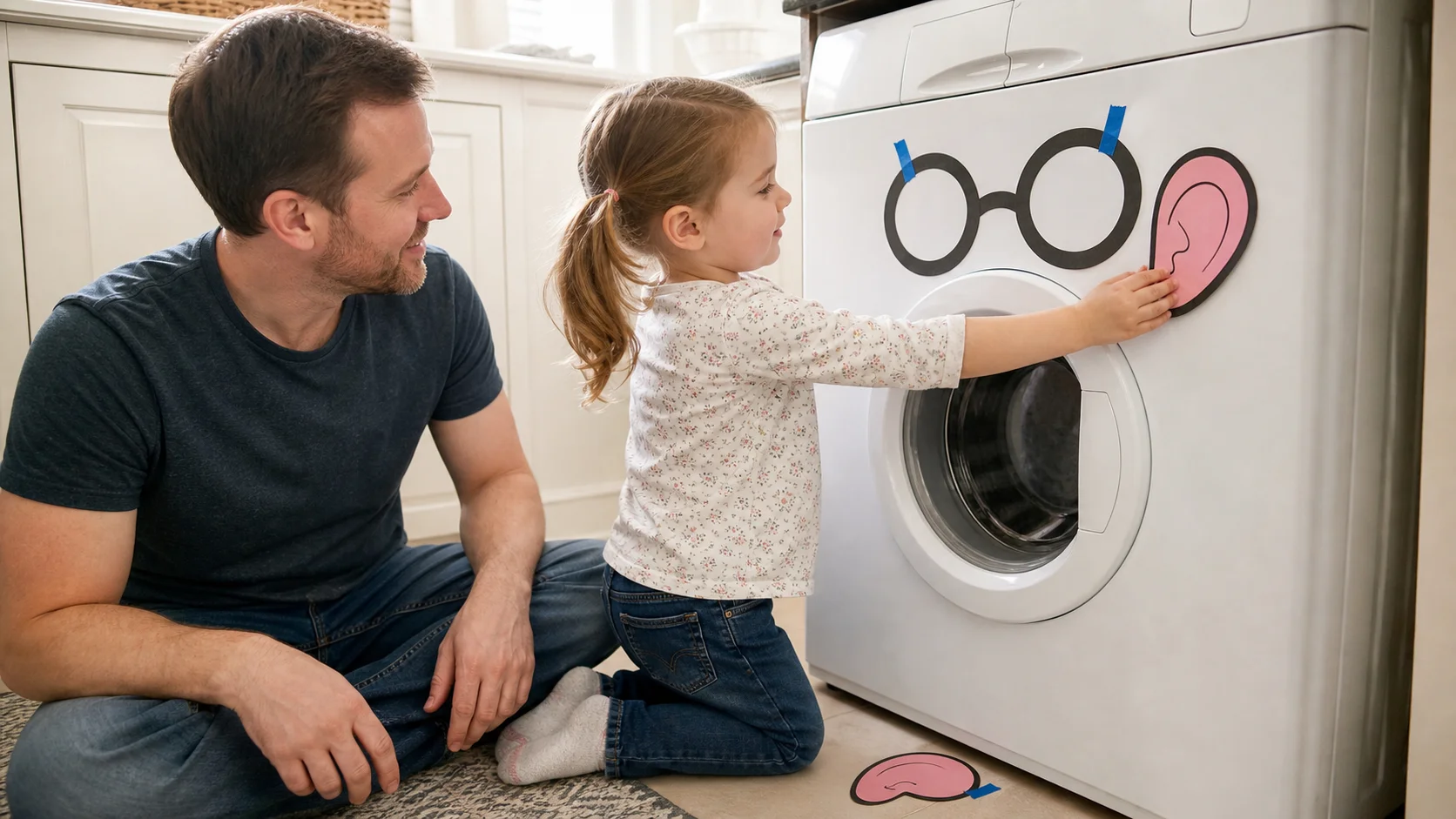
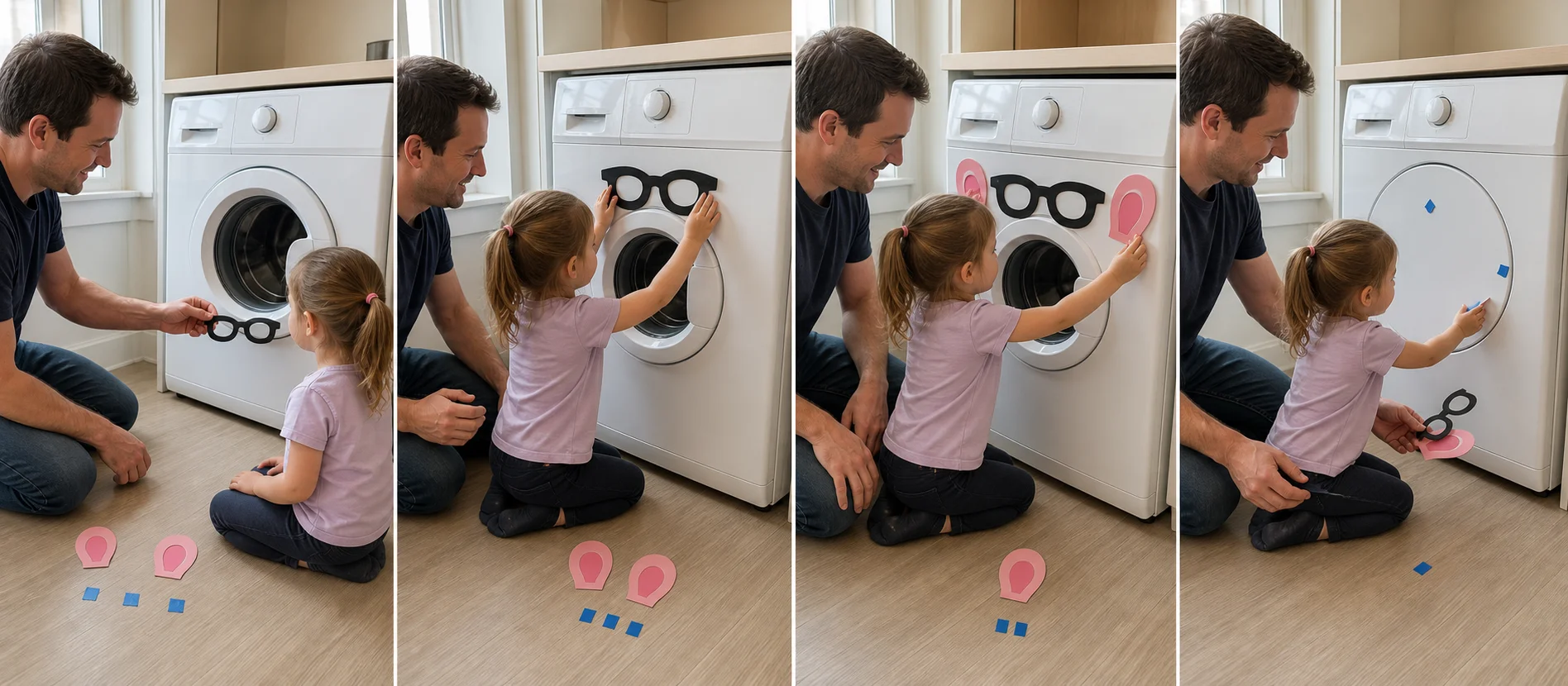
Turn an intimidating appliance into a silly face while it stays safely off. Your child sticks paper glasses and ears onto a washing machine or unplugged hair dryer, then peels them off for a quiet, low-pressure way to make the machine feel more familiar.


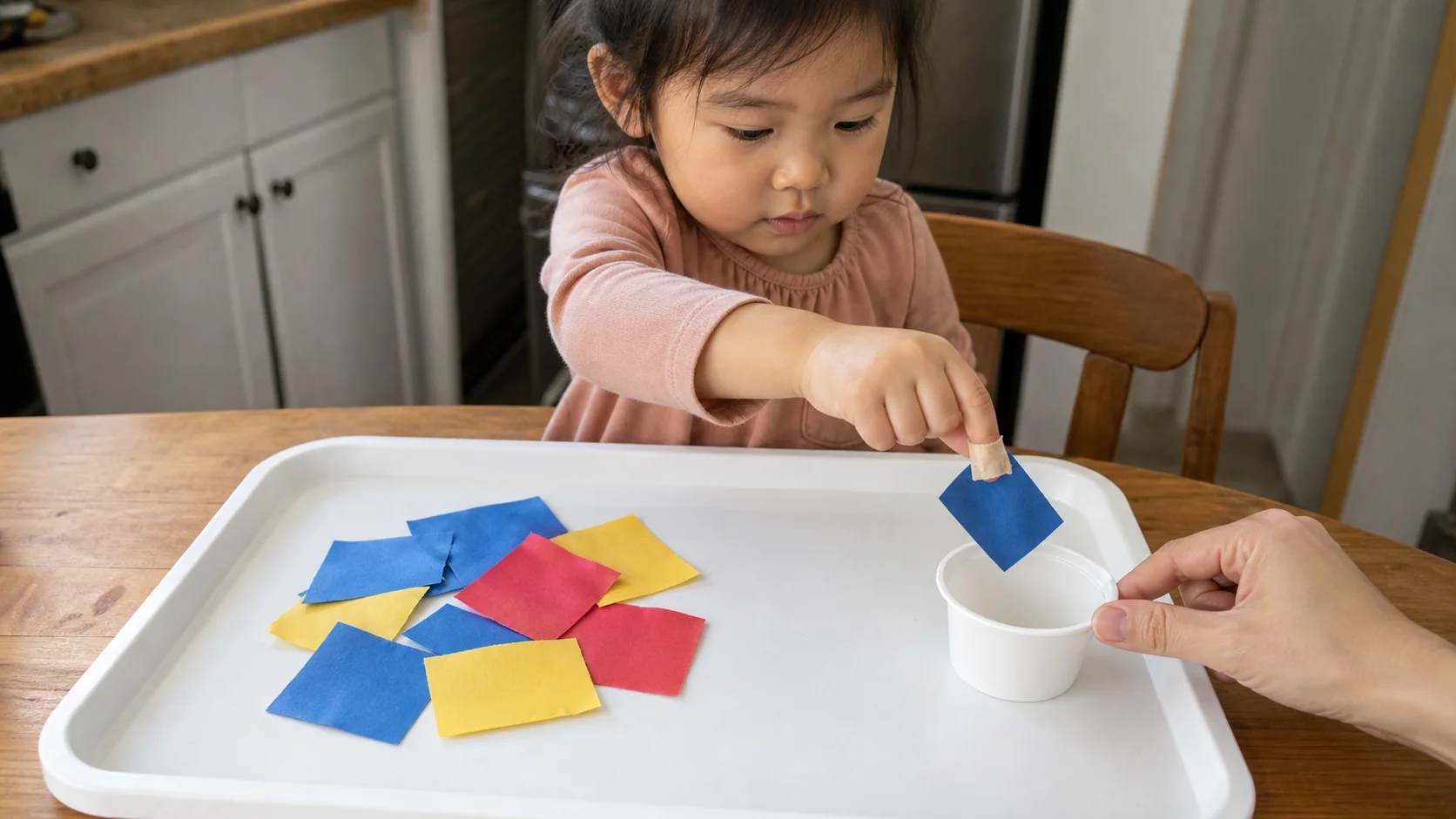
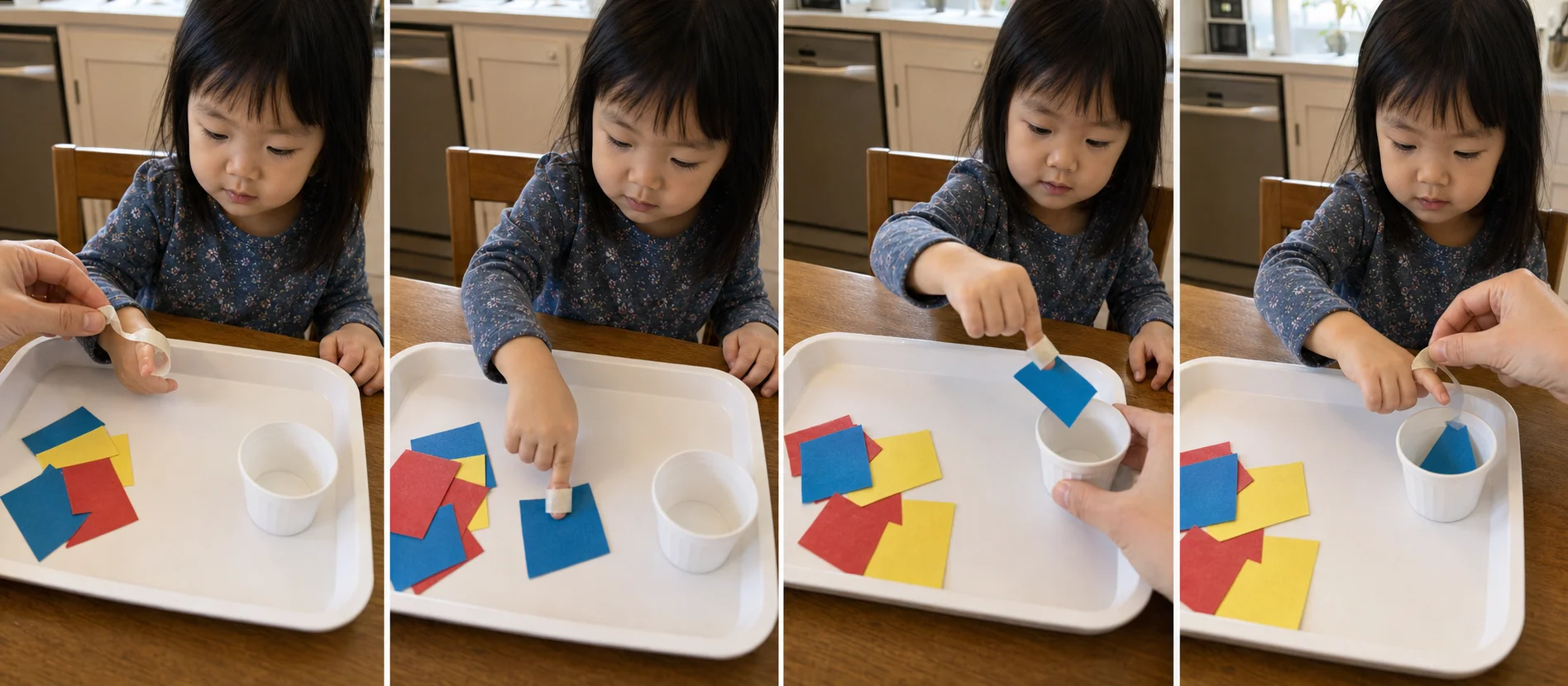
Turn a loop of tape and a few paper scraps into a sticky fingertip challenge. Your child taps, carries, and works each scrap loose over a cup for focused finger isolation and hand-eye coordination practice.


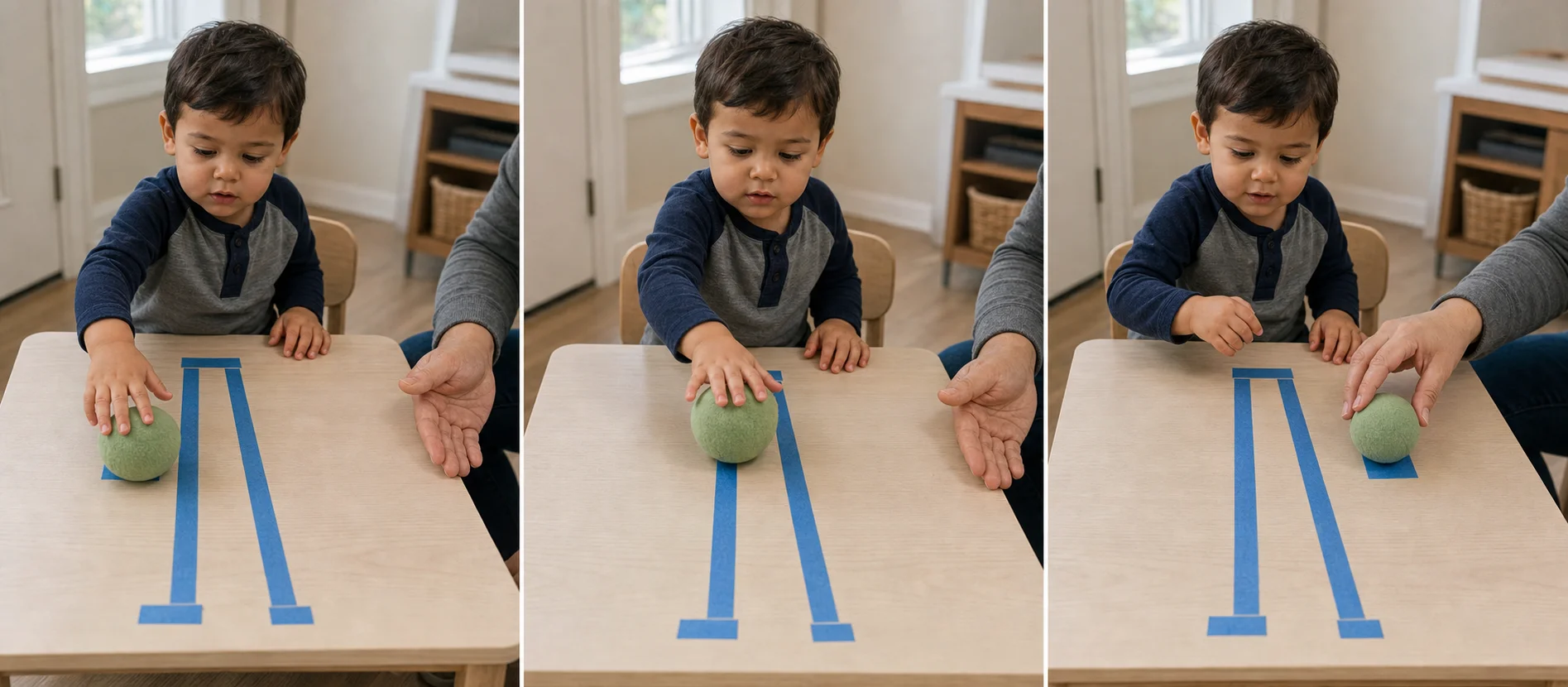
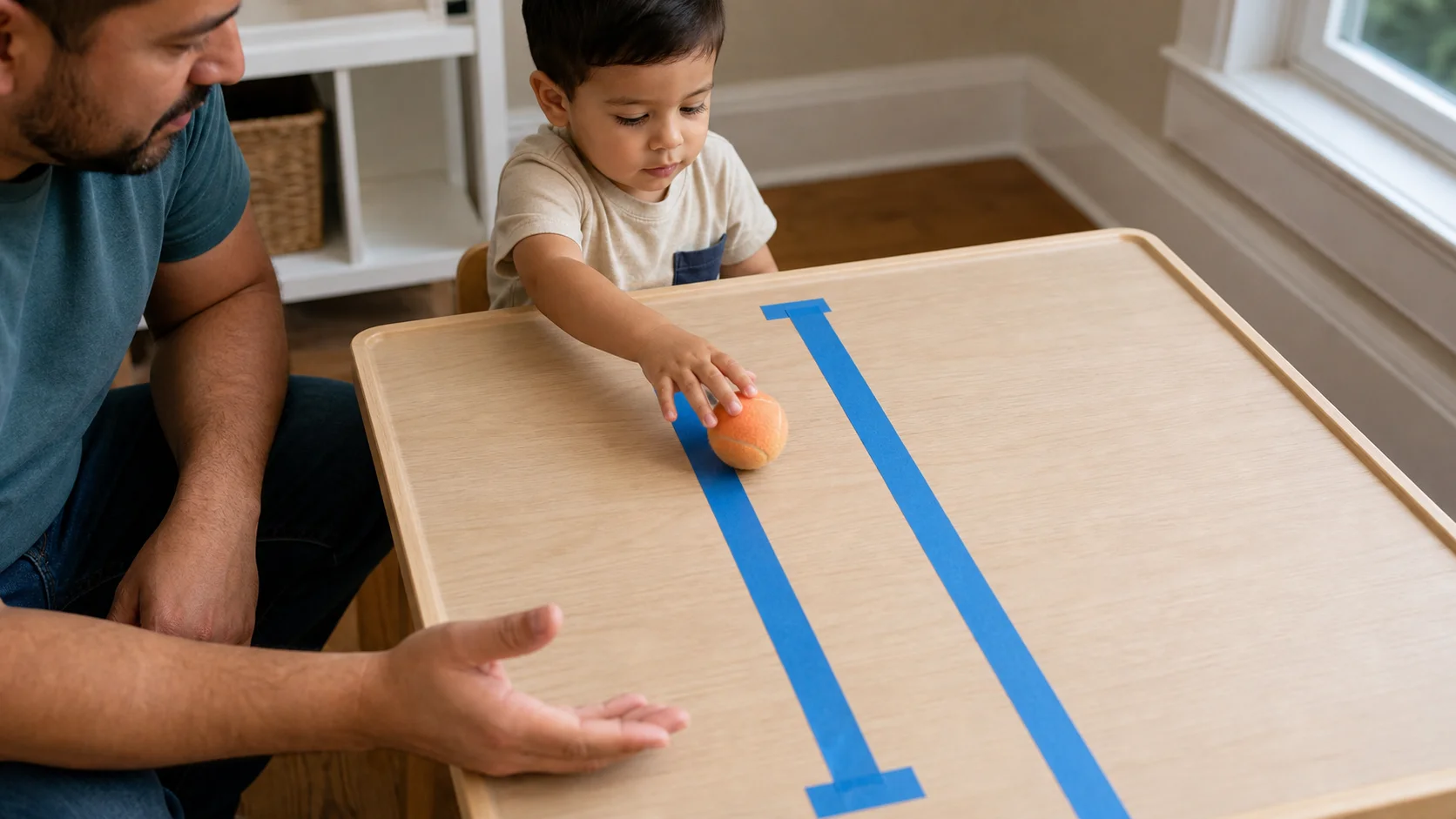
Can your child keep a ball on the road all the way to the finish? Make a tiny tabletop track with painter's tape, then have your child roll a soft ball from start to finish for focused hand and wrist control practice.


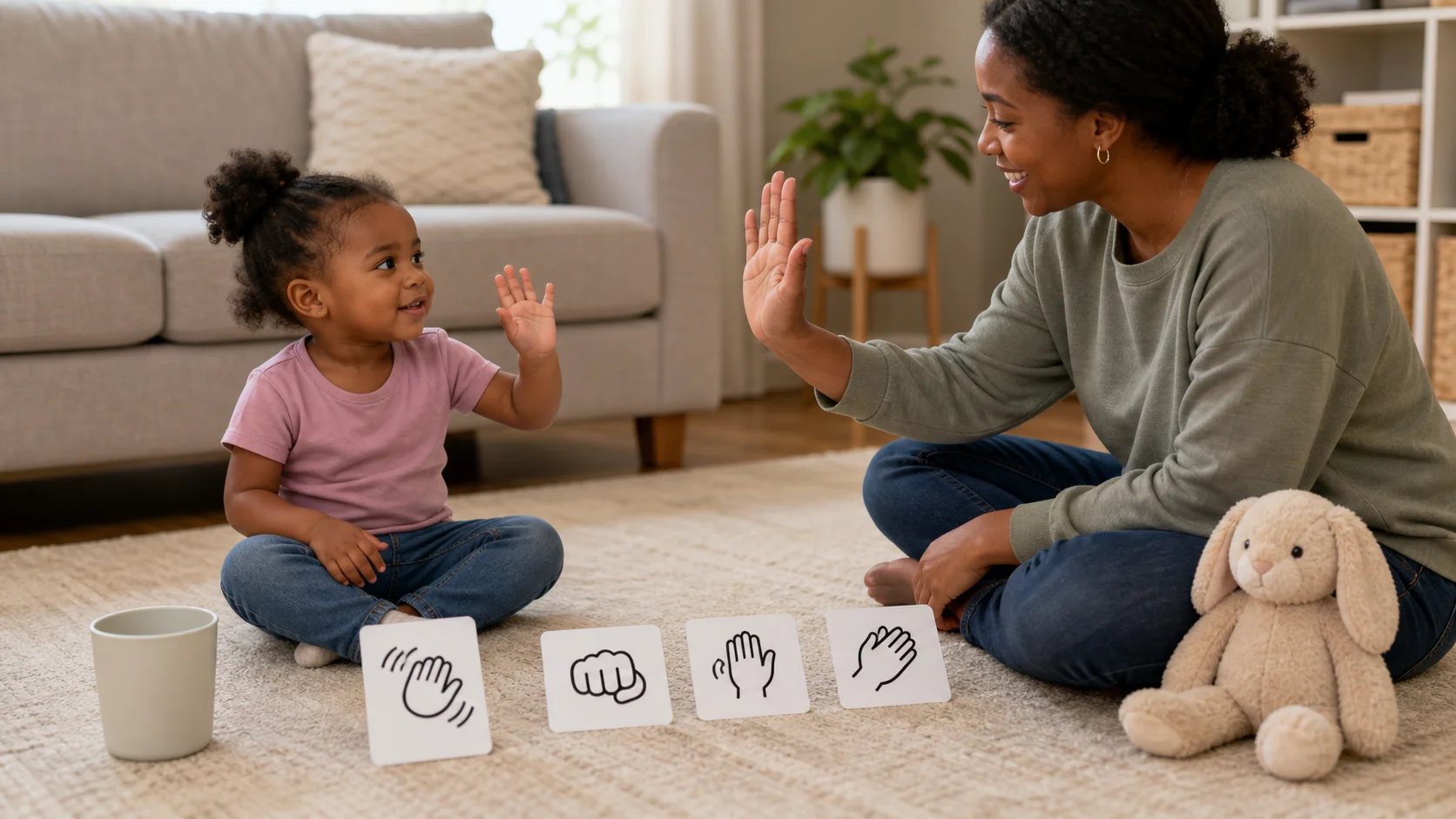
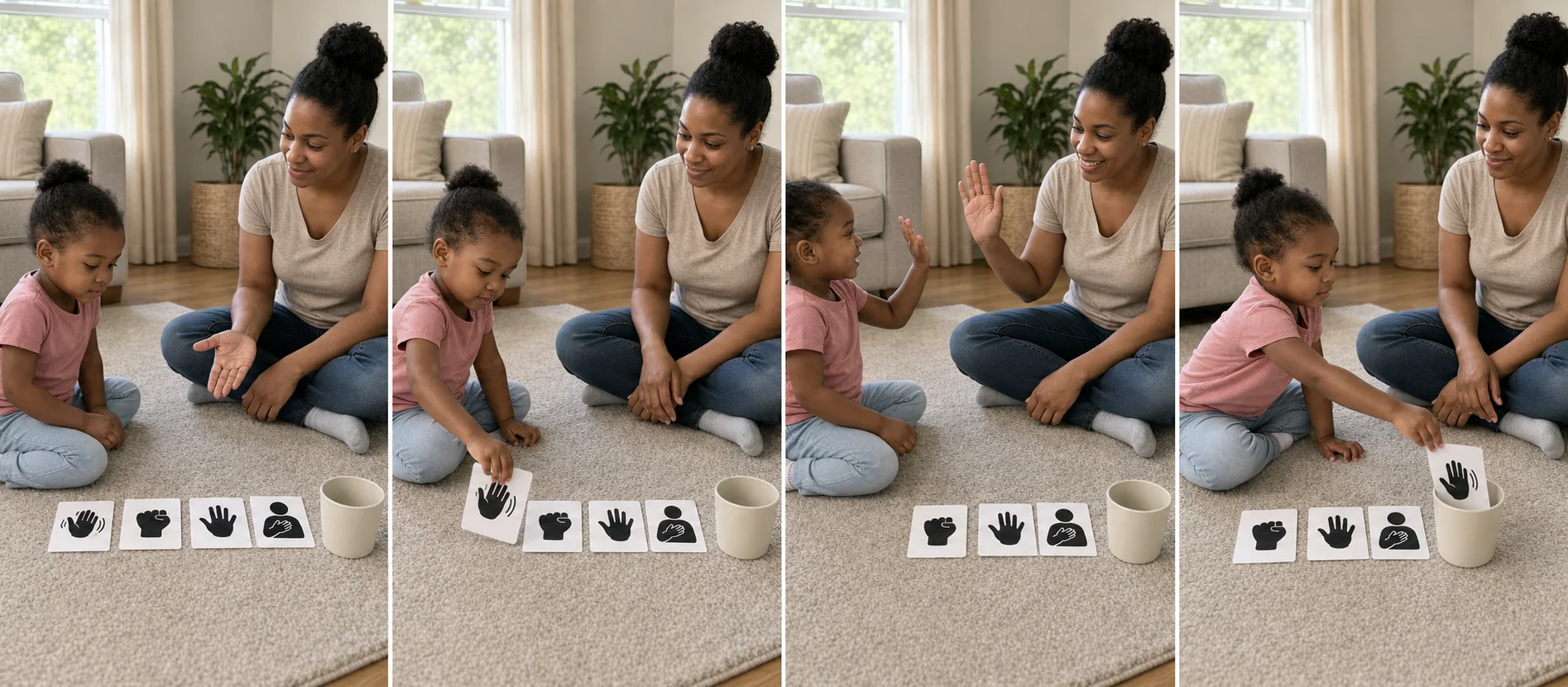
Give your child an easy way to choose how they say hello. They pick a greeting card, try that hello, then drop the card in the done cup.


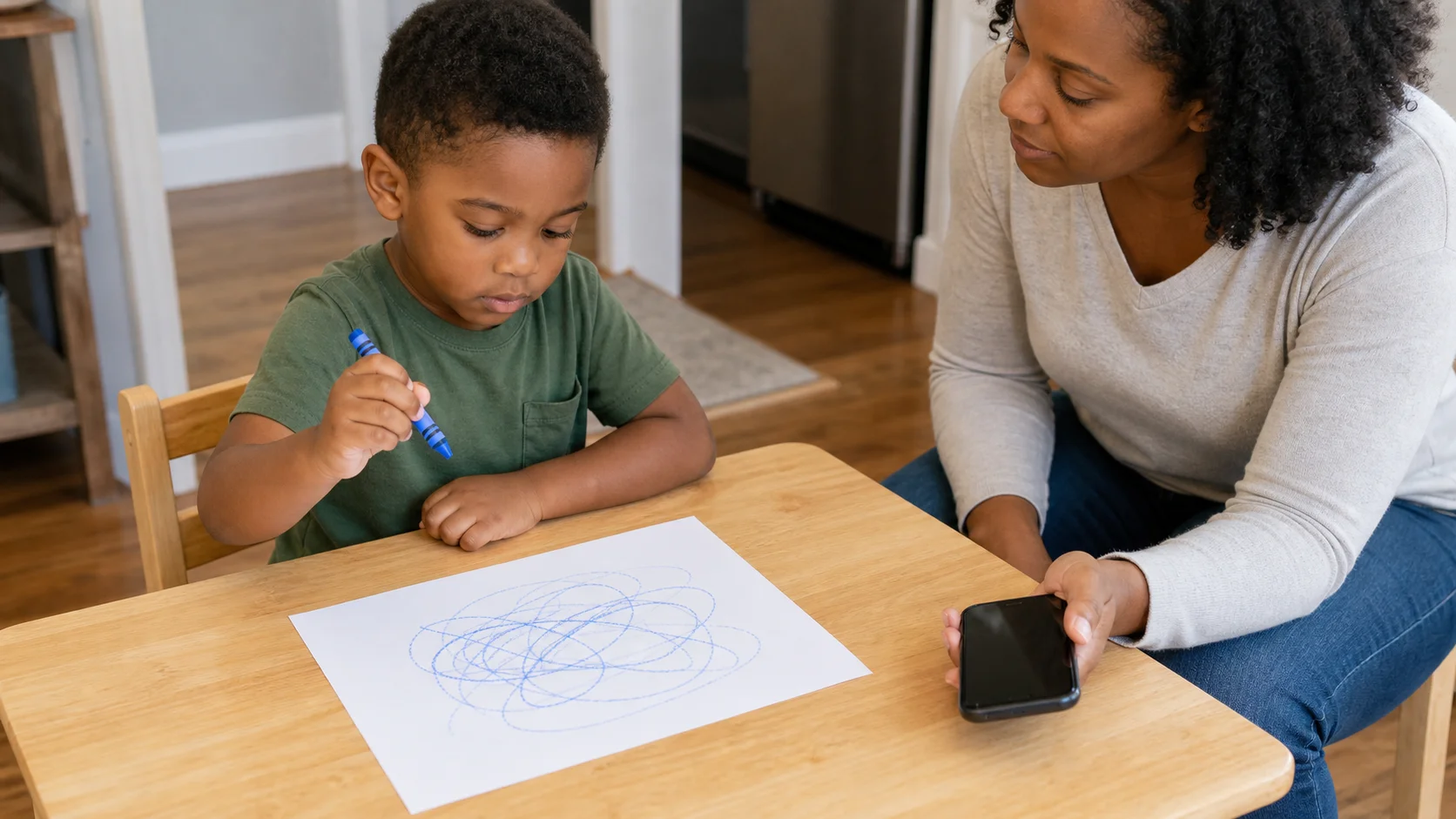
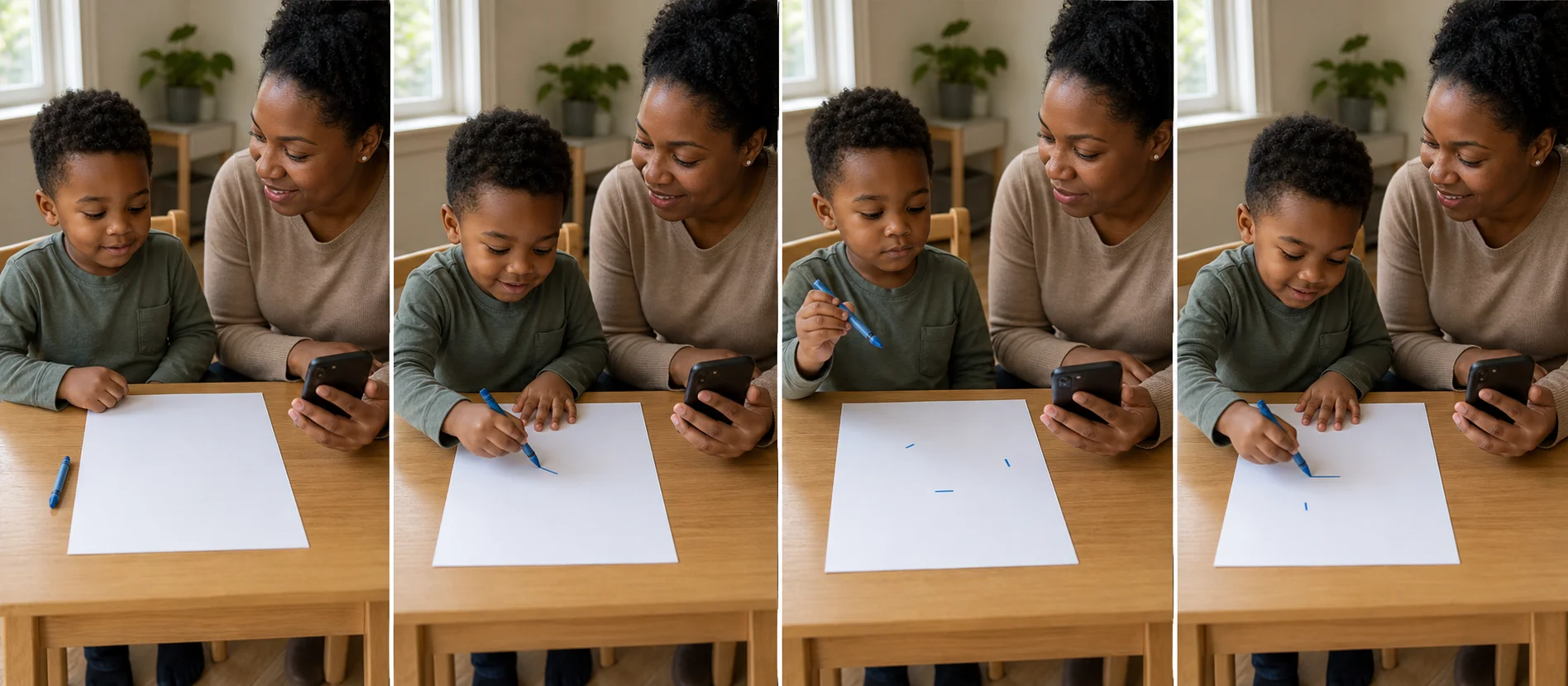
Turn ordinary drawing into a start-stop challenge with one sheet of paper, a crayon or marker, and music. Your child draws while the music plays, holds the tool still when it stops, then starts again to practice tool control and responding to sound cues.


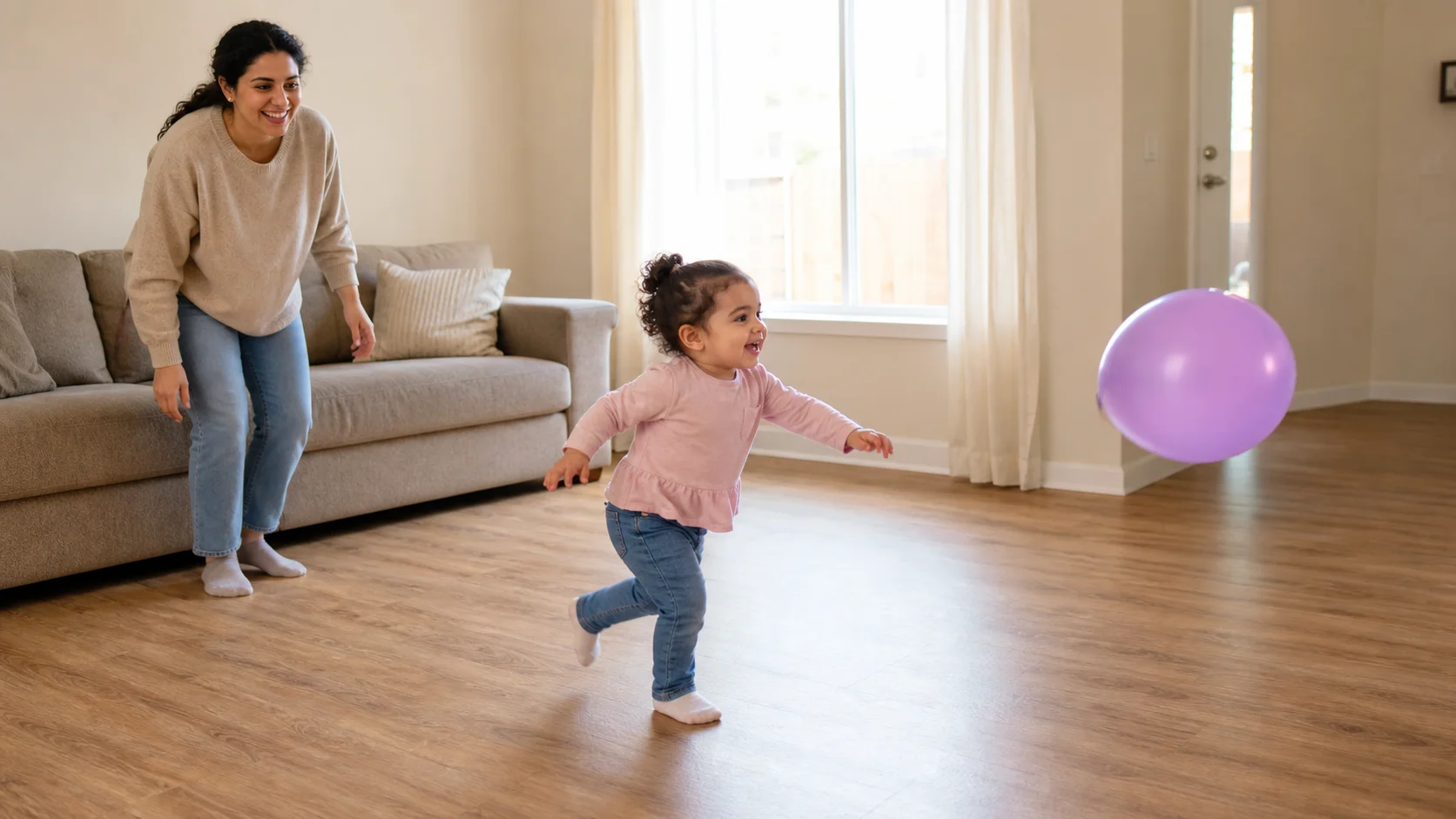
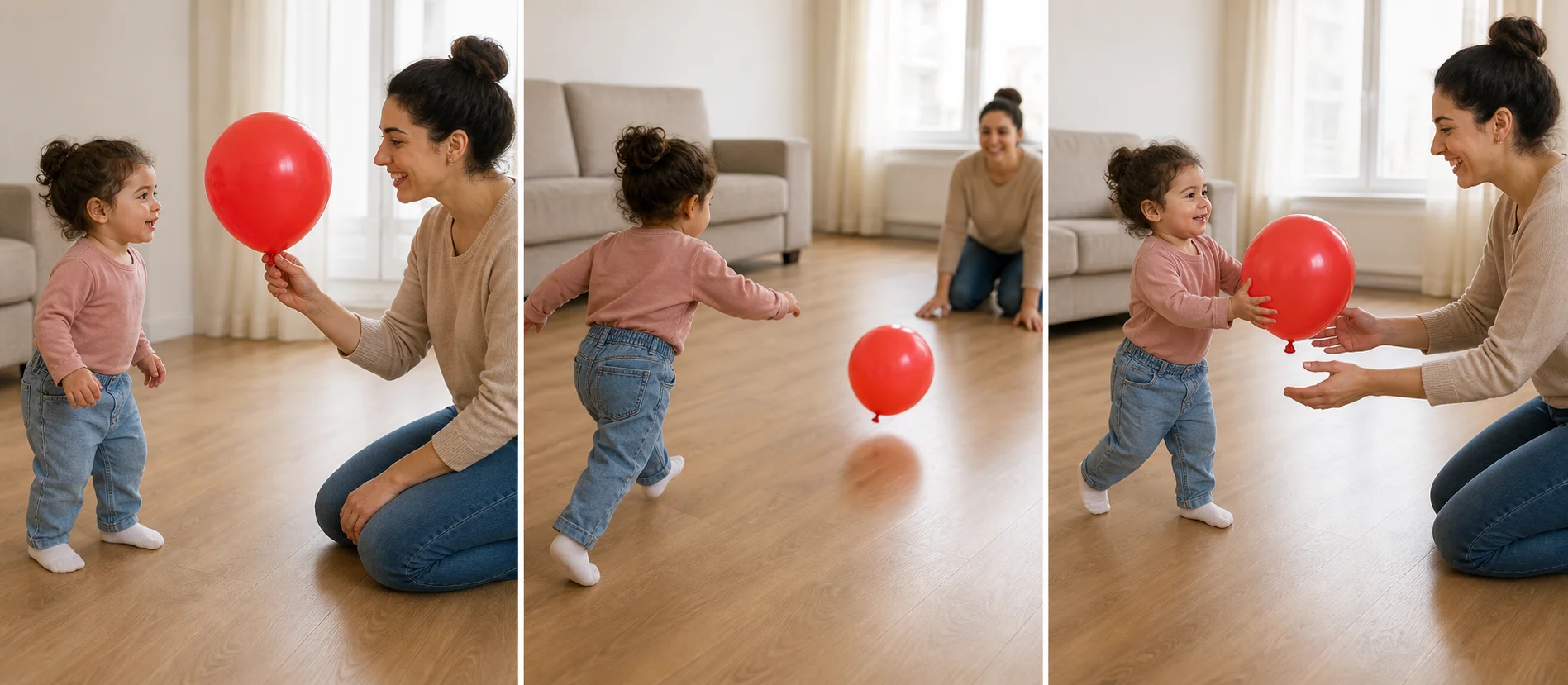
Release one untied balloon and let its wild flight start a quick chase. Your child watches where it lands, retrieves it, and brings it back for another launch.