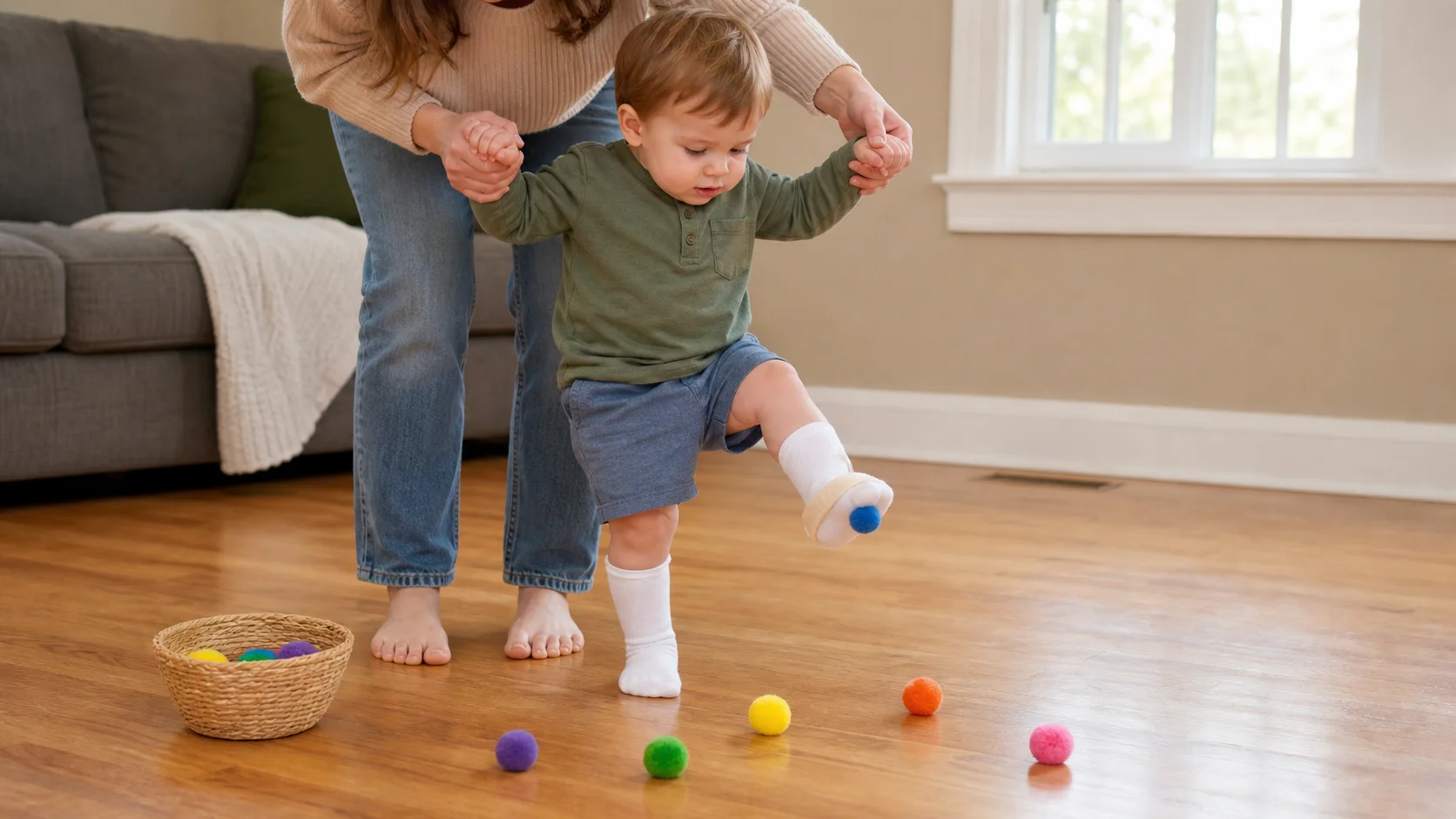

Sticky Sock Treasure Step
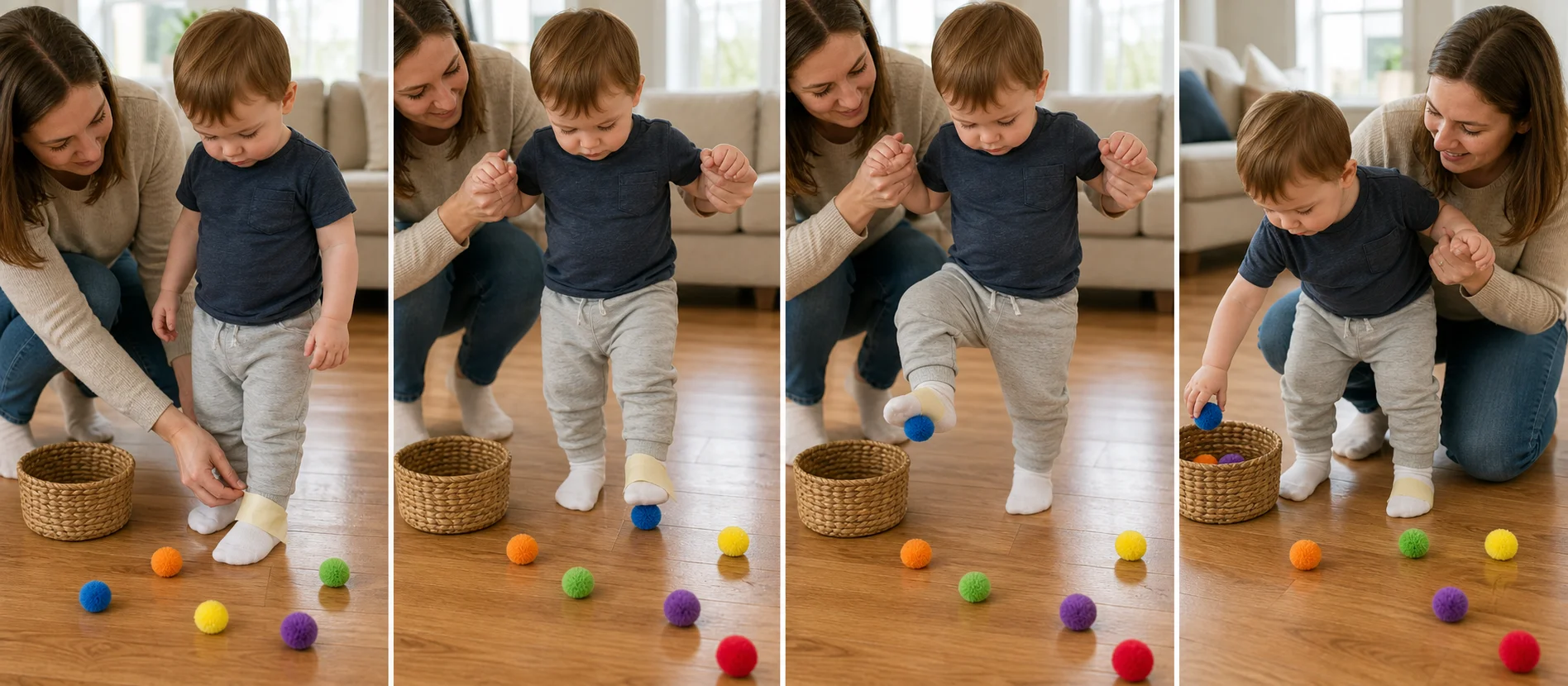
Turn one stocking-covered foot into a treasure-catching magnet. Your child steps on pom-poms, lifts the taped foot, then peels each prize into a basket, building balance and body awareness with every catch.


Turn one stocking-covered foot into a treasure-catching magnet. Your child steps on pom-poms, lifts the taped foot, then peels each prize into a basket, building balance and body awareness with every catch.


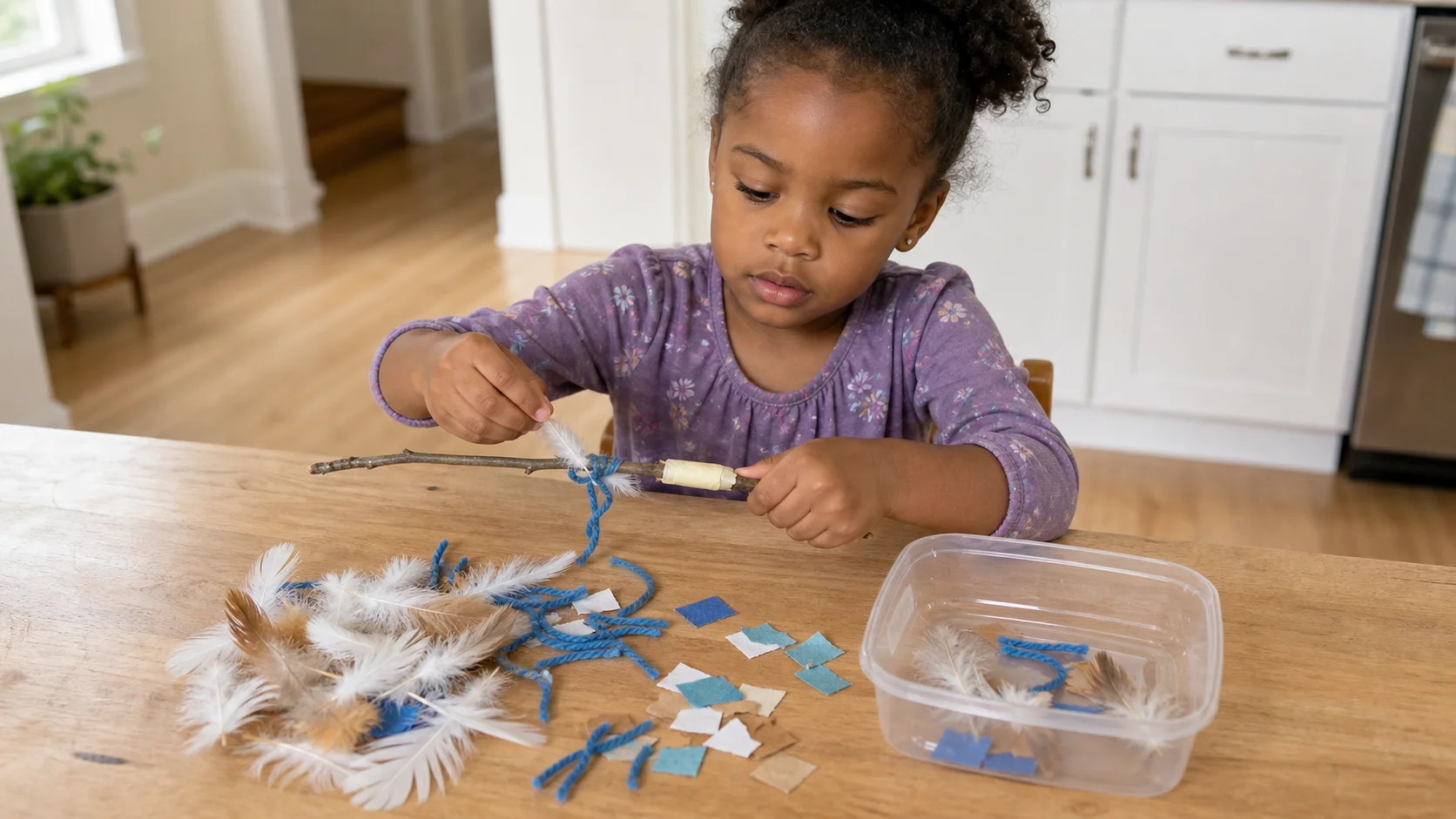
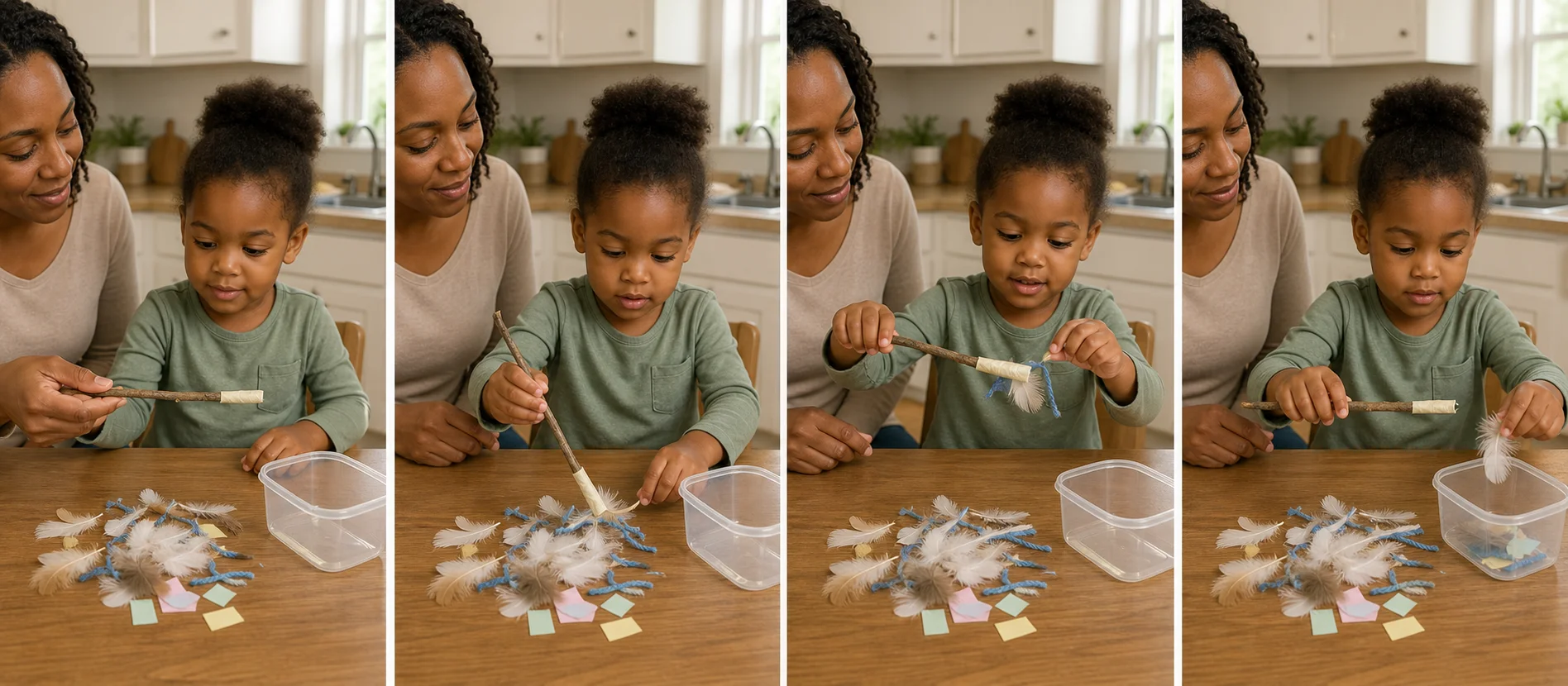
Build a tiny bird nest one sticky catch at a time. Your child presses a tape-wrapped twig onto feathers, yarn, and paper, then peels each piece into a container to practice two-hand coordination and finger control.


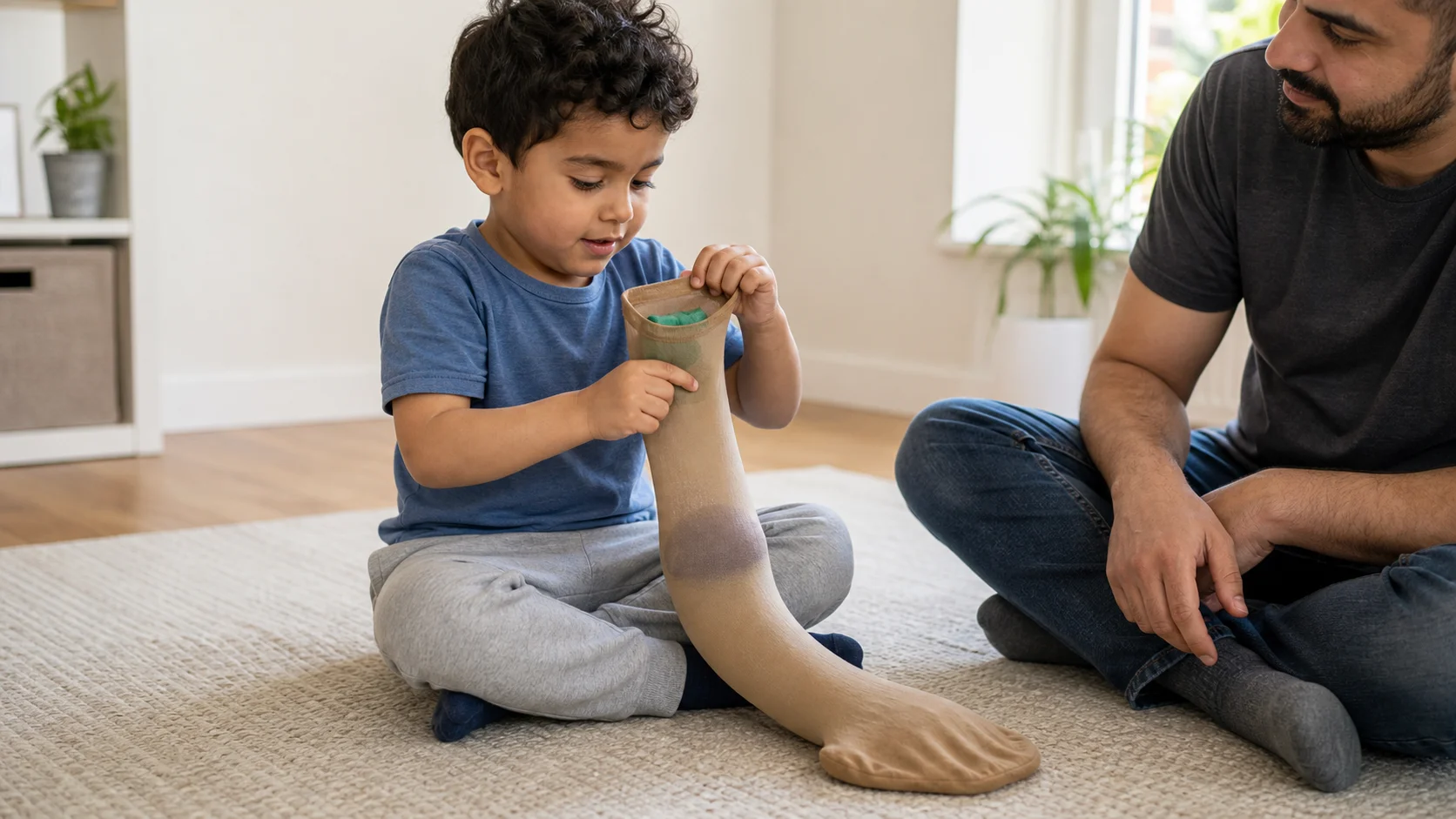
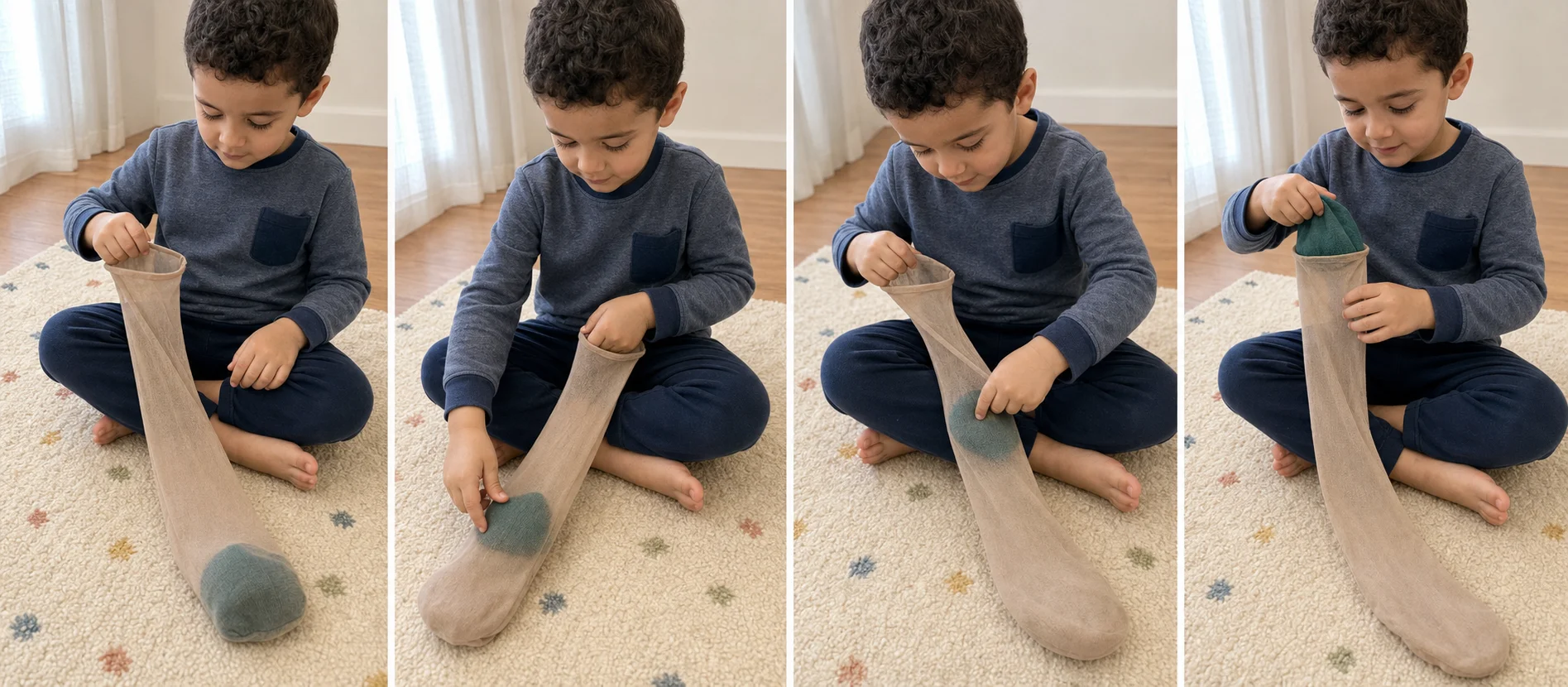
Can your child rescue a bean bag hidden inside a stocking? They hold the top with one hand, then pinch and push the hidden lump toward the opening with the other, building hand strength and two-hand coordination.


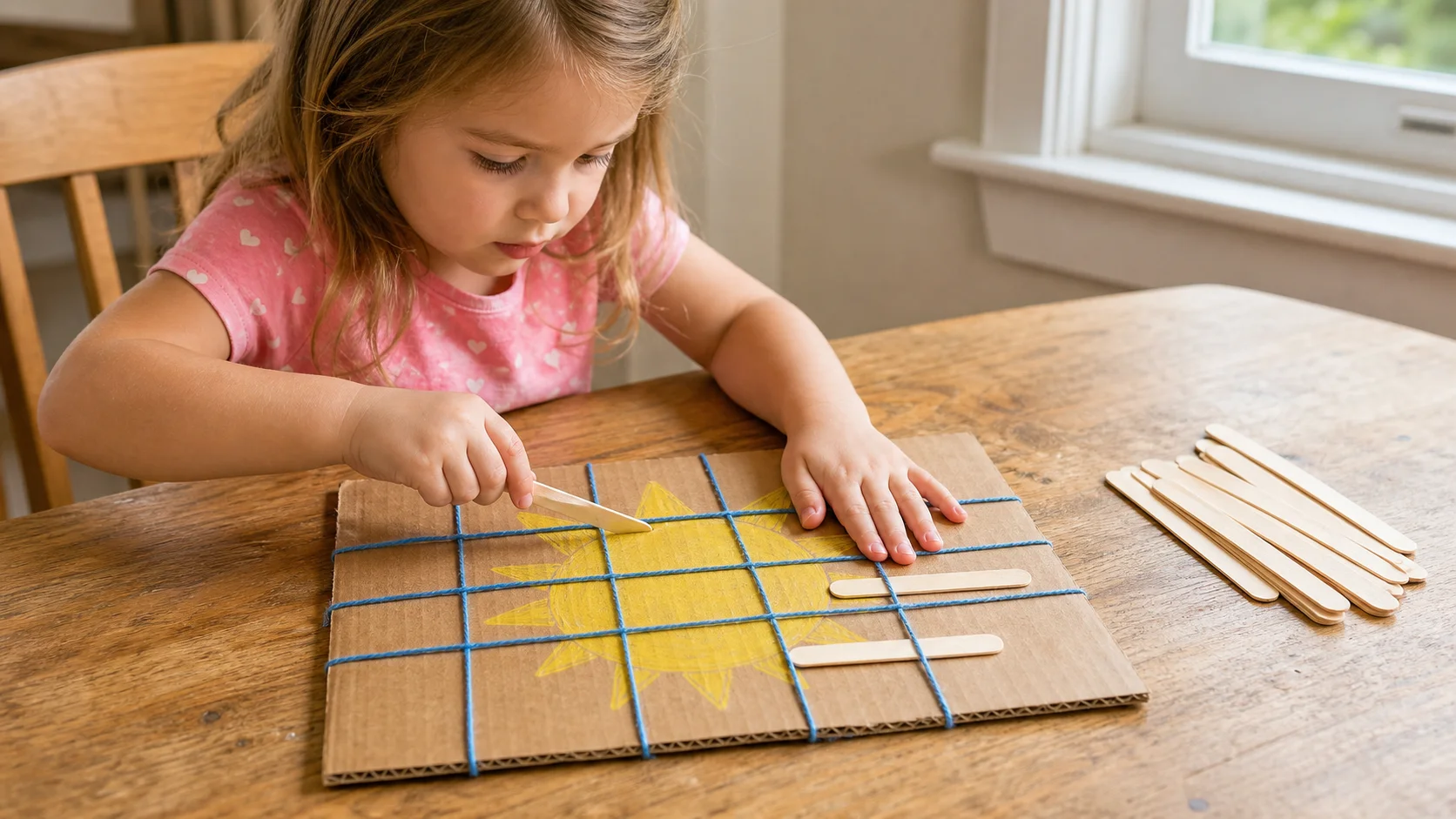
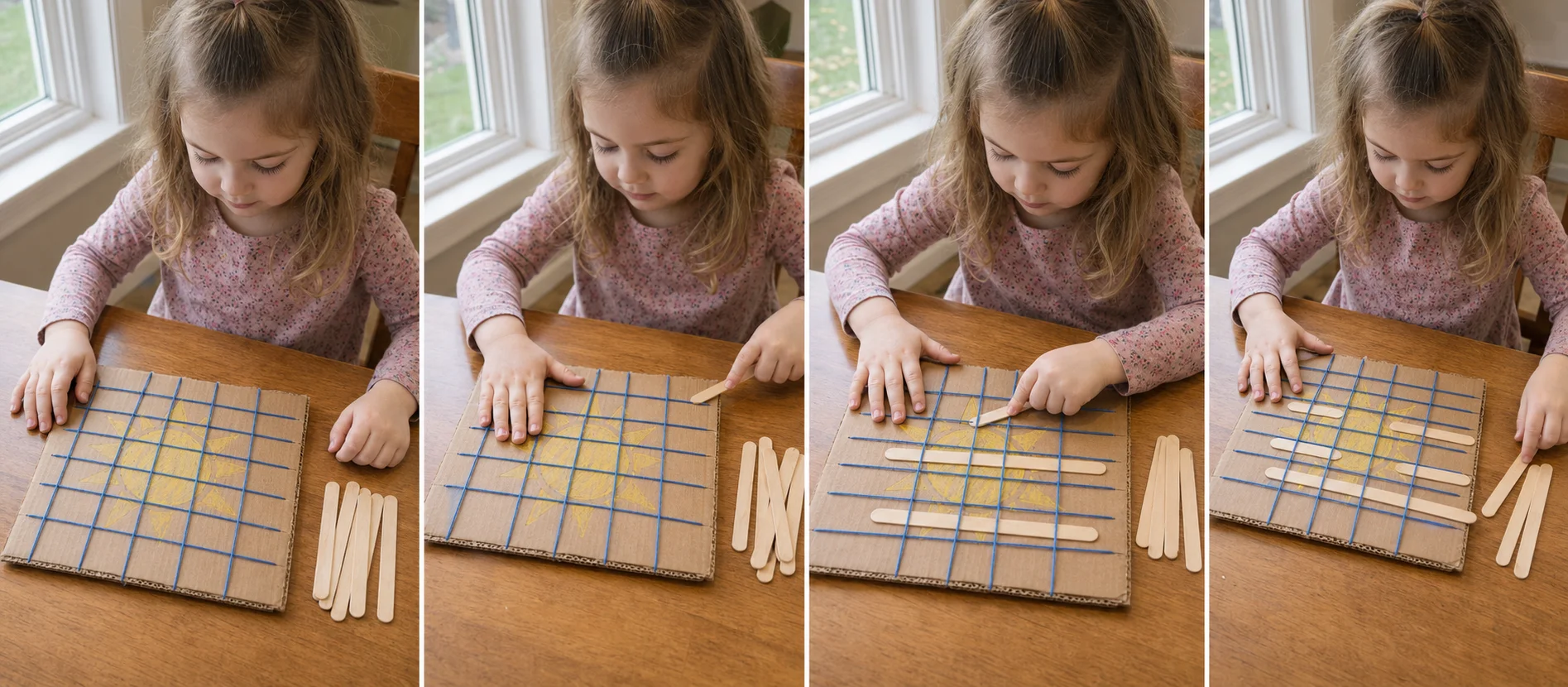
Turn a cardboard picture into a satisfying push-through challenge. Your child holds the board steady with one hand and pushes craft sticks beneath taut yarn with the other, building hand strength and two-hand coordination.


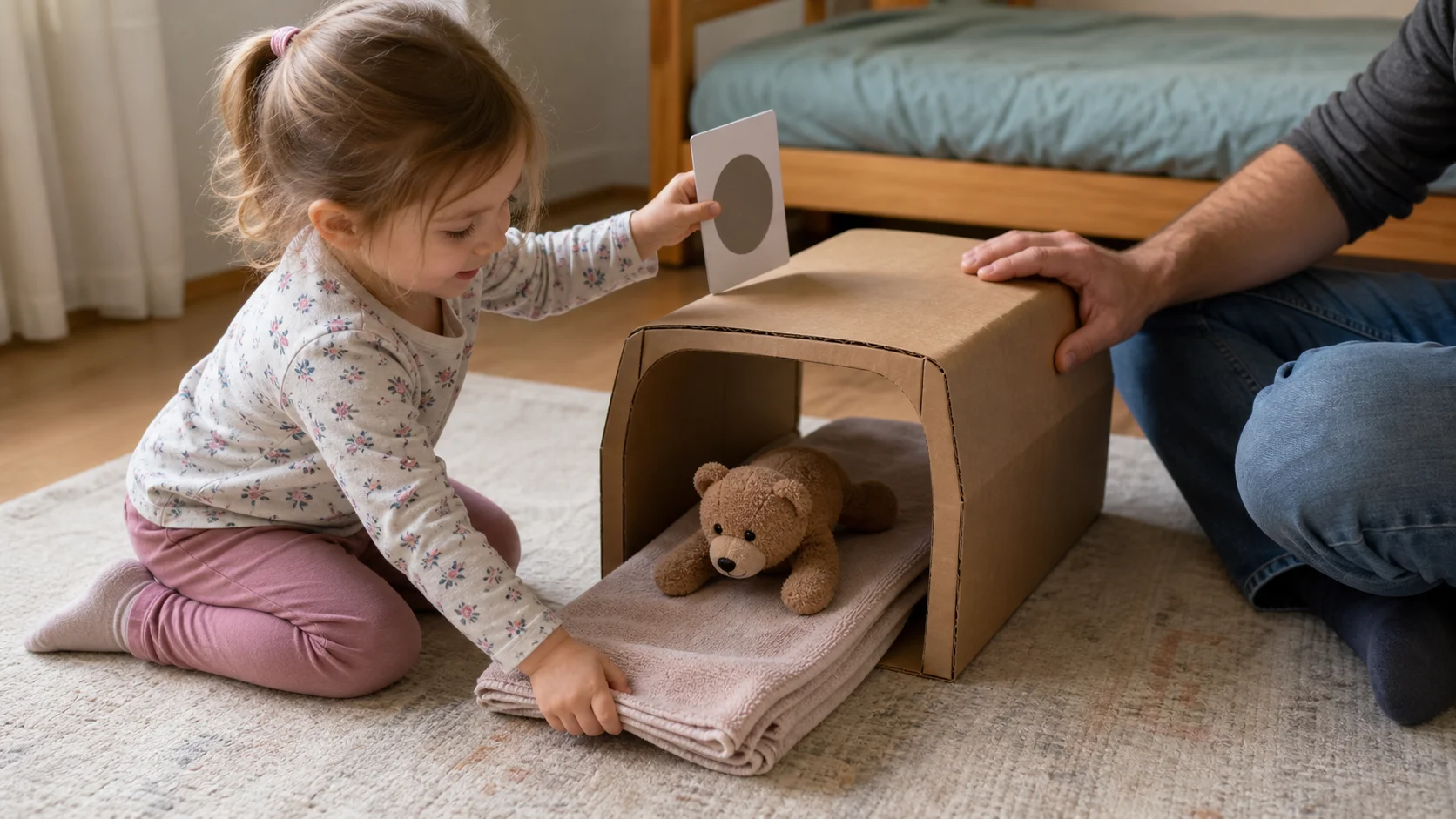
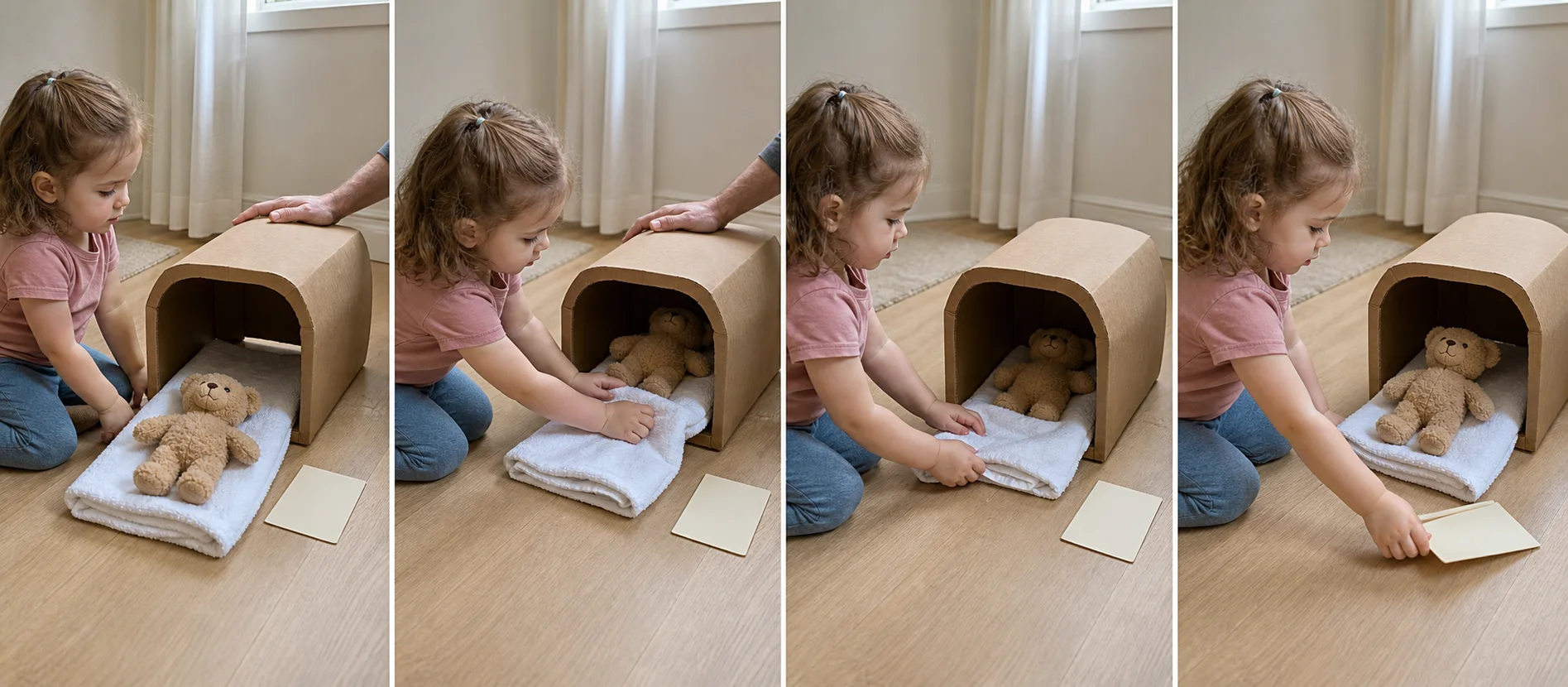
A teddy-first pretend MRI turns one short still count into a calm practice loop before the real scan.


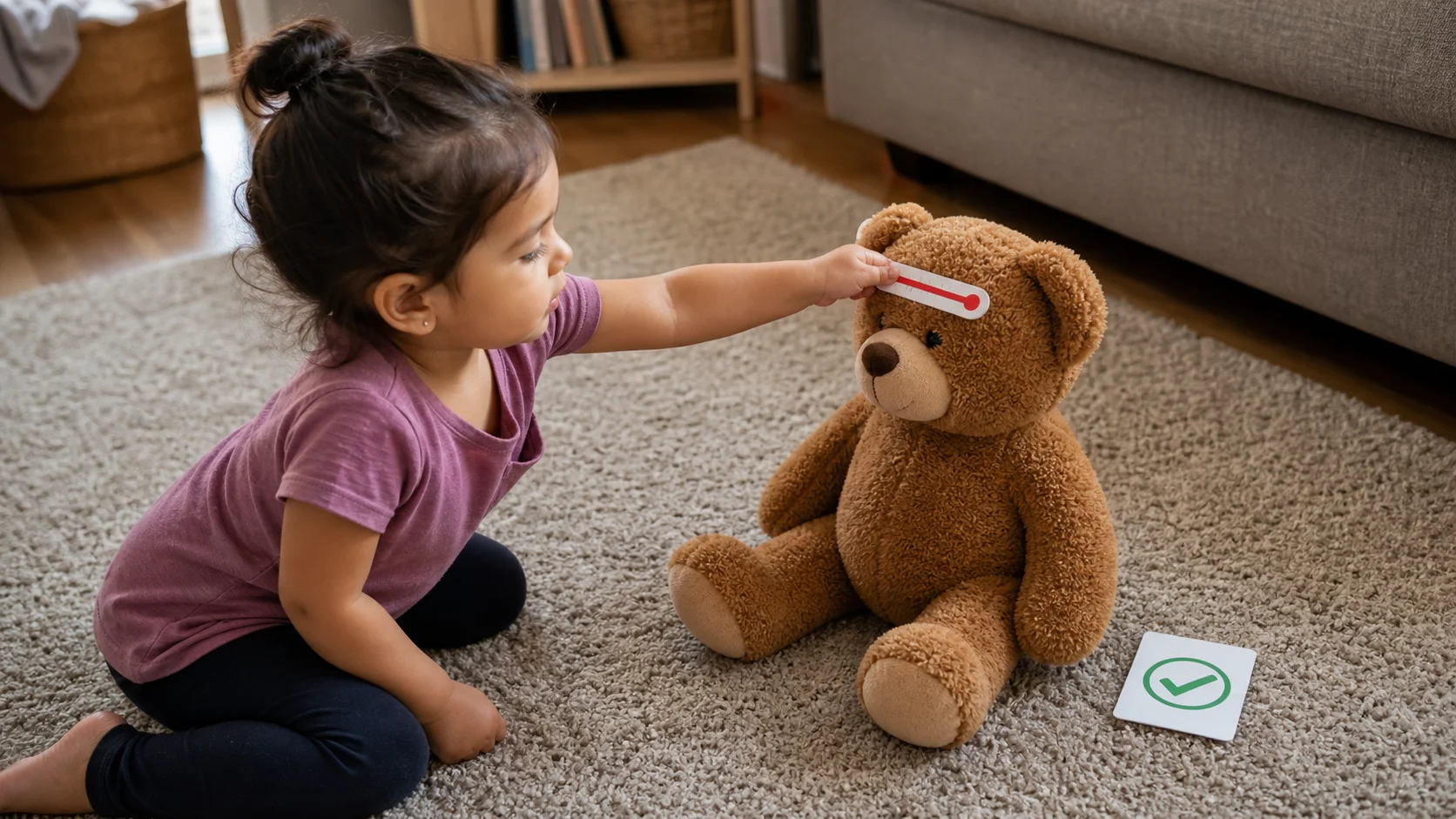
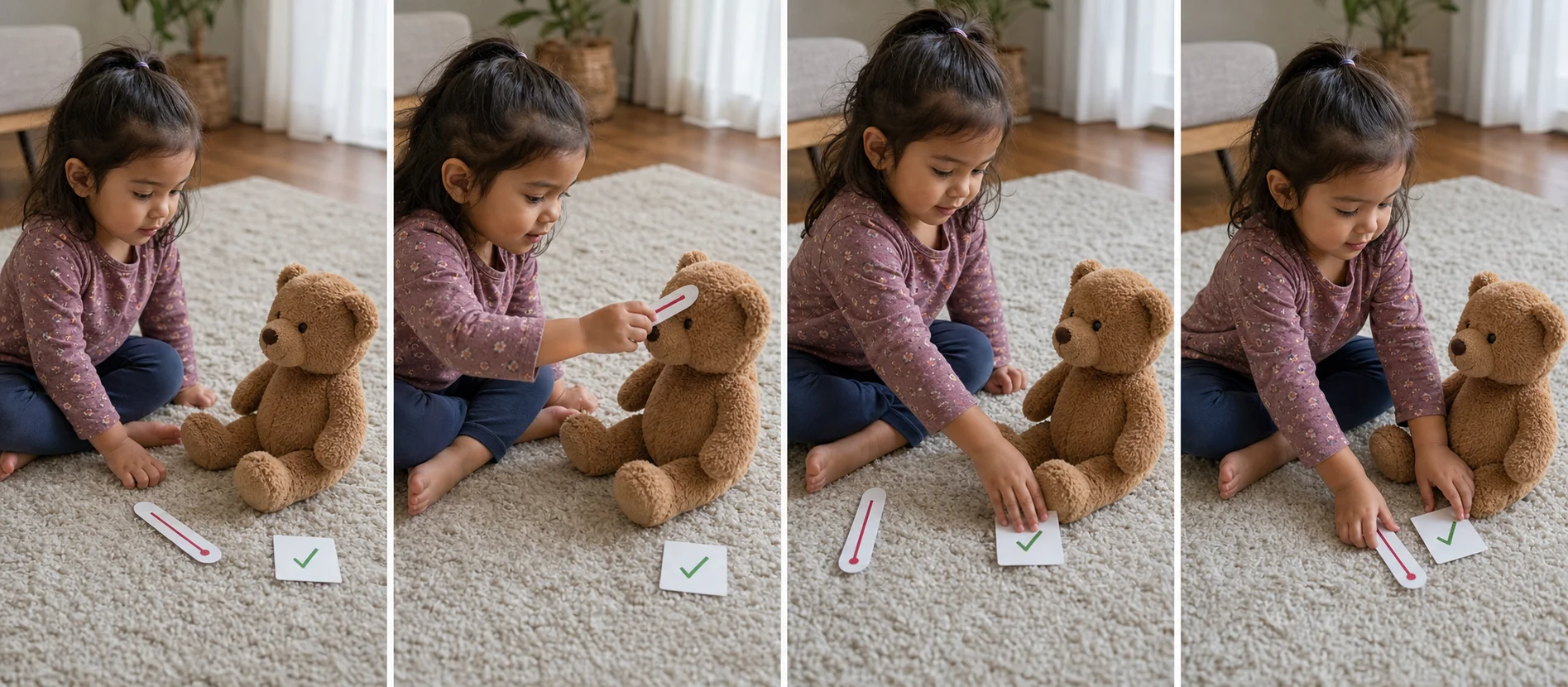
Let teddy go first before your child's next temperature check. Your child gently checks teddy's forehead with a pretend thermometer, moves a done card, and repeats the short routine to make the real step feel more familiar.


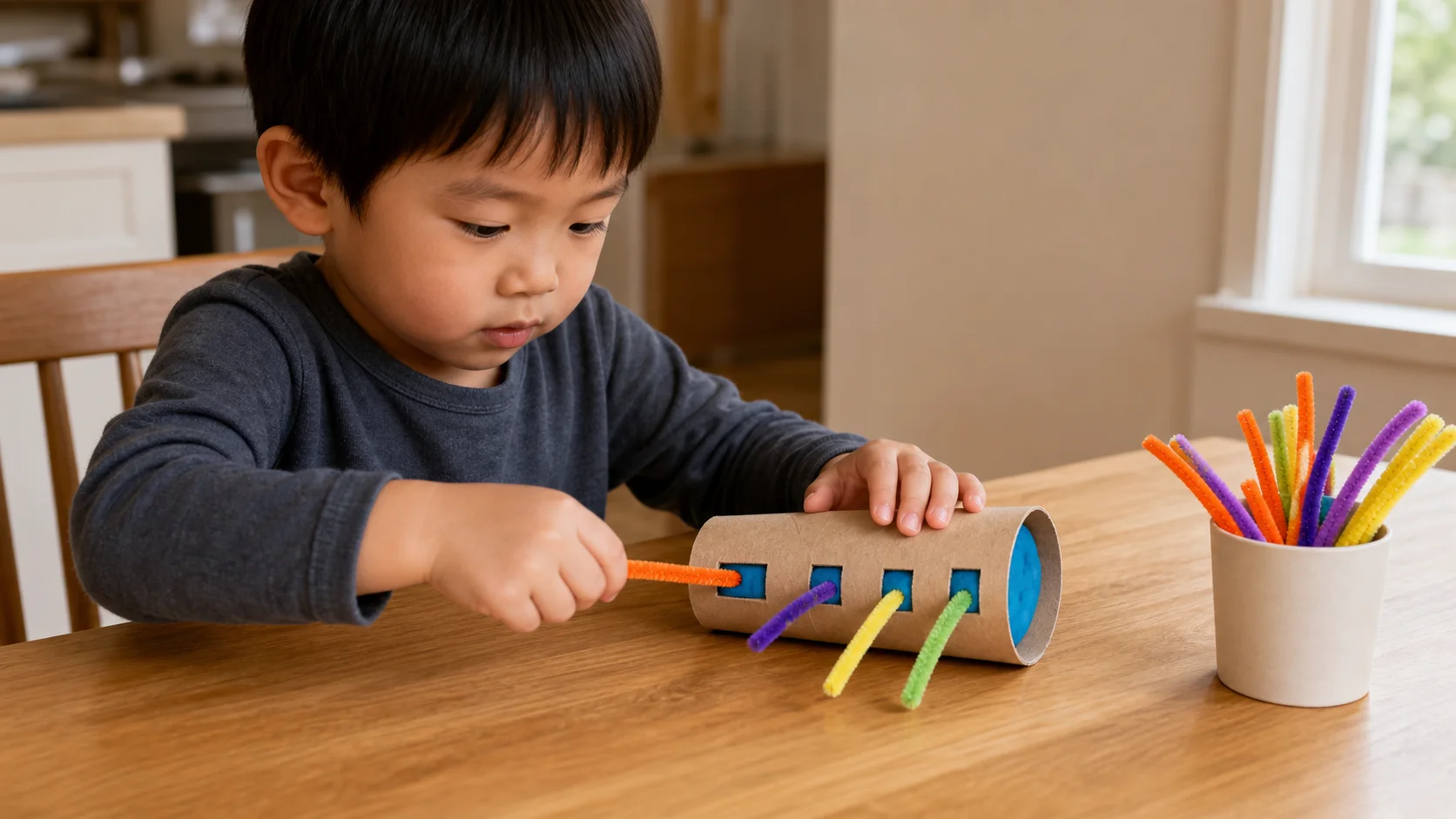
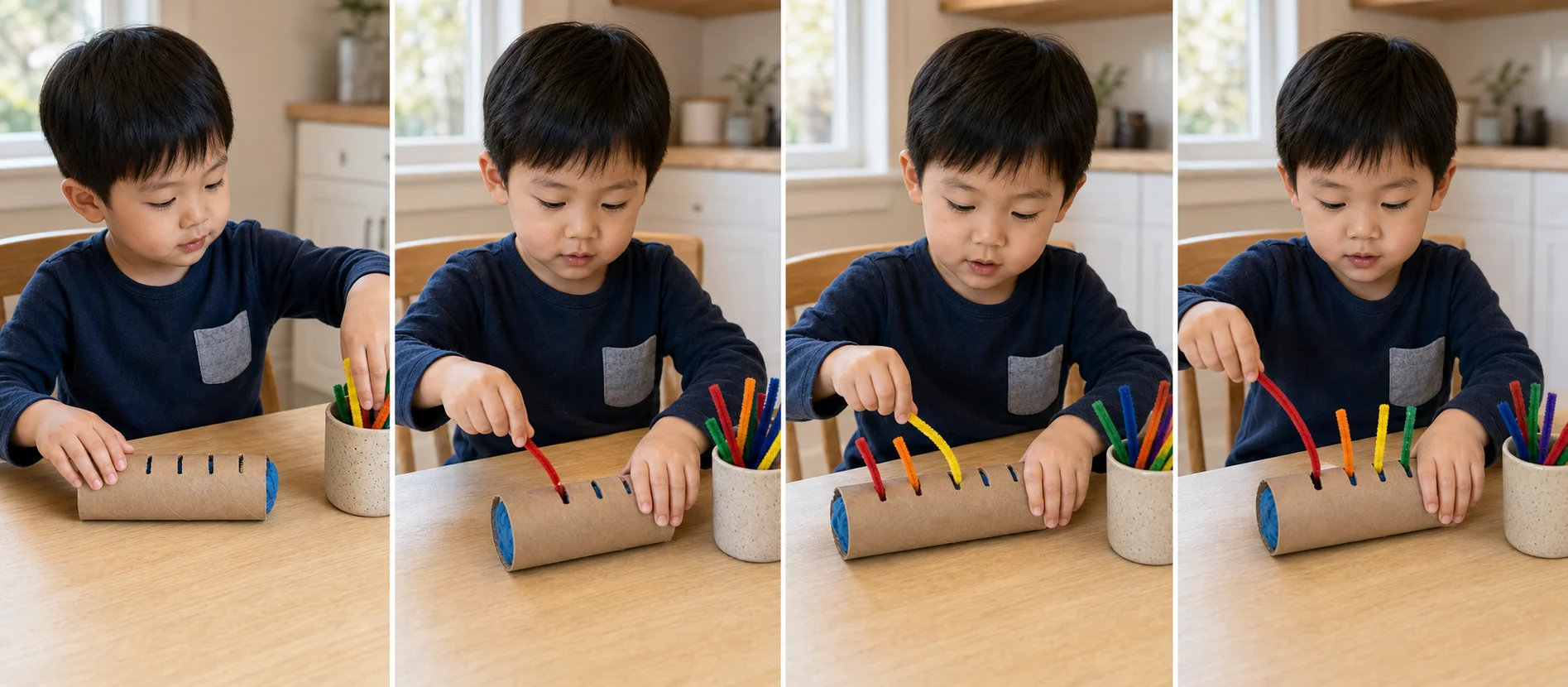
Turn a cardboard roll, playdough, and pipe cleaners into a satisfying resistance challenge. Your child holds the tube steady with one hand and pushes each pipe cleaner through a tight slit with the other, building hand strength and two-hand coordination.


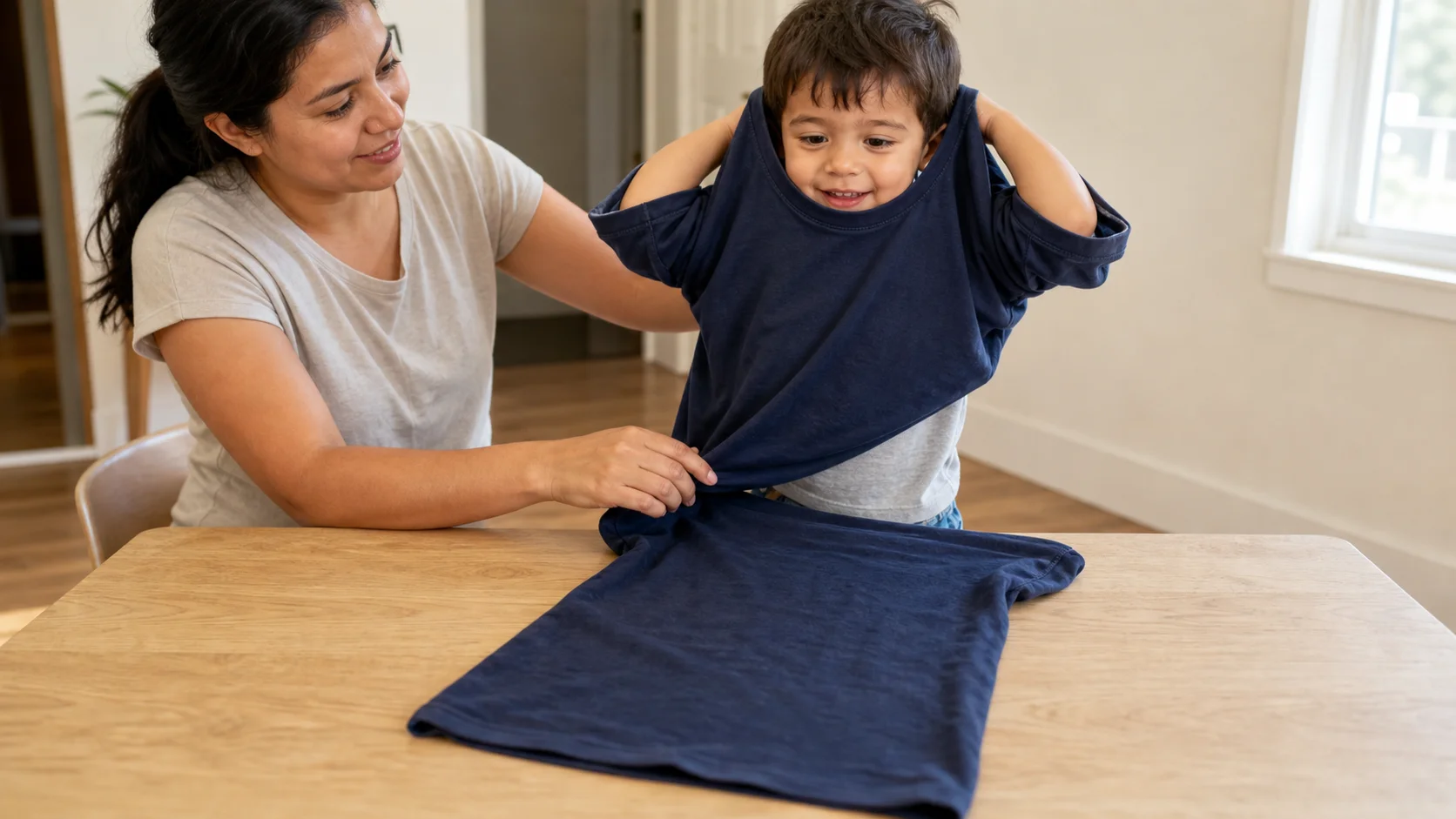
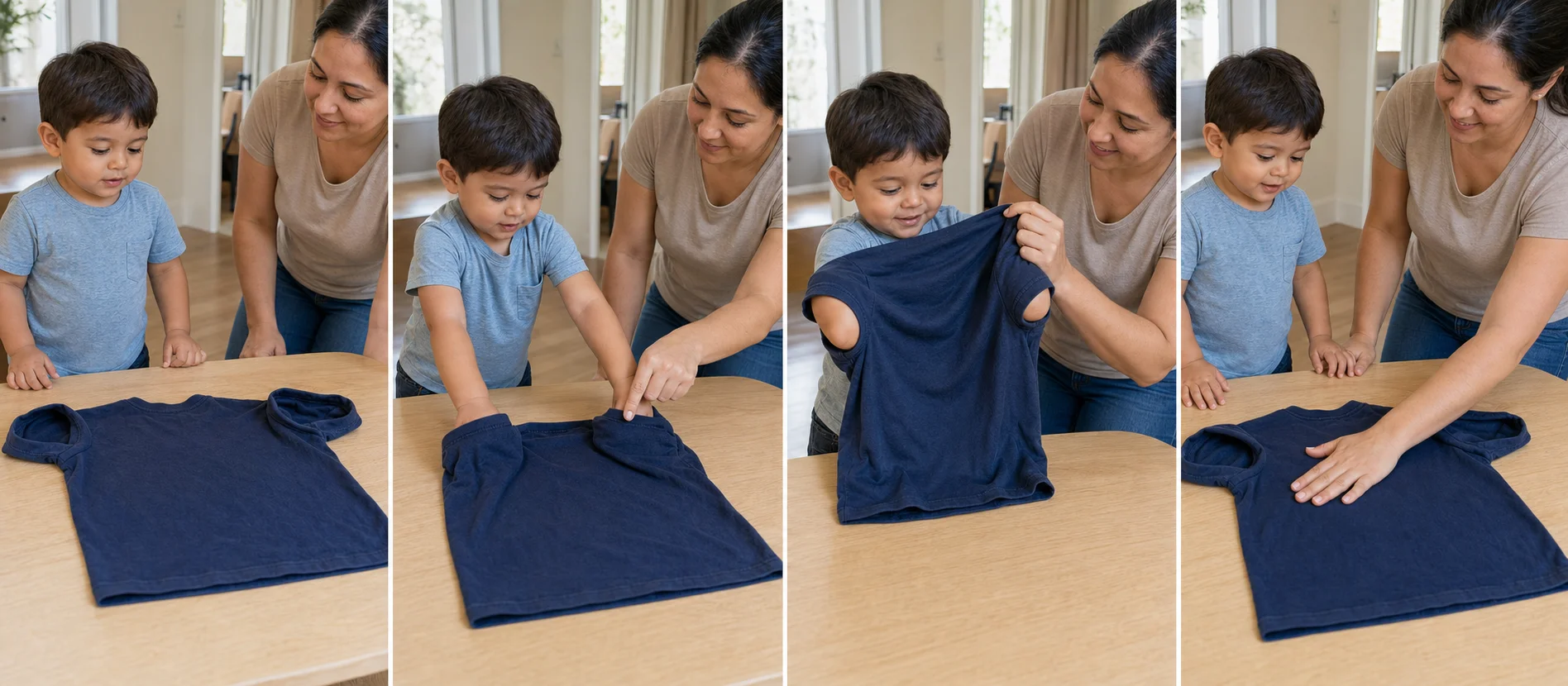
Turn early dressing practice into a quick tabletop game with one loose T-shirt. Your child slides both arms into the sleeves and lifts the shirt toward or over their head, practicing the first steps of putting on a shirt.


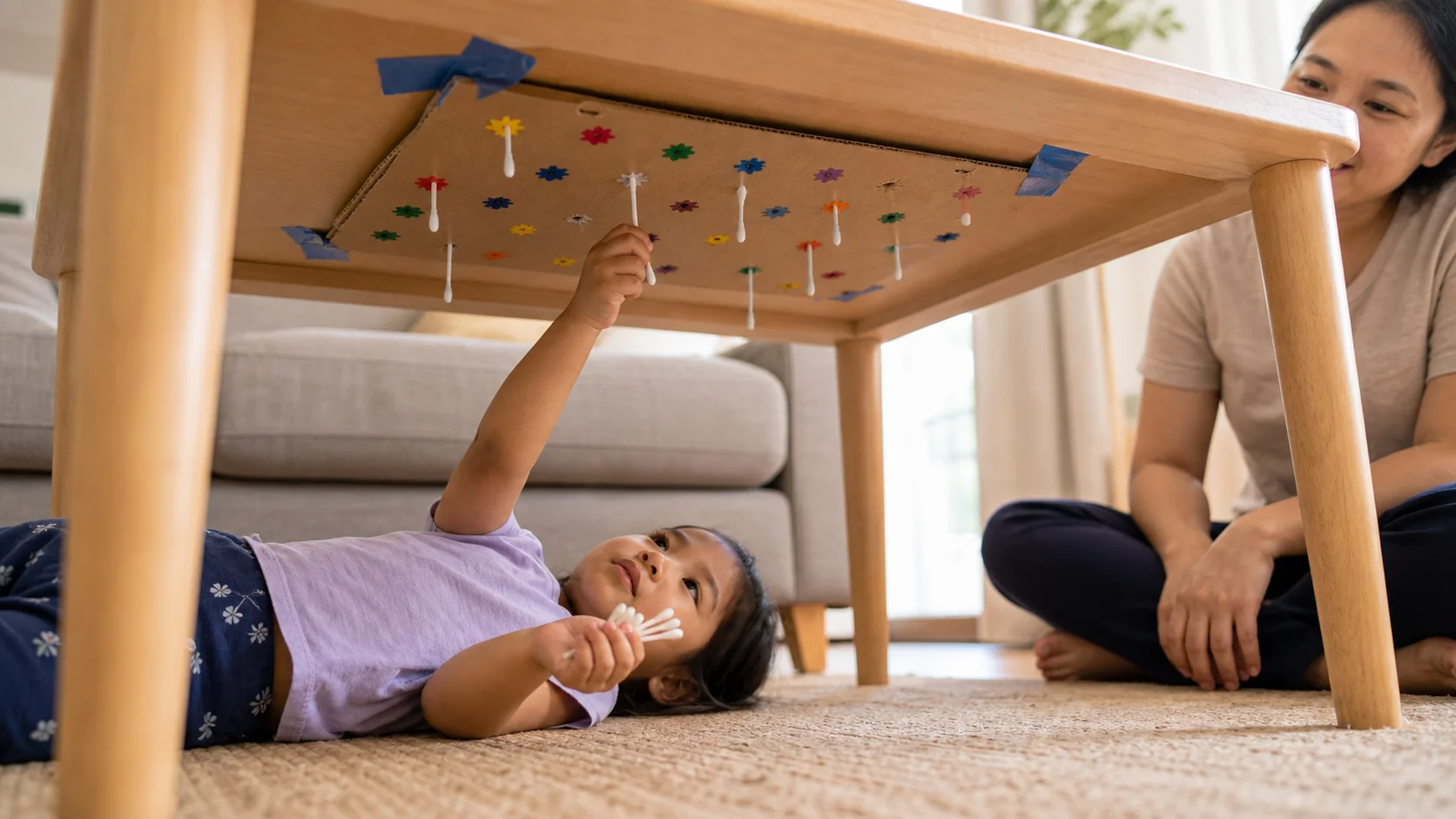
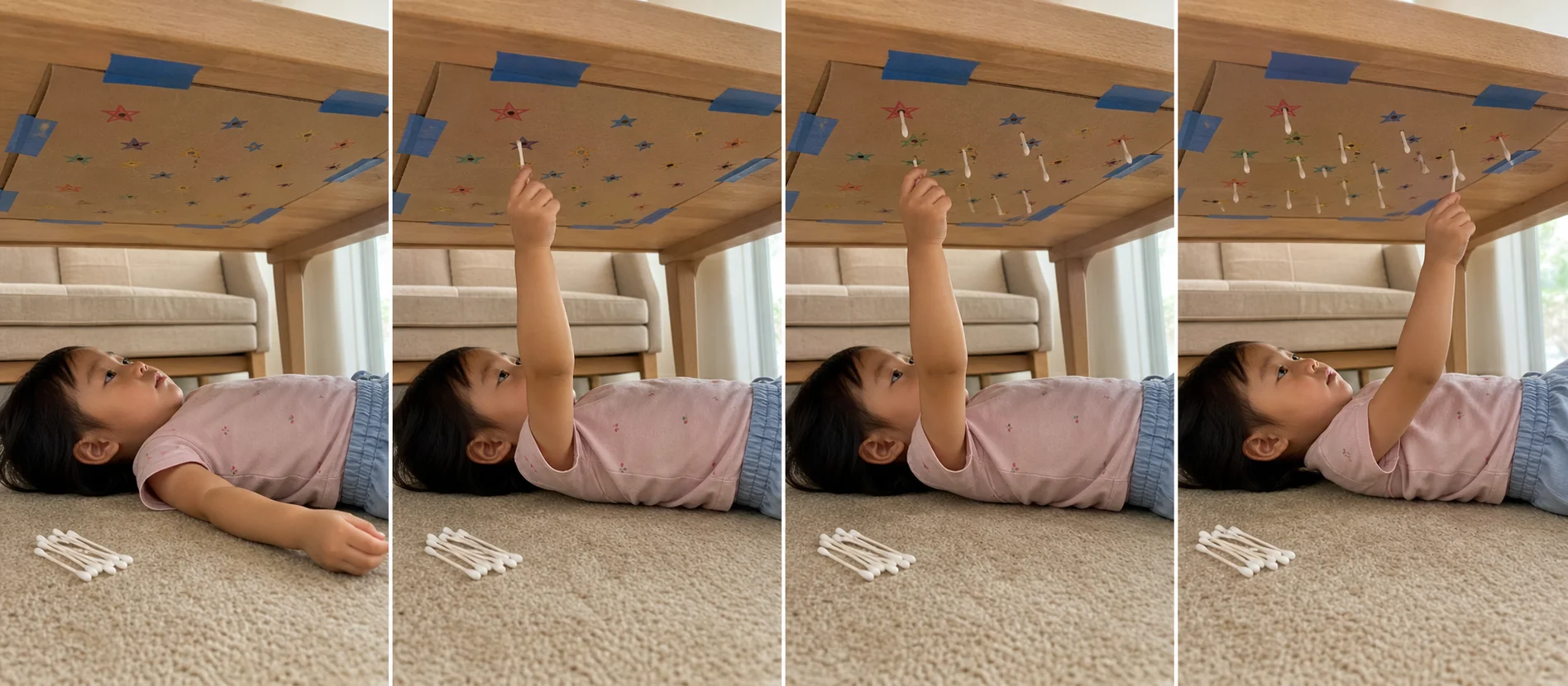
Tape a star board in a shallow arch beneath a table so each Q-tip has space to push through and stay overhead.


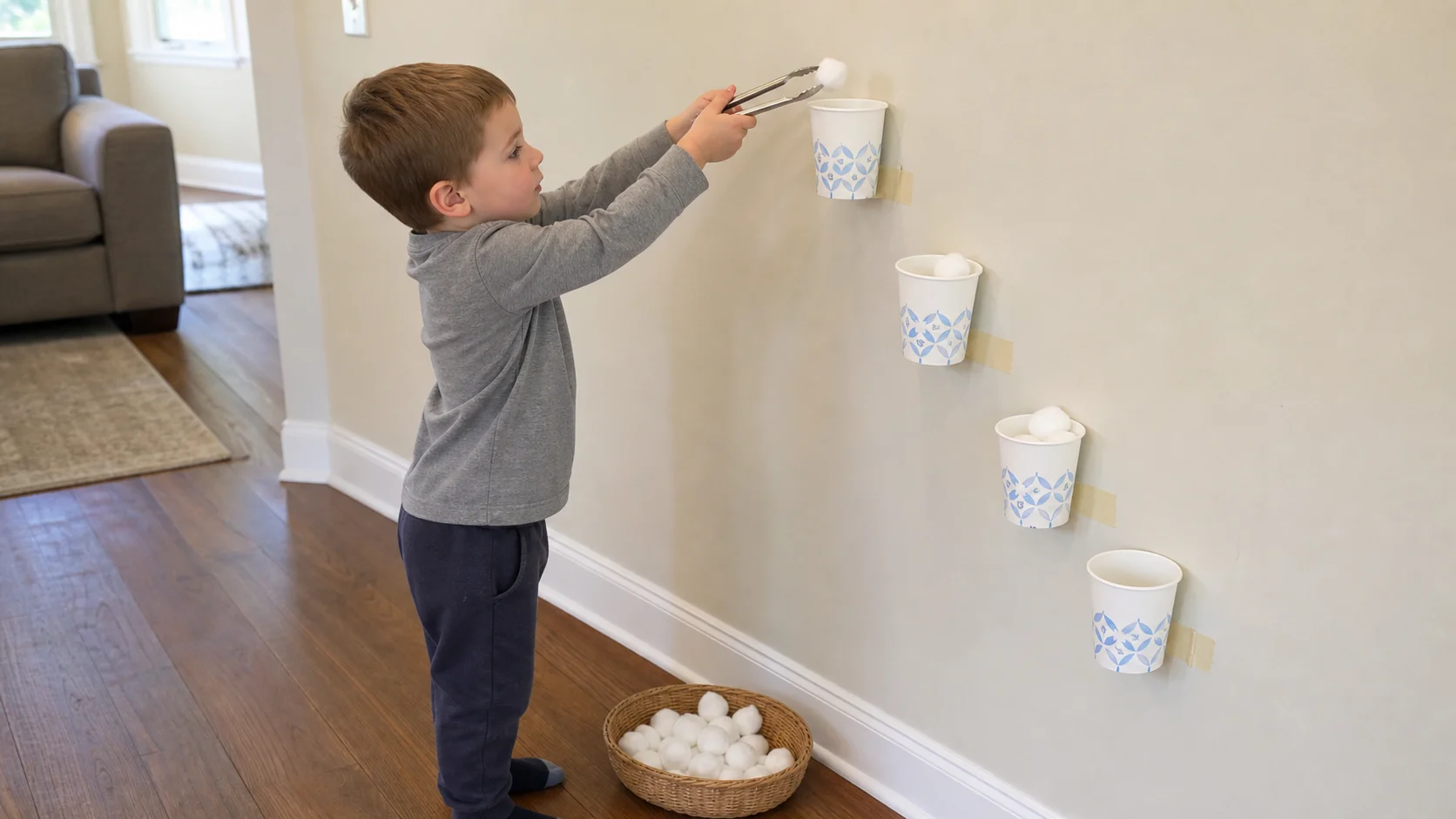
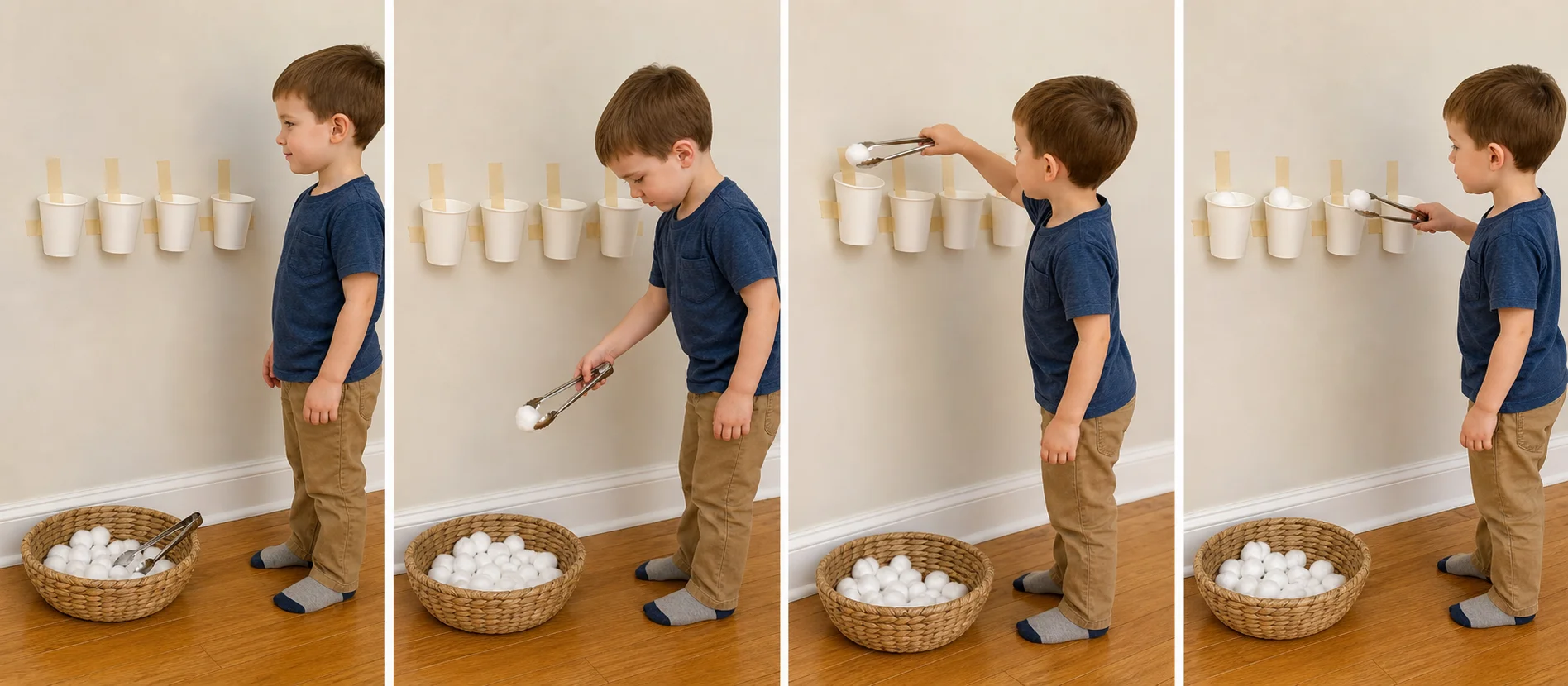
Wall cups and cotton balls turn tong practice into a simple indoor target game.

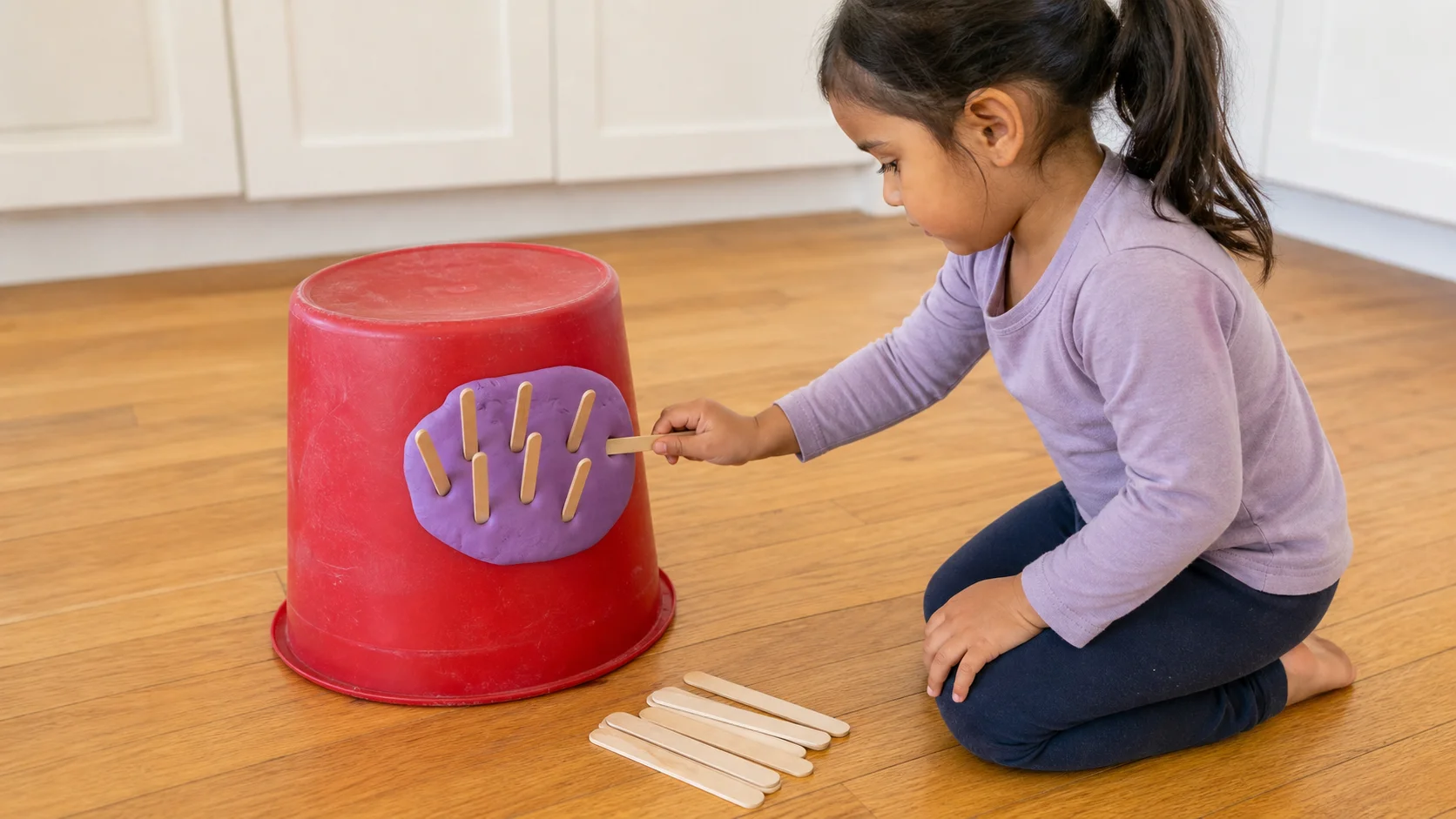
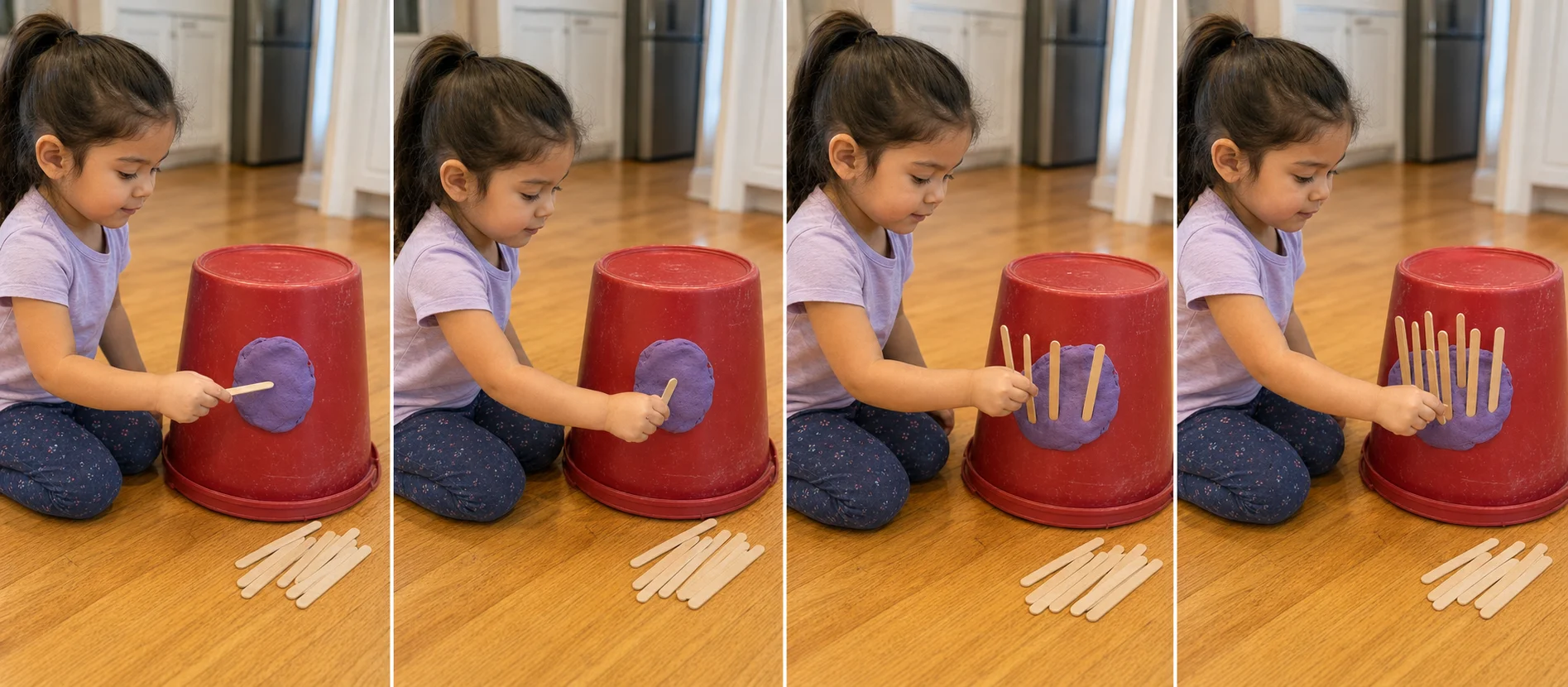
Press firm therapy putty onto a clean, dry bucket and plant craft sticks one at a time while an adult steadies the bucket.


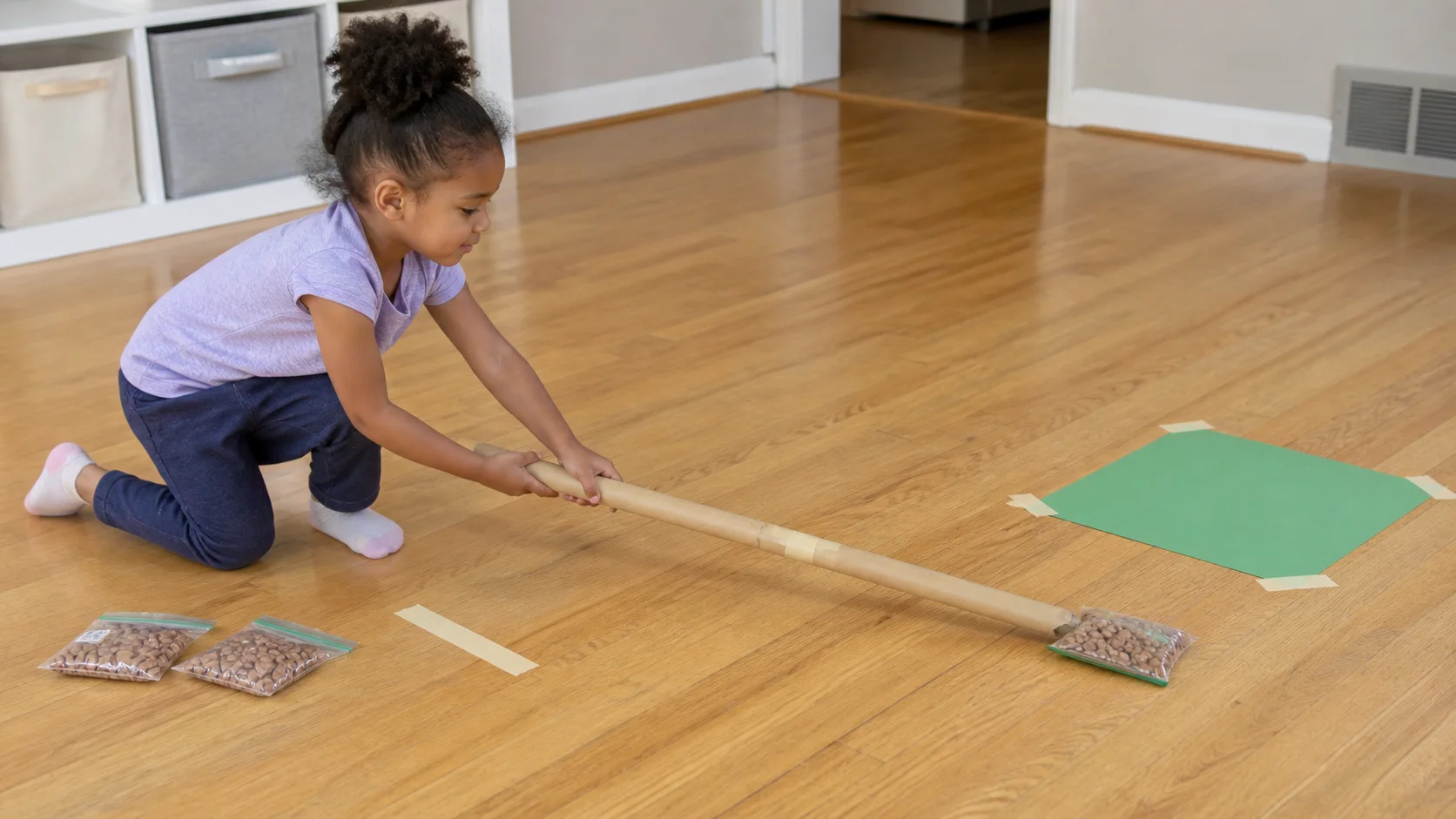
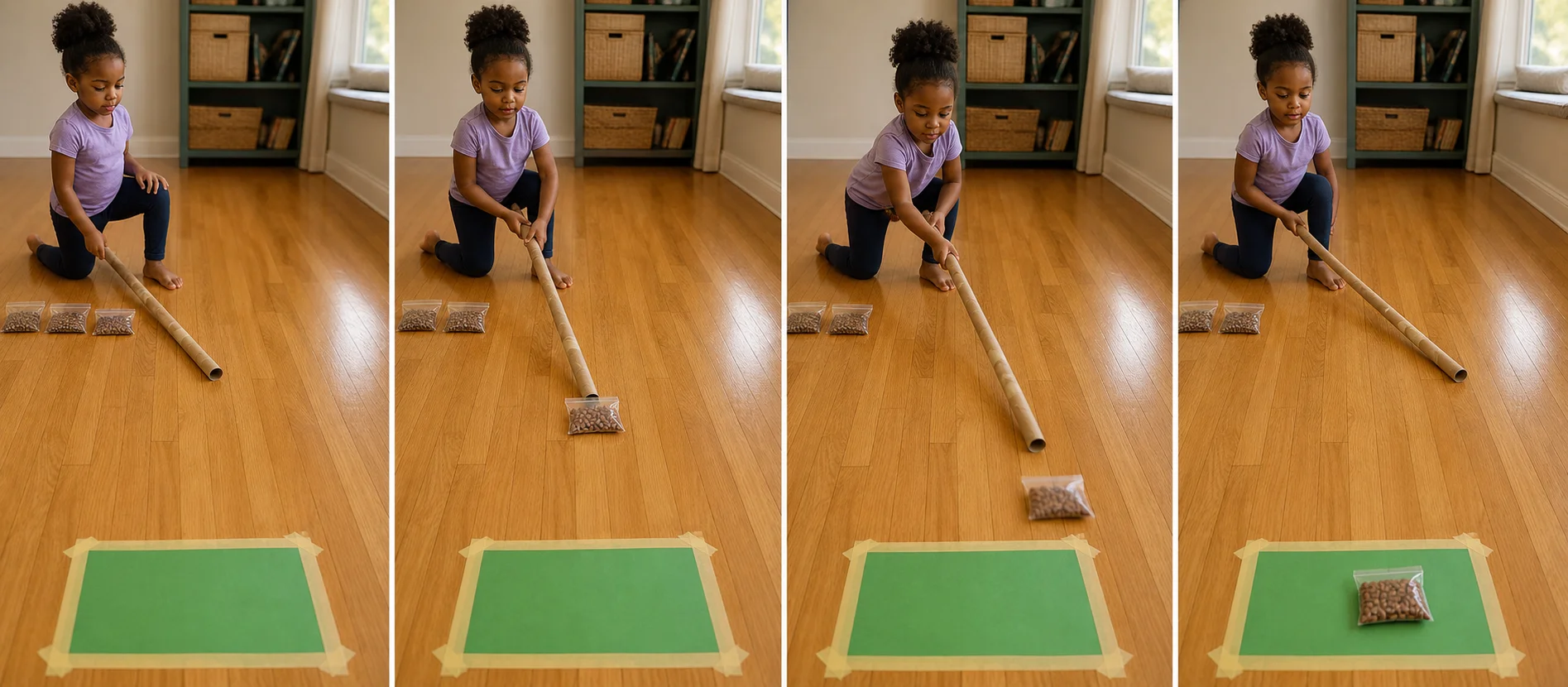
Turn homemade bean pucks into a floor-hockey target challenge. Your child uses a long paper-roll stick to tap and guide each puck into a paper goal, building shoulder strength, movement planning, and force control.


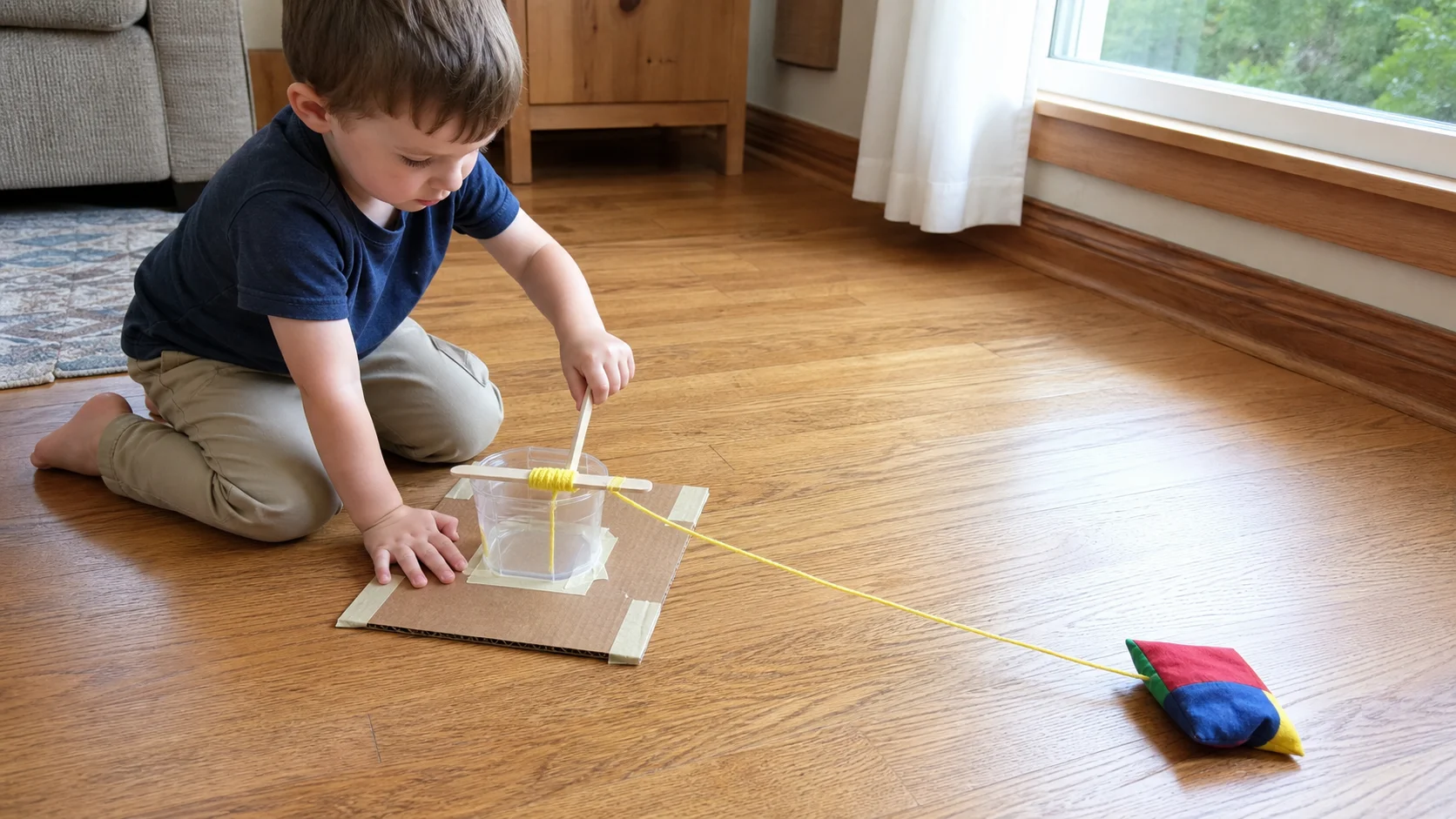
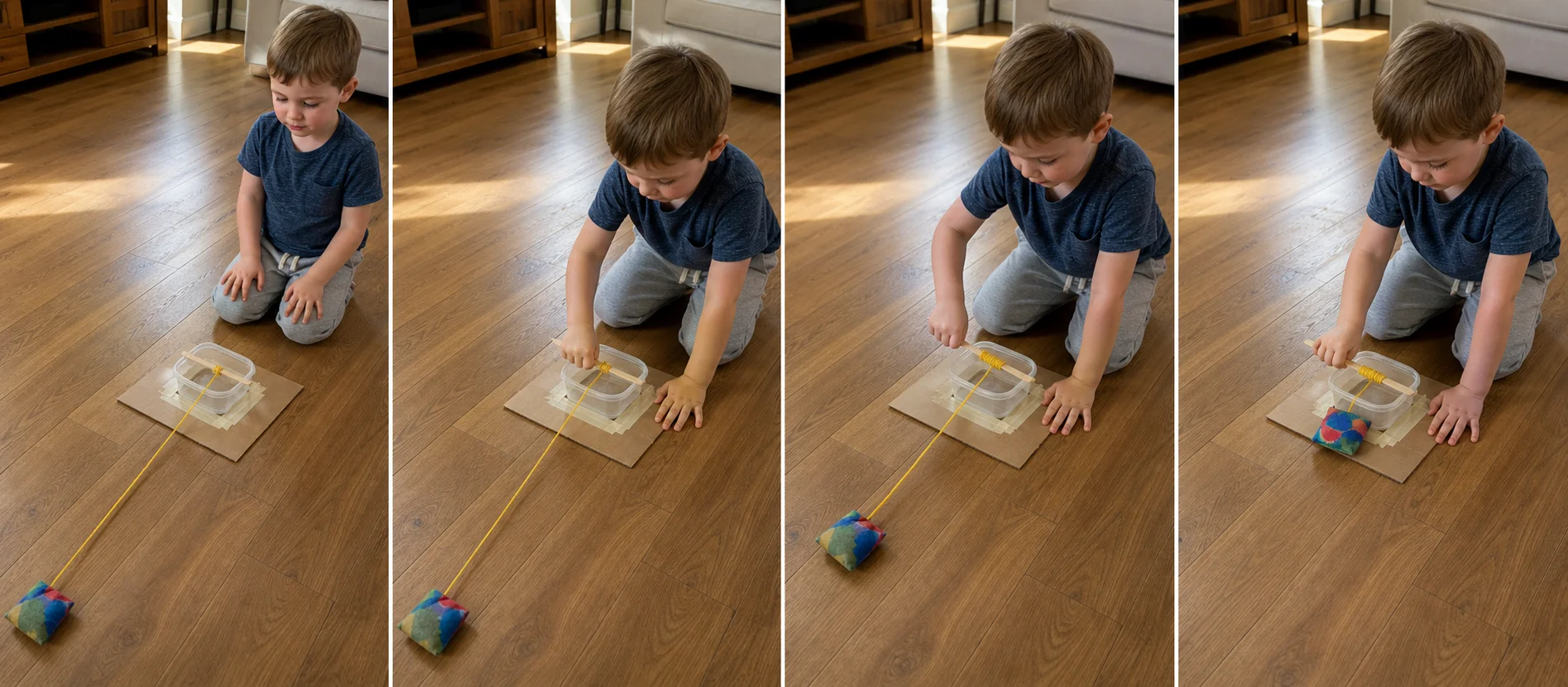
Turn a craft-stick axle held in two loose tape loops to wind the yarn and pull a beanbag back to its container.


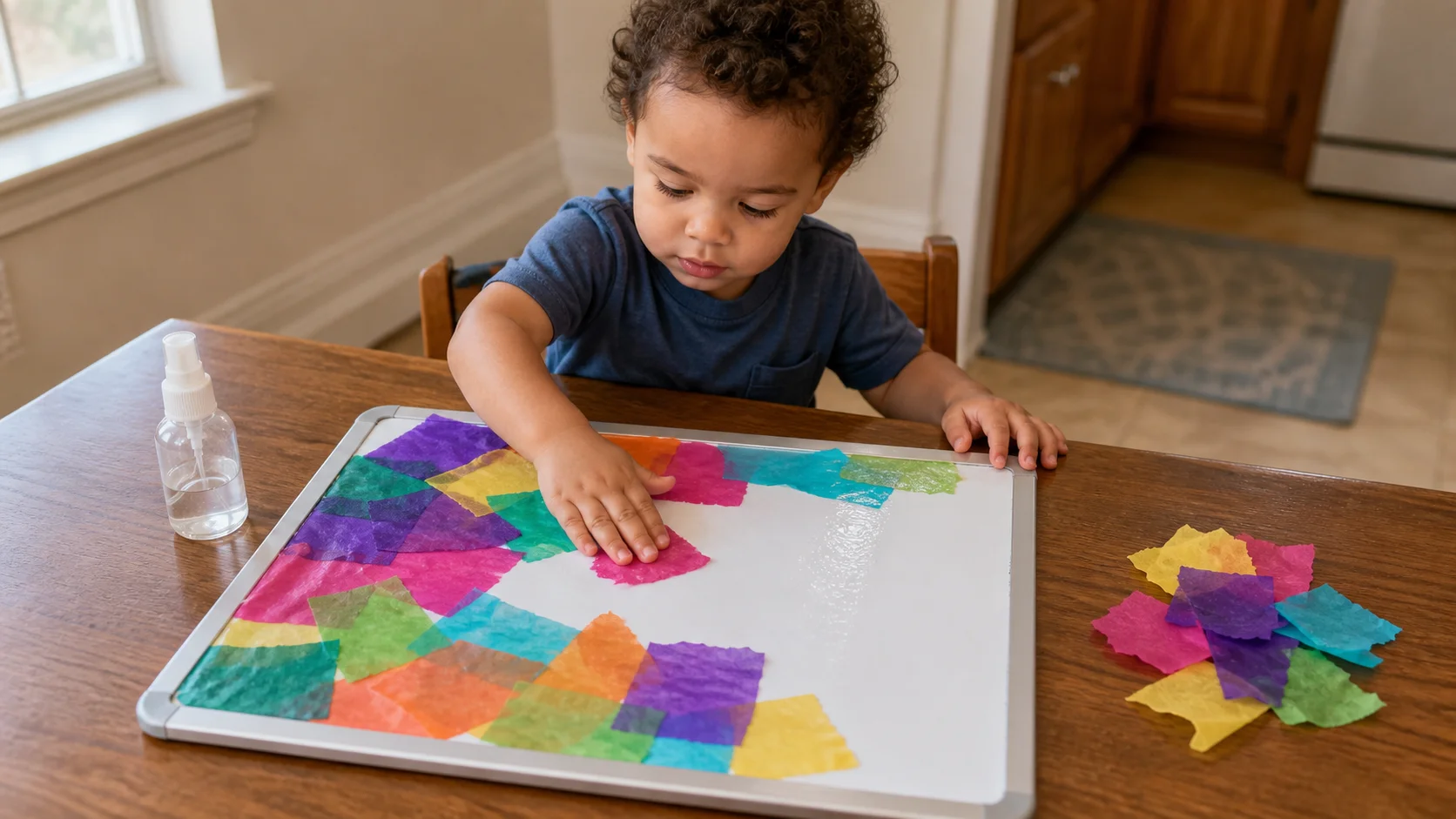
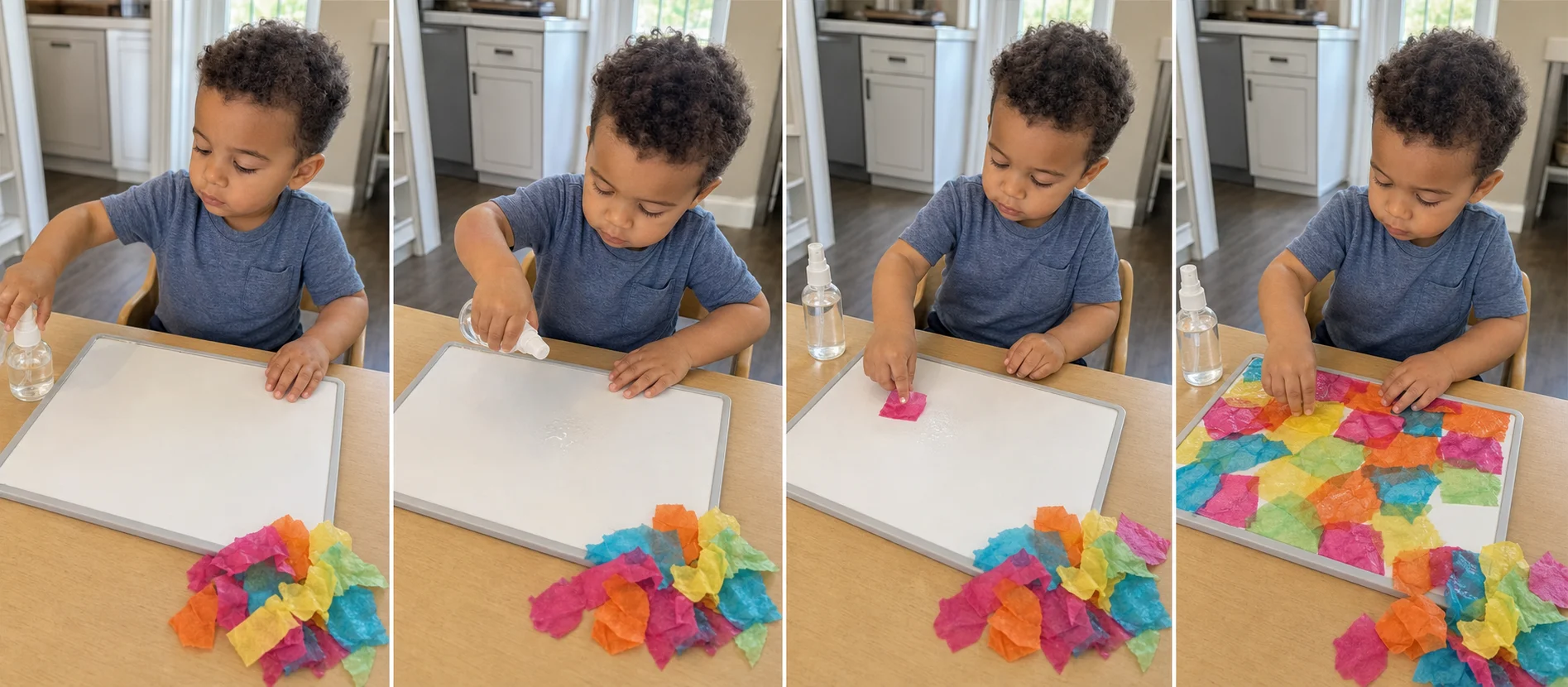
Turn water and tissue paper into a colorful mosaic your child can build one spray and press at a time. Tearing, spraying, and placing each piece strengthens little hands and fine motor control.

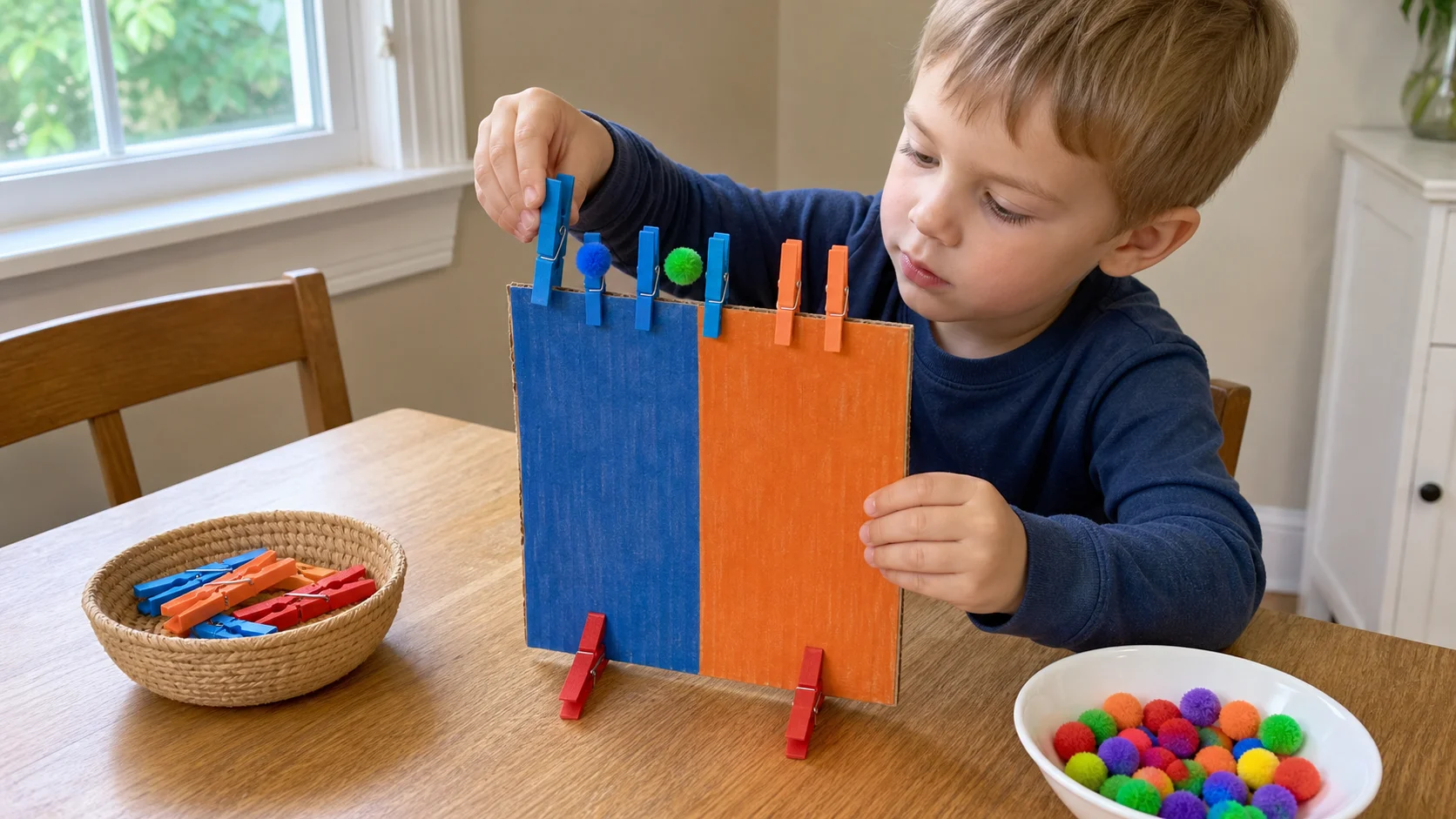
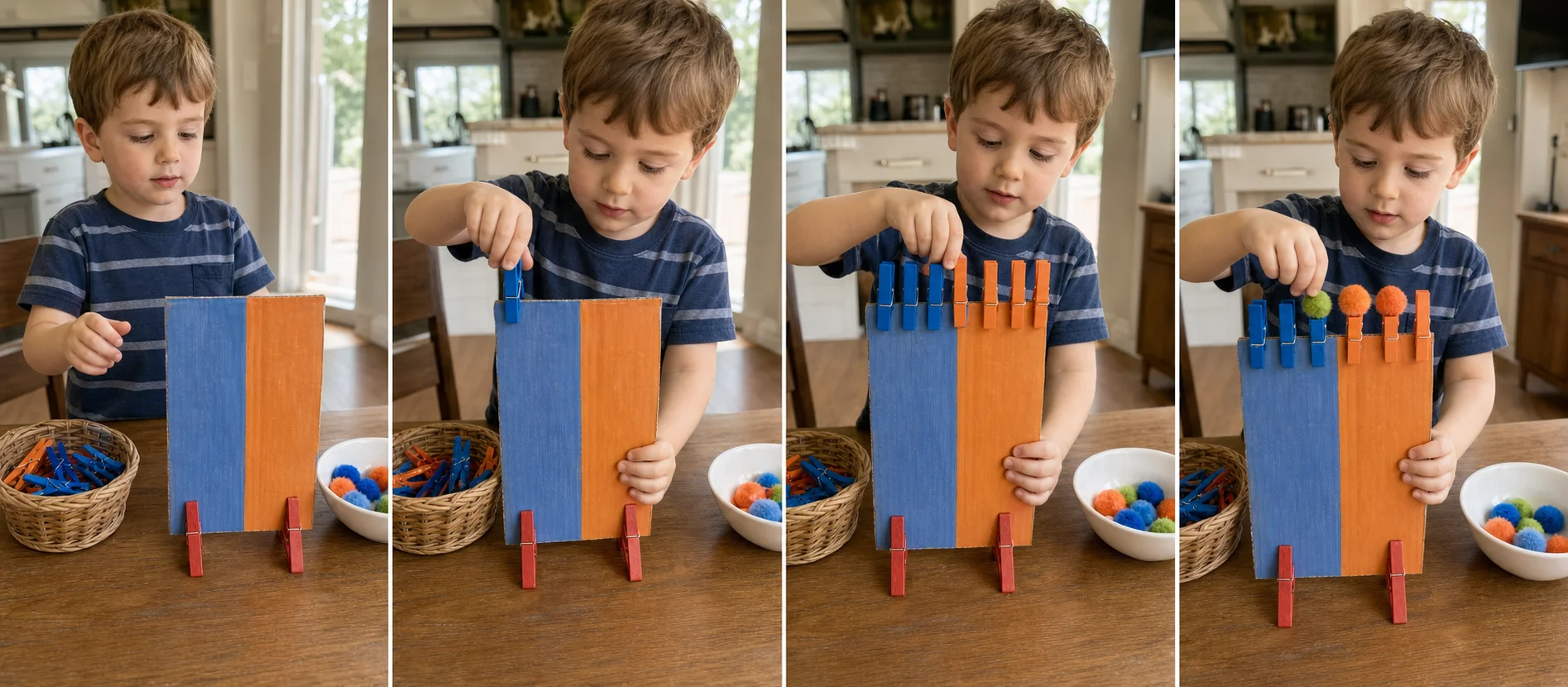
Can your child keep a wobbly cardboard tightrope standing while they clip clothespins across the top and balance a pom-pom on each one? This careful challenge builds hand strength, two-hand coordination, and controlled movement.

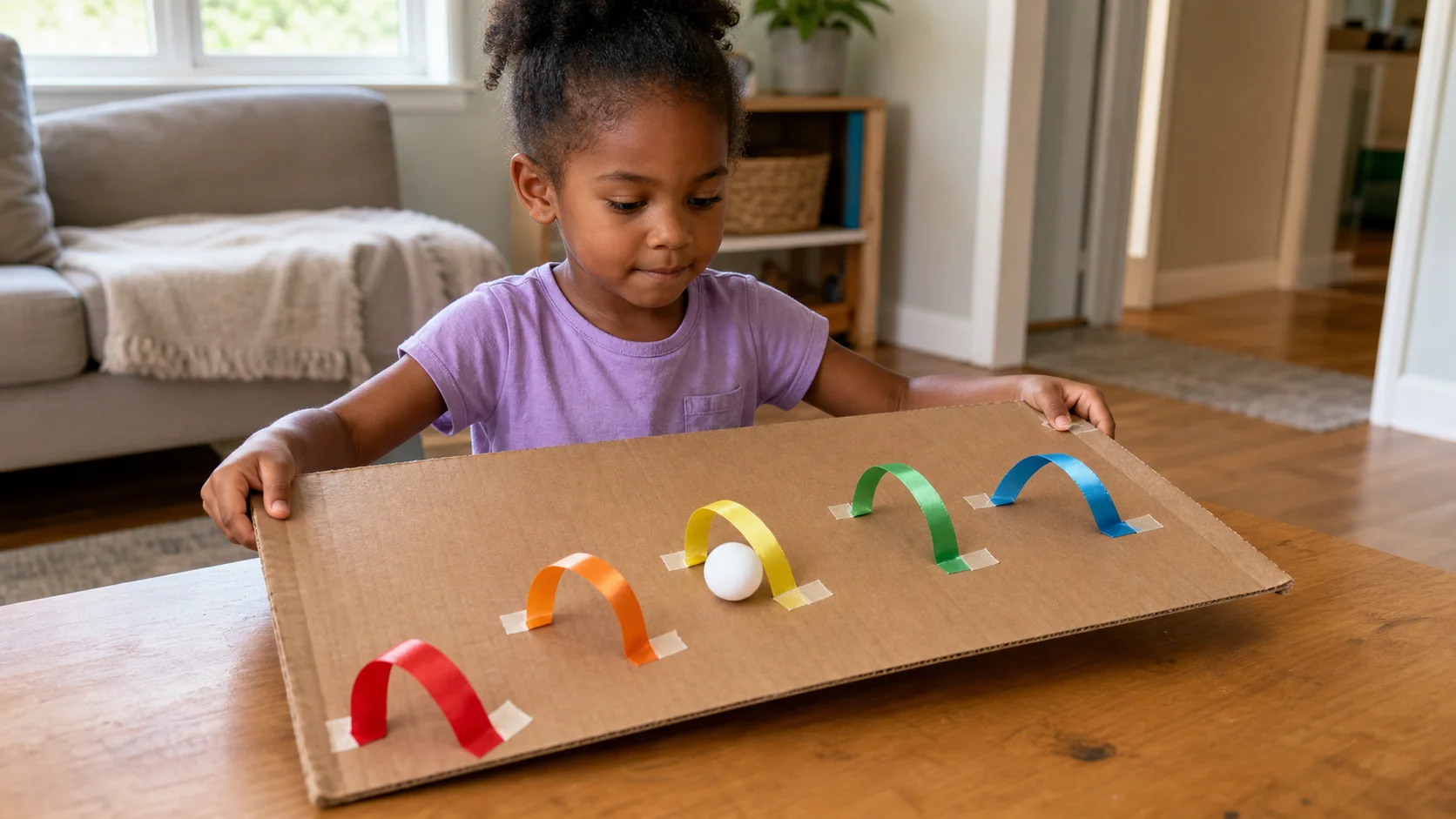
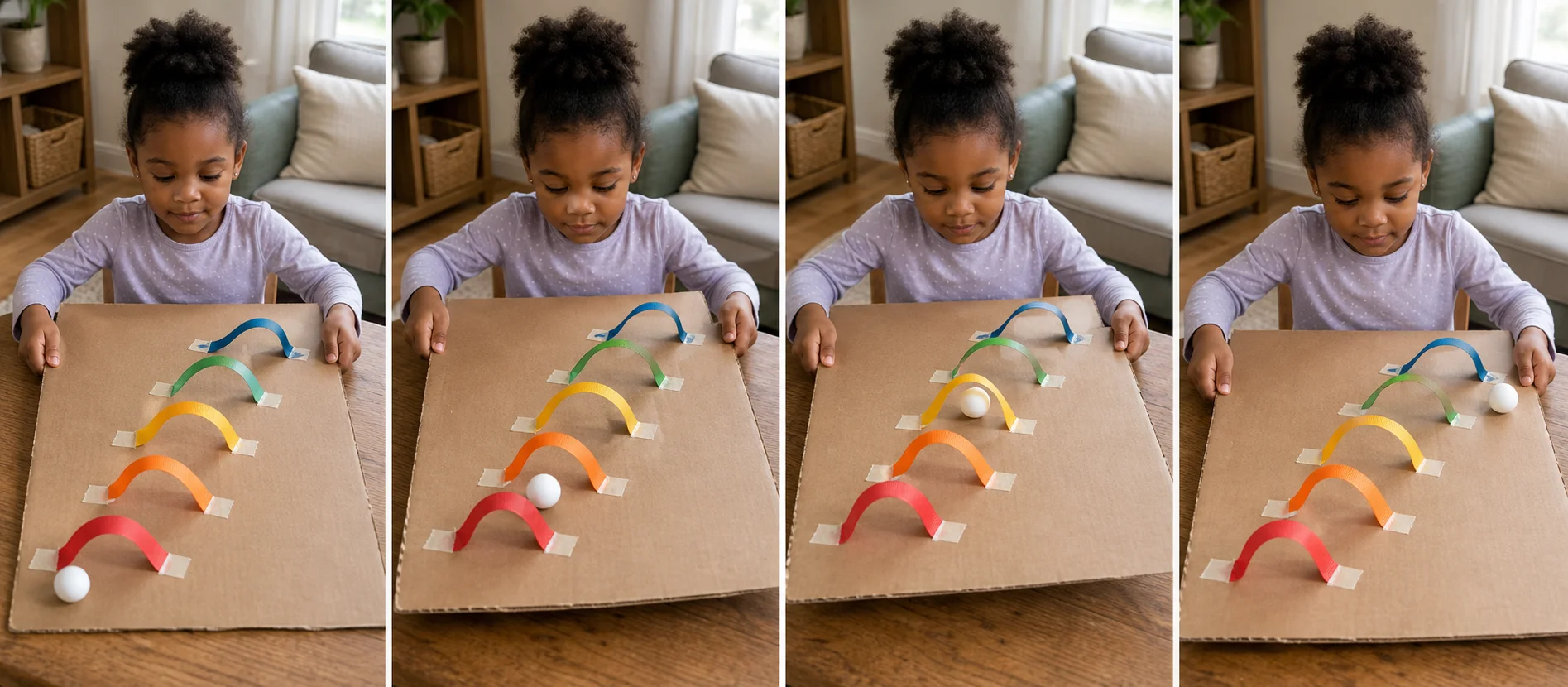
Can your child steer a ping pong ball through five ribbon tunnels without letting it roll off? Small two-handed tilts turn a cardboard board into a focus and movement-planning challenge.


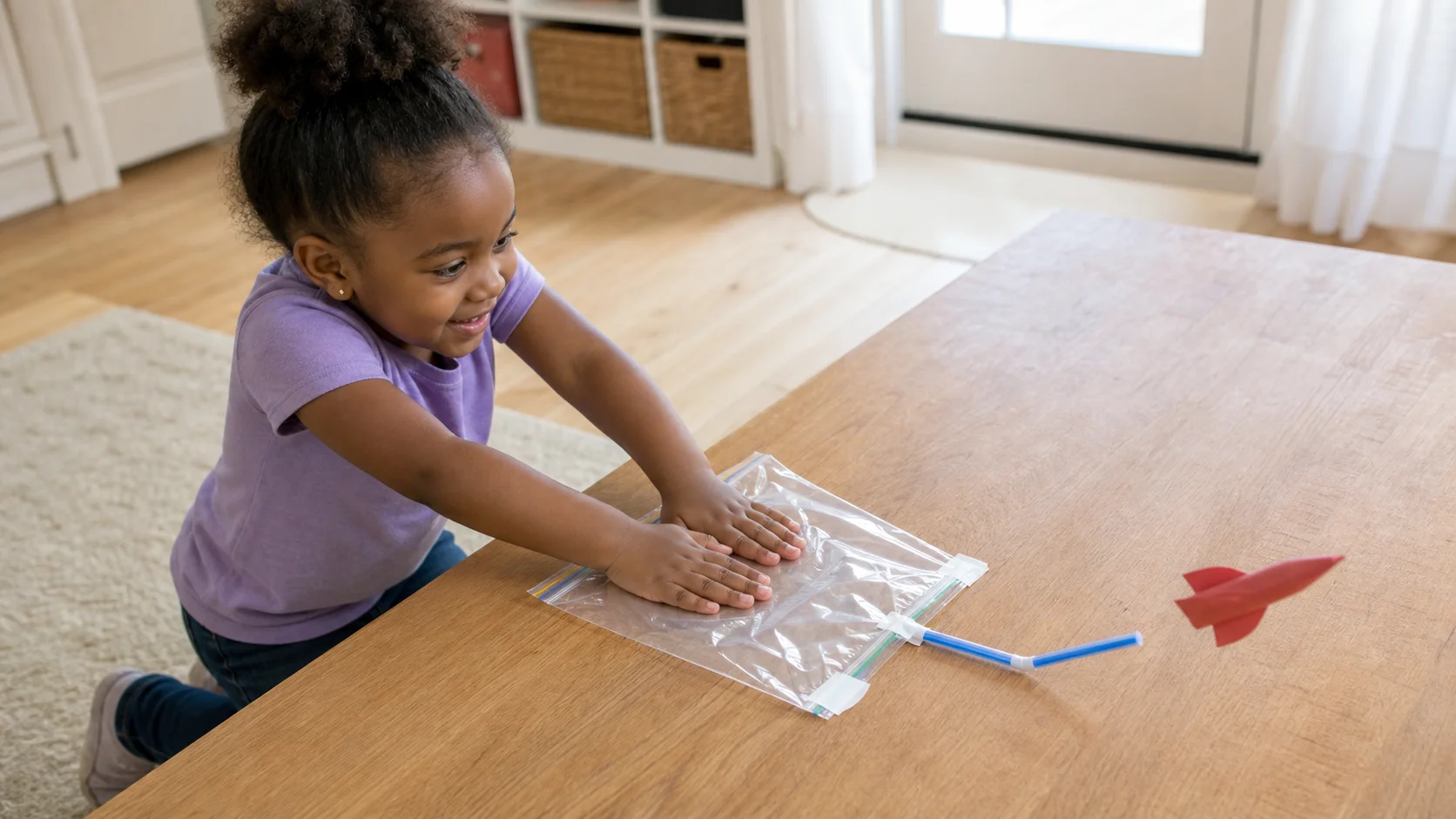
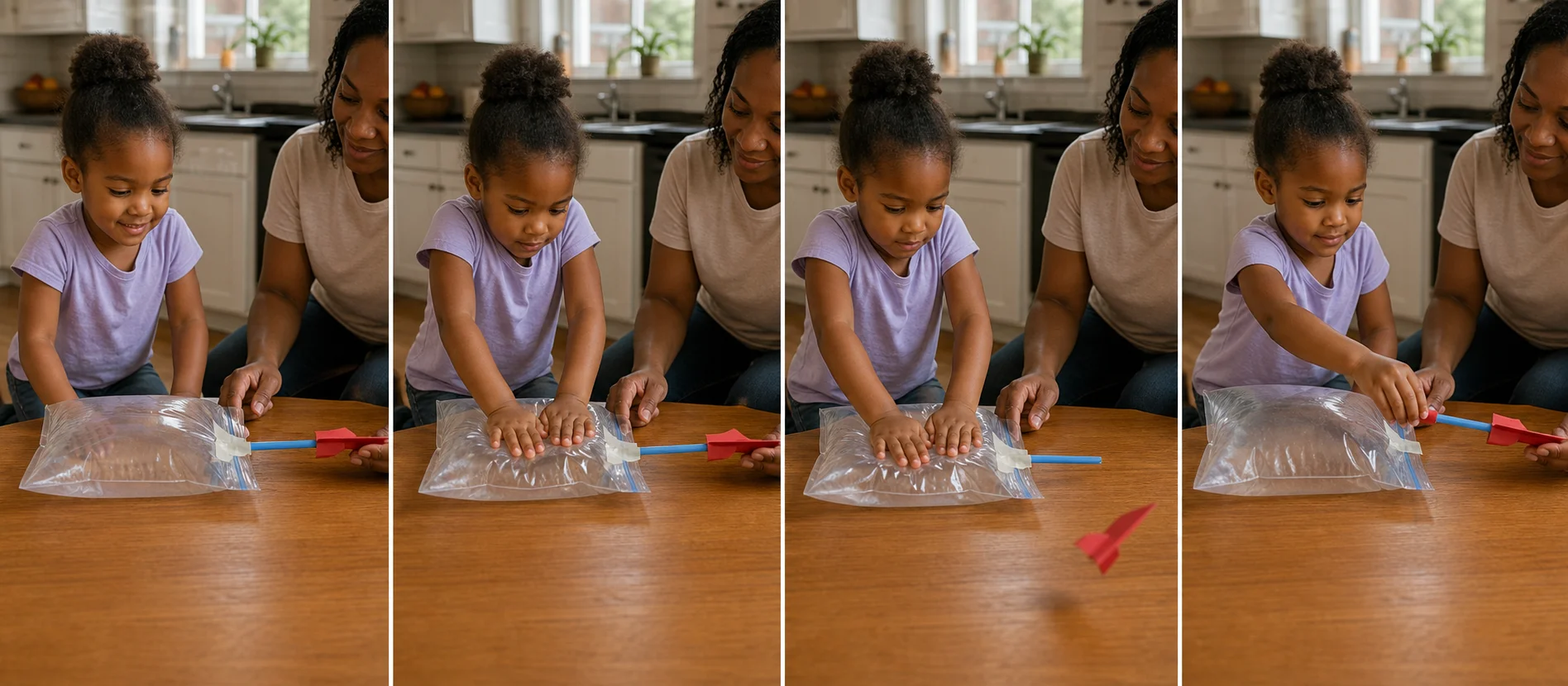
Can one quick squeeze send a paper rocket flying? Your child presses an air-filled zip-top bag with both hands, watches the rocket pop off the straw, and sees cause and effect in action.


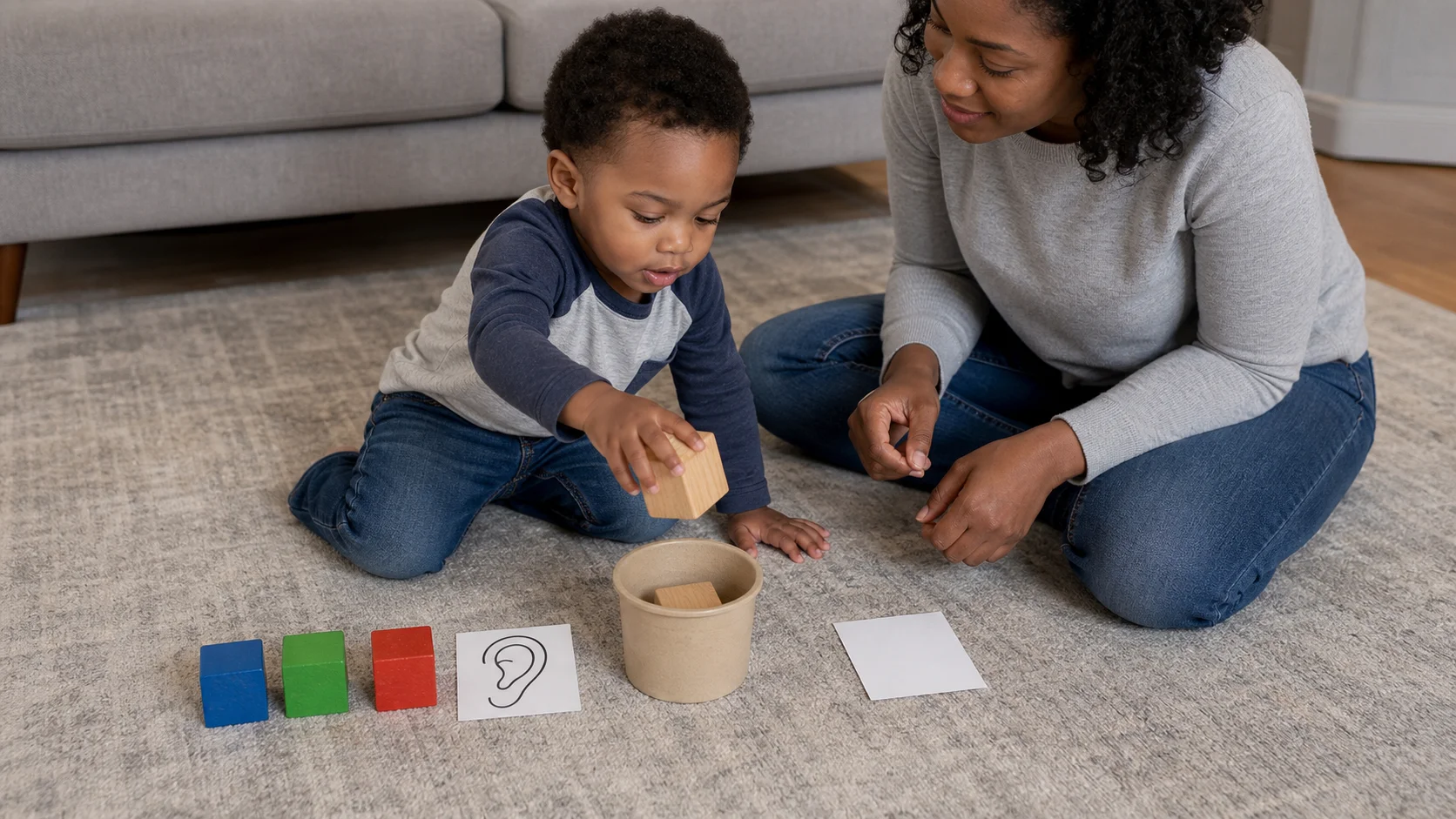
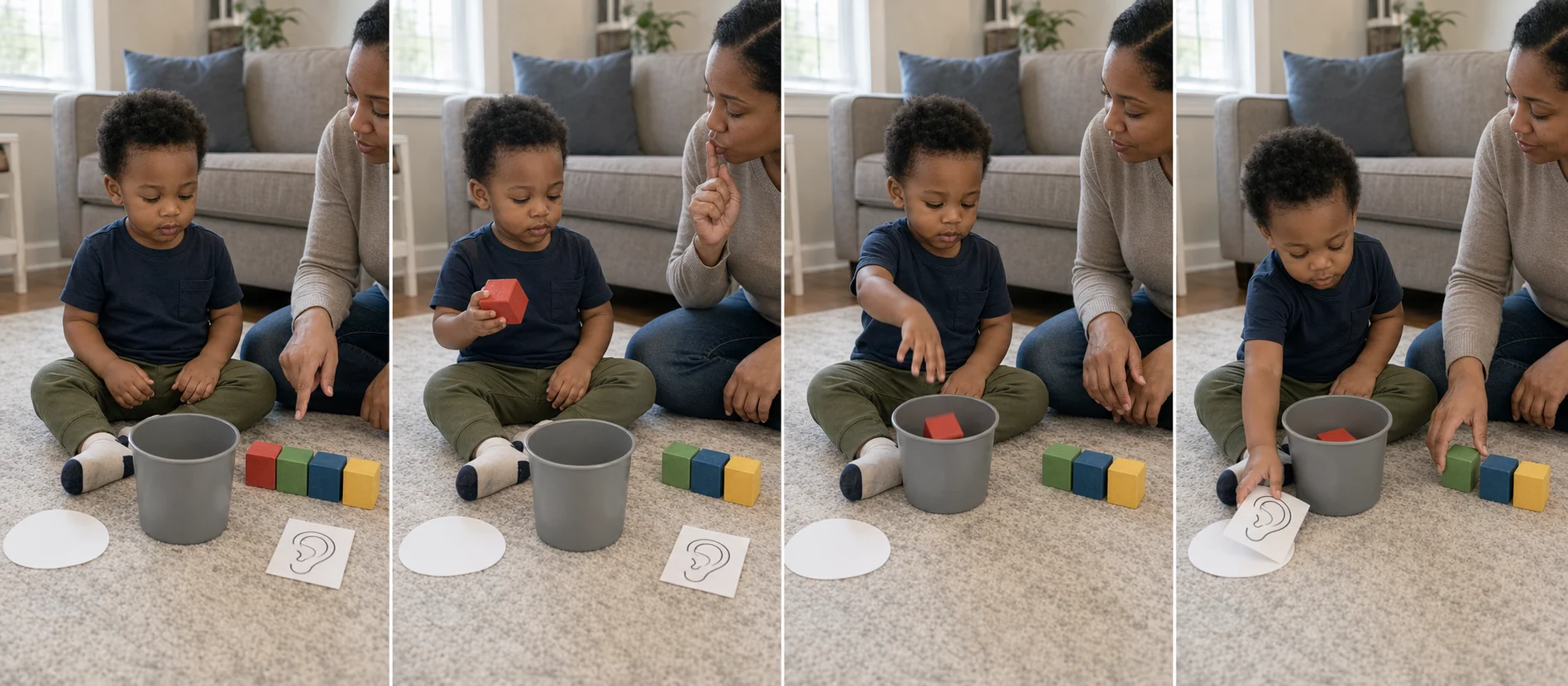
Turn block cleanup into a quick wait-for-the-beep game. Your child holds one block, listens for the cue, then drops it into the bucket.


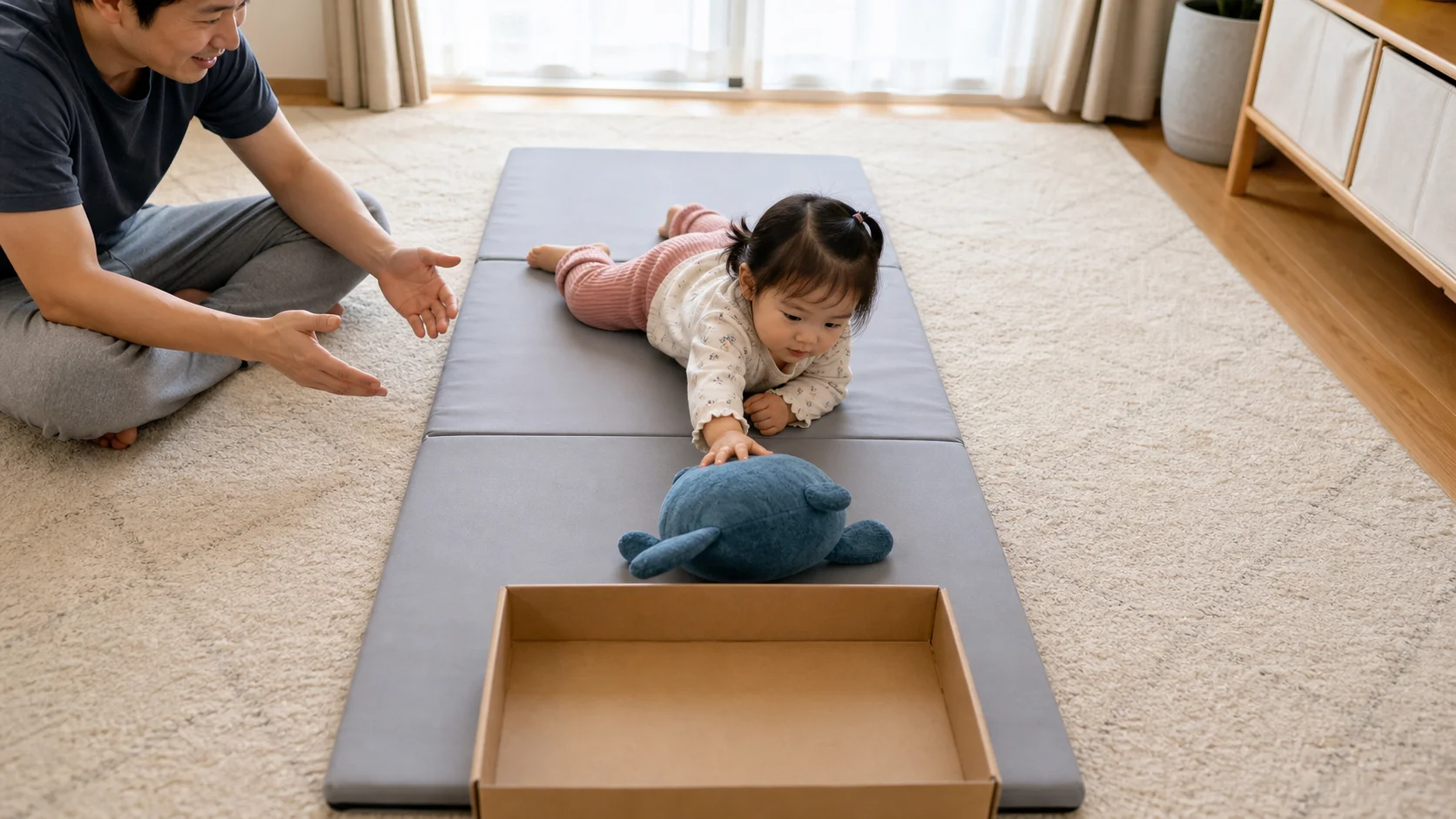
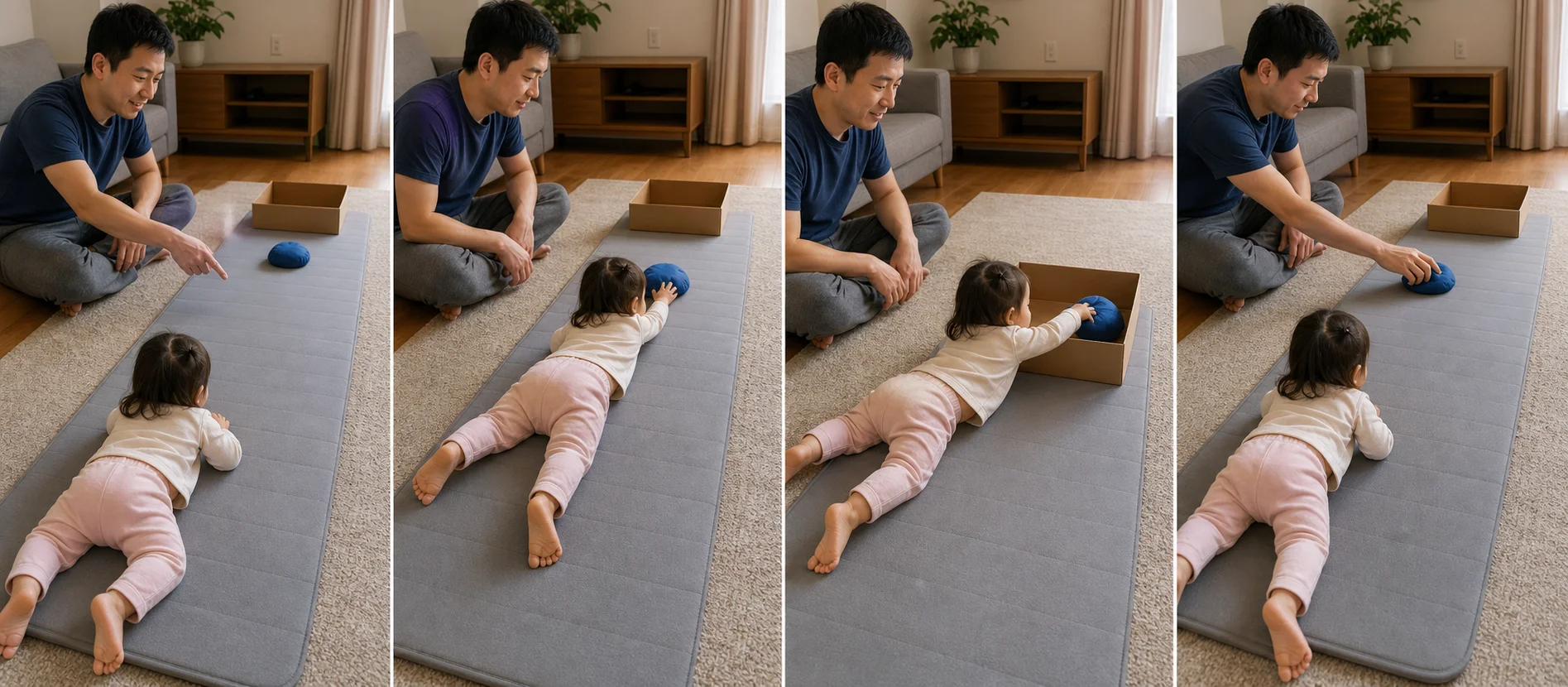
Belly Crawl Rescue is a gross motor activity for toddlers that helps children move through a clear path through a clear, repeatable play loop.


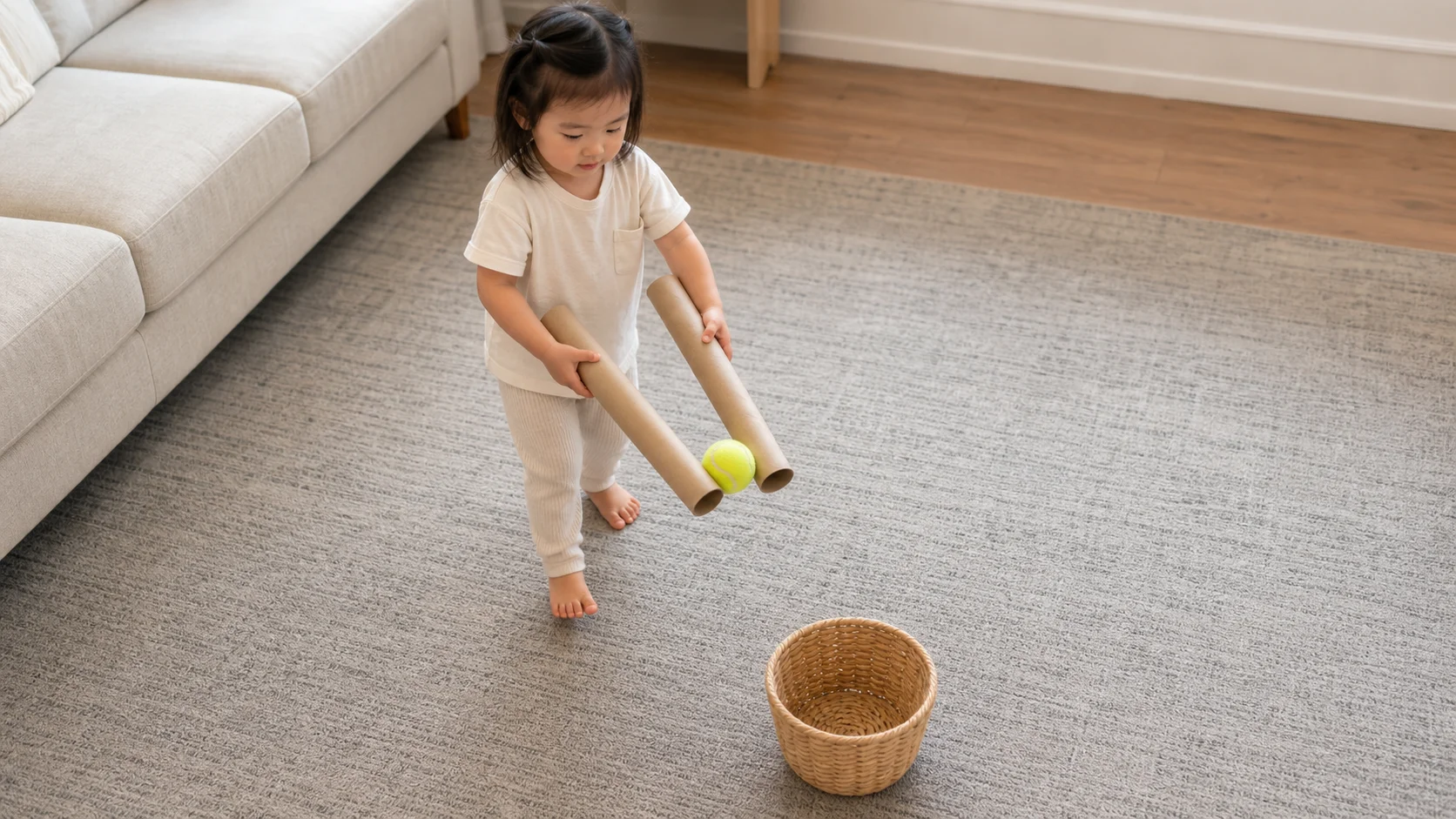
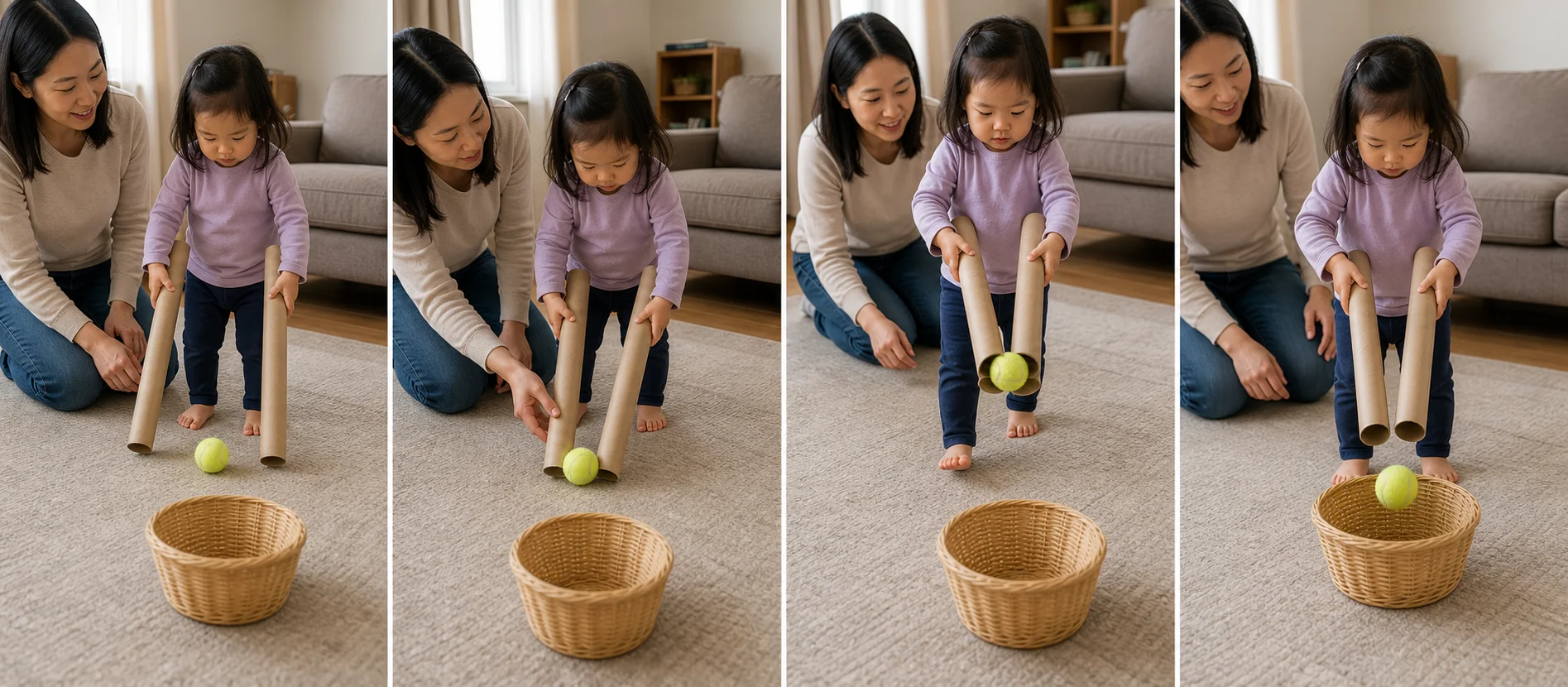
Can your child deliver a tennis ball to a basket without holding it in their hands? Have them squeeze it between two cardboard tubes, lift it, and carry it to the basket for a two-hand coordination challenge.


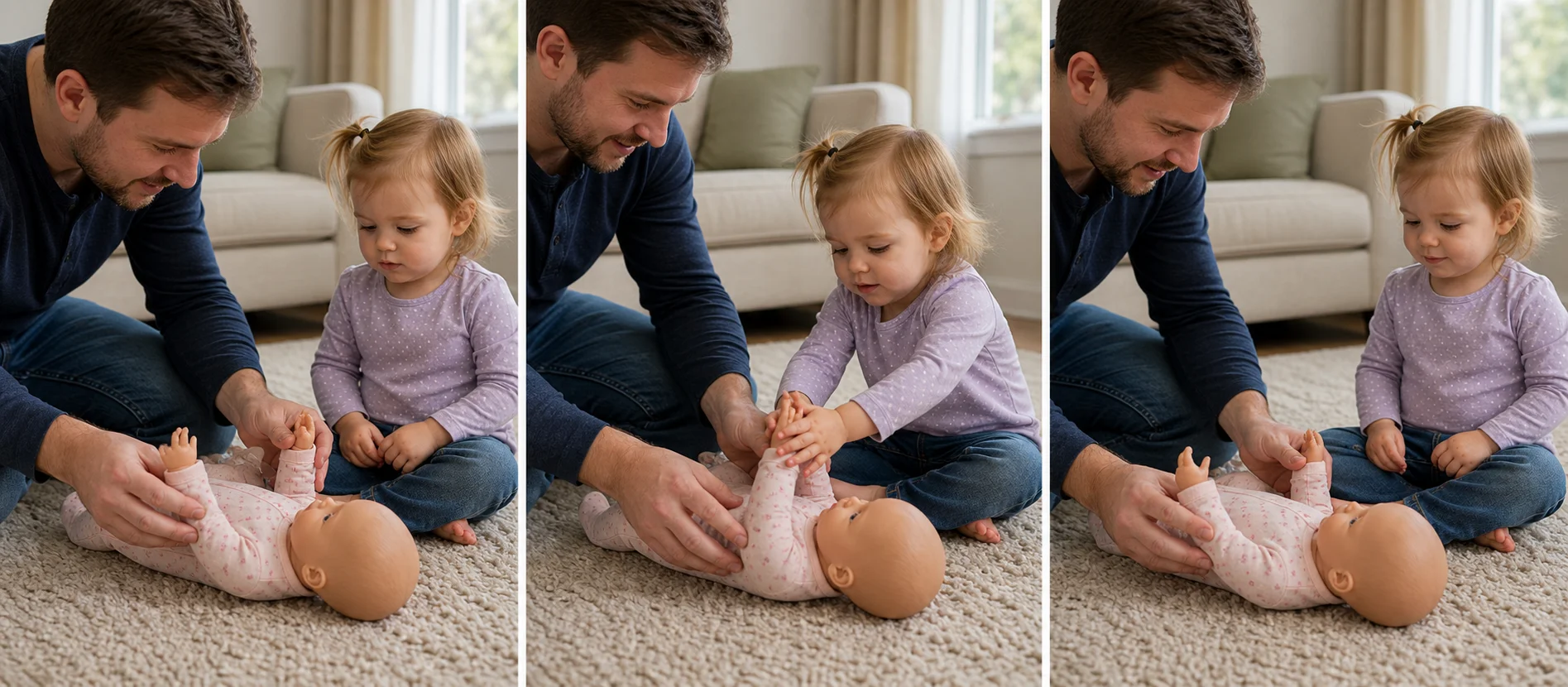
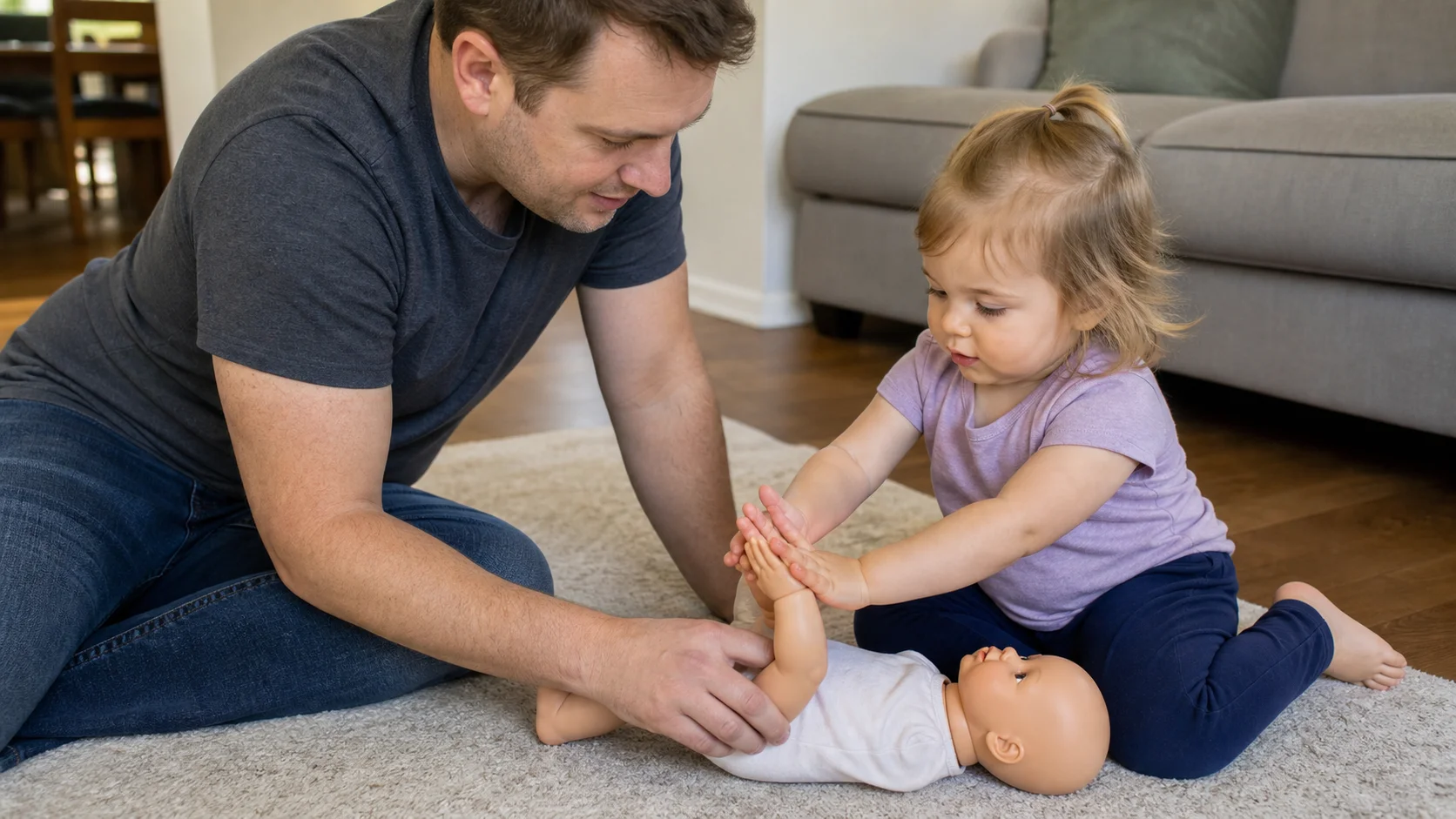
Can your child make a baby doll clap? Model one clap, then let them bring the doll's hands together and open them again for a simple imitation and two-hand coordination challenge.


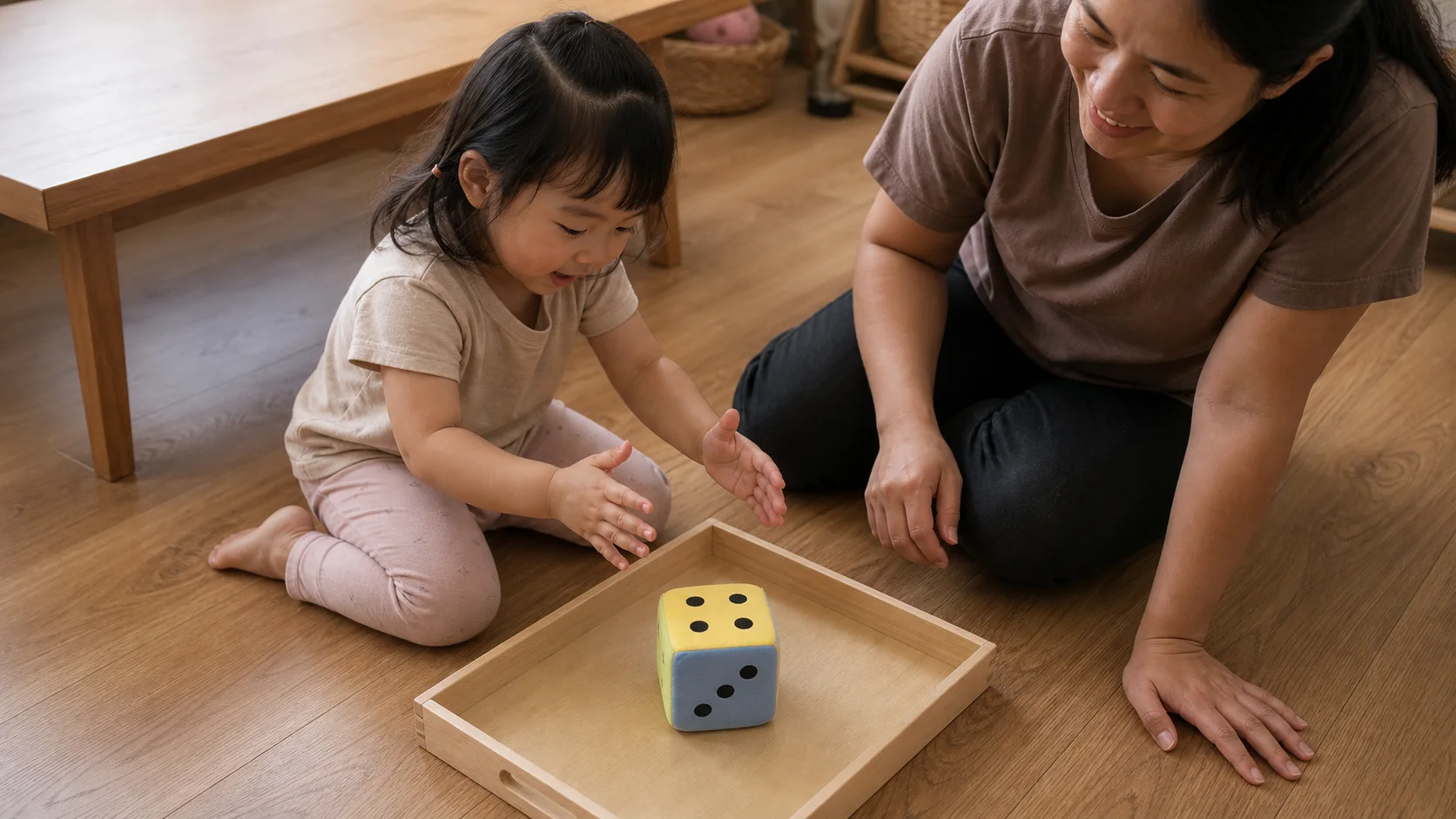
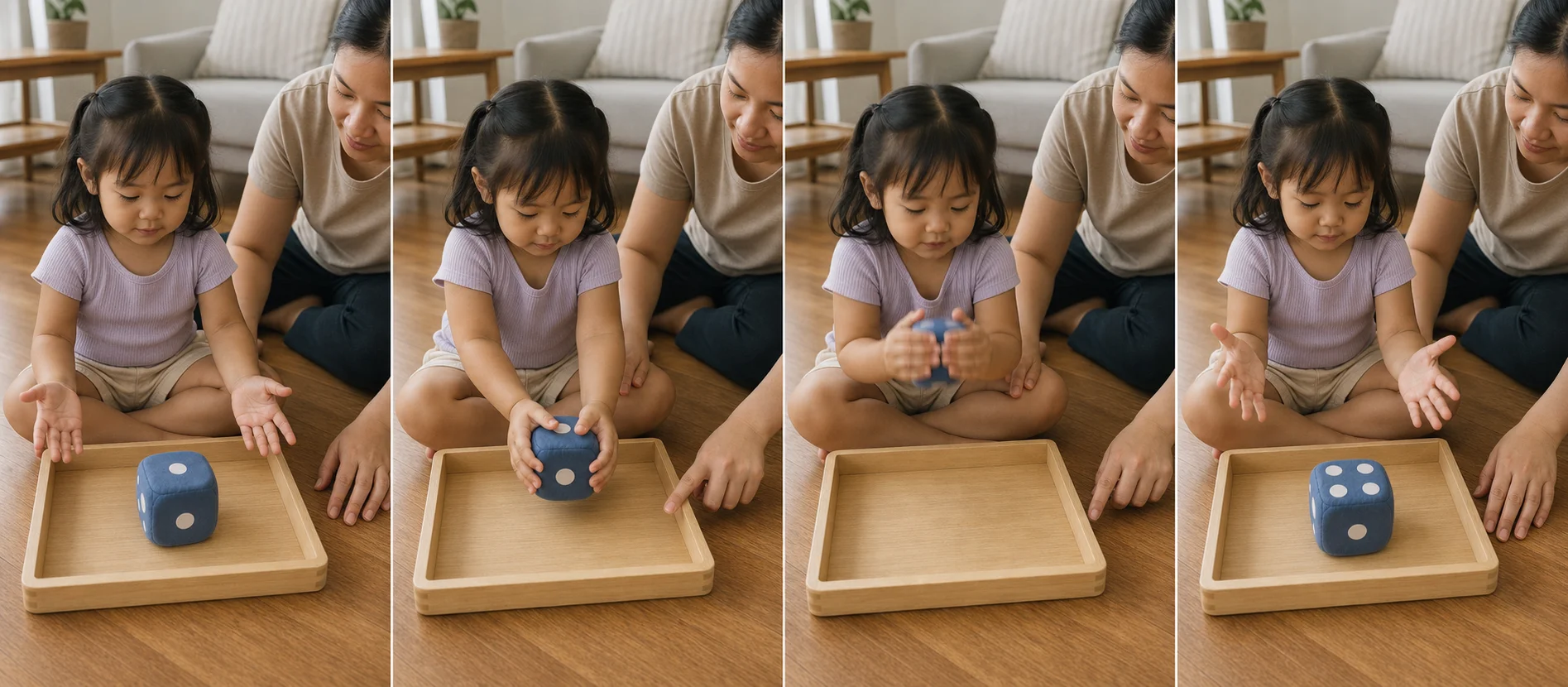
Can your child keep a die hidden inside a little house made with both hands? Cup, shake, and reveal it over a tray for a quick fine-motor challenge that practices two-hand control.


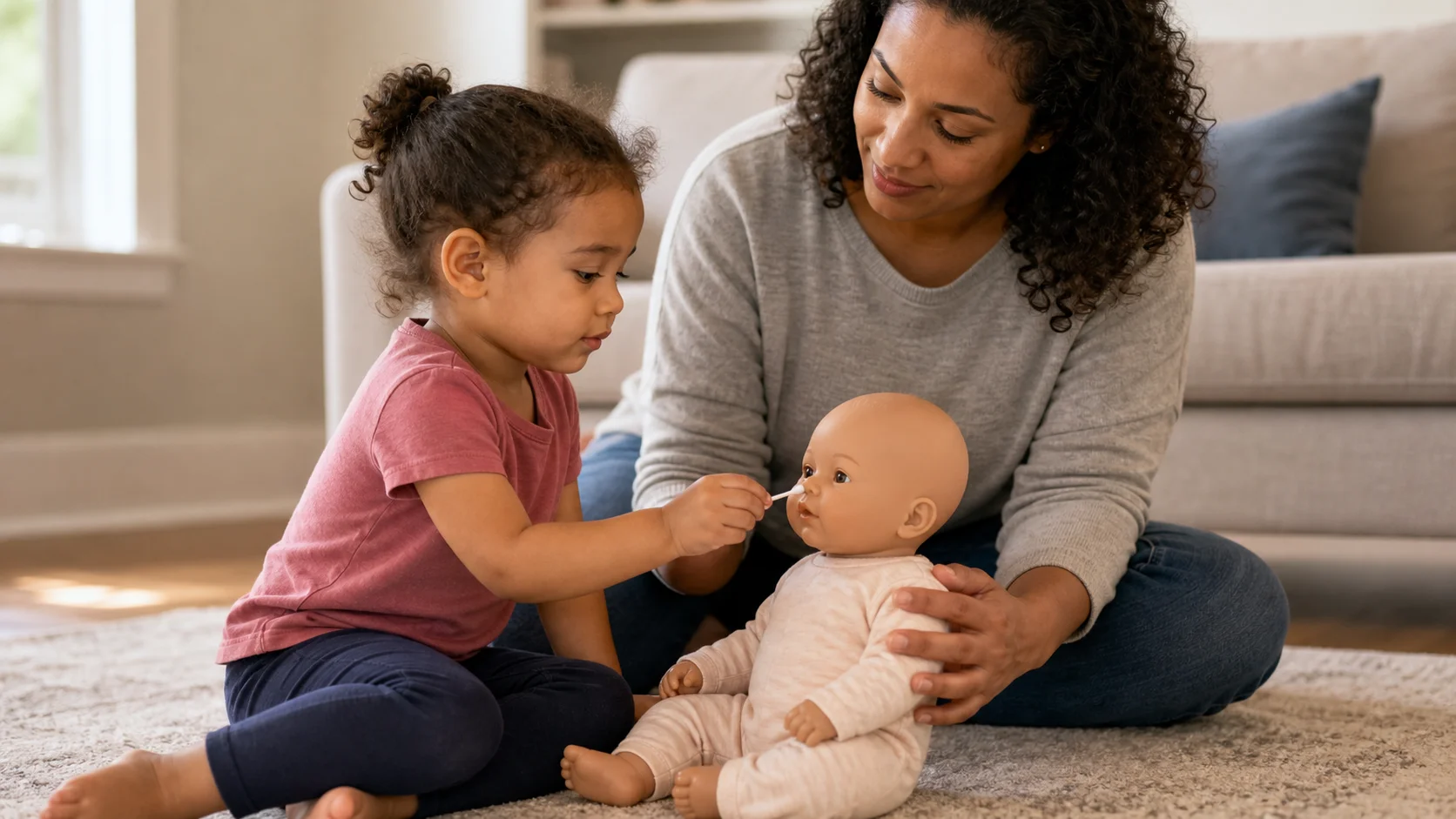
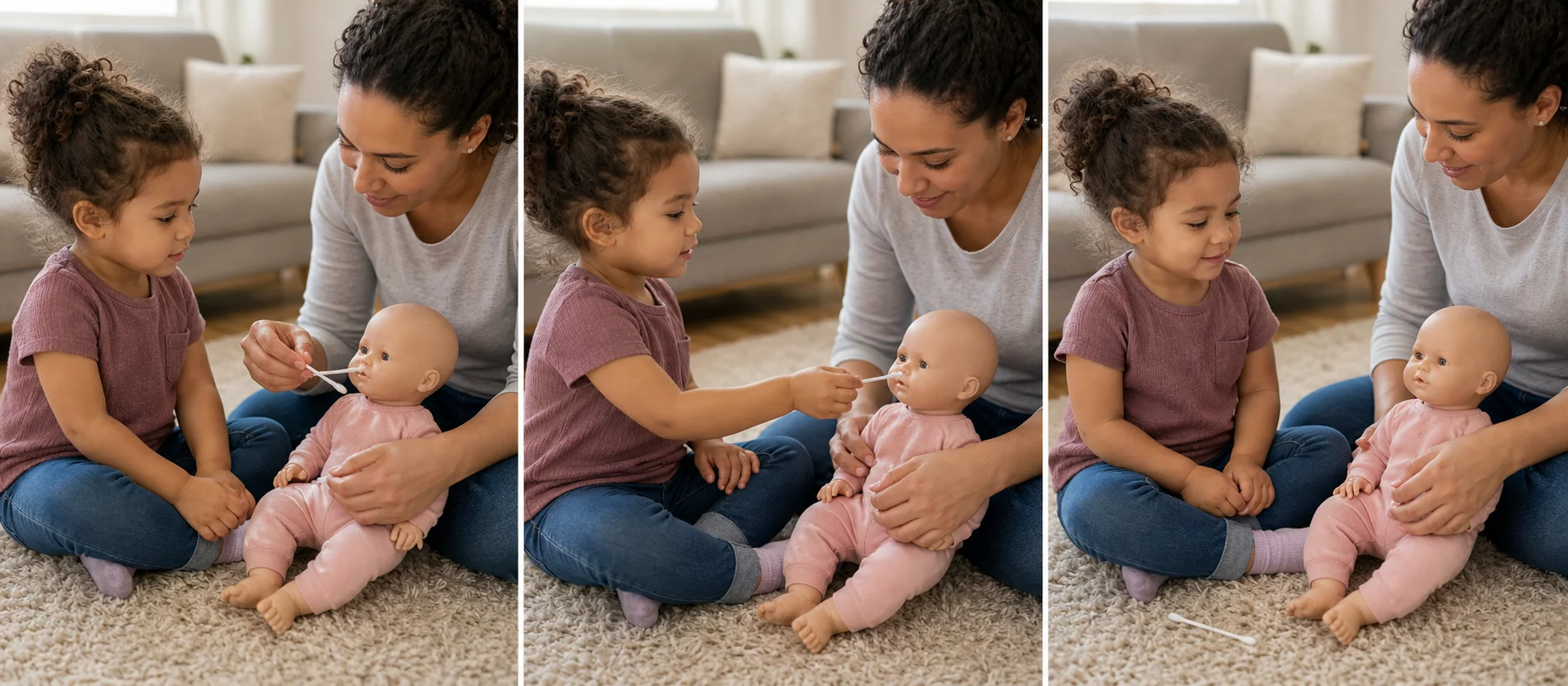
Help make a future nose swab feel more familiar with a quick pretend checkup. Your child gently taps a doll's nose with a cotton swab, then practices sitting still for a short count.


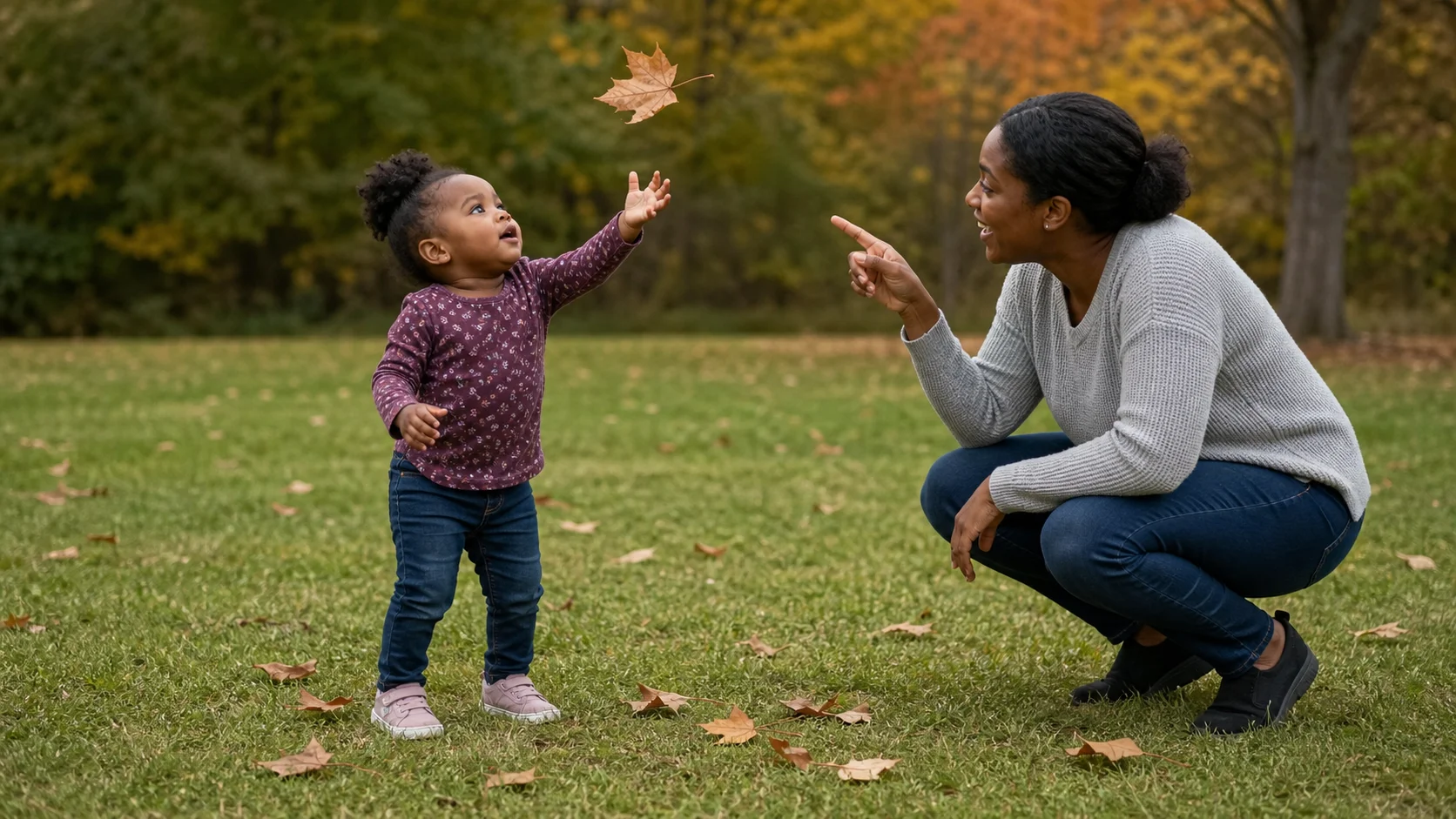
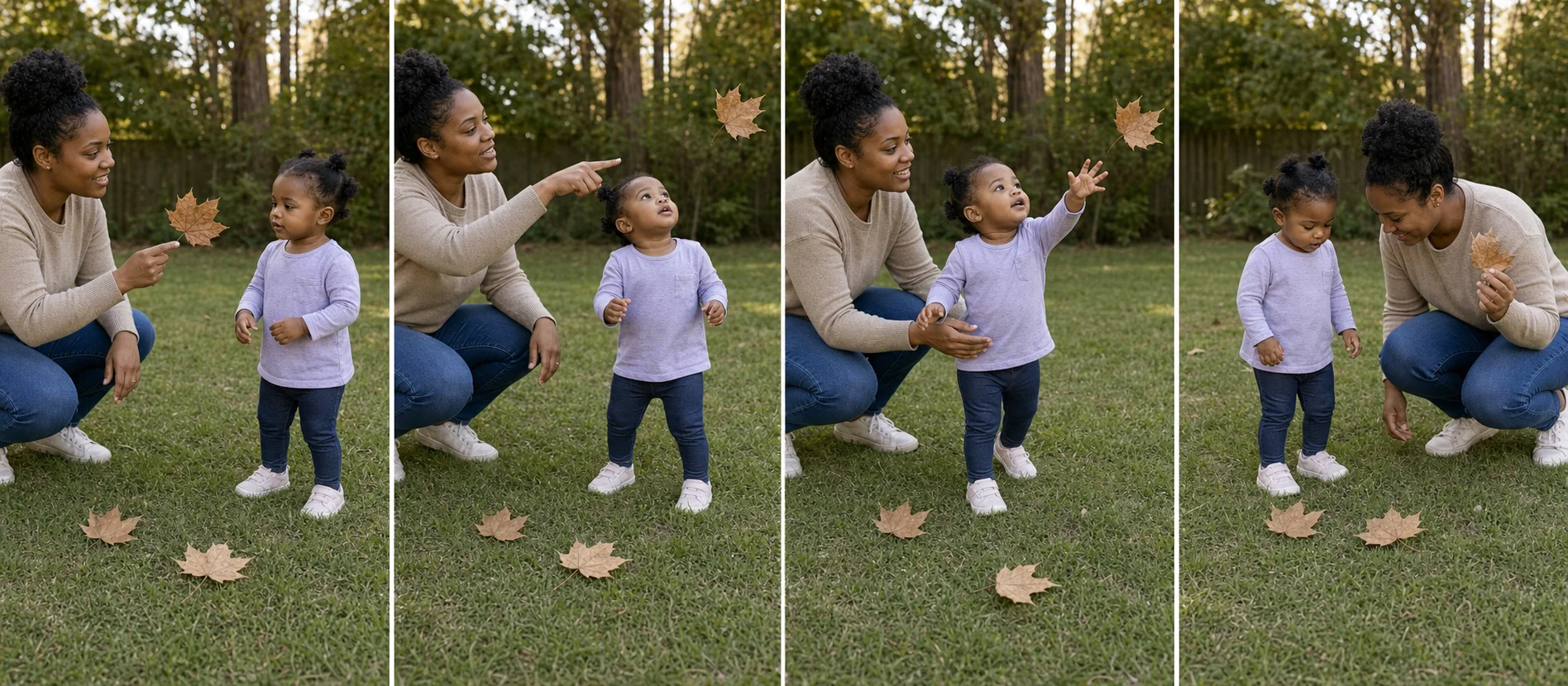
Can your child catch a leaf before it touches the ground? Toss one gently, then have them watch and reach as it floats down for a simple hand-eye coordination challenge.