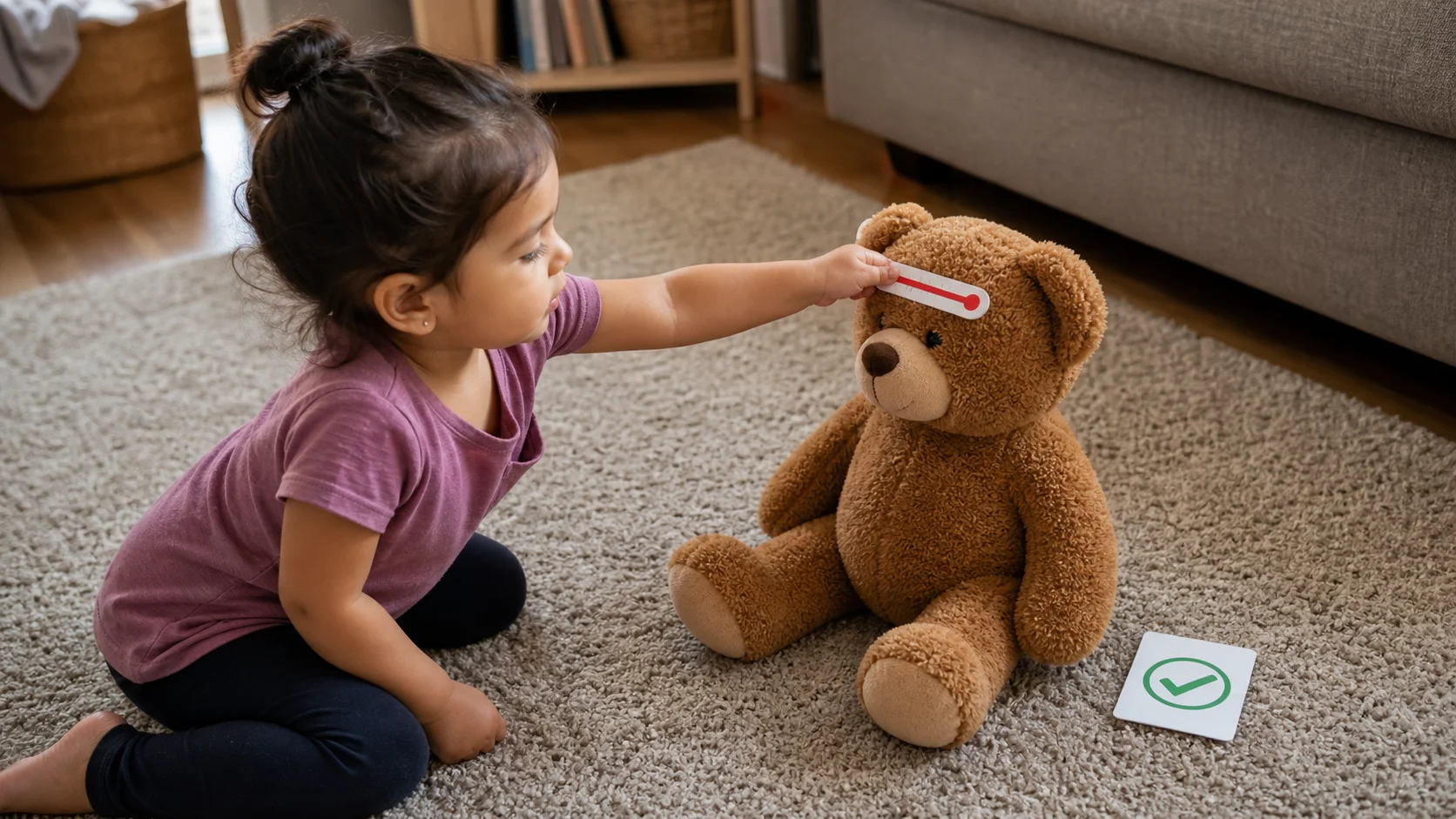
Toddler tapping a teddy bear's forehead with a pretend thermometer while a done card rests beside the bear.
Skill builderDevelopmental supportRepeat LoopIndoor

Teddy Temperature Card.

A teddy-first temperature check turns one short tap-and-done routine into calm practice before a real check.

Play time
5-10+ min
Age
2-3 years
Energy
Low
Mess
Low
Effort
Low
Where
Indoor
Start here

The recipe.

Low parent effort
3 things

What you need

  • 1 teddy bear or stuffed animal
  • 1 paper thermometer or 1 capped marker used as a pretend thermometer
  • 1 small done card
5 min minimum

Setup

Then start the loop
Step 01
On the floor or a low table in front of your child, sit teddy upright with the face easy to see and the forehead easy to reach.
Step 02
Beside teddy, place the pretend thermometer with the tip facing the forehead.
Step 03
Beside the thermometer, place the done card flat in 1 clear start spot your child can reach after the check.
Step 04
Beside your child, sit close enough to model 1 calm turn and reset both items between rounds.
`Check teddy.`
The loop

How play unfolds.

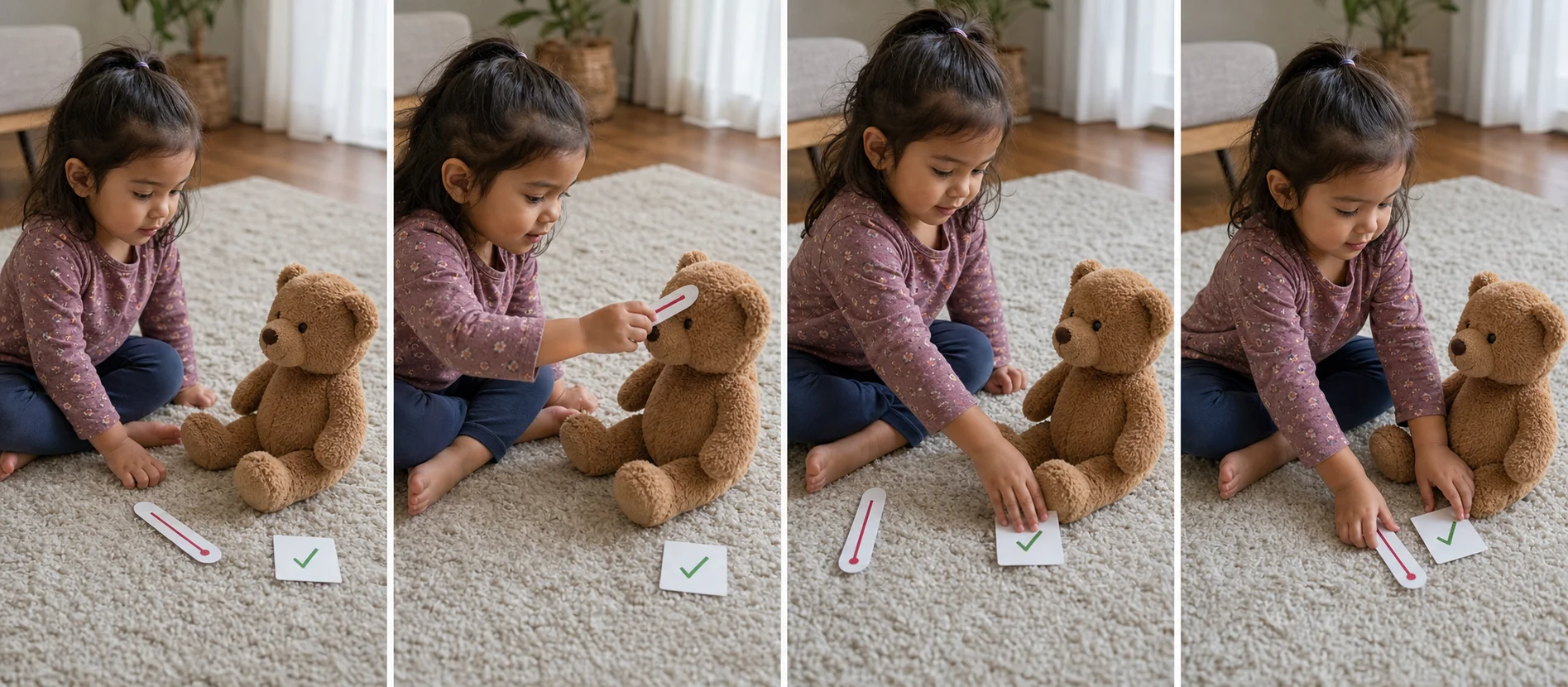
Multi-panel sequence showing teddy ready for a check, a child tapping teddy's forehead, the done card sliding to finish, and both props reset for another round.
  1. 01
    Show 1 gentle forehead check on teddy and say, `Tap, done, all calm.`
  2. 02
    Let your child tap teddy's forehead with the pretend thermometer, then slide or flip the done card.
  3. 03
    Praise teddy for staying calm and put the card and thermometer back in their start spots.
  4. 04
    Repeat the same tap-done-reset order for another short round, or stop after 1 calm success.

Safety Check

  • Stay close so the pretend thermometer and done card do not go into the mouth.
  • If you use a marker as the pretend thermometer, keep it capped for the whole activity.
  • Stop or switch to comfort play if the medical theme starts making your child more worried instead of calmer.
Supporting the play

What to say in the moment

Match what you say to what you see.

Prompt ladder
Level 1 (Start)
`Teddy needs a quick forehead check.`
Level 2 (Keep going)
`Tap teddy, then slide done.`
Level 3 (Stretch)
`Can teddy stay calm for 1 more check?`
Level 4 (Extend)
`Now do the whole teddy check by yourself.`
If your child seems...
What you'd see
Focused
What to do
Say
`Teddy is ready for you.`
Add
Ask `Where is the forehead?` before the next round.
Extend
Let your child do 2 calm check-and-done rounds before you step in.

Make it easier

Younger end
  • -Hold teddy in your lap so the forehead stays still and easy to find.
  • -Start with the pretend thermometer already touching the forehead so your child only has to do the gentle tap.
  • -Reset the done card yourself between rounds so your child can focus on the tap-and-finish pattern.

Make it harder

Older end
  • +Let your child pick up the pretend thermometer, do the tap, and return it to the start spot before moving the done card.
  • +Ask your child to keep the same calm order for 3 finished rounds in a row.
  • +Let your child reset both the thermometer and the done card for the next round without help.

If it's not working

If you see
If child ignores it
Do 1 playful teddy turn yourself, then invite your child to do only the done-card finish first and offer the thermometer on the next round if they want it.
If you see
If child misuses it
Bring the tool back to teddy, say `Teddy's turn,` and keep the thermometer in your hand while your child does the done card if the tool keeps getting waved, dropped, or mouthed.
If you see
If child gets frustrated
Shorten it to 1 adult-led tap and 1 child done-card move, praise teddy, and stop there. If the pretend check keeps raising worry, switch to cuddling teddy or add a comfort item and end the activity.
Skill spotlight
Repeat Loop

Repeating a short calm checkup routine

This helps your child stay with 1 short care routine, copy a calm checkup action, and move through a simple first-then-finished sequence without pressure on their own body.

  • Teddy goes first, so the temperature-check idea stays off your child's body while the routine still feels familiar.
  • The done card gives a clear visible finish after one gentle tap on teddy's forehead.
  • Repeating the same tap-done-reset order helps your child practice a short care routine with very little language.
  • The whole loop is easy to stop after one calm success if the medical theme starts feeling too big.
Real-world transfer
  • Getting through 1 short care or self-care step in order
  • Following a calm first-then-finished routine during simple checkups
  • Using pretend play to make a new medical step feel less unfamiliar

Parent questions