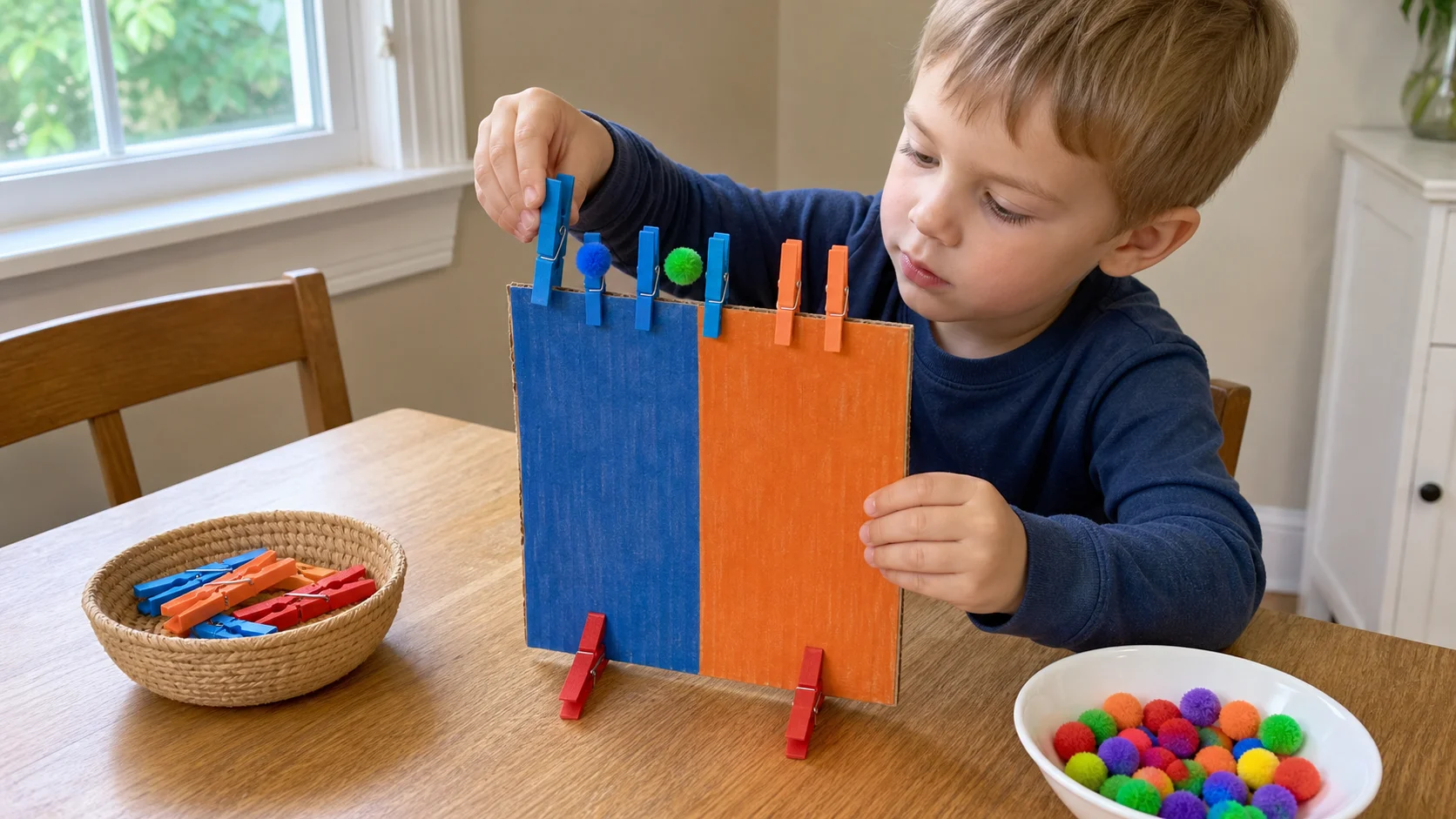
A child steadies a standing cardboard strip with one hand while clipping clothespins across the top edge and adding pom-poms.
Fine motorTwo Hand CoordinationIndoor Table Play

Wobbly Clip Tightrope.

Clothespins and pom-poms turn a standing cardboard strip into a simple balance-and-repeat game.

Play time
5-10+ min
Age
3-5 years
Energy
Low
Mess
Low
Effort
Medium
Where
Indoor Table Play
Start here

The recipe.

Medium parent effort
8 things

What you need

  • 1 cardboard strip about 10 inches long
  • 1 ruler
  • markers
  • several clothespins
  • several pom-poms
  • 1 pair of scissors
  • 1 basket
  • 1 adult for setup and direct supervision
5 min minimum

Setup

Then start the loop
Step 01
Cut the cardboard into a strip about 10 inches long. Use the ruler to draw a line down the middle, then color one side blue and the other side orange.
Step 02
Clip 2 clothespins onto the bottom edge as feet and stand the strip upright on a flat table.
Step 03
Put the extra clothespins in the basket beside the strip and set the pom-poms within easy reach.
Step 04
Tap the top edge once before play starts. The strip should wobble but stay standing on its own.
"Helper hand holds."
The loop

How play unfolds.

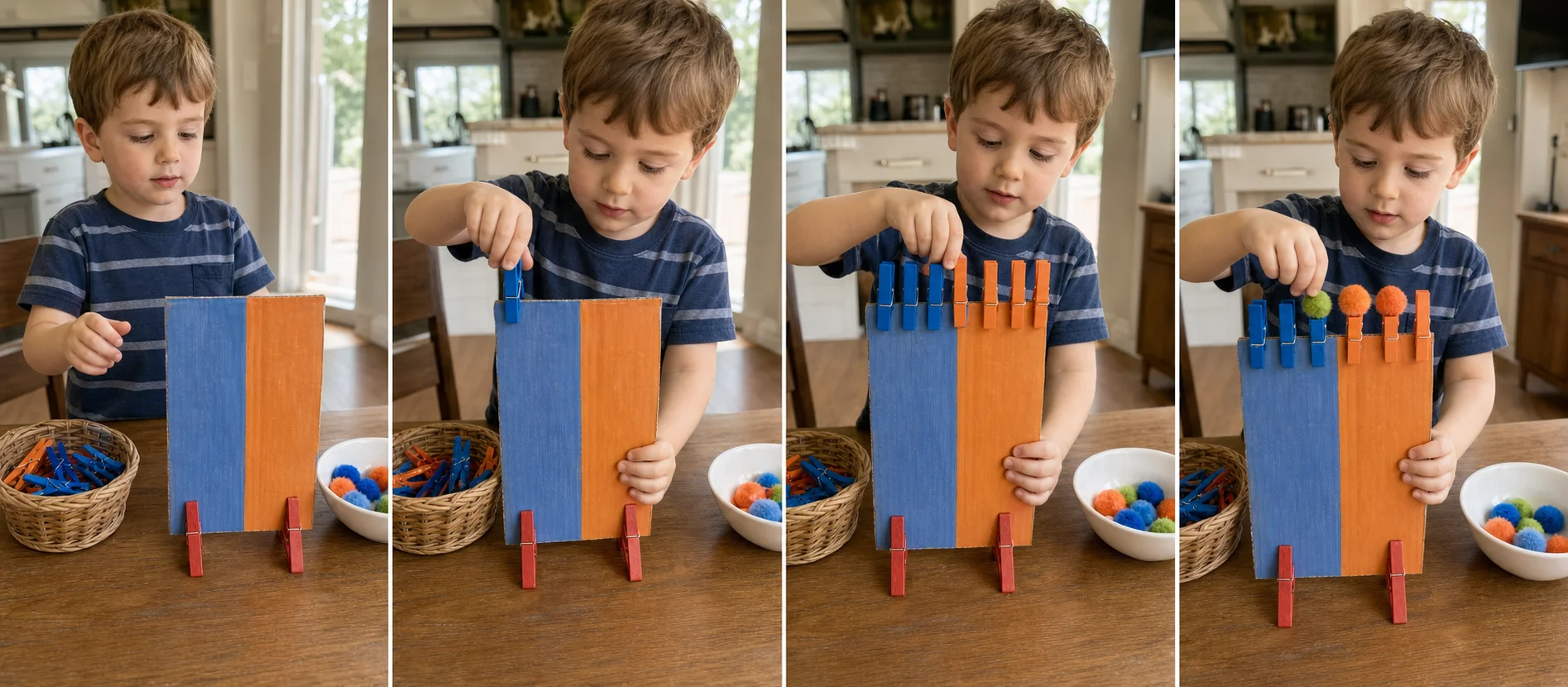
Four panels show a grown-up coloring a cardboard strip, clipping clothespin feet onto the bottom, a child adding matching clips across the top, and the child placing pom-poms into the clips while the strip stays standing.
  1. 01
    Show one clip and say, "Helper hand holds. Clip on top."
  2. 02
    Let your child steady the strip with one hand and clip matching clothespins across the top edge with the other hand.
  3. 03
    When the row is full, place 1 pom-pom into each clipped clothespin.
  4. 04
    If the strip leans or tips, stand it back up and keep going until the row is finished.

Safety Check

  • Stay within arm's reach the whole time.
  • Clothespins can pinch little fingers.
  • Pom-poms are a choking hazard and should stay out of the mouth.
Supporting the play

What to say in the moment

Match what you say to what you see.

Prompt ladder
Level 1 (Start)
Hold the tightrope with one hand and clip one pin on top.
Level 2 (Keep going)
Add one more clip where the colors match.
Level 3 (Stretch)
Place one pom-pom gently so the tightrope stays standing.
Level 4 (Extend)
Try a slow quiet round with tiny hands.
If your child seems...
What you'd see
Focused
What to do
Say
"You are balancing and clipping."
Add
"Which side matches this pin?"
Extend
"Try filling the next clip with a gentle pom-pom."

Make it easier

Younger end
  • -Let the child choose any top-edge spot instead of matching colors.
  • -Start with the bottom feet already tested and the first top clip already attached.
  • -Use two hands together on the clothespin squeeze before returning one hand to the strip.

Make it harder

Older end
  • +Ask the child to keep the tightrope standing while adding one pom-pom at a time.
  • +Try alternating blue side, orange side, blue side.
  • +Invite the child to fix a leaning strip before adding the next clip.

If it's not working

If you see
If child ignores it
Clip one clothespin on yourself, tap the wobble, and say, "Can you add one on the blue side?"
If you see
If child misuses it
Remove the pom-poms for a round and go back to just clipping while you say, "One hand holds. One hand squeezes."
If you see
If child gets frustrated
Hold the strip steady with your child, use only a few clothespins, and skip color matching until the squeeze feels easier.
Skill spotlight
Two Hand Coordination

Coordinating both hands to clip and balance

This helps a child keep one hand in a helper role while the other hand does careful finger work. That same pattern shows up when zipping a coat, holding paper still, and using small tools during play.

  • One hand has to hold steady while the other squeezes and clips, so the two hand jobs stay separate and clear.
  • Opening each clothespin adds pinch-and-release practice with a real target to aim for.
  • The wobble gives instant feedback, and the pom-pom step slows the game down enough for your child to adjust force.
Real-world transfer
  • Holding paper, clothing, or a toy still while the other hand works
  • Using finger strength for clips, zippers, caps, and small fasteners
  • Placing light items carefully instead of dropping or knocking them over