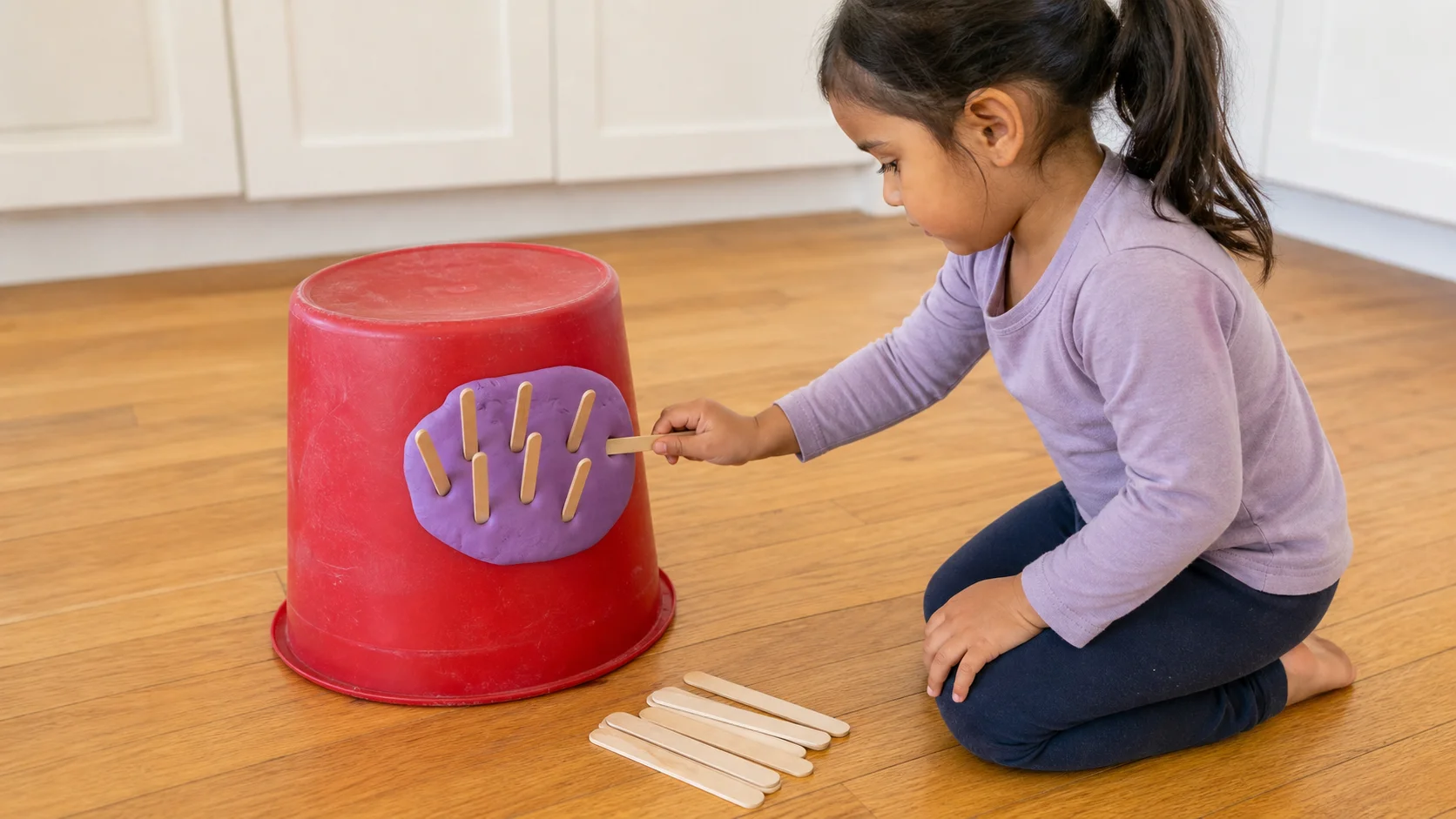
A child presses a craft stick into a putty patch on the side of an upside-down bucket.
Fine motorPush Through ResistanceIndoor Floor Or Table

Vertical Garden Push.

A bucket-side putty patch turns craft sticks into a simple press-and-plant game.

Play time
5-10+ min
Age
3-5 years
Energy
Low
Mess
Low
Effort
Medium
Where
Indoor Floor Or Table
Start here

The recipe.

Medium parent effort
4 things

What you need

  • 1 bucket
  • 1 large handful of Theraputty or stiff playdough
  • several craft sticks
  • 1 adult for setup and direct supervision
5 min minimum

Setup

Then start the loop
Step 01
Turn the bucket upside down on the floor or table so one side faces your child.
Step 02
Press a large handful of Theraputty or stiff playdough into a thick patch on that side of the bucket.
Step 03
Place a small pile of craft sticks beside the bucket within easy reach.
Step 04
Test 1 stick yourself to make sure the patch holds it upright and the bucket does not slide or tip.
Step 05
Place your child standing or kneeling in front of the bucket so they can push straight into the patch.
"Plant it tall."
The loop

How play unfolds.

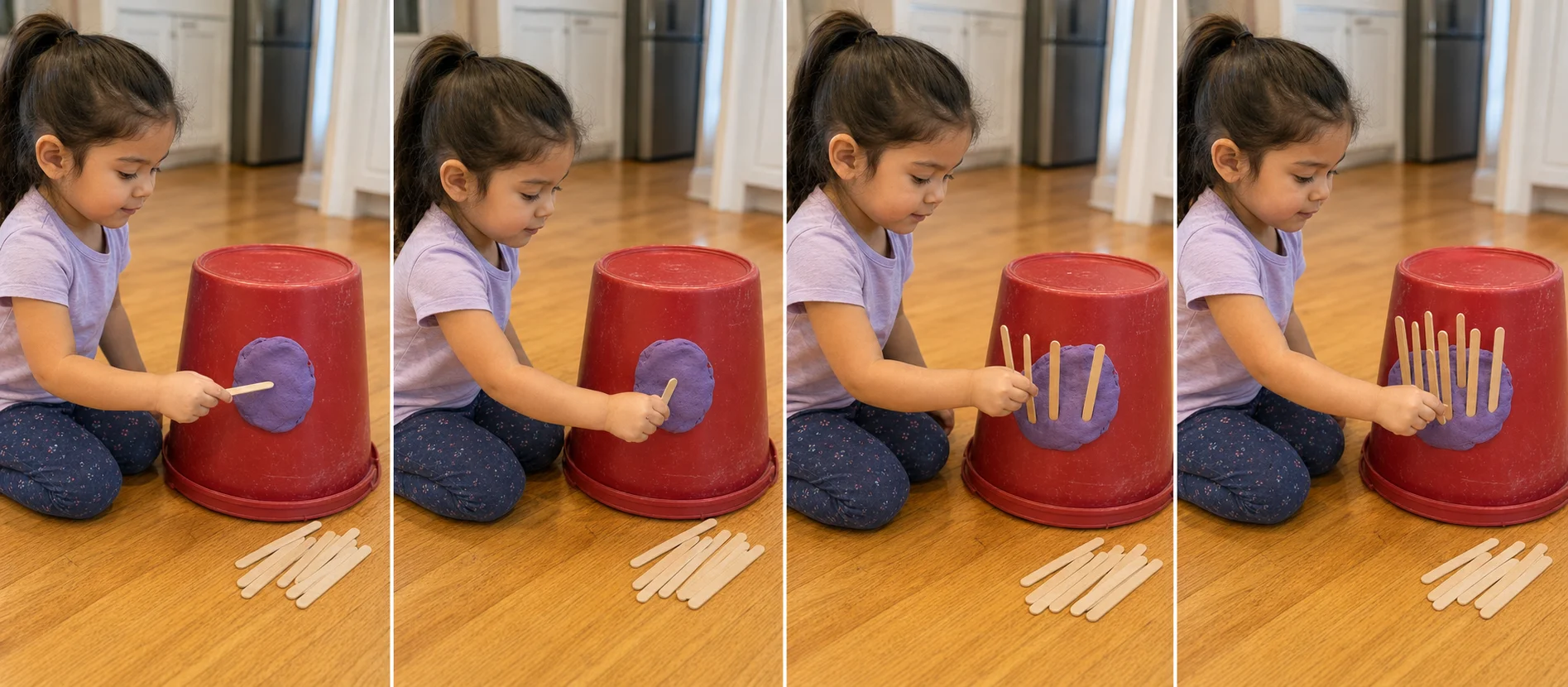
Three panels show a grown-up pressing putty onto a bucket, a child planting craft sticks into the patch, and the patch filling with upright sticks.
  1. 01
    Point to the patch and say, "Plant the stick so it stands up tall."
  2. 02
    Let your child press 1 craft stick into an open spot until it stays up.
  3. 03
    Repeat with the other sticks until the patch looks full.
  4. 04
    If one falls out, use that same stick again in a fresh or firmer spot and keep going.

Safety Check

  • Stay within arm's reach and supervise every round.
  • Stop and reset if the bucket slides or tips when your child pushes.
  • Keep your child standing or kneeling in front of the bucket instead of reaching across their body.
Supporting the play

What to say in the moment

Match what you say to what you see.

Prompt ladder
Level 1 (Start)
"Plant one stick so it stands up tall."
Level 2 (Keep going)
"Find an open spot and push another stick in."
Level 3 (Stretch)
"Try a spot near the edge of the garden."
Level 4 (Extend)
"Can you fill the garden before we pull them out?"
If your child seems...
What you'd see
Focused
What to do
Say
"That stick is standing tall."
Add
"Name the color after it stays up."
Extend
"Invite one careful plant near the edge of the putty."

Make it easier

Younger end
  • -Start with the stick tip already touching the putty so the child only has to push.
  • -Use the center of the putty patch where the resistance is most forgiving.
  • -Offer one stick at a time instead of keeping the full pile within reach.

Make it harder

Older end
  • +Ask the child to plant sticks around the outside edge of the patch.
  • +Let the child choose a new open spot without pointing first.
  • +Pause before each push so the child checks that the bucket is still steady.

If it's not working

If you see
If child ignores it
Plant 1 or 2 sticks yourself first and invite your child to add "just one more."
If you see
If child misuses it
Take back all but 1 stick, point to an open spot, and model a slow push so the stick stands up tall.
If you see
If child gets frustrated
Hold the bucket steady, use a soft middle spot in the putty, and stop after 1 successful plant before offering another turn.
Skill spotlight
Push Through Resistance

Pressing craft sticks into a vertical putty patch with control

This helps a child use firm hand pressure while the arm works away from the body and the wrist stays steady. That same pattern shows up when pushing crayons, markers, or simple tools with more control and when placing small pieces during play or art.

  • Pressing each stick until it stands gives your child direct practice with strong, controlled hand pressure.
  • The bucket-side patch turns the work vertical, so the shoulder and wrist have to stay steady while the hand pushes.
  • A leaning stick gives instant feedback and an easy redo, so your child gets repeatable practice without a complicated reset.
Real-world transfer
  • Pressing crayons, markers, or simple tools with steadier force
  • Pushing small pieces into place during art, building, or pretend setup
  • Keeping the arm and wrist steadier for later writing and cutting jobs