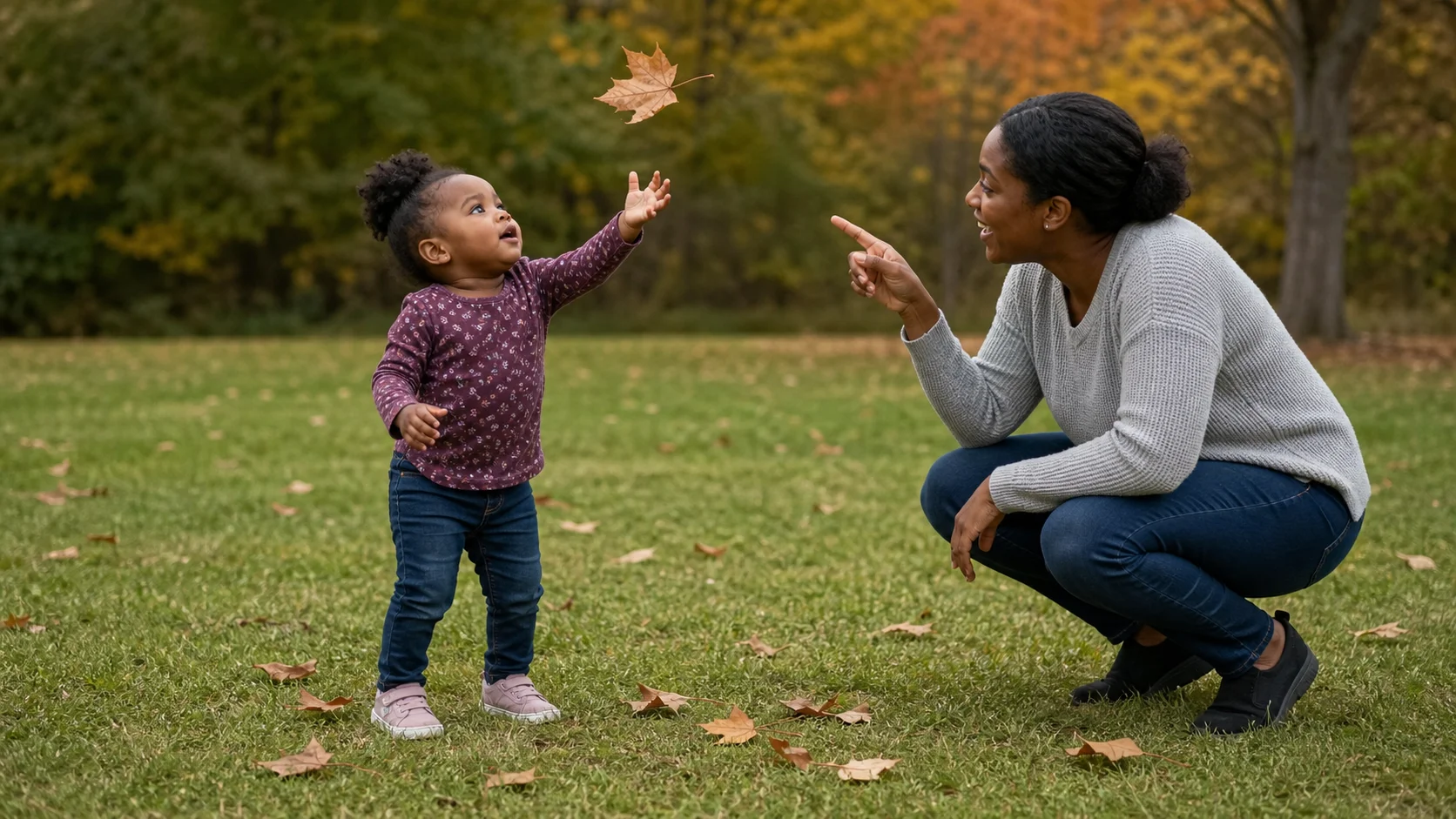
Toddler reaching toward a drifting leaf while a grown-up points nearby in an open outdoor spot.
ThinkingFollow Moving ObjectOutdoor

Float and Focus.

Watch one drifting floater, reach before it lands, and let every miss set up the next turn.

Play time
5-25+ min
Age
1-3 years
Energy
Low To Medium
Mess
Low
Effort
Low
Where
Outdoor
Start here

The recipe.

Low parent effort
2 things

What you need

  • drifting leaves, snowflakes, or dandelion seeds
  • 1 safe outdoor spot with open ground
5 min minimum

Setup

Then start the loop
Step 01
On flat outdoor ground, stand with your child a few steps back from roads, puddles, thorny plants, or anything they could trip over while looking up.
Step 02
In front of you, face the part of the air where you can already see one leaf, snowflake, or dandelion seed drifting. If the air is still, hold one leaf or dandelion seed so you can toss it gently in front of your child.
Step 03
Beside your child, stay close enough to point out one floater at a time and leave room for two or three small steps and one easy reach.
"There it goes."
The loop

How play unfolds.

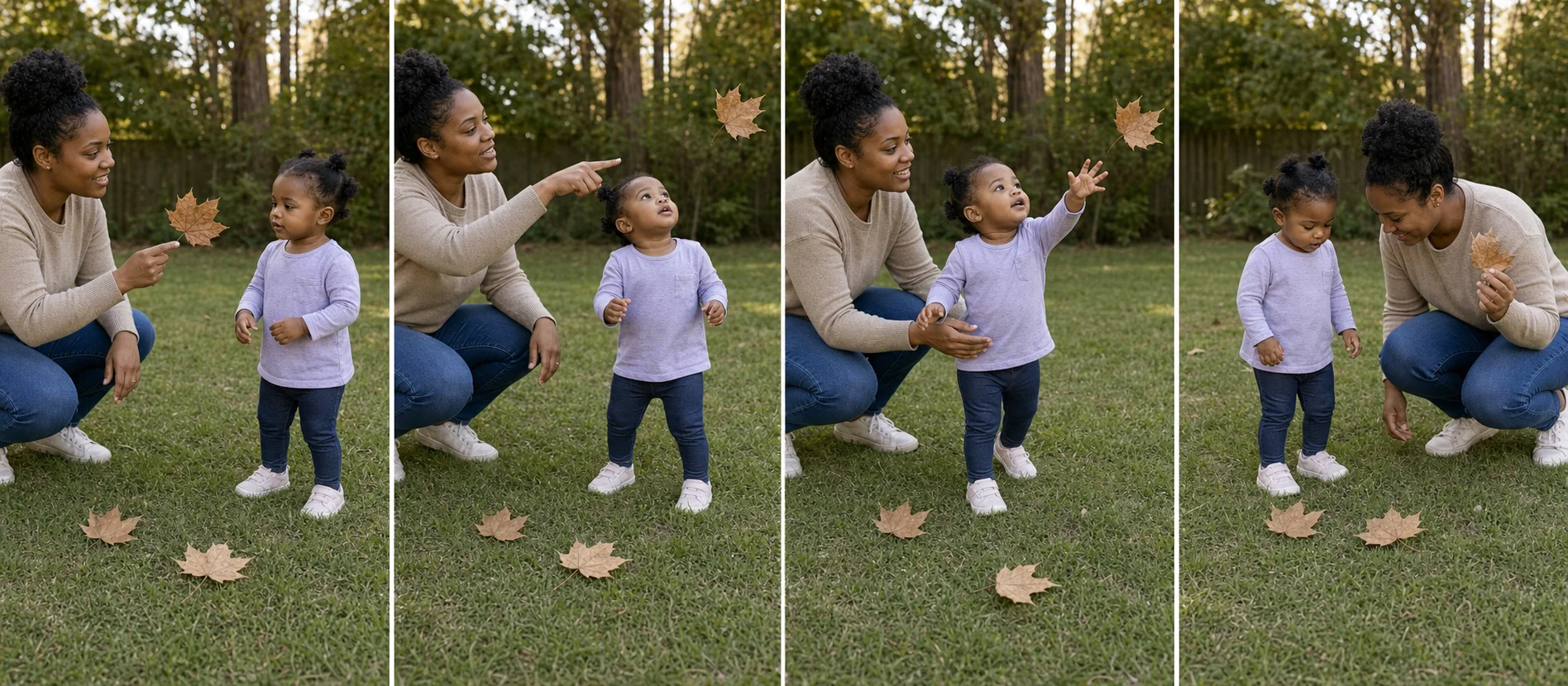
Sequence showing a grown-up pointing to a floater, a toddler tracking and reaching, and the pair spotting where it lands.
  1. 01
    Point to one drifting floater or toss one gently and say, "Watch this one float."
  2. 02
    Let your child track it, turn or step with it, and reach before it lands.
  3. 03
    Notice the touch or landing spot together.
  4. 04
    Start again with the next floater.

Safety Check

  • Stay close the whole time because your child may look up while stepping or reaching.
  • Choose flat open ground away from traffic and other hazards before the first turn starts.
  • Stop if wind, wet ground, or cold conditions make the watch-and-reach turns less safe.
Supporting the play

What to say in the moment

Match what you say to what you see.

Prompt ladder
Level 1 (Start)
"Watch this one float."
Level 2 (Keep going)
"Reach before it lands."
Level 3 (Stretch)
"Try one more from this side."
Level 4 (Extend)
"Last floater, then all done."
If your child seems...
What you'd see
Focused
What to do
Say
"You saw it all the way down."
Add
"Can you touch it before it lands?"
Extend
"Let the next floater start a little farther to one side so your child turns and reaches again."

Make it easier

Younger end
  • -Use floaters that pass at chest or hand height so your child does not need to look far up and move at the same time.
  • -Let your child reach with the same hand each round instead of switching sides.
  • -Keep each turn to one nearby floater, then pause before offering the next.

Make it harder

Older end
  • +Wait one extra beat before your child reaches so they track longer before moving.
  • +Offer the next floater from your child's less-used side so they turn the other way.
  • +Invite your child to touch the floater with one finger instead of a whole-hand grab.

If it's not working

If you see
If child ignores it
Skip the catch goal and watch one floater together while you label it, then offer a reach on the next turn only if your child leans in.
If you see
If child misuses it
If your child starts grabbing piles off the ground or running out of the play spot, return to standing still and use one adult-controlled toss at a time.
If you see
If child gets frustrated
Use a bigger slower leaf, let watching count as success, or stop after one calm turn instead of pushing for a catch.
Skill spotlight
Moving Object Tracking

Tracking one drifting floater and reaching before it lands

This helps a child keep eyes on one moving thing, time a reach a little better, and move without losing track of the target.

  • Tracking one floater gives your child one clear moving target instead of the whole outdoor scene.
  • Reaching before it lands links what their eyes follow with what their body does next.
  • Misses are useful here: the landing spot gives the next turn a natural reset.
  • The short repeat makes it easy to stop after one calm turn or keep going.
Real-world transfer
  • Following bubbles, slow balls, or other moving play objects before reaching
  • Keeping eyes on something while the body turns or steps to meet it
  • Reaching with better timing during simple outdoor or playground play