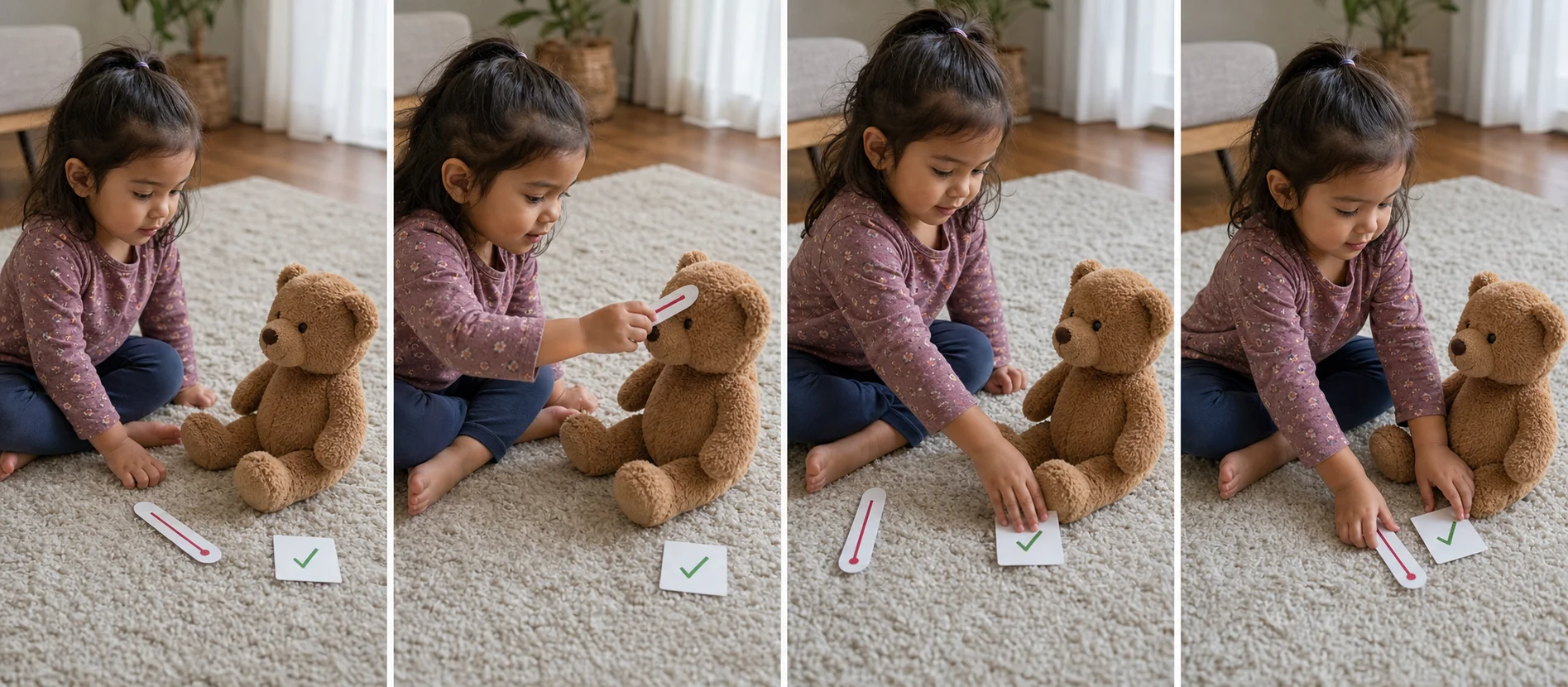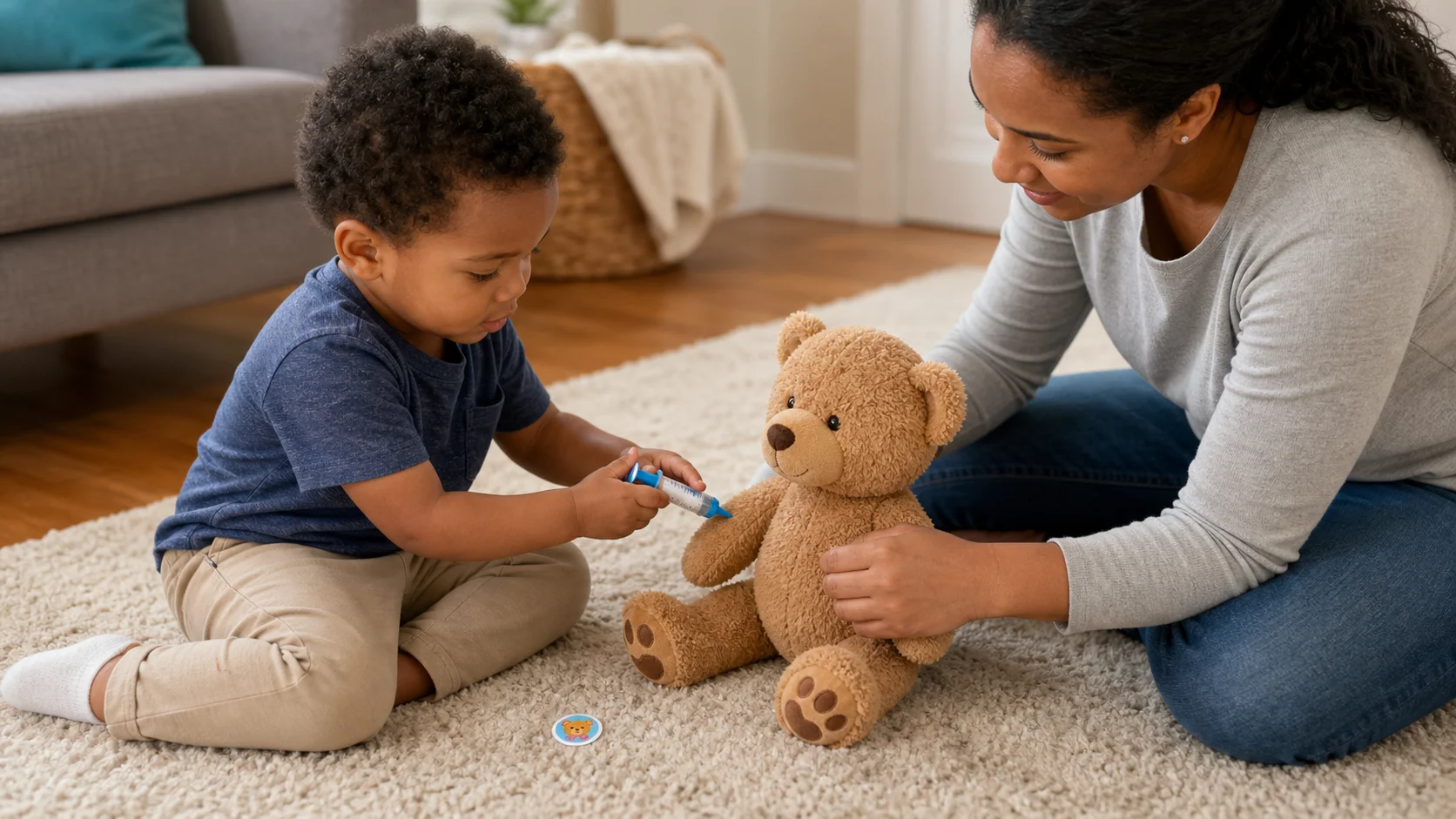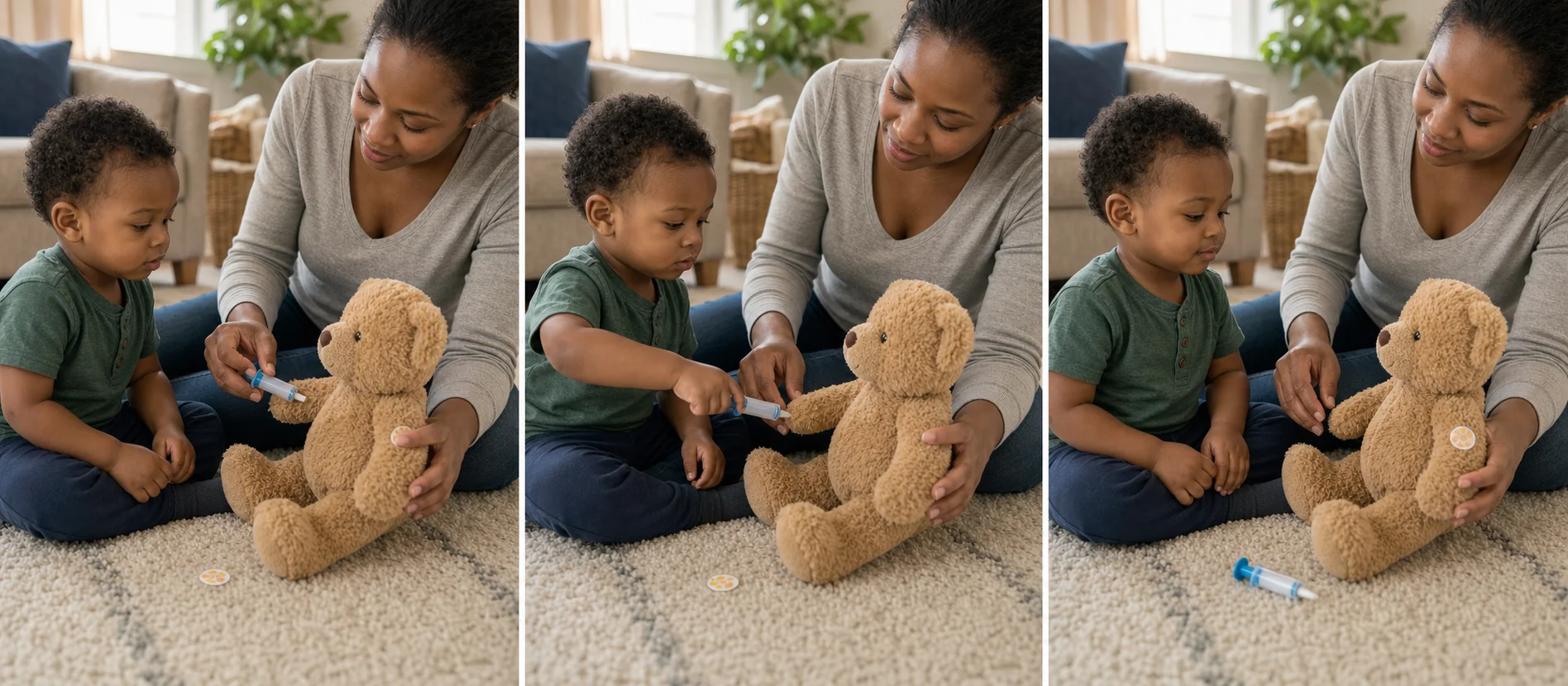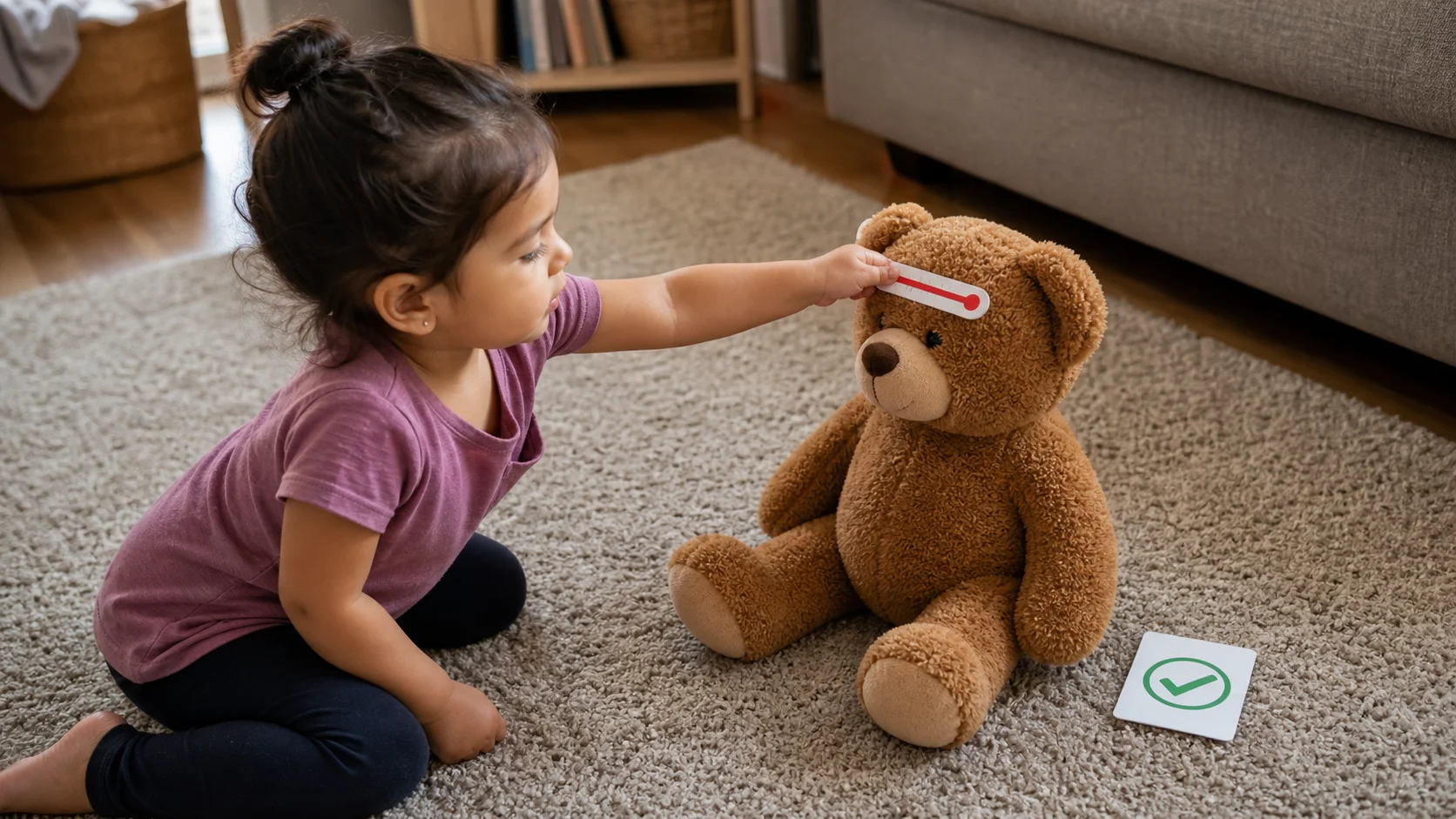

Teddy Temperature Card
Let teddy go first before your child's next temperature check. Your child gently checks teddy's forehead with a pretend thermometer, moves a done card, and repeats the short routine to make the real step feel more familiar.
Find easy activities for 2-year-olds who are exploring movement, imitation, language, sorting, dumping, building, and pretend play. Browse age-fit ideas for at-home play, indoor days, early learning, and simple setup.

Let teddy go first before your child's next temperature check. Your child gently checks teddy's forehead with a pretend thermometer, moves a done card, and repeats the short routine to make the real step feel more familiar.


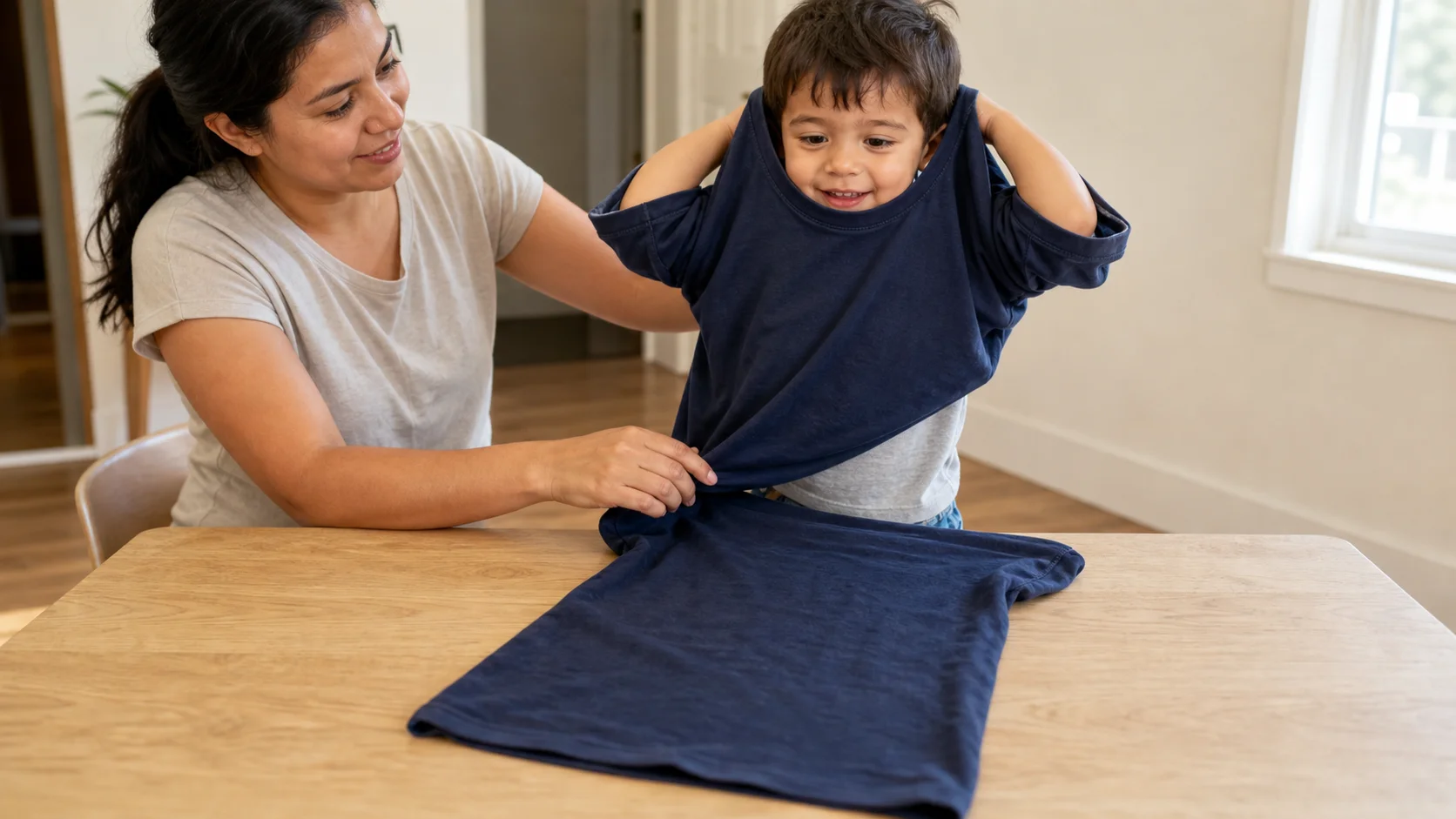
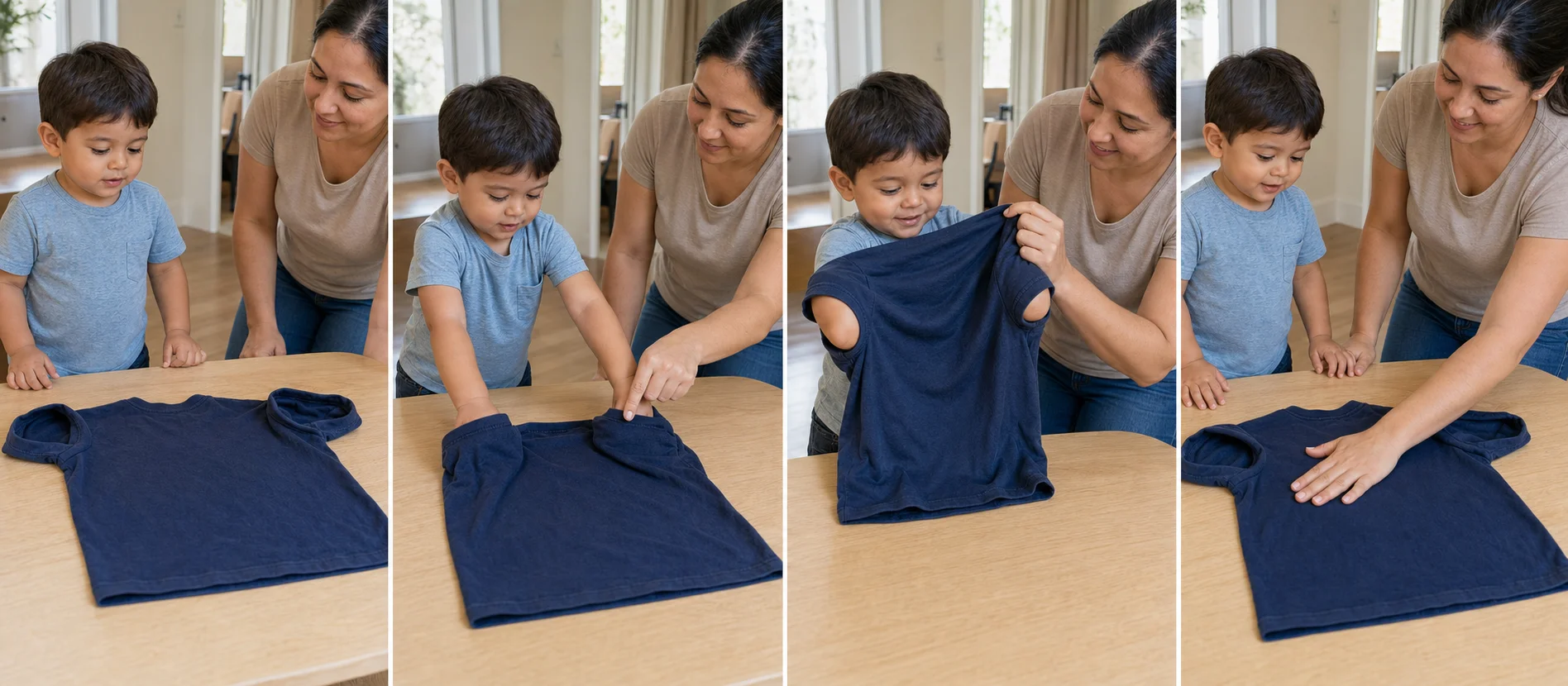
Turn early dressing practice into a quick tabletop game with one loose T-shirt. Your child slides both arms into the sleeves and lifts the shirt toward or over their head, practicing the first steps of putting on a shirt.

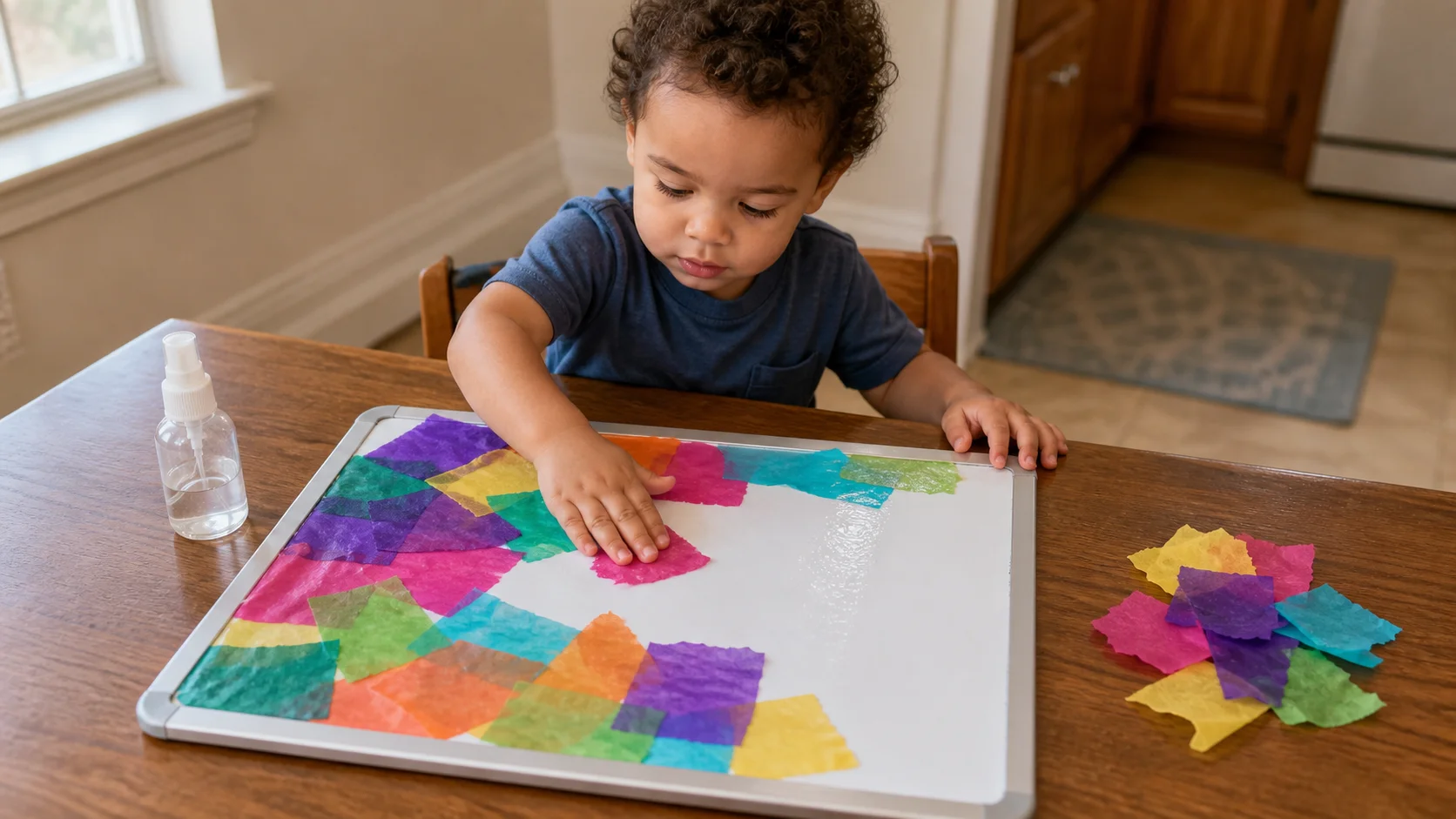
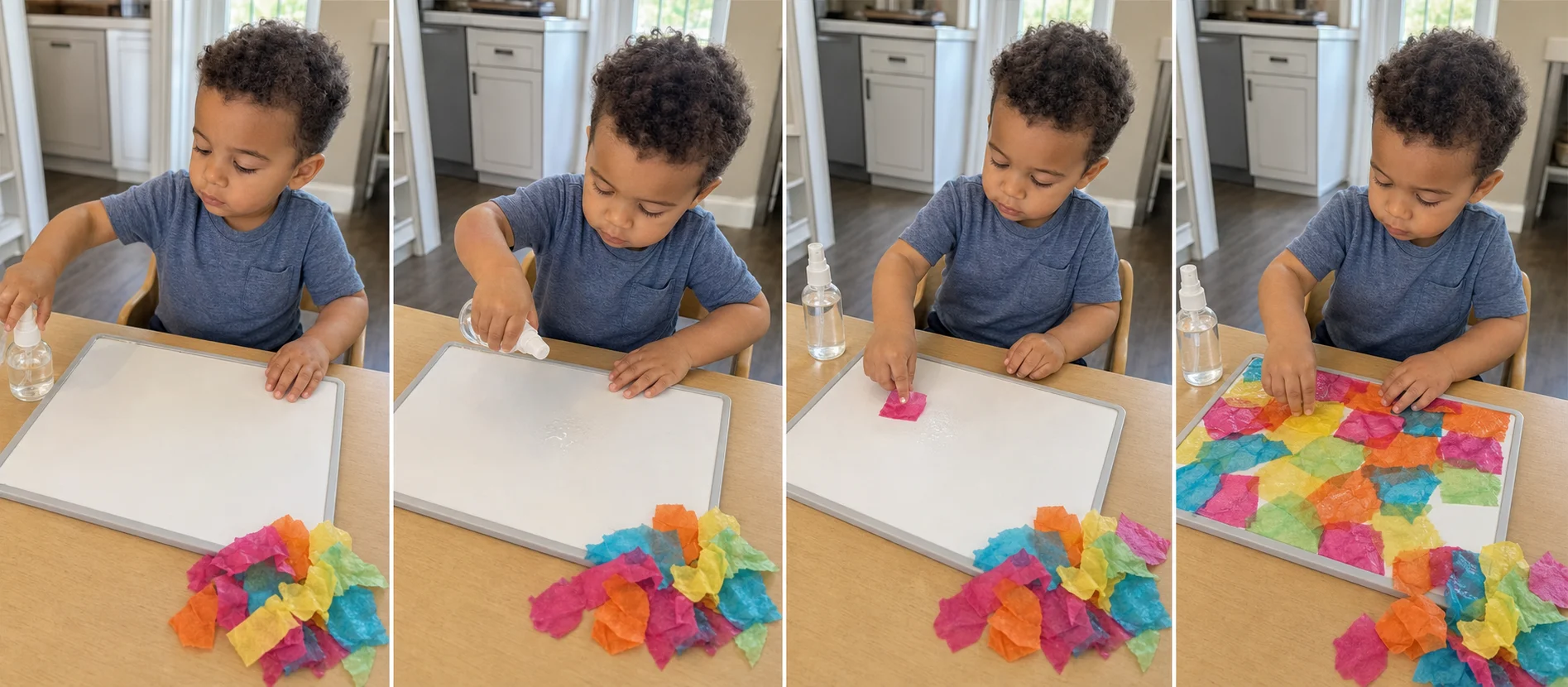
Turn water and tissue paper into a colorful mosaic your child can build one spray and press at a time. Tearing, spraying, and placing each piece strengthens little hands and fine motor control.


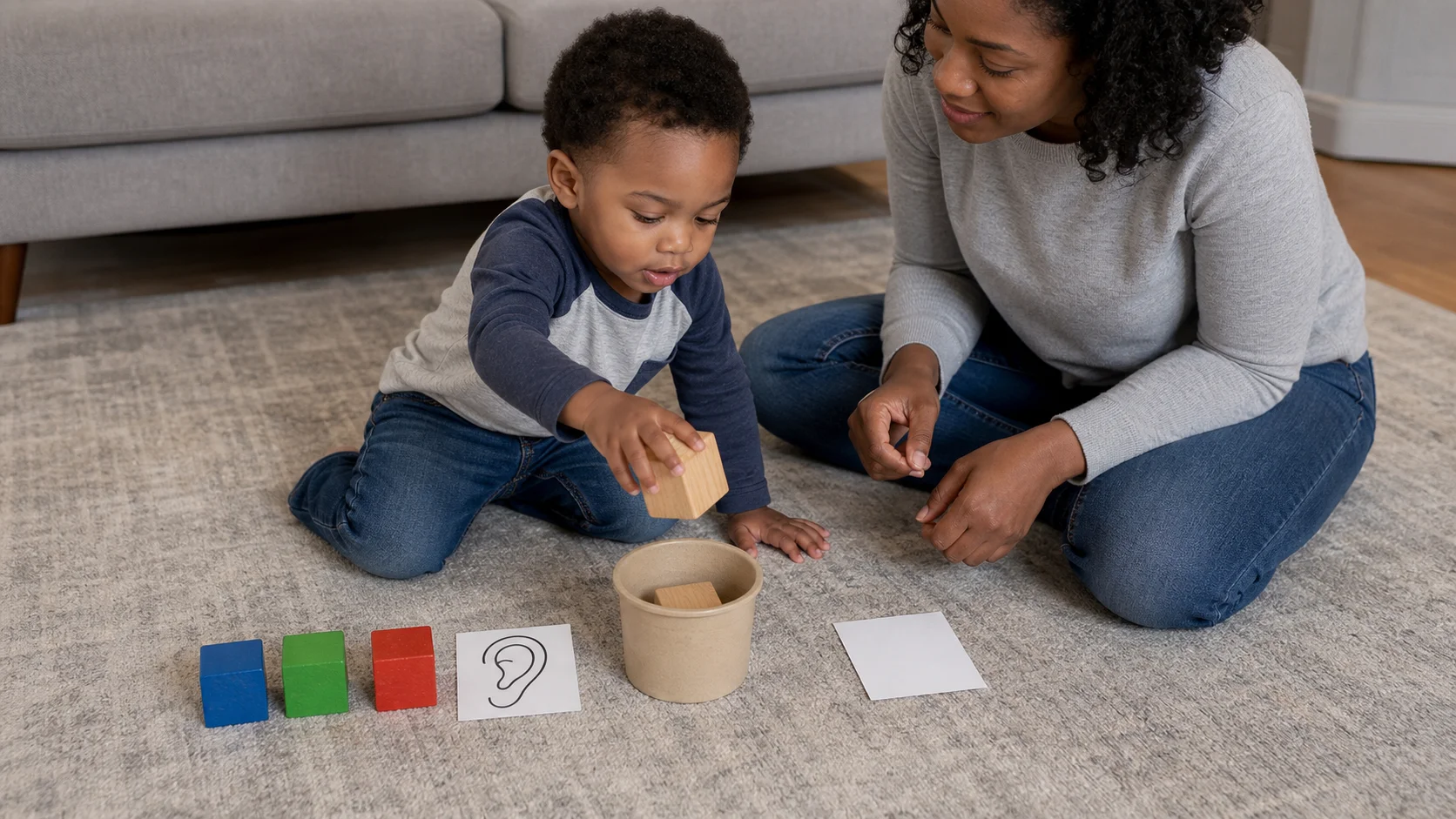
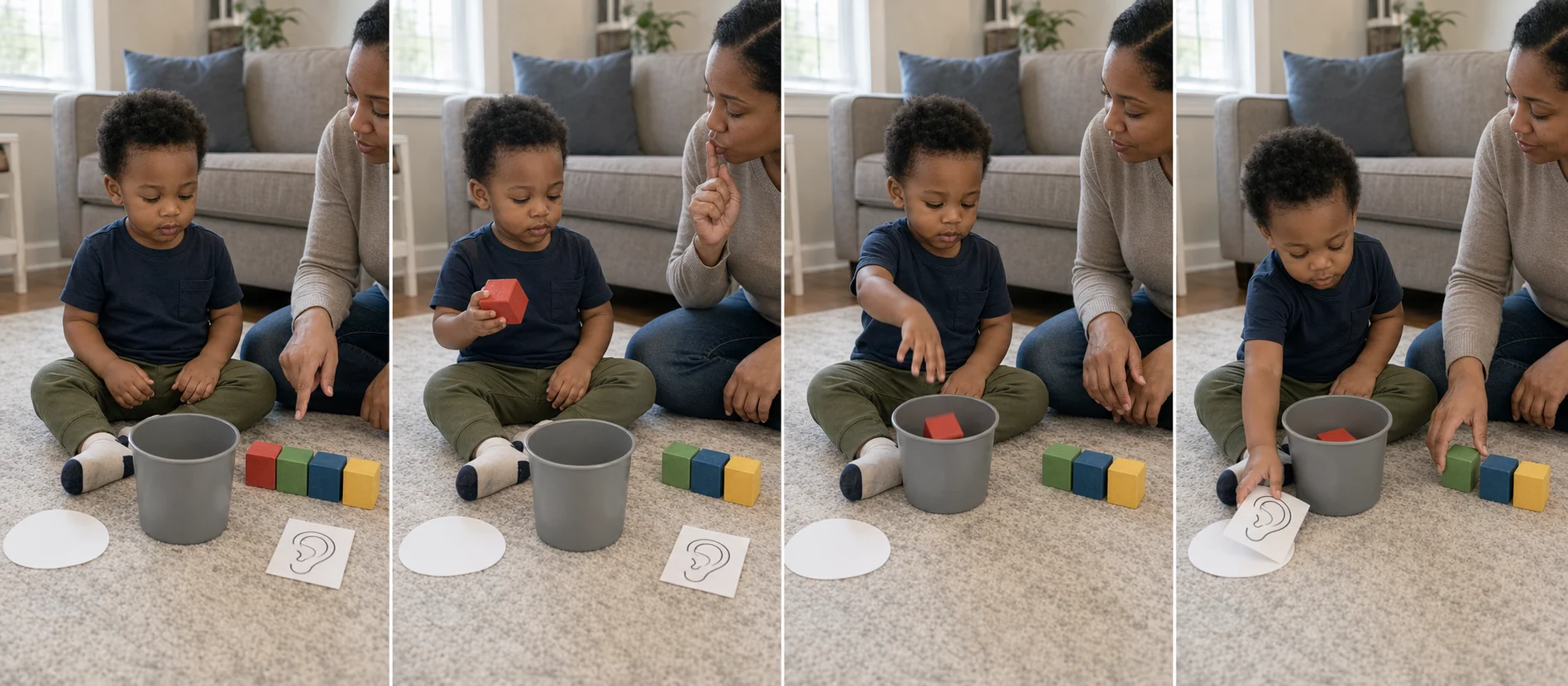
Turn block cleanup into a quick wait-for-the-beep game. Your child holds one block, listens for the cue, then drops it into the bucket.


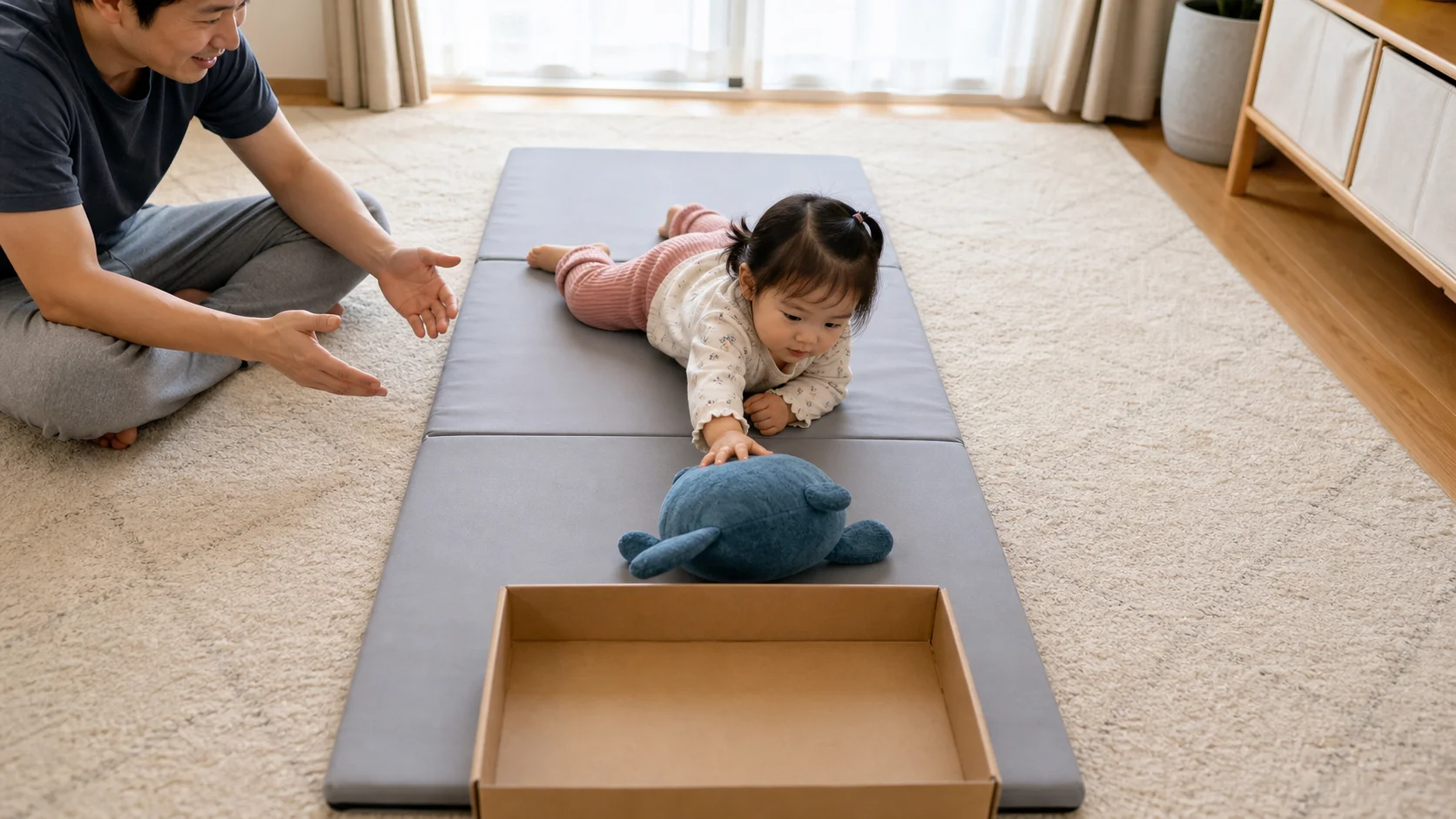
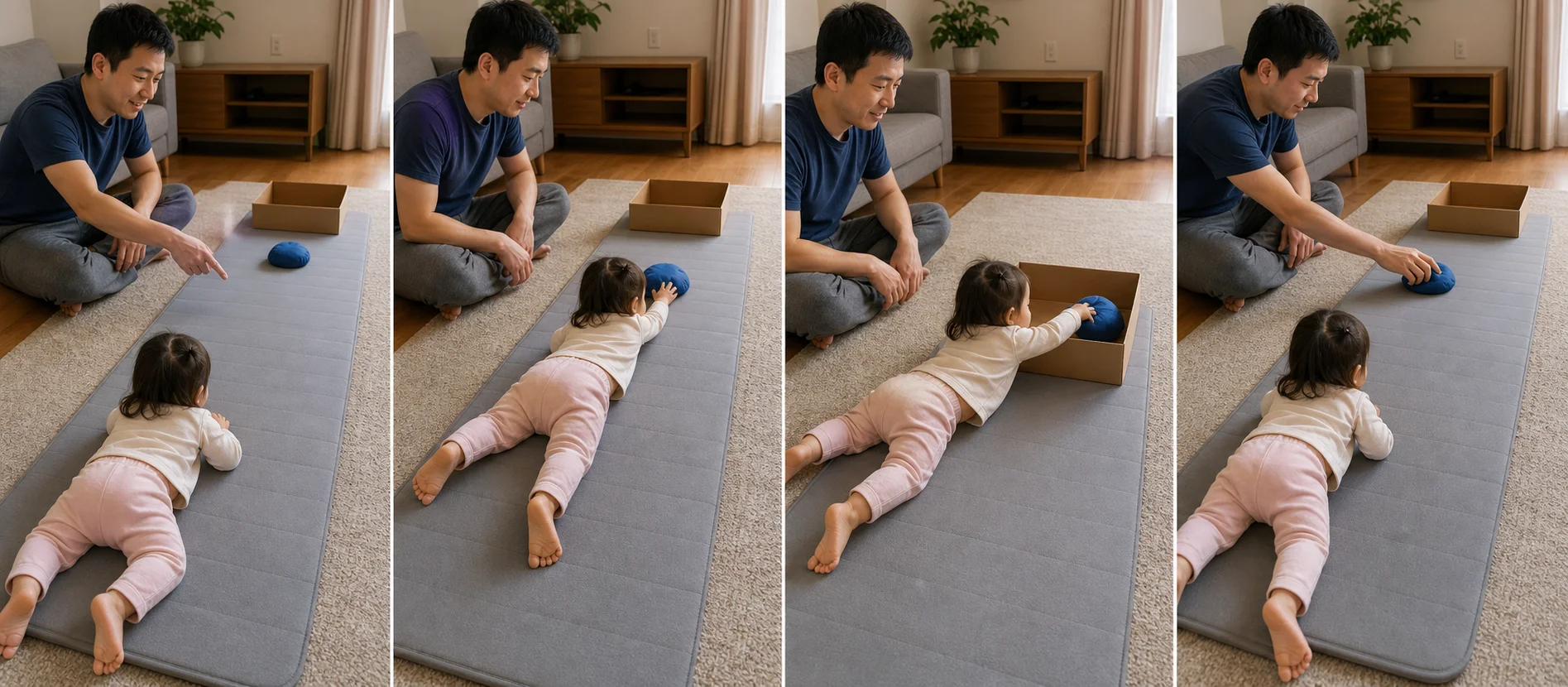
Belly Crawl Rescue is a gross motor activity for toddlers that helps children move through a clear path through a clear, repeatable play loop.


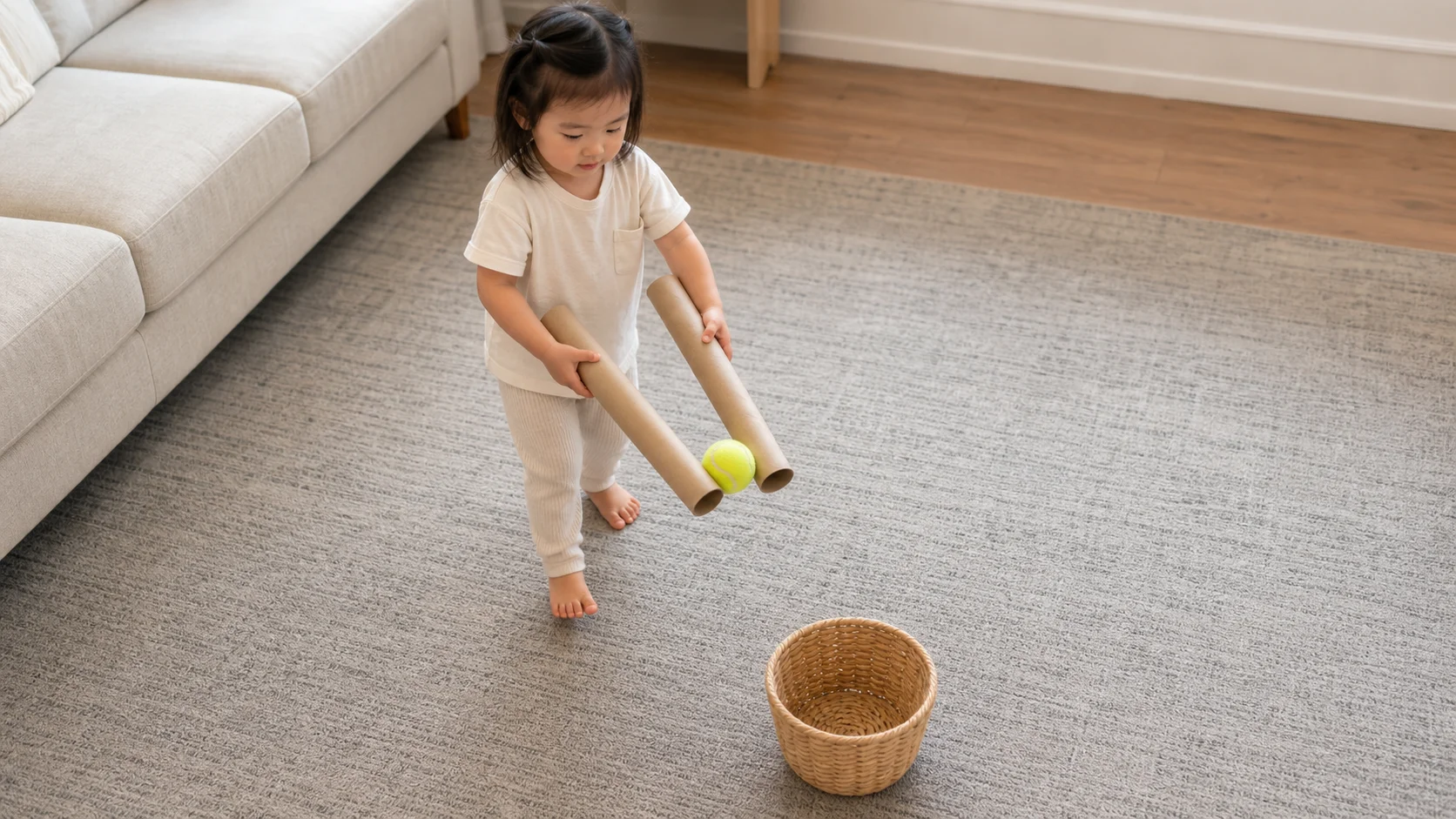
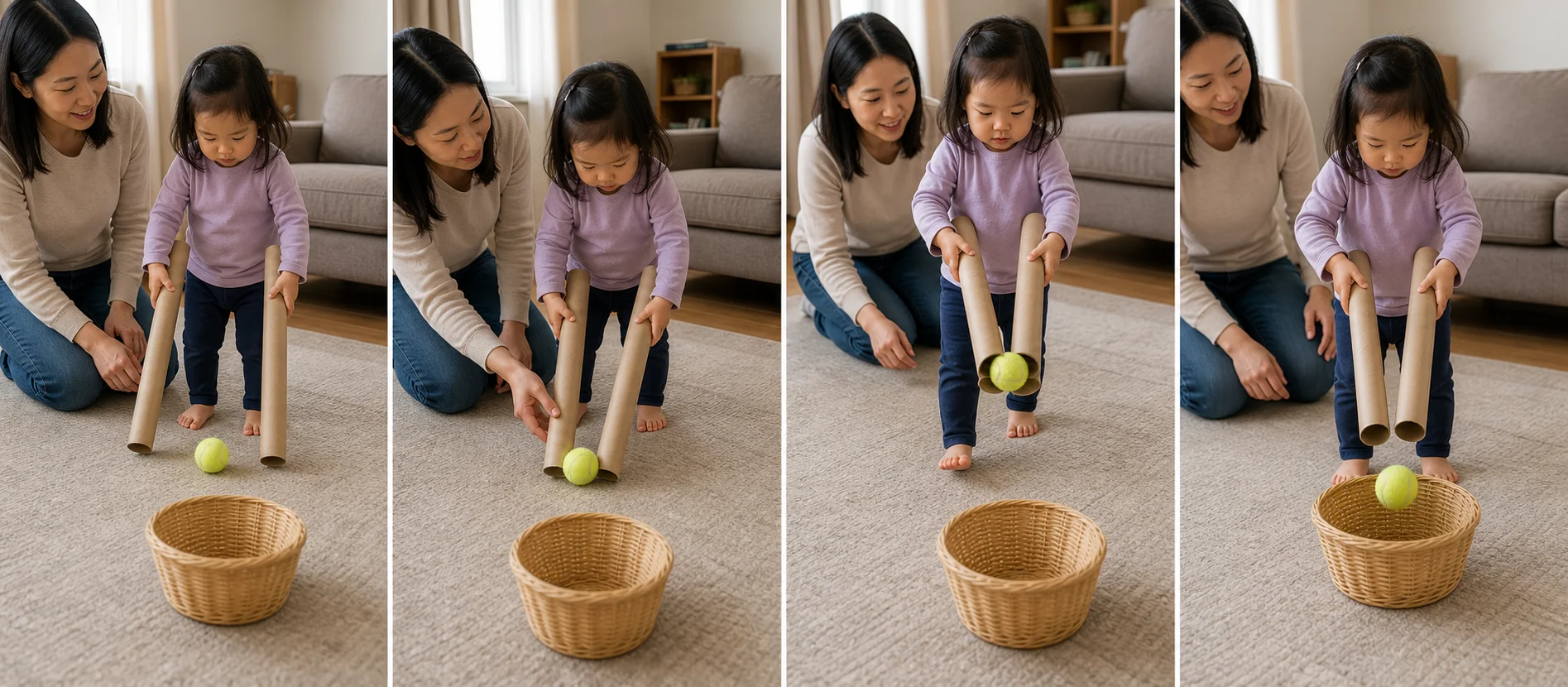
Can your child deliver a tennis ball to a basket without holding it in their hands? Have them squeeze it between two cardboard tubes, lift it, and carry it to the basket for a two-hand coordination challenge.


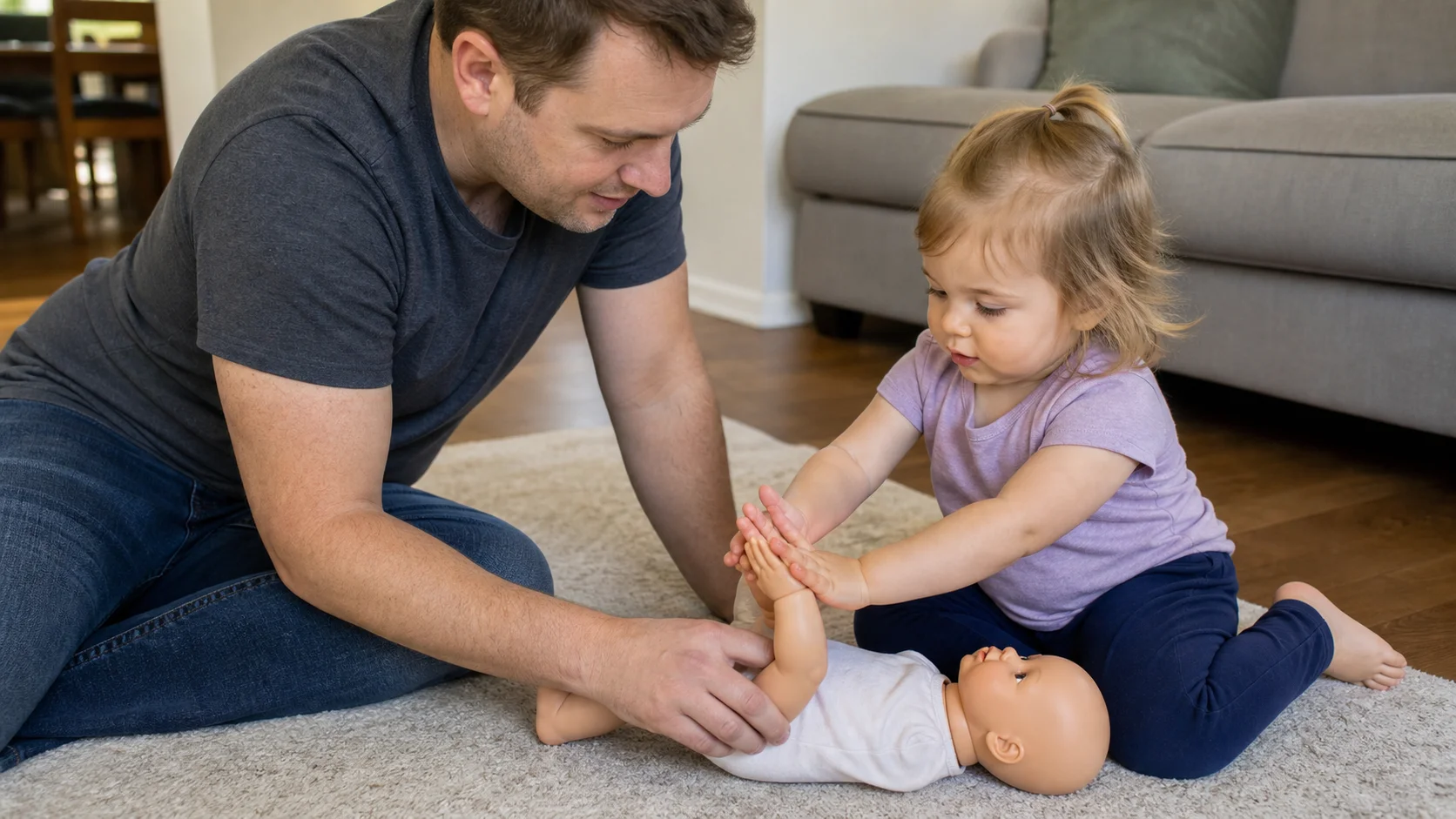
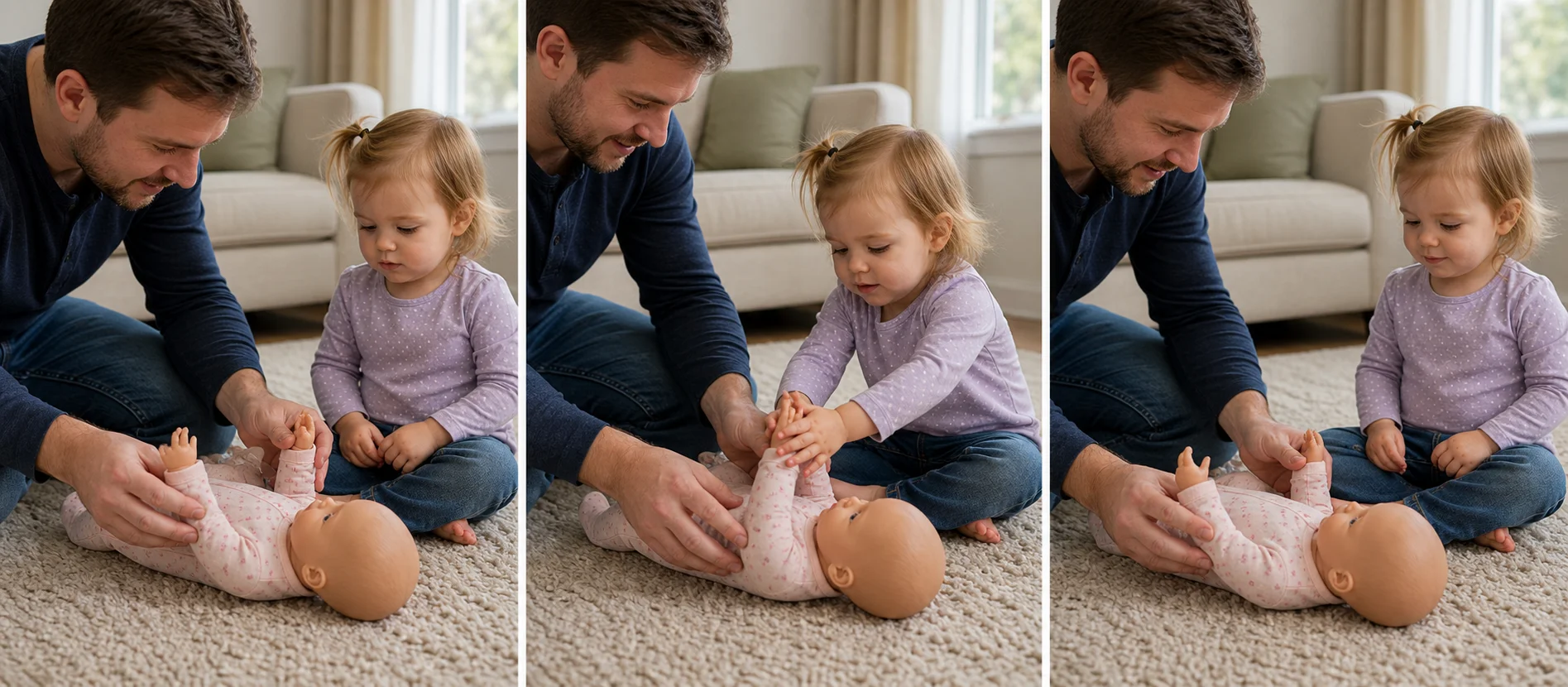
Can your child make a baby doll clap? Model one clap, then let them bring the doll's hands together and open them again for a simple imitation and two-hand coordination challenge.


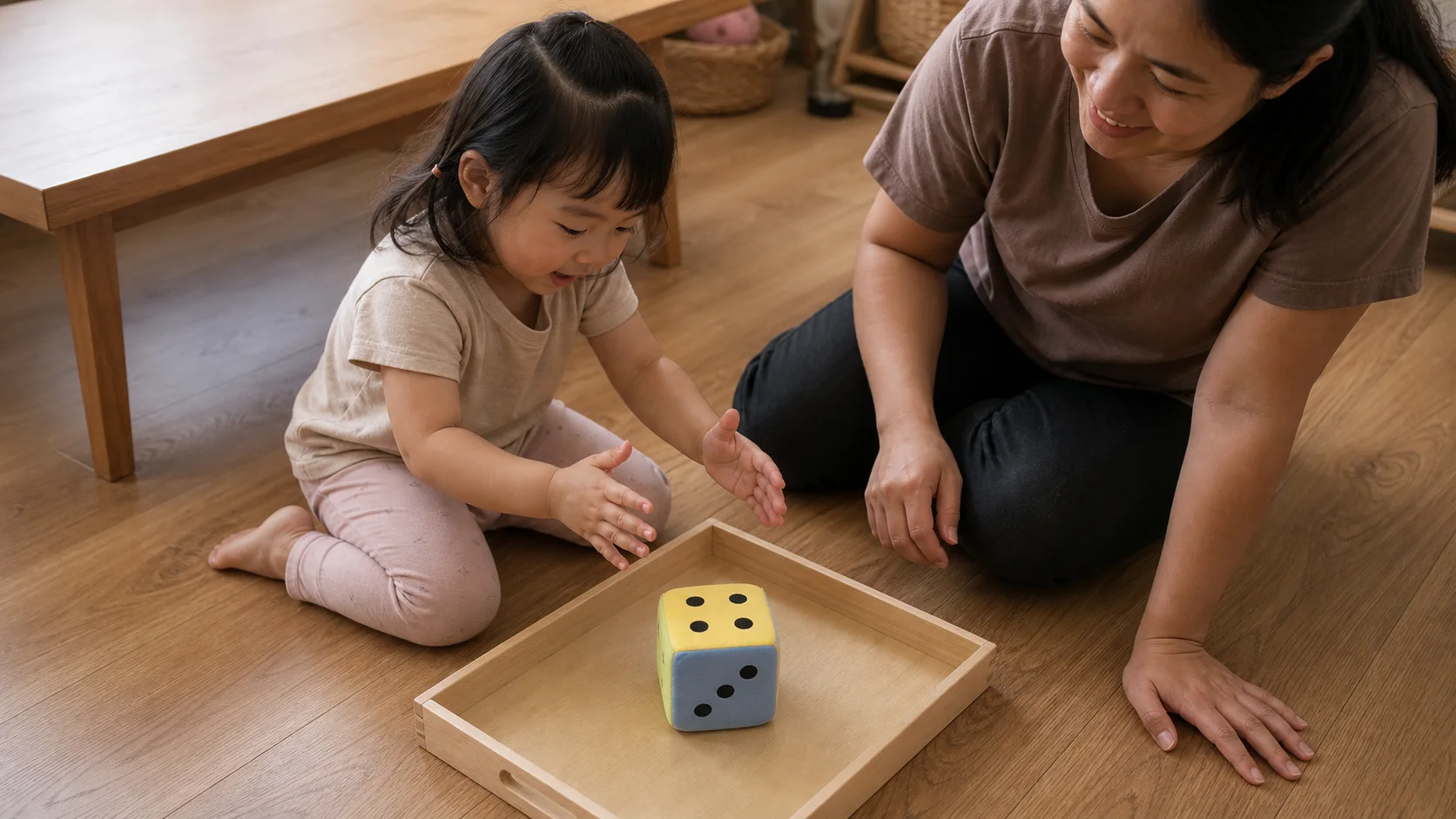
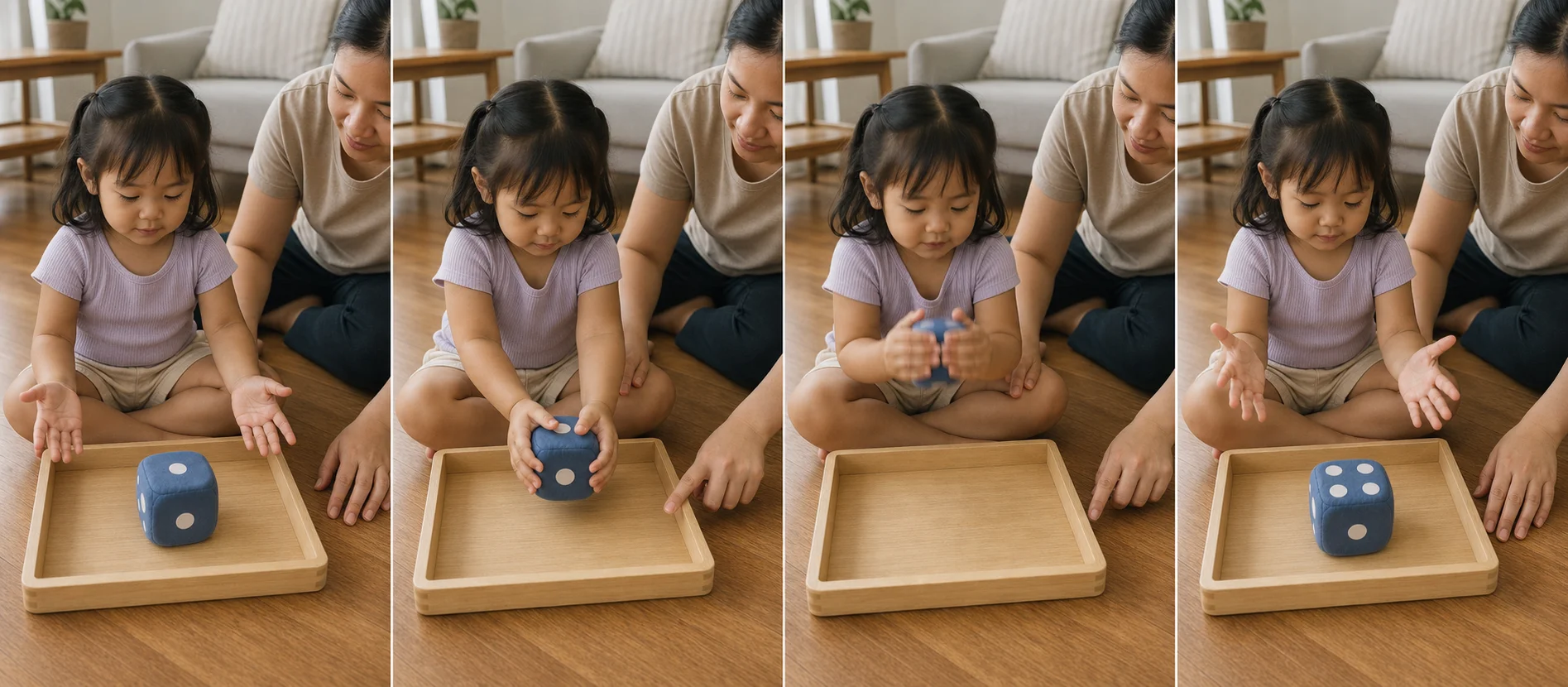
Can your child keep a die hidden inside a little house made with both hands? Cup, shake, and reveal it over a tray for a quick fine-motor challenge that practices two-hand control.


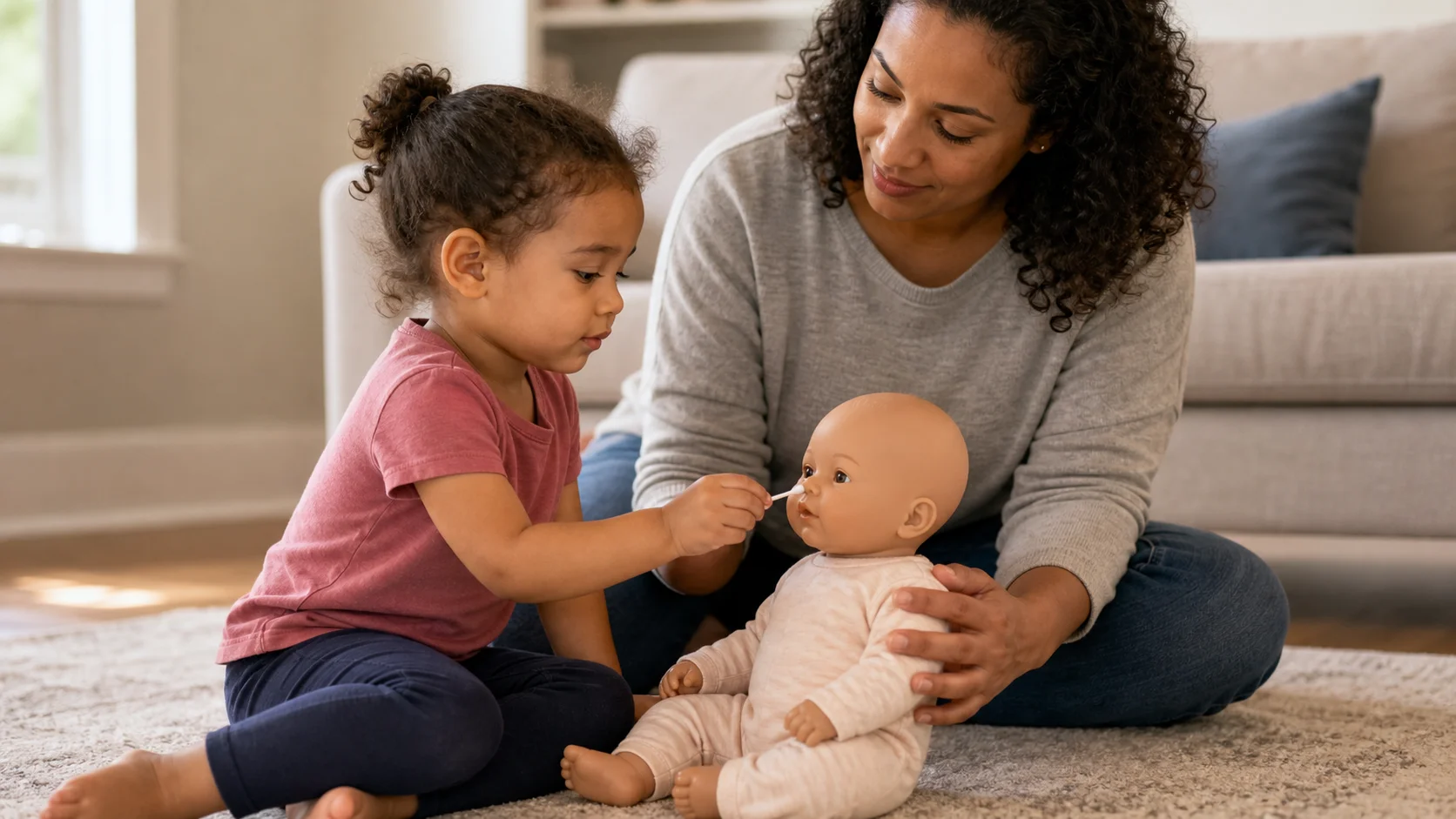
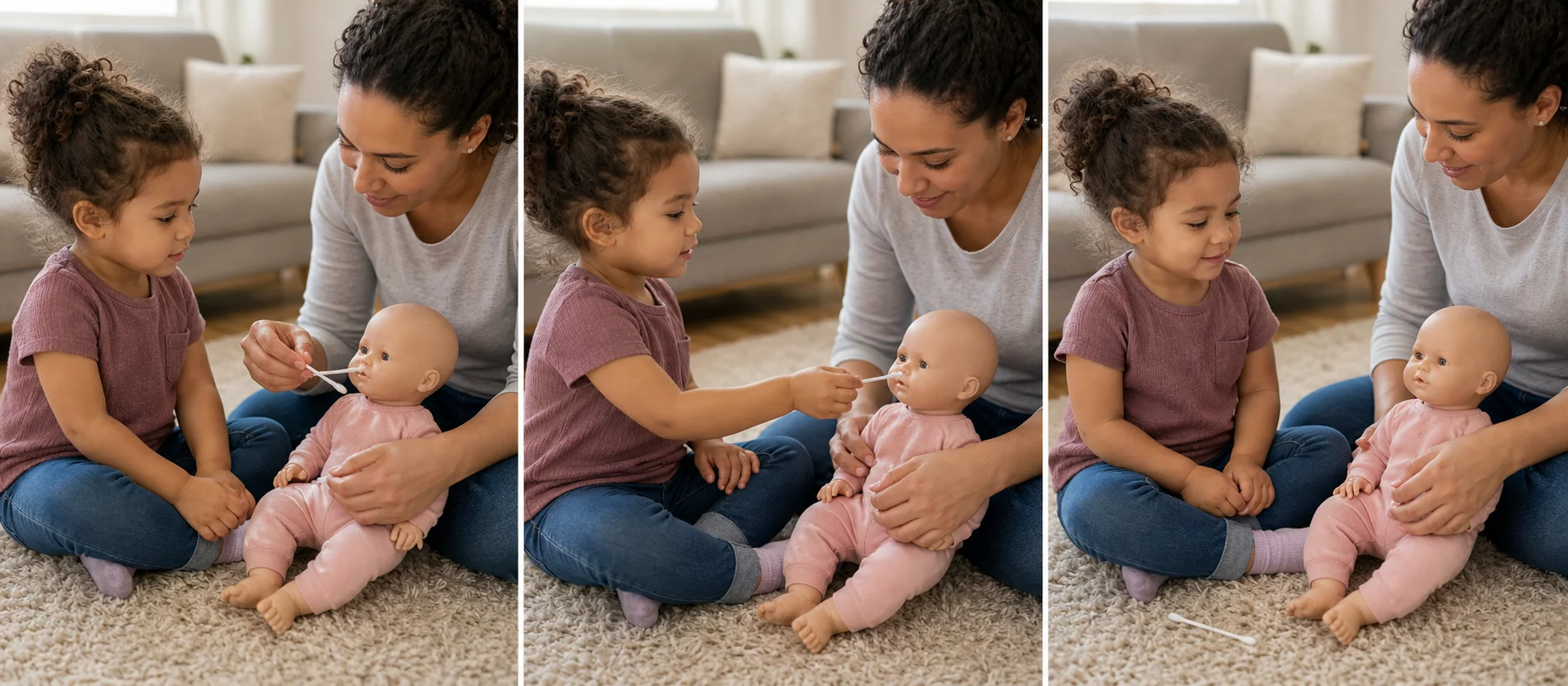
Help make a future nose swab feel more familiar with a quick pretend checkup. Your child gently taps a doll's nose with a cotton swab, then practices sitting still for a short count.


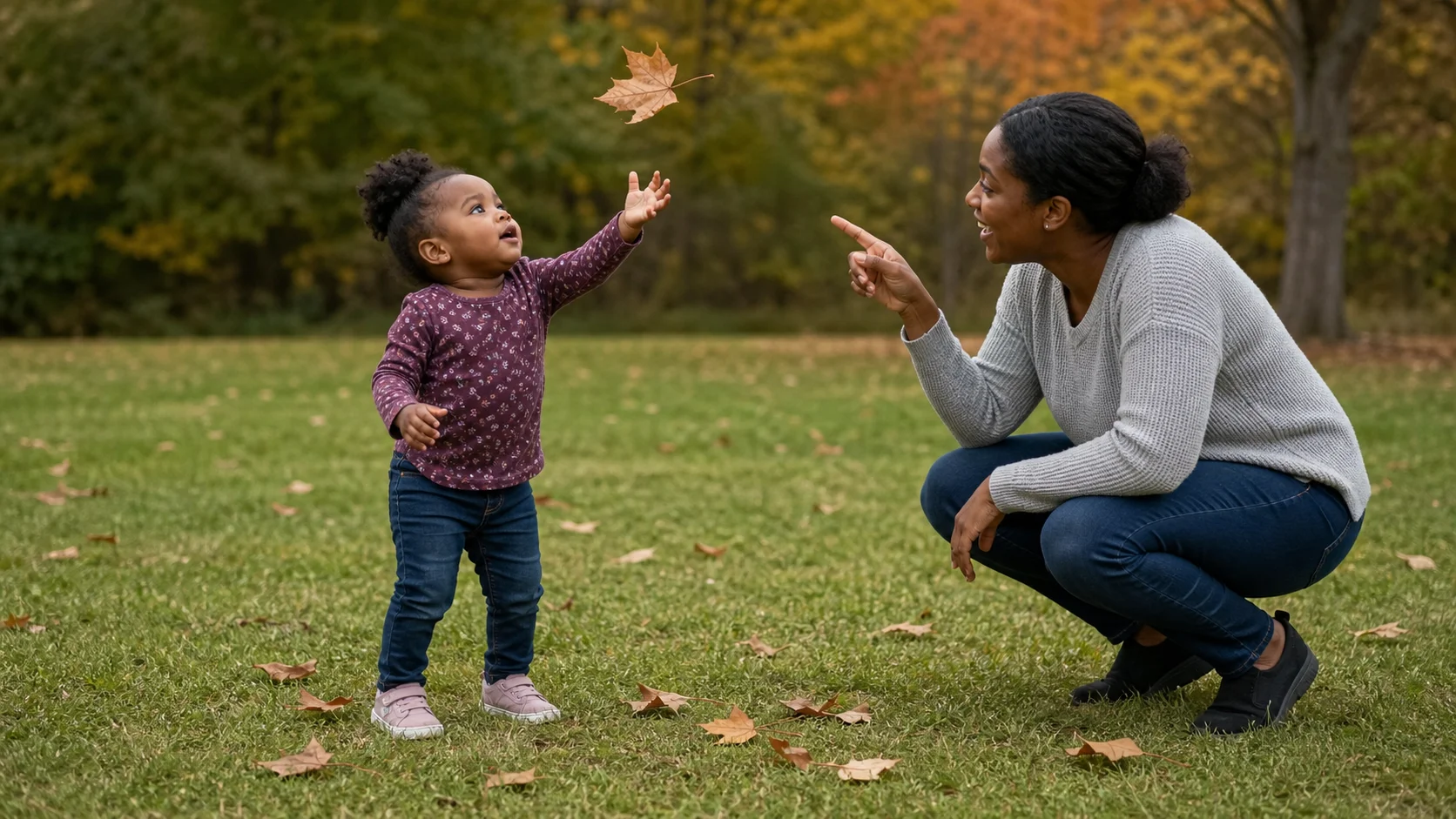
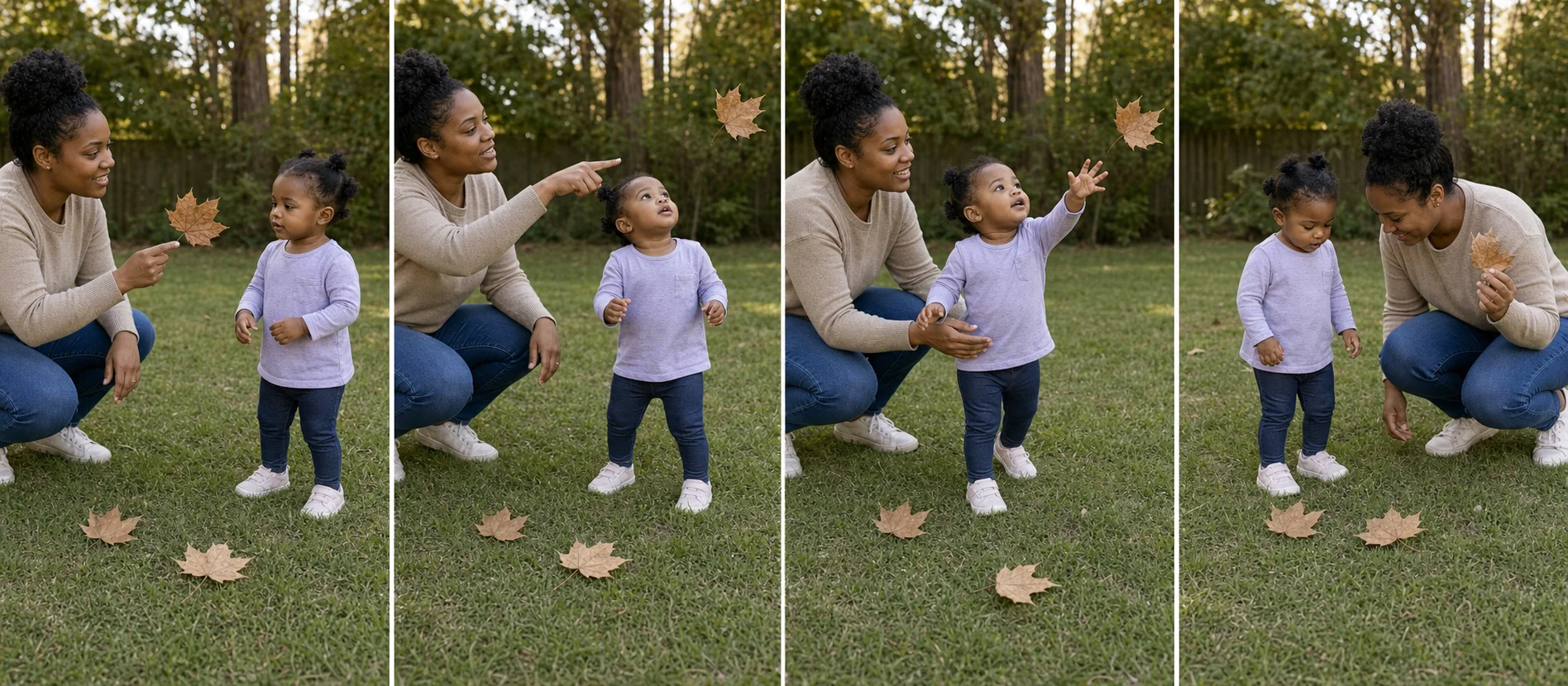
Can your child catch a leaf before it touches the ground? Toss one gently, then have them watch and reach as it floats down for a simple hand-eye coordination challenge.


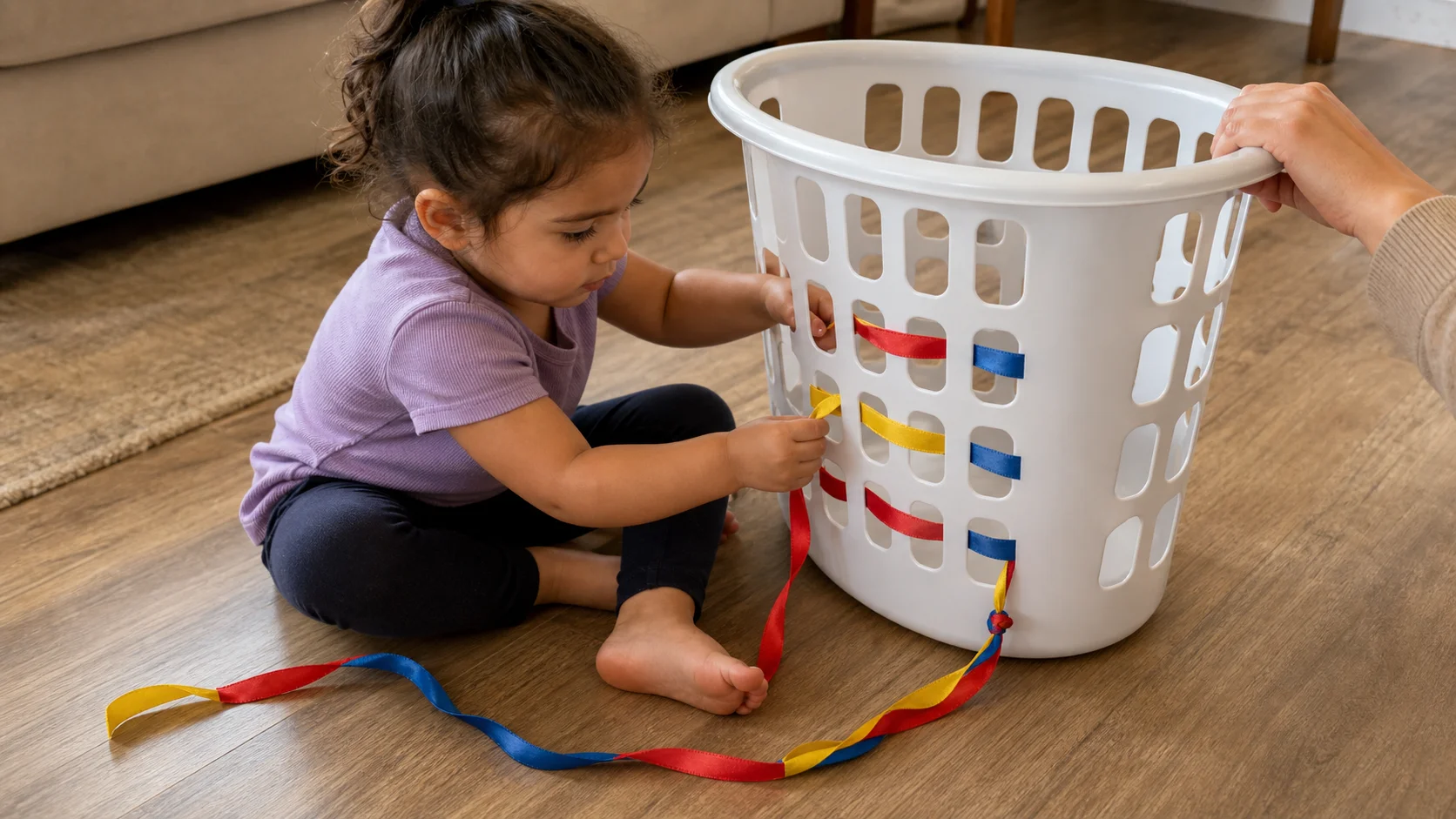
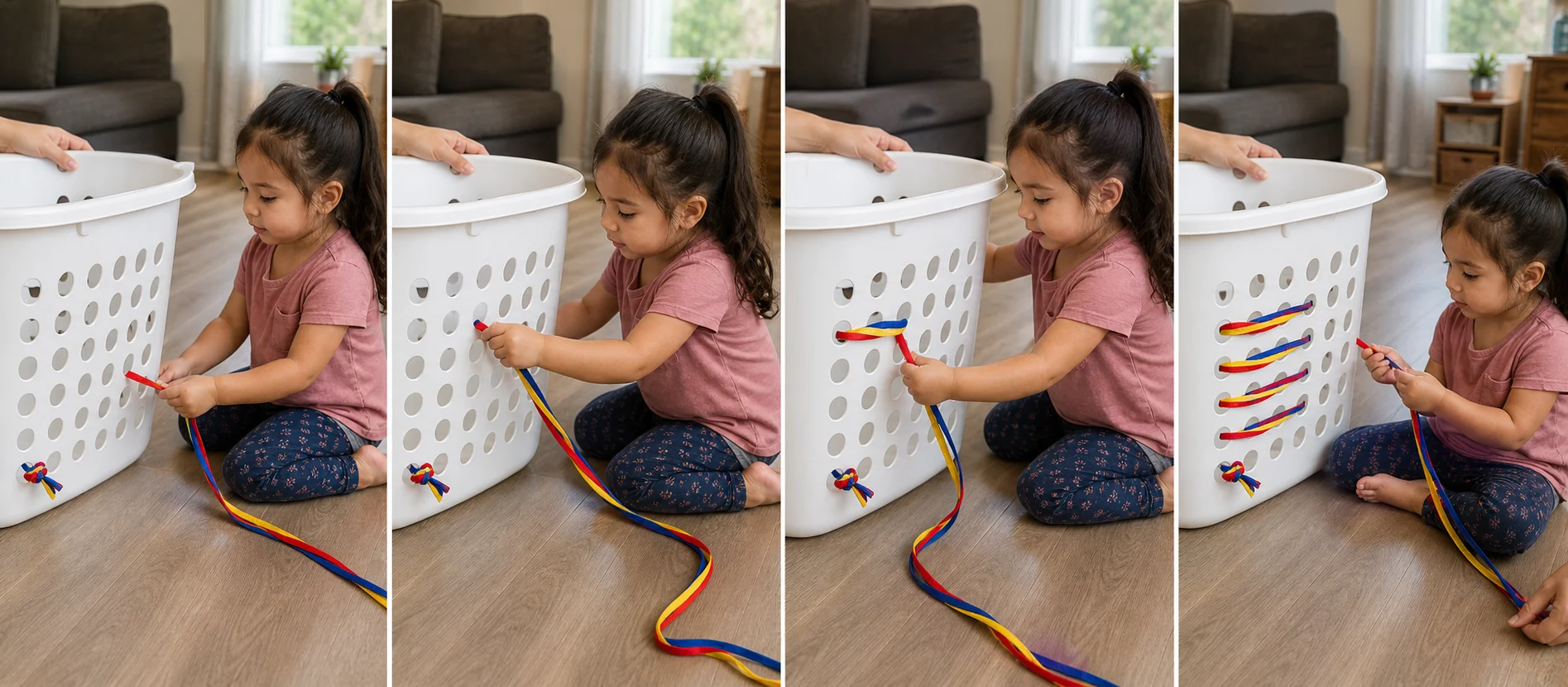
Can your child lace a laundry hamper with one long ribbon? Have them push the end through a side hole, find it on the other side, and pull it through for a simple fine-motor and hand-eye coordination challenge.


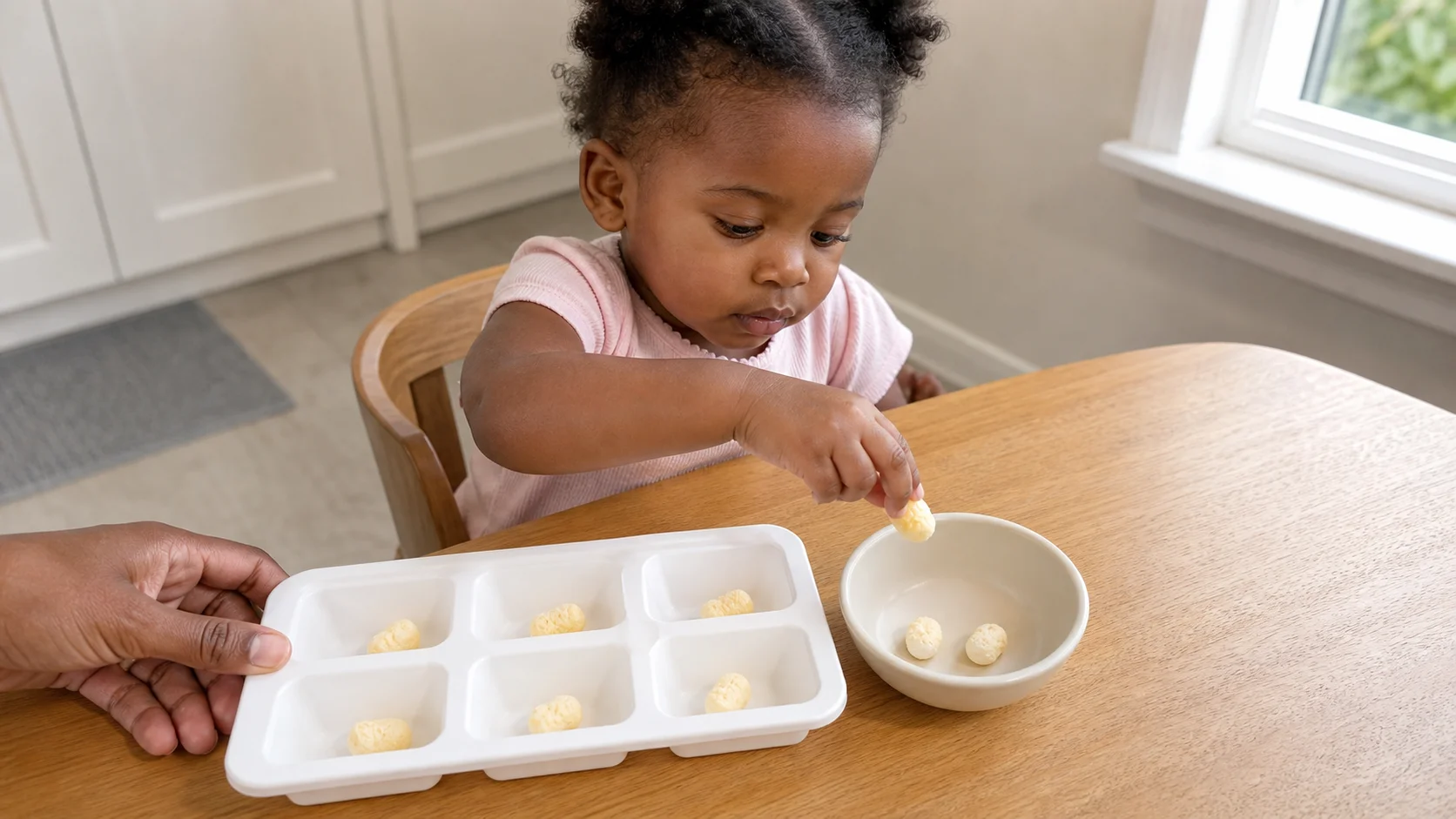
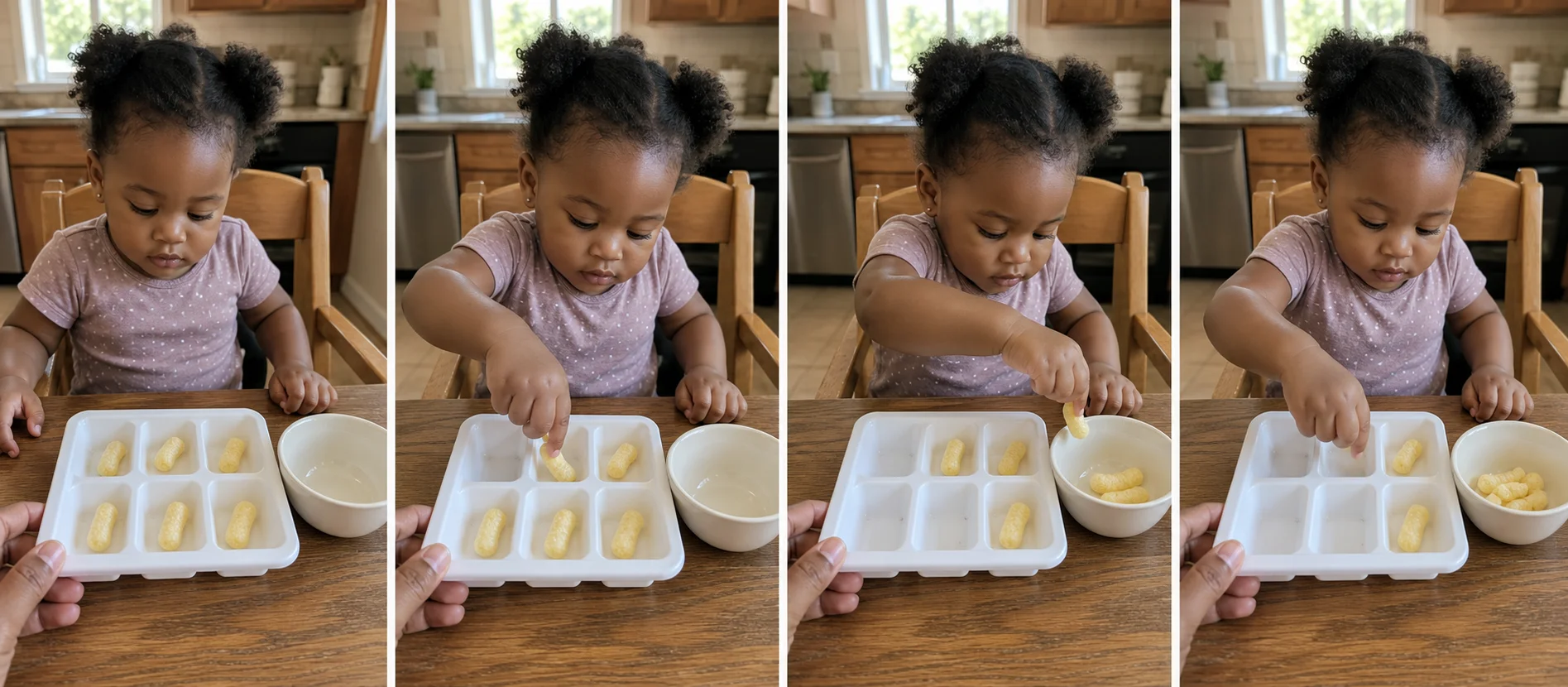
Turn snack time into a pincer-grasp challenge. Have your child pinch snack pieces from an ice cube tray and drop them into a bowl for simple fine-motor practice with a clear finish.


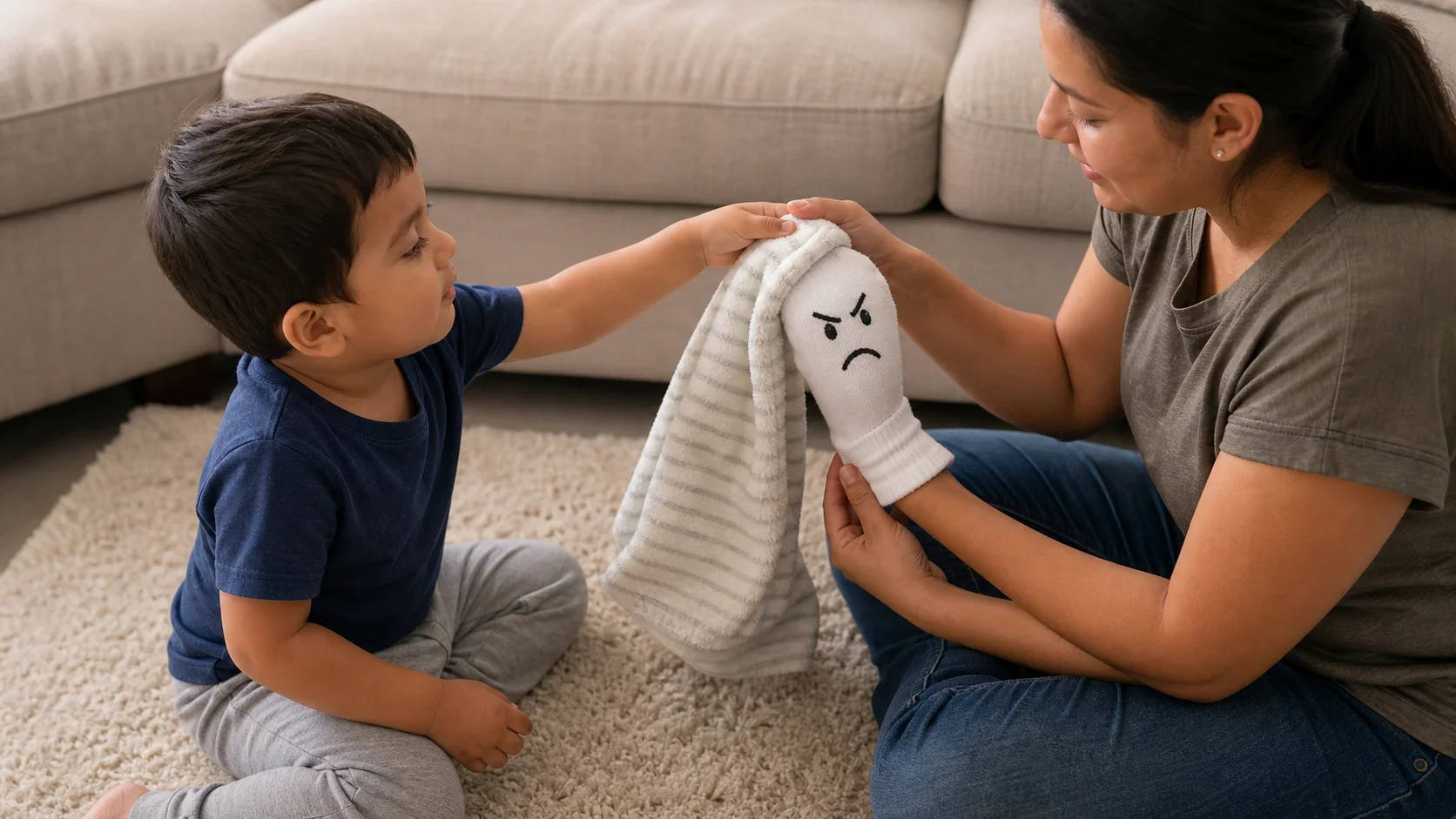
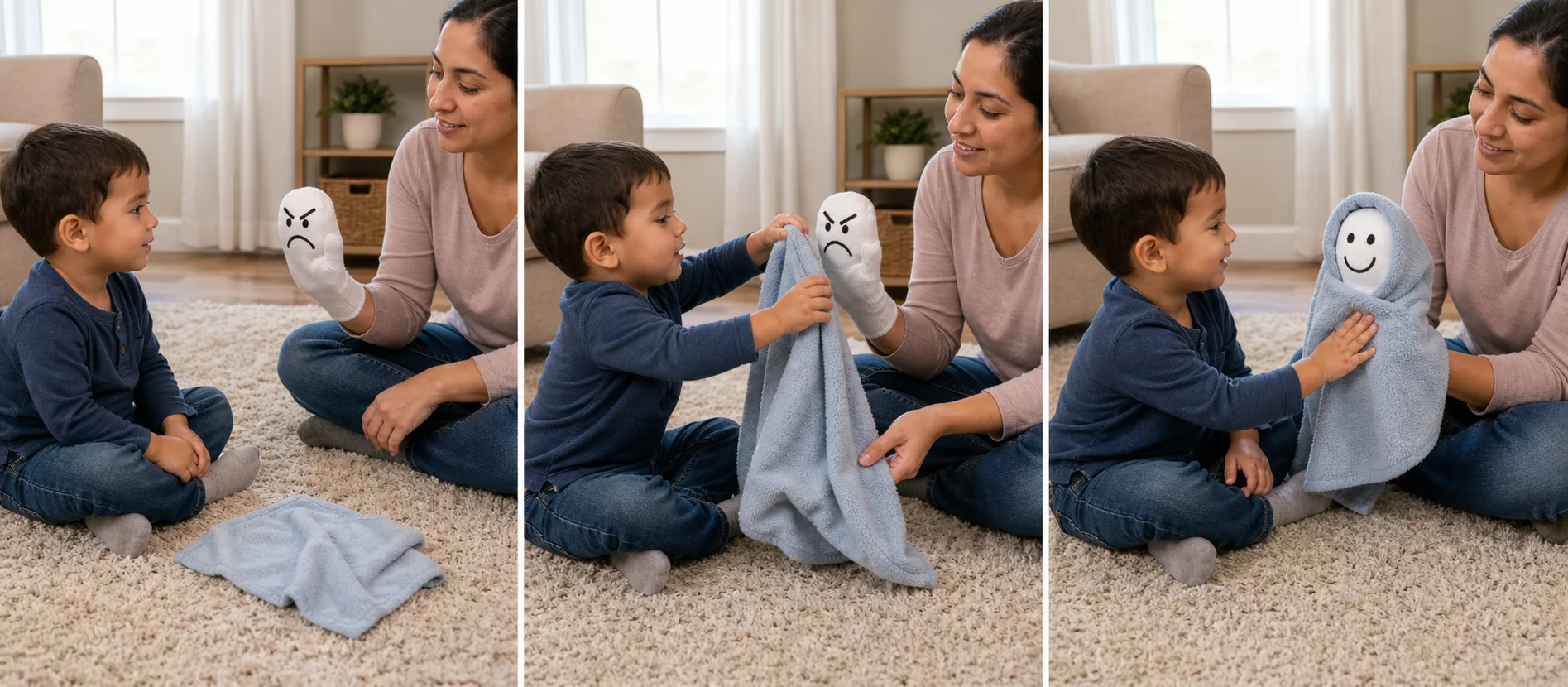
Can your child help an angry puppet feel better? Show Molly's mad face, have your child bring her a small blanket, then flip the puppet to a smile for a simple feelings and comfort-routine game.


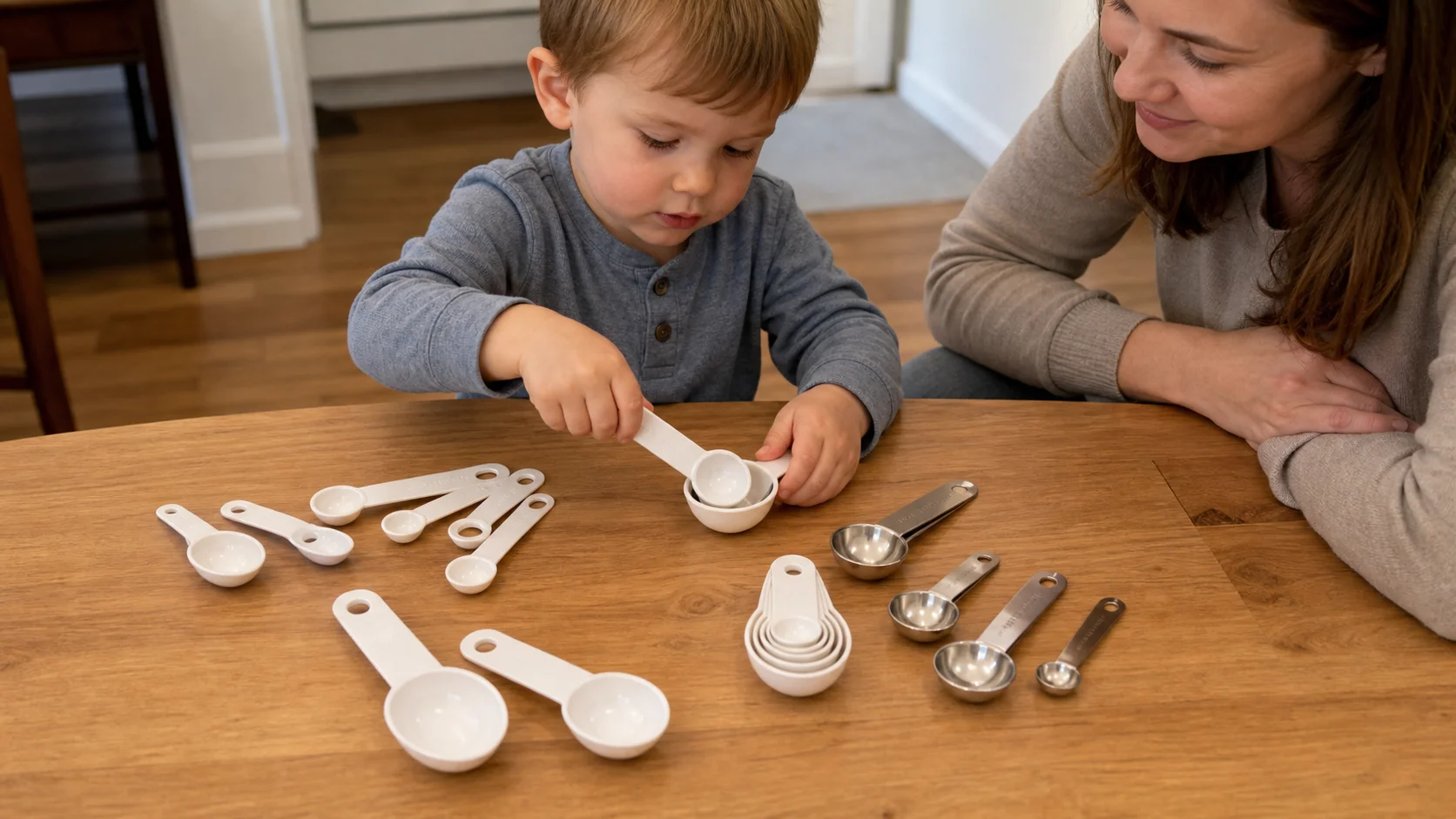
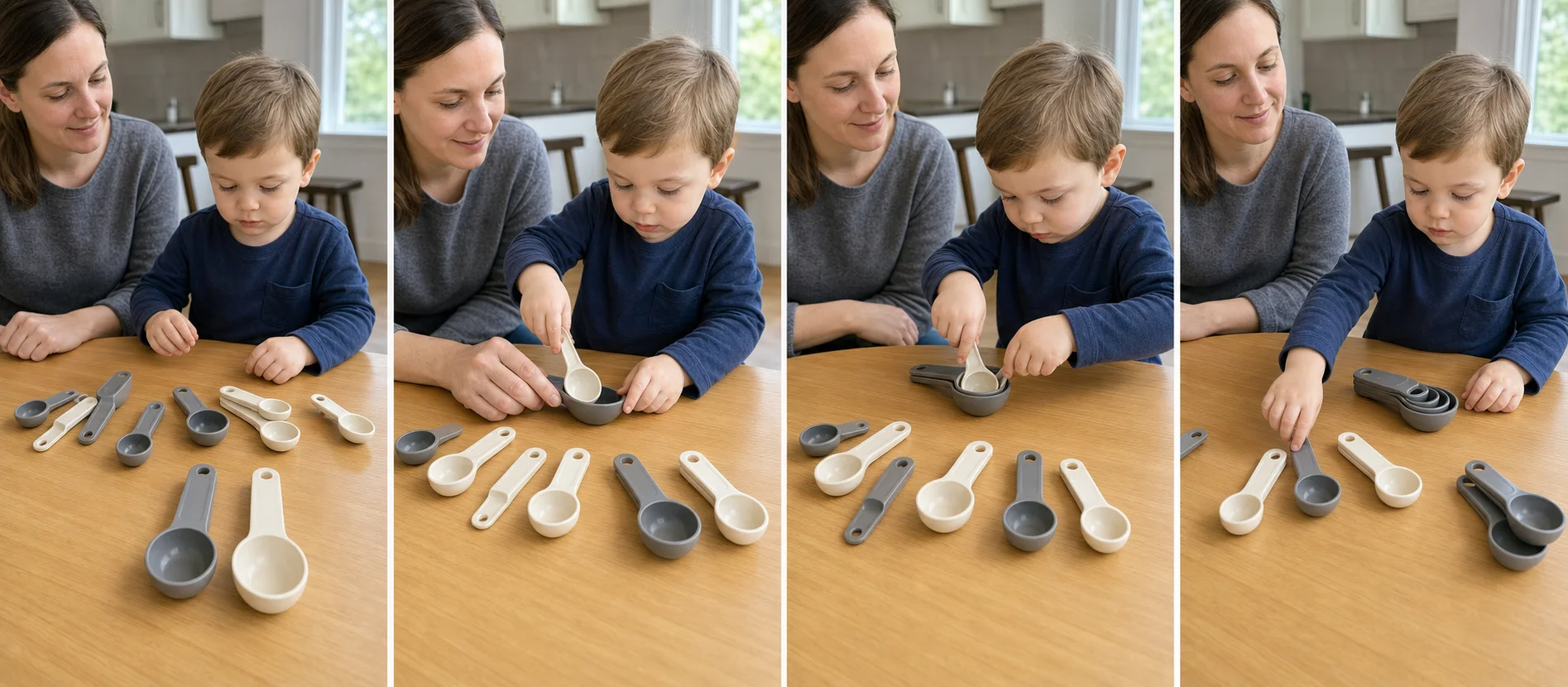
Can your child sort two mixed-up measuring spoon sets and make each one fit back together? Matching the bowl shapes and nesting the spoons from largest to smallest builds fine-motor control and spatial reasoning.


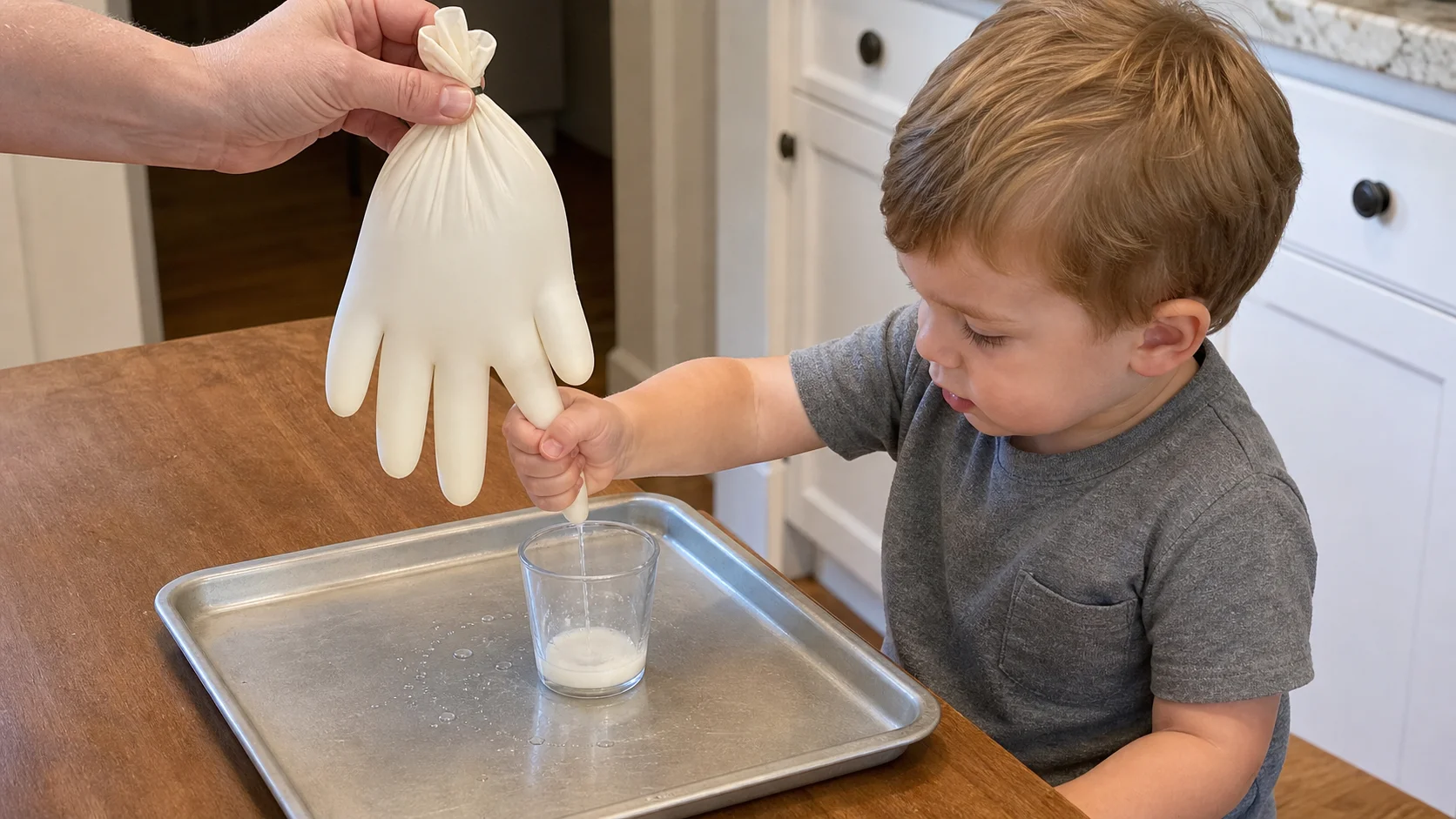
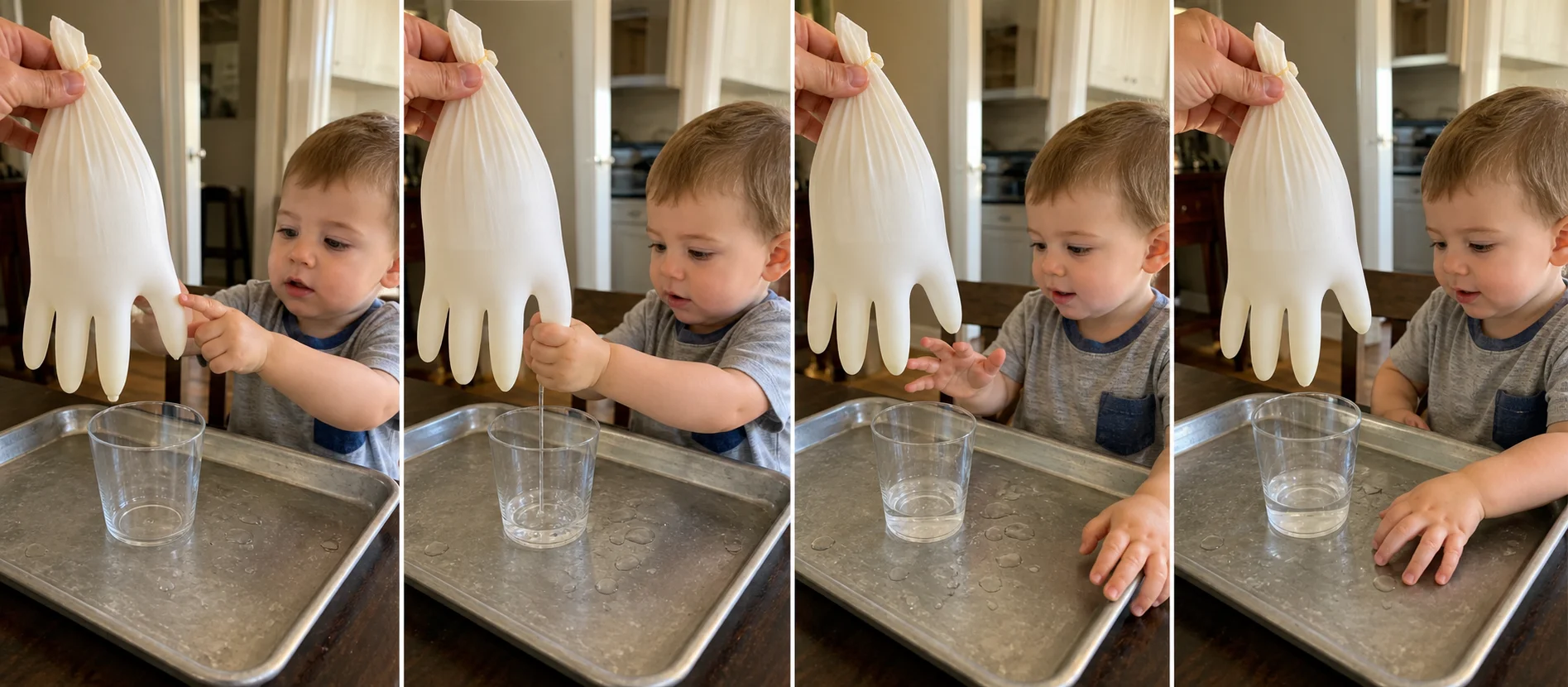
Turn a rubber glove into a pretend cow your child can actually milk. They squeeze one liquid-filled finger over a cup and watch each squirt land inside, building hand strength and fine-motor control as they play.


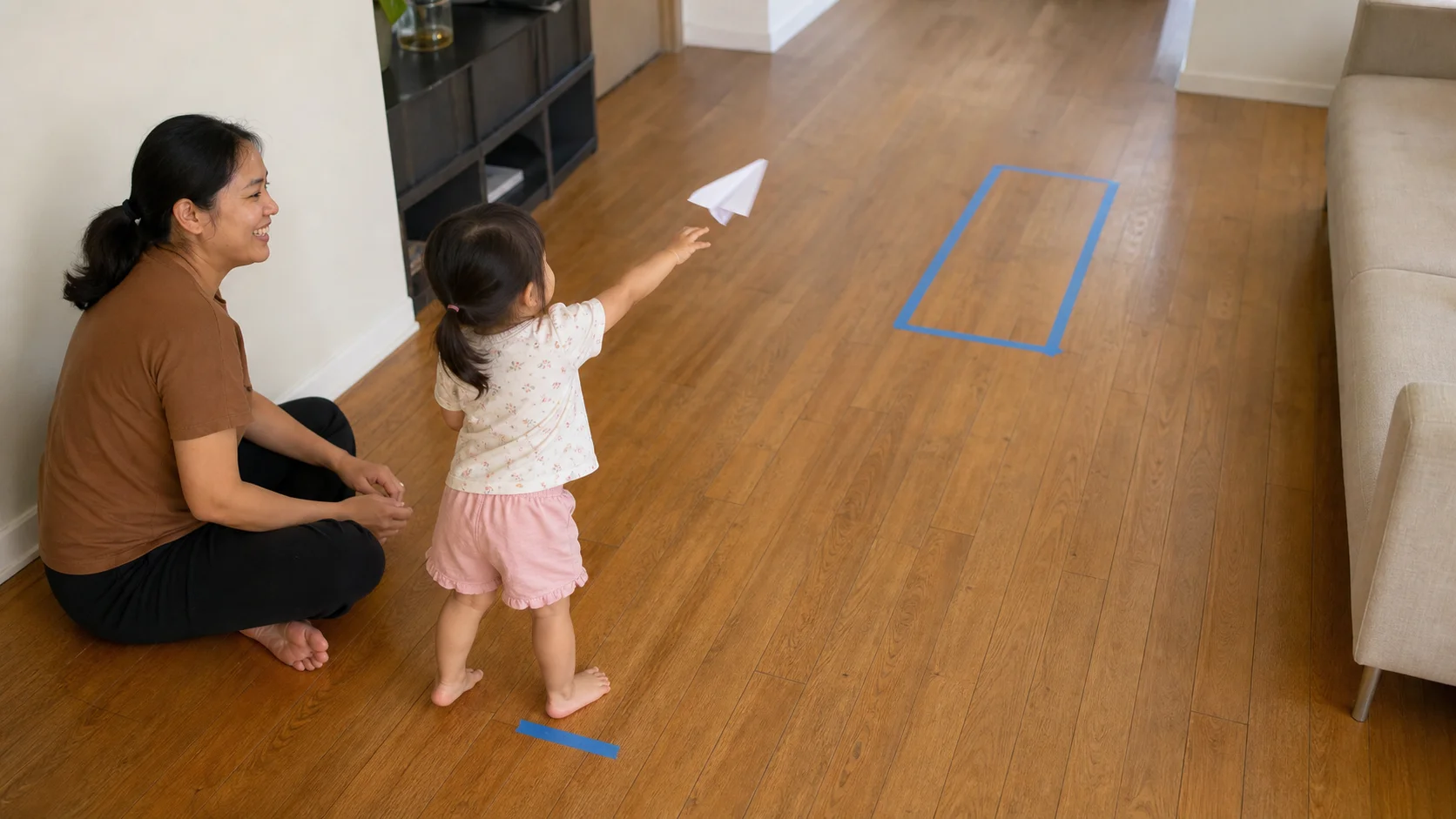
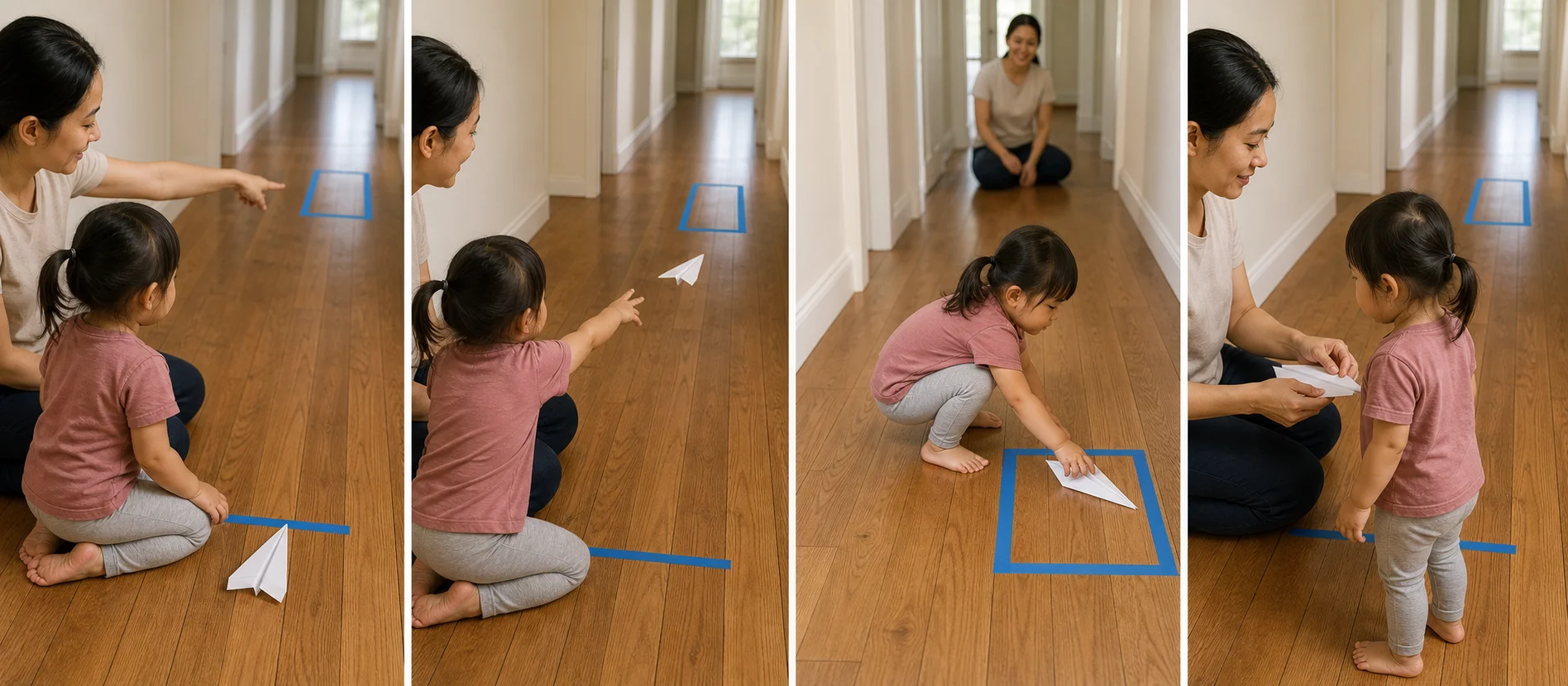
Paper Plane Launch is a paper airplane activity for toddlers that helps children repeat a launch-and-return loop through a clear, repeatable play loop.


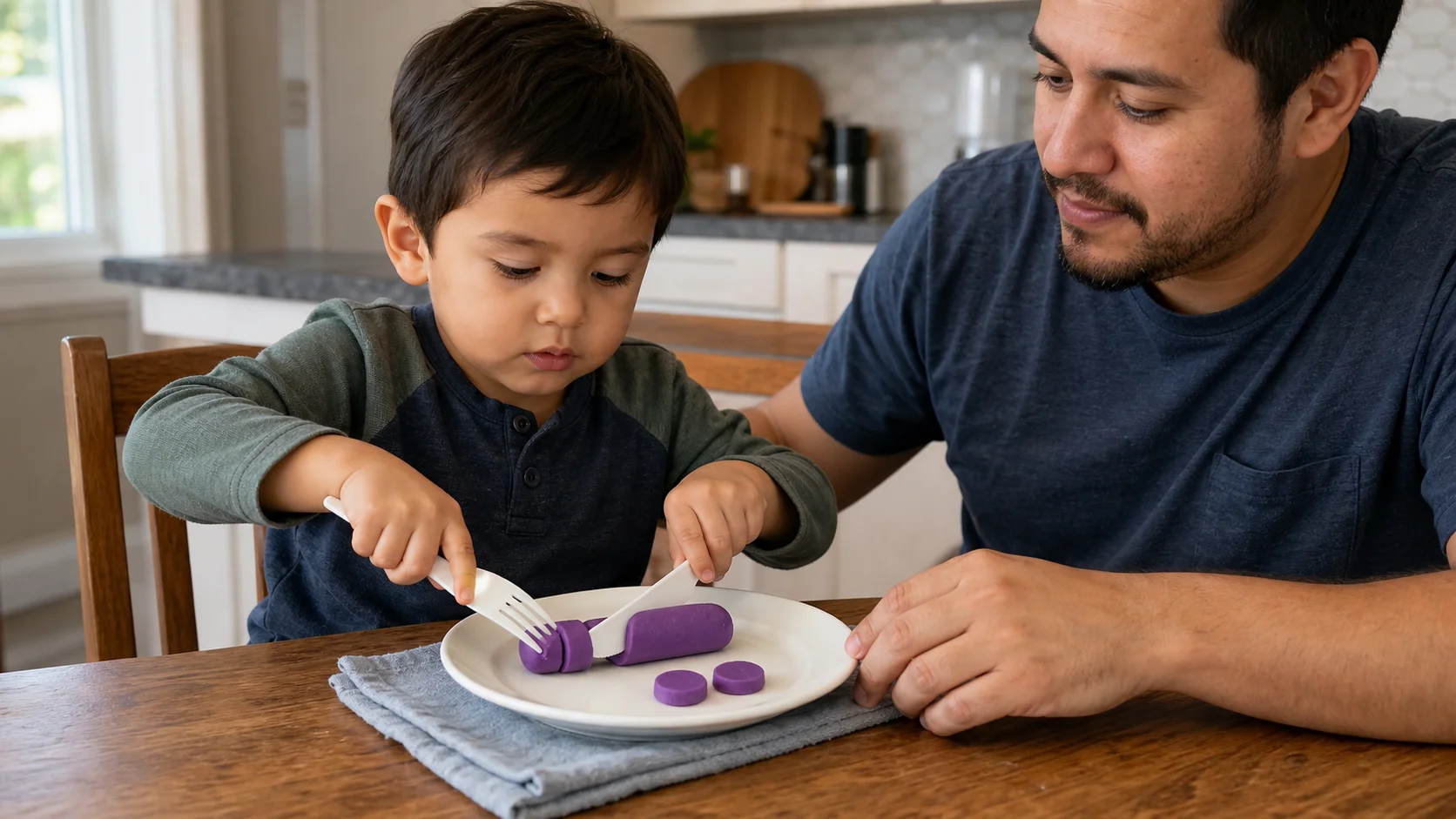
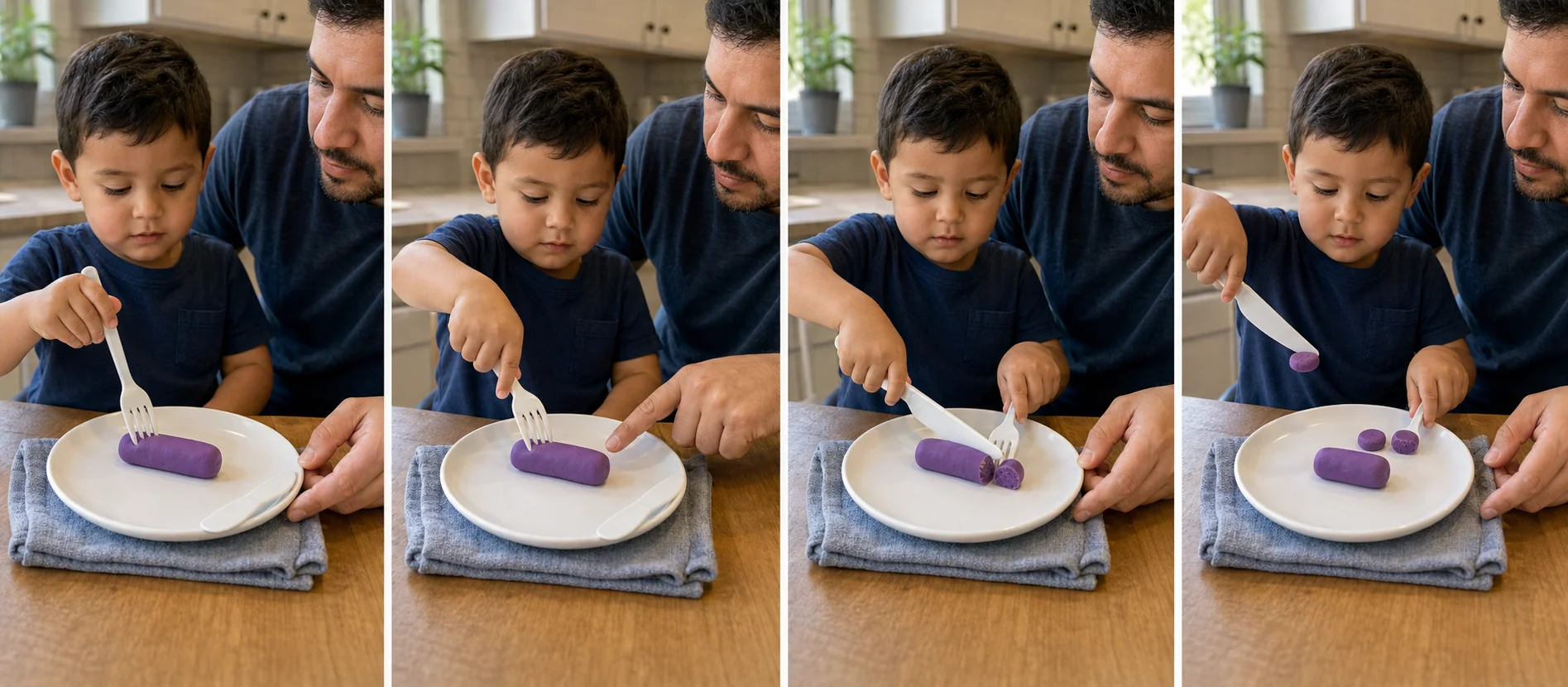
Turn pretend cooking into real cutlery practice. Your child holds a playdough sausage with a fork and saws off slices with a child-safe knife, building two-hand coordination and hand strength.


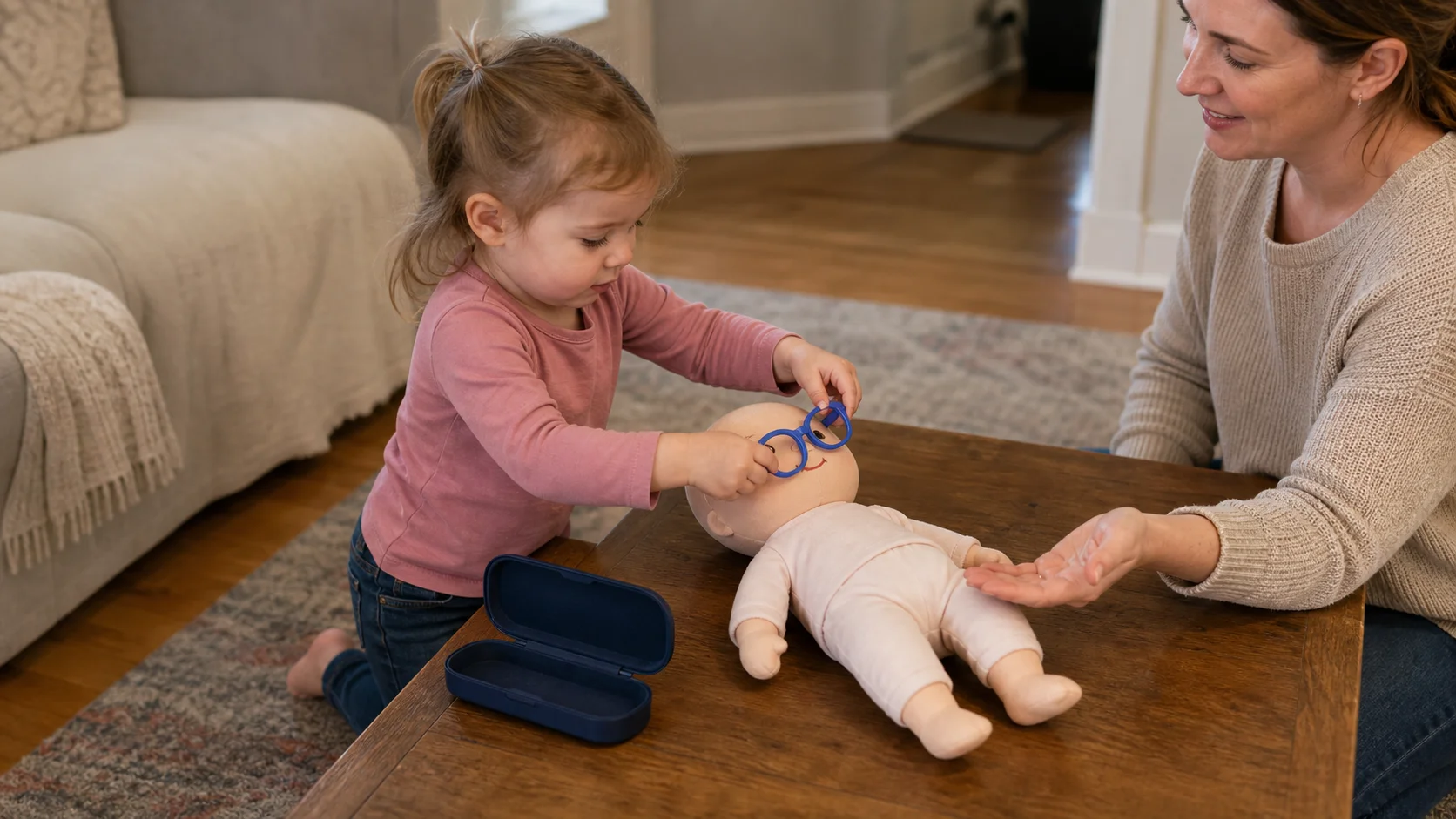
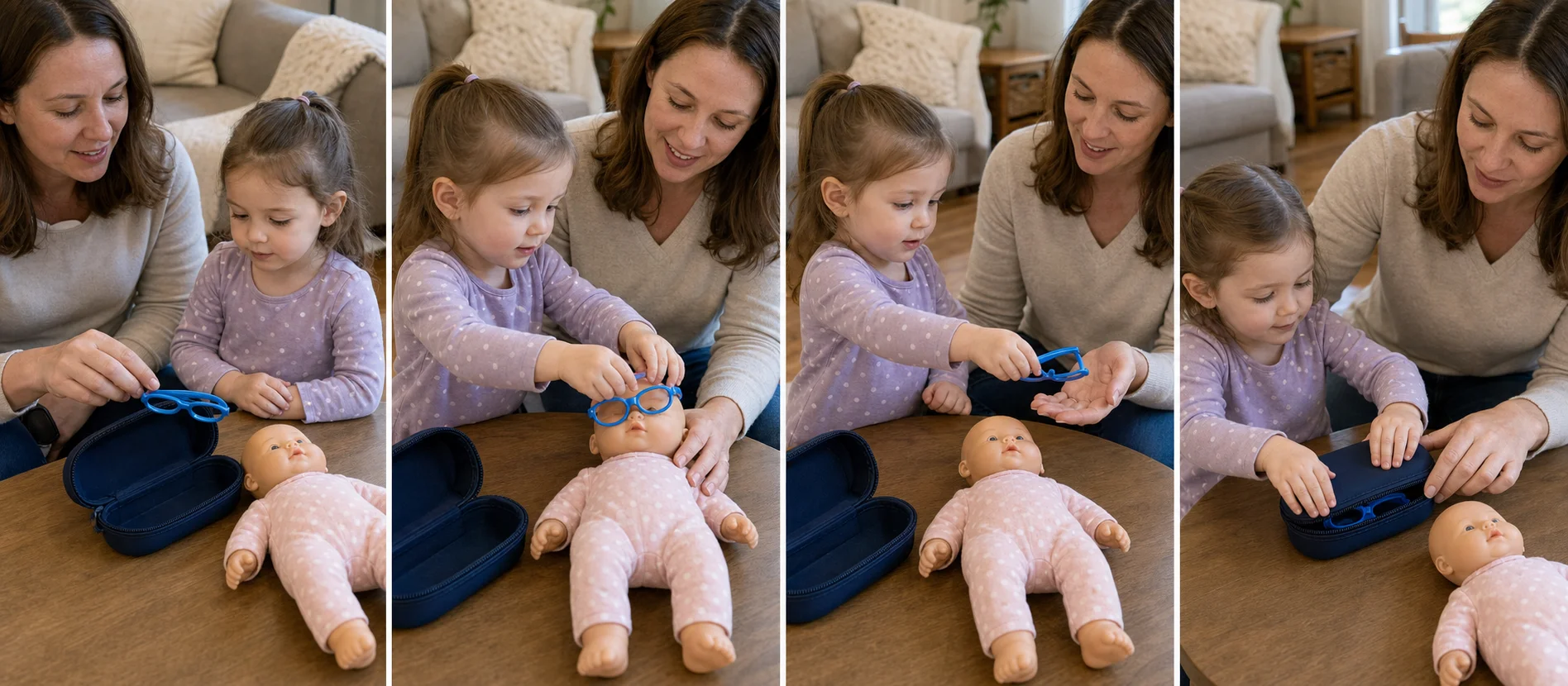
Make glasses practice short and predictable. Your child wears a comfortable noncorrective pair during one favorite book, removes them after two minutes, and hands them safely to you.


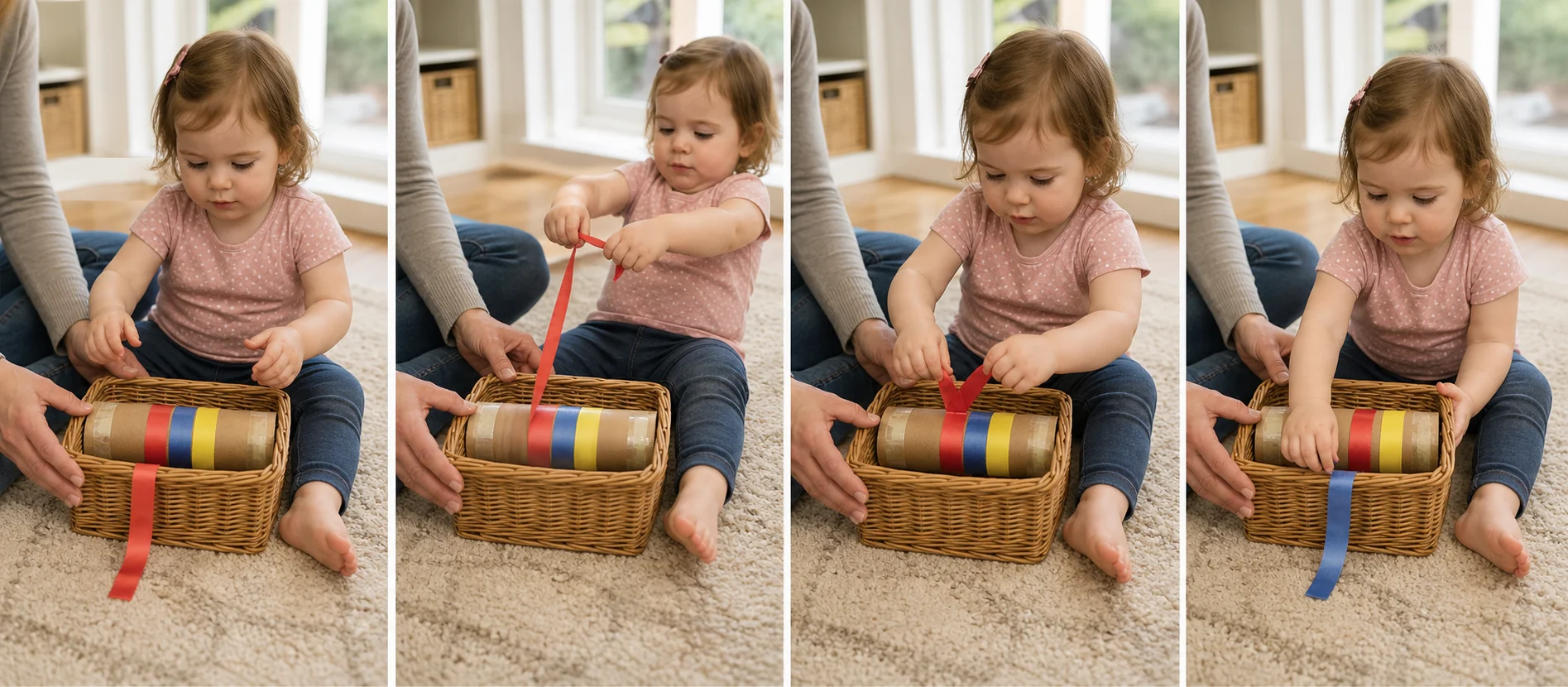
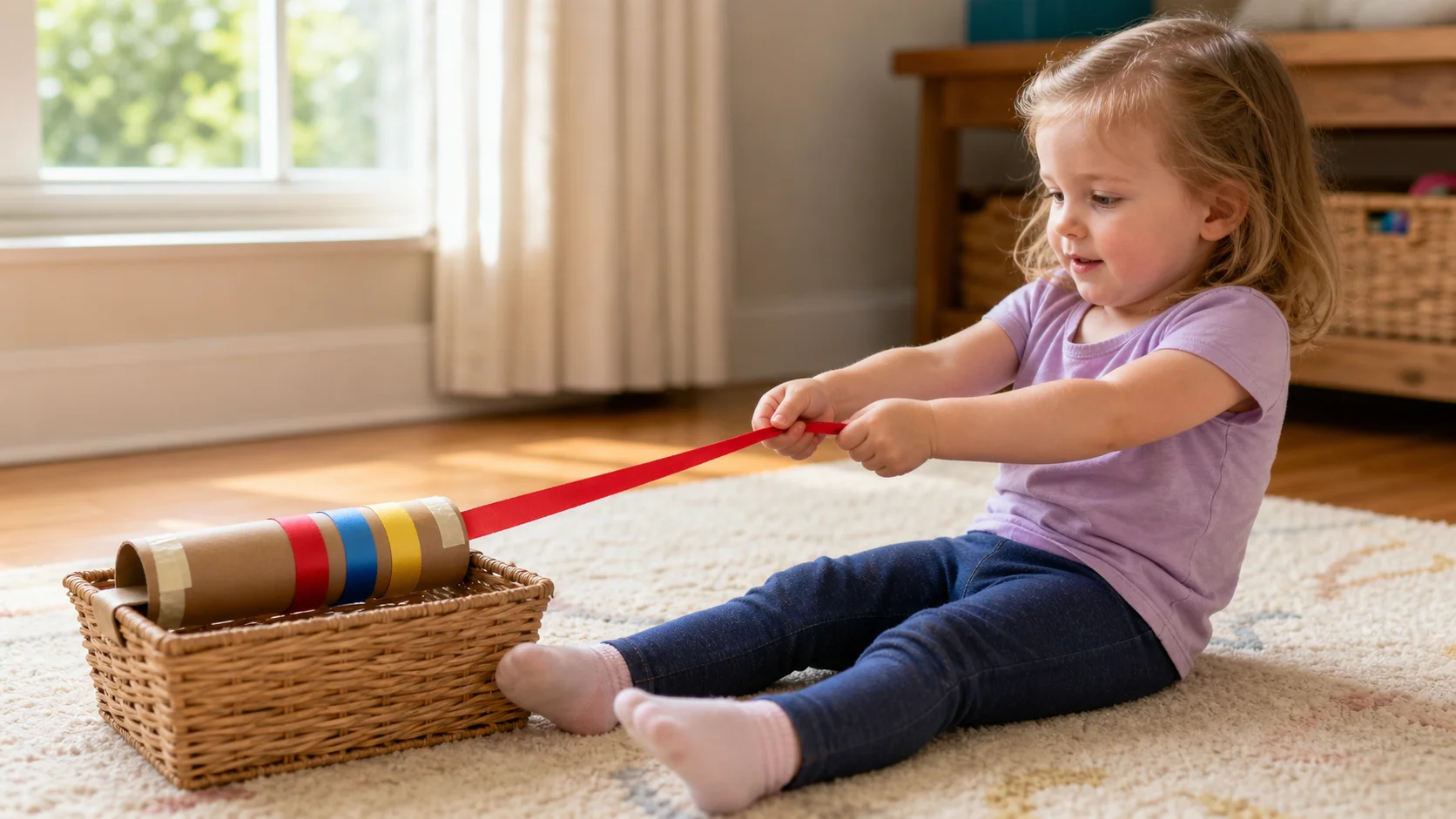
Pull one ribbon to turn a paper-roll spool held by two loose tape straps, then wind the ribbon back for another round.


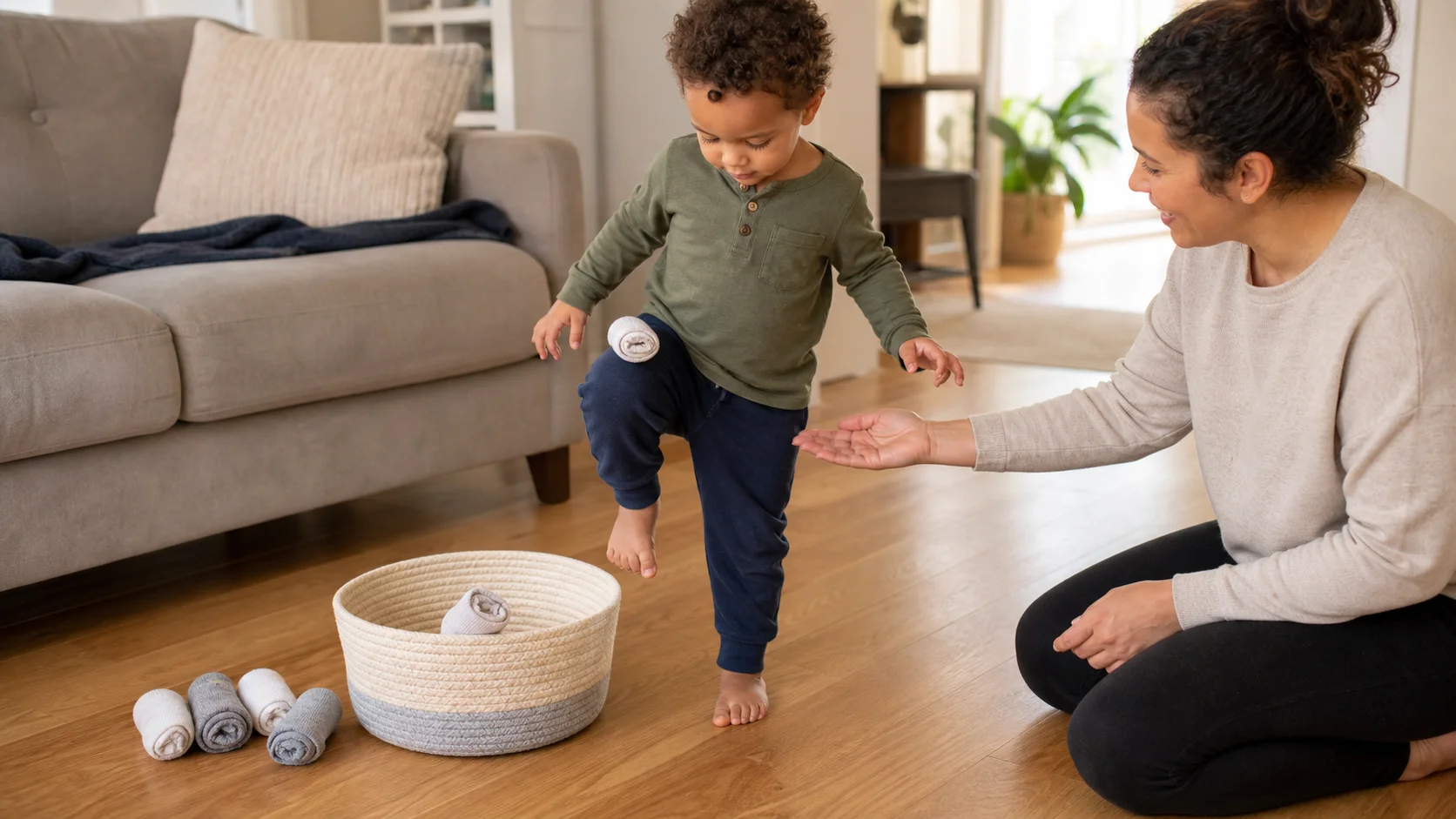
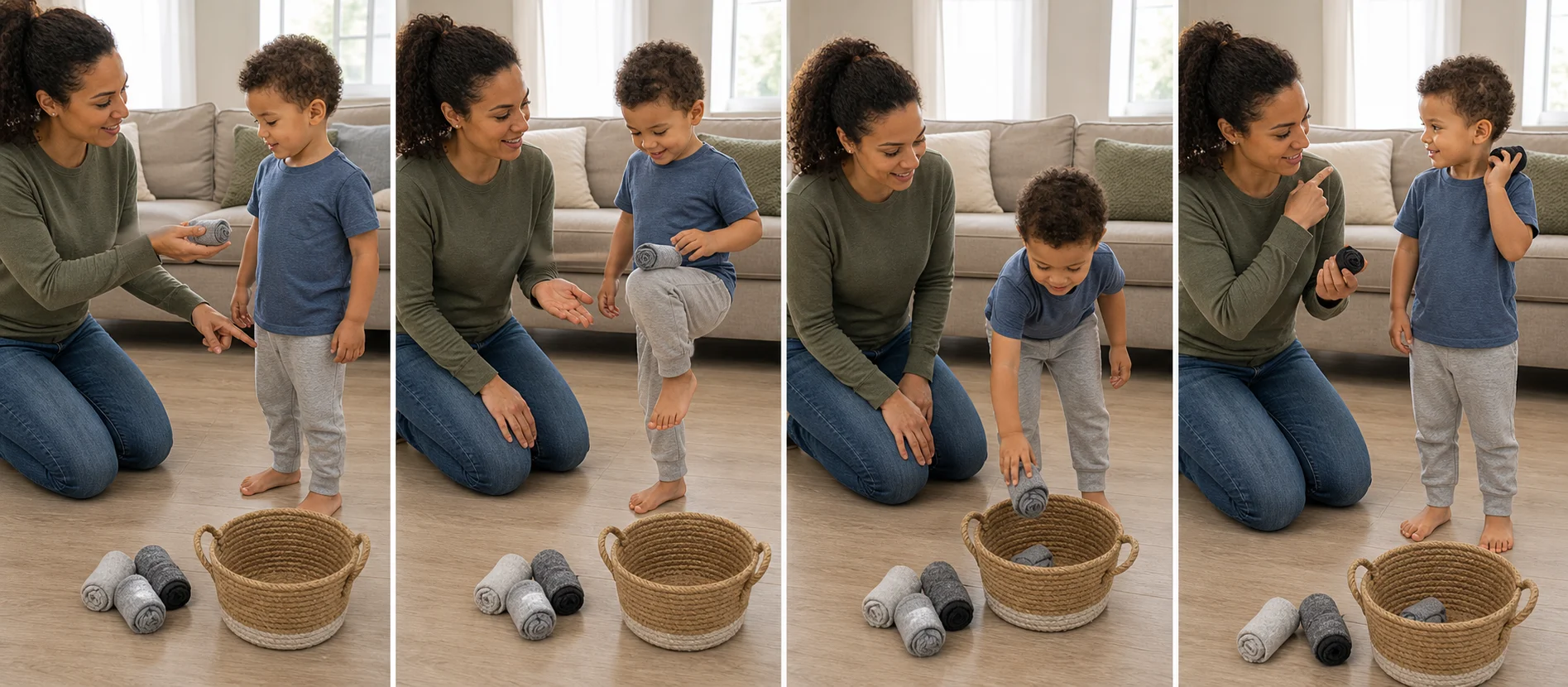
Turn a few rolled socks into a quick body-awareness game. Your child balances each sock on a named body spot, then drops it in the basket.


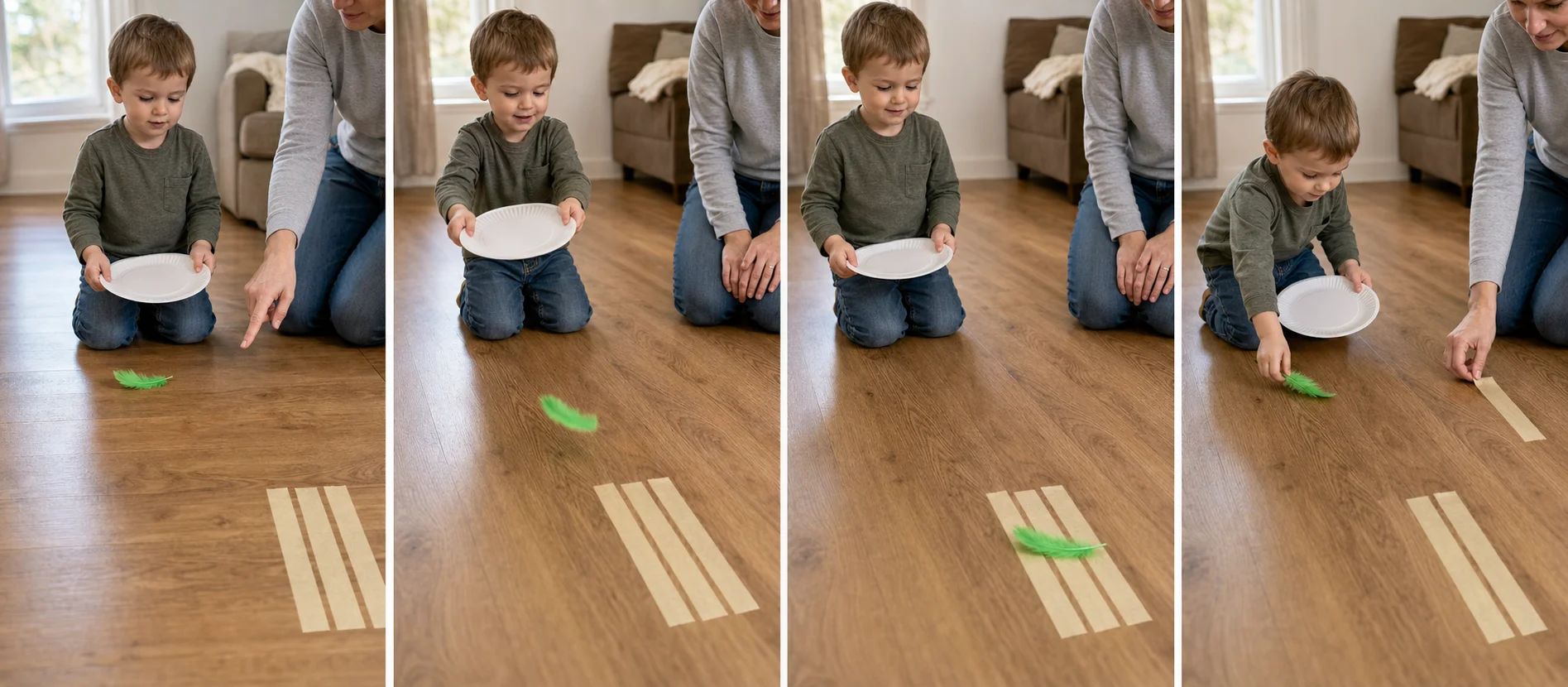
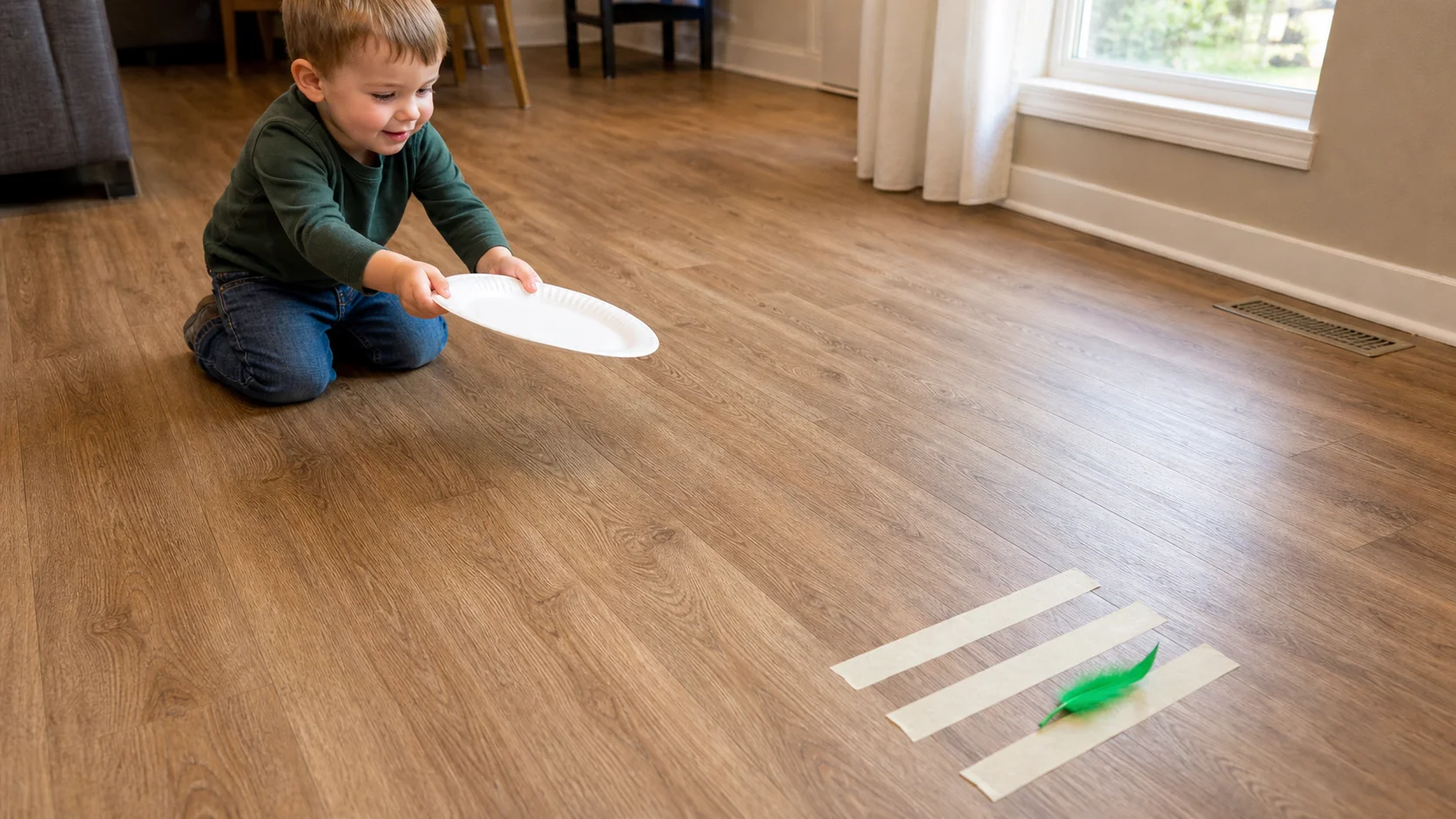
Can your child fan a feather onto a sticky landing pad? Hold a paper plate with both hands, wave it to send the feather drifting toward the tape, then peel and reset, building two-hand coordination and force control.


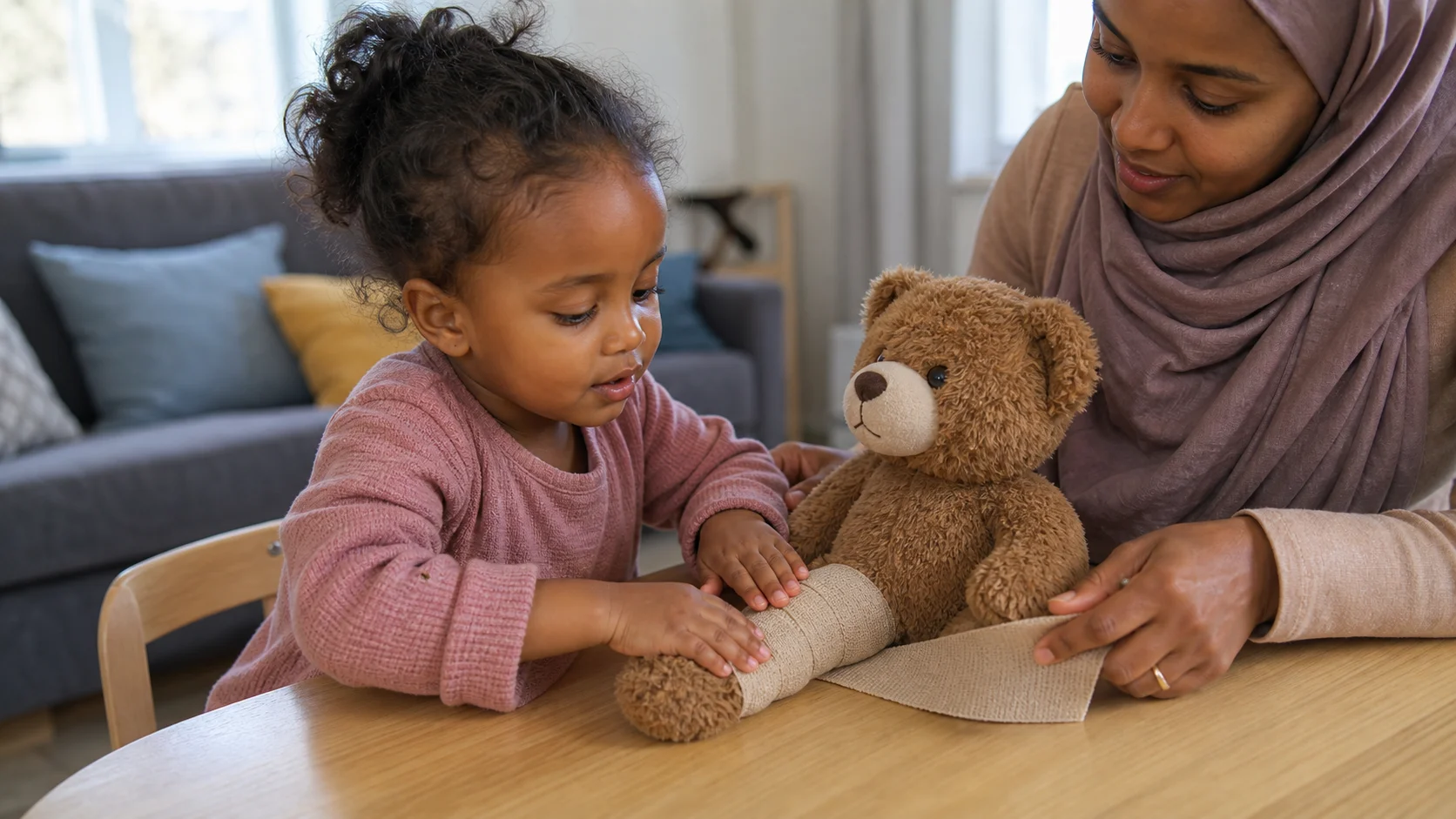
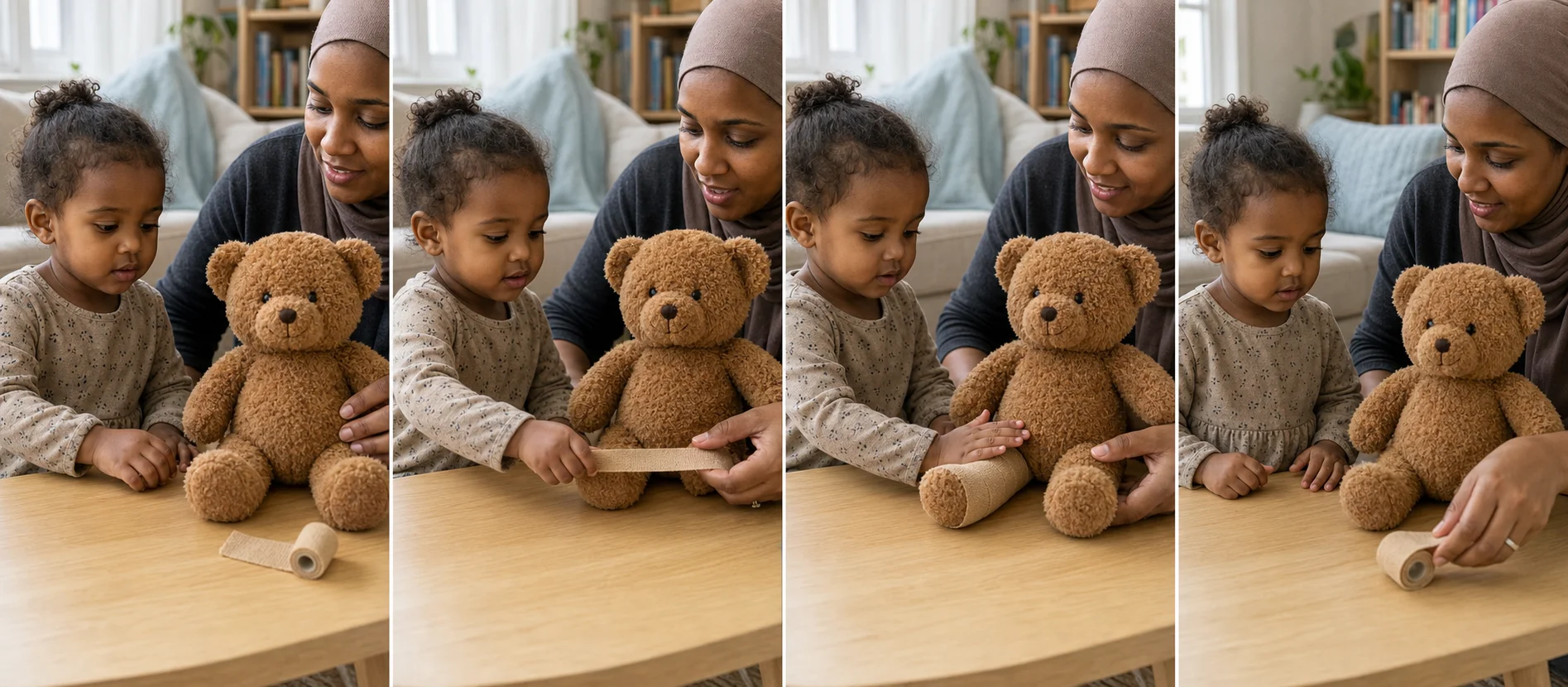
Can your child help give teddy a pretend cast? Wrap one leg together in overlapping layers, tuck the end in place, then unwrap and repeat, turning an unfamiliar care step into simple pretend play.


Turn vaccine preparation into one short Teddy-doctor rehearsal. Your child copies a pretend shot, adds a sticker, and practices holding still through one brief count.


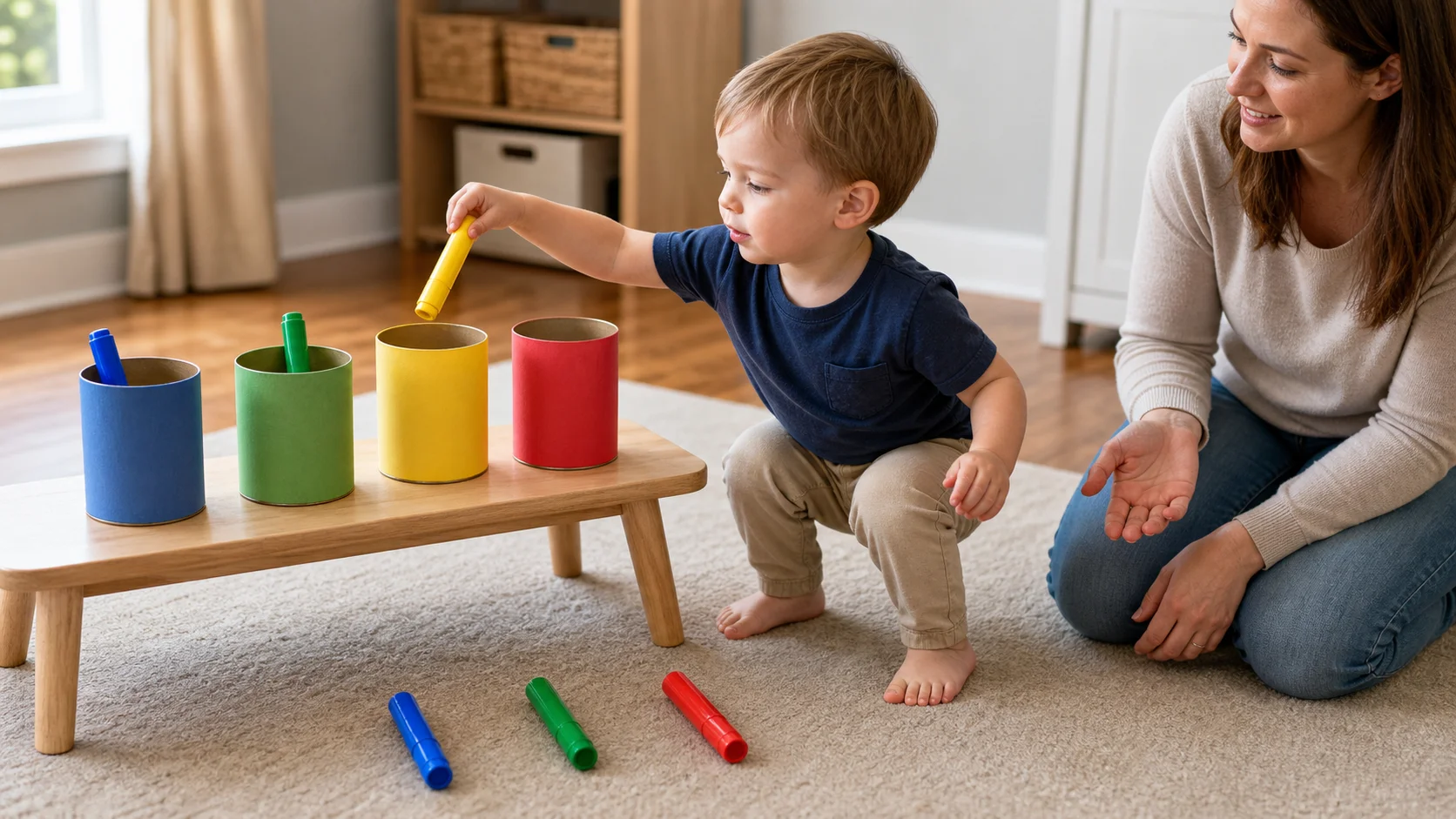
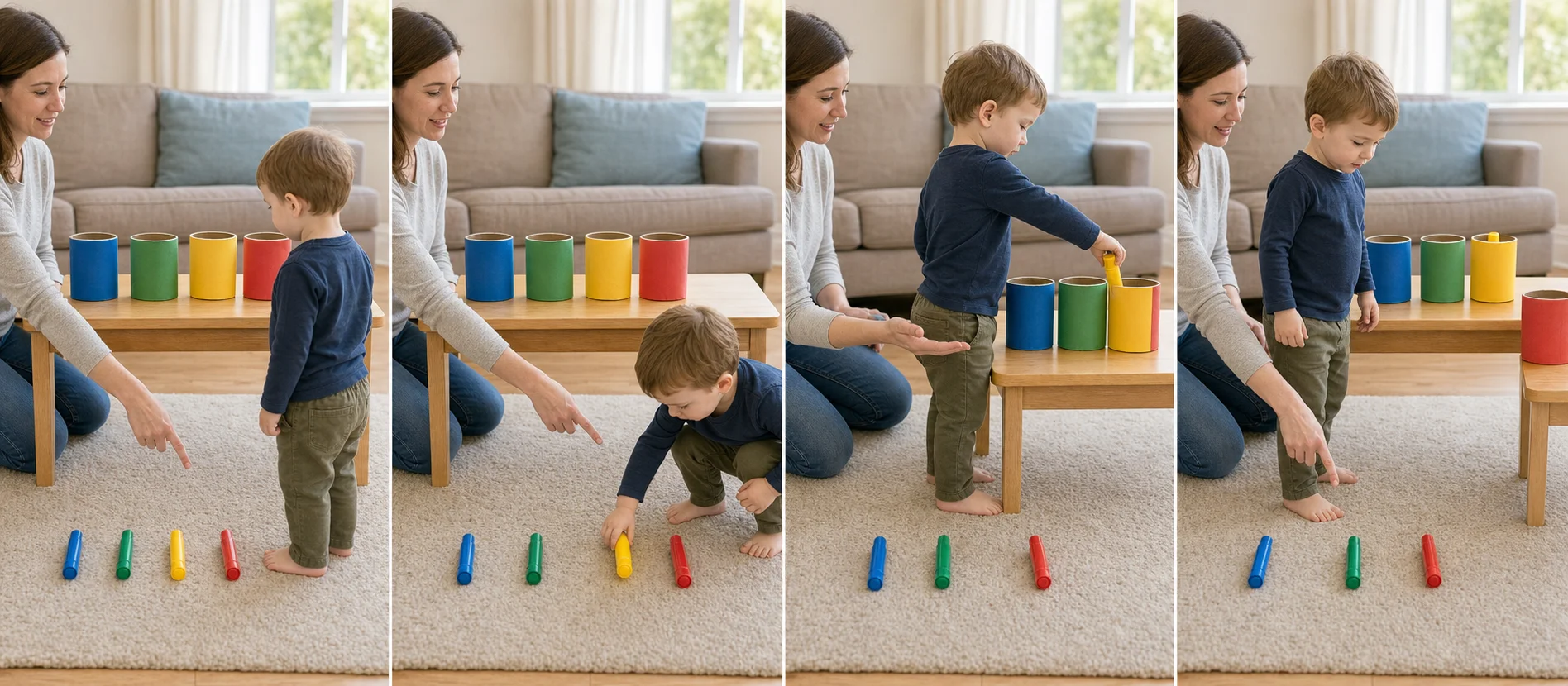
Turn color matching into a whole-body game. Your child squats to pick up a colored marker, stands, and drops it into the matching can for balance, body control, and color practice.