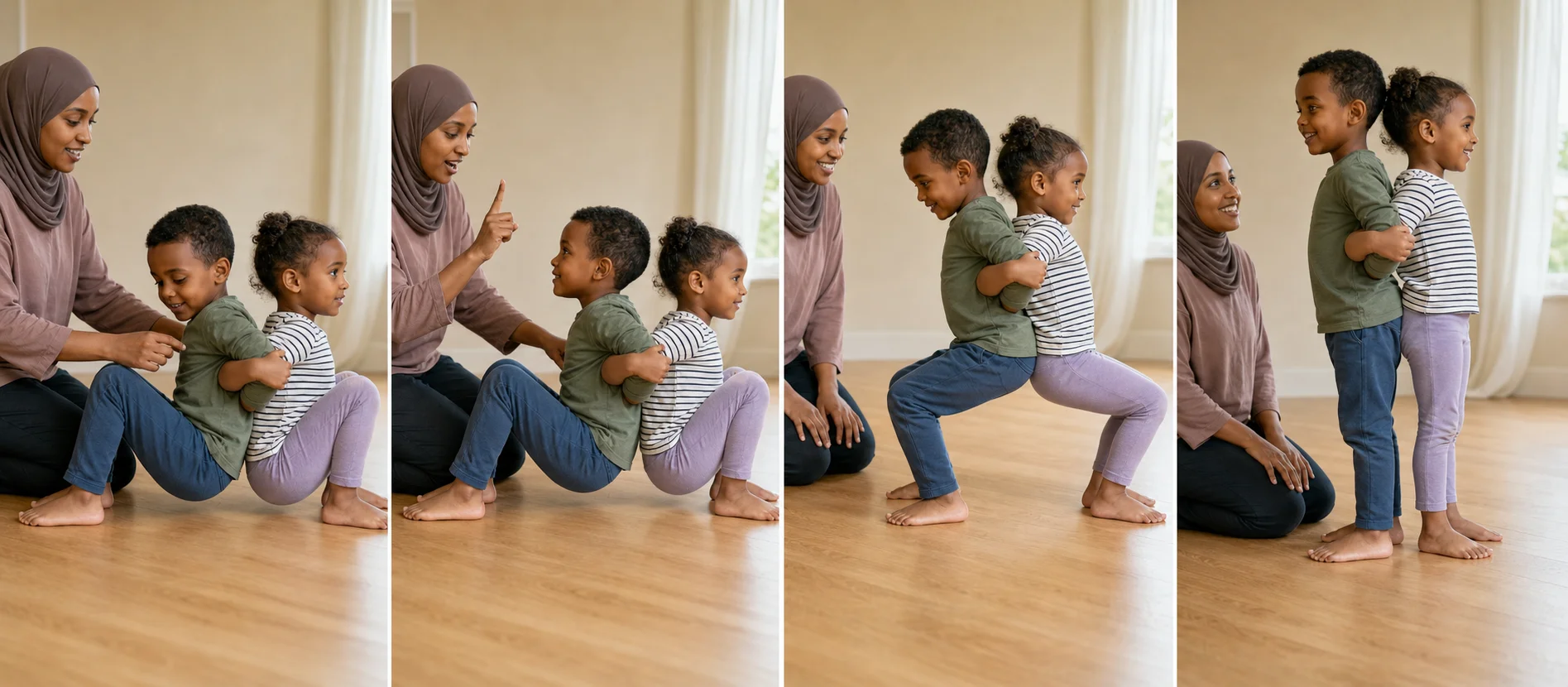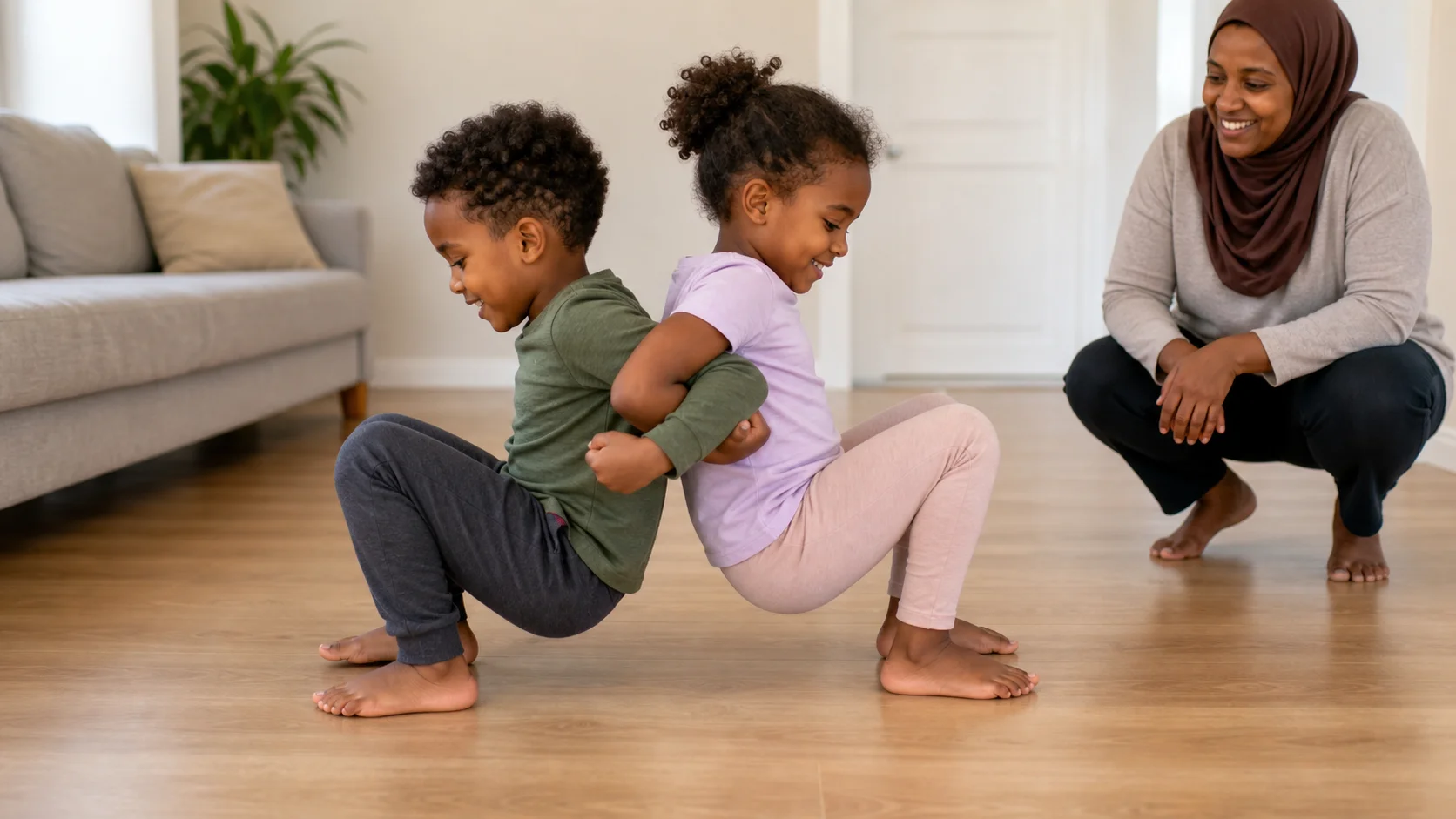

Back-to-Back Stand-Up
For a quick, no-material balance and teamwork challenge, have two children sit back to back, link arms, and try to stand up together.
Parent-run play ideas inspired by everyday participation skills like hand use, body awareness, coordination, transitions, and simple regulation routines. These are practical home activities, not occupational therapy or individualized clinical advice.


For a quick, no-material balance and teamwork challenge, have two children sit back to back, link arms, and try to stand up together.


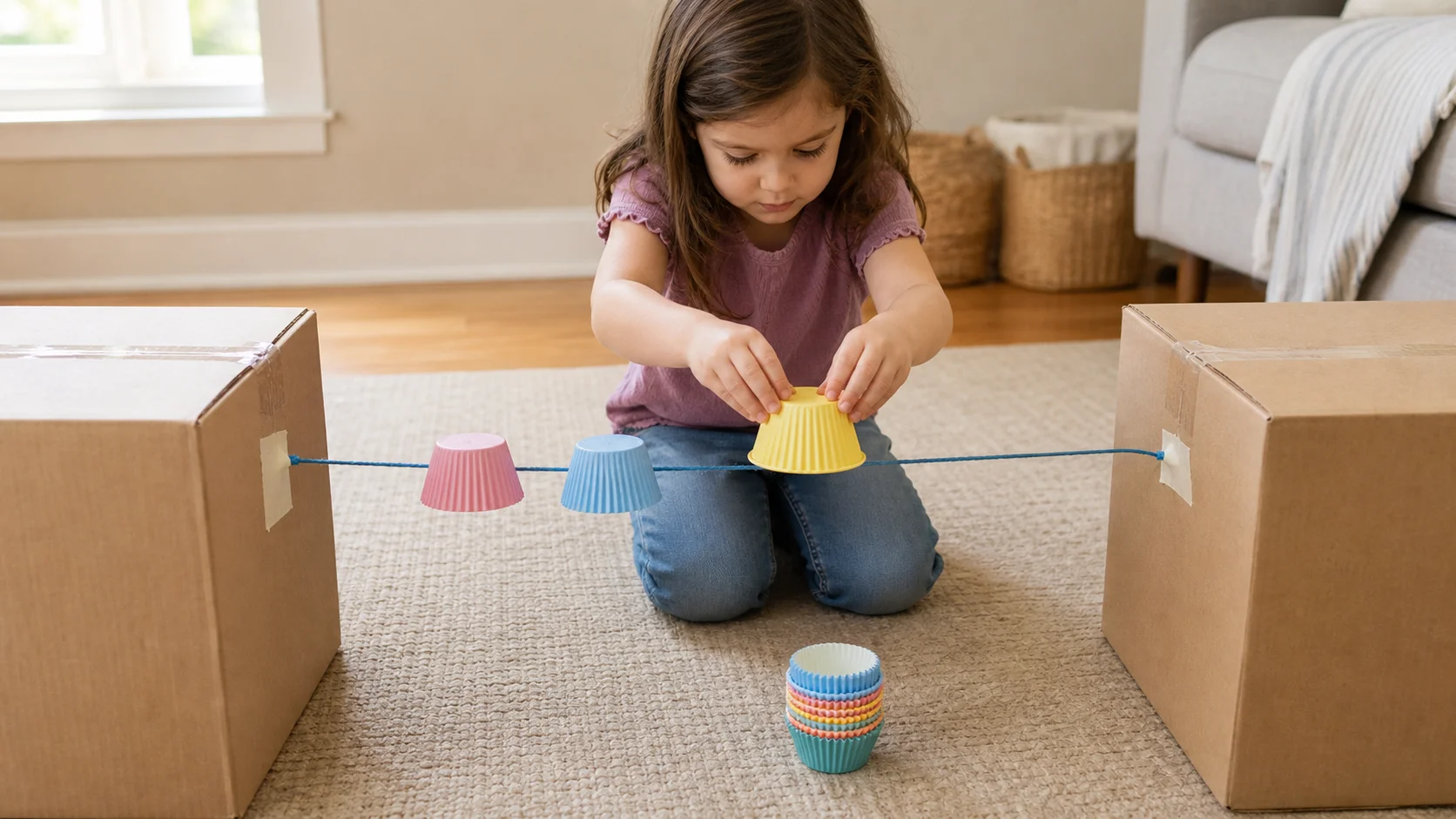
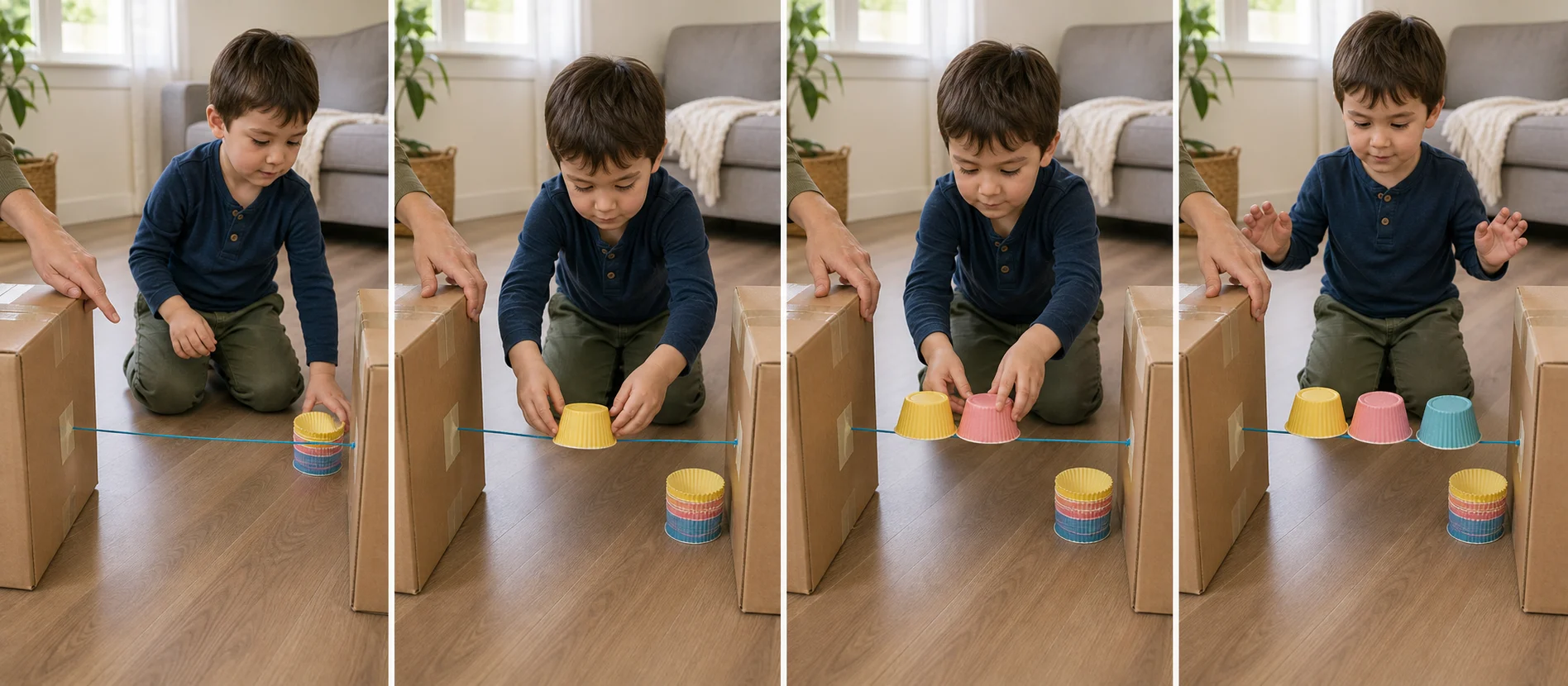
Turn two boxes, yarn, and paper baking cups into a careful hands balance challenge.


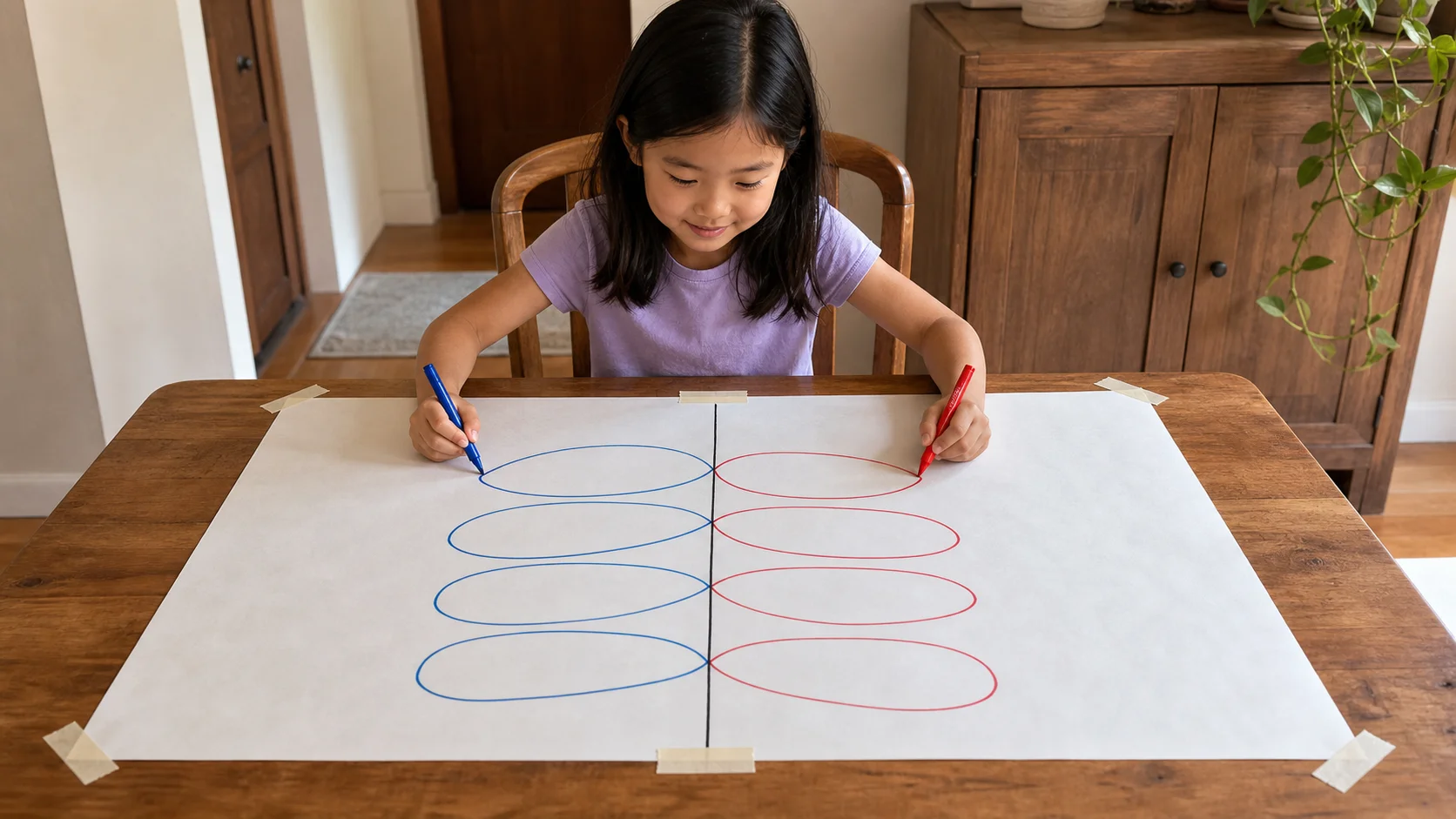
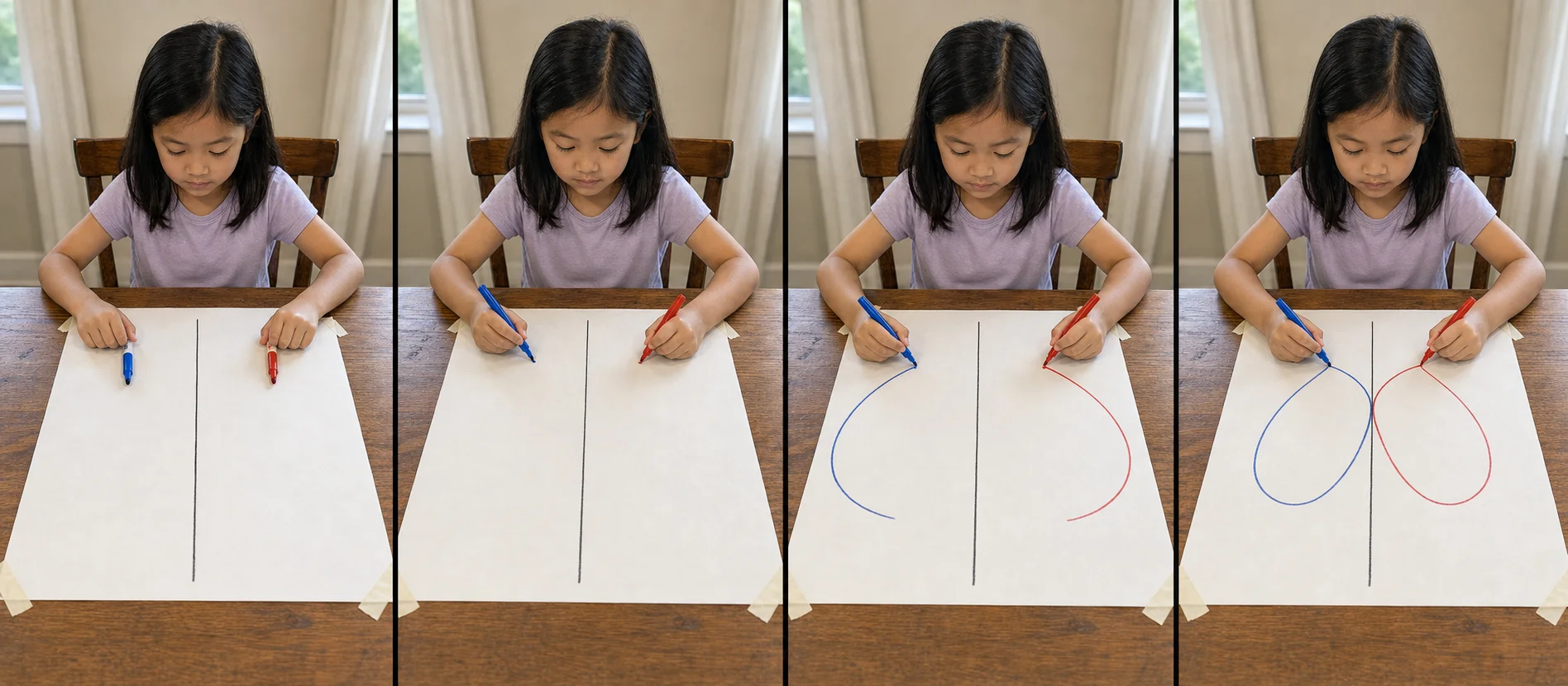
Tape down a large sheet, draw a center line, and let your child make matching loops with two markers.


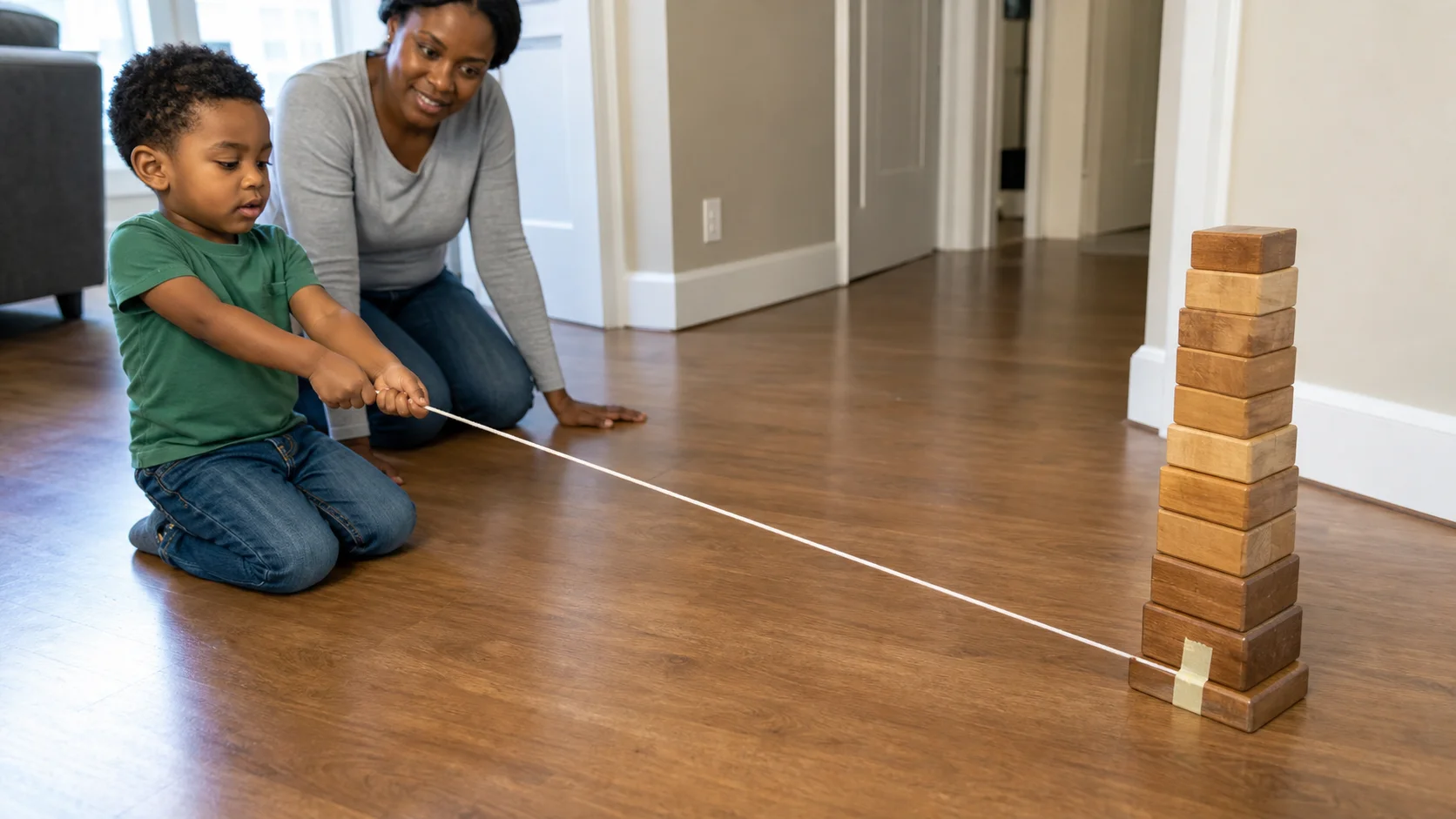
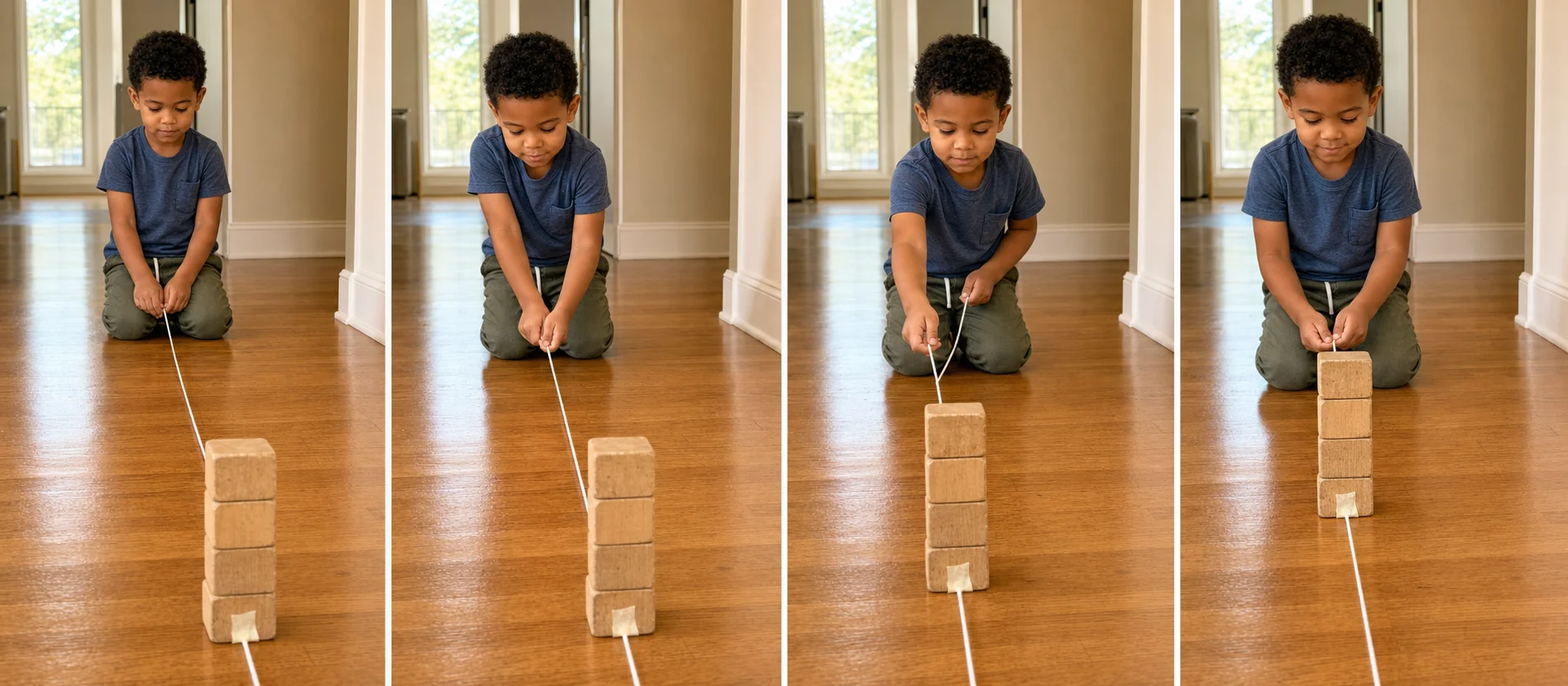
Can your child use a string to pull a block tower across the floor without toppling it? This rescue challenge gives hand strength, two-hand coordination, and body control a playful workout. Slow and steady wins this race!


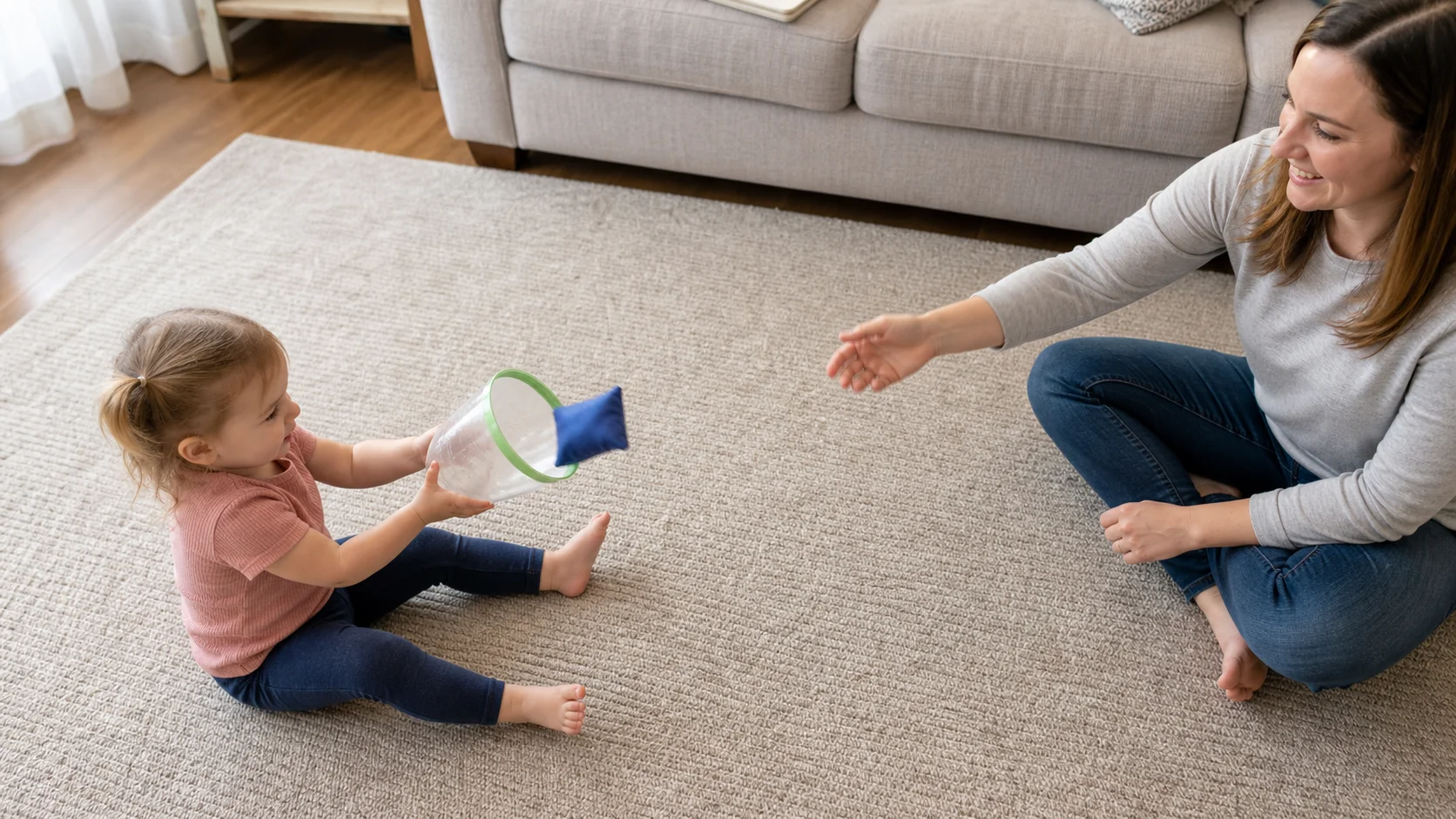
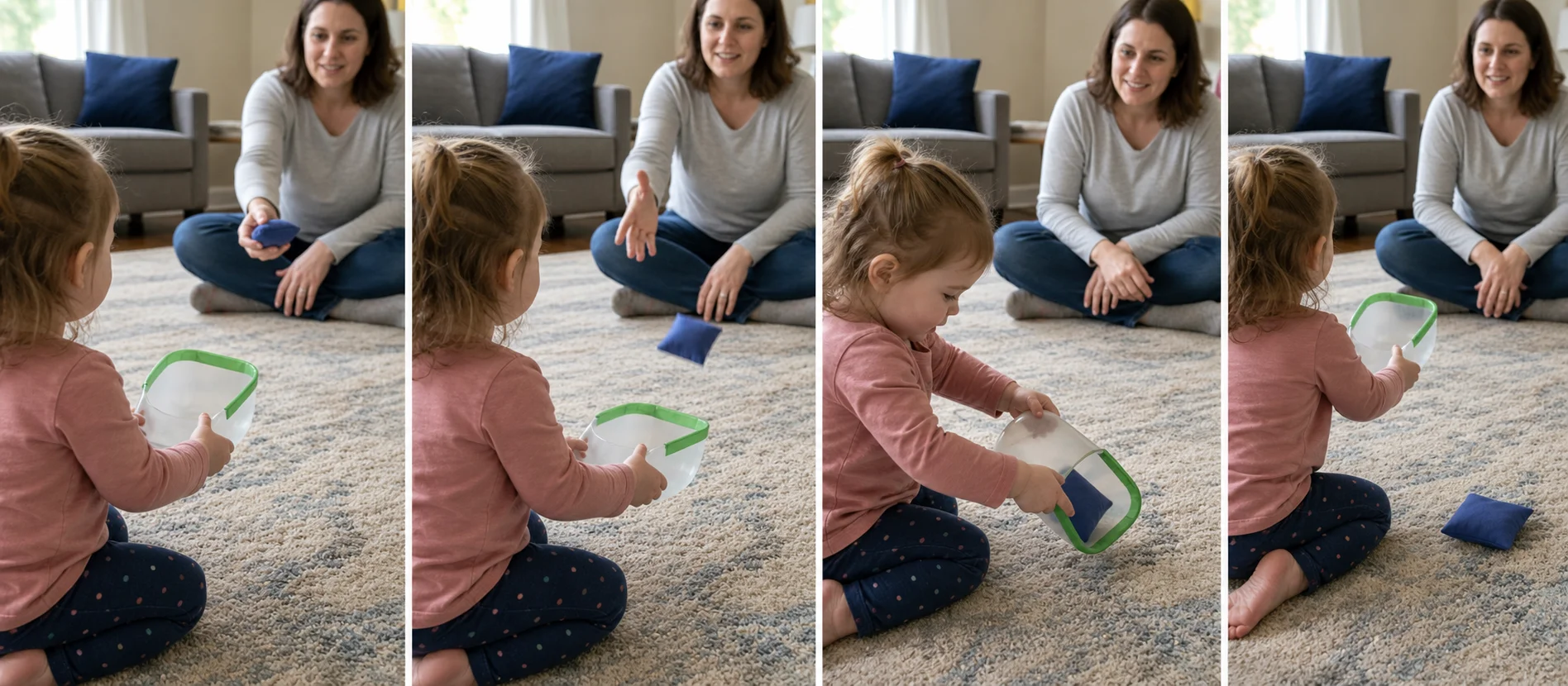
Turn a simple plastic container into a two-handed catching challenge! Sit close, gently toss a soft ball or beanbag, and watch your child track it and trap it, giving visual tracking and two-hand coordination a playful workout.


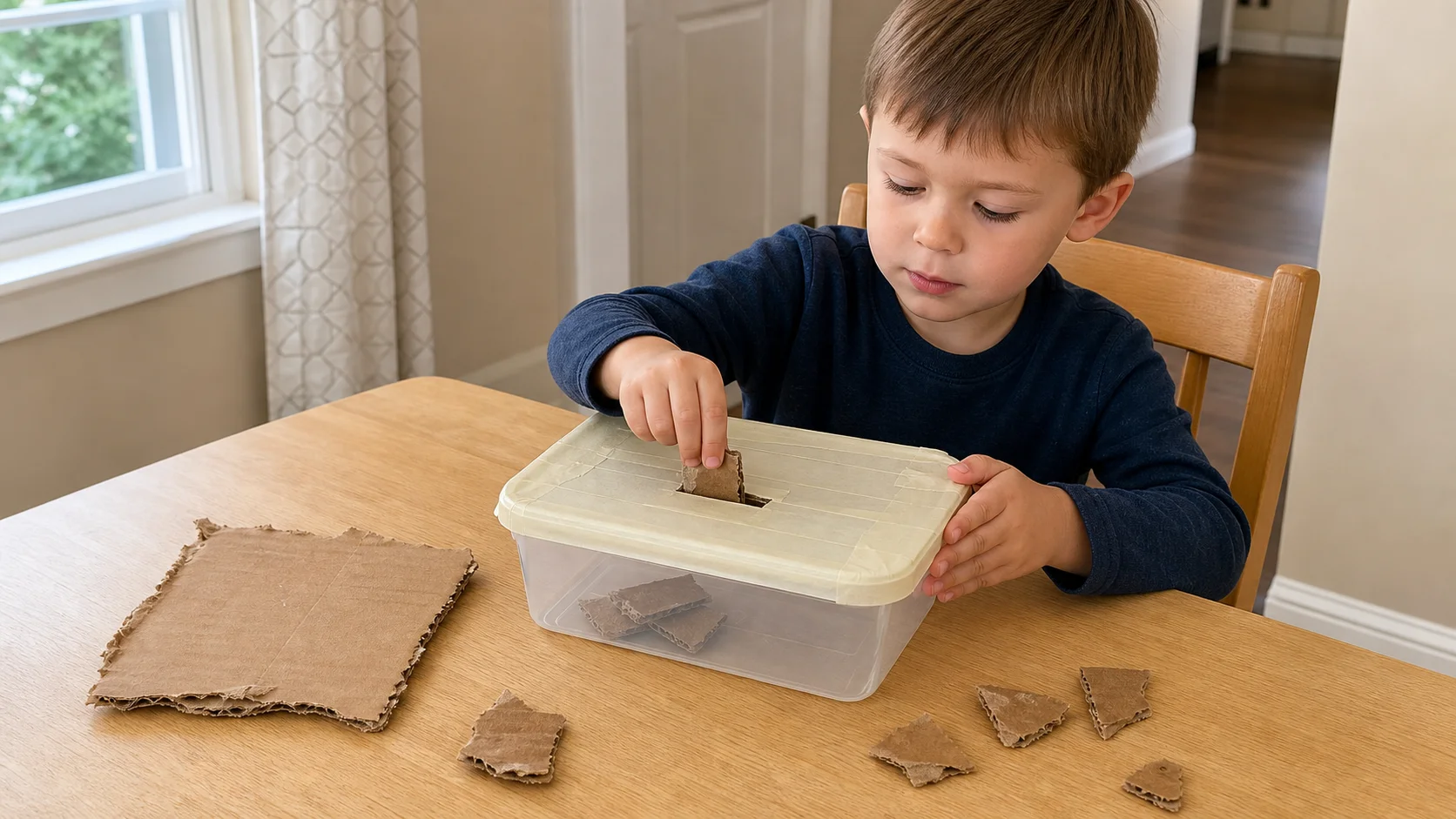
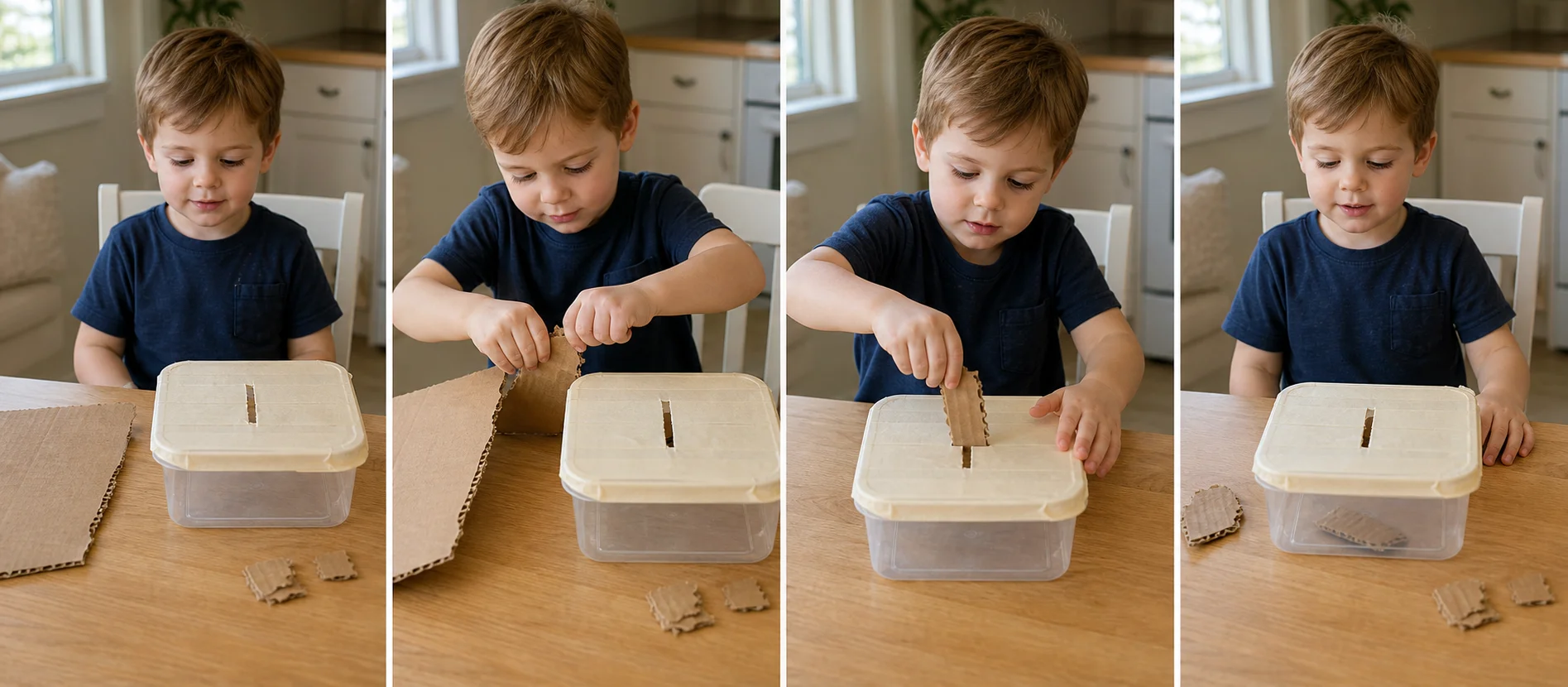
Rip, turn, push! Your child tears cardboard, finds the edge that fits, and presses each piece through a narrow slot for a satisfying test of finger strength and two-hand control.


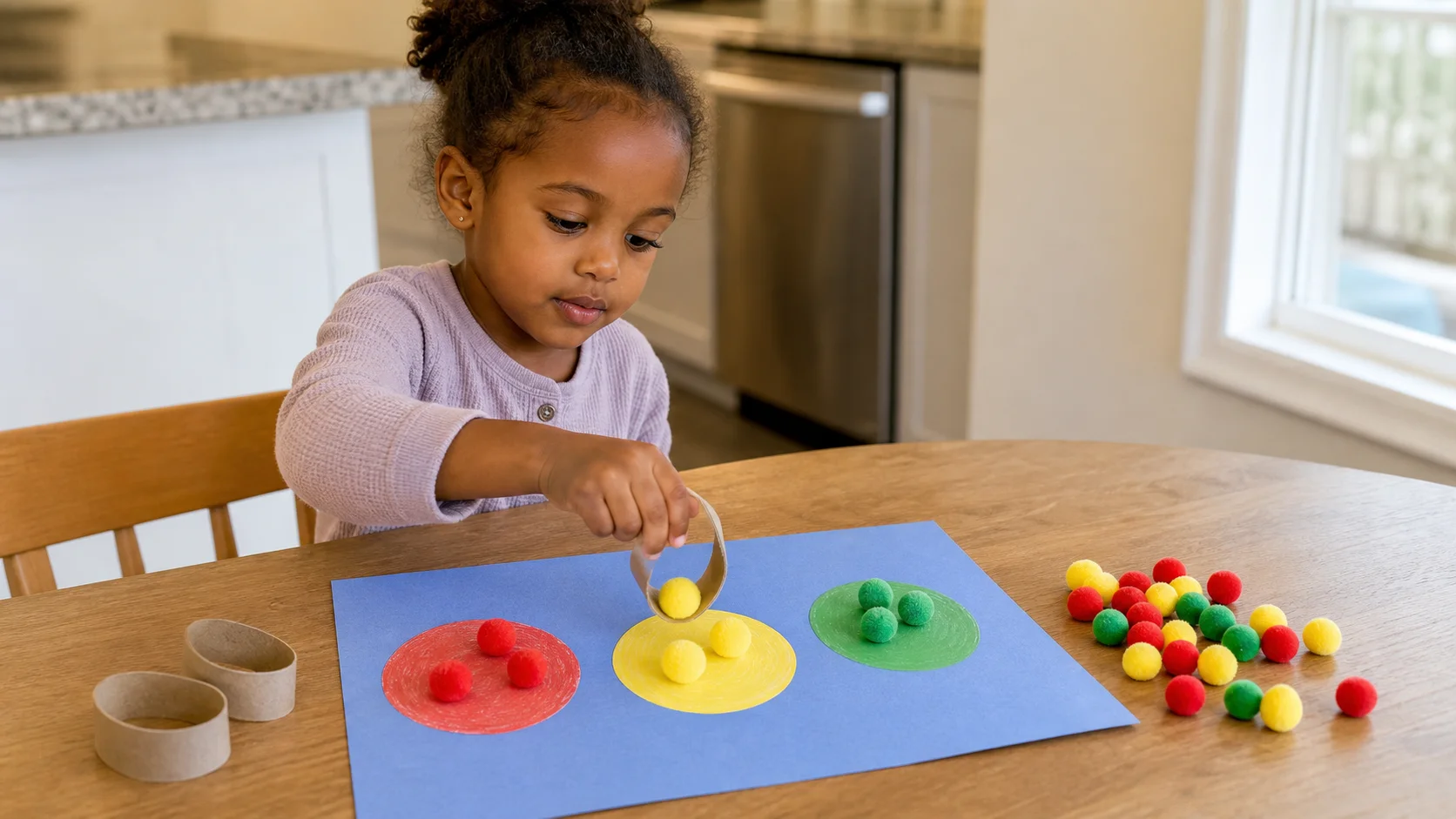
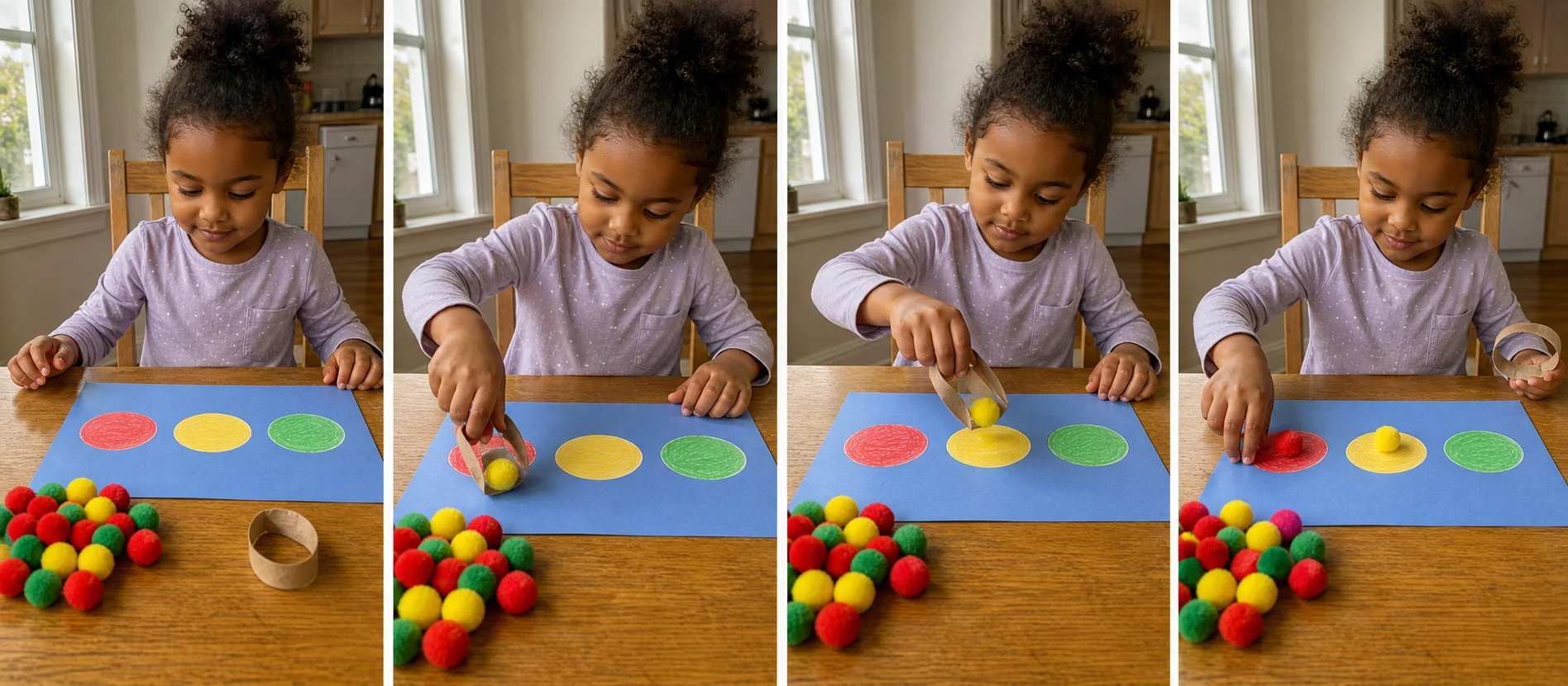
Can a cardboard ring work like tweezers? Your child squeezes it around a pom-pom, carries it to the matching circle, and drops it, turning color sorting into a satisfying finger-strength challenge.


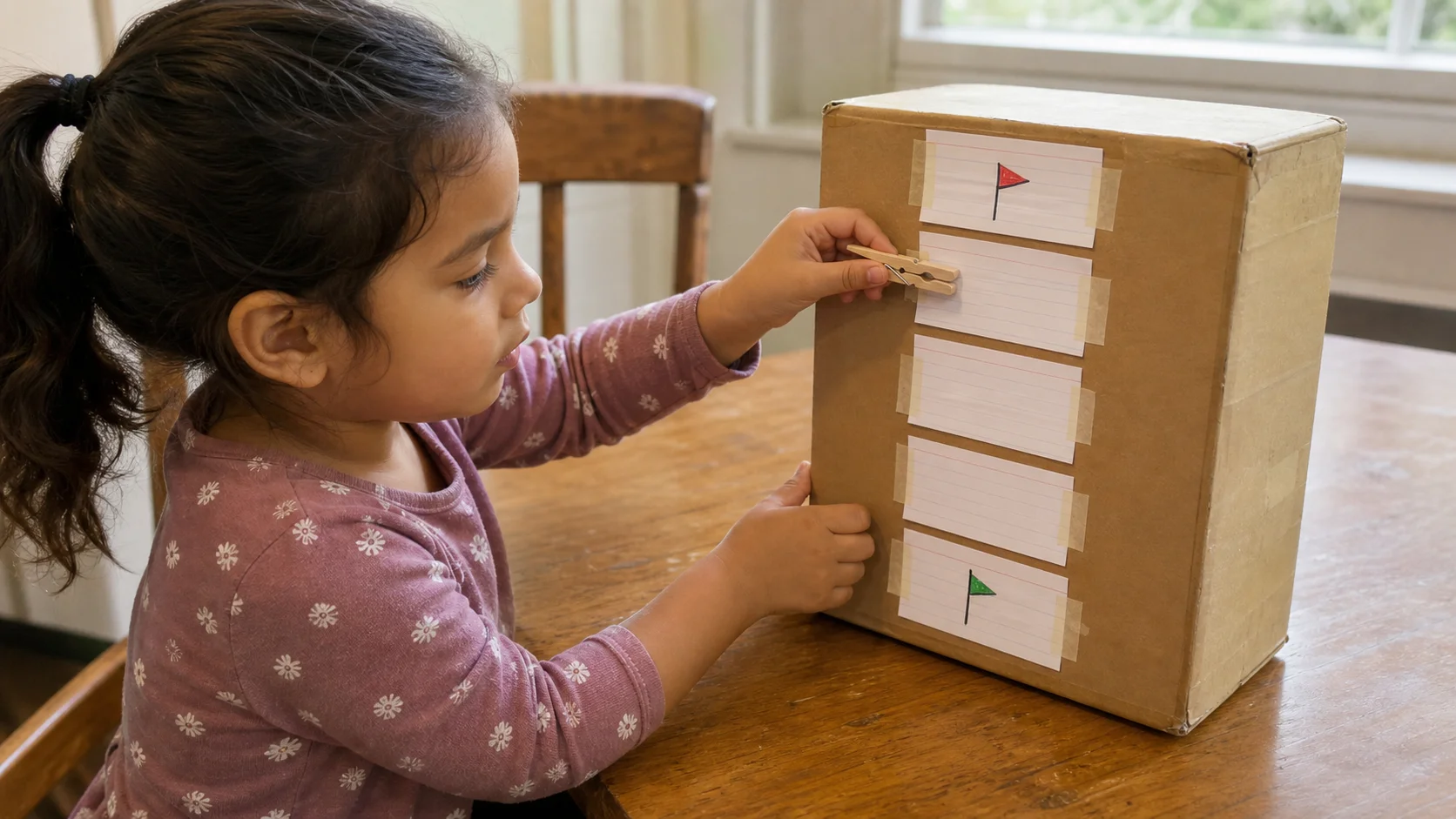
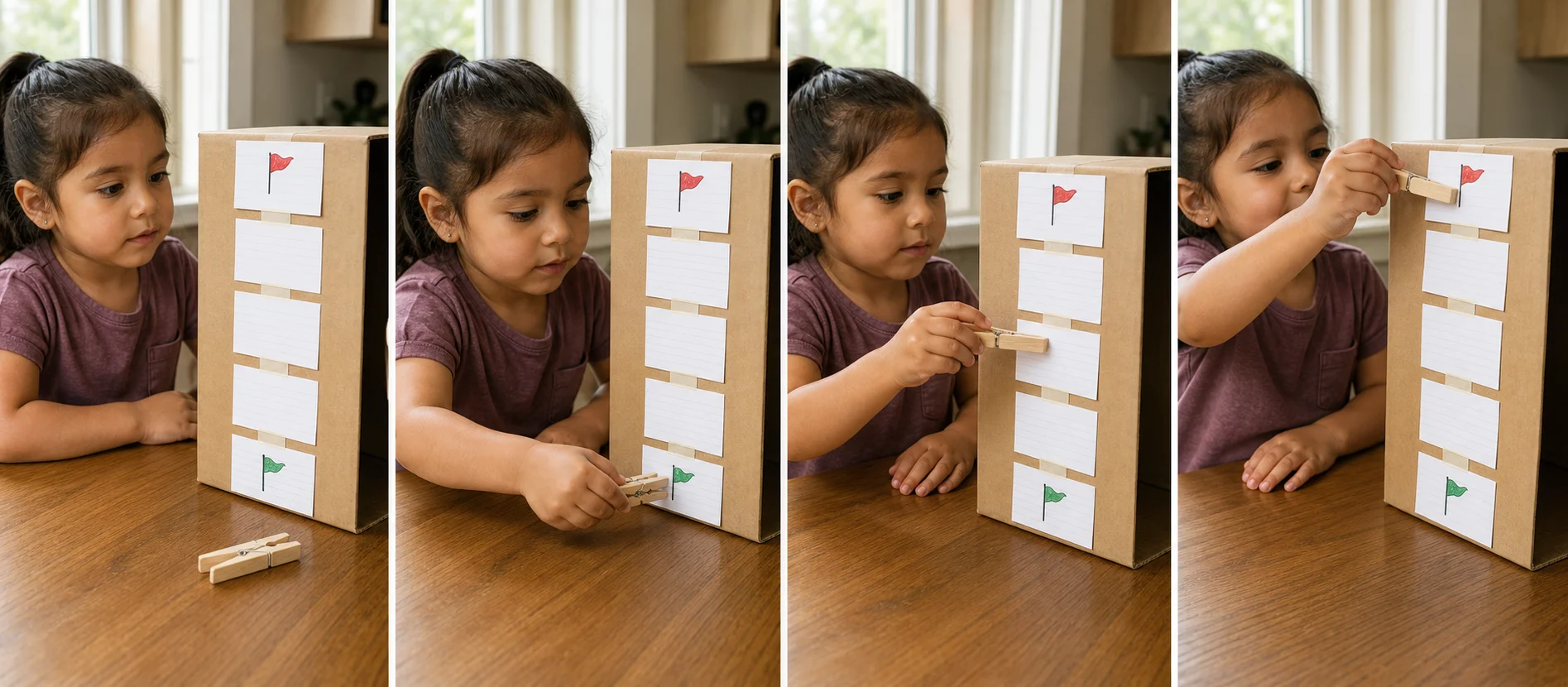
Build a tiny card ladder on a shoe box and let one clothespin climb from start flag to finish flag.


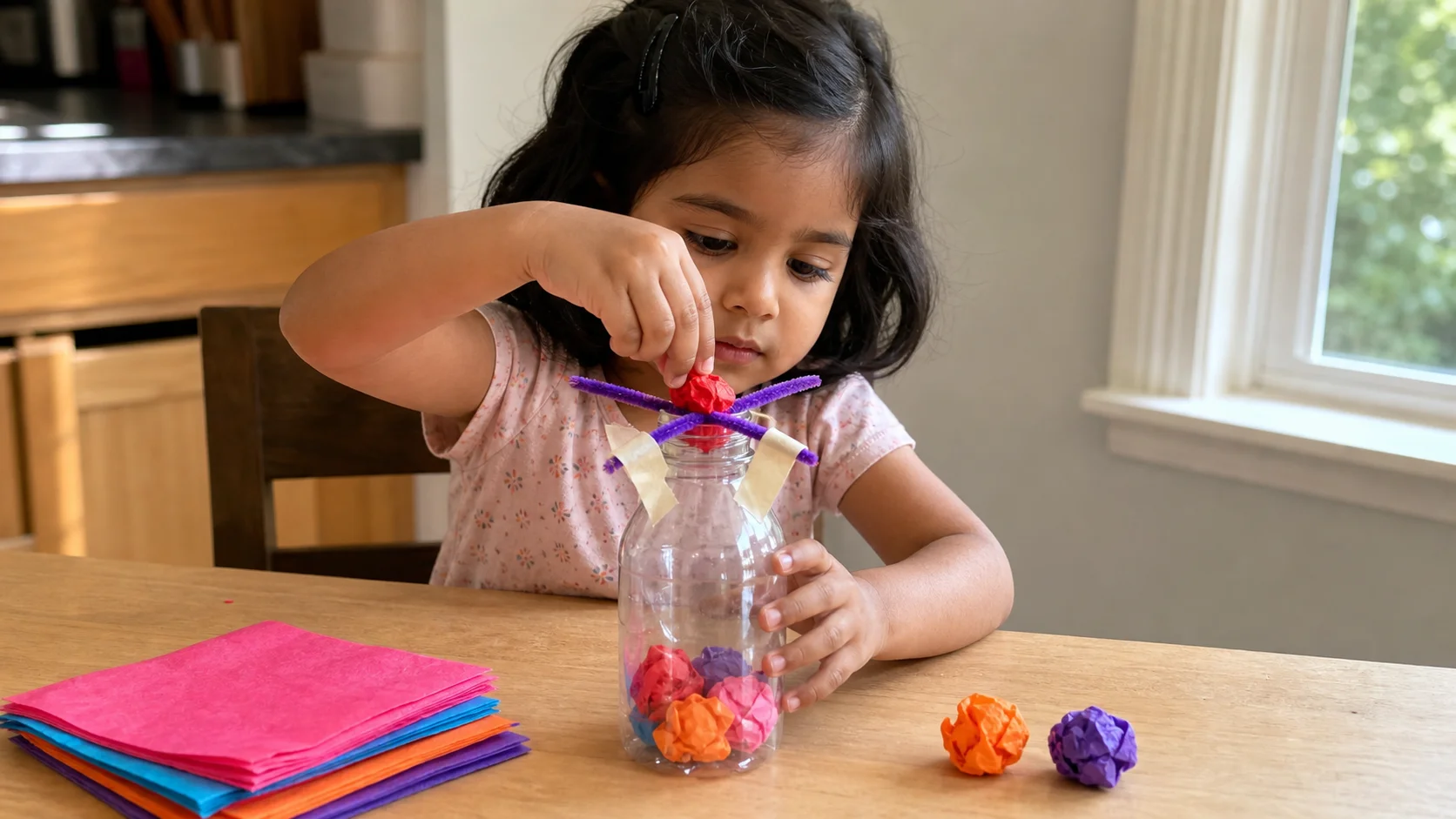
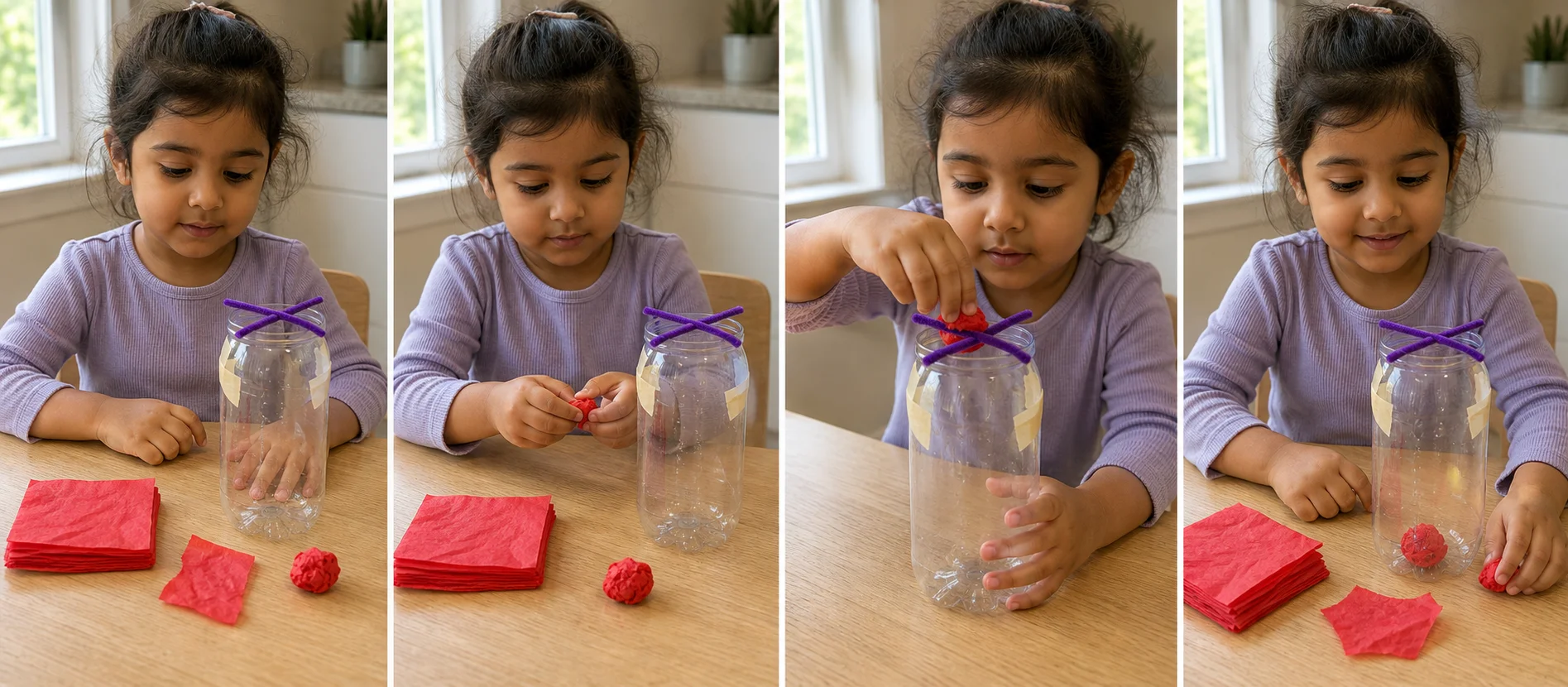
Tissue paper, pipe cleaners, and a bottle make a quiet posting game for finger strength.


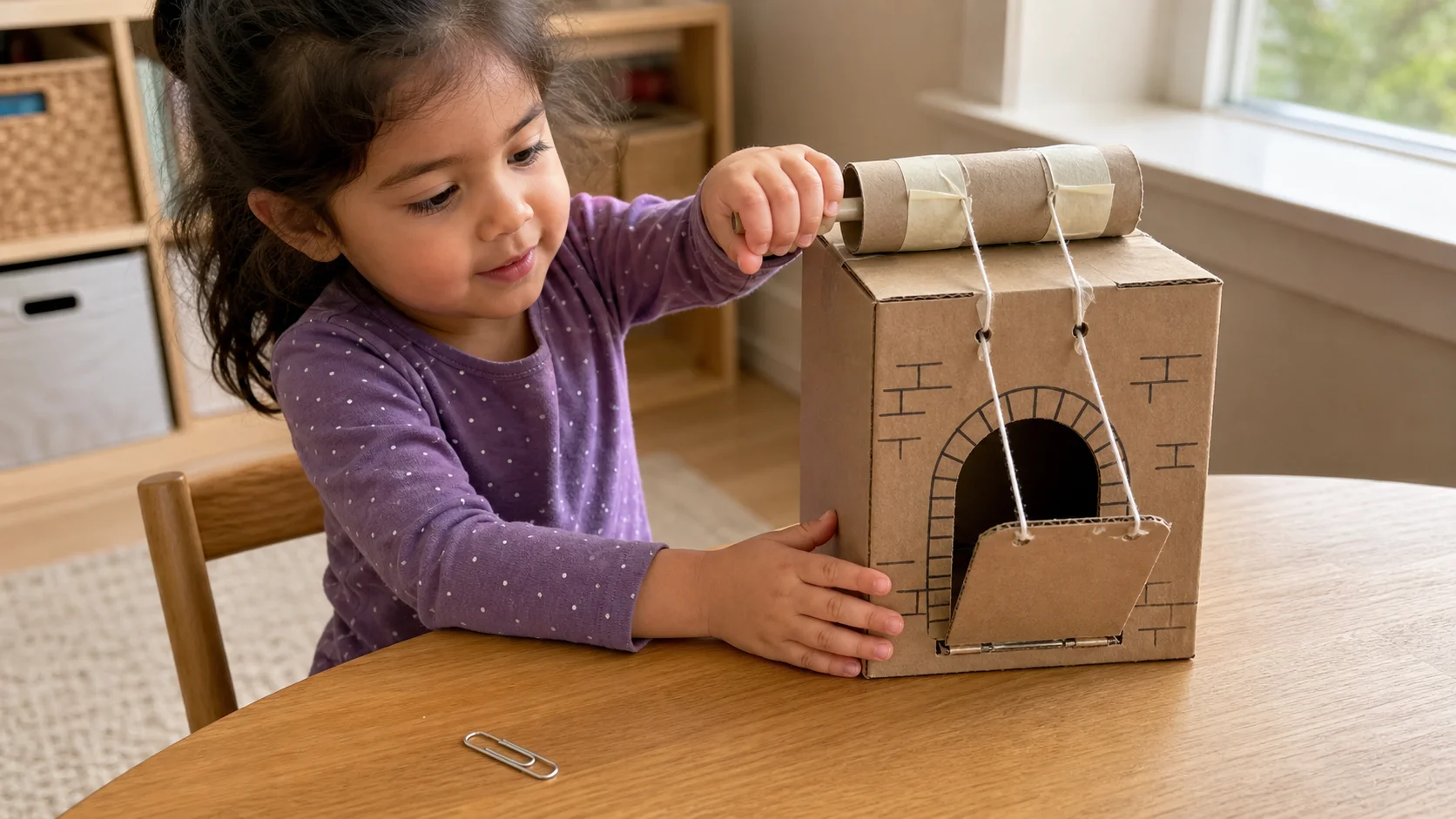
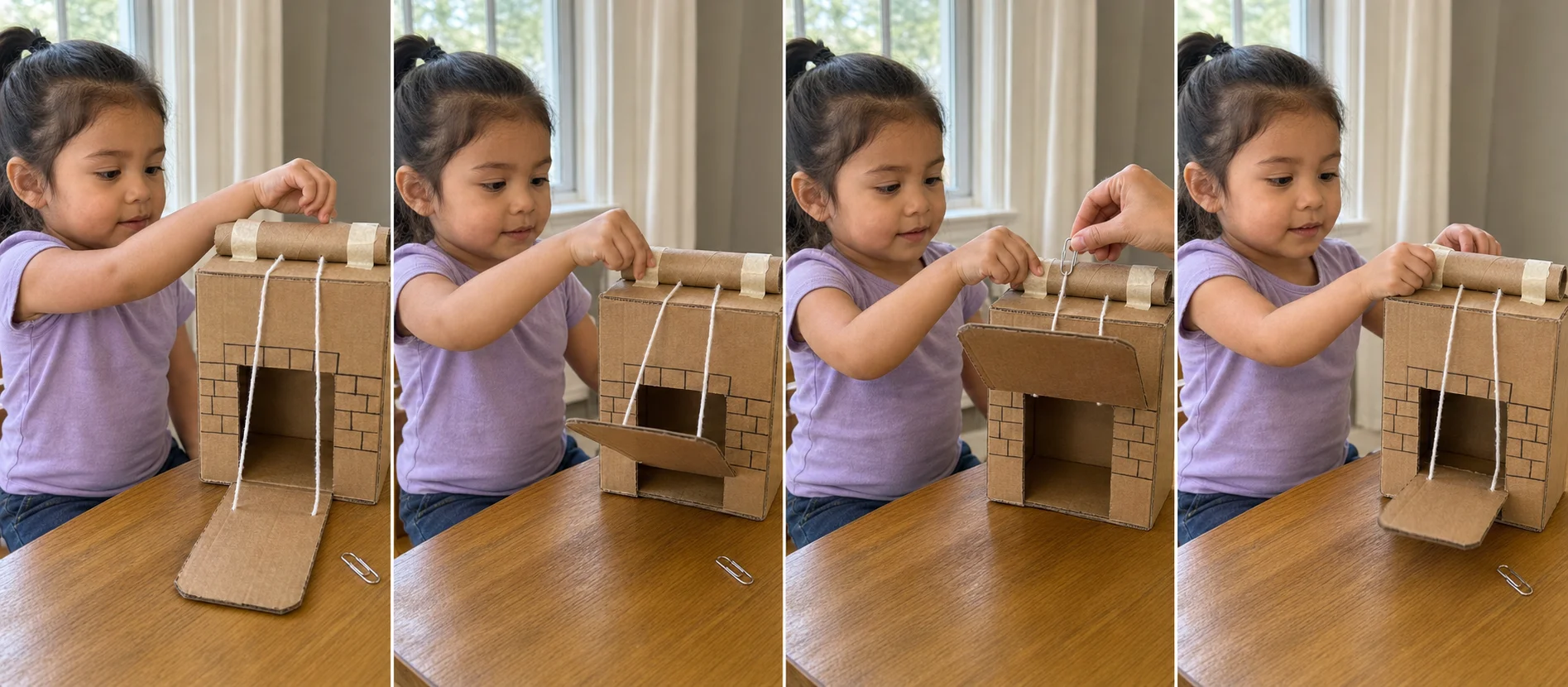
Turn a small cardboard box into a drawbridge your child can lift, clip, lower, and try again.


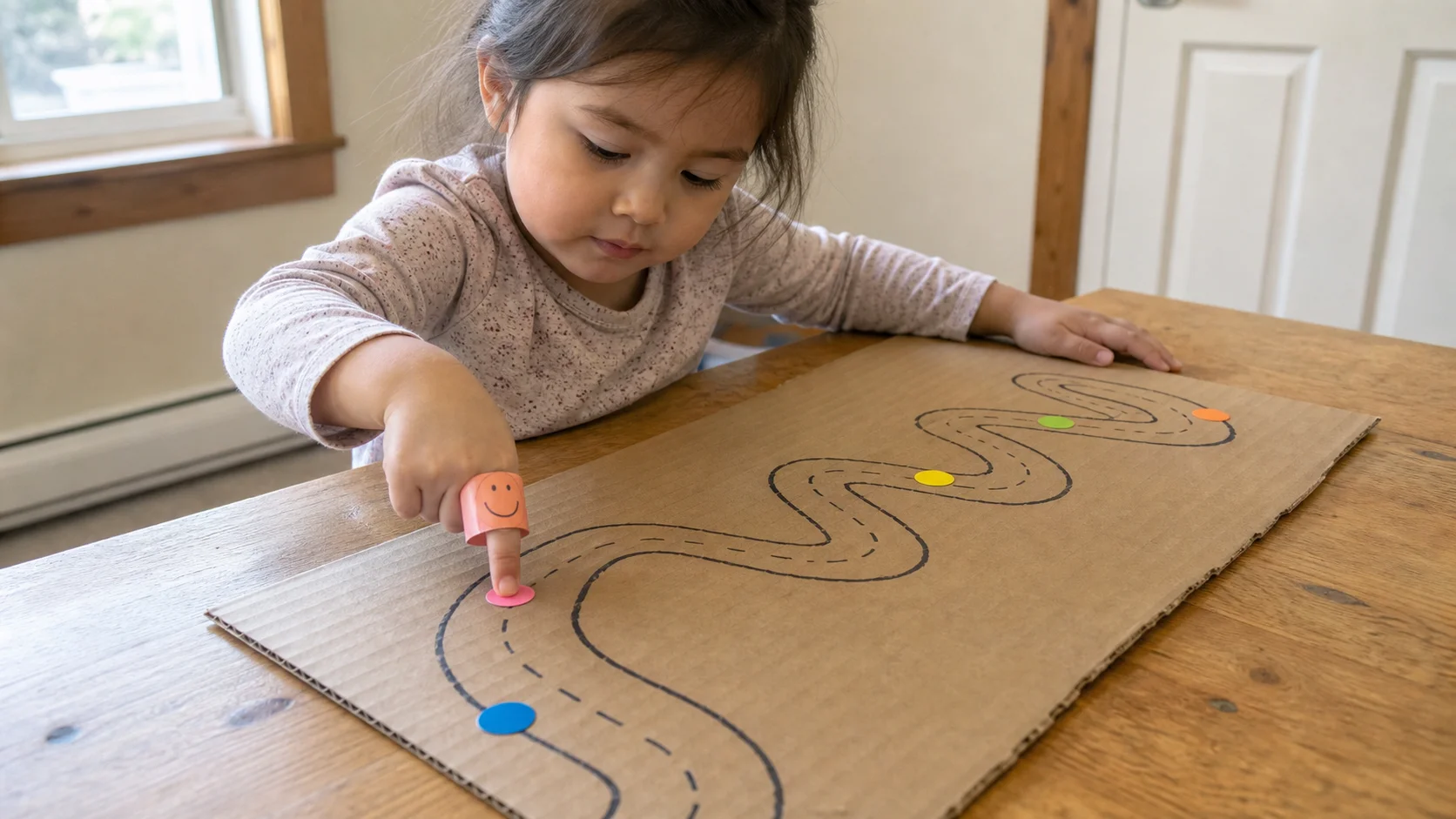
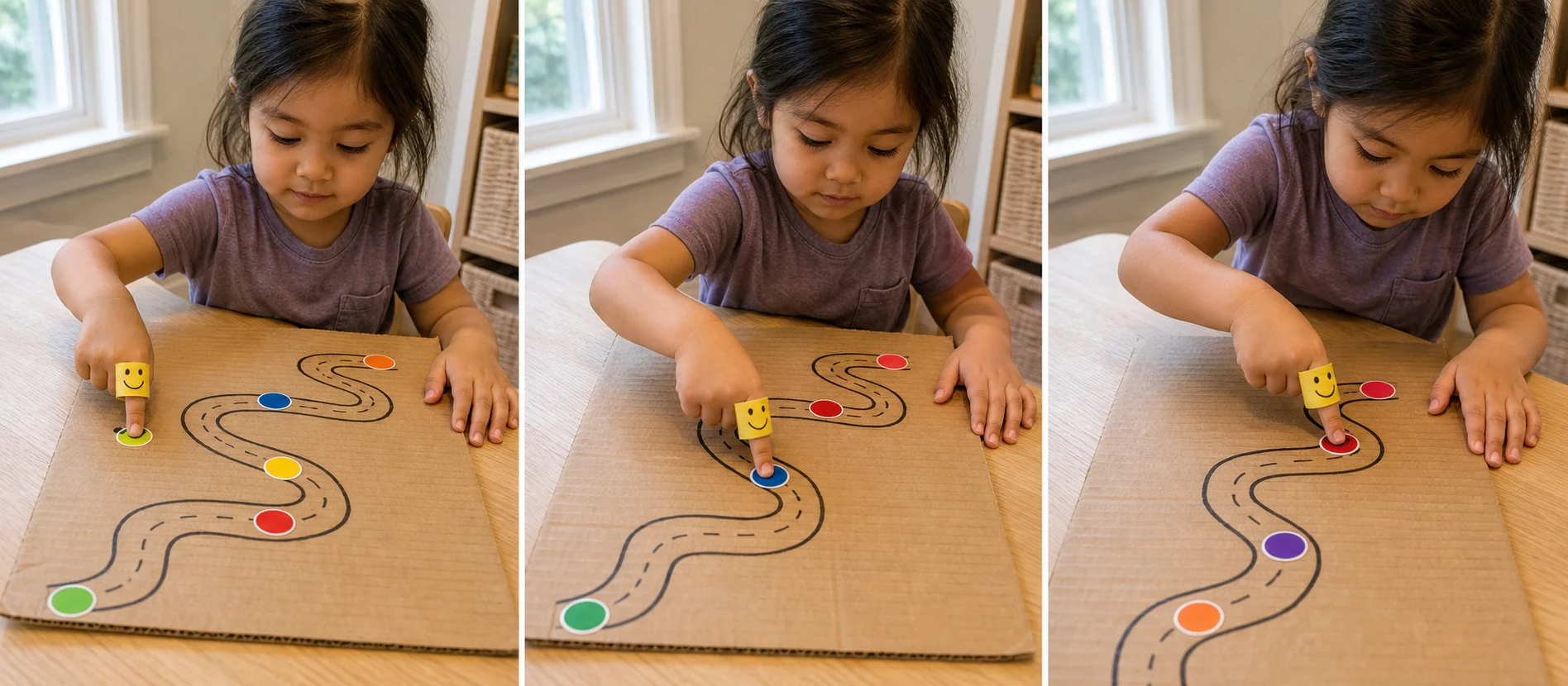
Slide on a paper finger puppet, follow a cardboard road, and press each sticker stop along the way.


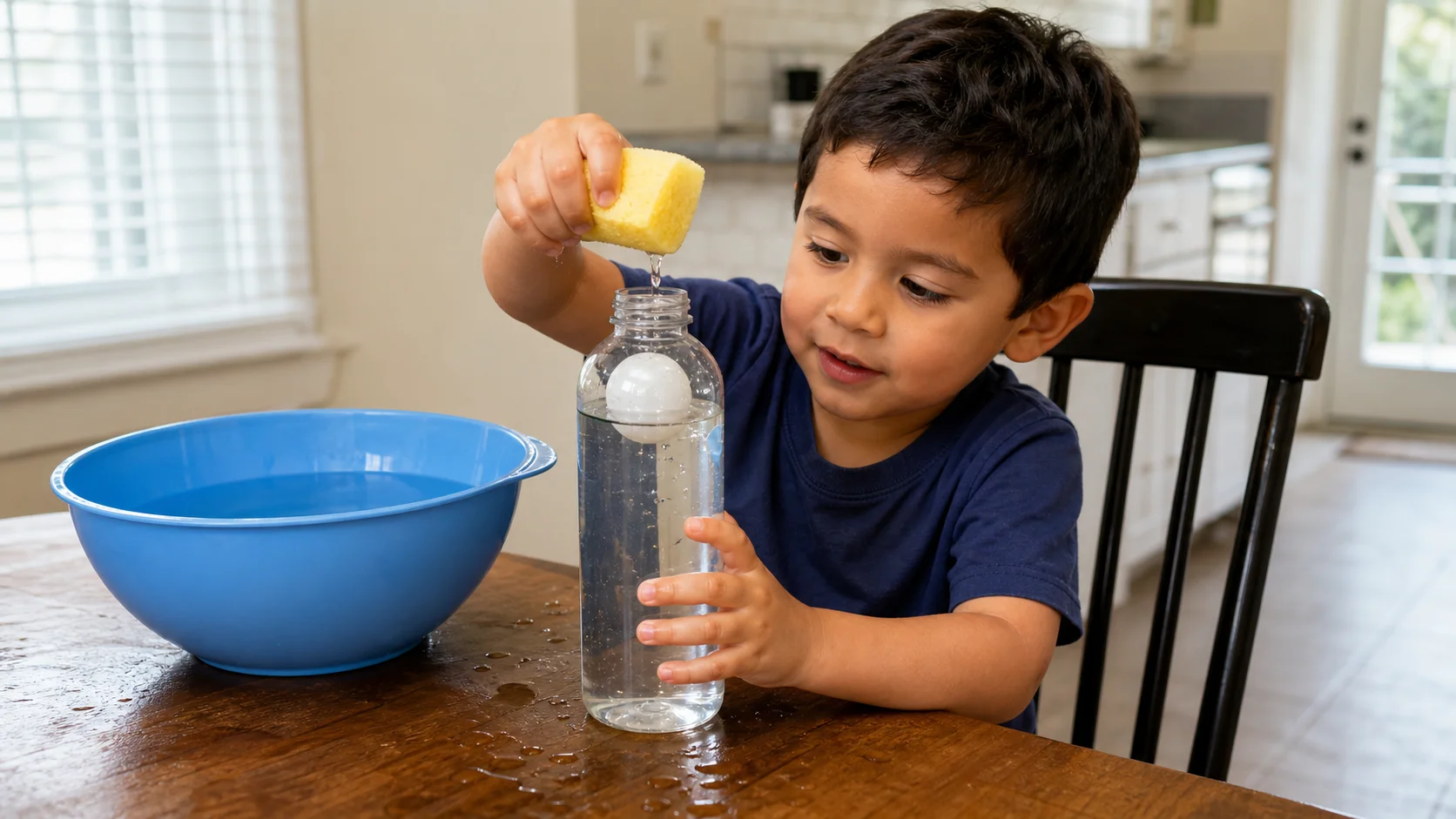
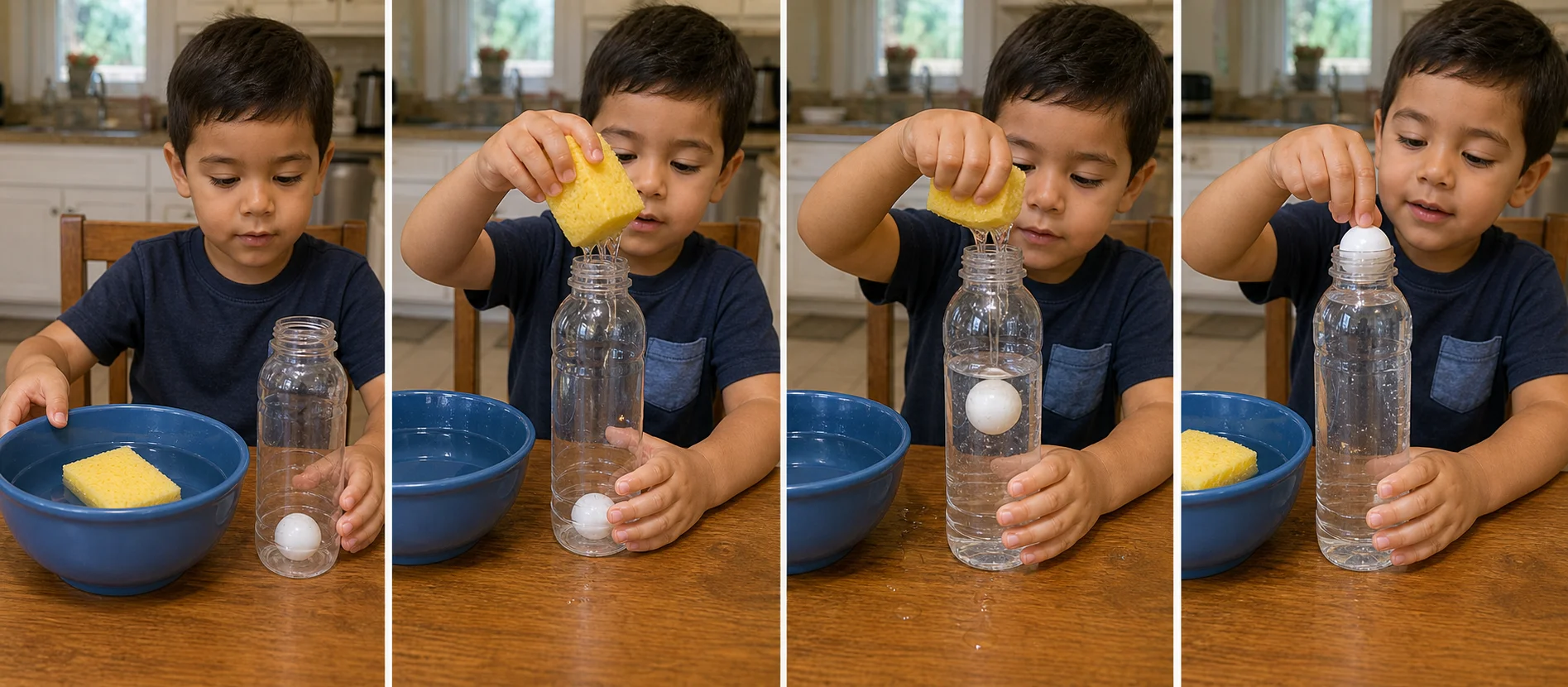
Sponge squeezes raise a floating ball until preschoolers can pinch it out and reset.


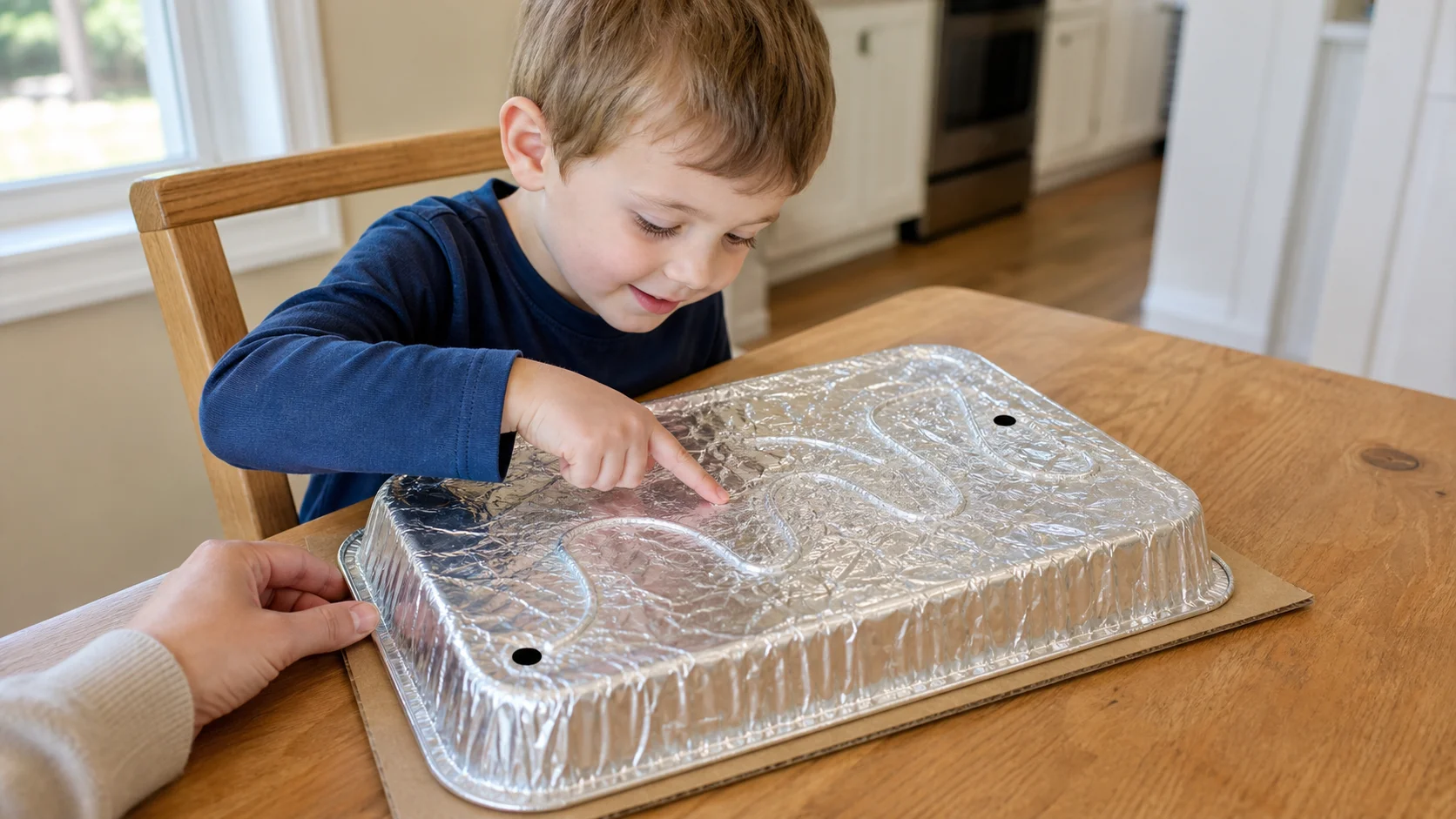
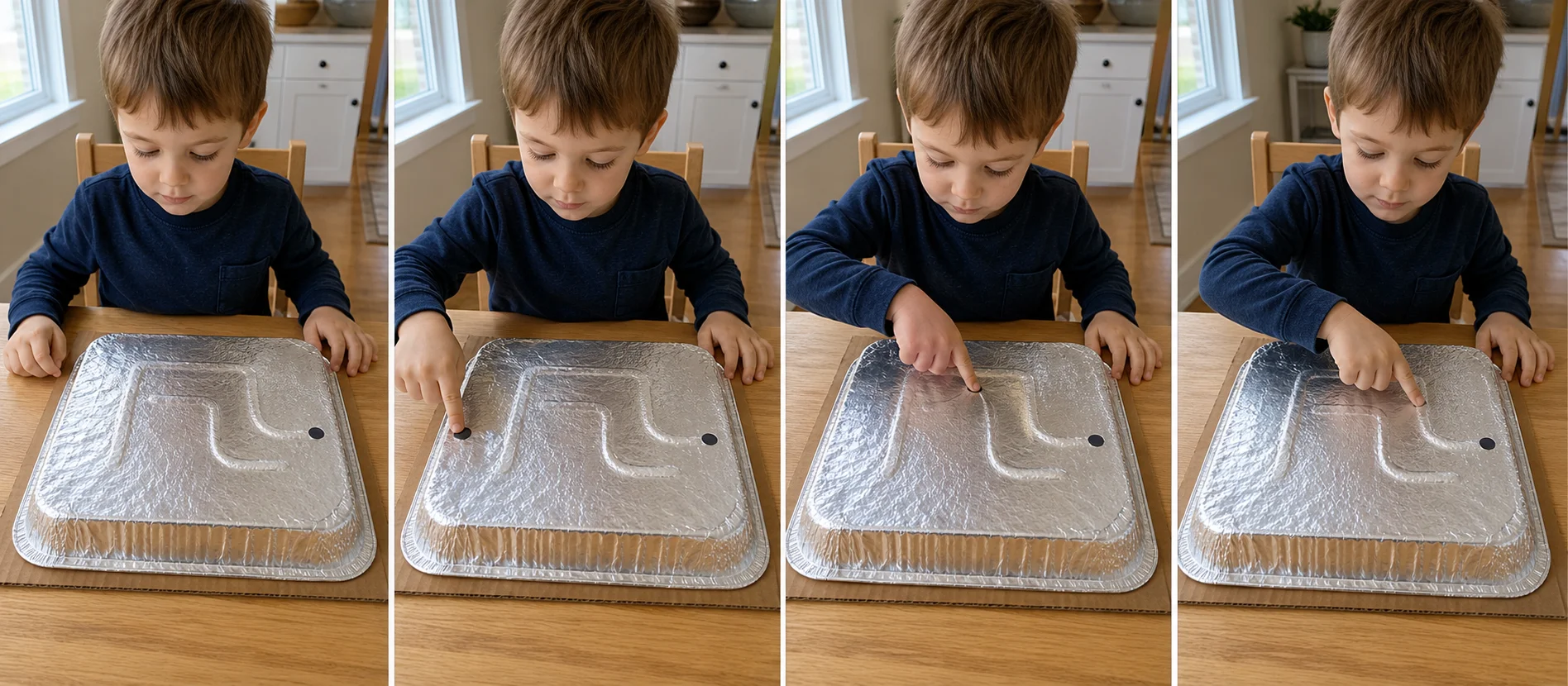
Hide a yarn path under foil and let your child trace the raised road with one careful pointer finger.

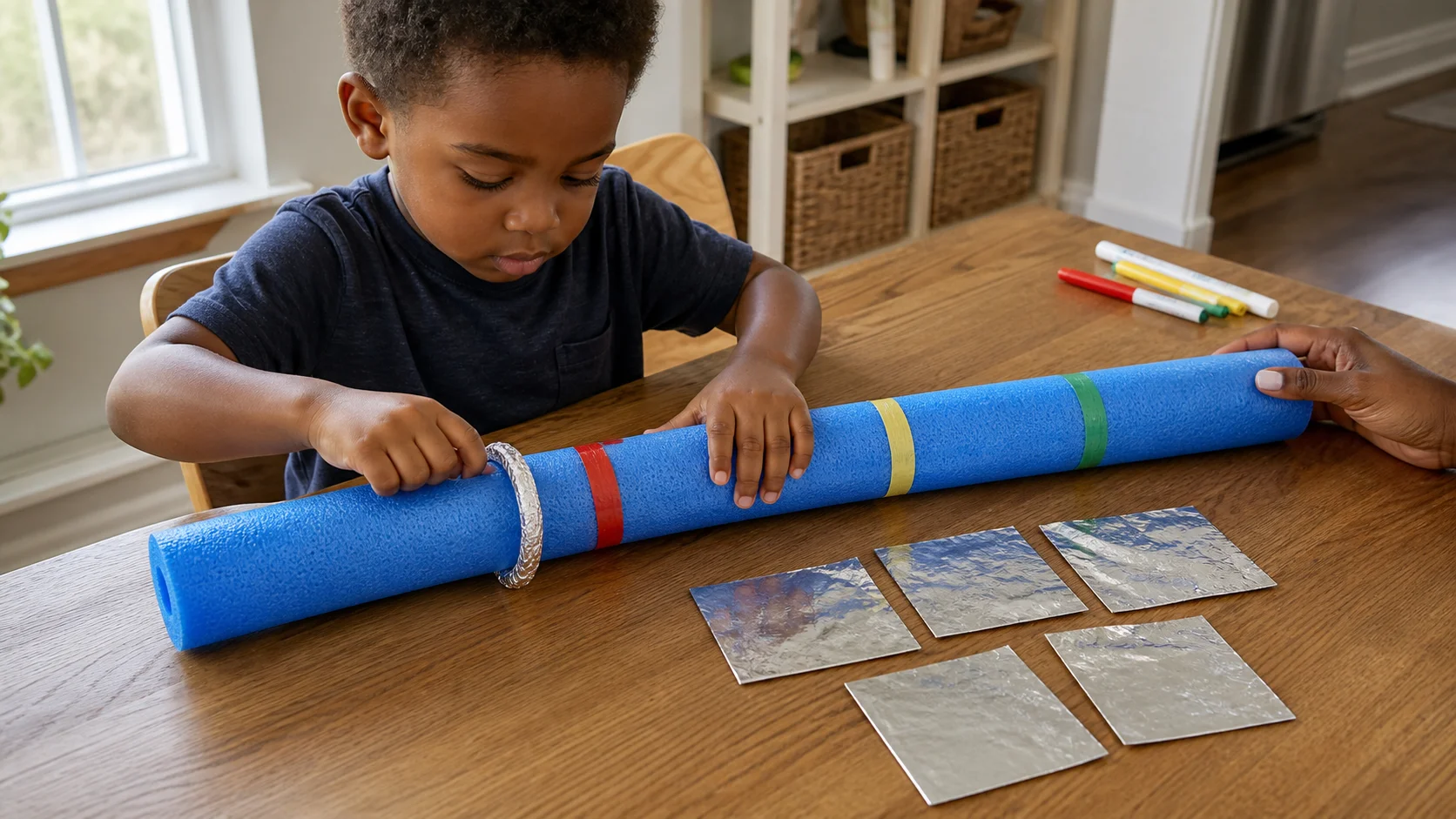
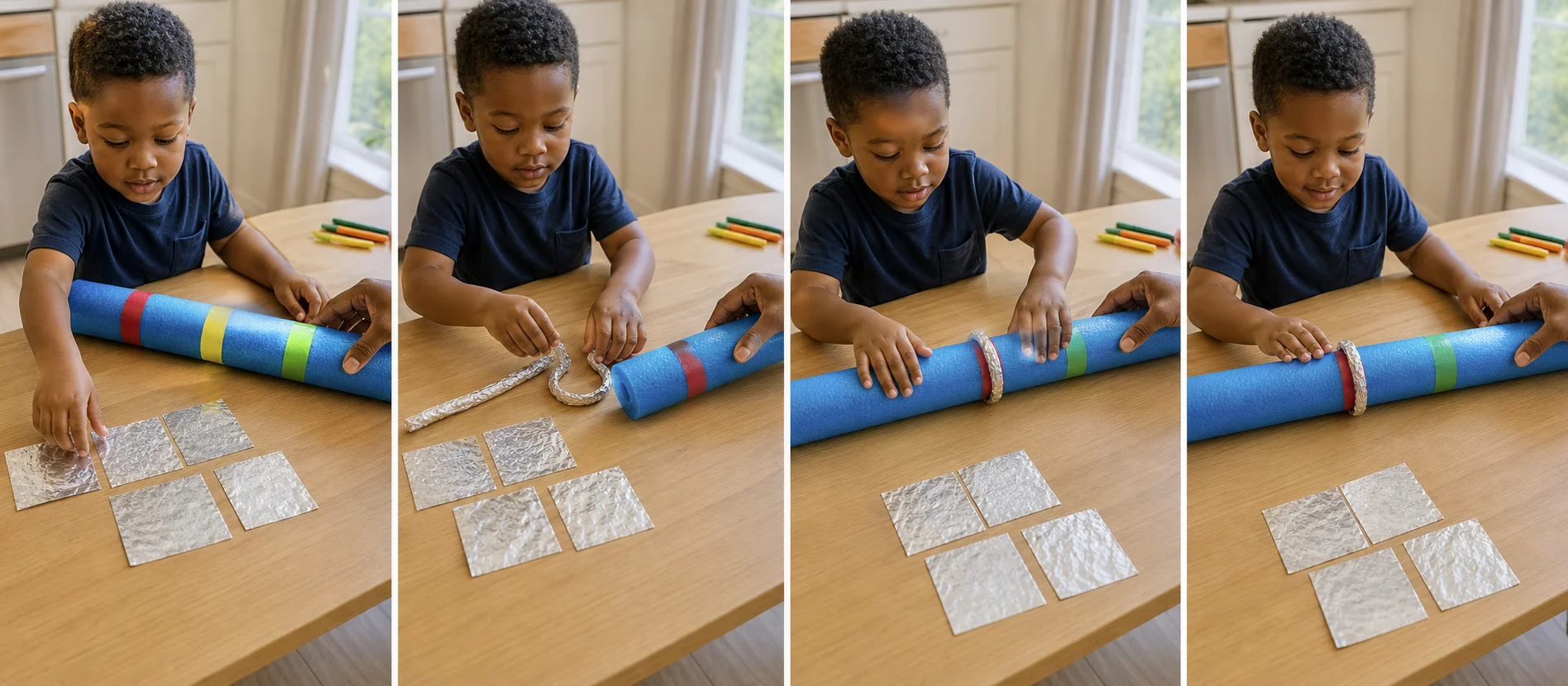
Turn foil into five easy sliders for a striped pool noodle. Your child sizes each ring to fit, chooses a color target, steadies the noodle, and pushes the ring along with the other hand.


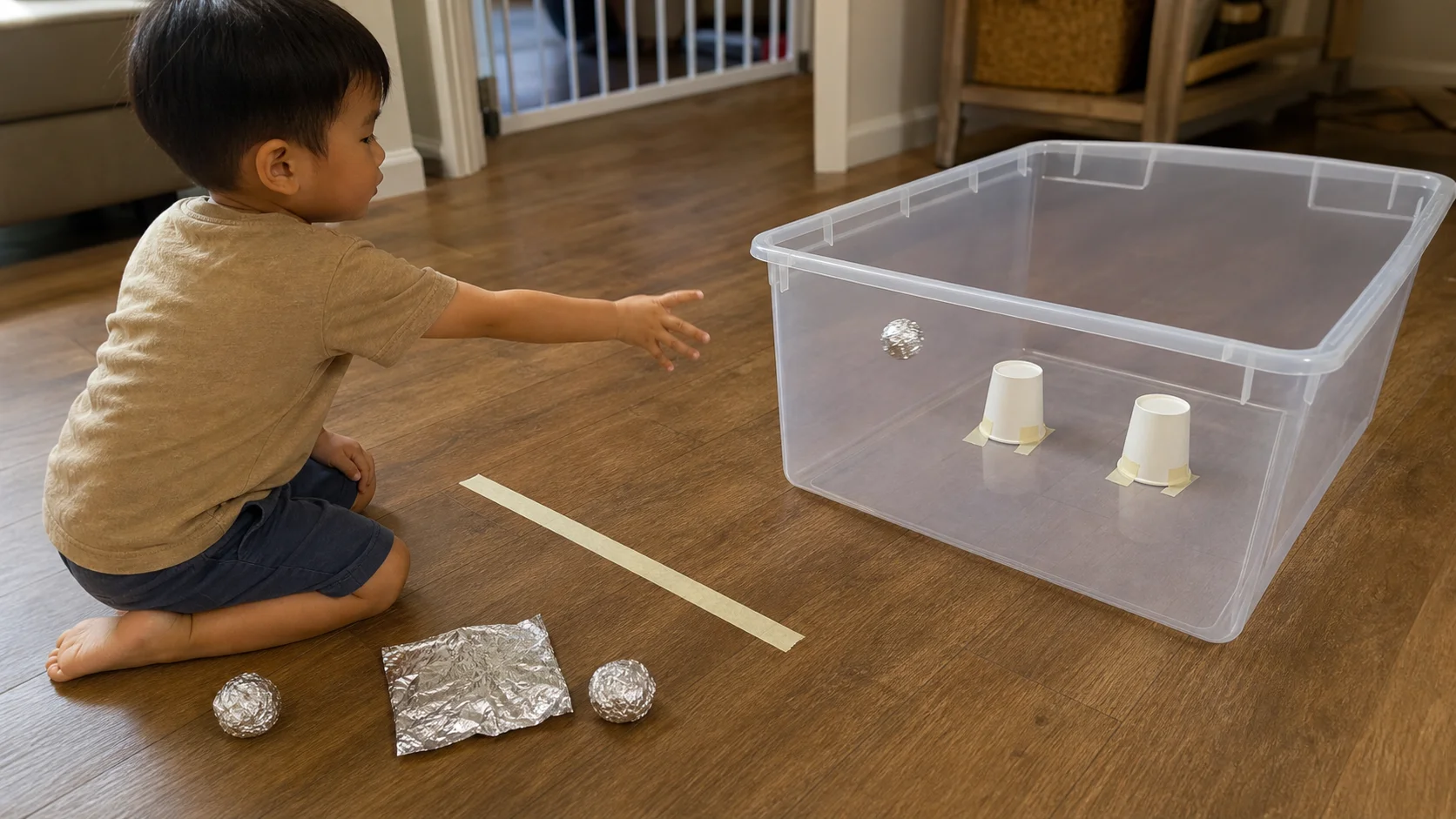
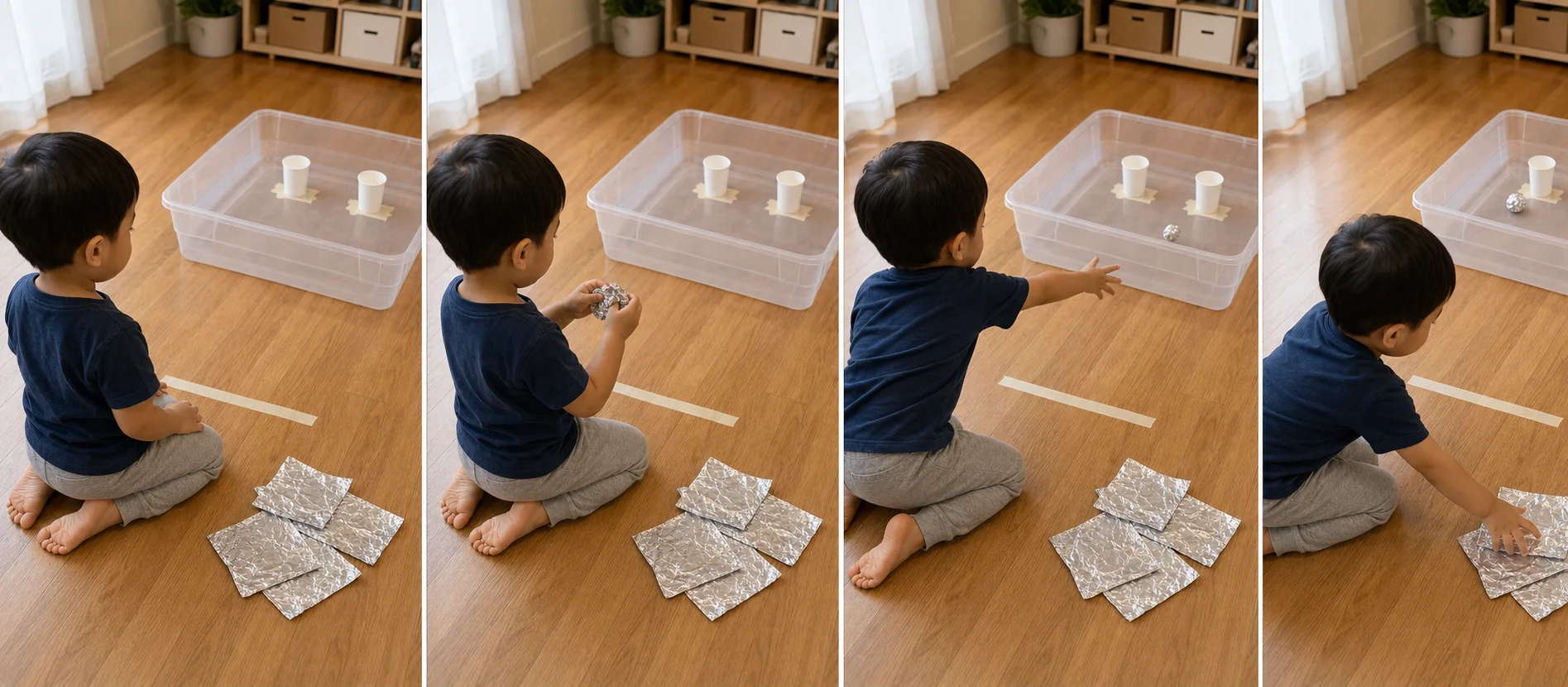
Can your child turn noisy foil into a tiny river rock and land it in a cup? Have them crumple a large foil sheet with both hands, then toss the dense ball toward paper-cup targets for a satisfying hand-strength and eye-hand coordination challenge.


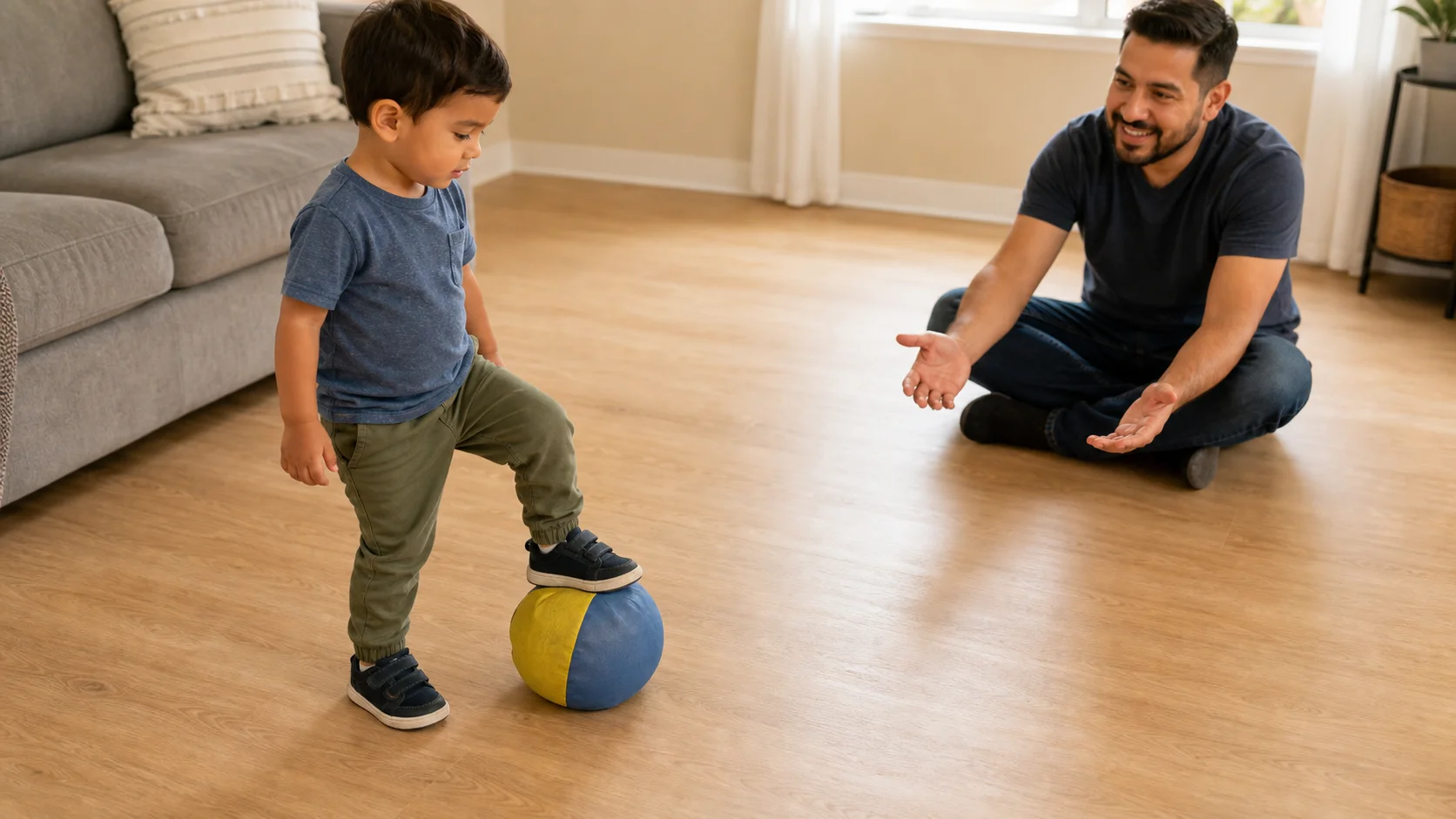
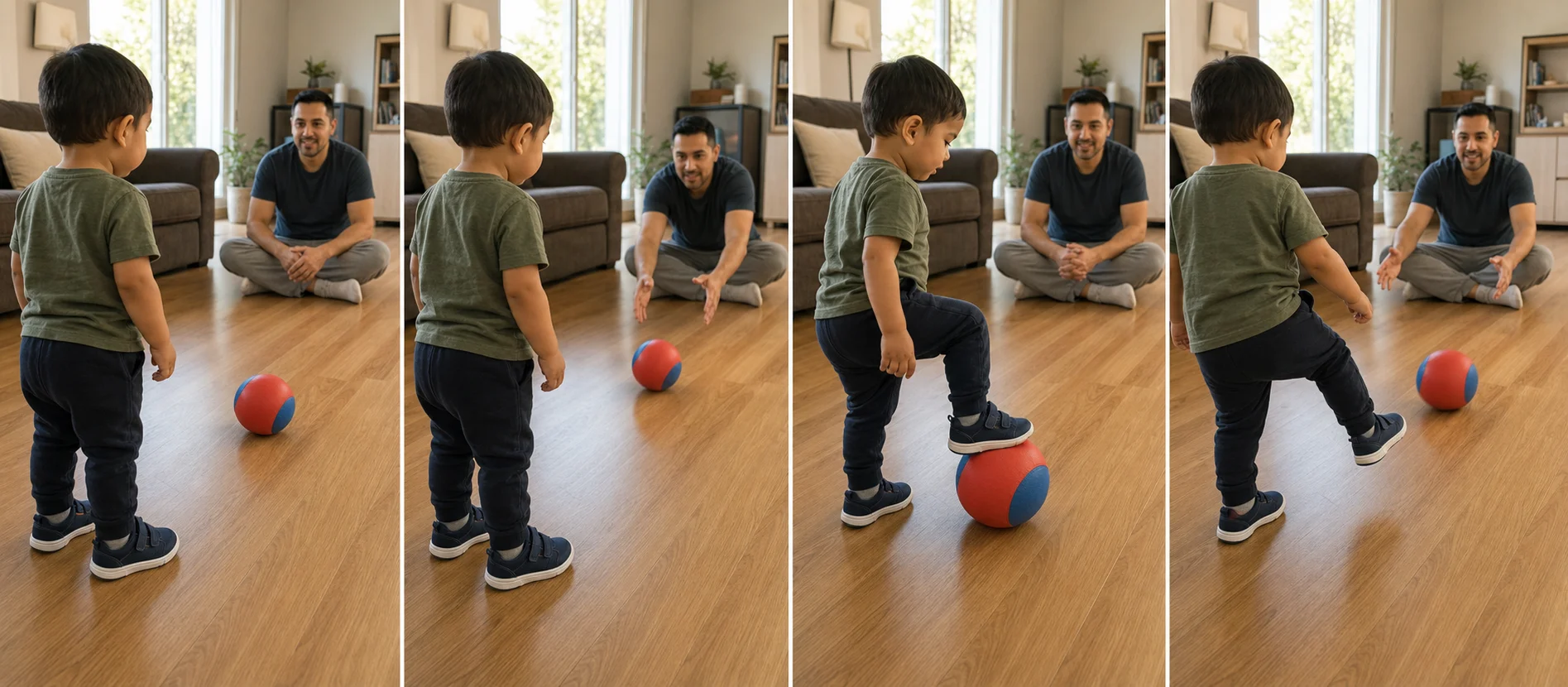
Can your child stop a rolling ball with one foot and send it right back? This simple stop, hold, and roll game builds balance and foot control with one soft ball.

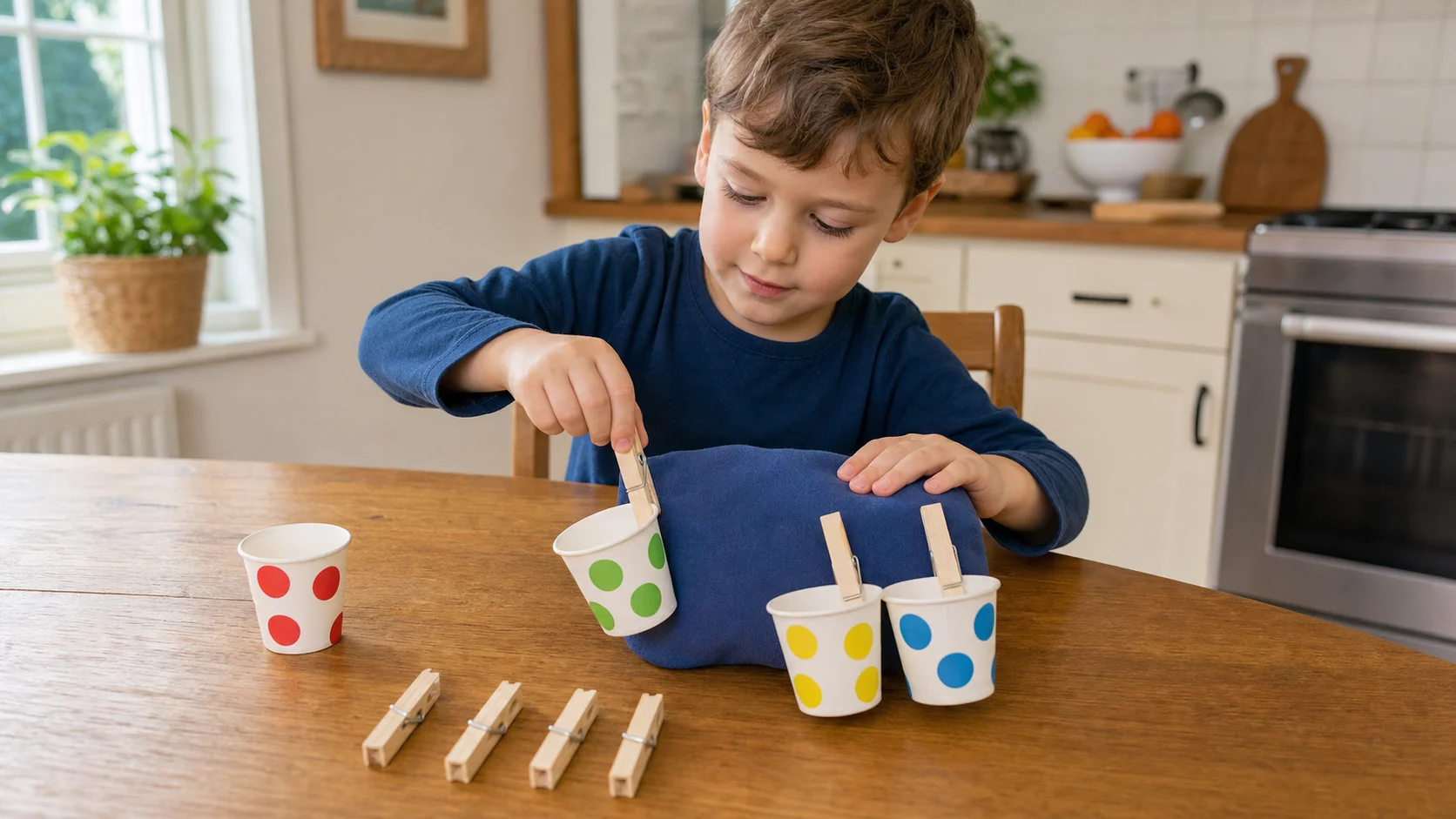
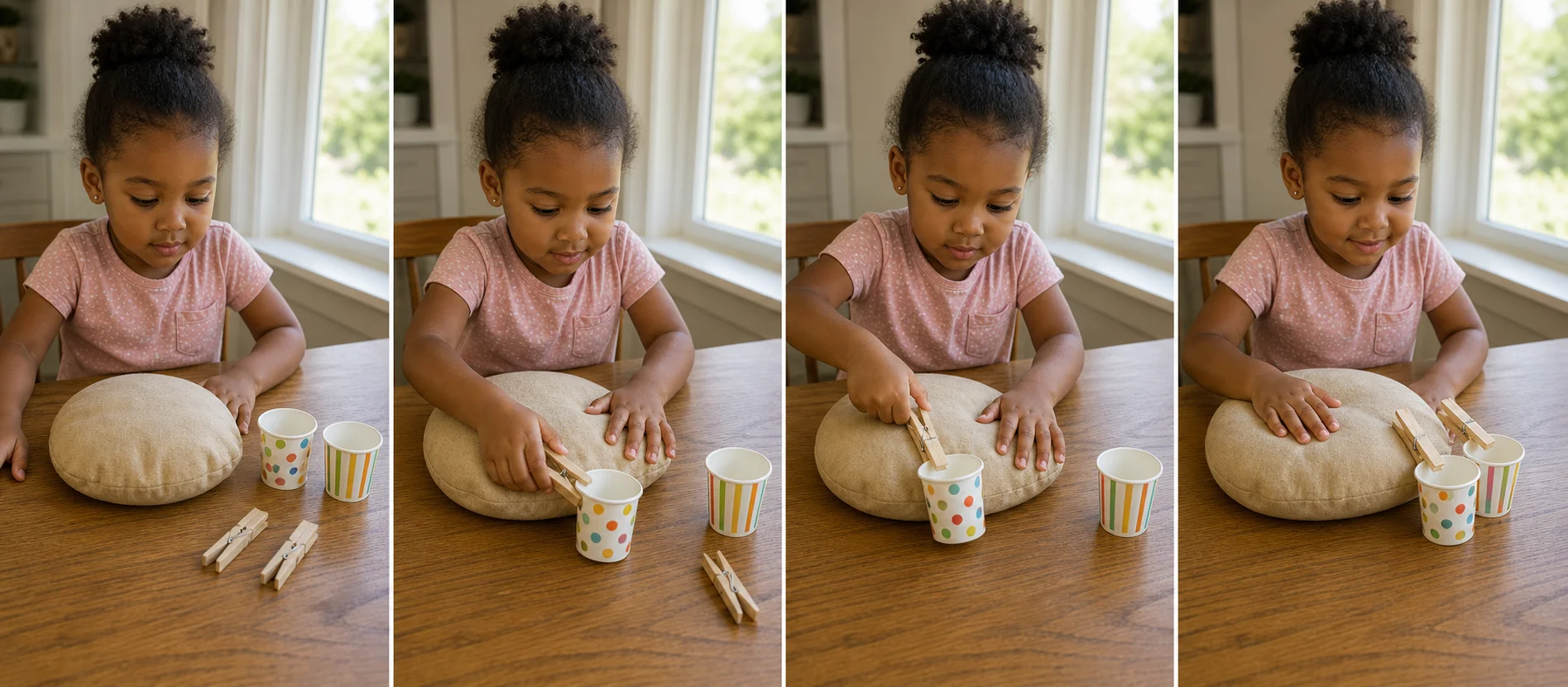
Clip decorated paper cups to the edge of a heavy beanbag using clothespins. Each squeeze-and-release builds hand strength and finger control as your child attaches the cups one at a time.


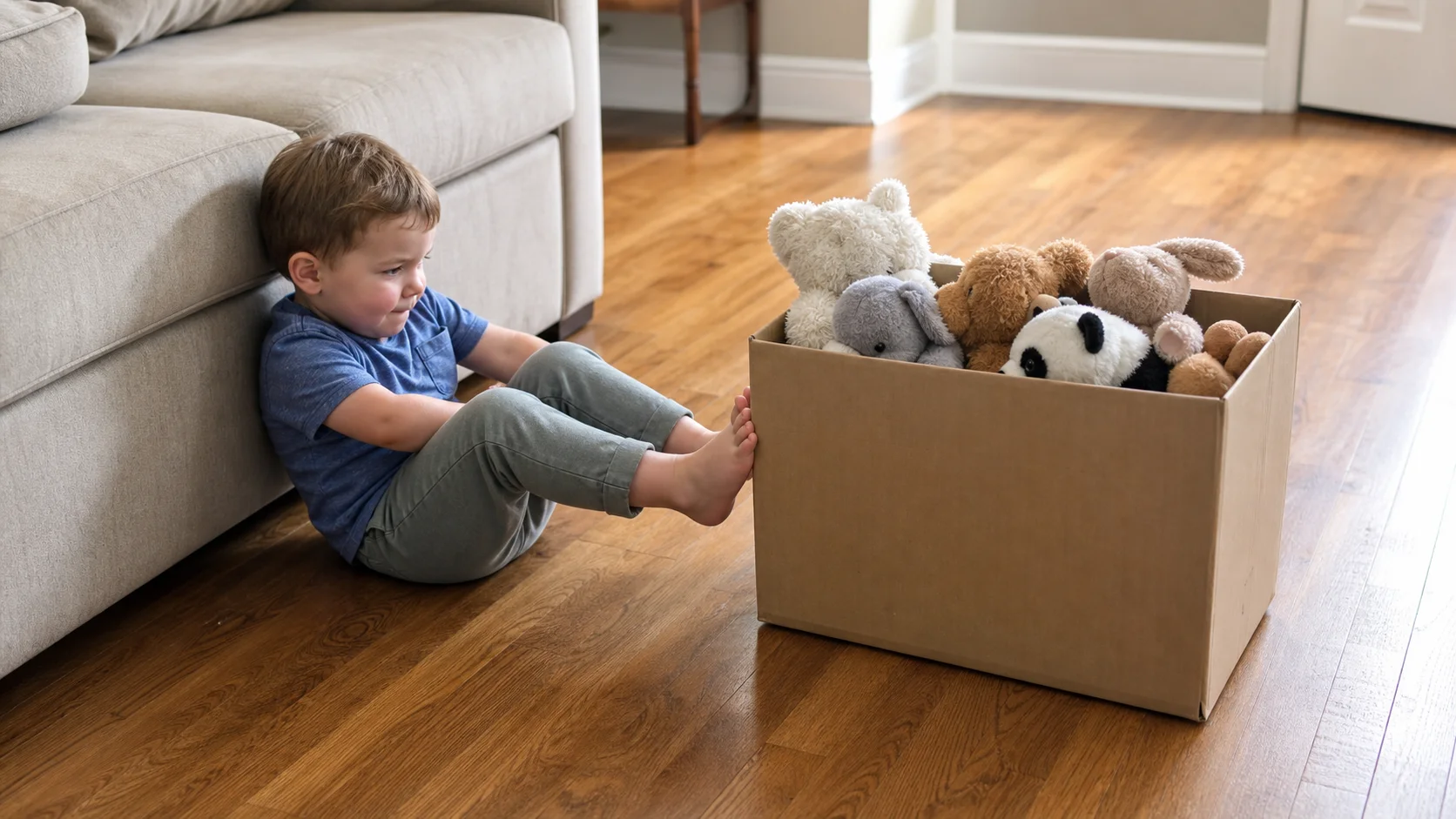
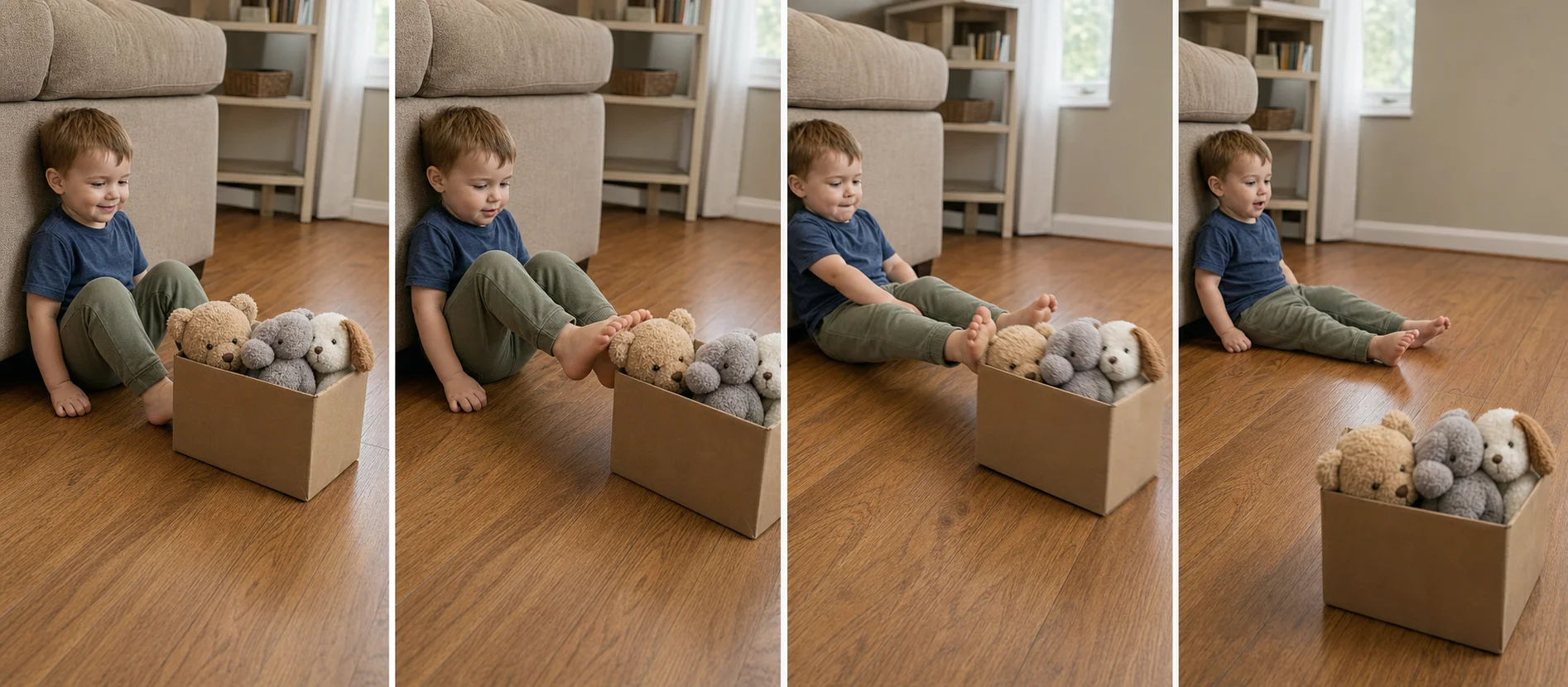
Turn stuffed animals into cargo for a satisfying strength-and-distance game. Your toddler sits with back support and uses both feet to send a loaded cardboard box sliding across a smooth floor, practicing coordinated movement and force control.


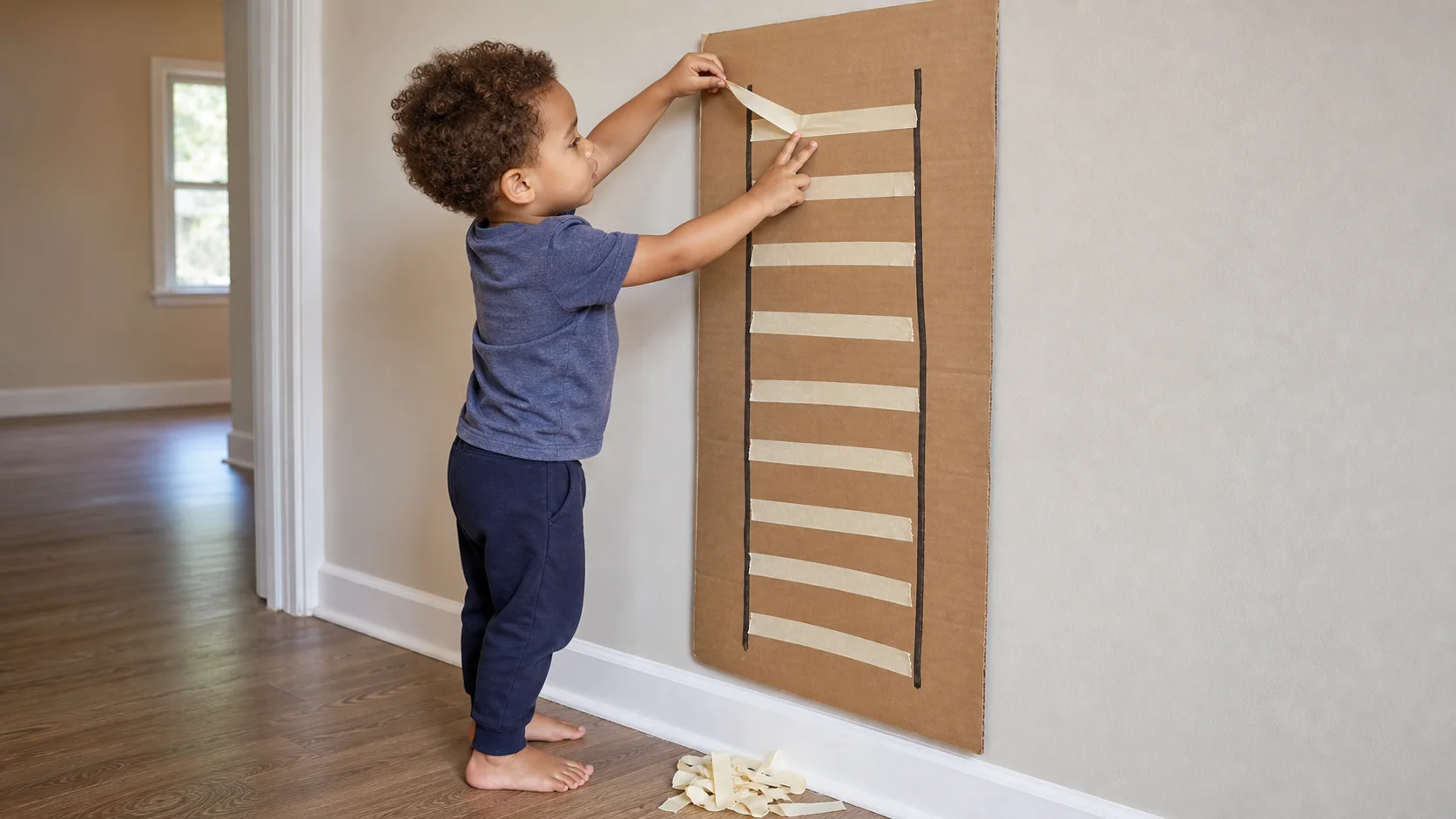
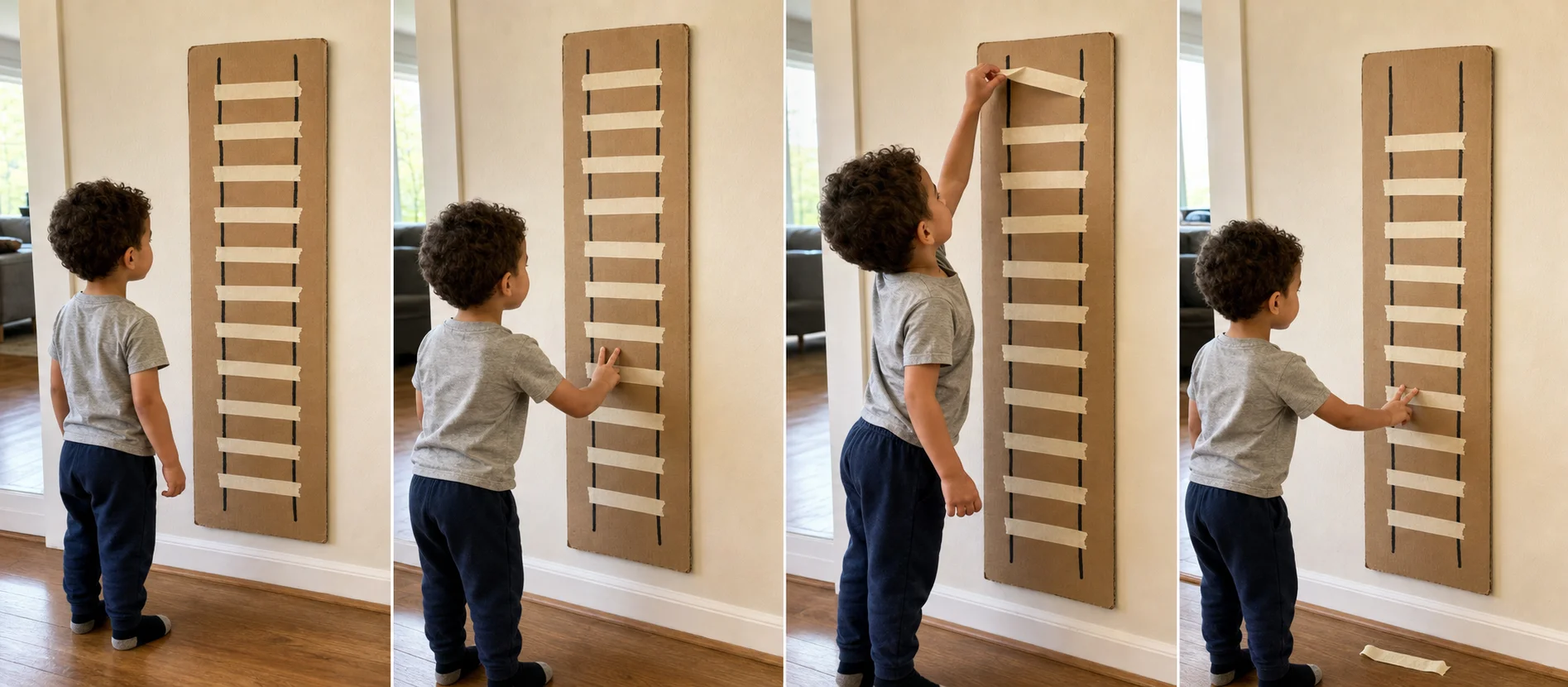
Turn masking tape into a satisfying finger-climbing challenge. Your child walks two fingers up a cardboard ladder, then pinches and peels each rung.


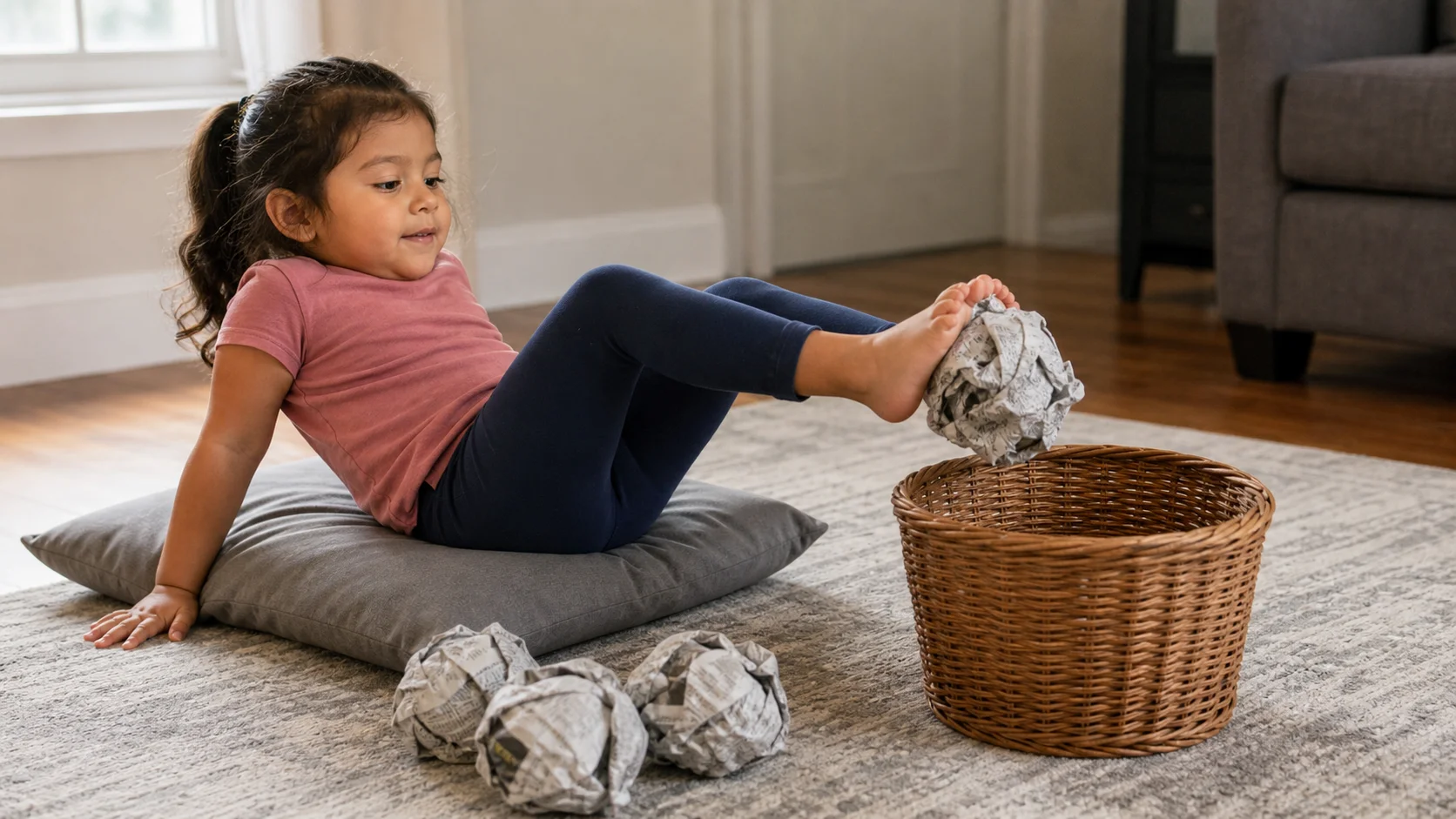
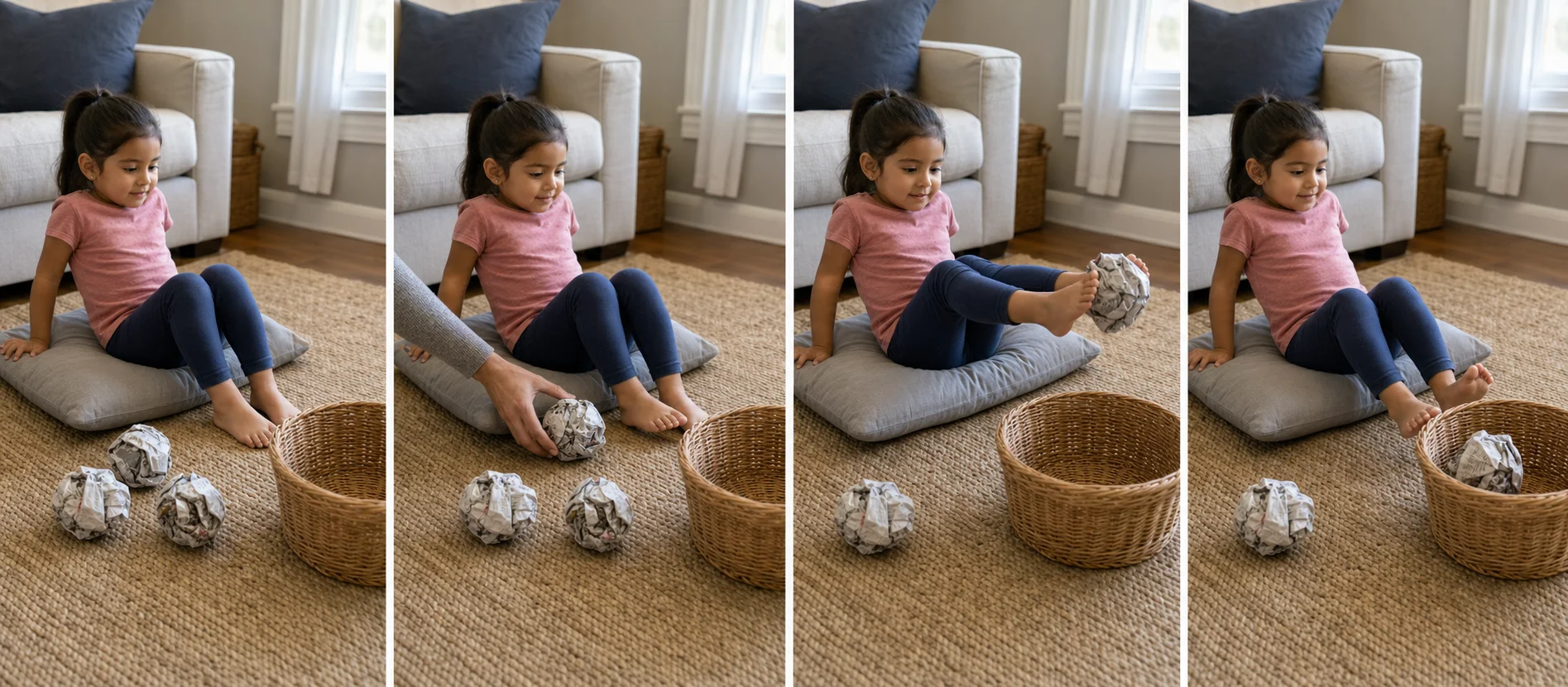
Turn newspaper cleanup into a foot-powered delivery game. Your child pinches each crumpled paper nest between both feet, lifts it into a basket, and practices core control, balance, and body awareness.


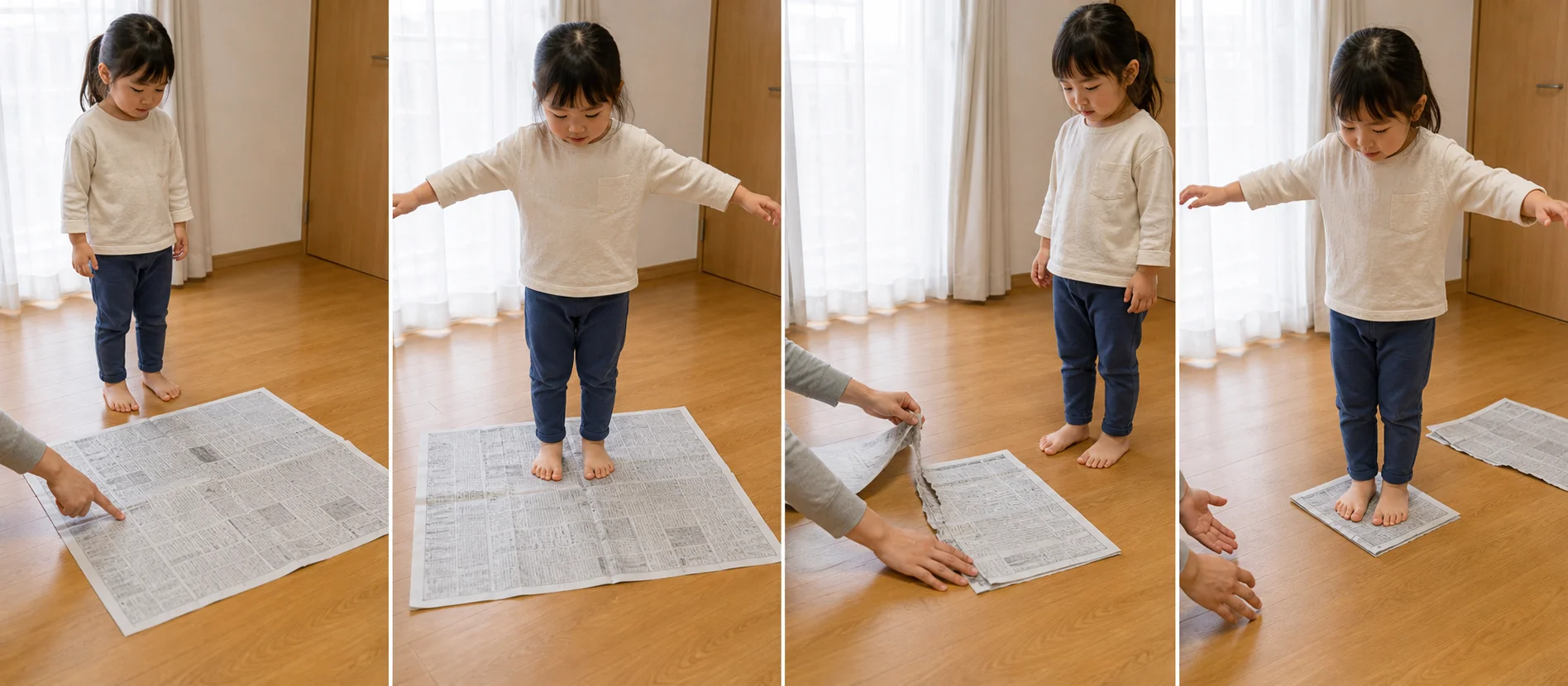
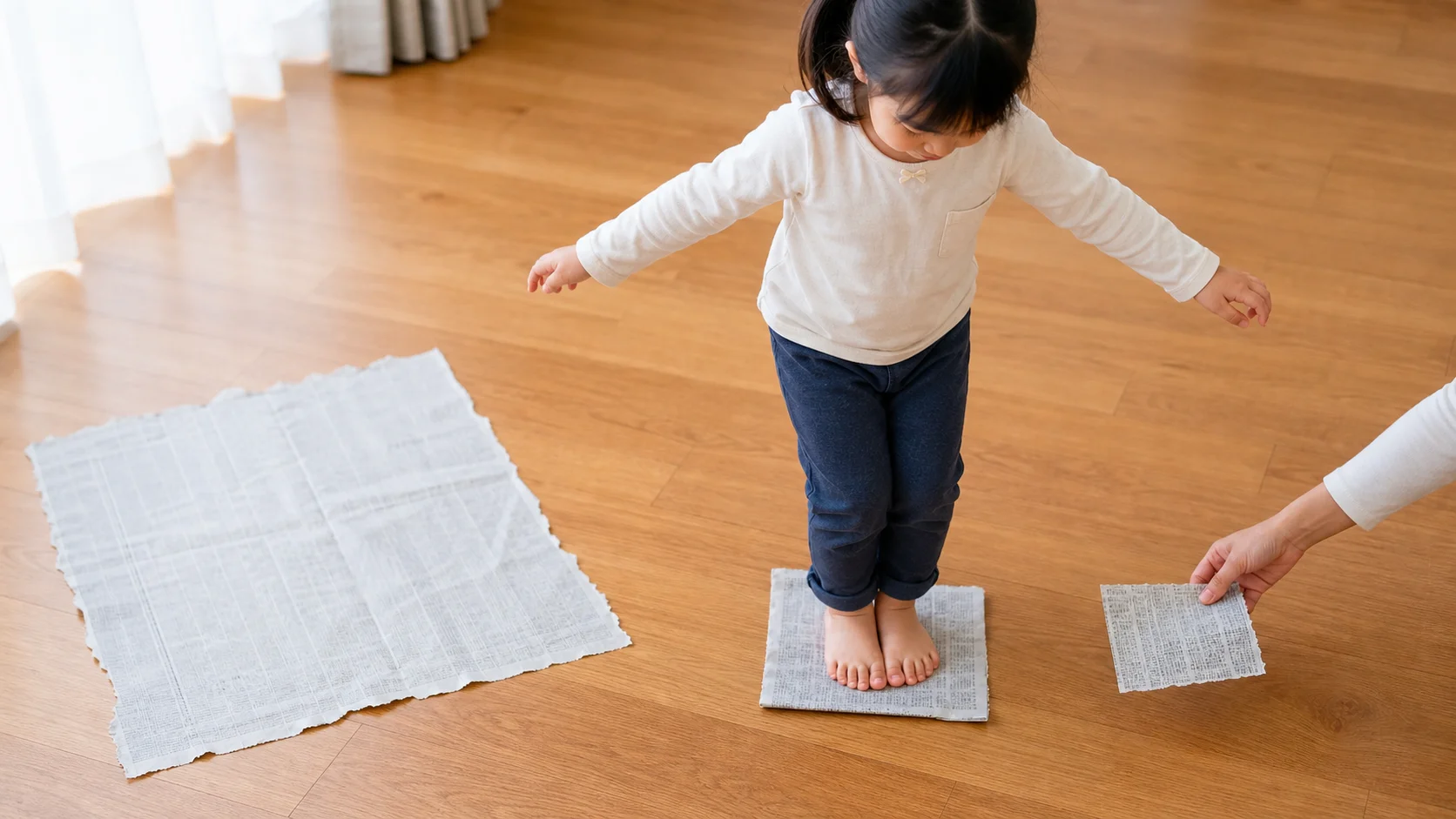
Turn one newspaper sheet into a balance challenge that changes every round. Your child steps onto the paper, steps off while you tear it in half, then returns to practice balance and body control on the shrinking island.


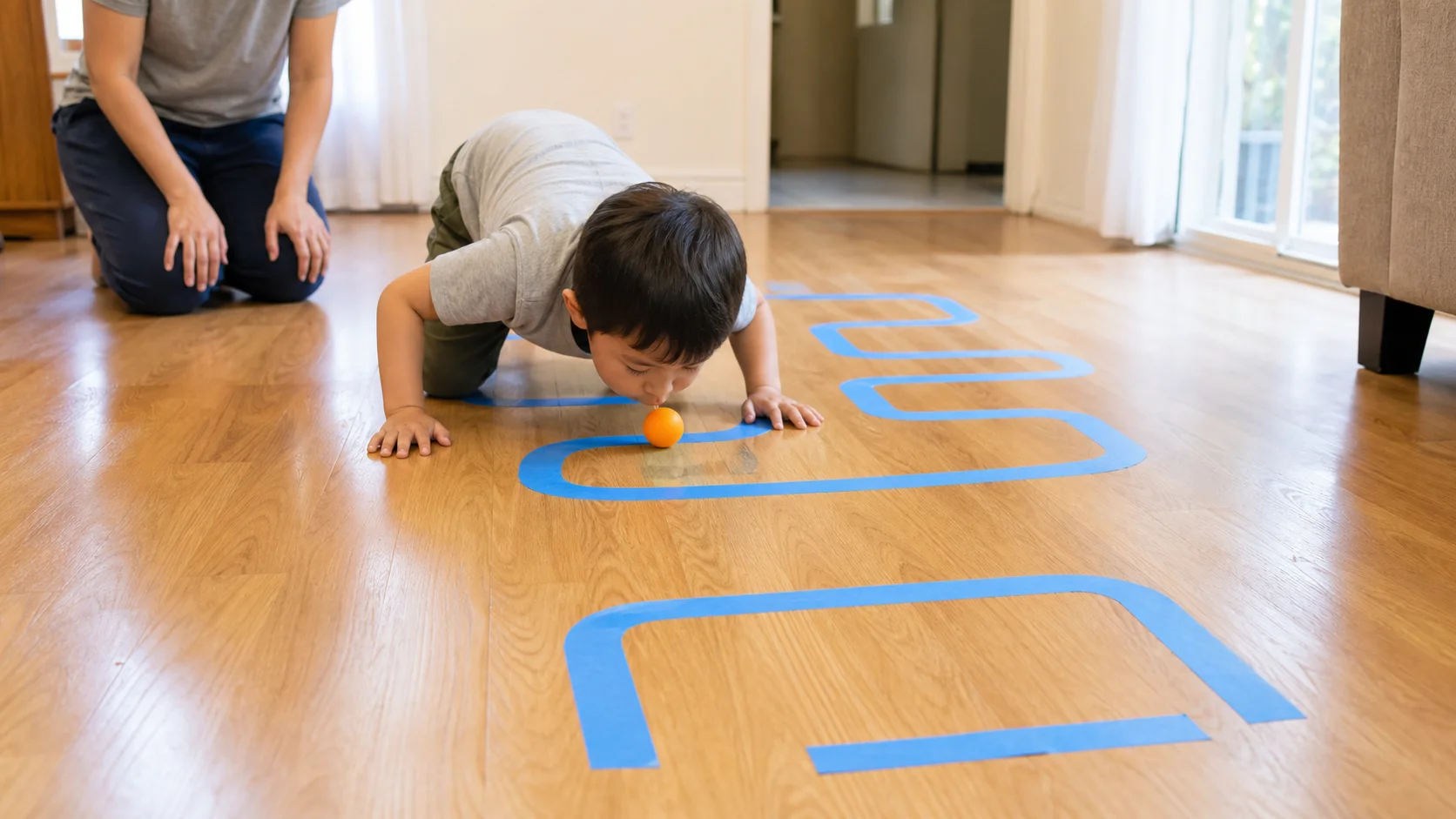
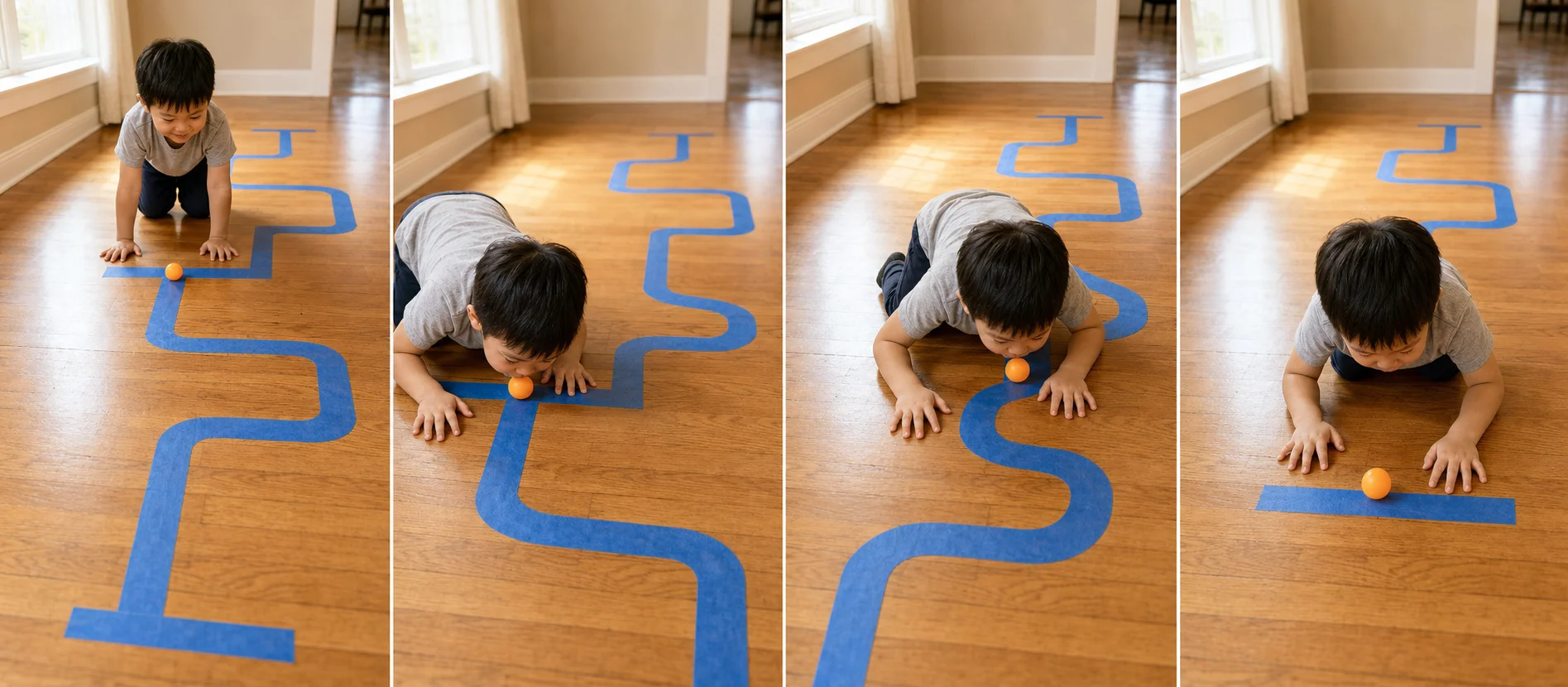
Turn a ping-pong ball and a taped floor lane into a silly crawling challenge. Your child keeps both hands down and uses nose nudges to guide the ball from start to finish, practicing body awareness, core strength, and careful movement planning.


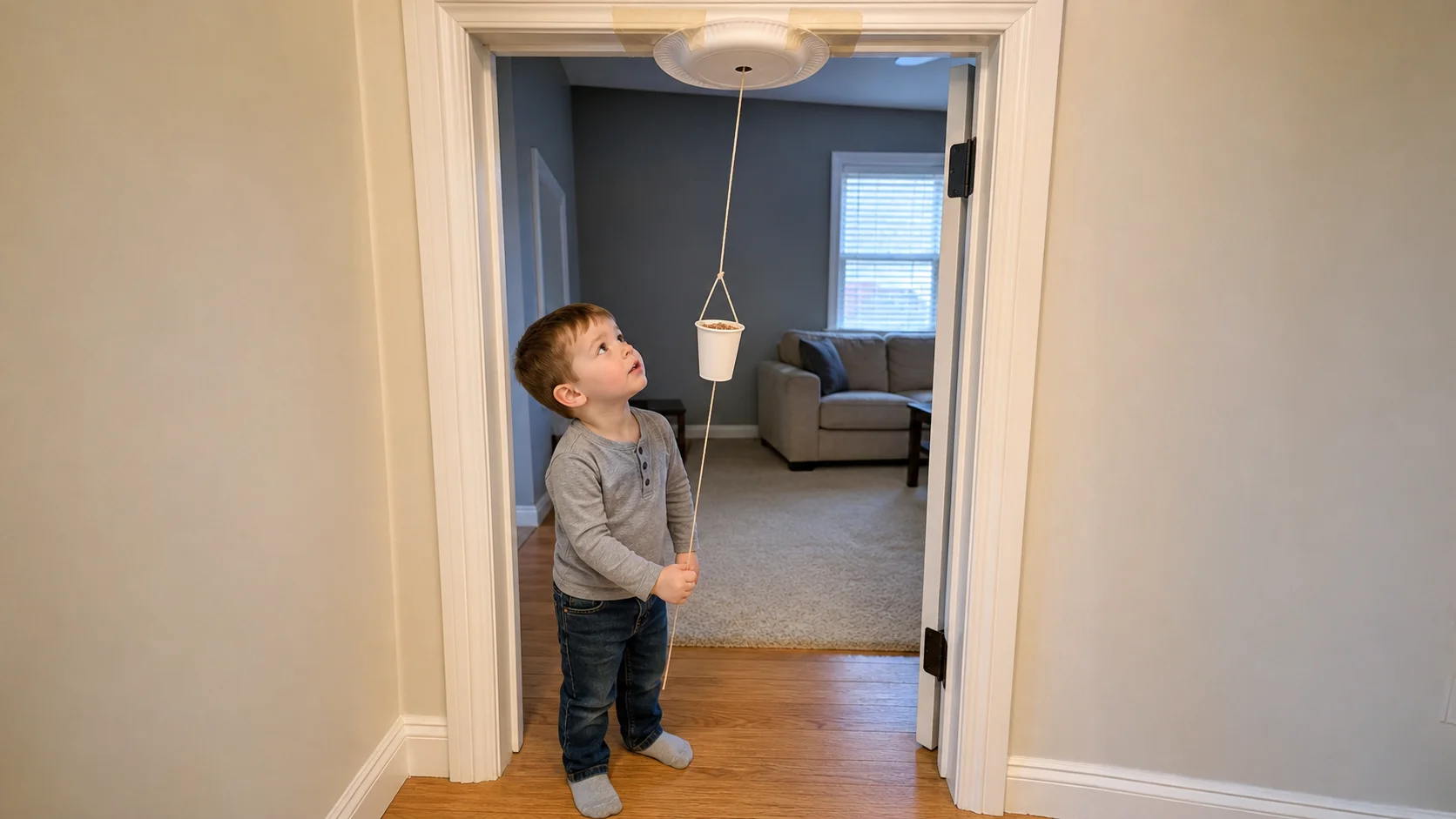
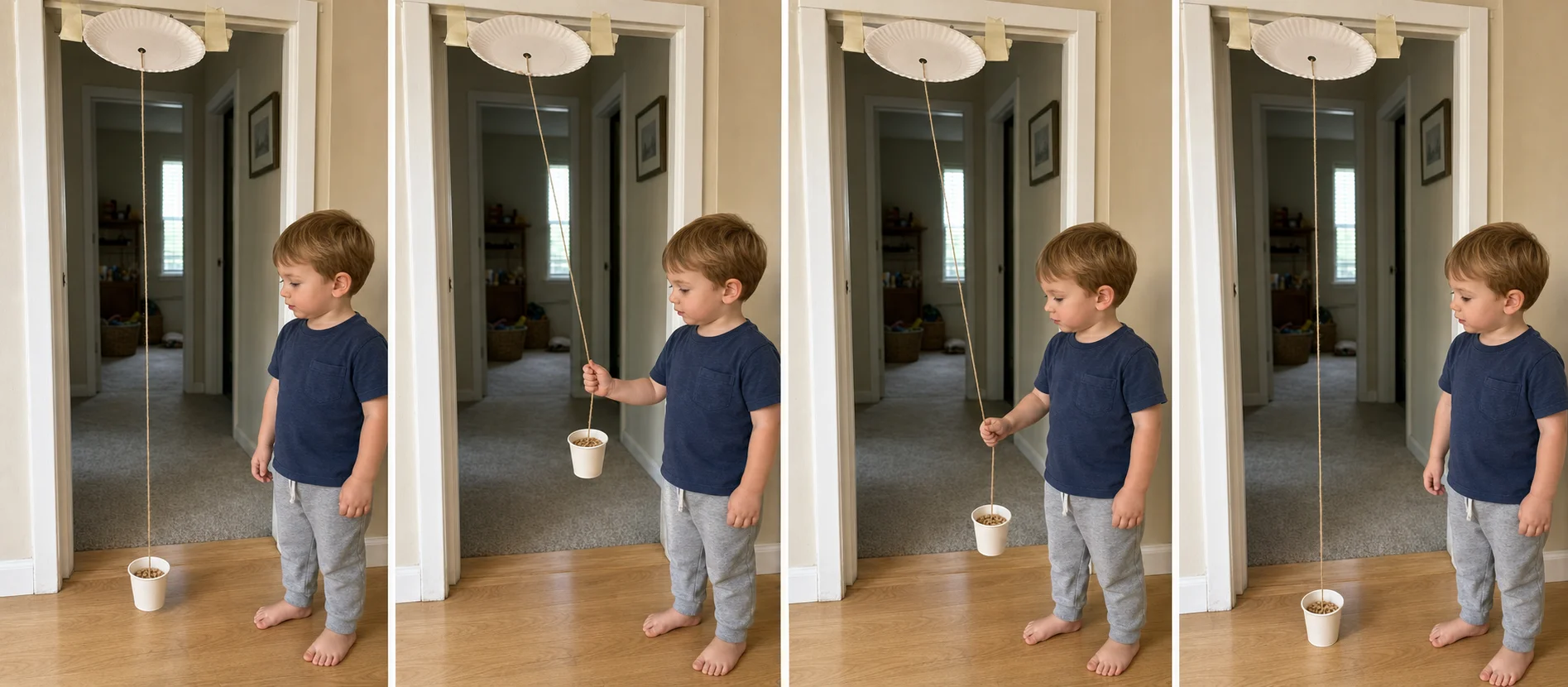
Pull a short string through a reinforced paper-plate guide to lift a very light cup, then lower it slowly for another turn.


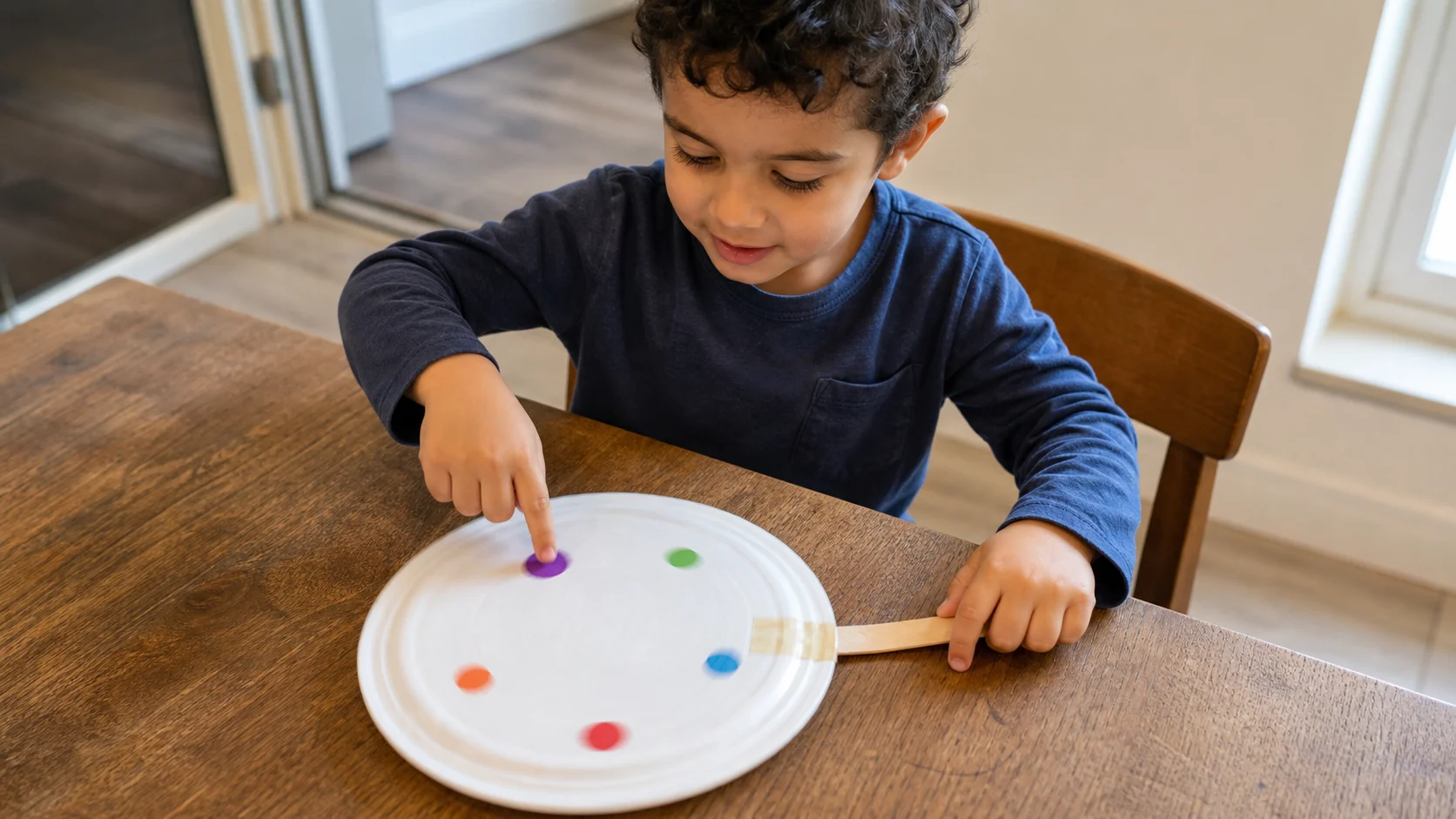
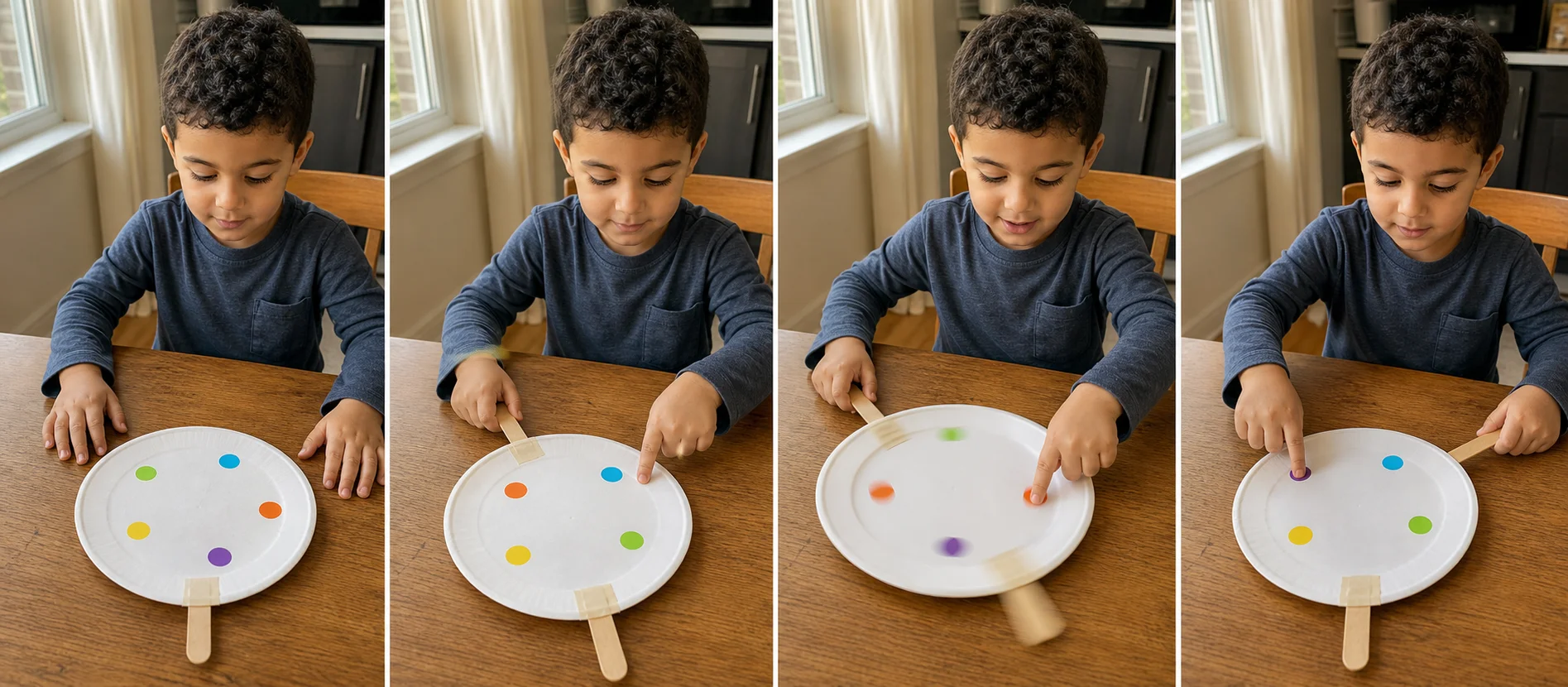
Spin the plate and tap a moving color dot before it stops. Your child uses one hand to spin and the other to tap, building two-hand coordination, reaction time, and visual tracking.