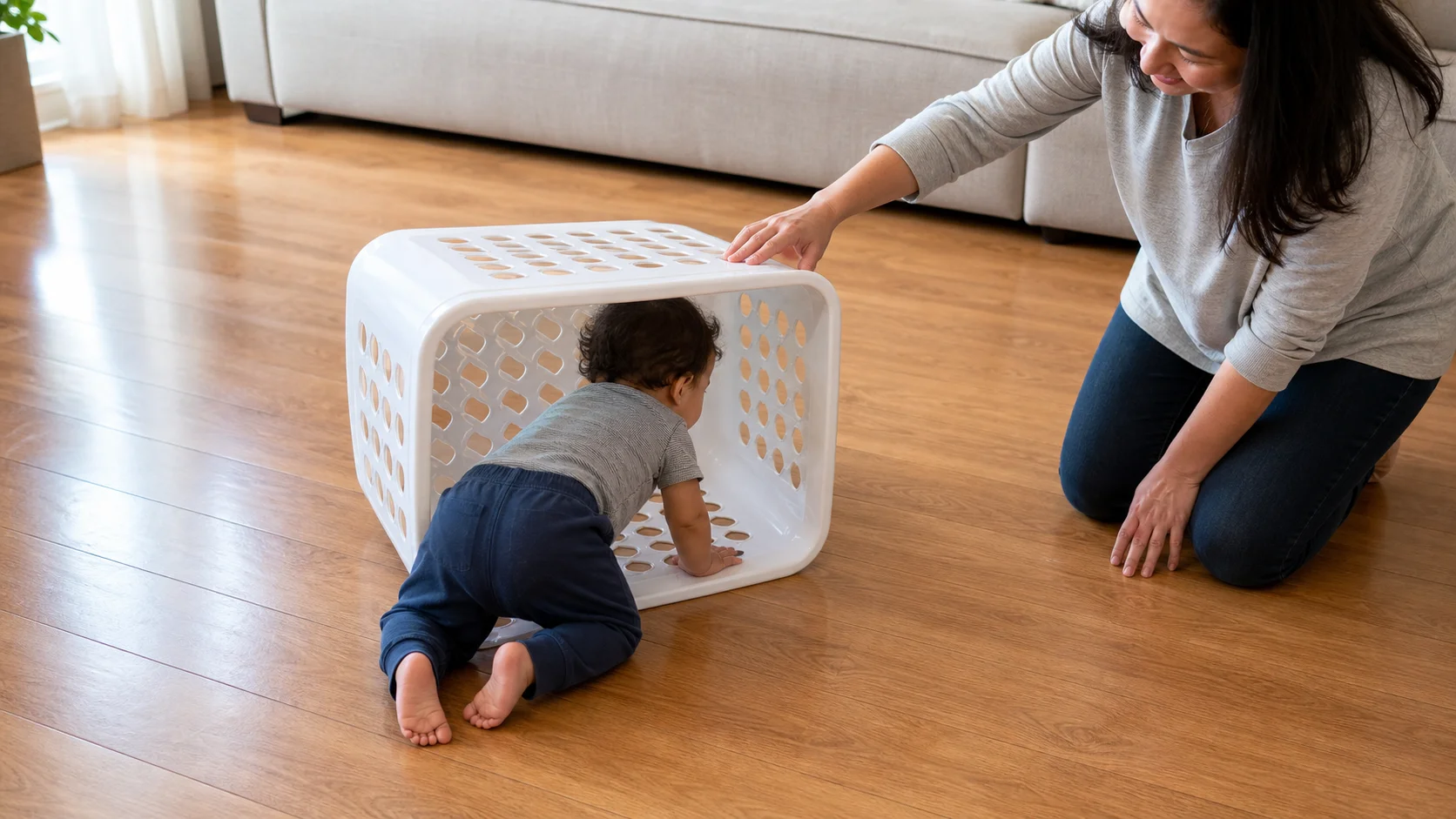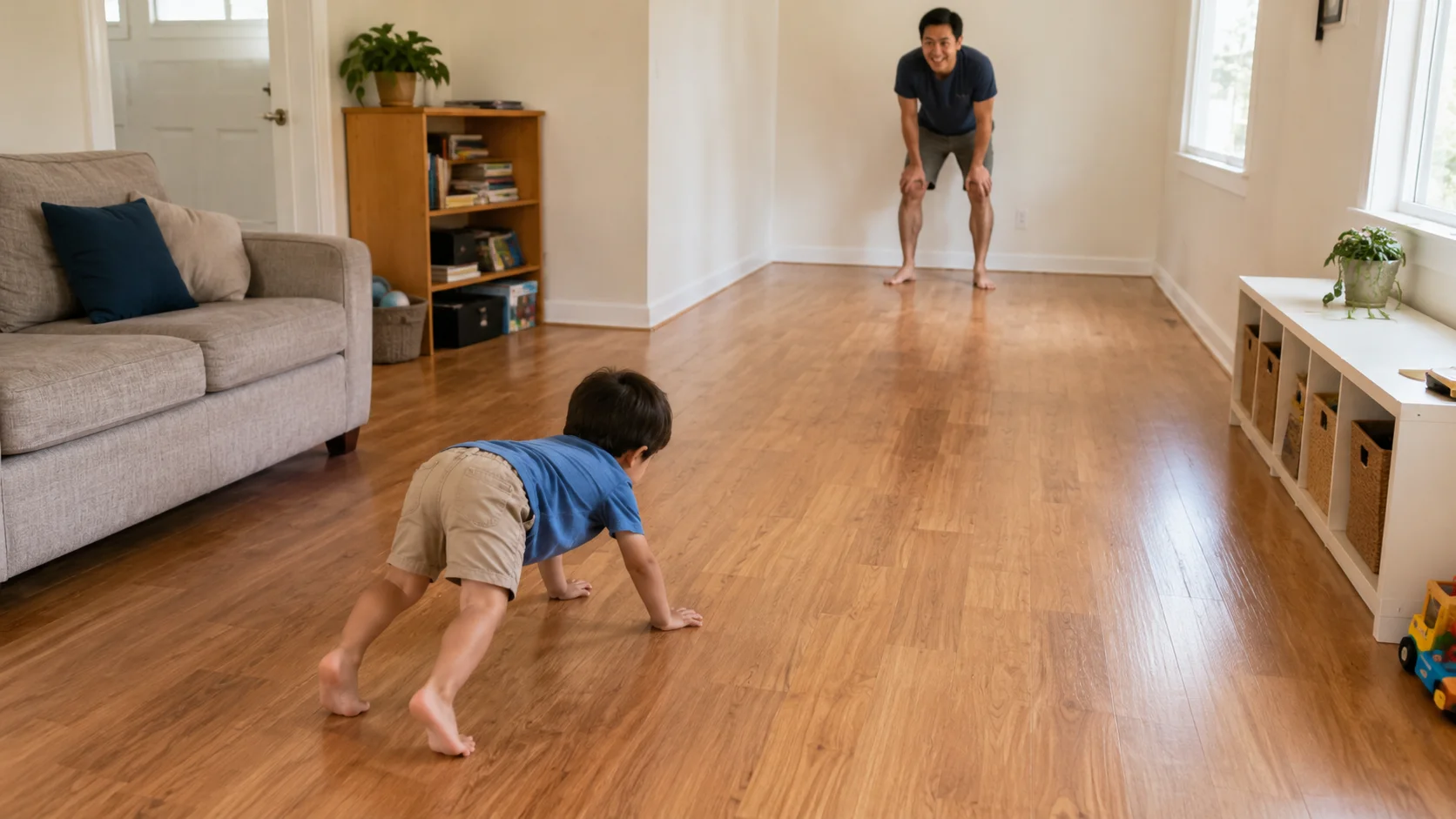
A toddler bear walking across a clear indoor floor path while a grown-up models the move from the far end.
Gross motorOT-adjacent supportNavigate PathIndoor

Animal Walk Path.

Turn a clear stretch of floor into a simple animal walk game your child can cross and repeat right away.

Play time
5-10+ min
Age
2-4 years
Energy
High
Mess
No
Effort
Low
Where
Indoor
Start here

The recipe.

Low parent effort
1 things

What you need

  • 1 open indoor floor space
5 min minimum

Setup

Then start the loop
Step 01
On an indoor floor, clear one short lane that lets your child move out, turn around, and come back without bumping into furniture.
Step 02
At one end of the lane, stand where your child can see your whole body.
Step 03
Pick one easy animal move to start, such as a bear walk, crab walk, or snake slither.
"Show me your bear."
The loop

How play unfolds.

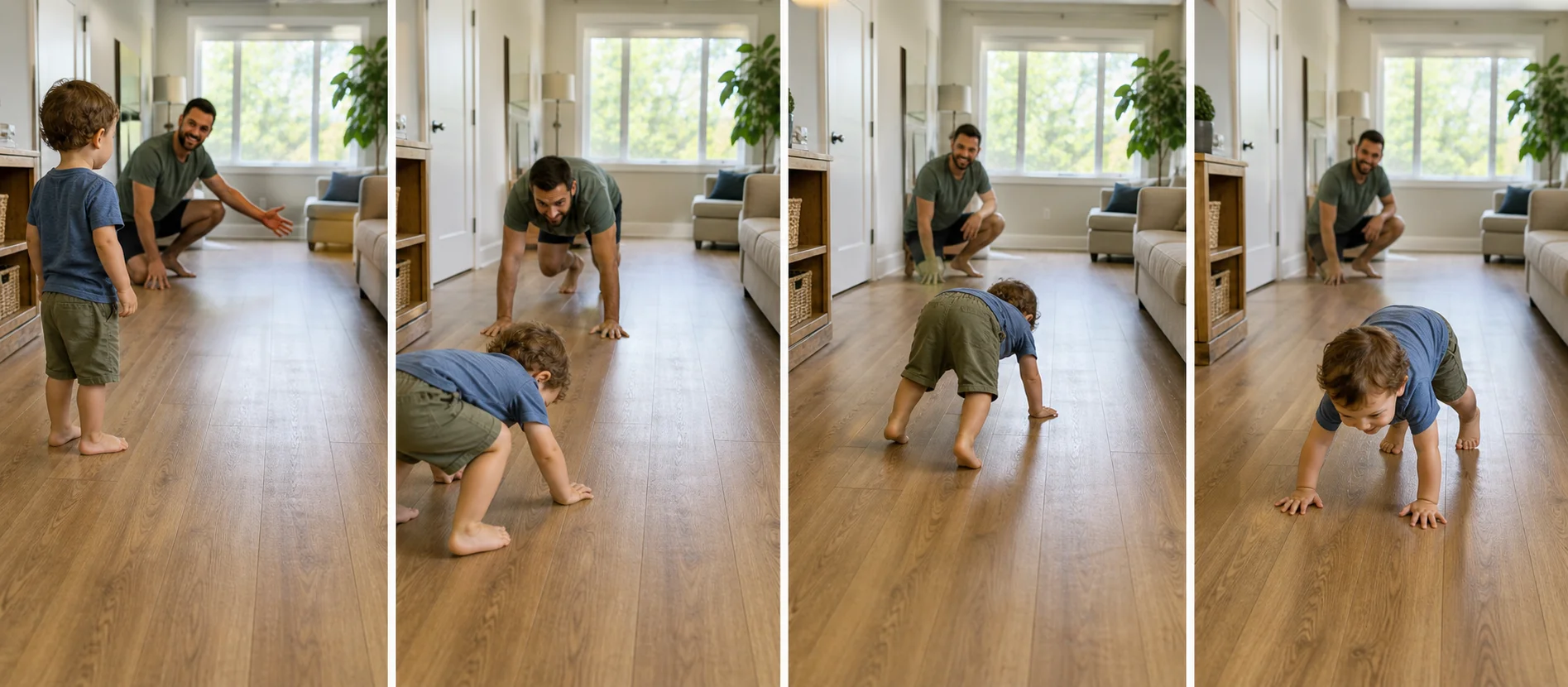
A multi-panel sequence showing a grown-up modeling an animal walk, a toddler crossing the floor path, turning around, and coming back.
  1. 01
    Show one animal move and say, "Bear walk to me."
  2. 02
    Let your child cross the lane and come back with that same move.
  3. 03
    Repeat the animal once more or choose a new one for the next round.
  4. 04
    Keep going until your child slows down or wants to stop.

Safety Check

  • Stay with your child the whole time.
  • Keep the floor lane clear and dry.
  • Stop or switch to an easier animal if your child looks unsteady, tired, or upset by the movement.
Supporting the play

What to say in the moment

Match what you say to what you see.

Prompt ladder
Level 1 (Start)
"Bear walk to me."
Level 2 (Keep going)
"Now go back."
Level 3 (Stretch)
"Can you stay in your animal body the whole way?"
Level 4 (Extend)
"Pick the next animal."
If your child seems...
What you'd see
Focused
What to do
Say
"You stayed in the animal shape."
Add
Offer one new animal choice for the next turn.
Extend
Ask for one more crossing with the same move before switching.

Make it easier

Younger end
  • -Keep using the same animal for several rounds instead of switching often.
  • -Shorten the path so your child reaches the turn-around spot fast.
  • -Let your child watch your model first before taking a turn.

Make it harder

Older end
  • +Ask your child to choose the next animal without your suggestion.
  • +Use a lower-body move like crab walk for one round after an easier animal.
  • +Have your child cross the path slowly while holding the same animal shape.

If it's not working

If you see
If child ignores it
Do one silly animal crossing yourself, then invite your child to come back with you.
If you see
If child misuses it
Drop back to one easier move and shorten the lane.
If you see
If child gets frustrated
Pick one familiar animal, help with one crossing and back, and count that round as success.
Skill spotlight
Navigate Path

Moving through a short path with one clear body pattern, Repeating a whole-body movement after one simple cue

This helps a child coordinate big body movements, change body positions on purpose, and stay with a short repeatable movement routine.

  • Repeating one animal move across the same lane helps your child practice holding a body pattern long enough to finish a clear job.
  • The out-and-back path gives your child a simple routine: start, cross, turn, return, repeat.
  • Switching between bear, crab, or snake movements gives your child practice changing body positions on purpose without changing the game.
Real-world transfer
  • Moving the body through simple home obstacle spaces or play routes.
  • Copying a movement after one quick cue.
  • Restarting a short action routine without much help.

Parent questions

Back to library
Keep playing

Related activities.