
Fine motor
5-10+ min0-1 years
The loop
Inside Surprise
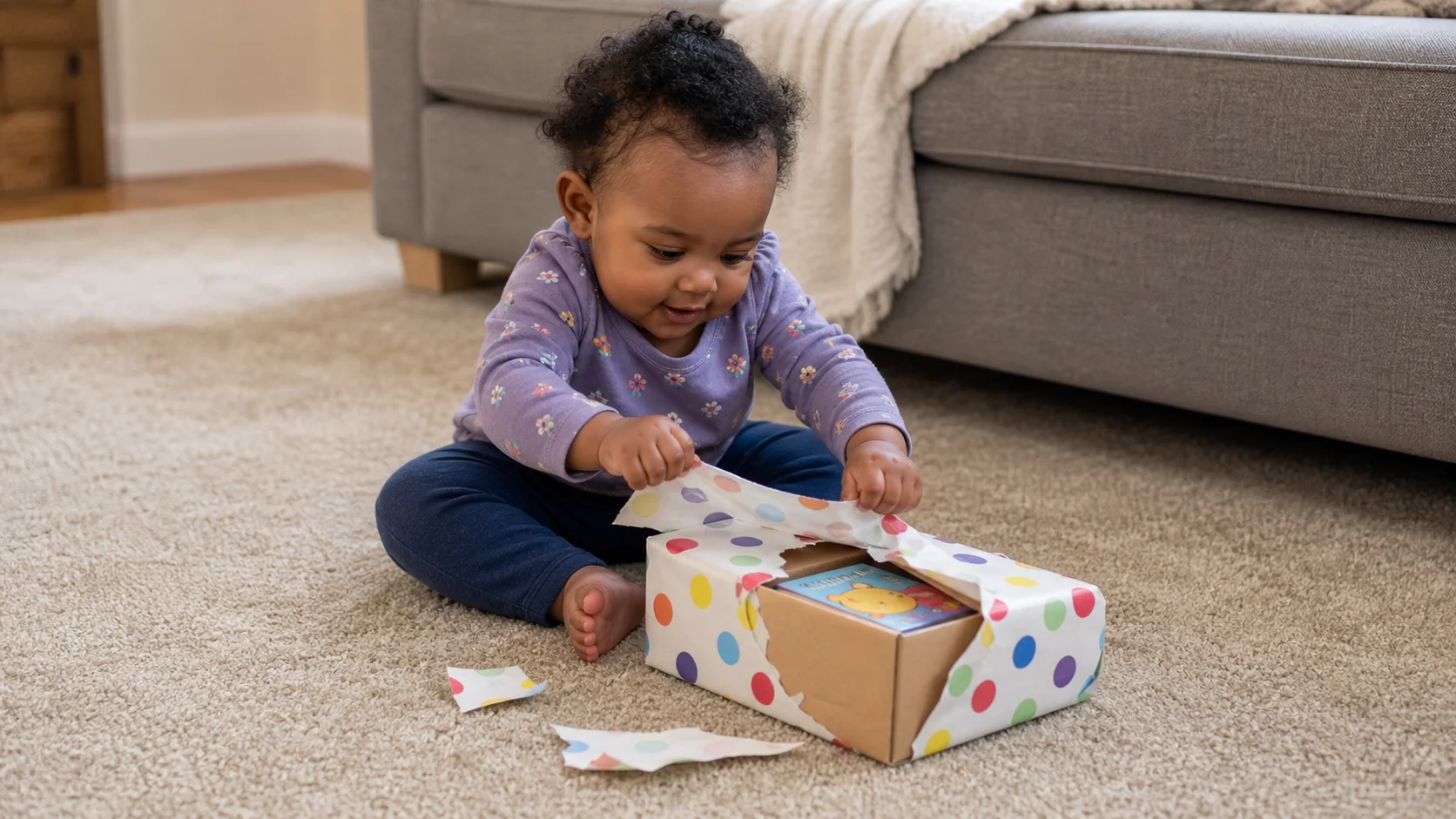
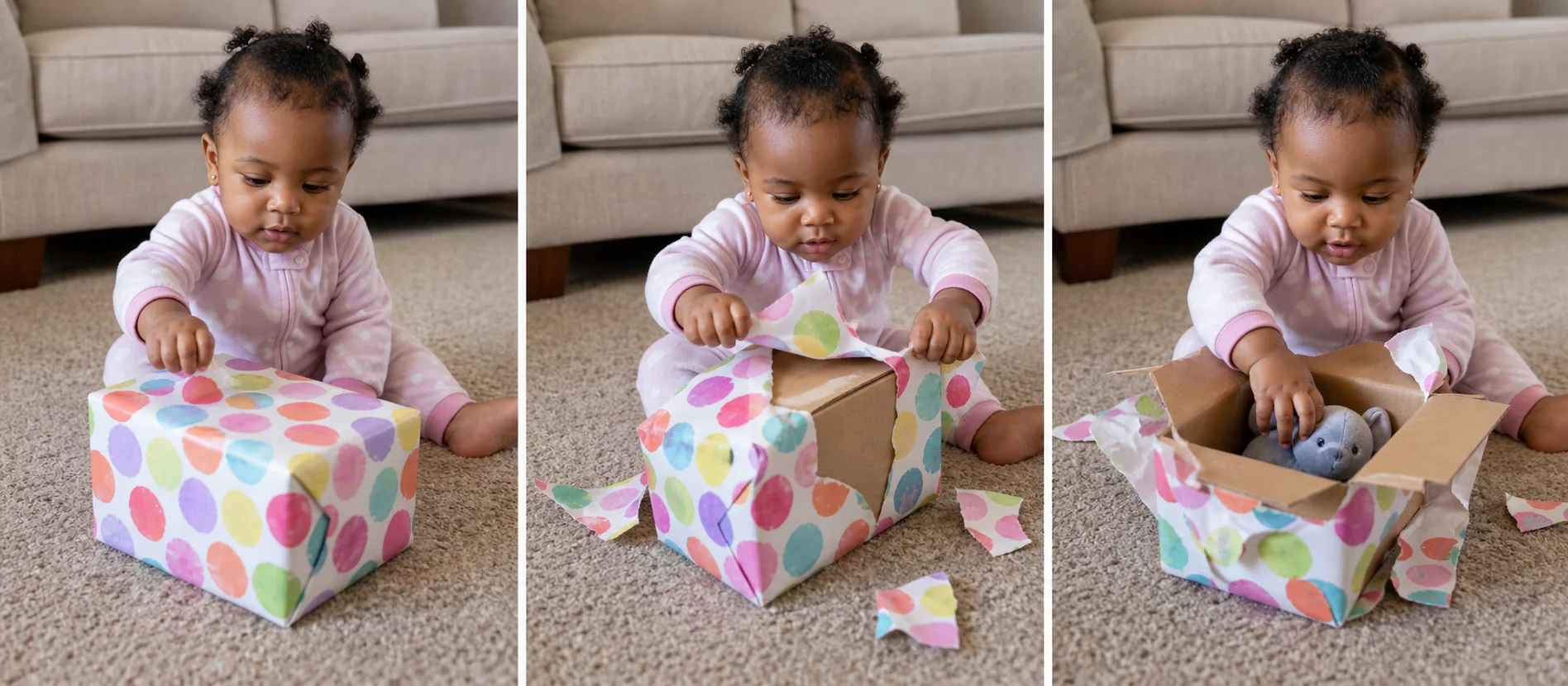
Hide one toy or book in a loosely closed box, then let your baby tear the paper, lift the flaps, and discover the surprise.
Low effortLow mess
Indoor
Hide one toy or book in a loosely closed box, then let your baby tear the paper, lift the flaps, and discover the surprise.
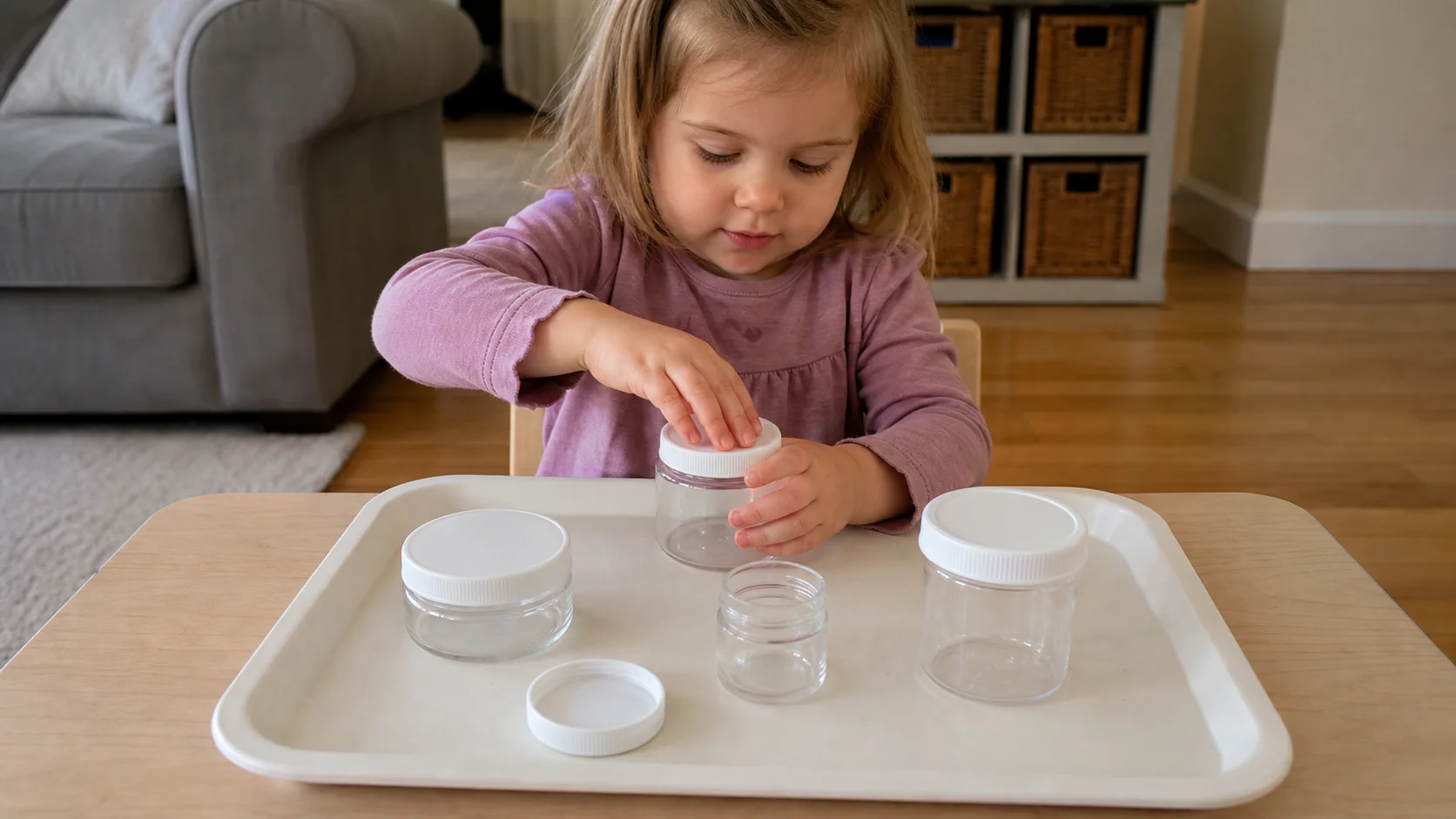
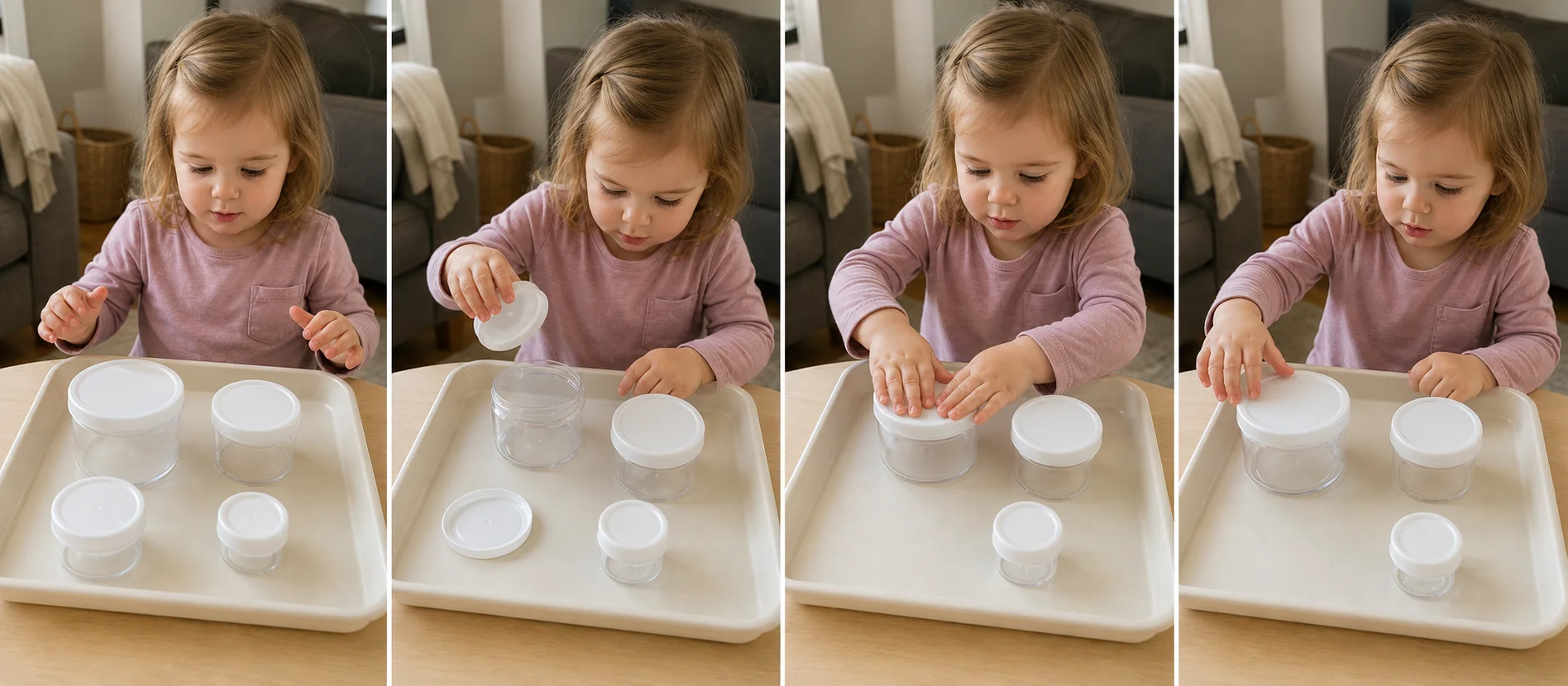
Build everyday hand skills with a tray of jars and fitted lids. Your child opens one container, lines up the same lid, then snaps or twists it closed again.
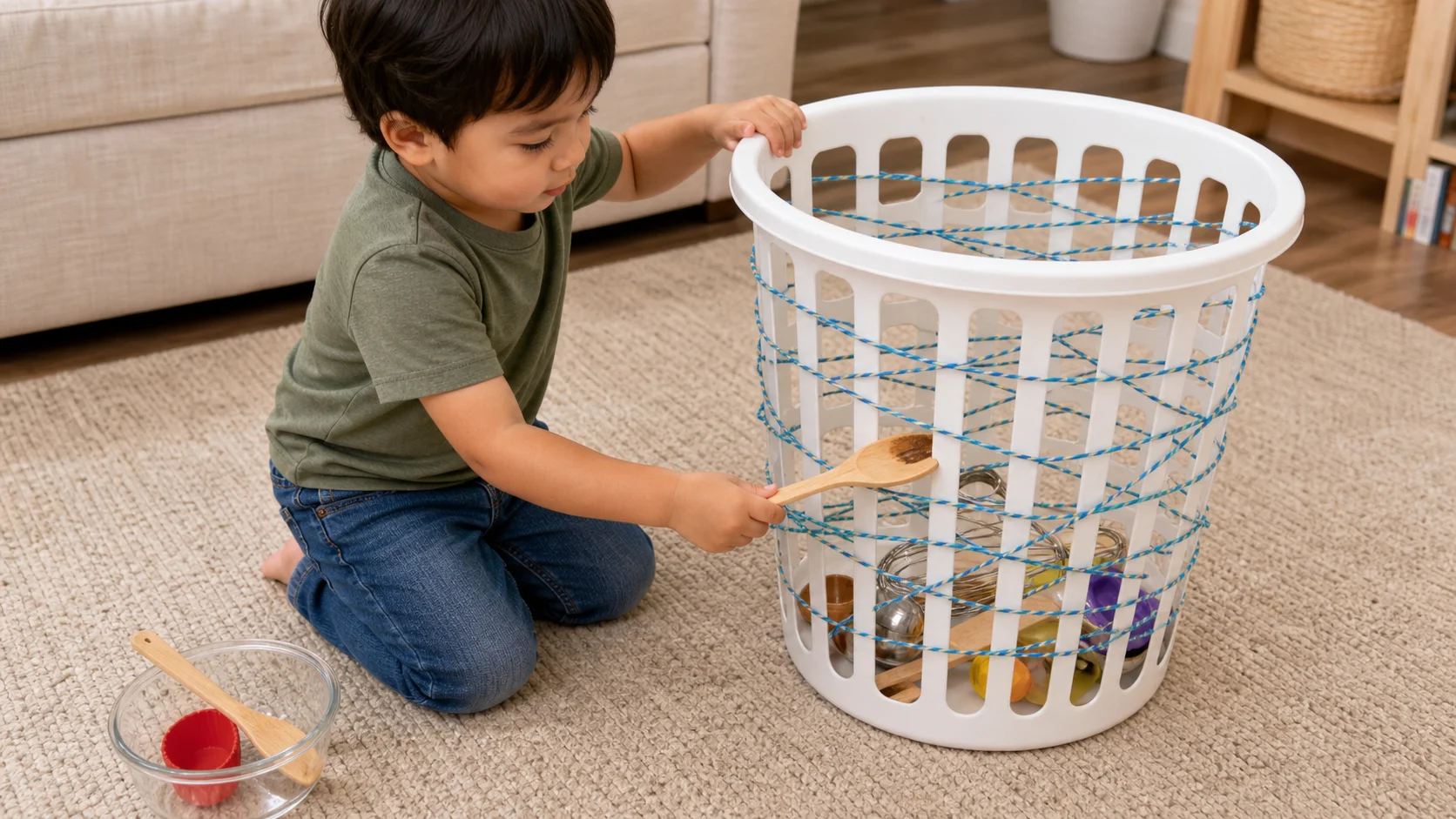
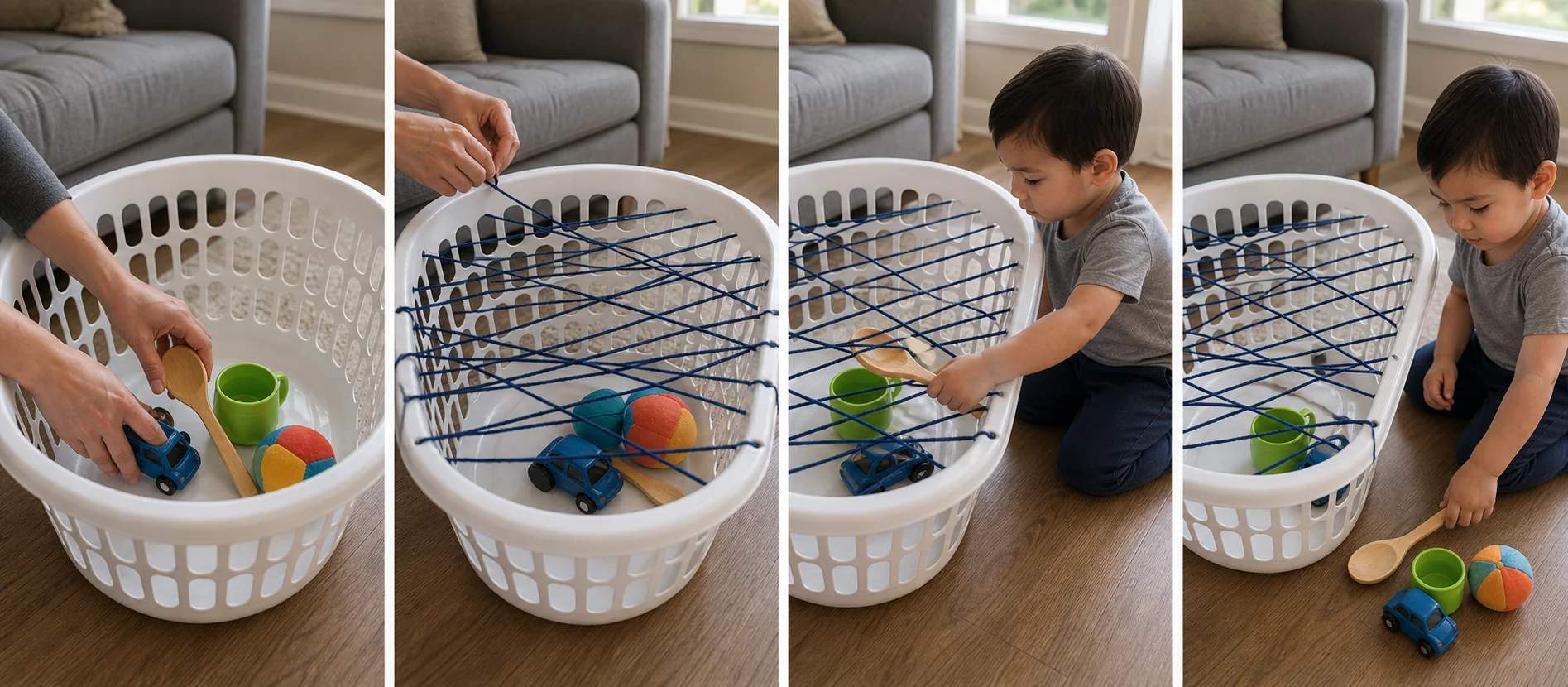
Turn a laundry basket into a yarn-web rescue. Your child reaches over, under, and around the strands to work each trapped item free.
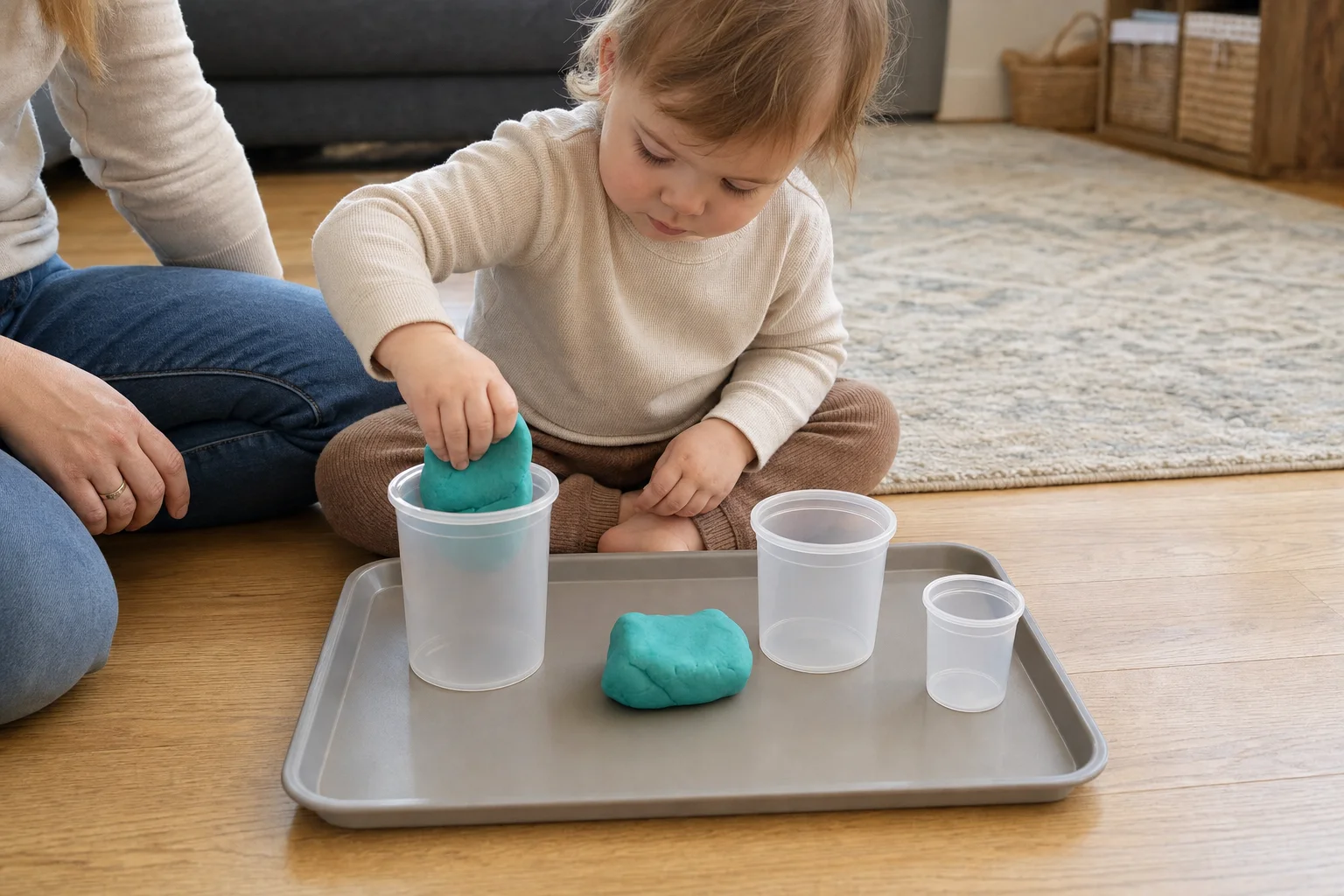
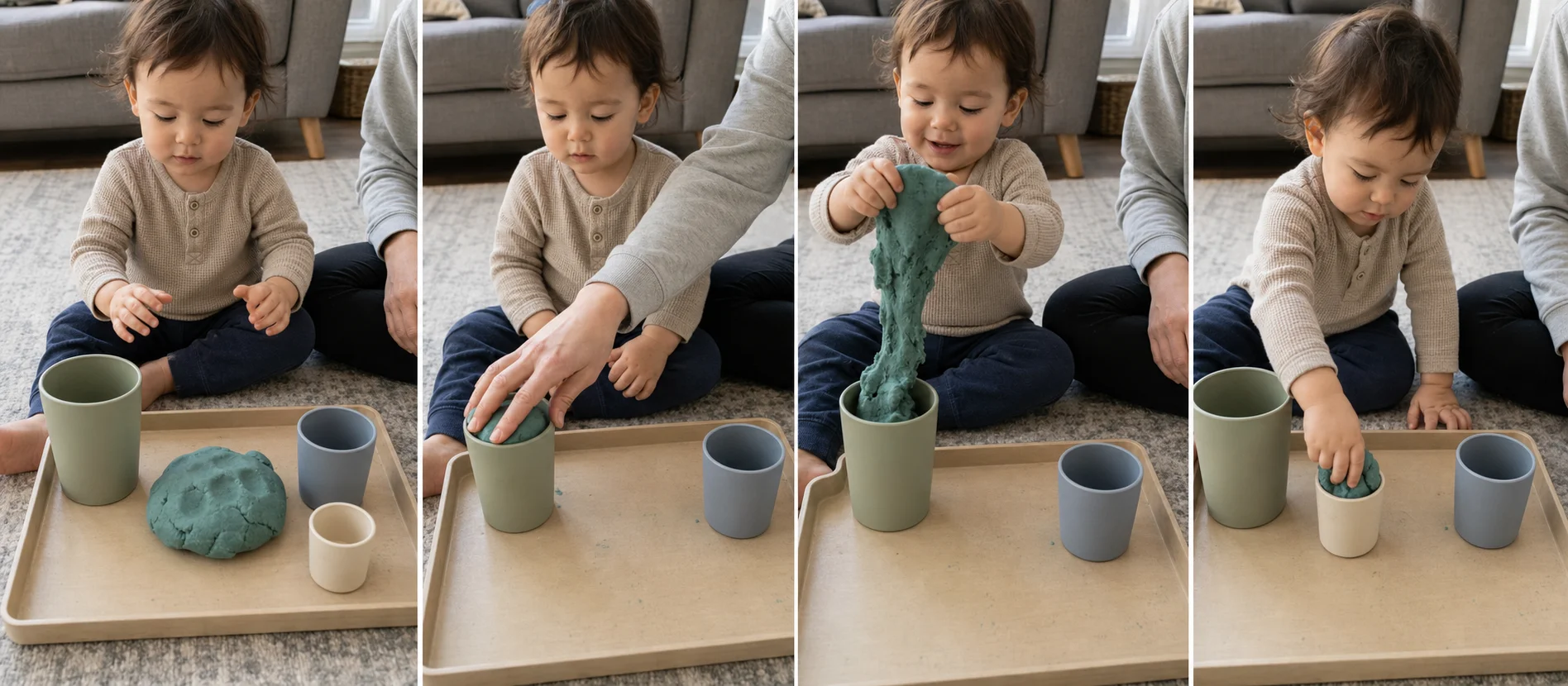
One lump of play dough and a few different-sized cups create a satisfying push-and-pop challenge. Your child presses the dough in, pulls it back out, and builds fine-motor skills while exploring touch and resistance.
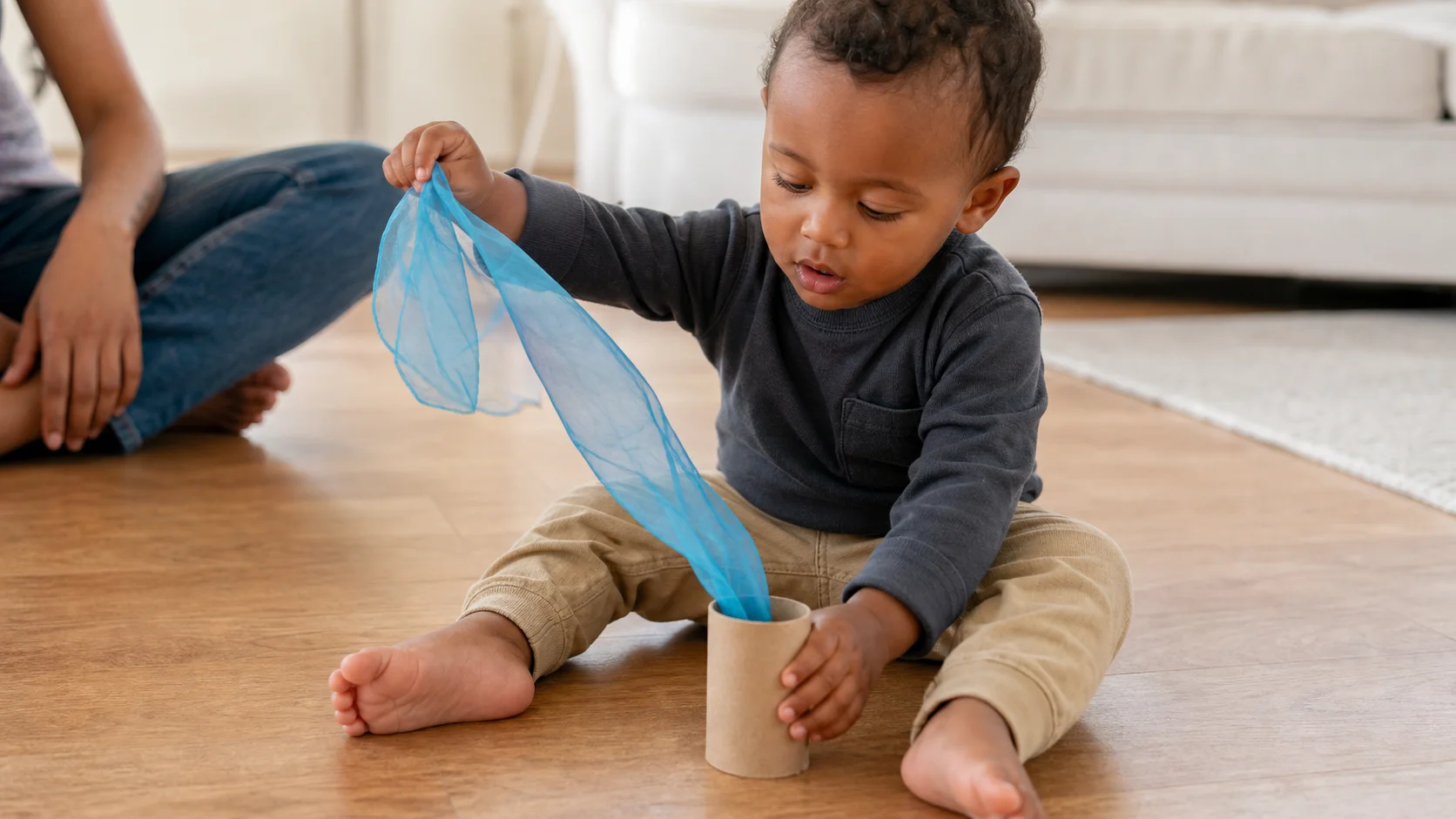
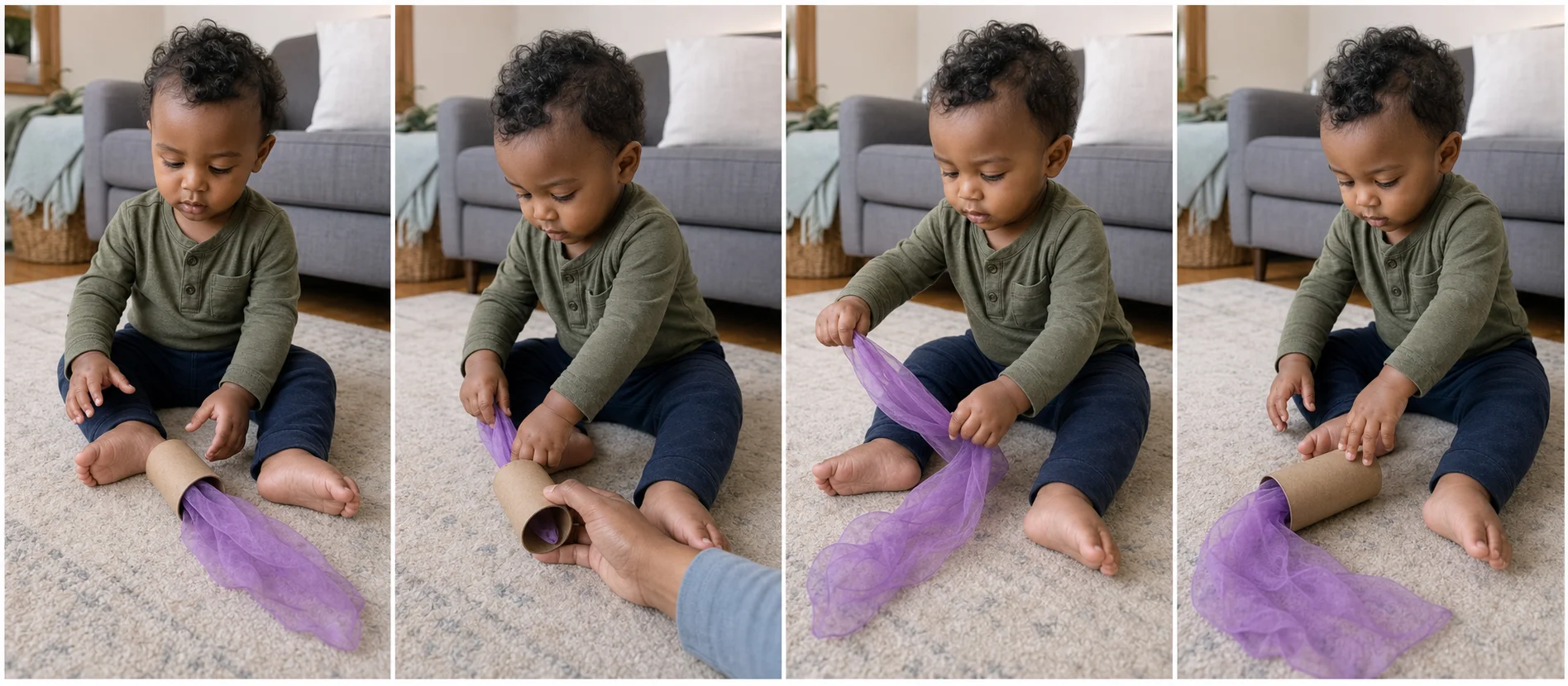
Turn one cardboard tube and a light scarf into a simple in-and-out hand challenge. Your child pushes the fabric into the opening, pulls it back out, and builds fine-motor control while exploring how soft material fits through a small space.
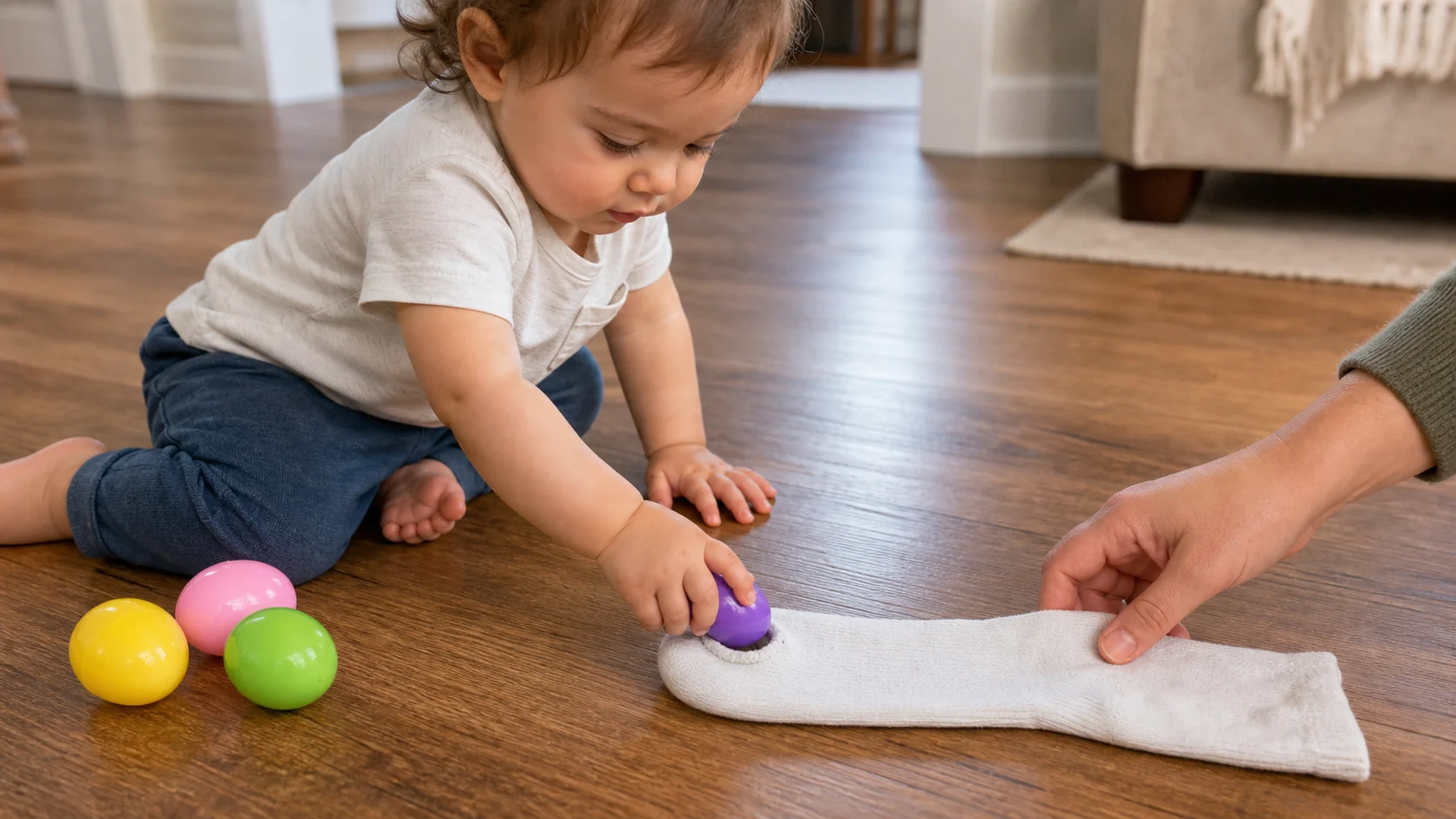
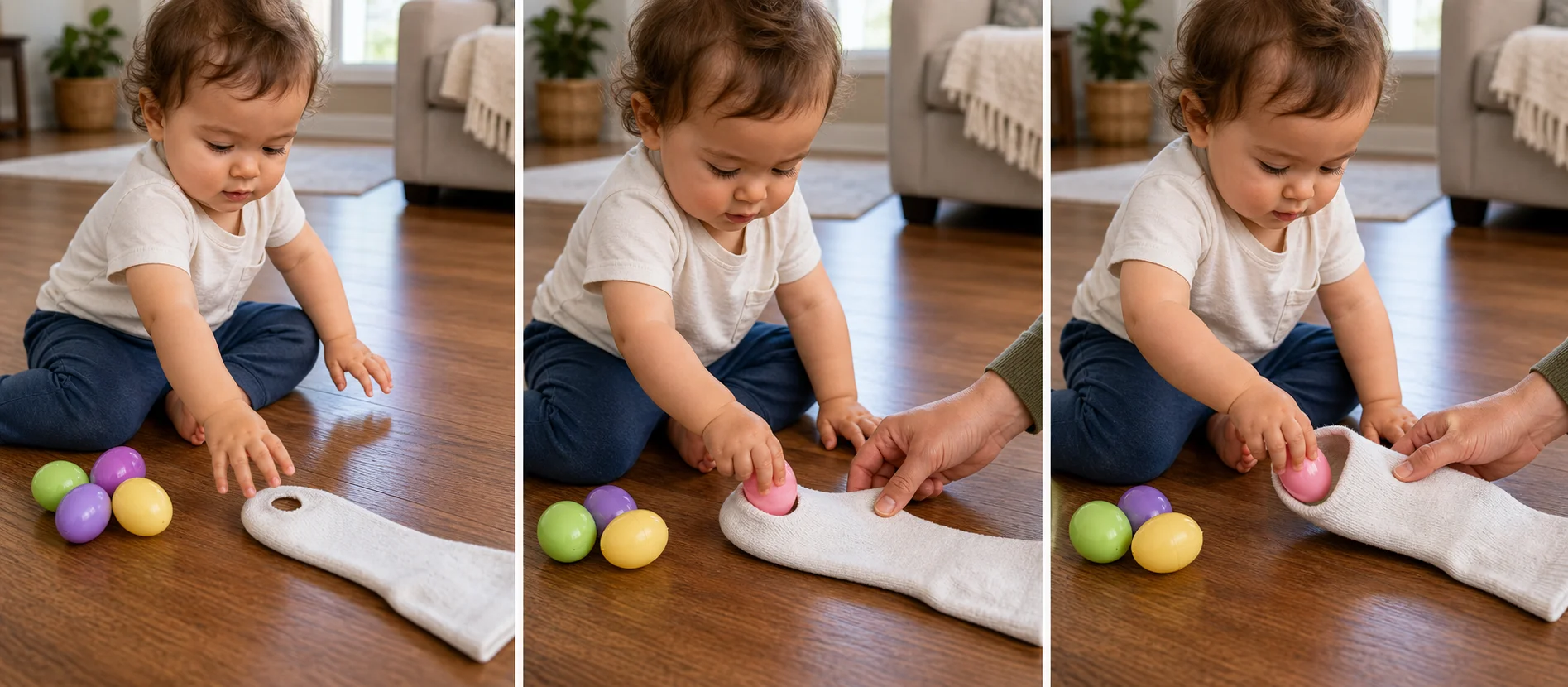
Sock Fun is a sock fine motor activity for 1-year-olds that helps children push through gentle resistance through a clear, repeatable play loop.
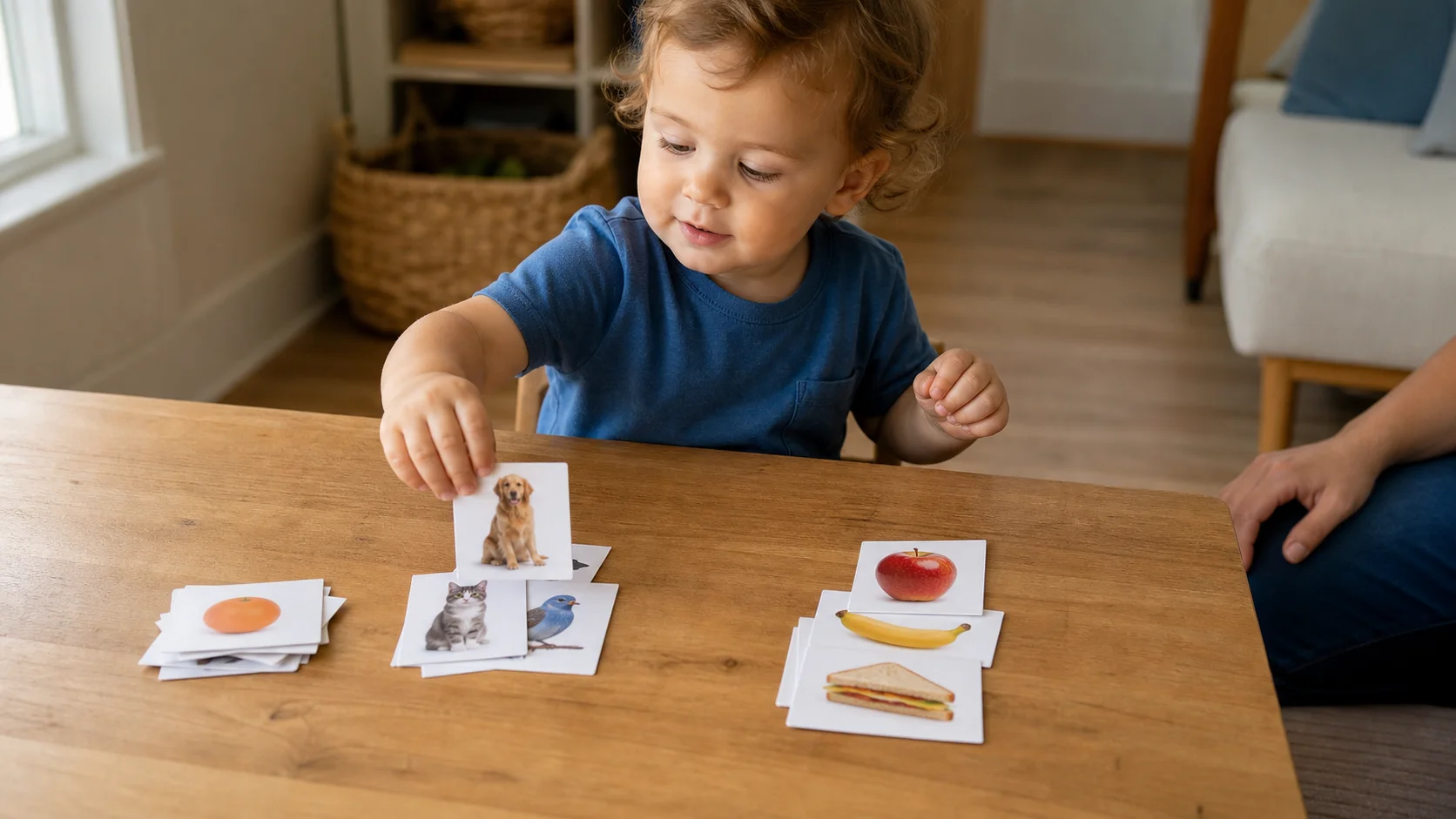
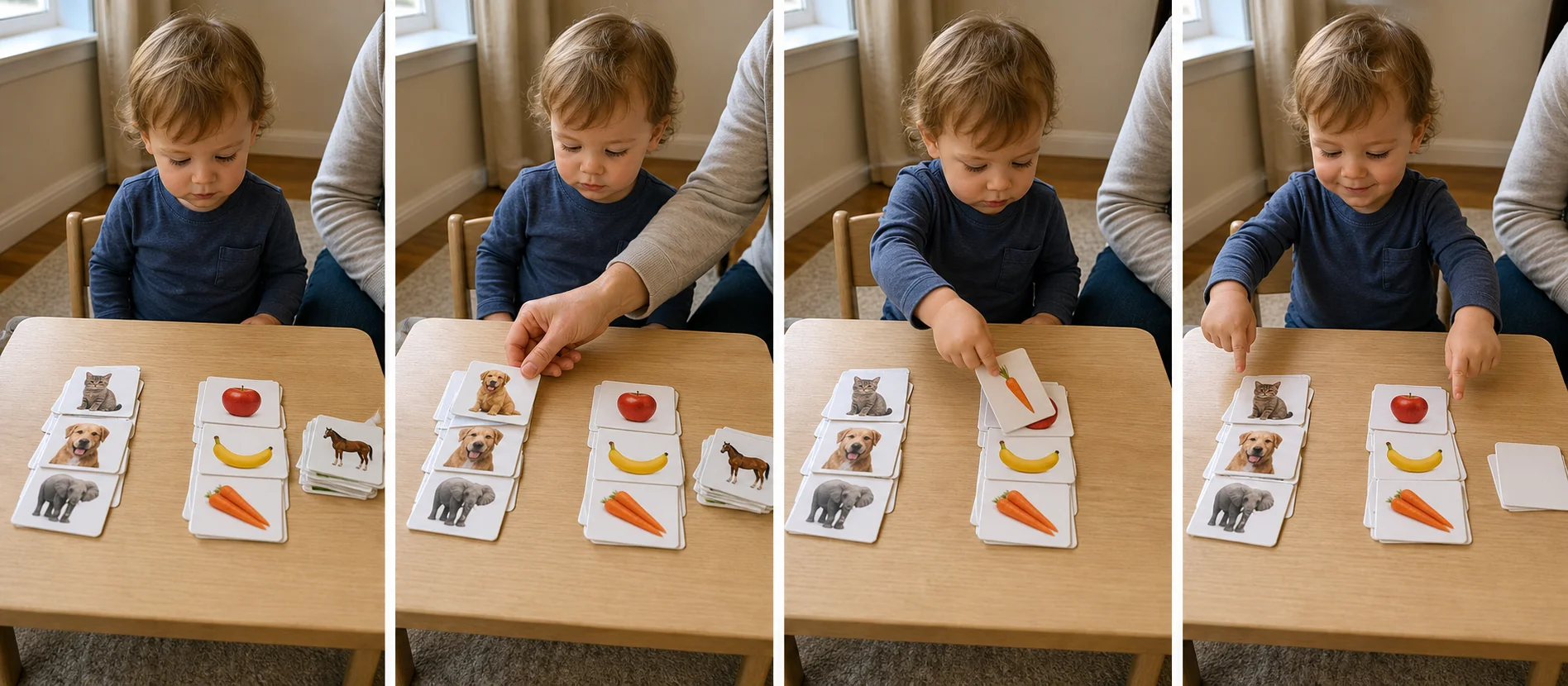
Can your child spot what belongs together? Set out two picture categories and let them sort each card into its matching group, building category recognition and visual thinking one picture at a time.
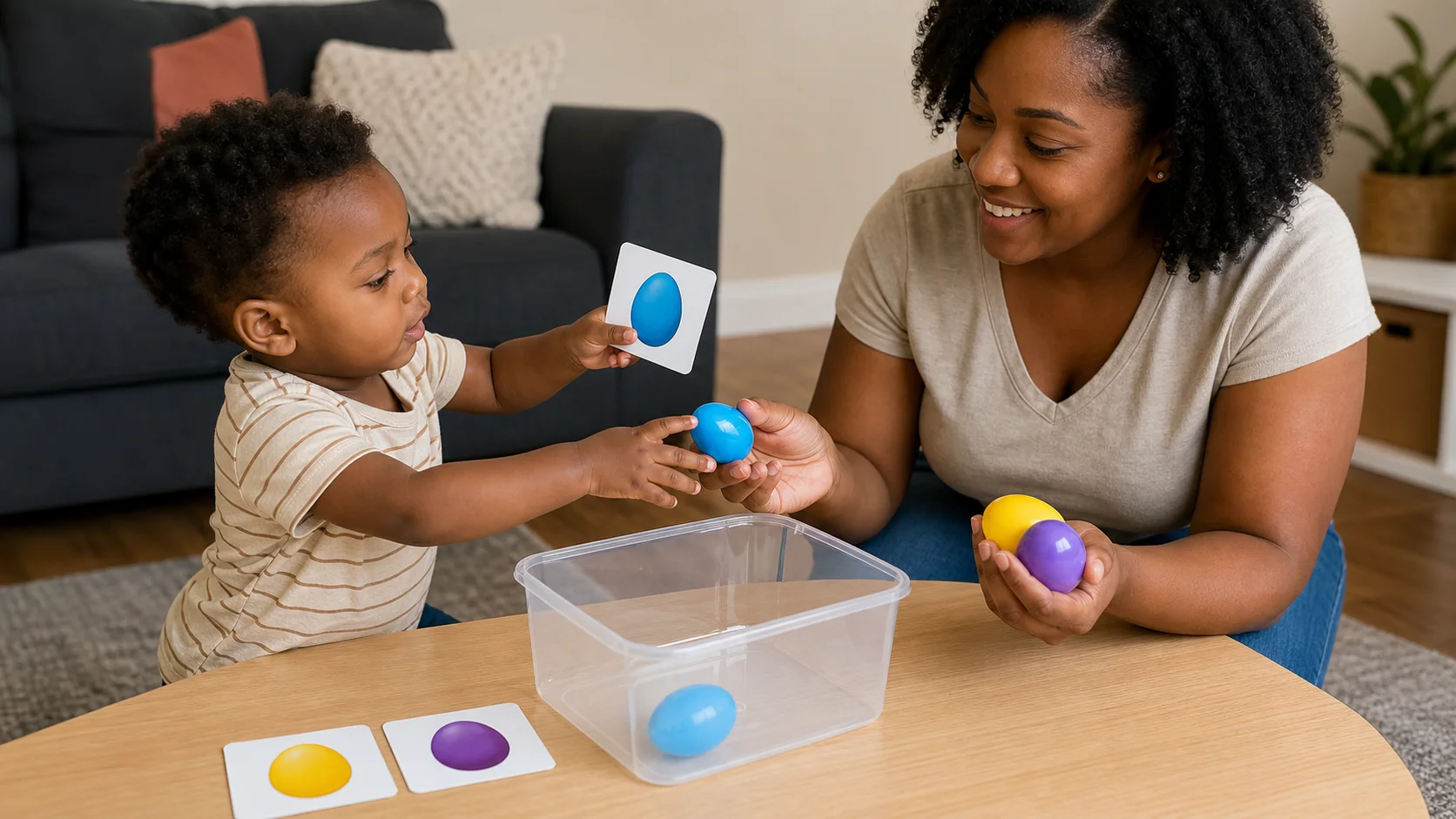
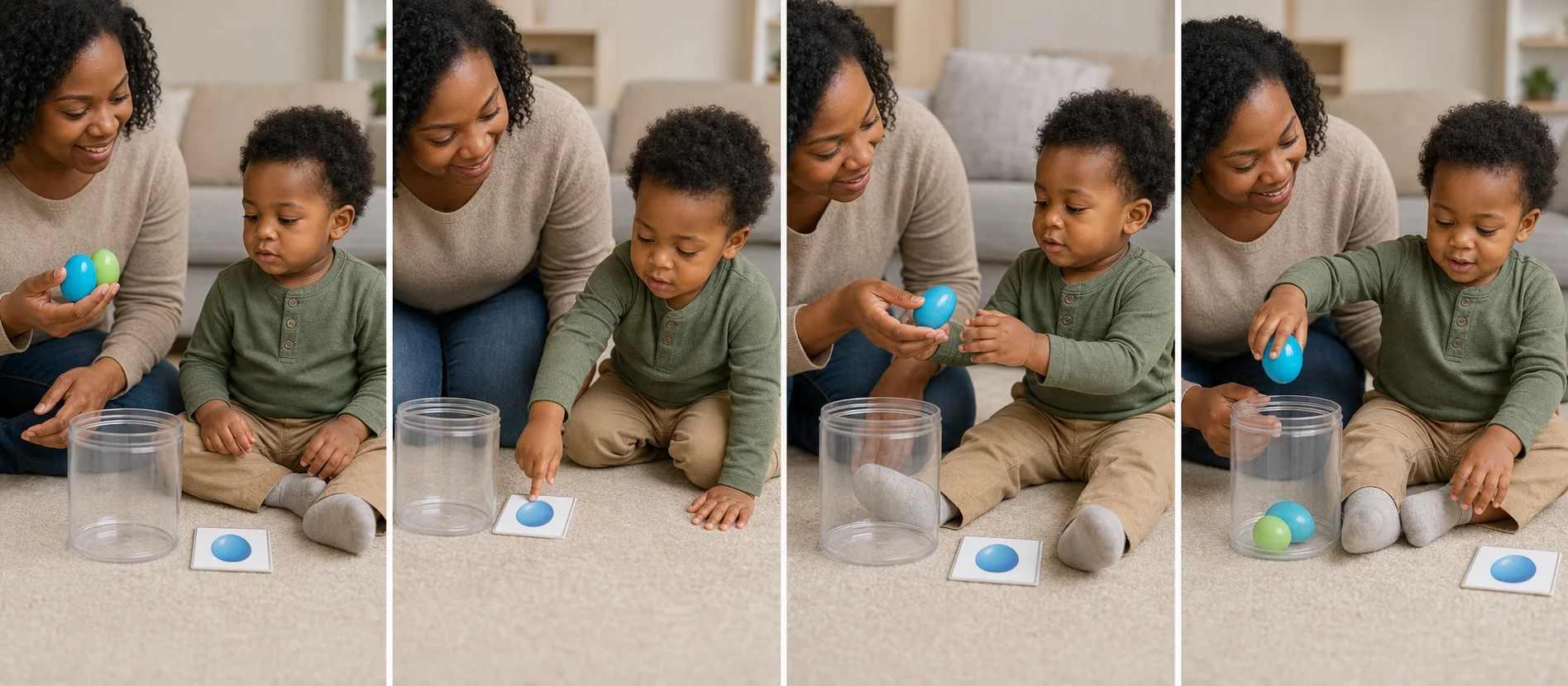
One picture cue gives your child a clear, low-language way to ask for an egg. They use the picture, receive one egg, and drop it into a finished container while practicing a predictable visual request routine.
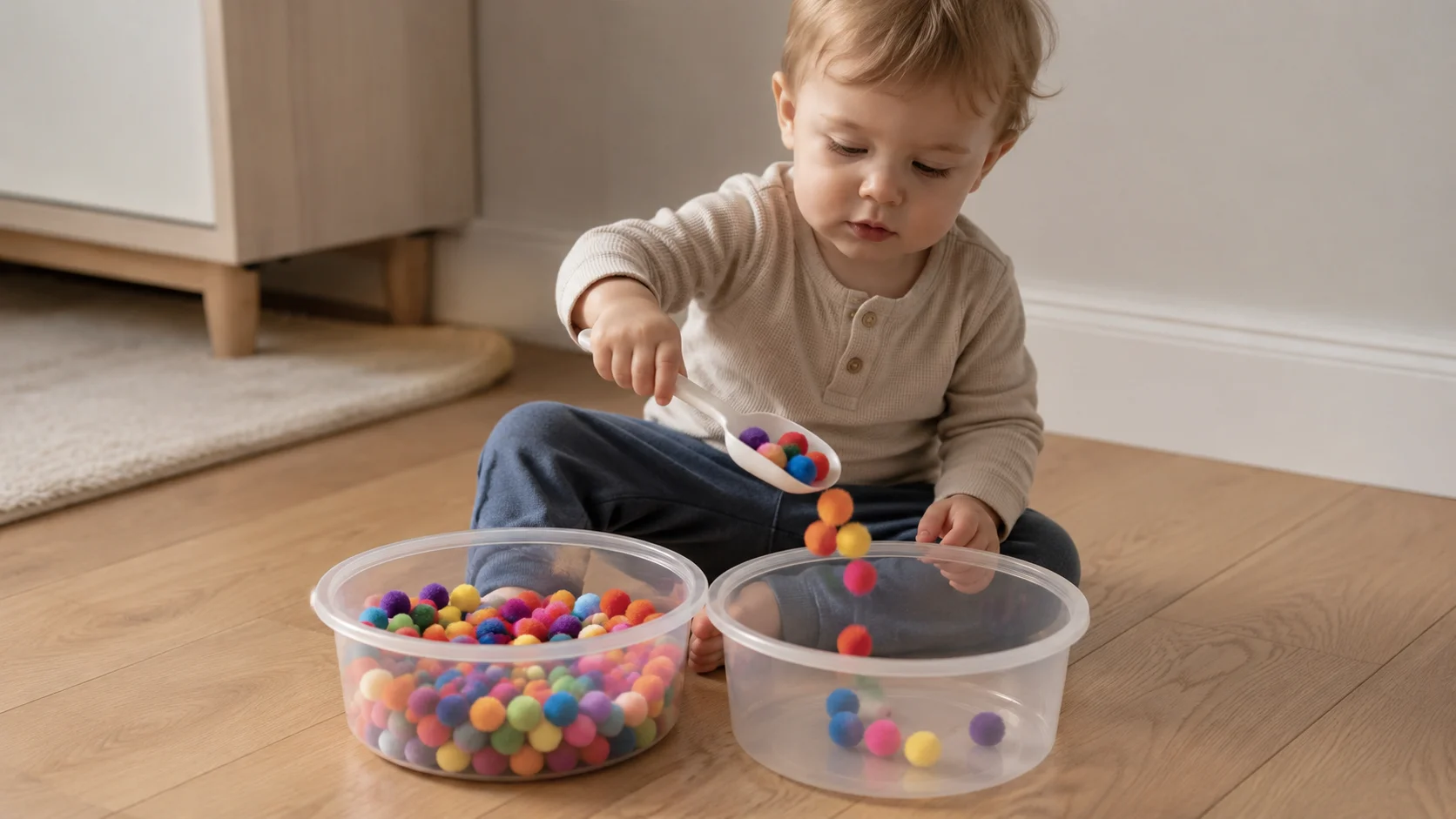
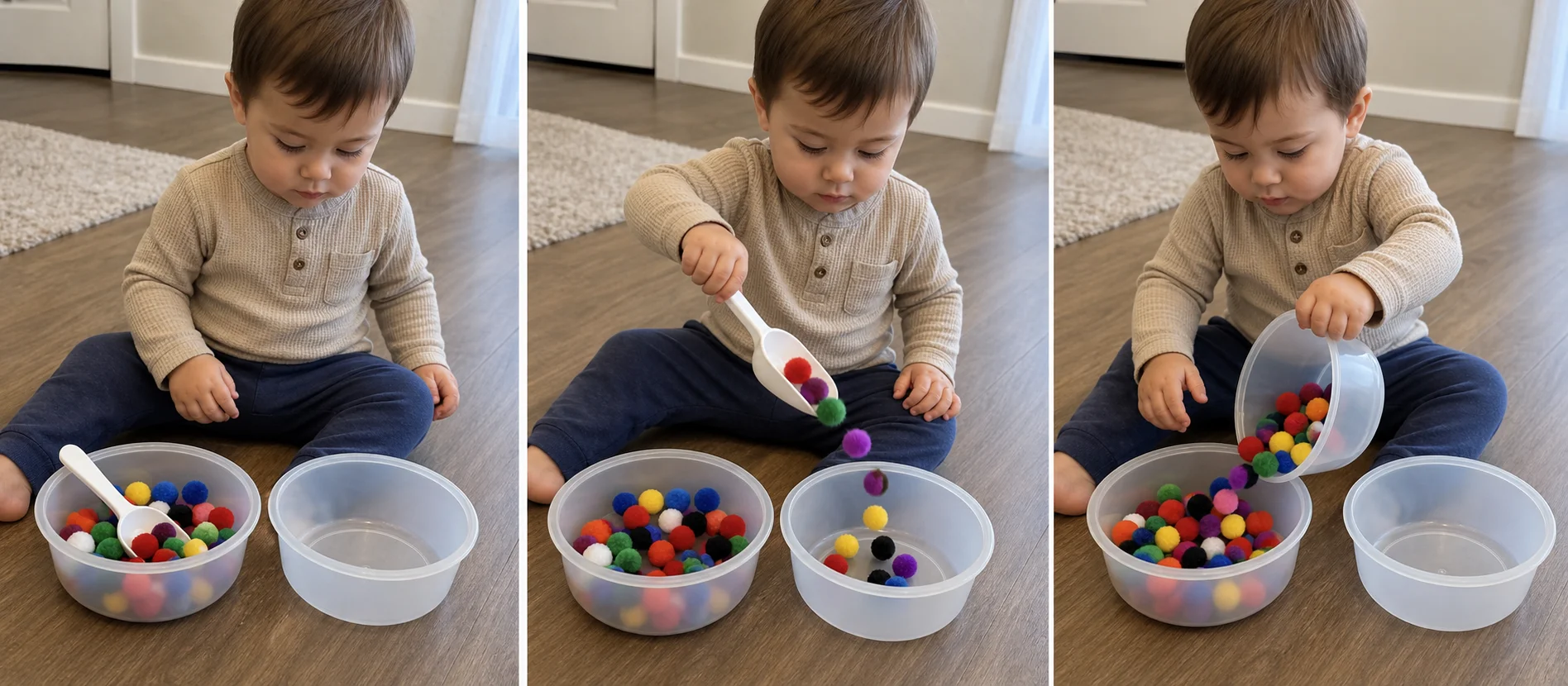
Pom Pom Sensory Scoop is a pom pom scoop activity for toddlers that helps children fill, empty, and reset through a clear, repeatable play loop.
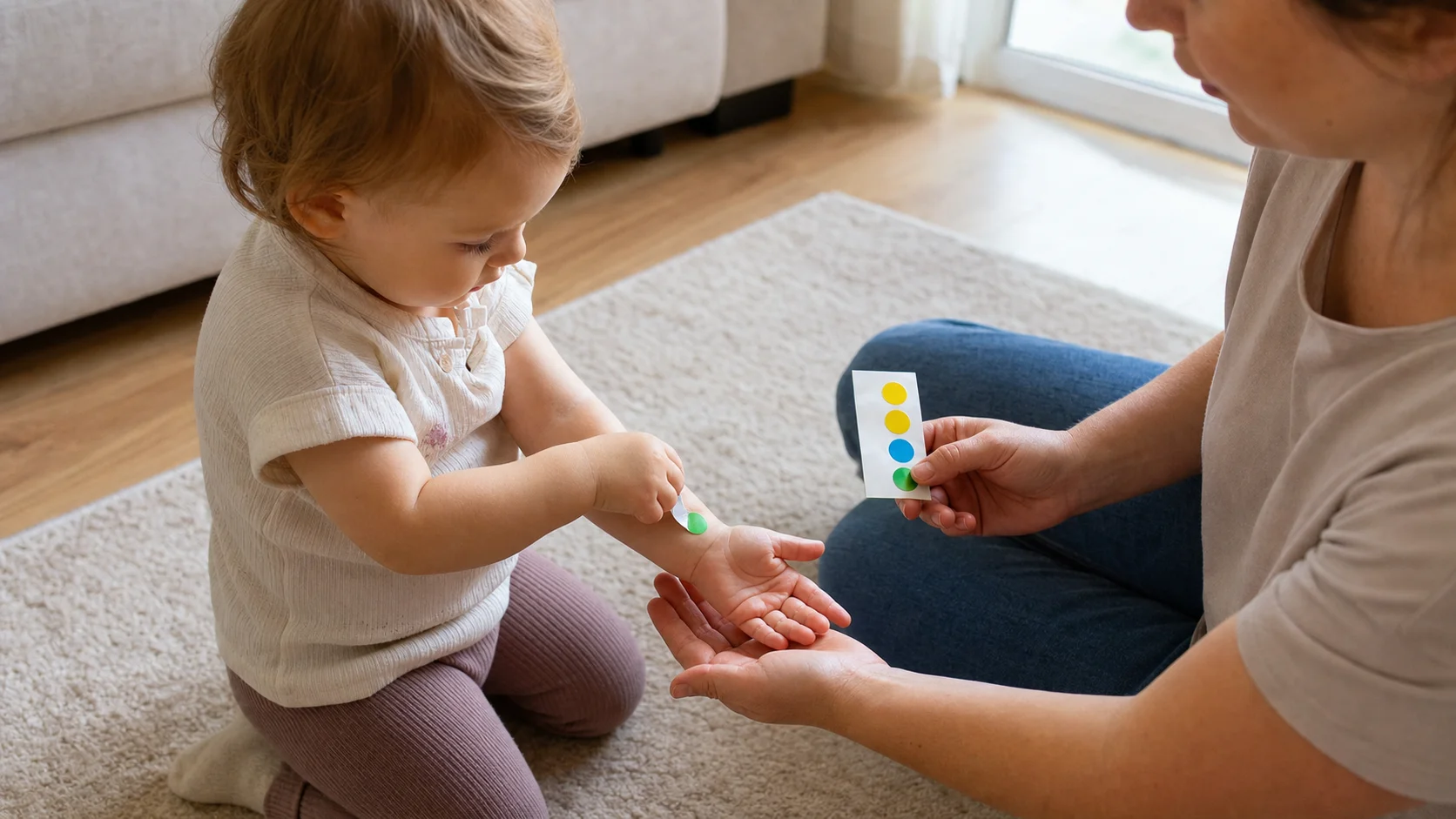
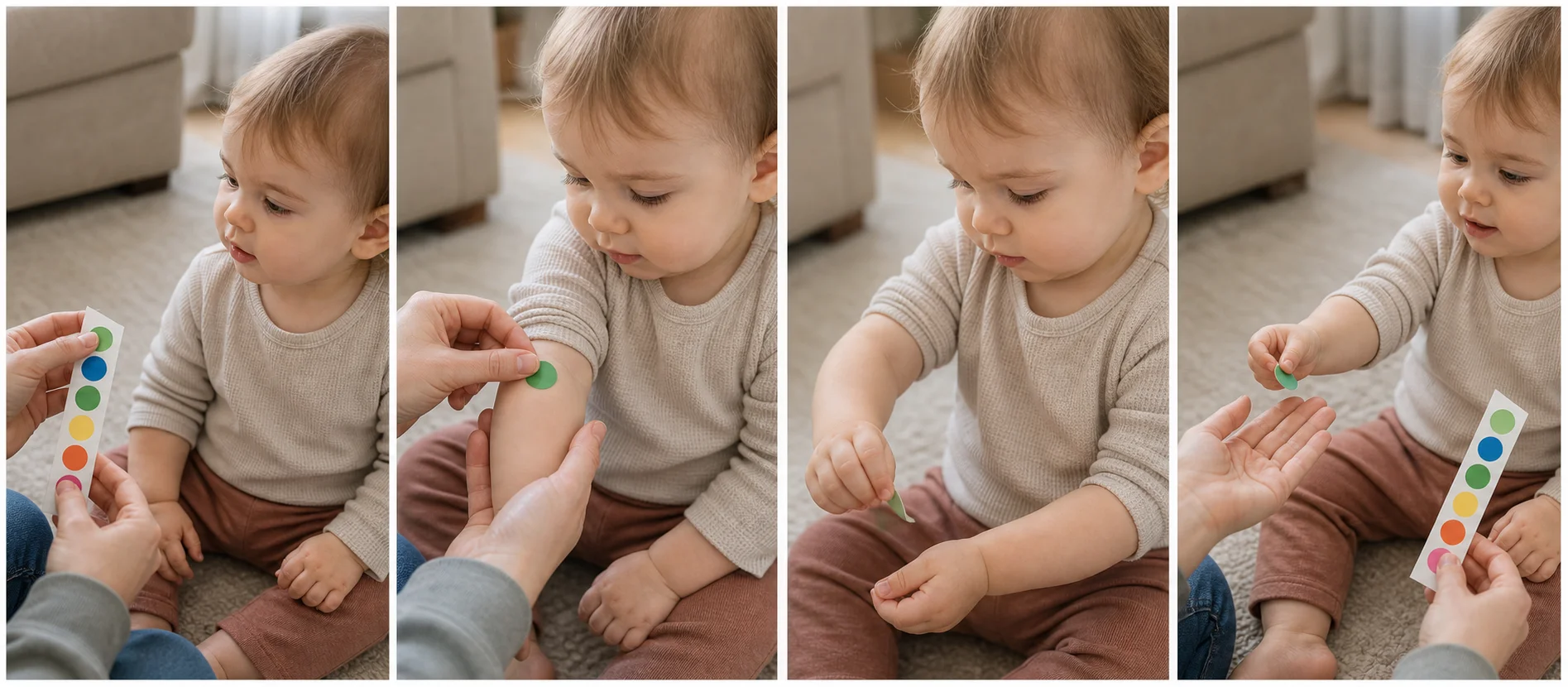
Turn one tiny sticker into a low-prep body-awareness search. Your toddler finds it on an arm or leg, peels it off, and practices noticing touch while building fingertip control.
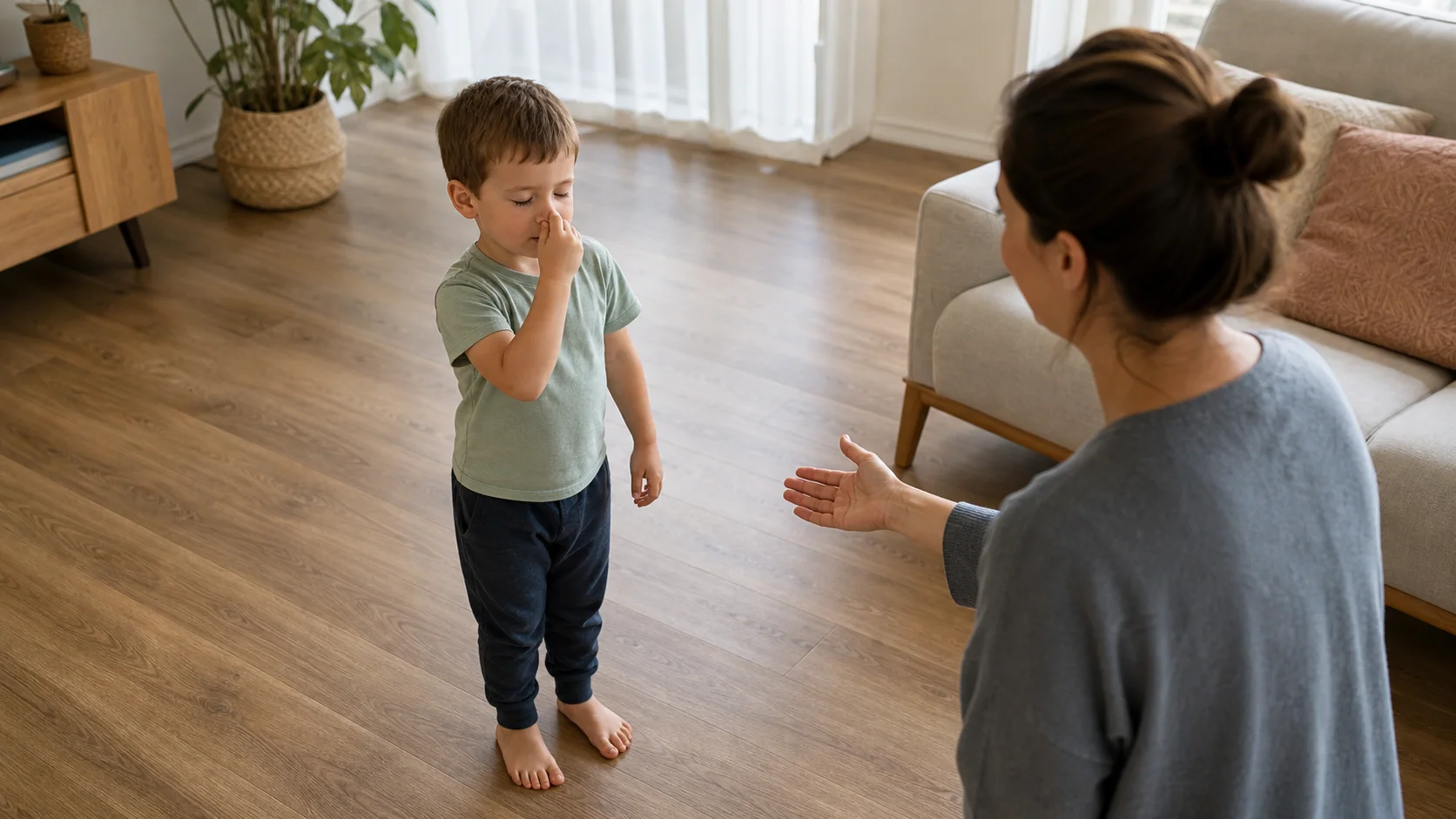
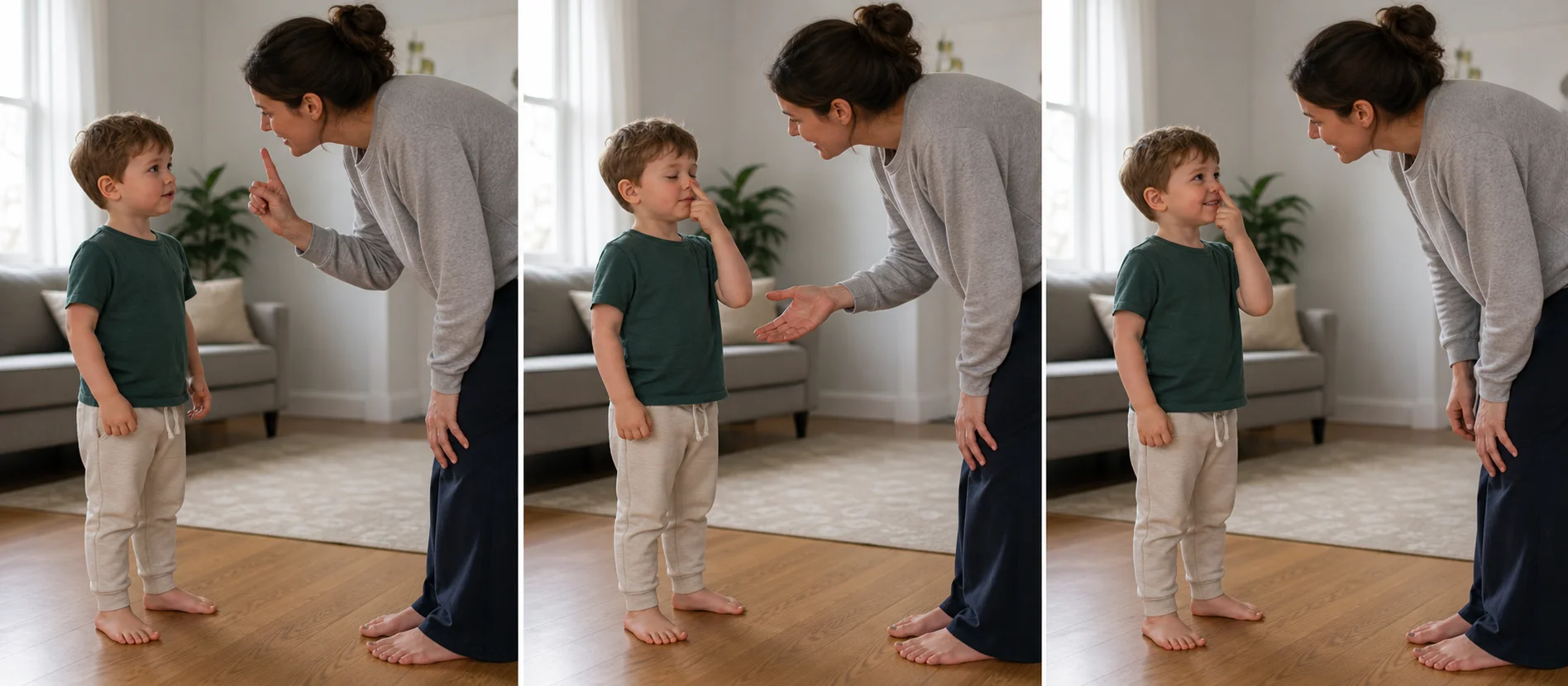
Take away the visual clues and see how well your child can follow one simple body cue. With eyes closed, they touch a body part or make a shape, then open their eyes to check it, building listening and body awareness with no materials.
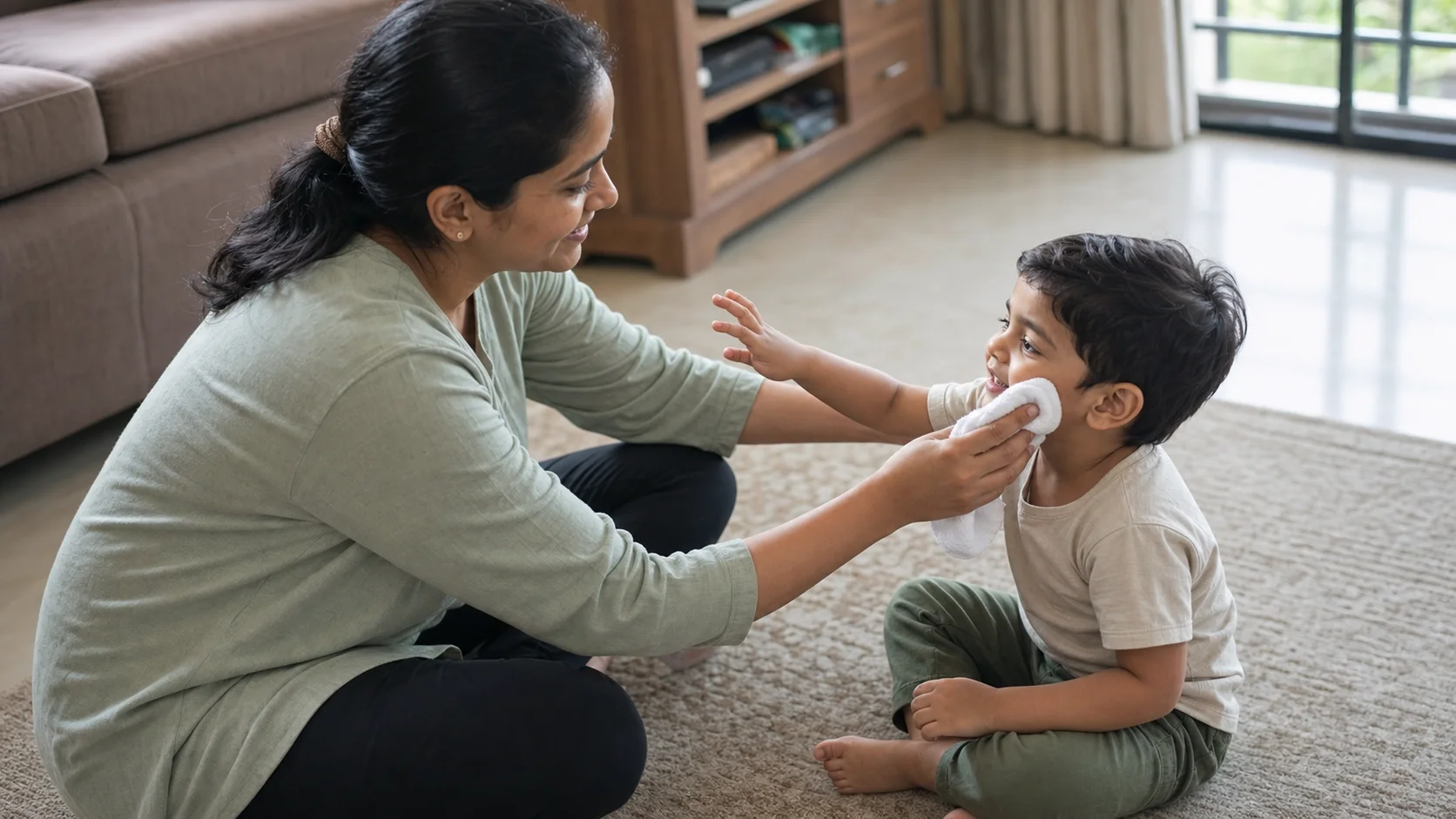
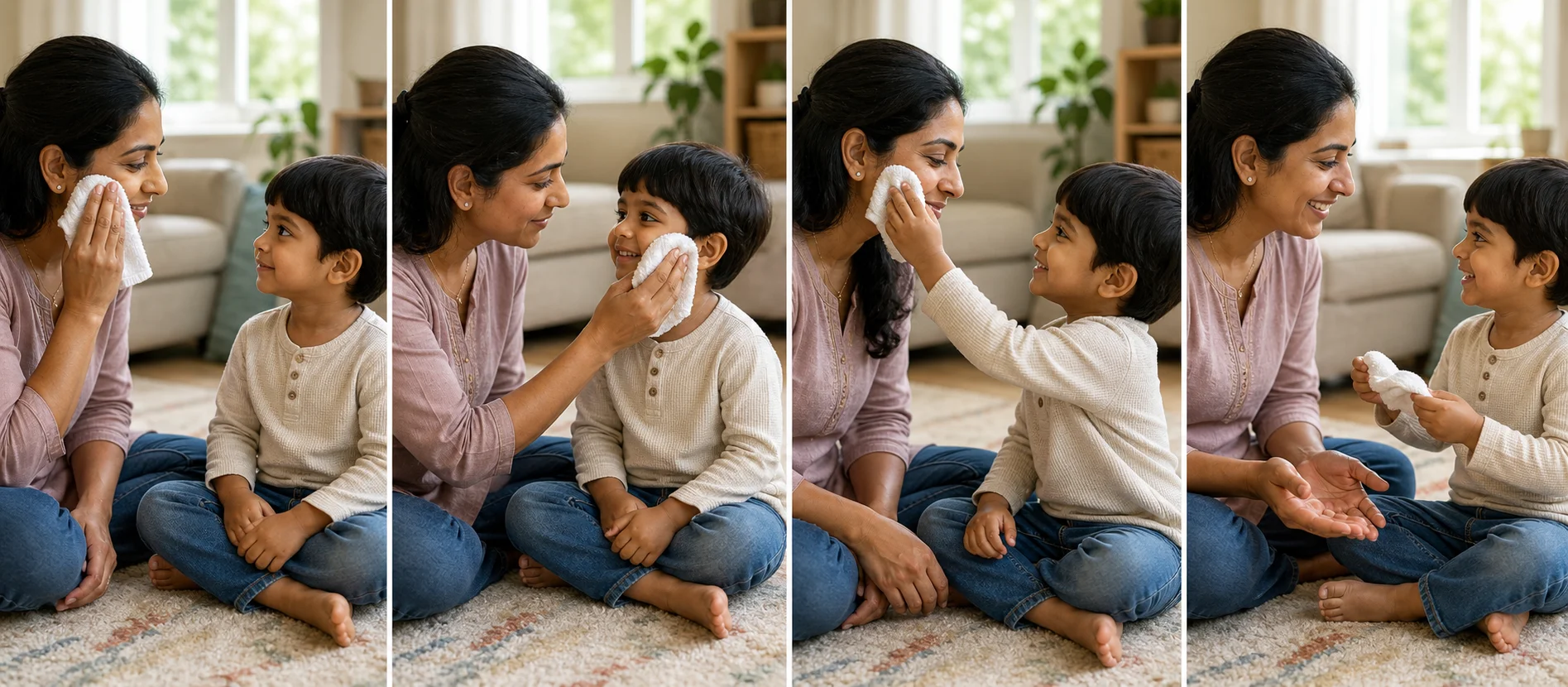
Turn gentle face touch into a predictable back-and-forth game. Tickle your child's outer cheek once with a familiar soft item, then hand it over so they can copy the touch on you, building comfort with touch around the face.
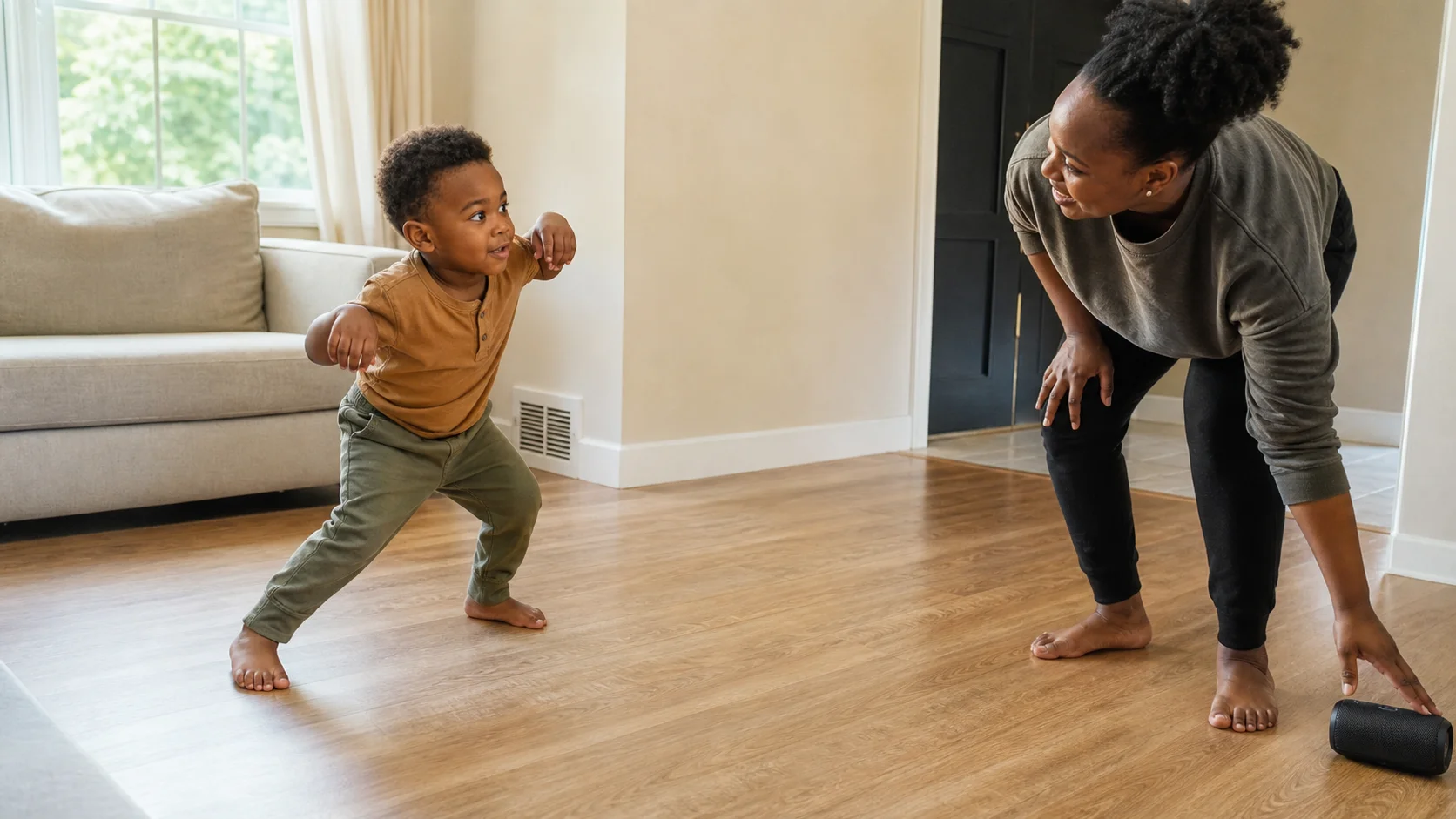
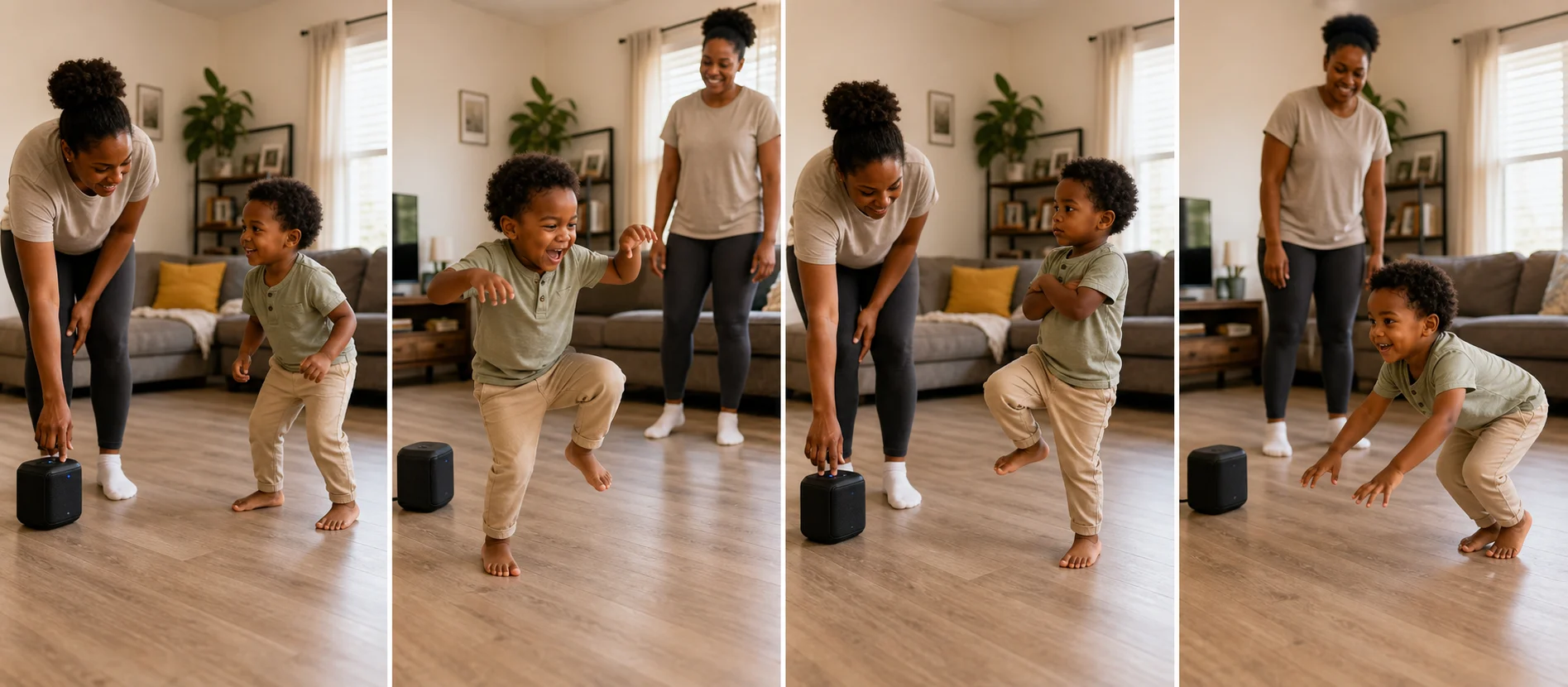
Give your toddler a simple reason to move, then a clear cue to stop. They stomp, slither, or flap like an animal while music plays, freeze when it stops, and practice listening and body control with every round.
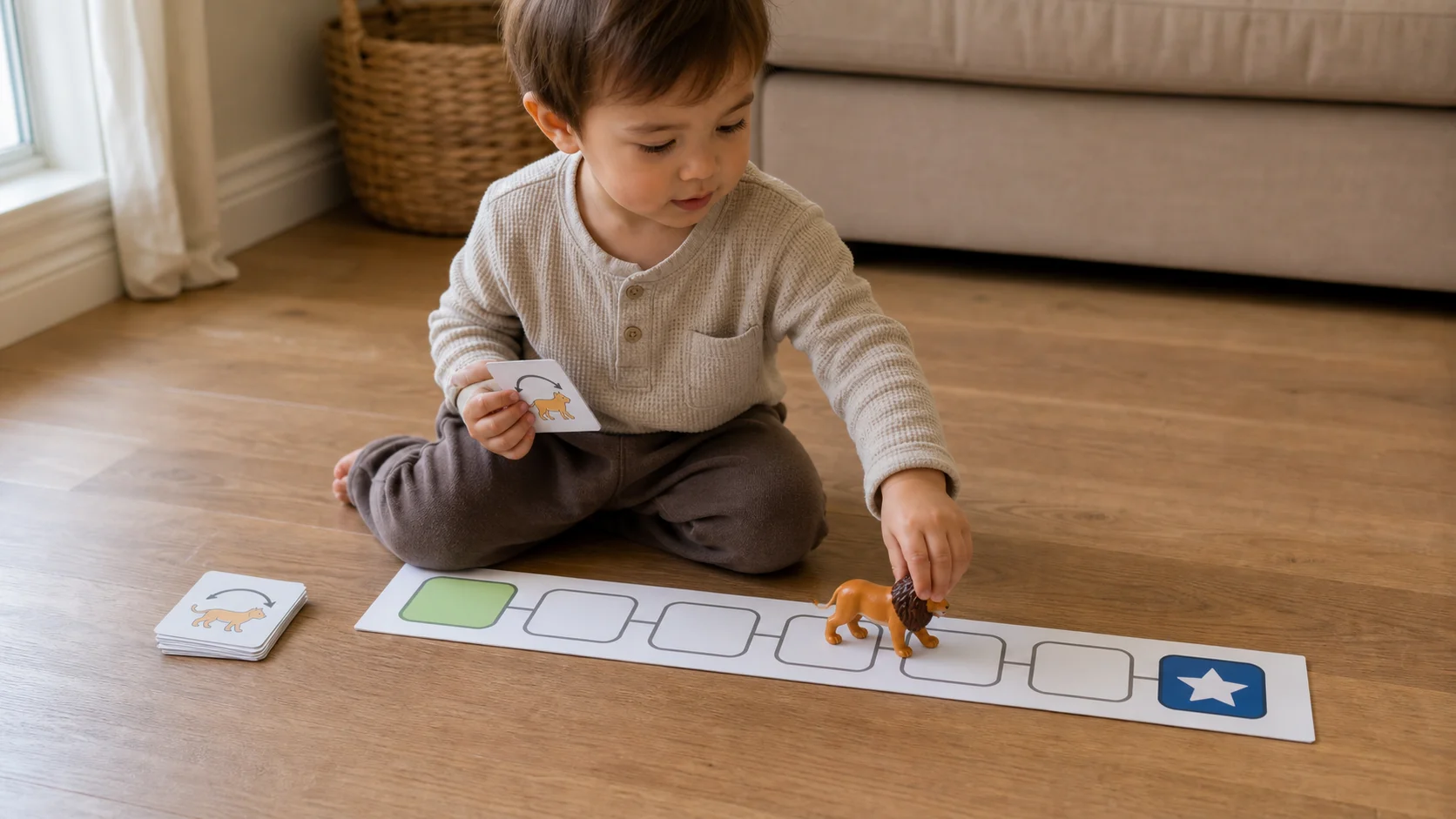
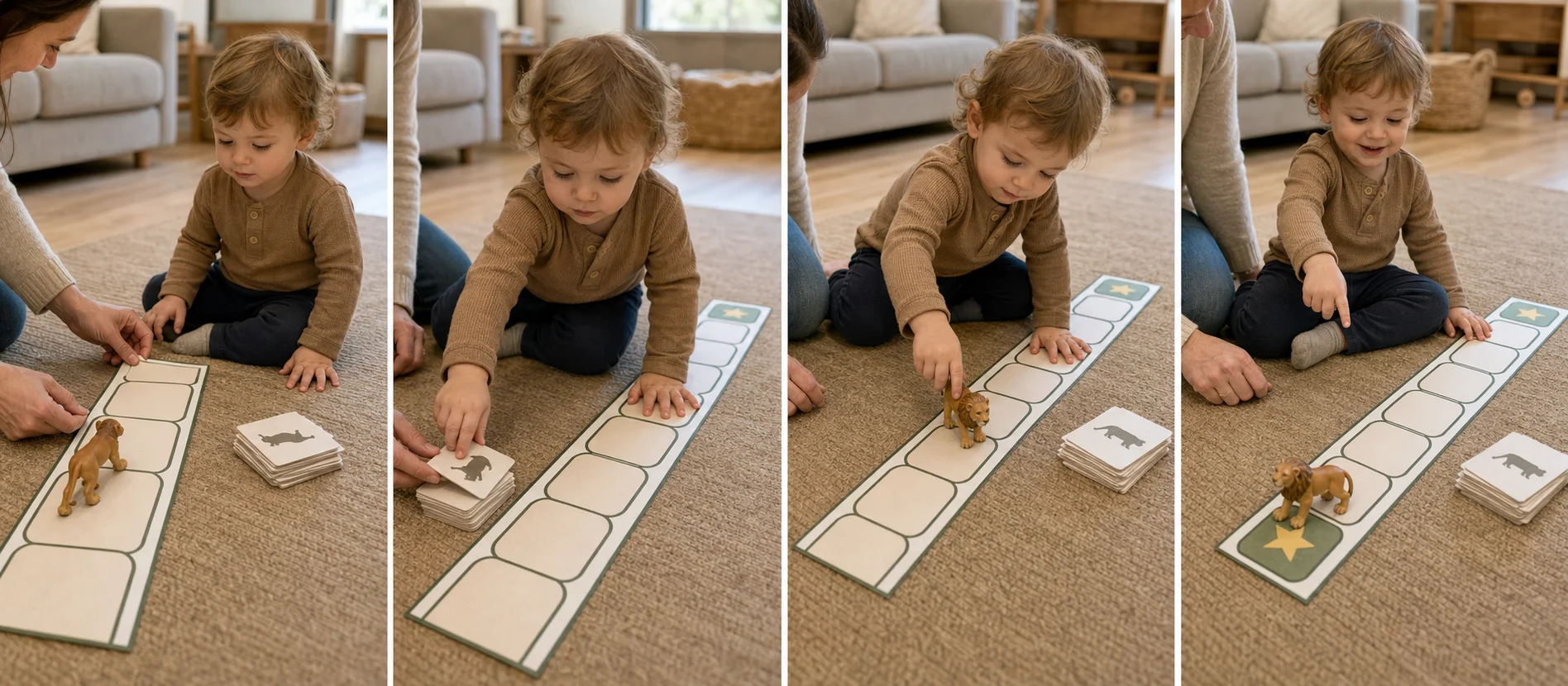
Turn a toy animal's trip to the finish into an easy first board game. Your child chooses a movement card, moves the animal the number of spaces it shows, and practices following a visual rule and taking turns.
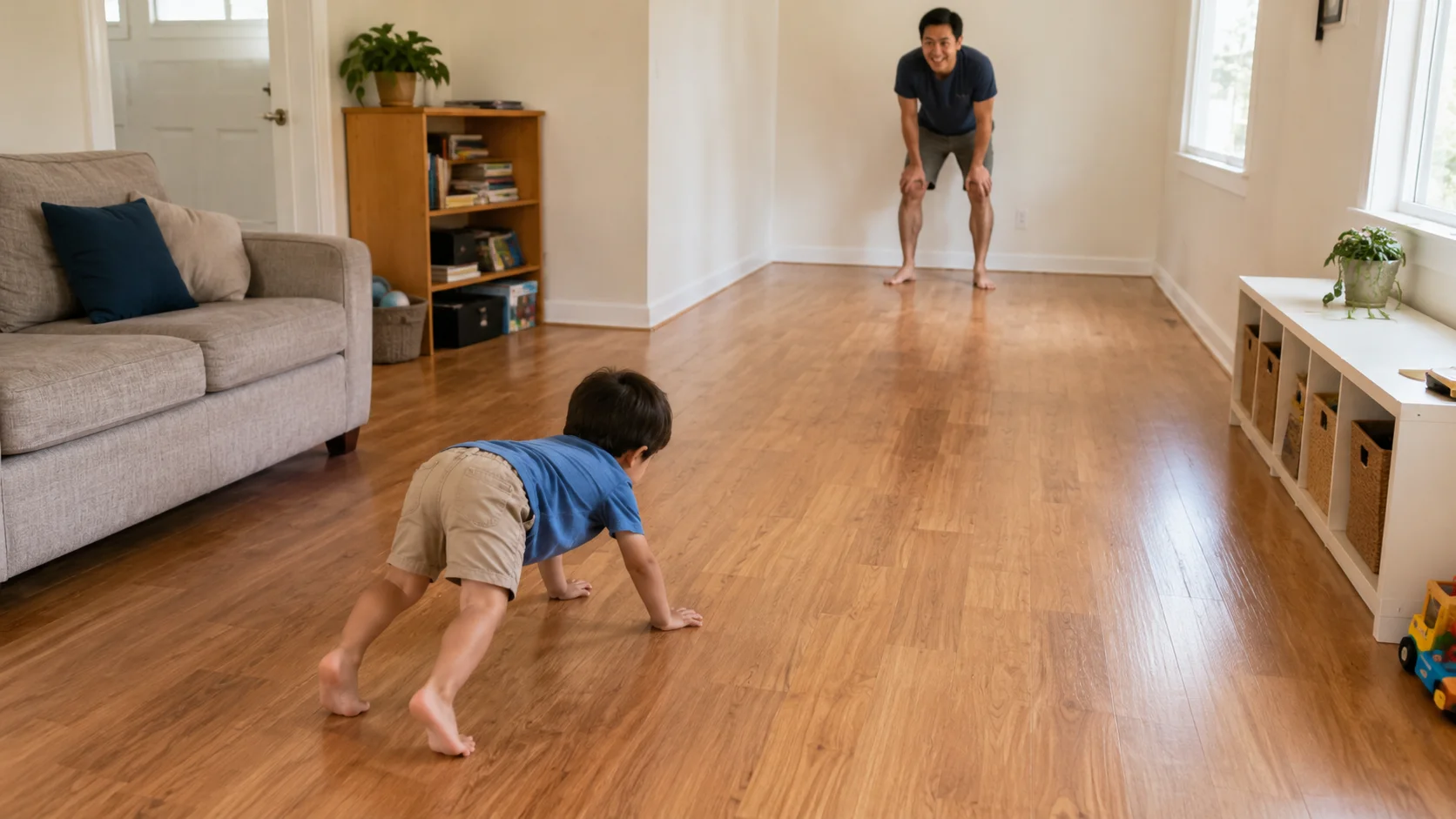
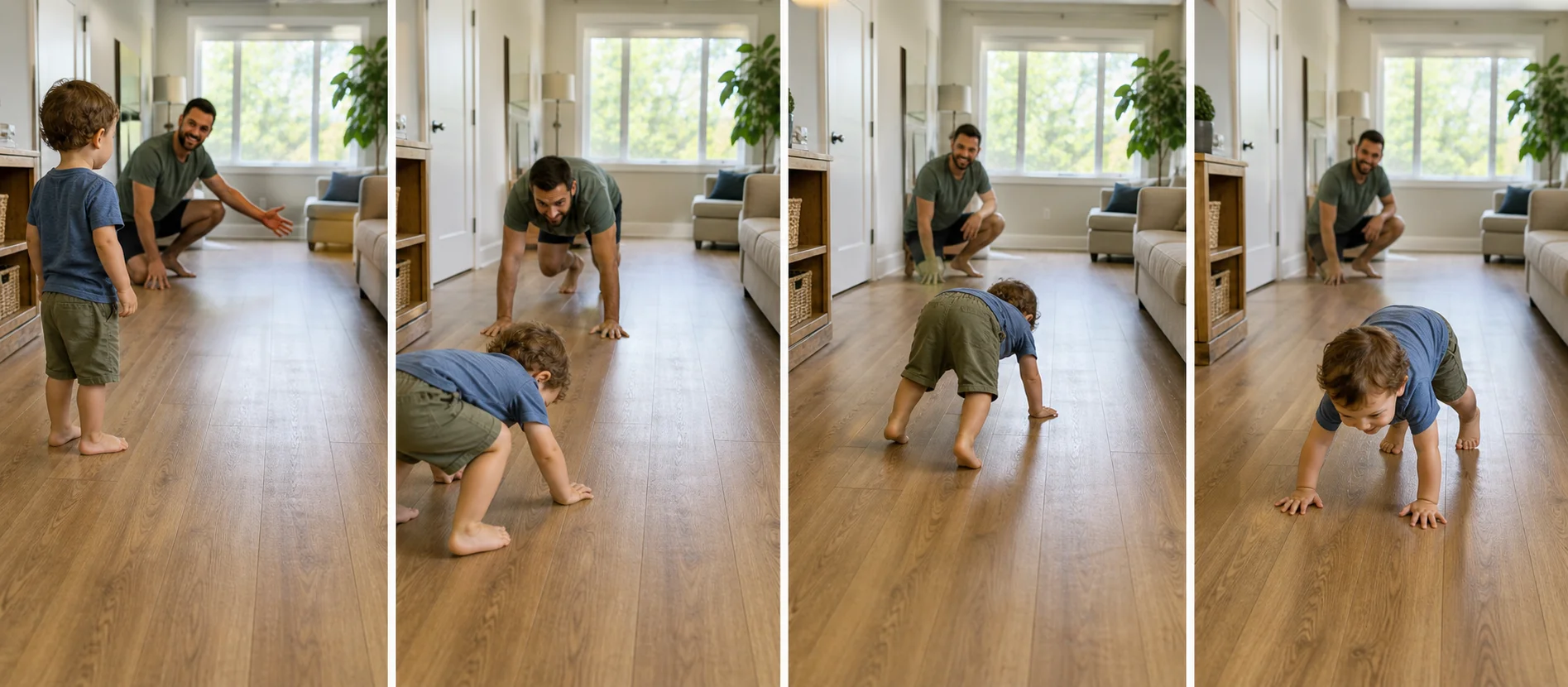
Turn a short stretch of floor into a make-believe animal trail. Your child bear-walks, crab-walks, or slithers to the turnaround point and back, practicing whole-body coordination and balance with every trip.
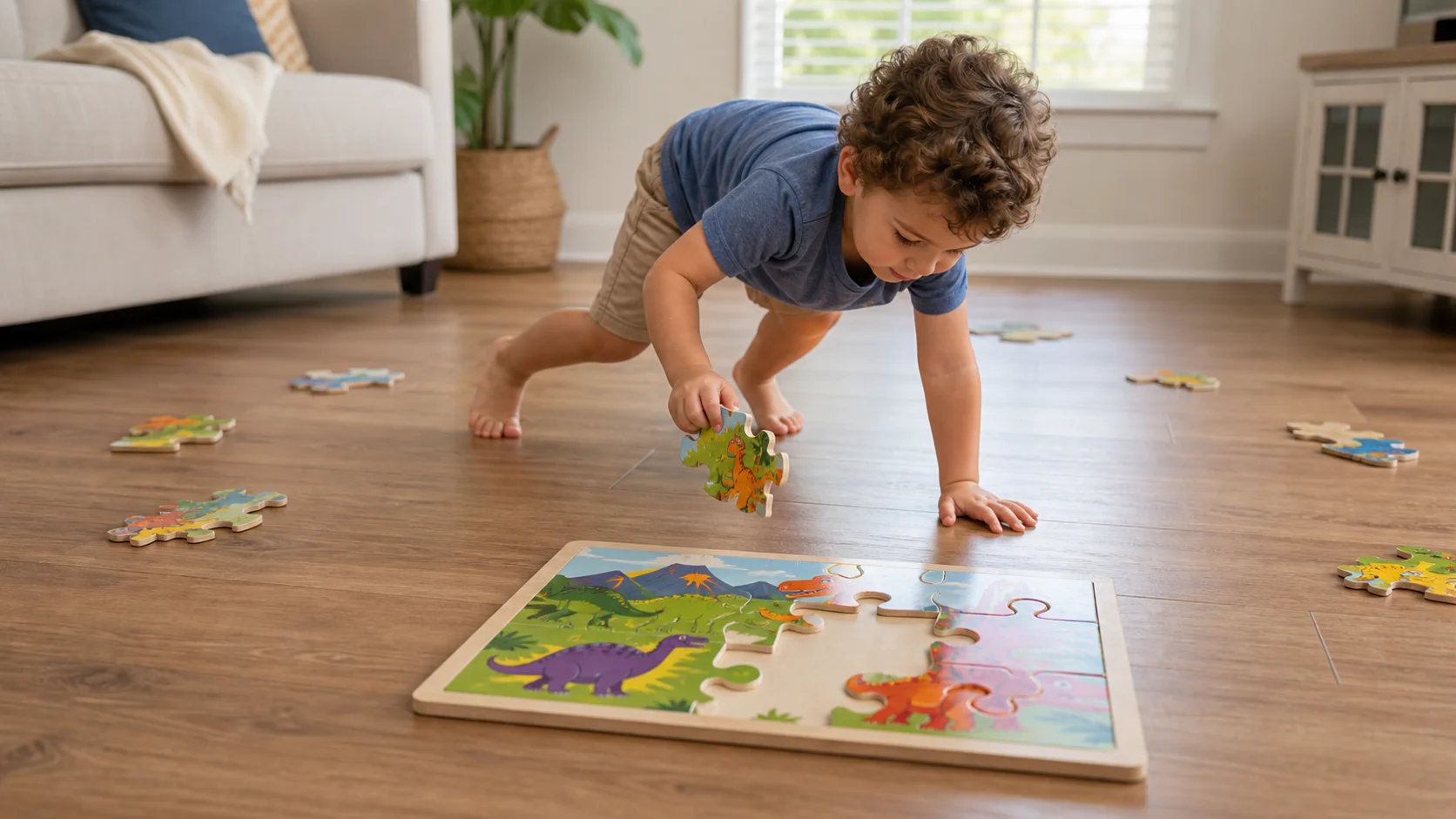
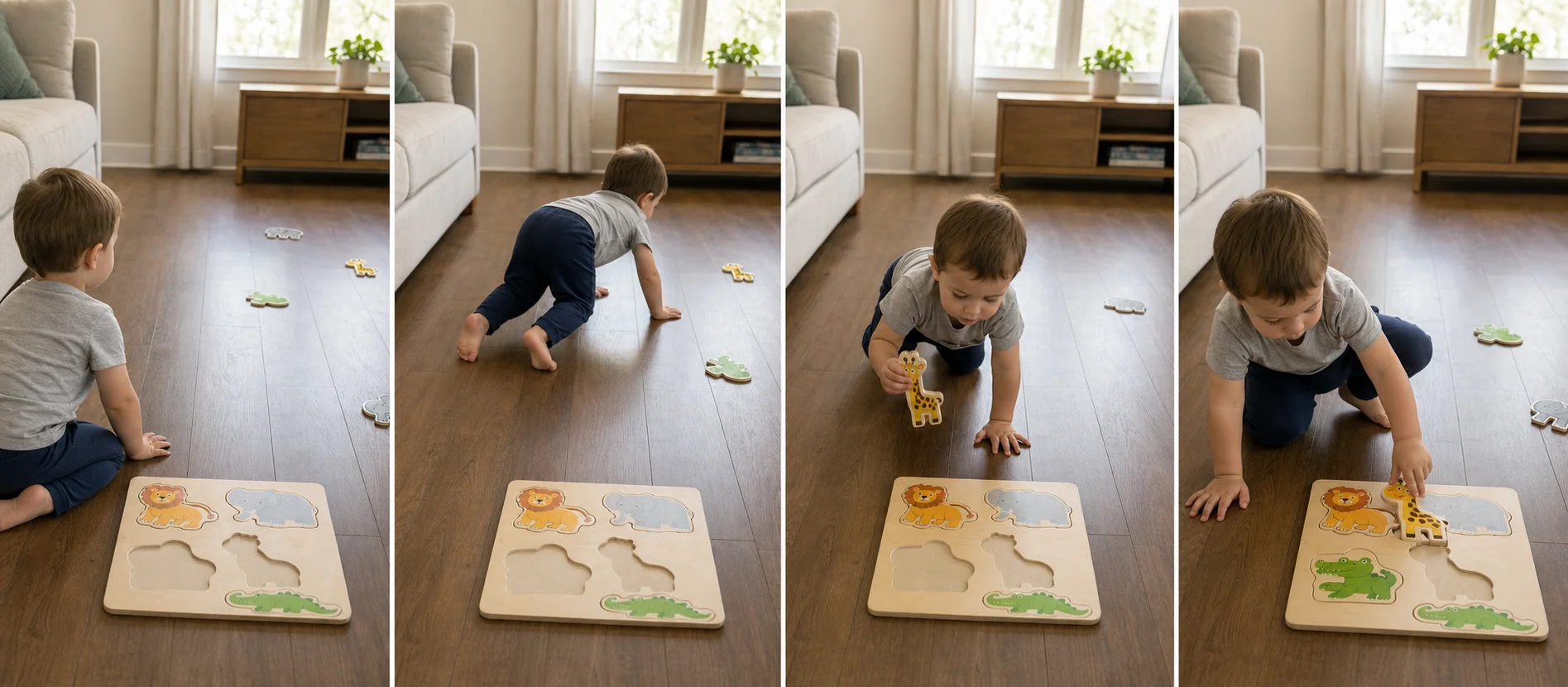
Turn a puzzle into a whole-room movement job. Your child animal-walks out empty-handed, stands to pick up one piece, walks back upright, and fits it before the next trip.
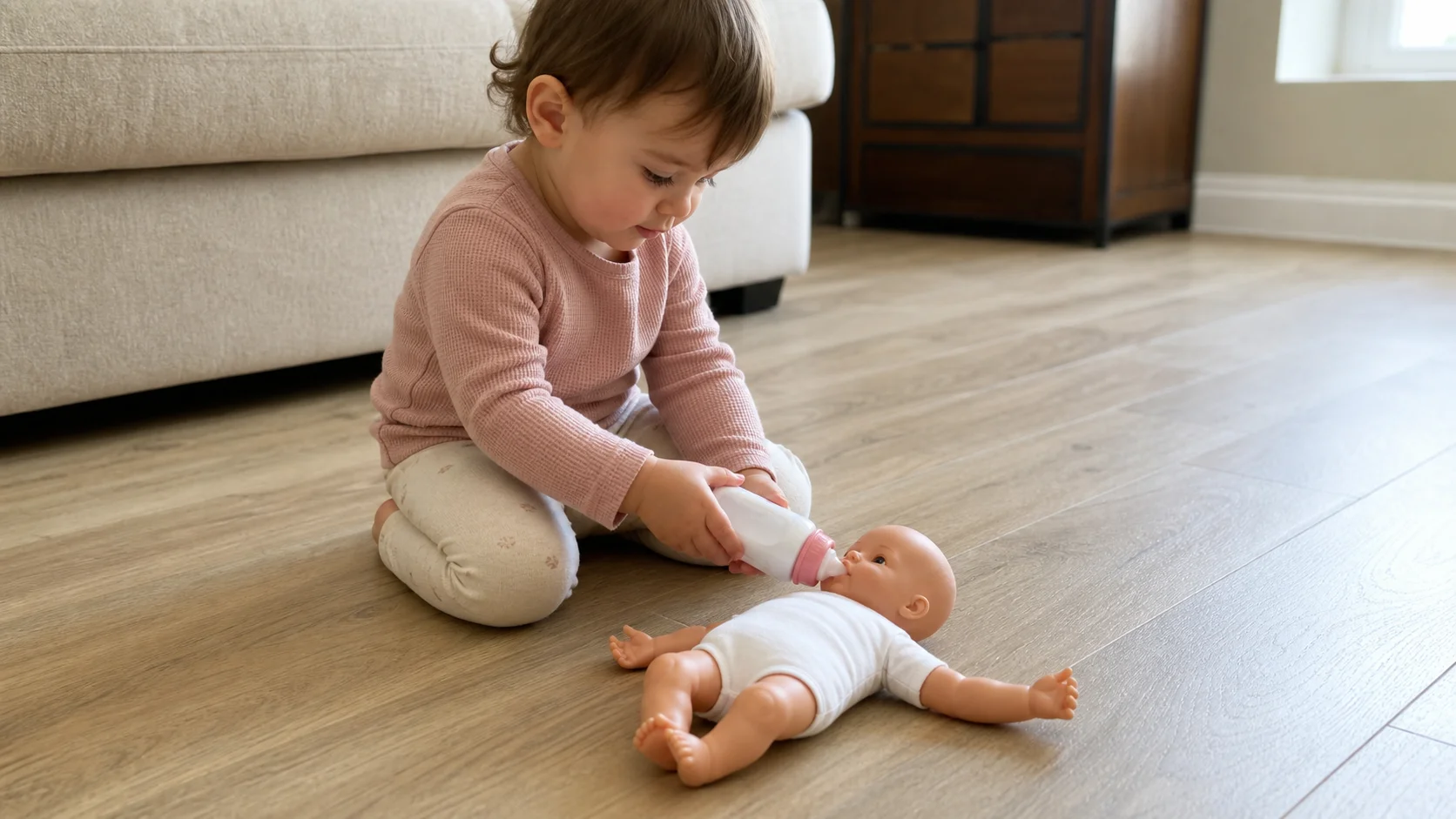
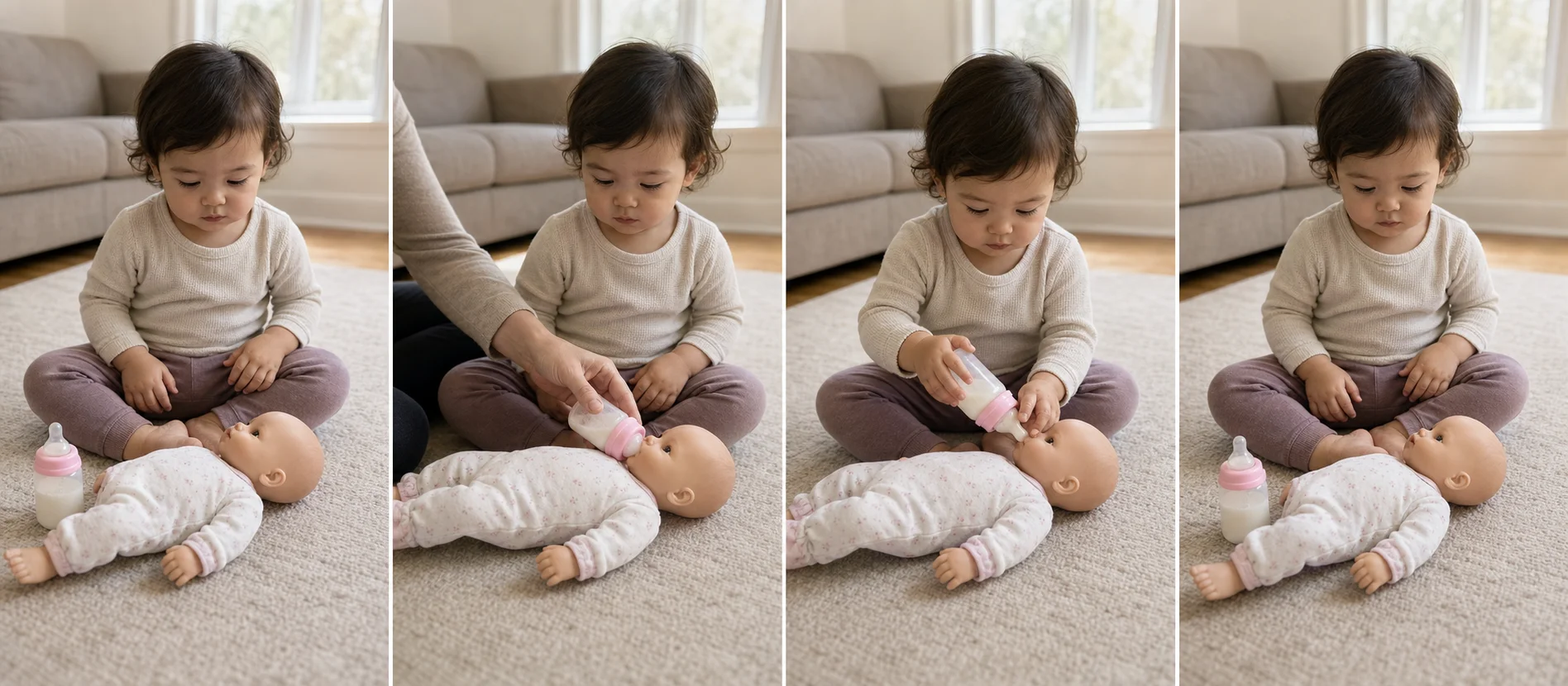
Give your toddler an easy first step into pretend play with just a doll and bottle. After watching one feeding turn, they bring the bottle to the doll's mouth, practicing imitation through a familiar make-believe action.
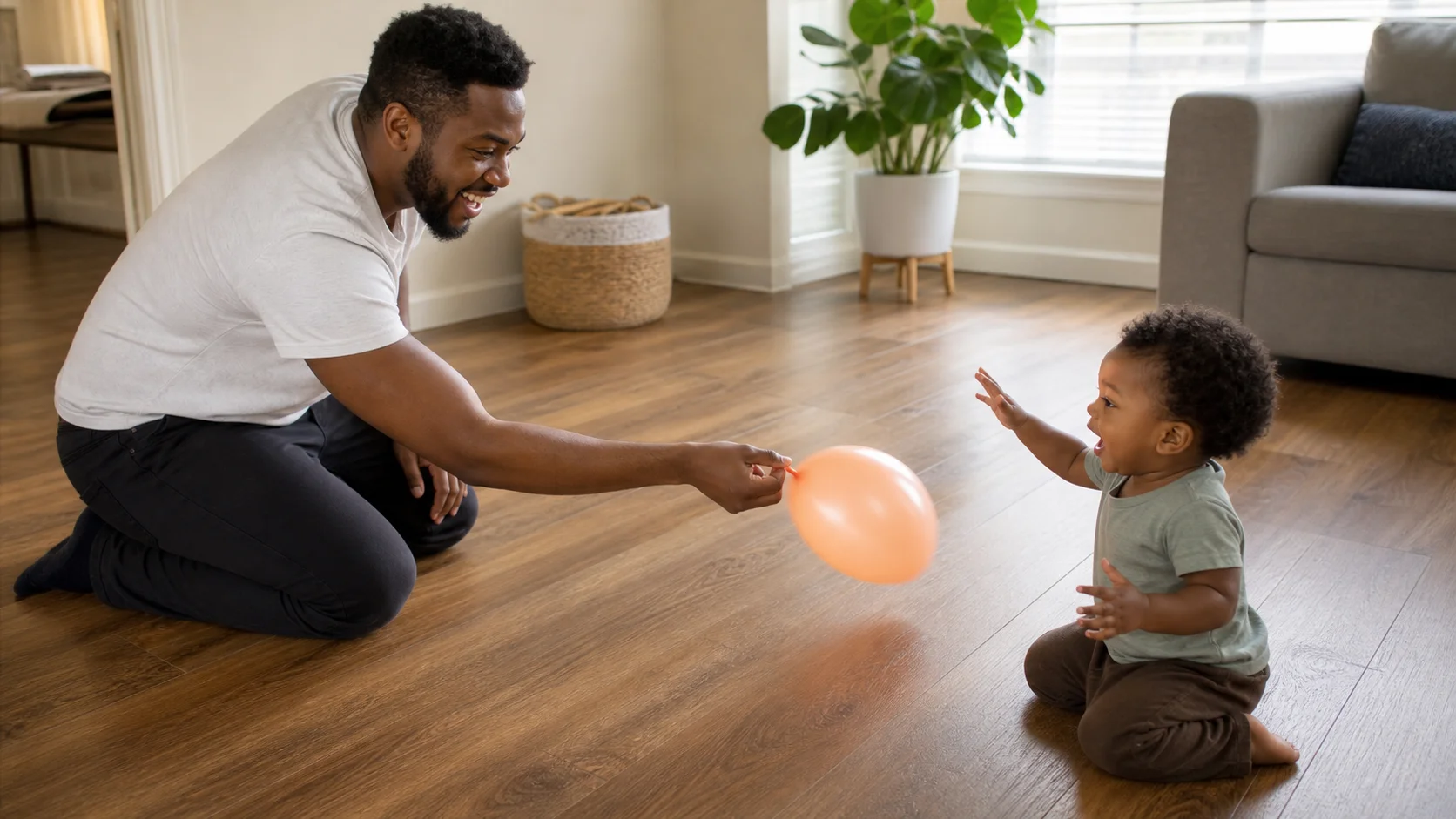
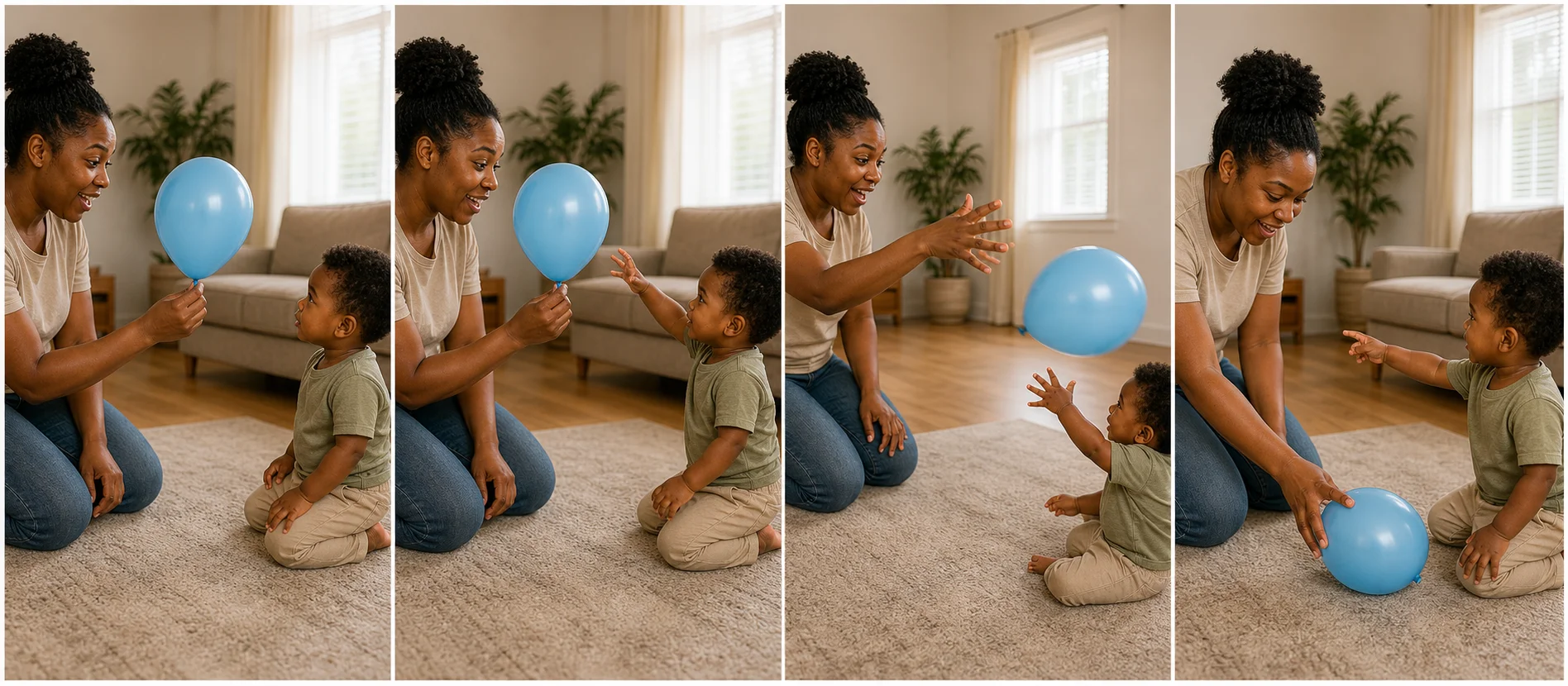
Make a tiny wait feel worth it: hold an inflated balloon through "ready, steady," release it when your toddler signals "go," and watch it fly. The immediate payoff supports attention and shows that a look, sound, gesture, or word can make something happen.
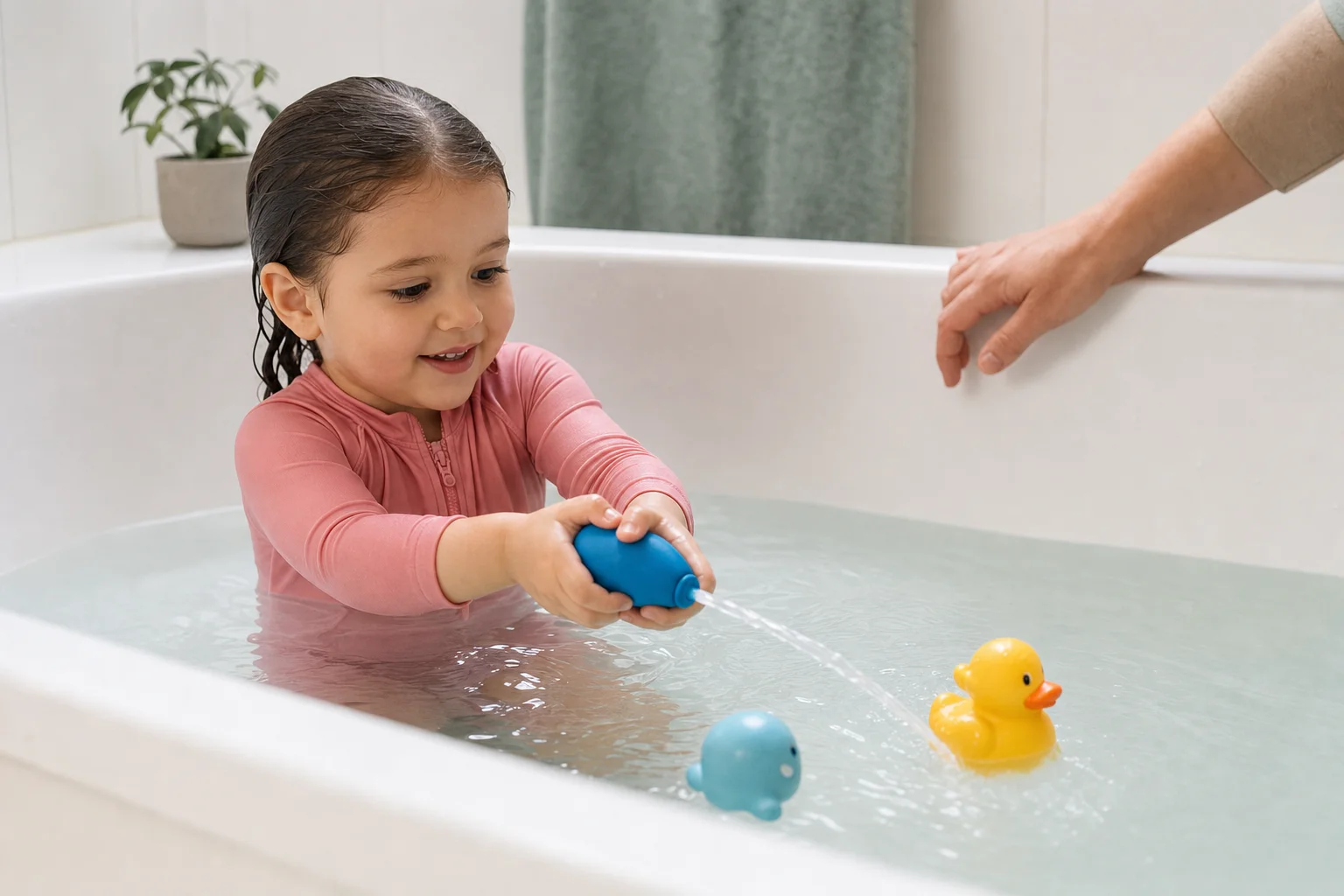
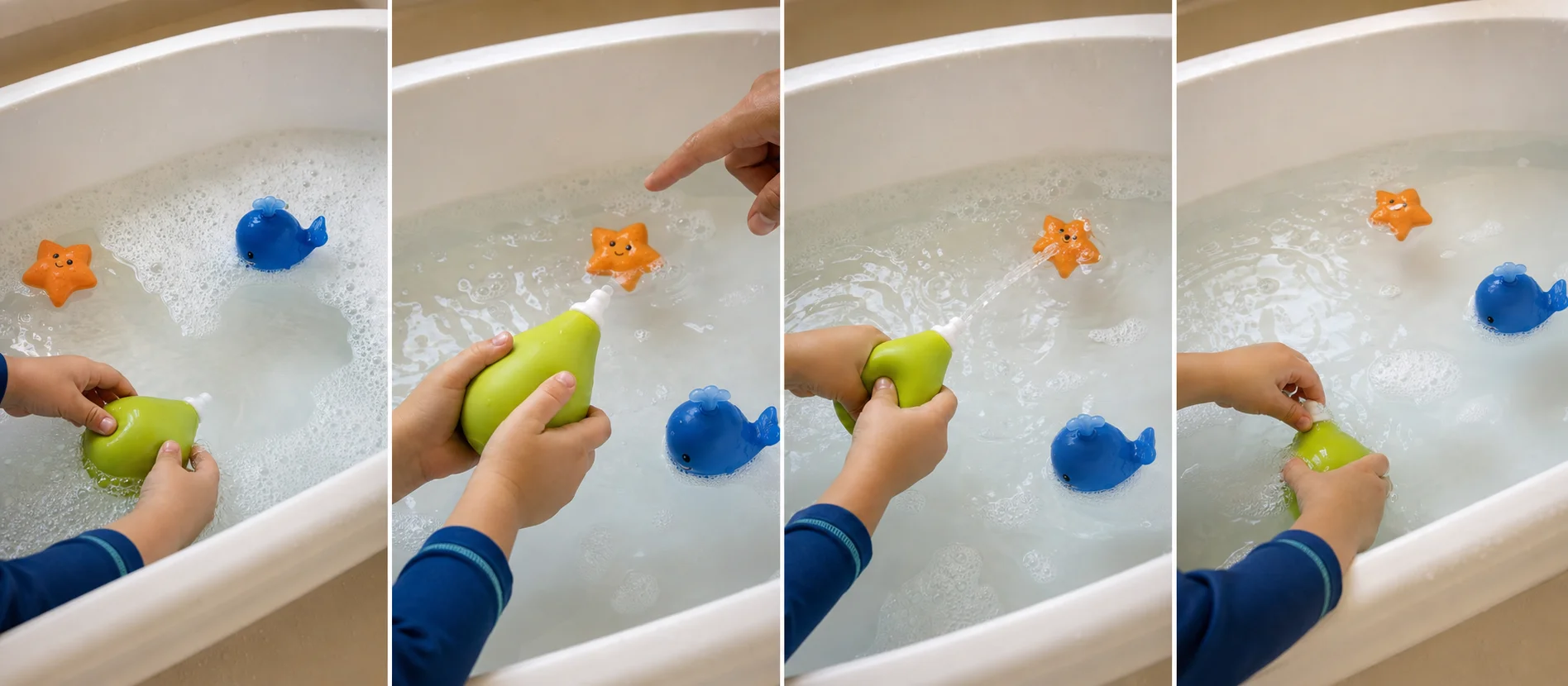
Turn bath time into a simple target game with a squeeze bottle and floating toys. Your child fills the bottle, aims, and squirts with both hands to make a toy drift, building hand strength and two-hand coordination with an instant result.
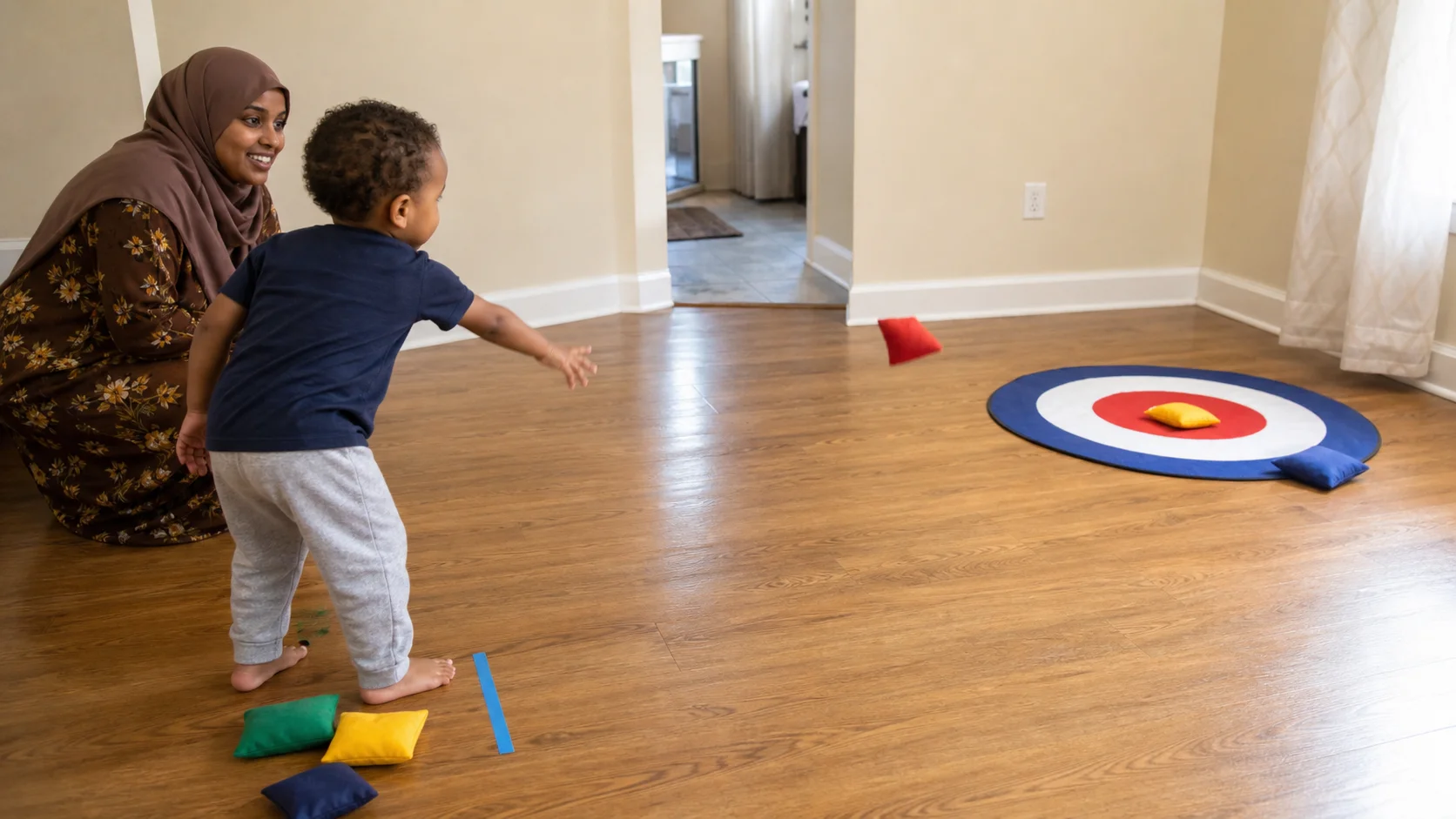
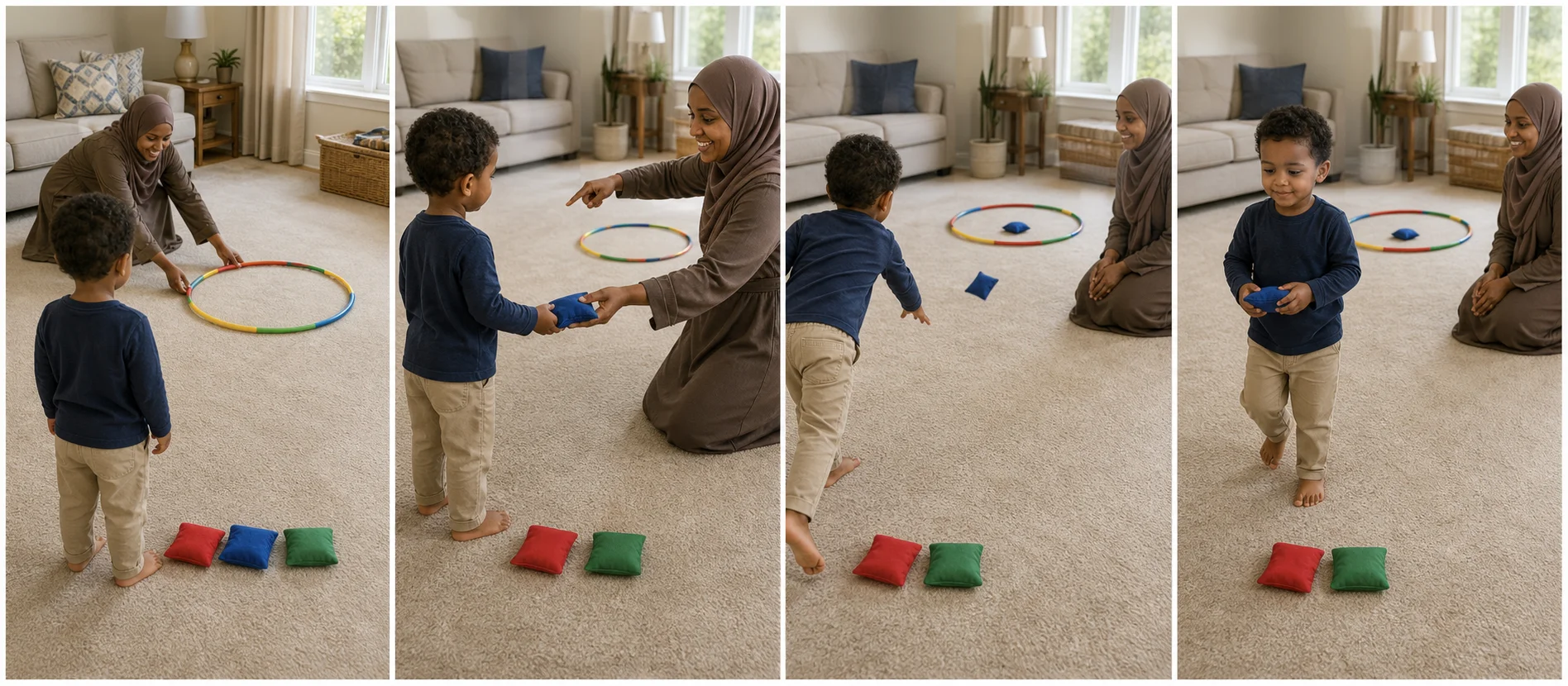
Turn a few beanbags and a nearby target into a quick indoor aiming game. Your child tosses toward the target, watches where each throw lands, and builds visual-motor and body-awareness skills.
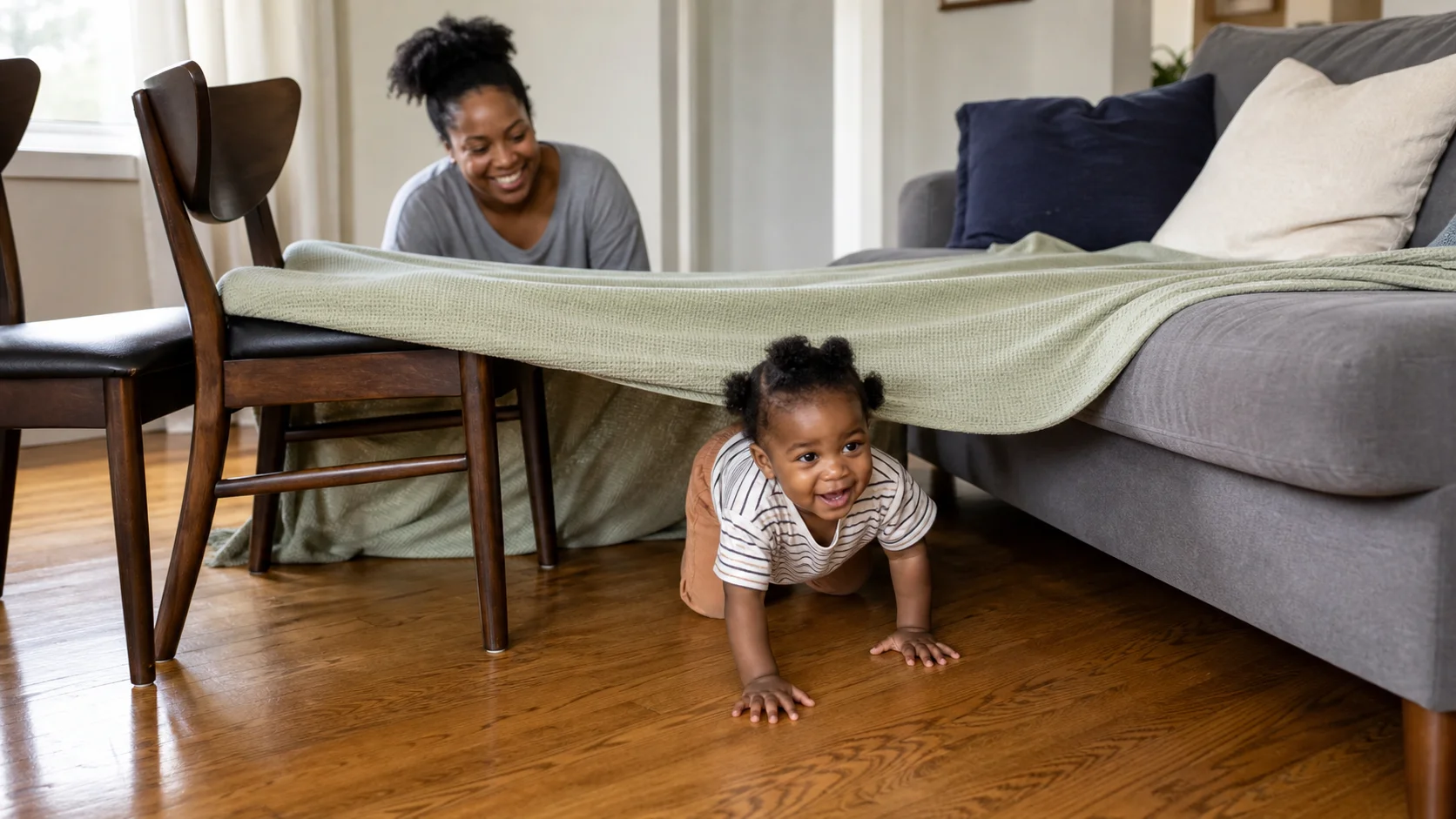
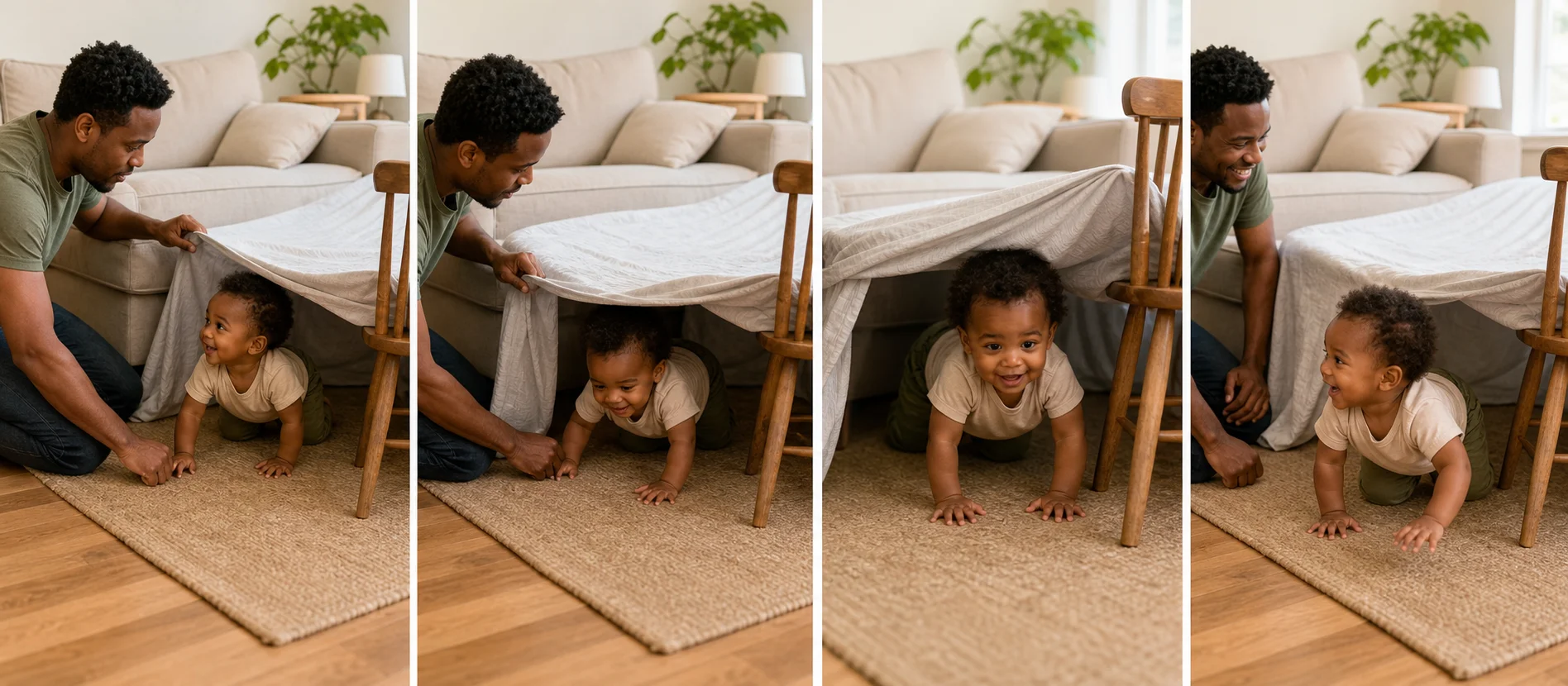
Turn a blanket, couch, and chairs into a little fort your toddler can crawl in and out of. Each trip gets their whole body moving and gives spatial words like "in," "out," and "under" a visible meaning.
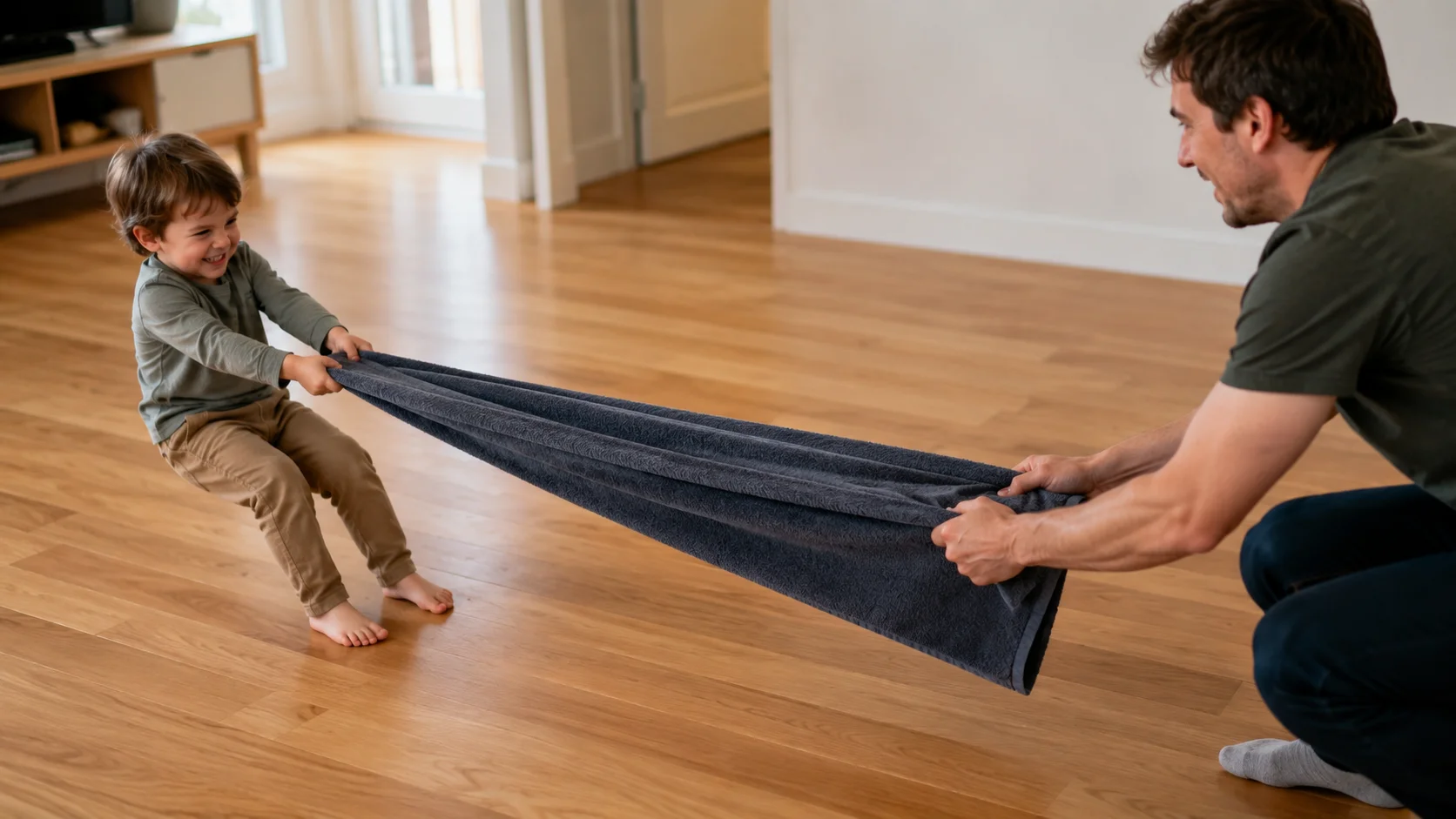
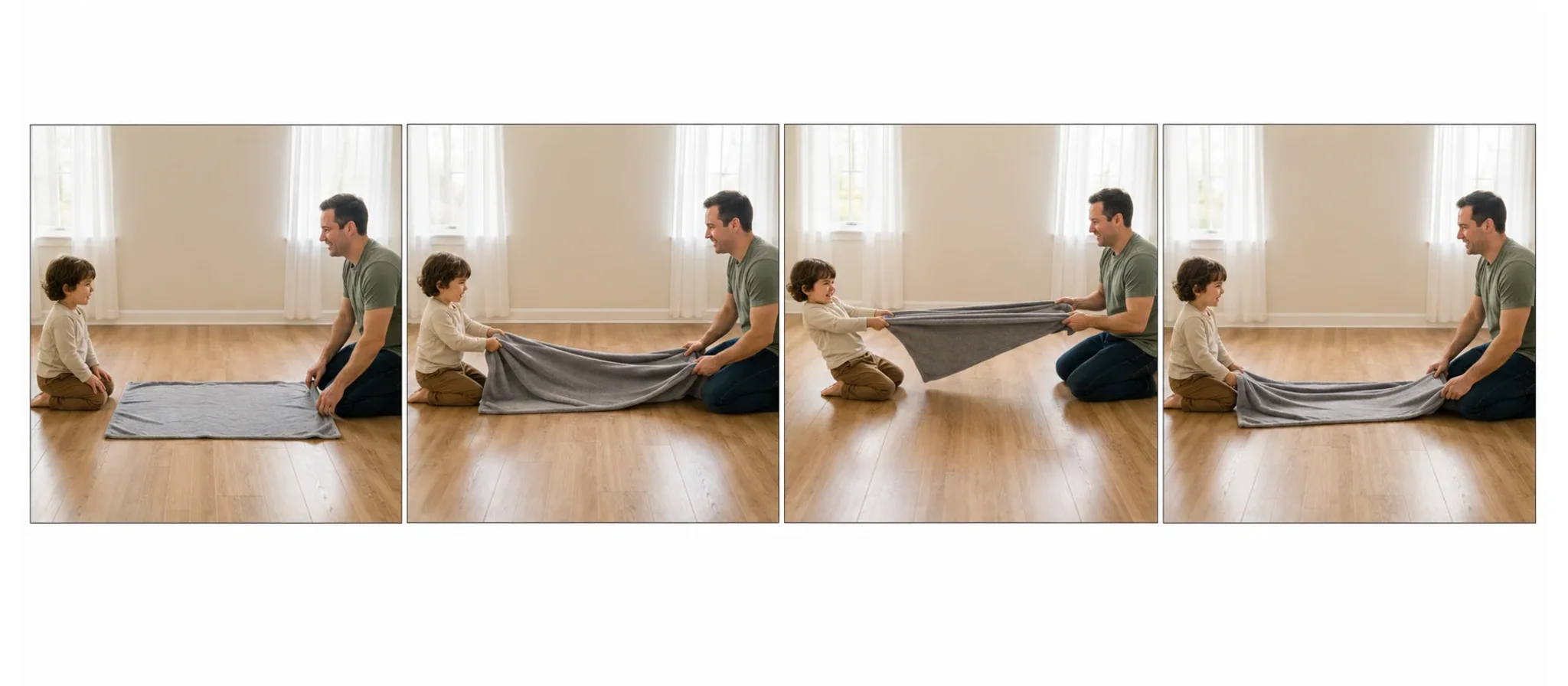
Turn a soft blanket into a simple strength game. Your child grips one end, pulls against gentle resistance, and stops on cue, building arm and core strength with each short round.
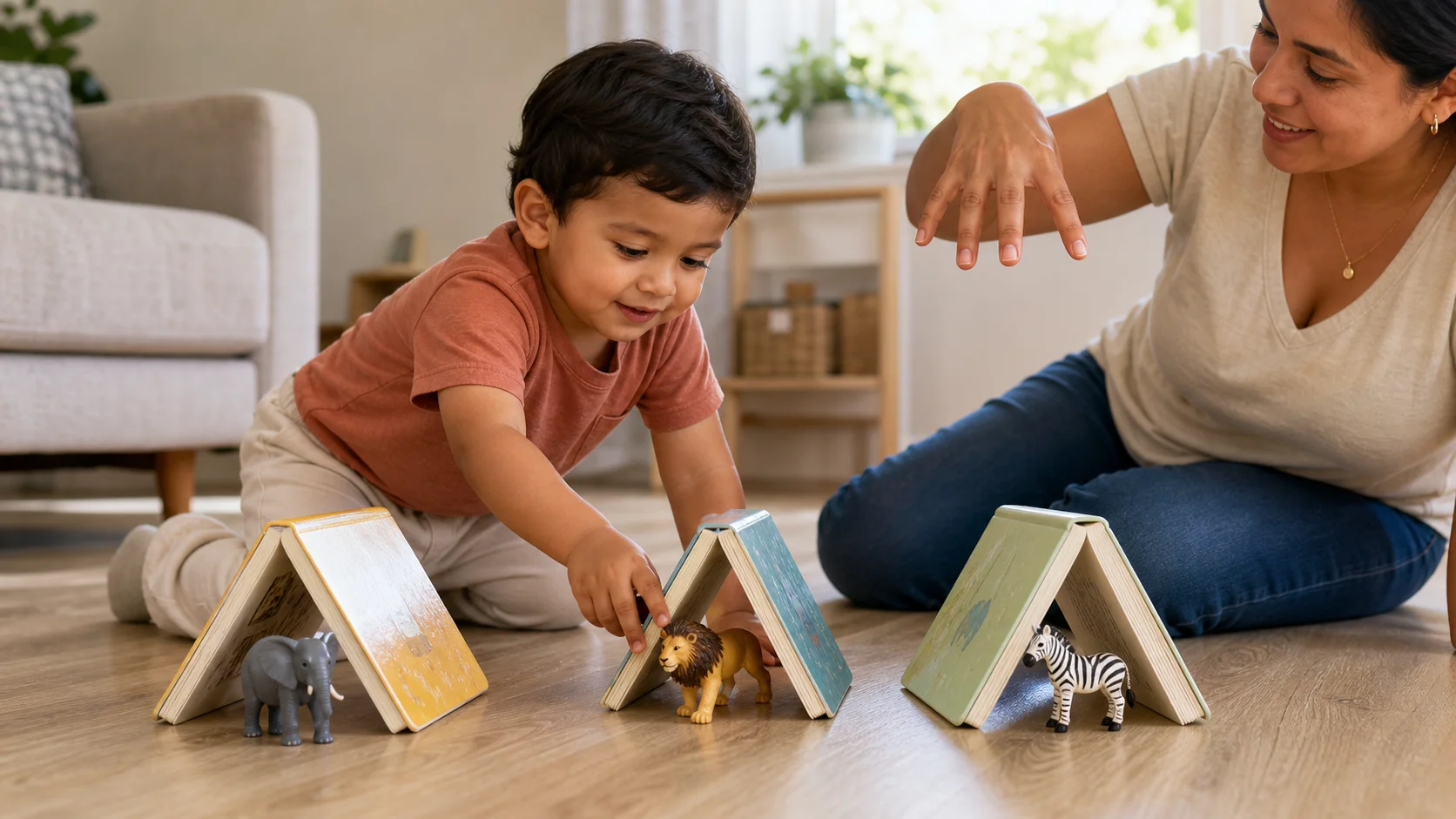
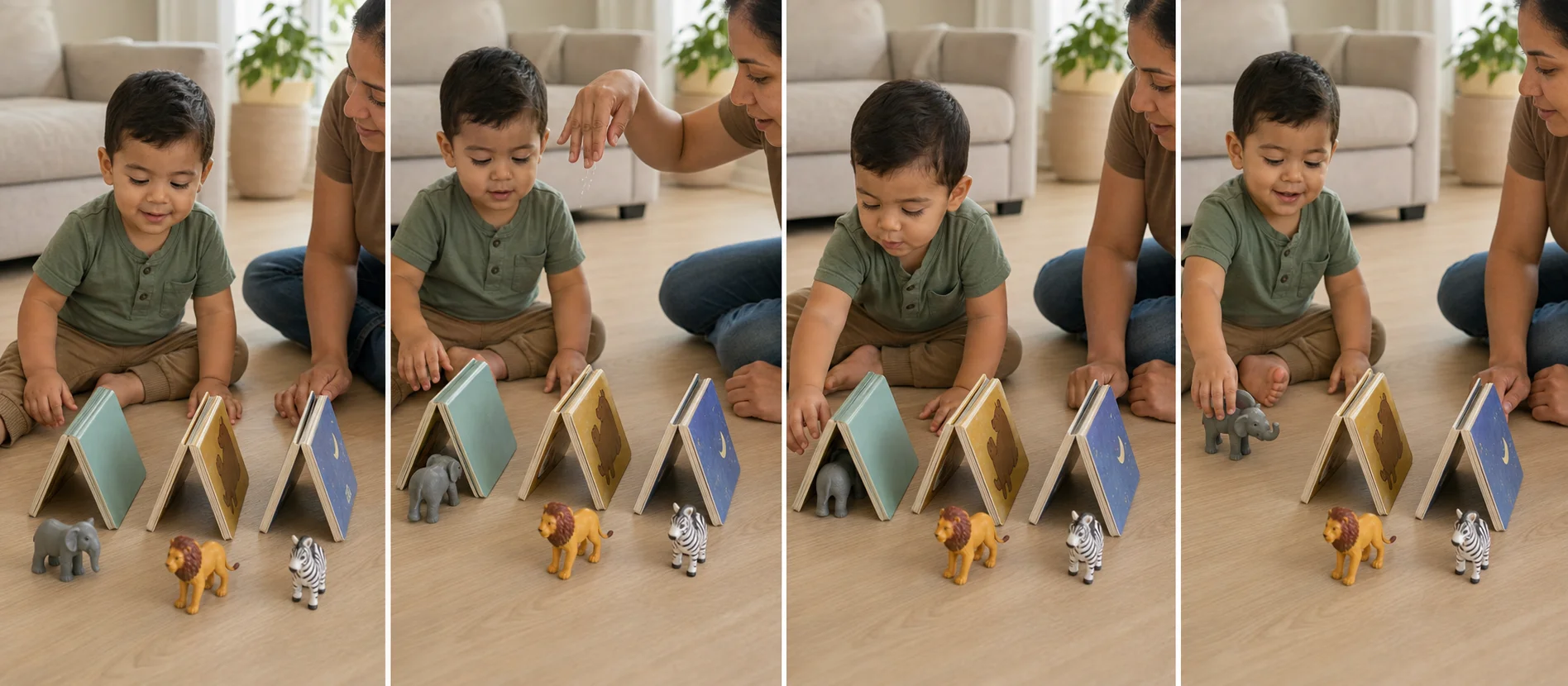
Turn board books into tiny shelters for a quiet pretend rescue where your toddler slides toy animals in from the rain, then brings them back out when the storm stops, practicing a clear in-and-out sequence.
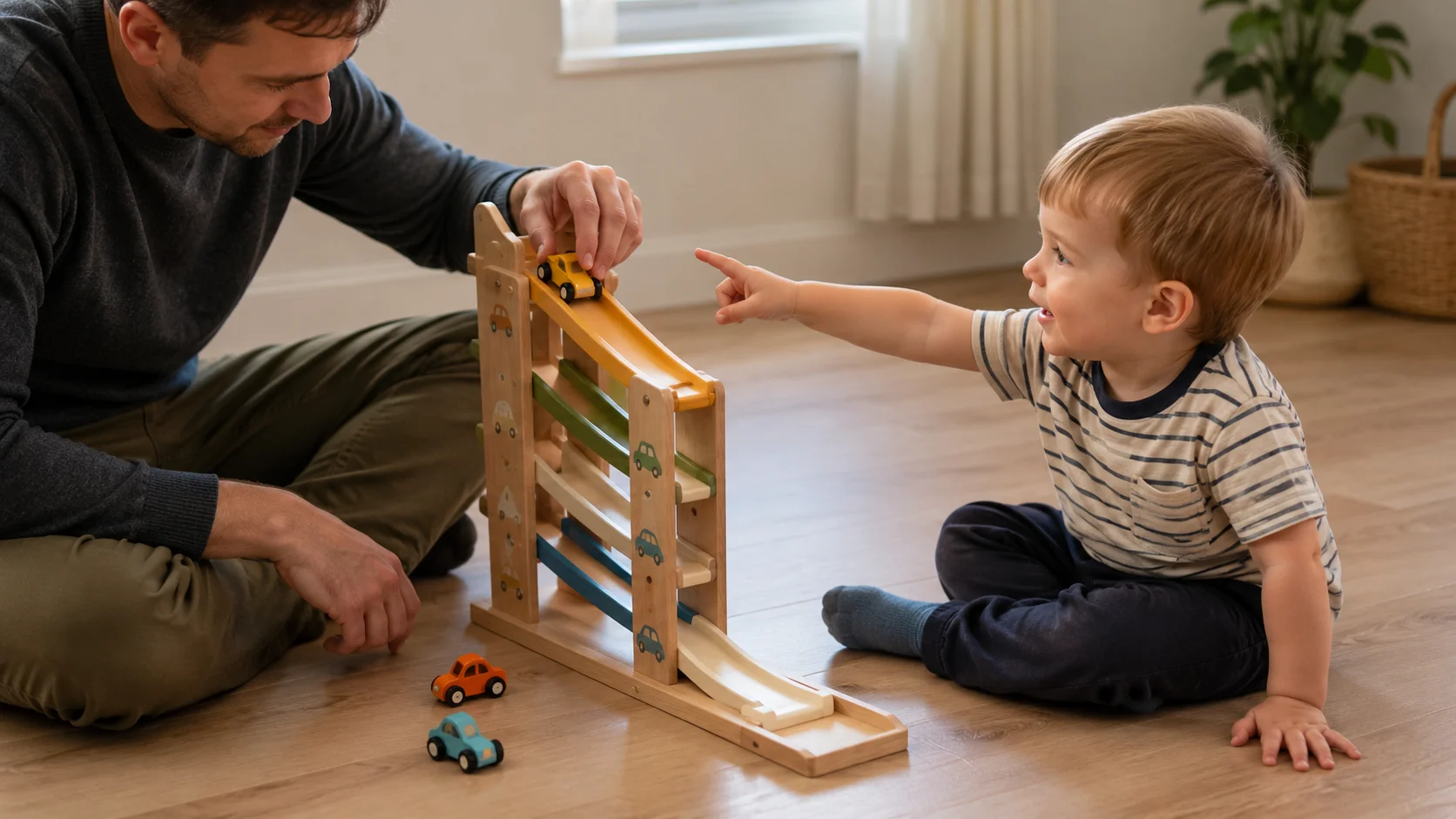
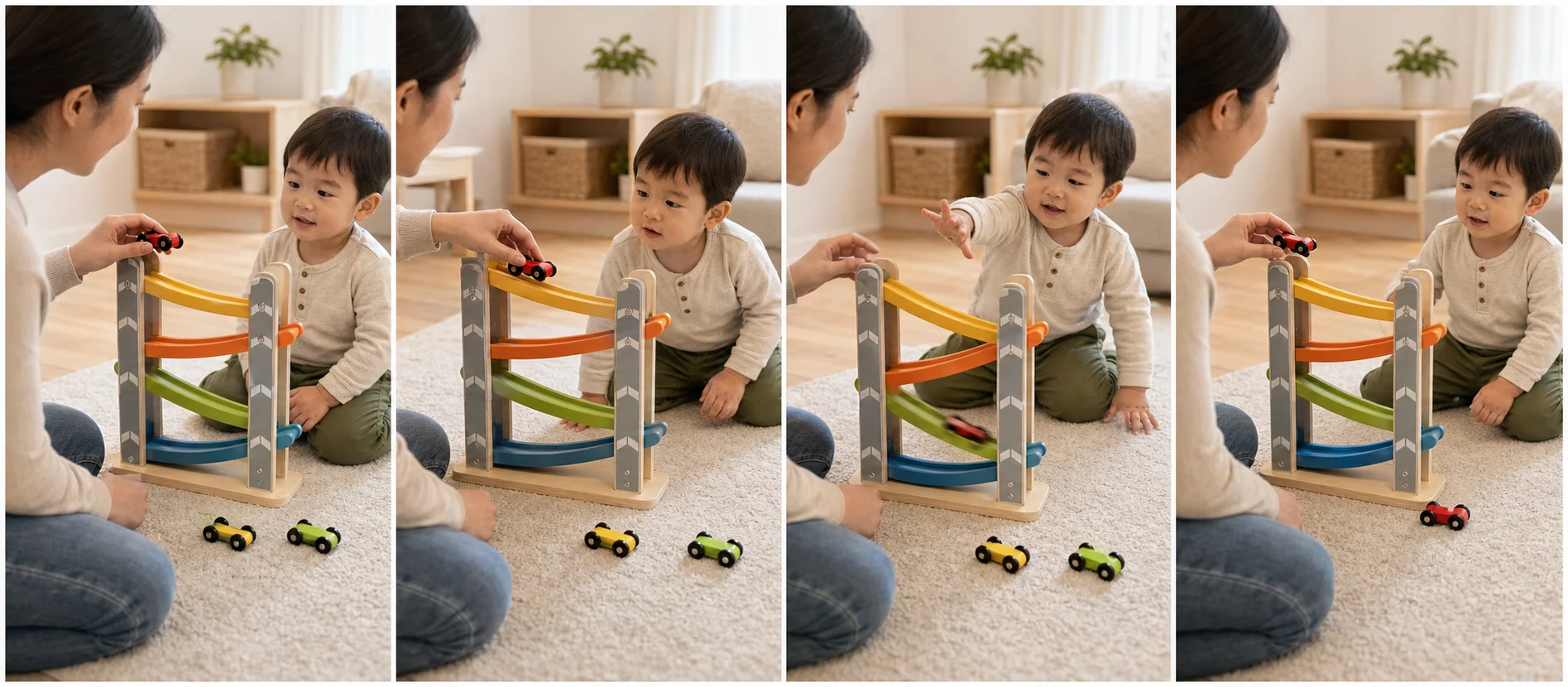
Turn a toy-car ramp into a quick communication game: pause at the top, wait for your toddler's signal, then let the car roll. The repeated wait-and-go turns build attention, early communication, and turn-taking.