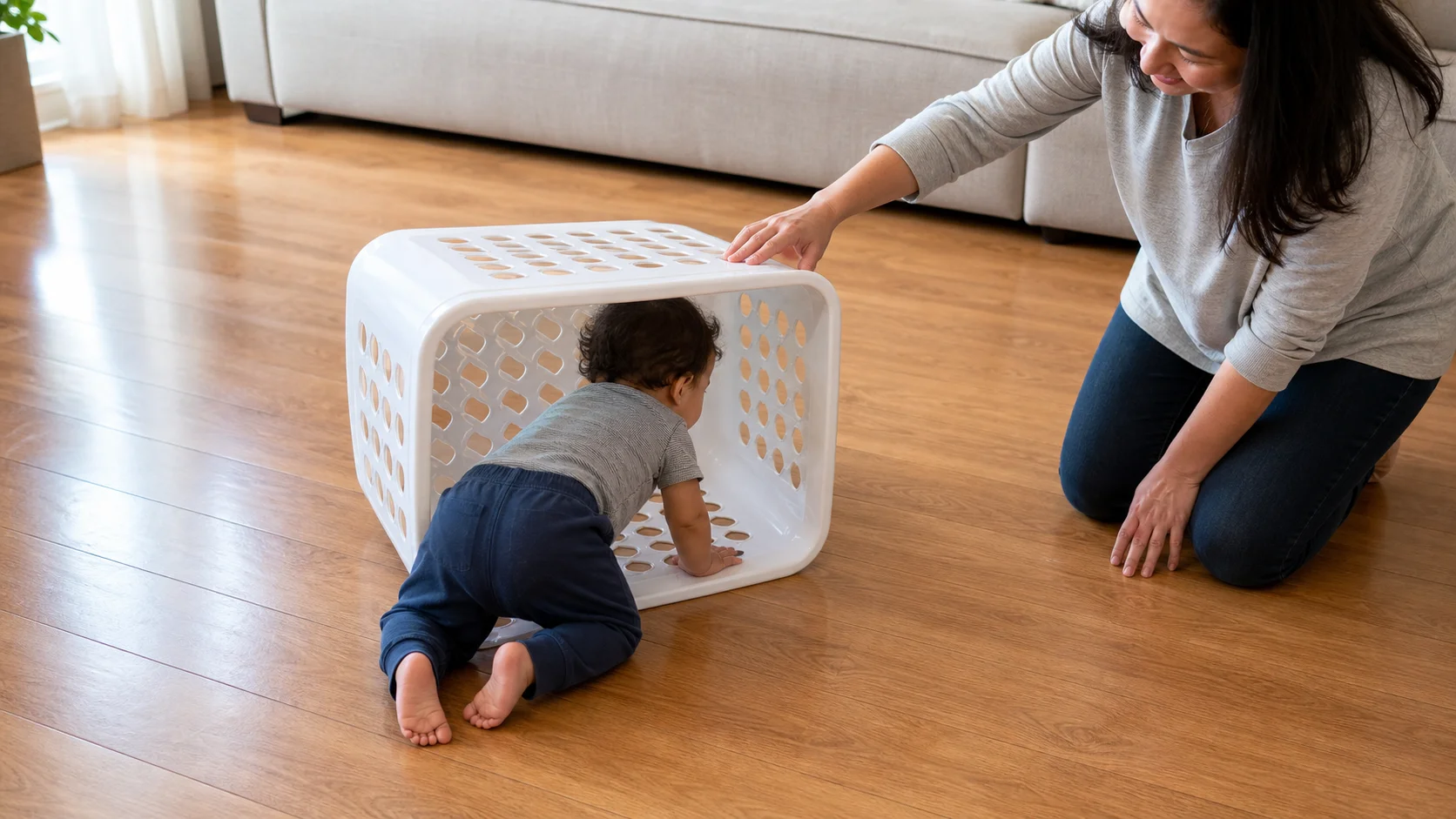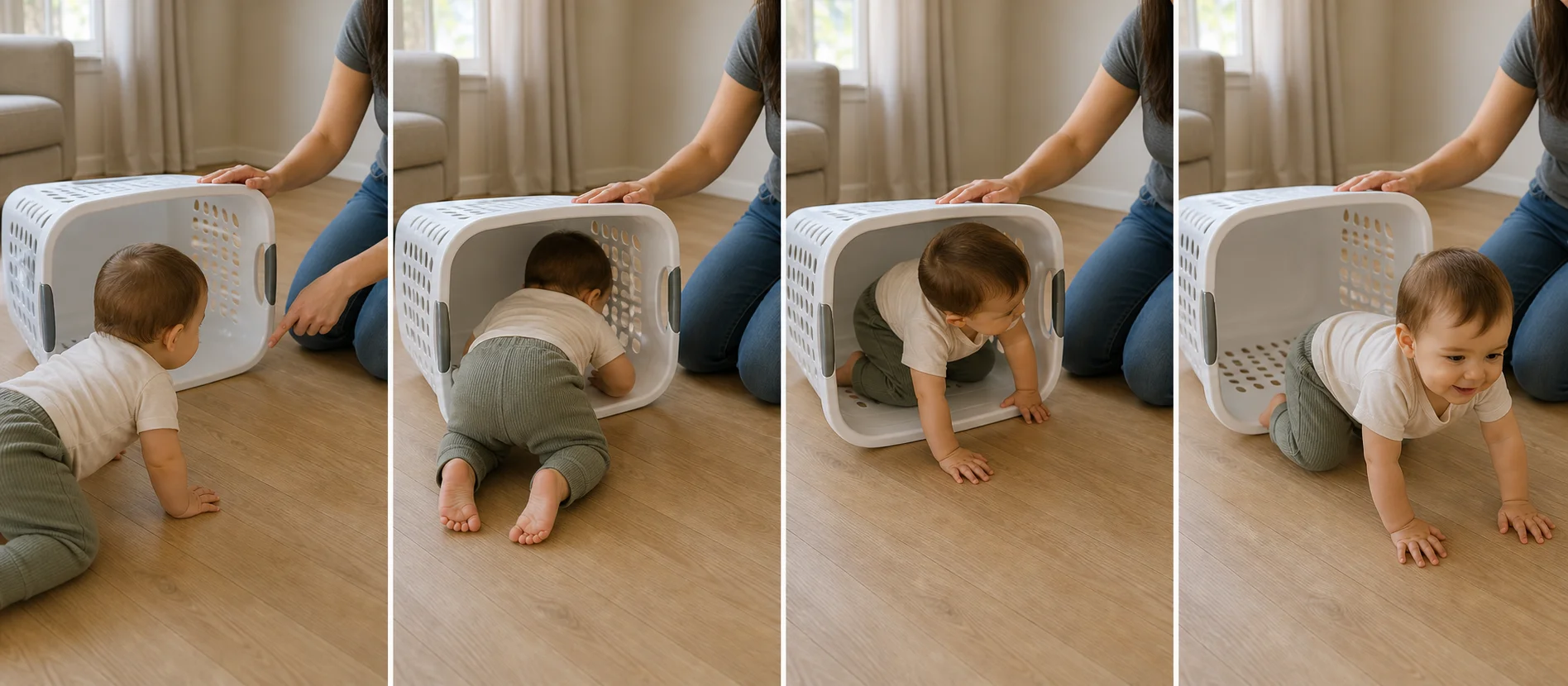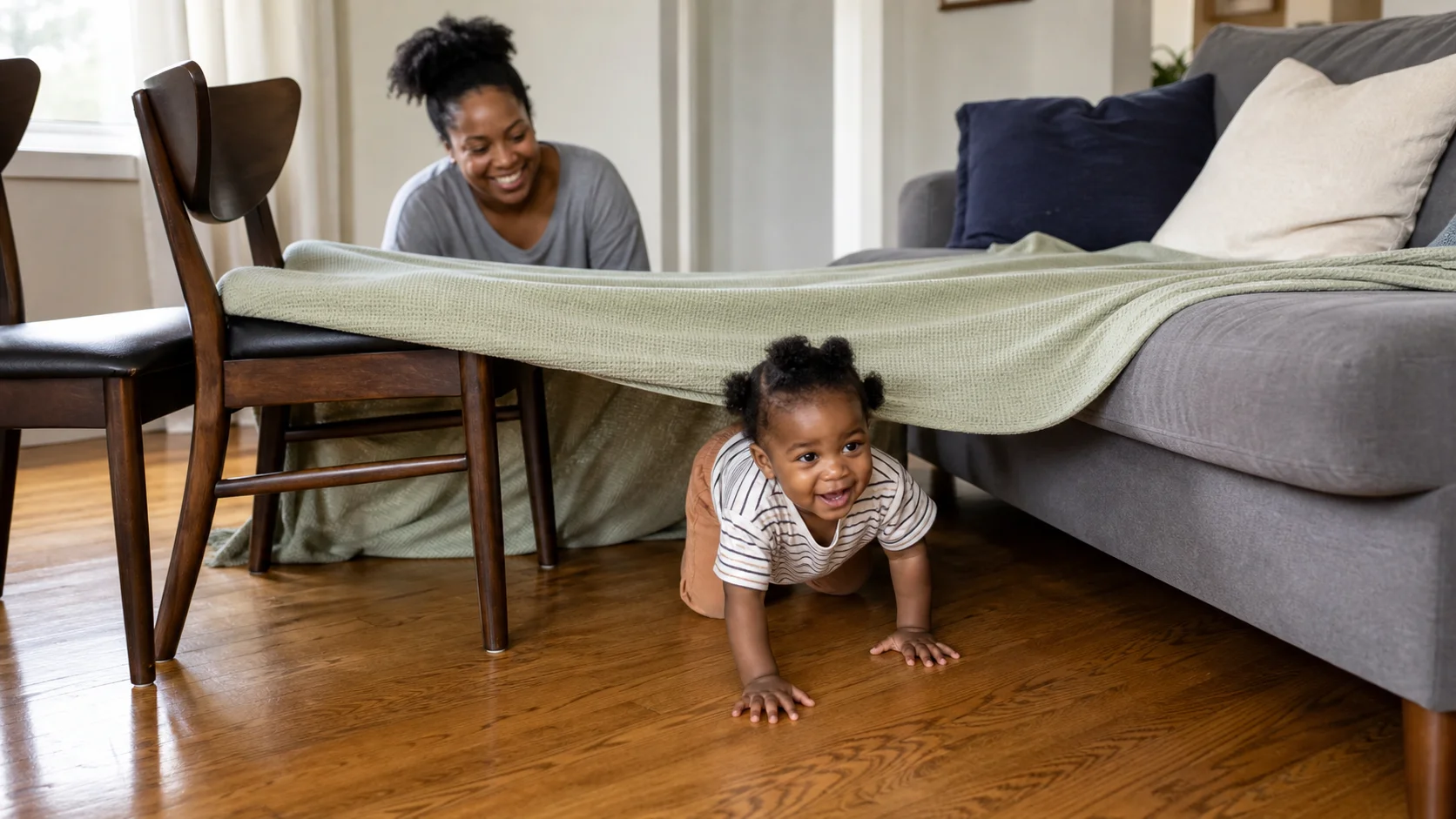
A toddler crawling into a blanket fort stretched between a couch and chairs while a grown-up stays nearby.
Gross motorDevelopmental supportNavigate PathIndoor

Blanket Fort Crawl.

Turn a blanket, couch, and chairs into a little fort your toddler can crawl in and out of. Each trip gets their whole body moving and gives spatial words like "in," "out," and "under" a visible meaning.

Play time
5-10+ min
Age
1-3 years
Energy
Medium
Mess
No
Effort
Low
Where
Indoor
Start here

The recipe.

Low parent effort
3 things

What you need

  • 1 blanket or sheet
  • couch cushions
  • 1 or 2 chairs
5 min minimum

Setup

Then start the loop
Step 01
Place one or two chairs close enough to the couch for a blanket or sheet to span the gap.
Step 02
Tuck one edge of the blanket between the couch cushions and drape the other edge over the chair backs to make a low, covered crawl space.
"Fort is open."
The loop

How play unfolds.

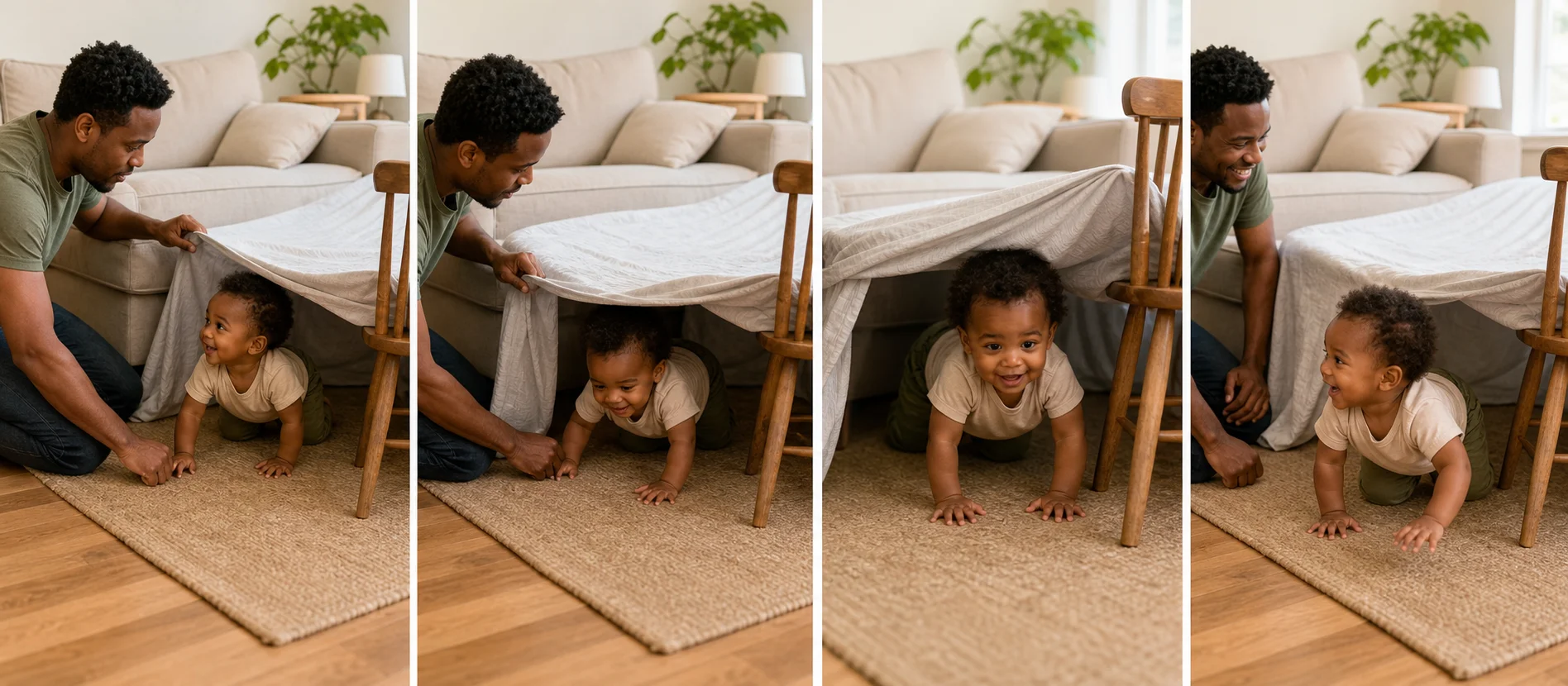
Four panels showing a grown-up setting up a blanket fort, a child crawling in, crawling back out, and starting another turn.
  1. 01
    Have your child crawl under the blanket and into the fort. Say "in" or "under" as they move.
  2. 02
    Have them crawl back out. Say "out" as they emerge.
  3. 03
    Repeat the in-and-out crawl.

Safety Check

  • Stay close the whole time so you can steady the blanket, guide the exit, and stop couch climbing early.
  • Stop if the blanket slips, the chairs wobble, or your child starts climbing the furniture instead of crawling through the fort.
  • Lift the blanket higher or end the turn if your child seems unsure about the low space.
Skill spotlight
Navigate Path

moving the whole body through a short path and back again

This helps a child practice lowering the body, moving through a small space, and repeating a simple start-to-finish movement path with more control.

  • Early. Your child may pause at the opening, reach inside first, or need you to hold the blanket higher.
  • Later. Your child heads into the fort on purpose, comes back out, and repeats the in-and-out loop with little help.
  • Middle. Your child crawls through faster, comes back out more smoothly, and needs fewer reminders to try another round.
Real-world transfer
  • Crawling through soft play spaces, tunnels, or under-table spaces
  • Following a simple movement route and coming back out
Supporting the play

What to say in the moment

Match what you say to what you see.

Prompt ladder
Level 1 (Start)
"Crawl in."
Level 2 (Keep going)
"Come back out."
Level 3 (Stretch)
"In and out again."
Level 4 (Extend)
"One more fort turn."
If your child seems...
What you'd see
Focused
What to do
Say
"In, then out."
Add
Name one position word like "inside" or "outside" after the crawl.
Extend
Invite one more round before changing anything.

Make it easier

Younger end
  • -Keep the fort opening wide and low-pressure.
  • -Count one crawl in and one crawl out as enough.
  • -Stay right beside the opening for every turn.

Make it harder

Older end
  • +Wait at the far side and let your child crawl all the way to you before the return trip.
  • +Ask for a full in-and-out round before taking a break.
  • +Use one extra position word like "under" after a successful turn.

If it's not working

If you see
If child ignores it
Peek halfway through the fort yourself and call them toward you from the other side.
If you see
If child misuses it
Rebuild the blanket, say, "Fort is for crawling," and restart with one calm crawl cue.
If you see
If child gets frustrated
Lift one side higher, stay beside the opening, and count one short trip as enough.