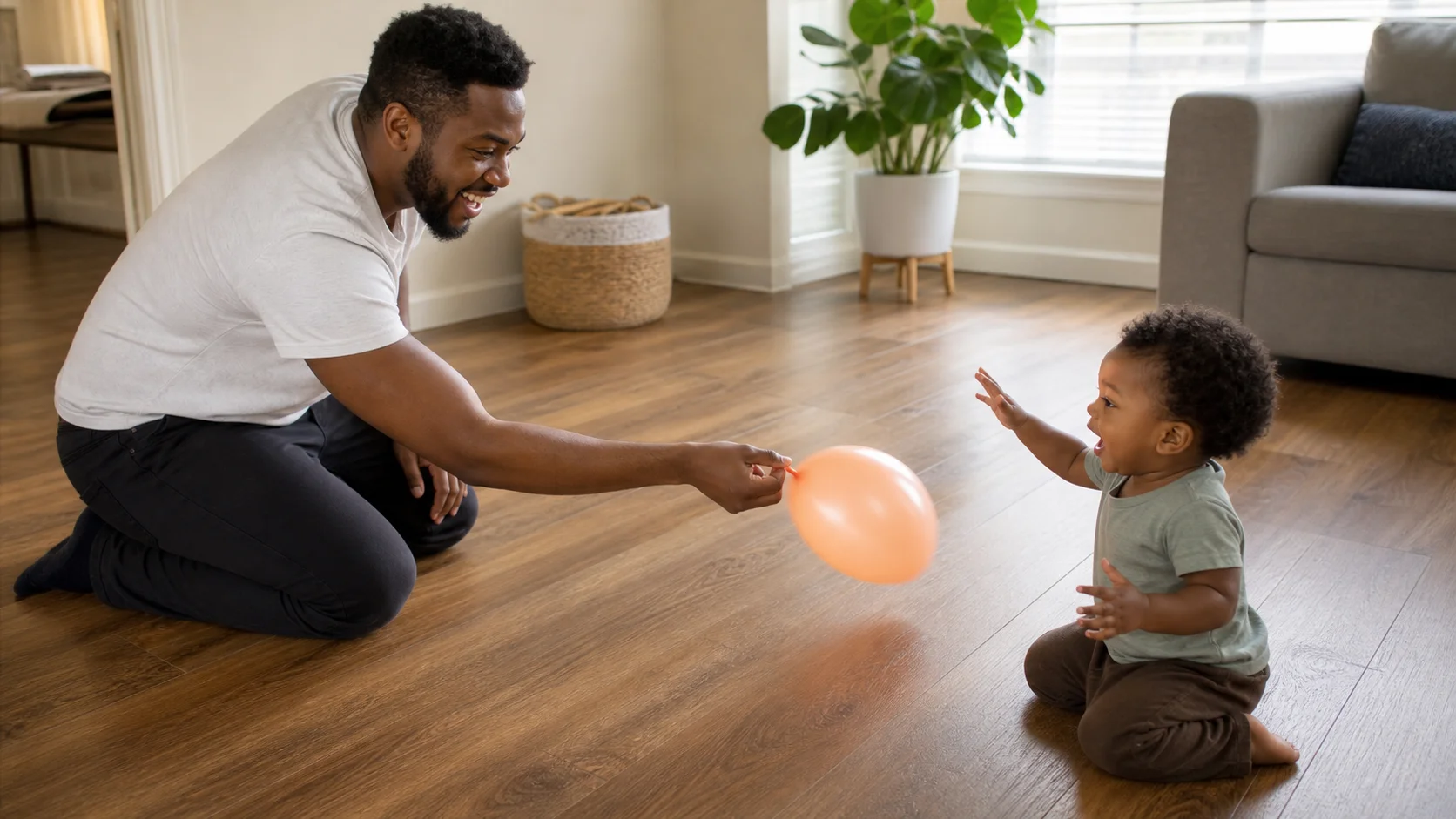
A grown-up sits face to face with a toddler while holding an inflated balloon and waiting for the word go.
Skill builderSpeech delay supportPause Before ActionIndoor

Balloon Release Pause Game.

A simple pause-and-go balloon routine where your child watches, waits, signals, and gets the fun payoff right away.

Play time
5-10+ min
Age
1-3 years
Energy
Low To Medium
Mess
No
Effort
Low
Where
Indoor
Start here

The recipe.

Low parent effort
4 things

What you need

  • 1 balloon
  • 1 open indoor floor space
  • 1 adult
  • 1 child
5 min minimum

Setup

Then start the loop
Step 01
In a small clear indoor floor space, inflate 1 balloon and keep the neck pinched shut in your hand.
Step 02
On that floor space, move breakable items and sharp-edged toys out of the balloon's short flight path.
Step 03
Sit or kneel facing your child close enough that they can see your face, the balloon, and the release clearly.
Step 04
Do 1 quick model release so your child sees what happens when the balloon goes.
"Ready..."
The loop

How play unfolds.

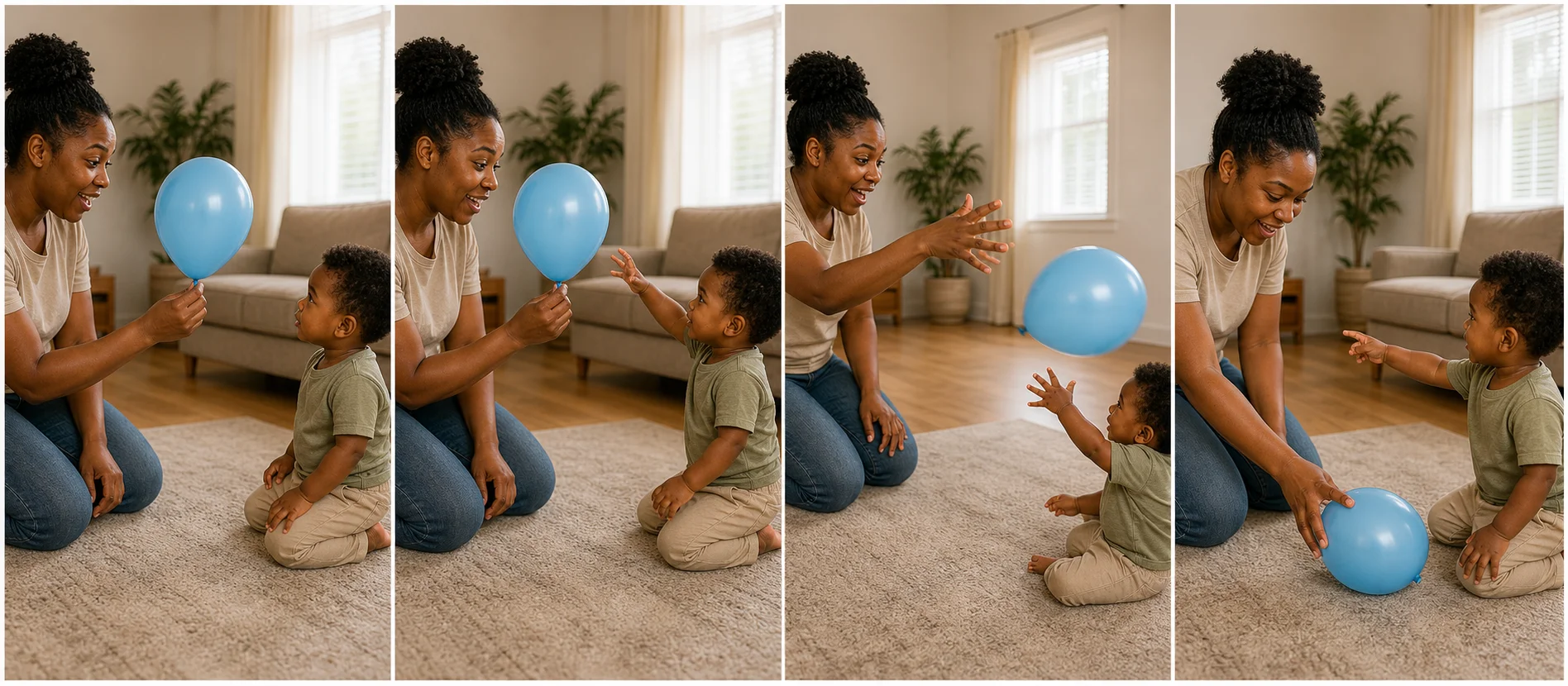
Four panels showing a grown-up holding a balloon, pausing at ready steady, a toddler signaling go, and the balloon flying across the room.
  1. 01
    Hold the balloon where your child can see it and say, "Ready, steady..."
  2. 02
    Pause and wait for any clear signal that means "go," such as a look, reach, sound, sign, or word.
  3. 03
    Say, "Go," and let the balloon fly.
  4. 04
    Watch or chase the balloon together, pick it up, and start the next turn.

Safety Check

  • Stay with your child the whole time.
  • Stop if balloon pops, pieces, or frantic chasing feel unsafe for this child.
  • Pick up broken balloon pieces right away.
Supporting the play

What to say in the moment

Match what you say to what you see.

Prompt ladder
Level 1 (Start)
"Ready, steady, go."
Level 2 (Keep going)
"Tell me go."
Level 3 (Stretch)
"Wait... now go."
Level 4 (Extend)
"Should it go high or low?"
If your child seems...
What you'd see
Focused
What to do
Say
"You waited for it."
Add
Keep the same pause and let your child signal again right away.
Extend
Add 1 extra beat before the release.

Make it easier

Younger end
  • -Use the same short words every turn.
  • -Keep the balloon release short so your child does not need to chase far.
  • -Accept eye contact alone as the signal on early turns.

Make it harder

Older end
  • +Wait for a clearer sound, sign, or word before release.
  • +Hold the pause 1 beat longer when your child is calm and ready.
  • +Let your child bring the balloon back before the next turn starts.

If it's not working

If you see
If child ignores it
Shorten the pause and do a faster second release so the pattern is easier to notice.
If you see
If child misuses it
Keep the balloon in your hand during the pause and count a look or reach as enough before release.
If you see
If child gets frustrated
Accept the smallest clear signal you see and release the balloon right away on the next turn.
Skill spotlight
Pause Before Action

Waiting through a short pause before action

This helps a child notice that waiting can lead to a wanted result and gives them a simple way to join a shared back-and-forth routine before acting.

  • Waiting for the balloon release gives your child a short, visible reason to pause.
  • The same ready-steady-go loop makes the signal and payoff easy to understand.
  • Accepting a sound, reach, look, or body lean keeps the communication job low-pressure.
Real-world transfer
  • Waiting a moment before a wanted action starts.
  • Using a simple signal to ask for more.
  • Joining short shared routines with another person.

Parent questions

Back to library
Keep playing

Related activities.