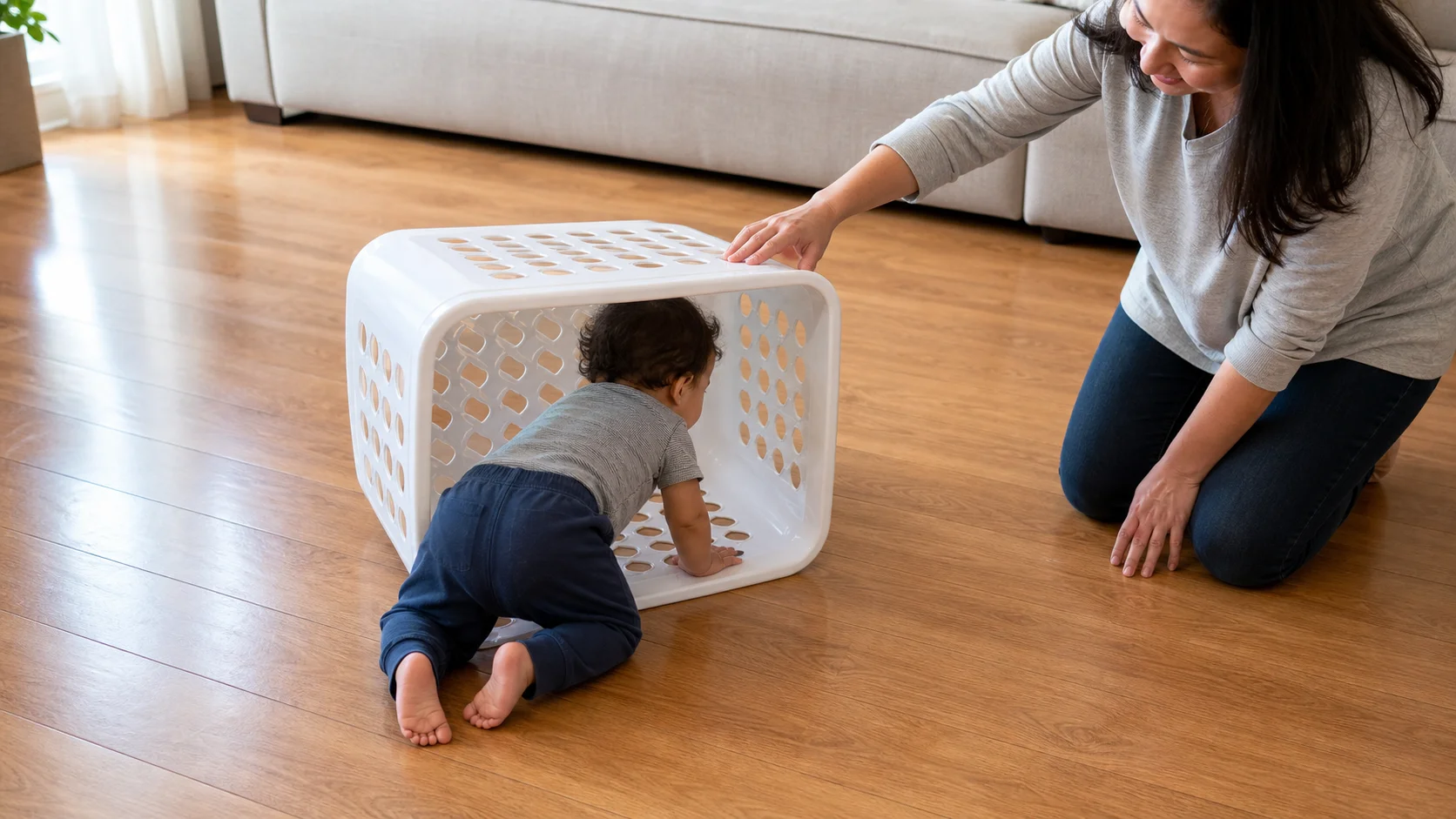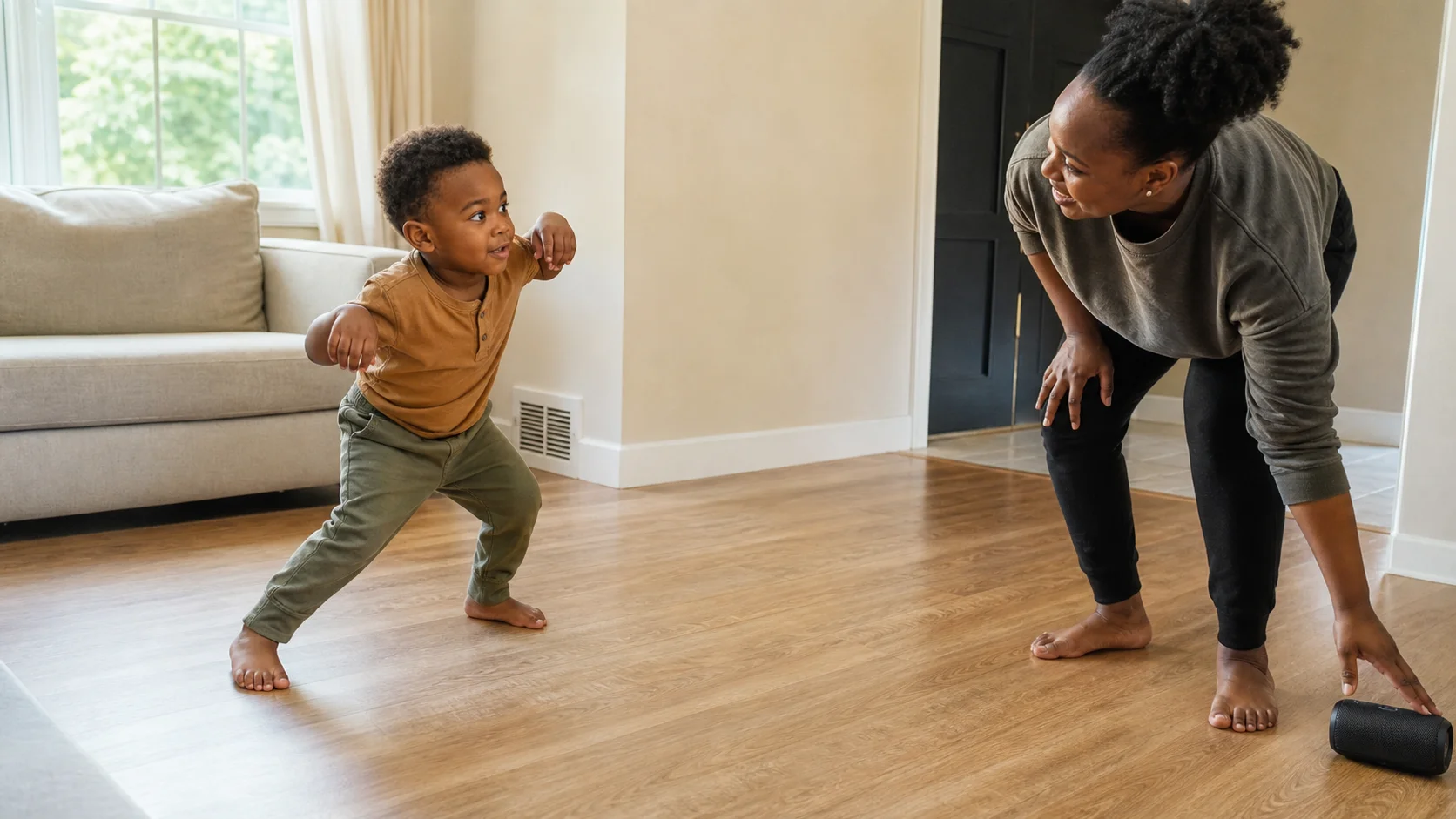
A toddler in an open indoor floor space moving like a tiger while a grown-up reaches toward a music player to stop the song.
Fine motorSpeech delay supportStop And StartIndoor

Animal Musical Statues.

Give your toddler a simple reason to move, then a clear cue to stop. They stomp, slither, or flap like an animal while music plays, freeze when it stops, and practice listening and body control with every round.

Play time
5-10+ min
Age
2-4 years
Energy
Medium To High
Mess
No
Effort
Low
Where
Indoor
Start here

The recipe.

Low parent effort
2 things

What you need

  • Music
  • 1 music player
5 min minimum

Setup

Then start the loop
Step 01
Cue up music on a player you can pause and restart quickly.
"Music on. Tiger."
The loop

How play unfolds.

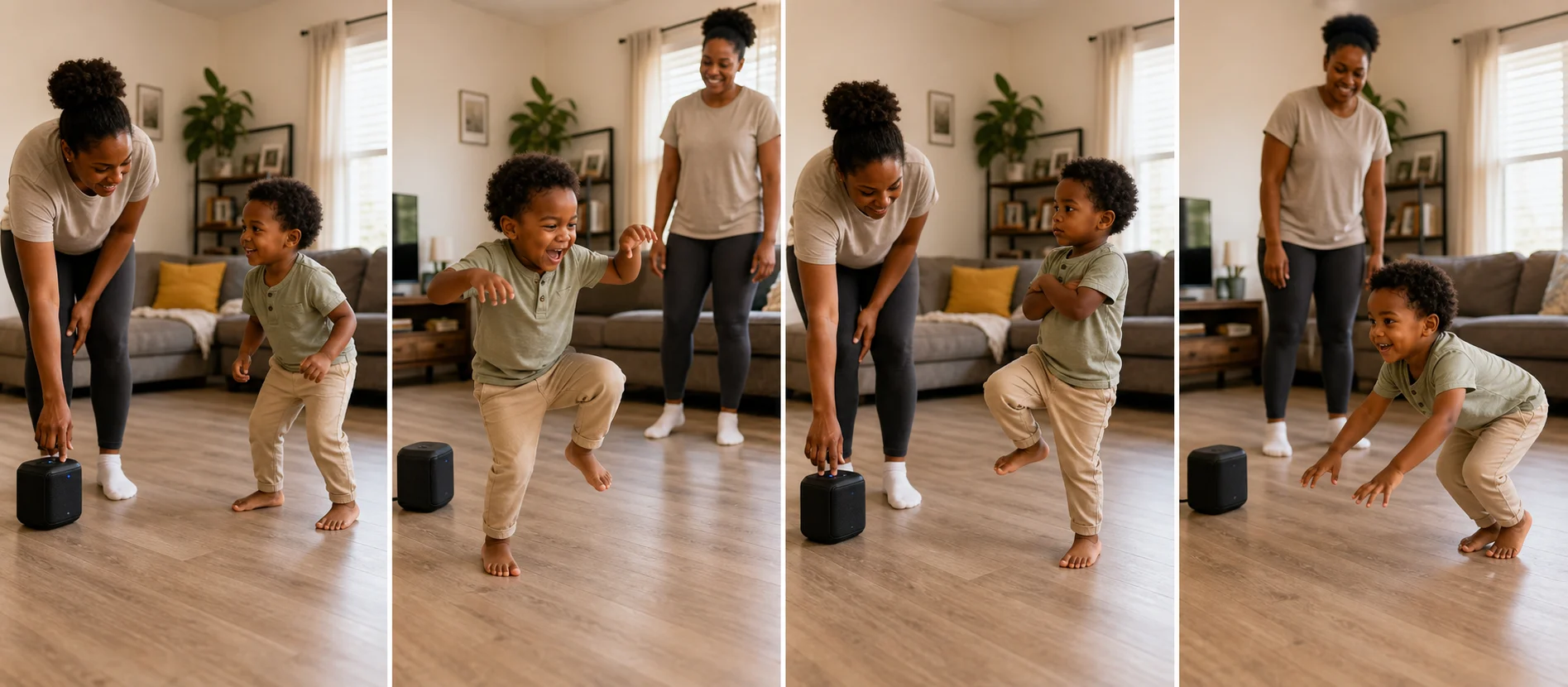
A multi-panel play sequence showing a grown-up starting music, a toddler moving like an animal, freezing when the music stops, and restarting with a new animal.
  1. 01
    Start the music, name one familiar animal, and have your child move like it.
  2. 02
    Stop the music and say, "Freeze." Your child stops moving and holds still.
  3. 03
    Restart the music with the same animal or a new one, then repeat the move-and-freeze round.

Safety Check

  • Stay close enough to stop the game if your child turns the animal moves into running, crashing, or rough body play.
  • Keep the moving space clear and dry.
  • Use familiar animal moves that your child can do safely without spinning, jumping hard, or colliding.
Skill spotlight
Stop And Start

Stopping and restarting the body on a clear sound cue

This helps a child notice a changing cue, stop the body on purpose, and restart without losing the shape of the game. Those skills show up in group play, transitions, and everyday safety moments.

  • The repeated music on, music off pattern helps your child practice moving, stopping, and starting again without needing long directions.
  • One animal at a time keeps the game simple enough for your child to join through watching, listening, and copying.
  • The freeze moment gives your child a clear pause point, which can make stop-start body control easier to practice.
Real-world transfer
  • Stopping the body during transition games and group routines.
  • Listening for one changing cue in a busy moment.
  • Restarting play after a pause without needing the whole activity explained again.
Supporting the play

What to say in the moment

Match what you say to what you see.

Prompt ladder
Level 1 (Start)
"Tiger feet."
Level 2 (Keep going)
"Freeze statue."
Level 3 (Stretch)
"Can you wait for stop?"
Level 4 (Extend)
"Pick the next animal."
If your child seems...
What you'd see
Focused
What to do
Say
"You heard stop."
Add
Name the animal after your child freezes.
Extend
Pause one beat before restarting the music.

Make it easier

Younger end
  • -Use one familiar animal for several rounds.
  • -Keep the child close to you so they can copy your freeze.
  • -Use slower animal moves like creeping or tiptoeing.

Make it harder

Older end
  • +Wait one extra beat before restarting the music.
  • +Let your child choose between two familiar animals.
  • +Switch from one animal to another without previewing the second one.

If it's not working

If you see
If child ignores it
Do one short silly round yourself, then stop the music fast and invite your child into the next round.
If you see
If child misuses it
Switch to one quieter animal move like creeping, tiptoeing, or flapping in place.
If you see
If child gets frustrated
Use one familiar animal for two rounds and freeze together when the music stops.

Parent questions