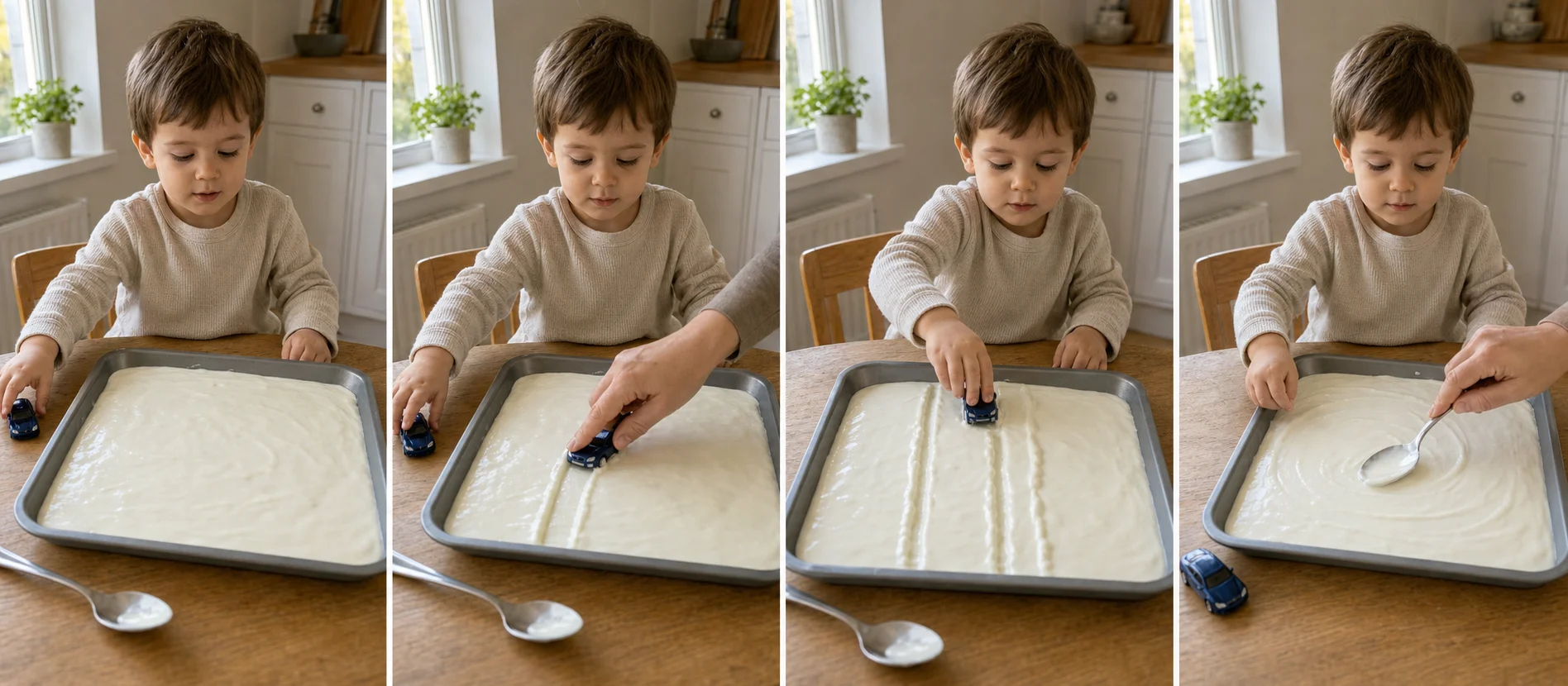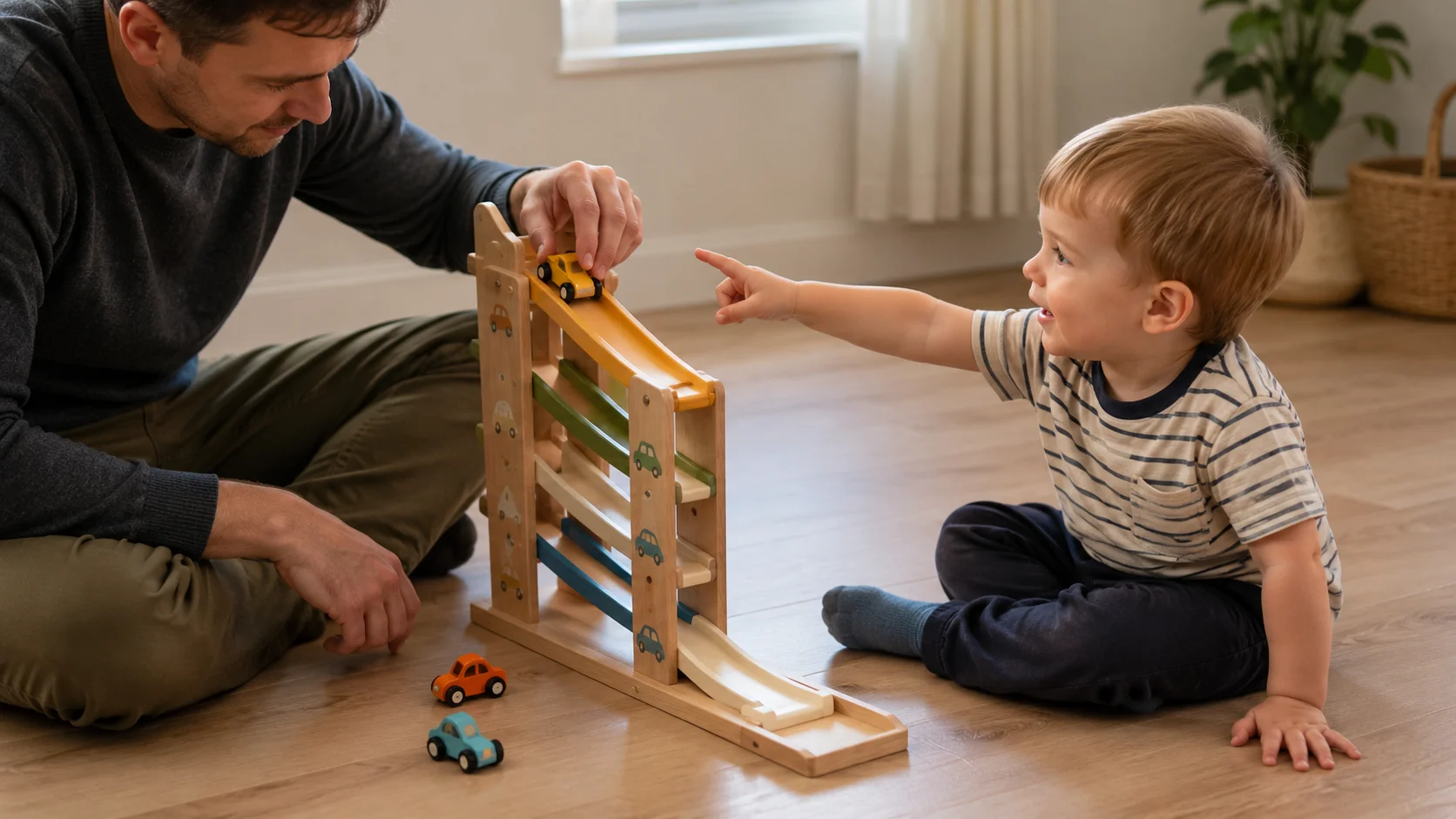
A grown-up holds a toy car at the top of a small ramp while a toddler watches and waits for go.
Skill builderSpeech delay supportPause Before ActionIndoor

Car Track Pause Game.

Turn a toy-car ramp into a quick communication game: pause at the top, wait for your toddler's signal, then let the car roll. The repeated wait-and-go turns build attention, early communication, and turn-taking.

Play time
5-10+ min
Age
1-3 years
Energy
Low
Mess
No
Effort
Low
Where
Indoor
Start here

The recipe.

Low parent effort
3 things

What you need

  • 1 toy car track or ramp
  • 1 to 3 toy cars that fit the track
  • 1 clear indoor floor or low-table space
5 min minimum

Setup

Then start the loop
Step 01
Place a toy car track or ramp between you and your child, with room at the bottom for the car to roll and stop.
Step 02
Choose a toy car that fits the track and keep it with you for the first turn.
"Car?"
The loop

How play unfolds.

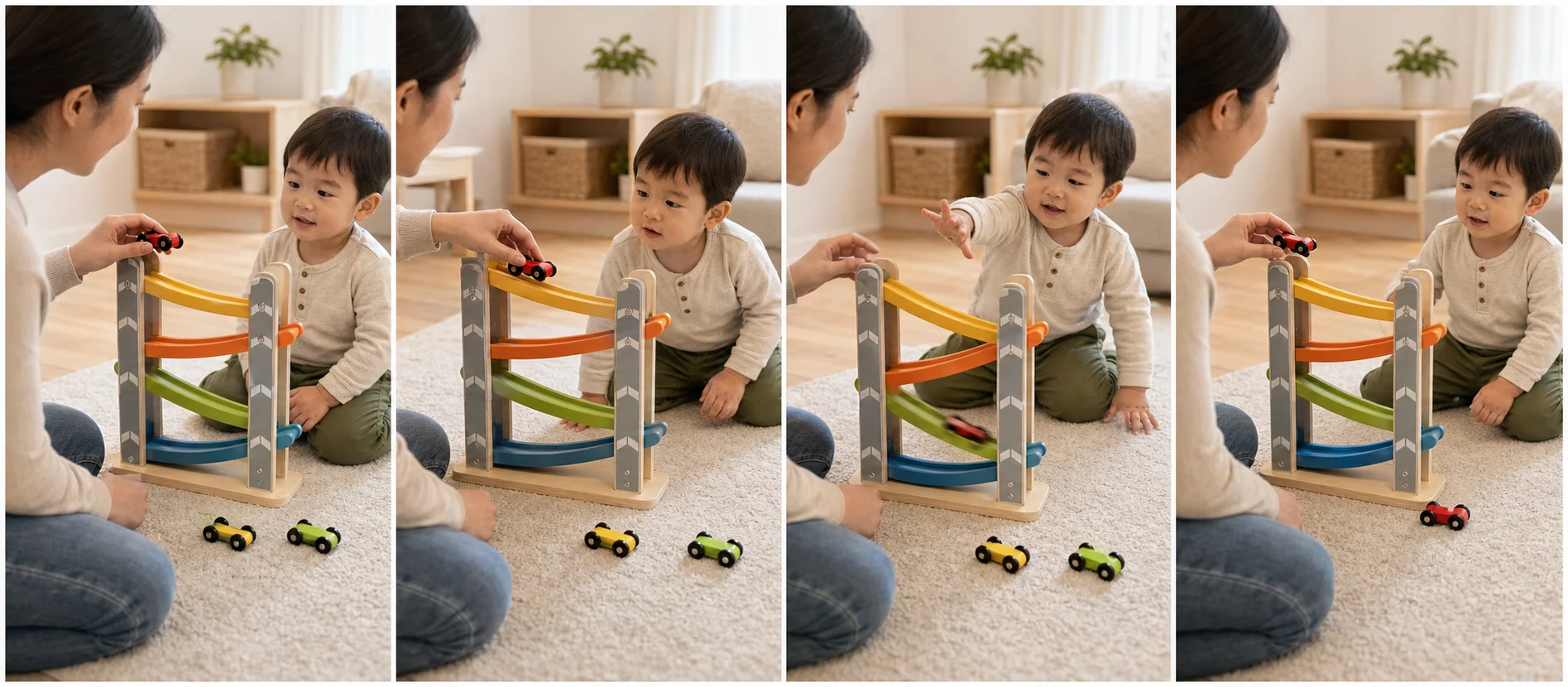
Four panels showing a grown-up holding a car, pausing at ready steady, a toddler signaling go, and the car rolling down the track.
  1. 01
    Hold up the car and wait for your child to show interest with a look, point, sound, or word.
  2. 02
    Place the car at the top, hold it still, and say, "Ready, steady..."
  3. 03
    When your child signals again, say, "Go," and release the car. Say, "Down," as it rolls and "Stopped" when it reaches the bottom.
  4. 04
    Wait for your child to ask for more with a look, point, sound, word, or by picking up the car. Bring the car back to the top and repeat.

Safety Check

  • Use toy cars that are safe for your child's age and mouthing habits.
  • Keep the track stable and the stopping space clear.
  • Stay close because you control the pause, release, and finish cue.
Skill spotlight
Pause Before Action

Waiting and signaling before a wanted action

This helps a child practice pausing before an exciting action and using a clear signal to join a back-and-forth routine.

  • The repeated pause gives your child a clear reason to wait before the car rolls.
  • The same short words make the routine easier to understand from turn to turn.
  • Accepting a look, reach, sound, sign, or word keeps communication low-pressure.
  • The fast payoff helps the child try again without a long wait.
Real-world transfer
  • Waiting a moment before a wanted action starts.
  • Asking for more with a small signal or word.
  • Taking turns in short play routines.
  • Hearing the same useful words in the same context.
Supporting the play

What to say in the moment

Match what you say to what you see.

Prompt ladder
Level 1 (Start)
"Car?"
Level 2 (Keep going)
"Ready, steady..."
Level 3 (Stretch)
"Tell me go."
Level 4 (Extend)
"Your turn to make it go."
If your child seems...
What you'd see
Focused
What to do
Say
"You waited for go."
Add
Keep the same pause and release pattern for the next turn.
Extend
Let your child put the car at the top before you hold the pause.

Make it easier

Younger end
  • -Use only 1 car.
  • -Keep the car in your hand until the release.
  • -Accept eye contact or a reach as the full signal.

Make it harder

Older end
  • +Wait for a clearer sound, sign, or word before release.
  • +Add 1 extra beat to the pause when your child is calm.
  • +Let your child take a turn placing the car at the top.

If it's not working

If you see
If child ignores it
Do 1 fast model turn with almost no pause, then try the wait again.
If you see
If child misuses it
Keep the car in your hand until "go" and make the next turn very short.
If you see
If child gets frustrated
Count the smallest clear signal as enough and release the car right away.

Parent questions