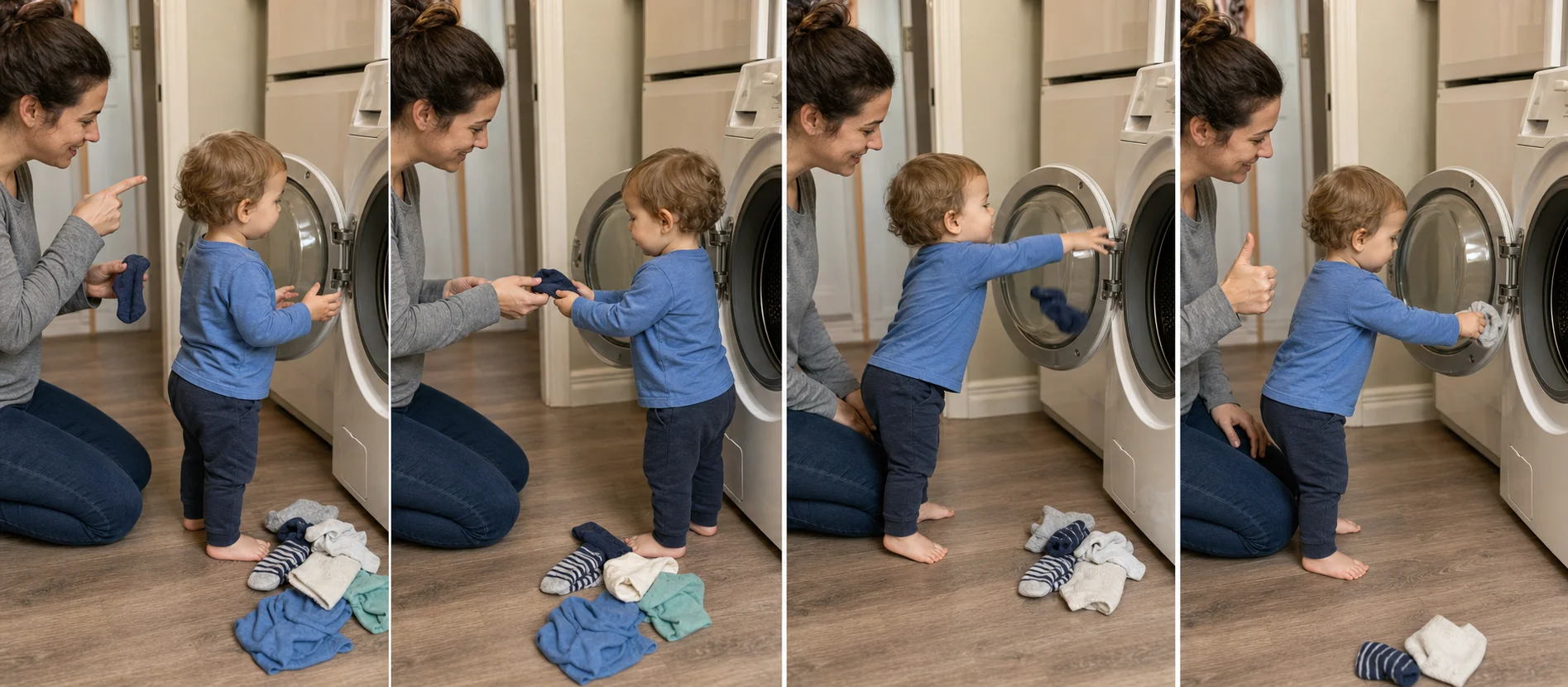

Laundry Machine Toss
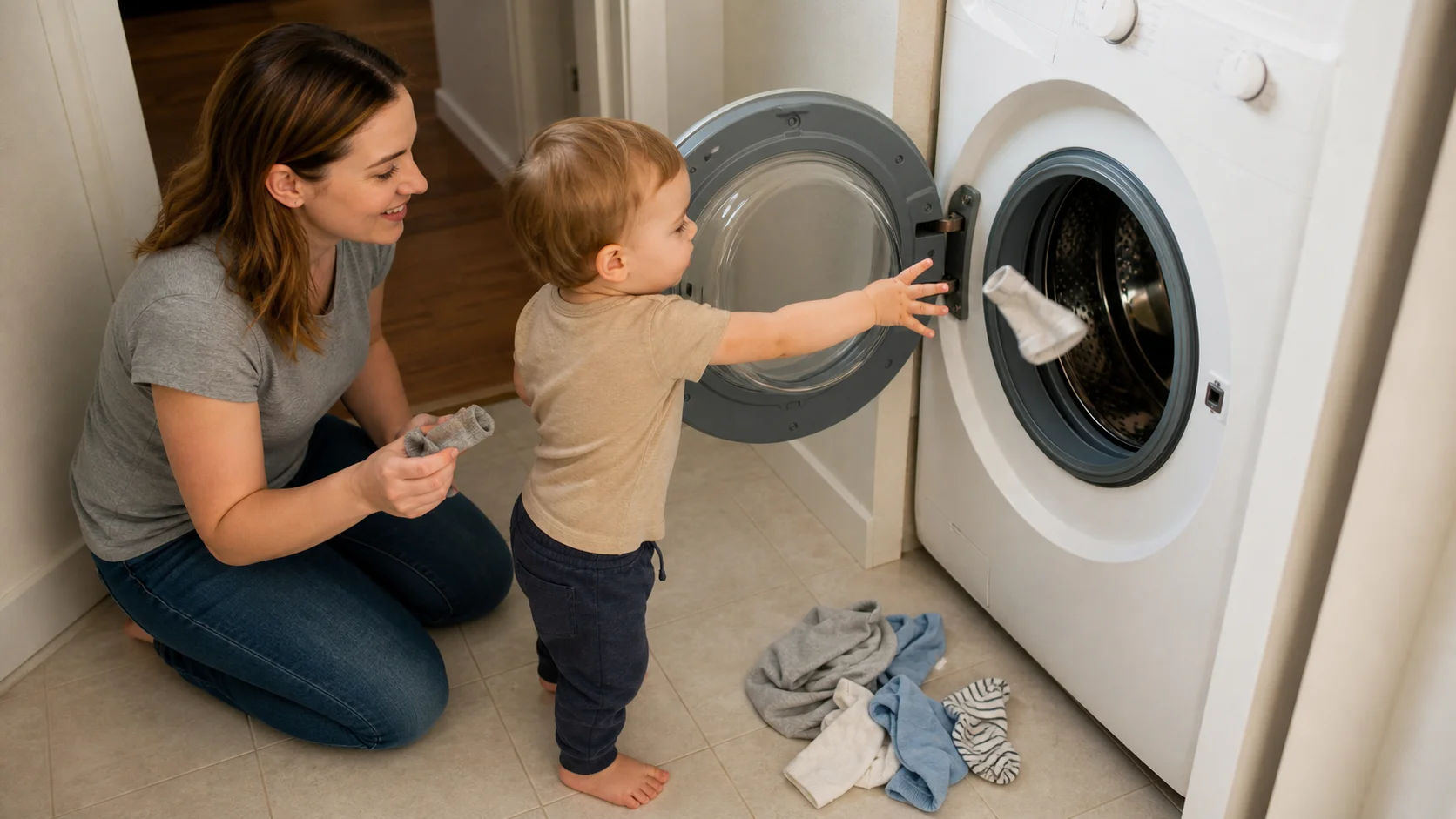
Turn laundry loading into a target game your toddler can win. Hand them one soft clothing item at a time and let them drop or toss it into the open washer, practicing a real helping job with every turn.
Play ideas for toddlers who do best with predictable, visual, low-language routines. These activities favor clear starts and finishes, repeatable steps, simple materials, and flexible sensory input. They are everyday play ideas, not autism therapy or diagnostic guidance.


Turn laundry loading into a target game your toddler can win. Hand them one soft clothing item at a time and let them drop or toss it into the open washer, practicing a real helping job with every turn.


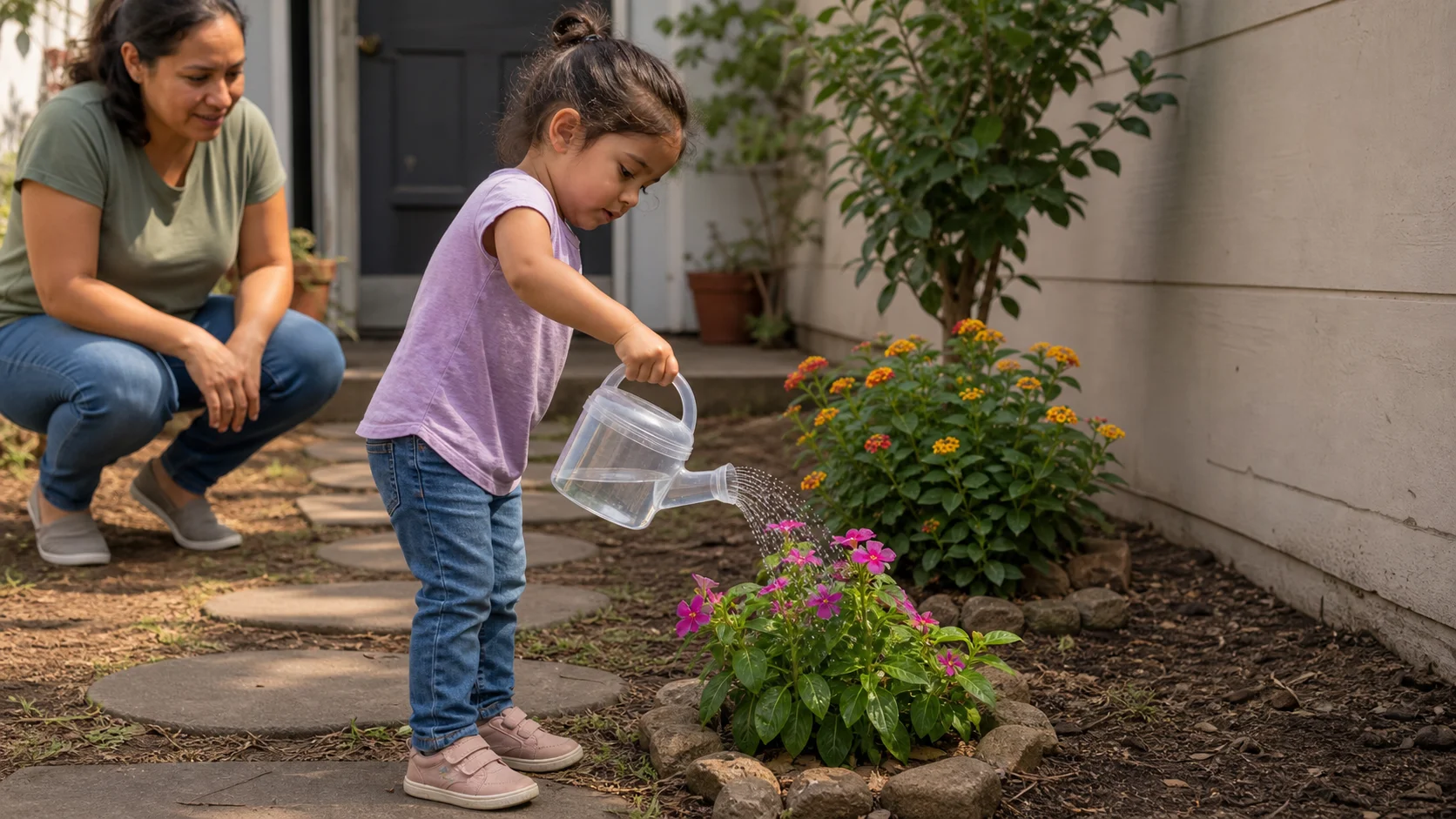
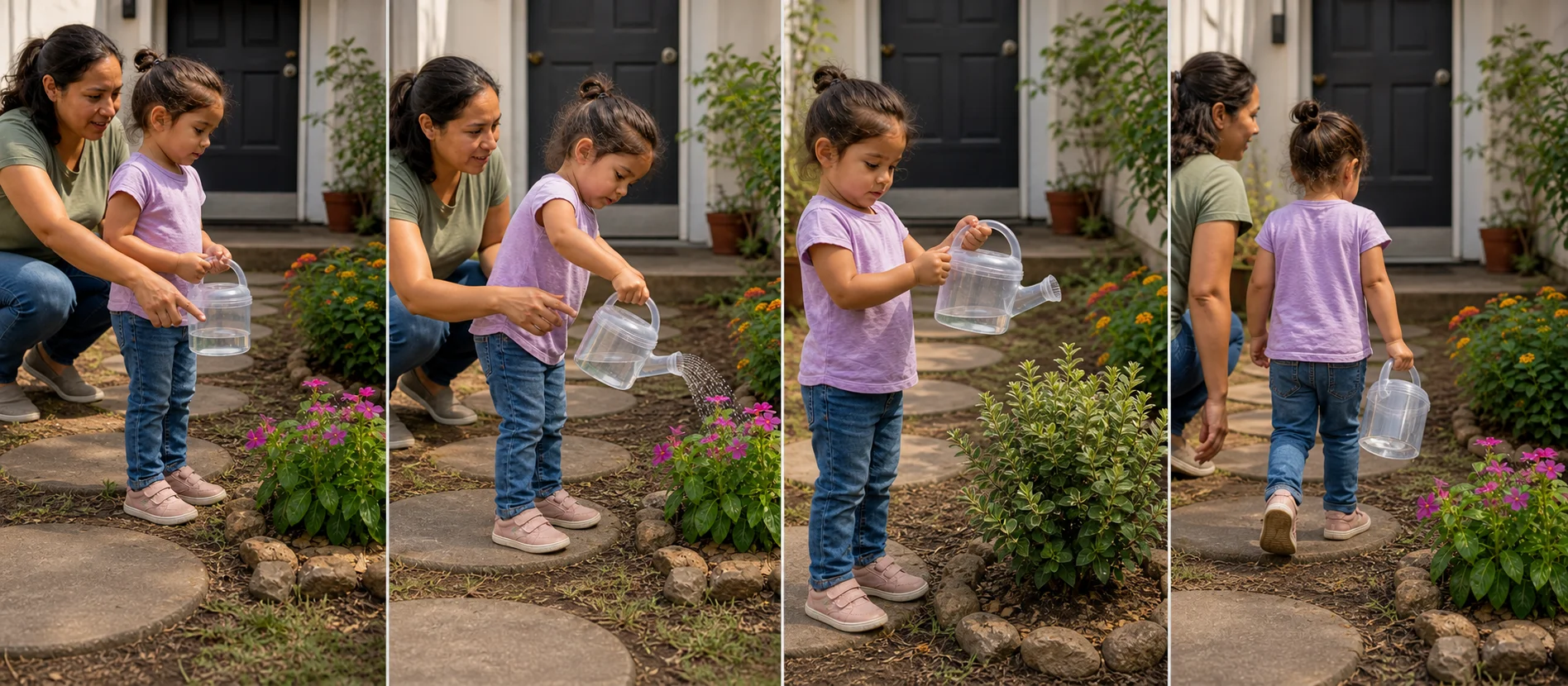
Give a short walk a clear finish line. Your child carries a little water, sprinkles safe plants along the route, then turns back when the container is empty.


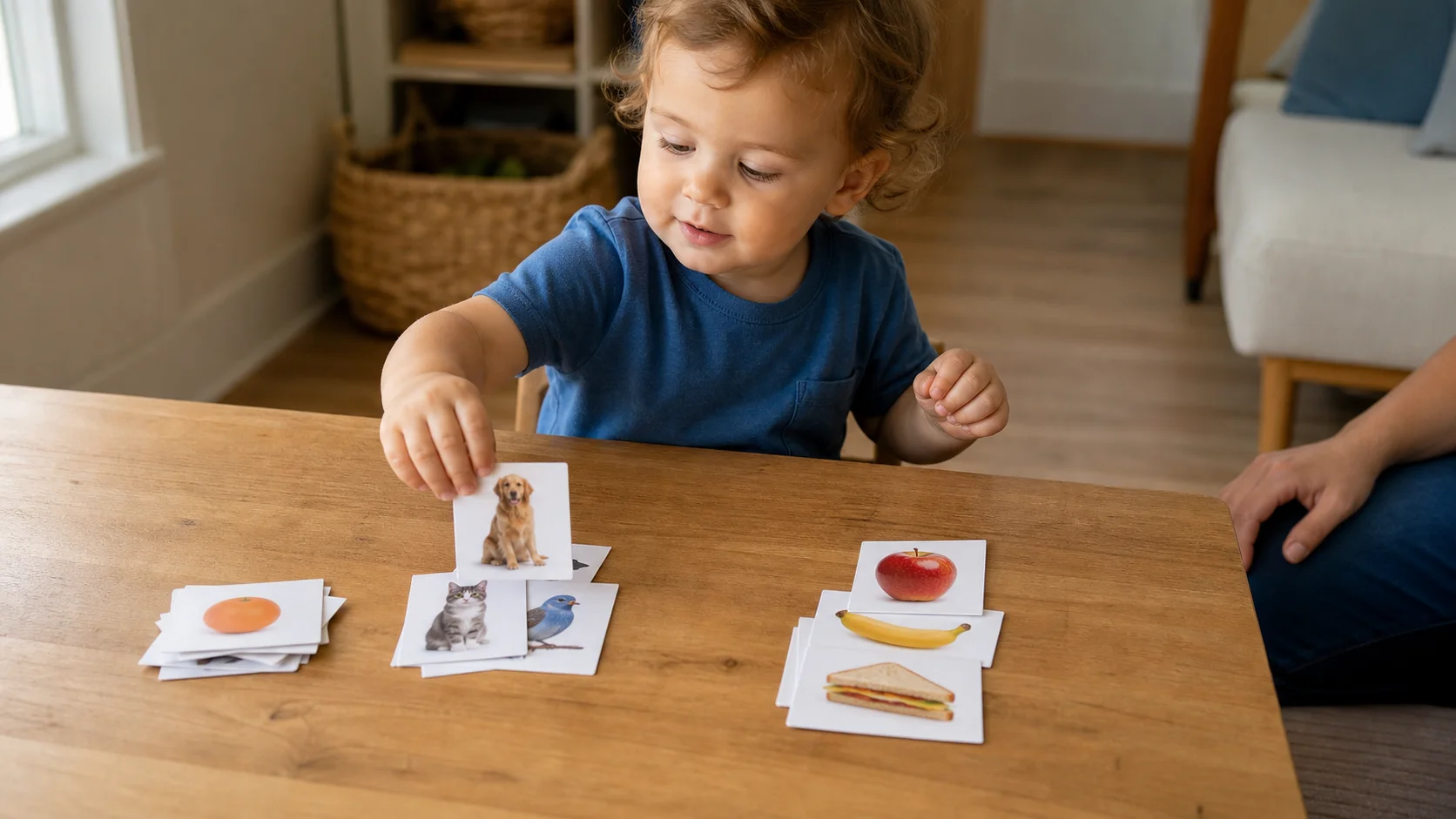
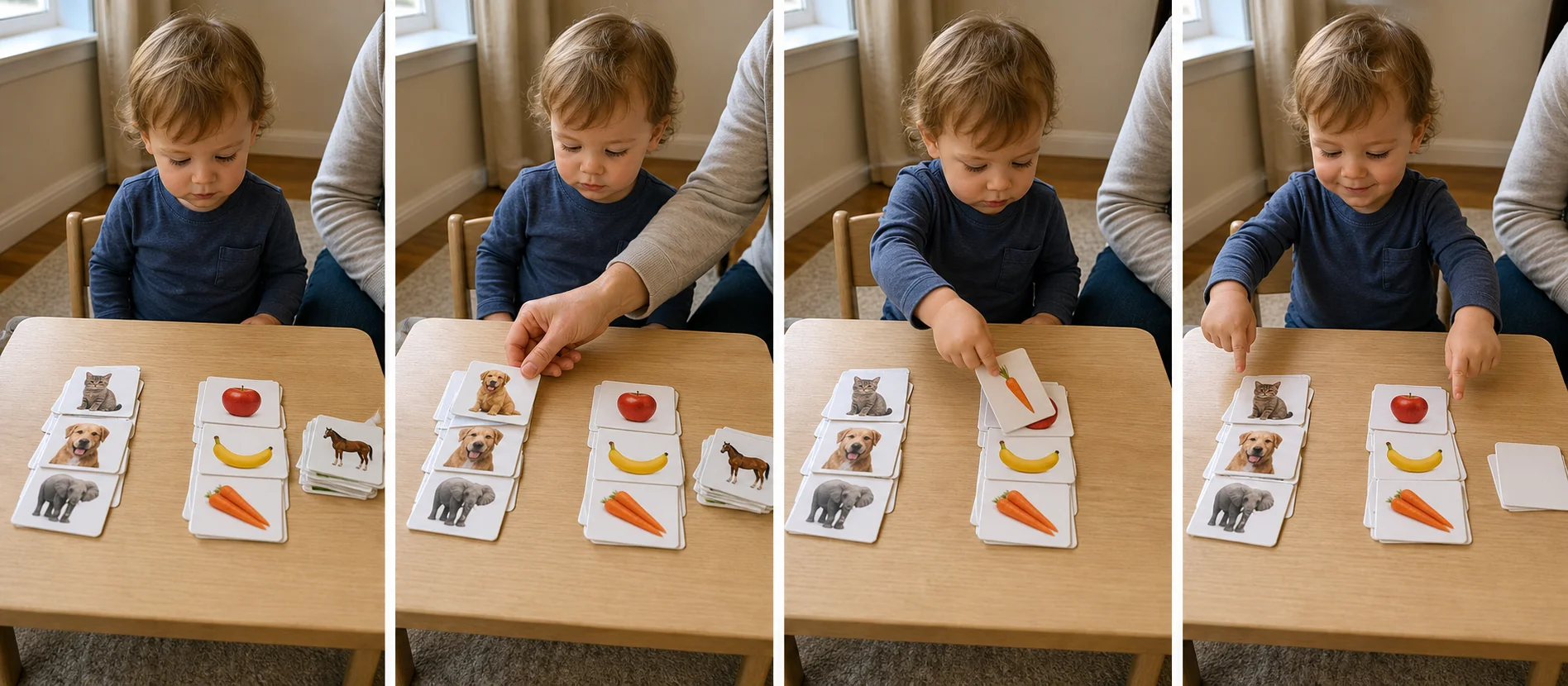
Can your child spot what belongs together? Set out two picture categories and let them sort each card into its matching group, building category recognition and visual thinking one picture at a time.


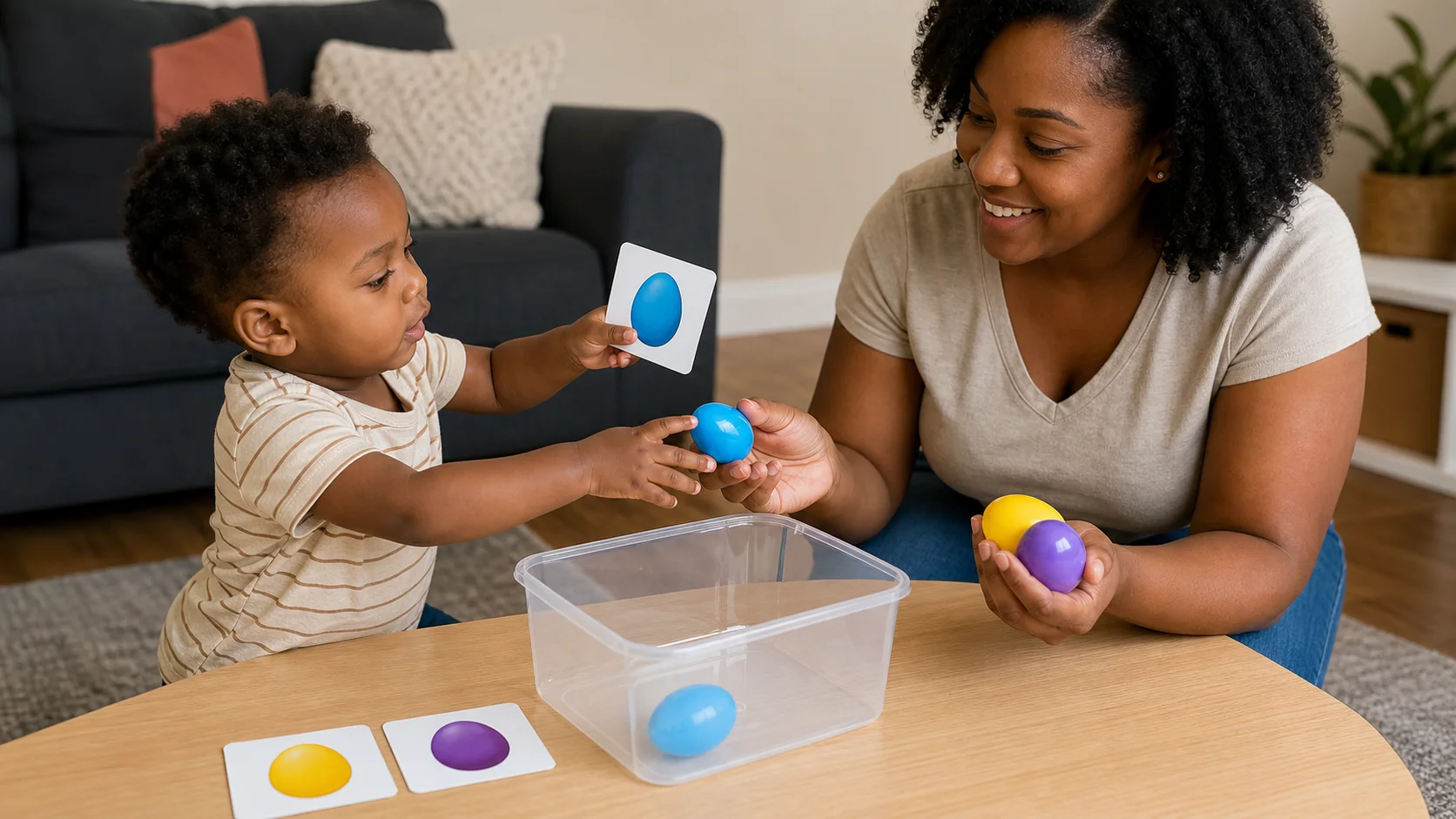
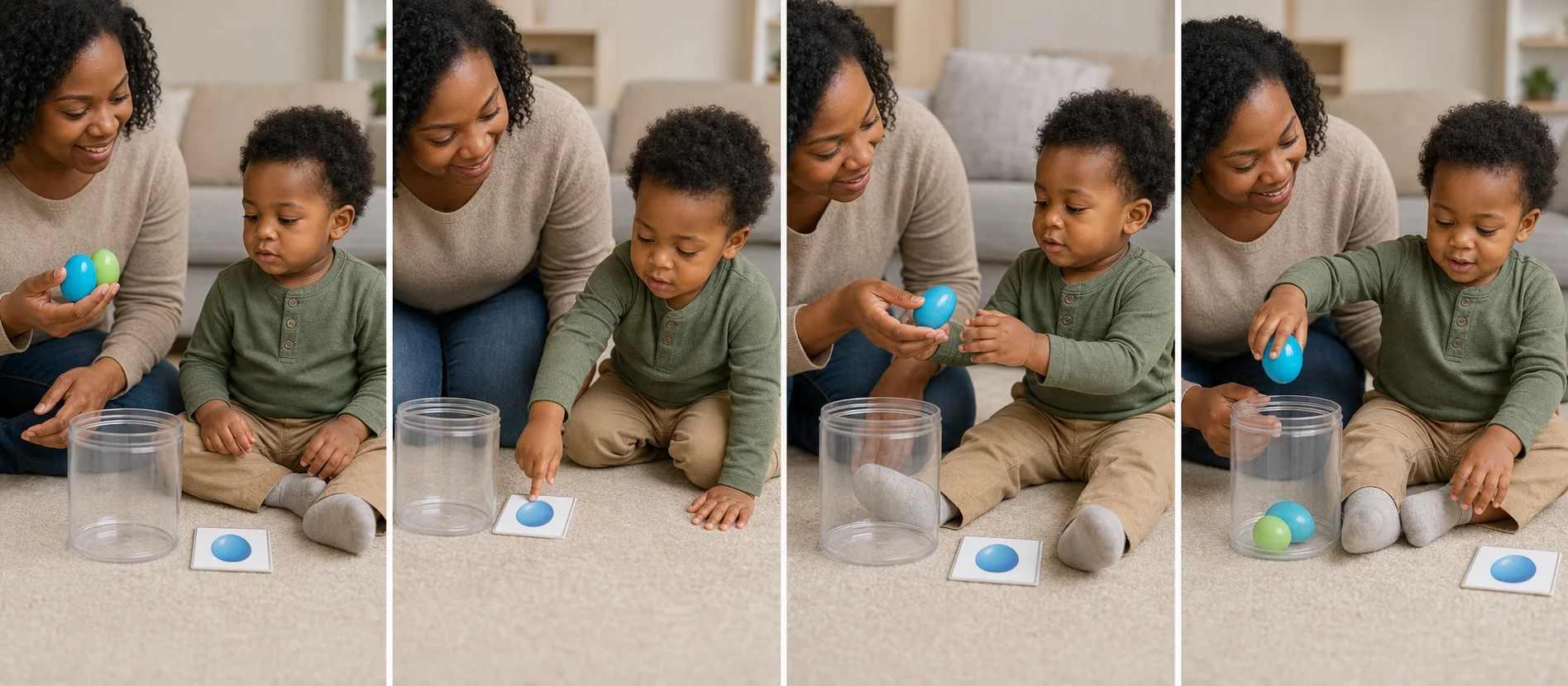
One picture cue gives your child a clear, low-language way to ask for an egg. They use the picture, receive one egg, and drop it into a finished container while practicing a predictable visual request routine.


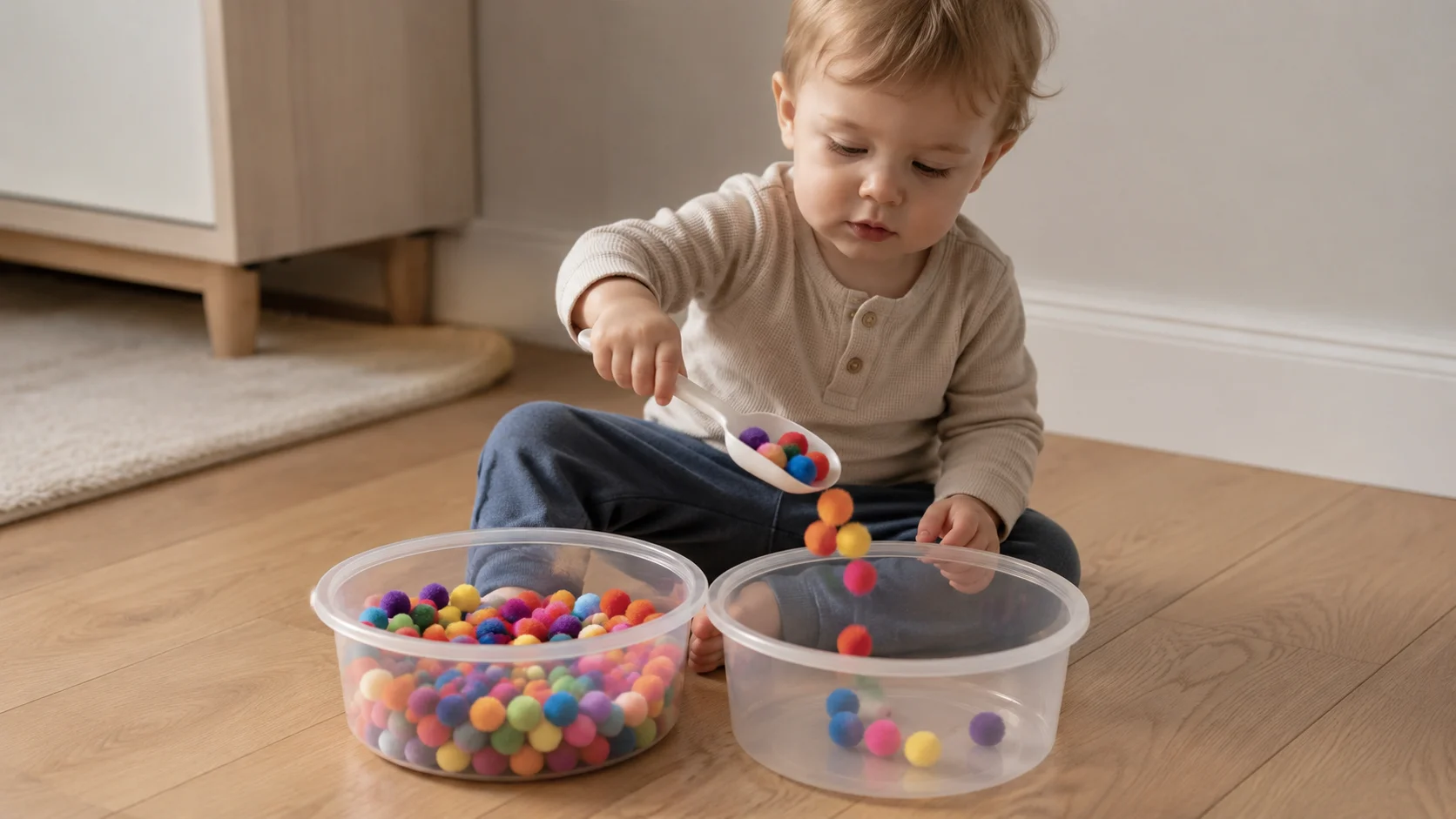
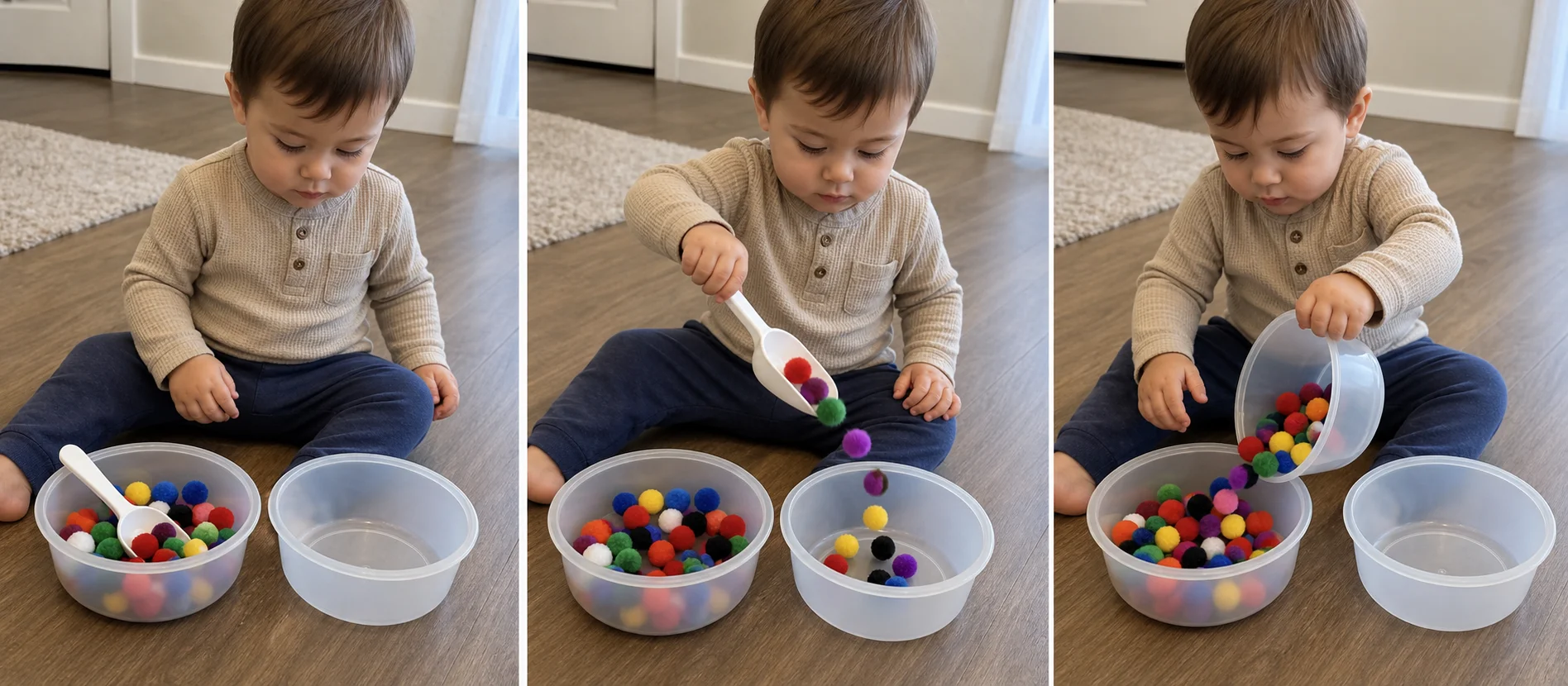
Pom Pom Sensory Scoop is a pom pom scoop activity for toddlers that helps children fill, empty, and reset through a clear, repeatable play loop.


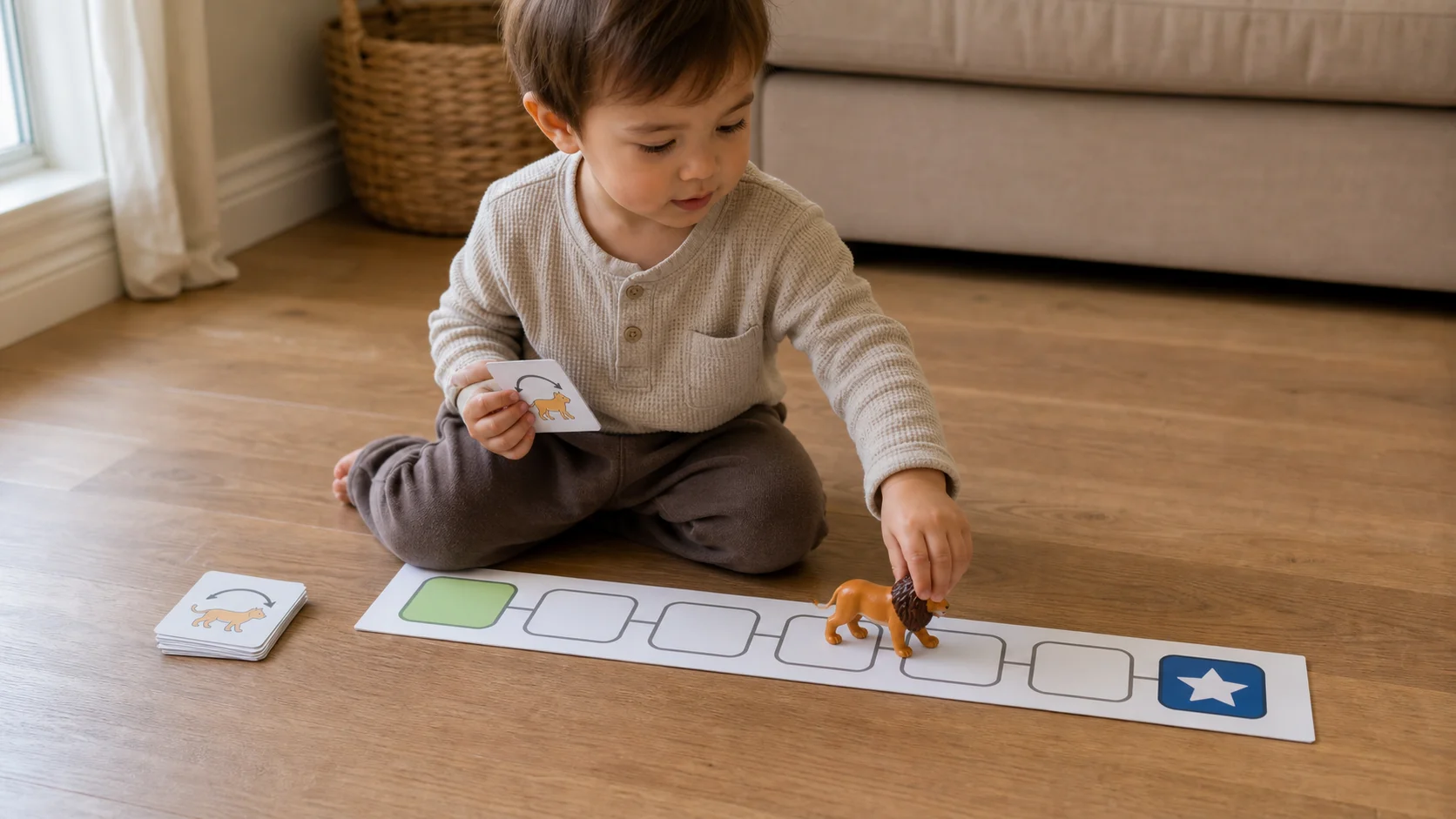
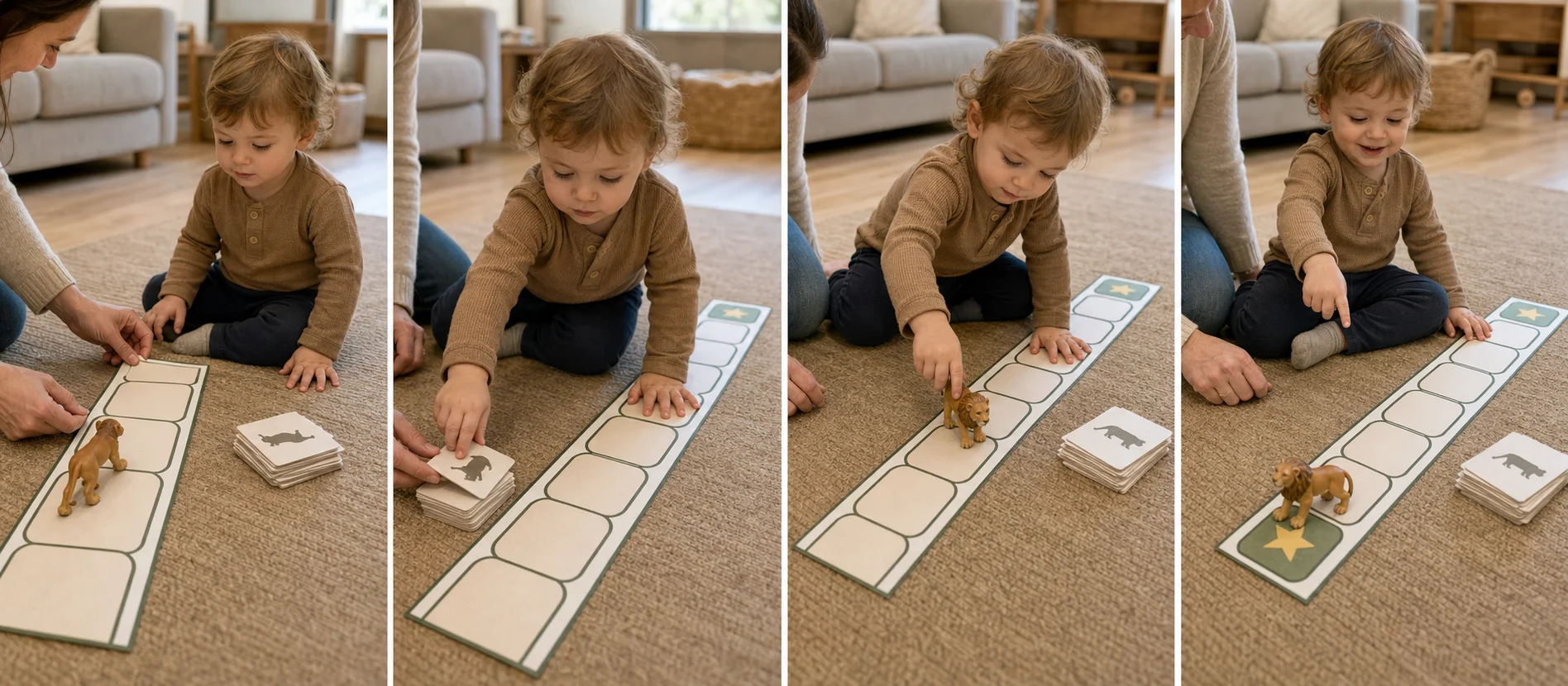
Turn a toy animal's trip to the finish into an easy first board game. Your child chooses a movement card, moves the animal the number of spaces it shows, and practices following a visual rule and taking turns.


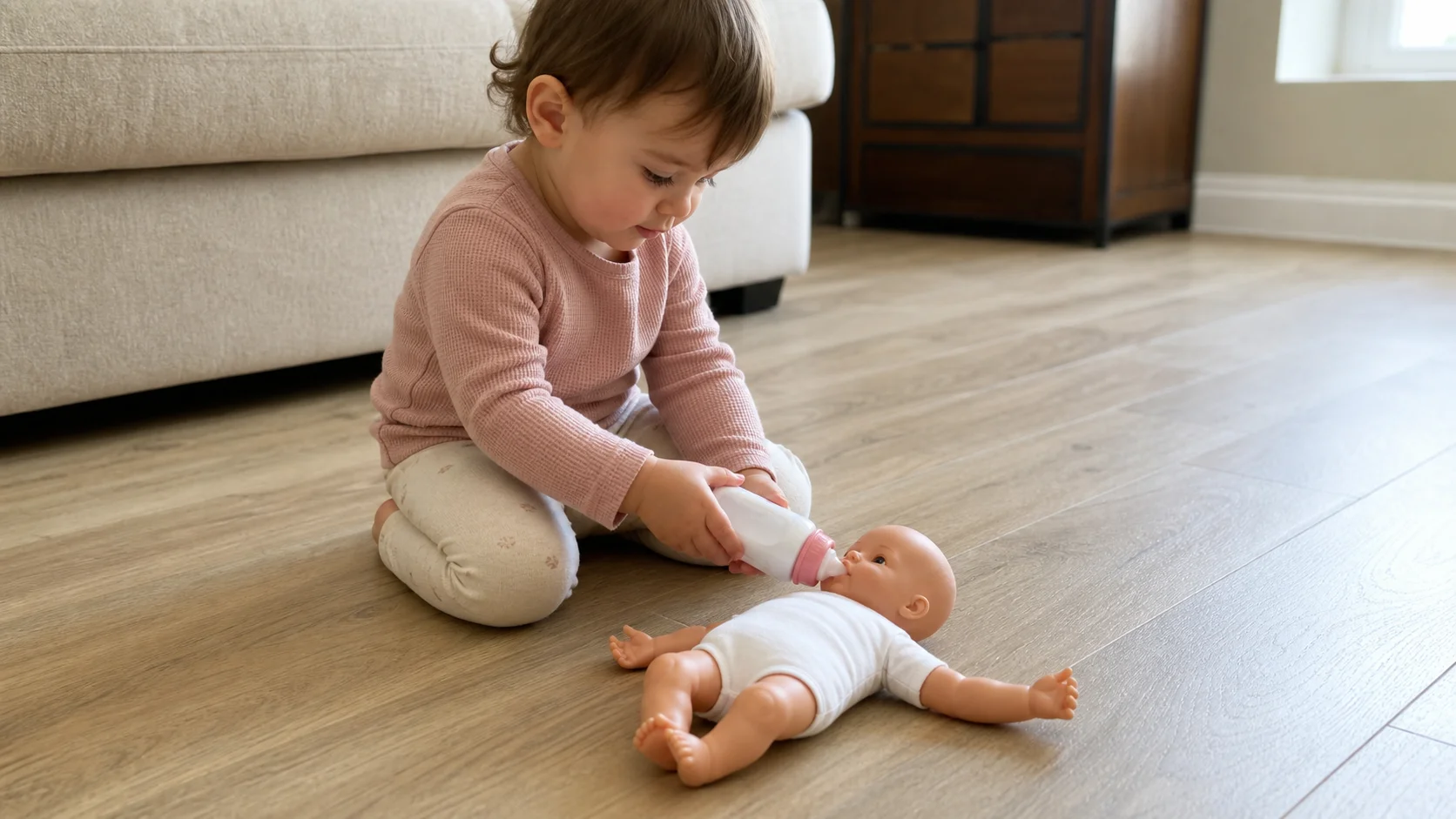
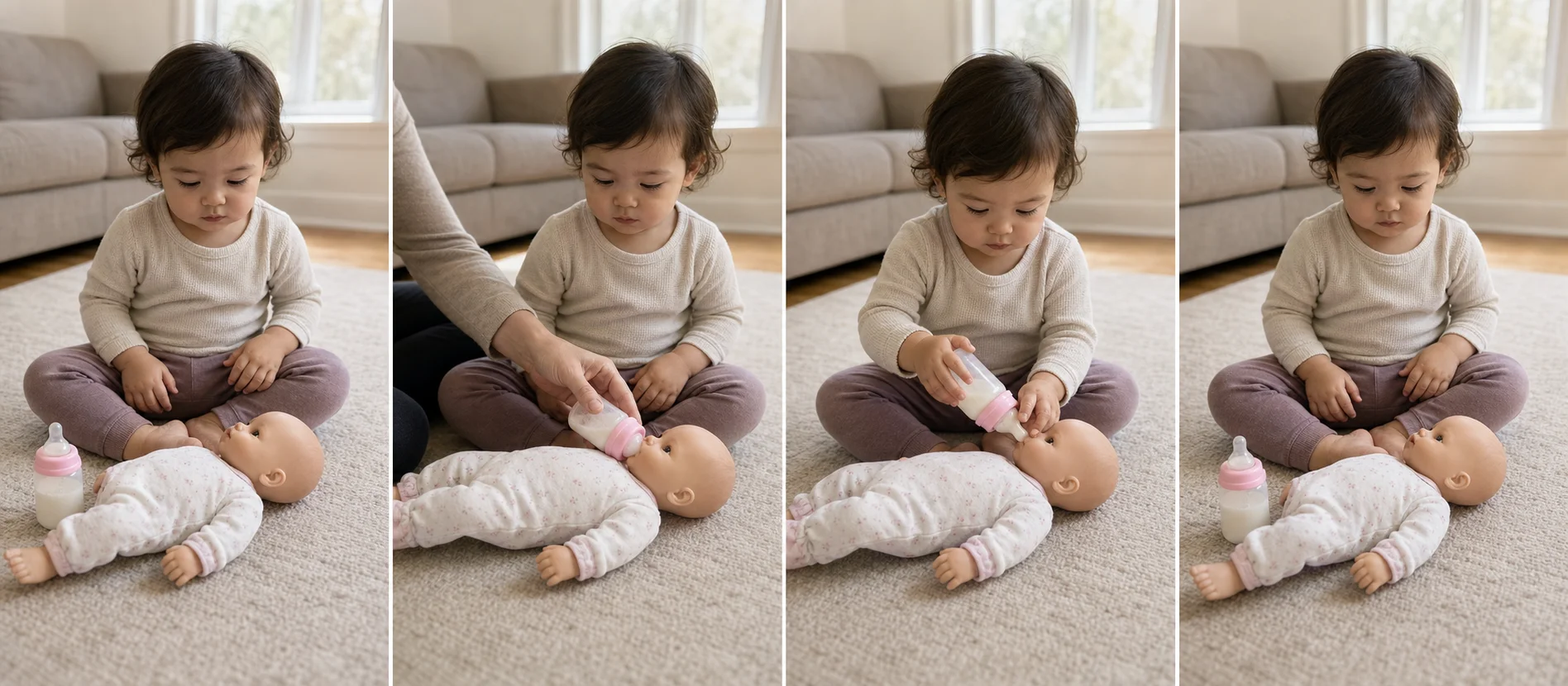
Give your toddler an easy first step into pretend play with just a doll and bottle. After watching one feeding turn, they bring the bottle to the doll's mouth, practicing imitation through a familiar make-believe action.


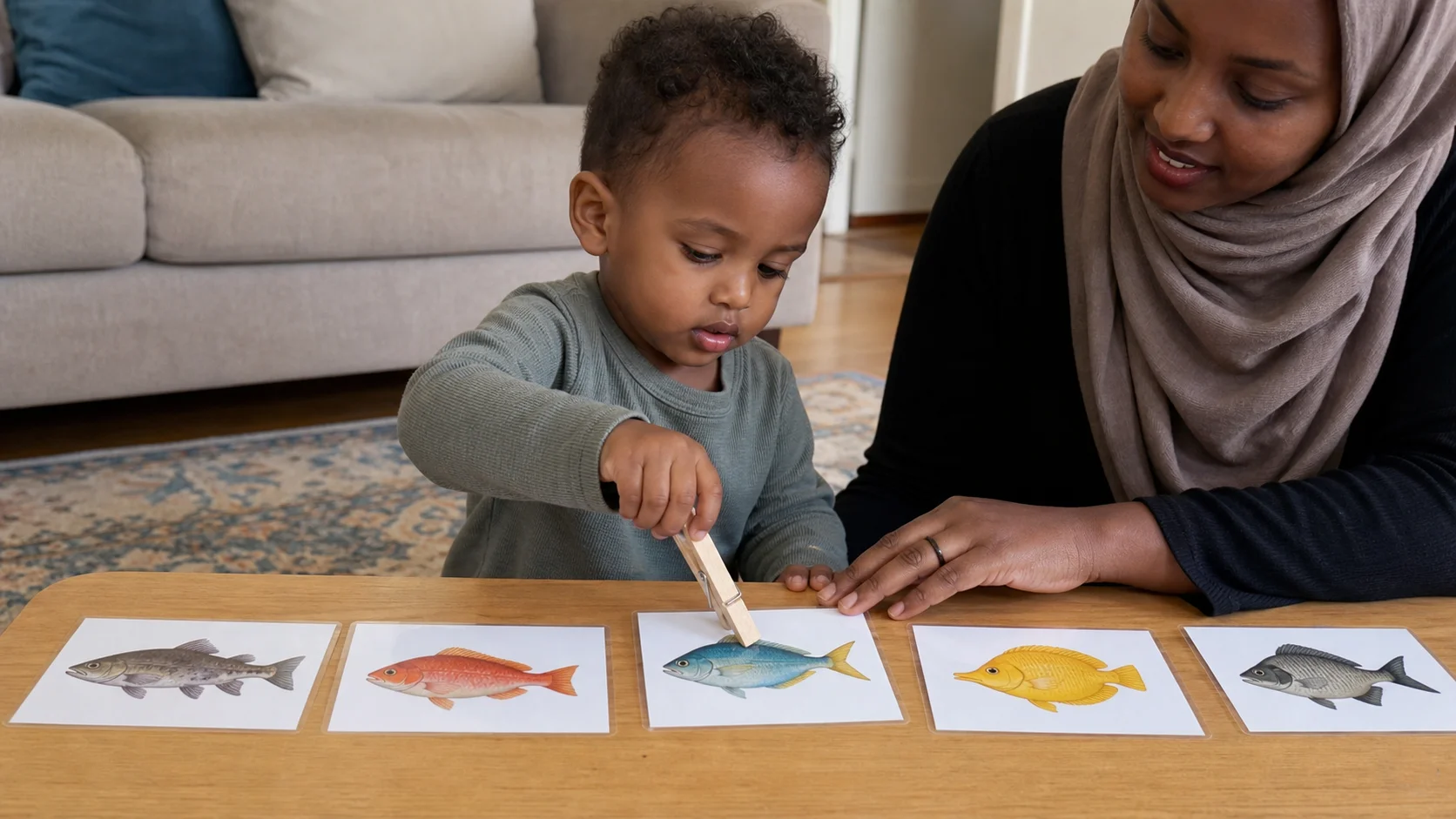
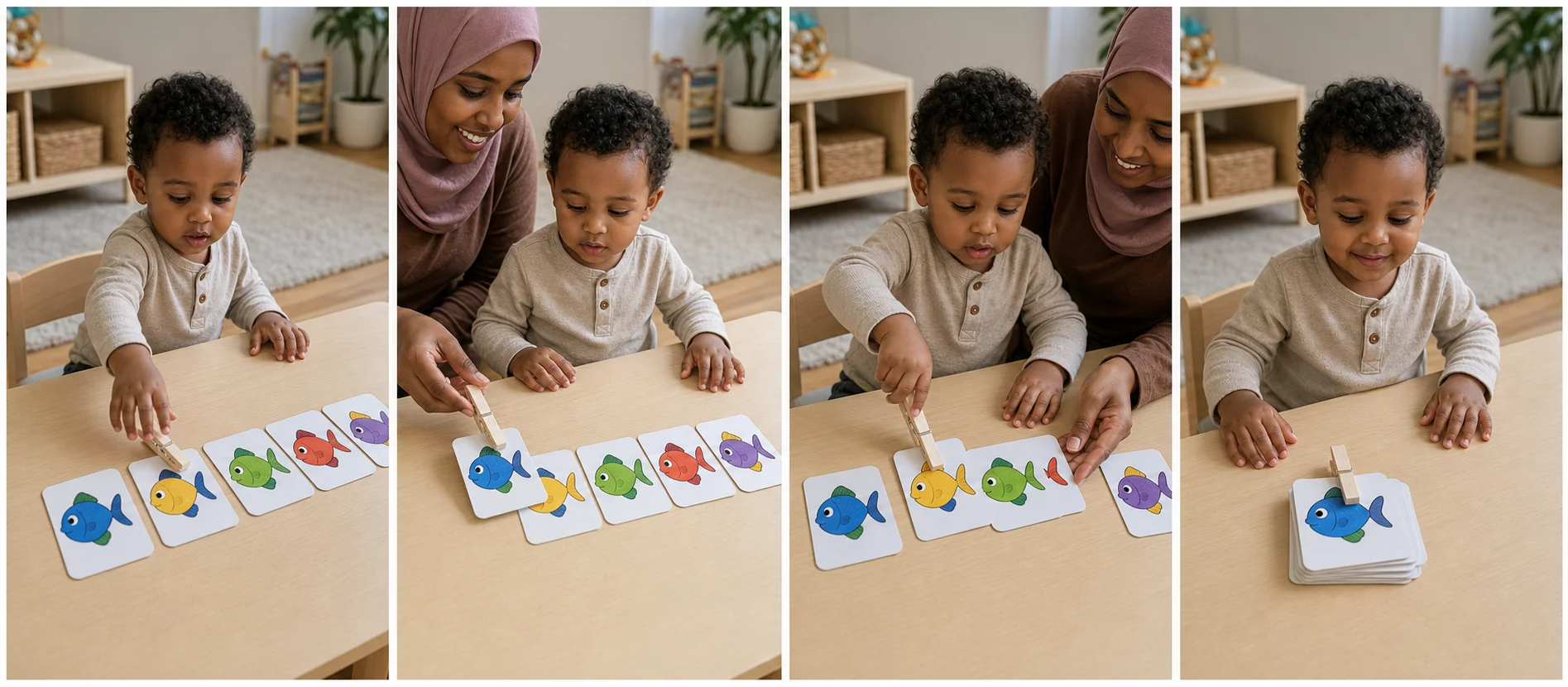
Turn a clothespin shark and a few fish pieces into a quick feeding game. Your toddler squeezes the shark open, clips it onto each fish for a pretend bite, and practices hand control with every chomp.


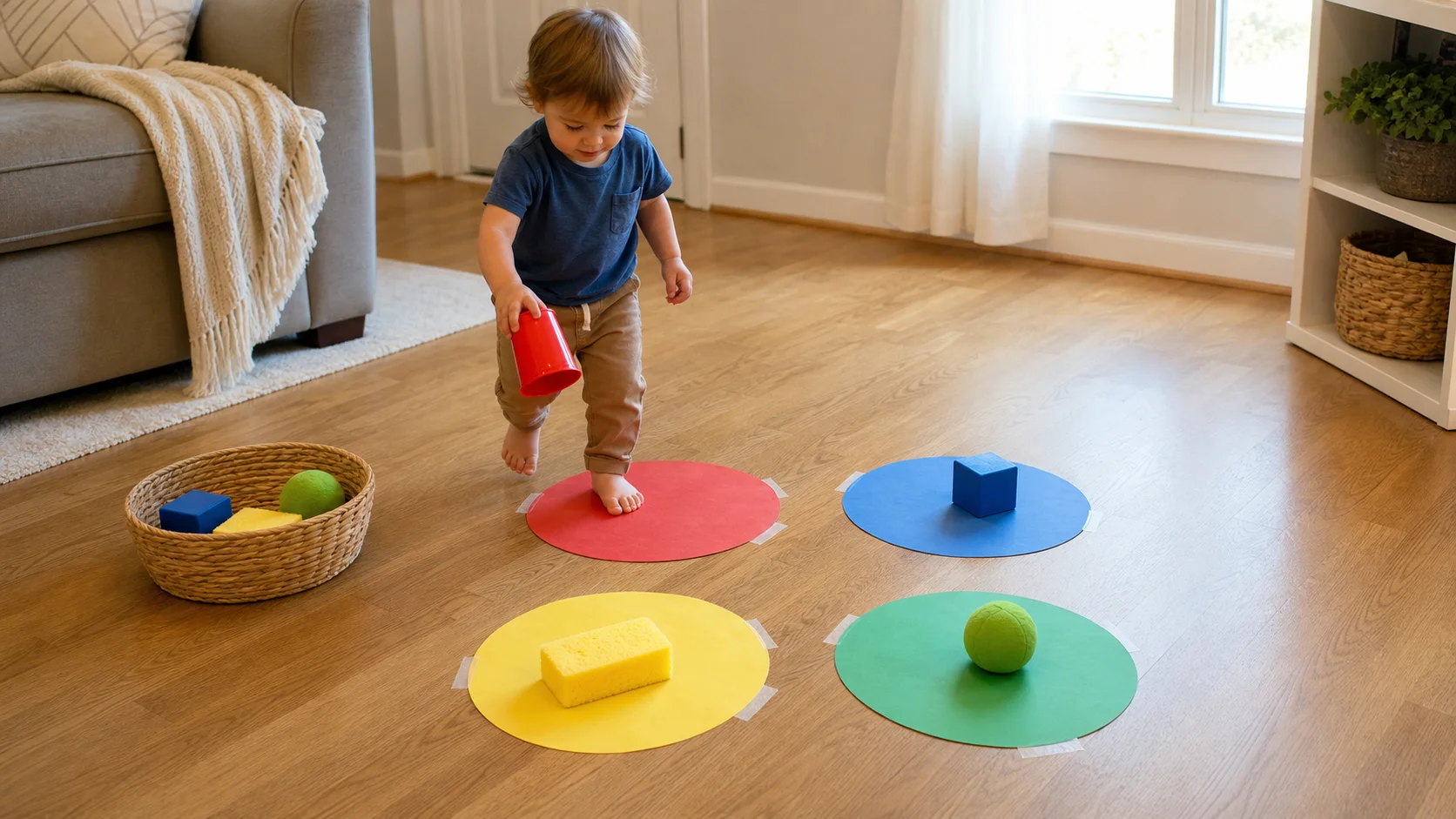
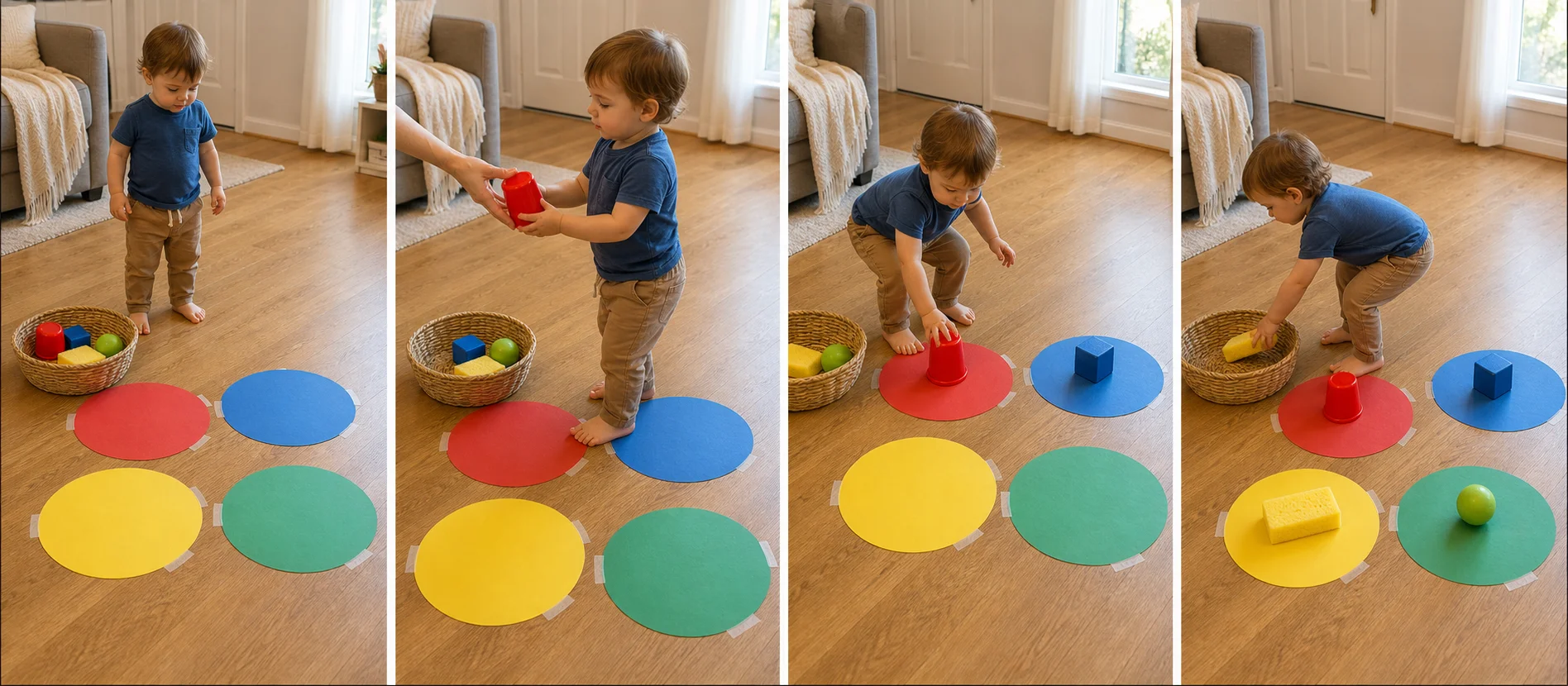
Turn a few paper circles and household objects into a carry-and-match game. Your toddler compares each object's color, walks it to the same-color spot, and builds early visual matching and sorting skills.


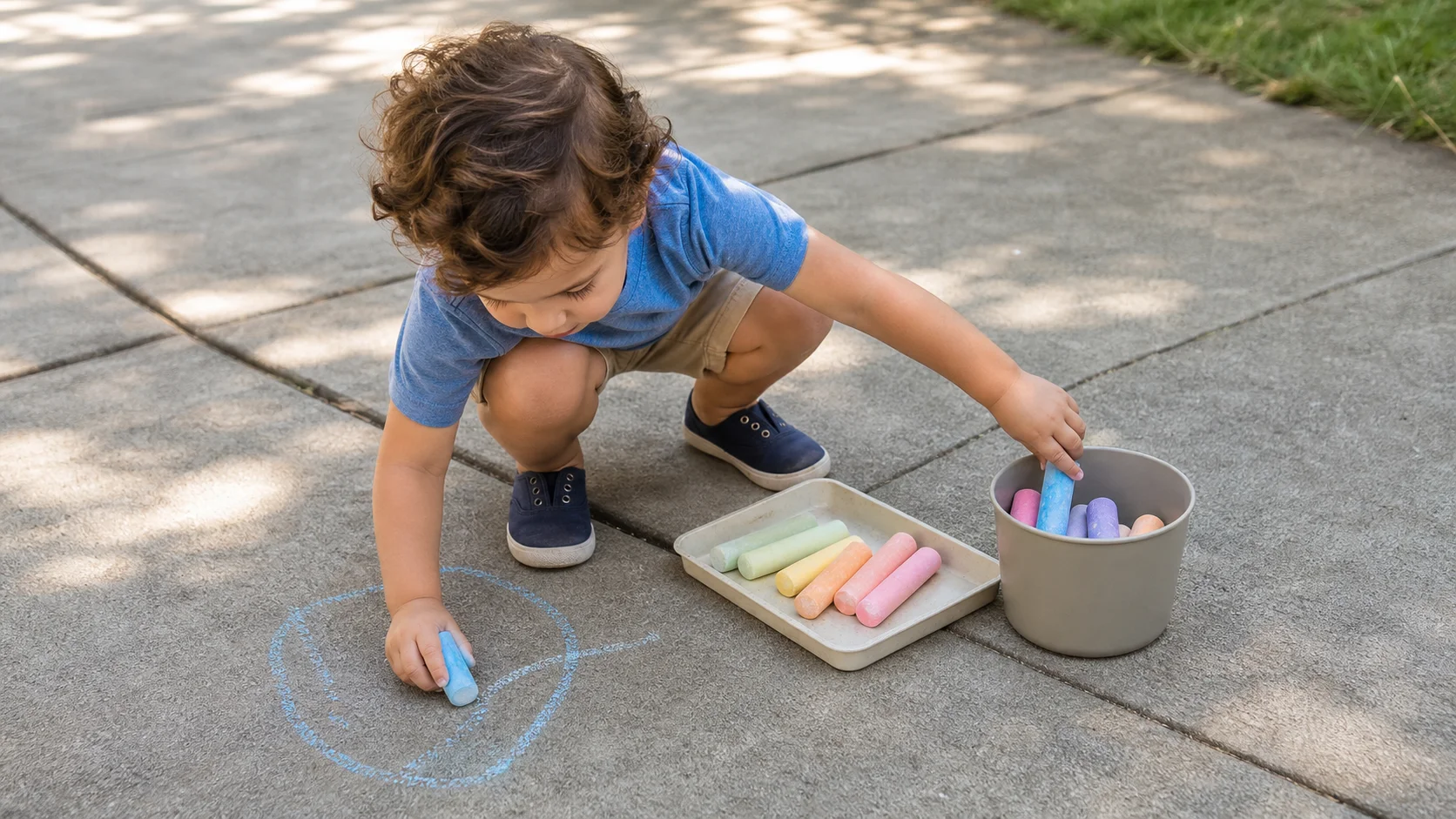
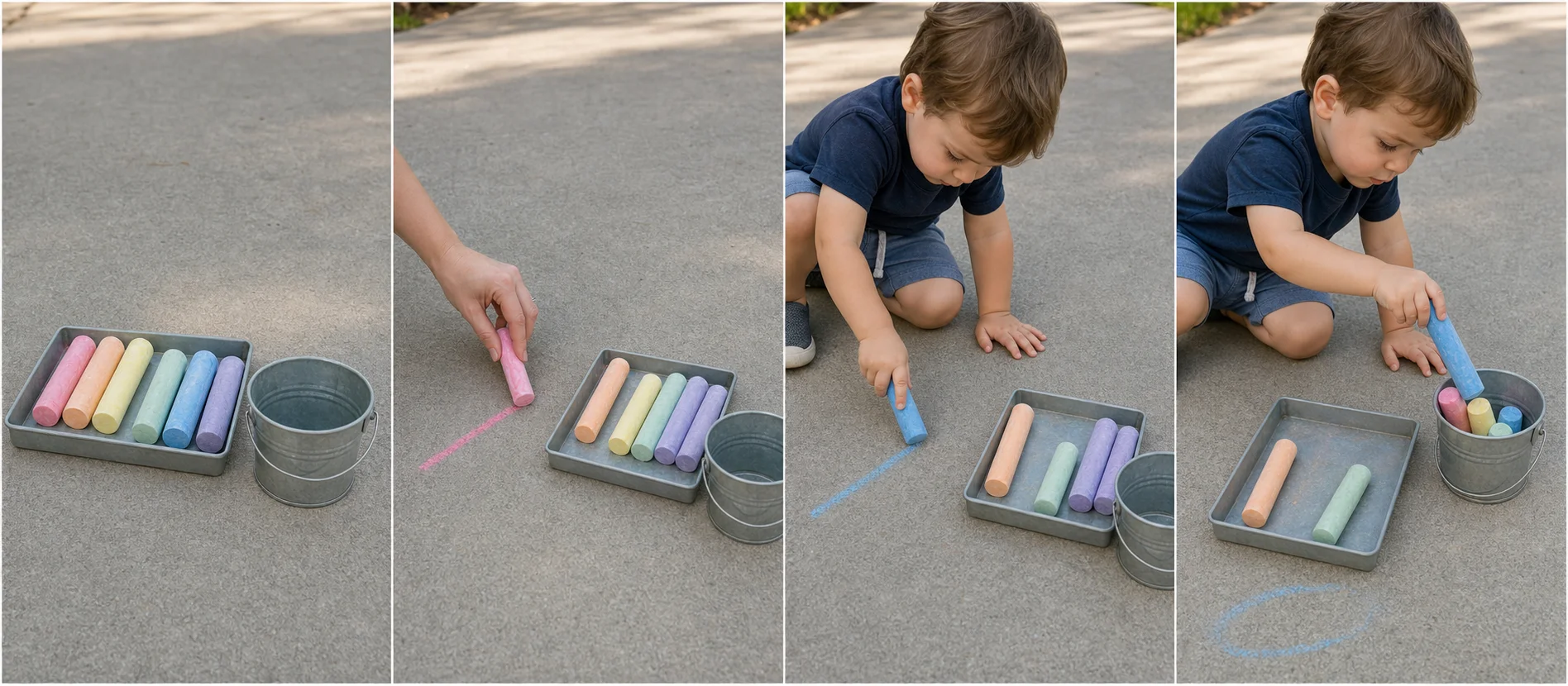
Give chalk time a finish your child can see. Set chalk on a tray, let your child draw with one color and drop it into a finished bucket, then repeat until the tray is empty, creating a simple, predictable transition from play to all done.


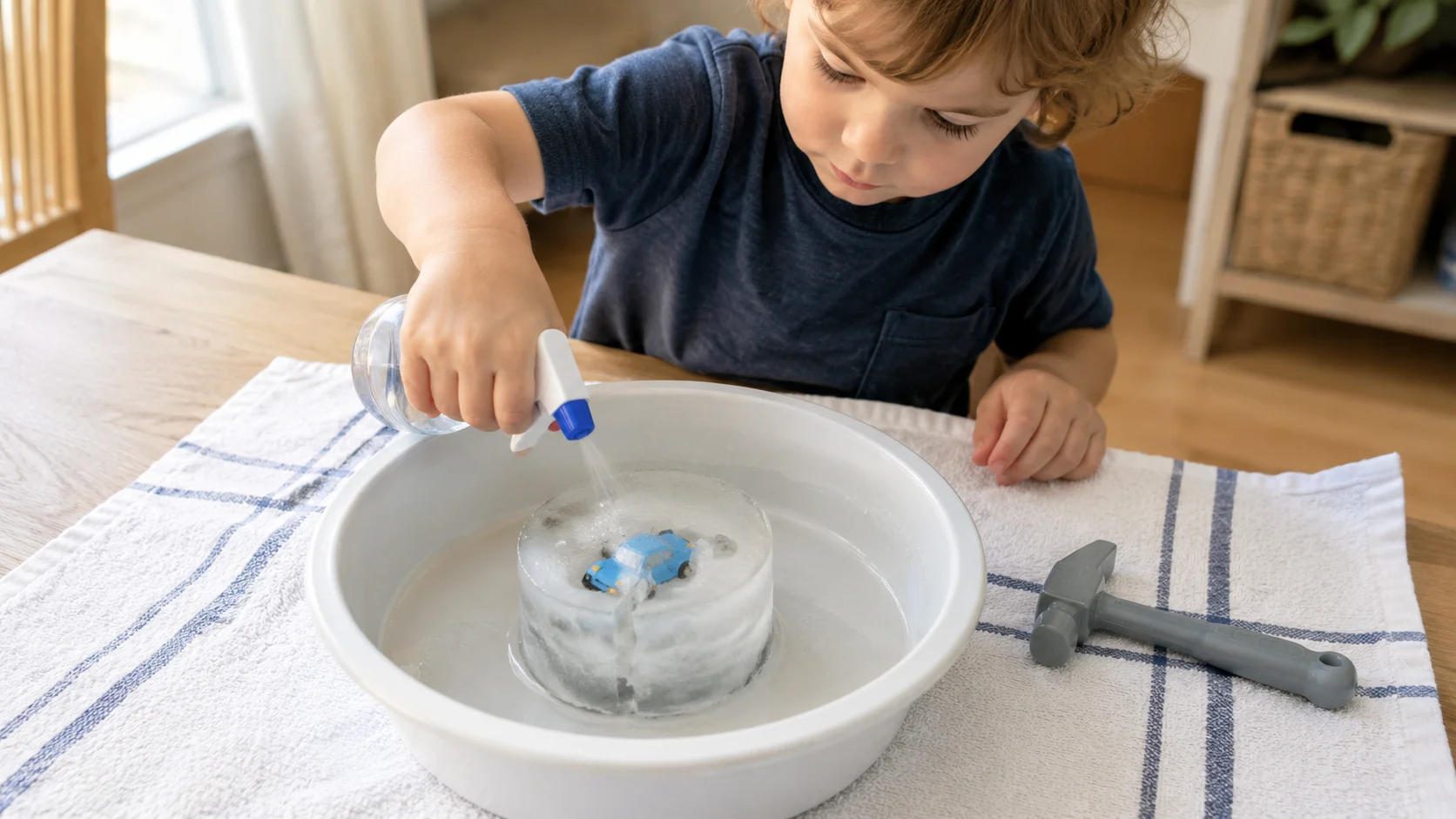
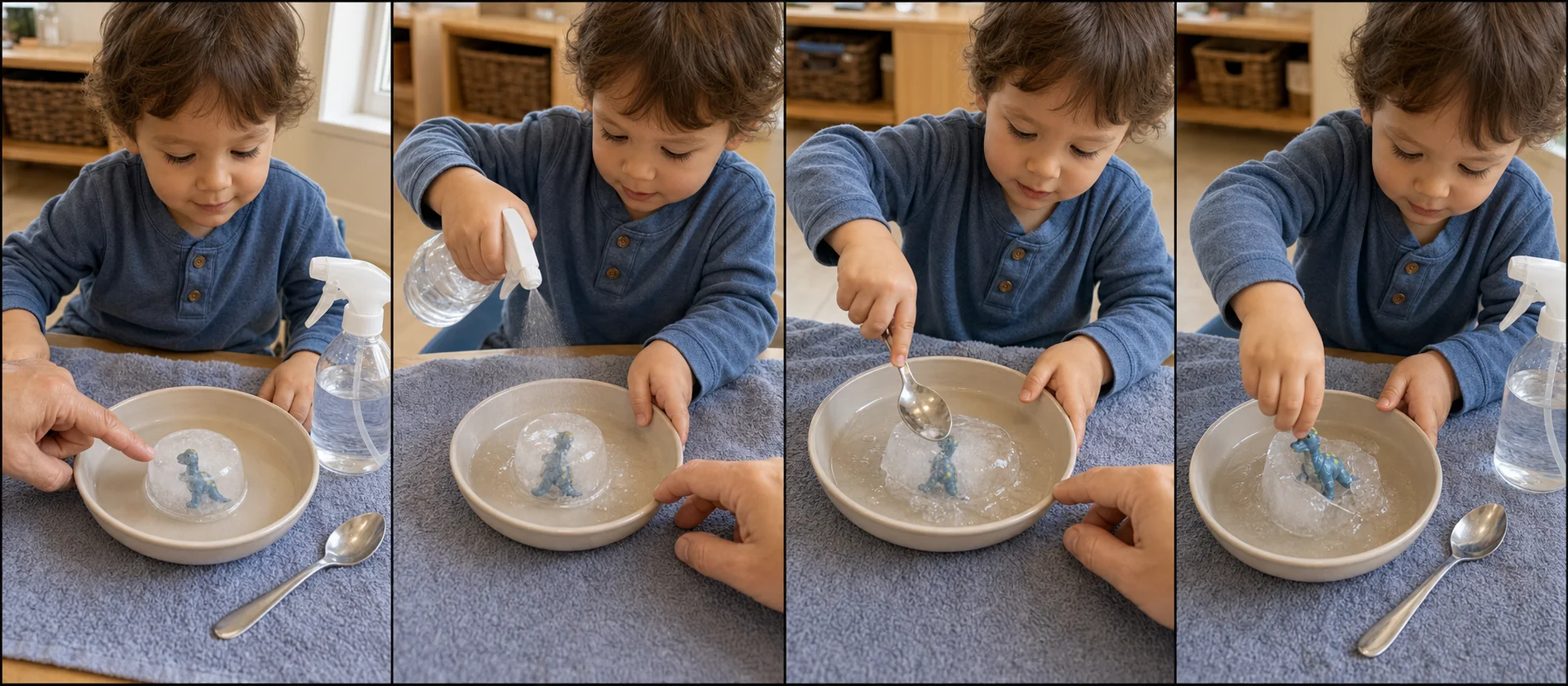
Rescue small toys trapped inside a block of ice using warm water and a simple tool. Each spray or tap creates a visible change, giving your child a clear cause-and-effect challenge with several satisfying rescues.


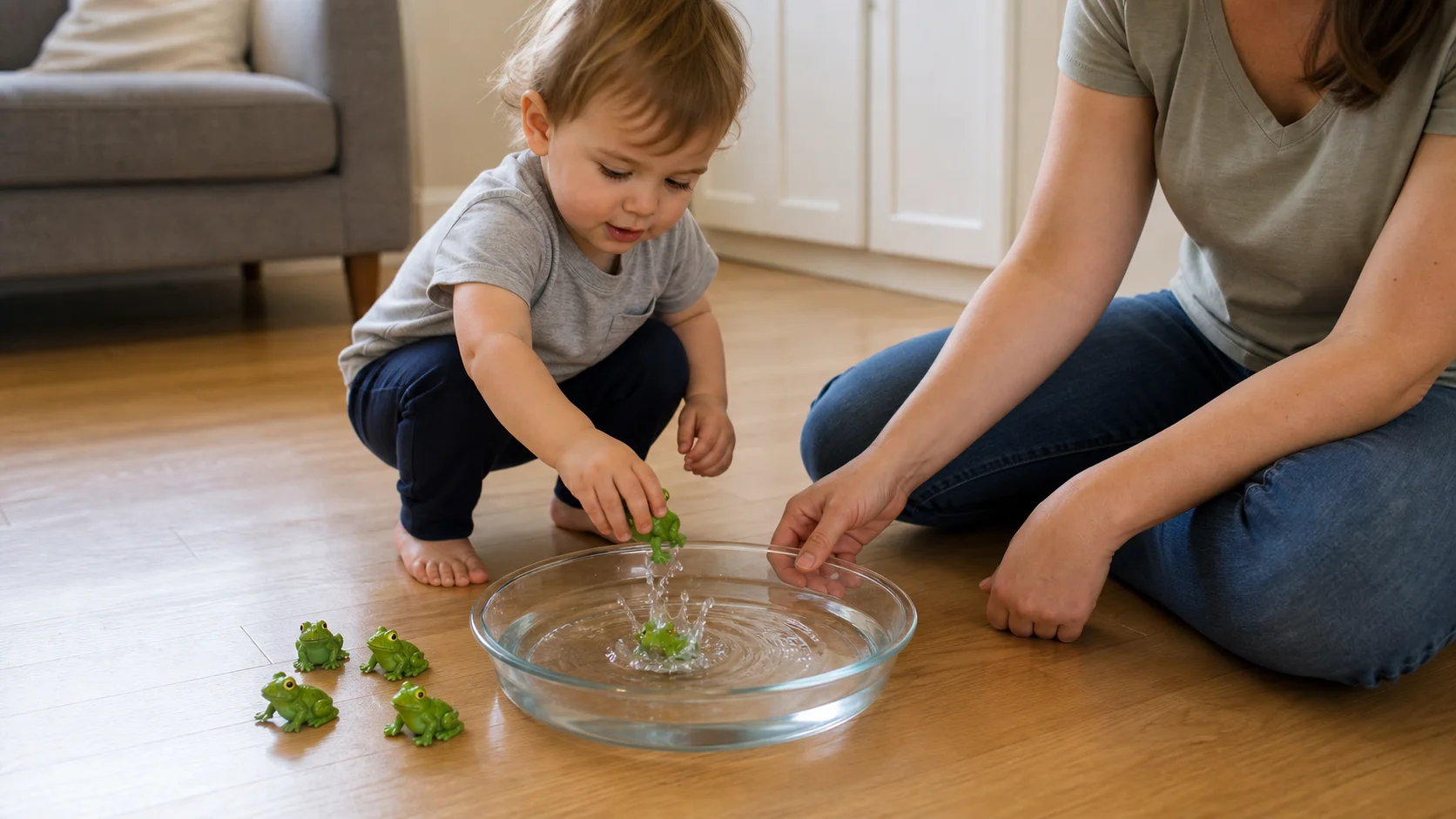
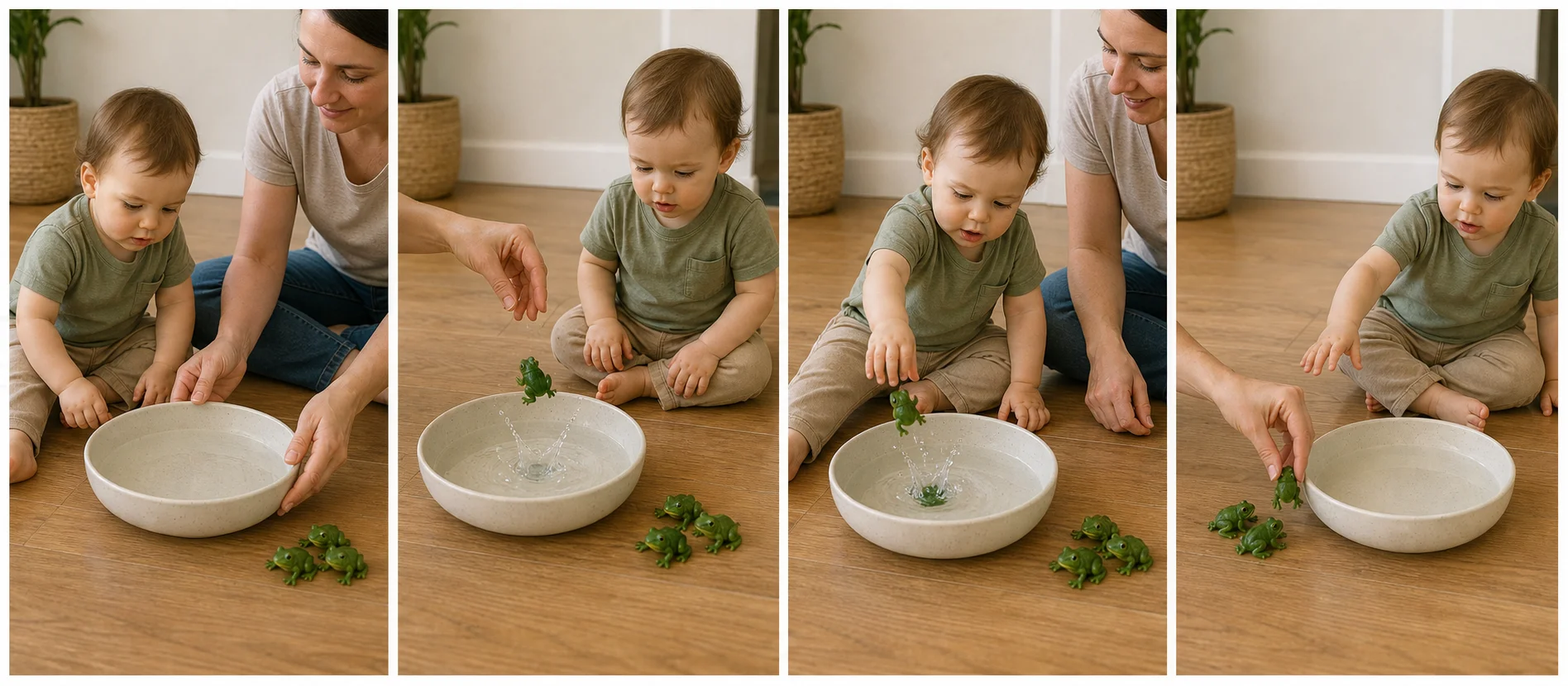
Turn a shallow bowl and a few toy frogs into a satisfying splash routine. Your toddler drops each frog into the water, watches and hears the splash, then repeats, practicing cause and effect while staying with a simple shared play sequence.


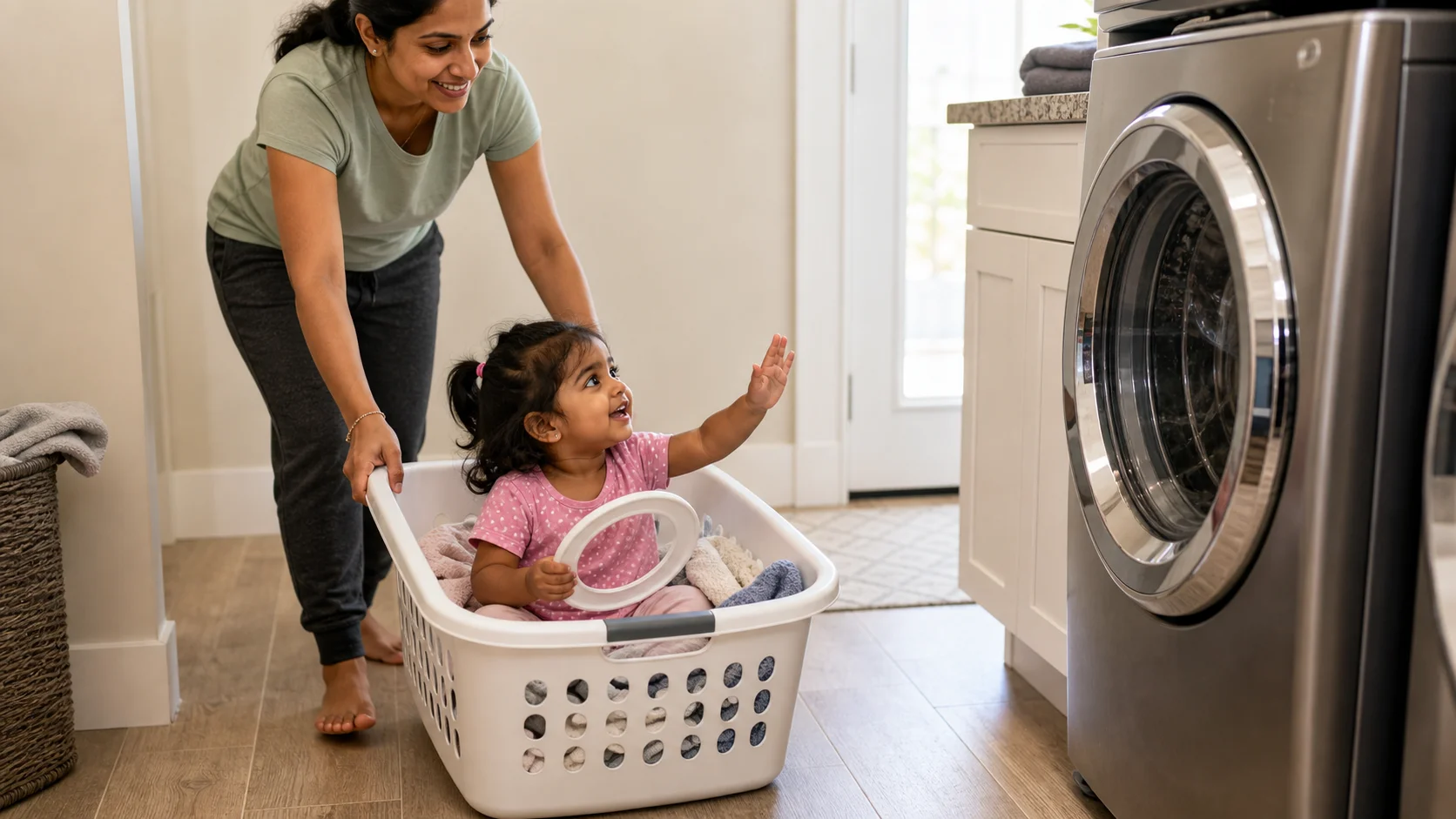
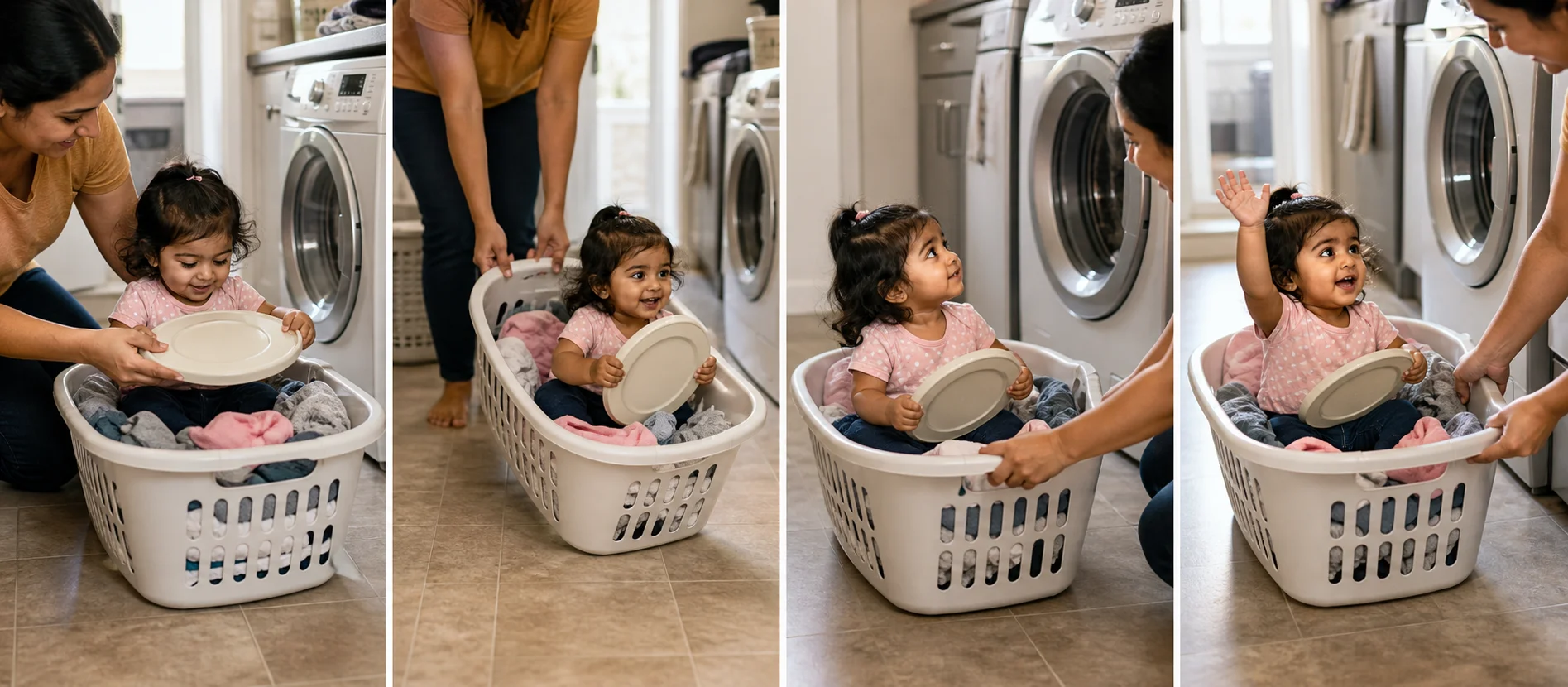
Turn the trip to and from the washer into a communication game. You move and stop the basket; your child signals go, more, fast, or slow before the ride resumes.


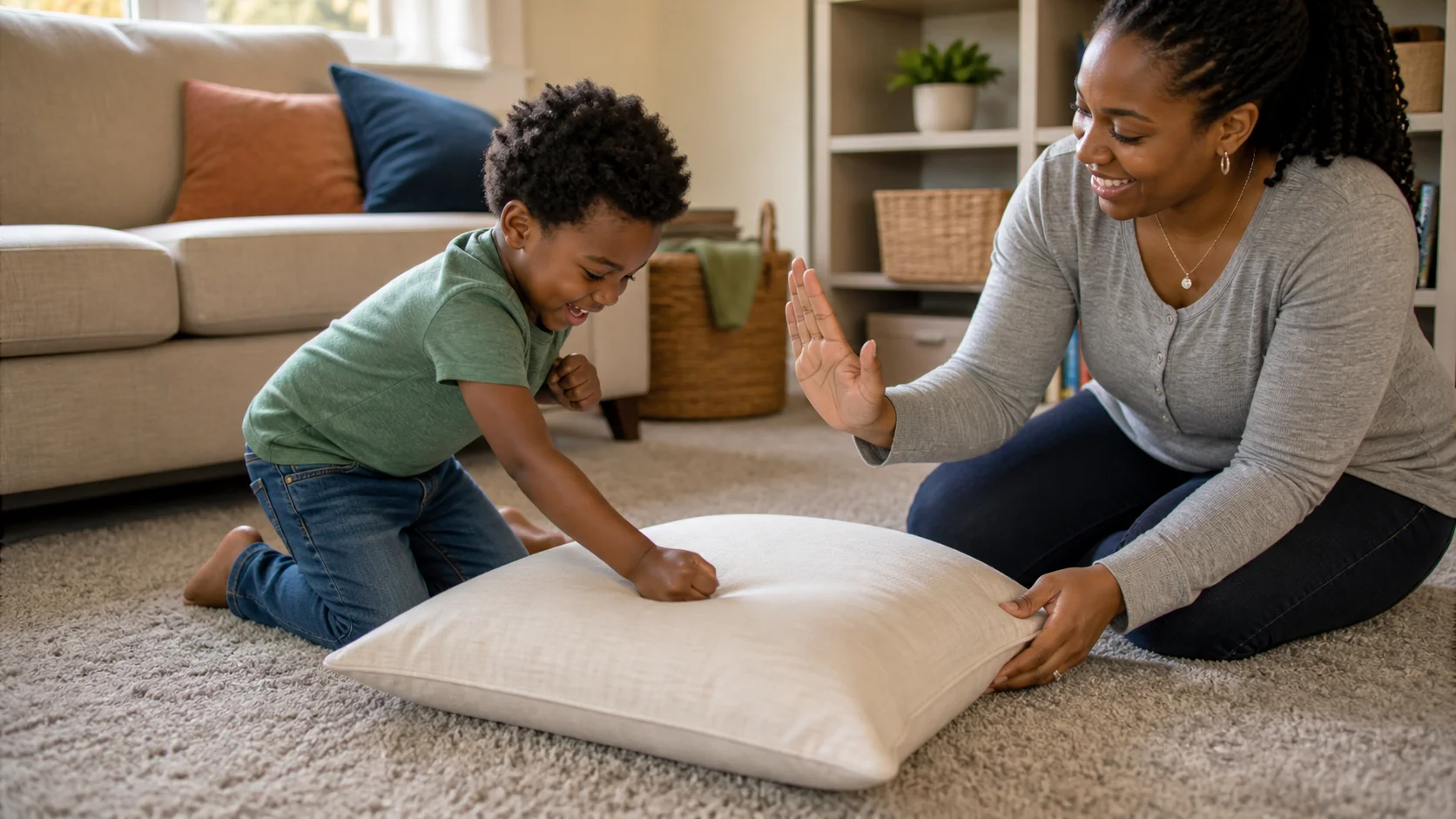
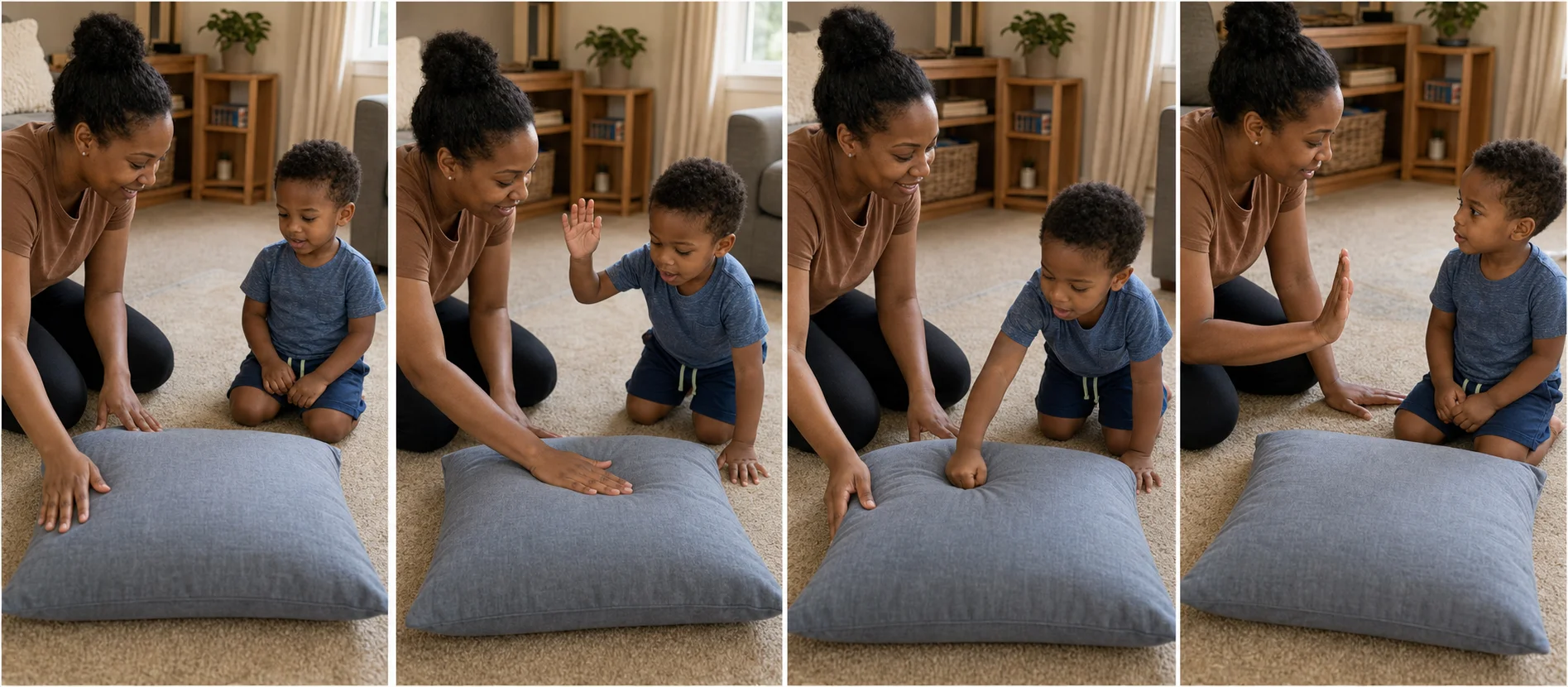
Can your child land a few punches on a soft pillow, then freeze when you say stop? Short punch-and-pause rounds give big arm movements one clear target while practicing start-and-stop control.


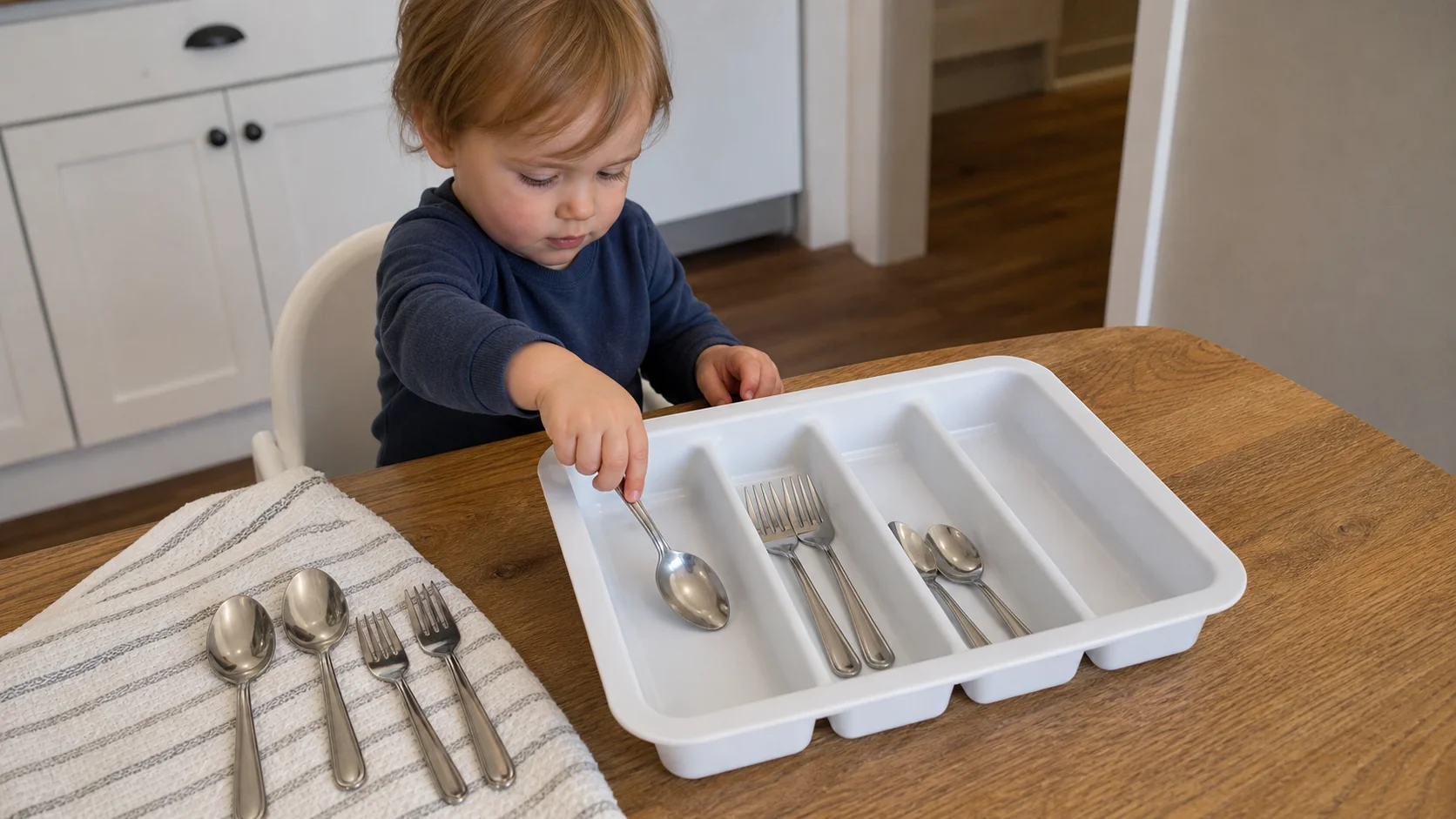
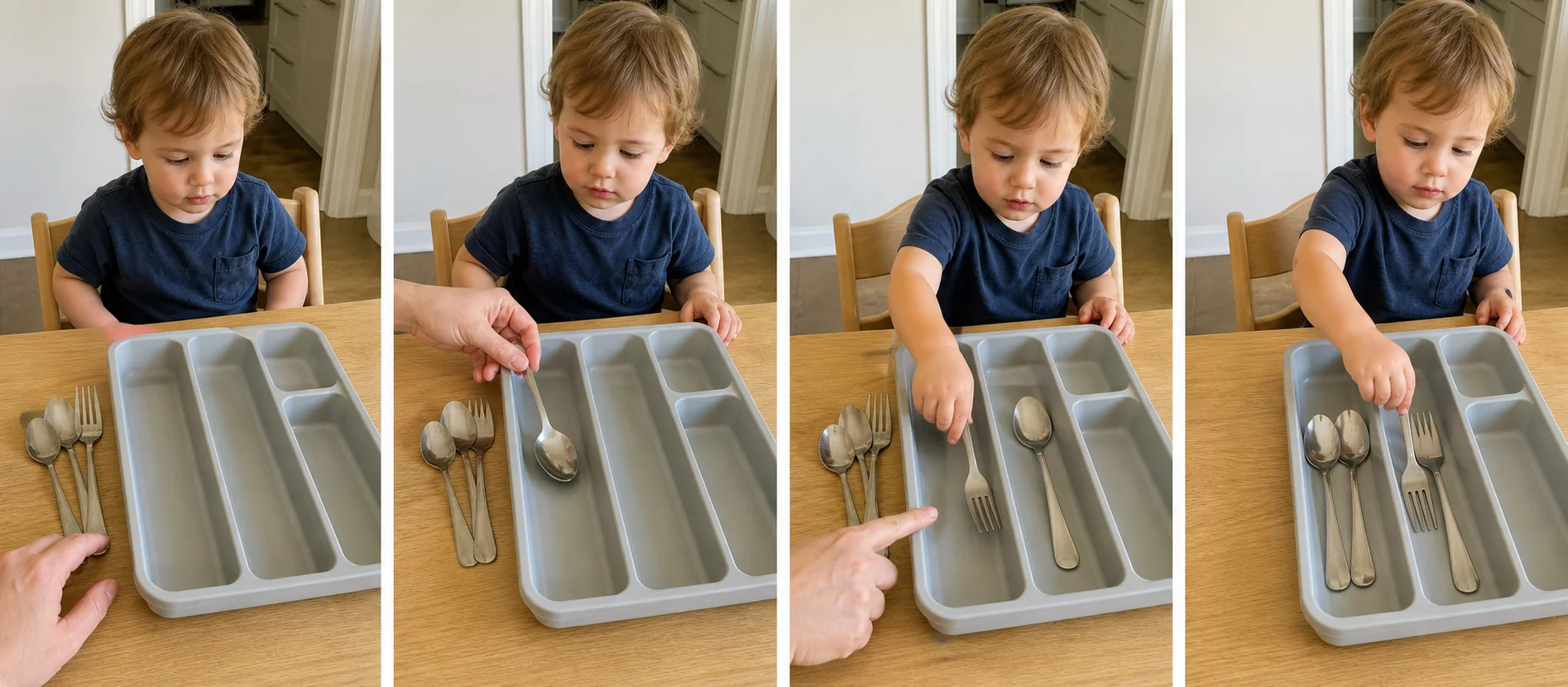
Turn a few clean spoons and forks into a toddler-sized kitchen job with a fast, visible finish. Your child compares each utensil, places it with the same type in a silverware tray, and practices sorting familiar objects by kind.


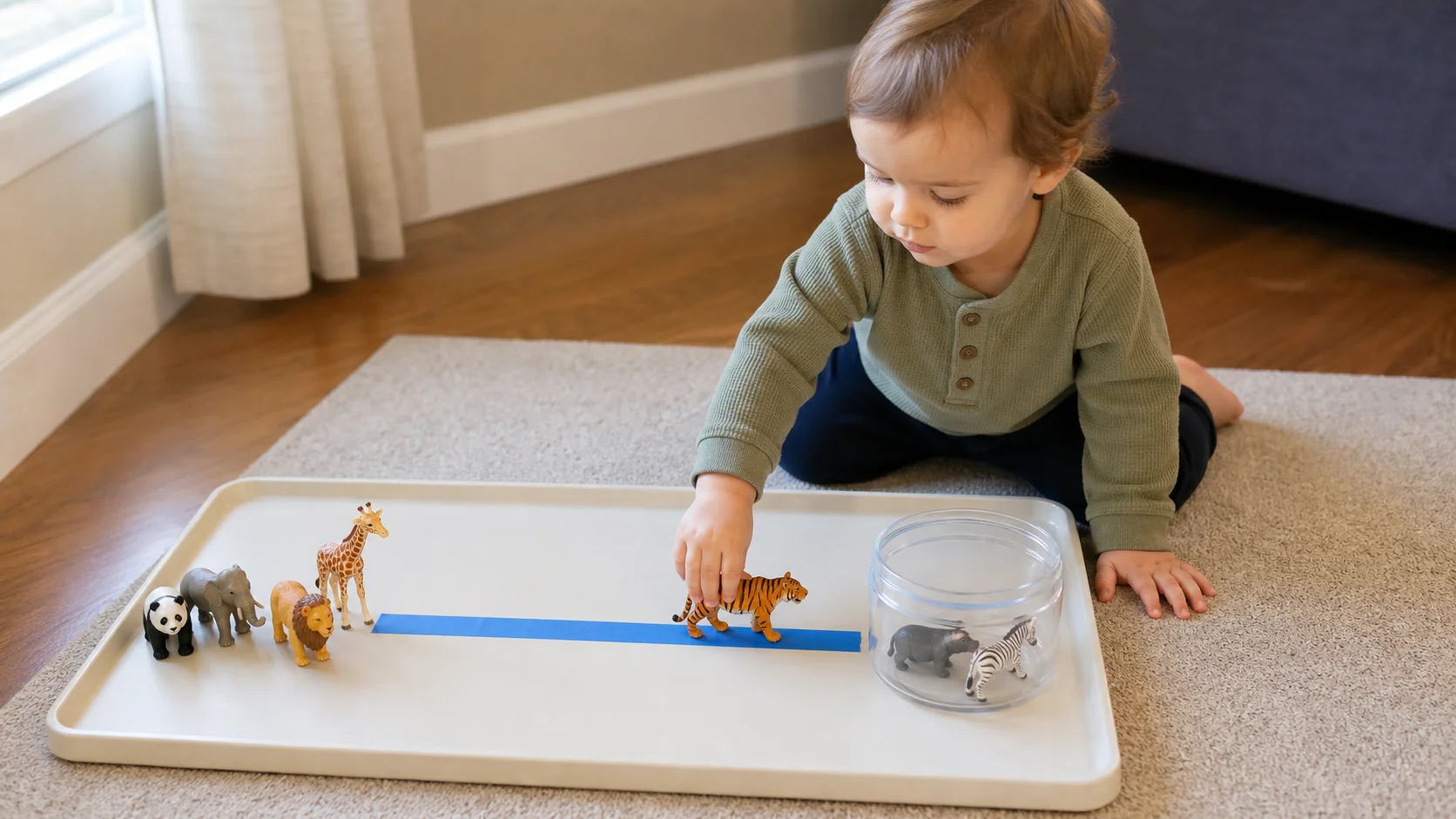
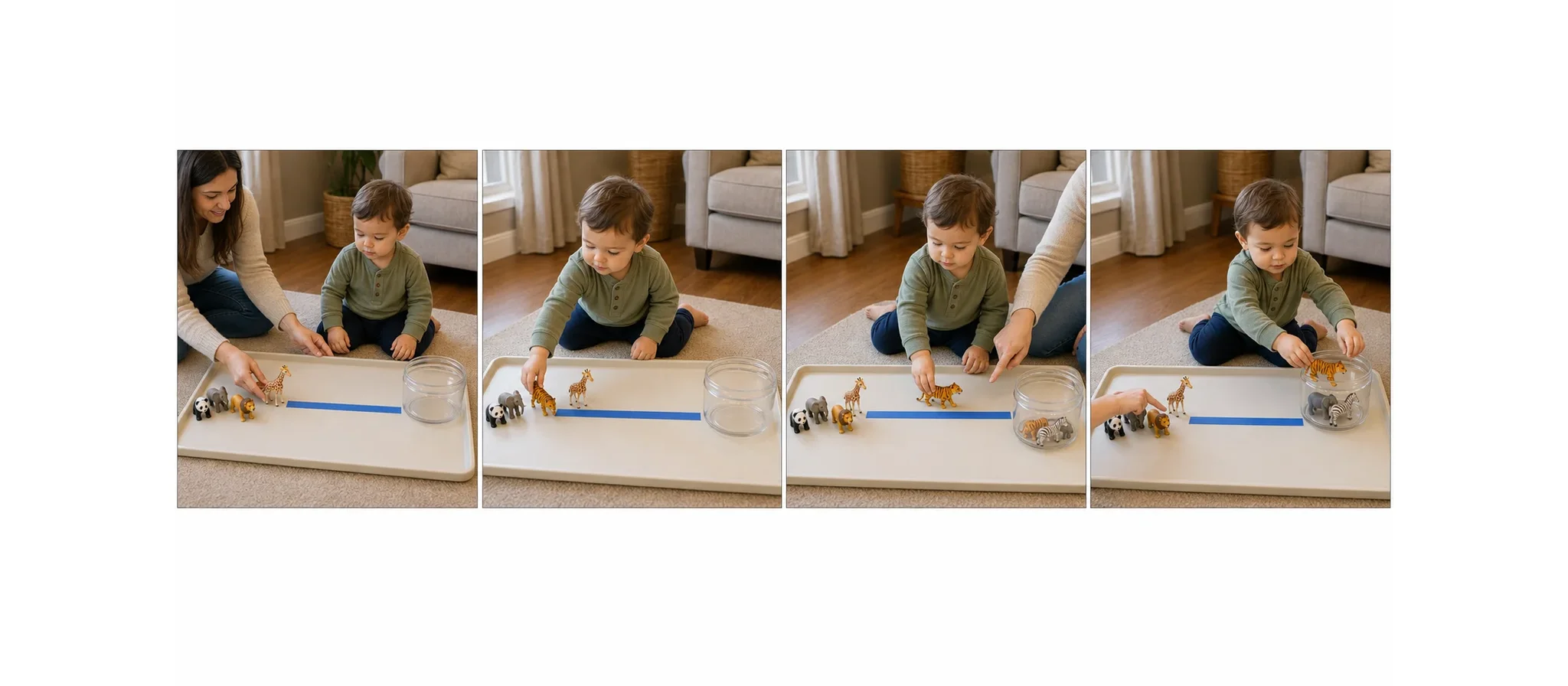
A simple left-to-right path gives your toddler a clear job with an obvious finish. They move one toy animal along the route and drop it into a clear container, practicing how to follow a visible sequence from start to finish.