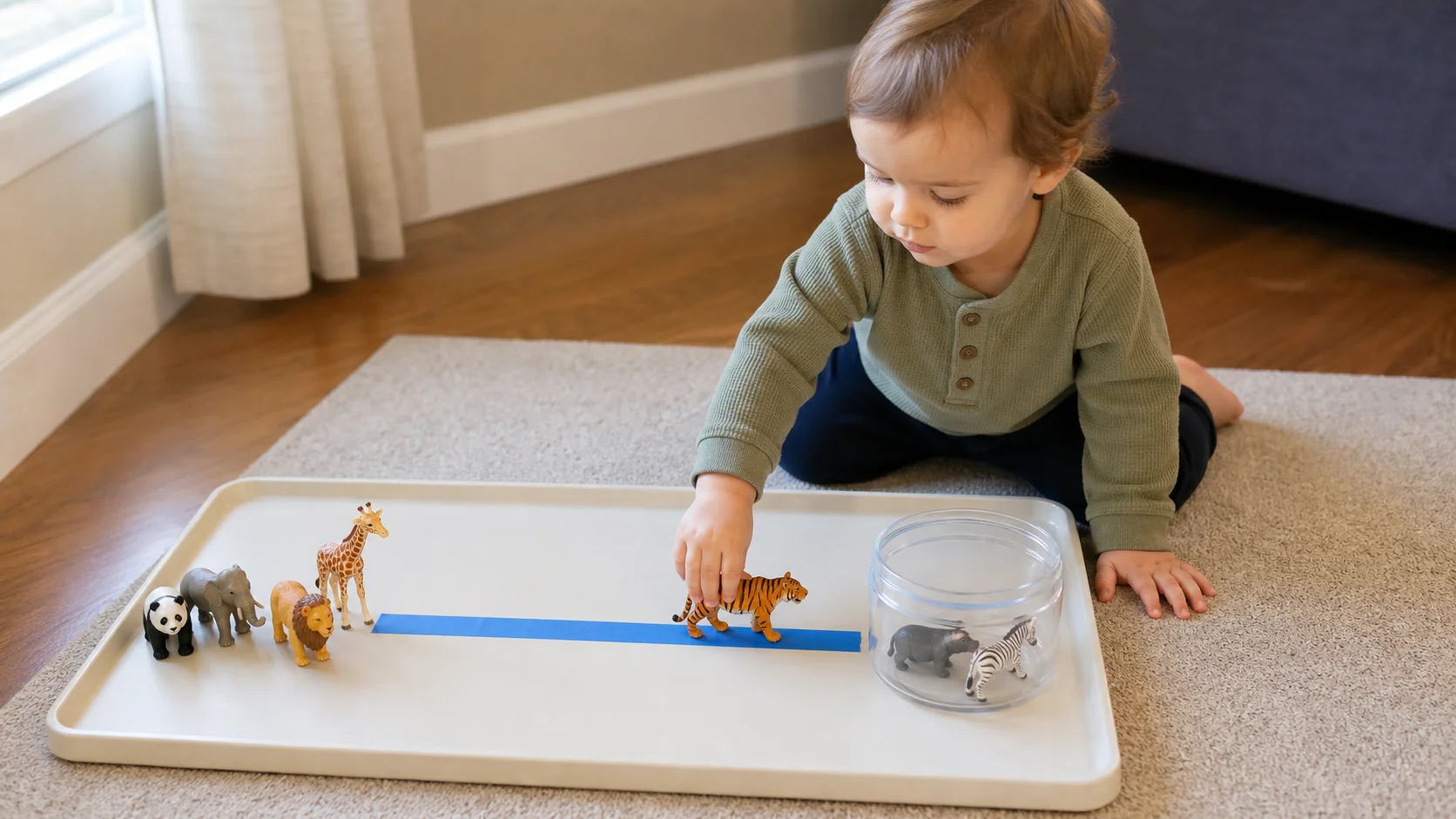
A toddler sitting beside a simple path board and moving one toy animal toward a clear bowl at the end.
ThinkingAutism supportMove Through PathIndoor

Toy Animal Path.

A quiet visual routine where your child moves one toy animal along a simple path and drops it into a clear finished bowl.

Play time
5-10+ min
Age
1-3 years
Energy
Low
Mess
No
Effort
Low
Where
Indoor
Start here

The recipe.

Low parent effort
3 things

What you need

  • 1 toy animal
  • 1 simple path board, strip, or page that shows a left-to-right route
  • 1 clear finished container with a wide opening
5 min minimum

Setup

Then start the loop
Step 01
Put the path board flat on the floor or a low table in front of your child.
Step 02
Place the clear finished container at the far right end of the path.
Step 03
Put the toy animal at the left start of the path.
Step 04
Sit beside your child so you can point to the route and reset the animal quickly after each round.
"Animal goes."
The loop

How play unfolds.

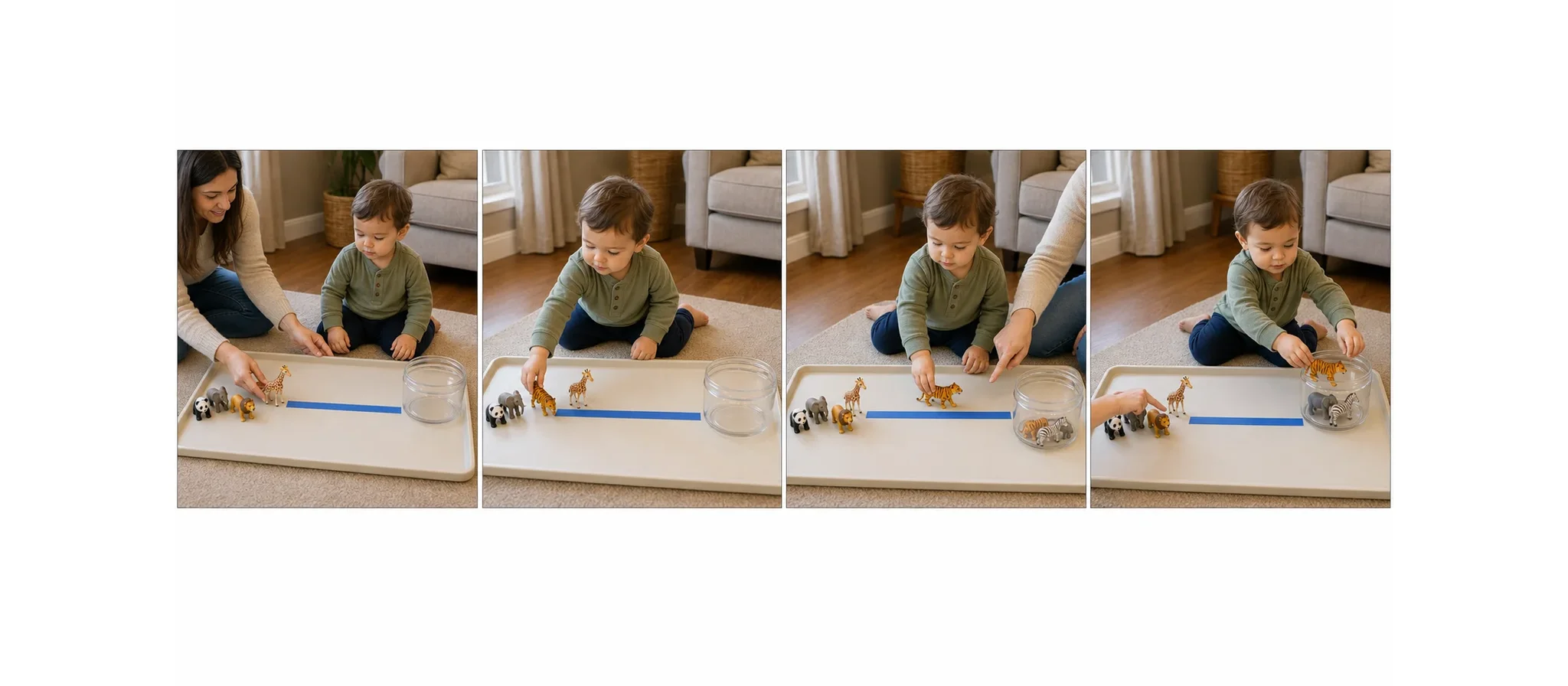
Four panels showing a grown-up placing a path board and bowl, setting the animal at the start, a child moving the animal along the path, and the animal dropping into the bowl.
  1. 01
    Show one quick round and say, "Walk the animal to the bowl."
  2. 02
    Let your child move the animal along the path and drop it into the container.
  3. 03
    Put the animal back at the start and repeat.

Safety Check

  • Stay close if the toy animal or container could be mouthed or thrown.
  • Use a stable container with a wide opening so the drop target does not tip.
  • Stop and simplify if the animal starts turning into a throwing game.
Supporting the play

What to say in the moment

Match what you say to what you see.

Prompt ladder
Level 1 (Start)
"Walk the animal."
Level 2 (Keep going)
"Now to the bowl."
Level 3 (Stretch)
"Slow walk or fast walk?"
Level 4 (Extend)
"Let's send it back for one more trip."
If your child seems...
What you'd see
Focused
What to do
Say
"You kept it on the path."
Add
Name one simple action, such as walk or drop.
Extend
Pause before the next turn so your child can reach for the reset.

Make it easier

Younger end
  • -Use a shorter path.
  • -Keep the container touching the end of the path.
  • -Start each round with the animal already facing the right direction.

Make it harder

Older end
  • +Wait to point and see if your child finds the path alone.
  • +Ask your child to reset the animal back to the start after the drop.
  • +Pause at the bowl and let your child decide when to let go.

If it's not working

If you see
If child ignores it
Do one quick animal walk yourself and drop it in with a small sound effect.
If you see
If child misuses it
Move the container closer, say, "Path first, then in," and guide the animal back to the start.
If you see
If child gets frustrated
Start the animal halfway down the path for the next turn.
Skill spotlight
Move Through Path

Following a simple left-to-right path to a clear end point

This helps your child practice following one clear route to an end point, then finishing the job in a visible way. That same pattern shows up in simple table tasks, cleanup jobs, and other short work systems.

  • Early. Your child may move the animal only partway, lift it off the path, or need you to point to the end.
  • Later. Your child moves the animal from start to finish, drops it in, and resets for another trip with little support.
  • Middle. Your child follows most of the route and starts dropping the animal into the bowl after a prompt.
Real-world transfer
  • Following a simple work path from start to finish.
  • Moving one object to where it belongs.
  • Completing a short routine and getting ready for the next one.
Back to library
Keep playing

Related activities.