
Balloon Batting
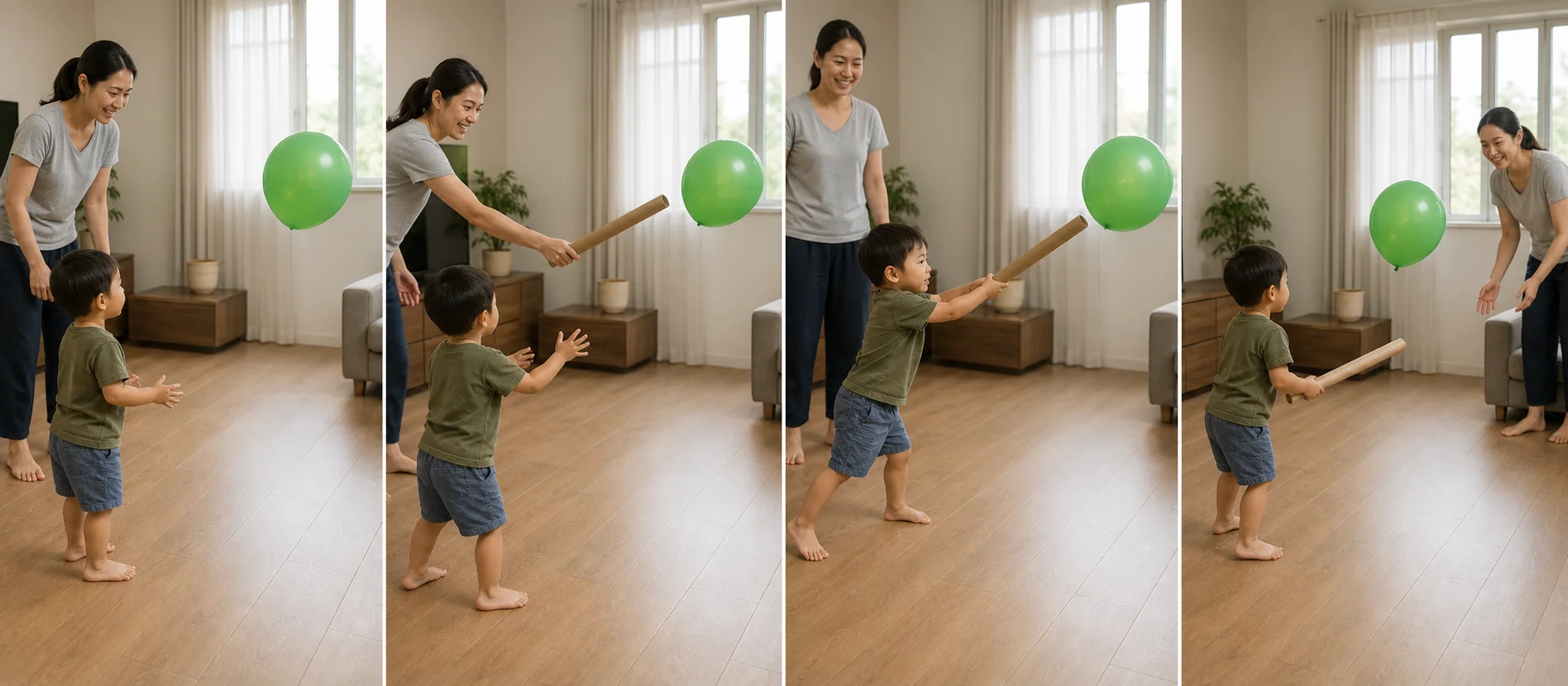
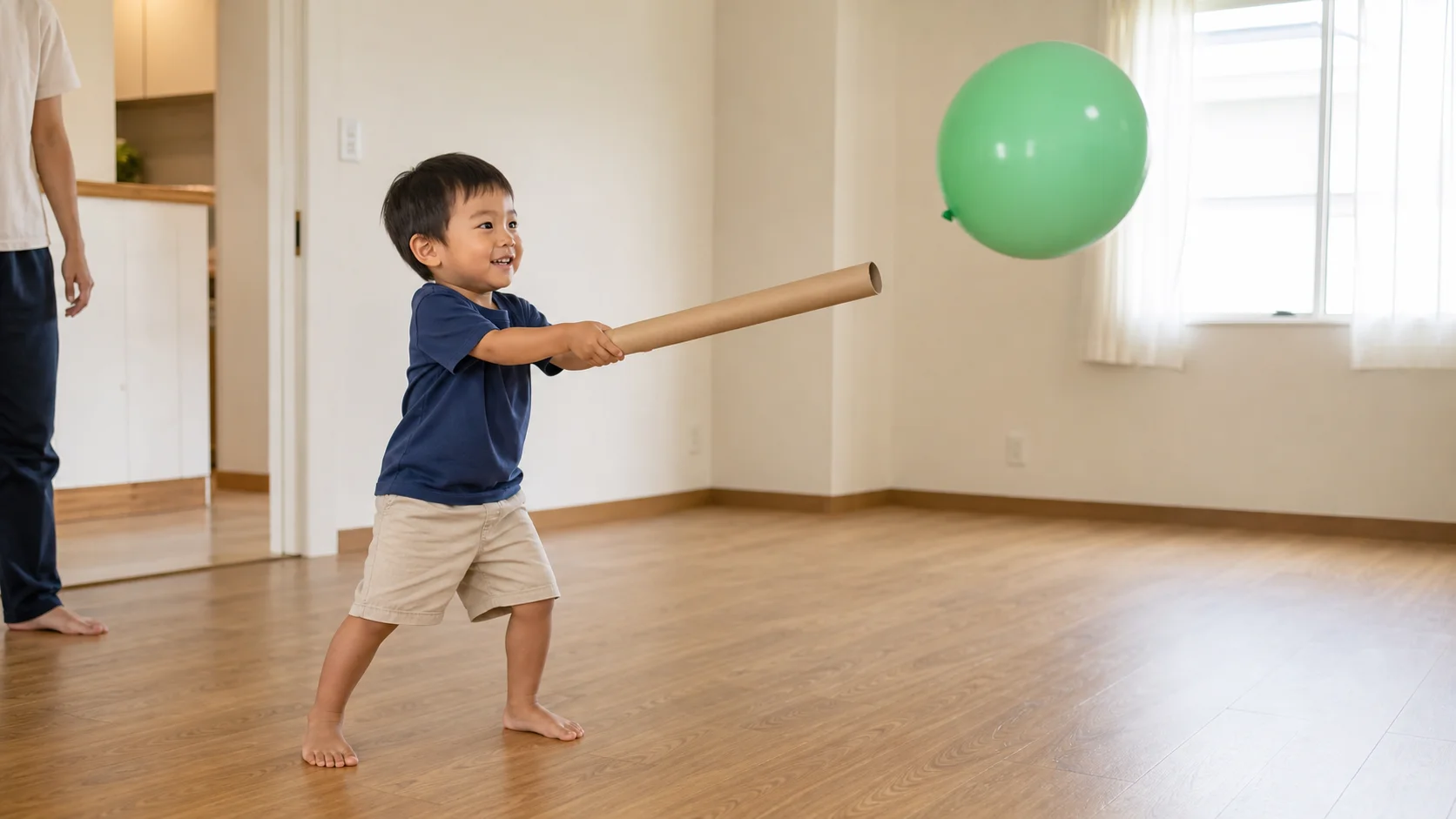
Give your child an indoor target that moves slowly enough to hit and chase. Batting a balloon with an empty cardboard tube turns every floating bounce into practice for hand-eye coordination and timing.


Give your child an indoor target that moves slowly enough to hit and chase. Batting a balloon with an empty cardboard tube turns every floating bounce into practice for hand-eye coordination and timing.


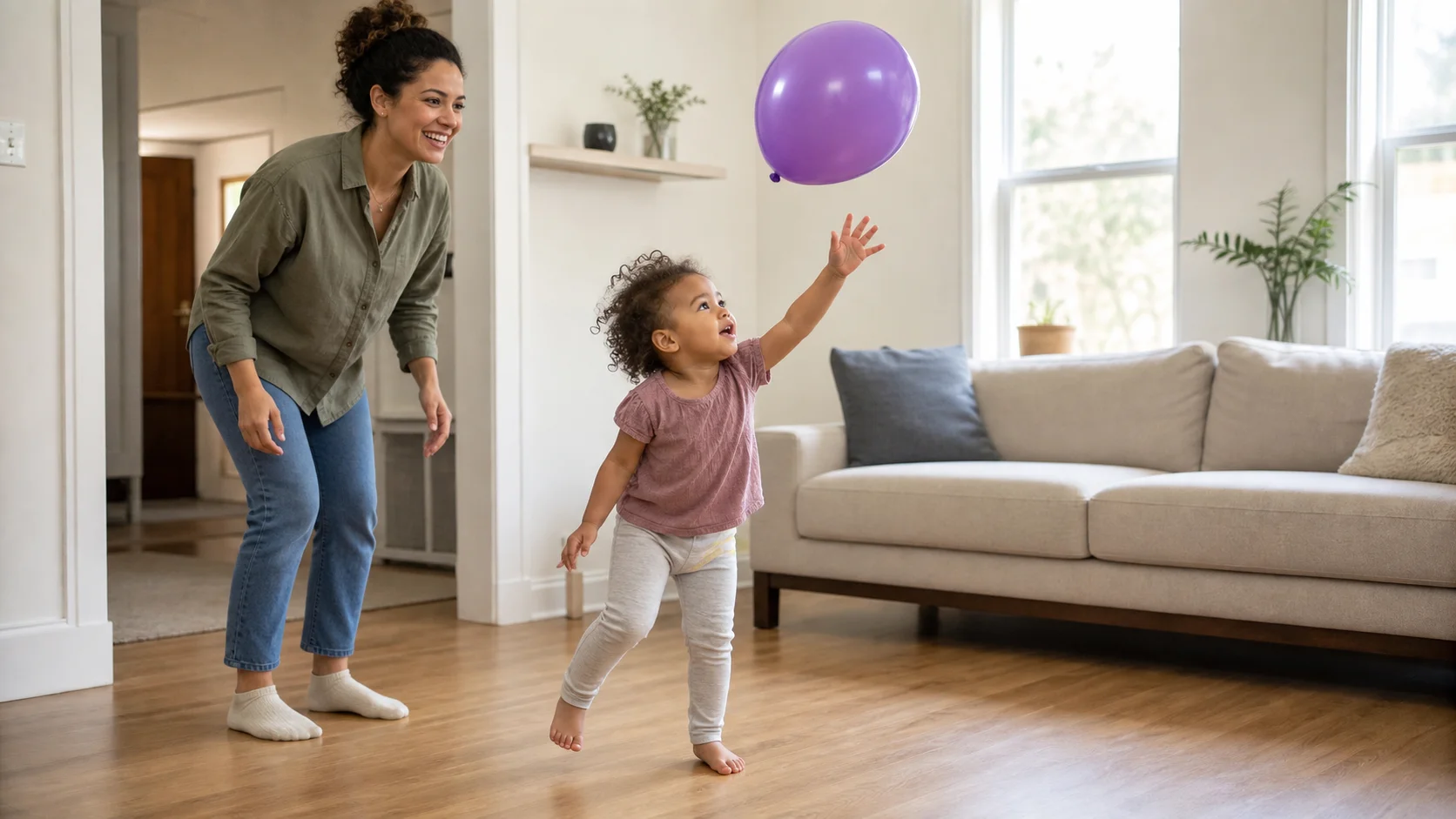
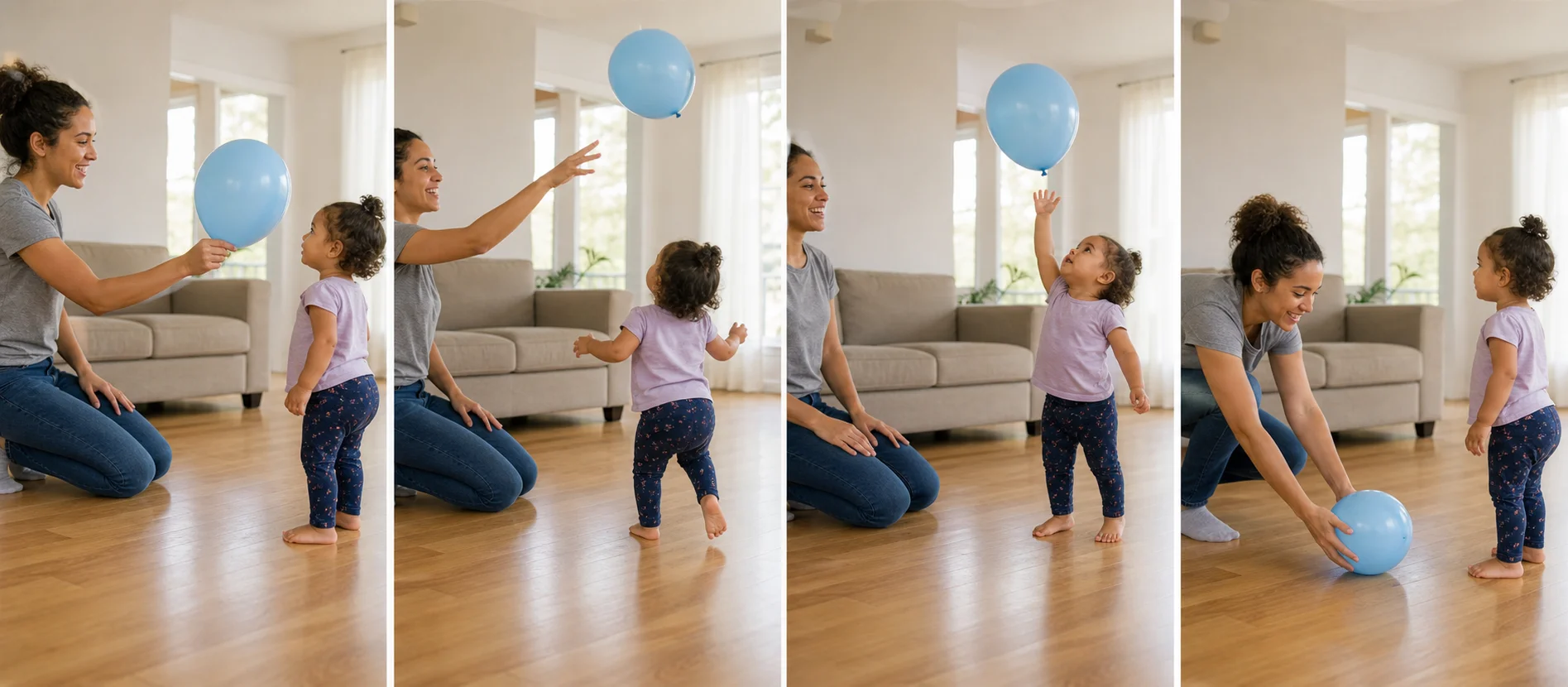
One air-filled balloon turns indoor movement into a simple keep-it-up challenge. Your child follows the drift and taps the balloon with hands or feet before it lands, practicing gross motor skills, body awareness, and balance.


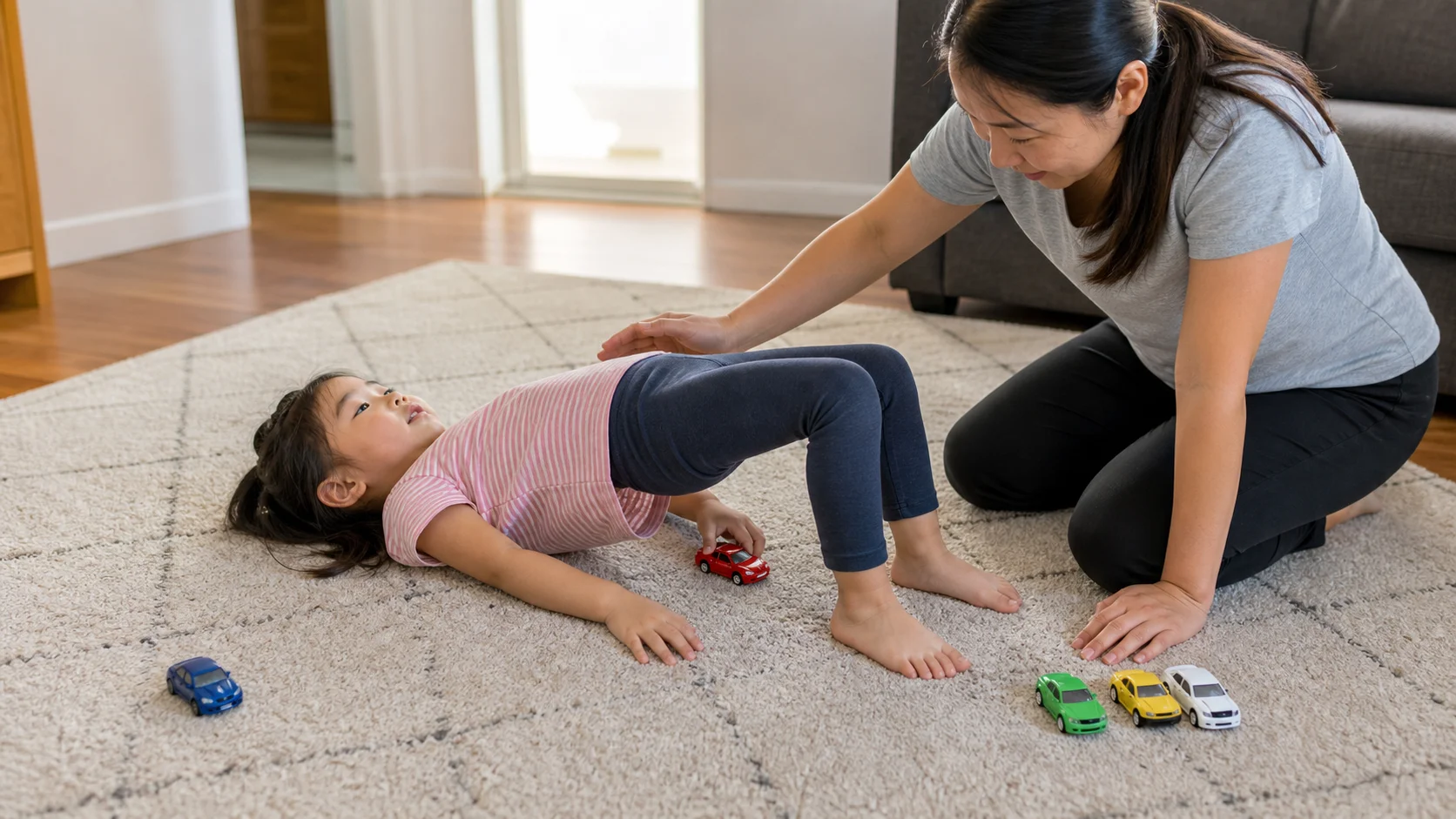
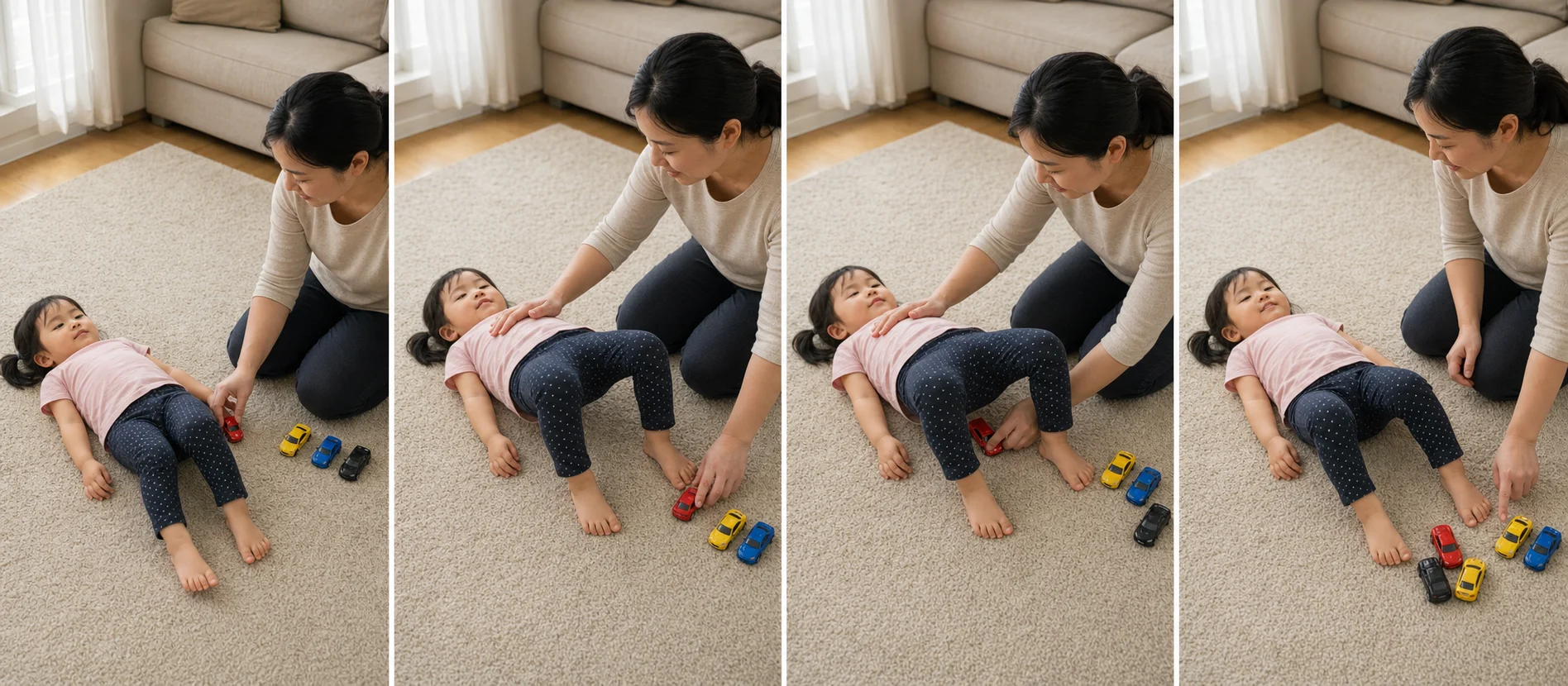
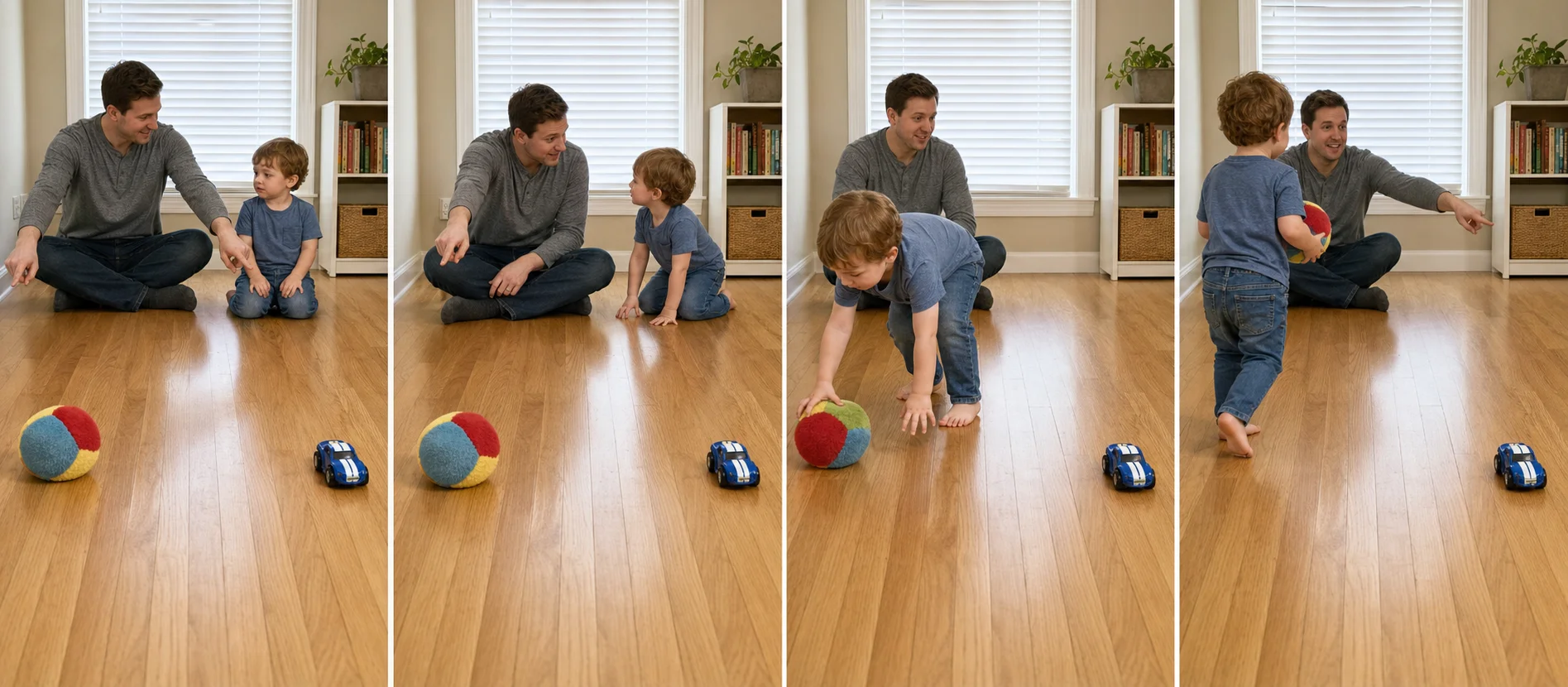
Turn a simple floor exercise into a tunnel game with a toy car or soft ball. Your child lifts their hips while a car is pushed or a ball rolls underneath, then lowers slowly to practice balance and core stability.


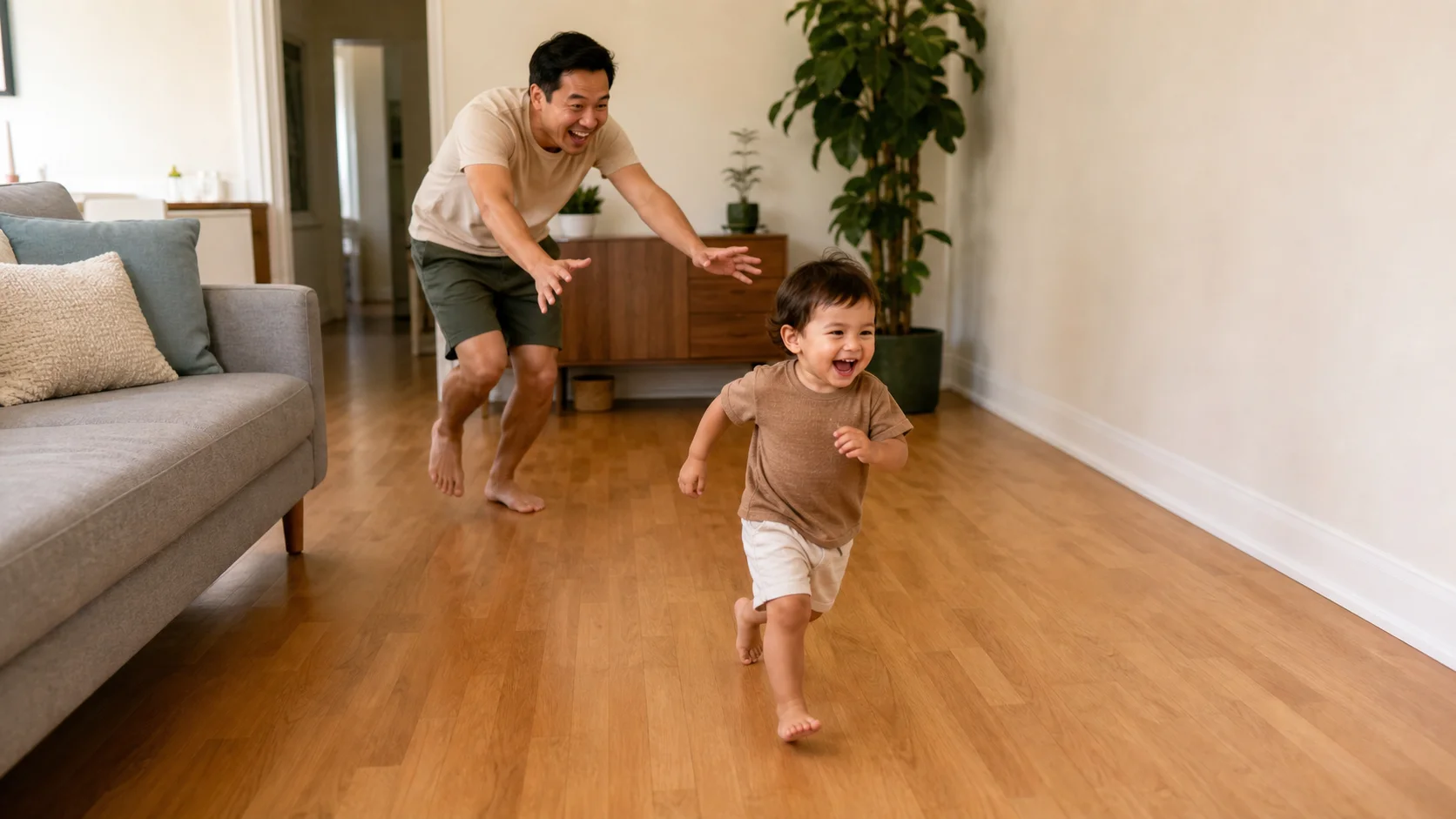
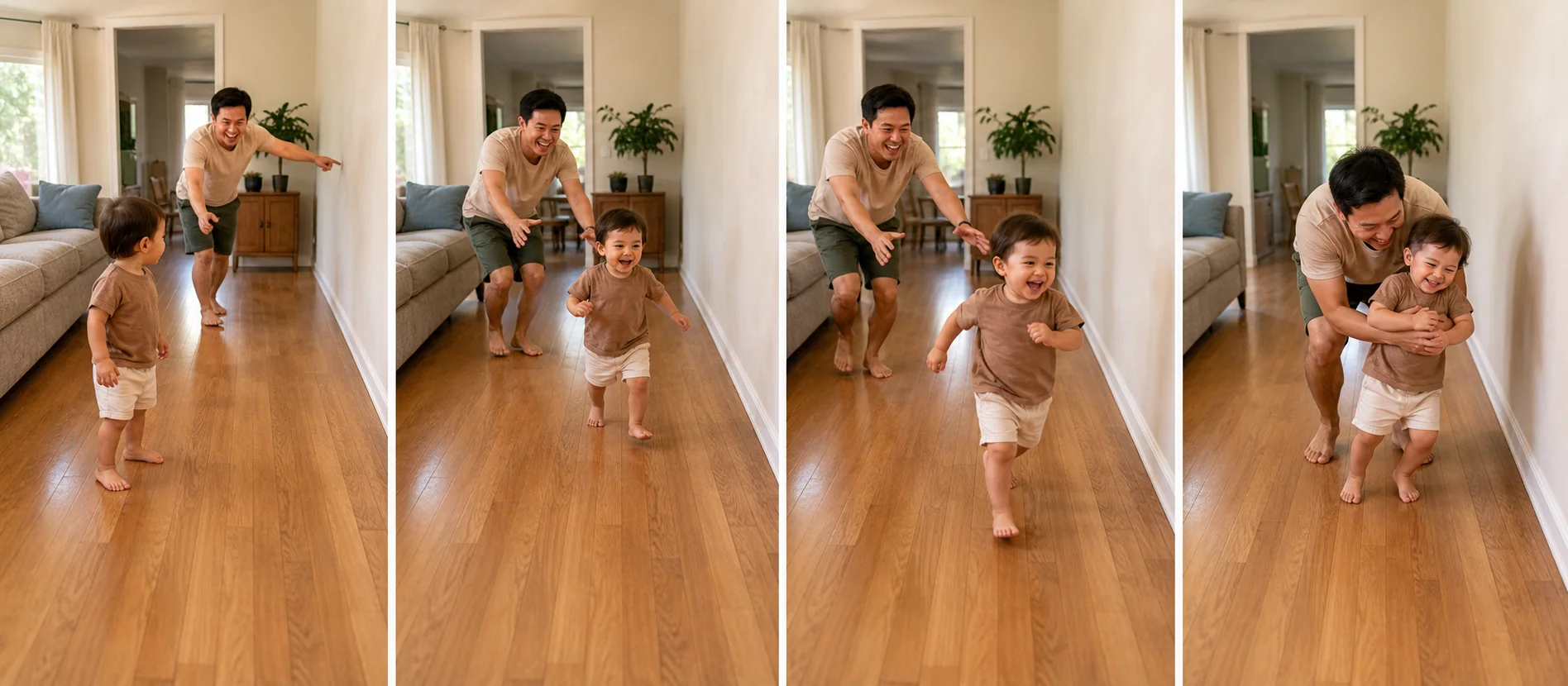
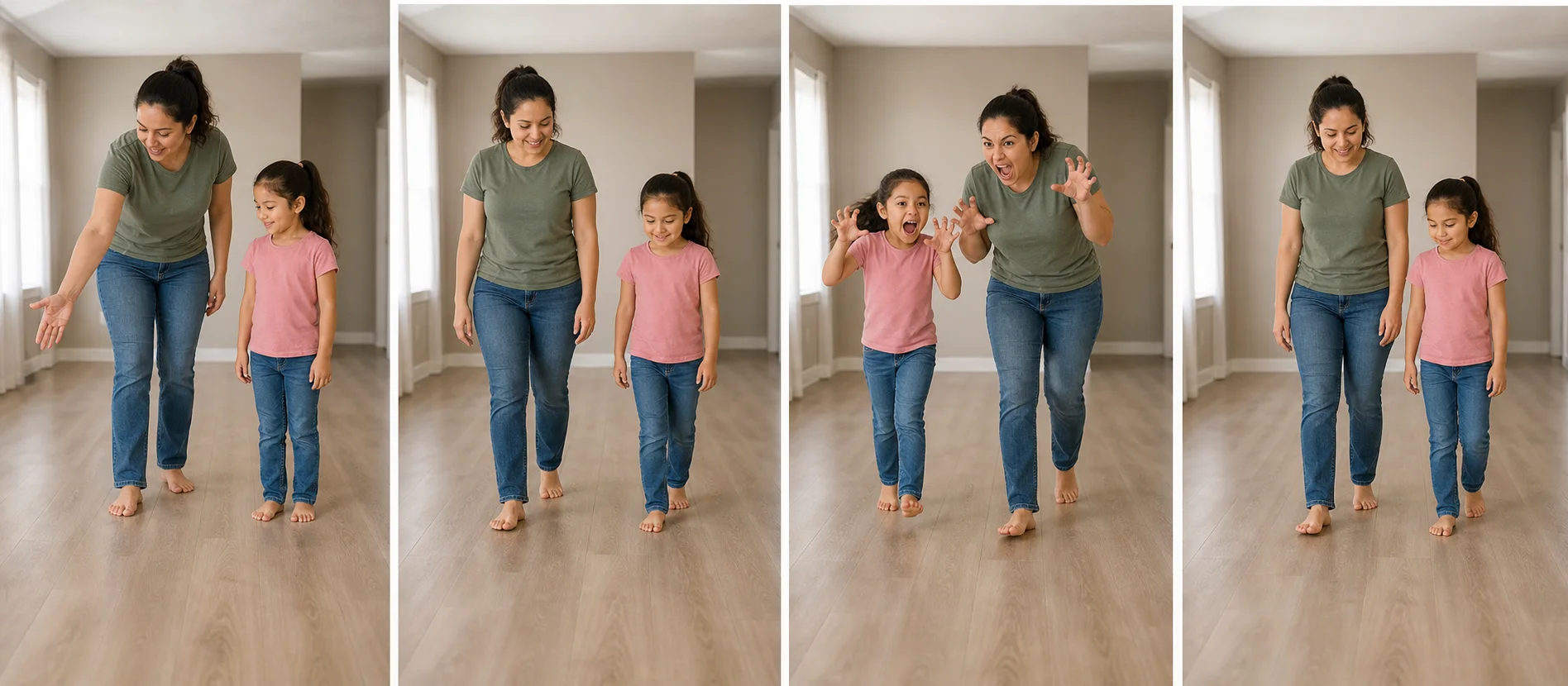
Turn a clear stretch of floor into an instant chase game. Say “I'm going to get you,” let your toddler run, then catch them gently to build anticipation while practicing gross motor skills, balance, and coordination.


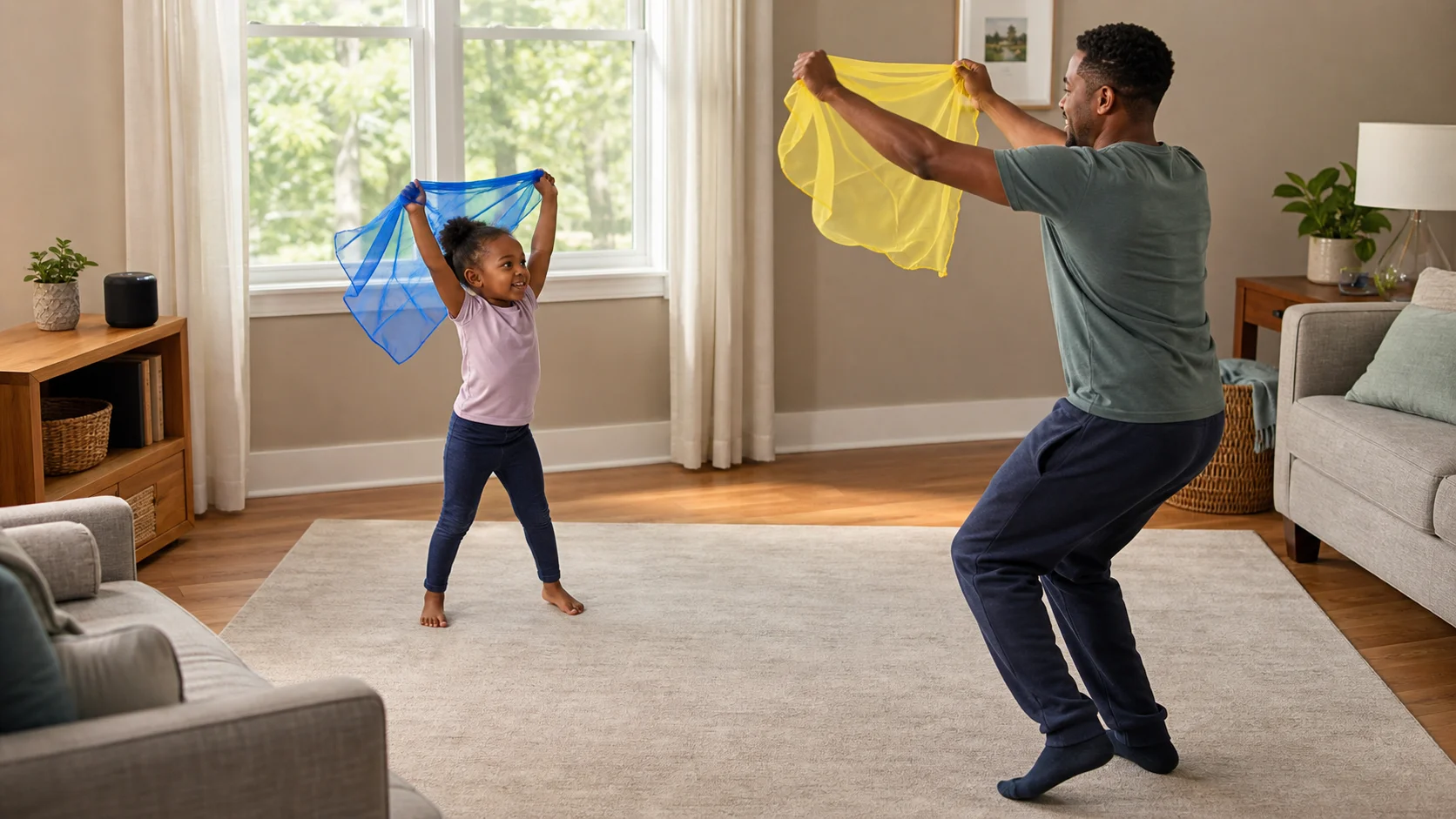
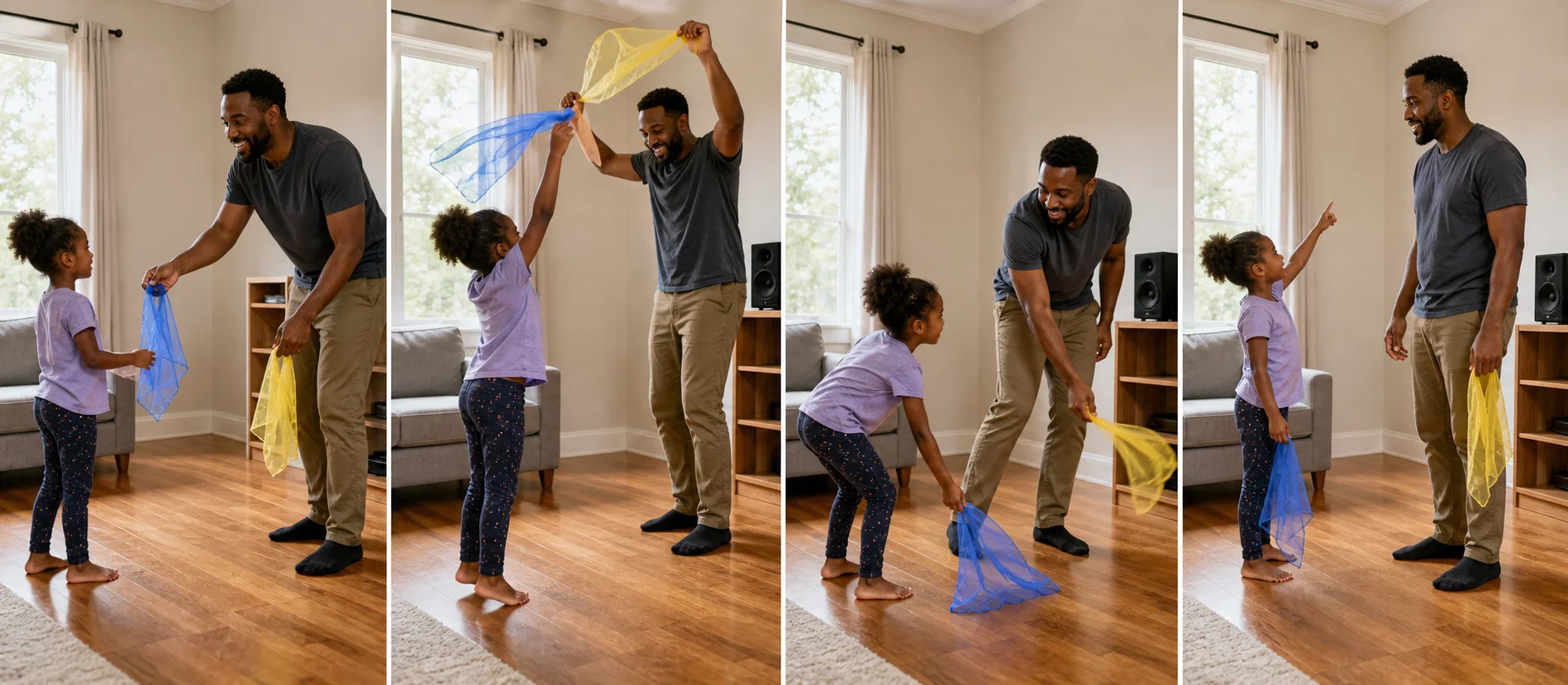
Turn a favorite song and a light scarf into a copy-the-dance game. Your child invents one scarf move for you to follow, then swaps roles and copies yours, building physical movement, listening, and following instructions.


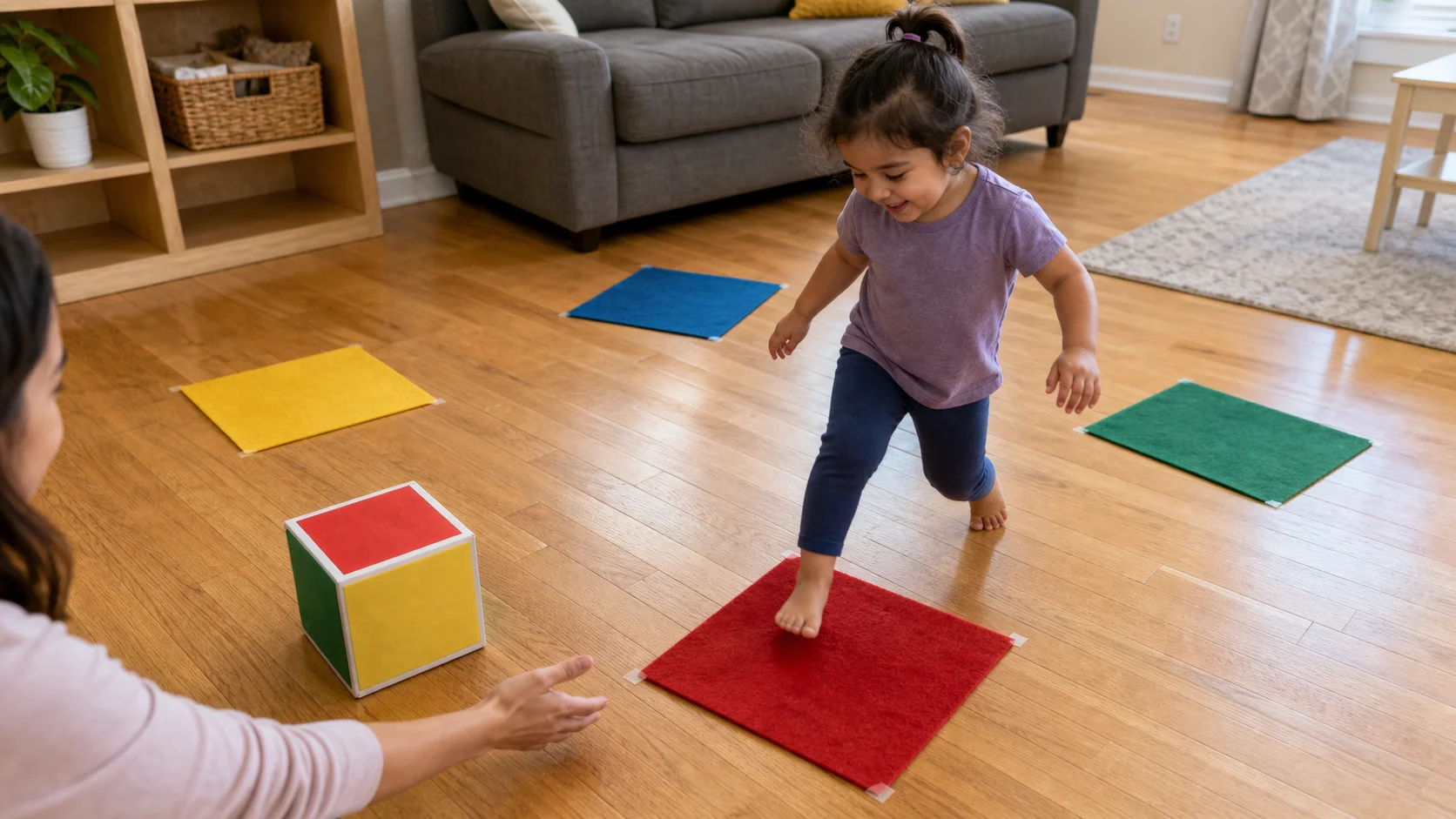
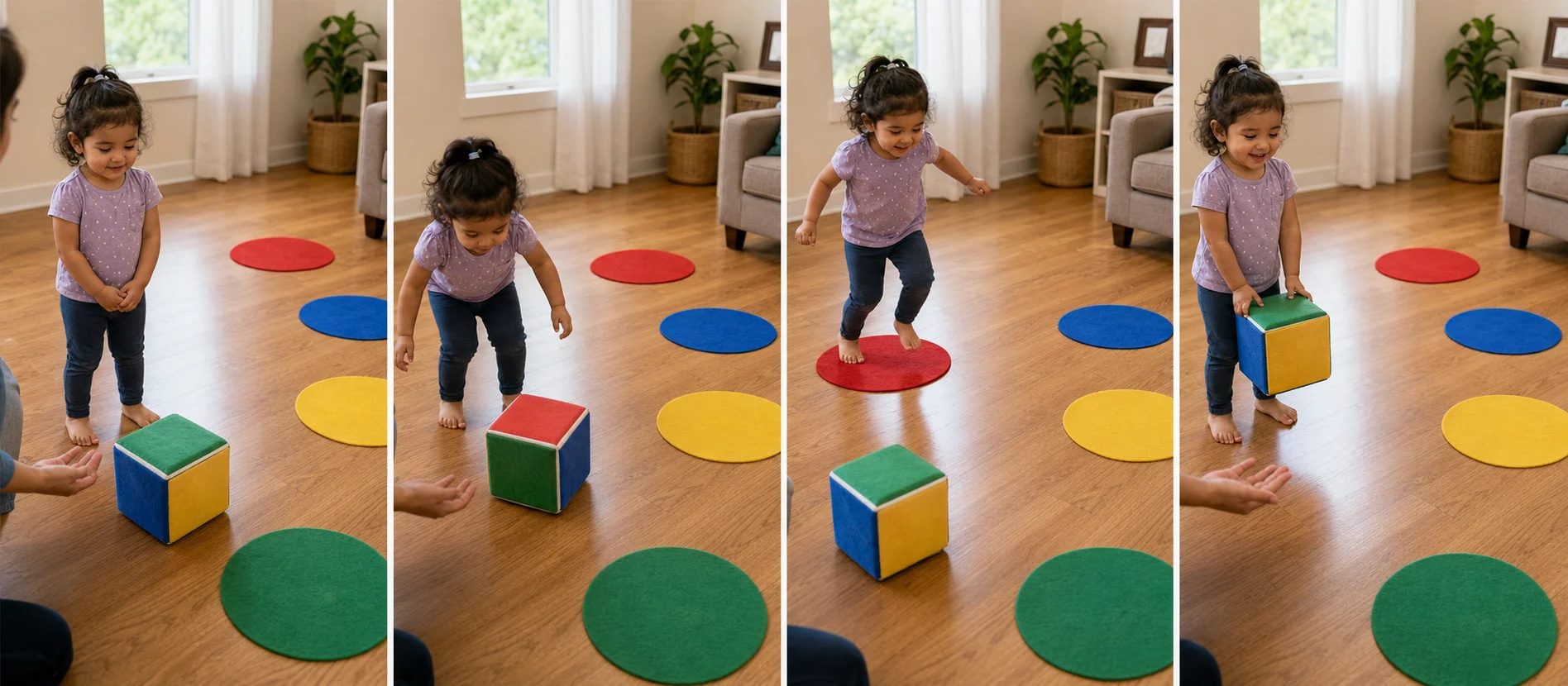
Turn color matching into a whole-body challenge. Your child rolls a homemade color dice, finds the matching floor base, and runs, hops, or crawls to it while practicing visual matching and gross motor control.


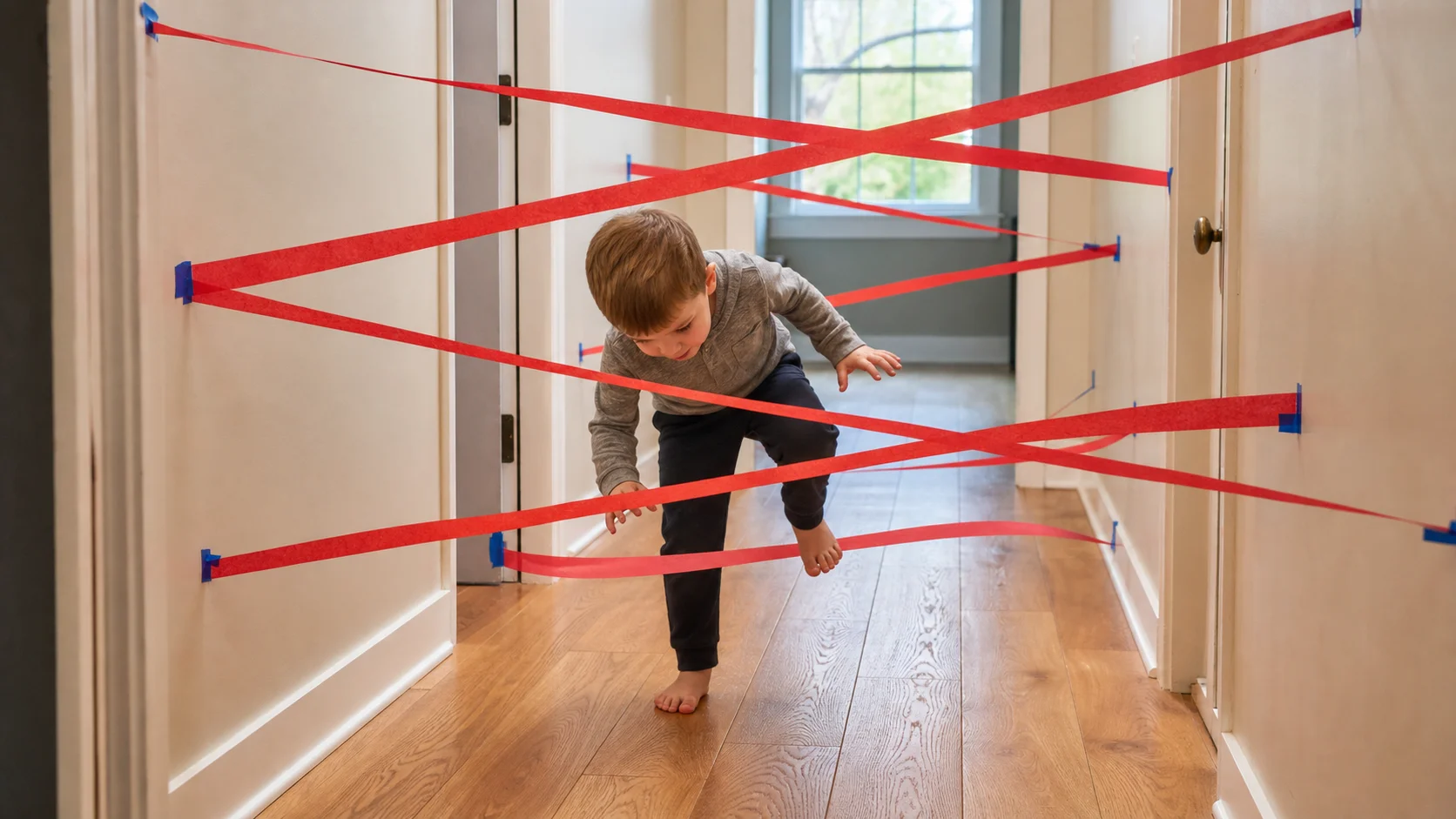
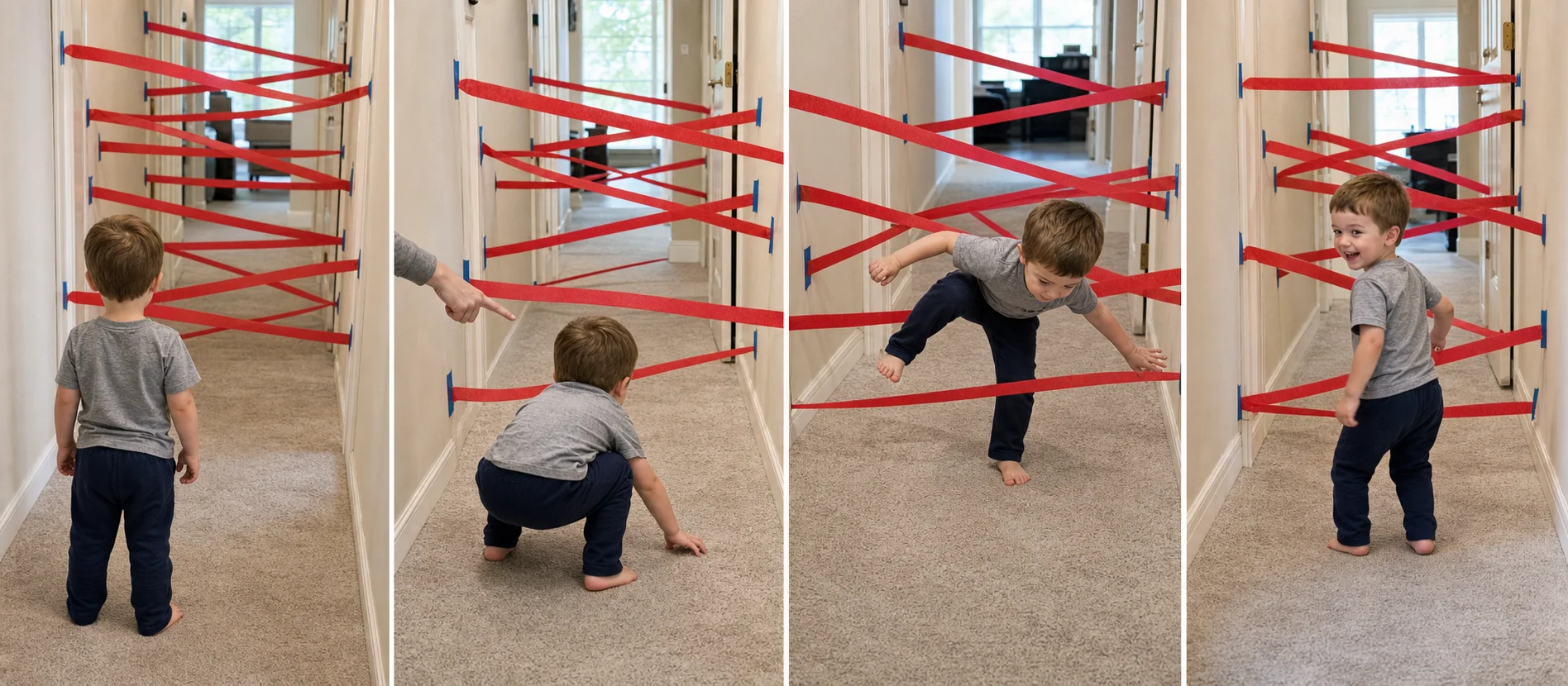
Can your child sneak through a hallway of pretend laser beams without touching them? Ducking, stepping, and turning through a few taped streamers builds body awareness and coordination with every pass.


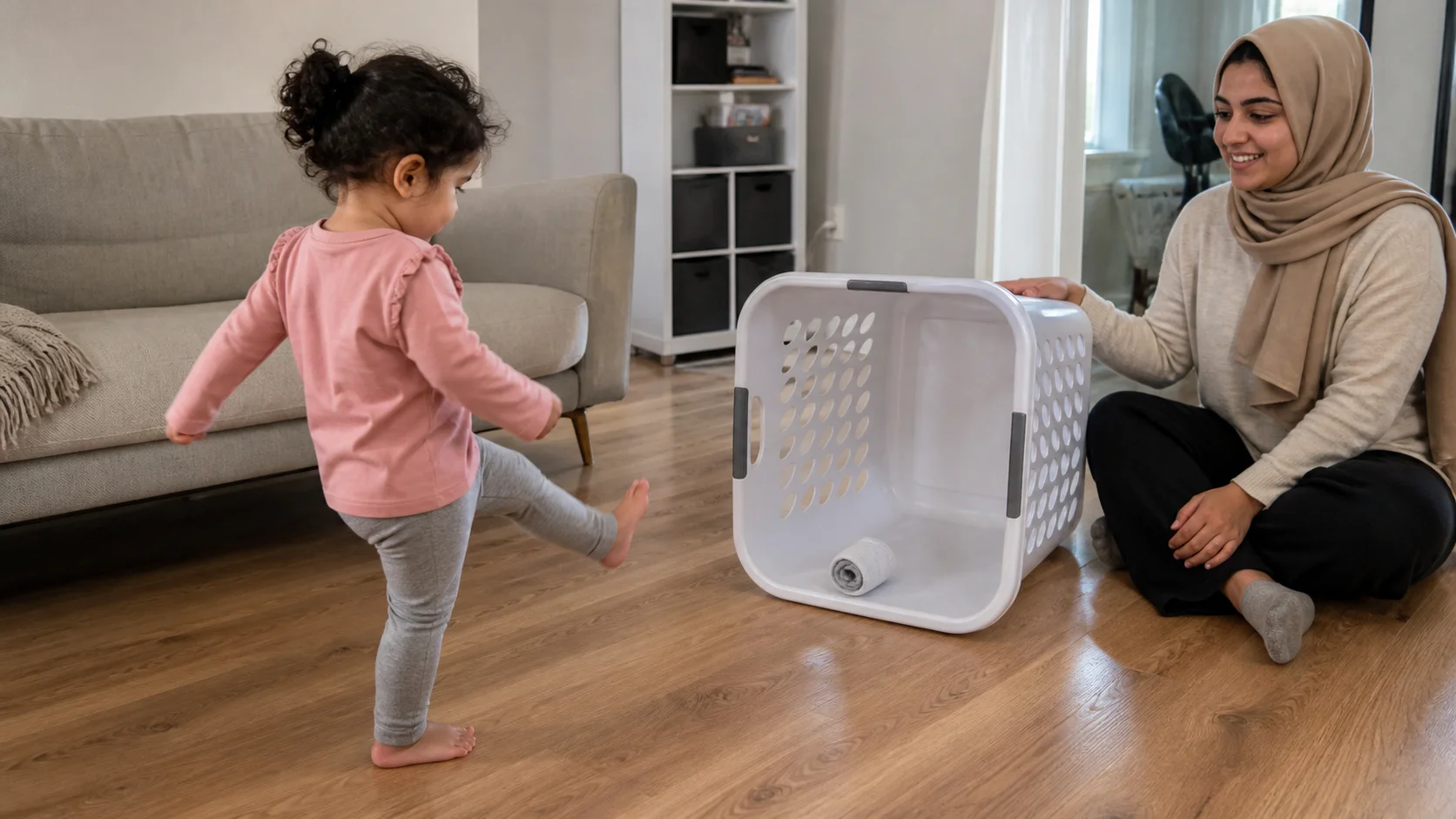
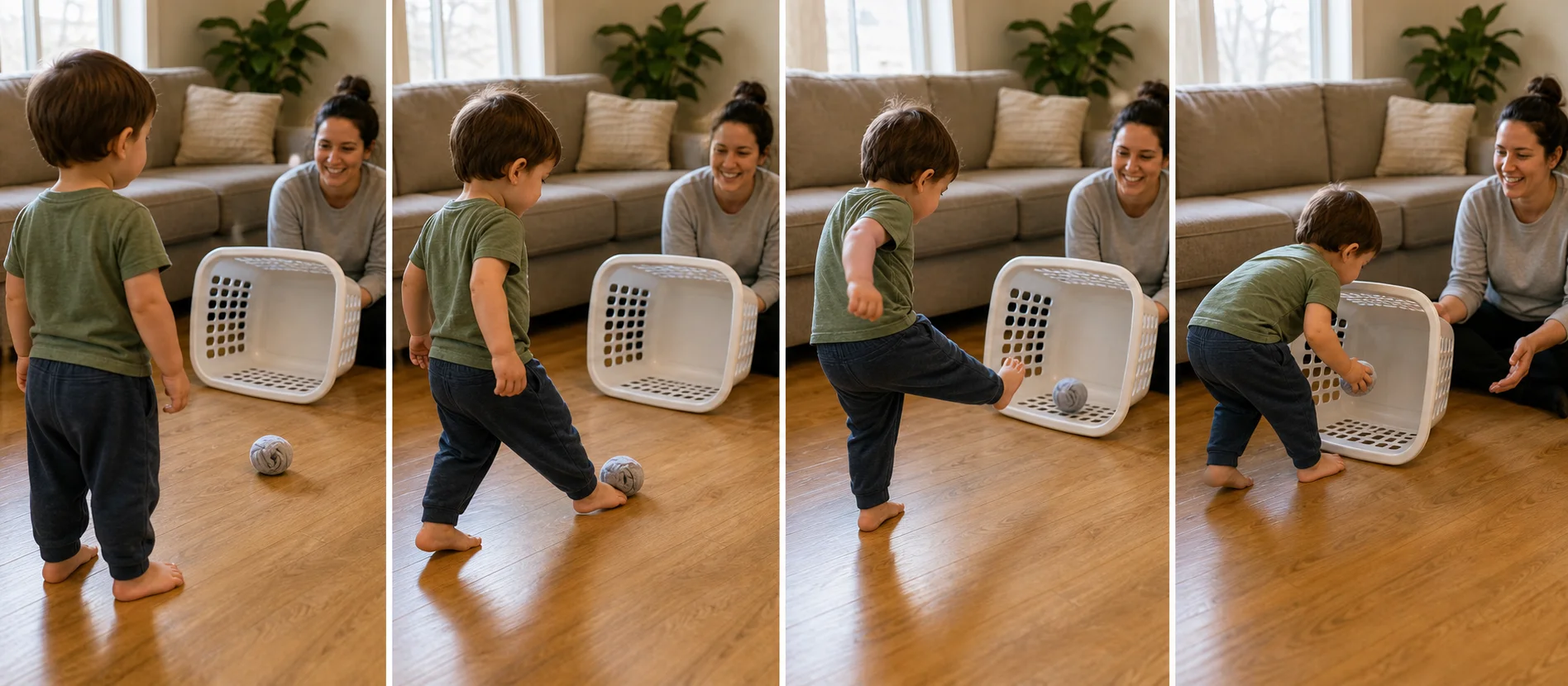
Turn an empty laundry basket into an indoor soccer goal. Your toddler kicks a soft ball or rolled sock into the opening, retrieves it, and lines up another shot to practice aiming at a visible target and controlling each kick.


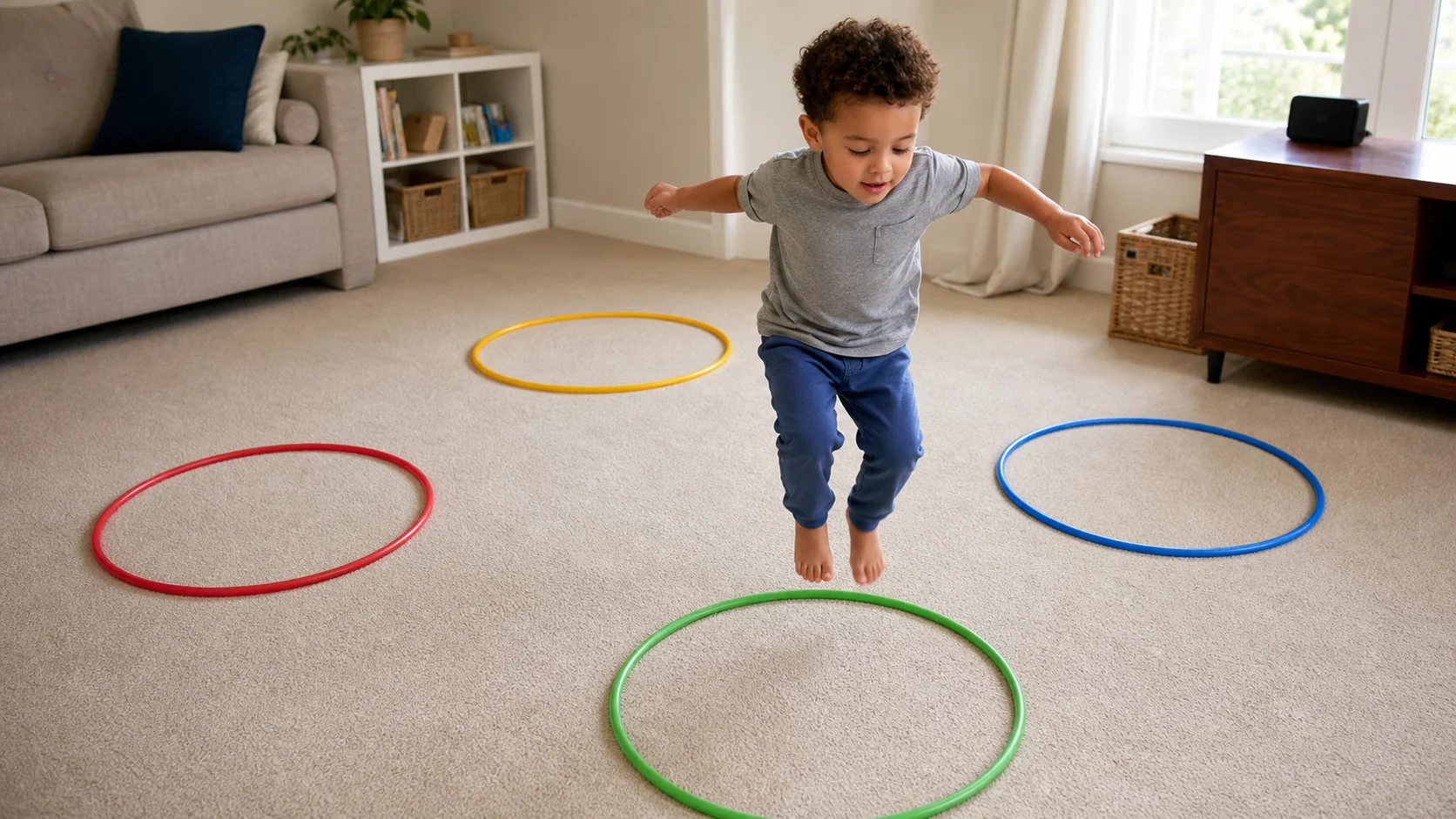
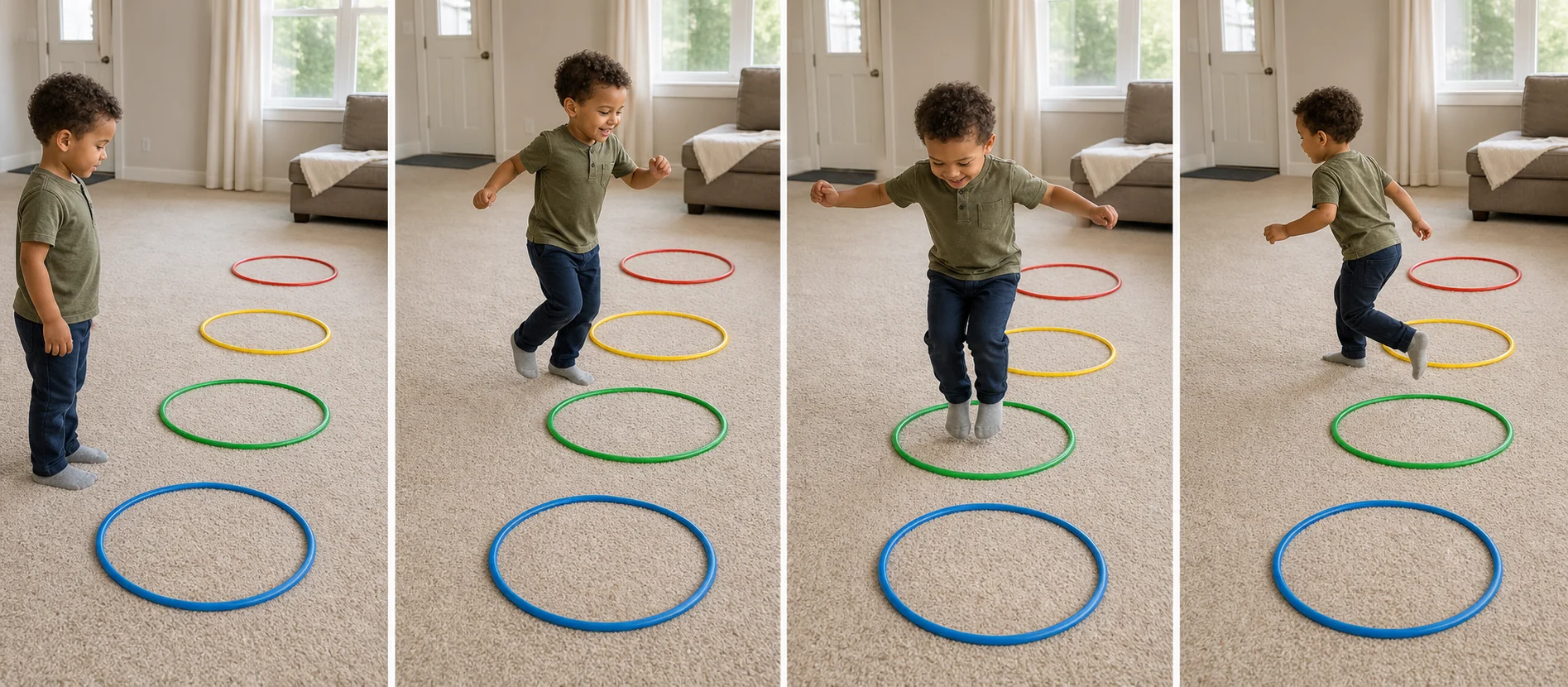
Turn hoops or small blankets into musical islands for an easy stop-and-go dance game. Your child dances between them, then hops onto one when the music stops, building balance, body coordination, and quick responses to a signal.


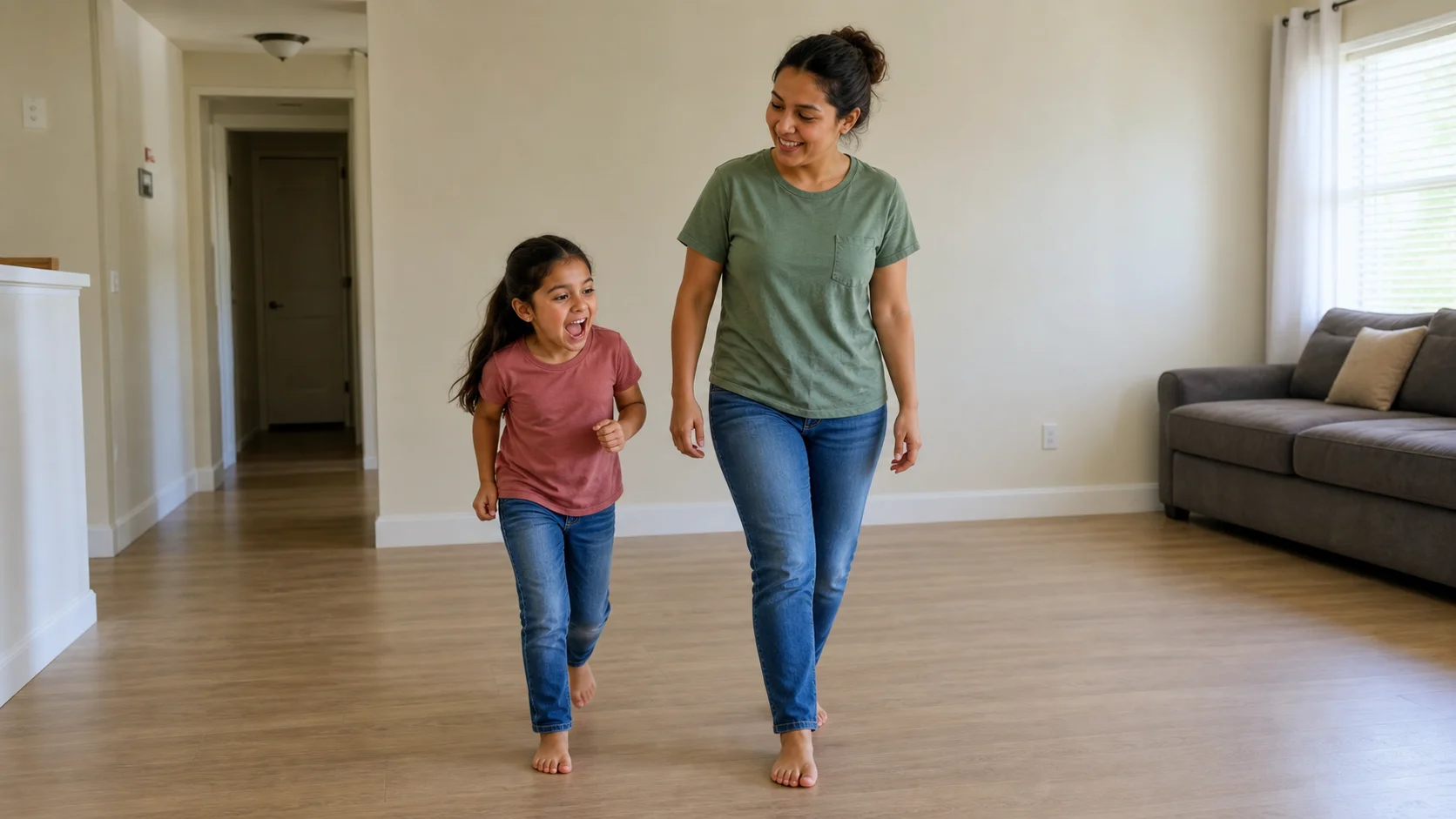
Let your child get loud on purpose, then practice bringing their body and voice back down. Moving from a quiet walk to faster, louder movement and back again builds body awareness and self-regulation.

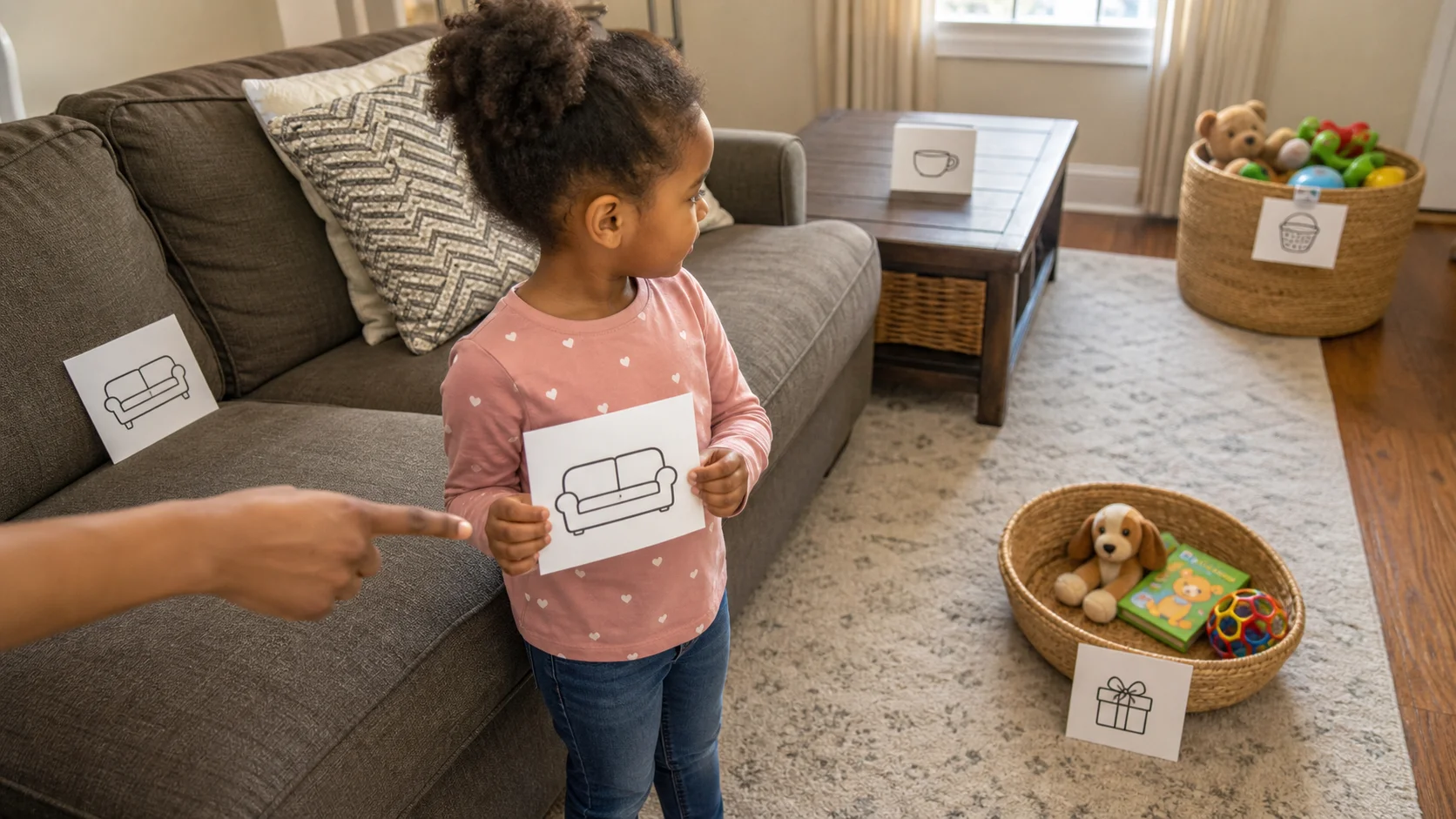
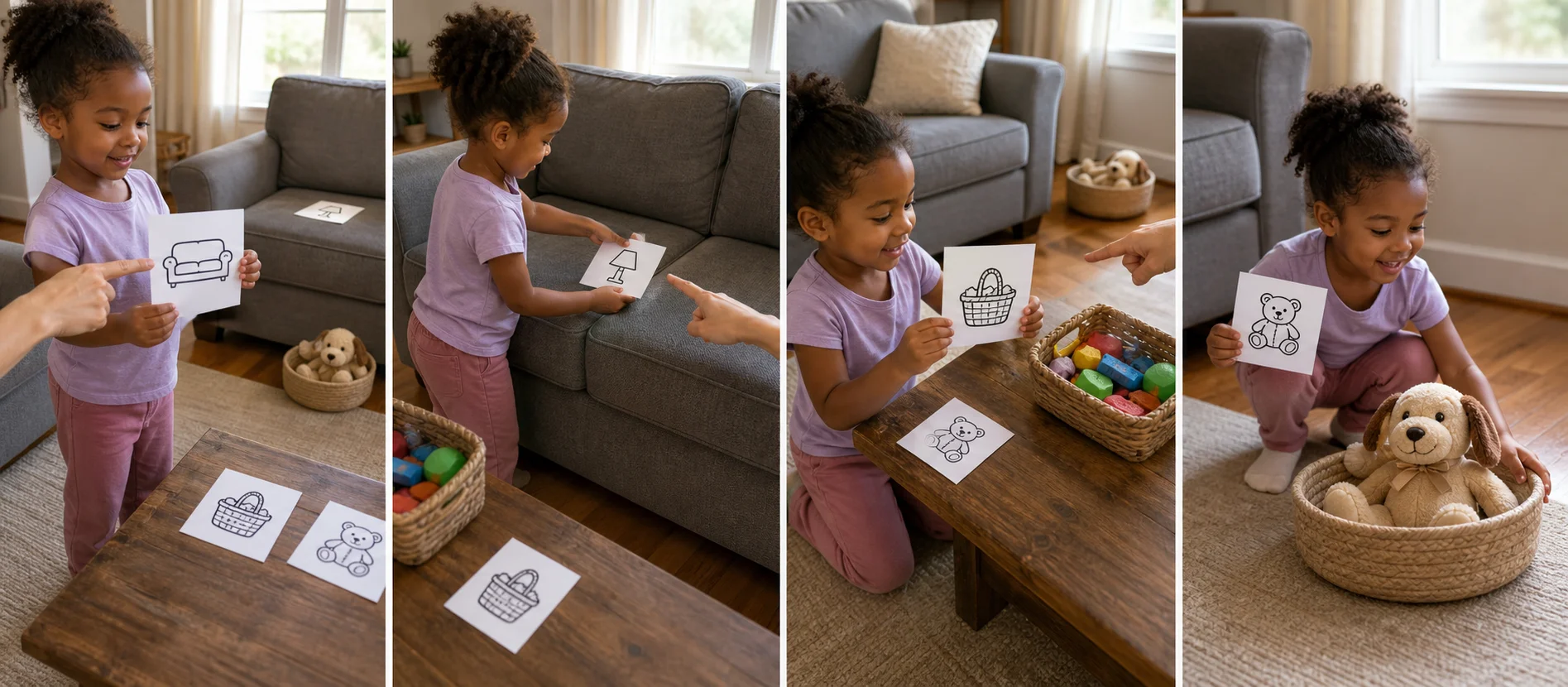
Turn four picture-and-word clues into a prize hunt through your home. Your child reads each picture, follows it to the next card, and discovers how print can carry a message and guide the way.


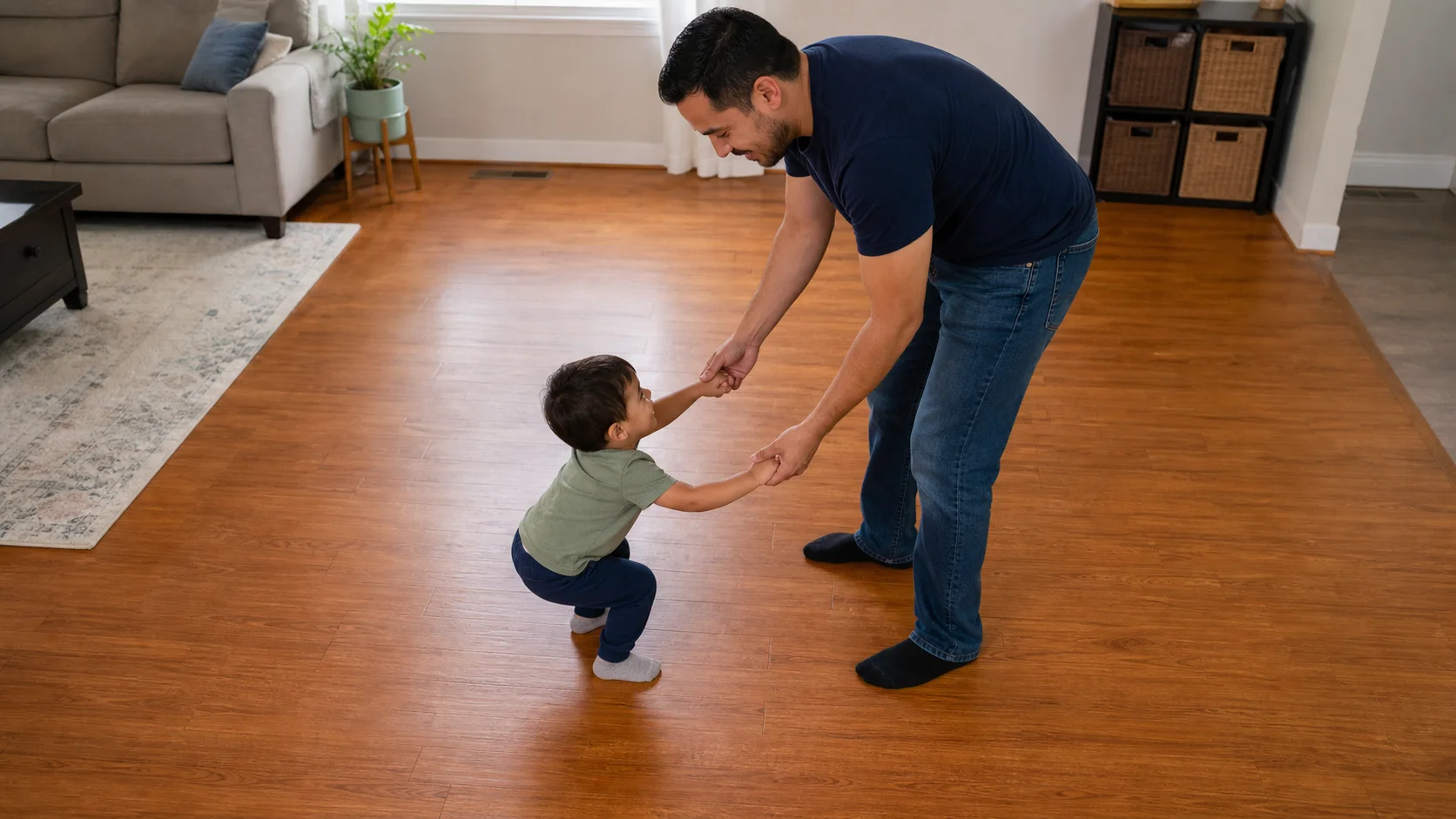
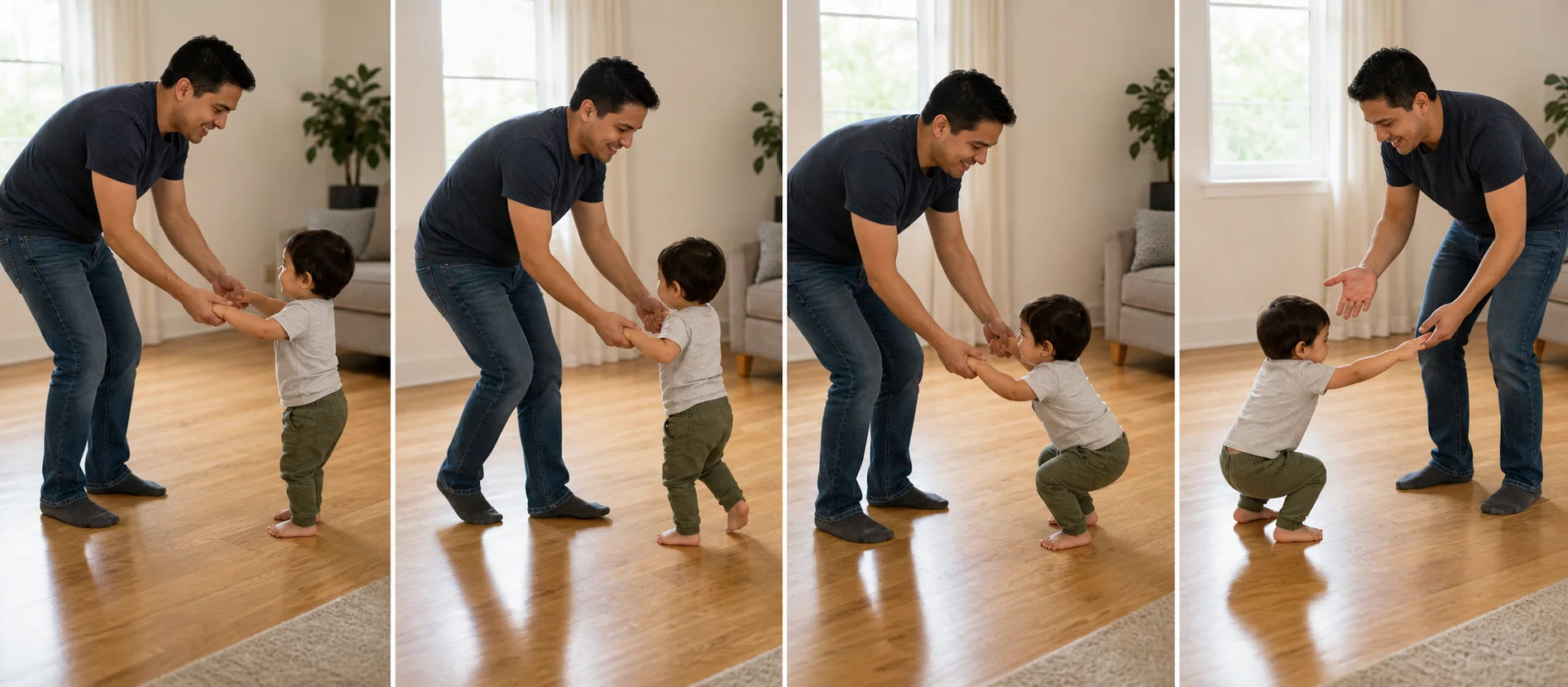
Ring-a-Roses Spin Drop is a movement game for toddlers that helps children change body levels safely through a clear, repeatable play loop.


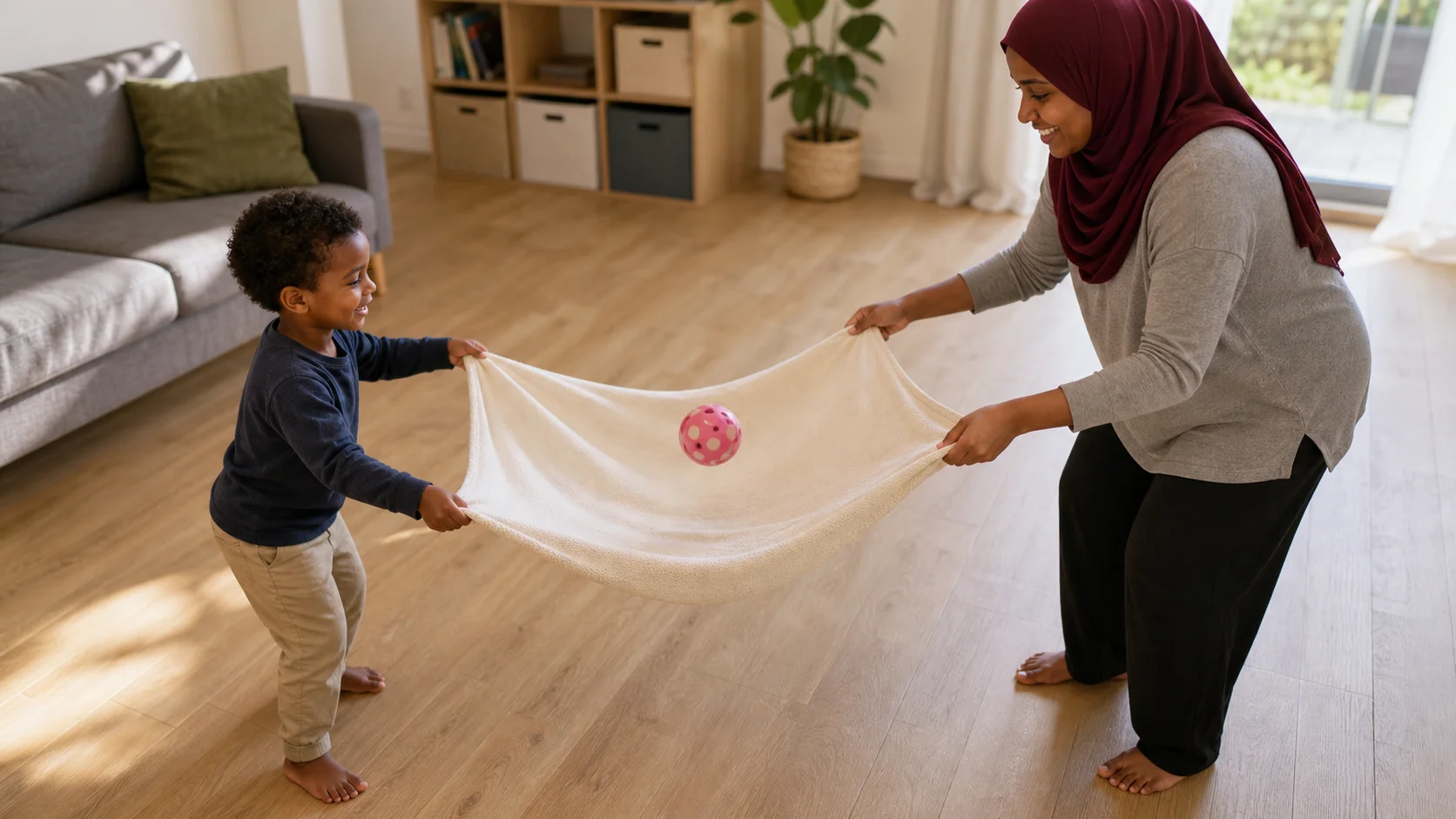
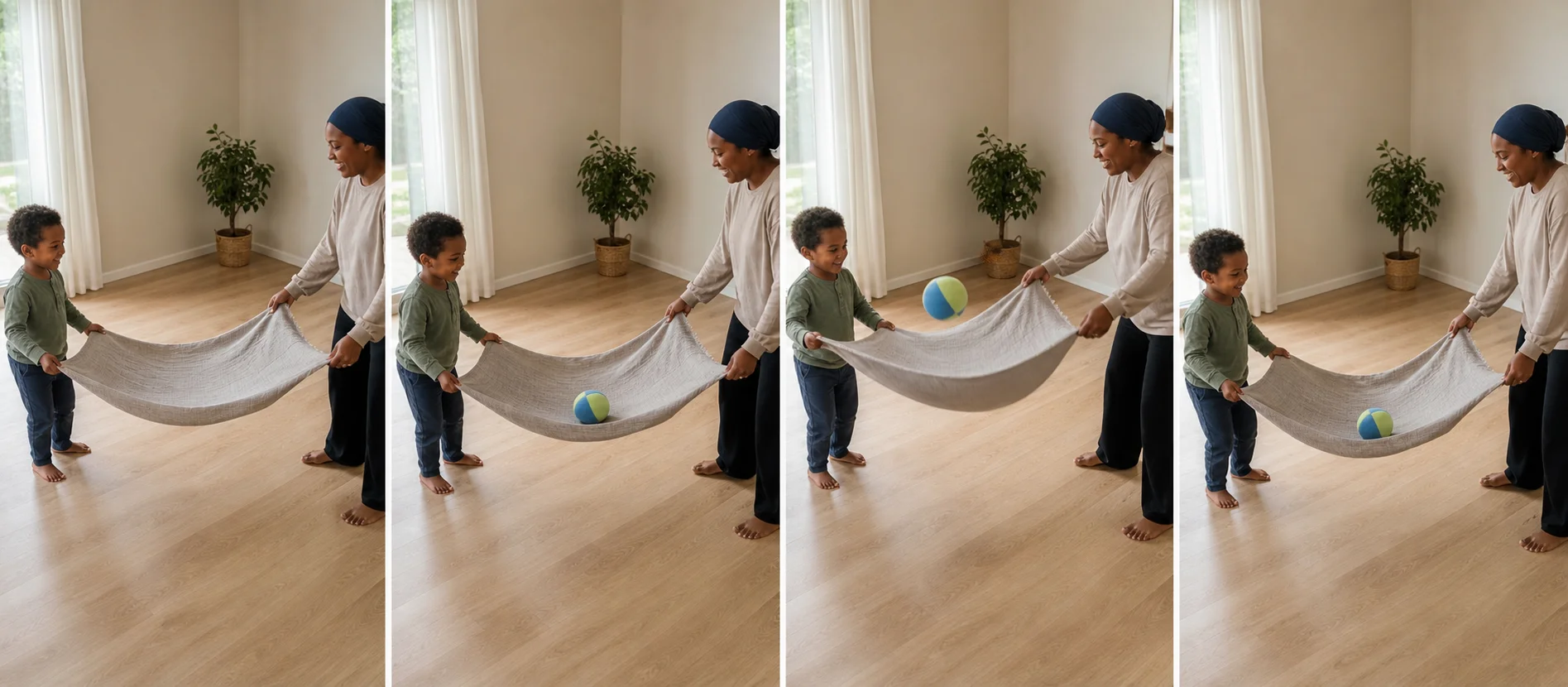
Can you and your child keep a lightweight ball bouncing on a sheet without letting it roll off? Lifting and lowering the sheet together builds cooperation, listening, and coordinated movement.


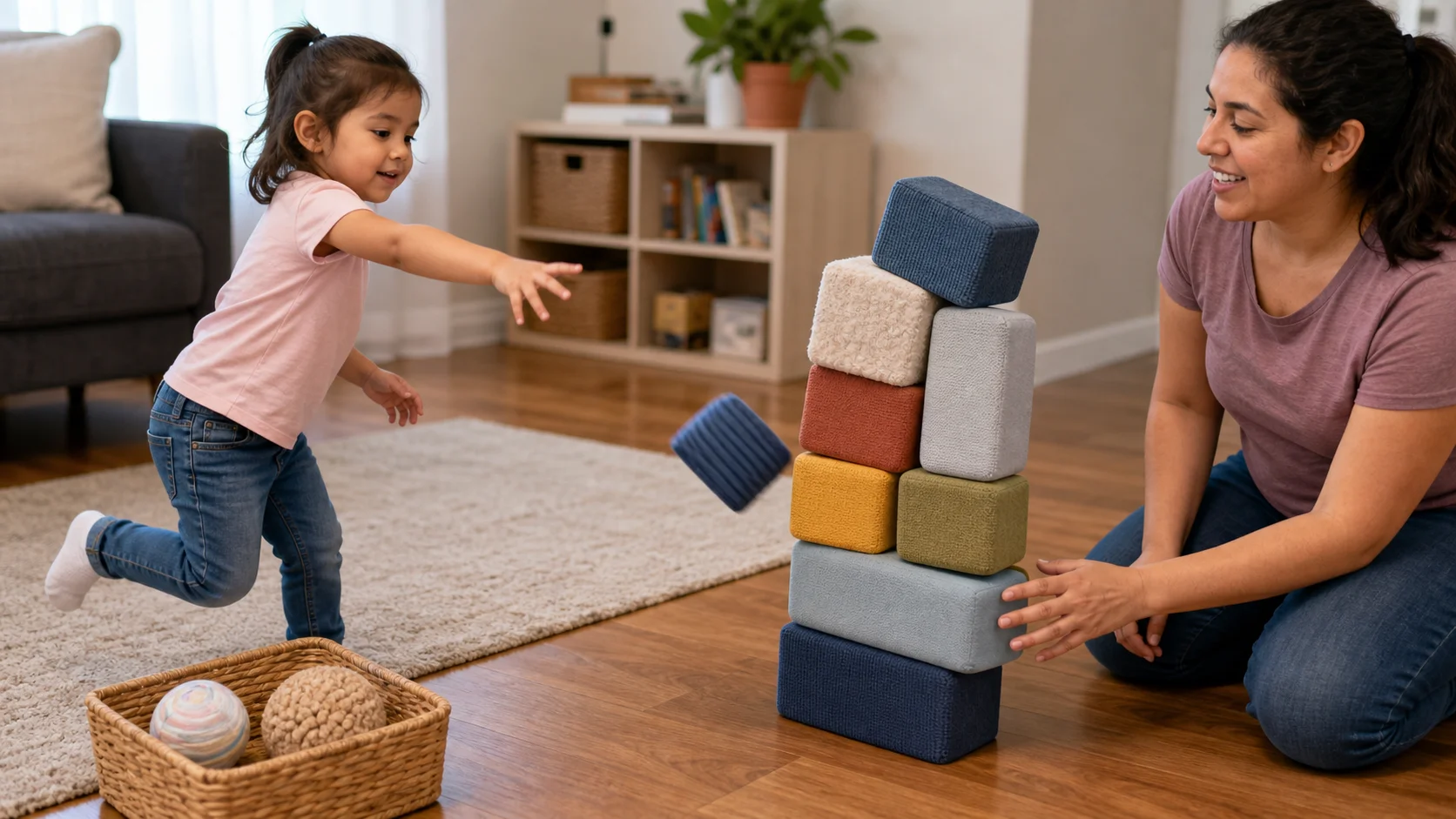
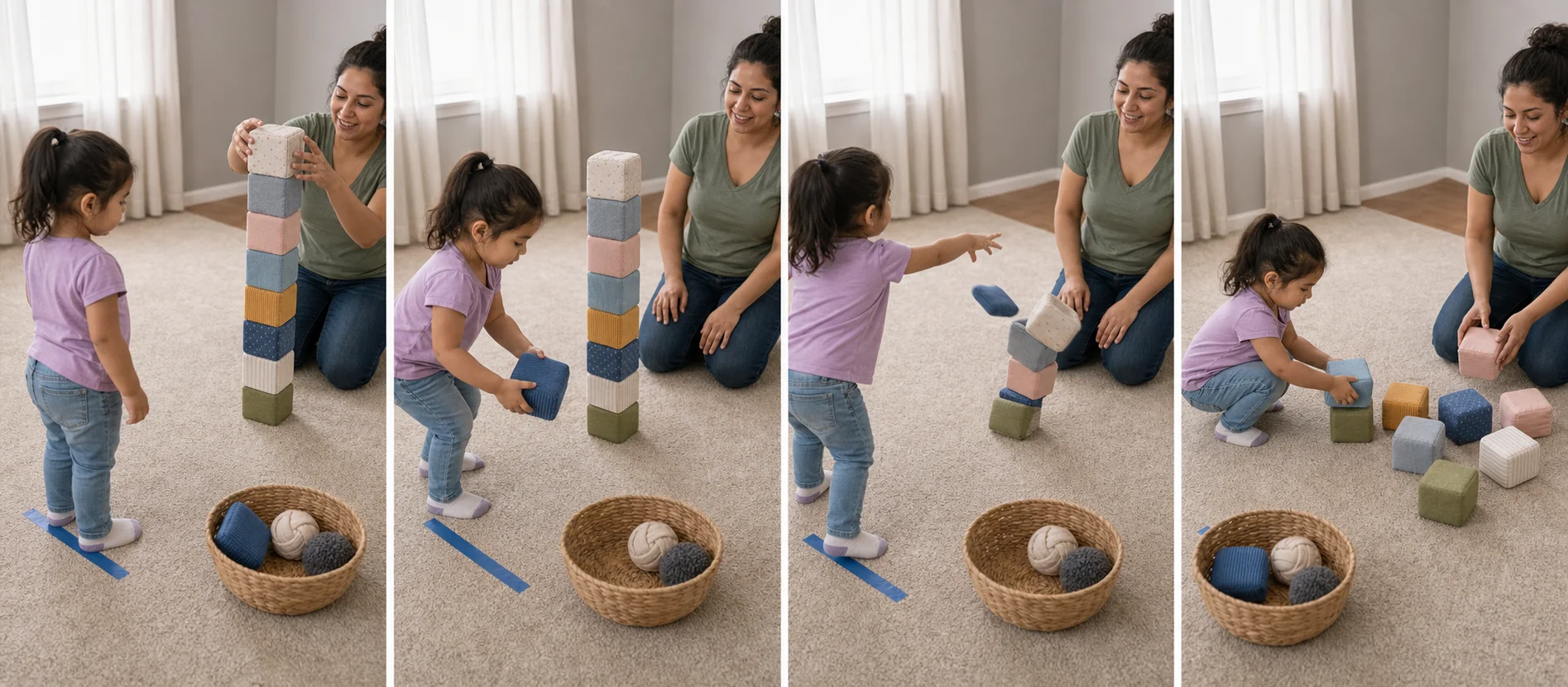
Give indoor tossing a target that is supposed to tumble. Your child chooses a soft textured object, aims for a lightweight block tower, and rebuilds after each crash to practice throwing toward a target while keeping texture exploration child-led.


Turn beginning-sound practice into a race across the room. Your child listens for a sound, races to the toy whose name starts with it, and brings it back while building early sound awareness and burning off some energy.


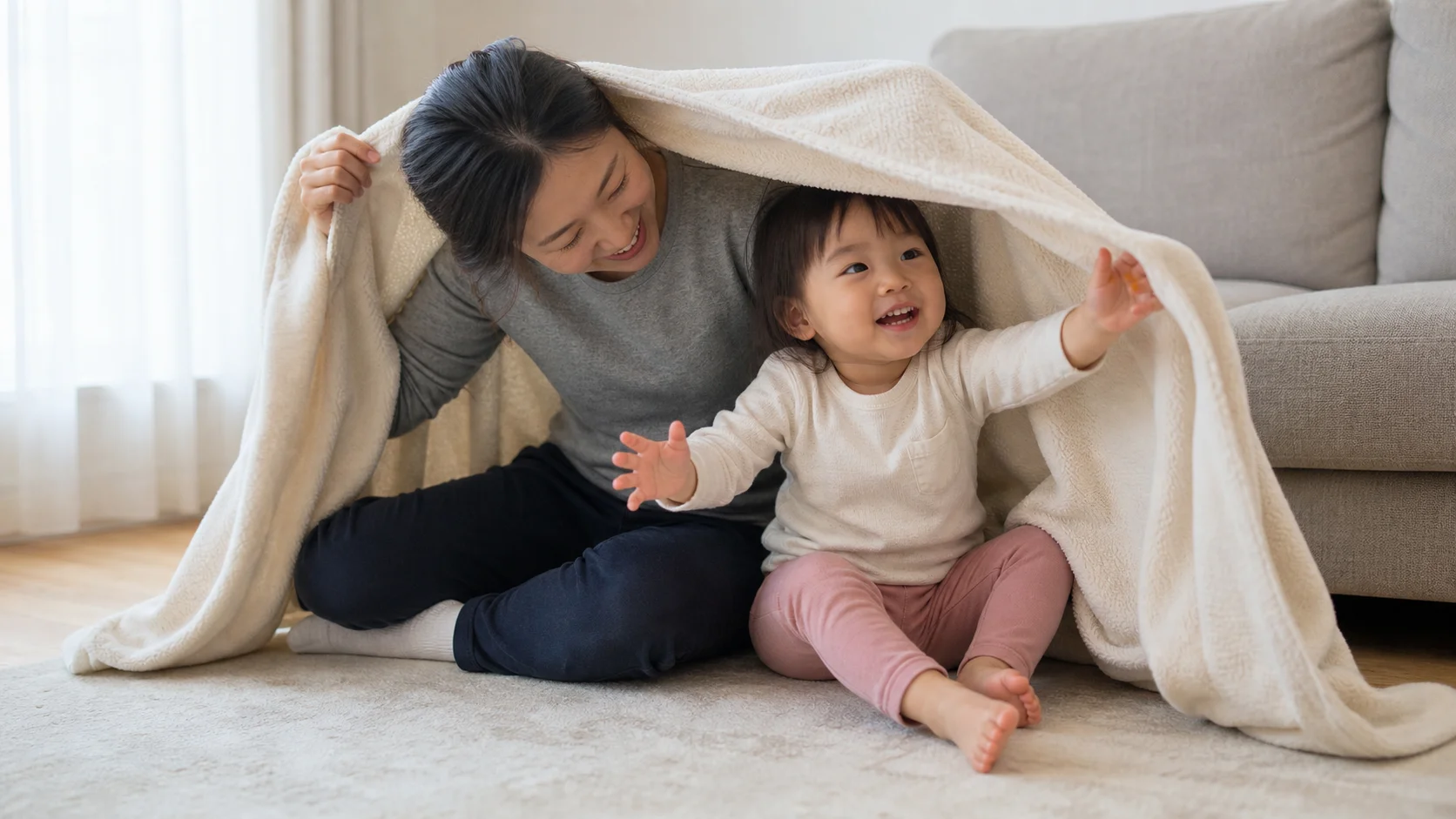
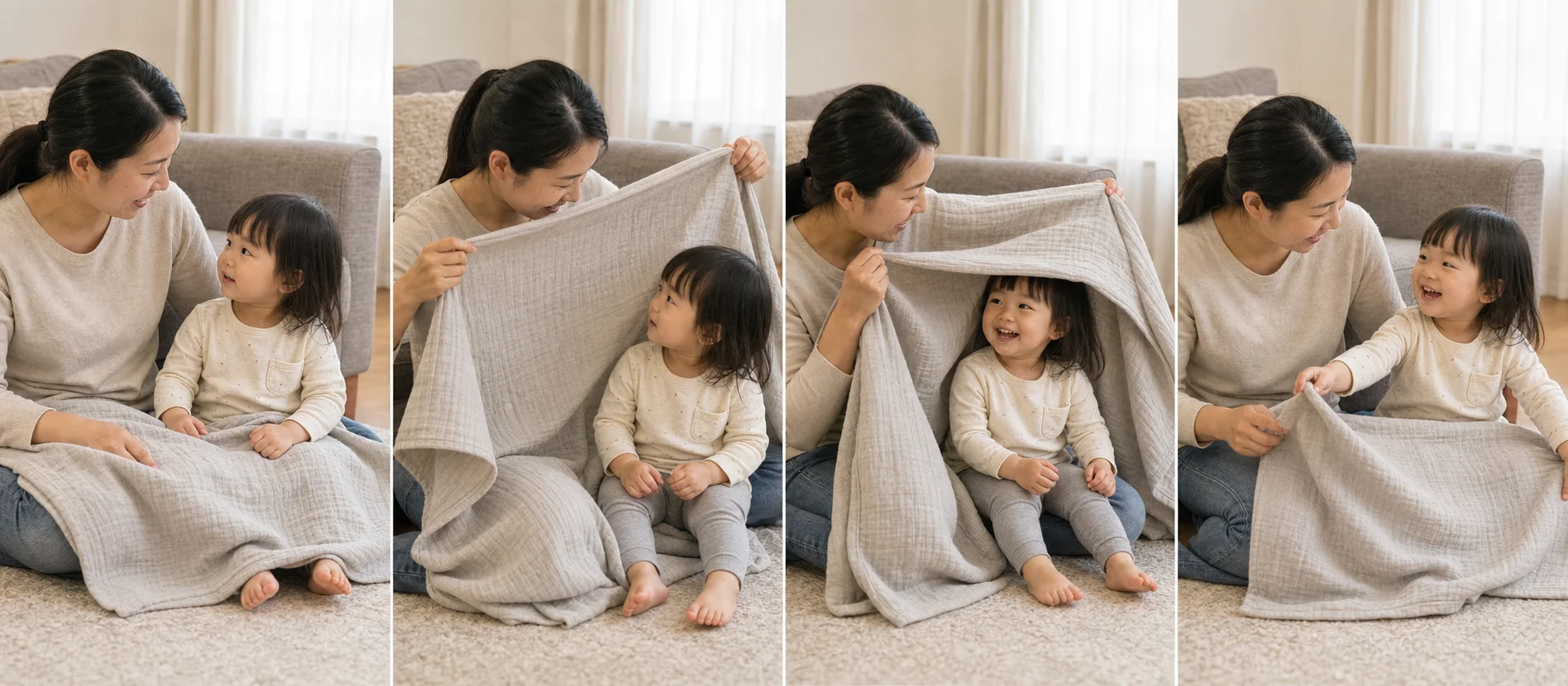
Turn a blanket into a cozy hide-and-reveal game with a payoff your toddler can see coming. Lift it over both of you, pause, then pull it down for a shared reveal that builds anticipation and a simple social routine.


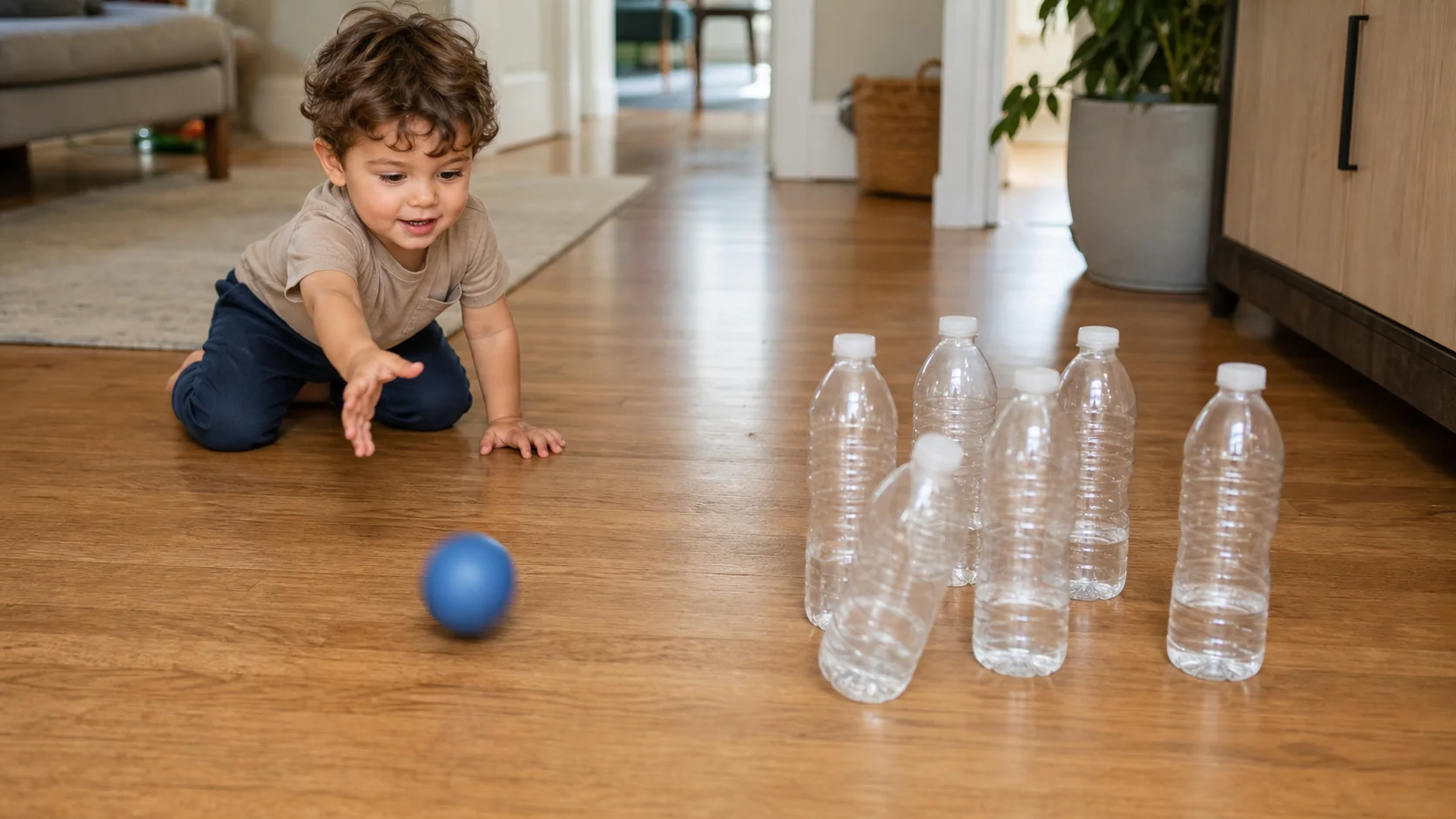
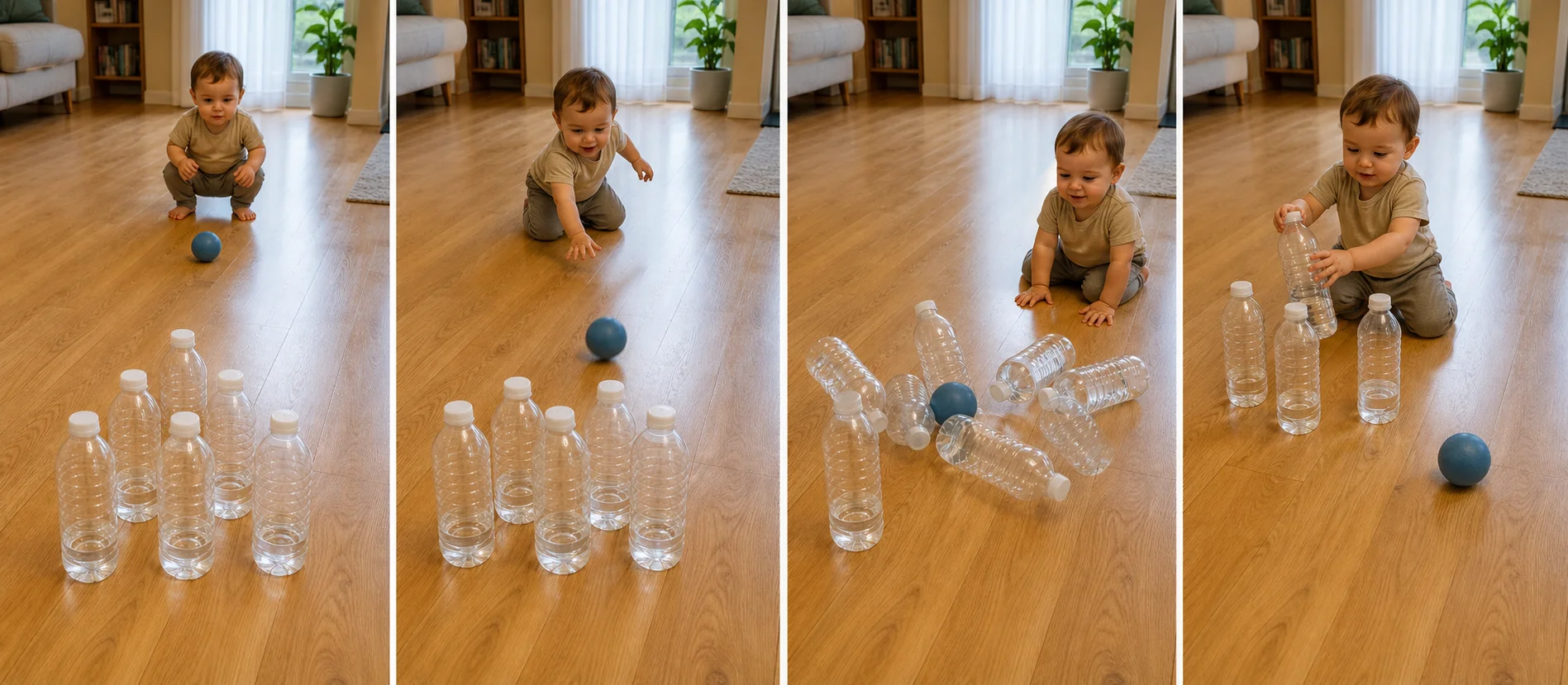
A few plastic bottles turn one simple roll into a satisfying crash. Your child aims a ball at the homemade pins, watches them tumble, and practices gross motor control and eye-hand coordination with every turn.

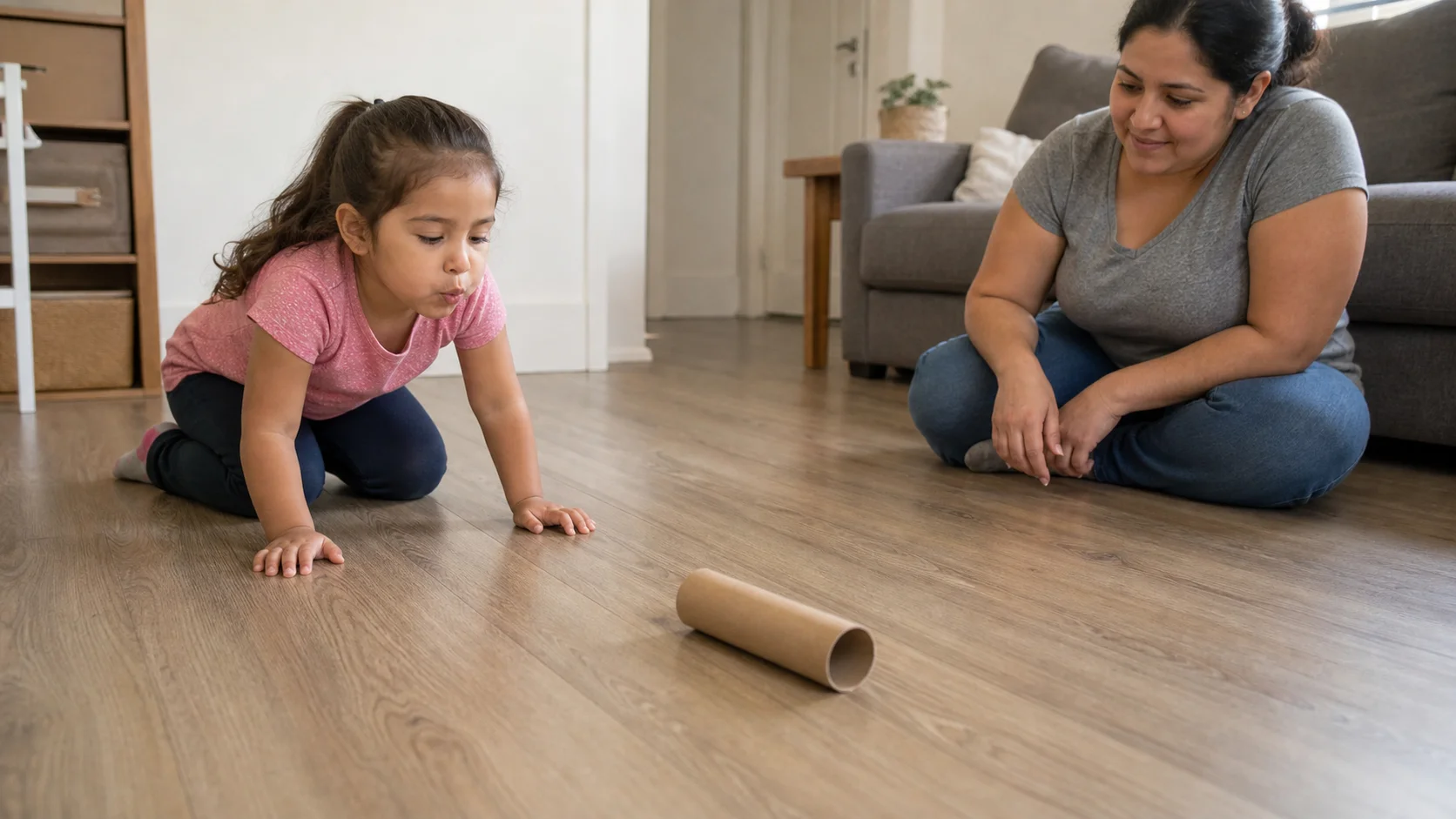
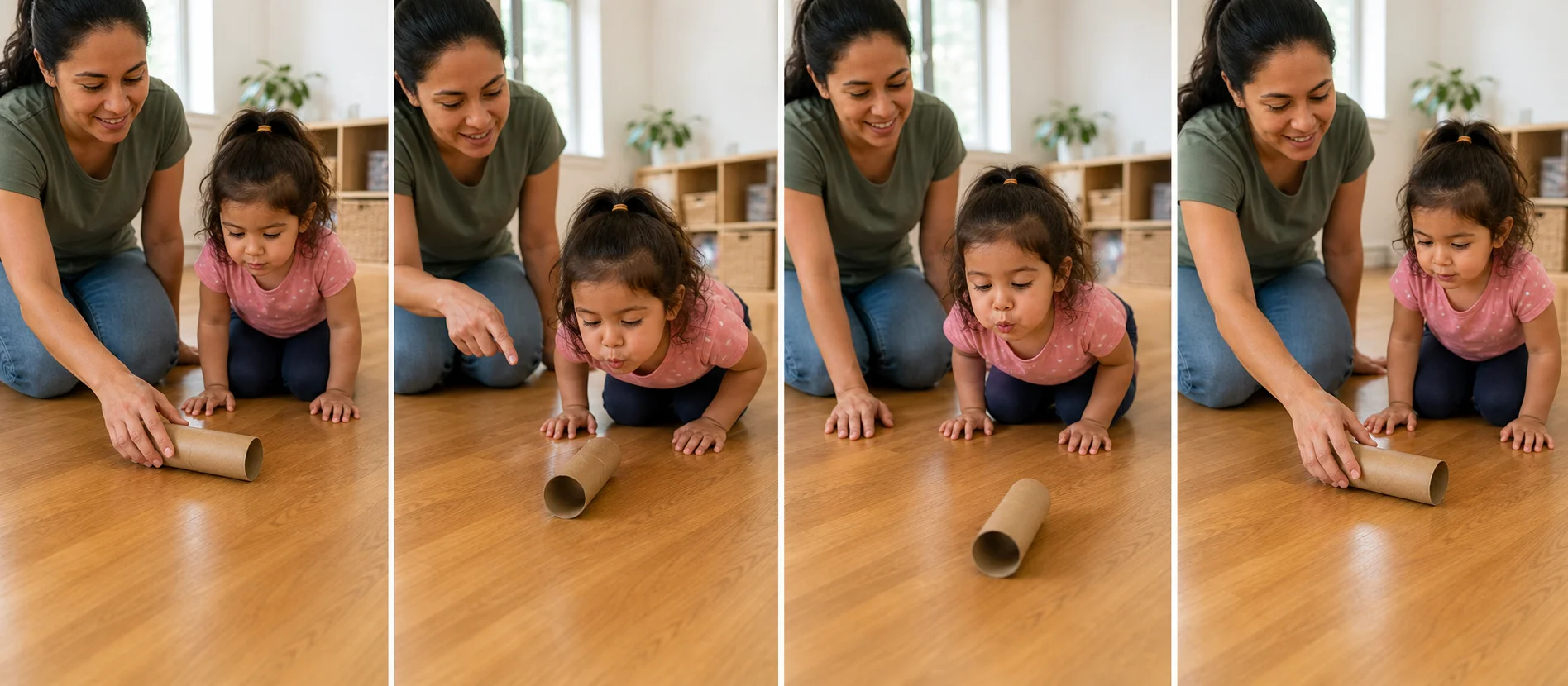
Can your child move a heavy cardboard tube using only their breath? Blow, watch it travel, and repeat for a simple cause-and-effect game that makes the power of each breath easy to see.


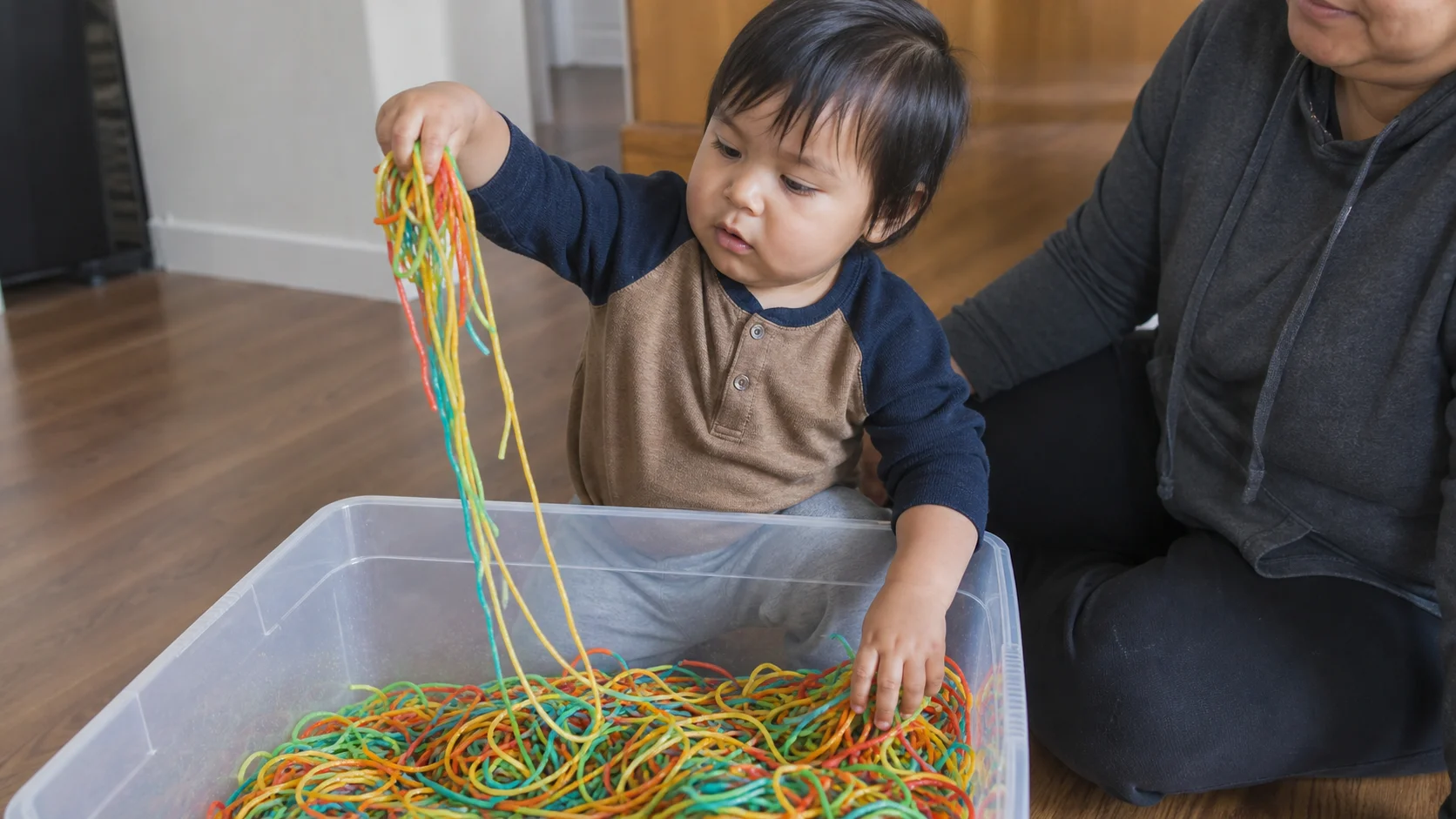
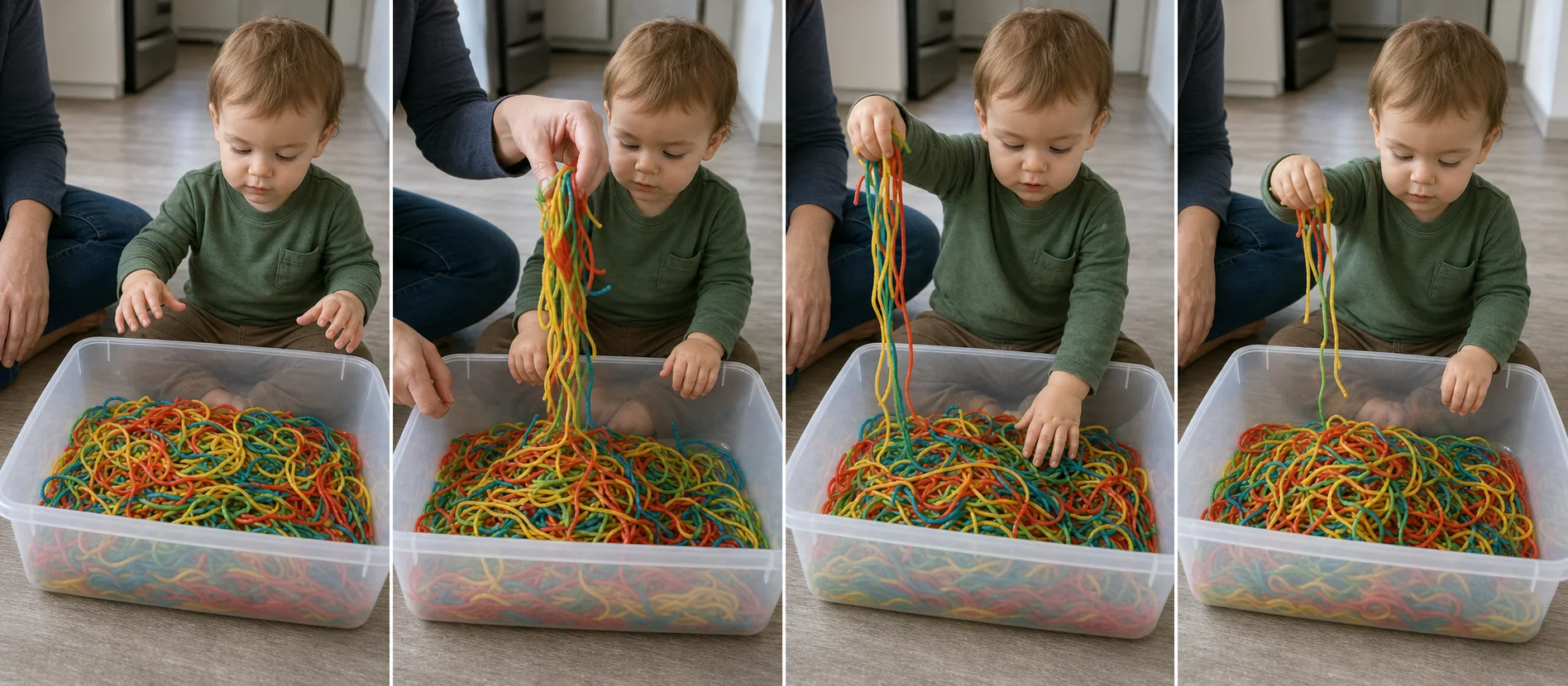
Colour Spaghetti is a colour spaghetti sensory play for toddlers that helps children use both hands together through a clear, repeatable play loop.


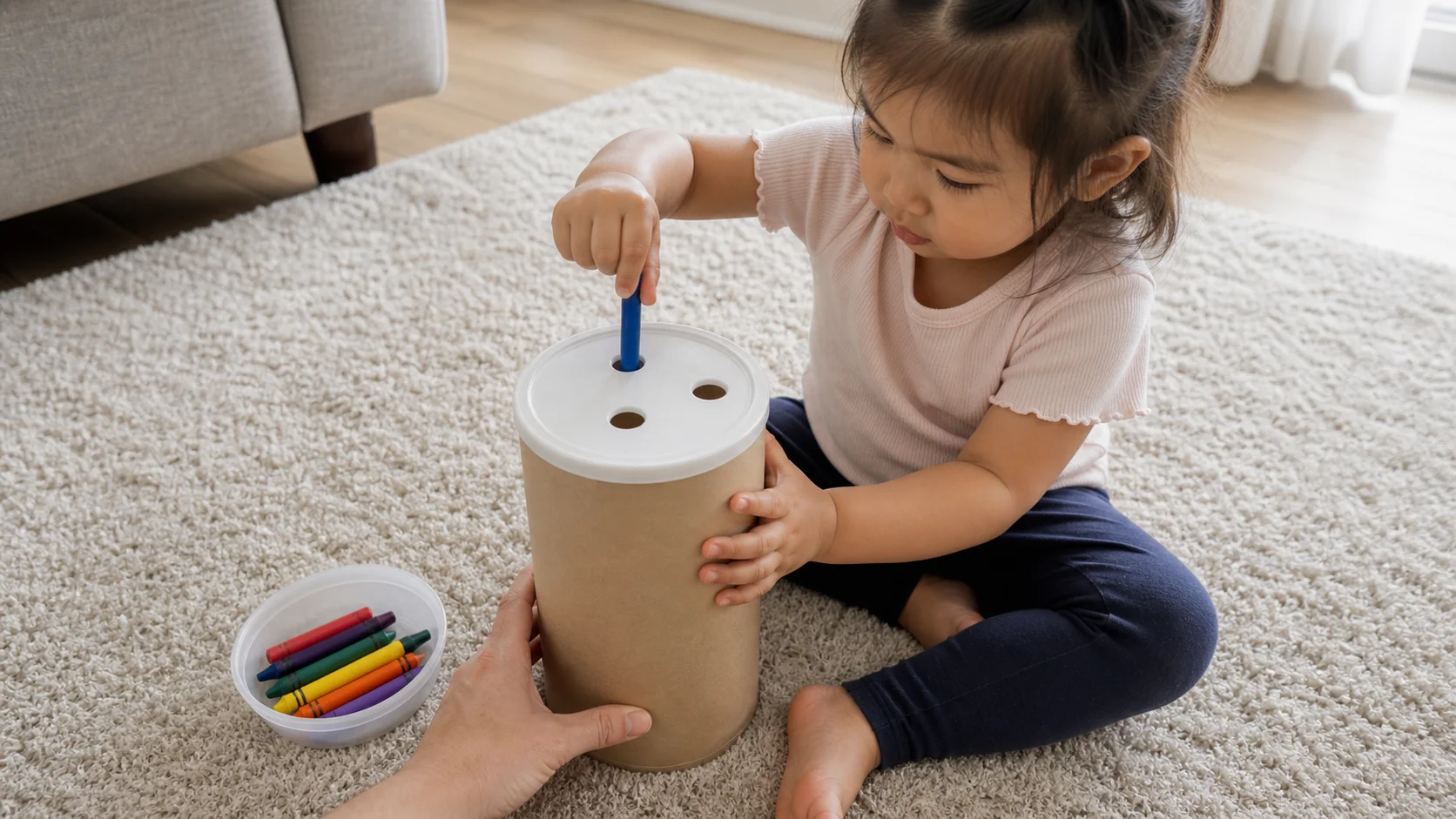
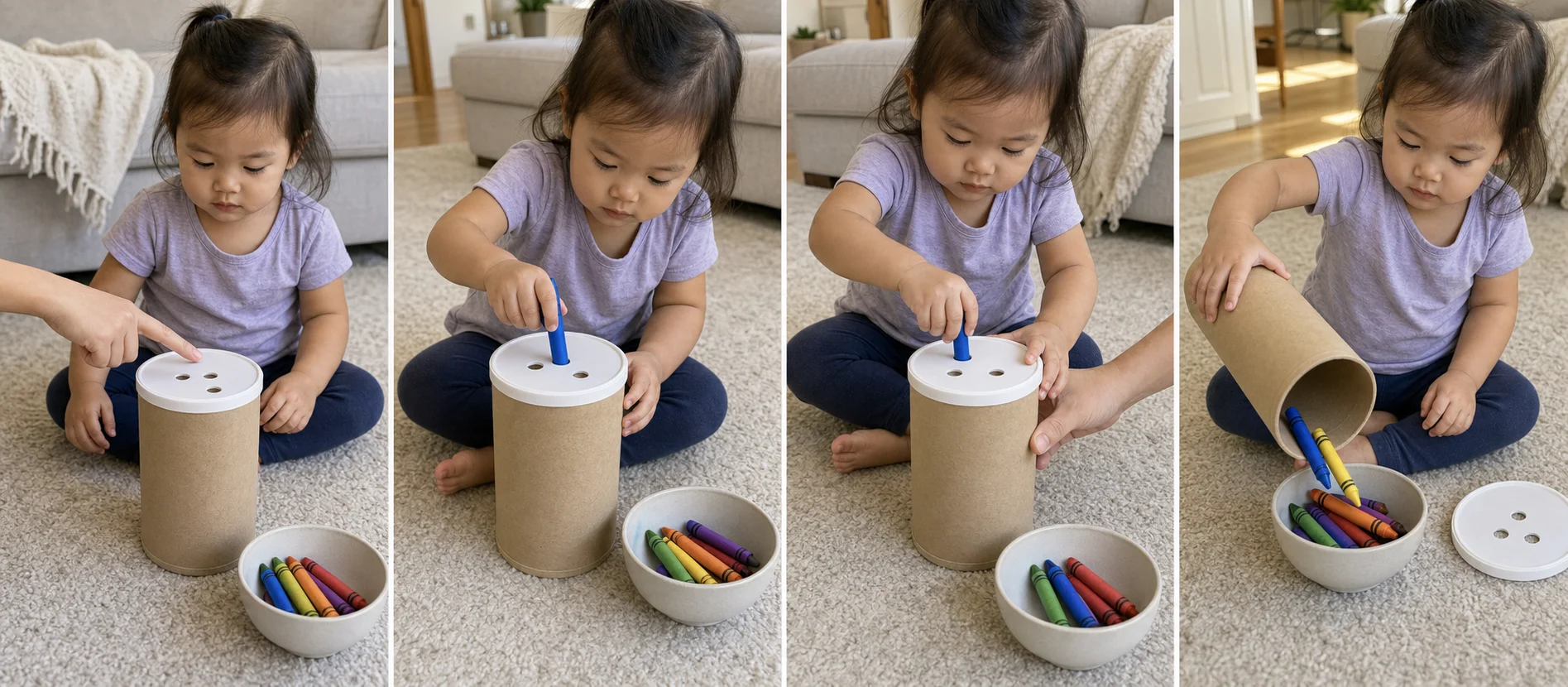
Turn an empty oats container into a satisfying push-and-plunk game. Your child aims crayons at snug lid holes and pushes until they drop inside, building fine motor control with every turn.


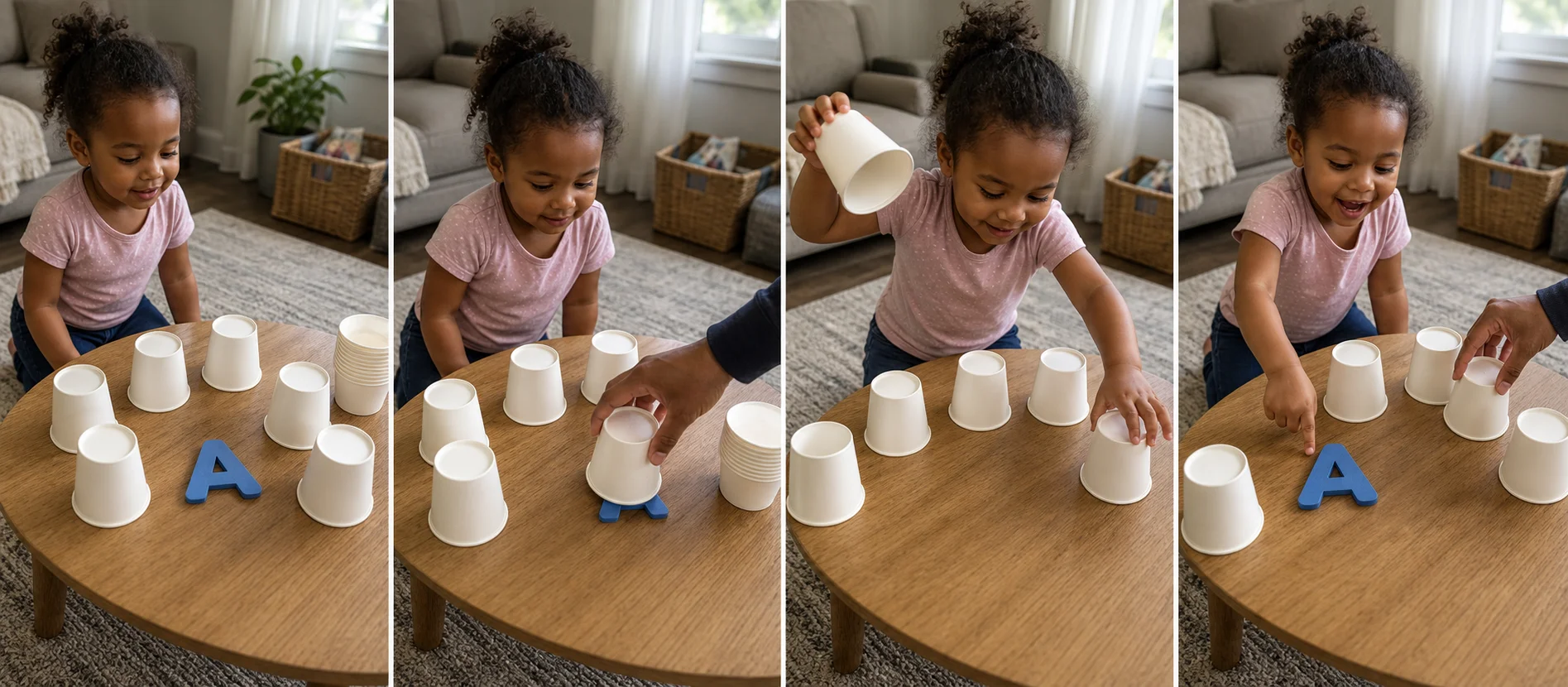
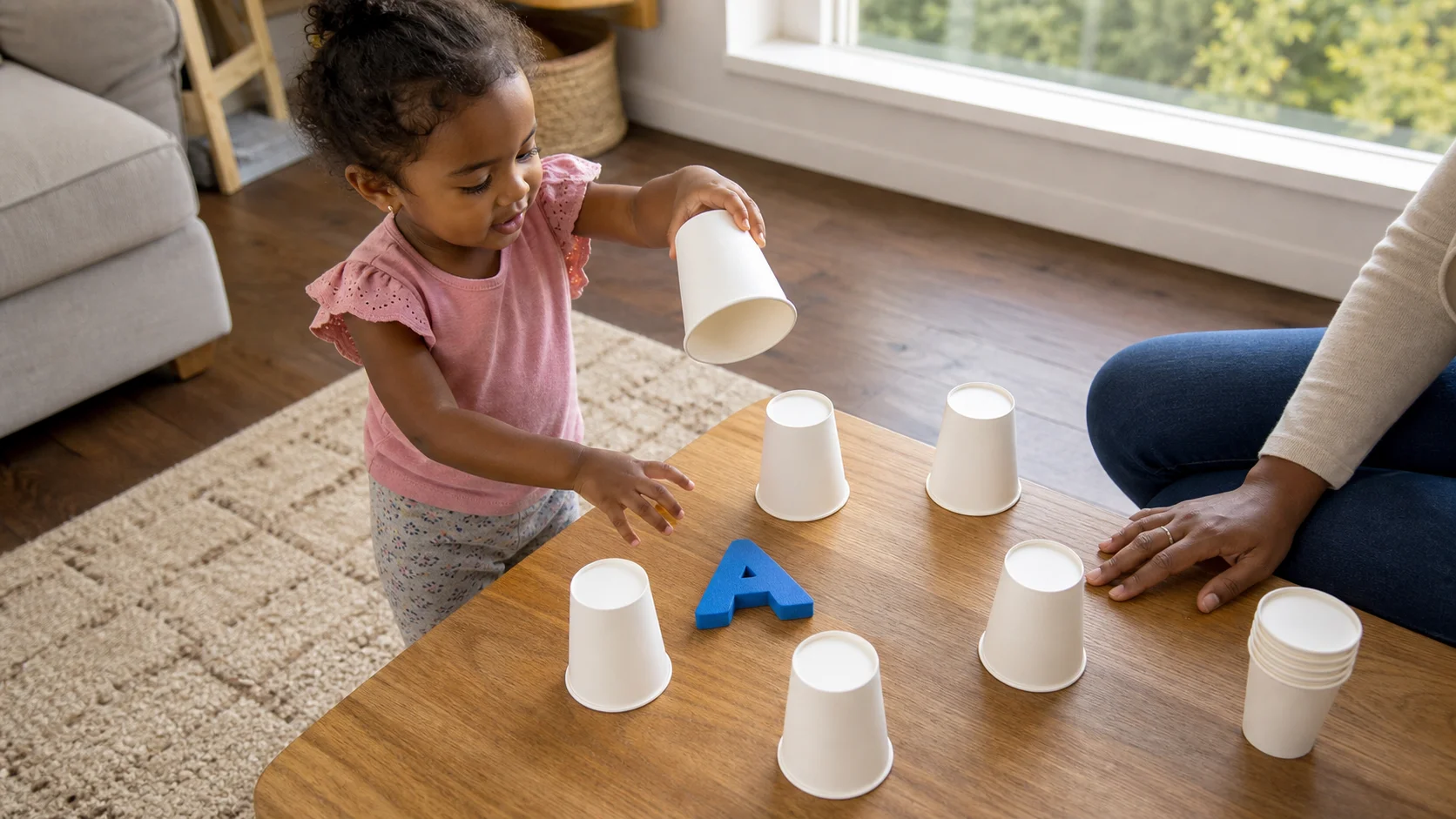
Turn a stack of paper cups into a tiny letter mystery. Hide one large alphabet letter inside a cup, let your child search until it appears, then celebrate the find with a letter dance that builds letter-name awareness.


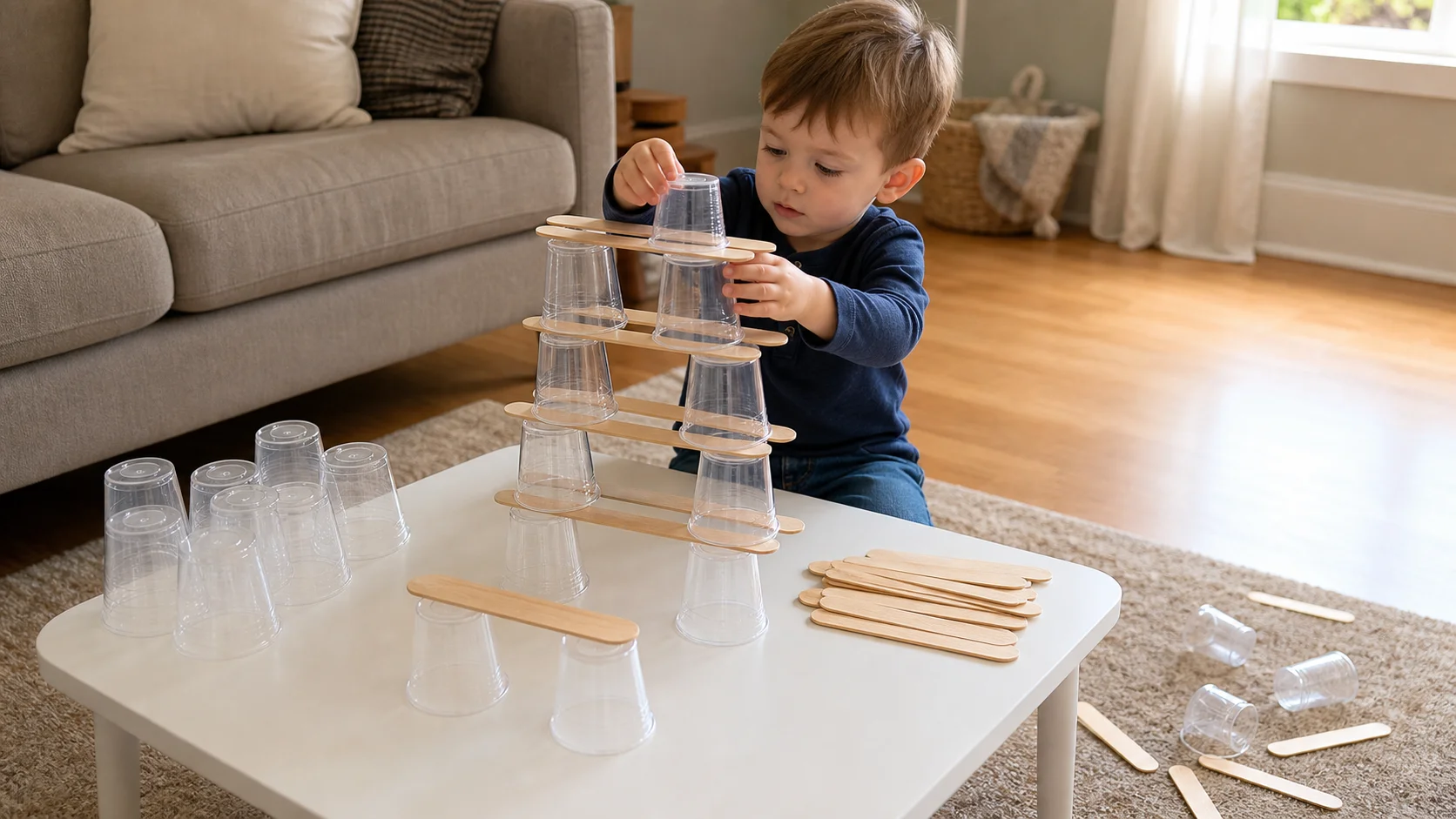
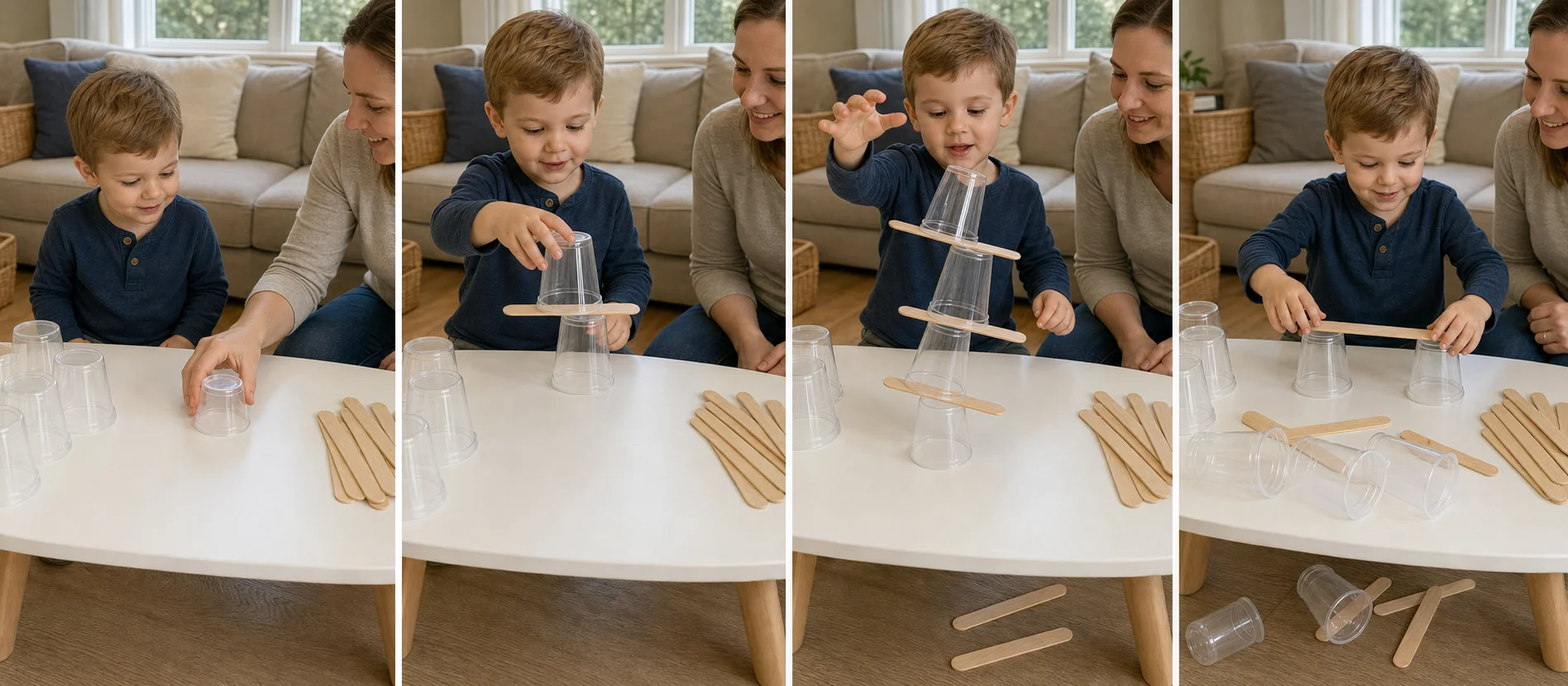
How tall can your child build before everything comes tumbling down? Alternating plastic cups and jumbo craft sticks turns careful stacking into a balance challenge that builds fine motor control and problem-solving.


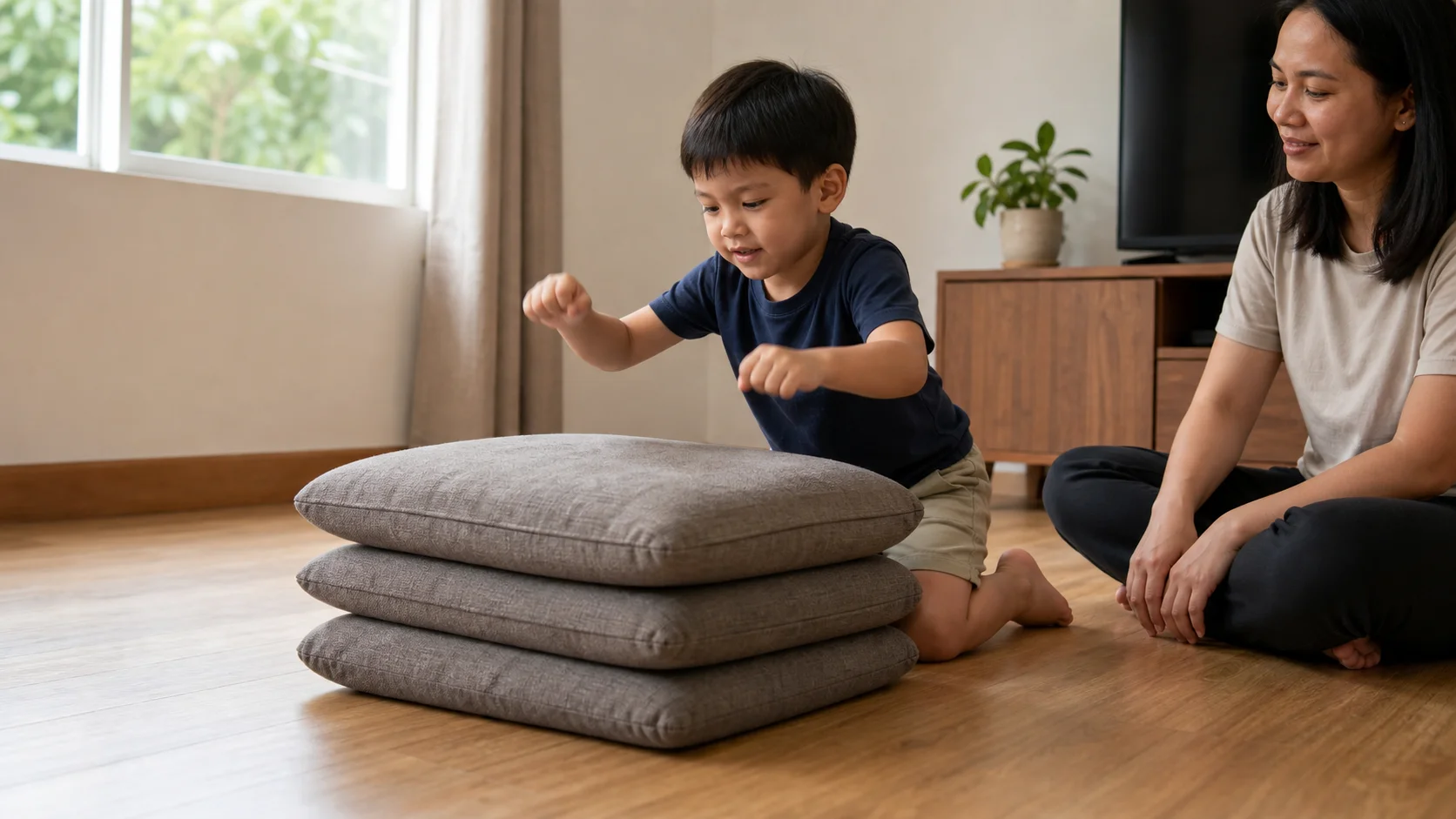
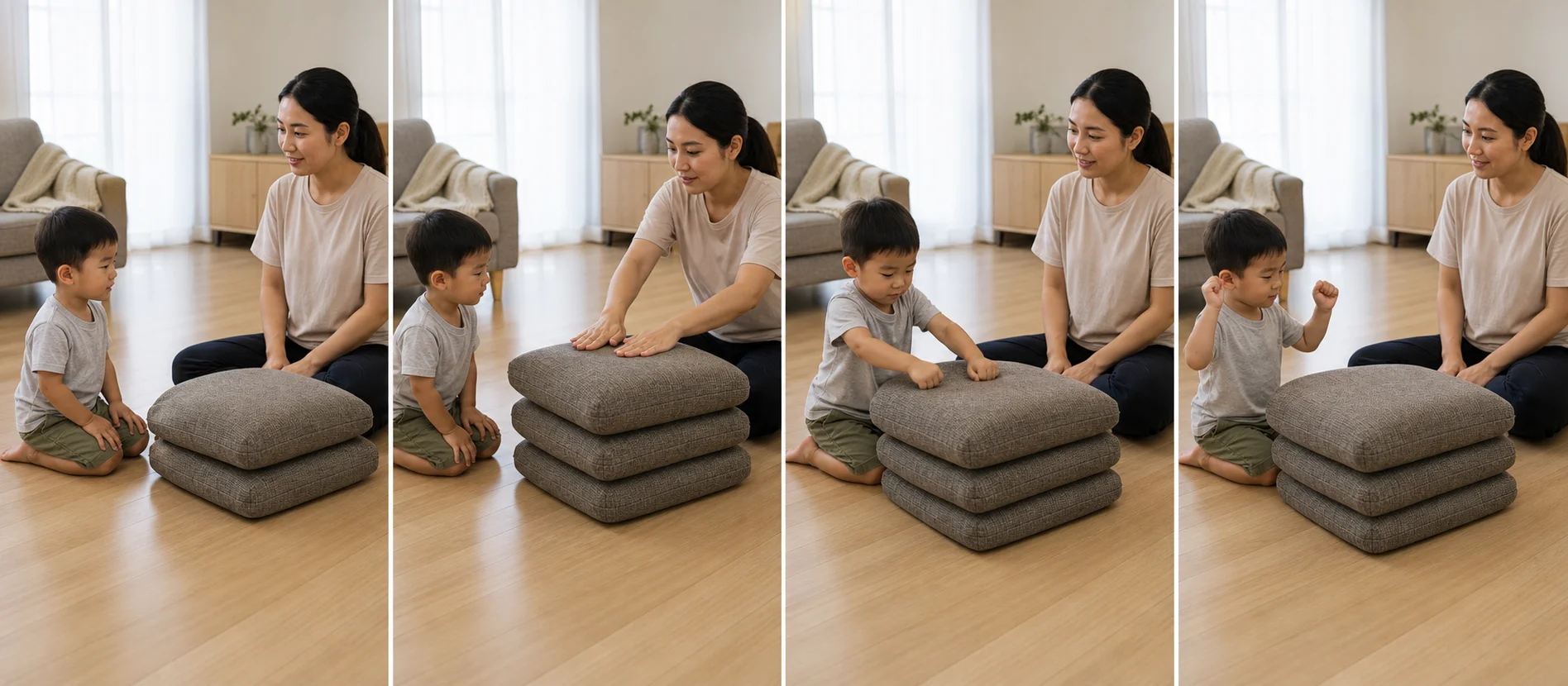
Turn a firm floor cushion into a soft drum and make short rhythmic beats with both fists. The beat, pause, and repeat pattern gives big energy a clear target while building rhythm and controlled force.


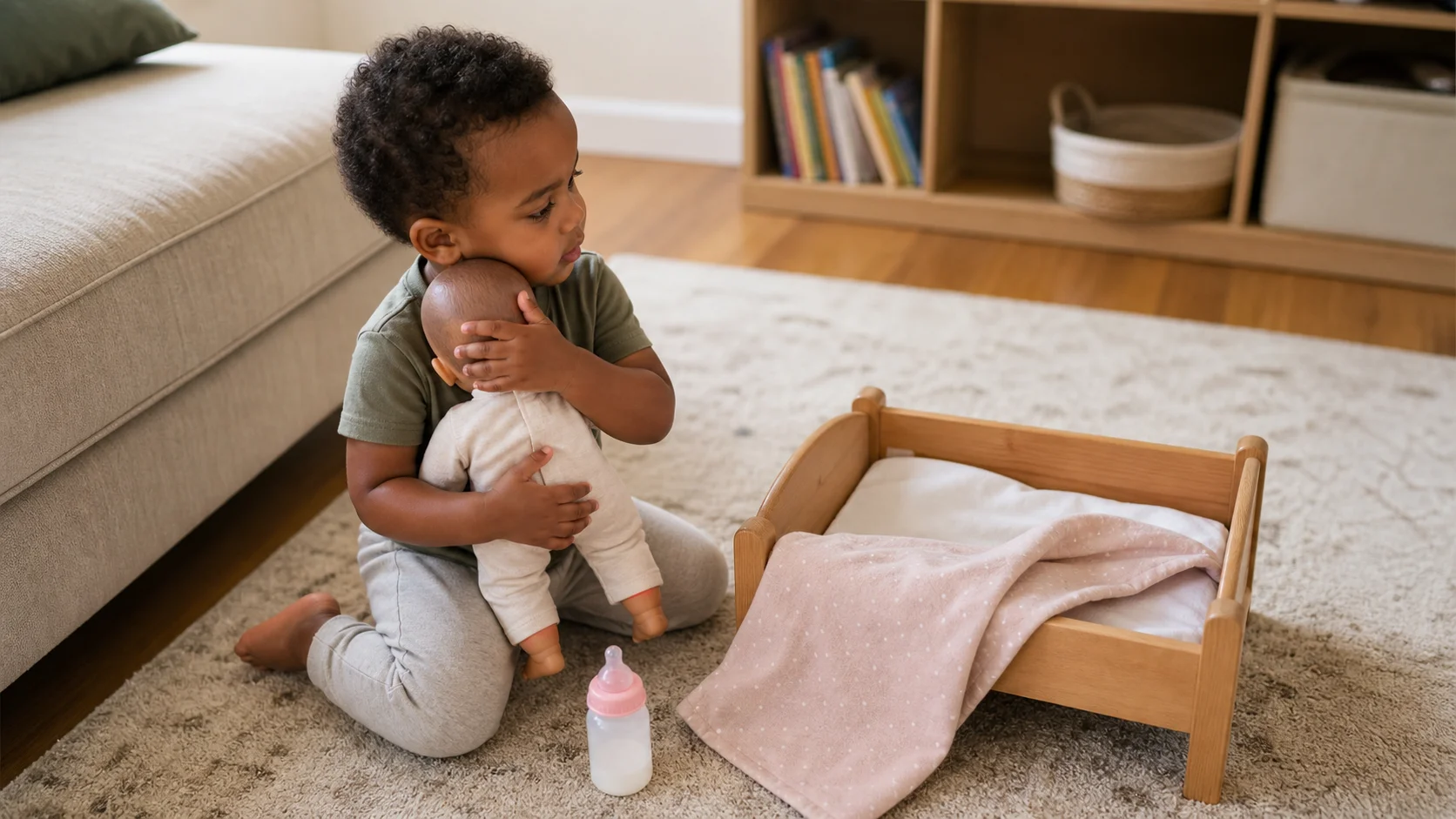
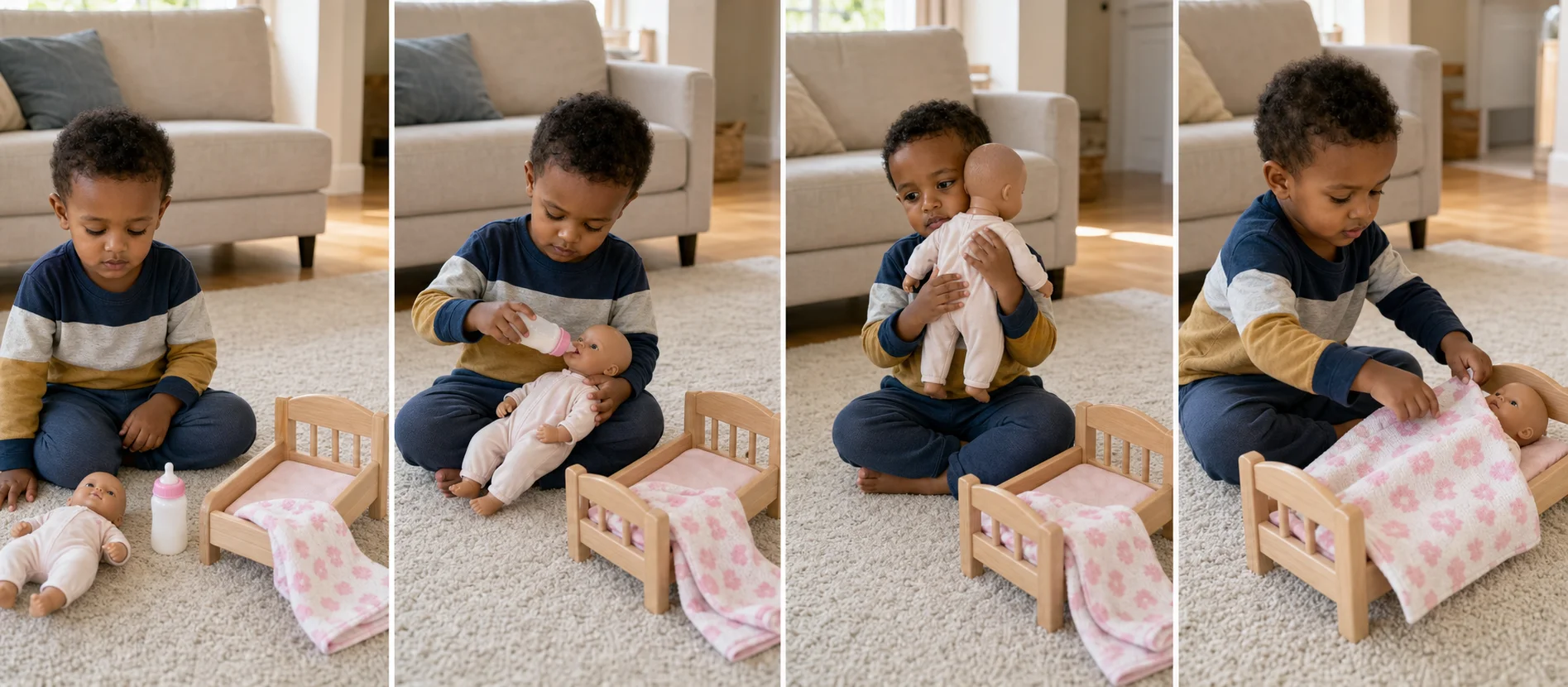
Turn familiar caregiving into a tiny pretend-play routine. Your child feeds a doll, lifts it for a burp, then tucks it into bed to practice imitation and following a simple sequence.