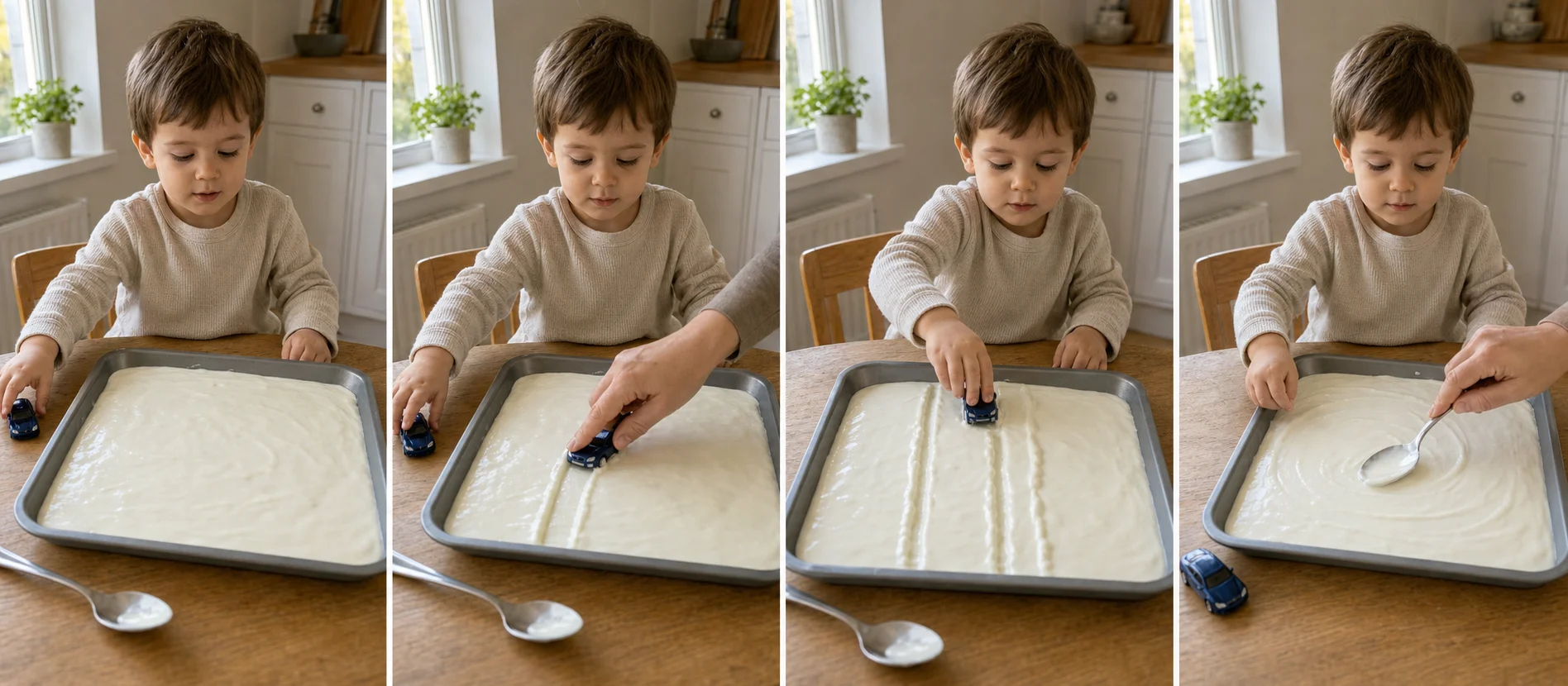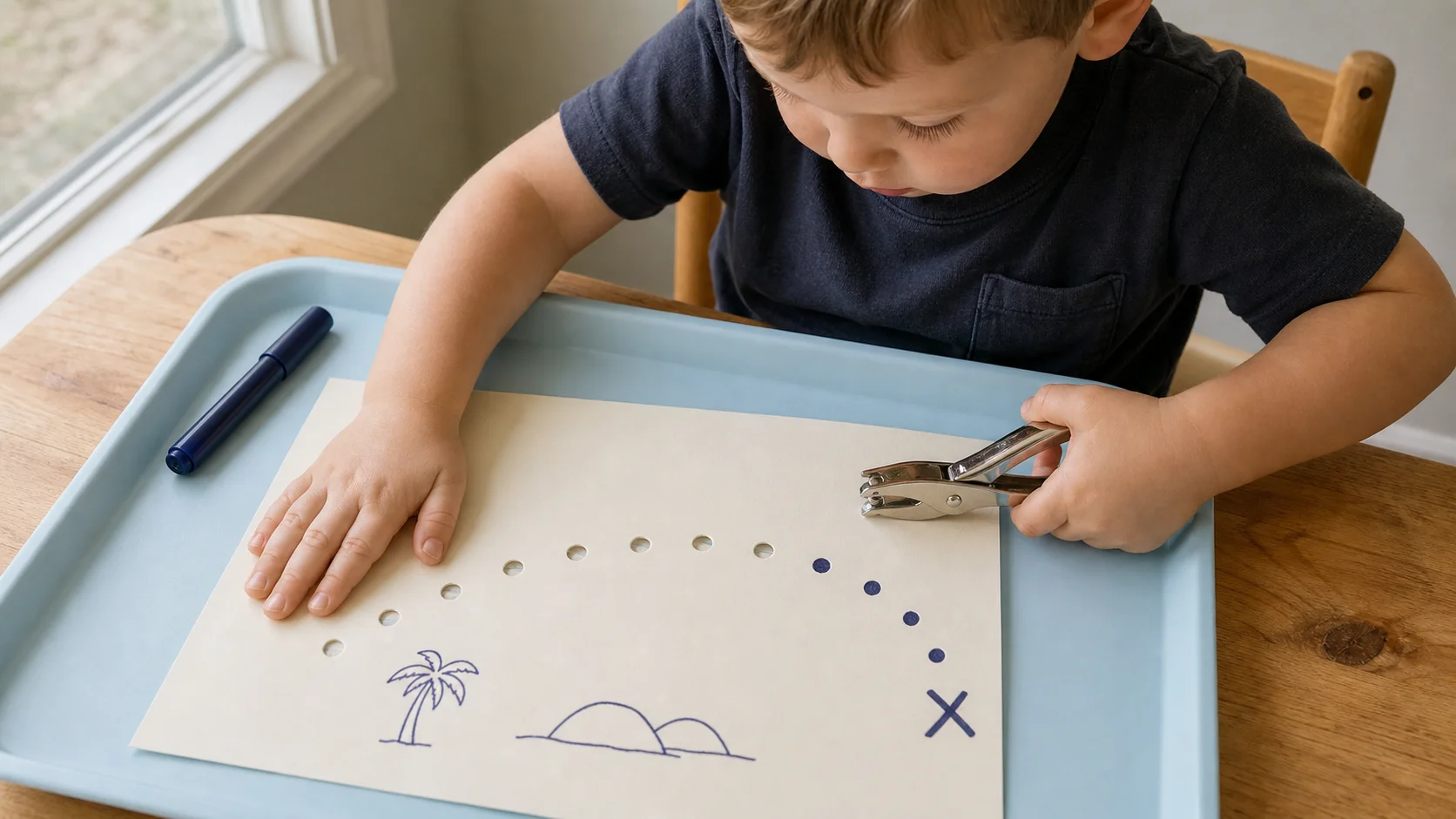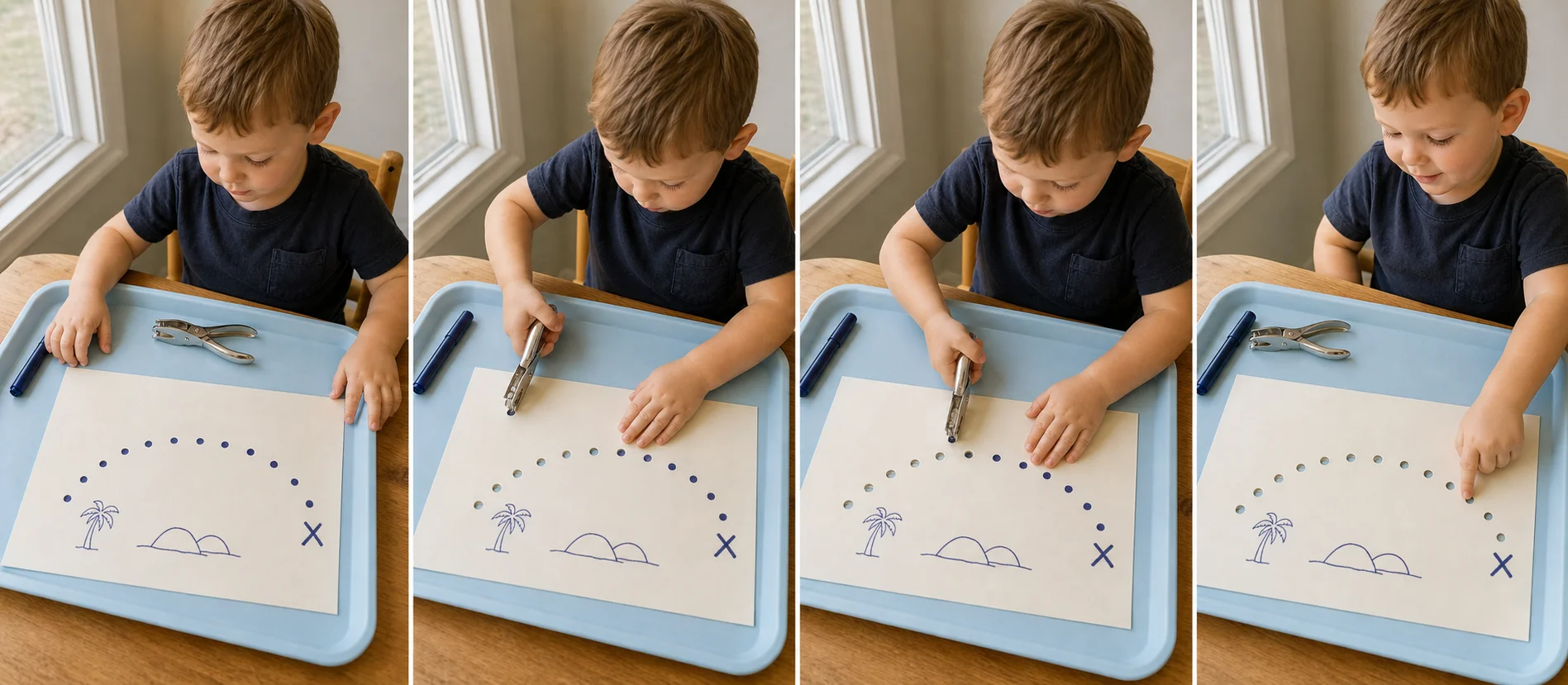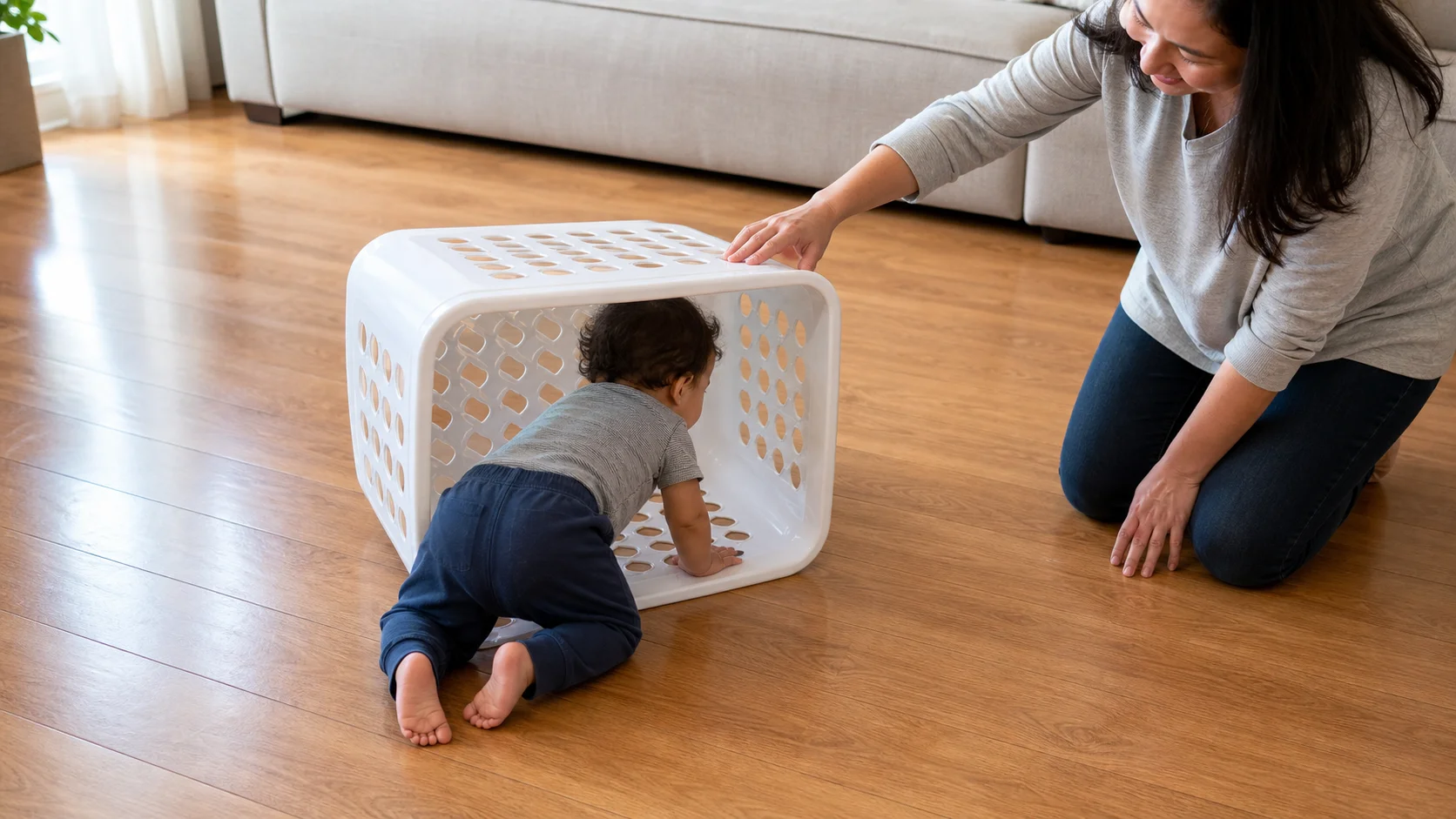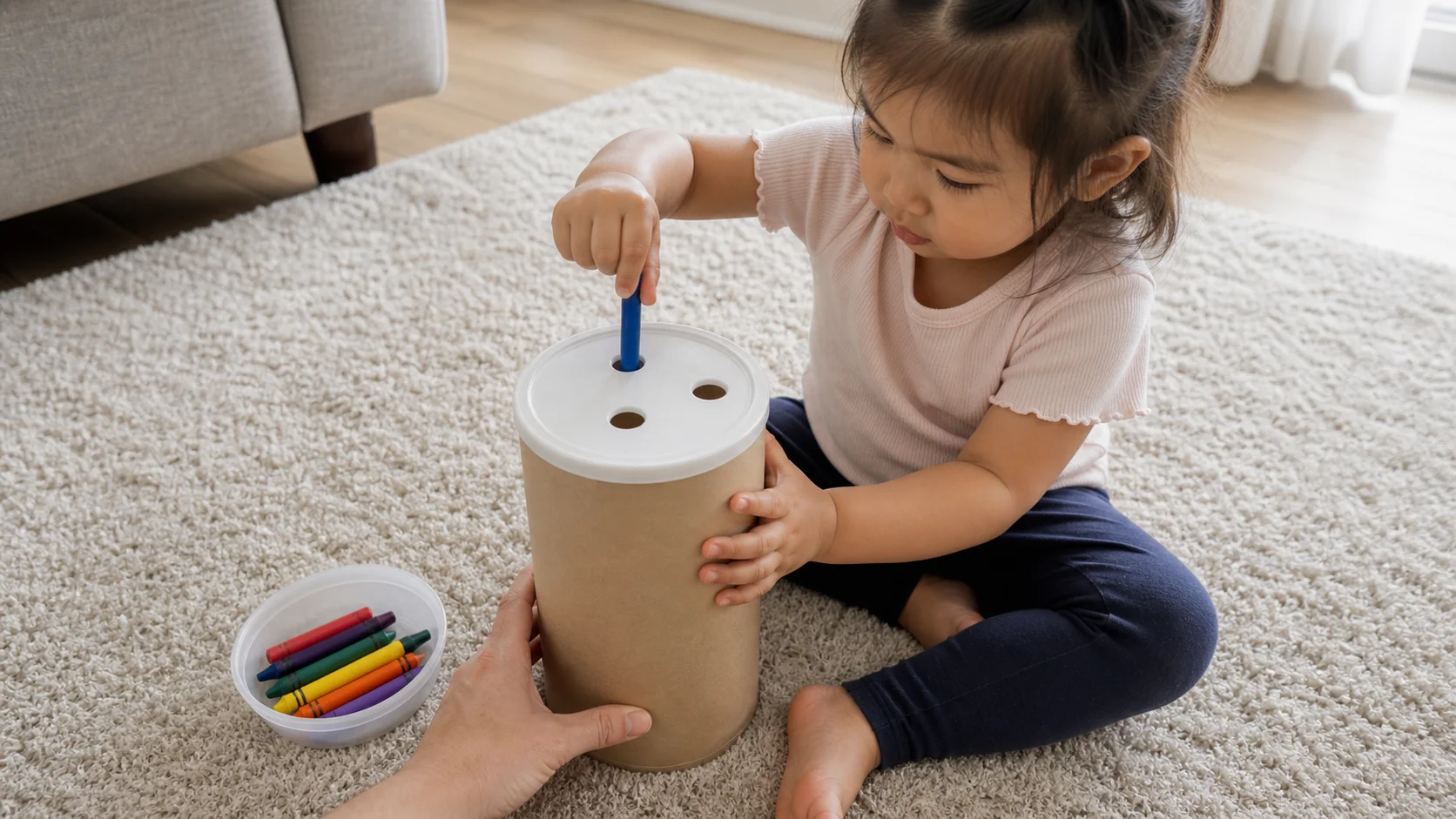
A toddler pushing a crayon through a hole in the lid of an oats container while other crayons sit in a small bowl.
Fine motorPush Through ResistanceIndoor

Crayon Push.

Push crayons through snug holes in a container lid, dump them out, and start the plunking loop again.

Play time
10-30+ min
Age
2 years
Energy
Low
Mess
Low
Effort
Low
Where
Indoor
Start here

The recipe.

Low parent effort
5 things

What you need

  • 1 empty oats container or similar lidded cardboard container
  • 1 fitted container lid
  • 6 to 8 unbroken crayons
  • 1 small bowl
  • scissors for adult setup
10 min minimum

Setup

Then start the loop
Step 01
On a table or counter away from your child, remove the lid and cut 3 crayon-sized holes in it.
Step 02
Around each hole, trim away rough or sharp edges.
Step 03
Through each hole, push 1 crayon back and forth. It should slide through with a firm push, without scraping or getting stuck.
Step 04
On the floor or a low table, attach the lid to the container and set the container directly in front of your child with the holes facing up.
Step 05
Beside the container, place 6 to 8 unbroken crayons in the small bowl. Keep extra crayons out of reach so the first round stays small.
"Push. Plunk."
The loop

How play unfolds.

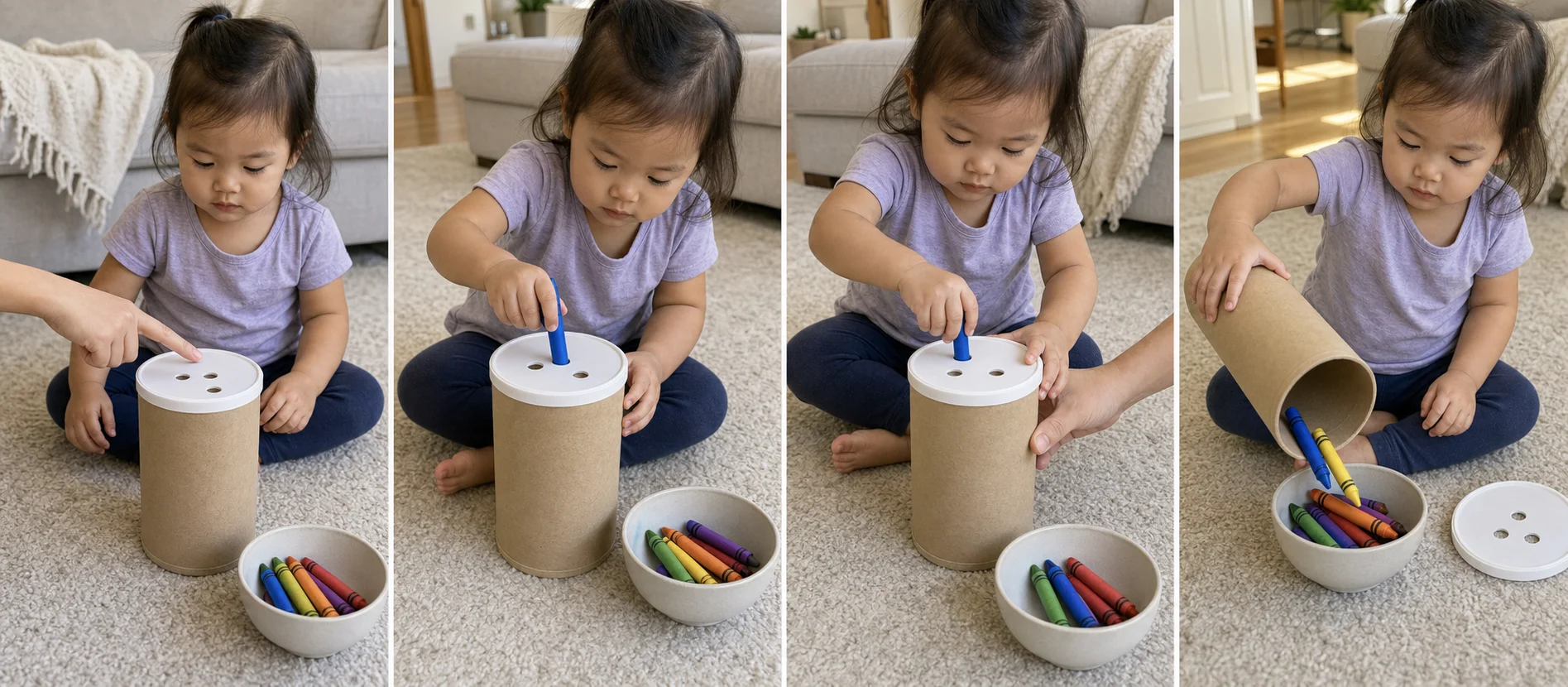
A toddler chooses a crayon, aims it at a lid hole, pushes until it drops inside, then dumps the crayons out to reset.
  1. 01
    Pick up 1 crayon, hold it over a hole, and slowly push it through. Say, "Push the crayon in. Plunk! Your turn."
  2. 02
    Your child chooses 1 crayon, points it into any hole, and pushes until it drops into the container.
  3. 03
    Repeat until the bowl is empty or your child wants to reset.
  4. 04
    Help your child remove the lid, dump the crayons back into the bowl, close the lid, and start again.

Safety Check

  • An adult handles the scissors and all lid cutting.
  • Check every hole before play. Stop and smooth the edge if a crayon scrapes, catches, or leaves rough cardboard exposed.
  • Pause if crayons go in the mouth. Offer one clean crayon at a time when you restart.
  • Remove broken crayon pieces before continuing.
  • Keep the container on a stable surface so it does not tip while your child pushes.
Supporting the play

What to say in the moment

Match what you say to what you see.

Prompt ladder
Level 1 (Start)
Push one crayon through, make the drop sound, and hand your child the next crayon.
Level 2 (Keep going)
Point to the closest hole and say, "Try this one."
Level 3 (Stretch)
After a successful push, ask your child to choose which hole gets the next crayon.
Level 4 (Extend)
Let your child dump the crayons back, close the lid, and start the next round.
If your child seems...
What you'd see
Focused
What to do
Say
"You got it in."
Add
Ask for the crayon color after the drop.
Extend
Invite your child to pick the next hole.

Make it easier

Younger end
  • -Turn the lid so the smoothest hole is directly in front of your child.
  • -Let your child press with a flat palm instead of trying to use fingertips.
  • -Brace the container on the surface while your child does the push.

Make it harder

Older end
  • +Ask your child to choose the hole before picking up the next crayon.
  • +Invite your child to push two crayons through the same hole in a row.
  • +Let your child run the reset steps before the next round starts.

If it's not working

If you see
If child ignores it
Do one dramatic slow push, say "plunk," and hand over a crayon.
If you see
If child misuses it
If crayons go in the mouth, pause and say, "Crayons are for pushing." Offer one clean crayon at a time. If crayons are being thrown or snapped, switch to reset duty: "Open, dump, close," then try one more push.
If you see
If child gets frustrated
Test the hole yourself. If it is too tight, choose the easiest hole or widen it slightly. If your child still struggles, start each crayon in the hole and let your child finish the final push.
Skill spotlight
Push Through Resistance

Lining up one crayon and pushing it through a snug opening

This builds control with a small object against resistance. That same control supports posting, simple tool use, and everyday hand jobs that need steady pressure.

  • The snug holes make each crayon push feel like a small hand job with a clear finish.
  • Aiming one crayon at one opening gives your child repeated practice lining up, adjusting, and trying again.
  • The dump reset keeps the same fine motor loop going without adding new rules.
Real-world transfer
  • Pushing small objects into place with better aim and pressure
  • Handling simple container and reset jobs during play and cleanup
  • Sticking with a hand task that takes more than one try

Parent questions

Back to library
Keep playing

Related activities.